

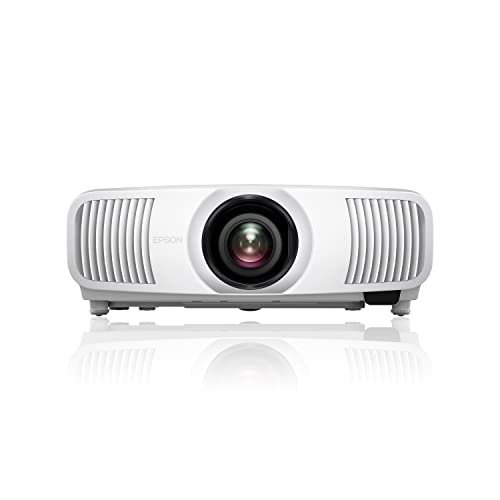
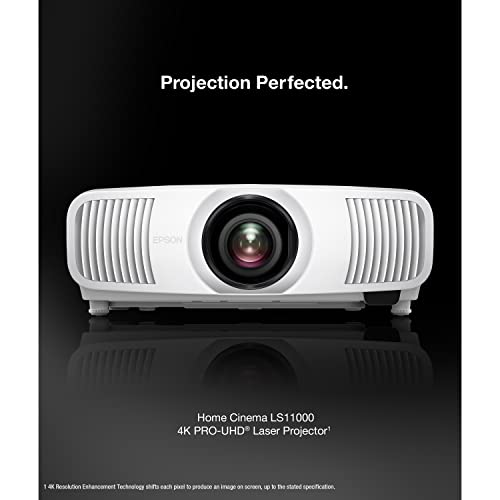
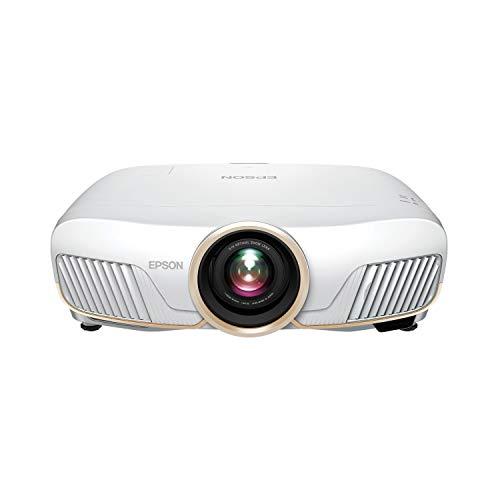
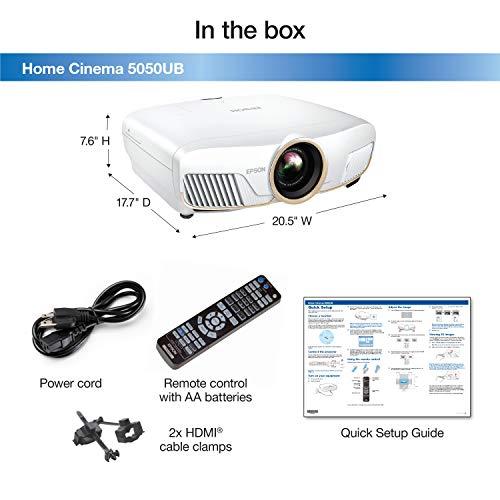
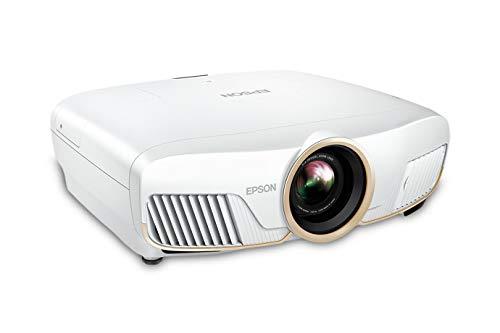
Home theater projectors have become incredibly sophisticated over the past decade, and two models that perfectly illustrate this evolution are Epson's LS11000 laser projector and the 5050UB traditional lamp-based unit. While both deliver impressive 4K-quality images, they represent fundamentally different approaches to projection technology – and choosing between them requires understanding what matters most for your specific setup.
Before diving into the comparison, it's worth understanding what makes a great home theater projector. The most critical factors are image quality (which includes resolution, contrast, and color accuracy), brightness for handling various lighting conditions, installation flexibility, and total cost of ownership over the projector's lifetime.
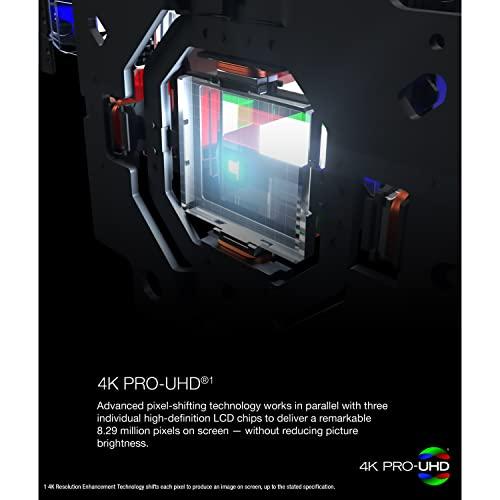
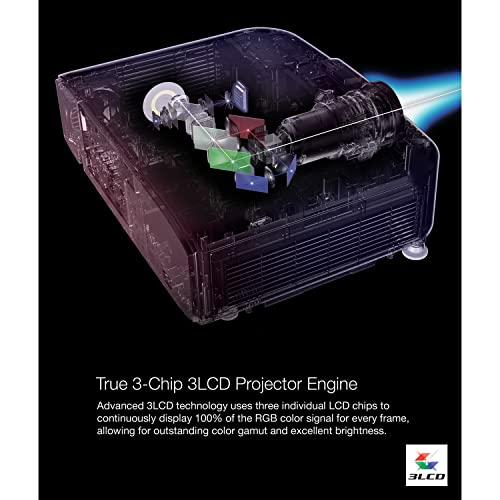
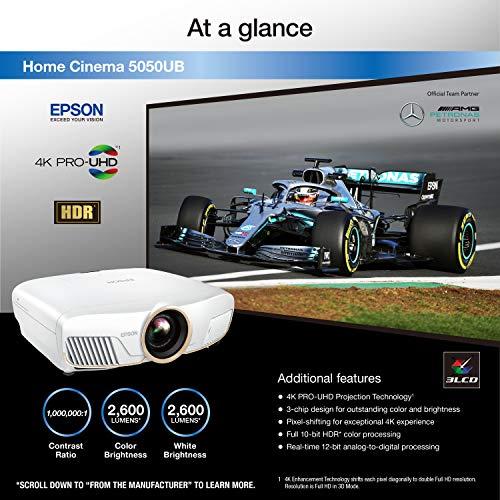
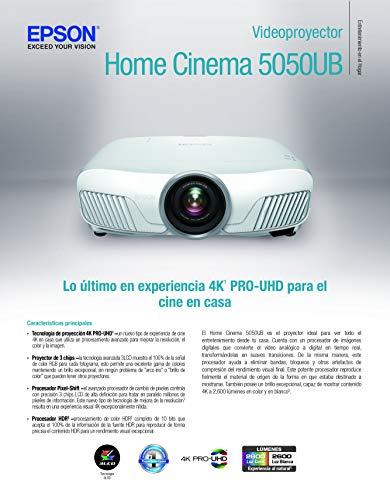
Both the LS11000 and 5050UB use Epson's 4K PRO-UHD technology, which is essentially a clever workaround for achieving 4K resolution without using expensive native 4K panels. Instead, they take native 1080p LCD panels and use rapid pixel-shifting – moving each pixel diagonally and horizontally multiple times per second – to effectively display 4K content. This pixel-shifting happens so quickly that your eyes perceive the full 4K detail, and in practice, it's nearly impossible to distinguish from true native 4K projectors during normal viewing.
The technology has proven remarkably effective. Both projectors can accept and display true 4K signals up to 60Hz (and the LS11000 supports 120Hz for gaming), producing images that are genuinely sharp and detailed enough to satisfy even discerning viewers on screens well over 100 inches.
The most fundamental difference between these projectors lies in their light sources, and this choice affects everything from image quality to long-term costs.
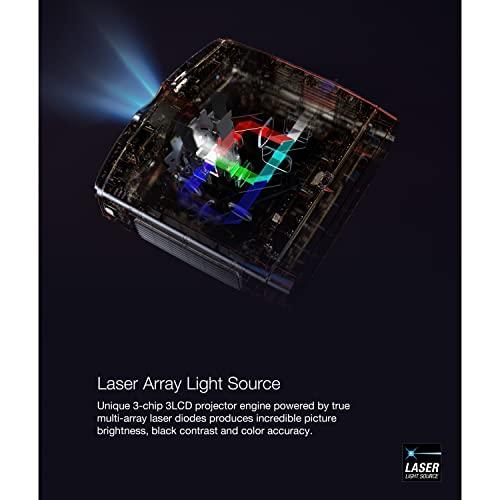
The LS11000, released in 2021, represents Epson's move toward laser illumination. It uses a blue laser array combined with a yellow phosphor wheel to create white light, which then gets split into red, green, and blue components for the LCD panels. This laser system is rated for 20,000 hours of operation – roughly 10-15 years of typical home theater use – without any maintenance or bulb replacements.
The advantages are compelling: consistent brightness throughout the projector's life, no warm-up time, instant on/off capability, and zero ongoing maintenance costs. The laser also enables more precise brightness control, allowing for better dynamic contrast performance in scenes with mixed lighting.
The 5050UB, which debuted in 2019, uses a traditional 250-watt Ultra High Efficiency (UHE) lamp. While this might sound outdated compared to laser technology, it comes with some surprising advantages. Traditional lamps produce a broader, more natural spectrum of light, and when combined with Epson's UltraBlack technology (which we'll discuss shortly), they can achieve superior contrast performance.
However, lamp-based projectors do require maintenance. The bulb will gradually dim over its 3,500-5,000 hour lifespan and eventually need replacement. At current pricing, replacement bulbs cost several hundred dollars, and the installation process, while not complicated, does require some technical comfort.
Here's where things get interesting, and frankly, where the older 5050UB delivers a surprising knockout punch to its newer laser sibling.
The most significant performance difference between these projectors is contrast – the difference between the darkest blacks and brightest whites. The 5050UB achieves a native contrast ratio of 8,000:1, while the LS11000 manages 2,019:1. That's nearly four times better contrast for the older model.
This dramatic difference comes down to Epson's UltraBlack technology, which was included in the 5050UB but notably absent from the LS11000. UltraBlack uses a proprietary compensation filter that controls light polarization within the projector, dramatically reducing stray light and improving black levels.
In practical terms, this means the 5050UB can display true, inky blacks that make dark scenes in movies genuinely atmospheric. When you're watching something like "Blade Runner 2049" or "The Batman," those shadowy scenes have real depth and detail rather than appearing as washed-out gray. The difference is immediately noticeable and consistently impressive.
Our research into professional reviews and user feedback consistently highlights this contrast advantage as the 5050UB's most compelling feature. It's the kind of improvement that enhances every movie night, making the viewing experience more immersive and cinematic.
The LS11000, despite being newer and more expensive, simply can't match these black levels. The laser light source, combined with the absence of UltraBlack technology, results in blacks that appear more gray than true black. This doesn't make it a bad projector – it's still quite good – but it represents a clear step backward from what Epson achieved with the 5050UB.
This contrast limitation becomes most apparent in dark scenes or when watching content with letterbox bars (those black strips above and below widescreen movies). With the 5050UB, those bars disappear into true black, while they remain subtly visible as dark gray with the LS11000.
Brightness, measured in lumens, determines how well a projector performs in various lighting conditions and how large a screen it can effectively illuminate. Both projectors deliver impressive brightness levels, though with some interesting trade-offs.
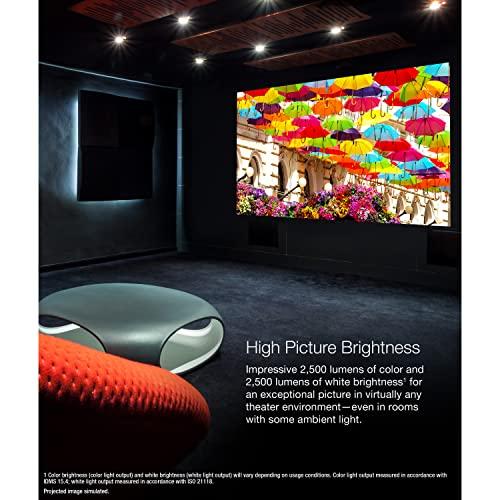
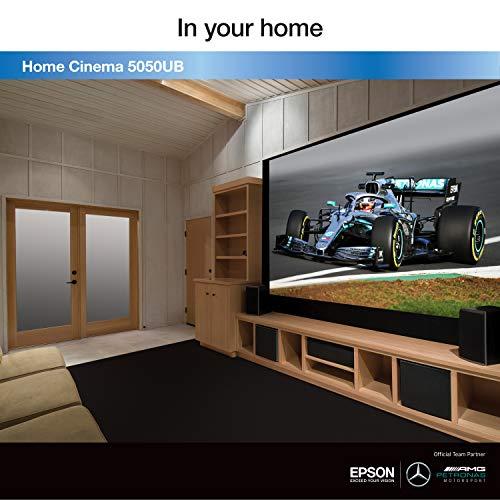
The 5050UB produces 2,600 lumens compared to the LS11000's 2,500 lumens. While this 100-lumen difference is minimal in practice, it does highlight that newer doesn't always mean brighter. Both projectors provide enough light output for screens up to 150 inches in moderately lit rooms, or even larger screens in dedicated dark home theaters.
Color performance tells a more nuanced story. The 5050UB covers 97% of the DCI-P3 color space – the standard used in commercial cinemas – compared to 90% for the LS11000. This wider color gamut translates to more vibrant, accurate colors, particularly in HDR content where the expanded color space really matters.
The 5050UB achieves this superior color performance through an additional color filter, but there's a trade-off: engaging this wider color mode slightly reduces light output. For most home theater applications, this trade-off is worthwhile, as the improved color accuracy and vibrancy more than compensate for the modest brightness reduction.
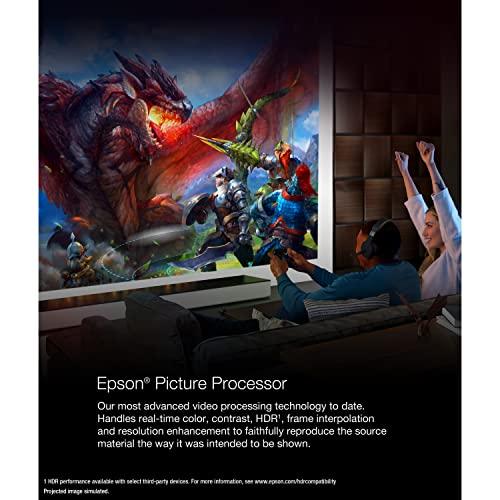
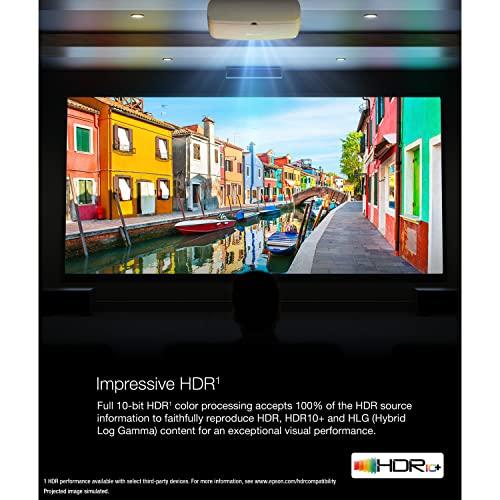
Both projectors support HDR10 and HLG (Hybrid Log-Gamma) formats, with excellent 10-bit color processing. They also feature Epson's 16-step HDR adjustment system, allowing real-time fine-tuning of HDR tone mapping. This feature is particularly valuable because HDR content can vary significantly in how it should be displayed, and having granular control helps optimize the viewing experience for your specific room and preferences.
For gaming enthusiasts, the LS11000 offers some compelling advantages that reflect the technological improvements since 2021.
The LS11000 supports 120Hz refresh rates at 4K resolution, making it compatible with next-generation gaming consoles like the PlayStation 5 and Xbox Series X when they're running games at their highest performance modes. This higher refresh rate creates smoother motion in fast-paced games, reducing motion blur and providing a more responsive gaming experience.
The 5050UB, being an older design, is limited to 60Hz refresh rates. While 60Hz is perfectly adequate for most gaming (and all movie content), competitive gamers and those with the latest consoles will appreciate the LS11000's ability to take full advantage of modern gaming hardware.
Both projectors deliver excellent input lag performance – the delay between when you press a button and when the action appears on screen. The LS11000 achieves 20 milliseconds, while the 5050UB measures 22.5 milliseconds. Both figures are excellent for gaming, and the 2.5-millisecond difference is imperceptible in real-world use.
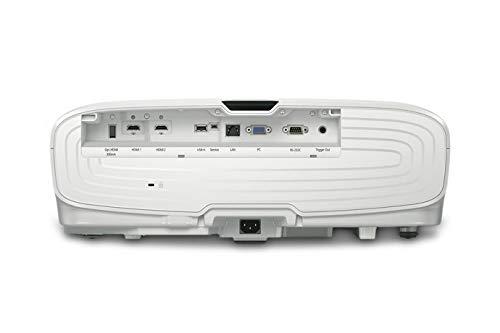
The LS11000 features dual HDMI 2.1 inputs with enhanced Audio Return Channel (eARC) support, providing the bandwidth needed for 4K/120Hz gaming and advanced audio formats. The 5050UB uses HDMI 2.0 connections, which are sufficient for 4K/60Hz content but can't handle the higher refresh rates that modern gaming systems can output.
Both projectors excel in installation flexibility, sharing identical lens specifications and mounting options. This is one area where Epson really got things right across both models.
Both the LS11000 and 5050UB feature fully motorized lenses with powered zoom, focus, and shift capabilities. The lens shift range is particularly impressive: 96.3% vertical and 47.1% horizontal adjustment. This means you can mount the projector significantly off-center from your screen and still achieve a perfectly aligned image without keystone correction, which can degrade image quality.
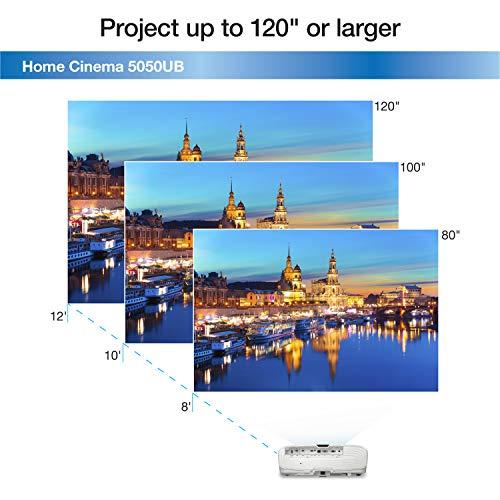
The 2.1:1 zoom ratio accommodates screen sizes from 50 inches up to 300 inches, with throw distances ranging from about 10 feet to nearly 30 feet. This flexibility means both projectors can work in virtually any home theater setup, from small media rooms to large dedicated cinemas.
Both projectors include lens memory functionality, which saves different zoom, focus, and shift settings. This feature is particularly valuable if you switch between different aspect ratios – for example, zooming in for 2.35:1 widescreen movies and pulling back for standard 16:9 content. With the push of a button, the projector can automatically adjust to your preferred settings for each format.
When evaluating these projectors, it's essential to consider total cost of ownership rather than just initial purchase price. At the time of writing, both projectors are priced competitively in the premium home theater segment, but their ongoing costs differ significantly.
The 5050UB's lamp will need replacement after 3,500-5,000 hours of use, depending on the brightness mode you typically use. Replacement bulbs cost several hundred dollars, and while the replacement process isn't particularly difficult, it does require some technical comfort and careful handling.
Over a typical 7-10 year ownership period, you'll likely need 2-3 bulb replacements, adding substantial cost to the projector's lifetime expense. However, many users report getting excellent performance throughout the bulb's rated life, and the gradual dimming happens slowly enough that you might not notice day-to-day changes.
The LS11000's laser light source eliminates this ongoing maintenance entirely. Rated for 20,000 hours of operation, the laser should outlast the projector's useful life for most users. This maintenance-free operation, combined with instant on/off capability and consistent brightness throughout its life, provides genuine convenience advantages.
From a pure financial perspective, the LS11000's higher upfront cost often balances out against the 5050UB's ongoing bulb replacement expenses over 5-7 years of ownership.
Each projector has some distinctive features worth considering.
The 5050UB supports 3D content playback, while the LS11000 completely lacks this capability. If you have a collection of 3D Blu-rays or enjoy the occasional 3D movie experience, this could be a deciding factor. However, 3D content has become increasingly rare, and many users consider this a nice-to-have rather than essential feature.
The 5050UB runs noticeably louder than the LS11000, measuring about 48 decibels during operation compared to the laser model's quieter performance. While not obnoxiously loud, this difference is noticeable in quiet movie scenes, particularly if the projector is ceiling-mounted close to seating areas.
The 5050UB also consumes more power – around 329 watts compared to 311 watts for the LS11000. The difference isn't dramatic, but it's another small advantage for the laser model.
After extensive research into professional reviews, user feedback, and technical specifications, the choice between these projectors comes down to prioritizing either ultimate picture quality or modern convenience features.
Picture quality is your absolute priority. The superior contrast performance creates a genuinely more immersive viewing experience, particularly in dark scenes that make up so much of modern cinematic content. If you're building a dedicated home theater and want the most cinema-like experience possible, the 5050UB's exceptional black levels and wider color gamut deliver results that consistently impress.
You're comfortable with periodic maintenance and want to minimize upfront costs. The bulb replacement process, while not difficult, does require some technical comfort, but the savings in initial purchase price can be substantial.
You have 3D content or might want this capability in the future.
Gaming performance matters significantly to you. The 120Hz capability and HDMI 2.1 connectivity make it genuinely better suited for modern gaming systems, and this advantage will only become more important as game developers increasingly target higher refresh rates.
You prefer maintenance-free operation and consistent performance. The laser light source eliminates the gradual dimming and eventual bulb replacement cycle, providing truly set-and-forget operation.
Long-term value is more important than initial cost savings. While the upfront price is higher, the elimination of bulb replacement costs often makes the LS11000 more economical over 7-10 years of ownership.
Both projectors represent excellent value in the premium home theater category, but they excel in different areas. The 5050UB delivers superior picture quality through dramatically better contrast performance, while the LS11000 offers modern gaming features and maintenance-free operation.
For most home theater enthusiasts prioritizing movie watching, the 5050UB's superior contrast and black levels create a more engaging, cinema-like experience. The difference is immediately apparent and consistently impressive across all content types.
However, if gaming features, long-term convenience, or future-proofing matter more than ultimate contrast performance, the LS11000 provides excellent image quality with modern capabilities that will remain relevant longer.
Neither choice is wrong – they simply optimize for different priorities. The 5050UB maximizes picture quality per dollar spent, while the LS11000 maximizes convenience and gaming performance. Consider your primary use case, maintenance preferences, and whether the superior contrast of the older model outweighs the modern features of the newer one.
| Epson Home Cinema LS11000 | Epson Home Cinema 5050UB |
|---|---|
| Light Source Technology - Determines maintenance needs and long-term costs | |
| Blue laser array (20,000 hour lifespan, no bulb replacements) | 250W UHE lamp (3,500-5,000 hours, requires expensive bulb replacements) |
| Native Contrast Ratio - Most critical for dark scene performance and cinematic experience | |
| 2,019:1 (good but lacks UltraBlack technology) | 8,000:1 (exceptional with UltraBlack technology for true black levels) |
| Brightness Output - Affects screen size and ambient light tolerance | |
| 2,500 lumens (excellent for most home theaters) | 2,600 lumens (slightly brighter, minimal practical difference) |
| Color Gamut Coverage - Determines color vibrancy and accuracy | |
| 90% DCI-P3 (very good color reproduction) | 97% DCI-P3 (wider colors, more cinema-accurate with extra filter) |
| Gaming Performance - Critical for console and PC gaming | |
| 20ms input lag, 120Hz support, HDMI 2.1 (excellent for modern gaming) | 22.5ms input lag, 60Hz only, HDMI 2.0 (good for casual gaming) |
| HDR Support - Important for modern 4K content | |
| HDR10, HLG with 16-step adjustment (no Dolby Vision) | HDR10, HLG with 16-step adjustment (no Dolby Vision) |
| 4K Technology - How each achieves 4K resolution | |
| 4K PRO-UHD pixel-shifting from 1080p panels | 4K PRO-UHD pixel-shifting from 1080p panels (identical technology) |
| Installation Flexibility - Affects placement options in your room | |
| 2.1x zoom, ±96% vertical/±47% horizontal lens shift, motorized | 2.1x zoom, ±96% vertical/±47% horizontal lens shift, motorized (identical) |
| 3D Content Support - For 3D Blu-ray collections | |
| No 3D support | Full 3D support with RF glasses |
| Connectivity Options - Determines device compatibility | |
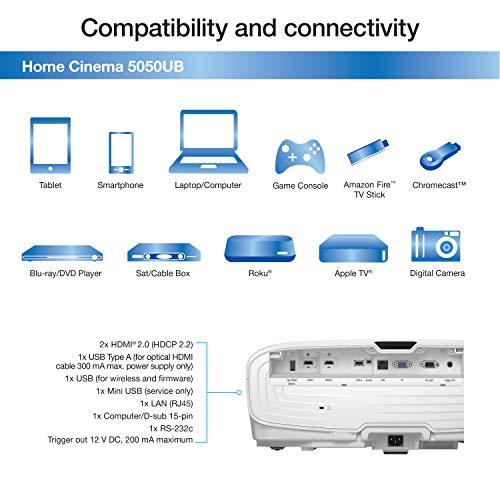
| 2x HDMI 2.1, eARC support, no legacy inputs | 2x HDMI 2.0, 15-pin VGA port for older devices |
| Operational Noise - Important for quiet movie scenes | |
| Quieter laser operation (typical of laser projectors) | 48dB measured (noticeably louder, especially when ceiling mounted) |
| Release Year - Indicates technology generation | |
| 2021 (newer laser technology) | 2019 (mature lamp technology with UltraBlack) |
The Epson Home Cinema 5050UB delivers superior picture quality for movies due to its exceptional contrast ratio of 8,000:1 compared to the LS11000's 2,019:1. The 5050UB features UltraBlack technology that produces true black levels, making dark scenes more immersive and cinematic. It also covers 97% of the DCI-P3 color space versus 90% for the LS11000, resulting in more accurate and vibrant colors.
The Epson LS11000 uses a laser light source rated for 20,000 hours with no maintenance required, while the Epson 5050UB uses a traditional lamp that lasts 3,500-5,000 hours and requires expensive bulb replacements. Laser projectors like the LS11000 offer consistent brightness throughout their lifespan and instant on/off capability, but lamp-based projectors like the 5050UB can achieve better contrast performance.
The Epson LS11000 is better for gaming with 20ms input lag, 120Hz refresh rate support, and HDMI 2.1 connectivity for next-gen consoles. The 5050UB has slightly higher 22.5ms input lag and is limited to 60Hz, though both perform well for casual gaming. Serious gamers will prefer the LS11000 for its modern gaming features.
The Epson LS11000 requires zero maintenance costs over its lifetime due to its laser light source. The 5050UB requires bulb replacements every few years, with replacement bulbs costing several hundred dollars each. Over 7-10 years of ownership, the 5050UB will need 2-3 bulb replacements, adding significant ongoing costs compared to the maintenance-free LS11000.
Both projectors offer similar brightness levels, with the 5050UB producing 2,600 lumens and the LS11000 delivering 2,500 lumens. This 100-lumen difference is minimal in practice, and both provide excellent performance for home theater use. Either the 5050UB or LS11000 can handle screens up to 150 inches in moderately lit rooms.
Yes, both the Epson LS11000 and 5050UB use identical 4K PRO-UHD pixel-shifting technology to achieve 4K resolution from native 1080p panels. This advanced pixel-shifting creates sharp, detailed 4K images that are nearly indistinguishable from native 4K projectors during normal viewing. Both the LS11000 and 5050UB accept true 4K input signals and display excellent detail.
Only the Epson 5050UB supports 3D content playback with optional RF shutter glasses. The LS11000 completely lacks 3D capability. If you have a 3D Blu-ray collection or enjoy occasional 3D movies, the 5050UB is your only option between these two models.
Both the LS11000 and 5050UB offer identical installation flexibility with motorized zoom, focus, and lens shift (±96% vertical, ±47% horizontal). Both feature lens memory for quick aspect ratio changes and accommodate screen sizes from 50-300 inches. The installation process is equally straightforward for either the LS11000 or 5050UB.
The Epson LS11000 runs quieter than the 5050UB due to its efficient laser cooling system. The 5050UB measures about 48 decibels during operation, which is noticeable during quiet movie scenes, especially if ceiling-mounted. The laser-based LS11000 provides a more peaceful viewing experience.
Both the LS11000 and 5050UB support HDR10 and HLG formats with excellent 10-bit color processing. Both feature Epson's 16-step HDR adjustment system for real-time tone mapping optimization. Neither the LS11000 nor 5050UB supports Dolby Vision, but both deliver impressive HDR performance for most content.
The Epson LS11000 typically offers better long-term value due to its maintenance-free laser operation, despite higher upfront costs. The 5050UB has lower initial costs but requires expensive bulb replacements over time. For most users, the LS11000's total cost of ownership becomes more economical after 5-7 years compared to the 5050UB.
For a dedicated dark home theater prioritizing ultimate picture quality, choose the 5050UB for its superior 8,000:1 contrast ratio and UltraBlack technology. For mixed-use rooms with gaming needs, the LS11000 offers better convenience with maintenance-free operation and modern gaming features. The 5050UB delivers more cinematic image quality, while the LS11000 provides better versatility and long-term convenience.
We've done our best to create useful and informative comparisons to help you decide what product to buy. Our research uses advanced automated methods to create this comparison and perfection is not possible - please contact us for corrections or questions. These are the sites we've researched in the creation of this article: tvsbook.com - thesmarthomehookup.com - cepro.com - specsradar.com - projectorscreen.com - benq.com - projectorreviews.com - projectorscreen.com - youtube.com - projectorcentral.com - whathifi.com - projectorscreen.com - bestbuy.com - youtube.com - avsforum.com - versus.com - crutchfield.com - projectorcentral.com - shop.avispl.com - mediaserver.goepson.com - projectorscreen.com - bestbuy.com - simplehomecinema.com - dreamediaav.com - epson.com - rtings.com - projectorscreen.com - hometechnologyreview.com - youtube.com - rtings.com - techgearlab.com - projectorcentral.com - projectorreviews.com - projectorcentral.com - avsforum.com - rtings.com - projectorreviews.com - projectorreviews.com - avsforum.com - audiogeneral.com - hifiheaven.net - manuals.plus - crutchfield.com - projectorcentral.com - epson.com - mediaserver.goepson.com - bestbuy.com - ngxptech.com - projectorcentral.com - projectorreviews.com

Privacy Policy
Terms and Conditions - Affiliate Policy
Home Security
© Copyright 2008-2026.
11816 Inwood Rd #1211, Dallas, TX 75244