

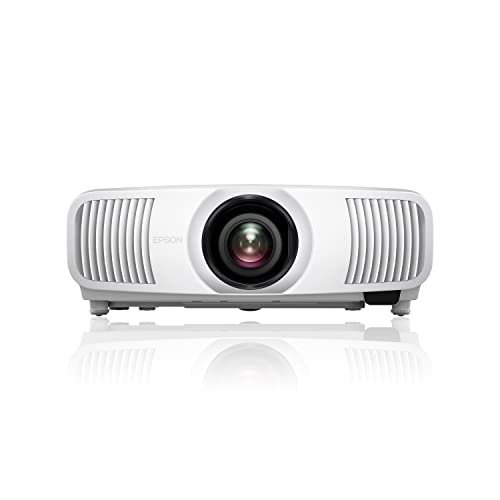
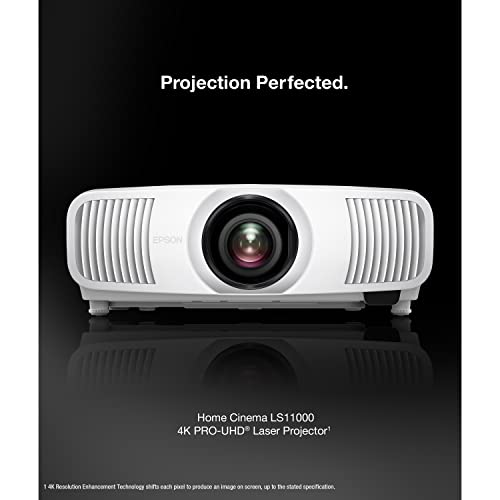
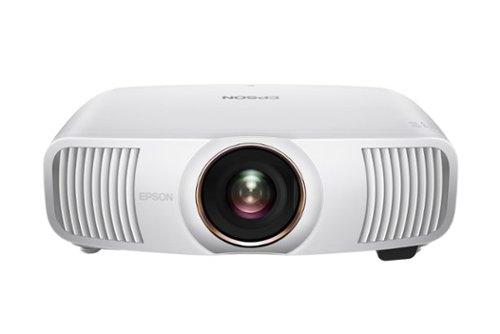
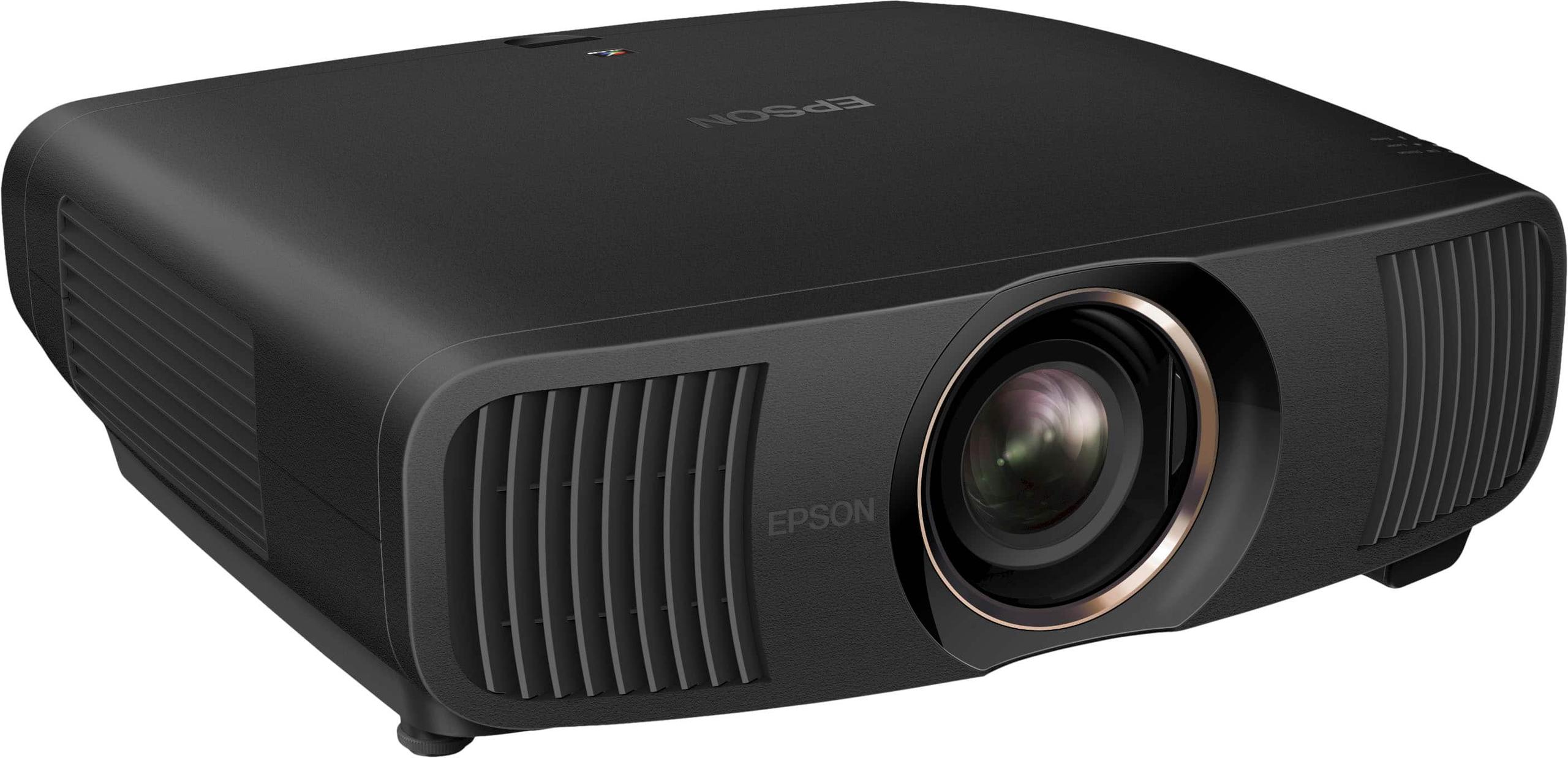

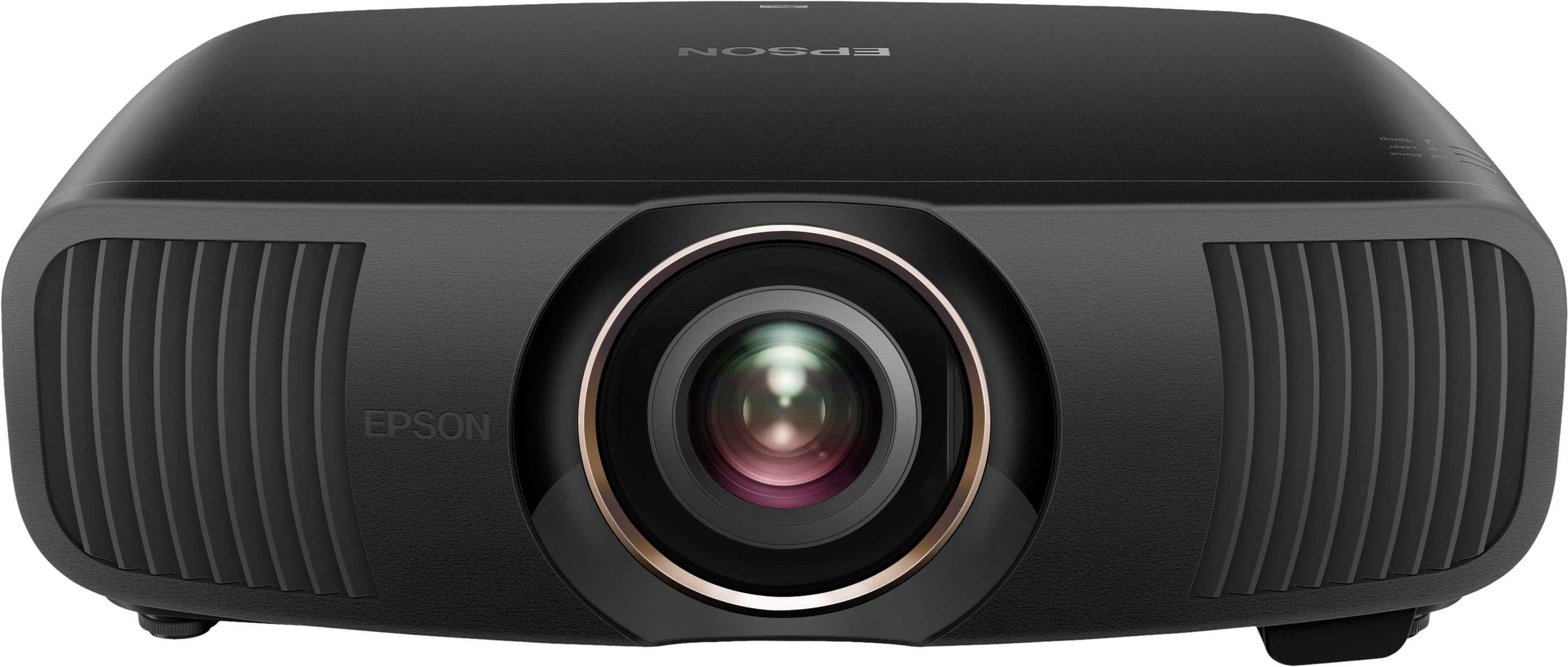
When you're building a serious home theater, the projector becomes the centerpiece that makes or breaks the entire experience. Epson has positioned two compelling laser projectors in the premium market: the Home Cinema LS11000 and the flagship QB1000. Both promise cinema-quality 4K images, but at significantly different price points that reflect very real performance differences.
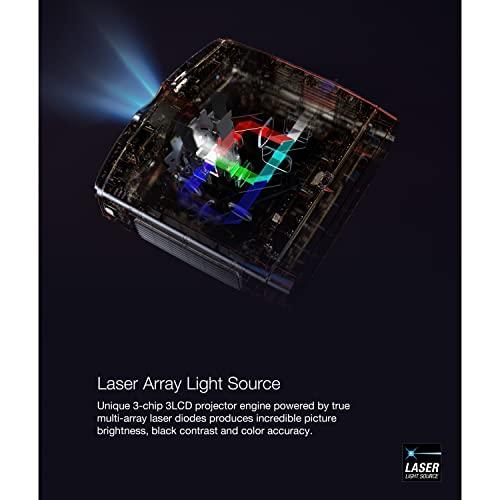
Before diving into the specifics, it's worth understanding what sets laser projectors apart from traditional lamp-based models. Instead of using replaceable bulbs that dim over time and need replacement every few years, laser projectors use arrays of laser diodes that maintain consistent brightness for 20,000+ hours – essentially the lifetime of the projector. This technology also enables better color accuracy and more precise control over brightness levels.
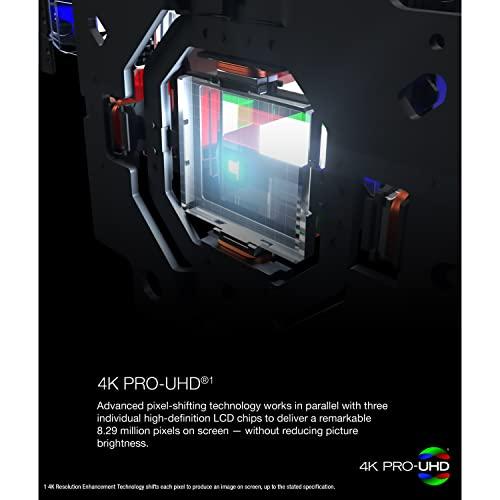
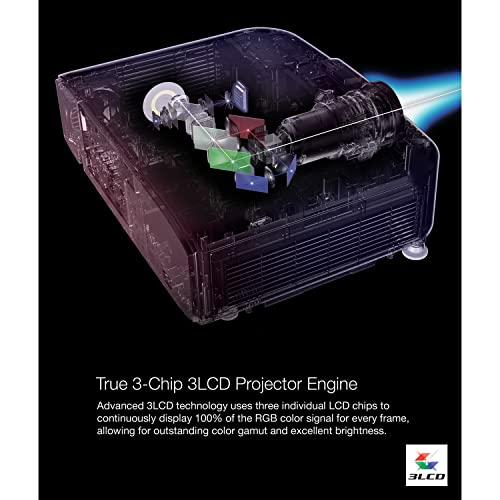
The term "4K" in projectors requires some explanation. Both the LS11000 and QB1000 use native 1080p LCD panels but employ sophisticated pixel-shifting technology to display true 4K resolution (3840x2160 pixels) on screen. This pixel-shifting rapidly moves each pixel to multiple positions, effectively quadrupling the visible detail compared to standard 1080p projection. While purists might prefer native 4K panels, Epson's implementation is so refined that distinguishing it from native 4K becomes nearly impossible at normal viewing distances.
The LS11000 launched in 2022 as Epson's answer to bringing high-end laser projection to more accessible price points. It represented a significant leap forward from earlier Epson models, introducing their advanced Precision Shift Glass Plate technology that made pixel-shifting faster and quieter than previous generations.
The QB1000, released in 2024, represents Epson's latest thinking on premium home theater projection. The "Q" designation signals Epson's new flagship residential series, while the "B" specifically indicates enhanced black level performance – a crucial hint about this projector's primary strength. Between 2022 and 2024, Epson refined their laser technology, developed new contrast-enhancing features, and created more sophisticated image processing algorithms.
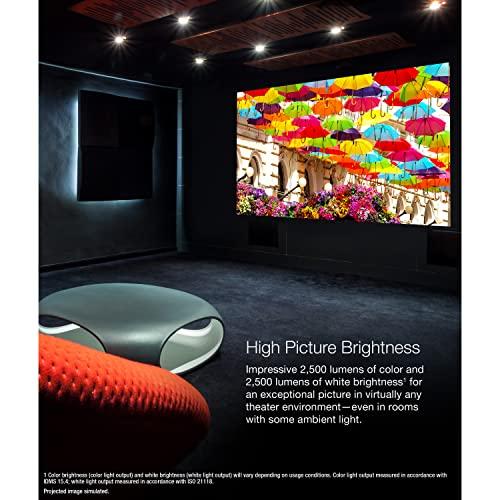
At the heart of any projector comparison lies brightness, measured in lumens. The LS11000 produces 2,500 lumens while the QB1000 delivers 3,300 lumens – a 32% increase that sounds modest but proves transformative in real-world use.
This brightness difference affects three critical areas. First, screen size capabilities expand dramatically with higher lumens. While the LS11000 excels on screens up to 150 inches in dark rooms, the QB1000 can fill screens approaching 300 inches while maintaining satisfying brightness levels. Second, room flexibility improves significantly. The extra 800 lumens allow the QB1000 to perform admirably in rooms with some ambient light, while the LS11000 really demands light-controlled environments for optimal performance.
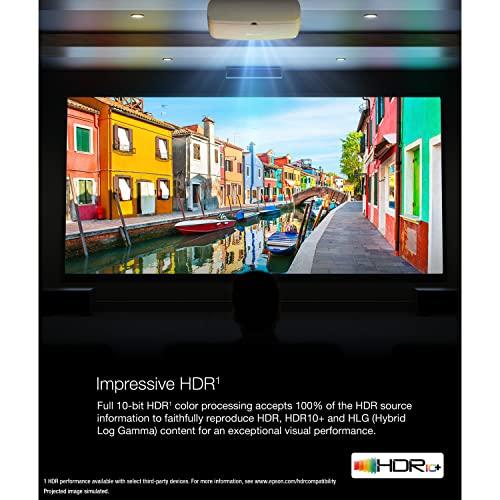
Most importantly, HDR (High Dynamic Range) content benefits enormously from higher brightness. HDR video contains brightness information far beyond what standard content offers, and projectors need substantial lumen output to properly display these bright highlights while maintaining detail in darker areas. The QB1000's extra brightness translates directly into more impactful HDR performance, with brighter specular highlights and more dramatic contrast between light and dark elements.
While brightness gets most of the attention, contrast ratio – the difference between the brightest whites and deepest blacks a projector can display – often has greater impact on perceived image quality. This represents the most significant performance gap between these models.
The LS11000 achieves a dynamic contrast ratio of 1,200,000:1 through its laser dimming technology, which can reduce laser output during dark scenes to deepen black levels. This already delivers excellent performance that surpasses most lamp-based projectors.
However, the QB1000 reaches 5,000,000:1 contrast through Epson's UltraBlack technology – a more than 4x improvement. UltraBlack employs a proprietary compensation filter that controls light polarization to suppress stray light within the optical system. In practical terms, this means darker room scenes in movies display with genuine black levels instead of the slightly gray appearance common in projection, while bright elements pop with greater intensity.
Our research into user and professional reviews consistently highlights this contrast advantage as the QB1000's most noticeable improvement. Viewers report that dark movie scenes – think of dimly lit interiors or nighttime sequences – gain remarkable depth and realism that makes the viewing experience feel more three-dimensional.
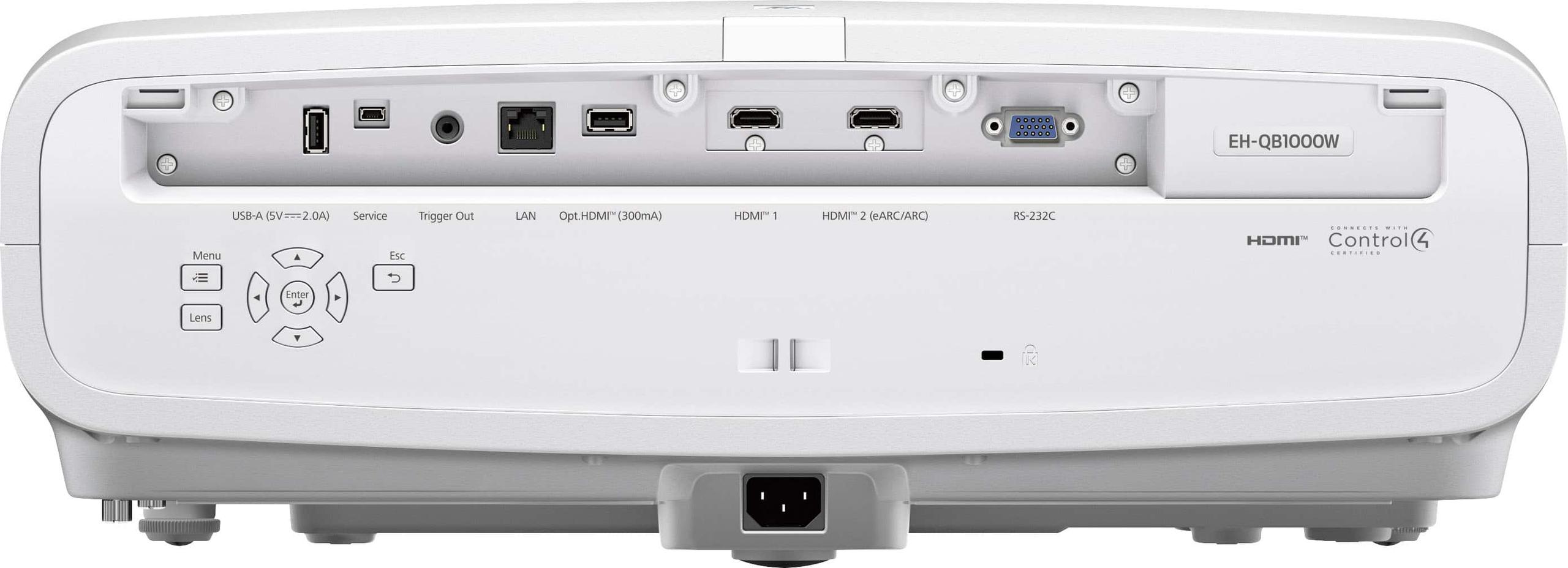
Both projectors excel equally for gaming applications, which deserves special mention given how demanding modern gaming has become. Each features dual HDMI 2.1 inputs supporting 4K resolution at 120Hz refresh rates – crucial for next-generation gaming consoles and high-end PCs. Input lag measures below 20 milliseconds on both models, fast enough that even competitive gamers won't notice delays between controller input and on-screen response.
The 40 Gbps bandwidth on their HDMI 2.1 ports handles the most demanding gaming scenarios, including 4K HDR gaming at 120 frames per second. Both projectors support eARC (enhanced Audio Return Channel) for simplified audio system integration. For gaming enthusiasts, either projector delivers identical performance – the choice comes down to other factors like room brightness requirements and budget constraints.
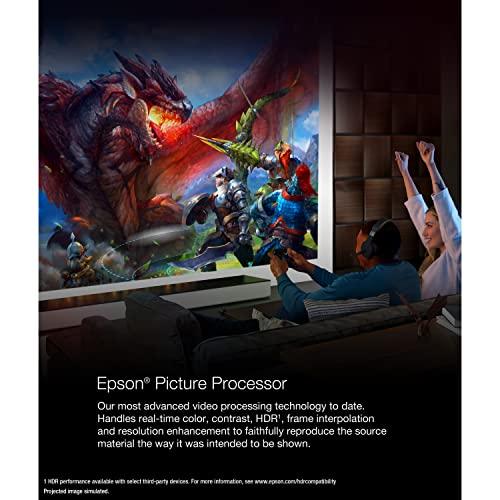
The LS11000 employs Epson's 36-bit ZX Picture Processor, handling real-time color correction, HDR tone mapping, frame interpolation, and resolution enhancement. This processor includes user-friendly HDR controls, including a dedicated adjustment button and 16-point brightness slider that makes optimizing different content types straightforward for home users.
The QB1000 uses the newer 32-bit QZX Picture Processor – and here's where numbers don't tell the complete story. Despite the lower bit rating, this represents Epson's most advanced processing technology, incorporating improved HDR tone mapping algorithms and more sophisticated dynamic contrast control. The QZX processor includes automatic scene-by-scene HDR optimization that adjusts brightness and contrast in real-time based on content analysis.
Professional reviews consistently note that the QB1000 requires minimal calibration out of the box, earning ISF (Imaging Science Foundation) certification. This means the projector arrives pre-calibrated to professional standards, while still offering extensive manual controls for custom installations. The LS11000, while offering excellent performance, benefits from some user adjustment to achieve optimal results.
Both projectors share nearly identical physical specifications and installation capabilities, which simplifies the decision for many users. Each weighs approximately 28 pounds and measures 20.5 inches wide – substantial units that typically require two people for ceiling mounting.
The lens systems offer identical flexibility: 2.1x motorized zoom, extensive lens shift (96% vertical, 47% horizontal), and lens memory functionality. This lens memory feature proves particularly valuable for home theater enthusiasts who switch between different aspect ratios – you can store separate settings for standard 16:9 content and ultra-wide 2.35:1 movies, then switch between them instantly via the remote control.
Both projectors accommodate throw distances from roughly 10 feet to 30 feet, making them suitable for most home theater rooms. The generous lens shift means you don't need perfect ceiling alignment – the projector can be mounted somewhat off-center and still deliver a perfectly positioned image.
At the time of writing, these projectors represent two distinct value propositions in the premium laser market. The LS11000 typically costs roughly half the price of the QB1000, while delivering approximately 85-90% of the flagship's performance. For many users, this represents exceptional value – you're getting professional-grade 4K laser projection with excellent gaming capabilities, comprehensive HDR support, and flexible installation options at a more accessible price point.
The QB1000 commands premium pricing but justifies it through transformative improvements in the areas that matter most for image quality. The 32% brightness increase, 4x contrast improvement, and professional-grade processing represent genuine performance advantages rather than marketing specifications. Users investing in high-end home theaters often find these improvements worth the additional cost, particularly when paired with larger screens or less-than-ideal room conditions.
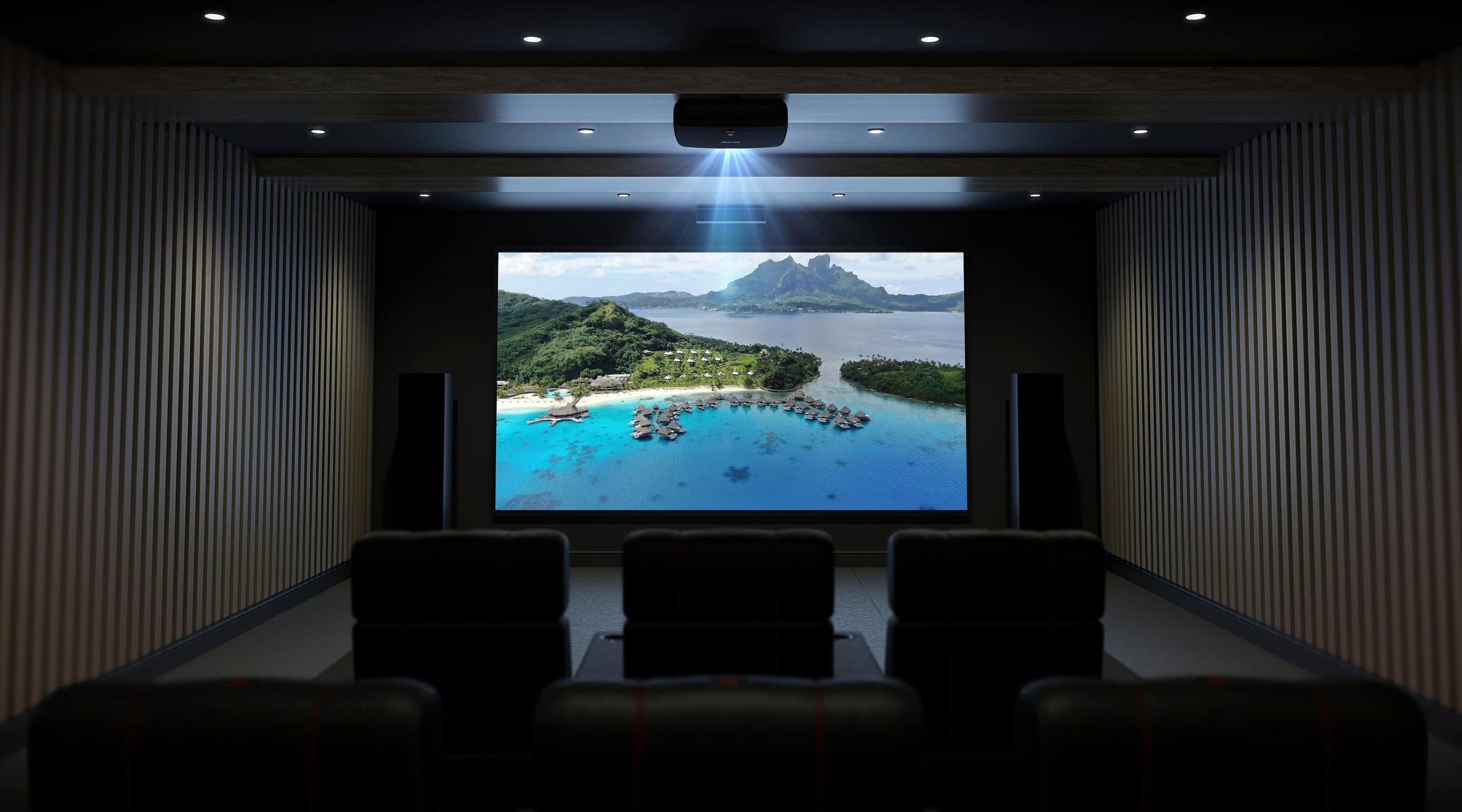
Your viewing environment plays a crucial role in determining which projector makes sense. The LS11000 excels in dedicated home theaters with controlled lighting, where its 2,500 lumens provide ample brightness for screens up to 120-150 inches. If your theater room has effective light control and you're planning a reasonably sized screen, the LS11000 delivers flagship-quality performance without flagship pricing.
The QB1000 becomes essential when your setup demands more brightness. Rooms with windows that can't be fully blacked out, larger screens beyond 150 inches, or viewing preferences that favor brighter images all benefit from the additional 800 lumens. The superior contrast also means the QB1000 maintains better image quality when some ambient light is present.
For screen pairing, both projectors work excellently with high-quality projection screens, though the QB1000's extra brightness allows more flexibility in screen selection. Ambient light rejecting screens – specialized surfaces that reflect projected light toward viewers while absorbing room lighting – pair particularly well with the QB1000's higher output.
Professional installers and calibration specialists consistently praise both projectors while noting distinct use cases. The LS11000 earns recommendations for well-designed home theaters where budget considerations matter, offering performance that satisfies even demanding viewers when properly set up.
The QB1000 receives praise for challenging installations where room conditions aren't ideal or where ultimate image quality justifies the investment. Its ISF certification means professional installers can achieve optimal results more quickly, potentially reducing installation costs despite the higher projector price.
Reviews from professional calibrators note that the QB1000's UltraBlack technology delivers black levels that approach high-end JVC and Sony models costing significantly more, making it competitive in the flagship projector market despite its more accessible pricing compared to those brands' top models.
Choose the LS11000 if you're building a serious home theater on a more reasonable budget. It delivers genuinely excellent 4K HDR performance, outstanding gaming capabilities, and professional-grade features at roughly half the cost of the flagship model. This projector excels when paired with good room design and reasonable screen sizes, offering a premium viewing experience that will satisfy most enthusiasts.
The QB1000 makes sense when image quality takes priority over budget considerations. If you're planning a large screen installation, dealing with room lighting challenges, or simply want the best possible performance regardless of cost, the brightness and contrast advantages prove their worth. This projector also makes sense for users who prefer minimal setup complexity, given its professional-grade calibration out of the box.
Both projectors represent excellent choices within their respective market segments. The LS11000 offers exceptional value for performance-focused buyers, while the QB1000 delivers flagship capabilities for users demanding ultimate image quality. Your decision should align with your specific room requirements, screen size plans, and budget priorities – either choice will deliver a genuinely premium home theater experience.
| Epson Home Cinema LS11000 | Epson QB1000 |
|---|---|
| Brightness - Critical for screen size and room lighting flexibility | |
| 2,500 lumens (excellent for dark rooms, screens up to 150") | 3,300 lumens (32% brighter, handles ambient light and screens up to 300") |
| Contrast Ratio - Most important for image depth and black levels | |
| 1,200,000:1 (very good blacks with laser dimming) | 5,000,000:1 with UltraBlack™ technology (4x better, cinema-grade blacks) |
| Display Technology - How they achieve 4K resolution | |
| 4K PRO-UHD with Precision Shift Glass Plate | Latest 4-way pixel shifting with premium VRX Cinema Lens |
| Image Processing - Affects color accuracy and HDR performance | |
| 36-bit Epson ZX Picture Processor with user-friendly HDR controls | 32-bit Epson QZX Picture Processor with advanced tone mapping and ISF certification |
| Gaming Performance - Input lag and refresh rate capabilities | |
| Sub-20ms lag, 4K/120Hz, dual HDMI 2.1 (40 Gbps) | Sub-20ms lag, 4K/120Hz, dual HDMI 2.1 (40 Gbps) - identical performance |
| HDR Support - Which formats work with each projector | |
| HDR10, HDR10+, HLG with 16-point brightness control | HDR10, HDR10+, HLG with automatic scene-by-scene optimization |
| Laser Life - Long-term ownership costs | |
| 20,000 hours (no lamp replacements needed) | 20,000 hours (no lamp replacements needed) |
| Installation Flexibility - Lens and mounting options | |
| 2.1x zoom, ±96% vertical/±47% horizontal lens shift, lens memory | 2.1x zoom, ±96% vertical/±47% horizontal lens shift, lens memory - identical |
| Calibration Requirements - Setup complexity | |
| Good out-of-box, benefits from user adjustment | ISF certified, minimal calibration needed, professional-grade preset |
| Physical Size - Installation considerations | |
| 28 lbs, 20.5" W x 7.6" H x 17.6" D | 28.2 lbs, 20.5" W x 7.6" H x 17.6" D - nearly identical |
| Value Position - Performance per dollar consideration | |
| Exceptional value - 90% of flagship performance at roughly half the cost | Premium investment - transformative brightness and contrast improvements justify higher price |
The Epson QB1000 is significantly brighter at 3,300 lumens compared to the LS11000's 2,500 lumens. This 32% brightness advantage makes the QB1000 better suited for screens larger than 150 inches and rooms with some ambient light.
We've done our best to create useful and informative comparisons to help you decide what product to buy. Our research uses advanced automated methods to create this comparison and perfection is not possible - please contact us for corrections or questions. These are the sites we've researched in the creation of this article: tvsbook.com - thesmarthomehookup.com - cepro.com - specsradar.com - projectorscreen.com - benq.com - projectorreviews.com - projectorscreen.com - youtube.com - projectorcentral.com - whathifi.com - projectorscreen.com - bestbuy.com - youtube.com - avsforum.com - versus.com - crutchfield.com - projectorcentral.com - shop.avispl.com - mediaserver.goepson.com - projectorscreen.com - bestbuy.com - simplehomecinema.com - dreamediaav.com - epson.com - bestbuy.com - news.epson.com - projectorcentral.com - avscience.com - projectorscreen.com - epson.com - dreamediaav.com - epson.ca - epson.com - bestbuy.com - hifiheaven.net - bjorns.com - thepowercentre.ca - audiogeneral.com

Privacy Policy
Terms and Conditions - Affiliate Policy
Home Security
© Copyright 2008-2026.
11816 Inwood Rd #1211, Dallas, TX 75244