


When shopping for a 4K projector, you'll quickly discover there's no such thing as "one size fits all." The projector world splits into distinct categories, each designed for specific environments and budgets. Today we're comparing two Epson projectors that represent completely different philosophies: the Home Cinema 5050UB, a consumer favorite released in 2019, and the QL3000, a professional-grade laser projector that hit the market in 2024.
Understanding these differences matters because buying the wrong projector for your space can mean either overpaying for features you'll never use or getting disappointing results in your actual viewing environment. Let's dive into what makes each projector special and help you figure out which approach fits your needs.
Before we compare specific models, it's worth understanding what you're actually buying when you purchase a "4K" projector at these price points. Neither the 5050UB nor QL3000 uses true native 4K panels—those typically start around $5,000 and go up from there. Instead, both employ pixel-shifting technology, which takes a native 1080p panel and rapidly shifts pixels to create additional detail.
Think of pixel-shifting like a photographer taking multiple slightly offset shots and combining them into one super-detailed image. The 5050UB shifts each pixel diagonally by half a pixel, effectively doubling the resolution you see on screen. The QL3000 goes further with dual-axis shifting, moving pixels both horizontally and vertically to create what Epson calls "8.29 million pixels on-screen"—essentially matching true 4K resolution.
The key performance factors that separate good projectors from great ones include brightness (measured in lumens), contrast ratio (the difference between the darkest blacks and brightest whites), color accuracy, and installation flexibility. Your room environment heavily influences which of these factors matter most to you.
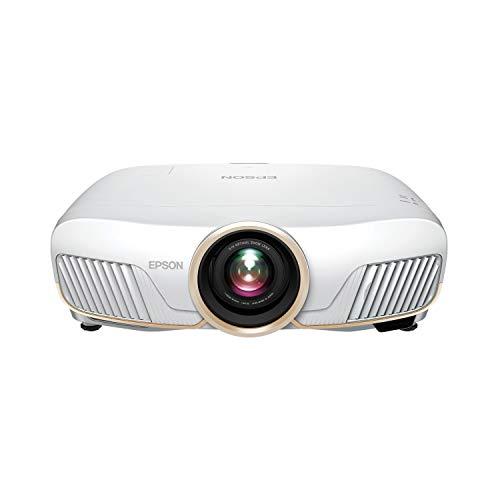
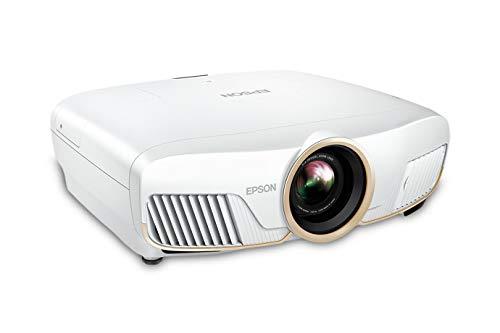
Released in 2019, the Home Cinema 5050UB arrived as Epson's answer to the question: "How much projector can you get for around three thousand dollars?" Five years later, it remains remarkably competitive, which speaks volumes about how well-engineered it was from the start.
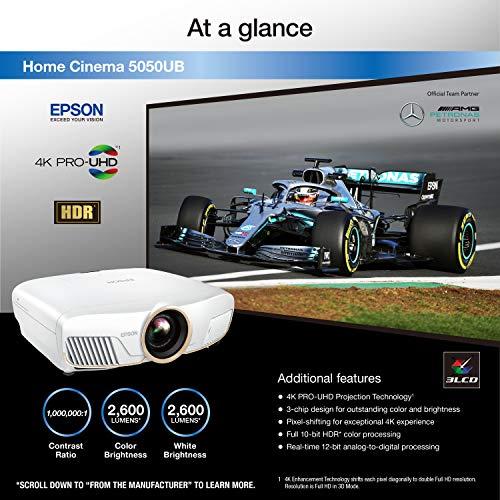
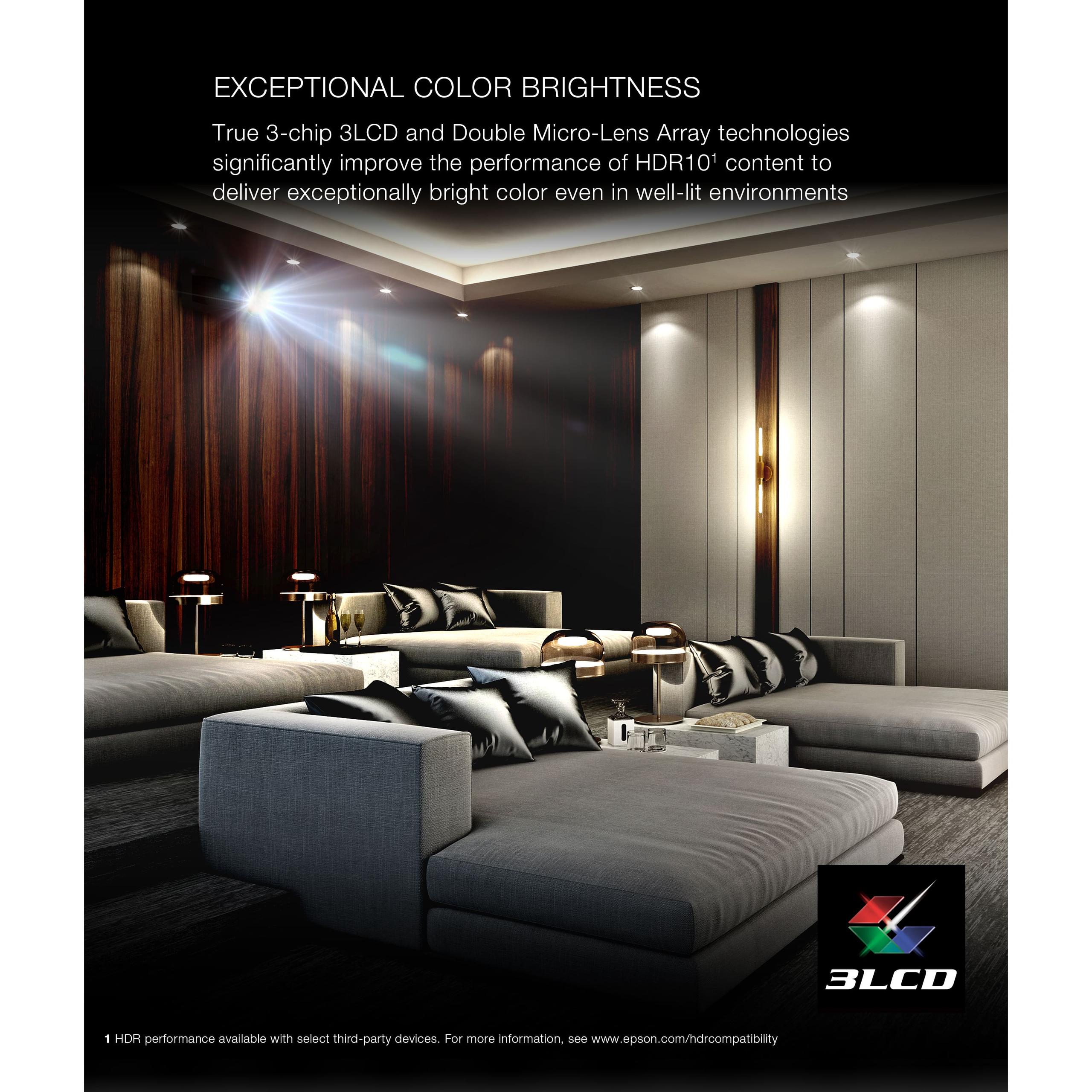
The 5050UB produces 2,600 lumens of brightness, using Epson's 3LCD technology. Here's why this matters: 3LCD projectors display red, green, and blue light simultaneously through separate panels, unlike DLP projectors that flash colors sequentially. This eliminates the "rainbow effect" some people see with DLP projectors and ensures that color brightness matches white brightness—a crucial advantage when displaying vibrant HDR content.
At 2,600 lumens, the 5050UB works best in light-controlled environments. You can watch it with some ambient light, but for the full cinematic experience with deep blacks and rich colors, you'll want to dim the lights. This makes it ideal for dedicated home theater rooms or basements where you can control lighting conditions.
What sets the 5050UB apart from many competitors is Epson's UltraBlack technology—a proprietary optical compensation filter that controls light polarization within the projector. In practical terms, this dramatically reduces light leakage that would otherwise make blacks appear gray.
The result is a claimed dynamic contrast ratio of 1,000,000:1. While these numbers are often inflated in marketing, real-world testing consistently shows the 5050UB producing some of the deepest blacks available in its price range. When you're watching a space scene or a dark movie like "Blade Runner 2049," this technology makes shadows and black areas truly disappear into darkness rather than appearing as visible gray rectangles.
The 5050UB covers an impressive 97% of the DCI-P3 color space—the same color standard used in commercial movie theaters. For context, most TVs cover only the smaller Rec. 709 color space, so this projector can display colors that look more vibrant and lifelike than what you'd see on a typical home display.
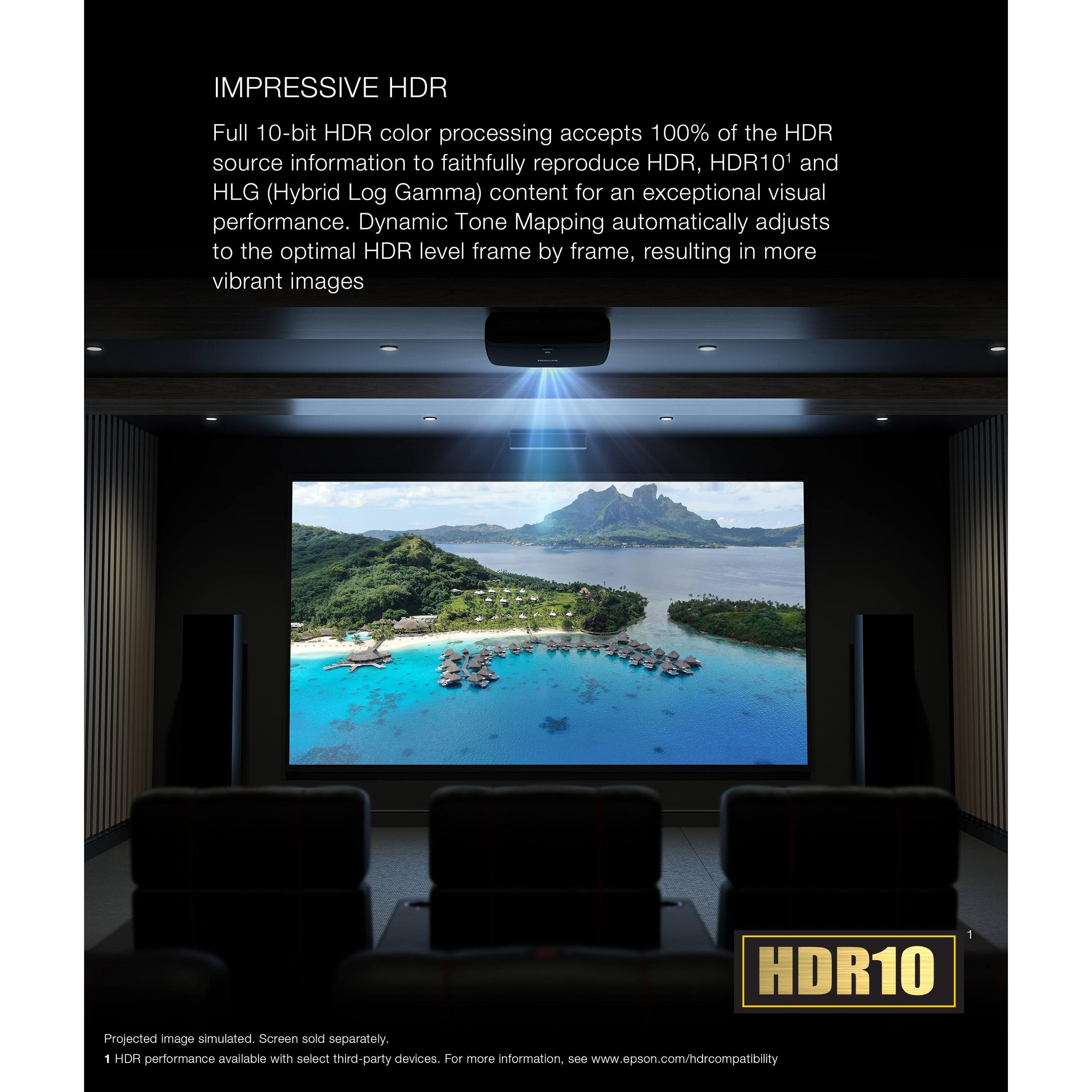
HDR (High Dynamic Range) support includes HDR10 and HLG formats, with Epson's "Precision HDR" feature allowing real-time adjustment of how HDR content appears. This matters because HDR can look too dark or too bright depending on your room and screen, and the ability to fine-tune it on-the-fly is genuinely useful during actual viewing sessions.
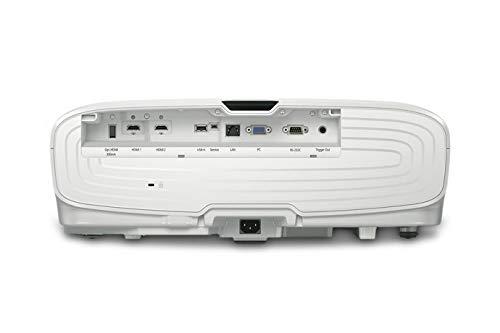
One area where the 5050UB truly shines is installation convenience. The built-in motorized lens offers 2.1x zoom range and extensive lens shift capabilities—you can move the image up, down, left, or right without physically moving the projector. The vertical lens shift covers ±96% of the image height, while horizontal shift handles ±47%.
This flexibility means you can ceiling-mount the projector behind your seating area and still perfectly align the image on your screen, even if the projector isn't perfectly centered. The lens memory feature lets you save different zoom and shift settings, making it easy to switch between different aspect ratios for movies versus TV content.
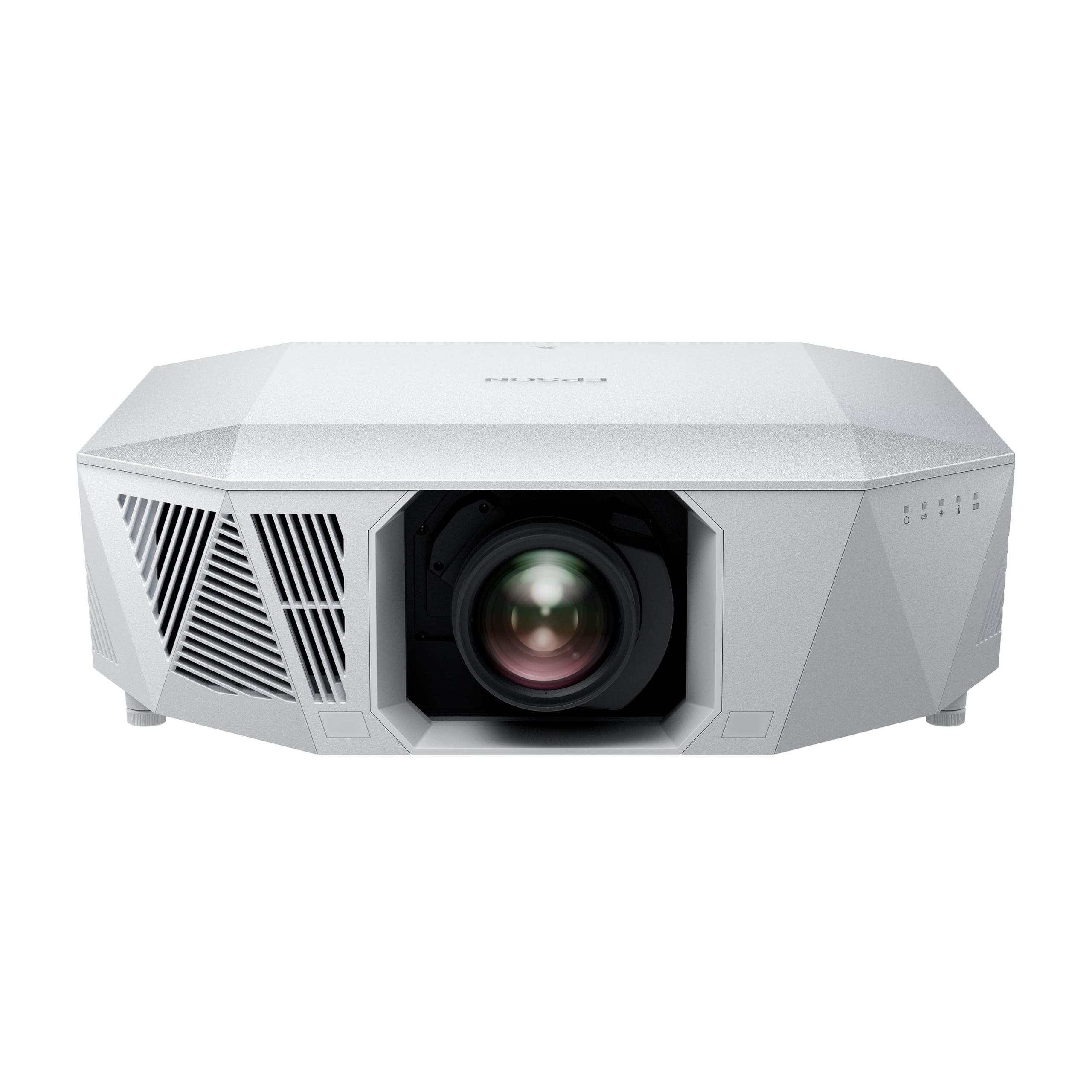
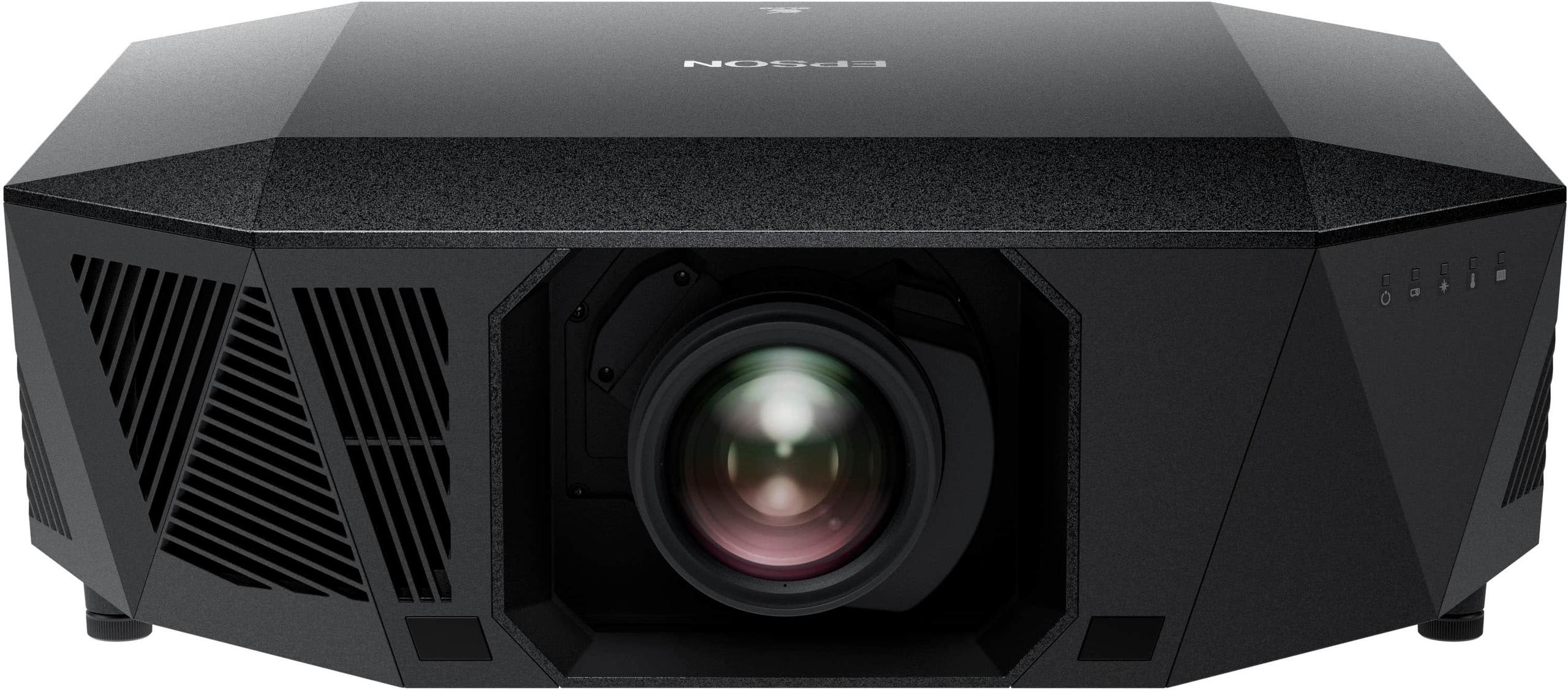
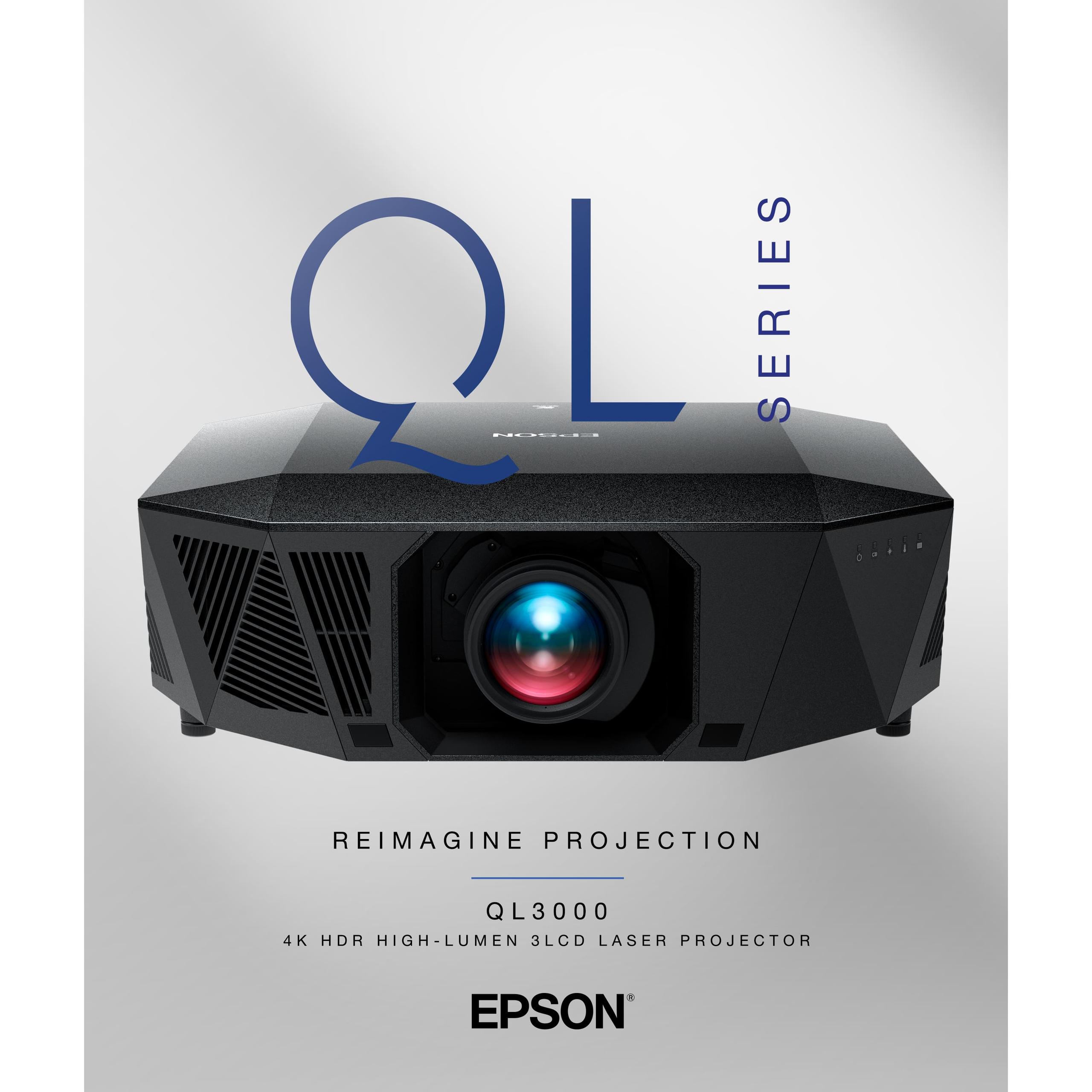
The QL3000, released in 2024, represents Epson's vision of where high-end projection is heading. This isn't just an upgraded version of the 5050UB—it's built from the ground up for entirely different applications.
The biggest difference is the light source. While the 5050UB uses a traditional 250-watt lamp that needs replacement every 3,500-5,000 hours, the QL3000 employs a blue laser phosphor system rated for 20,000 hours of consistent performance.
This change brings several practical advantages. Laser projectors turn on instantly—no warming up or cooling down periods. The light output remains consistent throughout the projector's life, whereas lamp-based projectors can lose 30-50% of their brightness over time. For commercial installations or homes where the projector gets heavy daily use, these benefits justify the premium.
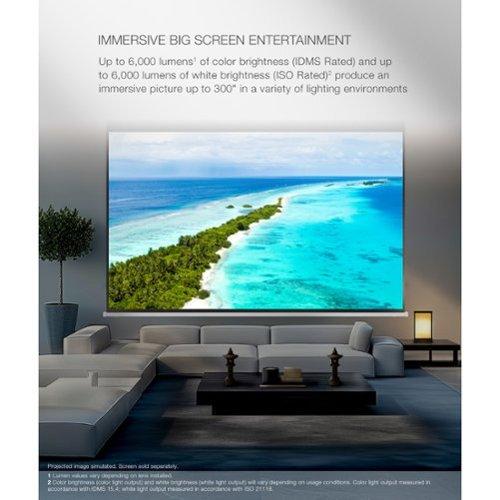
At 6,000 lumens—more than double the 5050UB—the QL3000 enters territory previously reserved for commercial cinema projectors. This brightness level enables applications impossible with traditional home theater projectors.
You can project a stunning 200-300 inch image in a room with windows and overhead lights still on. The projector maintains vibrant colors and strong contrast even in challenging lighting conditions where the 5050UB would appear washed out.
This extreme brightness also benefits HDR content significantly. HDR is designed to display much brighter highlights than standard content, and the QL3000 has the raw light output to make these highlights truly pop off the screen in a way that closely matches high-end OLED TVs.
The QL3000 uses larger 1.04-inch LCD panels compared to the 5050UB's 0.74-inch panels. Combined with dual-axis pixel-shifting and Epson's 32-bit QZX picture processor, it creates what the company calls "8.29 million pixels on-screen"—essentially matching native 4K resolution.
The practical difference is noticeable when viewing fine details like text, architectural elements, or fabric textures in 4K content. While both projectors produce sharp images, the QL3000 provides that extra level of clarity that becomes more apparent on larger screens.
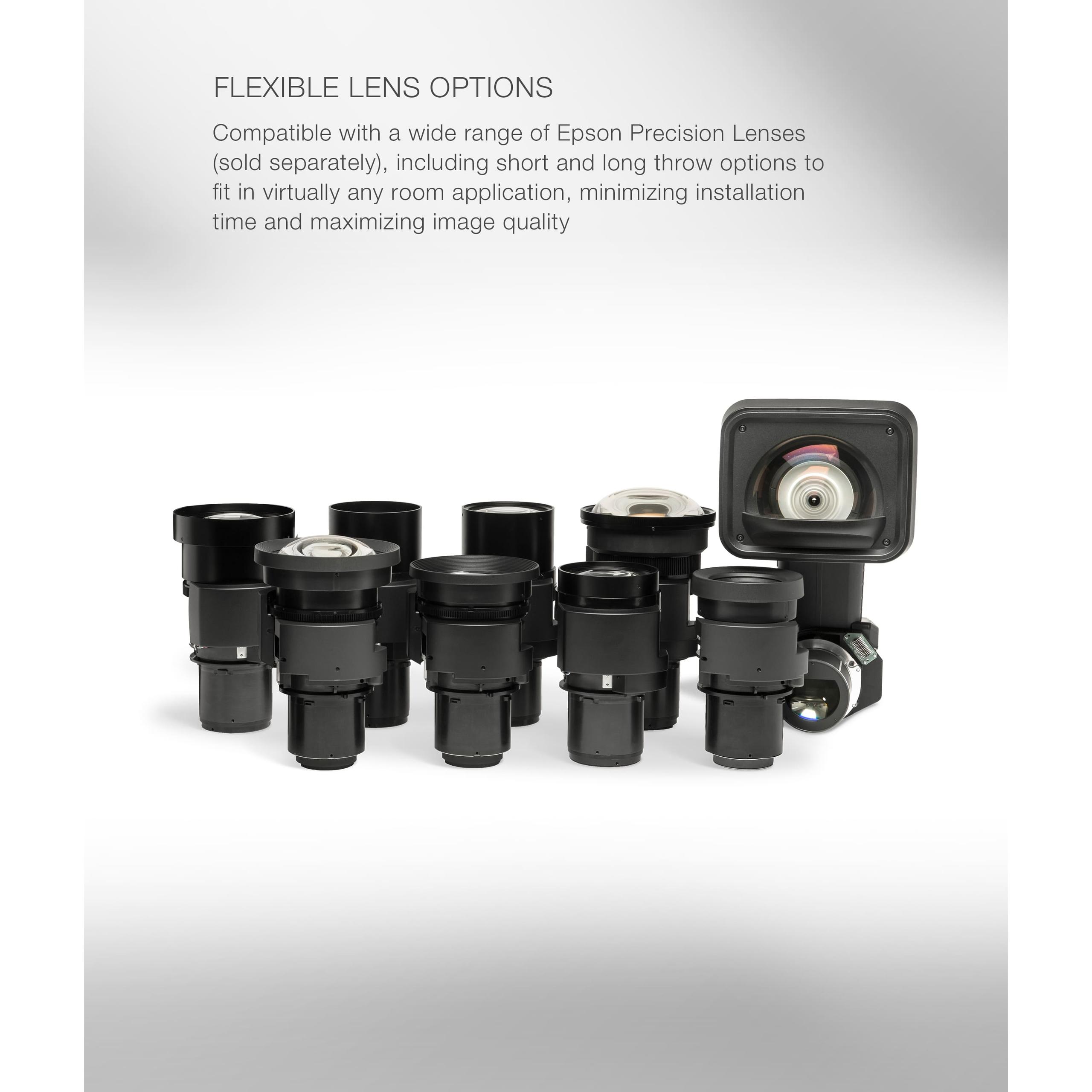
Here's where the QL3000 takes a completely different approach: it ships without a lens. This "body only" design lets professional installers choose from Epson's full range of precision lenses, from ultra-short throw options that can produce a 100-inch image from just seven inches away to long-throw lenses for specialized installations.
This flexibility comes at a cost—both financial and practical. You'll need to budget an additional $1,000-$3,000 for an appropriate lens, and the installation requires more planning and expertise than simply mounting the 5050UB and connecting cables.
The brightness difference between these projectors fundamentally changes where and how you can use them. The 5050UB at 2,600 lumens requires a relatively dark room to achieve optimal image quality. Turn on overhead lights or open curtains, and the image begins to look washed out, losing contrast and color saturation.
The QL3000's 6,000 lumens transforms this equation. Based on our research into professional reviews and user experiences, this projector maintains impressive image quality even with significant ambient light. One reviewer noted being able to watch HDR content with living room lights on and still getting better contrast and color than from many TVs.
For most dedicated home theater rooms, the 5050UB's brightness is perfectly adequate and actually preferable—you don't want excessive brightness in a dark room as it can cause eye fatigue. But if you're setting up projection in a multipurpose living space, great room, or commercial environment, the QL3000's extra brightness becomes essential.
Despite the QL3000's higher specifications on paper, real-world contrast performance tells a more nuanced story. The 5050UB's UltraBlack technology produces genuinely impressive black levels that rival projectors costing several times more.
In a completely dark room, the 5050UB can make black bars at the top and bottom of movies virtually disappear, creating that true cinematic experience where the image seems to float in space. The QL3000, while technically superior in many ways, can't quite match this black level performance in pitch-dark conditions.
However, the QL3000's advantage emerges in rooms with any ambient light. Higher brightness projectors can maintain the perception of good contrast even when blacks aren't absolutely perfect, because the bright portions of the image remain vivid and punchy.
Both projectors use 3LCD technology and offer excellent color accuracy, but they approach calibration differently. The 5050UB provides extensive manual calibration controls that enthusiasts love—you can fine-tune white balance, color management, and gamma curves to achieve reference-quality color accuracy.
The QL3000's laser light source provides more stable color over time and includes professional-grade calibration options designed for commercial installations. Its larger LCD panels and advanced processing theoretically enable better color reproduction, though in practice, both projectors can achieve excellent results when properly calibrated.
For most home users, the 5050UB's color performance out of the box is exceptional and requires minimal adjustment. The QL3000's color advantages become more apparent in professional applications where absolute accuracy and consistency are critical.
Gaming capabilities highlight the five-year technology gap between these projectors. The 5050UB supports 4K content at 60Hz with about 22.5ms of input lag—perfectly adequate for most gaming but not ideal for competitive play. It also includes Full HD 3D support for the few games that still use this technology.
The QL3000 embraces modern gaming with 4K HDR support at 120Hz and dual HDMI 2.1 ports. This makes it compatible with PlayStation 5 and Xbox Series X gaming at full resolution and refresh rate. Input lag specifications aren't widely available yet, but the auto low-latency mode suggests it's optimized for gaming applications.
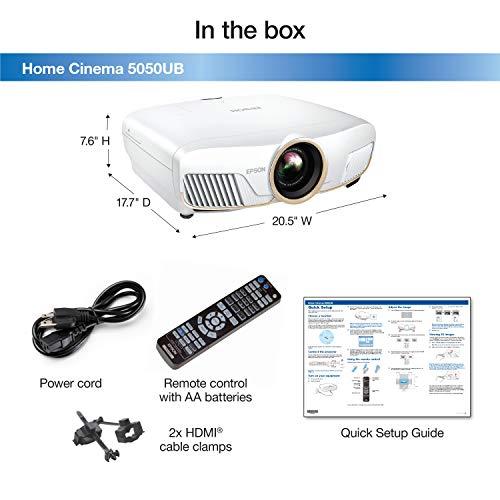
The 5050UB represents the traditional consumer electronics approach: everything you need comes in the box. The high-quality motorized lens, comprehensive remote control, and detailed setup instructions make it accessible for DIY installation. Most enthusiasts can have it ceiling-mounted and perfectly aligned in a weekend.
The QL3000's professional approach requires more planning but offers superior flexibility. The interchangeable lens system means you can optimize the installation for your specific room geometry, screen size, and throw distance. However, you'll need to research lens compatibility, factor additional costs into your budget, and potentially hire professional installers.
At the time of writing, the price difference between these projectors is substantial—the 5050UB costs roughly one-fifth of the QL3000's total system price. However, long-term costs shift this equation somewhat.
The 5050UB requires lamp replacements every few years, depending on usage. Replacement lamps typically cost a few hundred dollars, and brightness gradually decreases over the lamp's lifetime. Over a decade of ownership, you might spend an additional thousand dollars on lamp replacements.
The QL3000's laser light source eliminates these ongoing costs while maintaining consistent brightness for 20,000 hours—potentially 15-20 years of typical home use. The laser also enables instant on/off operation without warmup or cooldown periods, making the projector more practical for casual viewing.
The 5050UB makes most sense for dedicated home theater rooms where you can control lighting conditions. If you're building a basement theater, converting a spare bedroom, or have a living space where you can dim lights for movie watching, this projector delivers exceptional performance per dollar.
It's particularly compelling for movie lovers who prioritize image quality over convenience features. The deep blacks, accurate colors, and sharp 4K enhancement create a genuinely cinematic experience that rivals much more expensive projectors. The included motorized lens system makes it practical for most residential installations without requiring professional help.
Based on user reviews and professional evaluations, the 5050UB consistently impresses with its image quality, especially considering its price point. It's become something of a legend among home theater enthusiasts because it delivers performance that was previously available only in projectors costing two or three times as much.
The QL3000 justifies its premium in specific scenarios where the 5050UB simply can't deliver acceptable results. Large-scale installations with screen sizes over 200 inches need the extra brightness to maintain image quality. Multipurpose rooms where complete light control isn't possible benefit enormously from the higher light output.
Commercial applications—restaurants, bars, conference rooms, houses of worship—often require the reliability and consistent performance that laser technology provides. The 20,000-hour light source life and instant on/off operation make it practical for daily use in ways that lamp-based projectors aren't.
High-end residential applications also favor the QL3000, particularly in great rooms or outdoor installations where ambient light is unavoidable. The extreme brightness enables true HDR performance that can compete with high-end TVs, even in challenging viewing conditions.
The five-year gap between these projectors' release dates tells an interesting story about projection technology evolution. When the 5050UB launched in 2019, it represented the pinnacle of lamp-based home theater projection, incorporating advanced pixel-shifting, excellent contrast technology, and comprehensive color management at an unprecedented price point.
The QL3000's 2024 release reflects where the industry is heading: laser light sources, extreme brightness levels, and professional-grade flexibility. It's designed for applications that weren't practical with previous generation technology—essentially expanding what's possible with projection rather than just improving existing capabilities.
This evolution mirrors what happened in the TV market, where OLED and QLED technologies didn't just make TVs better—they enabled new use cases and installation scenarios that weren't previously practical.
Choose the Home Cinema 5050UB if you want exceptional home theater performance at a reasonable price. It's perfect for dedicated viewing spaces where you can control lighting, and it delivers image quality that genuinely rivals much more expensive alternatives. The complete package approach makes it accessible for DIY installation, and five years after release, it remains competitive with newer projectors in its price range.
Select the QL3000 if you need projection capabilities that go beyond traditional home theater applications. Whether that's extremely large screens, rooms with ambient light, commercial reliability, or compatibility with next-generation gaming systems, it delivers performance that justifies the premium in these demanding scenarios.
The truth is, most home theater enthusiasts will be absolutely thrilled with the 5050UB's performance and should invest the money saved into a better screen, audio system, or room treatments. The QL3000 serves specialized applications where its unique capabilities are genuinely necessary rather than just nice to have.
Both projectors represent excellent engineering, just targeted at completely different use cases and budgets. Understanding which category you fall into will make the choice clear.
| Epson Home Cinema 5050UB | Epson QL3000 |
|---|---|
| Brightness - Determines viewing environment flexibility and screen size capability | |
| 2,600 lumens (requires light control for optimal image quality) | 6,000 lumens (maintains quality even with ambient light and very large screens) |
| Light Source Technology - Affects longevity, maintenance, and consistency | |
| 250W UHE lamp (3,500-5,000 hour lifespan, requires replacements) | Blue laser phosphor (20,000 hour lifespan, no maintenance, instant on/off) |
| 4K Display Technology - How each achieves 4K resolution | |
| 4K PRO-UHD pixel-shifting from 1080p panels (~4 million pixels) | Dual-axis pixel-shifting from larger panels (8.29 million pixels on-screen) |
| Contrast Ratio - Critical for deep blacks and image depth in dark scenes | |
| 1,000,000:1 with UltraBlack technology (exceptional blacks in dark rooms) | 5,000,000:1 with thermal processing (higher spec but less impressive blacks than 5050UB) |
| Installation Approach - Affects total cost and setup complexity | |
| Complete system with 2.1x motorized lens included | Body-only design requiring separate lens purchase ($1,000-$3,000 additional) |
| Lens Flexibility - Determines placement options and screen size range | |
| Fixed 2.1x zoom with extensive motorized lens shift (±96% vertical) | Interchangeable lens system from ultra-short throw to long throw options |
| Gaming Support - Compatibility with modern gaming consoles | |
| 4K/60Hz, 22.5ms input lag, includes 3D support | 4K/120Hz with HDMI 2.1, optimized for PS5/Xbox Series X |
| Physical Size - Installation and mounting requirements | |
| 24.7 lbs, consumer-friendly dimensions for DIY mounting | 46.5 lbs, professional-grade construction requiring robust mounting |
| Color Performance - Accuracy and color space coverage | |
| 97% DCI-P3 coverage, excellent out-of-box accuracy | Larger panels with advanced processing, laser provides consistent color over time |
| Target Market - Who each projector is designed for | |
| Home theater enthusiasts wanting premium quality at reasonable cost | Professional installations, commercial use, extreme brightness requirements |
| HDR Support - High dynamic range content compatibility | |
| HDR10, HLG with 16-step real-time adjustment | HDR10 with professional-grade processing and extreme brightness for true HDR impact |
| Total Cost Reality - What you'll actually spend | |
| Complete ready-to-install system at moderate price point | Premium pricing plus required lens makes total cost 4-5x higher than 5050UB |
For dedicated home theaters with light control, the Epson Home Cinema 5050UB is the better choice. Its UltraBlack technology produces deeper blacks and superior contrast in dark rooms, while the included motorized lens makes installation straightforward. The QL3000 is overkill for most home theaters and costs significantly more.
The biggest difference is brightness and target market. The Epson Home Cinema 5050UB produces 2,600 lumens and targets home theater enthusiasts, while the QL3000 delivers 6,000 lumens for professional installations and rooms with ambient light. The QL3000 also uses laser technology instead of traditional lamps.
The QL3000 is far superior in bright rooms due to its 6,000-lumen output—more than double the Epson Home Cinema 5050UB. The 5050UB requires light control for optimal image quality, while the QL3000 maintains vibrant colors even with overhead lights on.
Neither projector uses native 4K panels. The Epson Home Cinema 5050UB uses pixel-shifting to enhance 1080p panels, creating approximately 4 million pixels on-screen. The QL3000 employs more advanced dual-axis pixel-shifting to produce 8.29 million pixels, essentially matching true 4K resolution.
The QL3000 is better for modern gaming with 4K/120Hz support and HDMI 2.1 ports, making it compatible with PlayStation 5 and Xbox Series X. The Epson Home Cinema 5050UB supports 4K/60Hz with 22.5ms input lag and includes 3D gaming support that the QL3000 lacks.
The Epson Home Cinema 5050UB is a complete system with a motorized lens included, making it suitable for DIY installation. The QL3000 ships without a lens, requiring separate lens purchase and typically professional installation. This adds significant cost and complexity to the QL3000 setup.
The Epson Home Cinema 5050UB uses a traditional 250W lamp lasting 3,500-5,000 hours that requires eventual replacement. The QL3000 features a laser light source rated for 20,000 hours with no maintenance needed, instant on/off operation, and consistent brightness throughout its life.
The Epson Home Cinema 5050UB produces superior black levels in dark rooms thanks to its UltraBlack technology, creating a more cinematic experience. While the QL3000 has higher contrast specifications, the 5050UB delivers deeper, more impressive blacks for movie watching in light-controlled environments.
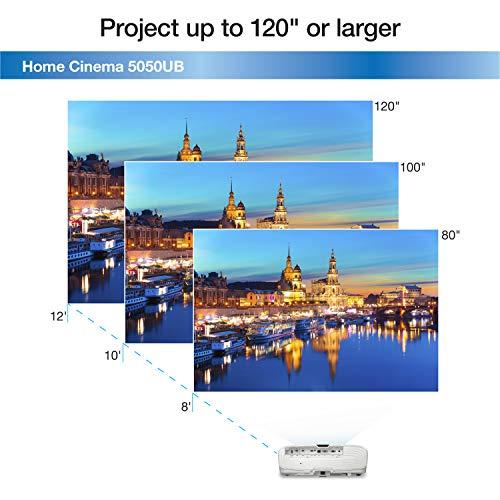
The Epson Home Cinema 5050UB works well with screens up to 150 inches in dark rooms. The QL3000 excels with very large screens from 200-300 inches and maintains image quality even on massive displays due to its extreme brightness output.
The Epson Home Cinema 5050UB offers exceptional value for home theater enthusiasts, delivering premium image quality at a reasonable price point. The QL3000 costs significantly more and is only worthwhile for specialized applications requiring extreme brightness or professional installation features.
Both support HDR10, but the QL3000 has a major advantage due to its 6,000-lumen brightness. HDR content requires high light output to display bright highlights properly, making the QL3000 more capable of delivering true HDR impact. The Epson Home Cinema 5050UB handles HDR well in dark rooms but lacks the brightness for optimal HDR performance.
Choose the QL3000 for multipurpose rooms where you can't control lighting completely. Its extreme brightness maintains image quality with ambient light present. The Epson Home Cinema 5050UB requires a dedicated, light-controlled space to perform at its best and isn't suitable for rooms with windows or regular overhead lighting during viewing.
We've done our best to create useful and informative comparisons to help you decide what product to buy. Our research uses advanced automated methods to create this comparison and perfection is not possible - please contact us for corrections or questions. These are the sites we've researched in the creation of this article: rtings.com - projectorscreen.com - hometechnologyreview.com - thesmarthomehookup.com - youtube.com - rtings.com - techgearlab.com - projectorcentral.com - projectorreviews.com - projectorcentral.com - avsforum.com - rtings.com - projectorreviews.com - projectorreviews.com - avsforum.com - avsforum.com - audiogeneral.com - hifiheaven.net - manuals.plus - crutchfield.com - projectorcentral.com - epson.com - mediaserver.goepson.com - bestbuy.com - ngxptech.com - projectorcentral.com - projectorreviews.com - projectorreviews.com - epson.com - audiogeneral.com - hometechnologyreview.com - mediaserver.goepson.com - hifiheaven.net - epson.com - new-age-electronics.com - stereoeast.com - projectorreviews.com - bestbuy.com - youtube.com - avsforum.com - youtube.com - youtube.com - projectorscreen.com - hifiheaven.net - shopsilica.com - planettv.com - audiogeneral.com - audiogeneral.com

Privacy Policy
Terms and Conditions - Affiliate Policy
Home Security
© Copyright 2008-2026.
11816 Inwood Rd #1211, Dallas, TX 75244