

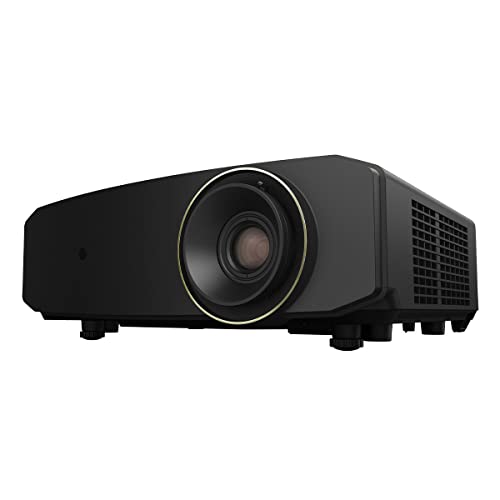
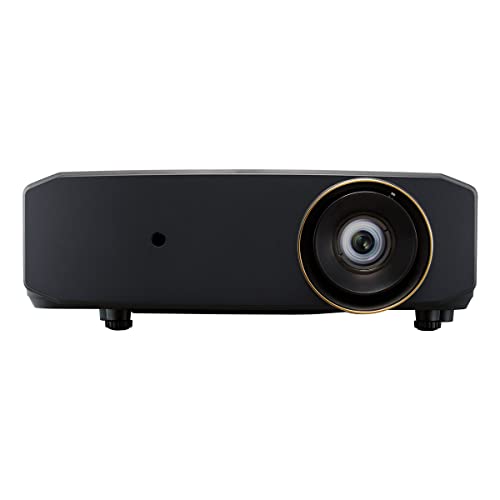
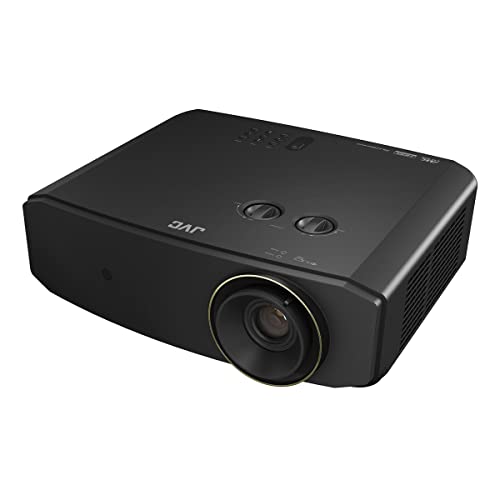
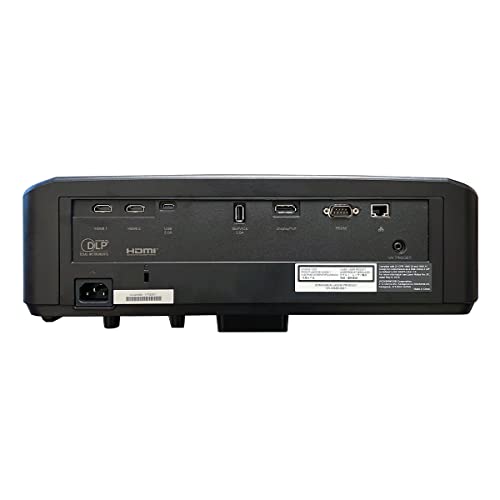
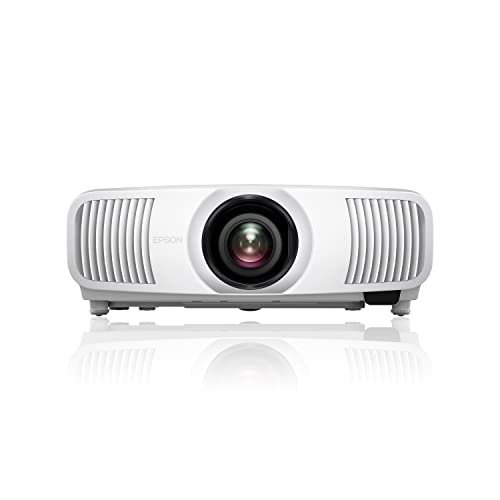
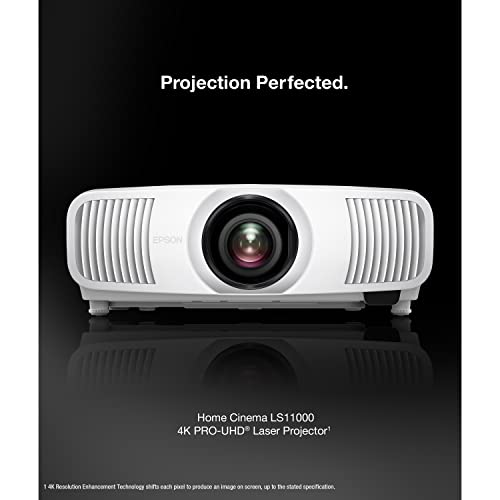
When you're ready to upgrade your home entertainment setup with a serious 4K laser projector, you're entering a category that represents the sweet spot of modern projection technology. These aren't your dad's grainy basement projectors—we're talking about cinema-quality images on screens that make your 75" TV look modest. The two projectors we're examining today, the JVC LX-NZ30 and Epson Home Cinema LS11000, both launched in 2023 and represent different philosophies in achieving that "wow factor" we all want from our home theaters.
Before diving into the comparison, let's talk about why laser projectors have become the go-to choice for serious home theater enthusiasts. Traditional projector lamps (called UHP lamps) burn out every 2,000-4,000 hours and gradually dim over their lifespan. Laser projectors eliminate this headache entirely, typically lasting 20,000 hours while maintaining consistent brightness. That's roughly 10 years of movie nights without any maintenance.
The "4K" designation on both these projectors needs some explanation, because neither actually uses native 4K imaging chips—those would cost significantly more. Instead, both use sophisticated pixel-shifting technology that rapidly moves lower-resolution images to create the appearance of 4K detail. Think of it like a high-speed optical illusion that your eyes can't detect. The result is genuinely sharp 4K imagery that's virtually indistinguishable from native 4K at normal viewing distances.
Here's where things get interesting. The JVC LX-NZ30 uses single-chip DLP (Digital Light Processing) technology, while the Epson LS11000 employs 3LCD technology. This fundamental difference shapes everything about how these projectors perform.
DLP projectors use a single chip covered with millions of tiny mirrors that tilt thousands of times per second to create images. A spinning color wheel adds color information. This design typically delivers sharp, punchy images with excellent motion handling—great for sports and action movies. However, the single chip means color and brightness can be limited, and some viewers (maybe 2-3% of people) can see brief rainbow flashes during eye movements.
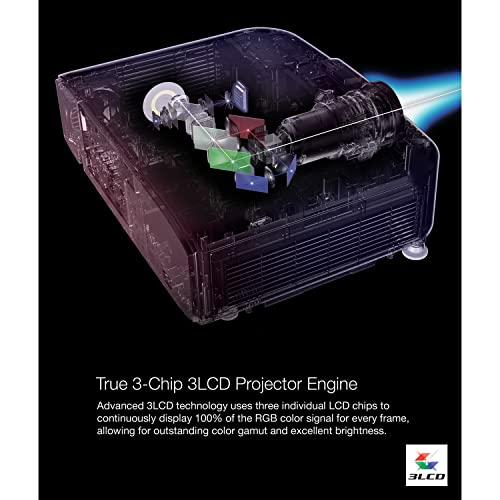
The Epson LS11000 takes a different approach with three separate LCD panels—one each for red, green, and blue light. This eliminates any possibility of rainbow artifacts and typically produces more accurate colors with better brightness consistency. The tradeoff is usually slightly softer images compared to DLP, though modern 3LCD projectors have largely closed this gap.
This is where the JVC LX-NZ30 makes its strongest case. At 3,300 lumens, it significantly outshines the Epson LS11000's 2,500 lumens. That 800-lumen difference isn't just a number on paper—it's the difference between watching comfortably with some room lighting versus needing theater-dark conditions.
The JVC's brightness advantage becomes crucial if your viewing room has windows, ambient lighting, or serves multiple purposes beyond movie watching. Many families can't dedicate a room to complete darkness, and the JVC LX-NZ30 was clearly designed with this reality in mind. Its BLU-Escent laser system combines a blue laser with phosphor coating to create white light, then uses dynamic laser dimming to instantly adjust brightness scene by scene. This creates what JVC calls "infinite contrast" by cutting laser output to true black when needed.
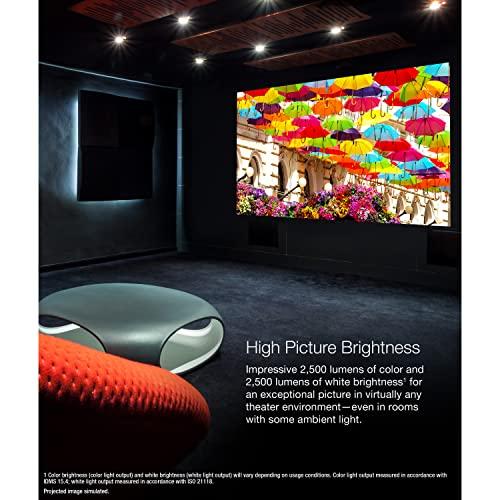
However, raw lumens don't tell the complete story. The Epson LS11000's 3LCD design produces equal color and white brightness, meaning its 2,500 lumens are more consistently distributed across all colors. DLP projectors often show lower color brightness than their white brightness ratings, so the actual performance gap between these projectors isn't as dramatic as the specifications suggest.
If brightness is the JVC's strength, contrast performance is where the Epson LS11000 takes a commanding lead. Our research into professional reviews consistently shows the Epson achieving much deeper black levels—the foundation of good contrast.
Black levels matter enormously for image quality. When a projector can't produce true blacks, dark scenes look washed out and the entire image loses that "pop" that makes movies engaging. The JVC LX-NZ30, like most DLP projectors, produces what reviewers describe as "dark gray" rather than true black. This is an inherent limitation of DLP technology that even dynamic laser dimming can't completely overcome.
The Epson LS11000's 3LCD panels, by contrast, can block light more effectively, producing blacks that measure around 0.038 nits in professional testing. This translates to a native contrast ratio exceeding 5,000:1, compared to typical DLP contrast ratios of 100-200:1. When you're watching a movie with dark scenes—think Batman or any space epic—this difference is immediately apparent.
The practical impact is significant. The Epson will make your movies look more cinematic, with better shadow detail and more realistic nighttime scenes. The JVC's dynamic laser dimming helps, but it can't match the Epson's native contrast advantage.
Both projectors excel for gaming, but in different ways. The JVC LX-NZ30 achieves remarkably low input lag—as little as 6.25 milliseconds at 1080p resolution with its 240Hz support. For competitive gaming where every millisecond matters, this performance is exceptional.
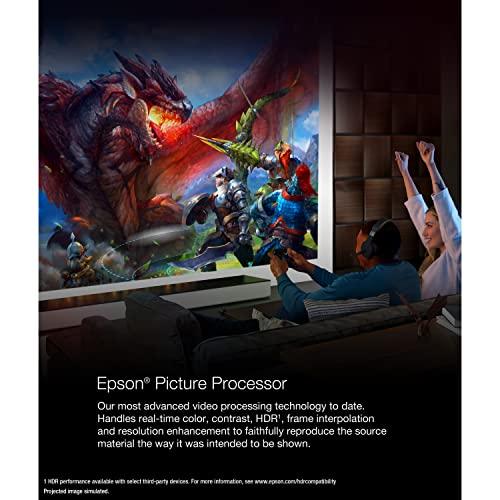
However, the Epson LS11000 takes a more forward-thinking approach with dual HDMI 2.1 inputs supporting 4K resolution at 120Hz refresh rates. This means full compatibility with PlayStation 5 and Xbox Series X at their highest performance settings, plus future-proofing for whatever gaming technology comes next.
The connectivity difference is crucial here. The JVC LX-NZ30's HDMI 2.0 inputs limit 4K gaming to 60Hz, which is adequate for most current games but leaves no room for growth. The Epson's HDMI 2.1 ports also support eARC (enhanced Audio Return Channel), simplifying audio setup with modern sound systems.
For current gaming needs, both projectors perform excellently. For long-term value and future console generations, the Epson LS11000 has a clear advantage.
The image quality comparison reveals fascinating technical differences. The JVC LX-NZ30 uses JVC's E-shift pixel-shifting technology, which diagonally shifts the native 1080p image to create 4K resolution. This works well, producing sharp images with good detail, but it's a relatively straightforward implementation of pixel shifting.
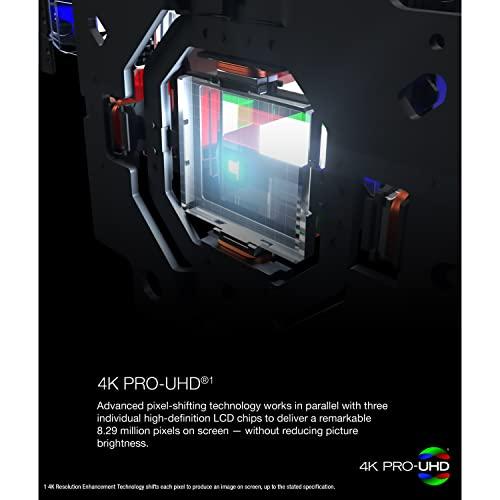
The Epson LS11000 employs more sophisticated 4K PRO-UHD technology with something called Precision Shift Glass Plate. This system performs quadruple pixel-shifting, moving each pixel both diagonally and horizontally multiple times per frame. The result is 8.29 million pixels displayed on screen—double what older Epson pixel-shifting projectors achieved.
Color processing also differs significantly. The JVC covers 100% of the Rec. 709 color standard (the baseline for most content) and offers BT.2020 compatibility for future HDR content. Its Auto Tone Mapping feature automatically optimizes HDR10 and HLG content, reducing the need for manual adjustments.
The Epson LS11000 delivers more accurate color reproduction out of the box, thanks to its 3LCD design and advanced color processing. Professional calibrators consistently achieve better color accuracy results with the Epson, and its lack of a color wheel eliminates any timing issues that can affect color precision in DLP projectors.
Both projectors offer excellent installation flexibility, but with different advantages. The JVC LX-NZ30 weighs just 13 pounds, making it easier to mount and position. Its manual lens offers 1.6x zoom range with ±60% vertical and ±23% horizontal lens shift—generous enough for most installations.
The Epson LS11000 is heavier but offers superior lens features. Its 2.1x motorized zoom provides more installation flexibility, while ±96% vertical and ±47% horizontal lens shift handles challenging room layouts. The motorized controls and lens memory function really shine for enthusiasts who want to switch between 16:9 and 2.35:1 content formats—the projector can automatically adjust lens position and zoom for different aspect ratios.
The Epson's lens memory feature deserves special mention. If you enjoy both regular movies and ultra-widescreen films, you can set up the projector to fill your screen properly for each format and switch between them at the touch of a button. This level of automation appeals to serious home theater enthusiasts who want professional-grade features.
At the time of writing, the JVC LX-NZ30 typically sells for several hundred dollars less than the Epson LS11000. This price difference becomes significant when you consider the total system cost including screens, mounting, and installation.
The JVC's value proposition centers on practical benefits: higher brightness for versatile room lighting, lighter weight for easier installation, and lower purchase price. If your room can't achieve complete darkness or you want a projector that works well in multiple scenarios, the extra brightness provides real value.
The Epson LS11000 justifies its premium through superior image quality in controlled environments, future-proof gaming connectivity, and professional-grade lens features. The three-year warranty (compared to JVC's one-year coverage) adds long-term value, and the motorized lens controls save money on professional calibration services.
Our evaluation of expert and user reviews reveals consistent patterns. The JVC LX-NZ30 consistently impresses viewers with its brightness and sharp images, particularly in rooms with ambient light. Users appreciate its plug-and-play nature and reliable performance across different content types.
However, the black level limitations become apparent in dark viewing environments. Multiple reviews mention that dark scenes lack the depth and realism that make movies truly cinematic. The projector works best when paired with ambient light rejecting screens, which help improve perceived contrast.
The Epson LS11000 receives consistent praise for image quality, particularly contrast and color accuracy. Professional reviewers often rank it among the best projectors in its price class for overall picture quality. The gaming performance with modern consoles earns particular praise from younger reviewers.
The main criticism involves brightness limitations in less-than-ideal rooms. While 2,500 lumens sounds impressive, it's often not enough for viewing with significant ambient light, requiring users to control room lighting more carefully.
Choose the JVC LX-NZ30 if your viewing environment has ambient light challenges, you prioritize brightness and value, or you want a reliable projector that works well across different scenarios. It's particularly appealing for families who use their viewing room for multiple purposes and can't maintain theater-dark conditions.
The JVC also makes sense if you're primarily gaming at 1080p or standard 4K/60Hz, where its low input lag provides excellent performance without requiring the latest connectivity standards.
Choose the Epson LS11000 if you have a dedicated home theater with good light control, prioritize image quality over maximum brightness, or want future-proof gaming capabilities. The superior contrast performance makes it the better choice for serious movie watching, particularly for content with challenging lighting scenarios.
The Epson is also the clear winner if you're building a high-end system where features like lens memory, motorized controls, and HDMI 2.1 connectivity justify the premium price.
Both projectors represent excellent value in the 4K laser category, but they serve different needs. The JVC LX-NZ30 excels as a bright, versatile projector for real-world viewing environments, while the Epson LS11000 delivers superior cinematic image quality for dedicated home theaters.
Your room lighting conditions should drive this decision more than any other factor. If you can achieve good light control, the Epson's superior contrast and future-proof features justify its premium. If your room has lighting challenges or serves multiple purposes, the JVC's brightness advantage provides more practical benefit.
Either choice will deliver impressive 4K images that transform your viewing experience. The key is matching the projector's strengths to your specific viewing environment and preferences.
| JVC LX-NZ30 | Epson Home Cinema LS11000 |
|---|---|
| Brightness - Critical for rooms with ambient light | |
| 3,300 ANSI lumens (excellent for bright rooms) | 2,500 ANSI lumens (requires more controlled lighting) |
| Display Technology - Affects image quality and rainbow artifacts | |
| Single-chip DLP (sharp images, possible rainbows) | 3-chip 3LCD (no rainbows, better color accuracy) |
| Black Levels - Most important for cinematic image quality | |
| Dark gray blacks (DLP limitation) | True black levels (major contrast advantage) |
| 4K Resolution Method - Both achieve sharp 4K images | |
| E-shift pixel shifting from 1080p | 4K PRO-UHD with Precision Shift Glass Plate |
| Gaming Connectivity - Future-proofing for next-gen consoles | |
| HDMI 2.0 (4K/60Hz max, 1080p/240Hz) | HDMI 2.1 (4K/120Hz, better for PS5/Xbox Series X) |
| Input Lag - Lower is better for competitive gaming | |
| 6.25ms at 1080p/240Hz (exceptional for esports) | Below 20ms at 4K (excellent for console gaming) |
| Lens Features - Installation flexibility and convenience | |
| 1.6x manual zoom, manual lens shift | 2.1x motorized zoom, motorized shift, lens memory |
| Weight - Affects installation difficulty | |
| 13 pounds (easier ceiling mounting) | 28 pounds (may require professional installation) |
| HDR Support - Modern content compatibility | |
| HDR10, HLG with Auto Tone Mapping | HDR10, HDR10+, HLG (broader format support) |
| Light Source Lifespan - Long-term maintenance costs | |
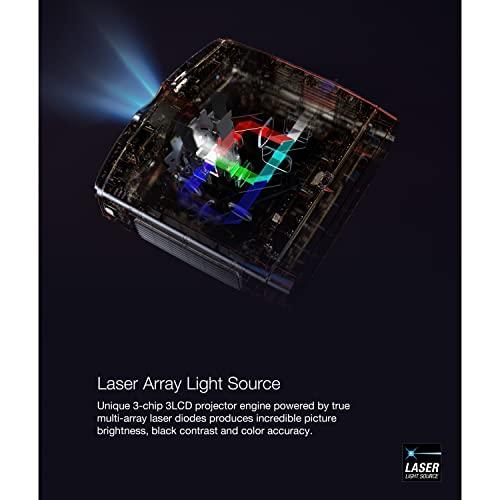
| 20,000 hours BLU-Escent laser | 20,000 hours laser array |
| Warranty Coverage - Protection for your investment | |
| 1 year parts and labor | 3 years parts and labor |
| Best Use Case - Which room setup works best | |
| Bright family rooms, versatile lighting | Dedicated dark home theaters, serious cinephiles |
The JVC LX-NZ30 is significantly brighter at 3,300 lumens compared to the Epson LS11000 at 2,500 lumens. This 800-lumen difference makes the JVC LX-NZ30 better suited for family rooms, living rooms, or any space where you can't achieve complete darkness. The Epson LS11000 works best in dedicated home theaters with controlled lighting.
The Epson LS11000 delivers superior black levels and contrast performance. Its 3LCD technology produces true blacks, while the JVC LX-NZ30 shows dark gray blacks typical of DLP projectors. For cinematic image quality in dark rooms, the Epson LS11000 provides a more immersive viewing experience with better shadow detail.
The Epson LS11000 is better for gaming with PlayStation 5 and Xbox Series X due to its HDMI 2.1 inputs supporting 4K at 120Hz. The JVC LX-NZ30 has excellent low input lag (6.25ms) but is limited to 4K at 60Hz due to HDMI 2.0 connections. For competitive gaming at 1080p, both projectors perform excellently.
The JVC LX-NZ30 may show occasional rainbow artifacts since it uses single-chip DLP technology, though most viewers won't notice them. The Epson LS11000 completely eliminates rainbow artifacts thanks to its 3-chip 3LCD design, making it the safer choice for viewers sensitive to color flashing.
The JVC LX-NZ30 is easier to install due to its lighter weight (13 lbs vs 28 lbs) and simpler setup. However, the Epson LS11000 offers more installation flexibility with greater lens shift range and motorized controls. The Epson LS11000 also includes lens memory for switching between different screen formats.
Both the JVC LX-NZ30 and Epson LS11000 feature laser light sources rated for 20,000 hours of operation. This translates to roughly 10 years of regular use without any lamp replacements or maintenance, making both projectors essentially maintenance-free compared to traditional lamp-based models.
The JVC LX-NZ30 typically costs less while offering higher brightness, making it better value for versatile room lighting situations. The Epson LS11000 costs more but justifies the premium with superior image quality, HDMI 2.1 connectivity, and a longer warranty. Value depends on your specific room conditions and feature priorities.
Neither the JVC LX-NZ30 nor Epson LS11000 uses native 4K chips. Both achieve 4K resolution through pixel-shifting technology - the JVC LX-NZ30 uses E-shift while the Epson LS11000 uses 4K PRO-UHD. Both produce sharp, detailed 4K images that are virtually indistinguishable from native 4K at normal viewing distances.
The Epson LS11000 is better suited for dedicated home theaters due to its superior contrast ratio, deeper black levels, and more accurate colors. The JVC LX-NZ30 works better in multi-purpose rooms where ambient light control is challenging. For the ultimate cinematic experience in a light-controlled environment, choose the Epson LS11000.
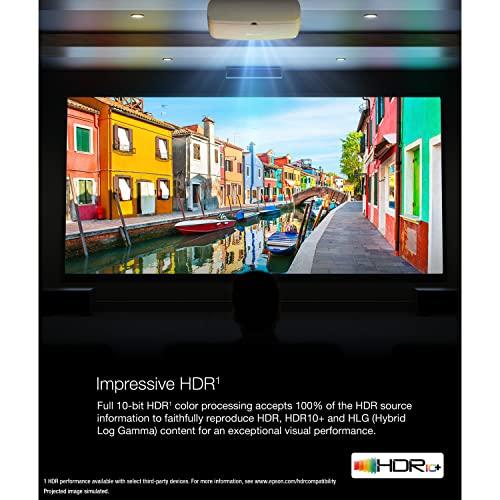
Both projectors support HDR content, but with different capabilities. The JVC LX-NZ30 supports HDR10 and HLG with Auto Tone Mapping for automatic optimization. The Epson LS11000 supports HDR10, HDR10+, and HLG, offering broader format compatibility. Neither supports Dolby Vision.
The JVC LX-NZ30 operates at 29dB in Eco mode and 34dB in Normal mode. The Epson LS11000 runs at approximately 22dB in Eco mode and 30dB in Normal mode, making it slightly quieter overall. Both are quiet enough for home theater use, with the Epson LS11000 having a slight advantage in noise levels.
The JVC LX-NZ30 includes a standard 1-year parts and labor warranty. The Epson LS11000 offers superior warranty protection with 3 years of parts and labor coverage. This extended warranty coverage adds significant value to the Epson LS11000, especially considering the higher purchase price and complexity of laser projector technology.
We've done our best to create useful and informative comparisons to help you decide what product to buy. Our research uses advanced automated methods to create this comparison and perfection is not possible - please contact us for corrections or questions. These are the sites we've researched in the creation of this article: t3.com - crutchfield.com - stuff.tv - projectorcentral.com - projectorreviews.com - data.heimkinowelt.at - bestbuy.com - eu.jvc.com - projectorreviews.com - listenup.com - youtube.com - eu.jvc.com - dreamediaav.com - projectorreviews.com - projectorscreen.com - projectorcentral.com - device.report - technologyinteriors.com - tvsbook.com - thesmarthomehookup.com - cepro.com - specsradar.com - projectorscreen.com - benq.com - projectorreviews.com - projectorscreen.com - youtube.com - projectorcentral.com - whathifi.com - projectorscreen.com - bestbuy.com - youtube.com - avsforum.com - versus.com - crutchfield.com - projectorcentral.com - shop.avispl.com - mediaserver.goepson.com - projectorscreen.com - bestbuy.com - simplehomecinema.com - dreamediaav.com - epson.com

Privacy Policy
Terms and Conditions - Affiliate Policy
Home Security
© Copyright 2008-2026.
11816 Inwood Rd #1211, Dallas, TX 75244