

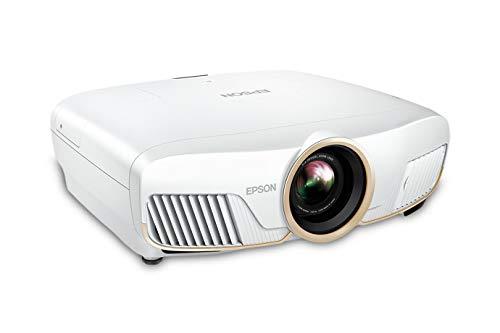
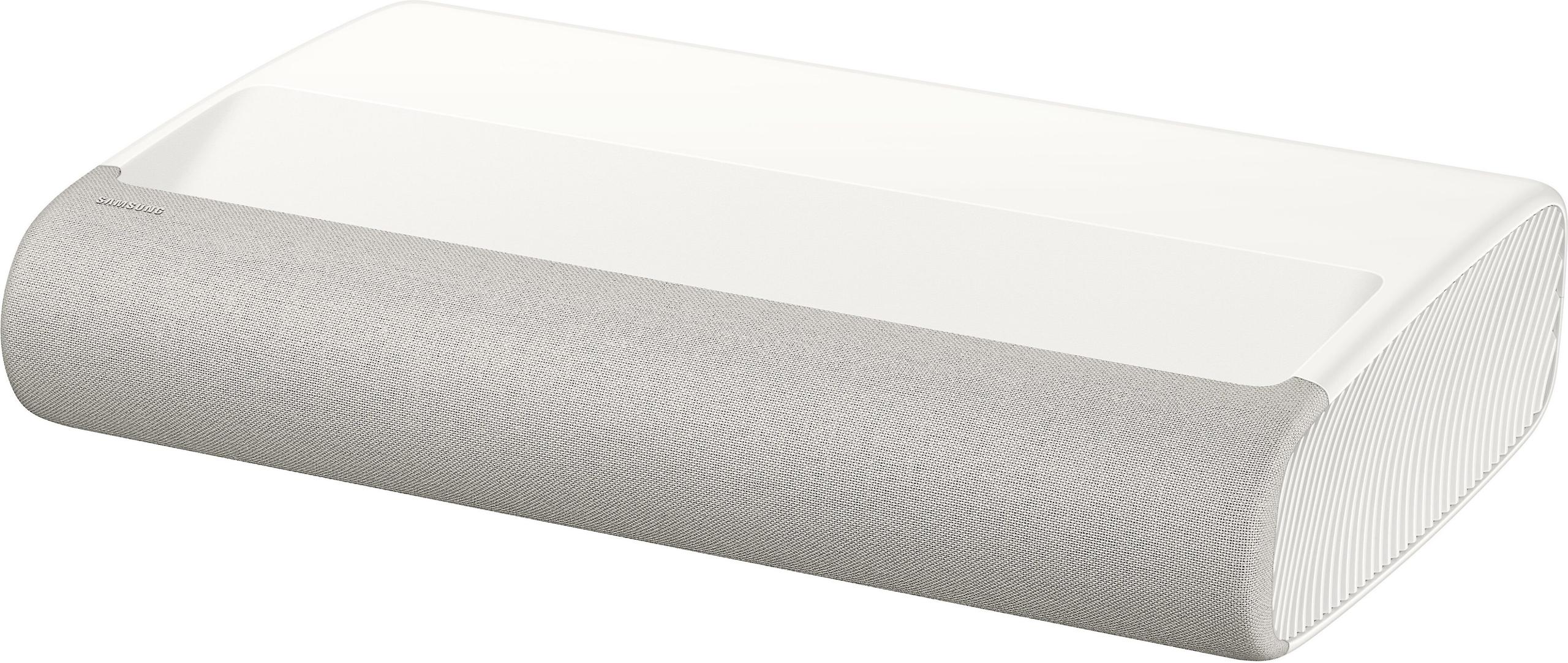
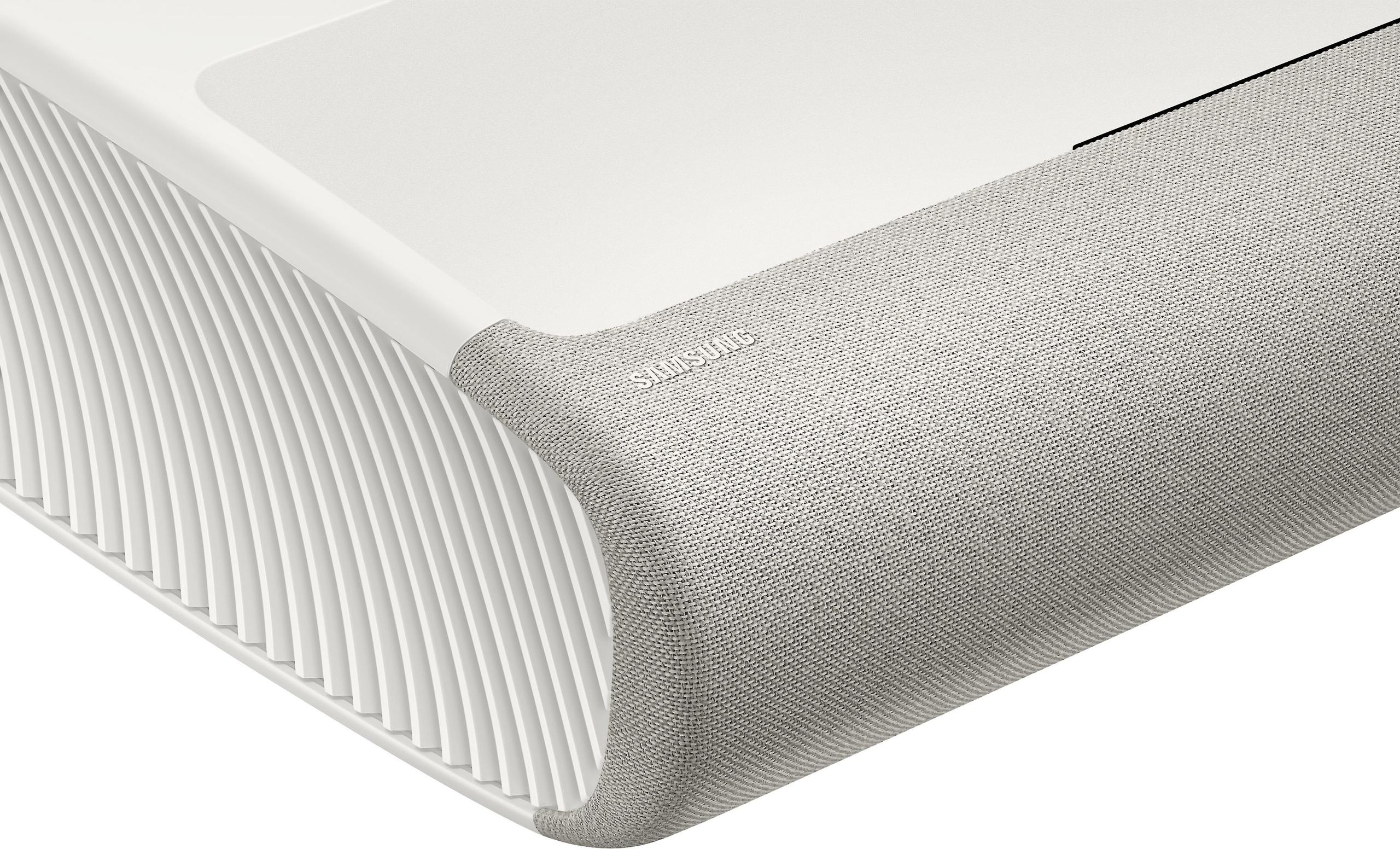
When you're ready to transform your living space into a home theater, the projector world offers two dramatically different paths. You can go with a traditional long-throw projector that delivers reference-quality images from across the room, or embrace the convenience of an ultra-short throw model that sits inches from your wall. The Epson Home Cinema 5050UB and Samsung Premiere 9 LPU9D represent the pinnacle of these competing philosophies.
At the time of writing, these projectors sit in premium territory with the Epson 5050UB positioned as the more affordable option while the Samsung Premiere 9 commands a significant premium for its laser technology and convenience features. But price alone doesn't tell the whole story—these are fundamentally different tools for different types of viewers.
Before diving into specifics, it's worth understanding what separates great projectors from mediocre ones. The most critical factor is contrast ratio—the difference between the brightest whites and deepest blacks your projector can produce. This single metric determines whether you see a washed-out gray rectangle or deep, immersive shadows that make movies feel three-dimensional.
Brightness, measured in lumens (units of light output), determines how well your projector fights ambient light. A dim projector forces you to watch in complete darkness, while a bright one lets you keep some lights on during daytime viewing. Color accuracy ensures that skin tones look natural and that the filmmaker's vision comes through unchanged.
The throw ratio—how far the projector needs to sit from the screen to create a specific image size—fundamentally shapes where you can place the device. Traditional projectors need substantial distance, while ultra-short throw models work from just inches away.
The biggest difference between the Epson 5050UB and Samsung Premiere 9 lies in their light sources, which affect everything from image quality to long-term ownership costs.
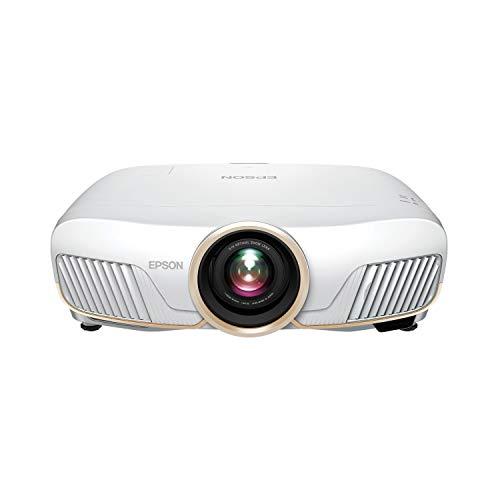
The Epson 5050UB, released in 2018, uses a 250-watt Ultra High Efficiency (UHE) lamp—essentially a very bright, specialized light bulb. This technology has powered projectors for decades because it produces intense, white light that can be effectively split into red, green, and blue components.
Lamp projectors require a warm-up period of several minutes to reach full brightness, and they gradually dim over their 3,500 to 5,000-hour lifespan. When the lamp finally dies, you'll need to replace it with a new one costing around $200-300. This creates an ongoing maintenance cycle, but the upfront cost stays lower.
The Epson 5050UB includes sophisticated lamp management features, automatically adjusting brightness based on content and offering multiple power modes. In eco mode, the lamp runs cooler and lasts longer while producing less light—a useful trade-off for controlled viewing environments.
The Samsung Premiere 9, launched in 2024, represents the newer generation with its triple laser light source. Instead of a single white lamp, it uses three separate lasers—one each for red, green, and blue light. This approach eliminates the color wheel found in many single-chip projectors and produces exceptionally pure colors.
Laser projectors turn on instantly, reaching full brightness in seconds rather than minutes. The 20,000-hour laser lifespan means most users will never need to replace anything—the projector will likely become obsolete before the lasers wear out. However, this convenience comes with a significant price premium.
The pure light from lasers enables wider color gamuts (the range of colors the projector can display) and maintains consistent brightness throughout their lifespan, unlike lamps that gradually dim.
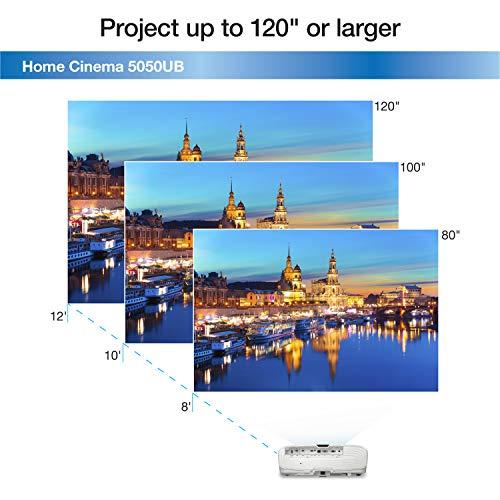
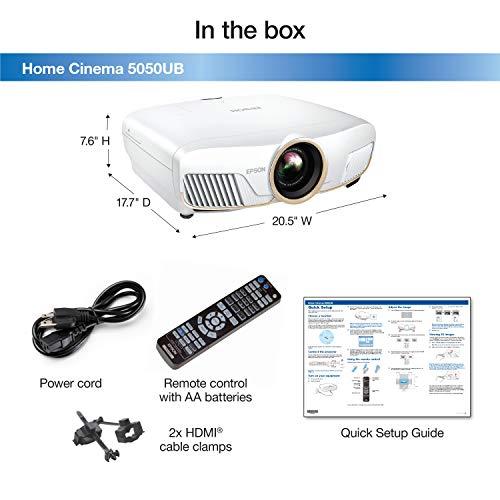
The Epson 5050UB exemplifies traditional projector design with its throw ratio of 1.35:1 to 2.84:1. This means to create a 100-inch image, you'll need the projector positioned between 11 and 24 feet from the screen, depending on your zoom setting.
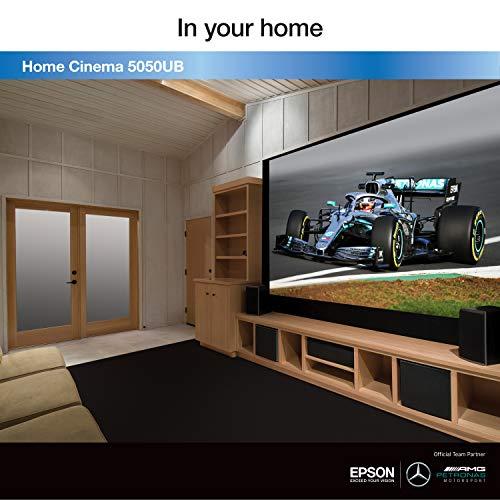
This distance requirement initially seems like a limitation, but it enables enormous screens—up to 300 inches diagonal. The motorized 2.1x zoom lens lets you fine-tune the image size without moving the projector, while the extensive lens shift capabilities (±96% vertical and ±47% horizontal) provide remarkable installation flexibility.
Lens shift is crucial for real-world installations. Without it, your projector must be perfectly centered and level with your screen. With it, you can mount the projector off to one side or significantly above or below the screen, and the lens physically moves to center the image without distortion—a feature typically found only on professional-grade projectors.
The lens memory function saves different zoom, focus, and shift positions, letting you quickly switch between aspect ratios or even different screen locations if you have a multi-purpose room.
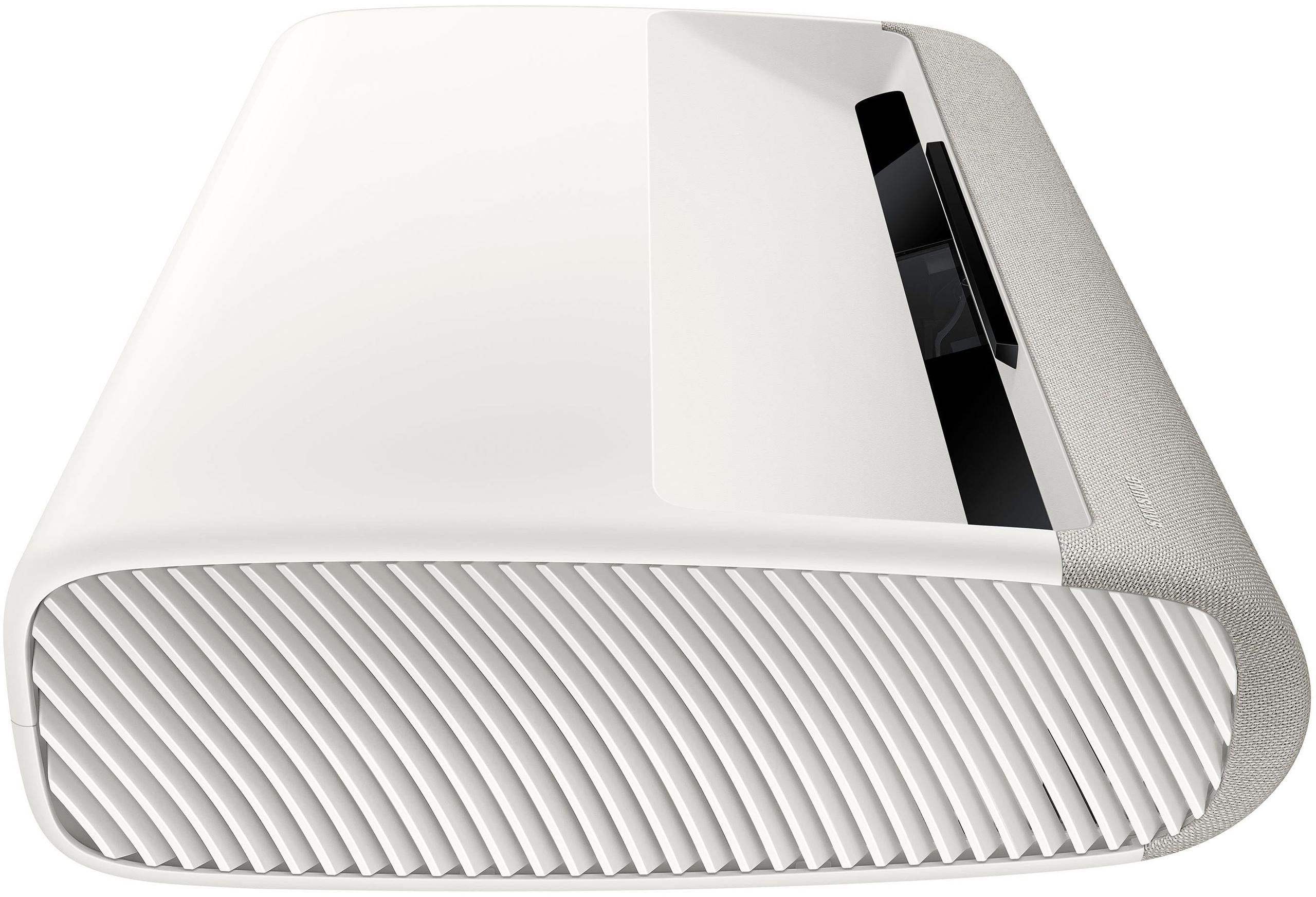
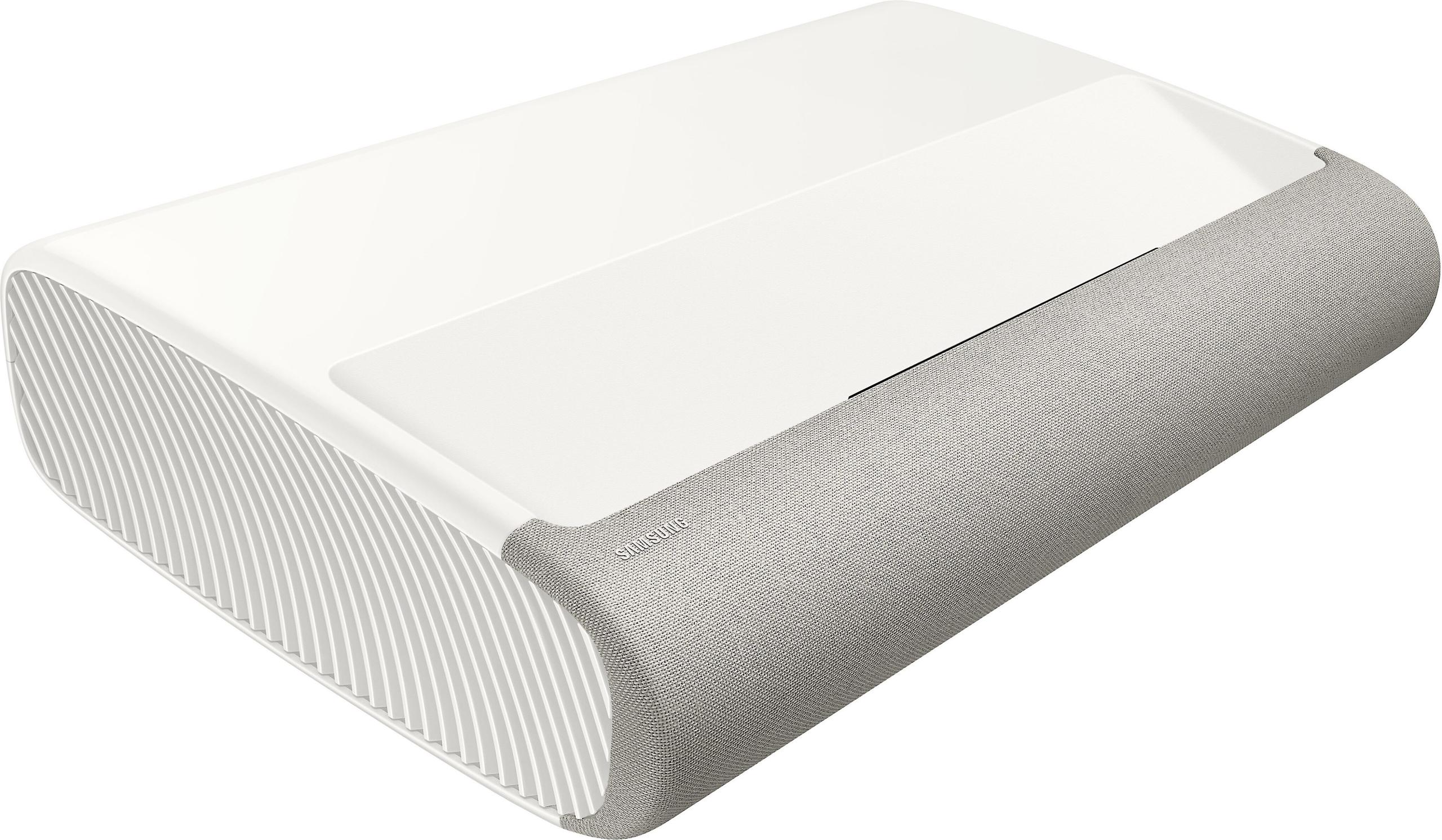
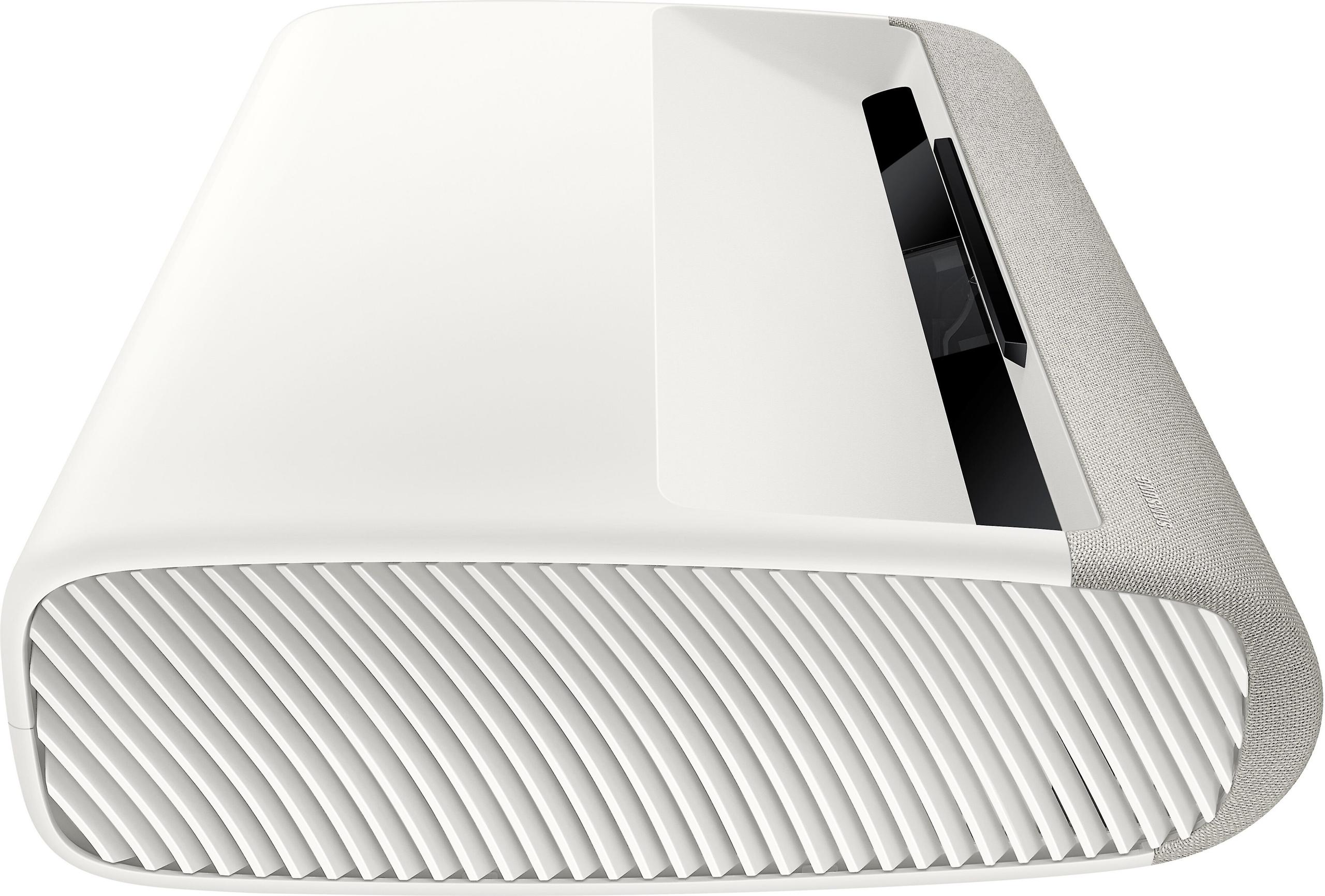
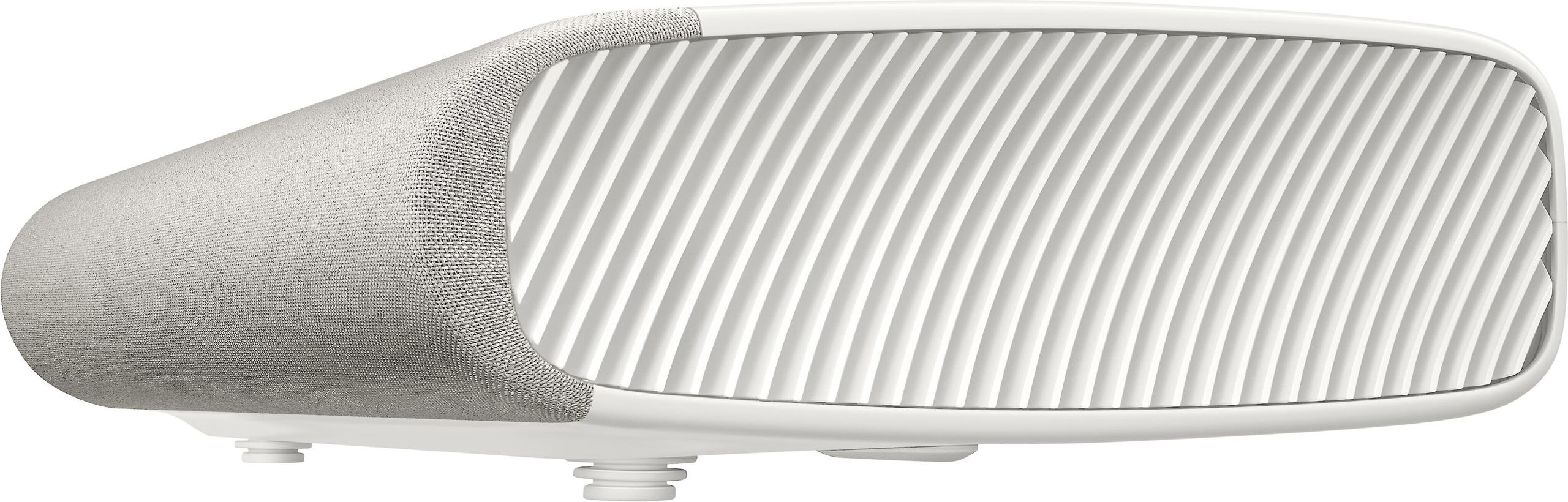
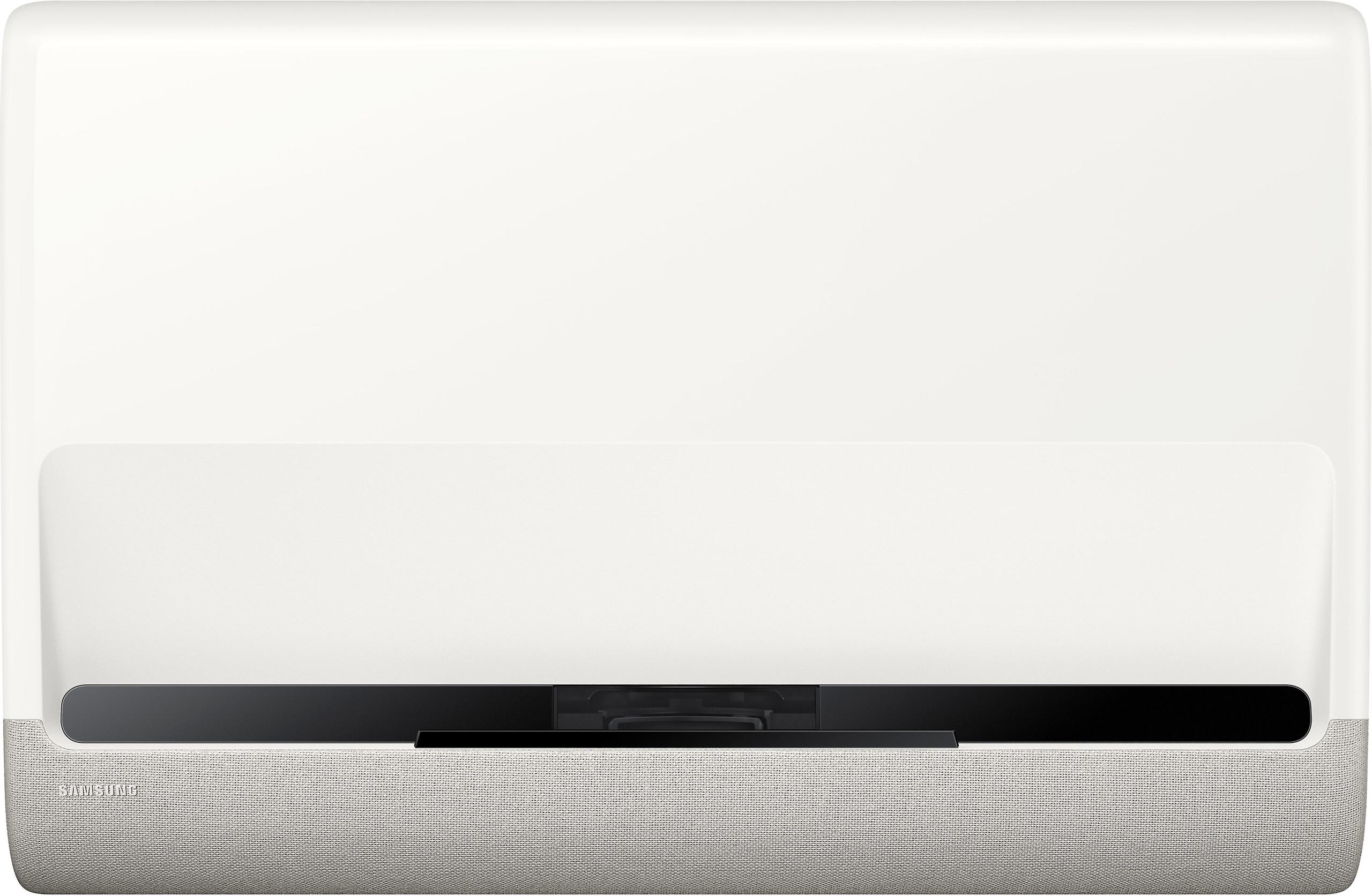
The Samsung Premiere 9 takes the opposite approach with its ultra-short throw design, projecting up to 130 inches from just inches away from the wall. This eliminates the need for ceiling mounting, cable runs across the room, or dedicated projector placement.
You simply place it on a TV stand or low cabinet directly below your screen area, making it as easy to set up as a large TV. There are no shadows when people walk in front of it, and pets or children can't accidentally block the projection path.
However, this convenience comes with limitations. The maximum 130-inch screen size, while enormous compared to TVs, is significantly smaller than what traditional projectors can achieve. Ultra-short throw optics are also more susceptible to dust and require specialized, often expensive screens for optimal performance.
Based on our research of professional reviews and user consensus, the Epson 5050UB delivers exceptional contrast performance that punches well above its price class. Its UltraBlack technology uses a sophisticated compensation filter to control light polarization within the projector, dramatically reducing light leakage that causes washed-out blacks.
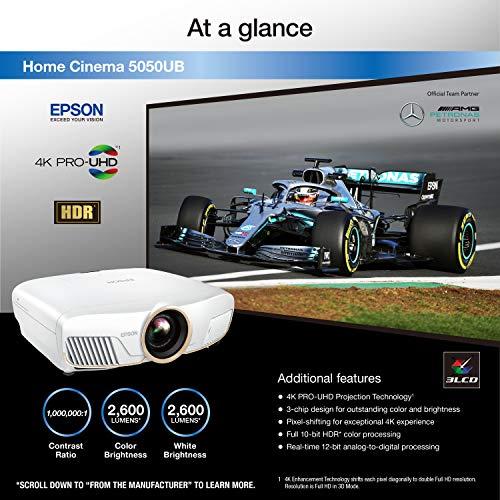
Reviews consistently highlight the projector's ability to produce true blacks rather than dark grays, with measured contrast ratios exceeding 8,000:1 in native performance. When combined with the dynamic iris system that physically adjusts the aperture based on scene content, the effective contrast can reach the claimed 1,000,000:1 in optimal conditions.
This translates to images with genuine depth and shadow detail. In dark movie scenes, you can distinguish between different shades of black rather than seeing a uniform gray mass. The three-dimensional quality this creates is particularly noticeable in films with moody cinematography.
The Samsung Premiere 9, while capable of excellent images, faces the inherent challenge of ultra-short throw optics. The extreme angles required to project from such close distances make it difficult to achieve the same level of contrast performance, though specific measurements weren't available in our research.
Here the tables turn significantly. The Samsung Premiere 9 delivers 3,450 lumens compared to the Epson 5050UB's 2,600 lumens—a substantial 33% brightness advantage. This extra light output makes the Samsung much more versatile in rooms with ambient light.
In practical terms, the Samsung Premiere 9 can produce watchable images during daytime hours with blinds open, while the Epson 5050UB really shines in controlled lighting conditions. If your viewing room doubles as a living space where you can't always control the lights, the Samsung's brightness advantage becomes crucial.
The Epson 5050UB's strength lies in optimized viewing environments. In a darkened room, its superior contrast creates more engaging images despite lower peak brightness. The projector includes multiple brightness modes, with eco mode reducing output to extend lamp life while maintaining excellent picture quality in dark rooms.
Both projectors excel in color reproduction but through different approaches. The Epson 5050UB uses a true three-chip LCD design, with separate panels for red, green, and blue light. This architecture displays 100% of the color information for every frame, eliminating the color wheel timing artifacts that can affect single-chip projectors.
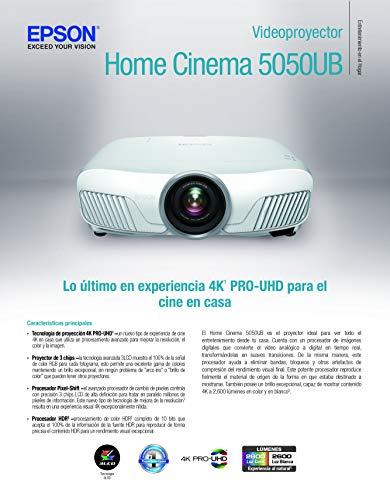
The projector covers the wide DCI-P3 color space used in commercial cinemas, delivering approximately 50% more colors than standard HDTV. Combined with full 10-bit color processing (and partial 12-bit capability), it reproduces subtle color gradations that cheaper projectors miss.
Professional reviews consistently praise its out-of-box color accuracy, with only minor calibration needed to achieve reference performance. The extensive calibration controls, including 8-point white balance adjustment, let enthusiasts fine-tune the image to their preferences or room conditions.
The Samsung Premiere 9's triple laser design inherently produces pure, saturated colors with coverage extending to 154% of the DCI-P3 color space—potentially wider than the Epson. Laser light sources don't shift color temperature over time like lamps, maintaining consistent color reproduction throughout their lifespan.
Both projectors use pixel-shifting technology to create 4K images from lower-resolution imaging chips. The Epson 5050UB starts with native 1080p panels and uses precise diagonal pixel shifting to double the effective resolution, while the Samsung Premiere 9 employs similar techniques with its single-chip DLP system.
Neither can pass single-pixel 4K test patterns like true native 4K projectors, but in real-world viewing with movies and TV shows, the difference is minimal. The pixel-shifting produces genuinely sharper images than native 1080p, especially noticeable in fine details like hair, fabric textures, and architectural elements.
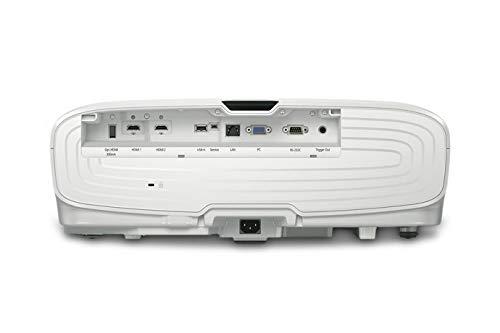
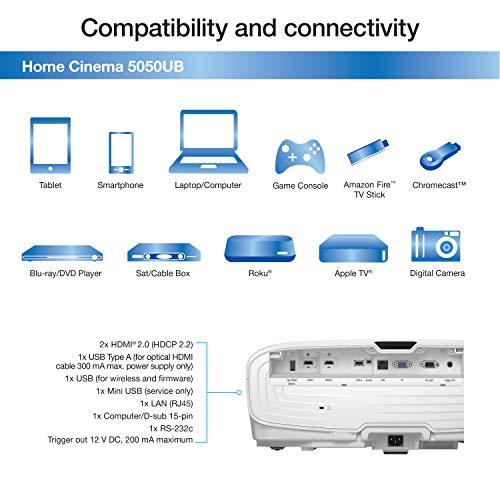
The connectivity approach reveals each projector's target audience. The Epson 5050UB is deliberately minimalist, offering two HDMI 2.0 inputs and little else. There's no built-in Wi-Fi, no smart TV platform, and no integrated speakers. This forces you to connect external devices—streaming boxes, game consoles, and AV receivers—but gives you complete control over the source chain.
This approach appeals to home theater enthusiasts who want dedicated components for each function. You might connect a high-end streaming device for apps, a gaming console for entertainment, and a quality AV receiver for audio processing. The Epson 5050UB becomes one component in a larger system.
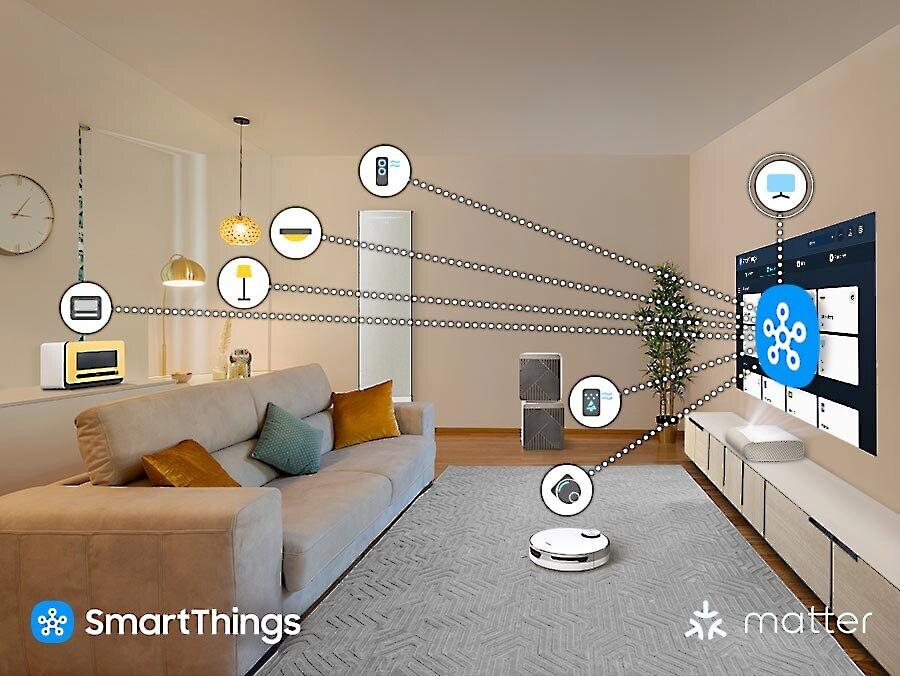
The Samsung Premiere 9 takes the opposite approach with its comprehensive Tizen smart platform, built-in apps, Chromecast support, and integrated speakers. You can literally plug it in and start watching Netflix without any additional devices. The built-in speakers, while not matching a dedicated sound system, provide surprisingly capable audio with room correction and various sound modes.
This all-in-one approach reduces complexity and cable management while providing instant gratification. However, it also means you're locked into Samsung's app ecosystem and update schedule, with no ability to upgrade individual components.
Both projectors support 4K gaming at 60Hz, but neither includes modern gaming features like Variable Refresh Rate (VRR) or Auto Low Latency Mode (ALLM). The Epson 5050UB achieves 22.5ms input lag at 4K resolution—acceptable for most gaming but not ideal for competitive play where every millisecond counts.
The Samsung Premiere 9's gaming performance specifications weren't widely available in our research, but ultra-short throw projectors typically have higher input lag due to additional image processing. However, its superior brightness makes gaming in ambient light more enjoyable.
For serious gamers, neither projector matches dedicated gaming displays, but both provide immersive large-screen gaming experiences that traditional TVs can't match.
At the time of writing, the Samsung Premiere 9 commands a significant premium over the Epson 5050UB, but the total ownership cost calculation is more complex than initial price.
The Epson 5050UB requires lamp replacements every 3-4 years depending on usage, adding $200-300 to operating costs per replacement. Over a 10-year ownership period, you might spend an additional $500-800 on lamps, bringing the total cost closer to the Samsung's initial price.
The Samsung Premiere 9's laser light source should last the projector's entire useful life with no replacements needed. When you factor in the convenience of instant on/off, consistent brightness, and no warm-up time, the value proposition becomes more compelling despite the higher entry cost.
However, technology obsolescence affects both projectors. The Epson 5050UB's HDMI 2.0 inputs already limit it to 60Hz refresh rates, while future gaming consoles and streaming devices may require HDMI 2.1 features. The Samsung Premiere 9 faces the same limitation, though its smart platform may receive updates that extend its useful life.
The decision between these projectors ultimately depends on your room, viewing habits, and priorities.
Choose the Epson Home Cinema 5050UB if you have a dedicated home theater room or can control ambient lighting reliably. Its superior contrast and massive screen size capability create a truly cinematic experience that justifies the traditional projector compromises. The extensive lens adjustments make it suitable for challenging installations, and the proven lamp technology offers predictable, if not maintenance-free, operation.
The Epson 5050UB appeals to enthusiasts who want the absolute best image quality and don't mind building a system around it. If you already own or plan to buy a quality AV receiver and streaming devices, its minimalist connectivity becomes an advantage rather than a limitation.
Choose the Samsung Premiere 9 LPU9D if convenience, room flexibility, and ambient light performance matter more than ultimate image quality. Its ultra-short throw design works in rooms where traditional projectors simply can't, and the integrated smart features eliminate the complexity of multiple components.
The Samsung Premiere 9 suits users who want a large screen experience without the traditional home theater commitment. Its all-in-one design provides immediate satisfaction, and the laser light source eliminates ongoing maintenance concerns.
Both projectors represent excellent values in their respective categories, but they serve fundamentally different use cases. The Epson 5050UB maximizes image quality for dedicated viewing environments, while the Samsung Premiere 9 maximizes convenience and room integration. Your choice should align with how and where you plan to watch, not just which specs look better on paper.
| Epson Home Cinema 5050UB | Samsung Premiere 9 LPU9D |
|---|---|
| Light Source Technology - Affects lifespan, maintenance, and operating costs | |
| 250W UHE lamp (3,500-5,000 hours, requires $200-300 replacements) | Triple laser (20,000 hours, essentially maintenance-free) |
| Projection Type - Determines room layout and installation requirements | |
| Traditional long-throw (needs 10.3'-29.4' from screen) | Ultra-short throw (sits inches from wall) |
| Maximum Screen Size - How big you can go | |
| 50"-300" (enormous flexibility for dedicated theaters) | Up to 130" (still massive but more limited) |
| Brightness - Critical for ambient light performance | |
| 2,600 lumens (requires controlled lighting for best results) | 3,450 lumens (works well in brighter rooms) |
| Contrast Ratio - Most important for image depth and black levels | |
| 1,000,000:1 with UltraBlack technology (exceptional blacks) | Not specified (UST projectors typically struggle with contrast) |
| Resolution Technology - How 4K images are created | |
| Native 1080p with 4K PRO-UHD pixel-shifting | 4K UHD with DLP pixel-shifting |
| Color Processing - Affects color accuracy and vibrancy | |
| True 3-chip 3LCD, DCI-P3 coverage, 10-bit processing | Single-chip DLP, 154% DCI-P3 coverage, triple laser purity |
| Lens Features - Installation flexibility and adjustment options | |
| Motorized 2.1x zoom, ±96% vertical/±47% horizontal shift, lens memory | Fixed ultra-short throw lens (no adjustment needed) |
| Smart Features - Built-in functionality vs external device requirements | |
| None (requires external streaming devices and AV receiver) | Full Tizen smart platform, built-in apps, Chromecast |
| Audio System - Built-in sound capabilities | |
| No speakers (requires external audio system) | Integrated 2x40W speakers with room correction |
| Gaming Performance - Input lag for responsive gaming | |
| 22.5ms input lag at 4K/60Hz (acceptable for most gaming) | Not specified (UST projectors typically higher lag) |
| Connectivity - Available inputs and wireless options | |
| 2x HDMI 2.0, VGA, RS-232 (no wireless) | HDMI inputs, built-in Wi-Fi, Bluetooth |
| Power Consumption - Operating efficiency | |
| 373W normal mode, 283W eco mode | 410W operation |
| Noise Level - Important for quiet viewing | |
| 20-31 dB (impressively quiet, especially in eco mode) | Not specified in detail |
| Best Use Case - Who should choose this projector | |
| Dedicated home theaters with controlled lighting, image quality priority | Living rooms, convenience priority, ambient light viewing |
The Samsung Premiere 9 is significantly better for bright rooms with its 3,450 lumens compared to the Epson Home Cinema 5050UB's 2,600 lumens. The Samsung's laser technology and higher brightness allow for comfortable viewing even with some ambient light, while the Epson performs best in darker, controlled environments.
The primary difference is projection type: the Epson Home Cinema 5050UB is a traditional long-throw projector that needs 10-30 feet of distance from your screen, while the Samsung Premiere 9 is an ultra-short throw projector that sits just inches from the wall. This fundamentally changes where and how you can install them.
The Epson Home Cinema 5050UB delivers superior black levels with its UltraBlack technology and 1,000,000:1 contrast ratio. This creates deeper, more cinematic blacks that are crucial for home theater viewing. Ultra-short throw projectors like the Samsung Premiere 9 typically struggle with contrast due to their optical design.
The Epson Home Cinema 5050UB requires lamp replacements every 3,500-5,000 hours, costing around $200-300 each time. The Samsung Premiere 9 uses laser technology rated for 20,000 hours, meaning it should last the projector's entire lifespan without any replacements needed.
The Samsung Premiere 9 is much easier to install since it simply sits on a TV stand or cabinet directly below your screen area. The Epson Home Cinema 5050UB typically requires ceiling mounting or a rear shelf setup, plus cable management across the room, though it offers more placement flexibility once installed.
Both projectors support 4K gaming at 60Hz. The Epson Home Cinema 5050UB has a measured 22.5ms input lag, which is acceptable for most gaming but not ideal for competitive play. The Samsung Premiere 9's gaming performance varies, but ultra-short throw projectors typically have higher input lag due to additional processing.
Only the Samsung Premiere 9 includes smart features with its built-in Tizen platform, streaming apps, Wi-Fi, and Bluetooth connectivity. The Epson Home Cinema 5050UB has no smart features and requires external devices like streaming sticks, game consoles, or media players for content.
The Epson Home Cinema 5050UB can create screens from 50" up to 300" diagonal, offering enormous flexibility for dedicated home theaters. The Samsung Premiere 9 is limited to a maximum of 130" diagonal, which is still very large but more constrained than traditional projectors.
The Epson Home Cinema 5050UB is typically better for dedicated home theaters due to its superior contrast ratio, deeper blacks, and ability to create massive 200-300" screens. Its performance really shines in dark, controlled environments where you can take full advantage of its image quality capabilities.
The Samsung Premiere 9 includes built-in 40W speakers with room correction, providing decent audio for casual viewing. The Epson Home Cinema 5050UB has no built-in speakers and requires an external sound system, which most home theater enthusiasts prefer for better audio quality.
While the Samsung Premiere 9 costs more upfront, its maintenance-free laser operation and smart features provide excellent long-term value. The Epson Home Cinema 5050UB has lower initial cost but ongoing lamp replacement expenses. Over 8-10 years, the total ownership costs become more comparable.
The Samsung Premiere 9 handles daytime viewing much better due to its 3,450-lumen brightness, allowing you to watch with blinds open or lights on. The Epson Home Cinema 5050UB really needs darkened conditions for optimal viewing, though it can work in moderately lit rooms for larger screen sizes.
We've done our best to create useful and informative comparisons to help you decide what product to buy. Our research uses advanced automated methods to create this comparison and perfection is not possible - please contact us for corrections or questions. These are the sites we've researched in the creation of this article: rtings.com - projectorscreen.com - hometechnologyreview.com - thesmarthomehookup.com - youtube.com - rtings.com - techgearlab.com - projectorcentral.com - projectorreviews.com - projectorcentral.com - avsforum.com - rtings.com - projectorreviews.com - projectorreviews.com - avsforum.com - avsforum.com - audiogeneral.com - hifiheaven.net - manuals.plus - crutchfield.com - projectorcentral.com - epson.com - mediaserver.goepson.com - bestbuy.com - ngxptech.com - projectorcentral.com - projectorreviews.com - sound-advice.online - valueelectronics.com - bhphotovideo.com - instylehifi.com.au - trustedreviews.com - target.com - pcrichard.com - projectorscreen.com - videoandaudiocenter.com - target.com - avsforum.com - projectorscreen.com

Privacy Policy
Terms and Conditions - Affiliate Policy
Home Security
© Copyright 2008-2026.
11816 Inwood Rd #1211, Dallas, TX 75244