

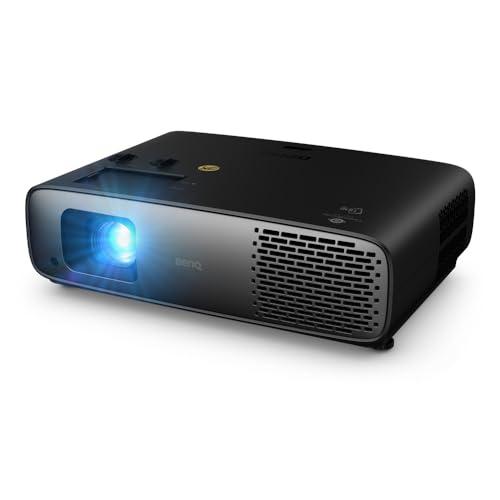
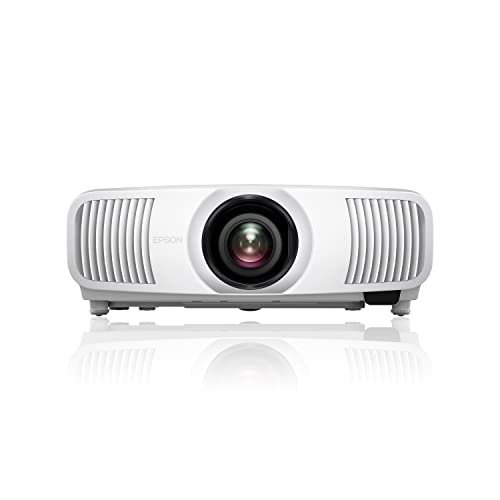
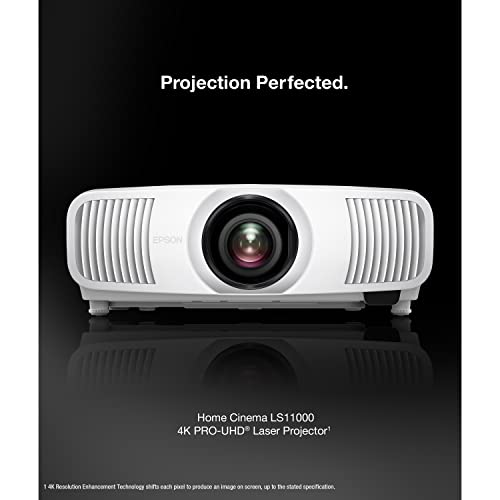
Large-screen entertainment has never been more accessible, and modern 4K projectors are pushing the boundaries of what's possible in your living room. The BenQ W4100i and Epson Home Cinema LS11000 represent two compelling approaches to premium home theater projection, but they take distinctly different paths to deliver that cinematic experience.
Both projectors launched in recent years—the Epson LS11000 arrived in 2023, while the BenQ W4100i debuted in 2025 as part of BenQ's latest generation. This timing difference matters because the W4100i incorporates several technological advances that weren't available when the LS11000 was designed, particularly in smart features and gaming capabilities.
Before diving into comparisons, it's worth understanding what sets these models apart from budget options. Both projectors use advanced light sources that eliminate the need for traditional bulb replacements—a major advantage over cheaper lamp-based models that require $200-300 bulb changes every few thousand hours.
The BenQ W4100i uses what's called 4LED technology, which combines red, green, blue, and an additional blue LED to create exceptionally bright, color-accurate images. Think of it like having four powerful flashlights of different colors working together, each fine-tuned to produce exactly the right shade. This approach delivers 3,200 ANSI lumens—a measurement of brightness that's particularly impressive for LED technology.
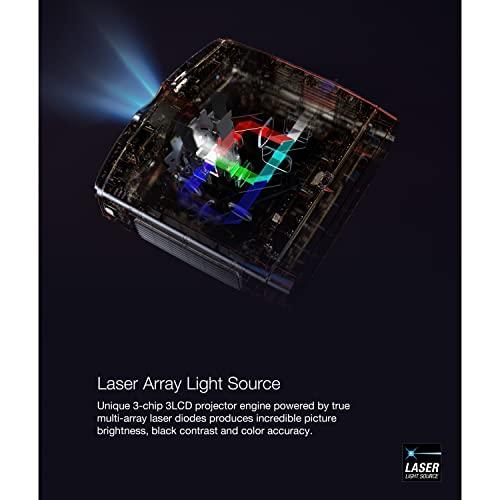
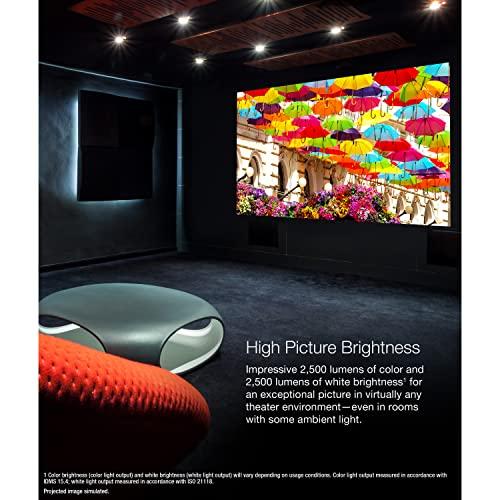
The Epson LS11000, meanwhile, employs laser phosphor technology. Here, blue lasers hit a phosphor wheel that converts some of that blue light into other colors, creating the full spectrum needed for video. It produces 2,500 ANSI lumens, which might sound less impressive on paper, but laser technology offers exceptional consistency over time—the brightness and colors barely change even after 20,000 hours of use.
This fundamental difference in light sources creates the first major distinction between these projectors. The W4100i's 4LED system provides about 28% more brightness than the LS11000's laser array. In practical terms, this means the BenQ can handle more ambient light in your room while still delivering vibrant images.
If you're setting up in a family room where you can't always control the lighting perfectly, or if you occasionally want to watch during the day, that extra brightness matters enormously. The W4100i maintains good contrast and color saturation even with some light spilling in from windows or lamps, while the LS11000 really needs a darker environment to show its best performance.
However, the Epson's laser technology offers superior long-term consistency. Traditional lamp projectors gradually lose brightness and shift colors as bulbs age—you might not notice it happening, but after a few thousand hours, the image becomes noticeably dimmer and less accurate. Laser phosphor technology maintains nearly identical performance throughout its rated lifespan, meaning your projector will look essentially the same in year five as it did on day one.
These projectors also use completely different methods to create images. The BenQ W4100i employs DLP (Digital Light Processing) technology, which uses millions of tiny mirrors on a single chip that tilt rapidly to reflect light toward or away from the screen. Each mirror represents a pixel, and they flip thousands of times per second to create different brightness levels.
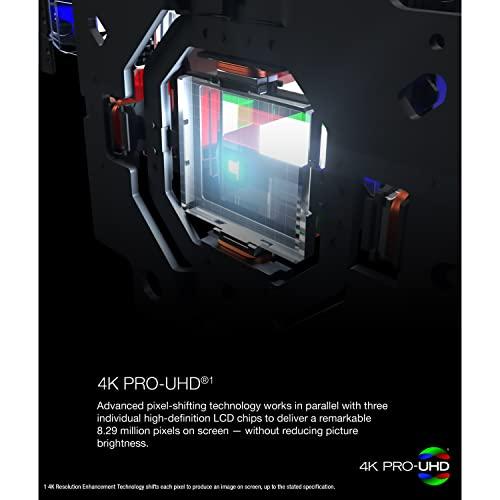
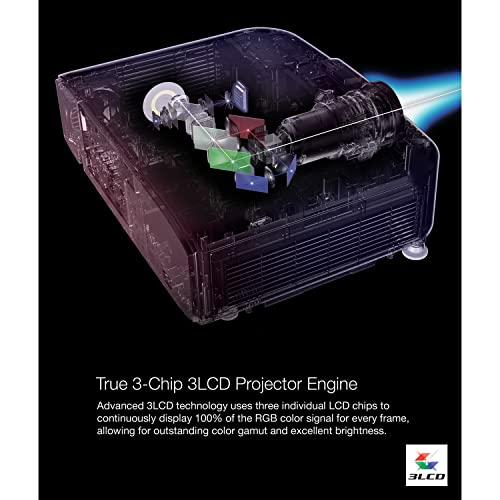
The Epson LS11000 uses 3LCD technology, which splits light into red, green, and blue components, then passes each color through its own LCD panel before recombining them. This means the Epson literally has three separate imaging chips working simultaneously—one for each primary color.
Both approaches have distinct characteristics that affect image quality. DLP technology, as used in the W4100i, tends to produce exceptionally sharp images with excellent fine detail. The single-chip design also makes DLP projectors generally more compact and reliable. However, some viewers notice occasional "rainbow effects"—brief flashes of color separation, particularly when moving their eyes quickly across bright areas of the image.
The LS11000's 3LCD system eliminates any possibility of rainbow artifacts since it processes all colors simultaneously. It also tends to produce more uniform brightness across the entire image and often delivers superior color accuracy out of the box. The trade-off is typically in absolute sharpness and sometimes in contrast performance, though modern 3LCD projectors have largely closed these gaps.
Neither projector uses "true" 4K imaging chips—and that's actually normal for projectors in this price range. Instead, both employ pixel-shifting technology, which rapidly moves lower-resolution images to create the impression of higher resolution on screen.
The BenQ W4100i starts with a 0.65-inch DLP chip that has a native resolution lower than 4K, then uses XPR (eXpanded Pixel Resolution) technology to shift each pixel diagonally multiple times per frame. This creates the full 3,840 × 2,160 pixel count that defines 4K UHD. The latest generation XPR technology in the W4100i is sophisticated enough that, at normal viewing distances, it's virtually impossible to distinguish from native 4K resolution.
The Epson LS11000 takes a different approach with what they call 4K PRO-UHD. It starts with three 1920 × 1080 LCD panels (one for each color), then uses a Precision Shift Glass Plate to move the image horizontally, vertically, and diagonally. This four-way shifting effectively quadruples the pixel count, creating 4K resolution on screen. Epson's latest implementation is notably faster and more precise than previous generations, producing sharp, detailed images that rival much more expensive native 4K projectors.
In practice, both pixel-shifting implementations deliver excellent sharpness and detail with 4K content. The W4100i might have a slight edge in rendering fine textures and text, while the LS11000 excels at smooth gradations and natural-looking images.
This is where the fundamental differences between DLP and 3LCD technology become most apparent, and where your room setup will heavily influence which projector works better for you.
The BenQ W4100i achieves its impressive contrast ratio through DLP's inherent ability to completely block light when mirrors tilt away from the screen. However, like most single-chip DLP projectors, it produces dark grays rather than true blacks in the darkest parts of images. This isn't necessarily a problem—in fact, for rooms with some ambient light, these slightly lifted blacks can actually help maintain shadow detail that might otherwise disappear into complete darkness.
The Epson LS11000 leverages both its 3LCD technology and dynamic laser dimming to achieve deeper, more convincing blacks. The laser light source can dim or brighten instantly, and the LCD panels can completely block light when displaying black areas. This combination produces what many viewers perceive as more cinematic contrast, with dark scenes that feel properly moody and atmospheric.
Based on expert reviews and user feedback, the contrast difference becomes most apparent in dedicated, dark theater rooms. In these environments, the LS11000's superior black levels create a more immersive experience, particularly when watching movies with lots of dark scenes. However, in brighter rooms, the W4100i's higher overall brightness often provides better practical contrast—the difference between the brightest and darkest parts of the image that you can actually see.
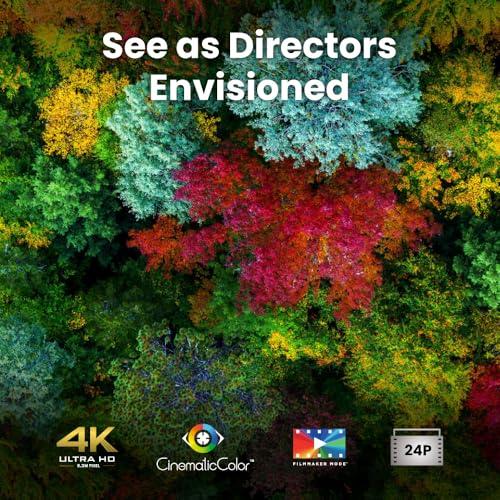
Both projectors excel in color reproduction, but they approach accuracy differently. The BenQ W4100i comes factory-calibrated with an individual calibration report, guaranteeing Delta E values below 2 for both DCI-P3 and Rec.709 color spaces. Delta E is a measurement of color accuracy—values below 3 are considered excellent, and below 2 is reference-quality. This means the W4100i should display colors almost exactly as filmmakers intended, right out of the box.
The LS11000 also delivers excellent color accuracy, covering 100% of DCI-P3 and 98% of Rec.709 color gamuts. While it might not include individual calibration reports, 3LCD technology historically provides very consistent color reproduction between units. The three separate imaging panels also eliminate the slight color uniformity variations that can sometimes affect single-chip projectors.
What's particularly impressive about both projectors is their wide color gamut support. DCI-P3 is the color space used for digital cinema and premium streaming content, while Rec.709 covers standard HD content. Having full coverage of both means these projectors can display the complete range of colors that content creators intended, whether you're watching a blockbuster movie or a nature documentary.
This category strongly favors the BenQ W4100i, which was clearly designed with gaming as a priority. It includes three HDMI 2.1 inputs compared to two on the LS11000, and more importantly, it delivers exceptional input lag performance.
Input lag is the delay between when a gaming console sends a signal and when the projector displays it on screen. For competitive gaming, every millisecond matters. The W4100i achieves just 6.5 milliseconds of input lag at 1080p/240Hz and 17.9 milliseconds at 4K/60Hz. These numbers rival dedicated gaming monitors and make the projector suitable for fast-paced games where reaction time is crucial.
The LS11000 supports 4K gaming at 120Hz but with higher input lag—still under 20 milliseconds, which is acceptable for most gaming, but not quite at the W4100i's level. The BenQ also includes Auto Low Latency Mode (ALLM), which automatically switches to the lowest-lag settings when it detects a gaming console.
Both projectors support Variable Refresh Rate (VRR) technology, which helps eliminate screen tearing and stuttering by synchronizing the projector's refresh rate with the console's frame rate. This feature has become increasingly important with modern consoles that can dynamically adjust their frame rates based on game complexity.
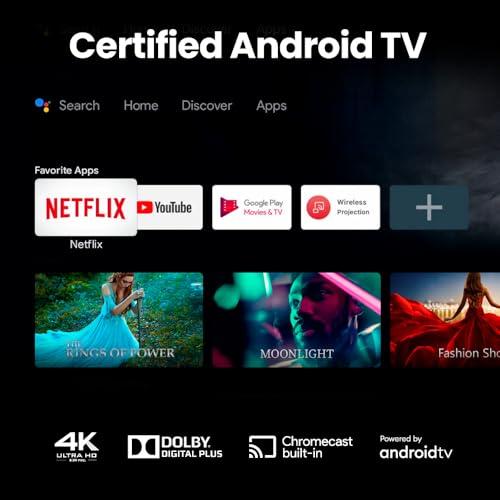
The BenQ W4100i includes what many competing projectors still consider optional: comprehensive smart TV functionality. It comes with a BenQ QS02 Android TV dongle that provides direct access to Netflix, Prime Video, Disney+, YouTube, and other major streaming platforms. This integration includes Google Assistant voice control and supports both Chromecast and AirPlay for wireless screen mirroring.
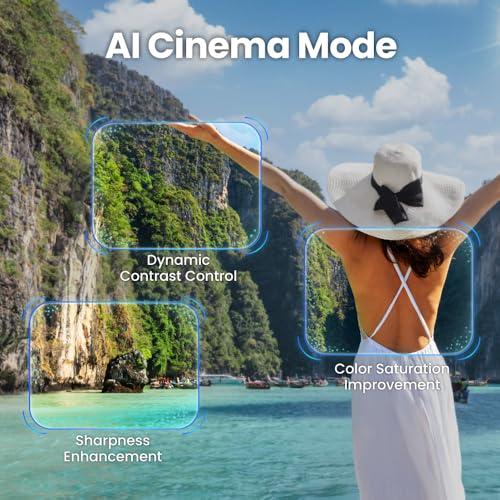
Having these features built-in eliminates the need for additional streaming devices, reducing cable clutter and simplifying your setup. The AI Cinema Mode is particularly noteworthy—it analyzes streaming content in real-time and automatically adjusts sharpness, color saturation, and HDR processing to compensate for compression artifacts that are common in streaming video.
The Epson LS11000 takes a more traditional approach, focusing on image quality rather than smart features. It lacks built-in streaming capabilities, so you'll need to connect external devices like an Apple TV, Roku, or gaming console for content access. While this means additional hardware and cables, some users prefer this approach because external streaming devices often receive software updates more frequently and support newer codec standards.
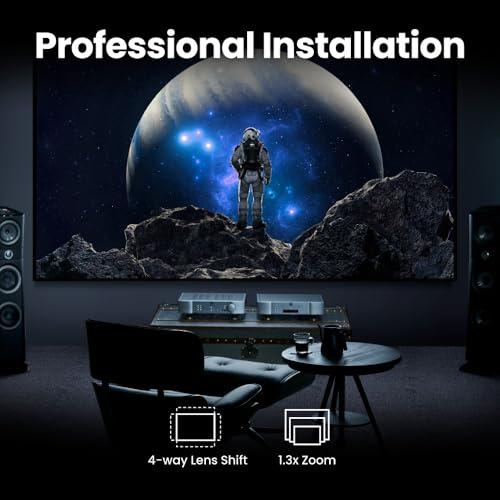
This is where the Epson LS11000 demonstrates its premium positioning with significantly superior optics and adjustment capabilities. It features a 2.1x optical zoom compared to the W4100i's 1.3x zoom, which means much more flexibility in projector placement. You can achieve the same screen size from a much wider range of distances, which is invaluable when dealing with challenging room layouts.
The LS11000's lens shift capabilities are particularly impressive: ±47.1% horizontal and ±96.3% vertical adjustment. Lens shift allows you to move the image position without physically moving the projector or introducing keystone distortion. This means you can mount the projector off-center or at unusual heights while still achieving a perfectly rectangular image.
The W4100i offers more modest lens shift (vertical up to 60%, horizontal ±15%) and shorter zoom range, which limits placement flexibility. However, for typical home theater installations where the projector can be mounted directly behind the seating area, these specifications are usually adequate.
Both projectors include motorized focus and zoom, eliminating the need to manually adjust the lens during installation. The LS11000 adds lens memory functionality, which can save different settings for various aspect ratios—useful when switching between standard 16:9 content and ultra-wide 2.35:1 movies.
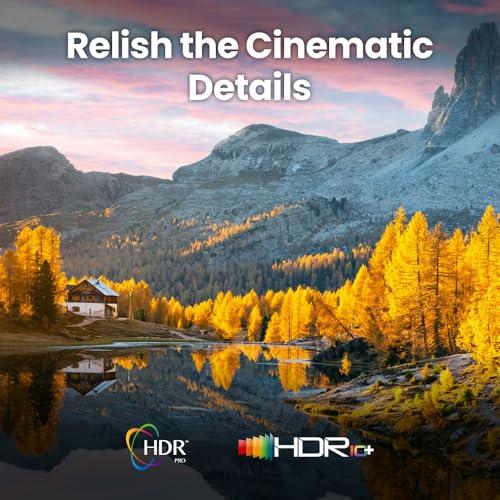
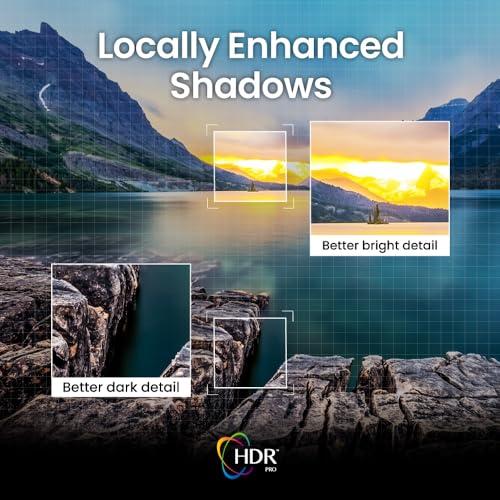
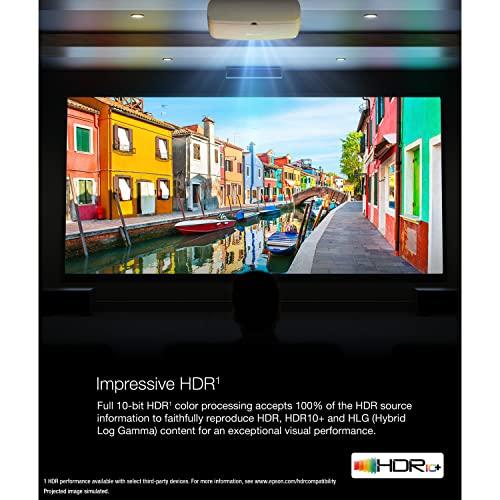
Both projectors support modern HDR (High Dynamic Range) formats including HDR10, HDR10+, and HLG, but they handle tone mapping—the process of adapting HDR content for display—quite differently.
The BenQ W4100i features HDR-PRO technology with dynamic tone mapping that adjusts brightness and contrast frame by frame in real-time. This approach can produce more consistent image quality across different types of HDR content, automatically optimizing each scene for maximum impact. The Filmmaker Mode preserves the original motion cadence and color intentions of directors, which is particularly valuable for cinema enthusiasts.
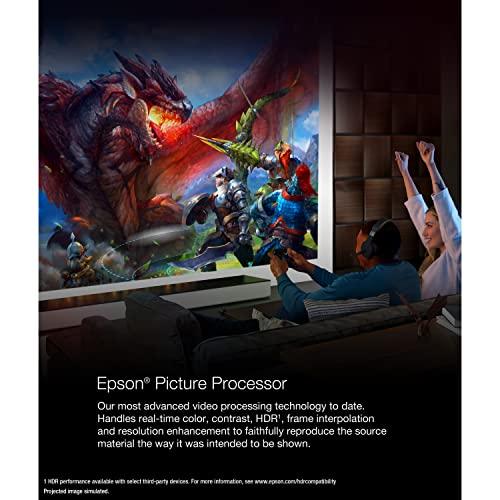
The Epson LS11000 includes a 16-point HDR brightness control slider and scene-adaptive processing through its ZX Picture Processor. The dynamic laser dimming works in conjunction with HDR processing to provide deep blacks while maintaining bright highlights—crucial for HDR's expanded dynamic range.
In practice, both projectors handle HDR well, but they emphasize different aspects. The W4100i tends to produce more consistently bright, punchy HDR images that work well in various lighting conditions. The LS11000 excels at preserving shadow detail and creating more cinematic HDR presentation in darker rooms.
At the time of writing, the BenQ W4100i typically costs about $1,000 less than the Epson LS11000, while delivering similar or superior performance in several key areas. This price difference is significant enough to influence many purchasing decisions, especially when the W4100i includes smart features that would otherwise require additional hardware.
Both projectors eliminate traditional lamp replacement costs, but their maintenance profiles differ slightly. The W4100i's 4LED system is rated for 30,000 hours, while the LS11000's laser phosphor array is rated for 20,000 hours. In practical terms, both should provide many years of service with minimal maintenance—even at four hours of daily use, both would last over a decade.
The W4100i represents exceptional value for most home theater applications, delivering bright, accurate images with modern gaming and smart features at a competitive price. The LS11000 justifies its premium through superior contrast performance, professional-grade optics, and the consistency that comes with laser technology.
The BenQ W4100i makes the most sense for the majority of home theater setups. Its combination of high brightness, excellent color accuracy, comprehensive gaming features, and built-in smart capabilities addresses most users' needs at an attractive price point. It's particularly well-suited for:
The Epson LS11000 appeals to more specific use cases where its premium features justify the higher cost:
Based on extensive research into expert reviews and user feedback, the BenQ W4100i emerges as the better choice for most people. It delivers about 90% of the LS11000's image quality while offering superior brightness, gaming capabilities, and smart features at a significantly lower price.
However, if you're building a dedicated home theater in a light-controlled room and prioritize absolute image quality over value and convenience, the Epson LS11000 provides a more cinematic experience with professional-grade installation flexibility.
The technology improvements in recent years have made both approaches viable, but they serve different priorities. The W4100i represents the modern trend toward feature-rich, bright projectors that work well in real-world environments. The LS11000 maintains the traditional home theater focus on ultimate image quality in controlled conditions.
Either projector will provide an excellent large-screen experience that surpasses most flat-panel TVs for sheer impact and immersion. Your choice should depend primarily on your room conditions, intended usage, and whether the LS11000's premium features are worth the additional investment for your specific situation.
| BenQ W4100i 4K Home Theater Projector | Epson Home Cinema LS11000 4K Laser Projector |
|---|---|
| Brightness - Critical for rooms with ambient light and larger screens | |
| 3,200 ANSI lumens (excellent for bright rooms and daytime viewing) | 2,500 ANSI lumens (requires darker room for optimal performance) |
| Light Source Technology - Affects longevity and maintenance costs | |
| 4LED RGBB system, 30,000 hours lifespan | Blue laser phosphor array, 20,000 hours lifespan |
| Display Technology - Impacts image characteristics and potential artifacts | |
| Single-chip DLP with XPR 4K pixel-shifting | 3-chip 3LCD with 4K PRO-UHD pixel-shifting |
| Contrast Ratio - Determines black levels and image depth in dark scenes | |
| 3,000,000:1 (DLP produces dark grays rather than true blacks) | 1,200,000:1 with dynamic laser dimming (deeper blacks, better for cinema) |
| Color Gamut Coverage - Ensures accurate reproduction of modern content | |
| 100% DCI-P3, 100% Rec.709 with factory calibration | 100% DCI-P3, 98% Rec.709 with consistent 3LCD accuracy |
| Gaming Performance - Input lag matters for competitive gaming | |
| 6.5ms at 1080p/240Hz, 17.9ms at 4K/60Hz with ALLM support | Below 20ms at 4K/120Hz (good but not class-leading) |
| HDMI 2.1 Inputs - More ports provide flexibility for multiple devices | |
| 3 ports (one supports 4K/120Hz and eARC) | 2 ports (both support 4K/120Hz and eARC) |
| Lens Flexibility - Critical for challenging room installations | |
| 1.3x optical zoom, vertical 60%/horizontal ±15% lens shift | 2.1x optical zoom, vertical ±96.3%/horizontal ±47.1% lens shift |
| Smart Features - Eliminates need for external streaming devices | |
| Built-in Android TV with Netflix, Prime Video, Disney+, voice control | No smart features (requires external streaming device) |
| AI Processing - Enhances compressed streaming content quality | |
| AI Cinema Mode with real-time optimization for streaming | Standard processing without AI enhancement |
| HDR Support - Modern formats for premium content | |
| HDR10, HDR10+, HLG with HDR-PRO dynamic tone mapping | HDR10, HDR10+, HLG with 16-point brightness control |
| Installation Weight - Affects mounting requirements and portability | |
| 6.1 kg (13.5 lbs) - easier to handle and mount | 12.7 kg (28 lbs) - may require professional installation |
| Fan Noise - Important for quiet movie watching | |
| Not specified (typical DLP cooling requirements) | 22 dB (Eco) / 30 dB (Normal) - whisper quiet operation |
The BenQ W4100i is significantly brighter at 3,200 ANSI lumens compared to the Epson LS11000 at 2,500 ANSI lumens. This 28% brightness advantage makes the W4100i better suited for rooms with ambient light or daytime viewing, while the LS11000 performs best in darker, controlled environments.
The BenQ W4100i uses 4LED technology with red, green, blue, and additional blue LEDs for exceptional brightness and color accuracy. The Epson LS11000 employs blue laser phosphor technology that offers superior long-term consistency—maintaining the same brightness and colors throughout its 20,000-hour lifespan without degradation.
The Epson LS11000 delivers superior contrast with deeper blacks thanks to its 3LCD technology and dynamic laser dimming. While the BenQ W4100i has a higher rated contrast ratio, it produces dark grays typical of DLP technology rather than true blacks, making the LS11000 more cinematic in dark theater rooms.
Neither projector uses native 4K chips, but both achieve excellent 4K resolution through advanced pixel-shifting. The W4100i uses XPR technology with a 0.65" DLP chip, while the LS11000 employs 4K PRO-UHD with Precision Shift Glass Plate technology. Both deliver sharp, detailed 4K images that are virtually indistinguishable from native 4K at normal viewing distances.
The BenQ W4100i is clearly superior for gaming, offering ultra-low input lag of just 6.5ms at 1080p/240Hz and 17.9ms at 4K/60Hz. It also features three HDMI 2.1 inputs and Auto Low Latency Mode support. The Epson LS11000 supports 4K/120Hz gaming but with higher input lag below 20ms and only two HDMI 2.1 ports.
No, both the BenQ W4100i and Epson LS11000 use advanced light sources that eliminate traditional lamp replacements. The W4100i features a 4LED system rated for 30,000 hours, while the LS11000 uses laser technology rated for 20,000 hours—both providing many years of maintenance-free operation.
The BenQ W4100i includes comprehensive smart features with a built-in Android TV dongle, providing direct access to Netflix, Prime Video, Disney+, YouTube, and voice control. The Epson LS11000 lacks smart features entirely, requiring external streaming devices like Apple TV or Roku for content access.
The Epson LS11000 offers significantly more installation flexibility with 2.1x optical zoom and extensive lens shift (±96.3% vertical, ±47.1% horizontal). The BenQ W4100i provides more limited adjustment with 1.3x zoom and smaller lens shift range, though it's adequate for most typical home theater setups.
The BenQ W4100i comes factory-calibrated with guaranteed Delta E below 2 for professional-level color accuracy right out of the box. Both projectors cover 100% DCI-P3 color gamut, but the W4100i includes individual calibration reports ensuring consistent, accurate colors without additional setup.
Both the W4100i and LS11000 support HDR10, HDR10+, and HLG formats. The BenQ W4100i features HDR-PRO dynamic tone mapping with frame-by-frame adjustment and AI Cinema Mode for streaming optimization. The Epson LS11000 offers 16-point HDR brightness control and dynamic laser dimming for enhanced contrast.
The Epson LS11000 operates more quietly with measured fan noise of 22 dB in Eco mode and 30 dB at full brightness—nearly whisper-quiet operation. The BenQ W4100i doesn't specify noise levels, but typical DLP projectors require more active cooling, potentially resulting in slightly higher fan noise during operation.
The BenQ W4100i provides exceptional value with higher brightness, comprehensive smart features, superior gaming capabilities, and factory calibration typically found on more expensive models. The Epson LS11000 justifies its premium through superior contrast, professional installation flexibility, and laser technology's long-term consistency—ideal for dedicated theater rooms where image quality is the top priority.
We've done our best to create useful and informative comparisons to help you decide what product to buy. Our research uses advanced automated methods to create this comparison and perfection is not possible - please contact us for corrections or questions. These are the sites we've researched in the creation of this article: blog.son-video.com - notebookcheck.net - whathifi.com - newatlas.com - hometheaterhifi.com - benq.com - youtube.com - shop.avispl.com - projectorcentral.com - benq.com - youtube.com - projectorcentral.com - benq.com - device.report - pssav.com - newegg.com - tvsbook.com - thesmarthomehookup.com - cepro.com - specsradar.com - projectorscreen.com - benq.com - projectorreviews.com - projectorscreen.com - youtube.com - projectorcentral.com - whathifi.com - projectorscreen.com - bestbuy.com - youtube.com - avsforum.com - versus.com - crutchfield.com - projectorcentral.com - shop.avispl.com - mediaserver.goepson.com - projectorscreen.com - bestbuy.com - simplehomecinema.com - dreamediaav.com - epson.com

Privacy Policy
Terms and Conditions - Affiliate Policy
Home Security
© Copyright 2008-2026.
11816 Inwood Rd #1211, Dallas, TX 75244