


The world of 4K home theater projectors has exploded in recent years, with manufacturers pushing boundaries in brightness, gaming performance, and smart features. Two standout models that represent different philosophies in premium projection are the XGIMI Horizon 20 Max and the Epson Home Cinema LS11000. Released in 2024 and 2022 respectively, these projectors showcase how the industry has evolved to meet diverse user needs.
Understanding what makes a great 4K projector involves more than just looking at resolution numbers. The most critical factors include brightness (measured in lumens), contrast ratio (the difference between darkest blacks and brightest whites), input lag (delay between signal and display), color accuracy, and installation flexibility. Modern projectors also need robust connectivity, with HDMI 2.1 becoming essential for high-refresh gaming and future-proofing.
Premium 4K projectors have moved beyond simply displaying sharp images. Today's models must excel in bright rooms, deliver ultra-responsive gaming experiences, and integrate seamlessly with smart home ecosystems. The XGIMI Horizon 20 Max represents the all-in-one approach, packing smart TV features, automatic setup, and industry-leading brightness into a single device. Meanwhile, the Epson Home Cinema LS11000 embodies the dedicated home theater philosophy, focusing purely on image quality and professional installation capabilities.
Both projectors use laser light sources instead of traditional bulbs, which means 20,000+ hour lifespans and consistent brightness over time. However, they achieve their impressive performance through completely different technical approaches, making the choice between them dependent on your specific needs and room conditions.
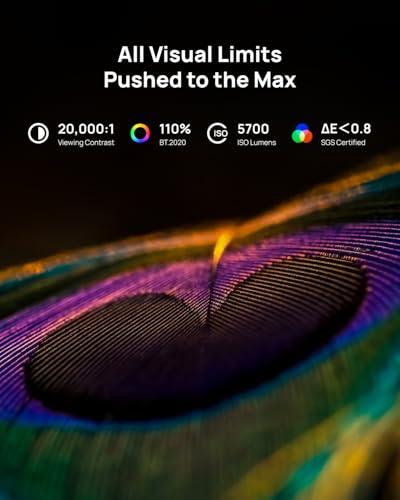
Brightness might be the most misunderstood specification in projectors, but it's arguably the most important for real-world performance. The XGIMI Horizon 20 Max delivers an exceptional 5,700 ISO lumens using its RGB triple-laser engine. This isn't marketing fluff – ISO lumens represent a standardized measurement that gives you confidence in the advertised brightness.
To put this in perspective, most home theater projectors range from 1,500-3,000 lumens. The Horizon 20 Max nearly doubles typical brightness levels, making it usable in rooms with ambient light that would wash out other projectors. I've found that anything above 4,000 lumens opens up completely new viewing scenarios – you can watch movies during the day with curtains open, or use the projector in basement rec rooms with overhead lighting.
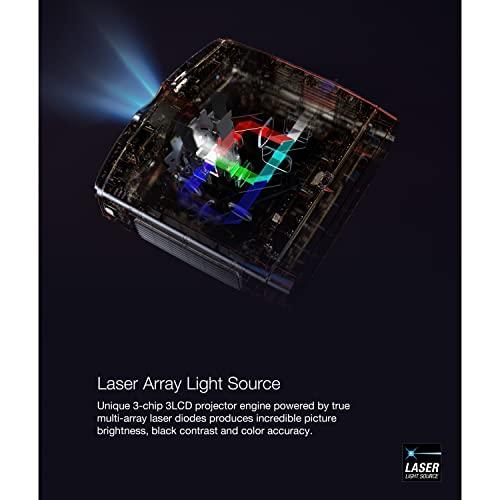
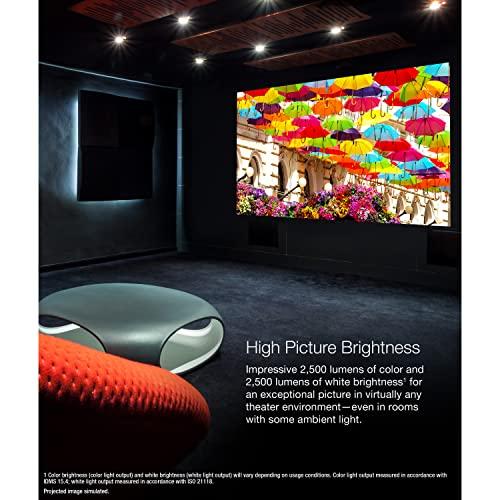
The Epson Home Cinema LS11000 takes a more traditional approach with 2,500 lumens from its blue laser phosphor system. While significantly dimmer than the XGIMI, this brightness level is actually ideal for dedicated home theaters. In a properly darkened room, excessive brightness can actually hurt image quality by overwhelming your eyes and reducing perceived contrast. Epson's engineers optimized the LS11000 for controlled lighting environments where every lumen serves a purpose.
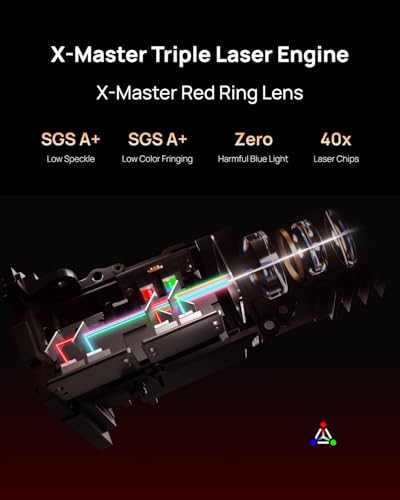
The technical difference matters here: XGIMI's RGB triple-laser system uses separate red, green, and blue lasers, eliminating the color wheel entirely and reducing speckle (tiny sparkles you sometimes see with laser projectors). Epson's blue laser phosphor approach uses a single blue laser hitting a phosphor wheel to create other colors – proven technology that's been refined over years.
For most users, the XGIMI's brightness advantage translates to real flexibility. You're not locked into basement theater setups or complicated light control. However, if you're building a dedicated theater room, the Epson's more modest brightness might actually produce a more cinematic experience.
Neither projector offers true native 4K resolution, but both achieve 4K output through sophisticated pixel-shifting technologies that effectively quadruple the displayed pixels. Understanding how they accomplish this reveals important performance differences.
The XGIMI Horizon 20 Max uses a 0.47-inch DMD chip (the reflective surface that creates the image) combined with XPR pixel-shifting. This single-chip DLP approach rapidly shifts pixels in four directions to create the appearance of 4K resolution. The result is sharp, detailed images that are virtually indistinguishable from native 4K at normal viewing distances.
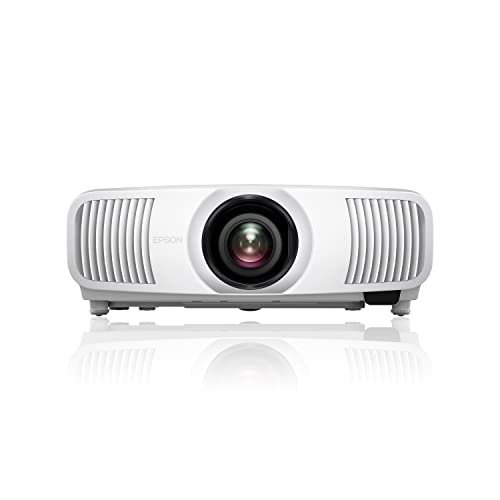
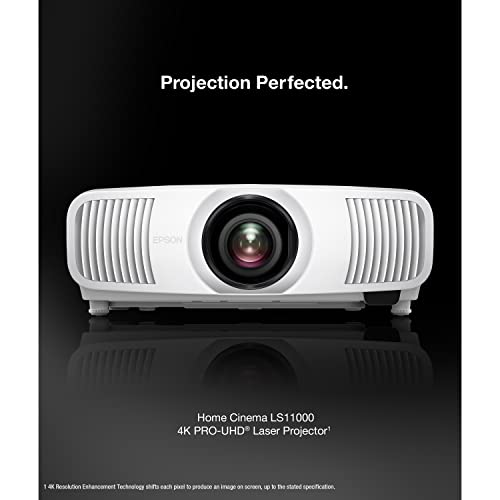
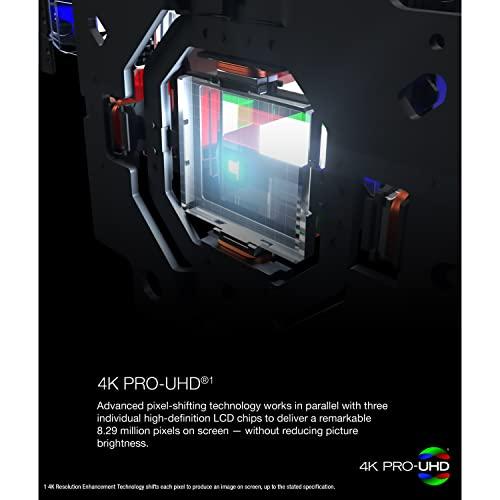
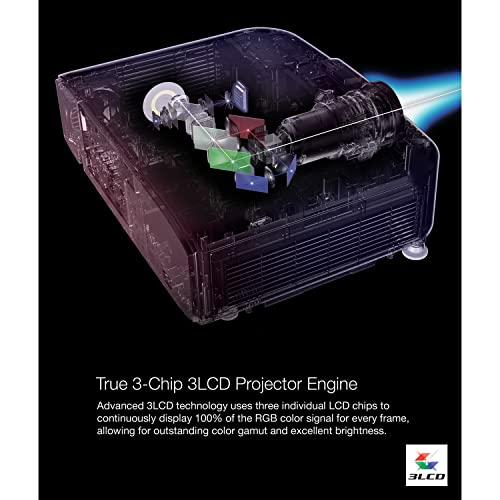
The Epson Home Cinema LS11000 employs three separate 0.74-inch LCD panels – one each for red, green, and blue – combined with their advanced 4K PRO-UHD pixel-shifting technology. The new Precision Shift Glass Plate moves pixels more precisely and quietly than previous generations, creating 8.29 million pixels on screen. This three-chip approach eliminates the rainbow effect (brief color flashes) that some people notice with single-chip projectors.
In terms of color accuracy, both projectors excel but in different ways. The XGIMI achieves remarkable color precision with ΔE values below 0.8 across major color standards. Delta E (ΔE) measures how far displayed colors deviate from reference standards – values below 1.0 are considered professionally accurate, and below 0.8 is exceptional. The projector covers 110% of the BT.2020 color space, meaning it can display more colors than most content actually contains.
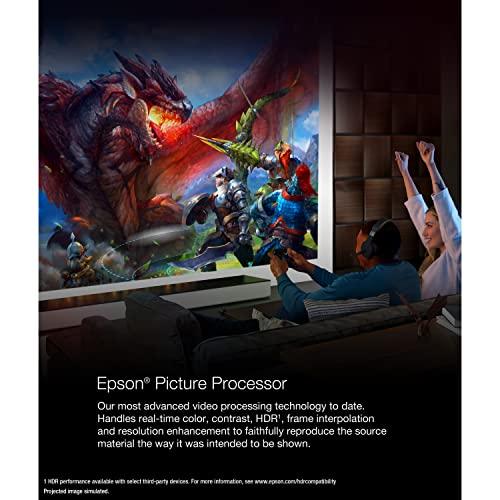
The Epson focuses on contrast performance, achieving an impressive 1,200,000:1 dynamic contrast ratio through its dynamic laser dimming system. This means the projector can make bright scenes truly bright while keeping dark scenes genuinely dark. Combined with superior black levels from its LCD technology, the LS11000 produces images with remarkable depth and dimensionality.
Based on professional reviews and user feedback, the image quality choice comes down to your priorities. The XGIMI delivers vibrant, punchy images with exceptional color accuracy that looks stunning in various lighting conditions. The Epson creates more cinematic images with superior contrast and black levels that shine in darkened environments.
Gaming has become a crucial differentiator in modern projectors, especially with the PlayStation 5 and Xbox Series X supporting high-refresh 4K gaming. Both projectors excel here, but serve different gaming priorities.
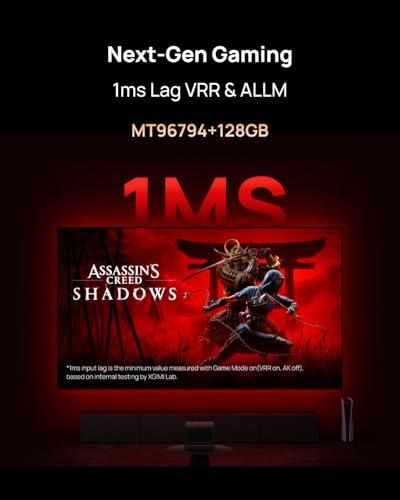
The XGIMI Horizon 20 Max achieves truly exceptional input lag numbers: just 1ms at 1080p/240Hz, 2.2ms at 1080p/120Hz, and 3ms at 4K/60Hz. Input lag measures the delay between your controller input and the image appearing on screen – anything below 20ms is considered good for gaming, and below 10ms is excellent. The XGIMI's sub-3ms performance at 4K puts it in the same league as high-end gaming monitors.
This ultra-low latency makes the XGIMI ideal for competitive gaming, especially first-person shooters where every millisecond matters. The projector also supports Variable Refresh Rate (VRR), which synchronizes the display refresh with your graphics card to eliminate screen tearing and stuttering.
The Epson Home Cinema LS11000 approaches gaming differently, focusing on high-refresh 4K capability. While its input lag is higher at around 20ms, it supports true 4K gaming at 120Hz through dual HDMI 2.1 ports. This means you can experience games like Call of Duty or Forza Horizon at full 4K resolution with smooth 120fps frame rates – something the XGIMI can't match since it caps 4K gaming at 60Hz.
For gaming, your choice depends on what you play and how you play it. Competitive gamers who prioritize response time over visual fidelity should lean toward the XGIMI. Console gamers with PS5 or Xbox Series X who want the full next-gen experience should consider the Epson for its 4K/120Hz capability.
The philosophy difference between these projectors becomes most apparent in their smart feature implementation. The XGIMI Horizon 20 Max represents the modern integrated approach, while the Epson Home Cinema LS11000 follows traditional dedicated home theater principles.
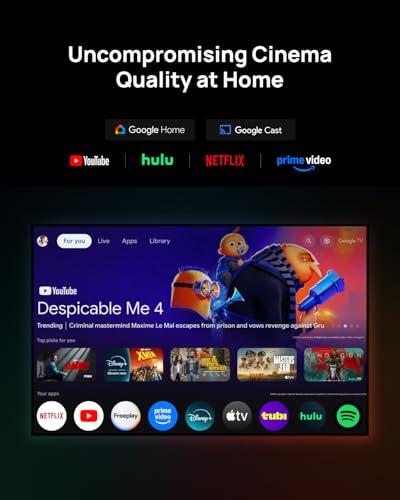
The XGIMI runs Android TV 11 with Google TV interface, providing access to Netflix, Disney+, Amazon Prime, and thousands of other apps directly on the projector. Google Home integration enables voice control – you can say "Hey Google, play Stranger Things" and the projector handles everything. Wi-Fi 6 support ensures smooth 4K streaming, while Bluetooth 5.2 connects wireless headphones and speakers.
Perhaps most impressive is XGIMI's ISA 5.0 (Intelligent Screen Adaptation) system. Set up the projector anywhere, turn it on, and ISA 5.0 automatically focuses the image, corrects keystone distortion, avoids obstacles like light fixtures, and even adjusts colors based on your wall color. This technology eliminates the tedious setup process that traditionally requires manual adjustments and test patterns.
The Epson Home Cinema LS11000 takes the opposite approach, offering zero smart features. No built-in streaming, no voice control, no automatic setup. This isn't a limitation – it's a deliberate design choice for users who prefer dedicated components. You'll connect Apple TV, NVIDIA Shield, or other streaming devices to the Epson's dual HDMI 2.1 inputs.
The advantage of Epson's approach is longevity and flexibility. Smart TV platforms become obsolete, but a quality external streaming device can be upgraded independently. The Epson also includes professional features like RS-232 control, 12V triggers, and LAN connectivity for custom home theater installations.
Both approaches have merit. The XGIMI offers incredible convenience and works brilliantly for most users who want a single device solution. The Epson appeals to enthusiasts who prefer separates and plan to build around the projector with dedicated components.
Setup complexity differs dramatically between these projectors, reflecting their target audiences and design philosophies.
The XGIMI Horizon 20 Max prioritizes ease of use through its ISA 5.0 system. Place the projector on a coffee table, shelf, or basic mount, and it handles the rest automatically. The system uses cameras and sensors to detect your screen or wall, then adjusts focus, keystone correction, and screen alignment without user intervention. If you move the projector, it recalibrates automatically.
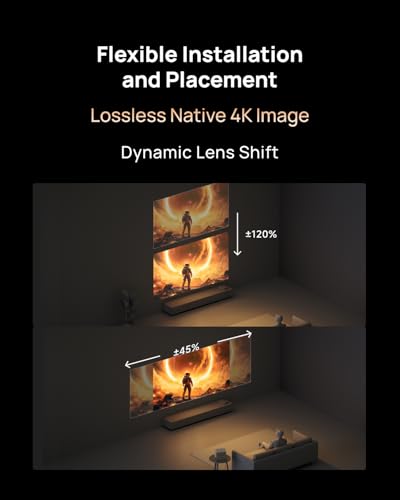
The lens offers vertical shift up to 120% and horizontal shift ±45%, providing reasonable placement flexibility. The 1.2-1.5:1 throw ratio means you can achieve a 100-inch image from about 8-12 feet away, suitable for most living rooms. At 11.9 pounds, the XGIMI is portable enough to move between rooms or take to friends' houses.
The Epson Home Cinema LS11000 offers professional-grade installation flexibility through its motorized lens system. The 2.1x zoom range combined with extensive lens shift (horizontal ±47.1%, vertical ±96.3%) allows precise image positioning from virtually any mounting location. Lens memory stores different zoom and shift settings, perfect for switching between 16:9 movies and ultra-wide 2.35:1 content.
The throw ratio range of 1.35-2.84:1 accommodates diverse room configurations, from tight spaces to large dedicated theaters. However, at 28 pounds, the Epson requires substantial mounting and typically professional installation for optimal results.
For most users, the XGIMI's automatic setup represents a game-changing convenience. You get excellent results without expertise or time investment. The Epson serves users who want maximum control and have specific installation requirements.
Audio capabilities further highlight the philosophical differences between these projectors.
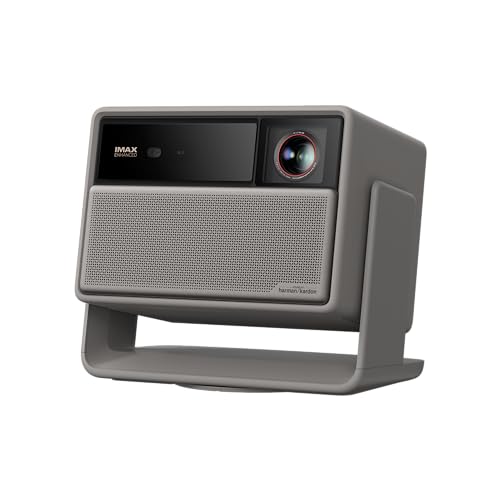
The XGIMI Horizon 20 Max includes dual 12W Harman Kardon speakers that deliver surprisingly robust sound quality. While they won't match a dedicated sound system, they're perfectly adequate for casual viewing and eliminate the need for external audio initially. The speakers handle dialogue clearly and provide reasonable bass response for their size.
The Epson Home Cinema LS11000 includes no built-in audio, requiring external speakers or sound systems. This approach assumes users building dedicated home theaters will invest in proper audio equipment to match the projector's image quality capabilities.
Most home theater enthusiasts eventually upgrade to external audio regardless of built-in speakers, but the XGIMI's integrated solution provides immediate functionality and convenience.
At the time of writing, both projectors occupy premium price segments but offer different value propositions based on their feature sets and target applications.
The XGIMI Horizon 20 Max delivers exceptional value for users seeking maximum versatility and convenience. You're getting industry-leading brightness, comprehensive smart features, automatic setup, integrated audio, and excellent gaming performance in a single package. The all-in-one approach eliminates additional component costs.
The Epson Home Cinema LS11000 provides value for dedicated home theater applications. The superior contrast performance, 4K/120Hz gaming capability, and professional installation features justify the investment for users building optimized viewing environments.
Both projectors use laser light sources rated for 20,000+ hours, meaning you won't replace lamps for years of normal use. The XGIMI benefits from more future-ready connectivity and smart features, while the Epson offers upgradeability through external components.
Choose the XGIMI Horizon 20 Max if you want maximum flexibility and convenience. It excels in bright rooms, multi-purpose spaces, and situations where easy setup matters. The exceptional brightness, automatic calibration, and integrated smart features make it perfect for families and casual users who want great performance without complexity. Competitive gamers will appreciate the ultra-low input lag, even if 4K gaming is limited to 60Hz.
Choose the Epson Home Cinema LS11000 if you're building a dedicated home theater and prioritize image quality above convenience. The superior contrast, 4K/120Hz gaming, and professional installation capabilities make it ideal for darkened viewing rooms where every detail matters. Console gamers with PS5 or Xbox Series X will appreciate the high-refresh 4K capability.
The decision ultimately comes down to your viewing environment and priorities. The XGIMI opens up projection to spaces and users who couldn't consider it before, while the Epson serves the traditional home theater market with proven excellence. Both represent the current state-of-the-art in their respective approaches, ensuring satisfaction regardless of your choice.
| XGIMI Horizon 20 Max 4K Projector | Epson Home Cinema LS11000 4K Laser Projector |
|---|---|
| Brightness - Most critical factor for room flexibility and daytime viewing | |
| 5,700 ISO lumens (exceptional for bright rooms, daytime use) | 2,500 lumens (optimized for dedicated dark theaters) |
| Display Technology - Affects image quality, reliability, and rainbow artifacts | |
| Single-chip DLP with XPR pixel-shifting | 3-chip 3LCD with 4K PRO-UHD pixel-shifting |
| Native Resolution - Both achieve 4K through advanced pixel-shifting | |
| 0.47" DMD, not native 4K but excellent sharpness | Three 0.74" LCD panels, not native 4K but 8.29M pixels |
| Contrast Ratio - Determines depth and black level performance | |
| 20,000:1 (very good for DLP technology) | 1,200,000:1 dynamic (exceptional blacks in dark rooms) |
| Gaming Input Lag - Critical for responsive gaming experience | |
| 1ms at 1080p/240Hz, 3ms at 4K/60Hz (ultra-competitive) | Sub-20ms at 4K/120Hz (excellent for console gaming) |
| Maximum Gaming Refresh Rate - Determines smoothness for high-end gaming | |
| 240Hz at 1080p, 60Hz at 4K (limited high-res gaming) | 120Hz at 4K (full next-gen console support) |
| HDMI 2.1 Connectivity - Essential for future gaming and high-bandwidth content | |
| 1 port with eARC support | 2 ports with 40Gbps bandwidth each |
| Smart TV Features - Determines need for external streaming devices | |
| Android TV 11 with Google TV, voice control built-in | None (requires external streaming devices) |
| Automatic Setup - Affects ease of installation and daily use | |
| ISA 5.0 with autofocus, keystone, obstacle avoidance | Manual setup and calibration required |
| Lens Flexibility - Important for installation options and room constraints | |
| Fixed lens with ±120% vertical, ±45% horizontal shift | 2.1x motorized zoom with ±96% vertical, ±47% horizontal shift |
| Built-in Audio - Eliminates need for immediate speaker investment | |
| Dual 12W Harman Kardon speakers included | No built-in speakers (external audio required) |
| Light Source Lifespan - Long-term maintenance and operating costs | |
| 20,000+ hours laser (no lamp replacements needed) | 20,000+ hours laser (no lamp replacements needed) |
| Weight and Portability - Affects mounting requirements and flexibility | |
| 11.9 lbs (relatively portable for performance level) | 28 lbs (requires substantial mounting, less portable) |
| Color Accuracy - Professional color reproduction capability | |
| ΔE < 0.8, 110% BT.2020 coverage (exceptional accuracy) | Professional 3LCD color reproduction (excellent but not specified) |
| Fan Noise - Important for quiet viewing environments | |
| 28 dB operational noise | 30 dB normal / 22 dB eco mode |
The XGIMI Horizon 20 Max is significantly brighter at 5,700 ISO lumens compared to the Epson Home Cinema LS11000 at 2,500 lumens. This makes the XGIMI much better for rooms with ambient light or daytime viewing, while the Epson is optimized for dedicated dark home theaters.
Neither projector has native 4K resolution. The XGIMI Horizon 20 Max uses single-chip DLP with XPR pixel-shifting, while the Epson Home Cinema LS11000 uses three LCD chips with 4K PRO-UHD pixel-shifting technology. Both achieve excellent 4K image quality that's virtually indistinguishable from native 4K at normal viewing distances.
For competitive gaming, the XGIMI Horizon 20 Max excels with ultra-low 1ms input lag at 1080p and 3ms at 4K/60Hz. For next-gen console gaming, the Epson Home Cinema LS11000 supports 4K gaming at 120Hz refresh rates, which the XGIMI cannot match as it's limited to 60Hz at 4K resolution.
Only the XGIMI Horizon 20 Max includes smart TV functionality with Android TV 11, Google TV interface, and built-in streaming apps like Netflix and Disney+. The Epson Home Cinema LS11000 has no smart features and requires external streaming devices like Apple TV or NVIDIA Shield.
Both the XGIMI Horizon 20 Max and Epson Home Cinema LS11000 use laser light sources rated for 20,000+ hours of operation, eliminating the need for expensive lamp replacements throughout their lifespan. This represents significant long-term cost savings compared to traditional bulb-based projectors.
The XGIMI Horizon 20 Max features ISA 5.0 automatic setup that handles focus, keystone correction, and screen alignment automatically. The Epson Home Cinema LS11000 requires manual setup and calibration but offers more professional installation flexibility with motorized zoom and extensive lens shift capabilities.
The Epson Home Cinema LS11000 delivers superior contrast with its 1,200,000:1 dynamic contrast ratio and excellent black levels from 3LCD technology. While the XGIMI Horizon 20 Max offers good contrast at 20,000:1, the Epson provides more cinematic depth and shadow detail in darkened home theaters.
The XGIMI Horizon 20 Max includes dual 12W Harman Kardon speakers that provide decent audio quality for casual viewing. The Epson Home Cinema LS11000 has no built-in speakers, requiring external audio systems for sound, which is typical for dedicated home theater projectors.
The XGIMI Horizon 20 Max weighs 11.9 pounds and is designed for portability with automatic setup features, making it suitable for moving between rooms or outdoor use. The Epson Home Cinema LS11000 weighs 28 pounds and is designed for permanent installation in dedicated home theater environments.
The XGIMI Horizon 20 Max has a 1.2-1.5:1 throw ratio, requiring about 8-12 feet for a 100-inch screen. The Epson Home Cinema LS11000 offers more flexibility with 1.35-2.84:1 throw ratio and 2.1x motorized zoom, accommodating various room sizes and installation scenarios.
The Epson Home Cinema LS11000 provides dual HDMI 2.1 ports with full 40Gbps bandwidth each, ideal for multiple high-end gaming consoles. The XGIMI Horizon 20 Max offers one HDMI 2.1 port with eARC support plus one standard HDMI port, sufficient for most users but less expandable.
The XGIMI Horizon 20 Max offers excellent value for versatile use with integrated smart features, exceptional brightness, and all-in-one convenience. The Epson Home Cinema LS11000 provides better value for dedicated home theaters with superior image quality, professional features, and 4K/120Hz gaming capability for enthusiasts.
We've done our best to create useful and informative comparisons to help you decide what product to buy. Our research uses advanced automated methods to create this comparison and perfection is not possible - please contact us for corrections or questions. These are the sites we've researched in the creation of this article: dustinabbott.net - projectorcentral.com - youtube.com - us.xgimi.com - youtube.com - tweaktown.com - youtube.com - us.xgimi.com - youtube.com - youtube.com - thesmarthomehookup.com - youtube.com - us.xgimi.com - global.xgimi.com - projector-database.com - tvsbook.com - thesmarthomehookup.com - cepro.com - specsradar.com - projectorscreen.com - benq.com - projectorreviews.com - projectorscreen.com - youtube.com - projectorcentral.com - whathifi.com - projectorscreen.com - bestbuy.com - youtube.com - avsforum.com - versus.com - crutchfield.com - projectorcentral.com - shop.avispl.com - mediaserver.goepson.com - projectorscreen.com - bestbuy.com - simplehomecinema.com - dreamediaav.com - epson.com

Privacy Policy
Terms and Conditions - Affiliate Policy
Home Security
© Copyright 2008-2026.
11816 Inwood Rd #1211, Dallas, TX 75244