

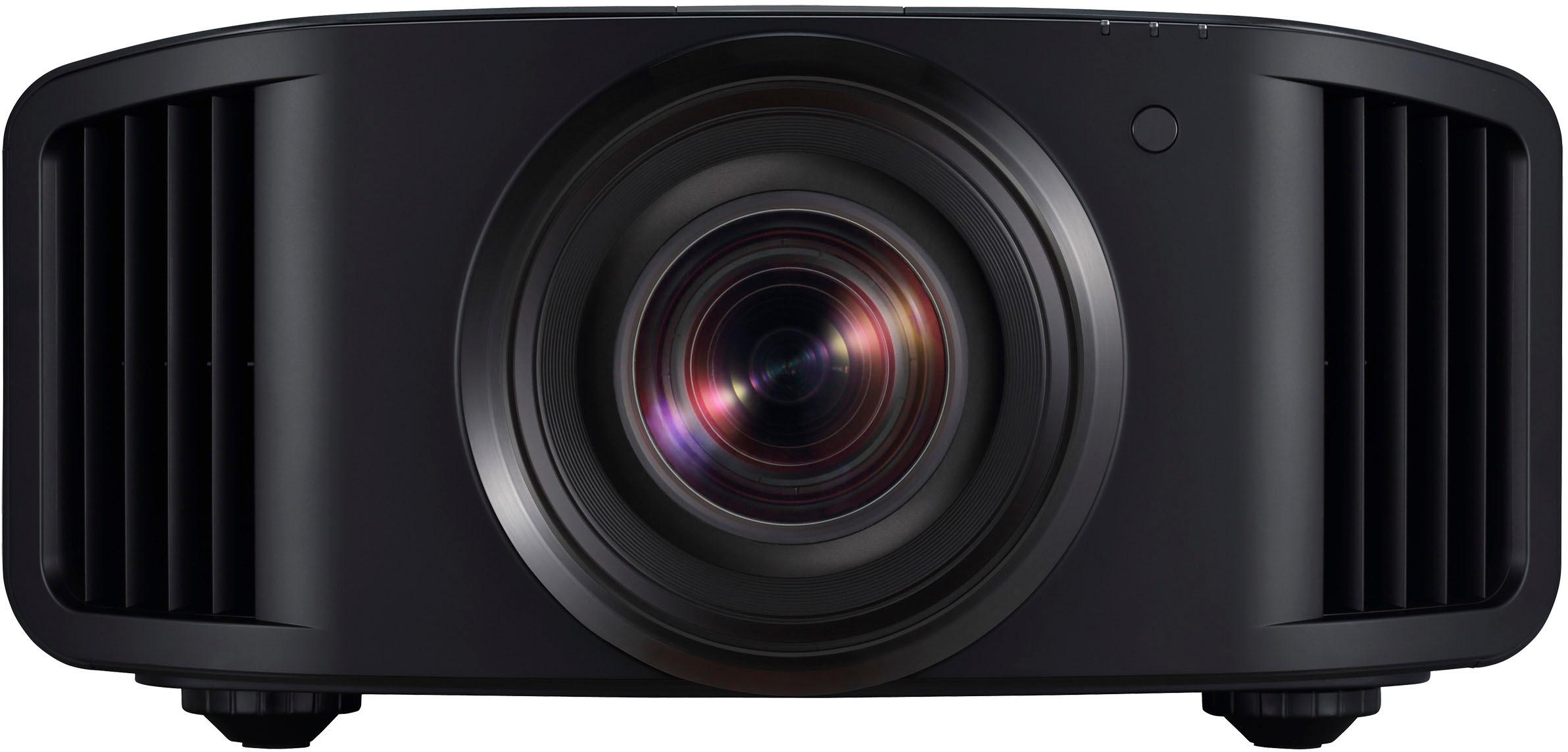
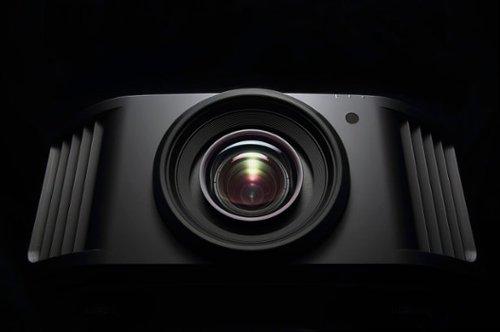
Building a home theater is one of those hobbies where you can spend anywhere from a few hundred to several hundred thousand dollars, and projectors sit right at the heart of that experience. Whether you're transforming a basement into a movie sanctuary or setting up a simple screen in the living room, the projector you choose will make or break your cinematic experience.
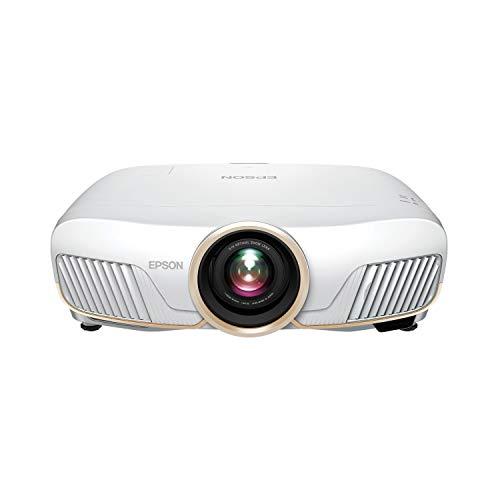
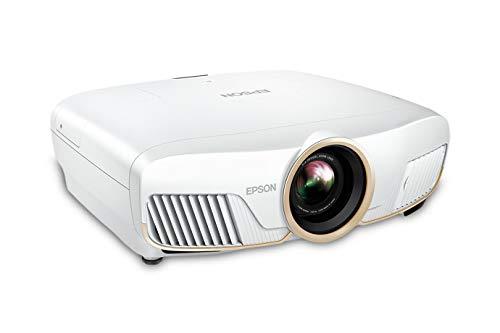
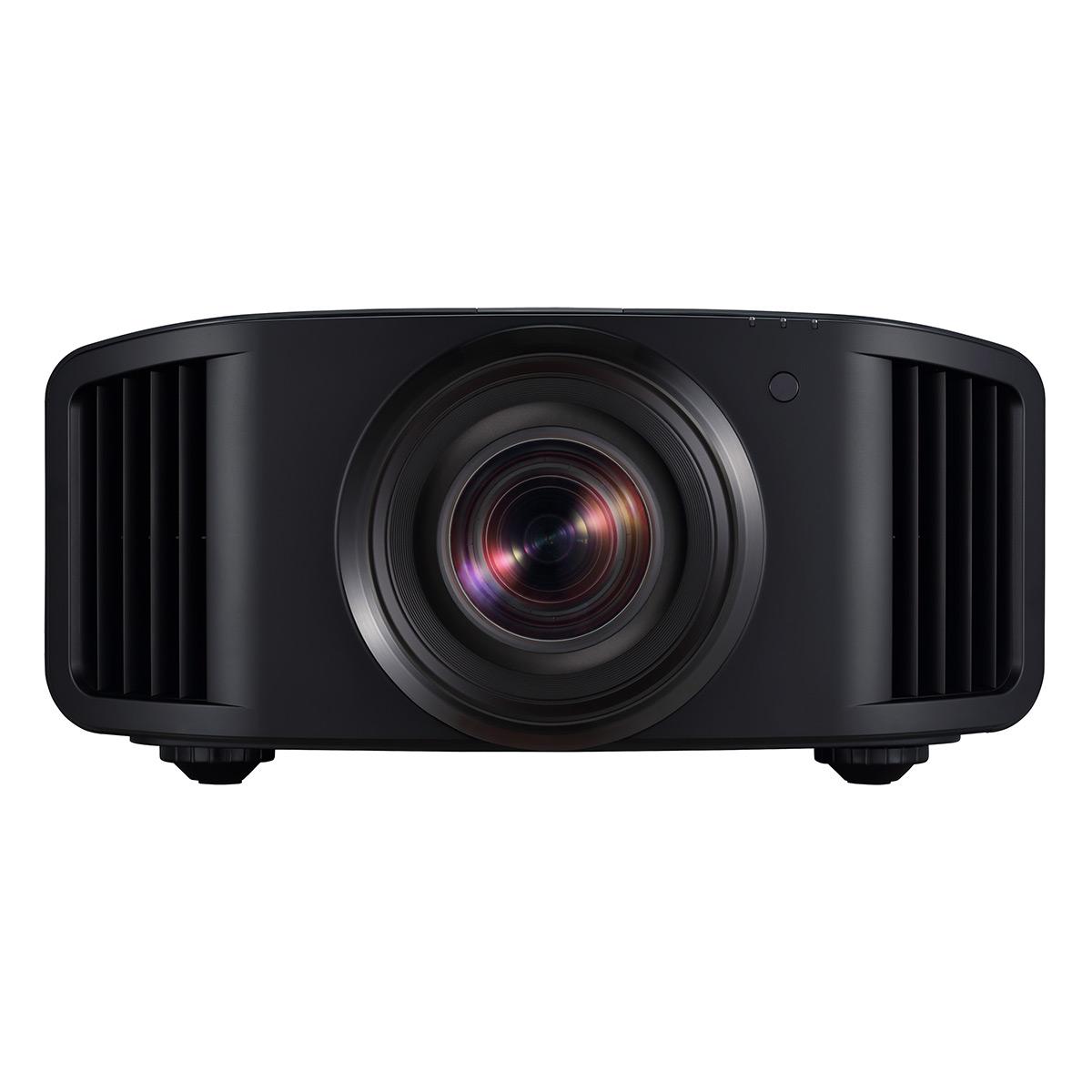
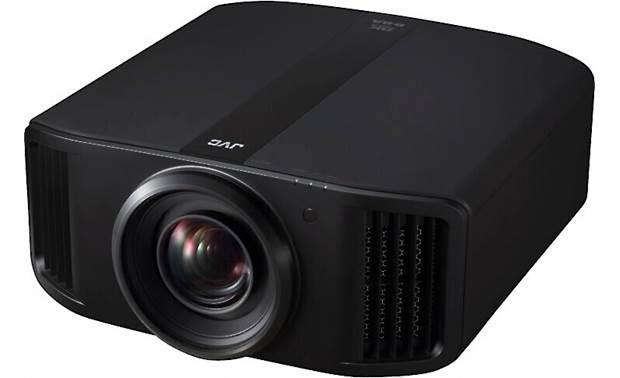
Today we're comparing two projectors that represent completely different philosophies in home theater design: the Epson Home Cinema 5050UB, which launched in 2018 as a value-focused powerhouse, and the JVC DLA-NZ9 8K, introduced in 2021 as the ultimate expression of projection technology. The price difference between these models—roughly six times more expensive for the JVC at the time of writing—tells only part of the story.
Before diving into specifics, it's worth understanding what makes home theater projectors special. Unlike your typical office projector that's designed to show PowerPoint slides in bright conference rooms, home theater projectors are engineered for one thing: creating the most immersive, cinematic experience possible in your living space.
The key considerations that separate good projectors from great ones are surprisingly straightforward. Resolution determines how sharp and detailed your image looks—think of it as how many tiny dots of light the projector can create to form the picture. Contrast ratio is the difference between the brightest whites and the darkest blacks the projector can display; higher contrast makes images look more three-dimensional and realistic. Color accuracy ensures that what you see matches what the filmmaker intended, while brightness determines how well the image holds up against ambient light in your room.
The technology has evolved dramatically over the past few years. When the Epson 5050UB launched in 2018, 4K projectors were still relatively new and expensive. Epson's approach was clever: use advanced pixel-shifting technology to create near-4K images from 1080p panels, delivering most of the visual benefits at a fraction of the cost. By 2021, when JVC released the DLA-NZ9, true native 4K had become more accessible, but JVC pushed even further with 8K capability and laser light sources.
The fundamental difference between these projectors starts with how they create images. The Epson 5050UB uses 3LCD technology, which employs three separate liquid crystal display panels—one each for red, green, and blue light. Think of it like having three tiny computer monitors working together to create the final image. This approach ensures that colors are vibrant and consistent, and it completely eliminates the "rainbow effect" that some people see with single-chip projectors.
The JVC DLA-NZ9 uses D-ILA technology (Direct Drive Image Light Amplifier), which is JVC's proprietary version of what's generically called LCoS (Liquid Crystal on Silicon). Instead of light passing through LCD panels, D-ILA reflects light off a highly polished silicon surface covered with liquid crystals. This reflection-based approach allows for much tighter pixel spacing—imagine tiles with virtually no grout lines between them—resulting in smoother images and superior contrast performance.
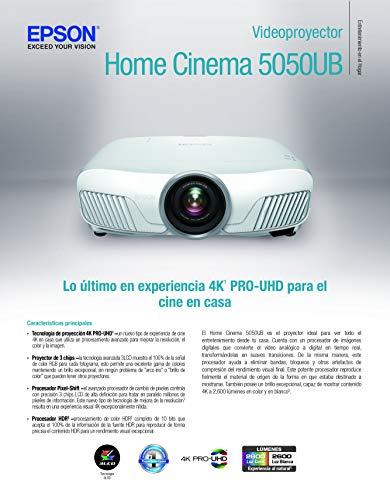
Here's where things get interesting. The Epson 5050UB doesn't actually have native 4K panels. Instead, it uses three 1080p (1920x1080) panels combined with 4K PRO-UHD pixel-shifting technology. This system rapidly moves each pixel diagonally by half a pixel width, effectively doubling the resolution and creating approximately 4 million addressable picture elements. It's like having a painter who can create incredibly detailed artwork by making multiple precise brush strokes in the same area.
The JVC DLA-NZ9 starts with true native 4K panels (4096x2160), providing about 8.8 million pixels naturally. But JVC doesn't stop there—their 8K e-shiftX technology shifts pixels in four directions at incredibly high speed, creating over 35 million addressable pixels to display 8K content (8192x4320). It's the difference between starting with a high-resolution photo and enlarging it versus starting with an ultra-high-resolution original.
In practical terms, both approaches work remarkably well. Based on extensive reviews and user feedback, the difference in apparent sharpness between pixel-shifted 4K and native 4K is minimal when viewed from normal seating distances. However, the JVC's 8K capability provides genuine future-proofing as 8K content becomes more available.
If there's one area where these projectors show their true colors—literally—it's in contrast performance. Contrast ratio measures the difference between the brightest whites and the deepest blacks a projector can display, and it's arguably the most important specification for image quality.
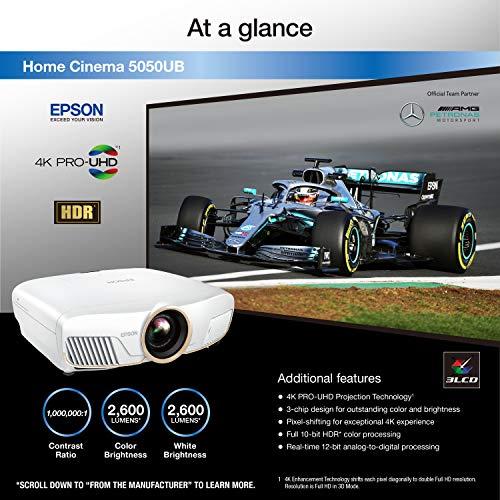
The Epson 5050UB achieves impressive contrast through its UltraBlack technology, which uses a proprietary compensation filter to control light polarization and suppress stray light. Combined with an auto iris that mechanically adjusts the light path, it delivers a dynamic contrast ratio of 1,000,000:1. In real-world testing, reviewers consistently measure native contrast around 8,000:1, which is excellent for a lamp-based projector in this price range.
The JVC DLA-NZ9 operates on a different level entirely. Its native contrast ratio of 100,000:1 comes from the inherent advantages of D-ILA technology and ultra-high contrast optics. This means even without any dynamic adjustments, the JVC can display blacks that are genuinely black rather than dark gray. When you add laser dimming capabilities, the dynamic contrast becomes essentially infinite.
The practical difference is striking. In dark movie scenes—think of the cave sequences in The Batman or space scenes in Interstellar—the JVC reveals shadow details that simply disappear into gray mush on lesser projectors. This superior contrast creates what reviewers often describe as "three-dimensional" images that seem to pop off the screen.
Brightness, measured in lumens, determines how well your projector performs in different lighting conditions. The Epson 5050UB delivers 2,600 lumens of both color and white brightness. This dual specification matters because some projection technologies sacrifice color brightness for overall brightness, but Epson's 3LCD design maintains both equally.
The JVC DLA-NZ9 produces 3,000 lumens from its BLU-Escent laser phosphor light source. This third-generation laser system uses blue laser diodes and an inorganic yellow phosphor wheel to create the light spectrum, providing more consistent brightness over time compared to traditional lamps.
Both projectors excel in color reproduction, covering 100% of the DCI-P3 color space—the standard used in commercial cinemas. This wider color gamut compared to standard HDTV (Rec. 709) means more vivid greens, deeper reds, and richer overall color saturation. Think of it as the difference between a box of 16 crayons and a professional artist's palette.
High Dynamic Range (HDR) technology represents one of the most significant advances in home theater in recent years. HDR content contains much more information about brightness levels and color than standard content, allowing for more realistic images with better highlight detail and shadow separation.
The Epson 5050UB supports HDR10 and HLG formats with its Precision HDR Adjustment feature, offering 16 different levels of HDR processing that you can adjust in real-time. This flexibility helps optimize performance for different room conditions and personal preferences.
The JVC DLA-NZ9 goes further with support for HDR10+ and Frame Adapt HDR dynamic tone mapping. Unlike standard HDR10 which uses static metadata for the entire movie, HDR10+ includes scene-by-scene or even frame-by-frame instructions for optimal HDR rendering. JVC's Theater Optimizer analyzes your specific setup and automatically adjusts the HDR curve accordingly.
Gaming has become increasingly important for home theater projectors, especially with the latest PlayStation 5 and Xbox Series X consoles supporting 4K gaming at 120 frames per second. This is where the generational difference between these projectors becomes apparent.
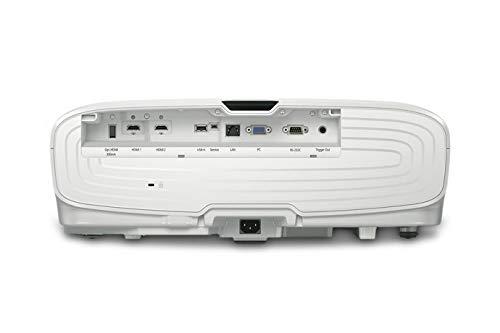
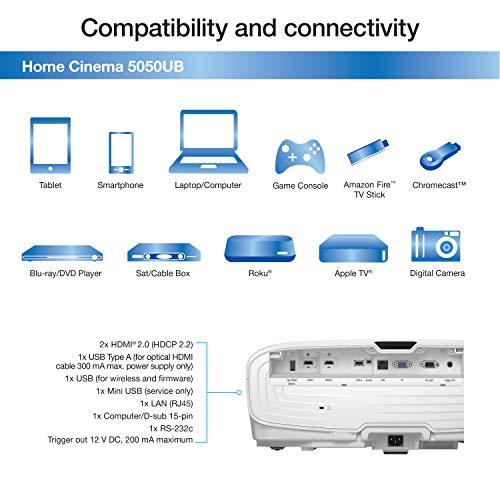
The Epson 5050UB, designed in 2018, includes two HDMI 2.0 ports limited to 4K at 60Hz maximum. Input lag—the delay between controller input and on-screen response—measures around 22.5 milliseconds, which is acceptable for casual gaming but not ideal for competitive play.
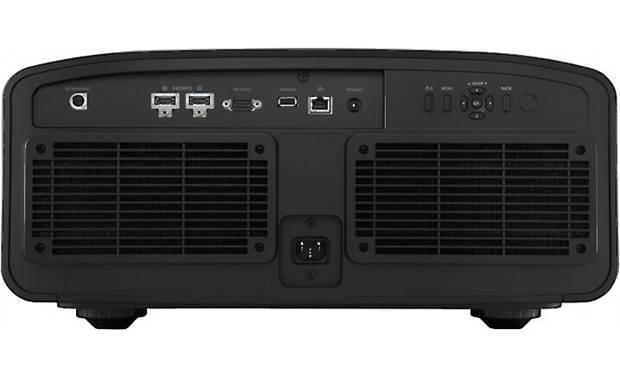
The JVC DLA-NZ9 features two HDMI 2.1 ports with 48Gbps bandwidth, enabling 4K gaming at 120Hz and even 8K content at 60Hz. This future-proofing ensures compatibility with next-generation gaming consoles and upcoming 8K streaming services.
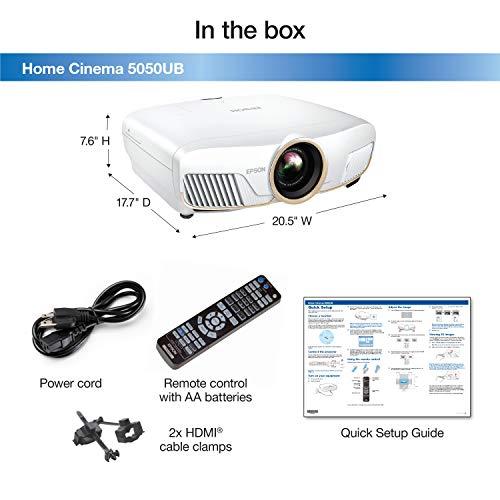
Setting up a projector involves more considerations than just picture quality. The Epson 5050UB excels in installation flexibility with its extensive lens shift capabilities—±96% vertical and ±47% horizontal. This means you can mount the projector significantly off-center from your screen and still achieve a perfectly rectangular image without keystone distortion. The 2.1x zoom range accommodates various room sizes and seating distances.
At 24.7 pounds, the Epson is manageable for DIY installation and works with standard universal mounts. Its lamp-based design means you'll need to replace the bulb every 3,500-5,000 hours (roughly every 2-4 years for most users), but replacement lamps cost around $600.
The JVC DLA-NZ9 weighs 55.8 pounds and requires heavy-duty mounting solutions. However, its premium 100mm all-glass lens with 18 elements provides exceptional sharpness across the entire screen, even at 8K resolution. The BLU-Escent laser light source is rated for 20,000 hours of operation—essentially maintenance-free for the projector's entire lifespan.
Based on comprehensive reviews from professional calibrators and enthusiasts, both projectors deliver exceptional performance in their respective categories. The Epson 5050UB consistently earns praise for delivering "reference-quality" images at an accessible price point. Professional measurements show excellent color accuracy out of the box, with even better results after calibration.
The JVC DLA-NZ9 receives universal acclaim from reviewers as delivering "world-class" performance. In blind comparisons against projectors costing twice as much, it often emerges as the preferred choice due to its exceptional black levels and overall image quality.
User feedback reveals interesting patterns. Epson owners frequently express amazement at the image quality relative to the price, while JVC owners describe their projectors as "end-game" purchases that eliminate any desire to upgrade further.
Choosing between these projectors ultimately depends on your budget, room setup, and performance expectations.
The Epson Home Cinema 5050UB makes sense if you're budget-conscious but refuse to compromise on image quality. It's ideal for DIY installations, rooms with some ambient light, and users who want flagship-level performance without flagship pricing. The ongoing lamp costs are manageable for most users, and the installation flexibility accommodates challenging room layouts.
The JVC DLA-NZ9 8K is the choice for dedicated theater rooms where image quality is paramount. If you're investing in custom installation, acoustic treatments, and high-end audio systems, the JVC's superior contrast and native 4K resolution provide the image quality to match. The maintenance-free laser operation and 8K capability offer genuine long-term value for serious enthusiasts.
At the time of writing, these projectors serve distinctly different markets despite performing the same basic function. The Epson 5050UB democratizes high-quality projection, bringing performance that was previously available only in much more expensive projectors to a broader audience. It's proof that you don't need to spend luxury car money to get exceptional home theater performance.
The JVC DLA-NZ9 represents the current state-of-the-art in home theater projection. Its combination of native 4K resolution, laser illumination, and superior contrast justifies its premium positioning for users who demand the absolute best.
Both projectors excel in their intended roles, and either choice will deliver years of cinematic enjoyment. The decision really comes down to whether you're building a very good home theater or the best home theater your budget allows.
| Epson Home Cinema 5050UB | JVC DLA-NZ9 8K |
|---|---|
| Native Resolution - Foundation of image sharpness and detail | |
| 1080p panels with 4K pixel-shifting (near-4K quality) | True native 4K D-ILA panels (genuine 4K resolution) |
| 8K Capability - Future-proofing for emerging content | |
| Not supported (maxes out at 4K input) | Full 8K e-shiftX technology with 8K/60p input support |
| Light Source Technology - Affects longevity and maintenance costs | |
| 250W UHE lamp (3,500-5,000 hour lifespan) | BLU-Escent laser phosphor (20,000 hour lifespan) |
| Brightness Output - Determines performance in ambient light | |
| 2,600 lumens (excellent for most rooms) | 3,000 lumens (superior for large screens and brighter rooms) |
| Native Contrast Ratio - Most important spec for image depth and black levels | |
| 8,000:1 with UltraBlack technology (very good) | 100,000:1 with D-ILA technology (exceptional, industry-leading) |
| HDMI Connectivity - Gaming and future device compatibility | |
| 2x HDMI 2.0 ports (4K/60Hz maximum) | 2x HDMI 2.1 ports with 48Gbps (4K/120p, 8K/60p capable) |
| Color Gamut Coverage - Richness and accuracy of colors displayed | |
| 97% DCI-P3 with 3LCD technology | Over 100% DCI-P3 with Cinema Filter |
| HDR Support - Enhanced dynamic range for realistic images | |
| HDR10, HLG with 16-step Precision HDR adjustment | HDR10, HDR10+, HLG with Frame Adapt HDR and Theater Optimizer |
| Lens System - Installation flexibility and image quality | |
| 2.1x zoom, ±96% V/±47% H lens shift, powered focus | Premium 100mm all-glass lens, 2x zoom, ±100% V/±43% H shift |
| Weight and Installation - Affects mounting requirements and DIY feasibility | |
| 24.7 lbs (DIY-friendly, standard mounts work) | 55.8 lbs (requires heavy-duty mounts, professional installation recommended) |
| Input Lag - Gaming responsiveness | |
| 22.5ms at 4K/60Hz (acceptable for casual gaming) | Low Latency mode available (optimized for gaming) |
| Throw Ratio - Distance needed for desired screen size | |
| 1.35:1 to 2.84:1 (50-300 inch screens) | 1.29:1 to 2.61:1 (60-300 inch screens) |
| Target Market - Who each projector is designed for | |
| DIY enthusiasts wanting flagship performance at accessible pricing | Custom installations and dedicated theaters demanding absolute best quality |
The JVC DLA-NZ9 8K delivers superior home theater performance with its native 4K resolution, exceptional 100,000:1 contrast ratio, and laser light source. However, the Epson Home Cinema 5050UB offers excellent value with near-4K quality through pixel-shifting and impressive brightness at a much lower cost. For dedicated theater rooms, the JVC excels, while the Epson works better for multi-purpose spaces.
The JVC DLA-NZ9 uses true native 4K panels with 8.8 million pixels, while the Epson 5050UB employs pixel-shifting technology that moves 1080p pixels to create near-4K resolution. Native 4K provides genuine detail reproduction, but pixel-shifting delivers visually similar results at normal viewing distances for significantly less cost.
The JVC DLA-NZ9 8K significantly outperforms the Epson Home Cinema 5050UB in contrast with its 100,000:1 native contrast ratio versus the Epson's 8,000:1. The JVC's D-ILA technology produces deeper blacks and better shadow detail, making it superior for dark movie scenes and overall image depth.
The Epson Home Cinema 5050UB uses a traditional lamp requiring replacement every 3,500-5,000 hours of use. The JVC DLA-NZ9 features a maintenance-free laser light source rated for 20,000 hours, eliminating ongoing lamp costs and providing consistent brightness throughout its lifespan.
The JVC DLA-NZ9 8K produces 3,000 lumens compared to the Epson 5050UB's 2,600 lumens. Both provide sufficient brightness for moderately lit rooms, though the JVC's additional 400 lumens and superior contrast help maintain image quality in brighter conditions.
The JVC DLA-NZ9 excels at gaming with HDMI 2.1 ports supporting 4K at 120Hz, while the Epson Home Cinema 5050UB is limited to 4K at 60Hz through HDMI 2.0 ports. For next-gen console gaming, the JVC offers better future-proofing and performance.
Both projectors provide excellent installation options. The Epson 5050UB offers slightly more vertical lens shift (±96% vs ±100%) and is much lighter at 24.7 pounds, making DIY installation easier. The JVC DLA-NZ9 weighs 55.8 pounds and typically requires professional mounting.
The JVC DLA-NZ9 8K supports HDR10+ with advanced Frame Adapt HDR processing, while the Epson Home Cinema 5050UB handles HDR10 and HLG with 16-step adjustment controls. The JVC's dynamic tone mapping provides more sophisticated HDR processing for optimal image quality.
Both the Epson 5050UB and JVC DLA-NZ9 cover 100% of the DCI-P3 color space used in commercial cinemas. The Epson's 3LCD technology eliminates rainbow effects, while the JVC's D-ILA system with Cinema Filter can exceed 100% DCI-P3 coverage for even wider color reproduction.
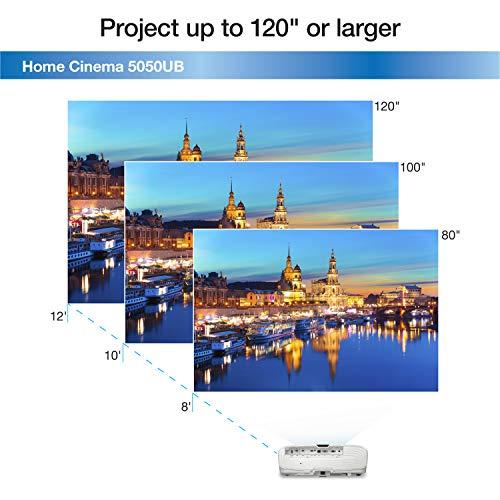
The Epson Home Cinema 5050UB supports 50-300 inch screens with its 2.1x zoom range, while the JVC DLA-NZ9 handles 60-300 inch screens. Both work well for typical home theater screen sizes of 100-150 inches, with the JVC's superior contrast benefiting larger installations.
The Epson 5050UB provides exceptional initial value but requires lamp replacements costing several hundred dollars every few years. The JVC DLA-NZ9 8K costs significantly more upfront but eliminates maintenance expenses with its 20,000-hour laser lifespan, potentially offering better long-term economics for frequent users.
For first-time buyers, the Epson Home Cinema 5050UB offers an excellent introduction to high-quality projection with manageable costs and DIY-friendly installation. The JVC DLA-NZ9 represents the ultimate choice for dedicated theater rooms where image quality is paramount and budget is less constrained.
We've done our best to create useful and informative comparisons to help you decide what product to buy. Our research uses advanced automated methods to create this comparison and perfection is not possible - please contact us for corrections or questions. These are the sites we've researched in the creation of this article: rtings.com - projectorscreen.com - hometechnologyreview.com - thesmarthomehookup.com - youtube.com - rtings.com - techgearlab.com - projectorcentral.com - projectorreviews.com - projectorcentral.com - avsforum.com - rtings.com - projectorreviews.com - projectorreviews.com - avsforum.com - avsforum.com - audiogeneral.com - hifiheaven.net - manuals.plus - crutchfield.com - projectorcentral.com - epson.com - mediaserver.goepson.com - bestbuy.com - ngxptech.com - projectorcentral.com - projectorreviews.com - whathifi.com - soundandvision.com - worldwidestereo.com - projectorreviews.com - worldwidestereo.com - us.jvc.com - crutchfield.com - abtvaustin.com - valueelectronics.com - projectorcentral.com

Privacy Policy
Terms and Conditions - Affiliate Policy
Home Security
© Copyright 2008-2026.
11816 Inwood Rd #1211, Dallas, TX 75244