

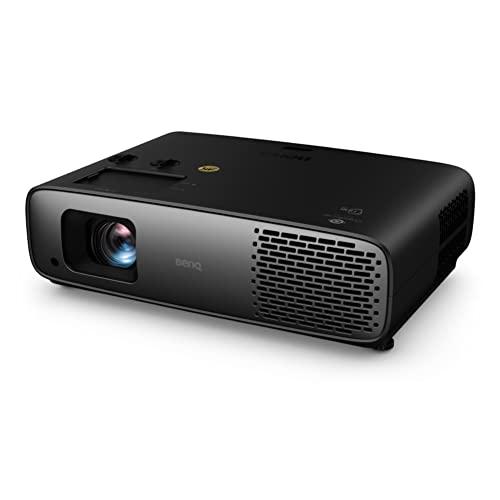
Setting up a home theater has never been more exciting—or more complicated. With 4K projectors becoming more affordable and feature-rich, you're no longer stuck choosing between "decent" and "bank-breaking." The BenQ HT4550i and Epson Home Cinema LS11000 represent two excellent but very different approaches to home theater projection, each released within the past few years as manufacturers refined their 4K technologies.
Both projectors achieve true 4K resolution through pixel-shifting technology—a clever engineering solution that rapidly moves each pixel to multiple positions, effectively quadrupling the detail you see on screen. But that's where the similarities end. Understanding their differences will help you choose the right projector for your space, viewing habits, and budget.
Before diving into specifics, let's establish what makes a great home theater projector. Unlike TVs that rely on backlighting, projectors create images by shining light through or reflecting it off tiny imaging chips, then focusing that light through a lens onto your screen or wall. This fundamental difference means brightness, contrast, and color accuracy work differently than on TVs.
The most important considerations for any home theater projector include the light source technology (which affects brightness, color, and lifespan), the imaging technology (which impacts contrast and color consistency), and installation flexibility (because unlike TVs, projectors need to be positioned precisely relative to your screen).
Modern 4K projectors like the BenQ HT4550i and Epson LS11000 use sophisticated pixel-shifting to achieve Ultra HD resolution from lower-resolution imaging chips. This approach delivers genuine 4K detail at a fraction of the cost of native 4K projectors, which can cost $10,000 or more.
The BenQ HT4550i, released in 2023, uses a cutting-edge 4LED light engine combined with single-chip DLP (Digital Light Processing) technology. The 4LED system employs four separate LED arrays—red, green, blue, and an additional optimized LED—to create incredibly accurate colors while delivering impressive brightness. LEDs last roughly 30,000 hours and maintain consistent brightness throughout their lifespan, meaning you'll never need to replace a bulb.
DLP technology works by reflecting light off millions of microscopic mirrors that tilt thousands of times per second. Each mirror represents one pixel, and by controlling how long each mirror reflects light toward the lens, the projector creates different brightness levels. The BenQ's single-chip design means it cycles through colors rapidly, but modern DLP projectors do this so quickly that color separation artifacts (sometimes called "rainbow effects") are rarely noticeable.
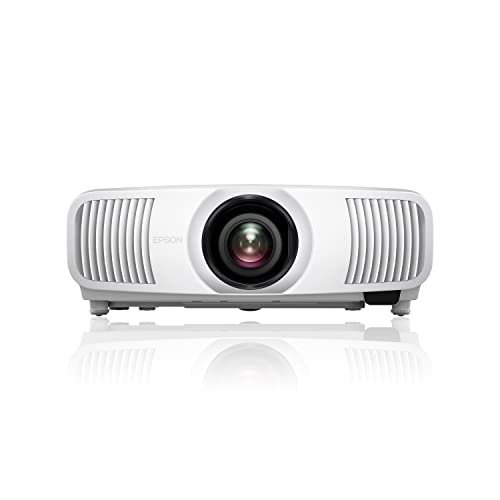
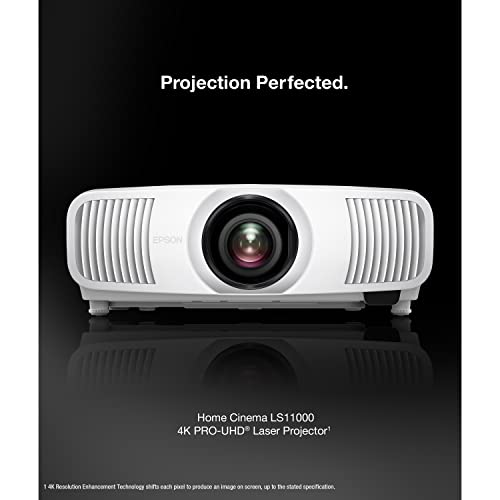
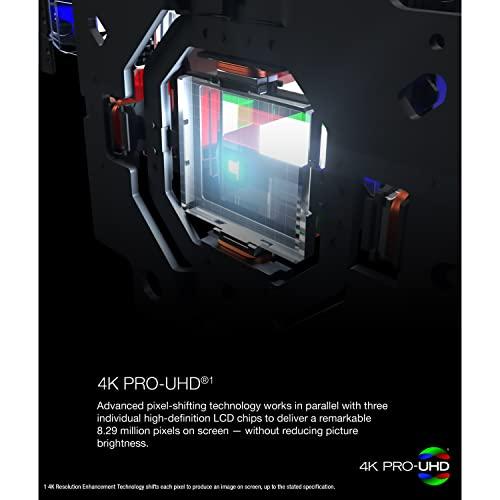
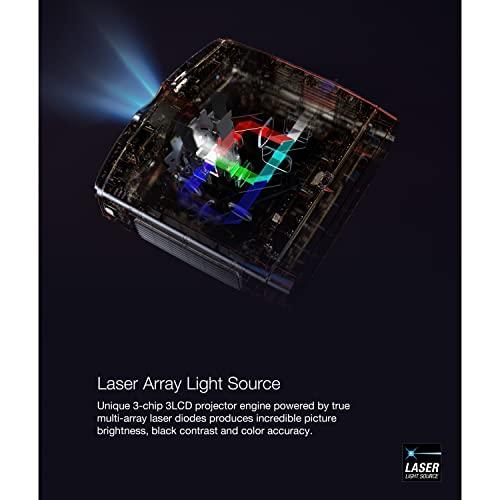
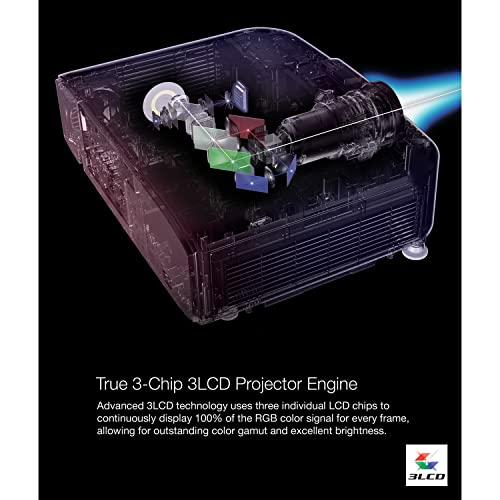
The Epson LS11000, launched in 2022, takes a completely different approach with 3LCD technology powered by a blue laser phosphor light source. Instead of one imaging chip, it uses three separate LCD panels—one each for red, green, and blue light. These panels work simultaneously rather than sequentially, which eliminates any possibility of color separation and ensures consistent color brightness across the entire image.
The laser phosphor system creates white light by exciting a yellow phosphor wheel with blue lasers, then splitting that white light into red, green, and blue components. While this sounds complex, it delivers excellent color consistency and runs cooler than LED systems, contributing to the Epson's remarkably quiet operation.
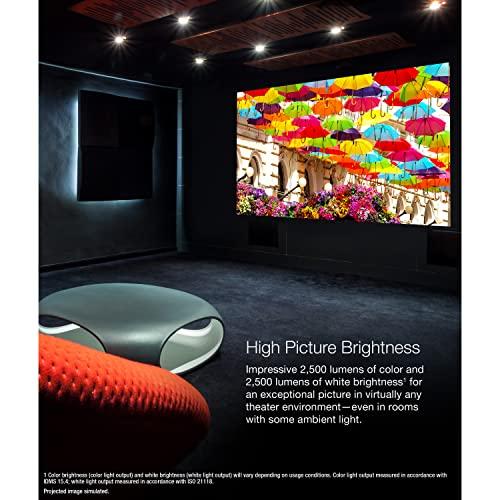
At the time of writing, the BenQ HT4550i delivers significantly higher brightness than the Epson LS11000—roughly 3,200 ANSI lumens versus 2,500 lumens. However, these numbers tell only part of the story.
ANSI lumens measure brightness across nine points on the screen, providing a standardized comparison. But real-world performance depends heavily on which picture mode you use and how the projector distributes that light. The BenQ achieves its peak brightness in its brightest picture mode, which isn't always ideal for movie watching. In more color-accurate modes, the brightness difference narrows considerably.
For context, 2,000-2,500 lumens works well in light-controlled rooms with screens up to 120 inches diagonal. The BenQ's extra brightness becomes valuable if you're planning a larger screen, watching in a room with ambient light, or prefer brighter, more vibrant images. The additional brightness also helps with HDR content, where peak highlights need to pop against darker backgrounds.
However, brightness isn't everything. The Epson LS11000 maintains more consistent brightness across all its picture modes, meaning you get excellent performance whether you're watching movies, sports, or gaming. This consistency matters more than peak brightness for many users.
Here's where these projectors diverge dramatically. Contrast ratio—the difference between the darkest blacks and brightest whites a projector can produce—fundamentally shapes image quality. Deep blacks make colors appear more vibrant, create better shadow detail, and contribute to that coveted "cinematic" look.
The Epson LS11000 achieves roughly twice the native contrast of the BenQ HT4550i, and this difference is immediately visible when watching content. The 3LCD technology in the Epson naturally produces deeper blacks than single-chip DLP systems. When you're watching a dark movie scene—think of the cave sequences in recent Batman films—the Epson renders true blacks while the BenQ shows slightly gray shadows.
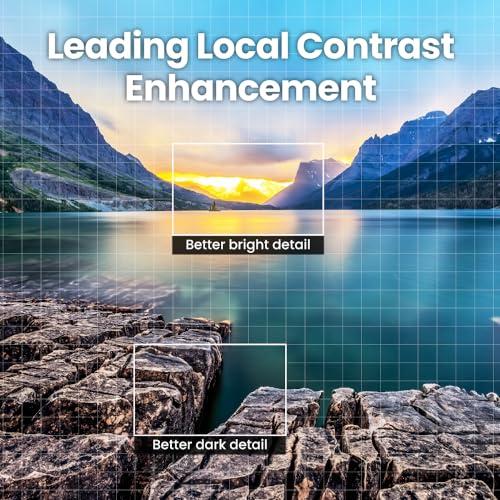
Both projectors use dynamic contrast technologies to improve this further. The BenQ employs a multi-zone system that analyzes over 1,000 areas of each frame, adjusting brightness to enhance contrast. The Epson uses dynamic laser dimming to vary the light output in real-time. These systems help, but they can't overcome the fundamental advantage of the Epson's superior native contrast.
For dedicated home theater rooms where you control the lighting, the Epson's contrast advantage creates noticeably more immersive viewing. In brighter rooms, the BenQ's higher brightness can compensate for its contrast limitations by overwhelming ambient light.
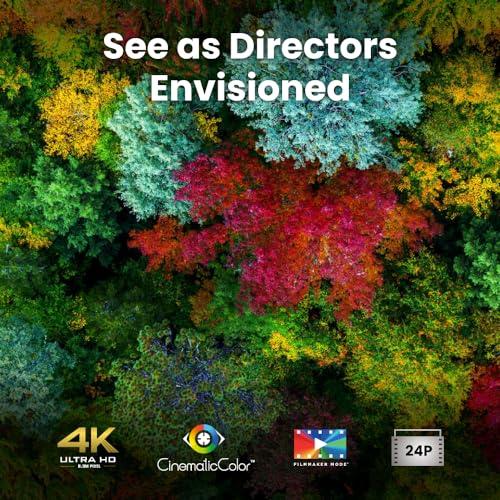
Color performance involves both how many colors a projector can display (color gamut) and how accurately it displays them. The BenQ HT4550i covers 100% of the DCI-P3 color space—the same standard used in commercial movie theaters—while the Epson LS11000 covers approximately 90% of DCI-P3.
This difference sounds significant, but both projectors deliver excellent color in practice. The BenQ's wider color gamut means it can display more saturated, vibrant colors, particularly in the red and green spectrums. This makes nature documentaries, animated films, and HDR content appear especially striking.
However, the Epson's 3LCD design offers an important advantage: color brightness consistency. Single-chip DLP projectors like the BenQ can sometimes struggle to maintain equal brightness across all colors, particularly in brighter picture modes. The Epson produces equally bright reds, greens, and blues, resulting in more natural-looking images across all content types.
Both projectors arrive well-calibrated from the factory. Based on professional reviews and user experiences, the BenQ often requires minimal adjustment to achieve reference-quality color accuracy, while the Epson provides consistent performance across its various picture modes.
Modern gaming demands low input lag—the delay between your controller input and the corresponding action on screen. Both projectors deliver excellent gaming performance, but with different strengths.
The BenQ HT4550i excels here with input lag as low as 8.7 milliseconds at 1080p resolution and 240Hz refresh rate, making it ideal for competitive gaming. At 4K resolution, it maintains roughly 18 milliseconds of lag, which feels responsive for most gaming scenarios. The projector also supports 3D gaming—a feature that's become rare but creates incredibly immersive experiences with compatible games.
The Epson LS11000 delivers approximately 20 milliseconds of input lag, which is excellent for a home theater projector though slightly behind the BenQ. However, it supports 4K gaming at 120Hz refresh rate through its dual HDMI 2.1 connections, making it more future-proof for next-generation consoles and high-end gaming PCs.
For casual gaming and movie watching, both projectors perform admirably. Serious gamers who prioritize the lowest possible lag should lean toward the BenQ, while those who want the best visual quality for single-player games might prefer the Epson's superior contrast.
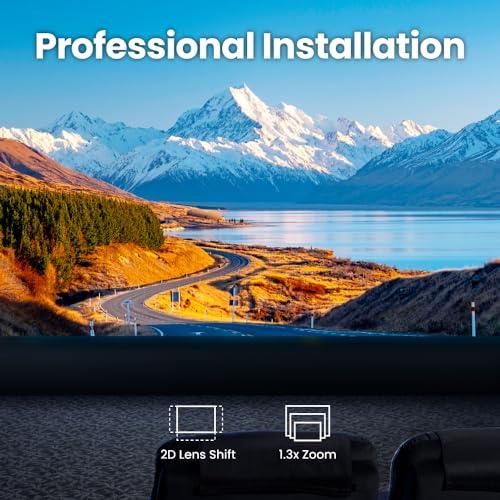
Installing a projector properly requires precise positioning relative to your screen, and this is where the Epson LS11000 shines. Its motorized lens system offers extensive adjustment capabilities: horizontal lens shift up to 47% in either direction and vertical shift up to 96%. This means you can mount the projector significantly off-center from your screen and still achieve a perfectly aligned image.
The motorized zoom (2.1x range) and focus systems let you fine-tune the image size and sharpness remotely. Even better, the lens memory function saves these settings, so you can instantly switch between configurations for different content aspect ratios—perfect if you watch both standard 16:9 movies and ultra-wide 2.35:1 films.
The BenQ HT4550i offers more limited lens shift (15% horizontal, up to 60% vertical) with manual adjustment only. While this covers most installation scenarios, it requires more precise initial positioning and physical adjustment when needed. However, the BenQ is significantly lighter and more compact, making ceiling mounting easier and less structurally demanding.
For most living room installations, the BenQ's adjustment range suffices and its smaller size proves advantageous. For dedicated theater rooms or challenging installation scenarios, the Epson's flexibility becomes invaluable.
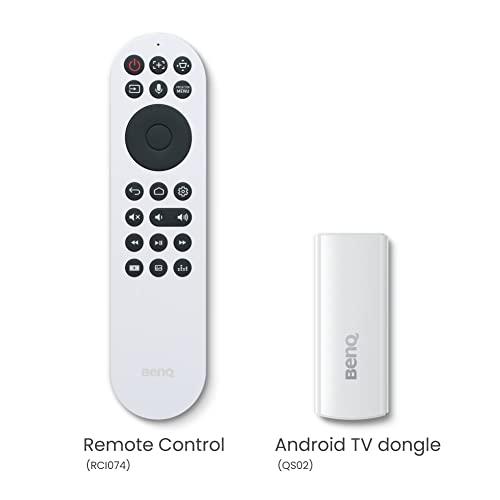
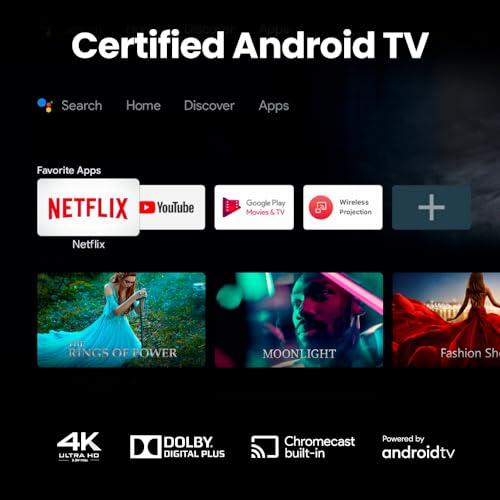
The BenQ HT4550i includes Android TV functionality with Netflix, Prime Video, Disney+, and other streaming services built-in. This integration means you can start watching content immediately without additional devices. The projector also includes Wi-Fi, Bluetooth, and even Google Assistant voice control. A built-in 5-watt speaker handles basic audio needs, though most users will prefer external speakers for true home theater sound.
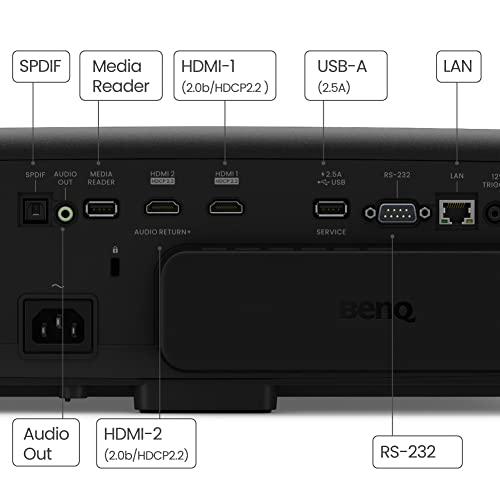
The Epson LS11000 takes the opposite approach: no smart features, no built-in speakers, no wireless connectivity beyond ethernet. This purist approach appeals to users who prefer dedicated streaming devices (like Apple TV or NVIDIA Shield) and separate audio systems. It also eliminates potential points of failure and reduces the need for software updates.
Neither approach is inherently better—it depends on your preferences and existing equipment. The BenQ's integrated features simplify setup and reduce clutter, while the Epson's dedicated focus on projection performance appeals to enthusiasts who want the best possible image quality.
At the time of writing, the Epson LS11000 commands a roughly $1,000 premium over the BenQ HT4550i. This price difference reflects their different positioning: the BenQ emphasizes brightness, smart features, and overall value, while the Epson focuses on contrast performance and installation flexibility.
Both projectors offer excellent long-term value with maintenance-free light sources lasting 20,000-30,000 hours. At typical usage patterns (3-4 hours per day), either light source should last 15-20 years. The BenQ's LED system maintains consistent brightness throughout its lifespan, while the Epson's laser system gradually dims over time but remains well above usable levels.
Consider the total cost of ownership including screens, mounting hardware, and audio systems. If you need motorized lens adjustment capabilities, adding aftermarket solutions to a projector lacking these features could cost $1,000 or more, potentially equalizing the price difference.
Choose the BenQ HT4550i if you're setting up a multi-purpose media room where the projector needs to handle ambient light, gaming takes priority, or you prefer an all-in-one solution with streaming capabilities built-in. Its superior brightness and smart features make it ideal for flexible installation scenarios and varied content consumption.
The Epson LS11000 suits dedicated home theater environments where image quality takes precedence over convenience features. If you're building a serious theater room with controlled lighting, external audio equipment, and need installation flexibility, the Epson's superior contrast and motorized optics justify its premium pricing.
Both projectors deliver exceptional 4K performance that dramatically outclasses budget alternatives. Your choice should align with your room conditions, viewing priorities, and integration preferences rather than focusing solely on specifications. The BenQ excels at versatility and brightness, while the Epson delivers the superior contrast that creates truly cinematic experiences in properly configured spaces.
For most users upgrading from older projectors or considering their first 4K model, either choice will provide years of exceptional entertainment. The key is matching the projector's strengths to your specific needs and viewing environment.
| BenQ HT4550i | Epson Home Cinema LS11000 |
|---|---|
| Brightness - Critical for rooms with ambient light and larger screens | |
| 3,200 ANSI lumens (excellent for bright rooms and 150"+ screens) | 2,500 lumens (ideal for controlled lighting up to 120" screens) |
| Native Contrast Ratio - Determines black levels and shadow detail quality | |
| ~900:1 (acceptable blacks, some gray in dark scenes) | ~2,000:1+ (significantly deeper blacks, superior shadow detail) |
| Display Technology - Affects color consistency and potential artifacts | |
| Single-chip DLP with 4LED light source | 3-chip 3LCD with blue laser phosphor |
| Color Gamut Coverage - Range of colors the projector can display | |
| 100% DCI-P3 (full cinema color range, exceptional vibrancy) | 90% DCI-P3 (excellent color range, more natural saturation) |
| Input Lag - Response time critical for gaming performance | |
| 8.7ms at 1080p/240Hz, 17.9ms at 4K/60Hz (excellent for competitive gaming) | ~20ms (very good for gaming, slightly behind BenQ) |
| Light Source Lifespan - Maintenance-free operation duration | |
| 30,000 hours LED (no bulb replacements needed) | 20,000 hours laser (maintenance-free operation) |
| Lens Flexibility - Installation positioning and adjustment options | |
| Manual zoom/focus, ±15% horizontal/0-60% vertical shift | Motorized zoom/focus with memory, ±47% horizontal/±96% vertical shift |
| Smart Features - Built-in streaming and connectivity options | |
| Android TV, Netflix 4K, Wi-Fi, Bluetooth, Google Assistant | No smart features (requires external streaming device) |
| Physical Size - Impact on installation and room aesthetics | |
| 14.6 lbs, compact design (easier ceiling mounting) | 28 lbs, larger chassis (may require reinforced mounting) |
| Gaming Support - Modern console and PC gaming capabilities | |
| 4K/60Hz, 1080p/240Hz, Full HD 3D support | 4K/120Hz via HDMI 2.1, no 3D support |
| Noise Level - Fan noise during operation | |
| 28-32 dB (audible in quiet scenes at full brightness) | 22-30 dB (quieter operation, especially in eco mode) |
| HDR Support - High dynamic range format compatibility | |
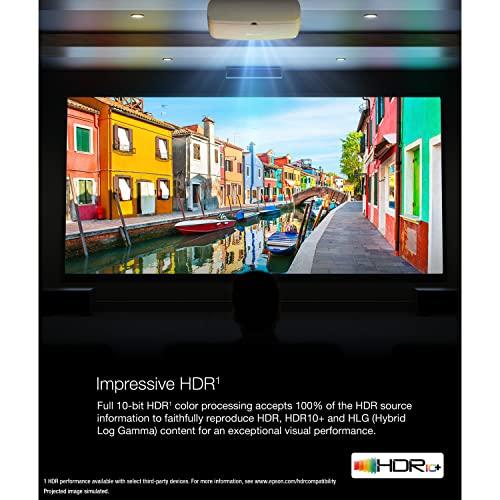
| HDR10, HDR10+, HLG with advanced tone mapping | HDR10, HDR10+, HLG with dynamic processing |
The BenQ HT4550i delivers 3,200 ANSI lumens compared to the Epson LS11000's 2,500 lumens, making the BenQ about 28% brighter. This extra brightness helps the BenQ HT4550i perform better in rooms with windows or overhead lighting, while the Epson LS11000 works best in light-controlled home theater environments.
The Epson Home Cinema LS11000 significantly outperforms the BenQ HT4550i in contrast, delivering roughly twice the native contrast ratio. The Epson's 3LCD technology produces deeper blacks and better shadow detail, making it superior for dark movie scenes and creating a more cinematic viewing experience in dedicated home theaters.
Yes, both projectors offer excellent gaming performance. The BenQ HT4550i has a slight edge with lower input lag (8.7ms at 1080p/240Hz) and supports 3D gaming. The Epson LS11000 delivers 4K gaming at 120Hz through HDMI 2.1 connections with approximately 20ms input lag, making both suitable for modern console and PC gaming.
The Epson Home Cinema LS11000 offers superior installation flexibility with motorized lens controls, extensive lens shift (±47% horizontal, ±96% vertical), and 2.1x zoom with memory settings. The BenQ HT4550i has more limited manual adjustments but is significantly lighter and more compact, making ceiling mounting easier for standard installations.
The BenQ HT4550i includes Android TV with Netflix, Prime Video, Disney+, and other streaming apps built-in, plus Wi-Fi and Google Assistant. The Epson LS11000 has no smart features and requires external streaming devices like Apple TV or Roku for accessing content.
The BenQ HT4550i covers 100% of the DCI-P3 color gamut versus the Epson LS11000's 90% coverage, giving the BenQ access to more vibrant colors. However, the Epson's 3LCD design provides more consistent color brightness across all hues, resulting in more natural-looking images overall.
The BenQ HT4550i uses a 4LED system rated for 30,000 hours, while the Epson Home Cinema LS11000 features a laser light source lasting 20,000 hours. Both eliminate the need for bulb replacements throughout their lifespan, with the BenQ maintaining consistent brightness and the Epson gradually dimming over time.
The Epson LS11000 operates more quietly, especially in eco mode (22 dB), compared to the BenQ HT4550i which runs at 28-32 dB depending on brightness settings. The Epson's laser cooling system is more efficient, making it less distracting during quiet movie scenes in dedicated home theater rooms.
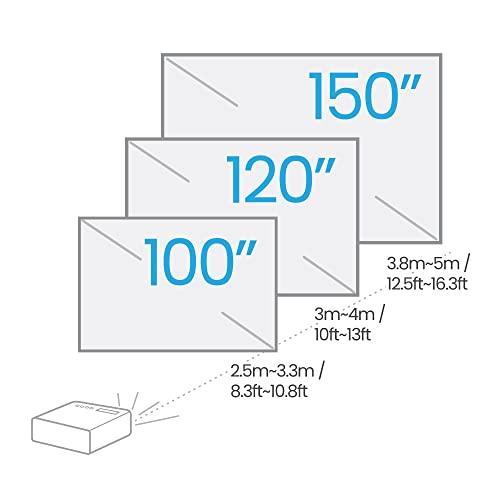
Both projectors can create images from approximately 50 inches up to 300 inches diagonal. The BenQ HT4550i has a shorter minimum throw distance, making it better for smaller rooms, while the Epson LS11000 offers more flexibility in positioning due to its superior lens shift and zoom range.
The BenQ HT4550i typically costs significantly less while offering higher brightness and integrated smart features, making it excellent value for versatile home entertainment setups. The Epson Home Cinema LS11000 commands a premium but delivers superior contrast, installation flexibility, and long-term reliability for dedicated theater rooms.
Yes, both the BenQ HT4550i and Epson LS11000 support HDR10, HDR10+, and HLG formats. The BenQ features advanced tone mapping with multi-zone contrast enhancement, while the Epson uses dynamic laser processing to optimize HDR content for its contrast capabilities.
For dedicated home theaters with controlled lighting, the Epson Home Cinema LS11000 is generally preferred due to its superior native contrast, deeper blacks, and professional installation features. The BenQ HT4550i excels in multi-purpose rooms where higher brightness and smart features provide more versatility for varied viewing conditions.
We've done our best to create useful and informative comparisons to help you decide what product to buy. Our research uses advanced automated methods to create this comparison and perfection is not possible - please contact us for corrections or questions. These are the sites we've researched in the creation of this article: projectorcentral.com - benq.com - rtings.com - youtube.com - soundandvision.com - rtings.com - hometheaterhifi.com - projectorscreen.com - projectorreviews.com - projectorscreen.com - youtube.com - rtings.com - projectorscreen.com - versus.com - youtube.com - projectorcentral.com - snapav.com - benq.com - benq.com - tvsbook.com - thesmarthomehookup.com - cepro.com - specsradar.com - projectorscreen.com - projectorreviews.com - youtube.com - projectorcentral.com - whathifi.com - projectorscreen.com - bestbuy.com - avsforum.com - versus.com - crutchfield.com - projectorcentral.com - shop.avispl.com - mediaserver.goepson.com - projectorscreen.com - bestbuy.com - simplehomecinema.com - dreamediaav.com - epson.com

Privacy Policy
Terms and Conditions - Affiliate Policy
Home Security
© Copyright 2008-2026.
11816 Inwood Rd #1211, Dallas, TX 75244