

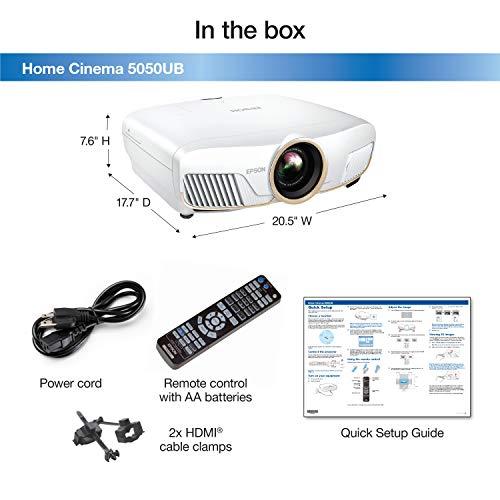
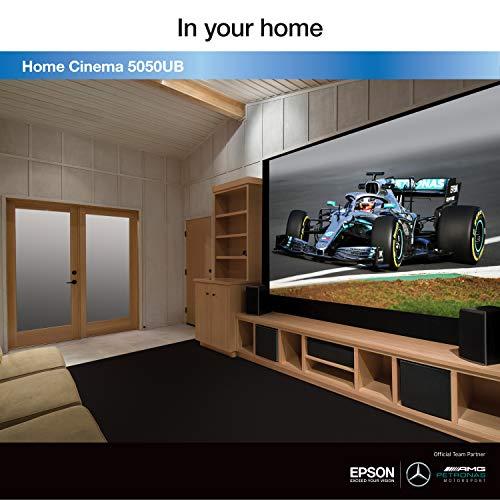
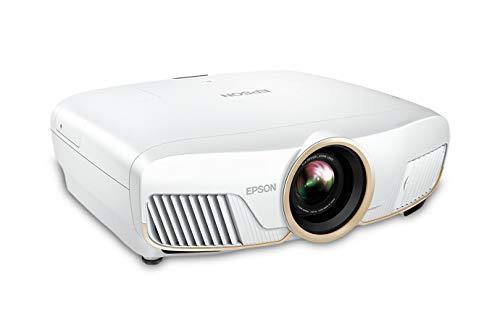
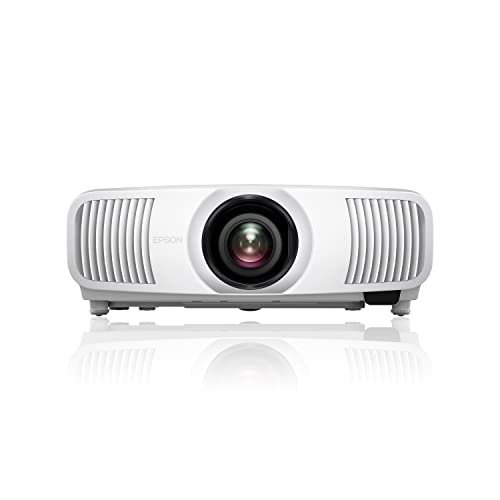
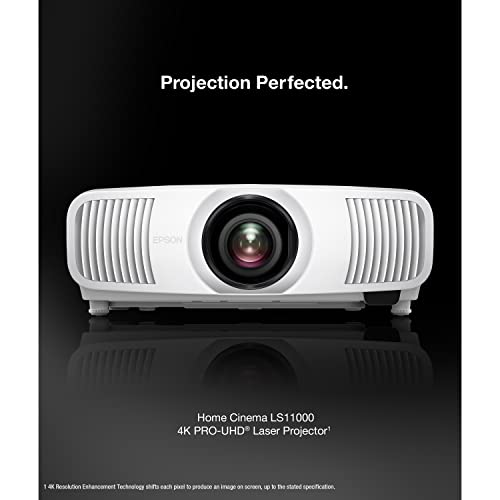
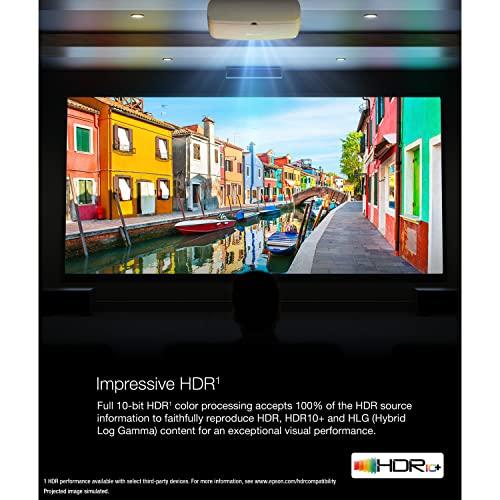
When you're ready to transform your living space into a genuine home theater, the projector you choose becomes the heart of that experience. Two Epson models have dominated conversations among home theater enthusiasts: the Home Cinema 5050UB and the newer LS11000. While both deliver exceptional large-screen entertainment, they represent fundamentally different approaches to premium projection technology.
At the time of writing, these projectors sit in the premium segment where serious buyers expect cinematic image quality, extensive installation flexibility, and features that justify the significant investment over basic models. The choice between them isn't just about specifications—it's about understanding which technology philosophy aligns with your priorities and viewing environment.
Premium home theater projectors occupy a special category focused entirely on image quality rather than portability or convenience features. Unlike business projectors that prioritize brightness above all else, or portable models that emphasize compact size, these projectors optimize for the nuanced demands of movie and gaming content in controlled environments.
The core considerations that matter most include contrast ratio (how deep the blacks appear compared to whites), color accuracy across different lighting conditions, resolution enhancement technologies, and installation flexibility. Brightness matters, but not in isolation—it's the balance between brightness and contrast that creates that coveted "cinematic" look that makes projected images feel three-dimensional rather than flat.
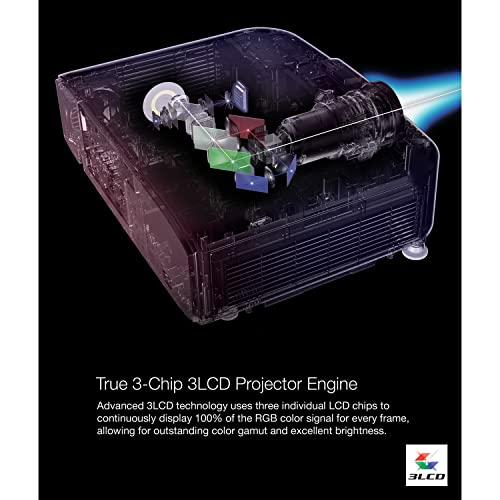
Both the 5050UB and LS11000 use Epson's 3LCD technology, which employs three separate LCD panels—one each for red, green, and blue light—rather than the single-chip DLP (Digital Light Processing) technology found in many competitors. This approach eliminates the "rainbow effect" that some viewers notice with single-chip projectors, where brief flashes of separated colors can appear during rapid eye movements.
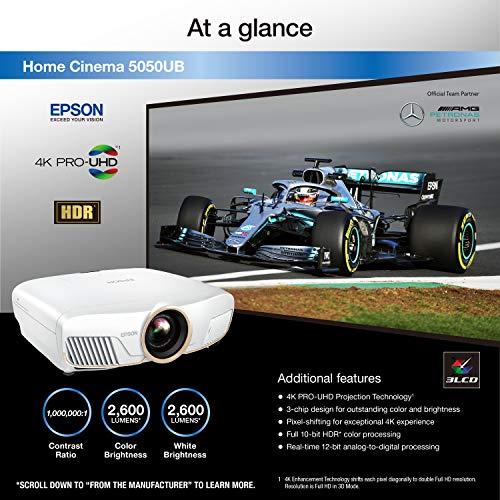
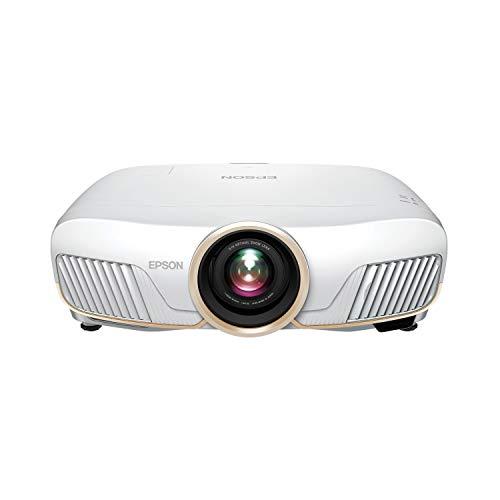
The Epson 5050UB, released in 2019, represents the pinnacle of traditional lamp-based projection technology. Its 250-watt UHE (Ultra High Efficiency) bulb delivers exceptional brightness and, more importantly, incorporates Epson's proprietary UltraBlack technology—a sophisticated light control system that dramatically improves contrast by managing internal light leakage within the projector.
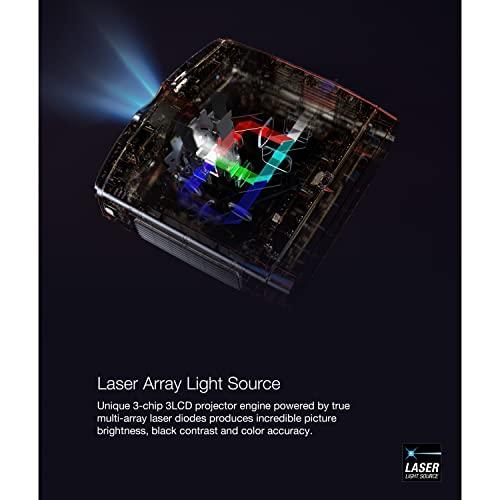
The LS11000, launched in 2022, embodies the newer laser-phosphor approach. Instead of a traditional bulb that burns out after a few thousand hours, it uses an array of blue laser diodes that excite a phosphor wheel to create white light. This isn't just about longevity—laser technology enables more precise light control and maintains consistent brightness throughout its lifespan.
The technological gap between 2019 and 2022 might seem small, but it represents significant advances in pixel-shifting technology, HDR processing, and gaming connectivity that directly impact the viewing experience.
Contrast ratio—the difference between the brightest whites and deepest blacks a projector can produce—fundamentally determines whether an image looks flat or three-dimensional. This is where the 5050UB delivers its most compelling advantage.
The 5050UB's native contrast ratio of 8,000:1 substantially outperforms the LS11000's 2,019:1 ratio. In practical terms, this means the older projector produces blacks that appear nearly four times deeper. When you're watching a movie scene in a dark cave or space, those shadows contain detail and depth rather than appearing as flat gray areas.
This advantage stems from the UltraBlack technology absent in the LS11000. UltraBlack uses a proprietary compensation filter to control light polarization, effectively preventing light leakage that would otherwise wash out dark areas of the image. It's the kind of engineering refinement that you don't notice until you see content without it.
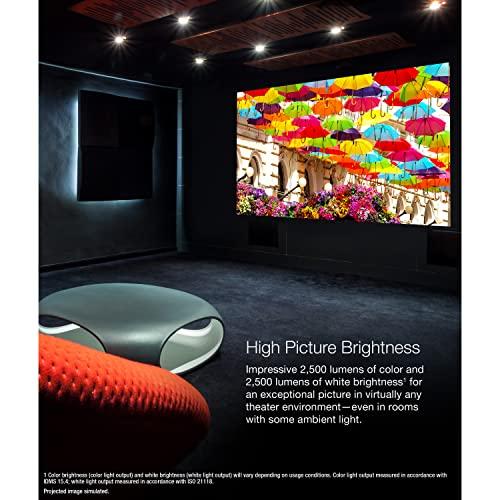
However, the story becomes more complex when we examine calibrated performance. Professional reviews consistently show that the LS11000 maintains better brightness after proper calibration for accurate colors, measuring approximately 1,680 lumens compared to the 5050UB's 1,383 lumens. This difference becomes crucial in rooms with any ambient light.
Color performance separates good projectors from great ones, and here the 5050UB claims another significant victory. Its 97% coverage of the DCI-P3 color space—the standard used for digital cinema—compared to the LS11000's 90% coverage means it can reproduce colors that simply don't exist on the newer model.
This wider color gamut comes from an additional color filter in the 5050UB's optical path that was omitted from the laser model. When watching HDR content with highly saturated colors—think vibrant sunsets, rich forest greens, or intense red sports cars—the difference becomes immediately apparent. Colors appear more "real" and engaging on the 5050UB.
The LS11000 partially compensates with broader HDR format support, including HDR10+ alongside the standard HDR10 and HLG that both projectors handle. HDR10+ provides dynamic metadata that adjusts tone mapping scene-by-scene, potentially squeezing better performance from that narrower color gamut.
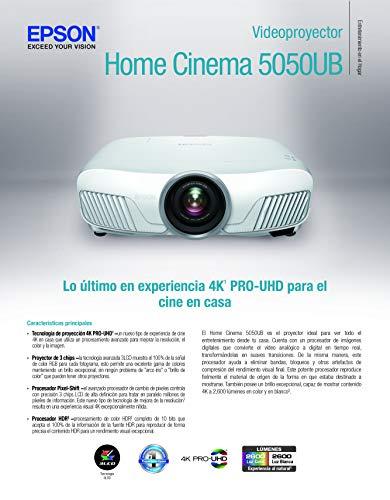
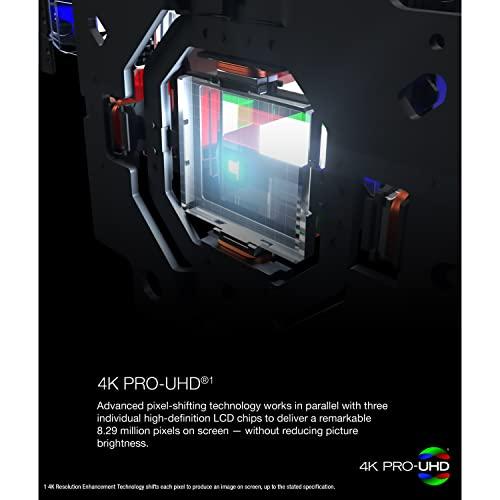
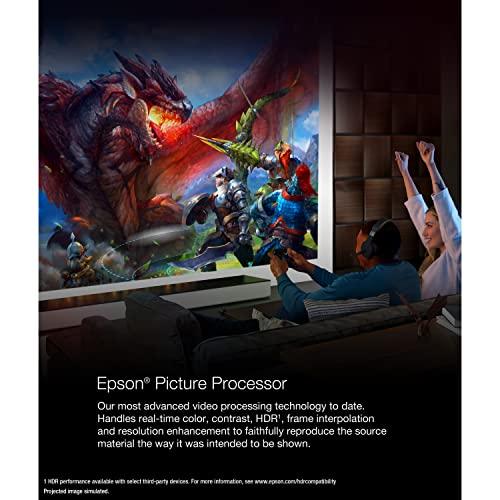
Both projectors use what Epson calls "4K PRO-UHD" technology, but they're not native 4K projectors. Instead, they use native 1080p LCD panels combined with pixel-shifting to create the appearance of higher resolution. Think of pixel-shifting as rapidly moving each pixel to multiple positions during each frame, effectively making each physical pixel do the work of several pixels.
The LS11000's newer Precision Shift Glass Plate technology represents a meaningful upgrade over the 5050UB's implementation. While the older model doubles the effective pixel count through two-position shifting, the LS11000 quadruples it by shifting each pixel to four positions. This creates 8.3 million pixels on screen compared to roughly 4 million from the 5050UB.
From normal viewing distances—typically 1.5 to 2 times the screen width—both projectors deliver sharpness that's difficult to distinguish from native 4K projectors. However, the LS11000's more sophisticated pixel-shifting becomes apparent with fine details like text, architectural elements, or intricate patterns in clothing.
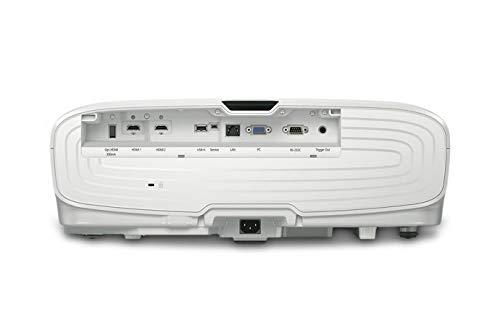
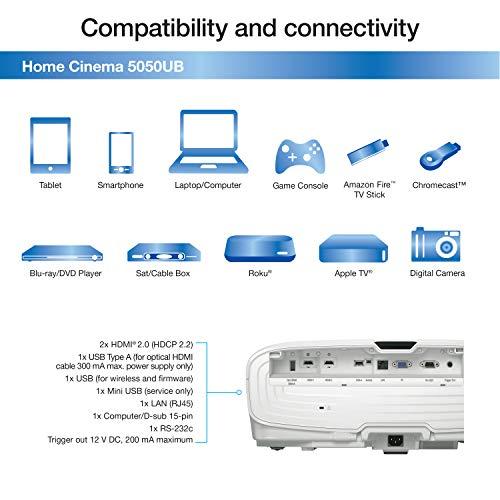
Gaming performance has become increasingly important as projectors compete with large TVs for living room dominance. The LS11000 clearly targets this market with dual HDMI 2.1 ports supporting 4K at 120 frames per second—essential for PlayStation 5, Xbox Series X, and high-end PC gaming.
Input lag—the delay between controller input and on-screen response—measures 20 milliseconds on the LS11000 compared to 22.5 milliseconds on the 5050UB. While both qualify as excellent for gaming, that 2.5-millisecond difference, combined with 120Hz support, makes the LS11000 noticeably more responsive for fast-paced competitive games.
The 5050UB's HDMI 2.0 connectivity limits it to 60Hz refresh rates, which feels increasingly outdated as gaming content increasingly supports higher frame rates. For casual gaming or movie watching, this limitation barely matters. For enthusiasts with modern consoles or gaming PCs, it's a meaningful restriction.
The most significant practical difference between these projectors lies in their light source technology. The 5050UB's traditional bulb requires replacement every 3,500 to 5,000 hours of use, depending on brightness settings. At typical home theater usage of 20-25 hours per week, that translates to replacement every 3-4 years at a cost of several hundred dollars.
The LS11000's laser array is rated for 20,000 hours—potentially decades of typical home use without any maintenance. This maintenance-free operation represents both convenience and long-term cost savings that help justify the higher initial investment.
Laser technology also maintains consistent brightness and color accuracy throughout its lifespan, while traditional bulbs gradually dim and can shift color temperature as they age. If you've ever noticed how an older LCD TV seems less vibrant than when new, you've experienced similar degradation.
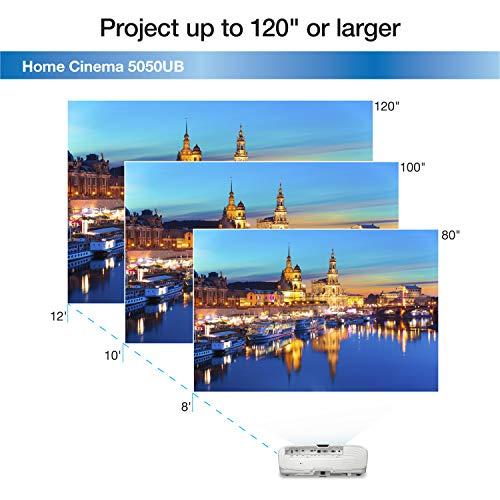
Both projectors excel in installation flexibility—a crucial consideration since premium projectors often require custom mounting solutions. Their motorized lens systems provide extensive zoom (2.1x range), focus, and lens shift capabilities that make precise positioning possible without physically moving the projector.
Lens shift—the ability to move the image up, down, left, or right without introducing distortion—is particularly valuable in real-world installations where the projector can't be positioned in the theoretical "perfect" location. Both models offer exceptional vertical shift (±96%) and horizontal shift (±47%), accommodating challenging room layouts.
The lens memory feature on both projectors deserves special mention for home theater enthusiasts. This allows saving different zoom, focus, and shift settings for various content formats. You can instantly switch between settings optimized for standard 16:9 content and ultra-wide 2.35:1 movies with a single button press.
The 5050UB runs significantly louder than its laser counterpart, measuring up to 48 decibels compared to the LS11000's 45 decibels. While both qualify as relatively quiet, that 3-decibel difference represents a noticeable reduction in fan noise—particularly important in dedicated theater rooms where ambient noise should be minimal.
Power consumption also favors the LS11000 at 233-311 watts compared to the 5050UB's 329 watts. Over years of use, this difference contributes meaningfully to operating costs while generating less heat in your theater space.
In light-controlled environments—dedicated theater rooms with dark walls and minimal ambient light—the 5050UB often delivers the more engaging experience. Its superior contrast ratio creates deeper blacks that make images appear to float in space rather than being projected onto a screen. This three-dimensional quality becomes particularly apparent during dark scenes in movies like space epics or horror films.
The wider color gamut also shines in controlled environments where you can appreciate subtle color gradations and highly saturated hues without competing ambient light washing them out.
The LS11000's better calibrated brightness and more consistent performance make it superior for family rooms, basements, or other spaces where some ambient light is inevitable. Its laser light source maintains image quality even when you can't achieve complete darkness, while the 5050UB's superior contrast becomes less noticeable in brighter environments.
The 5050UB includes 3D support—a feature completely absent from the LS11000. While 3D content has become less mainstream since its peak popularity, enthusiasts with 3D movie collections will find this capability valuable. The projector can display full 1080p resolution to each eye using active shutter glasses, creating an immersive experience that 3D TVs couldn't match.
You prioritize pure image quality above all else. If you have a dedicated theater room with excellent light control, the 5050UB's superior contrast and wider color gamut create a more cinematic experience. The lower purchase price (when available) makes it an exceptional value for image quality, though factor in future bulb replacement costs.
3D content matters to you, or you prefer the deepest possible blacks for an immersive movie-watching experience. The 5050UB represents the pinnacle of traditional projector technology and delivers performance that, in many ways, hasn't been surpassed by newer laser models.
You want a maintenance-free projector that performs well in various lighting conditions. The LS11000's laser light source eliminates the bulb replacement cycle while delivering sharper images through advanced pixel-shifting technology.
Gaming performance matters, particularly if you own next-generation consoles or a high-end PC. The HDMI 2.1 connectivity and 4K/120Hz support make it significantly more future-proof for gaming applications.
You prefer the convenience of consistent performance without the gradual degradation that comes with aging bulbs, or you're installing in a multi-purpose room where some ambient light is unavoidable.
Both projectors represent excellent choices, but for different priorities. The 5050UB delivers superior image quality through better contrast and color reproduction—the fundamental elements that make projected images engaging. The LS11000 offers better convenience, gaming performance, and versatility at the cost of some image quality compromises.
For pure home theater enthusiasts focused on movies in dark rooms, the 5050UB often provides the more satisfying experience despite its older technology. For users prioritizing modern features, gaming capability, and maintenance-free operation, the LS11000 represents the smarter long-term investment.
The choice ultimately depends on whether you value ultimate image quality or modern convenience—both legitimate priorities that these exceptional projectors serve in their own distinctive ways.
| Epson Home Cinema 5050UB | Epson Home Cinema LS11000 |
|---|---|
| Light Source Technology - Affects maintenance costs and lifespan | |
| 250W UHE lamp (3,500-5,000 hour life, requires replacement) | Multi-array laser (20,000 hours, maintenance-free) |
| Native Contrast Ratio - Most important for deep blacks and cinematic image | |
| 8,000:1 (exceptional blacks, 4x better than LS11000) | 2,019:1 (good but noticeably less dramatic contrast) |
| Color Gamut Coverage - Determines color vibrancy and accuracy | |
| 97% DCI-P3 (wider, more saturated colors) | 90% DCI-P3 (narrower but still excellent) |
| Brightness Output - Critical for ambient light performance | |
| 2,600 lumens rated / 1,383 lumens calibrated | 2,500 lumens rated / 1,680 lumens calibrated |
| 4K Enhancement Technology - Affects sharpness and detail | |
| 4K PRO-UHD pixel-shifting (doubles pixels to ~4 million) | Precision Shift Glass Plate (quadruples to 8.3 million pixels) |
| Gaming Performance - Important for console and PC gaming | |
| HDMI 2.0, 60Hz max, 22.5ms input lag | Dual HDMI 2.1, 4K/120Hz, 20ms input lag |
| HDR Format Support - Affects compatibility with streaming content | |
| HDR10, HLG | HDR10, HDR10+, HLG |
| UltraBlack Technology - Epson's proprietary contrast enhancement | |
| Yes (major advantage for black levels) | No (significant omission from newer model) |
| Fan Noise Level - Important for quiet theater environments | |
| 48 dB (noticeably louder) | 45 dB (3dB reduction is meaningful improvement) |
| Power Consumption - Affects operating costs over time | |
| 329W (higher electricity usage) | 233-311W (more efficient operation) |
| 3D Support - For existing 3D movie collections | |
| Yes (Full HD 3D with active glasses) | No (feature completely removed) |
| Lens System - Installation flexibility and convenience | |
| Motorized zoom/focus/shift with lens memory | Motorized zoom/focus/shift with lens memory |
| Release Year - Technology generation and availability | |
| 2019 (discontinued but available refurbished) | 2022 (current model with full warranty support) |
The Epson Home Cinema 5050UB is superior for dedicated dark theater rooms due to its exceptional 8,000:1 native contrast ratio and UltraBlack technology. This creates deeper blacks and more three-dimensional images compared to the LS11000's 2,019:1 contrast ratio. The wider 97% DCI-P3 color gamut on the 5050UB also produces more vibrant, cinema-accurate colors in controlled lighting conditions.
The 5050UB uses a traditional 250W UHE lamp that lasts 3,500-5,000 hours and requires periodic replacement. The LS11000 features a laser array lasting 20,000 hours with no maintenance needed. Laser projectors like the LS11000 maintain consistent brightness and color over time, while lamp projectors gradually dim and may shift colors as the bulb ages.
The Epson LS11000 is significantly better for gaming with dual HDMI 2.1 ports supporting 4K at 120Hz, essential for PlayStation 5 and Xbox Series X. It also has slightly lower input lag at 20ms versus 22.5ms on the 5050UB. The older 5050UB is limited to HDMI 2.0 and 60Hz refresh rates, making it less suitable for modern gaming.
Neither the 5050UB nor LS11000 are native 4K projectors. Both use 1080p LCD panels with pixel-shifting technology to enhance resolution. The LS11000 has more advanced pixel-shifting that creates 8.3 million pixels on screen compared to the 5050UB's 4 million pixels, resulting in noticeably sharper images from normal viewing distances.
The LS11000 performs better in multi-purpose rooms with some ambient light due to its higher calibrated brightness output (1,680 lumens versus 1,383 lumens). While the 5050UB has superior contrast in dark rooms, its advantage diminishes significantly when ambient light is present, making the LS11000 more versatile for family rooms or basements.
The 5050UB operates at 48 decibels while the LS11000 runs quieter at 45 decibels. This 3-decibel difference represents a noticeable reduction in fan noise, making the LS11000 less distracting during quiet movie scenes. Both projectors are relatively quiet compared to business or portable models, but the laser model has a clear advantage.
Only the Epson Home Cinema 5050UB supports 3D projection with active shutter glasses, displaying full 1080p resolution to each eye. The LS11000 completely lacks 3D capability, which may be important for users with existing 3D movie collections or those who want maximum format compatibility.
The 5050UB requires lamp replacement every 3-4 years of typical use, adding several hundred dollars in maintenance costs. It also consumes more power at 329W versus the LS11000's 233-311W. The LS11000 has higher upfront costs but lower long-term expenses due to its maintenance-free laser and better energy efficiency.
The 5050UB delivers superior color performance with 97% DCI-P3 color gamut coverage compared to 90% on the LS11000. This wider color space produces more saturated and accurate colors, particularly noticeable with HDR content. However, the LS11000 supports more HDR formats including HDR10+ for potentially better tone mapping with compatible content.
Both the 5050UB and LS11000 offer identical motorized lens systems with extensive zoom (2.1x), focus, and lens shift capabilities (±96% vertical, ±47% horizontal). Both include lens memory for saving different settings when switching between content formats. Installation flexibility is equally excellent on both models.
The LS11000 is more future-proof with HDMI 2.1 connectivity, 4K/120Hz support, and broader HDR format compatibility. Its laser light source also eliminates concerns about lamp availability in future years. The 5050UB uses older connectivity standards and will eventually require hard-to-find replacement lamps as it ages.
Choose the 5050UB if you prioritize ultimate image quality in a dark theater room and want exceptional value for contrast and color performance. Select the LS11000 if you prefer maintenance-free operation, need modern gaming features, or will use the projector in rooms with ambient light. The LS11000 is the better long-term investment despite the 5050UB's superior image quality in ideal conditions.
We've done our best to create useful and informative comparisons to help you decide what product to buy. Our research uses advanced automated methods to create this comparison and perfection is not possible - please contact us for corrections or questions. These are the sites we've researched in the creation of this article: rtings.com - audiogurus.com - hometechnologyreview.com - projectorscreen.com - youtube.com - thesmarthomehookup.com - techgearlab.com - rtings.com - projectorreviews.com - projectorreviews.com - projectorreviews.com - projectorcentral.com - avsforum.com - avsforum.com - rtings.com - avsforum.com - audiogeneral.com - hifiheaven.net - manuals.plus - crutchfield.com - mediaserver.goepson.com - projectorcentral.com - epson.com - bestbuy.com - projectorreviews.com - projectorcentral.com - tvsbook.com - cepro.com - specsradar.com - projectorscreen.com - benq.com - projectorreviews.com - projectorscreen.com - youtube.com - projectorcentral.com - whathifi.com - projectorscreen.com - bestbuy.com - youtube.com - versus.com - crutchfield.com - projectorcentral.com - shop.avispl.com - mediaserver.goepson.com - projectorscreen.com - bestbuy.com - simplehomecinema.com - dreamediaav.com - epson.com

Privacy Policy
Terms and Conditions - Affiliate Policy
Home Security
© Copyright 2008-2026.
11816 Inwood Rd #1211, Dallas, TX 75244