

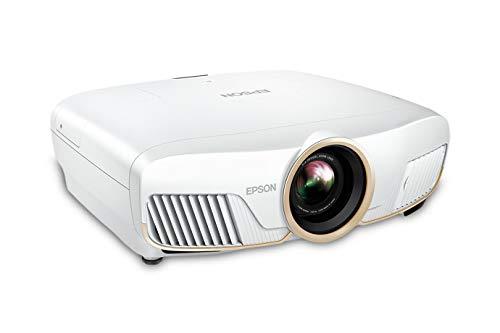
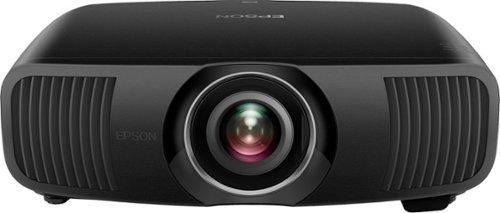
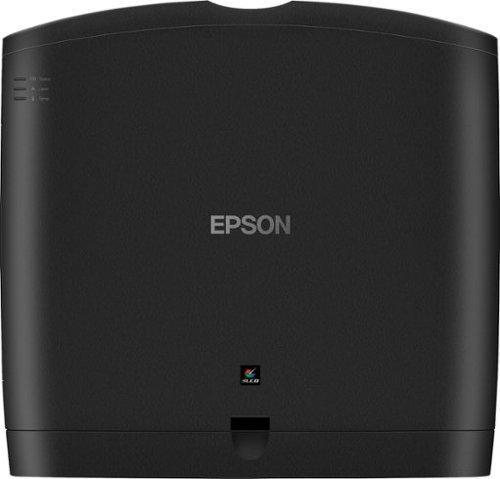
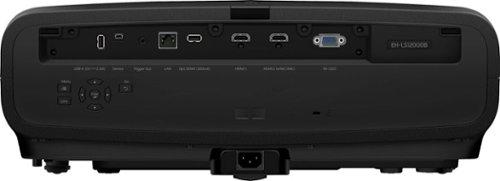
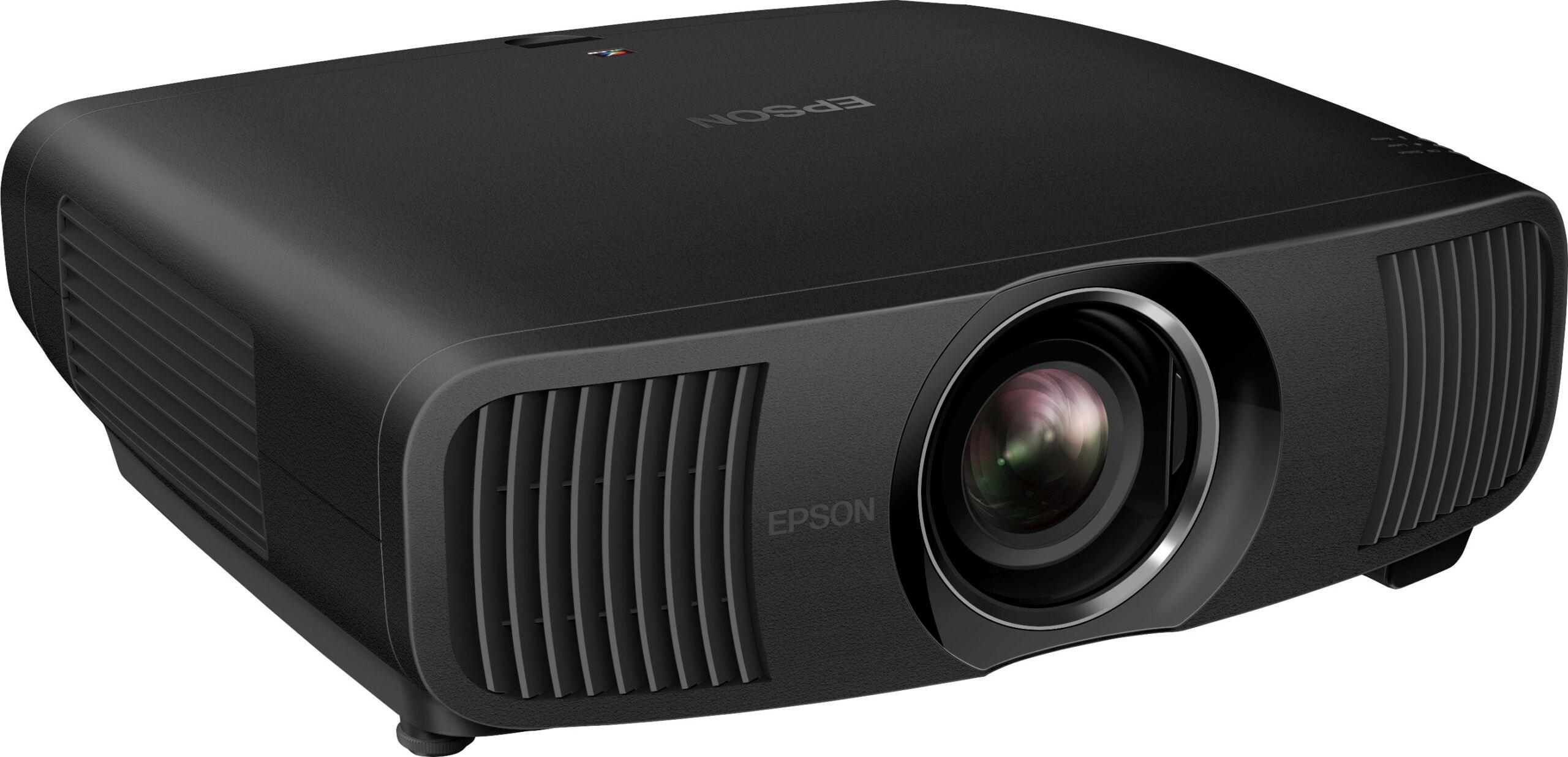
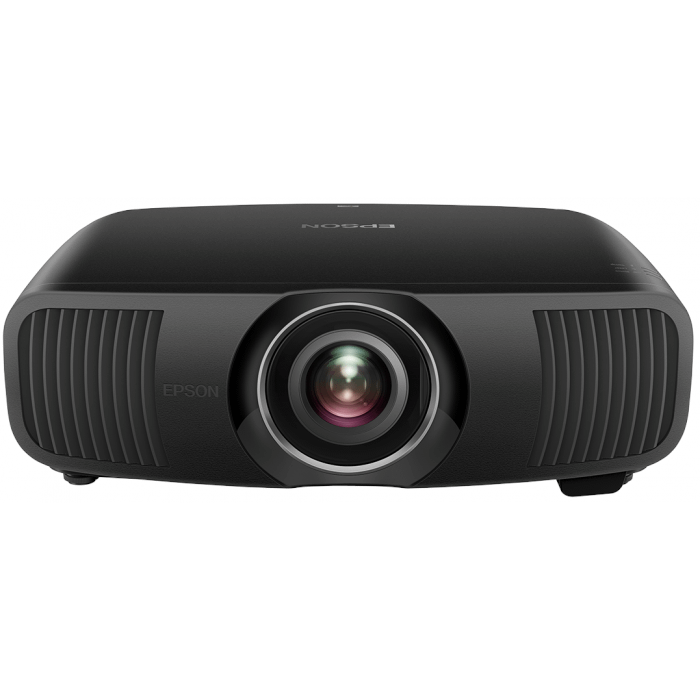
When you're ready to transform your living room or dedicated theater space into a cinema-quality experience, projectors offer something no TV can match: truly massive screen sizes at reasonable prices. But with hundreds of models available, choosing the right one can feel overwhelming. Today, we're diving deep into two excellent options from Epson that represent different approaches to home theater projection: the Home Cinema 5050UB and the Pro Cinema LS12000.
These projectors sit in the sweet spot for serious home theater enthusiasts—powerful enough to deliver stunning images on screens up to 300 inches, yet priced (at the time of writing) to be accessible to dedicated movie lovers rather than just commercial installations. The key difference? One represents the pinnacle of traditional lamp-based technology, while the other embraces the laser revolution that's reshaping the projector world.
Before comparing these specific models, it's worth understanding what separates an exceptional home theater projector from the crowd. Unlike portable projectors designed for presentations or casual use, home theater projectors prioritize image quality above all else.
Contrast ratio—the difference between the darkest blacks and brightest whites a projector can display—often matters more than raw brightness. When you're watching a movie like "Blade Runner 2049" or "The Batman," those deep shadow details and inky black levels create the dramatic atmosphere that makes the cinema experience so compelling. A projector with poor contrast makes dark scenes look washed out and gray, destroying the filmmaker's intended mood.
Color accuracy and gamut determine how vibrant and lifelike images appear. Modern content, especially HDR (High Dynamic Range) material, contains color information that exceeds what older display standards could show. Projectors that can reproduce wider color spaces—like the DCI-P3 standard used in commercial cinemas—deliver more saturated reds, deeper blues, and more natural skin tones.
Brightness becomes crucial for screen size and ambient light handling. While movie theaters run around 14-16 foot-lamberts (a measurement of screen brightness), home projectors need higher raw output to achieve similar results on reflective screens in spaces that aren't perfectly dark.
Resolution capabilities have become increasingly complex. True 4K projectors use panels with 8.3 million individual pixels, but "4K enhanced" or "4K PRO-UHD" models use pixel-shifting technology to effectively double or quadruple the resolution of lower-resolution panels through rapid movement.
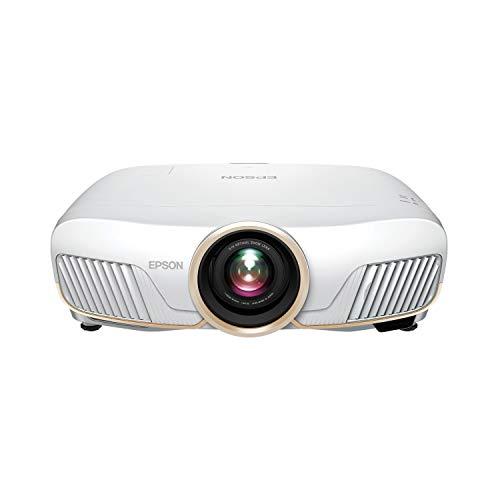
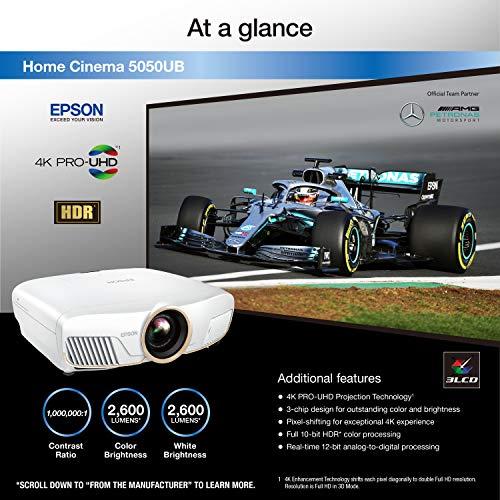
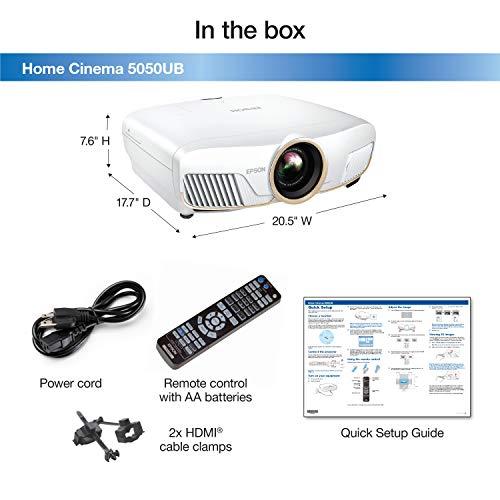
The Epson Home Cinema 5050UB, released around 2017, represents the refined end of traditional lamp-based projection technology. Like most projectors for decades, it uses a high-pressure mercury lamp that generates intense light to illuminate its LCD panels. These lamps typically last 3,000-6,000 hours depending on usage mode, then require replacement at significant cost—often several hundred dollars.
The Pro Cinema LS12000, launched in 2022, embraces laser diode technology that's revolutionizing the projection world. Instead of a single bulb, it uses an array of laser diodes that can operate for 20,000 hours or more without replacement. This shift isn't just about convenience—laser light sources offer different performance characteristics that change the entire viewing experience.
Here's where things get interesting, and frankly, a bit surprising. Despite being the older, less expensive model, the 5050UB absolutely dominates in contrast performance—the characteristic most experts consider crucial for home theater viewing.
Through its proprietary UltraBlack technology, the 5050UB achieves a native contrast ratio around 8,000:1. This means the brightest whites are 8,000 times brighter than the darkest blacks. In practical terms, this creates images with incredible depth and dimensionality. Dark movie scenes reveal subtle shadow details while maintaining truly black letterbox bars that seem to disappear into your room's darkness.
The LS12000, despite its newer technology and higher price point, measures closer to 2,000:1 native contrast. This isn't poor performance by industry standards, but it's dramatically lower than its lamp-based sibling. Laser light sources, by their nature, tend to produce some level of residual light that prevents achieving the deepest blacks possible with lamp technology.
Why does this matter? Watch a space scene in "Interstellar" or any Marvel movie with cosmic sequences. The 5050UB renders space as genuinely black, making stars and planets pop with three-dimensional realism. The LS12000 delivers the same scene with slightly elevated black levels that reduce the dramatic impact, though most viewers won't notice unless comparing side-by-side.
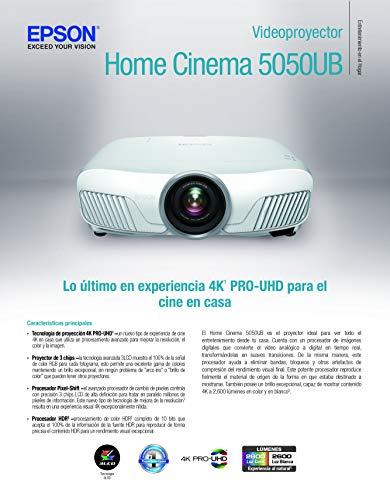
Both projectors use pixel-shifting technology to achieve 4K-like resolution from native 1080p LCD panels. This involves rapidly moving pixels by fractional amounts to effectively create additional detail. It's not quite the same as true 4K projection from 8.3-million-pixel panels, but it's remarkably close for most content.
The LS12000 employs newer, more sophisticated pixel-shifting technology called 4K PRO-UHD with dual-axis movement. This creates noticeably sharper images than the 5050UB's implementation, particularly visible in fine details like fabric textures, hair, or architectural elements. The difference isn't dramatic, but it's real and consistently noticeable when viewing 4K source material.
For most viewers watching from appropriate distances—typically 1.5 to 2 times the screen width—both projectors deliver satisfying 4K-like experiences that far exceed standard 1080p projection. The LS12000's advantage becomes more apparent on very large screens or when sitting closer than normal viewing distances.
This comparison reveals one of the most interesting technical trade-offs in modern projection. The 5050UB can reproduce an exceptionally wide color gamut—about 97% of the DCI-P3 cinema standard—but only when engaging a special color filter that reduces brightness by up to 50%.
This creates a genuine dilemma: Do you want maximum color vibrancy or maximum brightness? For dark room viewing of SDR (Standard Dynamic Range) content, many enthusiasts choose the wider colors despite the brightness penalty. The results are genuinely spectacular—more saturated than most displays you've ever seen.
The LS12000 takes a different approach. It reproduces about 90% of DCI-P3 but maintains full brightness while doing so. For HDR content, where brightness is crucial for impact, this consistency becomes a significant advantage. HDR movies like "Mad Max: Fury Road" or "Dune" benefit from every available lumen to reproduce the bright highlights that make HDR compelling.
High Dynamic Range content represents the biggest advancement in home video since the shift to HD, containing brightness and color information that far exceeds traditional content. This is where the LS12000's newer technology shows clear advantages.
The LS12000 supports HDR10+, which uses dynamic metadata to adjust tone mapping scene-by-scene. This means bright outdoor scenes and dark interior moments within the same movie can be optimized individually rather than using static settings throughout. The 5050UB lacks this capability, though it handles standard HDR10 content well.
More importantly, the LS12000 maintains consistent brightness across its color range, crucial for HDR's expanded brightness requirements. The 5050UB's brightness penalty when displaying wide colors becomes problematic for HDR content that depends on bright, colorful highlights for impact.
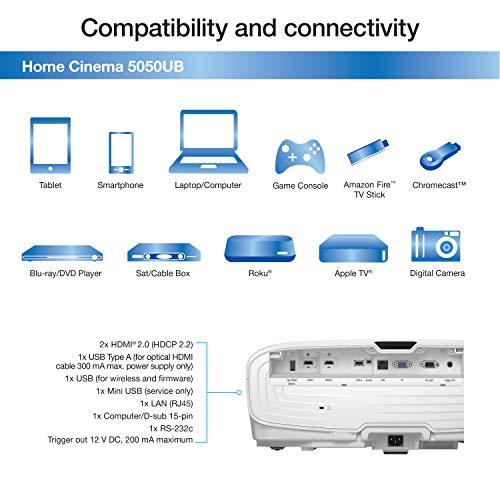
Gaming has become a major consideration for home theater projectors, especially with PlayStation 5 and Xbox Series X capable of 4K gaming at 120 frames per second. The LS12000 embraces these modern requirements with HDMI 2.1 connectivity supporting full 4K/120Hz gaming, plus variable refresh rate support for smoother gaming experiences.
Input lag—the delay between controller input and screen response—measures 20 milliseconds on the LS12000 versus 22.5ms on the 5050UB. Both are excellent for gaming, but the LS12000's combination of lower lag and higher refresh rates makes it genuinely better for competitive gaming.
The 5050UB, limited to HDMI 2.0 and 60Hz maximum refresh rates, remains perfectly adequate for most gaming scenarios. Unless you're specifically targeting high-refresh gaming or need the latest connectivity standards, its gaming performance won't disappoint.
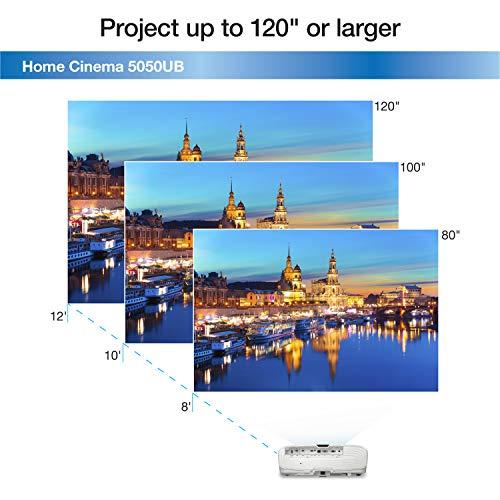
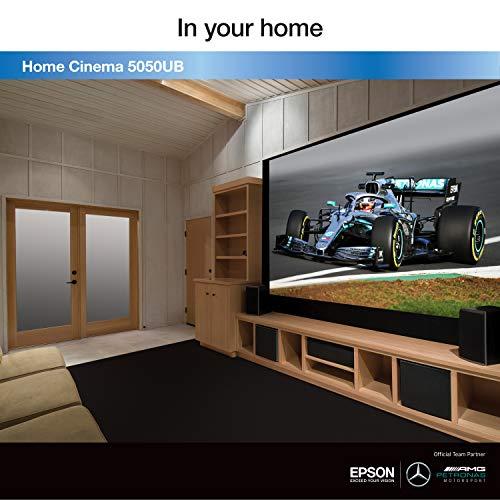
Both projectors share identical lens specifications, offering exceptional installation flexibility that's rare in this price category. The 2.1x powered zoom allows screen sizes from 50 to 300 inches, while extensive lens shift—up to 96% vertical and 47% horizontal—means you can mount these projectors in positions that would be impossible with fixed lenses.
This flexibility proves crucial for real-world installations. Whether ceiling-mounted behind seating or placed on a rear shelf, both projectors can achieve proper screen alignment without keystone correction, which degrades image quality.
The motorized lens controls include memory settings, allowing quick switching between different aspect ratios or screen configurations. This proves especially valuable for users who switch between 16:9 content and 2.35:1 movies, or who use different screen sizes for different content types.
At the time of writing, the 5050UB costs significantly less than the LS12000—roughly $1,700 difference. However, total cost of ownership tells a more complex story.
The 5050UB's lamp requires replacement every 3,000-6,000 hours depending on usage mode. For someone watching 20 hours weekly, this means bulb replacement every 3-6 years at several hundred dollars per replacement. Heavy users might need multiple lamp replacements over the projector's lifetime.
The LS12000's laser array is rated for 20,000 hours of operation—potentially 15-20 years for typical users. While the initial cost is higher, the elimination of replacement bulbs creates genuine long-term savings for regular users.
For casual viewers who watch movies occasionally, the 5050UB's lower entry price makes more sense. For daily users or dedicated home theater enthusiasts, the LS12000's maintenance-free operation justifies its premium.
Based on extensive reviews from both professional calibrators and enthusiast users, these projectors perform remarkably closely in many scenarios. The differences we've outlined matter most in specific situations or with particular content types.
For traditional movie watching in a light-controlled environment, the 5050UB's superior contrast creates more engaging images with better shadow detail and more three-dimensional depth. Dark scenes in movies like "The Dark Knight" or "Alien: Covenant" showcase this advantage beautifully.
For mixed-use environments where some ambient light is present, or for users who prioritize HDR content and modern gaming, the LS12000's consistent brightness and advanced features provide clear advantages.
Both projectors excel at their core mission of delivering cinema-quality images at home. The choice often comes down to specific priorities and viewing habits rather than one being objectively superior.
Choose the Epson Home Cinema 5050UB if you're building a dedicated home theater in a light-controlled room where contrast and black levels matter most. Its exceptional dark room performance, combined with lower entry cost, makes it ideal for movie enthusiasts who prioritize traditional cinematic values. The wide color gamut capability, despite its brightness trade-off, delivers uniquely vibrant images when properly utilized.
The 5050UB also makes sense for buyers who watch content infrequently enough that bulb replacement won't be a regular concern, or for those who simply want the best possible image quality per dollar spent.
Choose the Pro Cinema LS12000 if you value long-term convenience, modern connectivity, or frequently watch HDR content. Its maintenance-free laser operation eliminates the anxiety about bulb replacement costs, while HDMI 2.1 connectivity future-proofs your investment for emerging content standards.
The LS12000 particularly excels for mixed-use installations where gaming and movie watching share importance, or for users who prefer consistent performance across all content types rather than optimizing for specific scenarios.
Both projectors represent excellent values in their own ways. The 5050UB offers extraordinary performance per dollar with some operational compromises, while the LS12000 provides modern convenience and consistency at a premium price. Your choice should reflect your viewing habits, room conditions, and long-term preferences rather than following simple "newer is better" logic.
In the end, either projector will transform your home viewing experience in ways that even the largest TVs cannot match. The massive screen sizes and immersive experience they provide represent the closest thing to commercial cinema quality available for home use.
| Epson Home Cinema 5050UB | Epson Pro Cinema LS12000 |
|---|---|
| Light Source Technology - Determines maintenance needs and long-term costs | |
| 250W UHE lamp (3,500-5,000 hour lifespan, requires expensive replacements) | Laser diode array (20,000 hour lifespan, maintenance-free operation) |
| Native Contrast Ratio - Most critical spec for dark room movie watching | |
| 8,000:1 (exceptional black levels, creates dimensional depth in dark scenes) | ~2,000:1 (good performance but significantly lower than lamp-based rival) |
| Brightness Output - Important for screen size and ambient light handling | |
| 2,600 lumens (excellent for most home theater setups) | 2,700 lumens (slightly brighter with consistent output over lifetime) |
| Color Gamut Coverage - Affects color vibrancy and cinema accuracy | |
| 97% DCI-P3 (widest available but reduces brightness by 50% when engaged) | 90% DCI-P3 (excellent coverage with no brightness penalty) |
| 4K Technology - Determines image sharpness and detail | |
| 4K PRO-UHD pixel shifting (sharp images, older generation processing) | Advanced 4K PRO-UHD with dual-axis shifting (noticeably sharper detail rendition) |
| HDR Support - Critical for modern streaming and 4K Blu-ray content | |
| HDR10, HLG (excellent performance but brightness trade-offs with wide color) | HDR10, HDR10+, HLG (dynamic metadata support, consistent brightness) |
| Gaming Connectivity - Important for PlayStation 5/Xbox Series X compatibility | |
| HDMI 2.0, 60Hz max, 22.5ms input lag (adequate for most gaming) | HDMI 2.1, 120Hz support, 20ms input lag (cutting-edge gaming performance) |
| 3D Support - For users with 3D content collections | |
| Full 3D capability with RF glasses (complete 3D ecosystem support) | No 3D support (feature removed from newer generation) |
| Installation Flexibility - Affects placement options in your room | |
| 2.1x zoom, ±96% vertical/±47% horizontal lens shift (exceptional flexibility) | 2.1x zoom, ±96% vertical/±47% horizontal lens shift (identical placement options) |
| Warranty Coverage - Protection for your investment | |
| 2-year standard warranty (typical coverage for lamp-based projectors) | 3-year warranty (extended coverage reflects laser reliability) |
| Operational Noise - Important for quiet movie watching | |
| 31 dB maximum (audible but acceptable fan noise during operation) | 22-30 dB (quieter operation, less distracting during films) |
The Epson Home Cinema 5050UB delivers superior contrast with deeper black levels, making it ideal for dark room movie watching. Its 8,000:1 native contrast ratio creates more dimensional images compared to the Pro Cinema LS12000's 2,000:1 contrast. However, the LS12000 offers sharper 4K detail and better HDR brightness consistency. For dedicated home theater rooms, the 5050UB often provides more cinematic results.
The Home Cinema 5050UB uses a traditional lamp that lasts 3,500-5,000 hours and requires expensive replacement every few years. The Pro Cinema LS12000 uses a laser light source rated for 20,000 hours with no maintenance needed. Laser projectors offer consistent brightness over their lifetime and eliminate bulb replacement costs, making the LS12000 more convenient for heavy users.
The Pro Cinema LS12000 excels for gaming with HDMI 2.1 connectivity, 120Hz support, and 20ms input lag, making it perfect for PlayStation 5 and Xbox Series X. The Home Cinema 5050UB offers good gaming performance at 22.5ms input lag but is limited to 60Hz refresh rates. For competitive gaming or next-gen consoles, choose the LS12000.
Both projectors offer strong brightness around 2,600-2,700 lumens, but the Pro Cinema LS12000 maintains consistent output across its color range without brightness penalties. The 5050UB can reduce brightness by 50% when displaying its widest color gamut. For rooms with ambient light, the LS12000 typically performs better while the 5050UB excels in light-controlled environments.
The Epson Home Cinema 5050UB costs significantly less upfront and delivers exceptional image quality per dollar spent. However, the Pro Cinema LS12000 eliminates expensive bulb replacements over time. For occasional viewers, the 5050UB offers better immediate value. Heavy users who watch content daily will likely save money long-term with the LS12000's maintenance-free operation.
Both projectors use 4K PRO-UHD pixel-shifting technology to display 4K resolution from native 1080p panels. The Pro Cinema LS12000 features newer, more advanced pixel-shifting that produces noticeably sharper images than the Home Cinema 5050UB. While neither uses true native 4K panels, both deliver excellent 4K-like performance that significantly exceeds standard 1080p projection.
The Home Cinema 5050UB supports HDR10 and HLG formats with excellent processing capabilities. The Pro Cinema LS12000 adds HDR10+ support with dynamic metadata for scene-by-scene optimization. Both handle HDR content well, but the LS12000's consistent brightness across color ranges and HDR10+ support give it advantages for modern HDR streaming content and 4K Blu-rays.
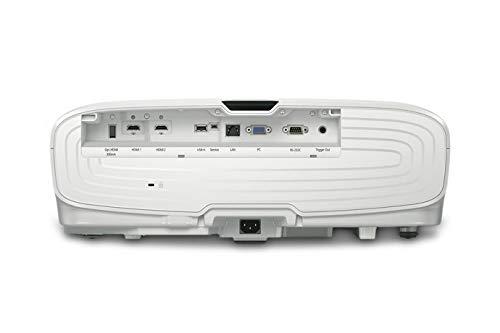
Both the 5050UB and LS12000 offer identical installation flexibility with 2.1x powered zoom and extensive lens shift (±96% vertical, ±47% horizontal). This exceptional flexibility allows ceiling mounting, rear shelf placement, or other configurations without image distortion. Both include motorized lens controls with memory settings for different aspect ratios or screen sizes.
The Pro Cinema LS12000 operates more quietly at 22-30 dB compared to the Home Cinema 5050UB's 31 dB maximum. While both are reasonably quiet for home theater use, the LS12000's laser technology and improved cooling design make it less noticeable during quiet movie scenes. The difference is subtle but may matter in very quiet home theater environments.
The Epson Home Cinema 5050UB offers full 3D support with compatible RF shutter glasses, supporting various 3D formats including side-by-side and frame-packing. The Pro Cinema LS12000 completely removes 3D capability, following industry trends away from 3D home content. If you have a 3D movie collection or want 3D gaming capability, only the 5050UB provides this feature.
The Home Cinema 5050UB typically includes a 2-year standard warranty, while the Pro Cinema LS12000 offers an extended 3-year warranty. The longer warranty on the LS12000 reflects confidence in laser technology's reliability and provides additional peace of mind for the higher investment. Both include technical support and replacement services during their warranty periods.
Choose the Epson Home Cinema 5050UB for dedicated dark room theaters where contrast and black levels matter most, especially if you want maximum value and have a 3D collection. Select the Pro Cinema LS12000 for mixed-use rooms, heavy viewing schedules, modern gaming needs, or if you prefer maintenance-free operation. Both deliver excellent home theater experiences with different strengths for different users and environments.
We've done our best to create useful and informative comparisons to help you decide what product to buy. Our research uses advanced automated methods to create this comparison and perfection is not possible - please contact us for corrections or questions. These are the sites we've researched in the creation of this article: rtings.com - projectorscreen.com - hometechnologyreview.com - thesmarthomehookup.com - youtube.com - rtings.com - techgearlab.com - projectorcentral.com - projectorreviews.com - projectorcentral.com - avsforum.com - rtings.com - projectorreviews.com - projectorreviews.com - avsforum.com - avsforum.com - audiogeneral.com - hifiheaven.net - manuals.plus - crutchfield.com - projectorcentral.com - epson.com - mediaserver.goepson.com - bestbuy.com - ngxptech.com - projectorcentral.com - projectorreviews.com - techradar.com - projectorreviews.com - safeandsoundhq.com - news.epson.com - youtube.com - projectorcentral.com - bestbuy.com - projectorcentral.com - digitalhomecreations.com - new-age-electronics.com - flanners.com - paulsonsav.com

Privacy Policy
Terms and Conditions - Affiliate Policy
Home Security
© Copyright 2008-2026.
11816 Inwood Rd #1211, Dallas, TX 75244