

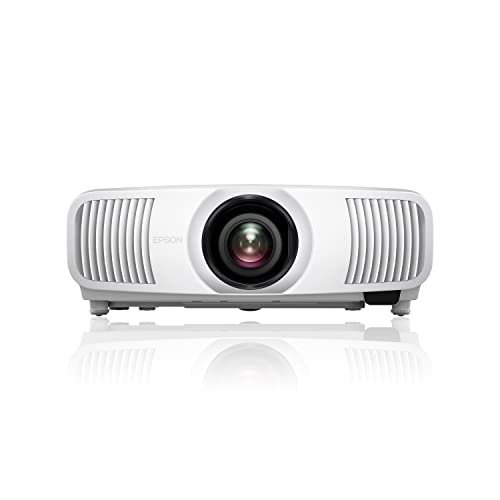
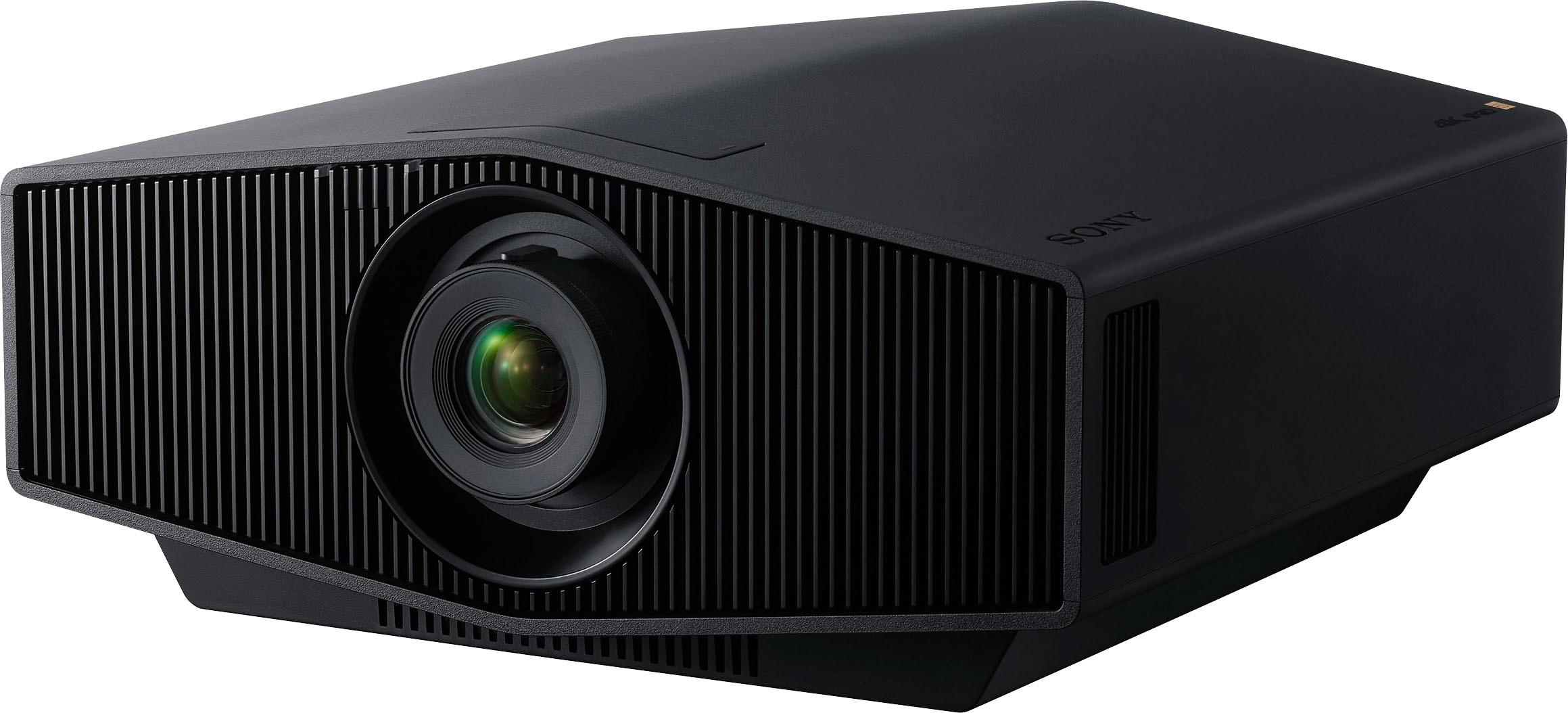
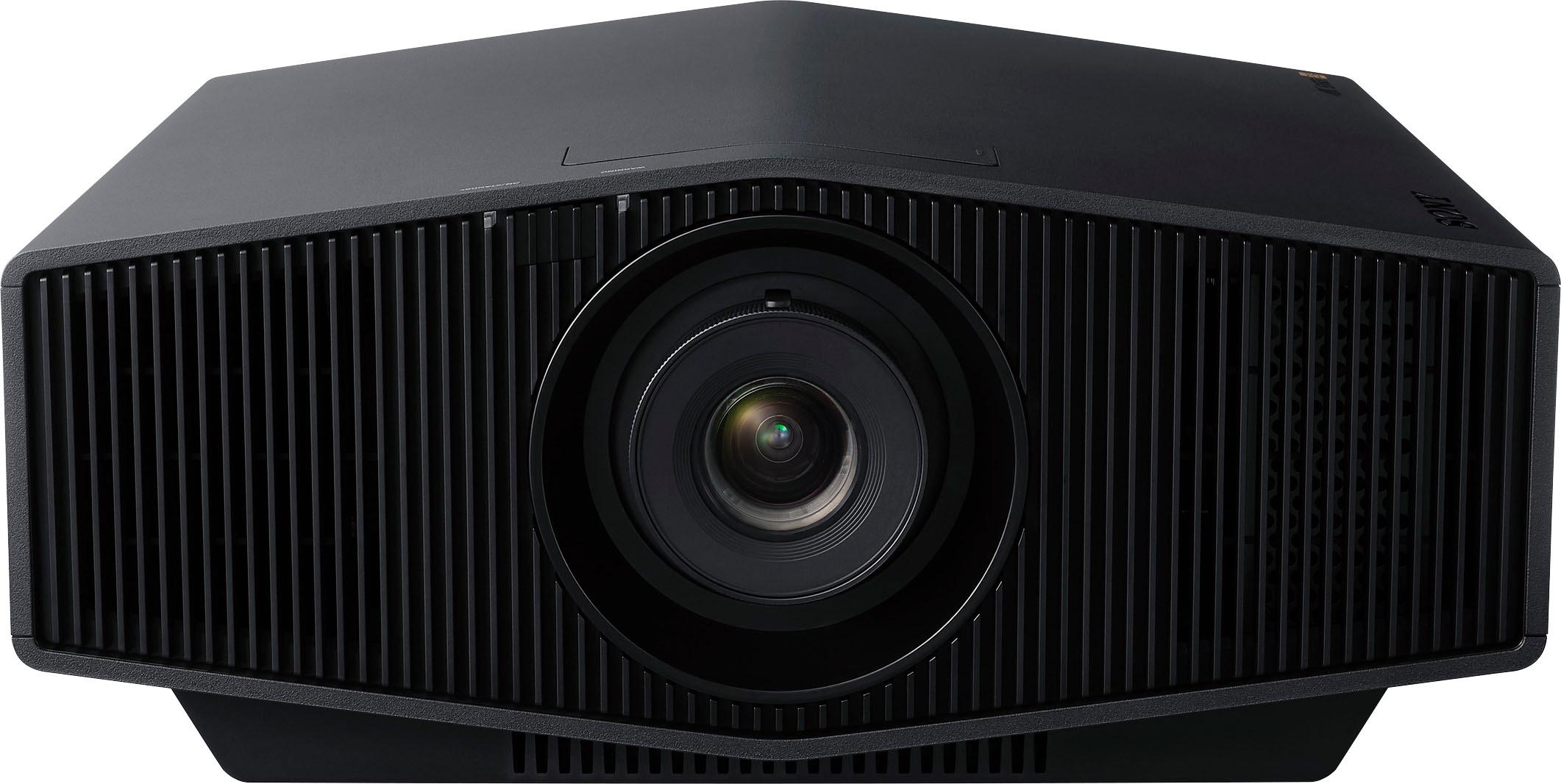
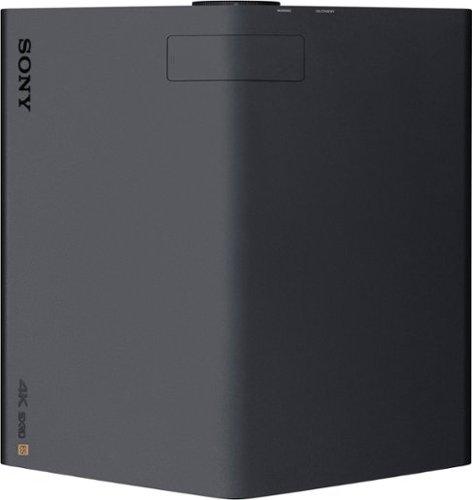
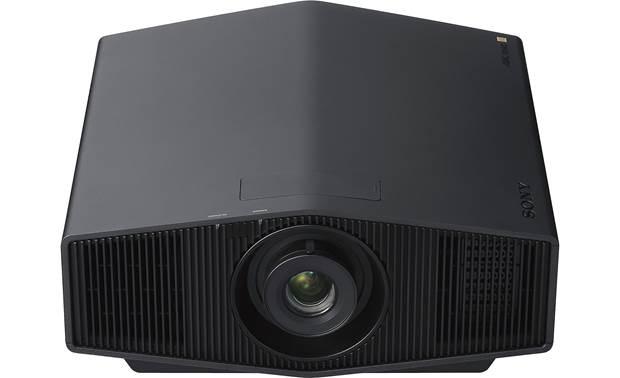
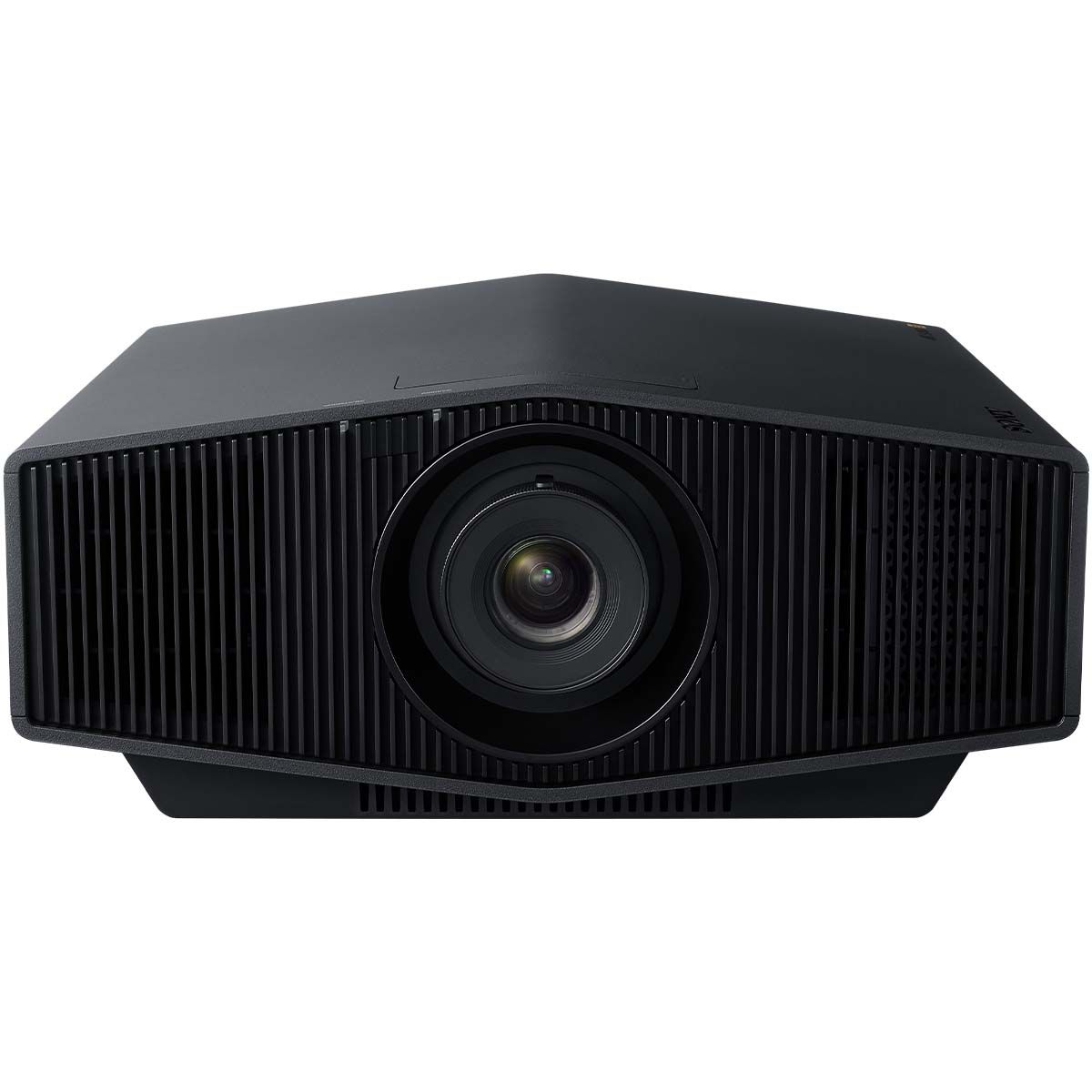
When you're ready to transform your living space into a true cinematic experience, 4K laser projectors represent the current gold standard for home theater projection. These aren't your grandfather's slide projectors or even the lamp-based units from just a few years ago. Modern laser projectors combine ultra-high resolution imaging with light sources that last decades, not years.
Both the Epson Home Cinema LS11000 and Sony VPL-XW5000ES arrived in 2022, marking a significant leap forward in consumer-accessible laser projection technology. At the time of writing, these projectors represent two distinctly different approaches to achieving stunning 4K images, each with compelling advantages depending on your specific needs and room setup.
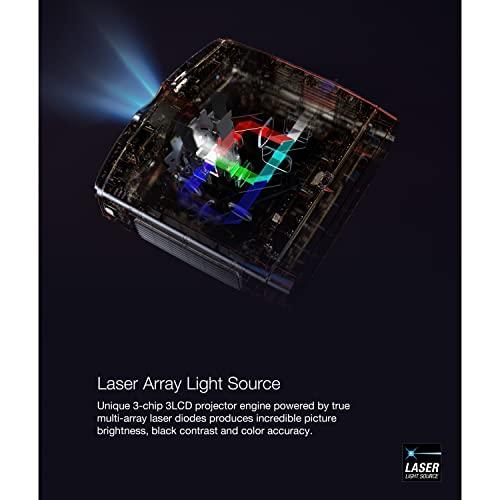
Before diving into the comparison, it's worth understanding what makes these projectors special. Traditional projectors use replaceable lamps that dim over time and need replacement every 2,000-5,000 hours. Laser projectors eliminate this maintenance headache entirely, with light sources rated for 20,000 hours or more – potentially decades of normal use.
The "4K" designation tells you these projectors can display images with roughly 8.3 million individual pixels, creating incredibly detailed pictures that rival what you'd see in commercial theaters. However, as we'll discover, not all 4K implementations are created equal.
The fundamental difference between these projectors lies in how they create that 4K image, and this distinction affects everything from sharpness to price.
The Sony VPL-XW5000ES uses what's called native 4K technology. Inside this projector are three SXRD panels (Sony's version of LCoS technology) – think of them as incredibly precise liquid crystal displays that reflect light rather than letting it pass through. Each panel physically contains all 8.3 million pixels needed for 4K resolution. When you send a 4K signal to this projector, every single pixel is displayed exactly as intended, with no processing tricks or workarounds.
SXRD technology excels at producing deep black levels because each pixel can be completely shut off, blocking light entirely. This creates that dramatic contrast you see in movie theaters, where bright stars pop against an inky black sky.
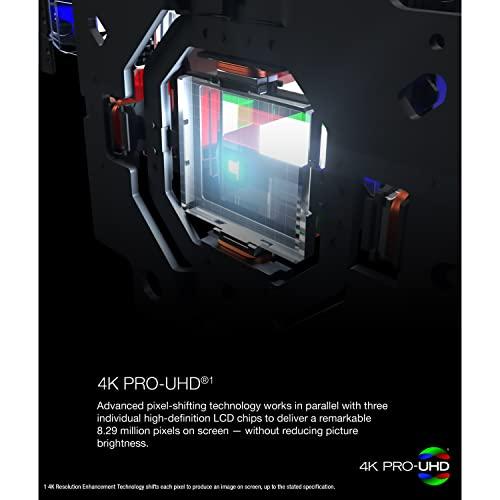
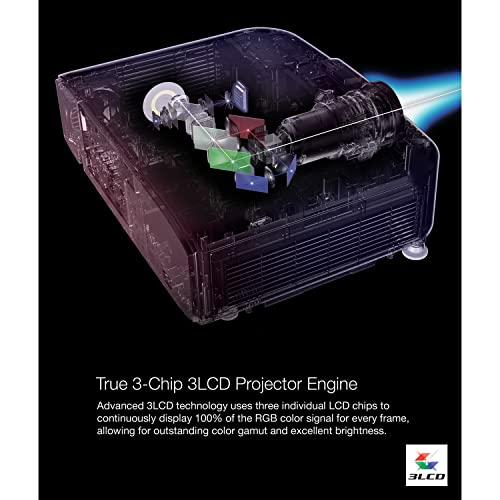
The Epson LS11000 takes a different approach that's both clever and effective. It uses three 1080p LCD panels (each displaying about 2 million pixels) but employs advanced pixel-shifting technology to create a 4K image on your screen. Epson's latest Precision Shift Glass Plate rapidly moves each pixel in four directions – diagonal, horizontal, and their combinations – so fast your eye perceives 8.3 million distinct pixels.
This isn't the same as digital upscaling that simply makes 1080p content look smoother on a 4K display. The pixel-shifting actually creates new visual information, and Epson's latest implementation is so quick and precise that distinguishing it from native 4K becomes nearly impossible at normal viewing distances.
The advantage of this approach? Epson can use larger, more light-efficient LCD panels, which translates directly into higher brightness output.
In projector world, brightness measured in lumens determines how well your image will look in different lighting conditions and on different screen sizes. This is where the fundamental difference in approaches creates the most significant practical impact.
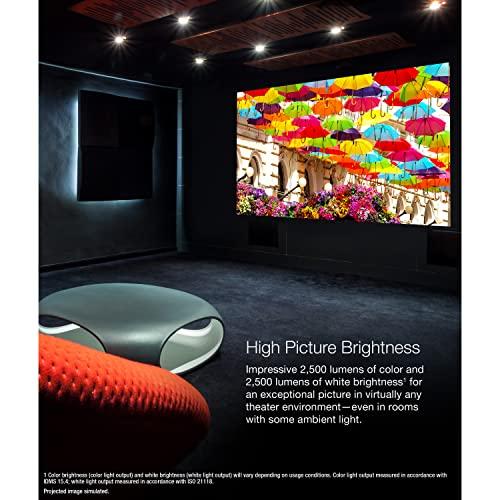
The Epson LS11000 delivers 2,500 lumens of both color and white brightness – a specification that matters more than you might think. Some projectors achieve high white brightness but sacrifice color accuracy, leading to washed-out images. Epson's 3LCD technology maintains color brightness equal to white brightness, ensuring vibrant, accurate colors even in brighter environments.
This higher brightness translates into real-world flexibility. You can use the Epson LS11000 in family rooms with some ambient light, drive larger screens effectively, and still have headroom for the peak brightness demands of HDR content. If you're planning a 120-inch or larger screen, or if your room can't achieve complete darkness, this brightness advantage becomes crucial.
The Sony VPL-XW5000ES outputs 2,000 lumens, which might seem like a disadvantage until you consider how it's used. In a properly light-controlled home theater, 2,000 lumens provides excellent image quality without overwhelming your eyes in a dark room. The native 4K panels may also appear more efficient at delivering perceived sharpness per lumen, making the most of every photon.
For screens in the 100-130 inch range in dedicated theater rooms, the Sony's brightness proves perfectly adequate while allowing its superior contrast characteristics to shine.
Contrast – the difference between the darkest blacks and brightest whites your projector can display simultaneously – creates the visual drama that makes movies compelling. This is where panel technology makes its biggest difference.
Based on extensive user feedback and expert reviews, the Sony VPL-XW5000ES consistently delivers superior black levels and overall contrast performance. SXRD technology can shut off individual pixels completely, creating true blacks that make bright elements pop dramatically. When watching a space scene, stars and explosions appear brilliant against genuinely dark backgrounds, not the slightly gray backgrounds that plague lesser projectors.
The Sony's Dynamic HDR Enhancer analyzes incoming HDR content scene by scene, adjusting both signal levels and laser intensity to optimize contrast dynamically. This isn't just marketing speak – users report noticeably improved shadow detail and highlight separation that makes movies more engaging.
The Epson LS11000 specifies an impressive 1,200,000:1 dynamic contrast ratio using Dynamic Laser Dimming technology. While this sounds remarkable on paper, it represents a different approach than Sony's native panel advantages. Dynamic enhancement systems vary the laser output based on scene content – dimming for dark scenes and brightening for light ones.
In practice, the Epson produces very good contrast that satisfies most viewers, but critical evaluation often favors the Sony's native capabilities, particularly in dark room environments where contrast differences become most apparent.
Real homes rarely offer perfect projector placement opportunities. Rooms have odd dimensions, structural beams, furniture constraints, and limited mounting options. This is where the Epson LS11000 demonstrates clear superiority.
The Epson LS11000 offers lens shift ranges that border on miraculous for home installation: horizontal shift of ±47.1% and vertical shift of ±96.3%. In practical terms, this means you can mount the projector well off-center from your screen – even significantly to one side or above/below the ideal centerline – and still achieve perfect image positioning through purely optical adjustments.
The fully motorized lens system handles focus, zoom (2.1x range), and shift adjustments at the touch of a button. Even better, the lens memory feature stores up to five different position settings, allowing instant switching between 16:9 widescreen and 2.35:1 Cinemascope aspect ratios without manual readjustment.
This flexibility can save hundreds or thousands of dollars in custom mounting solutions and makes the Epson LS11000 practical in rooms where other projectors simply won't work properly.
The Sony VPL-XW5000ES offers respectable but more limited flexibility with ±25% horizontal and ±71% vertical lens shift. All adjustments are manual, which some professional installers actually prefer for permanent installations since motorized systems can occasionally drift or fail over time.
The Sony's 1.6x zoom range is more restrictive than the Epson's 2.1x, potentially requiring more precise projector positioning to achieve your desired screen size.
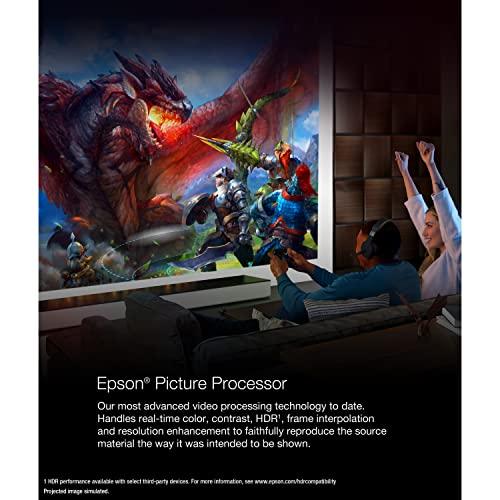
Gaming has evolved dramatically since 2020, with PlayStation 5 and Xbox Series X consoles capable of 4K resolution at 120 frames per second. This creates new demands on projectors that didn't exist just a few years ago.
The Epson LS11000 includes dual HDMI 2.1 inputs with full 48Gbps bandwidth, enabling 4K@120Hz HDR gaming with the latest consoles and gaming PCs. Input lag measures below 20 milliseconds, fast enough for competitive gaming on a massive screen.
This represents a significant advantage for households where the home theater pulls double duty as a gaming space. The ability to experience games like "Horizon Forbidden West" or "Forza Motorsport" on a 150-inch screen at full 4K/120Hz creates an immersive experience that traditional TVs simply can't match.
The Sony VPL-XW5000ES lacks HDMI 2.1 connectivity, limiting gaming to 4K@60Hz maximum. While this remains excellent for most gaming applications, it represents a significant limitation for users wanting to fully utilize next-generation console capabilities.
For dedicated home theaters focused primarily on movie viewing, this limitation may not matter. However, it does affect the projector's long-term relevance as gaming technology continues advancing.
High Dynamic Range (HDR) content provides the brightness range and color depth that makes modern movies visually stunning. Both projectors handle HDR well but with different strengths.
The Sony VPL-XW5000ES incorporates Sony's X1 Ultimate processor, borrowed from their premium BRAVIA TVs. This chip performs object-based HDR remastering, analyzing individual elements within each frame and applying different processing to optimize each element's appearance.
The Triluminos Pro color engine achieves 95% coverage of the DCI-P3 color space used in commercial cinema, ensuring colors appear as directors intended. The Live Colour Enhancer selectively expands the color gamut for vivid HDR images without creating unnatural oversaturation.
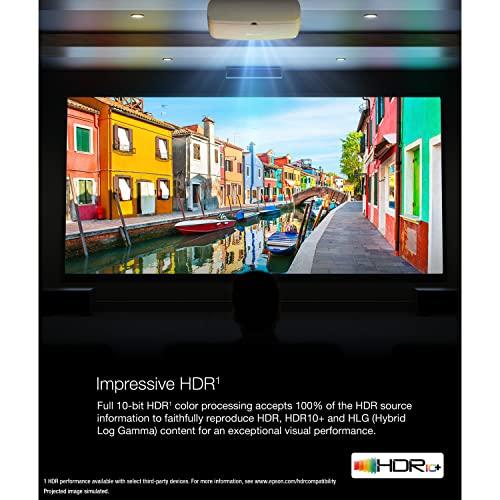
The Epson LS11000 supports HDR10, HDR10+, and HLG formats – more comprehensive than many competitors. HDR10+ provides dynamic metadata that optimizes each scene individually, similar to Dolby Vision but with broader device support.
The projector includes user-friendly HDR controls, including a dedicated HDR adjustment button on the remote and a 16-point brightness slider for fine-tuning tone mapping. This accessibility makes HDR optimization easier for non-technical users.
At the time of writing, the Epson LS11000 represents exceptional value in the premium projector market, offering high-end features at a more accessible price point. The Sony VPL-XW5000ES commands premium pricing that reflects its native 4K technology and advanced processing.
Choose the Epson LS11000 if your room isn't completely light-controlled, you're planning a screen larger than 120 inches, gaming is important to your family, or installation flexibility is crucial due to room constraints. The brightness advantage and motorized lens controls provide practical benefits that enhance daily use significantly.
The pixel-shifting technology has improved dramatically since earlier implementations. Current Epson pixel-shifting produces results so close to native 4K that the difference becomes academic for most viewing situations, especially with video content where motion naturally softens fine details anyway.
The Sony VPL-XW5000ES excels in optimized home theater environments where its superior contrast and native 4K resolution can demonstrate clear advantages. If you have a dedicated theater room with complete light control, prioritize ultimate image quality over versatility, and primarily watch movies rather than gaming, the Sony's premium positioning becomes justified.
The native 4K panels do provide inherently superior sharpness with computer content, text, and fine geometric patterns. For videophiles who notice these differences and have viewing environments that showcase them, the Sony's approach delivers measurable benefits.
Both projectors offer 20,000-hour laser lifespans and represent excellent long-term investments, but they serve different priorities within the premium projection market.
The Epson LS11000 offers broader appeal through its combination of high brightness, exceptional installation flexibility, modern gaming capabilities, and competitive pricing. It's the projector that adapts to your home rather than requiring your home to adapt to it.
The Sony VPL-XW5000ES rewards buyers who can optimize their environment to showcase its strengths. In the right setting – a dedicated theater with complete light control and screens up to 130 inches – it delivers image quality that justifies its premium positioning.
Your choice ultimately depends on balancing image quality priorities against practical room requirements and usage patterns. Both represent the current state of the art in laser projection, just optimized for different owner priorities and viewing environments.
| Epson Home Cinema LS11000 | Sony VPL-XW5000ES |
|---|---|
| Display Technology - Determines native sharpness and image processing | |
| 3LCD with 4K pixel-shifting (creates 4K from 1080p panels) | Native 4K SXRD panels (true 8.3M pixels per panel) |
| Brightness Output - Critical for screen size and ambient light handling | |
| 2,500 lumens (excellent for larger screens and brighter rooms) | 2,000 lumens (ideal for dedicated dark theaters) |
| Contrast Performance - Creates dramatic movie-theater depth | |
| 1,200,000:1 dynamic contrast with laser dimming | Superior native contrast with SXRD technology |
| Lens Shift Range - Installation flexibility without image quality loss | |
| Horizontal ±47.1%, Vertical ±96.3% (exceptional placement freedom) | Horizontal ±25%, Vertical ±71% (good but more restrictive) |
| Zoom and Focus - Determines installation distance flexibility | |
| 2.1x motorized zoom with motorized focus and lens memory | 1.6x manual zoom with manual focus |
| Gaming Connectivity - Future-proofing for modern consoles | |
| Dual HDMI 2.1 (4K@120Hz HDR gaming ready) | HDMI 2.0 only (limited to 4K@60Hz) |
| HDR Format Support - Compatibility with streaming and UHD content | |
| HDR10, HDR10+, HLG (most comprehensive support) | HDR10, HLG (missing HDR10+ dynamic metadata) |
| Input Lag - Gaming responsiveness | |
| Below 20ms (excellent for competitive gaming) | Not specified (likely higher than Epson LS11000) |
| Laser Lifespan - Long-term operating costs | |
| 20,000 hours (decades of typical use) | 20,000 hours (decades of typical use) |
| Noise Level - Important for quiet home theater environments | |
| 22-30 dB depending on brightness mode | 24 dB (consistently quieter operation) |
| Color Processing - Image enhancement and accuracy | |
| 10-bit processing with real-time enhancement | X1 Ultimate processor with object-based HDR remastering |
| Weight and Size - Installation considerations | |
| 28 lbs, 20.5" x 7.6" x 17.6" | 28.7 lbs, 18.1" x 7.9" x 18.6" |
| Target Market - Best fit for different users | |
| Multi-purpose rooms, gaming, larger screens, flexible installation | Dedicated theaters, pure movie viewing, premium image quality |
The Epson Home Cinema LS11000 delivers 2,500 lumens compared to the Sony VPL-XW5000ES's 2,000 lumens. This 25% brightness advantage makes the Epson LS11000 significantly better for rooms with ambient light, larger screens over 120 inches, and family rooms where complete darkness isn't possible. The Sony VPL-XW5000ES works best in dedicated, light-controlled home theaters.
The Sony VPL-XW5000ES uses native 4K SXRD panels with 8.3 million physical pixels, while the Epson Home Cinema LS11000 uses advanced pixel-shifting technology that rapidly moves 1080p pixels to create 4K resolution on screen. Both produce excellent 4K images, but the Sony VPL-XW5000ES has inherently sharper text and fine details, while the Epson LS11000's approach allows for brighter output.
The Epson Home Cinema LS11000 is significantly better for modern gaming with dual HDMI 2.1 ports supporting 4K@120Hz HDR gaming and input lag below 20ms. The Sony VPL-XW5000ES lacks HDMI 2.1, limiting it to 4K@60Hz maximum. For serious gamers wanting to utilize next-gen console capabilities fully, the Epson LS11000 is the clear choice.
The Sony VPL-XW5000ES delivers superior contrast and deeper black levels thanks to its native SXRD panel technology, which can completely shut off individual pixels. The Epson Home Cinema LS11000 uses dynamic laser dimming to achieve its specified 1,200,000:1 contrast ratio. In dark home theater environments, the Sony VPL-XW5000ES produces more dramatic contrast that enhances movie viewing.
The Epson Home Cinema LS11000 provides exceptional installation flexibility with horizontal lens shift of ±47.1% and vertical shift of ±96.3%, plus 2.1x motorized zoom with lens memory. The Sony VPL-XW5000ES offers more limited ±25% horizontal and ±71% vertical shift with 1.6x manual zoom. The Epson LS11000 can work in challenging room layouts where the Sony cannot.
The Epson Home Cinema LS11000's higher 2,500-lumen output makes it ideal for screens 120 inches and larger, especially in rooms with some ambient light. The Sony VPL-XW5000ES's 2,000 lumens work perfectly for 100-130 inch screens in dedicated dark theaters. Both can handle smaller screens, but the Epson LS11000 provides more flexibility for super-sized displays.
Both the Epson Home Cinema LS11000 and Sony VPL-XW5000ES feature laser light sources rated for 20,000 hours of operation. This translates to roughly 20 years of typical home use with no bulb replacements needed. Both projectors eliminate the ongoing maintenance costs and brightness degradation associated with traditional lamp-based projectors.
The Sony VPL-XW5000ES operates more quietly at a consistent 24 dB, making it better suited for dedicated home theaters where noise is critical. The Epson Home Cinema LS11000 runs at 22-30 dB depending on brightness mode. While both are relatively quiet, the Sony VPL-XW5000ES has the edge for whisper-quiet operation in premium theater installations.
The Epson Home Cinema LS11000 supports HDR10, HDR10+, and HLG formats, providing the most comprehensive HDR compatibility. The Sony VPL-XW5000ES supports HDR10 and HLG but lacks HDR10+ support. The Epson LS11000's broader format support ensures compatibility with more streaming content and future HDR standards.
The Epson Home Cinema LS11000 typically offers better value with higher brightness, superior installation flexibility, HDMI 2.1 gaming support, and comprehensive HDR format compatibility. The Sony VPL-XW5000ES commands premium pricing for its native 4K technology and superior contrast. The Epson LS11000 provides more features and versatility per dollar spent.
The Epson Home Cinema LS11000's 2,500-lumen output makes it much more suitable for bright living rooms and multi-purpose spaces with ambient light. The Sony VPL-XW5000ES's 2,000 lumens require more controlled lighting for optimal performance. For family rooms that can't achieve complete darkness, the Epson LS11000 is the practical choice.
In dedicated, light-controlled home theaters, the Sony VPL-XW5000ES excels with superior contrast, native 4K sharpness, and quieter operation. However, the Epson Home Cinema LS11000 remains competitive with its higher brightness for larger screens and gaming capabilities. The choice depends on whether you prioritize ultimate image quality (Sony VPL-XW5000ES) or versatility and future-proofing (Epson LS11000).
We've done our best to create useful and informative comparisons to help you decide what product to buy. Our research uses advanced automated methods to create this comparison and perfection is not possible - please contact us for corrections or questions. These are the sites we've researched in the creation of this article: tvsbook.com - thesmarthomehookup.com - cepro.com - specsradar.com - projectorscreen.com - benq.com - projectorreviews.com - projectorscreen.com - youtube.com - projectorcentral.com - whathifi.com - projectorscreen.com - bestbuy.com - youtube.com - avsforum.com - versus.com - crutchfield.com - projectorcentral.com - shop.avispl.com - mediaserver.goepson.com - projectorscreen.com - bestbuy.com - simplehomecinema.com - dreamediaav.com - epson.com - whathifi.com - pro.sony - projectorscreen.com - bestbuy.com - bestbuy.com - bestbuy.com - bestbuy.com - pro.sony - abt.com - projectorreviews.com - merlinstv.com - hometheaterhifi.com

Privacy Policy
Terms and Conditions - Affiliate Policy
Home Security
© Copyright 2008-2026.
11816 Inwood Rd #1211, Dallas, TX 75244