

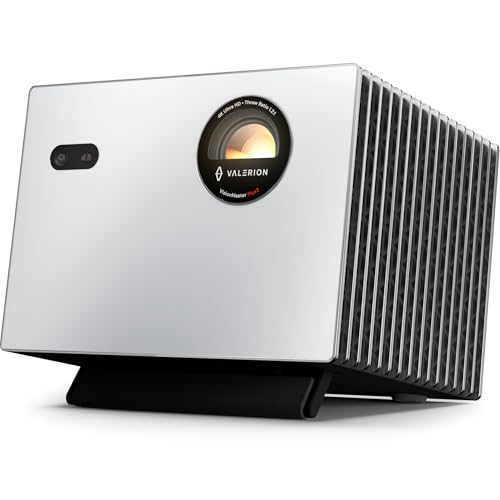


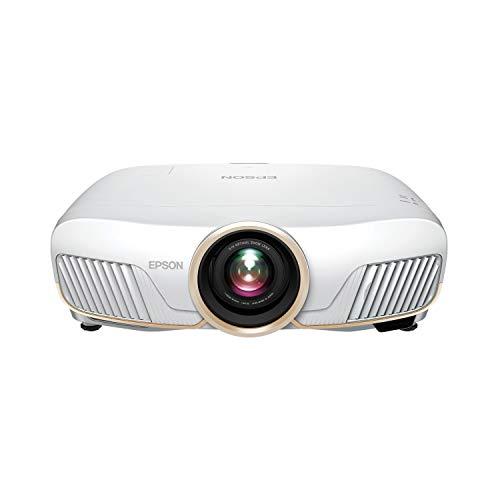
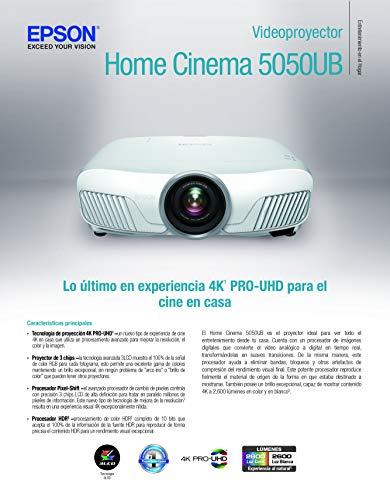
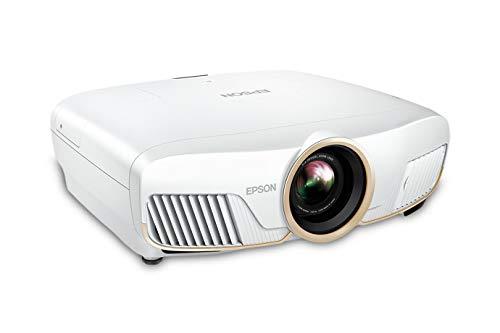
When you're ready to transform your living room into a home theater, projector shopping can feel overwhelming. Today we're comparing two excellent 4K projectors that represent different philosophies in home cinema: the modern Valerion StreamMaster Plus 2 and the proven Epson Home Cinema 5050UB. Both deliver impressive 4K images, but they take dramatically different approaches to get there.
Before diving into the specifics, let's establish what actually matters when choosing a projector for your home. The most important factors are brightness (measured in lumens), contrast ratio (the difference between the darkest blacks and brightest whites), color accuracy, and installation flexibility.
Brightness determines how large a screen you can use and whether you can watch with some lights on. Contrast ratio is what makes movies feel cinematic – it's the difference between a projector that looks washed out and one that delivers those deep, inky blacks you see in theaters. Color accuracy affects how natural skin tones look and whether colors pop without looking oversaturated.
The Valerion StreamMaster Plus 2, released in 2025, represents the latest wave of smart projectors with integrated streaming and laser light sources. The Epson Home Cinema 5050UB, which debuted in 2019, follows the traditional approach of maximizing image quality through precision optics and advanced lamp technology. Despite being older, the Epson remains highly competitive because Epson focused on perfecting proven technologies rather than chasing the latest trends.
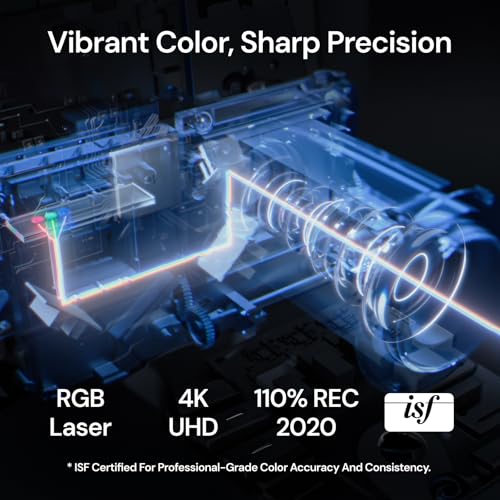
These projectors embody two distinct approaches to home theater projection. The Valerion StreamMaster Plus 2 is designed for the modern user who wants everything integrated and maintenance-free. It uses RGB triple laser technology, which means it has separate red, green, and blue lasers that combine to create the image. This approach delivers consistent brightness for 25,000 hours (about 10-15 years of typical use) without needing bulb replacements.
The Epson Home Cinema 5050UB takes the purist approach, using a traditional high-pressure lamp with advanced 3LCD technology. 3LCD means it uses three separate LCD panels – one each for red, green, and blue – which eliminates the rainbow effect (those brief flashes of color some people see with single-chip projectors). While lamps need replacement every 3,500-5,000 hours, this technology allows Epson to achieve superior contrast and color accuracy.
Think of it like comparing a Tesla to a BMW M3. The Tesla offers cutting-edge technology and convenience features, while the BMW focuses on driving dynamics and proven performance. Both are excellent, but they appeal to different priorities.
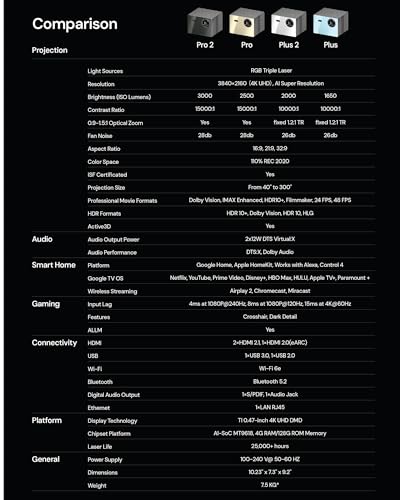
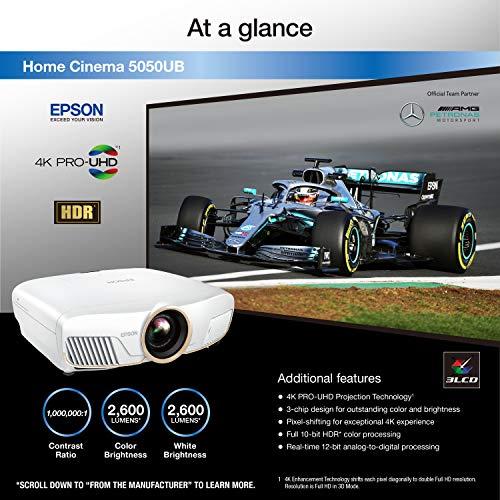
When it comes to brightness, the Epson Home Cinema 5050UB takes a clear lead with 2,600 lumens compared to the Valerion's 2,000 lumens. That 600-lumen difference might not sound like much, but it's significant in practice.
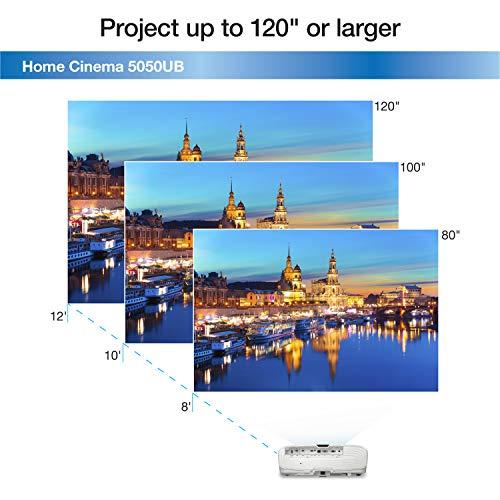
Higher brightness means you can use larger screens or watch in rooms that aren't completely dark. The Epson can comfortably drive a 150-inch screen in a dedicated dark room, while the Valerion works best with screens up to 120 inches in similar conditions. If you have some ambient light from windows or prefer not to watch in complete darkness, the Epson's extra brightness provides more flexibility.
However, there's a crucial difference in how these projectors maintain brightness over time. The Valerion's laser light source stays consistent for its entire 25,000-hour lifespan, while the Epson's lamp gradually dims and needs replacement every few years. At the time of writing, replacement lamps cost around $300-400, so factor that into your long-term budget.
This is where things get interesting. Contrast ratio – the difference between the darkest blacks and brightest whites – is arguably the most important factor for cinematic image quality. It's what makes space scenes look like deep voids rather than gray backgrounds, and what gives movie images that three-dimensional pop.
The Epson Home Cinema 5050UB absolutely dominates this category. Its native contrast ratio measures around 8,000:1, which is exceptional for any projector, let alone one at this price point. Epson achieves this through their UltraBlack technology, which uses a special filter to control light polarization and eliminate stray light that would otherwise wash out dark scenes.
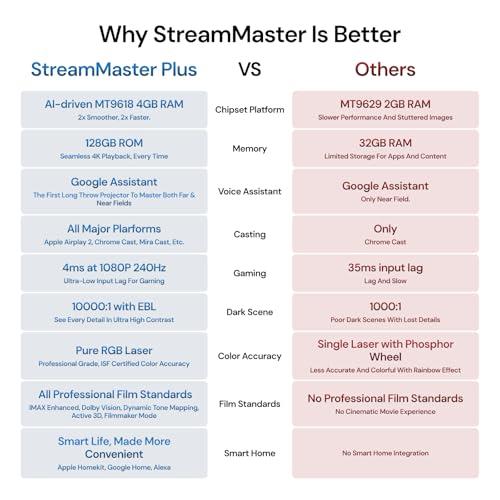
The Valerion StreamMaster Plus 2 delivers a respectable 3,000:1 native contrast, which jumps to 10,000:1 with its Enhanced Black Level (EBL) mode engaged. EBL is a dynamic feature that adjusts black levels in real-time based on the content. While this helps, it can't match the Epson's consistently superior black levels.
In practical terms, the Epson makes dark movie scenes dramatically more immersive. When watching something like "Blade Runner 2049" or "Dune," the Epson's superior blacks make the difference between feeling like you're watching a movie and feeling like you're in the movie.
Color performance tells two different stories depending on what you prioritize. The Valerion StreamMaster Plus 2 covers an impressive 110% of the Rec.2020 color space – that's the ultra-wide color standard used for the most advanced HDR content. This means it can display colors that most TVs and even expensive projectors simply can't reproduce.
The Epson Home Cinema 5050UB covers 97% of the DCI-P3 color space, which is the standard used in commercial movie theaters. While this might seem less impressive on paper, it represents colors that are more accurate to what filmmakers intended.
Here's where the philosophies diverge again. The Valerion prioritizes "wow factor" colors that pop off the screen, while the Epson focuses on accurate colors that look natural. Both approaches have merit – the Valerion makes HDR content look spectacular, while the Epson makes everything look more cinematic and natural.
The Epson also offers professional-grade calibration tools, including 11-point white balance adjustment and comprehensive color tuning. If you're serious about color accuracy or plan to have your projector professionally calibrated, the Epson provides the tools to achieve reference-quality results. The Valerion offers basic calibration but can't match the Epson's precision controls.
Both projectors deliver 4K images, but neither uses native 4K chips. Instead, they employ pixel-shifting technology, which rapidly moves lower-resolution pixels to create the appearance of higher resolution. It's like having a really fast magician making you see more cards than are actually in their hand.
The Epson Home Cinema 5050UB uses larger 0.74-inch LCD panels with 4-way pixel shifting, while the Valerion StreamMaster Plus 2 uses a smaller 0.47-inch DLP chip with 2-way pixel shifting. The Epson's larger chips and more sophisticated shifting generally produce sharper images with better fine detail, especially at the edges of the image where the Epson's precision lens system maintains focus better.
Neither will fool you into thinking you're seeing true native 4K (like you'd get from JVC's $10,000+ projectors), but both deliver convincingly sharp images that clearly surpass 1080p. The Valerion compensates with AI Super Resolution technology that intelligently sharpens and enhances details, particularly when upscaling lower-resolution content.
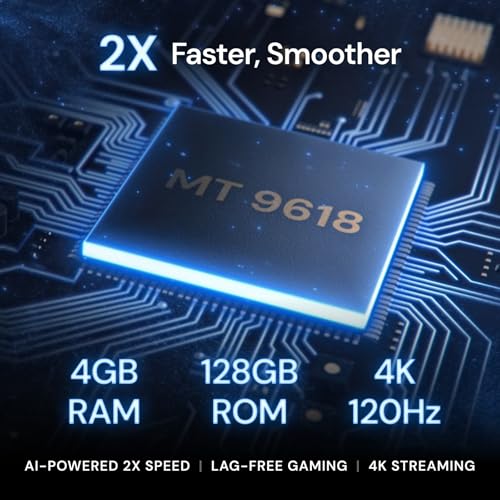
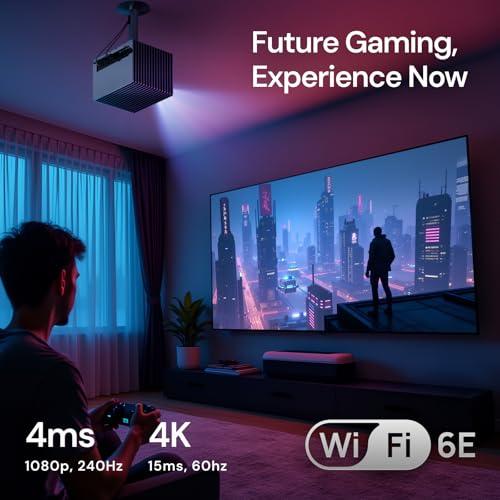
For gamers, the Valerion StreamMaster Plus 2 is purpose-built for interactive entertainment. Its input lag – the delay between when you press a button and see the result on screen – measures just 4ms at 1080p/240Hz, 8ms at 1080p/120Hz, and 15ms at 4K/60Hz. These are excellent numbers that make fast-paced games feel responsive.
The Valerion also includes gaming-specific features like different picture modes for RPGs, first-person shooters, and racing games, plus gamer-friendly additions like crosshair overlays and night vision modes that brighten dark areas to spot enemies.
The Epson Home Cinema 5050UB wasn't designed with gaming as a priority. Its input lag measures 22.5ms at 4K/60Hz and 28ms at 1080p/60Hz – acceptable for casual gaming but not ideal for competitive play. It also maxes out at 60Hz refresh rates, while the Valerion can handle up to 240Hz for ultra-smooth motion in supported games.
If gaming is important to you, the Valerion is the clear winner. If you only game occasionally, the Epson's superior movie performance might outweigh its gaming limitations.
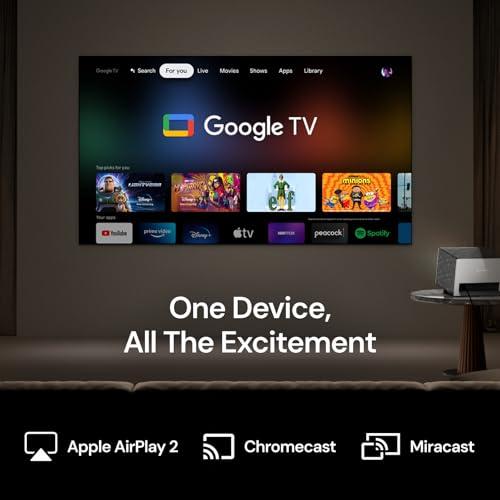
This represents perhaps the biggest philosophical difference between these projectors. The Valerion StreamMaster Plus 2 runs Google TV OS with 4GB of RAM and 128GB of storage, essentially functioning as a giant Android TV. You get Netflix, Disney+, YouTube, and thousands of other apps built-in, plus voice control through Google Assistant and casting support for phones and tablets.
The Epson Home Cinema 5050UB has zero smart features. No Wi-Fi, no apps, no voice control. You'll need to connect an external streaming device like an Apple TV, Nvidia Shield, or Roku.
Which approach is better depends on your preferences. Built-in smart features are convenient but can become outdated as apps evolve and new services launch. External devices offer more flexibility and can be easily upgraded, but add complexity and cost. Our research suggests that serious home theater enthusiasts often prefer external devices for better performance and features, while casual users appreciate the simplicity of built-in apps.
Here's where the Epson Home Cinema 5050UB shows its professional heritage. It features a fully motorized lens with 2.1x optical zoom and massive lens shift capability – you can move the image up to 96% vertically and 47% horizontally without moving the projector. This means you can mount the Epson almost anywhere in your room and still get a perfectly positioned image.
The lens also includes memory settings, so you can save different configurations for different aspect ratios or screen sizes. This flexibility is invaluable if you have a challenging room layout or want to ceiling mount the projector.
The Valerion StreamMaster Plus 2 uses a fixed 1.2:1 throw ratio with no optical zoom or lens shift. You're limited to digital zoom and keystone correction, which can reduce image quality. This means more careful planning for projector placement and potentially fewer mounting options.
If you're building a dedicated home theater with professional installation, the Epson's flexibility is worth the premium. If you're setting up a simpler system in a living room or basement, the Valerion's approach might be adequate.
At the time of writing, these projectors occupy different price tiers, with the Valerion StreamMaster Plus 2 typically costing $800-1,000 less than the Epson Home Cinema 5050UB. However, value calculations get complex when you factor in long-term costs and capabilities.
The Valerion offers exceptional value for users who prioritize modern features and convenience. You get smart TV functionality, gaming optimization, and maintenance-free operation for significantly less money upfront. Over five years, you'll likely spend $1,000-1,200 less total compared to the Epson when factoring in lamp replacements.
The Epson represents better value for image quality purists. Despite costing more upfront and requiring lamp replacements, it delivers superior contrast, better color accuracy, and exceptional installation flexibility. If you're building a serious home theater and plan to keep the projector for many years, the Epson's superior image quality justifies the premium.
Choose the Valerion StreamMaster Plus 2 if you want a modern, convenient projector that does everything well without breaking the bank. It's ideal for casual movie watchers, gamers, and anyone who values built-in smart features and low maintenance. The wide color gamut makes HDR content look spectacular, and the low input lag satisfies all but the most competitive gamers.
Choose the Epson Home Cinema 5050UB if image quality trumps convenience and budget considerations. It's the better choice for serious home theater enthusiasts, larger screen sizes, and challenging installation requirements. The superior contrast and color accuracy create a more cinematic experience that justifies the higher cost and maintenance requirements.
Both projectors deliver excellent 4K images that will dramatically upgrade your home entertainment experience. The Valerion gives you 80% of the image quality at 60% of the cost with significantly more convenience features. The Epson provides reference-quality images with professional flexibility for users willing to pay a premium for the best possible picture.
Your choice ultimately depends on whether you prioritize value and convenience or maximum image quality and flexibility. Either way, you'll end up with a projector that transforms your home viewing experience.
| Valerion StreamMaster Plus 2 | Epson Home Cinema 5050UB |
|---|---|
| Brightness - Determines screen size and room lighting flexibility | |
| 2,000 ISO lumens (good for 100-120" screens in dark rooms) | 2,600 lumens (supports 150"+ screens, handles ambient light better) |
| Contrast Ratio - Most important spec for cinematic black levels | |
| 3,000:1 native, 10,000:1 with EBL mode | 8,000:1 native, 1,000,000:1 dynamic (exceptional blacks) |
| Light Source Technology - Affects maintenance and longevity | |
| RGB Triple Laser (25,000 hours, no bulb replacements) | 250W UHE Lamp (3,500-5,000 hours, requires replacement) |
| Color Gamut Coverage - Determines color vibrancy and accuracy | |
| 110% Rec.2020 (exceptionally wide color range) | 97% DCI-P3 (cinema-accurate colors, professional calibration) |
| 4K Technology - How 4K resolution is achieved | |
| 0.47" DLP with XPR pixel-shifting | 0.74" 3LCD panels with 4-way pixel-shifting (sharper) |
| Gaming Performance - Critical for responsive gameplay | |
| 4ms input lag at 1080p/240Hz, dedicated gaming modes | 22.5ms input lag at 4K/60Hz, basic gaming support |
| Smart Features - Built-in streaming and connectivity | |
| Google TV OS, 4GB RAM, built-in apps and voice control | No smart features, requires external streaming device |
| Installation Flexibility - Determines placement options | |
| Fixed 1.2:1 throw ratio, no lens shift (limited placement) | 2.1x optical zoom, ±96% vertical/±47% horizontal lens shift |
| HDR Support - Premium content compatibility | |
| HDR10, HDR10+, Dolby Vision, IMAX Enhanced | HDR10, HLG, 16-step HDR adjustment |
| Dimensions & Weight - Affects portability and installation | |
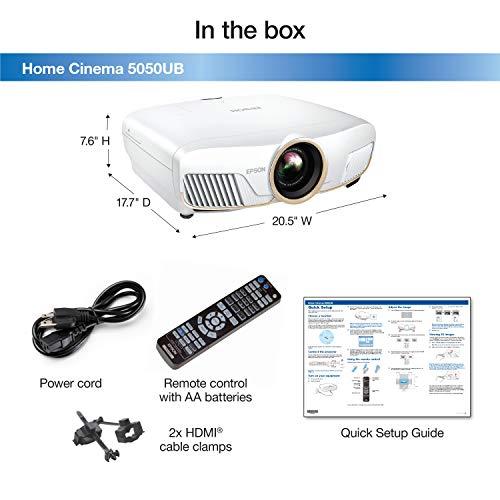
| 7.3" x 9.2" x 10.2", 16.5 lbs (compact) | 20.5" x 17.7" x 7.6", 24.7 lbs (larger, more substantial) |
| Audio - Built-in sound capabilities | |
| 12W x 2 stereo speakers | No built-in speakers (external audio required) |
| Connectivity - Input options and standards | |
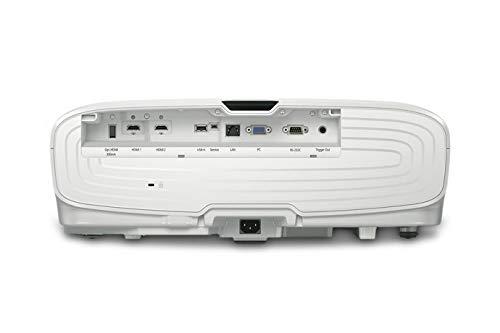
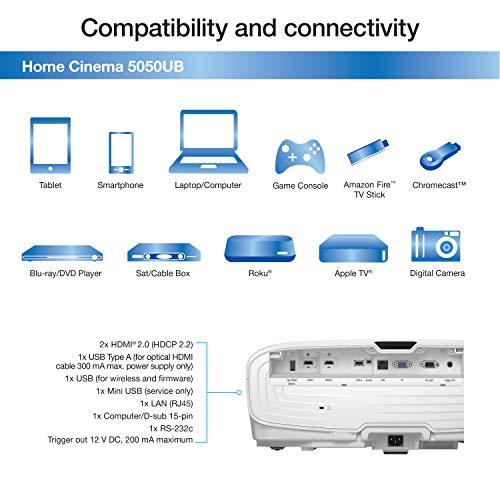
| Dual HDMI 2.1, USB 3.0/2.0, wireless, Ethernet | Dual HDMI 2.0 with HDCP 2.2, USB, VGA, RS-232 |
| Best Use Case - Ideal buyer profile | |
| Modern convenience seekers, gamers, budget-conscious buyers | Home theater purists, larger screens, professional installations |
The Epson Home Cinema 5050UB is better for dedicated home theaters due to its superior 8,000:1 native contrast ratio and exceptional black levels. The Valerion StreamMaster Plus 2 offers good performance with modern convenience features, but the Epson's UltraBlack technology delivers more cinematic image quality for serious movie watching.
The Epson Home Cinema 5050UB produces 2,600 lumens compared to the Valerion StreamMaster Plus 2's 2,000 lumens. This 600-lumen advantage allows the Epson to support larger screen sizes (150+ inches) and perform better in rooms with ambient light.
The Valerion StreamMaster Plus 2 is significantly better for gaming with just 4ms input lag at 1080p/240Hz and dedicated gaming modes for different genres. The Epson Home Cinema 5050UB has 22.5ms input lag and lacks gaming-specific features, making it suitable only for casual gaming.
Only the Valerion StreamMaster Plus 2 includes built-in streaming with Google TV OS, Netflix, Disney+, and voice control. The Epson Home Cinema 5050UB has no smart features and requires an external streaming device like Apple TV or Roku.
The Epson Home Cinema 5050UB provides exceptional installation flexibility with 2.1x optical zoom and massive lens shift capabilities (±96% vertical, ±47% horizontal). The Valerion StreamMaster Plus 2 has a fixed throw ratio with no optical adjustments, limiting placement options.
The Valerion StreamMaster Plus 2 uses a maintenance-free RGB laser lasting 25,000 hours with no bulb replacements needed. The Epson Home Cinema 5050UB requires lamp replacements every 3,500-5,000 hours, adding ongoing maintenance costs.
The Epson Home Cinema 5050UB offers superior color accuracy with professional calibration tools and cinema-accurate DCI-P3 color coverage. While the Valerion StreamMaster Plus 2 covers a wider 110% Rec.2020 color gamut, the Epson provides more natural, filmmakers-intended colors.
Neither projector uses native 4K chips. The Epson Home Cinema 5050UB uses 4-way pixel-shifting with larger 0.74" LCD panels, while the Valerion StreamMaster Plus 2 uses 2-way pixel-shifting with a 0.47" DLP chip. Both deliver convincing 4K images, but the Epson typically appears sharper.
The Epson Home Cinema 5050UB handles bright rooms better due to its higher 2,600-lumen output compared to the Valerion's 2,000 lumens. However, both projectors perform best in darkened environments to maximize contrast and color performance.
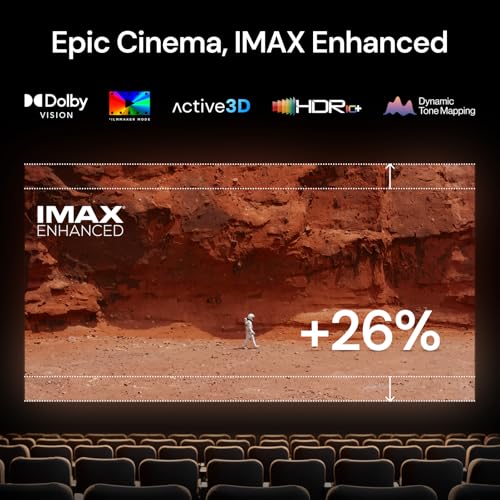
The Valerion StreamMaster Plus 2 supports HDR10, HDR10+, Dolby Vision, and IMAX Enhanced. The Epson Home Cinema 5050UB supports HDR10 and HLG with advanced 16-step HDR adjustment controls but lacks Dolby Vision support.
The Valerion StreamMaster Plus 2 offers better value for budget-conscious buyers with lower upfront costs, no maintenance expenses, and built-in smart features. The Epson Home Cinema 5050UB provides better long-term value for image quality enthusiasts despite higher initial costs and lamp replacement requirements.
The Epson Home Cinema 5050UB can effectively drive larger screens up to 200+ inches in dark rooms due to its higher brightness and superior contrast. The Valerion StreamMaster Plus 2 works best with screens up to 120-150 inches, making it ideal for typical living room setups.
We've done our best to create useful and informative comparisons to help you decide what product to buy. Our research uses advanced automated methods to create this comparison and perfection is not possible - please contact us for corrections or questions. These are the sites we've researched in the creation of this article: bestbuy.com - valerion.com - youtube.com - valerion.com - youtube.com - projectorcentral.com - youtube.com - valerion.com - avsforum.com - neowin.net - hometheatershack.com - avsforum.com - bestbuy.com - projector-database.com - rtings.com - projectorscreen.com - hometechnologyreview.com - thesmarthomehookup.com - youtube.com - rtings.com - techgearlab.com - projectorcentral.com - projectorreviews.com - projectorcentral.com - avsforum.com - rtings.com - projectorreviews.com - projectorreviews.com - avsforum.com - avsforum.com - audiogeneral.com - hifiheaven.net - manuals.plus - crutchfield.com - projectorcentral.com - epson.com - mediaserver.goepson.com - bestbuy.com - ngxptech.com - projectorcentral.com - projectorreviews.com

Privacy Policy
Terms and Conditions - Affiliate Policy
Home Security
© Copyright 2008-2026.
11816 Inwood Rd #1211, Dallas, TX 75244