

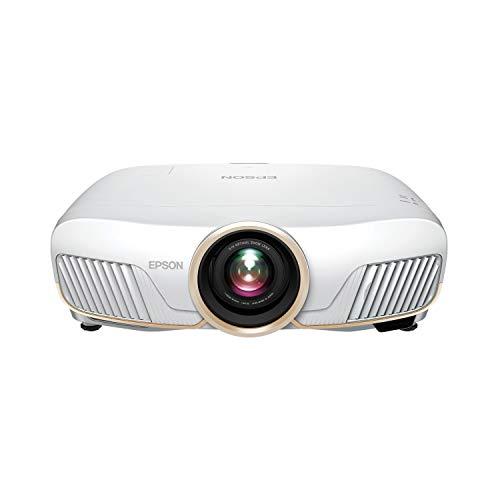
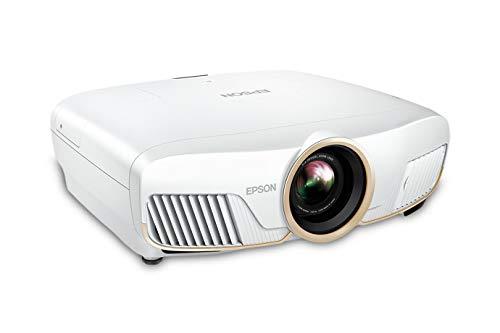
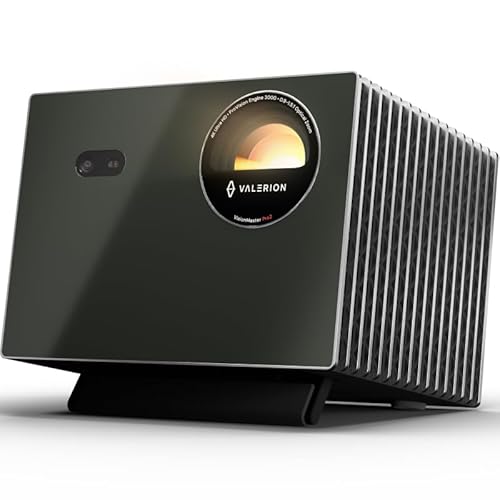
The home theater projector market has matured into two distinct philosophies. On one side, you have traditional lamp-based projectors that prioritize pure image quality above all else. On the other, newer laser projectors emphasize convenience, smart features, and versatility. The Epson Home Cinema 5050UB and Valerion VisionMaster Pro 2 perfectly represent this divide—and understanding their differences will help you choose the right approach for your entertainment space.
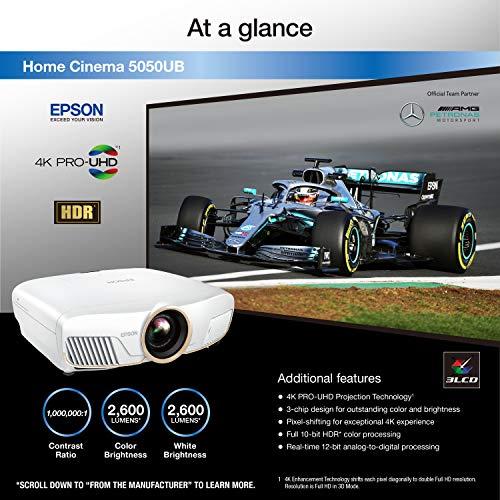
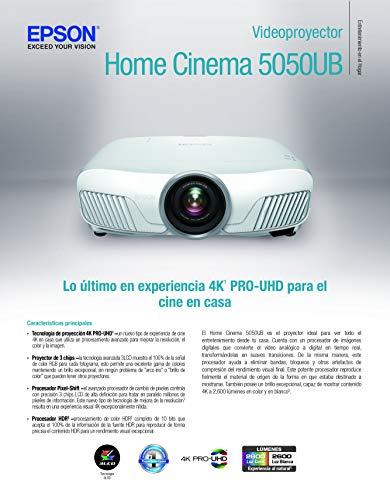
Home theater projectors use two main display technologies that fundamentally change how you experience movies and games. The Epson Home Cinema 5050UB employs 3LCD technology, which uses three separate LCD panels—one each for red, green, and blue light. Think of it like having three specialized workers, each handling one color perfectly. This means 100% of the color information gets displayed simultaneously, creating smooth, natural-looking images without any color separation artifacts.
The Valerion VisionMaster Pro 2 uses DLP (Digital Light Processing) technology with a single chip containing millions of tiny mirrors that tilt thousands of times per second to create the image. A spinning color wheel adds the colors. While this creates a more compact design, some people can see brief flashes of separated colors (called the "rainbow effect") when moving their eyes quickly across the screen.
Both projectors achieve 4K resolution through pixel-shifting rather than having native 4K chips. This technology rapidly shifts the image slightly to display more detail than the base resolution would normally allow. While not quite as sharp as true native 4K, the difference is minimal in real-world viewing, and both approaches deliver genuinely impressive detail that surpasses traditional 1080p by a significant margin.
The light source represents perhaps the biggest practical difference. The Epson uses a traditional high-pressure lamp that will eventually need replacement after 3,500 to 5,000 hours of viewing. The Valerion uses a triple-laser system rated for over 25,000 hours—essentially the lifetime of the projector for most users.
In dark home theater environments, contrast ratio—the difference between the darkest blacks and brightest whites—makes or breaks the viewing experience. Deep blacks create the sense of depth and realism that separates great projectors from merely good ones.
The Epson Home Cinema 5050UB dominates this category with its UltraBlack technology, a proprietary filter system that controls light polarization within the projector. This suppresses stray light that would otherwise elevate black levels, achieving what many consider the best blacks available in this price range. The dynamic contrast ratio reaches 1,000,000:1, though real-world performance settles around 8,000:1 native contrast—still exceptional for the category.
Our research into user and expert reviews consistently shows the Epson delivering blacks that appear truly dark, even in challenging scenes with bright and dark elements. This creates better shadow detail and a more three-dimensional image quality that's immediately noticeable when watching movies with dark scenes.
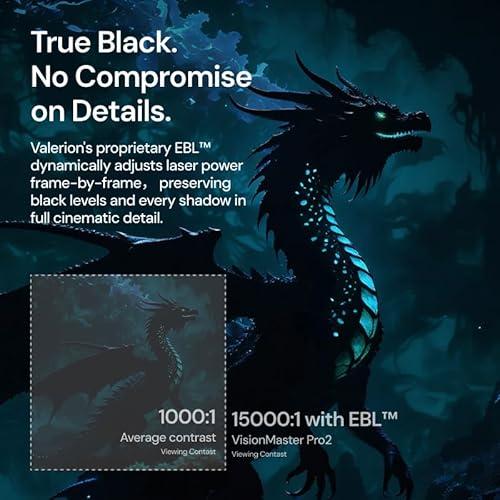
The Valerion VisionMaster Pro 2 offers respectable contrast at 4,000:1 native, extending to 15,000:1 with its Enhanced Black Level mode. While good for a laser projector, this represents the typical trade-off laser technology makes—consistent brightness and convenience in exchange for pure contrast performance. In practical terms, blacks will appear more grayish in very dark rooms compared to the Epson, though still acceptable for most viewing conditions.
Color performance reveals where these projectors take different philosophical approaches. The Epson Home Cinema 5050UB covers the complete DCI-P3 color space used in commercial cinemas, with exceptional out-of-box accuracy that can be further refined through extensive calibration controls. The 3LCD technology ensures color and white brightness match perfectly—a specification many competing technologies can't achieve.
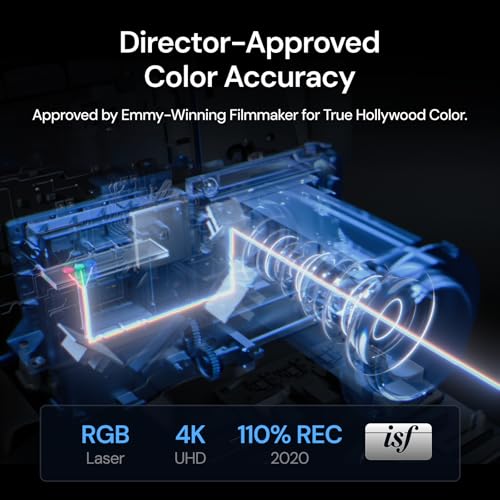
The Valerion VisionMaster Pro 2 takes a more aggressive approach, covering 110% of the Rec.2020 color space—significantly wider than DCI-P3. This creates more saturated, punchy colors that can look spectacular with the right content, though some traditionalists prefer the more accurate approach of the Epson.
From our research, the Epson delivers more natural, film-like colors that directors intended, while the Valerion creates more vibrant, eye-catching images that can make HDR content particularly impressive. Neither approach is wrong—it depends on whether you prioritize accuracy or impact.
High Dynamic Range (HDR) content has become standard for premium streaming and disc-based content, but not all HDR formats are created equal. The Epson Home Cinema 5050UB supports HDR10 and HLG—the basic HDR standards—with 16-step real-time HDR adjustment that lets you fine-tune the presentation.
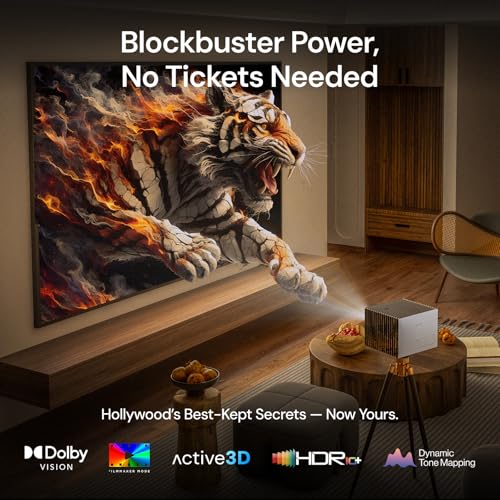
The Valerion VisionMaster Pro 2 supports the full range of HDR formats including Dolby Vision, HDR10+, and IMAX Enhanced. Dolby Vision, in particular, has become increasingly common on streaming services and represents a significant advantage for modern content. The dynamic tone mapping adjusts the HDR presentation automatically based on your room's lighting conditions.
This represents a meaningful difference for anyone planning to watch significant amounts of streaming content. While both projectors handle standard HDR10 well, the Valerion's broader format support provides better compatibility with premium content from Netflix, Disney+, and Apple TV+.
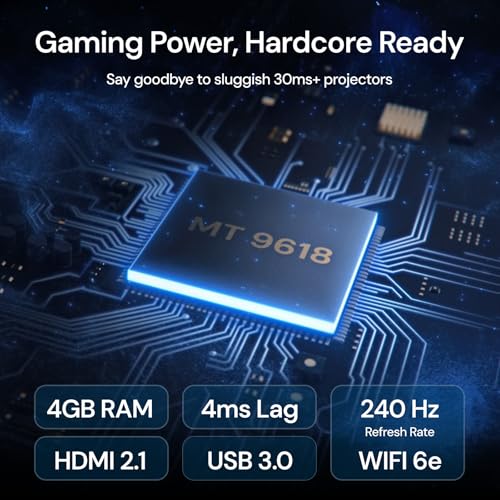
Gaming on projectors has evolved dramatically, and the differences between these models are stark. The Valerion VisionMaster Pro 2 achieves remarkable 4ms input lag at 1080p/240Hz—competitive with dedicated gaming monitors. Even at 4K/60Hz, the 15ms lag remains excellent for most gaming scenarios.
The Epson Home Cinema 5050UB manages 22.5ms at 4K/60Hz, which works acceptably for single-player adventures and slower-paced games but becomes noticeable in competitive multiplayer games where every millisecond counts. The frame rate support also differs significantly—the Valerion handles 240Hz at 1080p, while the Epson tops out at 60Hz across all resolutions.
For serious gamers, especially those with PlayStation 5 or Xbox Series X consoles, the Valerion provides a genuinely competitive experience on a large screen. The Epson works fine for casual gaming but won't satisfy anyone used to low-latency gaming monitors.
Installing a ceiling-mounted projector often involves compromises, and this is where the Epson Home Cinema 5050UB shines. Its motorized lens system provides extensive adjustment options: 2.1x zoom, motorized focus, and crucially, massive lens shift capabilities (±96.3% vertical, ±47.1% horizontal). This means you can mount the projector off-center from the screen and still achieve a perfectly rectangular image without digital correction that can reduce image quality.
The lens memory feature stores different settings for various aspect ratios, automatically adjusting when you switch between widescreen movies and standard TV content. This level of installation flexibility makes the Epson suitable for challenging room layouts where the projector can't be positioned directly in line with the screen.
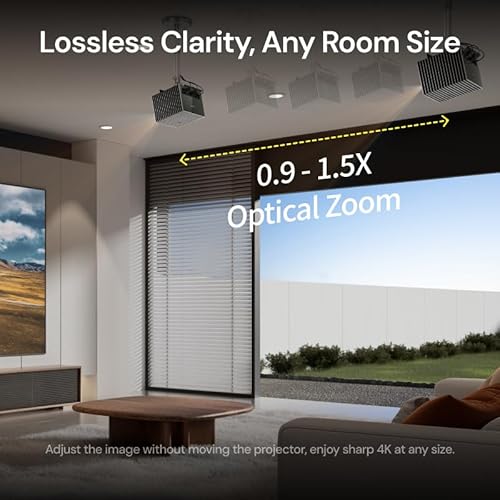
The Valerion VisionMaster Pro 2 takes a simpler approach with manual zoom and no lens shift, relying instead on digital keystone correction for off-center mounting. While this limits installation flexibility, the shorter throw ratio (0.9:1 to 1.5:1) means it can work closer to the screen, potentially simplifying placement in smaller rooms.
The Epson's throw ratio of 1.35:1 to 2.84:1 accommodates a wider range of room sizes but requires more distance from the screen. For dedicated home theater rooms with proper mounting capabilities, the Epson offers superior flexibility. For simpler installations or portable use, the Valerion's approach may actually be preferable.
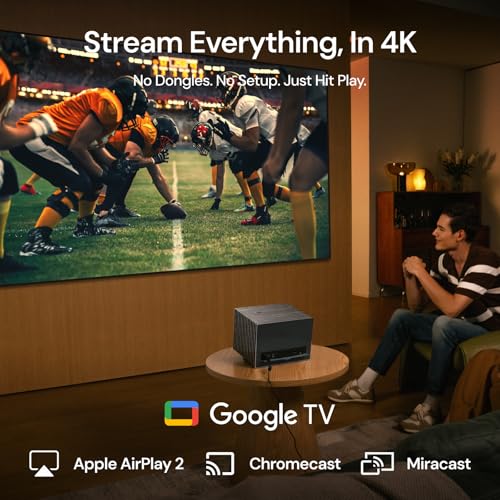
Modern entertainment consumption has shifted heavily toward streaming, and these projectors handle this transition very differently. The Valerion VisionMaster Pro 2 includes complete Google TV integration with 4GB of RAM and 128GB of storage. This provides direct access to Netflix, YouTube, Prime Video, Disney+, and dozens of other apps without requiring any external devices.
The built-in Chromecast, AirPlay 2, and Miracast support means you can effortlessly cast content from phones, tablets, or computers. The Wi-Fi 6e connectivity ensures stable streaming even for high-bitrate 4K content, while Bluetooth 5.2 lets you connect wireless headphones for late-night viewing.
The Epson Home Cinema 5050UB includes no smart features whatsoever. You'll need external streaming devices, gaming consoles, or Blu-ray players to provide content. While this might seem like a disadvantage, it actually offers some benefits—external streaming devices often receive updates longer and offer better performance than built-in systems. You're also not locked into a particular smart TV platform that might become obsolete.
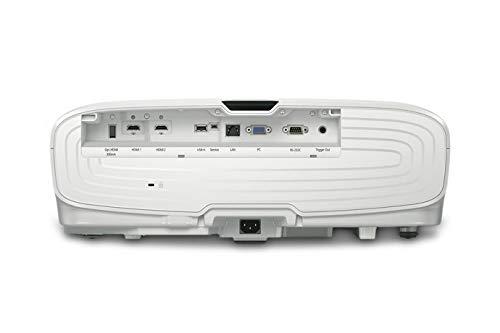
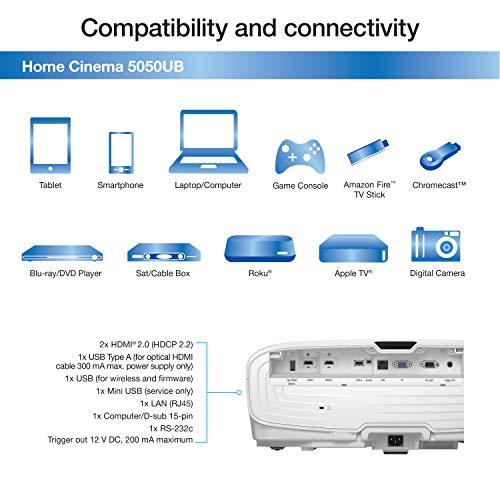
Connectivity also differs significantly. The Valerion provides three HDMI inputs including two HDMI 2.1 ports that support the full bandwidth needed for 4K/120Hz gaming from modern consoles. The Epson offers two HDMI 2.0 ports, with only one supporting the HDCP 2.2 copy protection required for premium 4K content.
Neither projector will replace a proper sound system, but their approaches to audio differ considerably. The Valerion VisionMaster Pro 2 includes dual 12-watt speakers with DTS:X virtual surround processing. While not impressive compared to dedicated audio equipment, they're adequate for casual viewing and eliminate the need for external speakers in less critical applications.
The Epson Home Cinema 5050UB includes no speakers at all, requiring external audio solutions. For serious home theater setups, this isn't a disadvantage since most enthusiasts prefer separate audio systems anyway. However, it does add complexity and cost for simpler installations.
At the time of writing, both projectors occupied similar price ranges, though the specific pricing will fluctuate over time. However, the total cost of ownership differs significantly due to lamp replacement requirements.
The Epson Home Cinema 5050UB, released in 2019, represents mature lamp-based technology that has been refined over years. Lamp replacements typically cost several hundred dollars every 3,500-5,000 hours of use. For heavy users, this could mean replacement costs every 2-3 years.
The Valerion VisionMaster Pro 2, released in 2024, uses newer laser technology with essentially no maintenance requirements over its lifespan. The initial price includes decades of operation without replacement costs, making it potentially more economical for long-term ownership despite similar upfront costs.
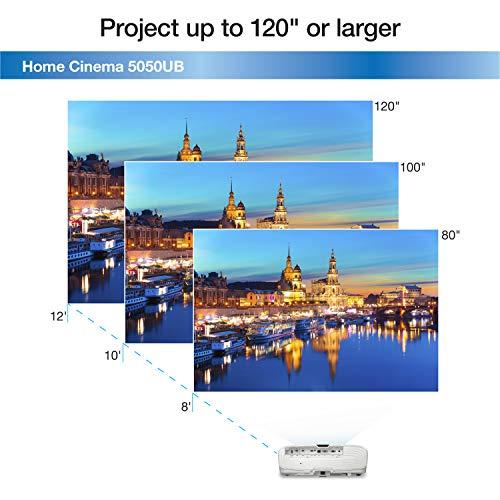
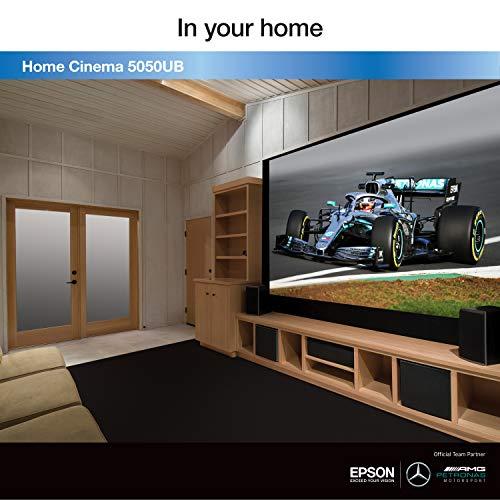
The ideal room and usage pattern significantly influence which projector works better. The Epson Home Cinema 5050UB excels in dedicated, darkened home theater rooms where its superior contrast can be fully appreciated. The 2,600 lumens provide adequate brightness for screens up to 120-140 inches in controlled lighting, and the exceptional black levels create the cinematic experience that justifies a dedicated theater room.
However, this same projector struggles in rooms with ambient light, where the superior contrast becomes less noticeable and the lower brightness compared to the Valerion becomes limiting.
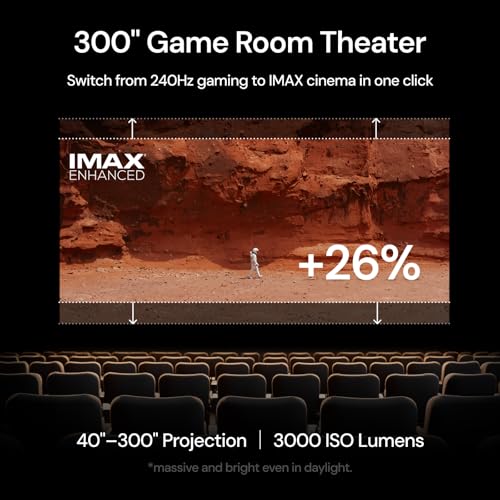
The Valerion VisionMaster Pro 2, with its 3,000 lumens and laser brightness consistency, handles ambient light better and works well in multi-purpose family rooms or spaces where complete darkness isn't practical. The wider color gamut can actually look more impressive in brighter environments where contrast differences are less apparent.
The projector market has evolved significantly since the Epson Home Cinema 5050UB launched in 2019. At that time, Dolby Vision support was rare, gaming at high refresh rates was uncommon, and smart TV integration was just emerging as a standard feature.
The Valerion VisionMaster Pro 2 represents 2024 thinking, with comprehensive HDR format support, gaming-optimized input lag, and modern connectivity that accommodates current gaming consoles and streaming habits. The laser light source also represents the direction the industry is moving, with most manufacturers transitioning away from lamp-based designs.
However, the fundamental image quality advantages of 3LCD technology haven't diminished. The Epson still delivers superior contrast and color accuracy that newer technologies haven't fully matched, particularly at this price point.
After extensive research into professional reviews and user experiences, clear patterns emerge about who should choose each projector.
Choose the Epson Home Cinema 5050UB if you're building a dedicated home theater room, prioritize image quality above convenience, and already have external streaming and audio equipment. The superior contrast and color accuracy create genuinely better picture quality for film enthusiasts, and the installation flexibility accommodates challenging room layouts. If gaming isn't a priority and you don't mind eventual lamp replacements, the Epson delivers the most cinematic experience.
Choose the Valerion VisionMaster Pro 2 if you want modern convenience, game regularly, or use the projector in a room with some ambient light. The built-in smart features eliminate external devices, the gaming performance rivals dedicated monitors, and the laser light source provides decades of maintenance-free operation. The comprehensive HDR support also makes it more compatible with current streaming content.
The decision ultimately comes down to whether you prioritize pure image quality in a controlled environment (Epson) or versatile performance with modern conveniences (Valerion). Both approaches have merit, but understanding these fundamental differences ensures you'll choose the projector that best matches your specific needs and room requirements.
| Epson Home Cinema 5050UB | Valerion VisionMaster Pro 2 |
|---|---|
| Display Technology - Affects color accuracy and rainbow effects | |
| 3-chip 3LCD (eliminates rainbow effect, superior color accuracy) | Single-chip DLP with XPR (compact design, possible rainbow effect for sensitive viewers) |
| Light Source - Impacts maintenance costs and brightness consistency | |
| 250W UHE lamp (3,500-5,000 hour lifespan, requires replacement) | RGB triple laser (25,000+ hours, maintenance-free operation) |
| Brightness - Critical for ambient light performance | |
| 2,600 lumens (excellent for dark rooms, adequate for moderate ambient light) | 3,000 ISO lumens (better performance in rooms with ambient light) |
| Contrast Ratio - Most important for dark room image quality | |
| 1,000,000:1 dynamic with UltraBlack technology (exceptional blacks) | 4,000:1 native, 15,000:1 dynamic (good but not exceptional blacks) |
| HDR Format Support - Compatibility with premium streaming content | |
| HDR10, HLG only (basic HDR support) | Dolby Vision, HDR10+, HDR10, HLG, IMAX Enhanced (comprehensive modern support) |
| Gaming Input Lag - Critical for responsive gaming | |
| 22.5ms at 4K/60Hz (acceptable for casual gaming) | 4ms at 1080p/240Hz, 15ms at 4K/60Hz (excellent for competitive gaming) |
| Installation Flexibility - Important for challenging room layouts | |
| 2.1x motorized zoom, ±96% vertical/±47% horizontal lens shift | 1.67x manual zoom, no lens shift (relies on keystone correction) |
| Throw Ratio - Determines projector placement distance | |
| 1.35:1 - 2.84:1 (flexible for various room sizes) | 0.9:1 - 1.5:1 (shorter throw, good for smaller spaces) |
| Smart Features - Convenience and streaming capability | |
| None (requires external streaming devices) | Google TV OS built-in with 4GB RAM, Wi-Fi 6e, casting support |
| HDMI Connectivity - Modern device compatibility | |
| 2x HDMI 2.0 (only one supports HDCP 2.2) | 2x HDMI 2.1, 1x HDMI 2.0 with eARC (future-proof gaming support) |
| Audio System - Built-in sound capability | |
| No speakers (requires external audio) | Dual 12W speakers with DTS:X (adequate for casual use) |
| Physical Size - Impact on installation and portability | |
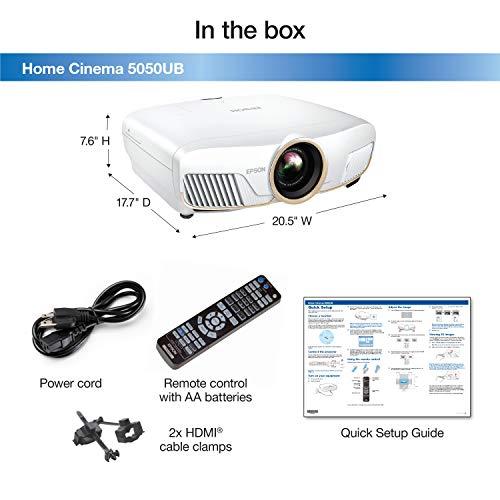
| 20.5" x 17.7" x 7.6", 24.7 lbs (larger, permanent installation focus) | 10.2" x 7.3" x 9.2", 15.4 lbs (compact, more portable) |
| Color Gamut Coverage - Vibrancy and accuracy of colors | |
| Full DCI-P3 (cinema-accurate colors) | 110% Rec.2020 (wider, more saturated colors) |
| 3D Support - Compatibility with 3D content | |
| Full HD 3D with RF glasses | Active 3D with DLP-Link glasses |
The Valerion VisionMaster Pro 2 is significantly better for gaming with 4ms input lag at 1080p/240Hz and 15ms at 4K/60Hz, plus HDMI 2.1 support for next-gen consoles. The Epson Home Cinema 5050UB has higher input lag at 22.5ms for 4K/60Hz, making it acceptable for casual gaming but not ideal for competitive play.
The Epson Home Cinema 5050UB uses 3LCD technology with three separate panels for red, green, and blue, eliminating rainbow effects and providing excellent color accuracy. The Valerion VisionMaster Pro 2 uses single-chip DLP technology, which is more compact but may show rainbow effects to sensitive viewers while offering vibrant colors.
The Epson Home Cinema 5050UB delivers superior black levels with its UltraBlack technology and 1,000,000:1 dynamic contrast ratio, making it ideal for dark room viewing. The Valerion VisionMaster Pro 2 offers good contrast at 4,000:1 native but cannot match the deep blacks of the Epson.
The Epson Home Cinema 5050UB uses a traditional lamp that needs replacement every 3,500-5,000 hours of use. The Valerion VisionMaster Pro 2 features a laser light source rated for 25,000+ hours with no maintenance required, eliminating ongoing replacement costs.
The Valerion VisionMaster Pro 2 produces 3,000 ISO lumens compared to the Epson Home Cinema 5050UB's 2,600 lumens, making the Valerion better suited for rooms with ambient light or larger screen sizes.
The Valerion VisionMaster Pro 2 supports comprehensive HDR formats including Dolby Vision, HDR10+, HDR10, HLG, and IMAX Enhanced. The Epson Home Cinema 5050UB only supports basic HDR10 and HLG formats, limiting compatibility with some premium streaming content.
The Epson Home Cinema 5050UB provides superior installation flexibility with 2.1x motorized zoom, motorized focus, and extensive lens shift (±96% vertical, ±47% horizontal). The Valerion VisionMaster Pro 2 has manual zoom with no lens shift, requiring more precise placement or keystone correction.
The Valerion VisionMaster Pro 2 includes Google TV OS with built-in Netflix, YouTube, Prime Video, and other streaming apps, plus Wi-Fi and casting capabilities. The Epson Home Cinema 5050UB has no smart features and requires external streaming devices.
The Epson Home Cinema 5050UB excels in dedicated dark home theater rooms due to its superior contrast ratio and deep black levels, creating a more cinematic experience. The Valerion VisionMaster Pro 2 works well in multi-purpose rooms with its higher brightness and smart features.
The Epson Home Cinema 5050UB offers cinema-accurate colors with full DCI-P3 coverage and excellent calibration options. The Valerion VisionMaster Pro 2 provides wider color coverage at 110% Rec.2020, creating more vibrant and saturated colors that may appeal to those preferring punchy visuals over strict accuracy.
The Valerion VisionMaster Pro 2 offers superior connectivity with three HDMI inputs (two HDMI 2.1 ports), Wi-Fi 6e, Bluetooth 5.2, and eARC support. The Epson Home Cinema 5050UB provides two HDMI 2.0 ports with only one supporting HDCP 2.2 for 4K content.
The Epson Home Cinema 5050UB is larger at 20.5" x 17.7" x 7.6" and weighs 24.7 lbs, designed for permanent installation. The Valerion VisionMaster Pro 2 is more compact at 10.2" x 7.3" x 9.2" and weighs 15.4 lbs, making it easier to install and potentially portable for different viewing locations.
We've done our best to create useful and informative comparisons to help you decide what product to buy. Our research uses advanced automated methods to create this comparison and perfection is not possible - please contact us for corrections or questions. These are the sites we've researched in the creation of this article: rtings.com - projectorscreen.com - hometechnologyreview.com - thesmarthomehookup.com - youtube.com - rtings.com - techgearlab.com - projectorcentral.com - projectorreviews.com - projectorcentral.com - avsforum.com - rtings.com - projectorreviews.com - projectorreviews.com - avsforum.com - avsforum.com - audiogeneral.com - hifiheaven.net - manuals.plus - crutchfield.com - projectorcentral.com - epson.com - mediaserver.goepson.com - bestbuy.com - ngxptech.com - projectorcentral.com - projectorreviews.com - projectorreviews.com - valerion.com - projectorcentral.com - soundandvision.com - valerion.com - projektoren-datenbank.com - rtings.com - youtube.com - techradar.com - valueelectronics.com - projectorcentral.com - hometechnologyreview.com - youtube.com - loprototypetech.com - hometheatershack.com - hometechnologyreview.com - bestbuy.com - en.homecinesolutions.fr

Privacy Policy
Terms and Conditions - Affiliate Policy
Home Security
© Copyright 2008-2026.
11816 Inwood Rd #1211, Dallas, TX 75244