

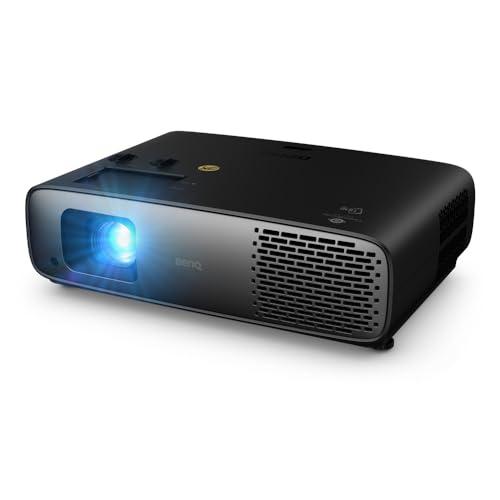
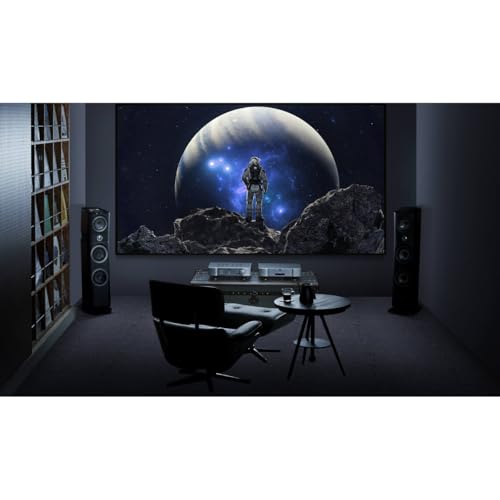

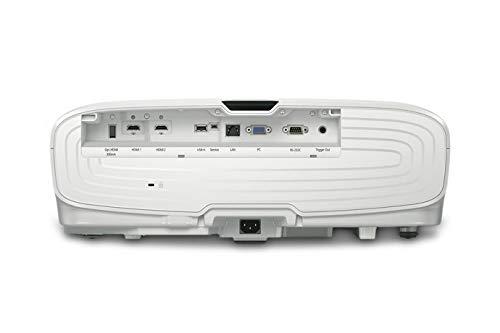
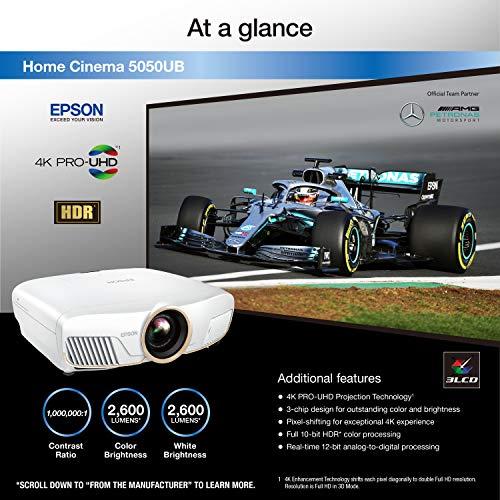
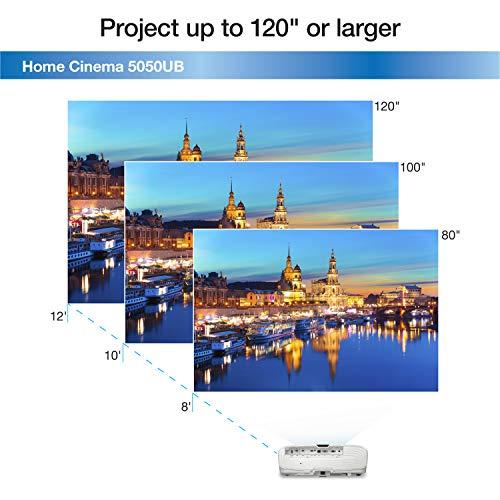
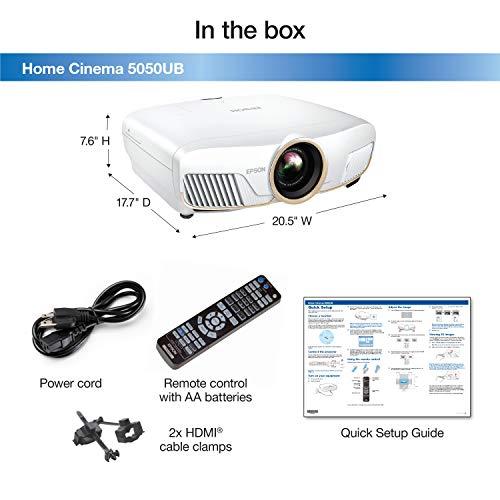
Setting up a home theater has never been more exciting—or more confusing. With 4K content everywhere and projector technology advancing rapidly, choosing the right projector feels overwhelming. Two standout models that consistently appear on enthusiast shortlists are the BenQ W4100i and the Epson Home Cinema 5050UB. Both deliver impressive 4K images at similar price points, but they take dramatically different approaches to get there.
After diving deep into professional reviews, user feedback, and technical specifications, these projectors represent two distinct philosophies in home theater design. The BenQ W4100i, released in 2025, embodies the modern approach with LED lighting, gaming optimization, and AI-enhanced processing. The Epson 5050UB, which debuted in 2019, follows the traditional enthusiast path with lamp-based illumination and extensive manual controls for image perfection.
Before comparing specific models, it's worth understanding what makes a great home theater projector. Unlike TVs that compete primarily on panel technology and smart features, projectors must balance multiple complex factors to create that magical big-screen experience.
The most critical consideration is brightness, measured in lumens—essentially how much light the projector can output. More lumens mean you can use larger screens or tolerate more ambient light in your room. However, raw brightness means nothing without contrast ratio, which determines how well the projector can display both deep blacks and bright whites simultaneously. Think of contrast as the difference between a photograph and a photocopy—higher contrast creates that three-dimensional, lifelike quality that makes images pop.
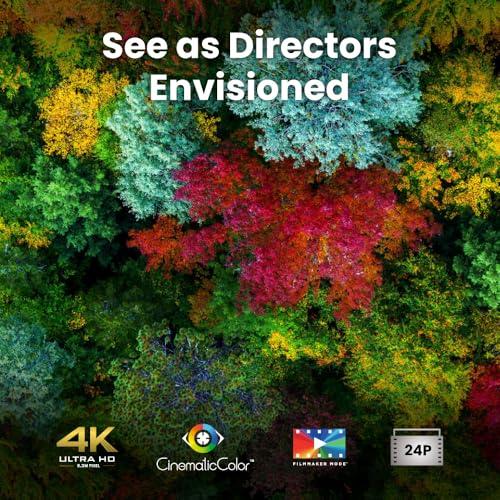
Color accuracy has become increasingly important as streaming services and Ultra HD Blu-rays showcase wider color palettes. Professional color spaces like DCI-P3 (used in movie theaters) contain about 50% more colors than standard HDTV, so projectors need sophisticated color processing to display these expanded palettes correctly.
The light source technology fundamentally affects everything else. Traditional lamp-based projectors use high-pressure mercury or xenon bulbs that gradually dim over 3,000-5,000 hours and require expensive replacement. Newer LED and laser light sources last 20,000+ hours while maintaining consistent brightness and color throughout their lifespan.
Finally, installation flexibility matters enormously in real homes. Professional projectors offer motorized lens adjustments—zoom, focus, and shift—that let you position the projector precisely without compromising image quality. This flexibility often determines whether a projector works in your specific room layout.
The BenQ W4100i represents everything current about projector design. Released in 2025, it incorporates five years of technological advancement since the Epson model launched, and that evolution shows in every aspect of its design.
The most significant upgrade is the 4-LED light source system. Instead of a single white lamp, the W4100i uses separate red, green, and two blue LEDs (RGBB configuration) to create light. This approach delivers several advantages: the LEDs are rated for 30,000 hours of operation—roughly 15 years of typical movie watching—with no gradual dimming or color shift over time. There's no expensive lamp to replace every few years, making the total cost of ownership significantly lower despite a similar initial purchase price.
The 4-LED system also enables 3,200 ANSI lumens of brightness while maintaining excellent color accuracy. Traditional projectors often sacrifice color quality for brightness, but the BenQ's separate color LEDs maintain full color saturation even at maximum output. This brightness advantage is crucial for larger screens (200+ inches) or rooms where you can't achieve complete darkness.
Modern projector buyers increasingly want gaming capability, and the W4100i delivers enthusiast-level performance. Three HDMI 2.1 ports support the latest gaming consoles and PCs, with one port capable of 4K resolution at 120Hz refresh rates. The projector includes ALLM (Auto Low Latency Mode), which automatically switches to game mode when it detects a gaming console, reducing input lag to just 6.5 milliseconds at 1080p—faster than many gaming monitors.
This gaming focus reflects broader market trends. When the Epson 5050UB launched in 2019, most projector buyers primarily watched movies. Today's buyers expect their projectors to handle Netflix, YouTube, and PlayStation equally well.
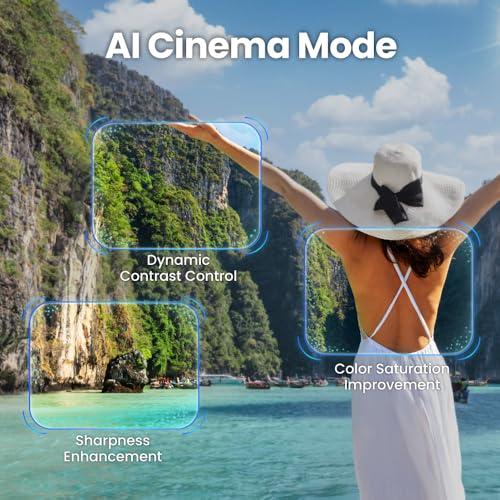
Perhaps the most intriguing feature is AI Cinema Mode, which analyzes image content in real-time to optimize sharpness, contrast, and color saturation. This proves particularly valuable for streaming content, which often suffers from compression artifacts that reduce image quality. The AI processing specifically targets these common streaming problems, dynamically adjusting the image to restore detail and vibrancy.
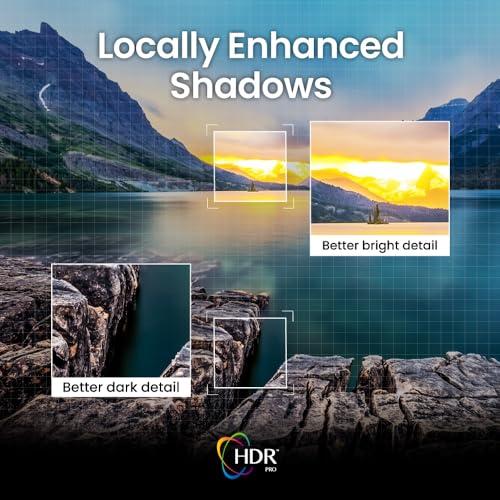
The W4100i also includes HDR-PRO technology with support for HDR10, HDR10+, and HLG formats. The dynamic tone mapping adjusts brightness and contrast frame-by-frame, ensuring both bright highlights and dark shadows remain visible throughout varying content. This automated approach prioritizes convenience over manual control, reflecting BenQ's philosophy of delivering great results without requiring extensive user knowledge.
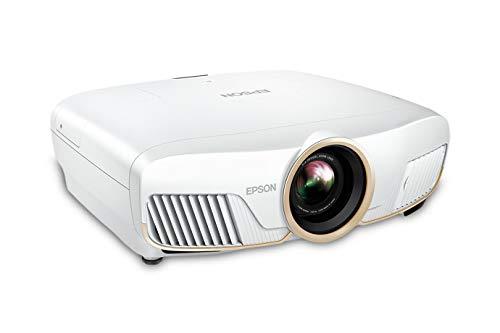
While the BenQ embraces modern convenience, the Epson 5050UB follows the traditional enthusiast approach of providing extensive manual controls for users who want to perfect their image quality. Despite launching in 2019, its core technologies remain highly competitive, and in some areas, superior to newer models.
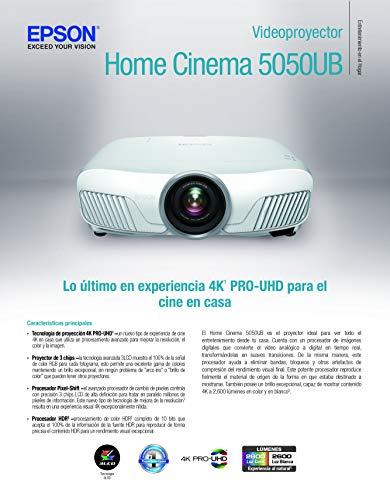
The 5050UB uses 3LCD technology, employing three separate LCD panels for red, green, and blue light. This approach eliminates the rainbow effect—brief color flashes that some viewers notice with single-chip DLP projectors. More importantly, 3LCD technology displays 100% of the RGB color signal for every frame, contributing to more natural, film-like color reproduction.
The real standout feature is UltraBlack technology, a proprietary filter system that dramatically improves black levels. In our research of professional reviews, the 5050UB achieved native contrast ratios exceeding 8,000:1—significantly better than most projectors in its price range. With the automatic iris engaged, dynamic contrast can exceed 37,000:1, creating incredibly deep blacks that make movie scenes more immersive and three-dimensional.
This contrast advantage becomes particularly apparent in dark theater rooms. While the BenQ performs excellently across various lighting conditions, the Epson truly shines when you can control ambient light completely.
The 5050UB features a 15-element all-glass lens that delivers exceptional sharpness across the entire image, comparable to lenses found in projectors costing several thousand dollars more. This optical quality ensures that whether you're projecting a 100-inch or 200-inch image, every corner remains perfectly focused.
Installation flexibility is where the Epson truly excels. Motorized lens shift allows vertical adjustment of ±96% and horizontal adjustment of ±47%—among the most generous ranges available. Combined with 2.1x optical zoom and motorized focus, you can position the projector almost anywhere in your room while maintaining perfect image geometry. The lens memory function even saves different configurations, useful if you switch between different aspect ratios or screen sizes.
The 5050UB includes comprehensive calibration tools typically found only in commercial cinema projectors. Full 11-point white balance calibration allows precise color temperature adjustment across the entire brightness range. The manual iris with 20 discrete positions gives you exact control over contrast and brightness, while multiple lamp power modes let you balance brightness needs against bulb longevity.
For HDR content, the projector offers 16-step HDR level adjustment, allowing you to customize the HDR presentation based on your specific room conditions and personal preferences. This level of control appeals to enthusiasts who enjoy tweaking their setup to achieve reference-quality results.
Both projectors deliver impressive 4K images, but through different methods. The BenQ W4100i uses a larger 0.65-inch DLP chip with XPR pixel-shifting technology to achieve 4K resolution from a native 2,716 × 1,528 pixel array. This approach requires less aggressive pixel manipulation than smaller chips, resulting in cleaner motion handling and fewer shifting artifacts.
The Epson 5050UB employs 4K PRO-UHD technology, using pixel-shifting with its three 0.74-inch LCD panels to create 4K detail. While neither projector has native 4K chips (which would cost significantly more), both deliver convincingly sharp 4K images that are difficult to distinguish from true native 4K in normal viewing conditions.
Color performance showcases each projector's philosophy clearly. The BenQ delivers factory-calibrated color accuracy with Delta E values below 2—essentially perfect color reproduction straight from the box. The Epson provides 97% DCI-P3 color coverage and exceptional calibration potential, but requires manual adjustment to achieve optimal results.
The brightness difference significantly affects practical usability. The W4100i's 3,200 lumens comfortably illuminates screens up to 300 inches diagonal, even in rooms with moderate ambient light. This versatility makes it suitable for living rooms, family rooms, or dedicated theaters with varying light control.
The 5050UB offers variable brightness depending on lamp mode and iris settings, ranging from approximately 1,400 to 2,600 lumens in practical use. While adequate for most home theater applications, it performs best in darkened environments where its superior contrast can be fully appreciated.
Gaming capability shows the generational difference most clearly. The BenQ W4100i was designed with gaming in mind, offering input lag as low as 6.5 milliseconds and supporting high refresh rates that modern consoles and PCs can utilize. The Epson 5050UB, designed primarily for movie watching, manages respectable 22.5-millisecond input lag but lacks the advanced gaming features that enthusiasts expect today.
If gaming represents a significant portion of your projector usage, the BenQ provides a substantially better experience for both competitive and casual gaming.
At the time of writing, both projectors command similar prices around $3,000, making the value comparison particularly interesting. However, the total cost of ownership differs significantly due to their light source technologies.
The BenQ W4100i essentially eliminates ongoing maintenance costs. The LED light source is rated for 30,000 hours—roughly 15 years of typical usage—with no gradual performance degradation. You'll spend the initial purchase price and enjoy consistent performance throughout the projector's lifetime.
The Epson 5050UB requires lamp replacements every 3,500 to 5,000 hours, depending on usage mode. Replacement lamps cost approximately $200-300, and most users will need 2-3 replacements over the projector's useful life. Additionally, lamp-based projectors gradually dim over time, with noticeable brightness reduction after 2,000+ hours of operation.
However, the Epson often provides superior image quality in controlled environments, potentially justifying the additional maintenance costs for serious enthusiasts. The decision ultimately depends on whether you prioritize convenience and long-term costs or maximum image quality potential.
After extensive research into professional reviews and user experiences, both projectors excel in their intended applications, but serve distinctly different user needs.
You want a versatile projector that performs excellently across various room conditions and content types. The W4100i makes sense for multipurpose living spaces, gaming enthusiasts, or anyone who prefers a straightforward setup experience. Its brightness advantage and maintenance-free operation provide excellent long-term value, particularly for users who watch diverse content types including streaming services, sports, and games.
The BenQ particularly appeals to households where the projector serves multiple family members with different preferences. Its factory calibration and AI enhancement ensure good results regardless of the content source or viewer expertise level.
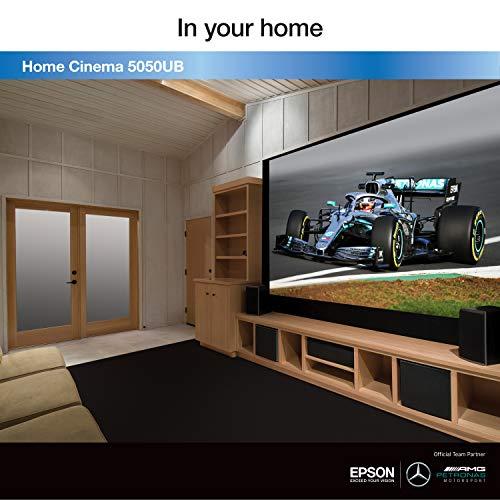
You have a dedicated home theater room with excellent light control and prioritize maximum image quality above convenience. The 5050UB rewards users who enjoy calibrating and tweaking their setup to achieve reference-quality results. Its exceptional contrast performance and professional-grade controls make it ideal for serious movie enthusiasts who want the closest possible approximation to a commercial cinema experience.
The Epson makes most sense for users who primarily watch movies, appreciate having extensive manual controls, and don't mind the ongoing maintenance requirements of lamp-based technology.
The choice ultimately comes down to your room environment and usage priorities. In rooms with any ambient light, the BenQ W4100i's brightness advantage becomes decisive. In perfectly darkened theaters focused primarily on movie watching, the Epson 5050UB's superior contrast creates a more immersive, three-dimensional image quality that justifies its additional complexity.
Both projectors represent exceptional value in the competitive $3,000 price range, but they achieve that value through fundamentally different approaches. The BenQ prioritizes modern convenience, versatility, and long-term reliability, while the Epson focuses on maximum image quality potential for dedicated enthusiast applications.
Consider your primary use cases, room conditions, and personal preferences carefully—either choice will deliver years of impressive big-screen entertainment, but each excels in distinctly different scenarios.
| BenQ W4100i 4K Home Theater Projector | Epson Home Cinema 5050UB Projector |
|---|---|
| Brightness - Critical for room versatility and large screen sizes | |
| 3,200 ANSI lumens (excellent for bright rooms and 300" screens) | Variable 1,400-2,600 lumens (optimized for dark theater rooms) |
| Light Source - Affects maintenance costs and longevity | |
| 4-LED RGBB system (30,000 hour lifespan, no replacements needed) | Traditional lamp (3,500-5,000 hours, requires $200-300 replacements) |
| Contrast Ratio - Determines black level depth and image dimensionality | |
| 3,000,000:1 dynamic (good DLP performance) | 37,000+:1 with iris optimization (exceptional black levels) |
| Display Technology - Affects color accuracy and rainbow effects | |
| 0.65" DLP with XPR 4K pixel-shifting (no rainbow effect for most viewers) | 3LCD with 4K PRO-UHD pixel-shifting (eliminates rainbow effect completely) |
| Color Gamut Coverage - Important for HDR content and color accuracy | |
| 100% DCI-P3, 100% Rec.709 (factory calibrated, Delta E<2) | 97% DCI-P3, nearly 100% Rec.709 (requires calibration for best results) |
| Gaming Performance - Essential for console and PC gaming | |
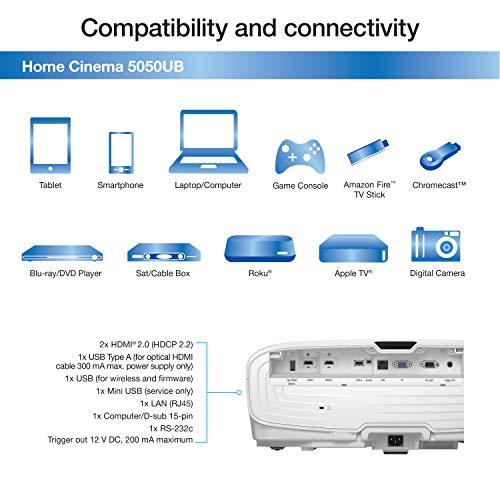
| 6.5ms input lag, HDMI 2.1, 4K@120Hz, ALLM support | 22.5ms input lag, HDMI 2.0, 60Hz max (adequate for casual gaming) |
| Installation Flexibility - Determines placement options in your room | |
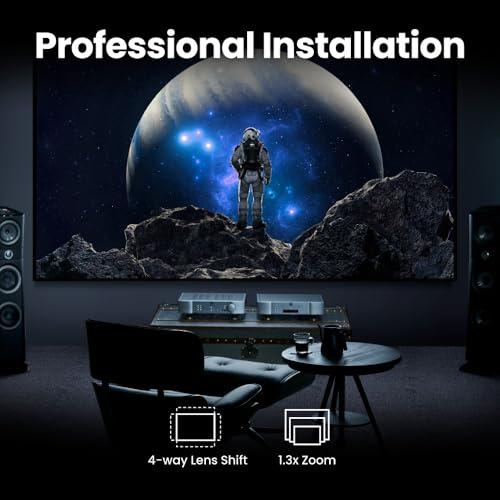
| Vertical ±60%, Horizontal ±15% lens shift, 1.3x zoom | Vertical ±96%, Horizontal ±47% lens shift, 2.1x motorized zoom |
| HDR Support - Affects dynamic range and highlight detail | |
| HDR10, HDR10+, HLG with AI Cinema Mode and dynamic tone mapping | HDR10, HLG with 16-step manual HDR level adjustment |
| Setup Complexity - Time and expertise required for optimal results | |
| Factory calibrated, plug-and-play with AI optimization | Extensive manual controls, requires calibration knowledge for best results |
| Smart Features - Built-in streaming and connectivity options | |
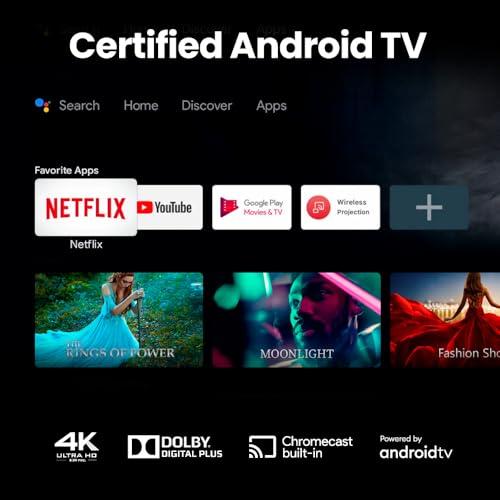
| Android TV dongle included, Google Cast, AirPlay, voice control | No smart features (requires external streaming device) |
| Lens Quality - Affects image sharpness across the entire screen | |
| Standard DLP optics with motorized lens shift only | 15-element all-glass lens with motorized zoom, focus, and shift |
| Screen Size Range - Maximum recommended diagonal for optimal image quality | |
| Up to 300 inches (excellent brightness for large screens) | 50-300 inches (best performance under 200 inches in dark rooms) |
| Release Year - Indicates technology generation and feature set | |
| 2025 (latest generation with modern gaming and AI features) | 2019 (mature technology with proven performance record) |
The BenQ W4100i is significantly brighter at 3,200 ANSI lumens compared to the Epson Home Cinema 5050UB, which outputs between 1,400-2,600 lumens depending on settings. This brightness advantage makes the BenQ W4100i much better for rooms with ambient light or large screen sizes over 200 inches.
The BenQ W4100i uses a 4-LED light source that lasts 30,000 hours with no maintenance, while the Epson Home Cinema 5050UB uses a traditional lamp that requires replacement every 3,500-5,000 hours at approximately $200-300 per bulb. LED projectors offer lower long-term costs and consistent brightness over time.
The Epson Home Cinema 5050UB delivers superior contrast with its UltraBlack technology, achieving over 37,000:1 dynamic contrast ratio compared to the BenQ W4100i's 3,000,000:1 rating. The Epson produces noticeably deeper blacks and better shadow detail in dark theater rooms.
The BenQ W4100i excels for gaming with 6.5ms input lag, HDMI 2.1 ports, and 4K@120Hz support for modern consoles. The Epson Home Cinema 5050UB offers adequate gaming performance at 22.5ms input lag but lacks advanced gaming features and high refresh rate support.
The BenQ W4100i comes factory-calibrated with AI Cinema Mode for automatic optimization, making it plug-and-play friendly. The Epson Home Cinema 5050UB requires manual calibration and offers extensive adjustment options, appealing to enthusiasts who want to fine-tune their image quality.
For dark, dedicated theater rooms, the Epson Home Cinema 5050UB typically provides better image quality due to its exceptional contrast ratio and professional-grade calibration options. However, the BenQ W4100i works well in theaters too, especially if you want gaming capabilities and maintenance-free operation.
The BenQ W4100i includes an Android TV dongle with built-in Netflix, Prime Video, Disney+, and YouTube, plus Google Cast and AirPlay support. The Epson Home Cinema 5050UB has no smart features and requires an external streaming device like Apple TV or Roku.
Both projectors offer excellent color performance, with the BenQ W4100i providing factory-calibrated accuracy covering 100% DCI-P3 and supporting HDR10+. The Epson Home Cinema 5050UB covers 97% DCI-P3 with superior calibration potential and 16-step HDR adjustment, but requires manual tuning for optimal results.
The Epson Home Cinema 5050UB provides exceptional installation flexibility with ±96% vertical and ±47% horizontal lens shift, plus 2.1x motorized zoom and focus. The BenQ W4100i offers more limited lens shift (±60% vertical, ±15% horizontal) but includes 1.3x zoom for reasonable placement options.
The BenQ W4100i has lower long-term costs due to its maintenance-free LED light source lasting 30,000 hours. The Epson Home Cinema 5050UB requires 2-3 lamp replacements over its lifetime, adding $400-900 in maintenance costs, plus higher power consumption.
The BenQ W4100i is better suited for very large screens due to its higher brightness output of 3,200 lumens, allowing it to fill screens up to 300 inches effectively. The Epson Home Cinema 5050UB performs best on screens under 200 inches where its superior contrast can be fully appreciated.
The BenQ W4100i uses DLP technology, which offers sharp images and compact design but may show rainbow effects for sensitive viewers. The Epson Home Cinema 5050UB uses 3LCD technology that completely eliminates rainbow effects and typically provides more natural color reproduction, especially for film content.
We've done our best to create useful and informative comparisons to help you decide what product to buy. Our research uses advanced automated methods to create this comparison and perfection is not possible - please contact us for corrections or questions. These are the sites we've researched in the creation of this article: blog.son-video.com - notebookcheck.net - whathifi.com - newatlas.com - hometheaterhifi.com - benq.com - youtube.com - shop.avispl.com - projectorcentral.com - benq.com - youtube.com - projectorcentral.com - benq.com - device.report - pssav.com - newegg.com - rtings.com - projectorscreen.com - hometechnologyreview.com - thesmarthomehookup.com - youtube.com - rtings.com - techgearlab.com - projectorcentral.com - projectorreviews.com - projectorcentral.com - avsforum.com - rtings.com - projectorreviews.com - projectorreviews.com - avsforum.com - avsforum.com - audiogeneral.com - hifiheaven.net - manuals.plus - crutchfield.com - projectorcentral.com - epson.com - mediaserver.goepson.com - bestbuy.com - ngxptech.com - projectorcentral.com - projectorreviews.com

Privacy Policy
Terms and Conditions - Affiliate Policy
Home Security
© Copyright 2008-2026.
11816 Inwood Rd #1211, Dallas, TX 75244