

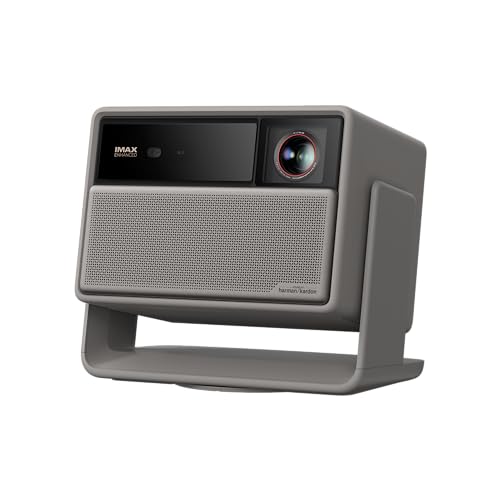
The projector world has split into two distinct camps over the past few years. On one side, you have traditional manufacturers like Epson sticking with refined lamp-based designs that prioritize pure image quality. On the other, newer companies like XGIMI are pushing laser technology with smart features and lifestyle-focused designs. This divide perfectly captures the choice between the XGIMI Horizon 20 Max and the Epson Home Cinema 5050UB.
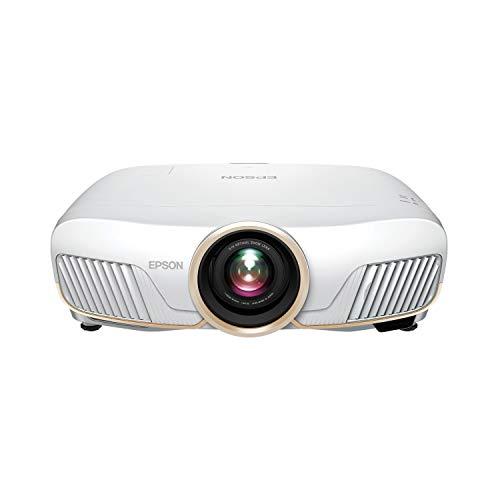
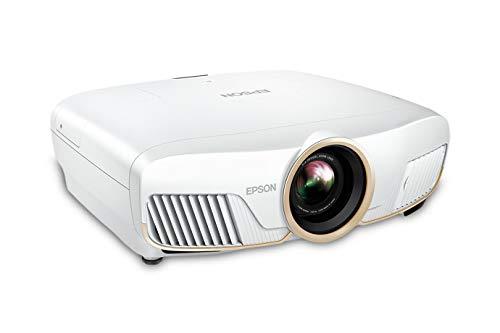
Both projectors target serious home theater enthusiasts, but they take fundamentally different approaches to getting there. The XGIMI Horizon 20 Max, released in 2025, represents the cutting edge of laser projection with smart TV integration built right in. The Epson Home Cinema 5050UB, which has been refined over several generations since its initial release around 2018, embodies the traditional home theater philosophy where image quality reigns supreme.
Understanding which approach works better for your situation requires diving into what makes each projector tick and where their strengths really shine.
Before comparing these specific models, it's worth understanding the fundamental differences in how they work. Traditional projectors like the Epson Home Cinema 5050UB use high-pressure mercury lamps that produce incredibly bright white light. This light gets filtered through LCD panels or bounced off tiny mirrors to create the image. These lamps burn hot, need regular replacement every few thousand hours, and take time to warm up and cool down.
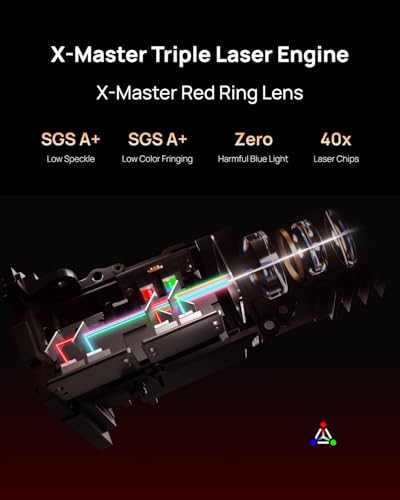
Laser projectors like the XGIMI Horizon 20 Max generate light using laser diodes - essentially very powerful laser pointers in red, green, and blue. These lasers don't burn out like traditional bulbs and can instantly turn on or off. The trade-off has historically been cost and complexity, but prices have dropped significantly in recent years.
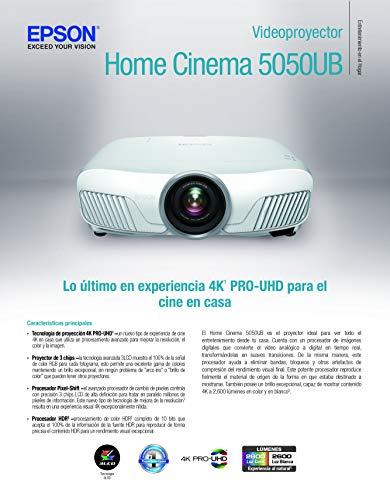
The other major difference lies in how these projectors handle resolution. True native 4K projectors use panels or chips with 8.3 million individual pixels - one for each dot in a 4K image. Both of these projectors use "pixel-shifting" technology instead, where they rapidly move lower-resolution images to fill in the gaps and simulate 4K detail. This approach costs less than true native 4K but can still deliver impressively sharp results.
Brightness might be the single most important factor when choosing a projector, yet it's often misunderstood. Measured in lumens, brightness determines whether your projector can overcome ambient light and deliver vibrant colors on large screens.
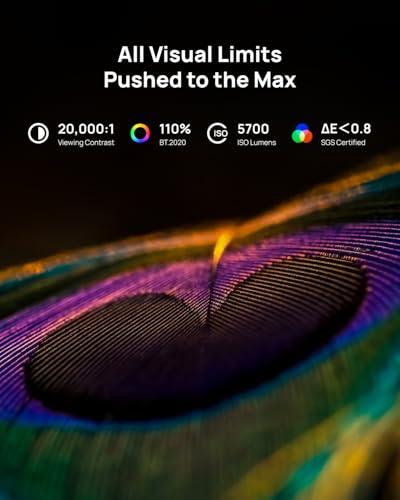
The XGIMI Horizon 20 Max delivers an exceptional 5,700 ISO lumens - more than double the Epson's 2,600 lumens. This isn't just a numbers game; it's the difference between being able to watch movies during the day versus needing blackout curtains every time.
In our research of user experiences, the brightness advantage becomes immediately apparent in real-world use. The XGIMI maintains vibrant, punchy colors even with table lamps on or sunlight filtering through windows. Users consistently report being able to enjoy content during family gatherings or casual viewing without dimming lights. The laser technology also means this brightness stays consistent over the projector's entire lifespan - no gradual dimming as bulbs age.
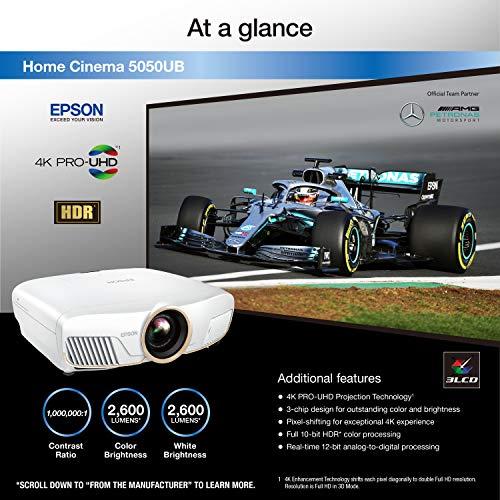
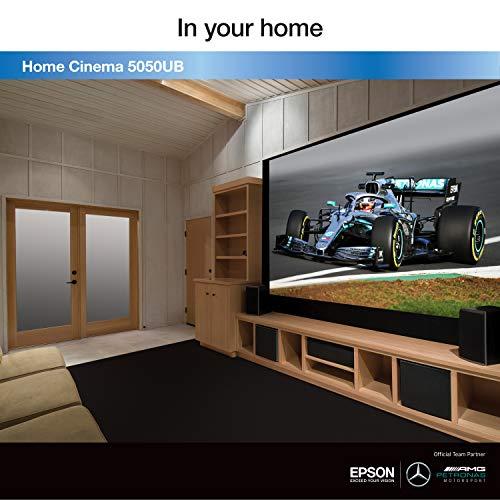
The Epson Home Cinema 5050UB, while significantly dimmer, still provides adequate brightness for its intended use case. In a properly darkened room, 2,600 lumens creates an immersive, cinema-like experience. However, any ambient light quickly washes out the image, limiting viewing to dedicated theater sessions.
This brightness difference fundamentally shapes how you'll use each projector. The XGIMI works as a TV replacement in family rooms, while the Epson demands a more traditional, dedicated home theater approach.
While brightness gets the headlines, contrast ratio - the difference between the brightest whites and darkest blacks - often determines how cinematic an image actually looks. Deep blacks create the sense of depth that makes flat projections feel three-dimensional.
Here's where the Epson Home Cinema 5050UB fights back with its standout feature: UltraBlack technology. This proprietary system uses a special filter to control light polarization within the projector, dramatically reducing stray light that would otherwise make blacks look gray. Expert reviews consistently measure native contrast ratios around 8,000:1 - exceptional performance that creates truly dark shadows and night scenes that feel genuinely black rather than dark gray.
The XGIMI Horizon 20 Max achieves a solid 20,000:1 contrast ratio, which sounds higher but uses dynamic iris technology to achieve that number. This means the projector adjusts its brightness on the fly based on scene content. While effective, it doesn't match the Epson's ability to show deep blacks and bright highlights simultaneously within the same frame.
In practical terms, this means the Epson excels with moody films, dark scenes, and content where shadow detail matters. Users report being able to see subtle details in dark areas that get lost on other projectors. The XGIMI still delivers good contrast, but bright scenes tend to overwhelm subtle shadow details.
For serious movie watching, especially films with dramatic lighting like horror movies or film noir classics, the Epson's superior contrast creates a more engaging, theater-like experience.
Color reproduction reveals another philosophical divide between these projectors. The XGIMI Horizon 20 Max covers 110% of the BT.2020 color space with exceptional out-of-box accuracy (ΔE<0.8, where lower numbers mean more accurate colors). This wide color gamut means more saturated, vibrant colors that really pop on screen.
The laser light source contributes to this performance. Instead of filtering white light through colored panels, the XGIMI generates pure red, green, and blue light directly. This approach eliminates the compromises inherent in filtering systems and delivers colors that can appear almost artificially vivid - which some viewers love and others find oversaturated.
The Epson Home Cinema 5050UB takes a more measured approach, covering 97% of the cinema-standard DCI-P3 color space. While slightly narrower than the XGIMI's gamut, expert reviews consistently praise its color accuracy after calibration. The 3LCD design ensures equal brightness across all colors - a common weakness in competing technologies where colors can appear dim compared to white elements.
Where the Epson really shines is in calibration flexibility. It offers professional-grade controls including 11-point white balance adjustment and comprehensive color management. Enthusiasts who want to precisely match their projector to industry standards will find tools that typically require much more expensive equipment.
For most users, the XGIMI's out-of-box color accuracy eliminates the need for calibration while delivering eye-catching vibrancy. The Epson rewards users willing to invest time in proper setup with more natural, reference-quality color reproduction.
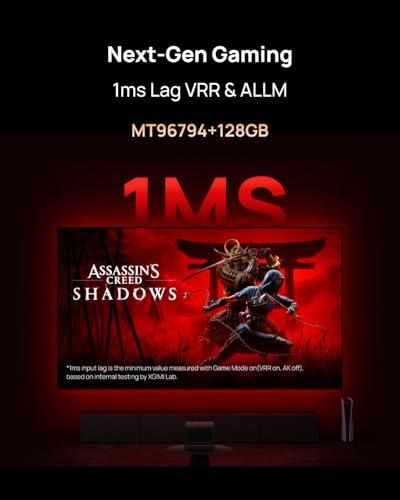
Gaming represents the clearest advantage for the XGIMI Horizon 20 Max. Input lag - the delay between pressing a button and seeing the result on screen - measures just 1 millisecond at 1080p and 240Hz refresh rate. For perspective, this rivals the fastest gaming monitors available.
The XGIMI supports HDMI 2.1 features including Variable Refresh Rate (VRR) and Auto Low Latency Mode (ALLM), which synchronize the projector's refresh rate with your console's output to eliminate screen tearing and stuttering. Gaming-specific features like customizable crosshairs, black level equalizers for spotting enemies in shadows, and genre-specific picture modes show how seriously XGIMI takes gaming.
The Epson Home Cinema 5050UB manages 22.5 milliseconds of input lag at 4K resolution - acceptable for casual gaming but noticeable in competitive scenarios. More importantly, it's limited to 60Hz refresh rates and lacks modern gaming features. This projector clearly prioritizes movie watching over interactive entertainment.
For anyone planning to connect modern gaming consoles, especially for competitive multiplayer games, the XGIMI delivers performance that traditional projectors simply cannot match.
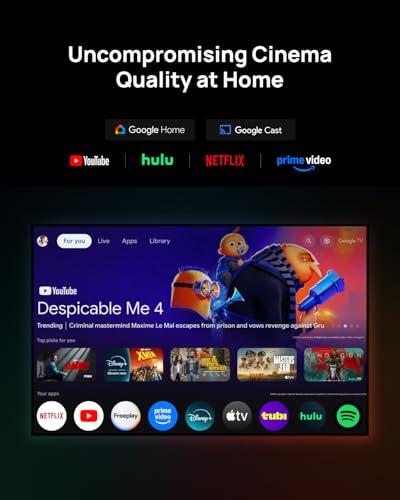
The convenience factor heavily favors the XGIMI Horizon 20 Max with built-in Android TV, eliminating the need for external streaming devices. Wi-Fi 6 and Bluetooth connectivity mean you can stream content wirelessly and connect wireless headphones for late-night viewing. The ISA 5.0 system automatically handles focus, keystone correction, and screen alignment - setup tasks that traditionally required manual adjustment.
Integrated Harman Kardon speakers provide surprisingly good sound quality, though serious users will still want a proper sound system for large rooms. The motorized lens with memory settings allows quick switching between different aspect ratios or screen sizes.
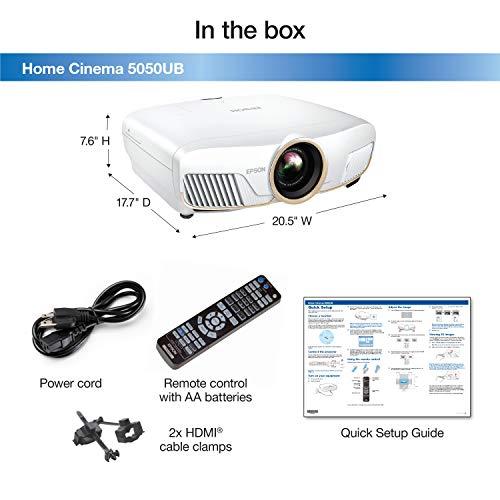
The Epson Home Cinema 5050UB requires external devices for streaming and relies entirely on manual or app-based setup. However, this traditional approach offers some advantages: no built-in obsolescence as smart TV platforms age, no privacy concerns from always-connected devices, and no performance degradation from background processes.
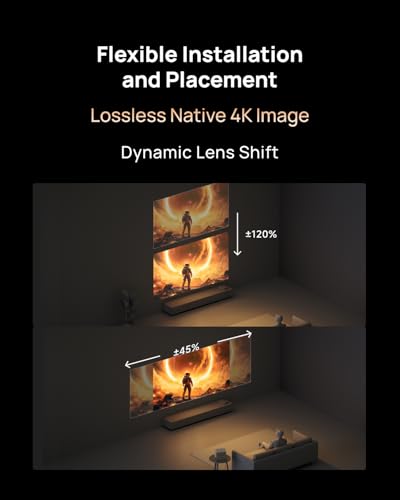
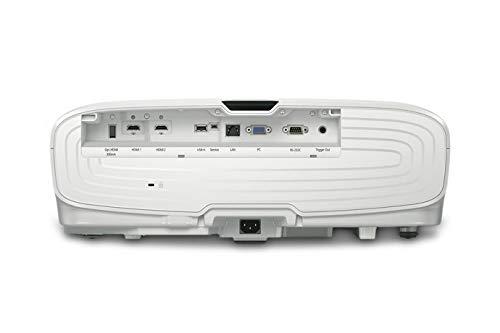
The motorized zoom, focus, and lens shift on the Epson provide exceptional installation flexibility. With ±96% vertical and ±47% horizontal lens shift, you can mount this projector in positions that would be impossible with fixed-lens models.
Daily use reveals important practical differences between these approaches. The XGIMI Horizon 20 Max turns on instantly and remembers your settings, making it feel more like a premium TV. The laser light source eliminates warm-up time and the uncertainty of when expensive bulbs might fail.
The built-in stand and attractive design mean the XGIMI can live on a coffee table or shelf without looking out of place. Many users report it becoming their primary display for both casual viewing and serious movie nights.
The Epson Home Cinema 5050UB requires more commitment but rewards dedicated users with superior image quality. The lamp-based design means 3-4 minute warm-up times, periodic bulb replacements (every 2-3 years of moderate use), and professional mounting for optimal results.
However, once properly installed and calibrated, the Epson delivers an authentically cinematic experience that justifies the extra effort for serious enthusiasts.
At the time of writing, both projectors occupy similar price ranges, but their long-term costs differ significantly. The XGIMI Horizon 20 Max's laser light source should last 20,000+ hours without replacement - potentially the life of the projector. Factor in the built-in streaming and audio capabilities, and the total system cost becomes quite competitive.
The Epson Home Cinema 5050UB requires lamp replacements every 3,500 hours at $200-300 each, plus external streaming devices and audio systems. Over a projector's typical 8-10 year lifespan, these costs add up.
However, the Epson's superior image quality in darkened rooms and extensive calibration capabilities provide value that's harder to quantify. For users prioritizing the best possible picture quality, the additional complexity and cost may be worthwhile.
The XGIMI Horizon 20 Max makes sense for users who want exceptional brightness and convenience without sacrificing image quality. It's ideal for family rooms, spaces with ambient light, and anyone who values gaming performance. The all-in-one design appeals to users who want cinema-quality entertainment without the complexity of traditional home theater systems.
Choose the XGIMI if you're replacing a TV, want to game competitively, need bright room performance, or prefer modern convenience features over ultimate image quality.
The Epson Home Cinema 5050UB targets serious home theater enthusiasts willing to invest in proper room treatment and setup. Its superior contrast and color accuracy shine in dedicated theater rooms where lighting can be controlled. The extensive calibration options appeal to users who enjoy optimizing their setup for reference-quality reproduction.
Choose the Epson if you have a dedicated dark room, prioritize image quality over convenience, primarily watch movies rather than game, and don't mind the complexity of traditional home theater components.
Both projectors deliver excellent performance within their intended use cases. The decision ultimately comes down to whether you prioritize the flexibility and modern features of laser technology or the refined image quality of traditional projection. Either choice will provide years of impressive home entertainment - just in distinctly different ways.
| XGIMI Horizon 20 Max | Epson Home Cinema 5050UB |
|---|---|
| Brightness - Most critical spec for room versatility and daytime viewing | |
| 5,700 ISO lumens (exceptional for any lighting condition) | 2,600 lumens (requires dimmed/dark rooms for optimal viewing) |
| Light Source Technology - Determines maintenance costs and lifespan | |
| RGB Triple Laser (~20,000 hour lifespan, no bulb replacements) | 250W UHE Lamp (3,500 hour lifespan, requires $200-300 replacements) |
| Contrast Ratio - Creates depth and makes blacks look truly dark | |
| 20,000:1 native (good depth, some gray in dark scenes) | 1,000,000:1 dynamic, 8,000:1 measured native (exceptional blacks, cinema-like depth) |
| Color Accuracy - Determines how natural and accurate colors appear | |
| 110% BT.2020, ΔE<0.8 (vibrant, accurate out-of-box) | 97% DCI-P3 (reference quality after professional calibration) |
| Gaming Performance - Input lag and refresh rate capabilities | |
| 1ms at 1080p/240Hz, 3ms at 4K/60Hz, HDMI 2.1, VRR support | 22.5ms at 4K/60Hz, 60Hz max, basic gaming capability |
| Smart Features - Built-in streaming and connectivity options | |
| Android TV 11, Wi-Fi 6, Bluetooth, integrated Harman Kardon speakers | No smart features, requires external streaming device and sound system |
| Installation Flexibility - How easy to position and set up | |
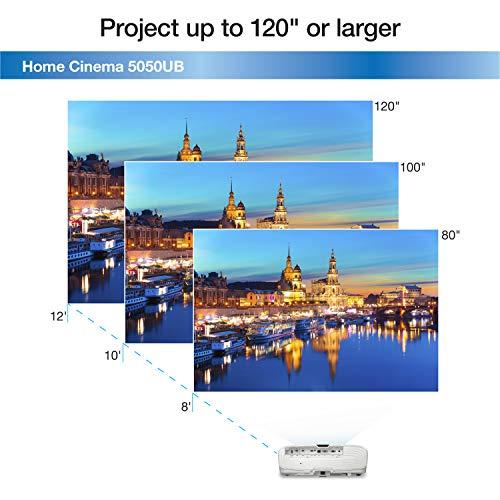
| Built-in adjustable stand, automatic ISA 5.0 calibration, 1.25-1.5:1 throw ratio | Motorized zoom/focus/lens shift, ±96% vertical/±47% horizontal shift, 1.35-2.84:1 throw ratio |
| Resolution Technology - How 4K images are created | |
| 4K via 0.47" DMD with XPR pixel-shifting (sharp, detailed) | 4K PRO-UHD via pixel-shifting from 1080p 3LCD panels (excellent enhancement, no rainbow effect) |
| HDR Support - Premium video format compatibility | |
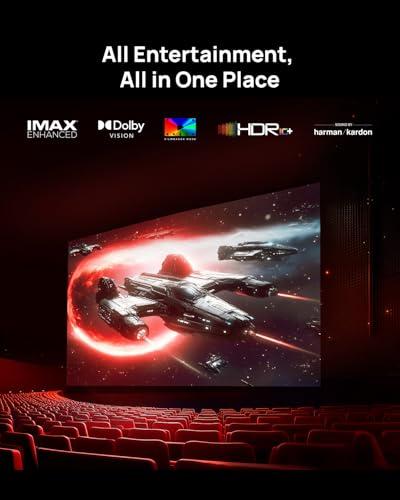
| Dolby Vision, HDR10+, HDR10, HLG, IMAX Enhanced | HDR10, HLG with 16-step real-time adjustment |
| Total Cost of Ownership - Initial price plus long-term expenses | |
| Lower ongoing costs (no lamp replacements, built-in features) | Higher long-term costs (lamp replacements, external devices needed) |
The XGIMI Horizon 20 Max delivers 5,700 ISO lumens compared to the Epson Home Cinema 5050UB's 2,600 lumens. This makes the XGIMI significantly better for bright rooms and daytime viewing, while the Epson requires dimmed or dark environments for optimal picture quality.
The XGIMI Horizon 20 Max uses a laser light source that lasts approximately 20,000 hours without needing replacement, while the Epson Home Cinema 5050UB uses a traditional lamp that needs replacement every 3,500 hours at a cost of $200-300. Laser technology also provides instant on/off and consistent brightness over time.
The Epson Home Cinema 5050UB excels in contrast with its UltraBlack technology, delivering deeper blacks and better shadow detail in dark scenes. While the XGIMI Horizon 20 Max has good contrast, the Epson provides a more cinematic experience for movie watching in dark rooms.
The XGIMI Horizon 20 Max is specifically designed for gaming with 1ms input lag at 1080p/240Hz, HDMI 2.1 support, and VRR capabilities. The Epson Home Cinema 5050UB has 22.5ms input lag and is limited to 60Hz, making it acceptable for casual gaming but not ideal for competitive play.
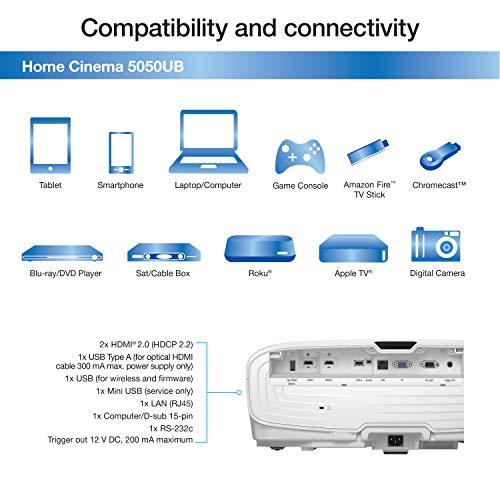
The XGIMI Horizon 20 Max includes built-in Android TV with Wi-Fi and streaming apps, eliminating the need for external devices. The Epson Home Cinema 5050UB requires a separate streaming device like Apple TV, Roku, or gaming console for smart TV functionality.
The XGIMI Horizon 20 Max features automatic ISA 5.0 technology that handles focus, keystone correction, and screen alignment automatically. The Epson Home Cinema 5050UB offers motorized lens controls but requires manual calibration and setup for optimal performance.
Both projectors deliver excellent color performance but with different approaches. The XGIMI Horizon 20 Max provides vibrant, accurate colors out-of-box with 110% BT.2020 coverage. The Epson Home Cinema 5050UB offers professional-grade calibration tools for reference-quality color accuracy that requires setup time.
The XGIMI Horizon 20 Max includes built-in Harman Kardon speakers that provide good sound quality for most rooms. The Epson Home Cinema 5050UB has no built-in speakers and requires an external audio system, which allows for better sound quality but adds complexity and cost.
The XGIMI Horizon 20 Max is significantly better for bright rooms due to its 5,700 lumens brightness output, maintaining good image quality even with ambient light. The Epson Home Cinema 5050UB performs best in controlled lighting environments and may appear washed out in bright conditions.
The XGIMI Horizon 20 Max laser light source should last the lifetime of the projector (20,000+ hours) without replacement. The Epson Home Cinema 5050UB requires lamp replacements every 2-3 years of typical use, adding to long-term ownership costs but allowing for consistent performance with fresh lamps.
Both the XGIMI Horizon 20 Max and Epson Home Cinema 5050UB use pixel-shifting technology rather than native 4K panels. The XGIMI uses 0.47" DMD with XPR shifting, while the Epson uses 4K PRO-UHD enhancement from 1080p panels. Both deliver sharp, detailed 4K images that satisfy most viewers.
For dedicated dark room home theaters prioritizing image quality, the Epson Home Cinema 5050UB offers superior contrast and color accuracy. For versatile family room use with bright conditions and gaming, the XGIMI Horizon 20 Max provides better overall value with lower long-term costs and built-in smart features.
We've done our best to create useful and informative comparisons to help you decide what product to buy. Our research uses advanced automated methods to create this comparison and perfection is not possible - please contact us for corrections or questions. These are the sites we've researched in the creation of this article: dustinabbott.net - projectorcentral.com - youtube.com - us.xgimi.com - youtube.com - tweaktown.com - youtube.com - us.xgimi.com - youtube.com - youtube.com - thesmarthomehookup.com - youtube.com - us.xgimi.com - global.xgimi.com - projector-database.com - rtings.com - projectorscreen.com - hometechnologyreview.com - thesmarthomehookup.com - youtube.com - rtings.com - techgearlab.com - projectorcentral.com - projectorreviews.com - projectorcentral.com - avsforum.com - rtings.com - projectorreviews.com - projectorreviews.com - avsforum.com - avsforum.com - audiogeneral.com - hifiheaven.net - manuals.plus - crutchfield.com - projectorcentral.com - epson.com - mediaserver.goepson.com - bestbuy.com - ngxptech.com - projectorcentral.com - projectorreviews.com

Privacy Policy
Terms and Conditions - Affiliate Policy
Home Security
© Copyright 2008-2026.
11816 Inwood Rd #1211, Dallas, TX 75244