

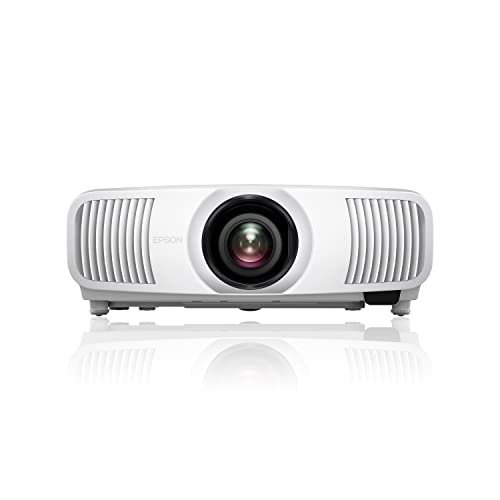
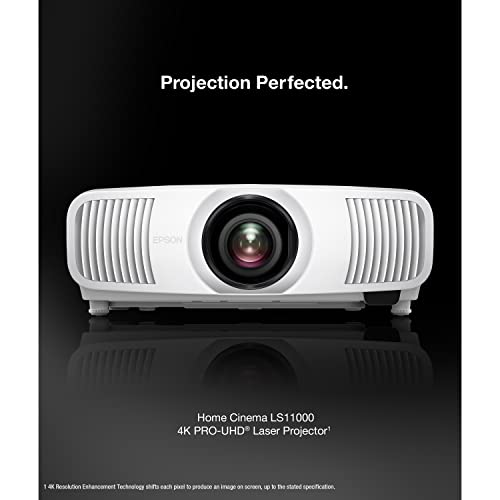

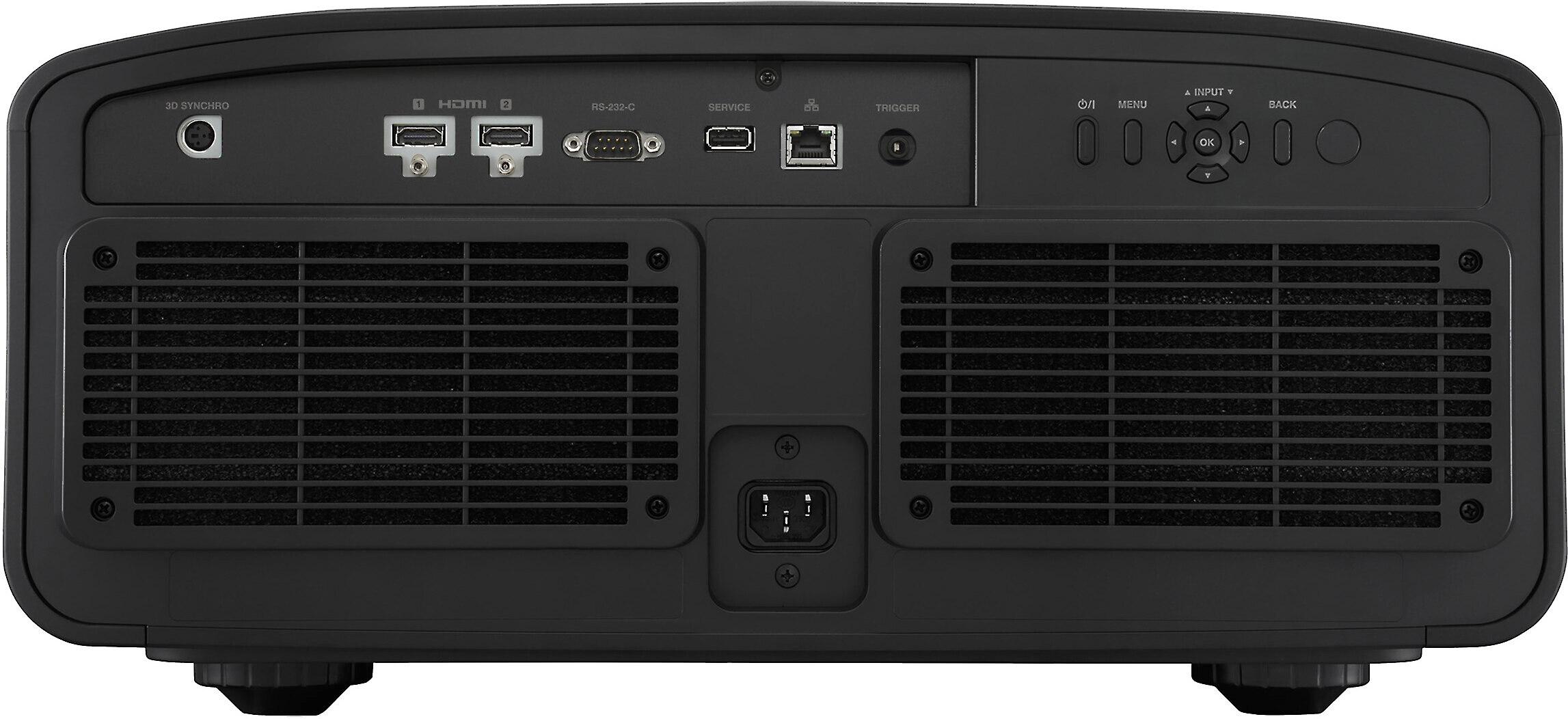
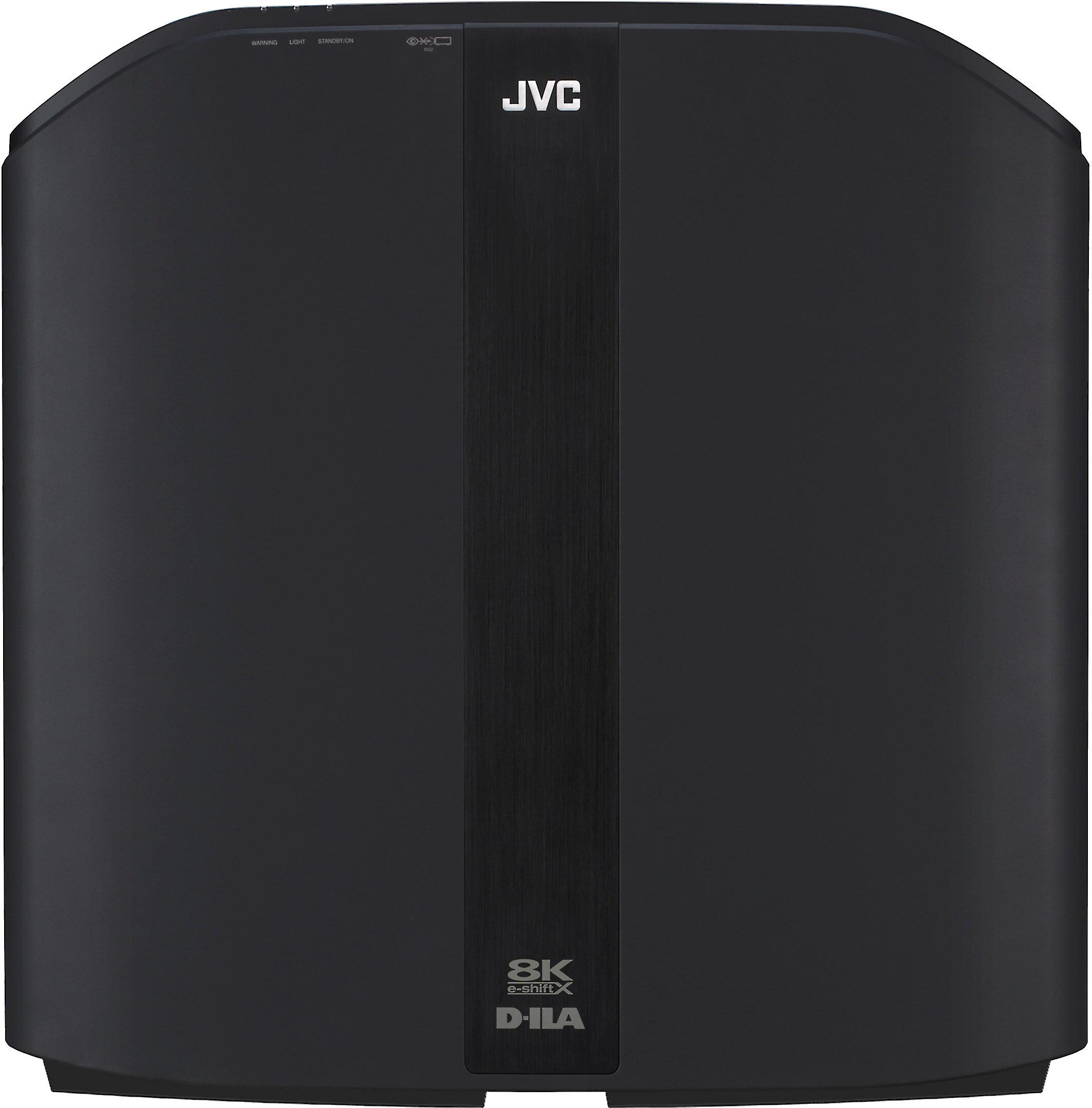
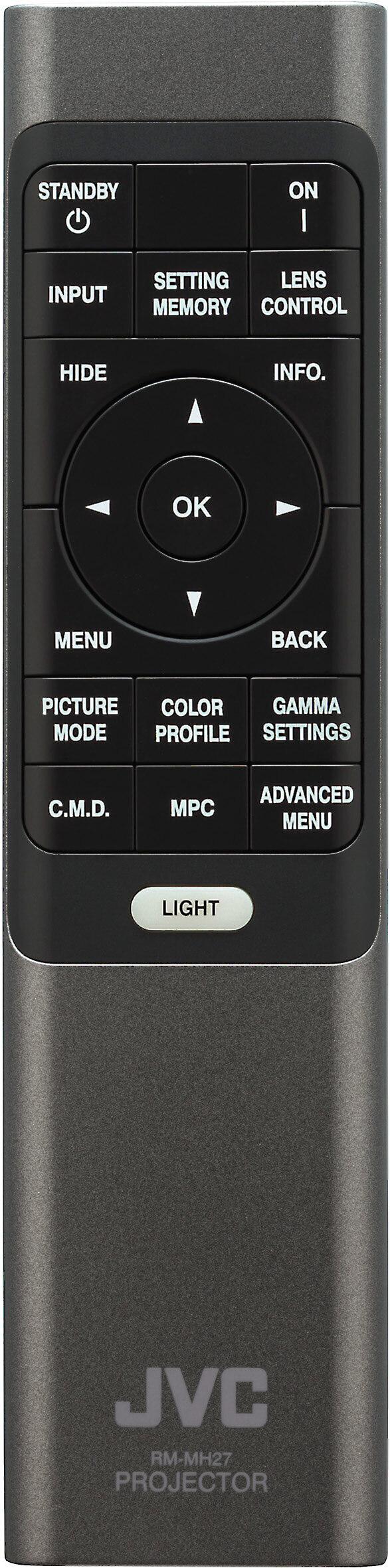
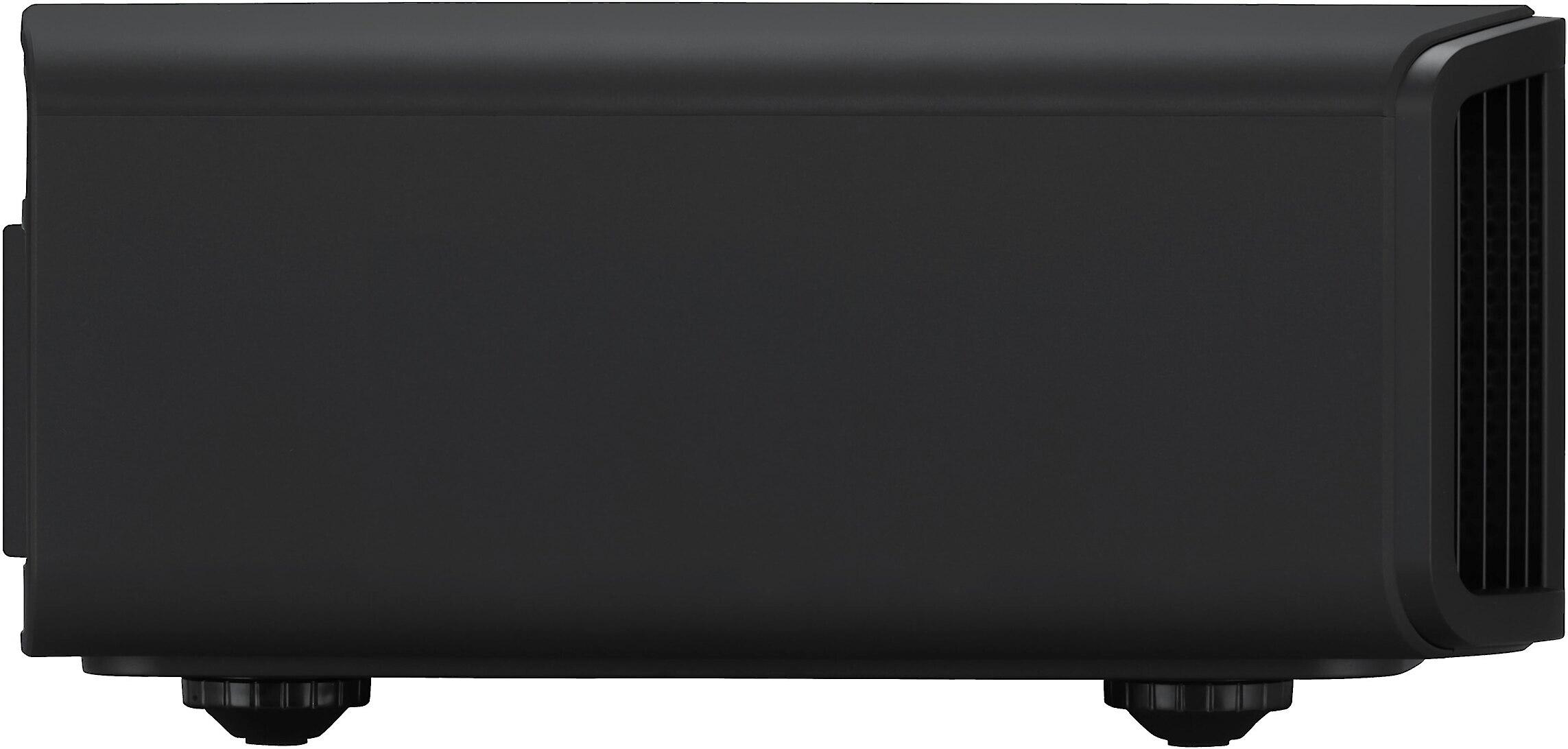
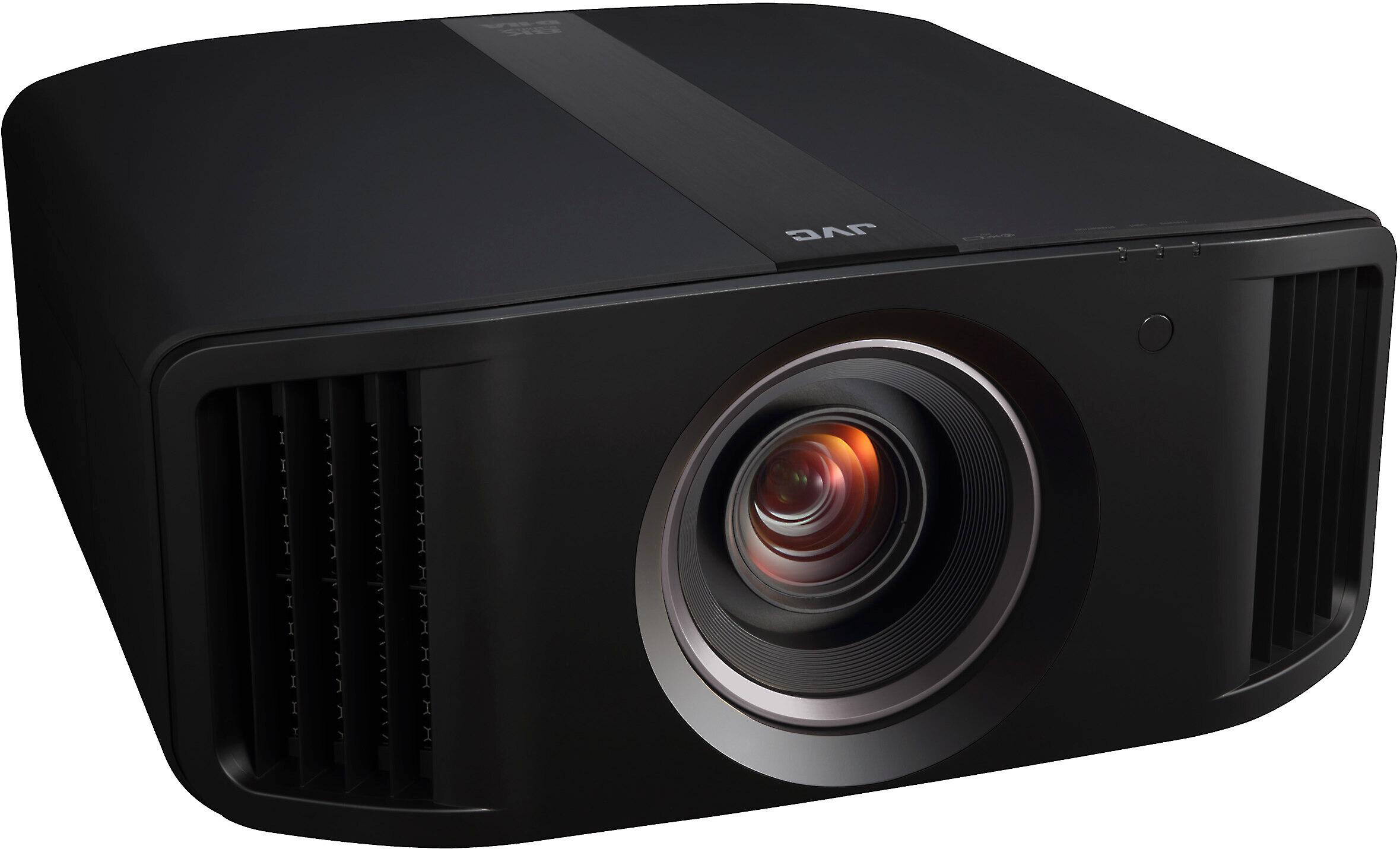
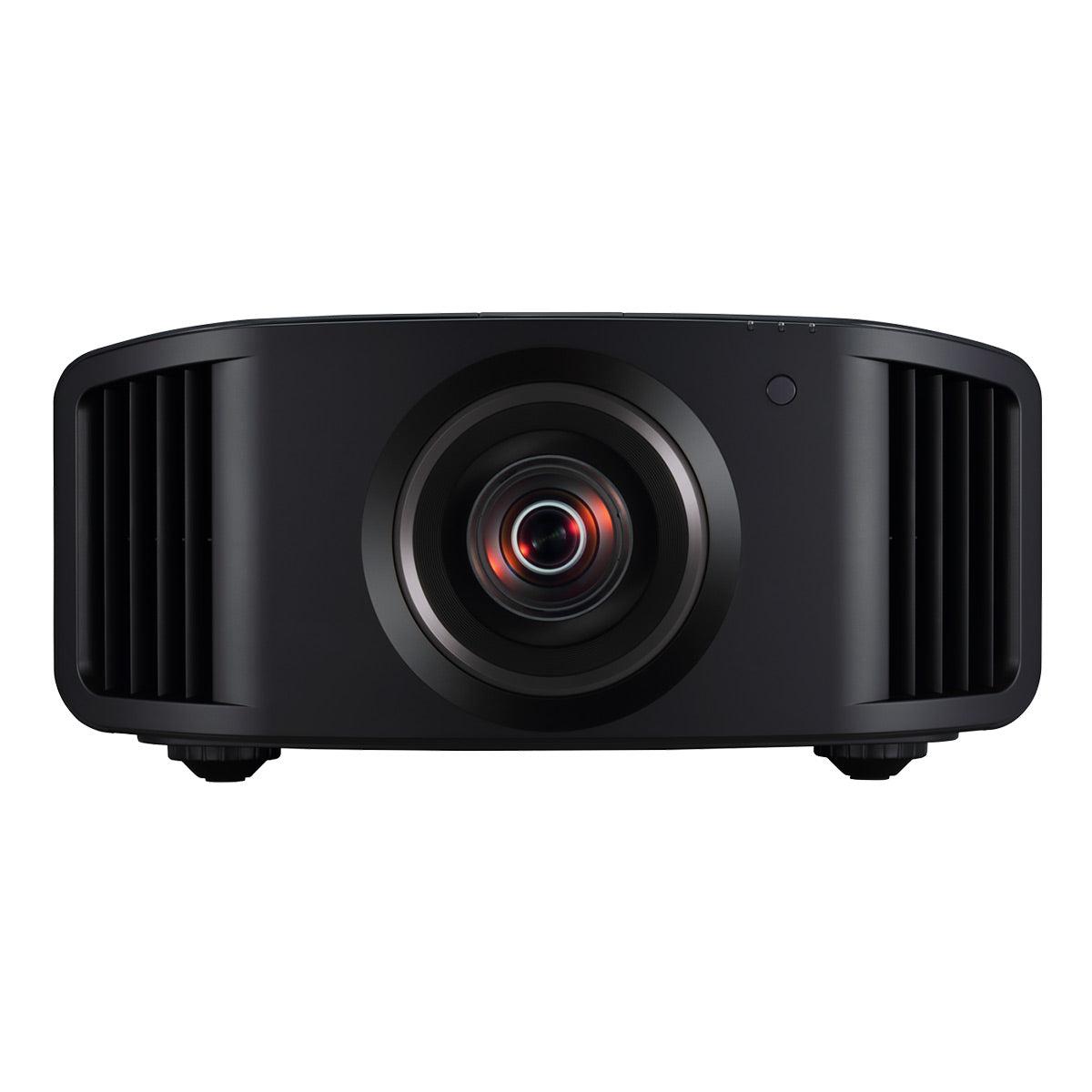
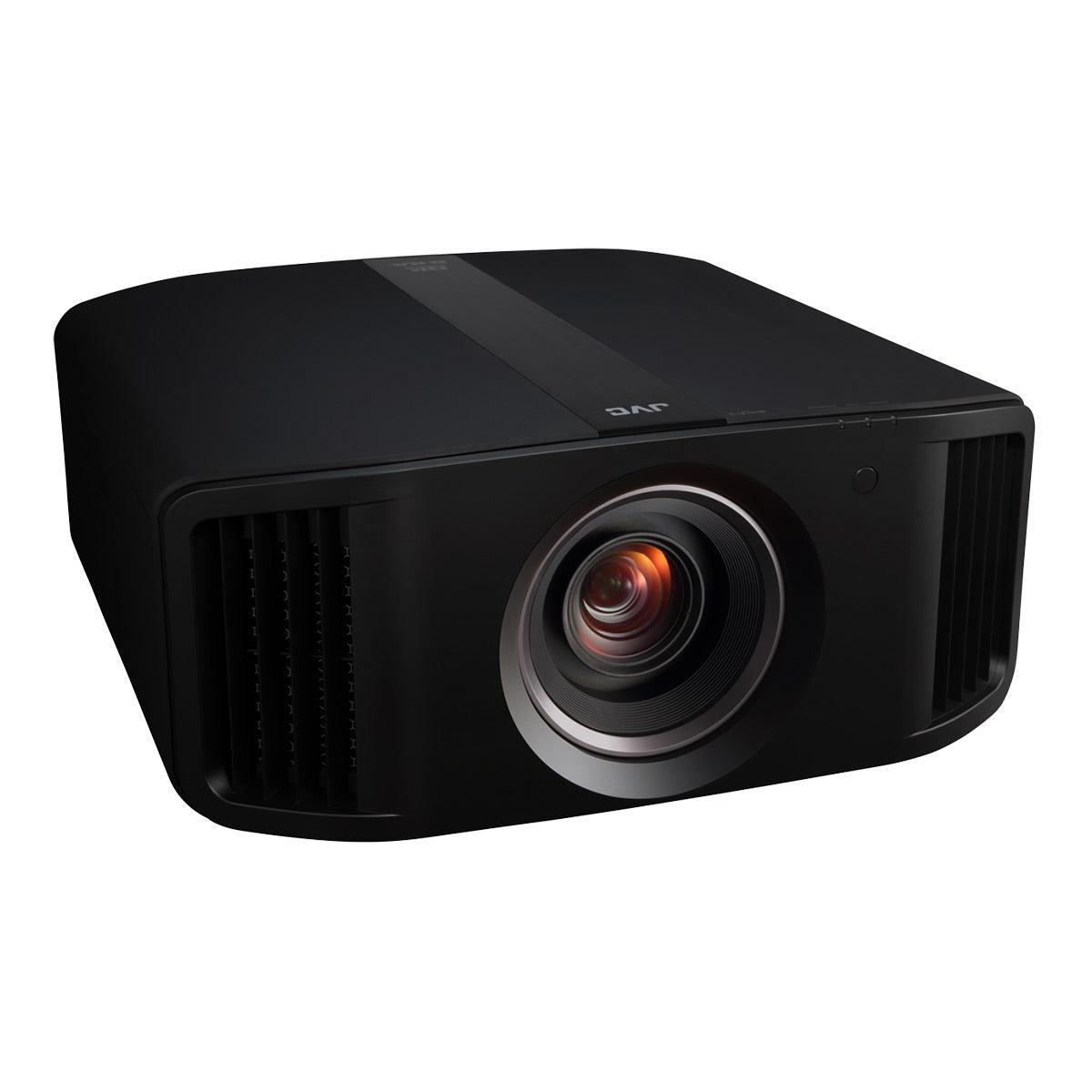
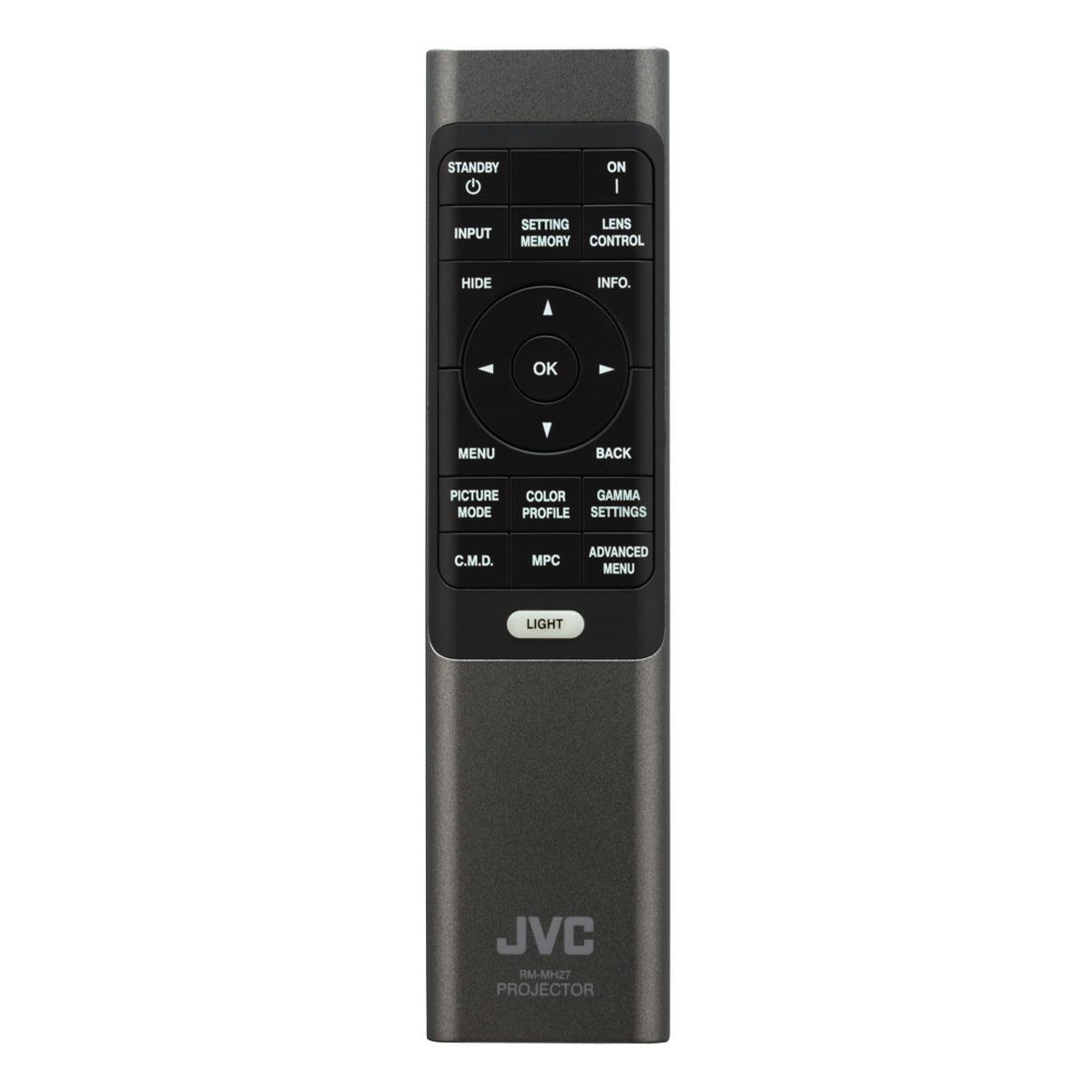
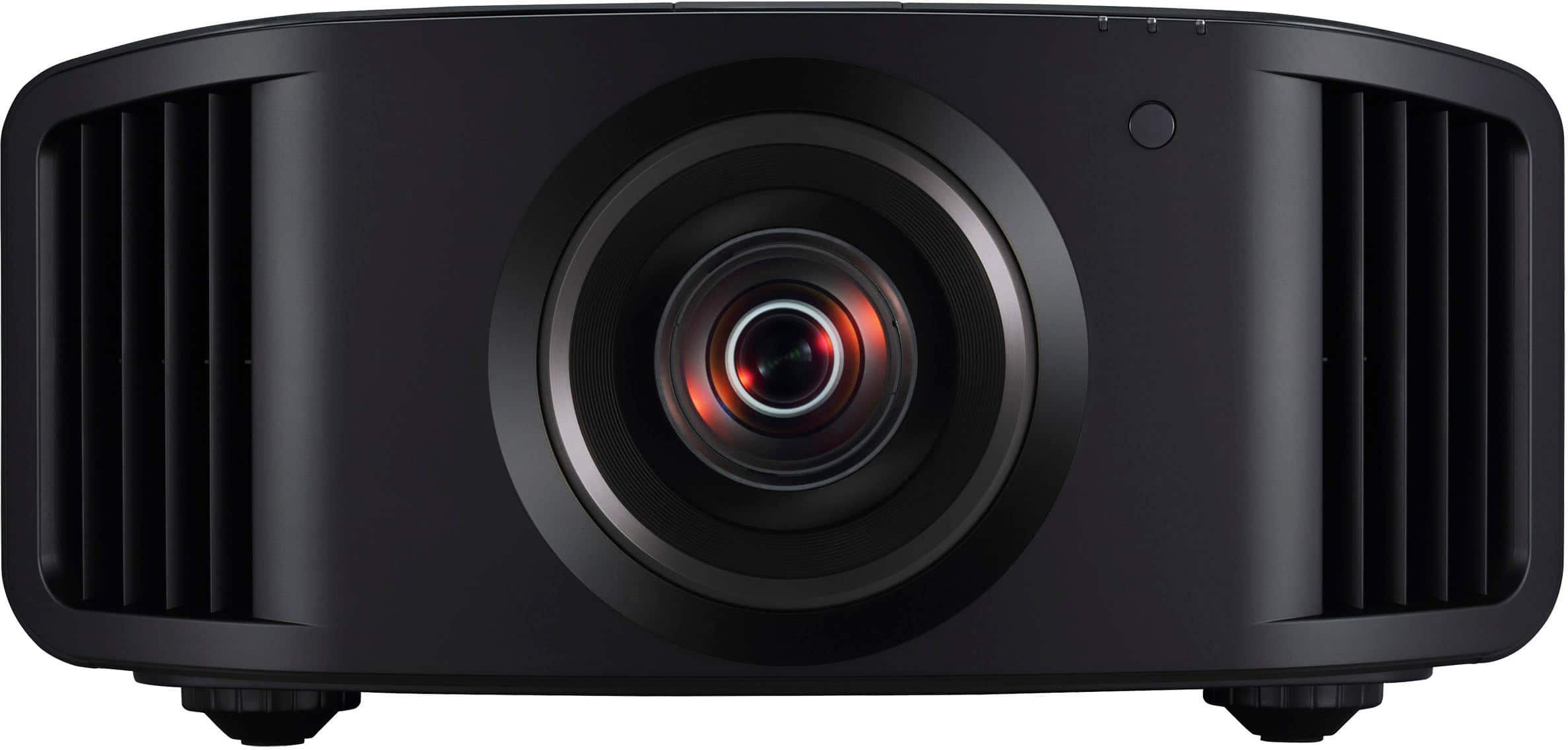
When you're ready to create the ultimate movie-watching experience at home, two projectors consistently rise to the top of every serious enthusiast's consideration list: the Epson Home Cinema LS11000 and the JVC DLA-NZ800. These aren't your typical living room projectors—they're purpose-built cinema machines designed to deliver the kind of image quality that makes you forget you're watching at home rather than in a premium theater.
The home theater projector market has evolved dramatically over the past few years, with laser light sources replacing traditional bulbs and 4K becoming the standard rather than a luxury. Both of these projectors represent the cutting edge of this evolution, but they take fundamentally different approaches to achieving cinematic excellence. Understanding these differences is crucial because while both can transform your viewing experience, they serve distinctly different needs and budgets.
Before diving into the specifics, it's worth understanding what separates premium projectors from their more affordable siblings. These high-end models prioritize image quality above everything else, featuring advanced display technologies, exceptional brightness for HDR content, industry-leading contrast ratios, and comprehensive support for the latest video formats.
The key considerations when evaluating these projectors include display technology (how they actually create the image), brightness and contrast performance (which determines how well they handle both dark scenes and bright highlights), installation flexibility (how easy they are to set up in your specific room), and long-term value (whether they'll remain relevant as technology evolves).
What makes this comparison particularly interesting is that these projectors represent two very different philosophies. The Epson LS11000, released in 2022, targets serious enthusiasts who want reference-quality performance without breaking the bank. The JVC DLA-NZ800, which arrived in 2024, represents JVC's flagship approach—spare no expense in pursuing absolute image quality perfection.
The most fundamental difference between the Epson LS11000 and JVC DLA-NZ800 lies in how they generate images. Think of this as the difference between two artists using different techniques to create the same masterpiece.
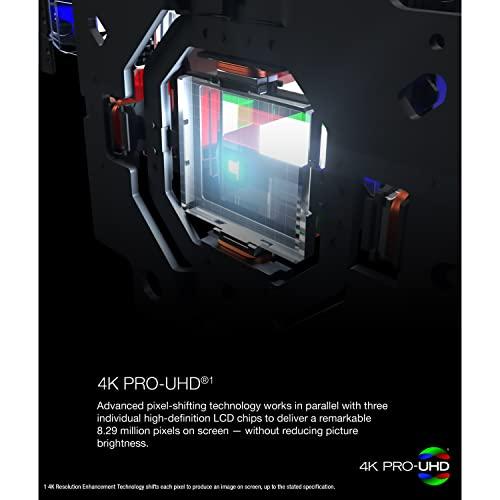
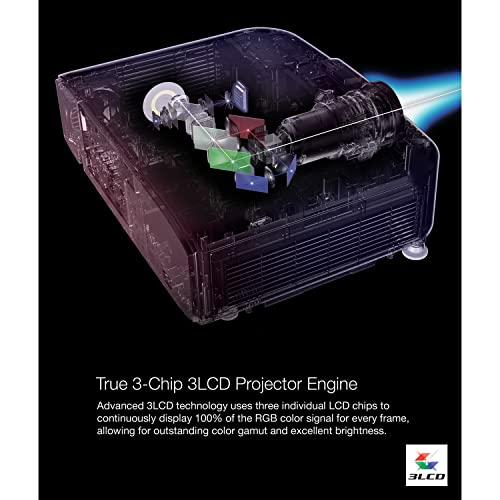
The Epson uses what's called 3LCD technology with three separate 0.74-inch LCD panels—one each for red, green, and blue light. Here's where it gets interesting: these panels have a native resolution of 1920×1080 (standard HD), but Epson employs sophisticated pixel-shifting technology to create what appears to be true 4K. Their Precision Shift Glass Plate moves each pixel rapidly in diagonal and horizontal directions, essentially making each pixel do the work of four pixels. The result is 8.29 million pixels displayed on screen, which matches true 4K resolution.
The JVC takes a different approach entirely. It uses three 0.69-inch D-ILA chips (JVC's version of LCoS technology) that are natively 4K resolution—meaning they start with 4096×2160 pixels before any processing occurs. But JVC doesn't stop there. Their Gen2 8K/e-shiftX technology then shifts these native 4K pixels to create an effective 8K display with 8192×4320 pixels. It's like starting with a high-resolution photograph and then using advanced techniques to make it even sharper.
The practical impact of this difference is significant. While both projectors can display convincing 4K images, the JVC's native 4K foundation provides inherently sharper text, more defined edges, and better detail in complex scenes. However, the Epson's pixel-shifting is so advanced that at normal viewing distances, many viewers struggle to see the difference.
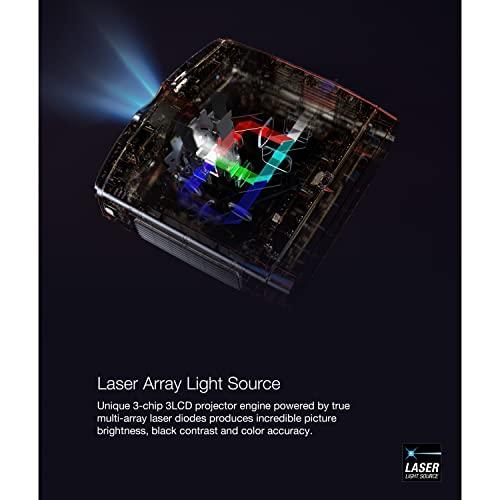
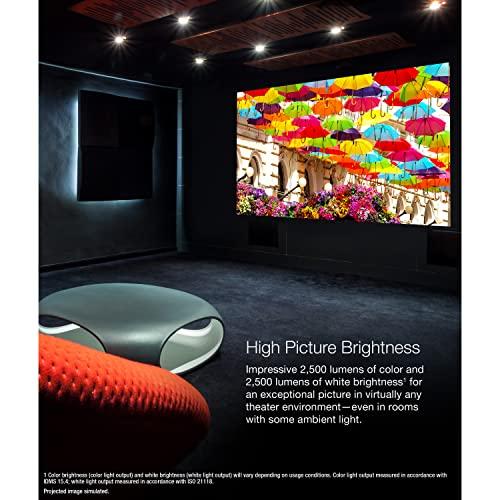
Both projectors have moved beyond traditional bulbs to laser light sources, but they implement this technology differently. The Epson LS11000 uses a multi-array blue laser system that generates 2,500 lumens of brightness—enough light output to create stunning HDR images even in rooms with some ambient light. This laser system is rated for 20,000 hours of use, meaning you could watch three hours of content every night for over 18 years before needing service.
The JVC DLA-NZ800 employs what they call a BLU-Escent laser light source, producing 2,700 lumens. While only marginally brighter on paper, this represents JVC's third-generation laser technology with improved efficiency and color accuracy. The relatively small brightness difference between these projectors—despite the significant price gap—highlights that raw brightness isn't everything in premium projection.
What's more important is how effectively each projector uses its light output. Both achieve excellent brightness for HDR content, but they distribute that light differently across various picture modes and color settings.
If there's one performance characteristic that separates good projectors from great ones, it's contrast ratio—the difference between the brightest whites and deepest blacks a projector can display. This is where the JVC DLA-NZ800 demonstrates why it commands a premium price.
The Epson LS11000 achieves impressive contrast through dynamic laser dimming, which automatically adjusts brightness based on scene content. In dark scenes, it can dim the laser output to create deeper blacks, achieving a dynamic contrast ratio exceeding 1,200,000:1. However, its native contrast—the inherent ability to display dark and bright elements simultaneously—measures around 140:1.
The JVC takes a fundamentally different approach. Its D-ILA technology and advanced optical engine deliver a native contrast ratio of 100,000:1—over 700 times better than the Epson's native performance. This means the JVC can display deep blacks and bright highlights in the same frame without compromise, creating the kind of three-dimensional, lifelike images that make you forget you're watching a projection.
In practical terms, this translates to more convincing night scenes, better shadow detail, and more realistic skin tones. When watching something like "Dune" or "Blade Runner 2049," the JVC's superior contrast creates a sense of depth and realism that's immediately apparent.
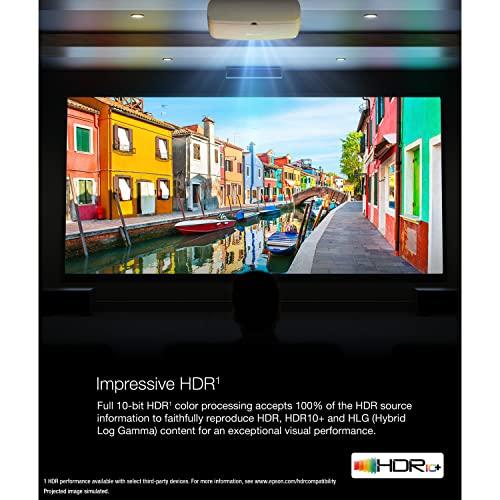
Both projectors support the latest HDR formats including HDR10, HDR10+, and HLG, but they handle high dynamic range content differently. HDR content contains information about both extremely bright highlights (like sunlight) and deep shadows, requiring projectors to display a much wider range of brightness levels than standard content.
The Epson LS11000 includes user-friendly HDR controls, including a dedicated HDR button on the remote and a 16-point brightness slider that lets you fine-tune the HDR presentation for different content and lighting conditions. Its high brightness output means HDR content looks vibrant and impactful, though it relies heavily on dynamic adjustments to achieve deep blacks.
The JVC DLA-NZ800 features Gen2 Frame Adapt HDR with Theater Optimizer, which analyzes HDR content frame by frame and applies real-time tone mapping to optimize the dynamic range. Combined with its superior native contrast, this results in HDR presentation that many reviewers consider reference-quality. The projector can simultaneously display the bright highlights and deep shadows that HDR content demands without the compromises inherent in dynamic adjustment systems.
The flexibility of installation can make or break a projector purchase, especially in existing rooms that weren't designed specifically for projection. This is where the Epson LS11000 shines brightest.
The Epson offers exceptional lens shift capabilities—you can move the projected image horizontally by ±47% and vertically by ±96% without any image distortion. Combined with its 2.1x motorized zoom, this means you can position the projector almost anywhere in your room and still achieve perfect image placement on your screen. This flexibility is invaluable when dealing with ceiling beams, existing furniture, or less-than-ideal room layouts.
The JVC DLA-NZ800 is more restrictive, with horizontal lens shift of ±34% and vertical shift of ±80%. While still good, it requires more precise positioning during installation. However, it compensates with a premium 17-element, all-glass lens system specifically designed for 8K projection, ensuring corner-to-corner sharpness that matches its high-resolution capabilities.
The weight difference is also significant—the Epson weighs 28 pounds compared to the JVC's 50.9 pounds. The JVC's substantial weight reflects its premium construction but may require professional installation and reinforced mounting solutions.
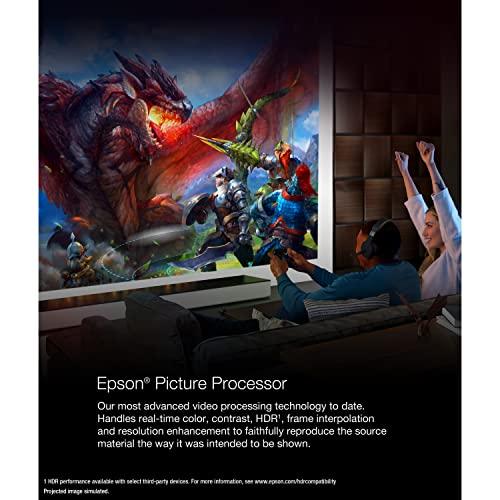
Both projectors recognize that modern home theaters serve double duty as gaming spaces, especially with the PlayStation 5 and Xbox Series X demanding 4K@120Hz support. Both projectors deliver here, featuring HDMI 2.1 connectivity that supports high refresh rate gaming.
The Epson LS11000 provides dual HDMI 2.1 inputs with 40 Gbps bandwidth, while the JVC DLA-NZ800 offers HDMI 2.3 with full 48 Gbps bandwidth. Both achieve input lag below 20 milliseconds, making them responsive enough for competitive gaming while maintaining cinematic image quality.
However, neither projector supports Variable Refresh Rate (VRR) or Auto Low Latency Mode (ALLM)—features that automatically optimize display settings for gaming. This isn't a dealbreaker, but it means manual adjustment when switching between movie and gaming content.
The construction differences between these projectors reflect their target markets. The Epson LS11000 emphasizes practical reliability and user-friendly operation. Its laser light source, comprehensive connectivity, and intuitive controls make it an excellent choice for enthusiasts who want outstanding performance without complexity.
The JVC DLA-NZ800 represents a no-compromise approach to construction. It uses hand-selected components, premium all-glass lens construction with a full aluminum barrel, and ISF certification for professional calibration. Every aspect of its design prioritizes absolute image quality over convenience or cost-effectiveness.
Both projectors offer three-year warranties, though the JVC includes first-year advanced replacement coverage—a recognition that users investing at this level expect minimal downtime.
Technology evolution is always a concern with premium electronics. The JVC's native 4K foundation and 8K processing capability provide better long-term relevance as content resolution continues increasing. Its superior contrast performance also ensures it will remain competitive as HDR content becomes more demanding.
The Epson LS11000 offers excellent current performance and should remain relevant for many years, though its pixel-shifting approach may show limitations with future ultra-high-resolution content. However, given typical home theater upgrade cycles of 5-7 years, this limitation may not be practically relevant for most users.
The Epson LS11000 represents exceptional value for users building a serious home theater without unlimited budgets. At roughly one-quarter the price of the JVC at the time of writing, it delivers convincing 4K performance, excellent brightness for varied lighting conditions, and unmatched installation flexibility.
Choose the Epson if you need a projector that adapts to your room rather than demanding room adaptation. Its extensive lens shift and high brightness output make it suitable for multipurpose spaces where some ambient light is inevitable. The straightforward setup process and user-friendly controls also make it ideal for users who want outstanding results without professional calibration.
The Epson particularly excels in rooms where projection distance or mounting location presents challenges. Its flexibility can turn seemingly impossible installations into straightforward setups.
The JVC DLA-NZ800 targets users building dedicated home theaters where image quality is paramount. At roughly four times the Epson's price at the time of writing, it delivers perhaps 20-30% better overall performance—a ratio that seems poor until you experience the difference firsthand.
Choose the JVC if you have a dedicated, light-controlled theater space and prioritize absolute image quality above all other considerations. Its superior native contrast, true 4K resolution, and 8K processing capability create images that consistently earn "reference quality" descriptions from professional reviewers.
The JVC also makes sense for users with extensive 3D movie collections, as it's one of the few current projectors maintaining 3D capability. Its premium construction and hand-selected components also appeal to users who view their projector as a long-term investment in their entertainment system.
Both projectors represent the current state of the art, but they serve different masters. The Epson LS11000 optimizes for practical excellence—delivering outstanding performance while remaining accessible to serious enthusiasts. The JVC DLA-NZ800 pursues absolute performance regardless of cost or complexity.
For most users building high-end home theaters, the Epson provides 90% of the JVC's performance at 25% of the cost. However, for that final 10% of performance—deeper blacks, sharper native resolution, more premium construction—the JVC remains unmatched.
The decision ultimately depends on your priorities, room characteristics, and budget. Both projectors will transform your viewing experience, but they'll do so in subtly different ways that reflect their design philosophies. Choose based on which approach better matches your specific needs and expectations.
| Epson Home Cinema LS11000 | JVC DLA-NZ800 |
|---|---|
| Display Technology - The foundation that determines image sharpness and detail | |
| 3LCD with pixel-shifting to 4K (convincing 4K from 1080p panels) | Native 4K D-ILA with 8K e-shift (true 4K enhanced to 8K) |
| Brightness - Critical for HDR performance and room flexibility | |
| 2,500 lumens (excellent for most home theaters) | 2,700 lumens (marginally brighter despite much higher cost) |
| Contrast Ratio - Most important spec for cinematic image quality | |
| 1,200,000:1 dynamic / ~140:1 native (relies on dimming) | 100,000:1 native / ∞:1 dynamic (700x better native performance) |
| Installation Flexibility - Determines how easy setup will be in your room | |
| Lens shift: ±47% horizontal, ±96% vertical (exceptional flexibility) | Lens shift: ±34% horizontal, ±80% vertical (good but more restrictive) |
| Weight and Size - Affects mounting requirements and installation complexity | |
| 28 lbs, 20.5" × 7.6" × 17.6" (manageable DIY installation) | 50.9 lbs, 19.7" × 9.2" × 19.9" (likely requires professional mounting) |
| Gaming Features - Important for console gaming at 4K/120Hz | |
| Dual HDMI 2.1, 40 Gbps, <20ms input lag | HDMI 2.3, 48 Gbps, <20ms input lag |
| HDR Support - Affects quality of modern movie content | |
| HDR10/10+/HLG with 16-point user adjustment | HDR10/10+/HLG with Frame Adapt HDR and Theater Optimizer |
| 3D Capability - For users with 3D movie collections | |
| No 3D support | Full HD 3D support (requires optional accessories) |
| Zoom Range - Affects projector placement flexibility | |
| 2.1x motorized zoom (more placement options) | 2.0x motorized zoom (adequate but less flexible) |
| Light Source Lifespan - Long-term operating costs | |
| 20,000 hours laser (no bulb replacements needed) | 20,000+ hours BLU-Escent laser (premium efficiency) |
| Build Quality - Reflects construction and component selection | |
| Reliable consumer construction with 3-year warranty | Hand-selected components, ISF certified, 3-year warranty with advanced replacement |
| Target User - Who each projector serves best | |
| Serious enthusiasts wanting excellent performance and flexibility | Dedicated theater owners prioritizing absolute image quality |
For dedicated home theaters with controlled lighting, the JVC DLA-NZ800 delivers superior performance with its native 4K resolution, exceptional 100,000:1 contrast ratio, and reference-quality image processing. However, the Epson Home Cinema LS11000 offers excellent cinematic performance at a much lower cost and provides more installation flexibility for challenging room layouts.
The core difference lies in display technology and price positioning. The Epson LS11000 uses 3LCD panels with advanced pixel-shifting to achieve 4K resolution, while the JVC DLA-NZ800 features native 4K D-ILA chips that can process up to 8K resolution. The JVC costs approximately four times more but delivers superior contrast and true native 4K performance.
Both projectors offer similar brightness levels - the Epson Home Cinema LS11000 produces 2,500 lumens while the JVC DLA-NZ800 outputs 2,700 lumens. The Epson may actually perform better in brighter rooms due to its more flexible installation options and consistent brightness across different picture modes.
Yes, both the Epson LS11000 and JVC DLA-NZ800 support 4K gaming at 120Hz through HDMI 2.1+ connectivity. Both achieve input lag below 20 milliseconds, making them suitable for PlayStation 5 and Xbox Series X gaming. The JVC offers slightly higher bandwidth with HDMI 2.3 support.
The Epson Home Cinema LS11000 is significantly easier to install, weighing only 28 pounds compared to the JVC's 50.9 pounds. The Epson also offers superior lens shift capabilities (±47% horizontal, ±96% vertical) versus the JVC's more limited adjustment range, making it much more forgiving for DIY installation.
This is where the JVC DLA-NZ800 shows its premium positioning with a native contrast ratio of 100,000:1 compared to the Epson LS11000's native contrast of approximately 140:1. While the Epson achieves high dynamic contrast through laser dimming, the JVC's superior native contrast delivers deeper blacks and more realistic images without relying on dynamic adjustments.
The Epson Home Cinema LS11000 provides exceptional value, delivering roughly 90% of the JVC DLA-NZ800's performance at about 25% of the cost. For most home theater enthusiasts, the Epson offers the best balance of performance, features, and affordability.
Both projectors support HDR10, HDR10+, and HLG formats for streaming content. The Epson LS11000 includes user-friendly HDR adjustment controls, while the JVC DLA-NZ800 features advanced Frame Adapt HDR processing that automatically optimizes HDR content scene by scene for superior dynamic range presentation.
Only the JVC DLA-NZ800 supports 3D playback with Full HD 3D capability, though you'll need to purchase optional RF transmitter and glasses separately. The Epson Home Cinema LS11000 does not support 3D content at all.
Both the Epson LS11000 and JVC DLA-NZ800 use laser light sources rated for 20,000+ hours of operation. This means you could watch 3 hours of content daily for over 18 years before needing service, eliminating the need for expensive bulb replacements that plague traditional projectors.
For screens over 120 inches, the JVC DLA-NZ800's native 4K resolution and superior contrast become more apparent, delivering sharper text and more detailed images. However, the Epson Home Cinema LS11000 still produces impressive large-screen images and may be preferable if your room layout requires flexible projector placement.
Both the Epson LS11000 and JVC DLA-NZ800 include comprehensive 3-year warranties covering parts and labor. The JVC additionally provides first-year advanced replacement service, reflecting its premium positioning and the expectation that users investing at this level require minimal downtime for their home theater systems.
We've done our best to create useful and informative comparisons to help you decide what product to buy. Our research uses advanced automated methods to create this comparison and perfection is not possible - please contact us for corrections or questions. These are the sites we've researched in the creation of this article: tvsbook.com - thesmarthomehookup.com - cepro.com - specsradar.com - projectorscreen.com - benq.com - projectorreviews.com - projectorscreen.com - youtube.com - projectorcentral.com - whathifi.com - projectorscreen.com - bestbuy.com - youtube.com - avsforum.com - versus.com - crutchfield.com - projectorcentral.com - shop.avispl.com - mediaserver.goepson.com - projectorscreen.com - bestbuy.com - simplehomecinema.com - dreamediaav.com - epson.com - techradar.com - valueelectronics.com - stereonet.com - youtube.com - sound-advice.online - eu.jvc.com - shop.avispl.com - audioadvice.com - paulsonsav.com - nfm.com

Privacy Policy
Terms and Conditions - Affiliate Policy
Home Security
© Copyright 2008-2026.
11816 Inwood Rd #1211, Dallas, TX 75244