

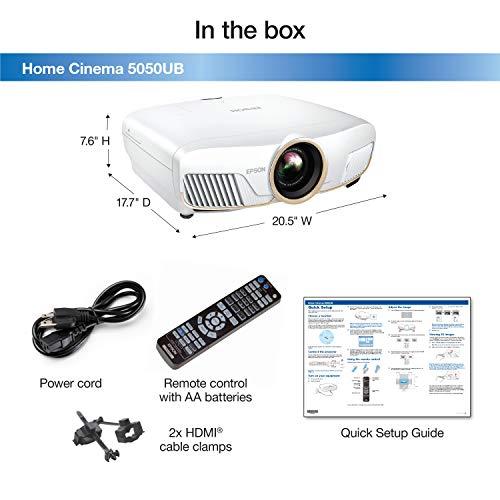
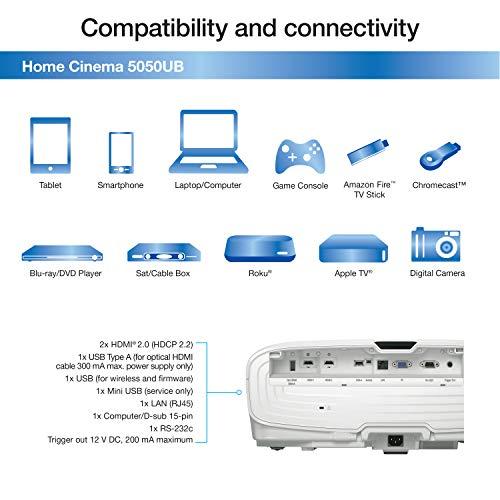
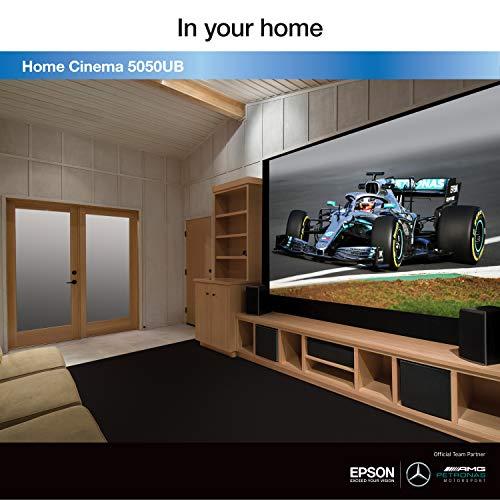
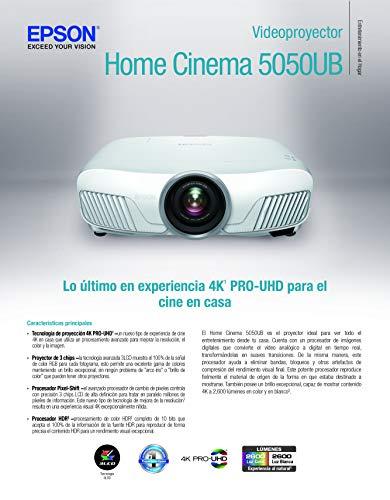
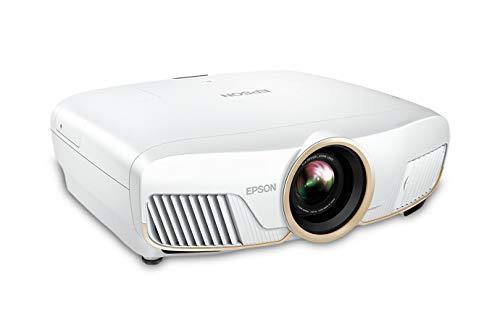
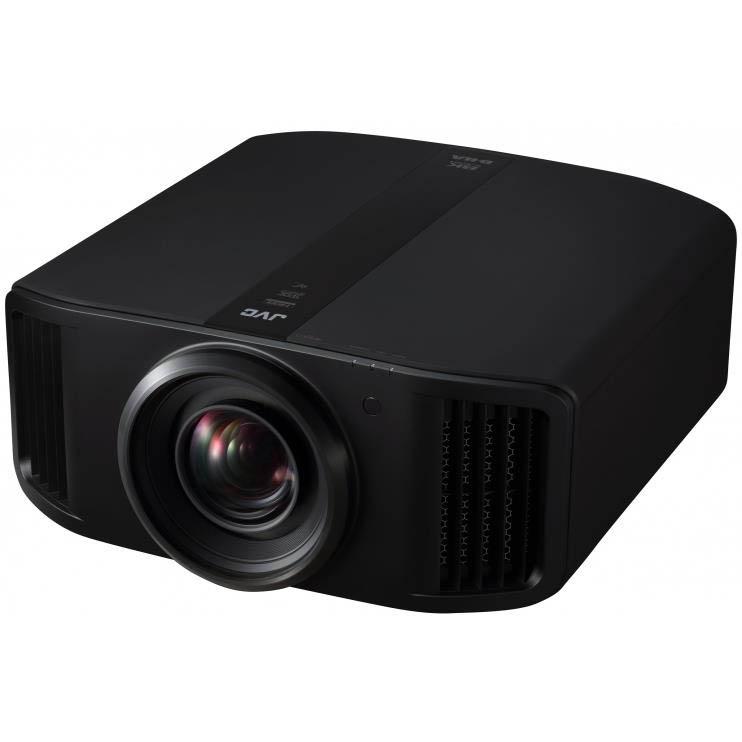
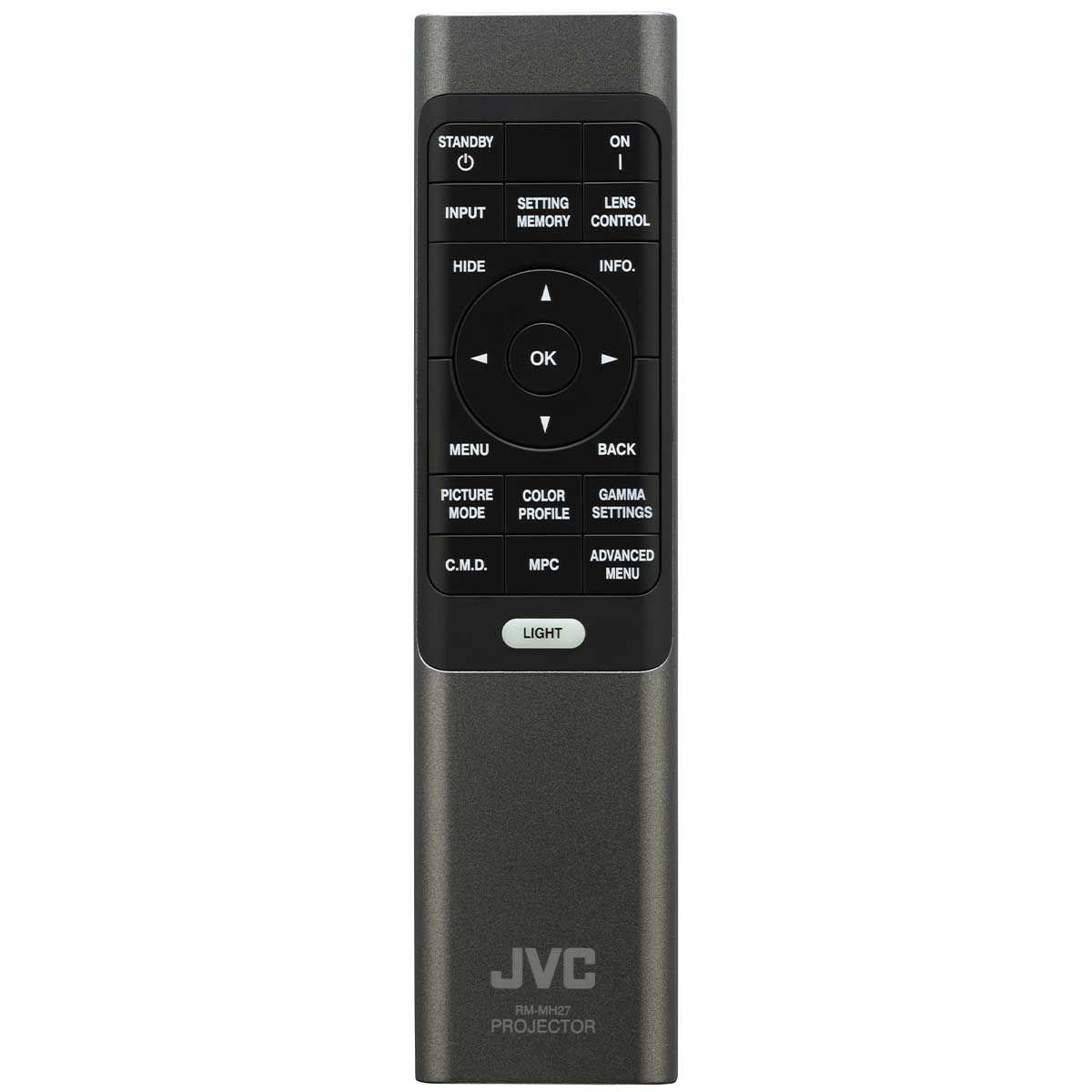
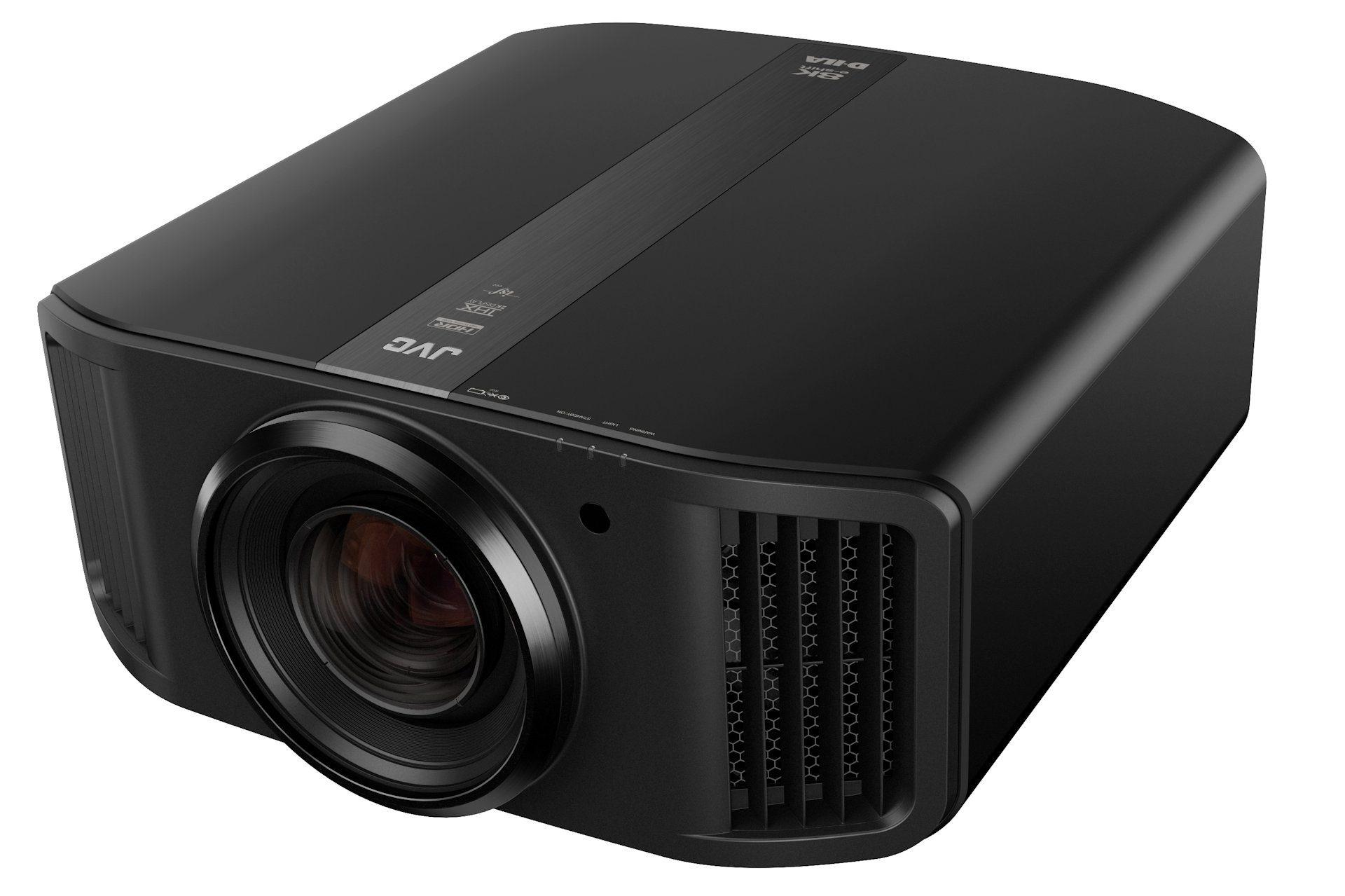
If you're looking to bring the cinema experience home, projectors offer something no TV can match: truly massive screen sizes that transform your living room into a theater. But choosing between different projector technologies can feel overwhelming, especially when comparing models from different price brackets. Today, we're diving deep into two popular options that represent very different approaches to home projection: the Epson Home Cinema 5050UB and the JVC DLA-NX9.
These projectors couldn't be more different in their design philosophy. The Epson 5050UB aims to deliver premium performance at a price point that won't require taking out a second mortgage, while the JVC DLA-NX9 represents the absolute pinnacle of home theater projection technology, with pricing to match. Understanding which approach works better for your specific situation requires looking beyond the marketing claims to understand what these technical differences actually mean for your viewing experience.
Before we jump into specifics, let's establish what makes a great home theater projector. Unlike the TVs most people are familiar with, projectors work by creating light and then shaping that light into an image that gets projected onto a screen or wall. This fundamental difference creates unique challenges and opportunities.
The most important performance characteristics for home theater projection are image resolution (how sharp and detailed the picture looks), contrast ratio (the difference between the brightest whites and darkest blacks), color accuracy (how realistic colors appear), and brightness (measured in lumens, which determines how well the projector performs in different lighting conditions).
Modern projectors use different core technologies to create images. LCD projectors like the Epson 5050UB use liquid crystal displays similar to computer monitors, while LCOS projectors like the JVC DLA-NX9 use liquid crystal on silicon technology. Each approach has distinct advantages that become apparent when you understand how they work.
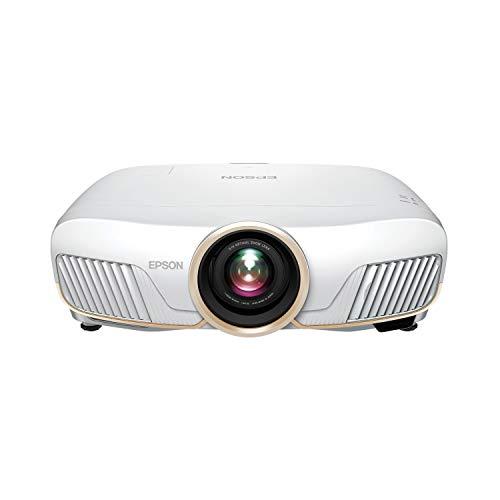
The Epson 5050UB, released in 2019, represents Epson's flagship LCD-based home theater projector. It uses what's called a 3-chip 3LCD design, meaning it has separate LCD panels for red, green, and blue light. This eliminates the "rainbow effect" (brief flashes of color that some people see with single-chip projectors) and generally produces more accurate colors than competing single-chip designs.
The JVC DLA-NX9, introduced around 2021, takes a completely different approach using JVC's D-ILA technology, which is their version of LCOS (Liquid Crystal on Silicon). Think of LCOS as a hybrid between LCD and DLP technologies that aims to capture the benefits of both while minimizing their weaknesses.
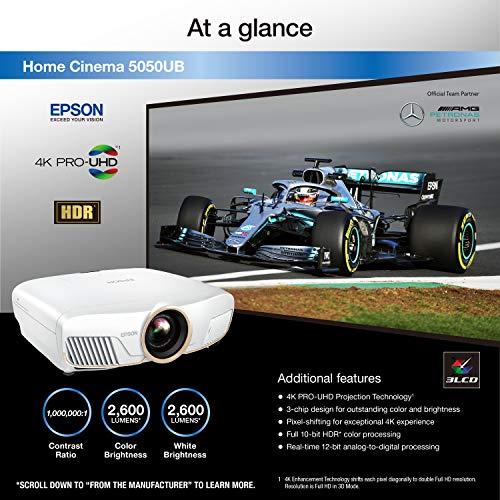
This is where things get interesting and somewhat controversial. The Epson 5050UB is not technically a native 4K projector. Instead, it uses native 1080p LCD panels (1920 x 1080 pixels) combined with Epson's "4K PRO-UHD" pixel-shift technology. This system rapidly shifts each pixel diagonally by half a pixel width, effectively displaying the image twice in slightly different positions. The result is what Epson calls "4K Enhancement," creating a perceived resolution that's sharper than standard 1080p but not quite true 4K.
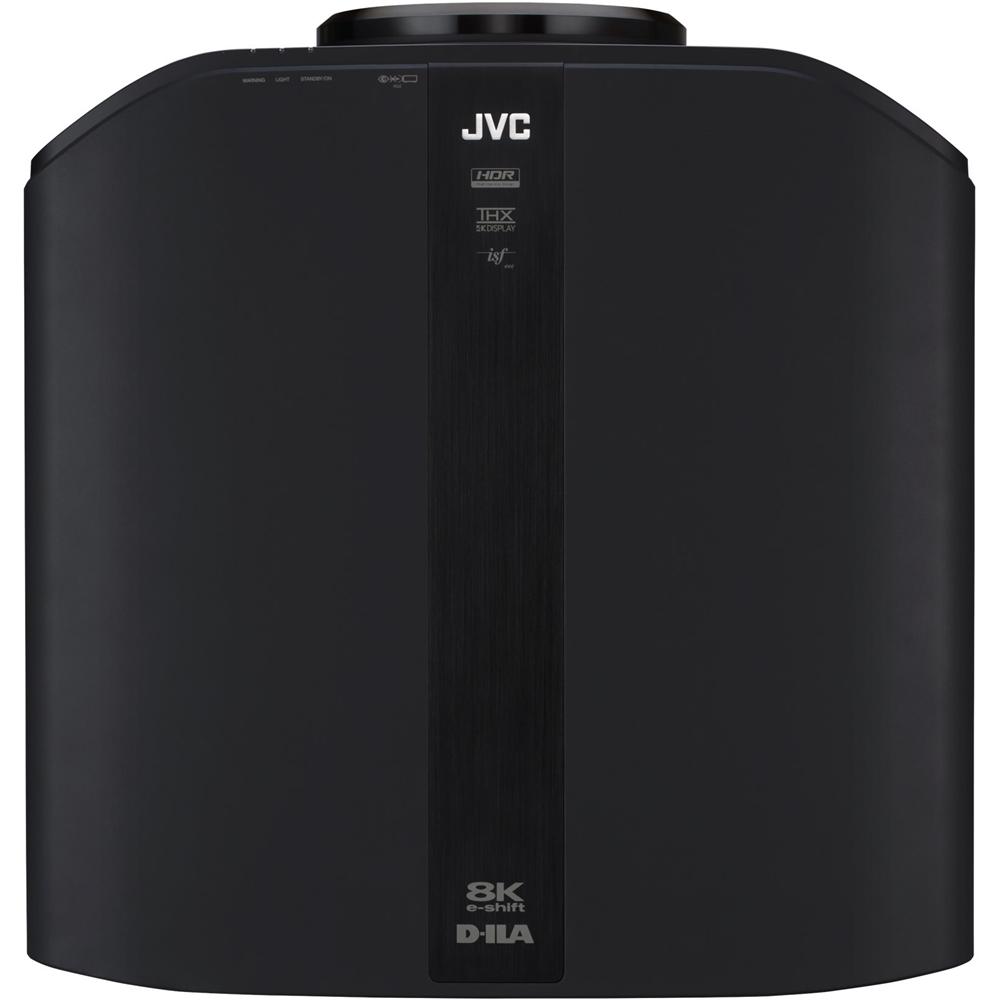
The JVC DLA-NX9 starts with native 4K D-ILA panels (4096 x 2160 pixels each) and then adds its own enhancement called "8K e-shift." This technology shifts pixels to create what JVC claims is an 8K-equivalent image (8192 x 4320 pixels). Since it starts with true 4K panels, even without the e-shift technology engaged, you're getting genuine 4K resolution.
In practical terms, what does this mean for your viewing experience? Based on extensive user feedback and professional reviews, both projectors deliver impressively sharp images that will satisfy most viewers. The Epson 5050UB produces images that are noticeably sharper than standard 1080p and, for normal viewing distances, the difference between its enhanced 4K and native 4K is often minimal. However, if you're sitting closer to a very large screen (think 150+ inches), or if you're the type of person who likes to pause movies and examine fine details, the JVC's native 4K resolution becomes more apparent.
The pixel-shift technologies in both projectors work best with real-world content like movies and TV shows. They're less effective with computer-generated test patterns, which is why some critics debate their "true" resolution. But for actual entertainment content, both deliver excellent sharpness that represents a significant upgrade from older 1080p projectors.
If resolution is about sharpness, contrast is about depth and realism. Contrast ratio measures the difference between the brightest white and the darkest black a projector can produce. Higher contrast ratios create more three-dimensional-looking images with better shadow detail and more realistic dark scenes.
This is where the fundamental technology differences between these projectors become most apparent. The Epson 5050UB achieves its contrast through a combination of its LCD panels and Epson's "UltraBlack" technology, which includes a dynamic iris that can close down to reduce light output during dark scenes. The projector claims a dynamic contrast ratio of 1,000,000:1, though these marketing numbers should always be taken with a grain of salt.
The JVC DLA-NX9 takes a different approach, relying primarily on the inherent characteristics of its D-ILA panels to achieve deep blacks. LCOS technology can block light more effectively than LCD when displaying black, resulting in what many consider superior black levels. The JVC claims a native contrast ratio of 100,000:1, which might seem lower than Epson's number, but native contrast (without dynamic adjustments) is often more meaningful for consistent performance.
In real-world viewing, particularly in dark rooms where contrast performance matters most, user consensus strongly favors JVC projectors for black level performance. This translates to dark movie scenes that look truly black rather than dark gray, and better overall image depth. The difference is most noticeable in content like horror films, space movies, or any scene with a lot of darkness.
However, the Epson 5050UB shouldn't be dismissed. Its UltraBlack technology produces black levels that are genuinely impressive for an LCD-based projector, and the difference may not be significant enough to matter for many viewers, especially considering the substantial price difference.
Brightness, measured in lumens, determines how well a projector performs in different lighting conditions. This specification has huge implications for how and where you can use your projector.
The Epson 5050UB produces 2,600 lumens of both color and white light output. This high brightness makes it remarkably versatile – you can watch it in a completely dark room for the ultimate theater experience, but it also performs well in rooms with some ambient light. This means you don't have to install blackout curtains or wait until nighttime to enjoy your projector.
The JVC DLA-NX9 produces 2,200 lumens, which is still quite respectable but about 15% less than the Epson. While this difference might seem small on paper, in practice, it can be the difference between being able to watch with some room lights on versus needing complete darkness for optimal viewing.
The brightness advantage of the Epson 5050UB cannot be overstated for many users. If you're planning to use your projector in a living room that serves multiple purposes, or if you don't have complete control over room lighting, the extra brightness provides significant flexibility. You can have family movie nights without turning your living room into a cave.
For dedicated home theaters with complete light control, the JVC's brightness is perfectly adequate, and the superior contrast performance can actually create a more immersive experience in these controlled conditions.
Color accuracy and the range of colors a projector can display (called color gamut) significantly impact how realistic and engaging your content looks. Both projectors excel in this area but take different approaches.
The Epson 5050UB benefits from its 3-chip 3LCD design, which naturally produces accurate colors without the color wheel timing issues that can affect some competing technologies. It supports the full 10-bit color processing needed for HDR content and covers wide color gamuts including the DCI-P3 standard used in modern movies.
The JVC DLA-NX9 also delivers exceptional color performance, often with even more precise out-of-box accuracy. JVC projectors have a reputation among calibration professionals for their ability to achieve reference-level color accuracy with proper setup.
Both projectors support HDR10 and HLG high dynamic range formats, which provide expanded brightness ranges and color information compared to standard content. However, their HDR implementations differ significantly. The Epson 5050UB provides a 16-step manual HDR adjustment that lets you fine-tune the HDR tone mapping for different content types. The JVC DLA-NX9 offers more sophisticated automatic tone mapping that can adjust frame-by-frame or scene-by-scene without user intervention.
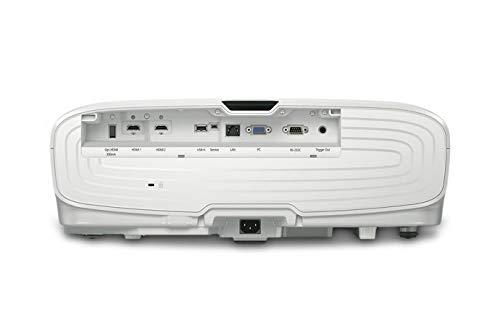
Both projectors offer motorized lens systems that make installation and adjustment much easier than manual alternatives. The Epson 5050UB provides extensive lens shift capabilities (±96% vertical, ±47% horizontal), motorized zoom with a 2.1x ratio, and lens memory that can save different configurations for various aspect ratios.
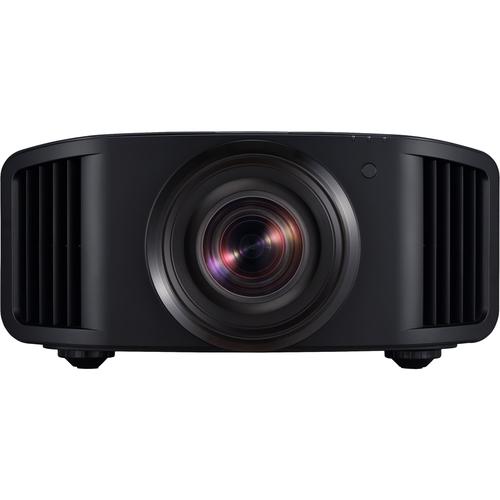
The JVC DLA-NX9 offers similar flexibility with its motorized lens system, featuring ±100% vertical and ±43% horizontal lens shift. It also includes what JVC calls "Installation Mode," which can save up to 10 different combinations of lens settings, making it easier to switch between different screen configurations or content types.
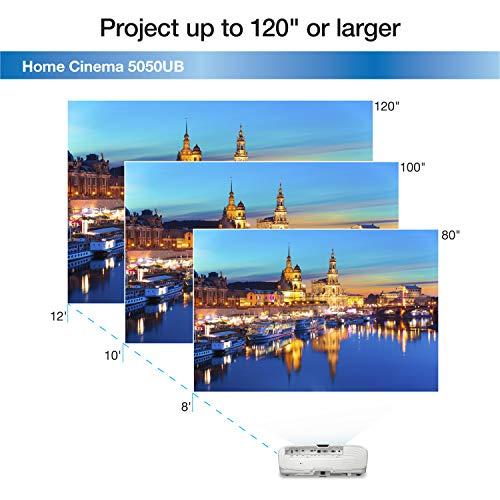
Both projectors can throw images from 50 to 300 inches, making them suitable for everything from modest home theaters to massive dedicated cinema rooms. The flexibility these motorized lens systems provide cannot be overstated – they allow precise image positioning without having to physically move the projector, which is crucial for permanent installations.
While both projectors are primarily designed for movie watching, gaming performance has become increasingly important as console gaming pushes into 4K territory. The Epson 5050UB offers input lag around 22-30 milliseconds, which is adequate for casual gaming but not ideal for competitive gaming where every millisecond counts. It supports 4K signals at 60Hz with 4:4:4 chroma subsampling, ensuring compatibility with modern gaming consoles.
The JVC DLA-NX9 includes a low latency mode that reduces input lag for gaming, though specific measurements vary. Given its premium positioning, gaming is often a secondary consideration, but the superior image quality can make single-player gaming experiences truly spectacular.
Neither projector supports the latest HDMI 2.1 features like 120Hz gaming or variable refresh rate, which were not standard when these models were released. This limitation is more noticeable now as gaming consoles and graphics cards have evolved to support these features.
At the time of writing, these projectors represent vastly different value propositions. The Epson 5050UB sits in the premium mainstream category, offering features and performance that were once reserved for much more expensive projectors. It delivers perhaps 80% of ultimate home theater projection performance at roughly 20% of the cost of reference-level alternatives.
The JVC DLA-NX9 occupies the ultra-premium segment where cost becomes secondary to ultimate performance. It's priced at several times the cost of the Epson, targeting enthusiasts who want the absolute best image quality possible and are willing to pay significantly for incremental improvements.
When evaluating value, consider your total system cost. A projector is just one component of a home theater system that also includes a screen, audio system, room treatments, and installation. In many cases, spending less on the projector and more on other components (particularly a high-quality screen and room acoustics) can provide better overall results.
Total cost of ownership extends beyond the purchase price. The Epson 5050UB uses a 250W UHE lamp with a rated life of 3,500-5,000 hours depending on the brightness mode used. Replacement lamps typically cost several hundred dollars, so heavy users should factor in periodic lamp replacement costs.
The JVC DLA-NX9 uses a 265W NSH lamp rated for approximately 4,500 hours in low mode. While the lamp life is longer than the Epson's, replacement costs for premium projector lamps are typically higher, and the projector's complexity may require professional service for major maintenance.
Both projectors benefit from regular maintenance including filter cleaning and proper ventilation to ensure optimal performance and longevity.
Choose the Epson Home Cinema 5050UB if you want excellent large-screen performance without ultra-premium pricing. It's ideal for multi-purpose rooms where you need flexibility in lighting conditions, and it offers outstanding value for users stepping up from entry-level projection. The extra brightness makes it forgiving of room conditions, while the comprehensive feature set provides room to grow as your home theater evolves.
The Epson also makes sense if you prioritize versatility over ultimate image quality, plan to use the projector for varied content including gaming, or are building a home theater on a more reasonable budget while still wanting premium features.
Choose the JVC DLA-NX9 if you're building a dedicated home theater where image quality is the primary concern and budget is secondary. Its superior black levels and contrast performance truly shine in light-controlled environments, while the native 4K resolution provides future-proofing for large screen installations.
The JVC is the right choice for videophiles who can appreciate and afford reference-level performance, installations with very large screens where resolution differences become apparent, or situations where the projector is the centerpiece of a no-compromise theater system.
Both the Epson 5050UB and JVC DLA-NX9 represent excellent examples of their respective approaches to home theater projection. The Epson delivers remarkable performance and flexibility at a price that makes premium projection accessible to more users. The JVC provides reference-level image quality for those willing to invest in the absolute best.
The key is honestly evaluating your room conditions, usage patterns, and budget to determine which approach better serves your needs. In many cases, the Epson 5050UB provides all the performance most users will ever need, while the JVC DLA-NX9 serves those who demand perfection and have the budget to achieve it.
Remember that a great projector is just the foundation of an excellent home theater experience. Proper screen selection, room setup, and calibration are equally important to achieving the cinematic experience you're seeking.
| Epson Home Cinema 5050UB | JVC DLA-NX9 |
|---|---|
| Native Resolution - Determines baseline image sharpness | |
| 1080p with 4K pixel-shift enhancement | Native 4K with 8K e-shift enhancement |
| Brightness - Critical for room lighting flexibility | |
| 2,600 lumens (excellent for multi-purpose rooms) | 2,200 lumens (optimized for dedicated theaters) |
| Contrast Technology - Affects black levels and image depth | |
| LCD with UltraBlack + dynamic iris (1,000,000:1 dynamic) | D-ILA LCOS technology (100,000:1 native) |
| HDR Processing - How well it handles modern content | |
| HDR10/HLG with 16-step manual adjustment | HDR10/HLG with automatic frame-by-frame tone mapping |
| Lens System - Installation flexibility and image quality | |
| 2.1x motorized zoom, ±96% vertical/±47% horizontal shift | Premium all-glass lens, ±100% vertical/±43% horizontal shift |
| Lamp Life - Long-term operating costs | |
| 3,500-5,000 hours (requires more frequent replacement) | 4,500+ hours (longer intervals between replacements) |
| Color Technology - Affects color accuracy and rainbow effects | |
| 3-chip 3LCD (eliminates rainbow effect, accurate colors) | D-ILA LCOS (reference-level color accuracy potential) |
| Gaming Performance - Input lag for console gaming | |
| 22-30ms input lag, 4K/60Hz support | Low latency mode available, optimized for movies |
| Target Market - Who this projector is designed for | |
| Premium mainstream buyers wanting flexibility | Ultra-premium enthusiasts prioritizing image quality |
| Best Use Case - Where each projector excels | |
| Multi-purpose rooms with some ambient light | Dedicated dark theaters with large screens |
The JVC DLA-NX9 delivers superior home theater performance with native 4K resolution, exceptional black levels, and reference-quality image processing. However, the Epson Home Cinema 5050UB offers excellent home theater performance at a significantly lower price point, making it the better value choice for most users. The JVC is ideal for dedicated dark theaters, while the Epson works well in multi-purpose rooms.
The Epson Home Cinema 5050UB uses 4K pixel-shift technology, which enhances native 1080p panels to create near-4K sharpness by rapidly shifting pixels. The JVC DLA-NX9 features true native 4K panels that display genuine 4K resolution without enhancement. For normal viewing distances, both deliver impressively sharp images, but the JVC provides superior detail on very large screens.
The Epson Home Cinema 5050UB produces 2,600 lumens compared to the JVC DLA-NX9's 2,200 lumens. This brightness advantage makes the Epson more versatile for rooms with ambient light, while the JVC is optimized for completely dark environments where its superior contrast performance can shine.
Both the Epson Home Cinema 5050UB and JVC DLA-NX9 support HDR10 and HLG formats for enhanced dynamic range. The Epson offers 16-step manual HDR adjustment, while the JVC provides more sophisticated automatic tone mapping that adjusts scene-by-scene for optimal HDR performance.
The JVC DLA-NX9 delivers superior black levels thanks to its D-ILA LCOS technology, which can block light more effectively than LCD panels. While the Epson Home Cinema 5050UB features UltraBlack technology for improved contrast, the JVC produces deeper blacks and better shadow detail, especially noticeable in dark movie scenes.
The Epson Home Cinema 5050UB offers better gaming performance with 22-30ms input lag and support for 4K/60Hz gaming. The JVC DLA-NX9 includes a low latency mode but is primarily optimized for movie watching. Both lack HDMI 2.1 features like 120Hz gaming, making the Epson the better choice for regular gaming use.
The Epson Home Cinema 5050UB lamp lasts 3,500-5,000 hours depending on brightness mode, while the JVC DLA-NX9 lamp provides approximately 4,500 hours. Both require eventual lamp replacement, but the JVC offers slightly longer intervals between replacements, though replacement costs are typically higher for premium projectors.
Both the Epson Home Cinema 5050UB and JVC DLA-NX9 feature motorized lens systems with extensive zoom and lens shift capabilities. The Epson offers ±96% vertical lens shift, while the JVC provides ±100% vertical adjustment. Both include lens memory for saving multiple configurations, making installation flexible for either projector.
The Epson Home Cinema 5050UB and JVC DLA-NX9 can both project 50-300 inch images. The Epson works well for most screen sizes up to 150 inches, while the JVC's native 4K resolution provides advantages for very large screens where pixel-level detail becomes more apparent.
The Epson Home Cinema 5050UB provides exceptional value, delivering premium home theater performance at a fraction of the cost of ultra-premium alternatives like the JVC DLA-NX9. The JVC offers reference-level performance but at a significantly higher price point, making the Epson the better value choice for most buyers.
The Epson Home Cinema 5050UB supports active 3D with compatible RF glasses for Full HD 3D content. The JVC DLA-NX9 also supports various 3D formats including frame packing and side-by-side. However, 3D content has become less popular, making this a secondary consideration for most buyers choosing between these projectors.
For dedicated home theaters with complete light control, the JVC DLA-NX9 is the premium choice, offering superior black levels, native 4K resolution, and reference-quality image processing. However, the Epson Home Cinema 5050UB still delivers excellent dedicated theater performance at a much lower cost, making it a smart choice for budget-conscious enthusiasts who want premium features without ultra-premium pricing.
We've done our best to create useful and informative comparisons to help you decide what product to buy. Our research uses advanced automated methods to create this comparison and perfection is not possible - please contact us for corrections or questions. These are the sites we've researched in the creation of this article: rtings.com - audiogurus.com - hometechnologyreview.com - projectorscreen.com - youtube.com - thesmarthomehookup.com - techgearlab.com - rtings.com - projectorreviews.com - projectorreviews.com - projectorreviews.com - projectorcentral.com - avsforum.com - avsforum.com - rtings.com - avsforum.com - audiogeneral.com - hifiheaven.net - manuals.plus - crutchfield.com - mediaserver.goepson.com - projectorcentral.com - epson.com - bestbuy.com - projectorreviews.com - projectorcentral.com - youtube.com - projectorscreen.com - avsforum.com - crutchfield.com - avnirvana.com - flanners.com - projectorcentral.com - soundandvision.com - jvc.com - eu.jvc.com - directappliance.com

Privacy Policy
Terms and Conditions - Affiliate Policy
Home Security
© Copyright 2008-2026.
11816 Inwood Rd #1211, Dallas, TX 75244