


Home theater projectors have come a long way since their early days of dim, blurry images and frequent lamp replacements. Today's models can transform your living room into a cinema-quality experience that rivals commercial theaters. But with so many options available, choosing the right projector can feel overwhelming—especially when comparing models that take fundamentally different approaches to achieving spectacular image quality.
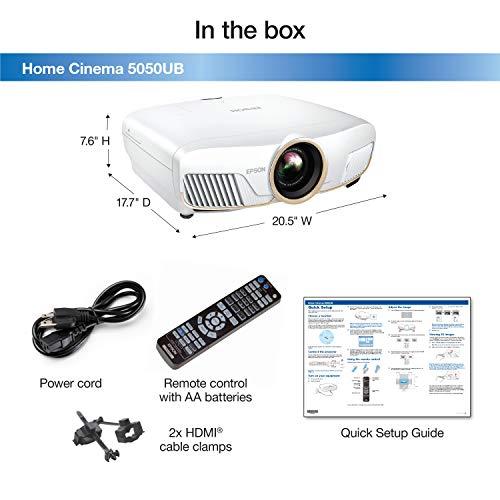
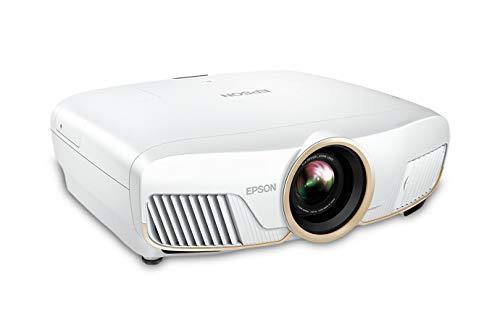
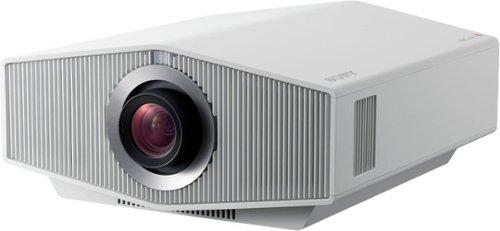
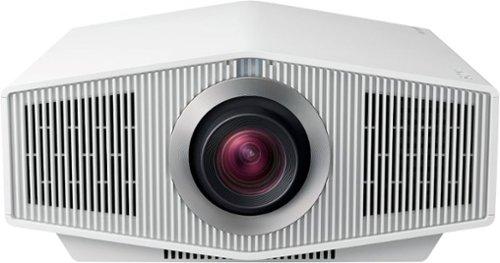
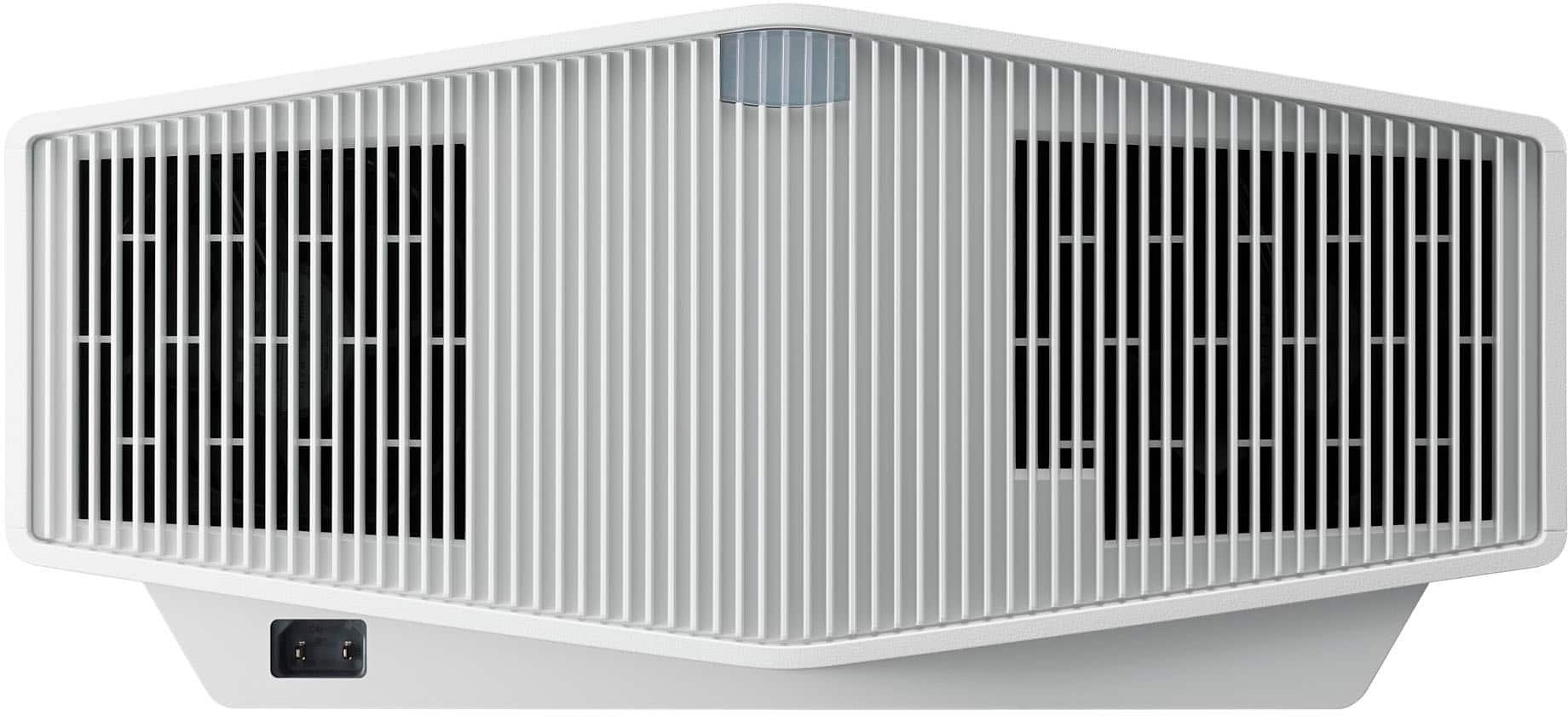
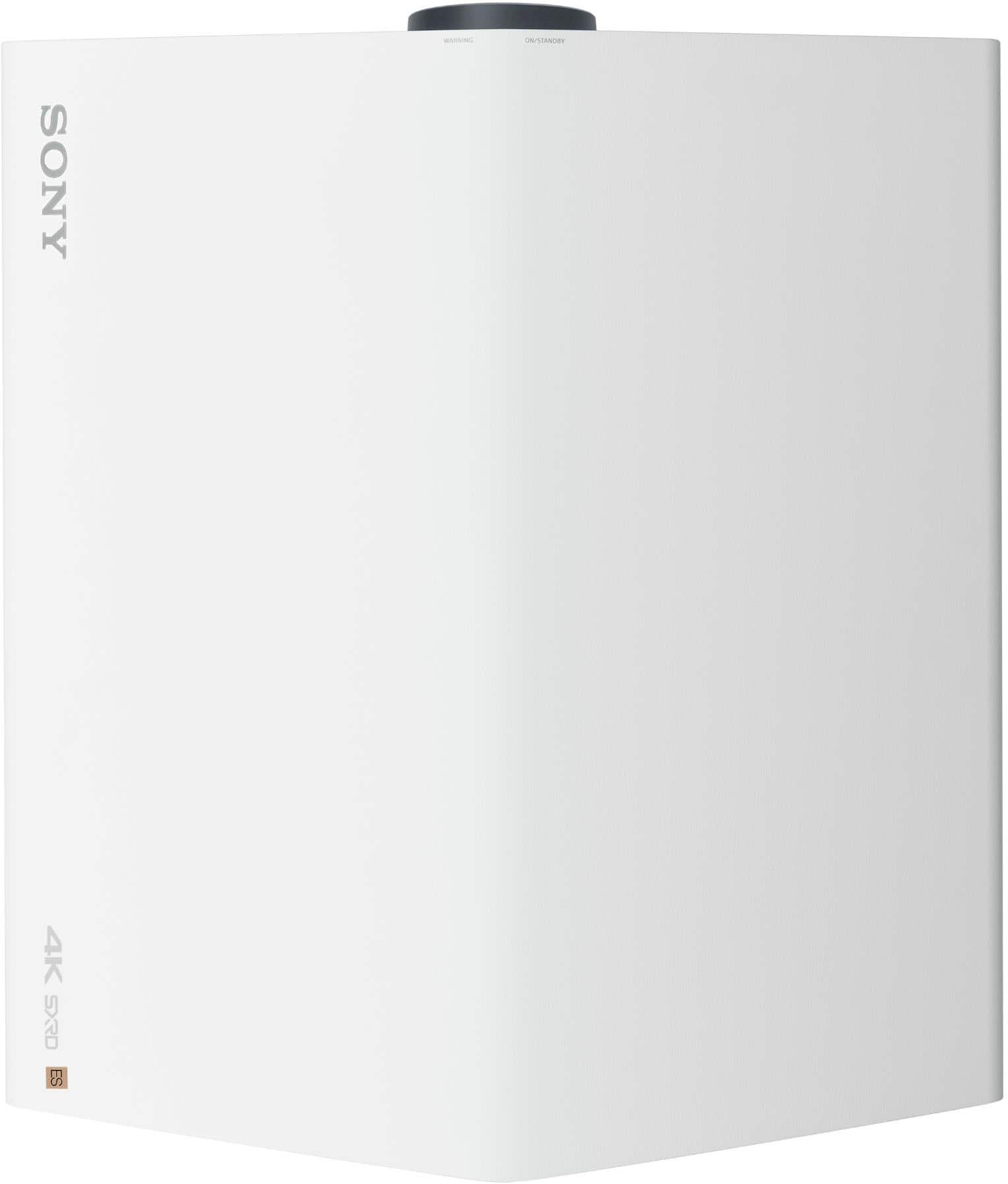
Two projectors that perfectly illustrate this dilemma are the Epson Home Cinema 5050UB and the Sony BRAVIA Projector 8. At the time of writing, these represent two distinct philosophies: Epson's approach focuses on delivering premium performance at accessible prices, while Sony pursues absolute technical excellence regardless of cost. Understanding their differences will help you make the right choice for your home theater setup.
Before diving into specifics, it's worth understanding what makes a great home theater projector. The most important factors are brightness (measured in lumens), contrast ratio (the difference between the darkest and brightest parts of an image), color accuracy, resolution, and installation flexibility. These elements work together to create an immersive viewing experience that can make you forget you're watching projected light on a wall.
Modern projectors also need to handle High Dynamic Range (HDR) content—a technology that expands the range of colors and brightness levels beyond traditional video. Think of HDR as the difference between a faded photograph and looking through a window: HDR preserves the bright highlights and deep shadows that make images look lifelike.
The projector category has evolved significantly since 2019, when both of these models were released. Back then, true 4K projectors cost well into the five-figure range, making pixel-shifting technology (which enhances lower-resolution images to near-4K quality) an attractive compromise. Laser light sources were also relatively new to consumer projectors, promising longer life but at premium prices.
The biggest technical difference between the Epson 5050UB and Sony BRAVIA Projector 8 lies in how they handle 4K resolution. This fundamental distinction affects everything from image sharpness to long-term value.
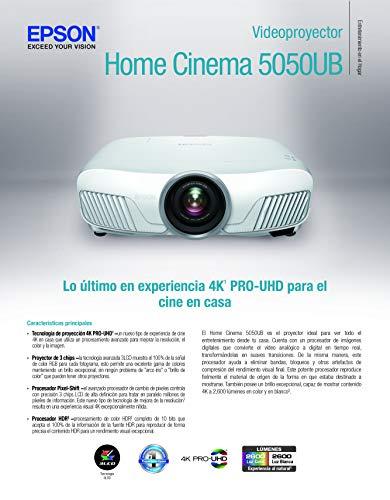
The Epson 5050UB uses what's called pixel-shifting technology. Its three LCD panels are actually native 1080p resolution (1920 x 1080 pixels), but Epson's 4K PRO-UHD system shifts each pixel diagonally by half a pixel width. This happens so quickly that your eye perceives it as increased resolution—essentially doubling the perceived pixel count to create 4K-enhanced images.
This might sound like marketing trickery, but pixel-shifting actually works remarkably well in practice. For most viewing distances and content types, the Epson 5050UB delivers images that look genuinely sharp and detailed. The limitation appears mainly with specific test patterns or when sitting very close to the screen, where you might notice that single-pixel details aren't perfectly resolved.
In contrast, the Sony BRAVIA Projector 8 features true native 4K resolution through three SXRD panels, each displaying the full 3840 x 2160 pixel array. SXRD (Silicon X-tal Reflective Display) is Sony's version of liquid crystal on silicon technology, borrowed from their professional cinema projectors. Every one of the 8.3 million pixels is individually controlled, meaning the projector can display genuine 4K content pixel-for-pixel without any processing tricks.
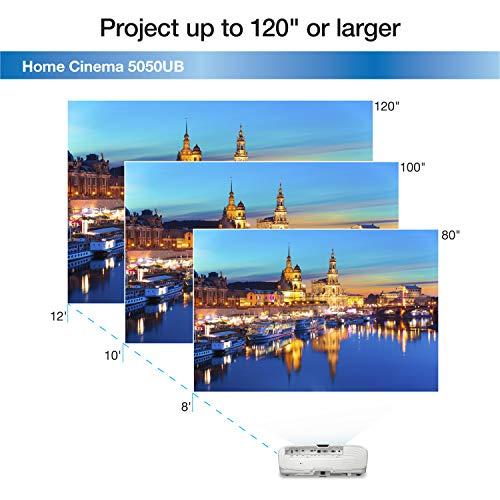
The practical difference becomes most apparent with fine details: text, architectural lines, or intricate patterns will look slightly sharper on the Sony BRAVIA Projector 8. However, for movies and gaming at typical home theater viewing distances (8-12 feet from a 100-120 inch screen), both projectors deliver impressively sharp images that most viewers would consider excellent.
Both projectors produce similar brightness levels—around 2,600-2,700 lumens—but they achieve this through completely different technologies, which has major implications for long-term ownership.
The Epson 5050UB uses a traditional ultra-high efficiency (UHE) lamp, specifically a 250W bulb that's essentially a very bright, specialized light bulb. These lamps gradually dim over time, typically lasting 3,500 to 5,000 hours depending on usage settings. In ECO mode, you can extend lamp life significantly, though at the cost of some brightness. When the lamp eventually dies, replacement costs typically run a few hundred dollars.
The Sony BRAVIA Projector 8 takes a radically different approach with its Z-Phosphor laser light source. Instead of a traditional bulb, it uses lasers to excite phosphor materials that create light. This isn't just a technical curiosity—it fundamentally changes the ownership experience. The laser is rated for 20,000 hours of use, which translates to roughly 10-15 years of typical home use without any maintenance or replacement.
Laser technology also provides more precise control over brightness. While traditional lamps dim gradually and somewhat unpredictably, lasers can be modulated instantly and precisely. This allows the Sony BRAVIA Projector 8 to achieve what Sony calls "nearly infinite" dynamic contrast by dimming or brightening specific areas of the image in real-time.
For brightness consistency, the laser approach wins decisively. Traditional lamps lose roughly 20-30% of their brightness over their lifespan, meaning colors gradually become less vibrant and dark scenes less detailed as the lamp ages. Lasers maintain consistent output throughout their life, ensuring the image quality you calibrated on day one remains the same years later.
Contrast ratio—the difference between the brightest whites and darkest blacks—arguably matters more than resolution for creating immersive, cinematic images. Both projectors excel here, but through different methods.
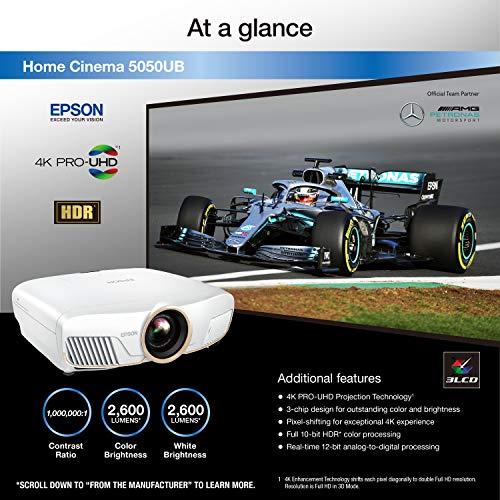
The Epson 5050UB achieves its impressive contrast through UltraBlack technology, which uses a proprietary compensation filter to control light polarization and reduce light leakage. Combined with an auto iris that opens and closes based on scene content, this system can achieve a dynamic contrast ratio of 1,000,000:1. In practical terms, this means dark movie scenes look genuinely dark, not the washed-out gray that plagued earlier projectors.
The three-chip LCD design also helps contrast performance. Unlike single-chip DLP projectors that use spinning color wheels, the Epson 5050UB creates colors simultaneously through separate red, green, and blue LCD panels. This eliminates rainbow artifacts (brief flashes of color separation that some viewers notice with DLP projectors) and allows for better color accuracy in dark scenes.
The Sony BRAVIA Projector 8 approaches contrast differently, using its laser light source for unprecedented precision. The XR Deep Black technology can modulate the laser output instantly, darkening specific areas of the image without affecting surrounding details. This creates what Sony describes as "nearly infinite" dynamic contrast, though the practical difference from Epson's 1,000,000:1 ratio is minimal in real-world viewing.
Where Sony pulls ahead is in consistency. The laser's precise control means contrast performance doesn't degrade over time like lamp-based systems. The SXRD panels also contribute excellent native contrast—the difference between light and dark when no dynamic processing is active—which provides a solid foundation for the dynamic enhancements.
Color reproduction separates good projectors from great ones, and both models excel here through different technologies.
The Epson 5050UB covers 100% of the DCI-P3 color space—the standard used for digital cinema—and approximately 75% of the even wider BT.2020 color standard that's becoming important for premium HDR content. The three-LCD design naturally produces accurate colors without the complexity of color wheels, and Epson's 10-bit color processing can display over one billion different color variations.
Out of the box, the Epson 5050UB delivers remarkably accurate colors that satisfy most viewers without professional calibration. The projector includes Cinema and Cinema Filter modes that provide different color presentations, allowing you to choose between reference accuracy and more vivid, eye-catching colors depending on your content and preferences.
The Sony BRAVIA Projector 8 takes a more sophisticated approach with XR Triluminos Pro technology, achieving 95% of DCI-P3 coverage through advanced processing rather than just hardware capability. The real advantage lies in Sony's XR Processor, which uses cognitive intelligence—essentially AI-inspired algorithms—to analyze and optimize color reproduction for different types of content.
This processing power shows up in subtle ways: skin tones look more natural, gradients appear smoother, and color transitions seem more lifelike. The SXRD panels contribute to this performance by providing excellent color uniformity across the entire image, eliminating the slight color variations that can appear with other display technologies.
For critical viewing, both projectors can be professionally calibrated to reference standards, but the Sony BRAVIA Projector 8 starts from a more accurate baseline and maintains that accuracy over time thanks to its stable laser light source.
High Dynamic Range content represents the current frontier in home theater, expanding beyond traditional video's limited brightness and color range to more closely match what our eyes see in real life. Both projectors handle HDR content well, but their approaches reflect their different philosophies.
The Epson 5050UB supports HDR10 and HLG formats with a 16-step manual tone mapping adjustment. This gives you considerable control over how HDR content appears, allowing you to optimize the image for your specific room conditions and preferences. The UltraBlack technology helps tremendously with HDR performance by ensuring dark scenes maintain their detail even when bright highlights are present in the same frame.
However, this manual approach requires more user involvement. Different HDR sources and even different scenes within the same movie might benefit from different settings, meaning you'll occasionally need to adjust the tone mapping for optimal results. For enthusiasts who enjoy fine-tuning their setup, this control is welcome; for others, it can feel like homework.
The Sony BRAVIA Projector 8 handles HDR through XR Dynamic Tone Mapping, which automatically analyzes each frame and adjusts the brightness and color mapping in real-time. This isn't just simple auto-brightness adjustment—the system identifies objects within each scene and optimizes them individually. The result is HDR content that looks consistently excellent without manual intervention.
The laser light source gives Sony a significant advantage in HDR processing. Traditional lamps have limited dynamic range themselves, but lasers can be modulated across a much wider brightness spectrum, allowing for more accurate reproduction of HDR's expanded brightness levels.
Gaming on projectors has become increasingly important as console gaming has evolved to support 4K and HDR. Both projectors handle gaming well, but with notable differences.
The Epson 5050UB delivers input lag of around 22-30 milliseconds, which works well for most gaming scenarios. It supports 4K gaming at 60Hz with full HDR, making it compatible with current-generation PlayStation and Xbox consoles. The limitation is the 60Hz refresh rate cap—you won't be able to take advantage of 120Hz gaming modes that some newer games support.
The Sony BRAVIA Projector 8 excels in gaming with Auto Low Latency Mode (ALLM) that automatically reduces input lag when gaming sources are detected. Input lag drops to under 21ms at 4K/60fps and impressively low 12ms at 4K/120fps. This makes it suitable even for competitive gaming, where every millisecond of responsiveness matters.
The Sony's HDMI 2.1 support enables 4K gaming at 120Hz, future-proofing it for upcoming games and console capabilities. For serious gamers, this performance advantage could justify the price difference alone.
Both projectors offer excellent installation flexibility, though with different strengths.
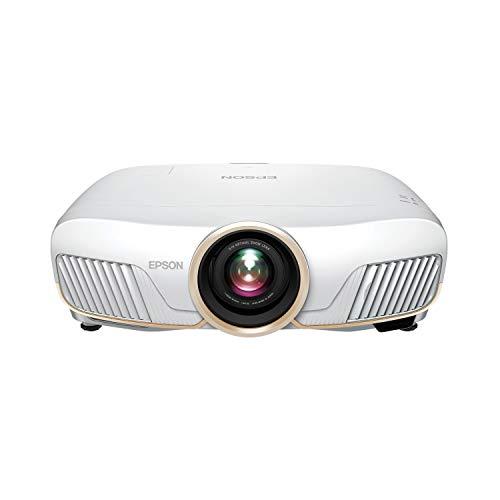
The Epson 5050UB provides exceptional lens shift capabilities—±96% vertical and ±47% horizontal—meaning you can place the projector significantly off-center from your screen and still achieve a perfect image through lens adjustment rather than digital keystone correction, which can degrade image quality. The 2.1x motorized zoom also accommodates various room sizes, and lens memory settings let you save different configurations for different aspect ratios.
This flexibility proves invaluable in real-world installations where the ideal projector placement isn't always possible due to room layout, ceiling obstacles, or aesthetic considerations. The Epson 5050UB can work in challenging installations where other projectors would require compromises.
The Sony BRAVIA Projector 8 offers more limited but still excellent lens shift (±85% vertical, ±36% horizontal) while providing superior build quality and a more compact design. At 30% smaller than previous Sony 4K projectors, it fits better in smaller rooms or less obtrusive ceiling installations.
The Sony also includes more sophisticated control options for integration with professional home automation systems, making it better suited for custom installations where the projector needs to communicate with lighting, audio, and other home theater components.
While initial purchase price tells part of the story, long-term costs significantly affect the value equation.
At the time of writing, the Epson 5050UB costs roughly one-fifth the price of the Sony BRAVIA Projector 8, making it accessible to many more buyers. However, lamp replacement costs add up over time. Assuming moderate use of 3-4 hours daily, you'll likely replace the lamp 2-3 times over a decade, adding several hundred dollars to the total ownership cost.
The Sony BRAVIA Projector 8 requires a substantial upfront investment but eliminates ongoing lamp costs entirely. The 20,000-hour laser life means most users will never need any light source maintenance. For buyers planning to keep their projector for many years, this can actually make the Sony more economical over time, despite its higher initial cost.
Choose the Epson Home Cinema 5050UB if you want exceptional home theater performance without breaking the bank. It's ideal for movie enthusiasts who primarily watch content in dedicated dark rooms and don't need absolute cutting-edge specifications. The installation flexibility makes it perfect for challenging room layouts, and the image quality rivals projectors costing much more.
The Epson particularly excels for users who enjoy fine-tuning their setup and don't mind occasional lamp replacements as part of ownership. If you're building your first serious home theater or upgrading from a much older projector, the performance improvement will be dramatic and satisfying.
Choose the Sony BRAVIA Projector 8 if you demand the absolute best performance and can justify the premium cost. It's the better choice for users who want true native 4K resolution, maintenance-free operation, and cutting-edge features like advanced HDR processing and high-refresh gaming.
The Sony makes most sense for serious enthusiasts planning long-term ownership, those with varied lighting conditions requiring consistent performance, or gamers who want the latest capabilities. If you're building a high-end home theater where the projector needs to perform flawlessly for years without intervention, the Sony's professional-grade engineering justifies its cost.
Both projectors represent excellent choices within their respective market segments. The Epson 5050UB proves that exceptional home theater performance doesn't require luxury pricing, while the Sony BRAVIA Projector 8 demonstrates what's possible when engineering constraints are relaxed in pursuit of ultimate performance. Your choice ultimately depends on your budget, performance priorities, and long-term plans for your home theater setup.
| Epson Home Cinema 5050UB | Sony BRAVIA Projector 8 |
|---|---|
| Display Resolution - Affects image sharpness and detail | |
| 1080p native with 4K pixel-shifting enhancement | True native 4K (3840 x 2160) with SXRD panels |
| Light Source Technology - Impacts maintenance costs and longevity | |
| Traditional UHE lamp (3,500-5,000 hour life) | Z-Phosphor laser (20,000 hour maintenance-free life) |
| Brightness Output - Determines usability in various lighting conditions | |
| 2,600 lumens (color and white) | 2,700 lumens with consistent laser output |
| Contrast Technology - Critical for deep blacks and cinematic image quality | |
| UltraBlack with auto iris (1,000,000:1 dynamic) | XR Deep Black with laser modulation (nearly infinite) |
| HDR Processing - Affects quality of modern streaming and UHD content | |
| Manual 16-step tone mapping adjustment | XR Dynamic Tone Mapping with real-time optimization |
| Color Gamut Coverage - Determines color accuracy and vibrancy | |
| 100% DCI-P3, ~75% BT.2020 coverage | 95% DCI-P3 with XR Triluminos Pro processing |
| Gaming Performance - Important for console and PC gaming | |
| 22-30ms input lag, 4K/60Hz maximum | Under 21ms at 4K/60Hz, under 12ms at 4K/120Hz with ALLM |
| Installation Flexibility - Affects placement options in your room | |
| Exceptional: ±96% vertical, ±47% horizontal lens shift | Good: ±85% vertical, ±36% horizontal lens shift |
| Connectivity Standards - Determines compatibility with future devices | |
| HDMI 2.0 with 4K/60Hz support | HDMI 2.1 with 4K/120Hz capability |
| Long-term Ownership Costs - Total cost beyond initial purchase | |
| Periodic lamp replacements ($200-300 every few years) | Zero maintenance costs for typical 10-15 year ownership |
| Market Position - Value proposition and target buyer | |
| Premium performance at accessible pricing | Professional-grade technology at luxury pricing |
The Sony BRAVIA Projector 8 delivers true native 4K resolution (3840 x 2160) through its SXRD panels, while the Epson Home Cinema 5050UB uses pixel-shifting technology to enhance its native 1080p image to 4K quality. For absolute sharpness and detail, especially with fine text or patterns, the Sony BRAVIA Projector 8 has the advantage. However, the Epson Home Cinema 5050UB produces impressively sharp images that satisfy most viewers at typical home theater viewing distances.
The Epson Home Cinema 5050UB uses a traditional UHE lamp that lasts 3,500-5,000 hours and requires periodic replacement, while the Sony BRAVIA Projector 8 features a maintenance-free laser light source rated for 20,000 hours. Laser technology provides consistent brightness over time, instant on/off capability, and eliminates the ongoing cost and hassle of lamp replacements that come with the Epson Home Cinema 5050UB.
Both projectors produce similar brightness levels—the Epson Home Cinema 5050UB outputs 2,600 lumens while the Sony BRAVIA Projector 8 delivers 2,700 lumens. The key difference is consistency: the Sony BRAVIA Projector 8 maintains its brightness throughout its lifespan, while the Epson Home Cinema 5050UB gradually dims as the lamp ages. Both work best in controlled lighting environments for optimal image quality.
The Sony BRAVIA Projector 8 excels in gaming with Auto Low Latency Mode, achieving input lag under 21ms at 4K/60Hz and under 12ms at 4K/120Hz. The Epson Home Cinema 5050UB delivers 22-30ms input lag, suitable for most gaming but not competitive play. For serious gamers wanting the latest features, the Sony BRAVIA Projector 8 supports 4K/120Hz gaming that the Epson Home Cinema 5050UB cannot match.
The Epson Home Cinema 5050UB provides exceptional value, delivering premium home theater performance at a fraction of the cost of the Sony BRAVIA Projector 8. However, when factoring in long-term lamp replacement costs, the Sony BRAVIA Projector 8 can become more economical over 10+ years of ownership due to its maintenance-free laser operation.
Both projectors excel in contrast performance through different methods. The Epson Home Cinema 5050UB achieves 1,000,000:1 dynamic contrast using UltraBlack technology and an auto iris system. The Sony BRAVIA Projector 8 delivers "nearly infinite" dynamic contrast through precise laser modulation. In practical home theater use, both produce excellent deep blacks and bright highlights.
The Epson Home Cinema 5050UB offers superior installation flexibility with ±96% vertical and ±47% horizontal lens shift, making it ideal for challenging room layouts. The Sony BRAVIA Projector 8 provides good but more limited lens shift at ±85% vertical and ±36% horizontal. Both include motorized zoom and focus, but the Epson Home Cinema 5050UB accommodates more placement scenarios.
For dedicated dark room viewing, both projectors excel, but they serve different needs. The Epson Home Cinema 5050UB delivers outstanding cinematic image quality with deep blacks and accurate colors at an accessible price point. The Sony BRAVIA Projector 8 provides the ultimate experience with true 4K resolution and professional-grade performance, justifying its premium positioning for serious enthusiasts.
Both the Epson Home Cinema 5050UB and Sony BRAVIA Projector 8 support HDR10 and HLG formats. The Epson Home Cinema 5050UB offers manual 16-step tone mapping control for customization, while the Sony BRAVIA Projector 8 features XR Dynamic Tone Mapping that automatically optimizes HDR content in real-time. Neither supports Dolby Vision at the time of writing.
The Epson Home Cinema 5050UB operates at 20-31 dB depending on the lamp mode, with eco mode being notably quieter. The Sony BRAVIA Projector 8 runs at approximately 26 dB, benefiting from more efficient laser cooling requirements. Both are suitable for home theater use, though the Epson Home Cinema 5050UB can be louder in high-brightness modes.
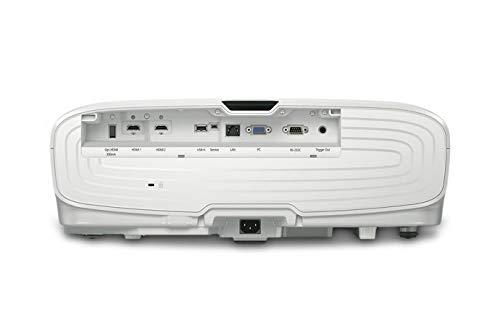
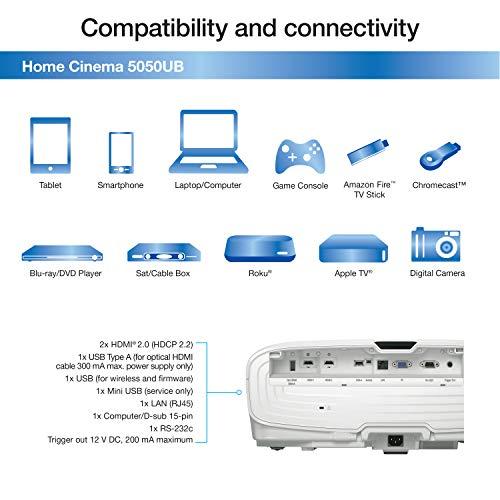
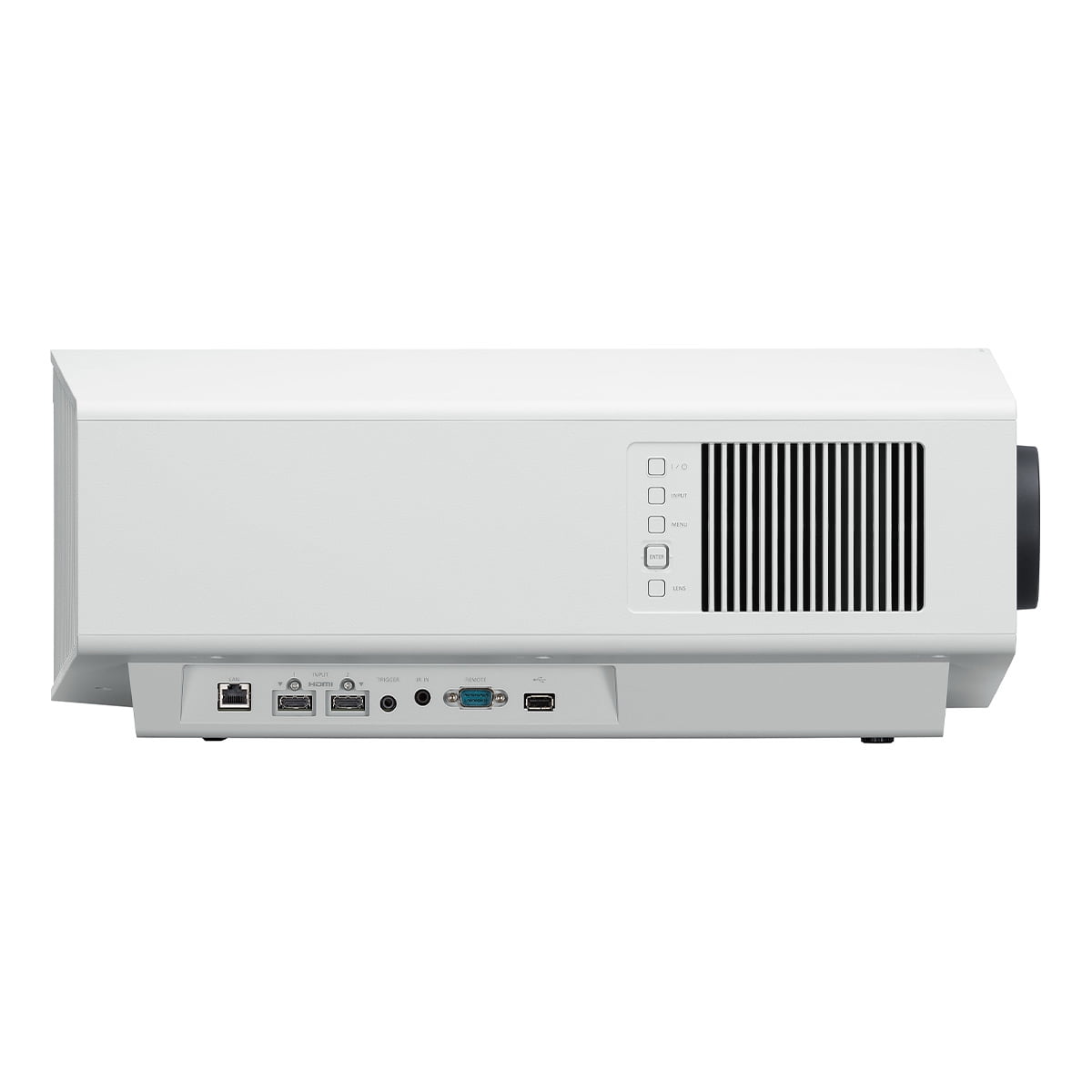
The Epson Home Cinema 5050UB includes two HDMI 2.0 ports (one with HDCP 2.2) supporting 4K/60Hz and 4:4:4 chroma subsampling. The Sony BRAVIA Projector 8 features HDMI 2.1 connectivity enabling 4K/120Hz support for next-generation gaming consoles. Neither projector includes Wi-Fi, Bluetooth, or smart TV features—both require external sources for streaming content.
For long-term ownership, the Sony BRAVIA Projector 8 offers significant advantages with its 20,000-hour maintenance-free laser and consistent performance over time. The Epson Home Cinema 5050UB requires periodic lamp replacements but provides excellent performance at a much lower entry cost. Choose the Sony BRAVIA Projector 8 if you plan to keep your projector for a decade or more, or the Epson Home Cinema 5050UB for immediate premium performance at accessible pricing.
We've done our best to create useful and informative comparisons to help you decide what product to buy. Our research uses advanced automated methods to create this comparison and perfection is not possible - please contact us for corrections or questions. These are the sites we've researched in the creation of this article: rtings.com - audiogurus.com - hometechnologyreview.com - projectorscreen.com - youtube.com - thesmarthomehookup.com - techgearlab.com - rtings.com - projectorreviews.com - projectorreviews.com - projectorreviews.com - projectorcentral.com - avsforum.com - avsforum.com - rtings.com - avsforum.com - audiogeneral.com - hifiheaven.net - manuals.plus - crutchfield.com - mediaserver.goepson.com - projectorcentral.com - epson.com - bestbuy.com - projectorreviews.com - projectorcentral.com - projectorreviews.com - valueelectronics.com - stereonet.com - crutchfield.com - audioholics.com - crutchfield.com - projectorcentral.com - pro.sony - electronics.sony.com - cepro.com - community.verizon.com

Privacy Policy
Terms and Conditions - Affiliate Policy
Home Security
© Copyright 2008-2026.
11816 Inwood Rd #1211, Dallas, TX 75244