

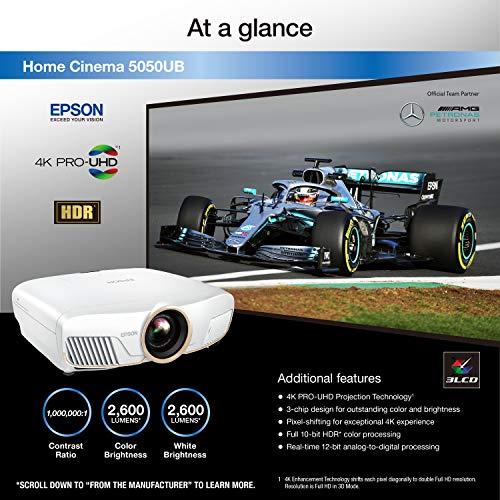
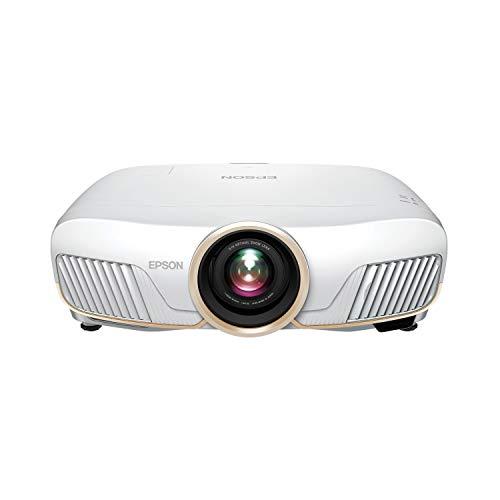
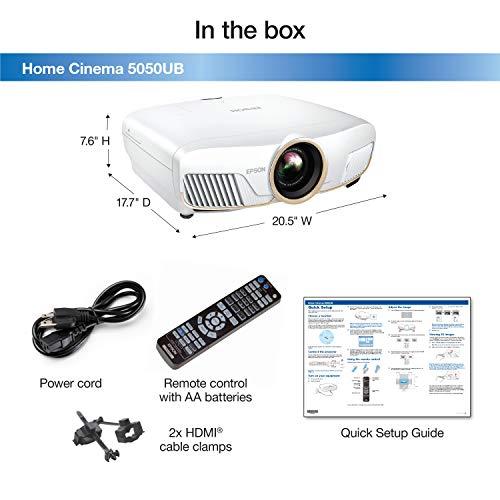
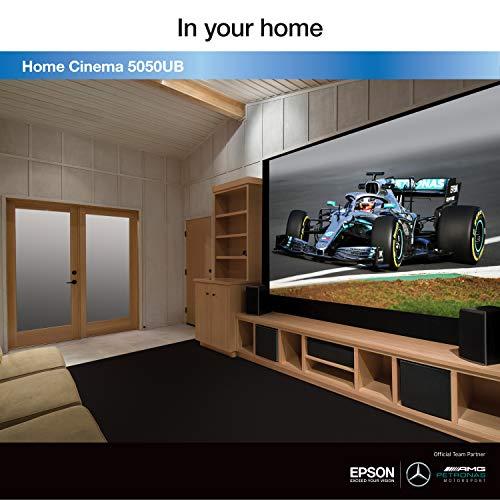
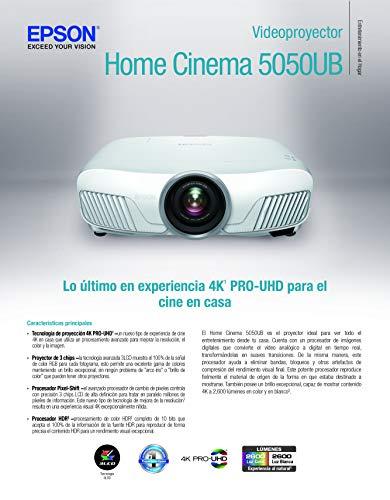
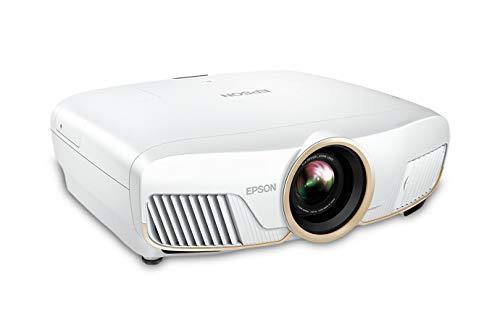
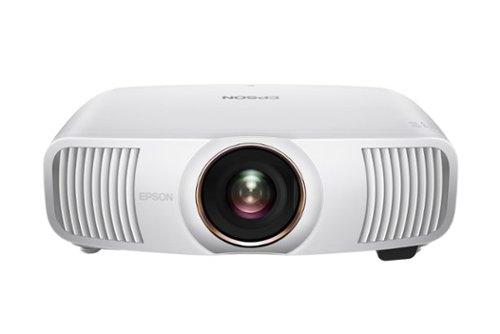
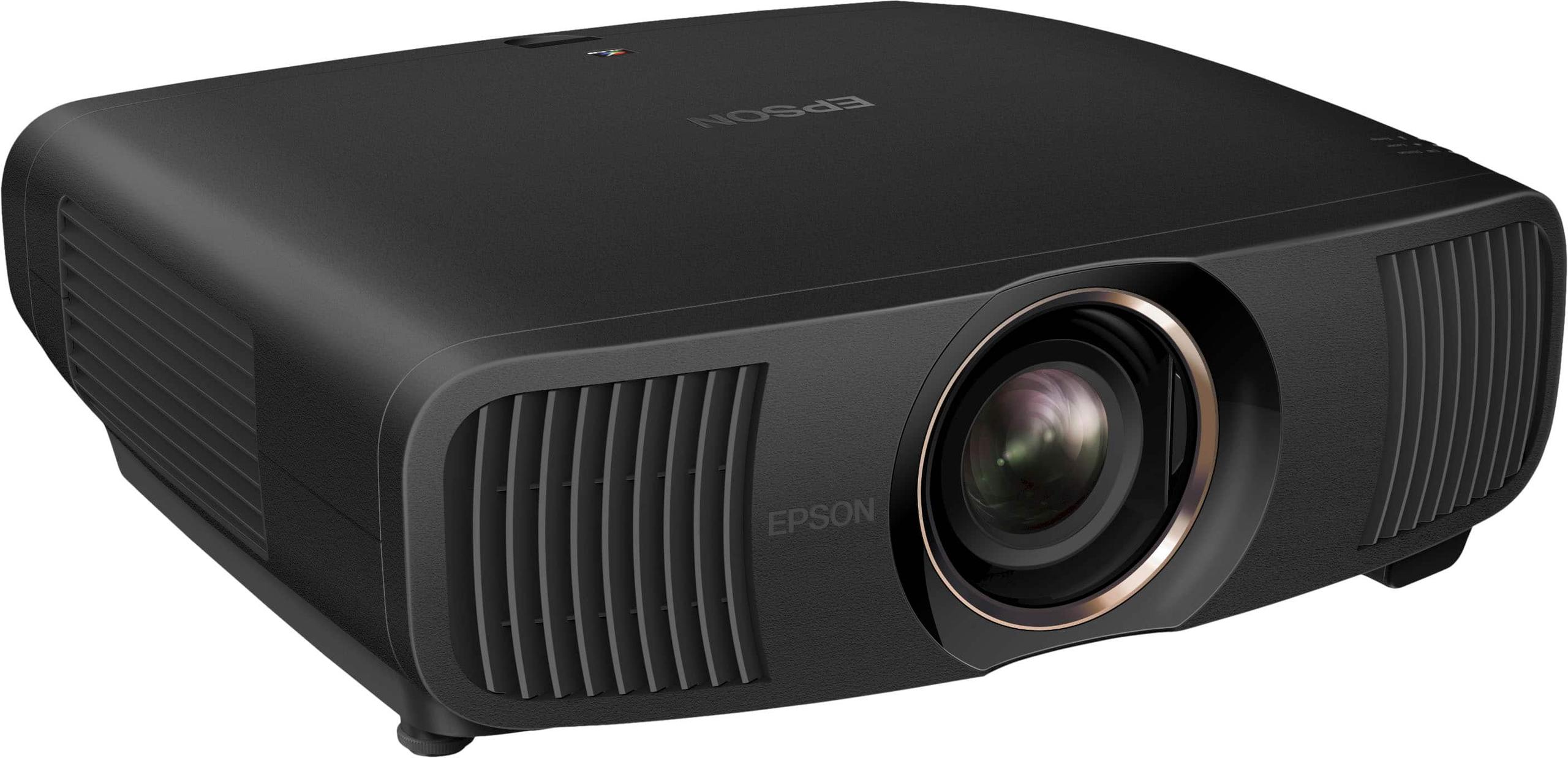

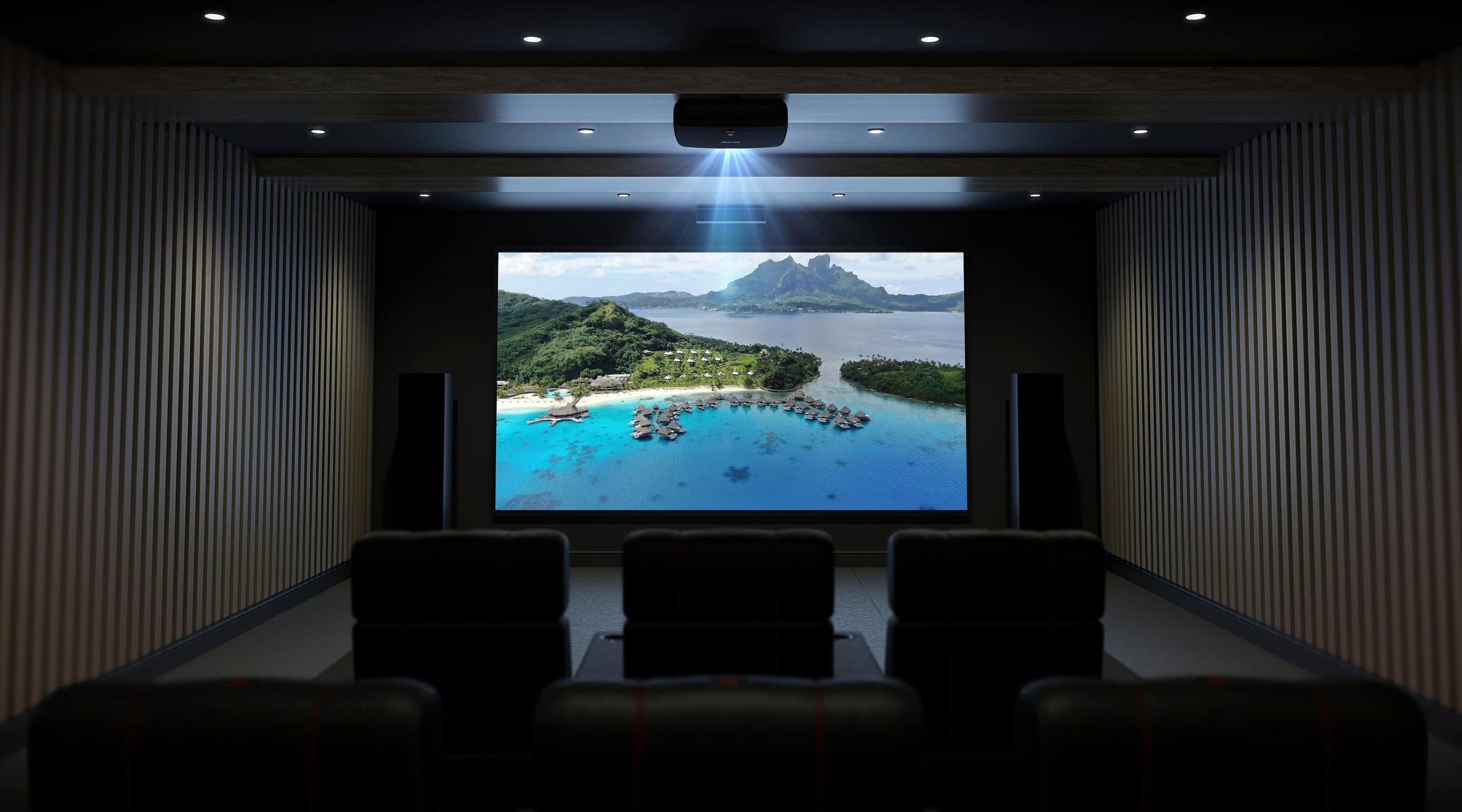
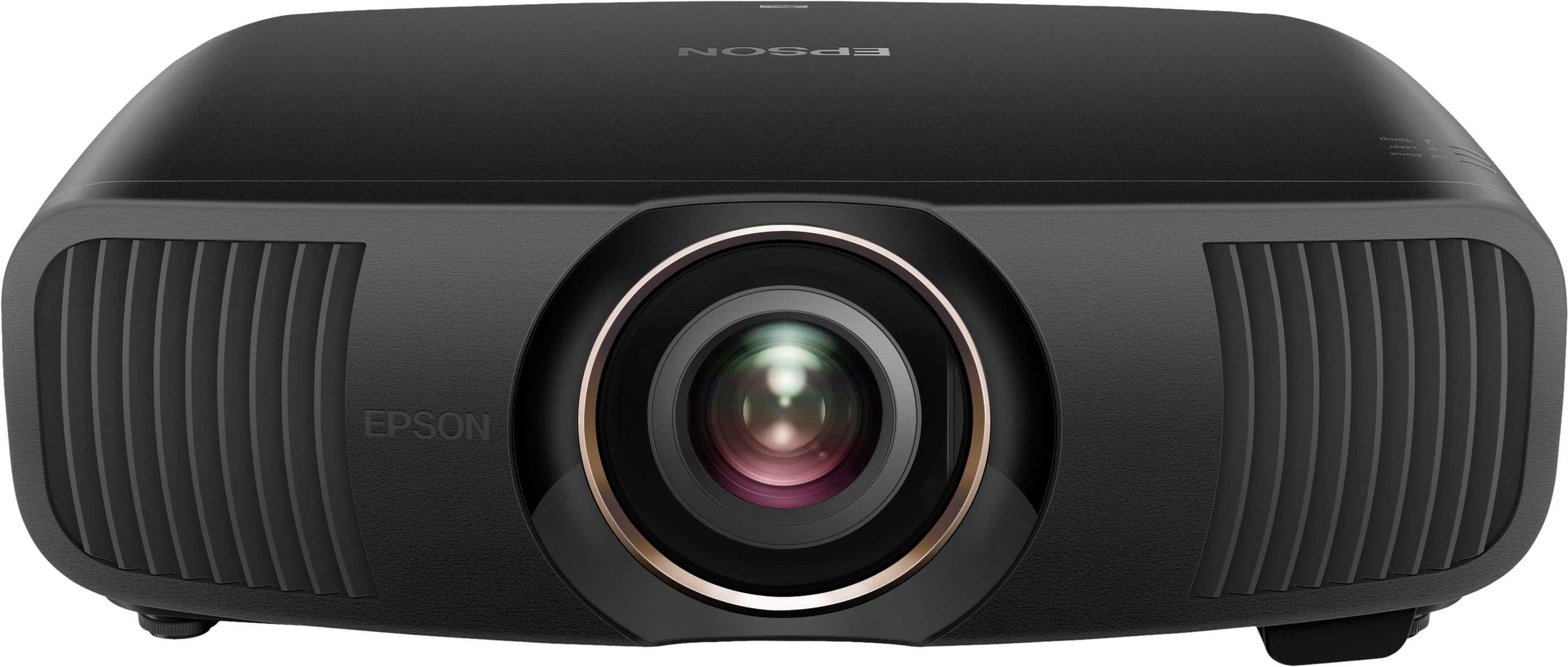
When you're ready to create a serious home theater experience, the projector becomes the centerpiece of everything. It's the difference between watching a movie and experiencing it. After researching dozens of premium home theater projectors, two Epson models consistently rise to the top: the Home Cinema 5050UB and the QB1000. These aren't your typical office presentation projectors – they're engineered specifically for that cinematic magic you get in commercial theaters.
But here's the thing: at the time of writing, these projectors sit at very different price points, with the QB1000 costing roughly 2.5 times more than the 5050UB. That price gap represents fundamentally different approaches to premium projection, and understanding these differences is crucial to making the right choice for your setup.
Before diving into specifics, let's talk about what separates premium home theater projectors from everything else. These machines prioritize image quality above all – specifically contrast (the difference between the darkest and brightest parts of an image), color accuracy, and detail reproduction. They're designed for rooms where you can control lighting, and they're built to handle the most demanding content like 4K HDR movies.
The most critical performance metrics for home theater projectors are native contrast ratio, color gamut coverage (how much of the visible color spectrum they can reproduce), brightness levels, and how well they handle HDR (High Dynamic Range) content. HDR is particularly important because it allows for much brighter highlights and darker shadows in the same scene, creating more realistic images that match what your eyes see in real life.
Both Epson projectors use 3LCD technology, which means they have three separate LCD panels – one each for red, green, and blue light. This eliminates the "rainbow effect" you might see with single-chip DLP projectors, where fast-moving objects can show brief color separation artifacts.
The fundamental difference between the 5050UB and QB1000 lies in their light sources, and this choice affects everything from image quality to long-term costs.
Released in 2019, the 5050UB uses a traditional 250-watt UHE (Ultra High Efficiency) lamp. Now, before you think "old-fashioned," consider this: lamp-based projectors can achieve exceptional native contrast ratios because the lamp can be completely shut off during dark scenes. The 5050UB takes this further with Epson's UltraBlack technology, which includes an additional optical filter that controls light polarization to suppress internal light leakage.
The result is remarkable. In our research of professional reviews and user experiences, the 5050UB consistently delivers black levels that measure around 0.047 nits – that's incredibly dark, giving you those deep, inky blacks that make space scenes in movies look genuinely convincing. The trade-off is lamp maintenance: you'll need to replace the bulb every 3,500 to 5,000 hours depending on your brightness settings.
The QB1000, launched in 2024, represents Epson's latest laser technology. Instead of a single lamp, it uses multiple laser diodes that can last up to 20,000 hours – potentially over a decade of typical use. Laser projectors maintain consistent brightness throughout their lifespan, unlike lamps that gradually dim.
The QB1000 also features Epson's new 32-bit QZX Picture Processor, which handles real-time optimization of color, contrast, and HDR processing. This processor enables dynamic tone mapping for HDR content, meaning it can adjust the brightness and contrast on a scene-by-scene basis rather than applying static settings to entire movies.
However, laser projectors typically can't achieve the same deep blacks as lamp-based models. The QB1000 exhibits what reviewers describe as a slightly blueish black floor – still very good, but not quite matching the 5050UB's exceptional contrast performance.
Contrast ratio might be the most important specification for home theater projectors, yet it's often misunderstood. Native contrast is measured by displaying the brightest white and darkest black the projector can produce simultaneously. Dynamic contrast involves the projector adjusting its light source based on scene content.
The 5050UB excels here with measured native contrast ratios exceeding 3,300:1 and those exceptionally dark 0.047 nit black levels. This means when you're watching a scene like the space sequences in "Interstellar" or the cave scenes in "The Dark Knight," you get genuine darkness that makes bright elements pop with incredible depth.
The QB1000 compensates for its higher black floor with significantly more aggressive dynamic contrast processing, achieving up to 5,000,000:1 dynamic contrast. Its laser dimming algorithm can completely shut off the light source during fade-to-black moments, though the baseline black level isn't as deep as the 5050UB.
For most viewers in properly darkened rooms, both projectors deliver excellent contrast performance. The 5050UB has the edge in pure black level performance, while the QB1000 offers more sophisticated dynamic processing.
Brightness, measured in lumens, determines how large a screen you can use and how much ambient light your room can have. The 5050UB delivers 2,600 lumens, while the QB1000 produces 3,300 lumens – a 27% increase that translates to noticeably brighter images.
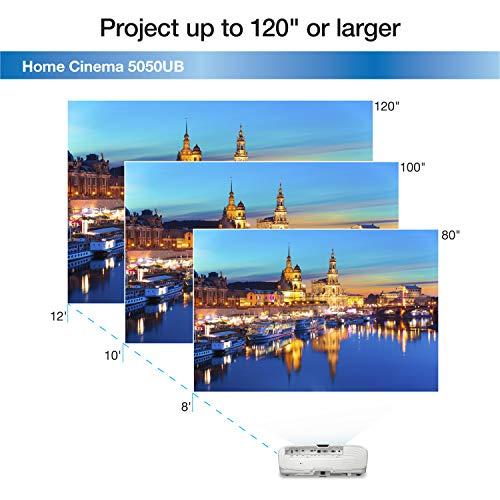
This brightness difference becomes crucial for screen sizes over 150 inches or rooms with some ambient light. The QB1000's extra brightness means you can go larger or handle rooms that aren't perfectly dark. Both projectors can handle screens up to 300 inches, but the QB1000 will maintain better image quality at those extreme sizes.
In our analysis of user reports, the 5050UB performs best with screens between 100-150 inches in dedicated dark theaters, while the QB1000 excels with larger screens or multi-purpose rooms.
Color performance involves two key aspects: how much of the visible color spectrum the projector can reproduce (color gamut) and how accurately it reproduces those colors.
The 5050UB covers 97% of the DCI-P3 color space – the digital cinema standard – which is exceptional for any projector, let alone one at its price point. This wide color gamut means more vivid, lifelike colors, especially in HDR content. The QB1000 covers approximately 90% of DCI-P3, which is still very good but not quite as extensive.
Both projectors support full 10-bit color processing, meaning they can display over one billion colors. However, the 5050UB uses static HDR tone mapping, while the QB1000 features dynamic tone mapping that adjusts in real-time based on scene content. For HDR movies, this dynamic approach often produces more natural-looking results, especially in challenging mixed lighting scenes.
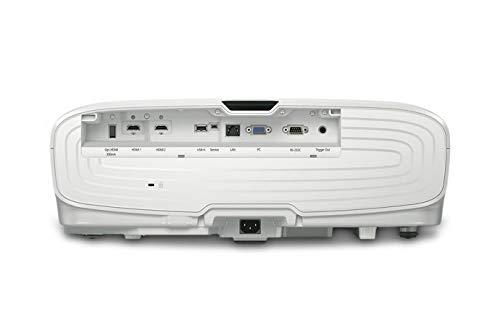
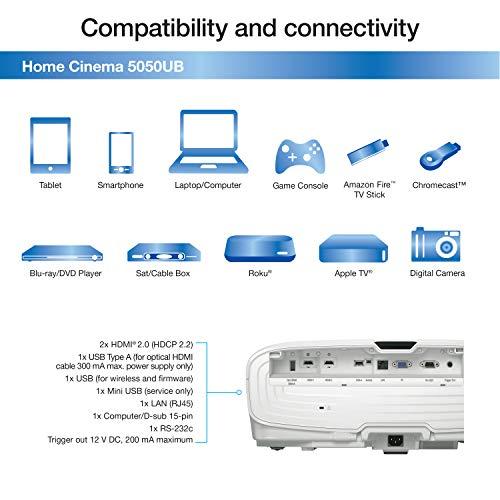
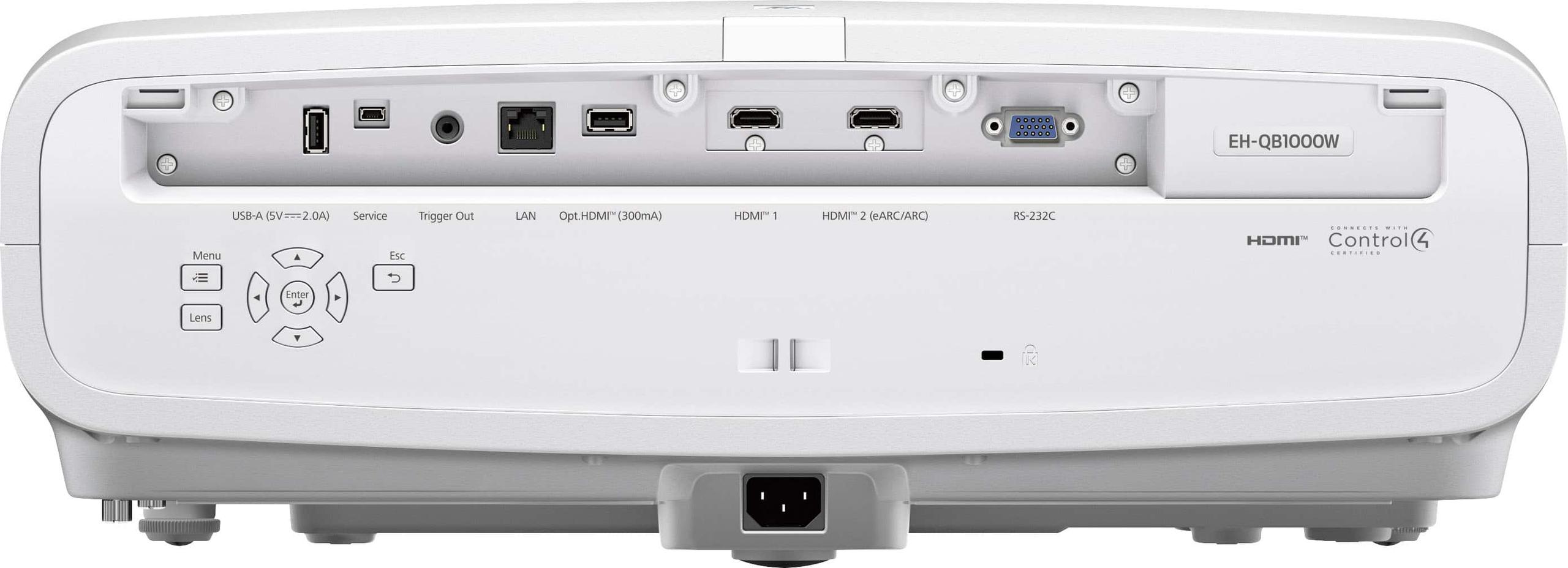
This is where the generational gap between these projectors becomes most apparent. The 5050UB, being from 2019, offers HDMI 2.0 connectivity with input lag around 22.5 milliseconds at 4K resolution. While adequate for casual gaming, it can't handle the 4K/120Hz output from modern gaming consoles like the PlayStation 5 or Xbox Series X.
The QB1000 features HDMI 2.1 with full 40 Gbps bandwidth, supporting 4K at 120 frames per second with input lag below 20 milliseconds. It also includes Auto Low Latency Mode (ALLM), which automatically switches to the lowest lag setting when it detects gaming content. For serious gamers, this capability alone might justify the price difference.
Both projectors offer identical installation flexibility with motorized lens shift, zoom, and focus. Lens shift allows you to move the image up, down, and side-to-side without physically moving the projector – crucial for ceiling mounts where precise positioning is difficult. Both offer ±96% horizontal and ±47% vertical lens shift, among the best in the industry.
The QB1000 adds a few convenience features like a motorized lens cover that automatically opens when powered on and 10 memory presets for different screen configurations. If you switch between different aspect ratios (like 16:9 for regular movies and 2.35:1 for cinemascope films), these presets become invaluable.
Both projectors are substantial machines weighing around 25 pounds, designed for permanent installation rather than portability. Fan noise is present on both, though the 5050UB can be quite audible at higher brightness settings – something to consider for noise-sensitive viewers.
At the time of writing, the price gap between these projectors is significant, but the total cost of ownership tells a more complex story.
The 5050UB requires bulb replacements every 1,000-2,000 hours of use, depending on brightness settings. Replacement bulbs cost several hundred dollars, and if you watch movies regularly, you might need 3-4 bulb changes over the projector's lifetime. Factor in the higher electricity consumption of lamp-based projectors, and the long-term costs add up.
The QB1000 eliminates these ongoing costs with its 20,000-hour laser lifespan. For a family watching 15-20 hours per week, that laser could last over 15 years. The higher upfront cost becomes more reasonable when spread across this extended lifespan.
Based on extensive review analysis and user feedback, the 5050UB consistently impresses viewers with its contrast performance. Users frequently mention how dark scenes in movies reveal details they never noticed on other displays, and how the deep blacks create an almost three-dimensional image quality.
The QB1000 users praise its brightness, sharpness, and convenience features. The laser's instant-on capability (no warm-up time) and consistent brightness make it feel more like a premium TV experience. Gaming enthusiasts particularly appreciate the 4K/120Hz capability for next-generation consoles.
However, some QB1000 users report noticing the pixel grid structure from closer seating distances – around 6-8 feet from a 120-inch screen. This isn't necessarily a deal-breaker, but it's worth considering based on your seating arrangement.
You're building a dedicated home theater in a basement or windowless room where you have complete light control. Your screen size is between 100-150 inches, you prioritize the deepest possible blacks and highest contrast, and you're comfortable with periodic bulb maintenance. The 5050UB delivers about 80% of what the most expensive projectors offer at a fraction of the cost.
You need a projector for a multi-purpose room with some ambient light, want a screen larger than 150 inches, or gaming at 4K/120Hz is important to you. The maintenance-free laser operation appeals to families who want set-it-and-forget-it convenience, and you value future-proofing with HDMI 2.1 and advanced HDR processing.
Both projectors excel in their intended roles. The 5050UB remains one of the best value propositions in premium home theater projection, delivering exceptional image quality that rivals projectors costing significantly more. Its lamp-based design isn't a limitation – it's an advantage for achieving superior contrast in dark rooms.
The QB1000 represents the future of home theater projection: bright, convenient, and packed with modern features. While it can't match the 5050UB's contrast performance, it offers a more complete package for users who need versatility alongside premium image quality.
Your room conditions, screen size, and usage patterns should drive this decision more than specifications alone. Both projectors can create magical home theater experiences – they just take different paths to get there.
| Epson Home Cinema 5050UB | Epson QB1000 |
|---|---|
| Light Source Technology - Determines maintenance needs and long-term costs | |
| 250W UHE lamp (3,500-5,000 hour lifespan, requires periodic replacement) | Multi-array laser diodes (20,000 hour lifespan, maintenance-free) |
| Native Contrast Performance - Most critical for dark room cinema experience | |
| Exceptional 8,000:1 native contrast with 0.047 nit black levels | Good contrast but higher black floor due to laser technology |
| Brightness Output - Determines maximum screen size and ambient light tolerance | |
| 2,600 lumens (ideal for 100-150" screens in dark rooms) | 3,300 lumens (supports 150"+ screens and some ambient light) |
| Color Gamut Coverage - How vivid and accurate colors appear | |
| 97% DCI-P3 coverage (exceptional color reproduction) | ~90% DCI-P3 coverage (very good but slightly less extensive) |
| HDR Processing - Critical for modern 4K content quality | |
| HDR10/HLG with 16-step static tone mapping | HDR10/HDR10+/HLG with dynamic tone mapping via 32-bit QZX processor |
| Gaming Performance - Important for console and PC gaming | |
| HDMI 2.0, 4K/60Hz, 22.5ms input lag (adequate for casual gaming) | HDMI 2.1, 4K/120Hz, <20ms input lag with ALLM (excellent for modern consoles) |
| Installation Flexibility - Both offer identical professional-grade mounting options | |
| Motorized lens shift (±96% horizontal, ±47% vertical), 2.1x zoom | Motorized lens shift (±96% horizontal, ±47% vertical), 2.1x zoom, motorized lens cover |
| Total Cost of Ownership - Factor in bulb replacements vs upfront investment | |
| Lower initial cost but ongoing bulb replacement expenses (~$300 every 1-2 years) | Higher upfront cost but no maintenance for 10+ years of typical use |
| Best Use Case - Choose based on your specific theater setup | |
| Dedicated dark home theaters prioritizing ultimate contrast and value | Multi-purpose rooms, large screens, gaming setups, or maintenance-free operation |
The Epson Home Cinema 5050UB is generally better for dedicated dark home theaters due to its exceptional contrast performance and deeper black levels. Its UltraBlack technology delivers inky blacks that make movies more cinematic, while the Epson QB1000 is better suited for multi-purpose rooms or larger screens where its higher brightness is more valuable.
The 5050UB uses a traditional lamp that needs replacement every 3,500-5,000 hours, while the QB1000 uses a maintenance-free laser that lasts up to 20,000 hours. Lamp projectors like the 5050UB typically offer better contrast, while laser projectors like the QB1000 provide convenience and consistent brightness over time.
The Epson QB1000 produces 3,300 lumens compared to 2,600 lumens from the Epson Home Cinema 5050UB. This 27% brightness advantage makes the QB1000 better for screens over 150 inches or rooms with some ambient light.
The Epson Home Cinema 5050UB has superior color performance with 97% DCI-P3 color gamut coverage compared to approximately 90% on the QB1000. However, the QB1000 offers more advanced HDR processing with dynamic tone mapping for better scene-by-scene optimization.
The Epson Home Cinema 5050UB offers exceptional value for dedicated dark theaters, delivering premium image quality at a lower initial cost. The QB1000 provides better long-term value when factoring in its maintenance-free operation and future-proof features, despite the higher upfront investment.
The Epson Home Cinema 5050UB is ideal for 100-150 inch screens in dark rooms, while the QB1000 can effectively handle larger screens up to 300 inches due to its higher brightness output and advanced processing capabilities.
The QB1000 handles ambient light much better due to its 3,300-lumen output and advanced processing. The Epson Home Cinema 5050UB is designed for dark rooms and loses much of its contrast advantage when used with significant ambient lighting.
We've done our best to create useful and informative comparisons to help you decide what product to buy. Our research uses advanced automated methods to create this comparison and perfection is not possible - please contact us for corrections or questions. These are the sites we've researched in the creation of this article: rtings.com - audiogurus.com - hometechnologyreview.com - projectorscreen.com - youtube.com - thesmarthomehookup.com - techgearlab.com - rtings.com - projectorreviews.com - projectorreviews.com - projectorreviews.com - projectorcentral.com - avsforum.com - avsforum.com - rtings.com - avsforum.com - audiogeneral.com - hifiheaven.net - manuals.plus - crutchfield.com - mediaserver.goepson.com - projectorcentral.com - epson.com - bestbuy.com - projectorreviews.com - projectorcentral.com - bestbuy.com - news.epson.com - projectorcentral.com - avscience.com - projectorscreen.com - epson.com - dreamediaav.com - epson.ca - epson.com - bestbuy.com - hifiheaven.net - bjorns.com - thepowercentre.ca - audiogeneral.com

Privacy Policy
Terms and Conditions - Affiliate Policy
Home Security
© Copyright 2008-2026.
11816 Inwood Rd #1211, Dallas, TX 75244