

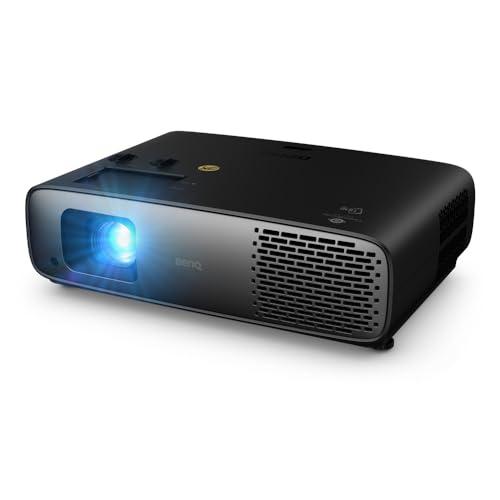


Choosing a 4K home theater projector in 2025 means navigating a landscape where two fundamentally different technologies compete for your attention—and your budget. The BenQ W4100i represents the cutting-edge LED revolution, while the Epson Home Cinema 5050UB champions the refined traditional approach that has dominated home theaters for decades.
Both projectors cost several thousand dollars at the time of writing, placing them squarely in the enthusiast category where performance expectations run high. Yet they achieve their impressive 4K images through completely different methods, making your choice less about "which is better" and more about "which fits your specific situation better."
Before diving into specifics, it's crucial to understand what separates good 4K projectors from great ones. The term "4K" itself can be misleading—while both the BenQ W4100i and Epson 5050UB deliver stunning 4K images, neither uses a native 4K chip. Instead, they employ sophisticated pixel-shifting technology that rapidly moves pixels to display more detail than their physical resolution would suggest.
Think of pixel-shifting like a magician's sleight of hand—the projector shows you multiple slightly offset images so quickly that your eye perceives them as a single, much more detailed picture. This technique has become so refined that the difference between pixel-shifted 4K and native 4K becomes nearly imperceptible during normal viewing.
The real performance differentiators lie in brightness, contrast, color accuracy, and how well each projector handles the complex task of translating digital signals into light on your screen. Room compatibility plays a massive role too—a projector that looks stunning in a pitch-black basement might appear washed out in a family room with windows.
The BenQ W4100i, released in 2024, represents the latest evolution in DLP (Digital Light Processing) technology. DLP projectors use millions of tiny mirrors on a chip that tilt incredibly fast to create images. The W4100i takes this further with its 4LED system—instead of a single white light source, it uses four separate LEDs (red, green, blue, and an additional blue) to create colors more precisely than ever before.
This 4LED approach eliminates one of DLP's traditional weaknesses: the rainbow effect, where sensitive viewers might catch glimpses of red, green, and blue flashes, particularly during eye movement. The additional blue LED also boosts overall brightness while maintaining color accuracy—a significant technical achievement that places the BenQ W4100i at the forefront of modern projector design.
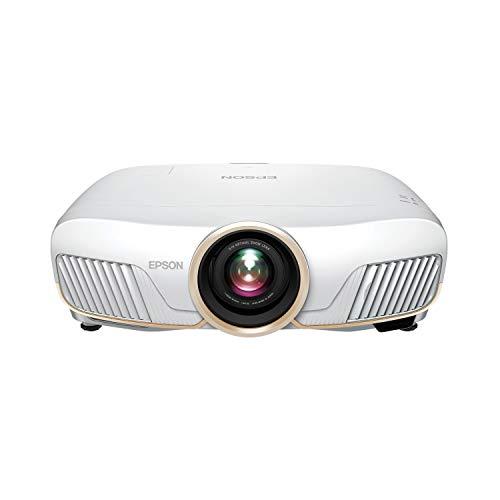
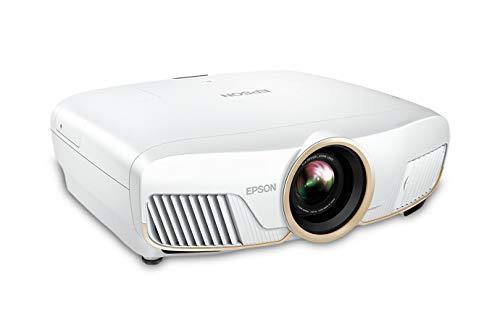
The Epson 5050UB, while older (released in 2019), represents the pinnacle of LCD projector engineering. LCD projectors work more like your computer monitor—light passes through three separate liquid crystal displays (one each for red, green, and blue) before combining to create the final image. This three-chip approach completely eliminates rainbow effects since all colors display simultaneously rather than sequentially.
What makes the Epson 5050UB special isn't just its three-chip design, but its sophisticated optical system. The 15-element all-glass lens rivals equipment found in projectors costing twice as much, while the UltraBlack compensation filter dynamically controls light polarization to achieve deeper blacks than typical LCD projectors manage.
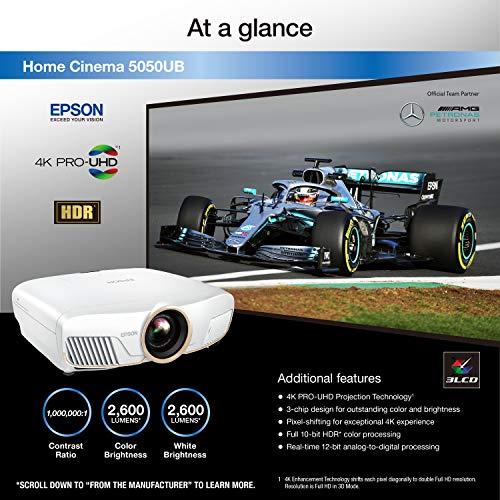
Brightness measurements in projectors use ANSI lumens—a standardized way to measure light output across multiple points on the screen. The BenQ W4100i delivers an impressive 3,200 ANSI lumens, while the Epson 5050UB produces 2,600 lumens.
These numbers matter tremendously for real-world performance. Higher brightness doesn't just mean the image appears brighter—it provides more flexibility in room design and viewing conditions. The BenQ W4100i can maintain vibrant colors and good contrast even with some ambient light present, making it suitable for family rooms that serve multiple purposes beyond movie watching.
The Epson 5050UB, while somewhat dimmer, actually appears brighter than many competitors claiming higher lumen outputs. This apparent contradiction highlights why specifications only tell part of the story—Epson's superior optics and efficient light management mean more of those lumens actually reach your screen as useful light rather than being lost to internal reflections or inefficient color filtering.
However, brightness alone doesn't determine image quality. In a properly darkened room, the Epson 5050UB can actually produce more impactful images because its superior contrast ratio makes colors appear more vivid and realistic, even at lower overall brightness levels.
Contrast ratio—the difference between the brightest whites and deepest blacks a projector can display—often matters more than brightness for perceived image quality. This is where the two projectors diverge dramatically in their approaches.
The Epson 5050UB achieves its remarkable contrast through a combination of UltraBlack technology and a sophisticated dynamic iris system. The dynamic iris automatically adjusts the projector's aperture based on scene content—opening wide for bright scenes and closing down for dark ones. Combined with careful calibration, professional reviewers have measured native contrast ratios exceeding 37,000:1 on the Epson 5050UB, a figure that rivals much more expensive projectors.
The BenQ W4100i takes a different approach. Its 4LED system allows for precise control of each color's brightness independently, creating its claimed 3,000,000:1 dynamic contrast ratio. While this number sounds enormous, it represents a different measurement methodology than native contrast. In practical terms, the BenQ W4100i produces excellent blacks for a DLP projector, but can't quite match the Epson 5050UB's performance in a completely dark room.
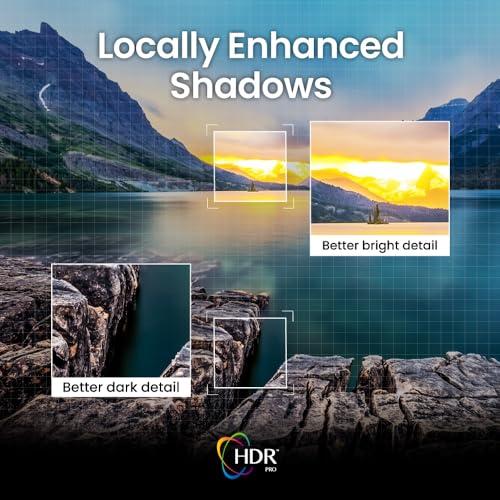
The contrast difference becomes most apparent during dark movie scenes. The Epson 5050UB can reveal subtle shadow details that might get lost on other projectors, making it particularly compelling for viewers who prioritize that true "theater in the basement" experience.
Both projectors excel at color reproduction, but again take different philosophical approaches. The BenQ W4100i comes factory-calibrated to achieve Delta E values below 2—a technical measurement indicating colors appear virtually identical to the original source material. This pre-calibration means you get professional-grade color accuracy right out of the box without hiring a calibration technician.
The projector covers 100% of both the DCI-P3 color space (used in digital cinema) and the Rec.709 space (standard for HDR content), ensuring compatibility with the widest range of content. Its CinematicColor technology and HDR-PRO dynamic tone mapping work together to optimize every frame automatically, particularly benefiting compressed streaming content that might otherwise appear flat or lifeless.
The Epson 5050UB takes a more traditional approach, offering extensive manual calibration controls that enthusiasts appreciate. While its out-of-box color accuracy is very good, it truly shines after professional calibration. The projector's full 10-bit color processing can display over one billion distinct colors, and its manual iris control allows precise adjustment of peak brightness—a feature professional calibrators love but that intimidates casual users.
For HDR content, both projectors support the major formats, but handle them differently. The BenQ W4100i's frame-by-frame tone mapping automatically adjusts brightness and contrast for each scene, while the Epson 5050UB offers 16 different HDR adjustment levels that you can fine-tune based on content type and personal preference.
Gaming performance represents one of the clearest distinctions between these projectors. The BenQ W4100i was designed with modern gaming in mind, featuring three HDMI 2.1 inputs and impressively low input lag measurements: just 6.5 milliseconds at 1080p/240Hz and 17.9 milliseconds at 4K/60Hz. These numbers put it among the fastest projectors available for gaming.
More importantly, the BenQ W4100i supports Auto Low Latency Mode (ALLM), which automatically switches to its fastest processing mode when it detects a gaming console. One HDMI input can handle 4K at 120Hz, future-proofing the projector for next-generation gaming consoles and high-end PCs.
The Epson 5050UB approaches gaming from a more traditional perspective. Its input lag measures around 22-30 milliseconds—perfectly adequate for single-player games and casual multiplayer, but not ideal for competitive gaming where every millisecond counts. It's also limited to 60Hz refresh rates across all inputs, reflecting its 2019 design priorities when high-refresh gaming wasn't yet mainstream.
However, the Epson 5050UB creates a more immersive gaming experience for story-driven games. Its superior contrast makes dark game environments more atmospheric, while its larger color gamut can make vibrant game worlds appear more lifelike than on the BenQ W4100i.
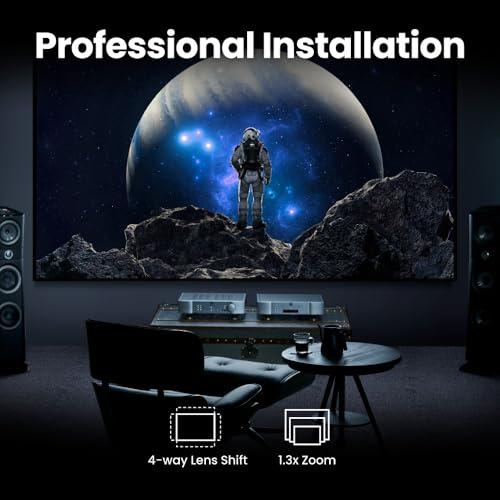
Setting up a high-end projector involves more than just plugging it in, and this is where the projectors' different philosophies become apparent. The Epson 5050UB offers motorized lens controls for zoom, focus, and lens shift—all adjustable via remote control. This motorization extends to lens memory functions that can save different settings for various aspect ratios, allowing you to switch between standard 16:9 content and ultrawide 2.35:1 movies at the touch of a button.
The Epson 5050UB's lens shift capability is particularly impressive, offering up to 96% vertical and 47% horizontal adjustment. This means you can mount the projector significantly off-center from your screen and still achieve a perfectly rectangular image without the geometric distortion that keystone correction introduces.
The BenQ W4100i takes a more manual approach to lens adjustments, requiring physical manipulation of zoom and shift controls. While less convenient for ongoing adjustments, this simplicity reduces potential mechanical failure points and keeps the projector more compact and lightweight.
Weight and size matter more than many people realize. The BenQ W4100i weighs just 13.45 pounds compared to the Epson 5050UB's heftier 24.7 pounds. This difference significantly impacts ceiling mounting requirements and installation complexity.
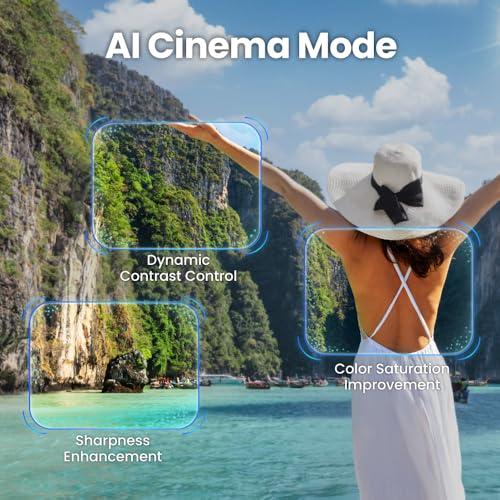
Modern home entertainment increasingly revolves around streaming services, and the projectors handle this reality differently. The BenQ W4100i includes a dedicated Android TV dongle, providing direct access to Netflix, YouTube, Disney+, and other major streaming platforms. The built-in AI Cinema Mode analyzes streaming content in real-time, automatically optimizing compressed video to look better than it would on other projectors.
The Epson 5050UB deliberately omits smart features, positioning itself as a pure display device. While this requires connecting external streaming devices, many enthusiasts prefer this approach since dedicated streaming devices often offer better performance and receive more frequent updates than built-in smart systems.
Both projectors support 3D content, increasingly rare in modern projectors. The Epson 5050UB's 3D performance particularly impresses, delivering bright, comfortable 3D images that rival dedicated 3D projectors from the format's heyday.
Long-term ownership costs differ dramatically between these projectors. The BenQ W4100i's 4LED light source is rated for 30,000 hours in eco mode—potentially 15-20 years of typical use without any lamp replacement. When the LEDs eventually dim, the entire light engine typically needs replacement, but this won't happen within most people's ownership timeframe.
The Epson 5050UB uses a traditional 250W UHE lamp rated for 3,500-5,000 hours depending on brightness settings. Replacement lamps cost several hundred dollars at the time of writing, representing a significant ongoing expense. However, lamp-based projectors often maintain more consistent performance throughout the lamp's life, and replacement parts remain widely available.
Fan noise affects daily enjoyment, particularly during quiet movie scenes. The BenQ W4100i runs relatively quietly thanks to its efficient LED cooling requirements. The Epson 5050UB can be noticeably louder, particularly in high-brightness modes, though eco mode operation significantly reduces fan noise.
Room environment ultimately determines which projector will serve you better. The BenQ W4100i excels in flexible spaces—family rooms with some ambient light, multi-purpose areas, or situations where the projector might be used during daytime hours. Its higher brightness and AI-enhanced streaming capabilities make it particularly suitable for households where the projector serves as the primary TV replacement.
The Epson 5050UB reaches its full potential in dedicated home theater rooms with controlled lighting. If you've invested in blackout curtains, acoustic treatments, and theater seating, the Epson 5050UB's superior contrast and extensive calibration options will reward that commitment with truly cinematic image quality.
Gaming considerations point clearly toward the BenQ W4100i for serious gamers, while the Epson 5050UB better serves movie purists who occasionally game. Neither projector disappoints in its intended use case, but their strengths align with different priorities.
Budget considerations extend beyond initial purchase price. The BenQ W4100i's higher upfront cost gets offset by eliminated lamp replacement expenses over time. The Epson 5050UB's lower initial price comes with ongoing maintenance costs that can add up significantly over a decade of ownership.
Both projectors represent excellent value at the time of writing, but "value" depends entirely on how well each projector's strengths align with your specific needs. The BenQ W4100i delivers modern convenience and flexibility, while the Epson 5050UB prioritizes ultimate image quality in ideal conditions. Choose based on how and where you'll actually use your projector, rather than theoretical performance specifications.
Your decision ultimately comes down to whether you prioritize convenience and room flexibility (BenQ W4100i) or pure image quality in controlled conditions (Epson 5050UB). Both choices lead to years of exceptional home theater enjoyment—just through different paths.
| BenQ W4100i 4K Home Theater Projector | Epson Home Cinema 5050UB 4K PRO-UHD 3-Chip Projector |
|---|---|
| Display Technology - Determines color accuracy, rainbow effects, and overall image character | |
| 4LED DLP with 0.65" DMD chip and XPR pixel-shifting | 3-chip LCD with 4K PRO-UHD pixel-shifting technology |
| Brightness - Critical for room flexibility and daytime viewing capability | |
| 3,200 ANSI lumens (excellent for rooms with ambient light) | 2,600 lumens (optimized for dedicated dark theaters) |
| Contrast Ratio - Determines black levels and shadow detail in dark scenes | |
| 3,000,000:1 dynamic (very good DLP performance) | Up to 1,000,000:1 with UltraBlack technology (exceptional LCD blacks) |
| Color Gamut Coverage - Ensures accurate reproduction of movie and streaming content | |
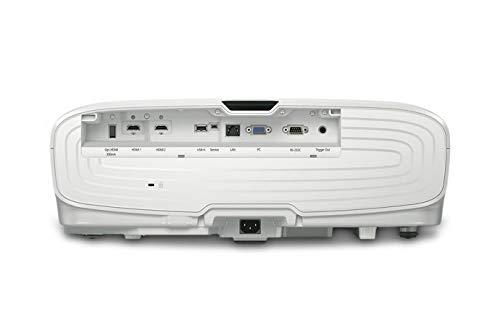
| 100% DCI-P3 and Rec.709 with factory Delta E<2 calibration | DCI-P3 support with extensive manual calibration options |
| HDR Support - Essential for modern 4K content from streaming and UHD discs | |
| HDR10, HDR10+, HLG with HDR-PRO dynamic tone mapping | HDR10, HLG with 16-step precision HDR adjustment |
| Gaming Performance - Input lag determines responsiveness for gaming | |
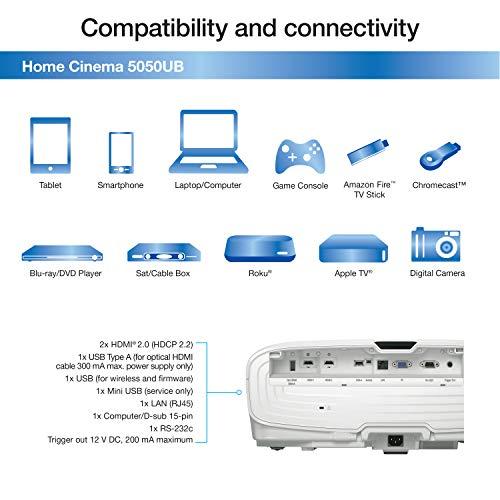
| 6.5ms (1080p@240Hz), 17.9ms (4K@60Hz) with HDMI 2.1 | ~22-30ms input lag, HDMI 2.0 only (60Hz limit) |
| Lens System - Affects installation flexibility and image sharpness | |
| 1.3x optical zoom, manual lens shift (60% vertical, ±15% horizontal) | 2.1x motorized zoom, motorized lens shift (±96% vertical, ±47% horizontal) |
| Light Source Lifespan - Determines long-term maintenance costs | |
| 30,000 hours 4LED (no lamp replacements needed) | 3,500-5,000 hours UHE lamp (requires periodic $200-400 replacements) |
| Smart Features - Built-in streaming capability and convenience | |
| Android TV dongle included with AI Cinema Mode optimization | No smart features (requires external streaming devices) |
| Physical Size and Weight - Important for mounting and installation | |
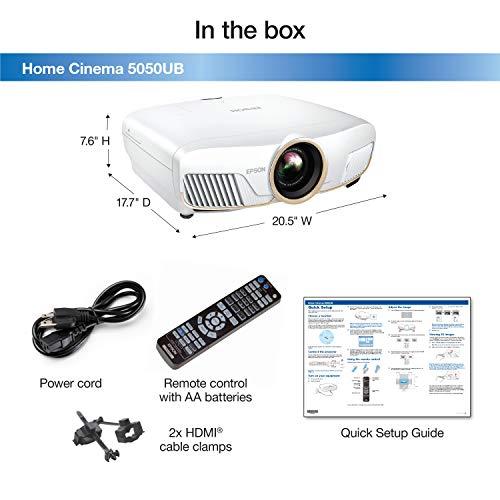
| 13.45 lbs, compact design suitable for various mounting options | 24.7 lbs, larger size requires robust ceiling mount |
| 3D Support - Increasingly rare feature for existing 3D movie collections | |
| DLP Link 3D with active shutter glasses (glasses sold separately) | Active 3D with RF emitter, excellent 3D performance |
| Lens Quality - Affects overall image sharpness and optical performance | |
| Standard DLP optics with pixel-shifting enhancement | Premium 15-element all-glass lens design |
| Room Placement Flexibility - How far from screen and mounting options | |
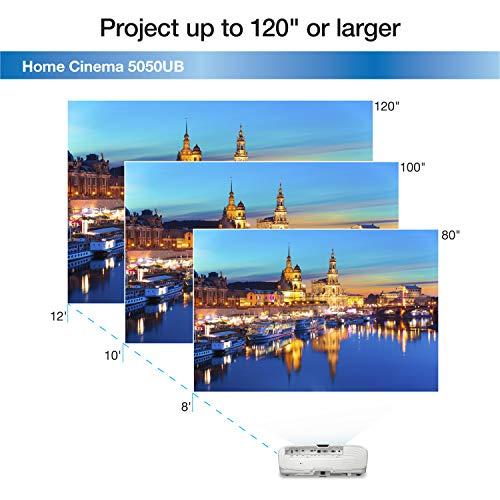
| Throw ratio 1.15-1.50, suitable for most room sizes | Throw ratio 1.35-2.84, excellent for varied room configurations |
The BenQ W4100i is significantly better for bright rooms, delivering 3,200 ANSI lumens compared to the Epson 5050UB's 2,600 lumens. The BenQ W4100i's 4LED light source maintains color accuracy even in ambient light conditions, making it ideal for family rooms and multi-purpose spaces where complete darkness isn't possible.
The Epson Home Cinema 5050UB delivers superior black levels and contrast performance. Its UltraBlack technology and dynamic iris system can achieve measured contrast ratios exceeding 37,000:1, significantly outperforming the BenQ W4100i. This makes the Epson 5050UB the clear winner for dedicated home theater rooms where deep blacks enhance the cinematic experience.
The BenQ W4100i is dramatically better for gaming, offering ultra-low input lag of just 6.5ms at 1080p and 17.9ms at 4K. It also features three HDMI 2.1 ports with 4K@120Hz support and Auto Low Latency Mode. The Epson 5050UB has higher input lag (22-30ms) and is limited to 60Hz refresh rates, making the BenQ W4100i the obvious choice for serious gamers.
The BenQ W4100i uses a 4LED light source rated for 30,000 hours with no lamp replacements needed during typical ownership. The Epson 5050UB uses a traditional UHE lamp lasting 3,500-5,000 hours, requiring periodic replacements that cost several hundred dollars. This makes the BenQ W4100i more cost-effective for long-term ownership.
The Epson Home Cinema 5050UB offers superior installation convenience with motorized zoom, focus, and lens shift controls operated via remote. It provides extensive lens shift (±96% vertical, ±47% horizontal) for flexible placement. The BenQ W4100i requires manual lens adjustments but is lighter and more compact, making it easier to mount in various locations.
The BenQ W4100i comes factory-calibrated with Delta E<2 color accuracy and covers 100% of DCI-P3 and Rec.709 color spaces right out of the box. The Epson 5050UB offers good initial color accuracy but truly excels after professional calibration. For users wanting excellent colors immediately, the BenQ W4100i is the better choice.
Yes, both the BenQ W4100i and Epson Home Cinema 5050UB display excellent 4K images using advanced pixel-shifting technology. While neither has a native 4K chip, their pixel-shifting creates visually indistinguishable results from true 4K projectors during normal viewing. The BenQ W4100i uses XPR technology while the Epson 5050UB uses 4K PRO-UHD processing.
The BenQ W4100i includes an Android TV dongle with built-in access to Netflix, YouTube, Disney+, and other major streaming services. It also features AI Cinema Mode that automatically optimizes compressed streaming content. The Epson 5050UB has no smart features and requires external streaming devices, making the BenQ W4100i more convenient for streaming.
Both projectors support HDR10 and HLG formats effectively. The BenQ W4100i adds HDR10+ support and features HDR-PRO dynamic tone mapping that optimizes each frame automatically. The Epson Home Cinema 5050UB offers 16-step manual HDR adjustment for fine-tuning. The BenQ W4100i provides more automated optimization while the Epson 5050UB offers more manual control.
The BenQ W4100i generally runs quieter thanks to its efficient LED cooling system. The Epson Home Cinema 5050UB can be noticeably louder, especially in high-brightness modes, though it becomes much quieter in eco mode. For noise-sensitive installations, the BenQ W4100i is typically the better choice.
Yes, both the BenQ W4100i and Epson Home Cinema 5050UB support 3D content, which is increasingly rare in modern projectors. The BenQ W4100i uses DLP Link technology while the Epson 5050UB includes an RF emitter for active 3D glasses. The Epson 5050UB generally provides brighter, more comfortable 3D viewing experiences.
The BenQ W4100i offers better long-term value for most users due to its maintenance-free LED light source, modern gaming capabilities, and built-in smart features. However, the Epson Home Cinema 5050UB provides superior image quality in dedicated dark theaters and extensive calibration options for enthusiasts. Your choice depends on whether you prioritize convenience and modern features (BenQ W4100i) or ultimate image quality in controlled conditions (Epson 5050UB).
We've done our best to create useful and informative comparisons to help you decide what product to buy. Our research uses advanced automated methods to create this comparison and perfection is not possible - please contact us for corrections or questions. These are the sites we've researched in the creation of this article: blog.son-video.com - notebookcheck.net - whathifi.com - newatlas.com - hometheaterhifi.com - benq.com - youtube.com - shop.avispl.com - projectorcentral.com - benq.com - youtube.com - projectorcentral.com - benq.com - device.report - pssav.com - newegg.com - rtings.com - audiogurus.com - hometechnologyreview.com - projectorscreen.com - youtube.com - thesmarthomehookup.com - techgearlab.com - rtings.com - projectorreviews.com - projectorreviews.com - projectorreviews.com - projectorcentral.com - avsforum.com - avsforum.com - rtings.com - avsforum.com - audiogeneral.com - hifiheaven.net - manuals.plus - crutchfield.com - mediaserver.goepson.com - projectorcentral.com - epson.com - bestbuy.com - projectorreviews.com - projectorcentral.com

Privacy Policy
Terms and Conditions - Affiliate Policy
Home Security
© Copyright 2008-2026.
11816 Inwood Rd #1211, Dallas, TX 75244