

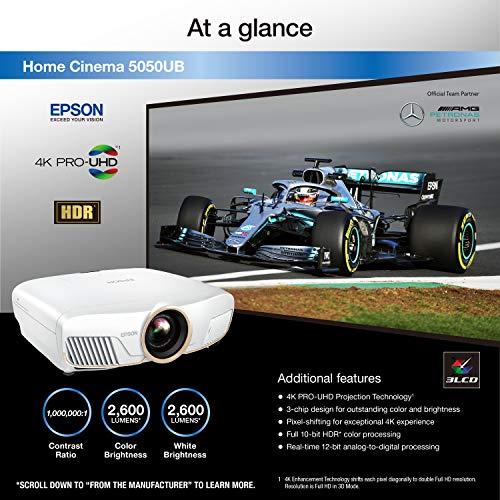
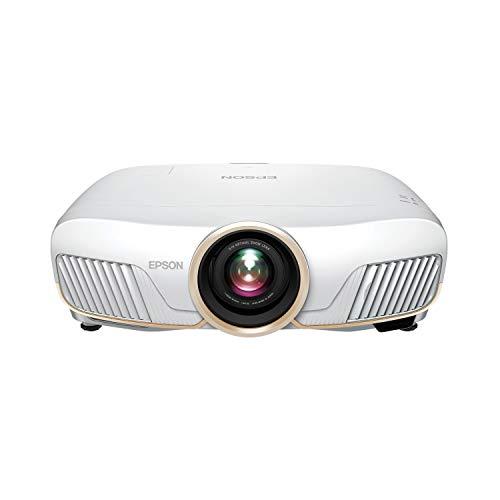
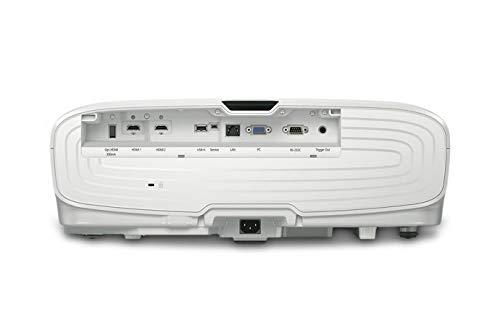
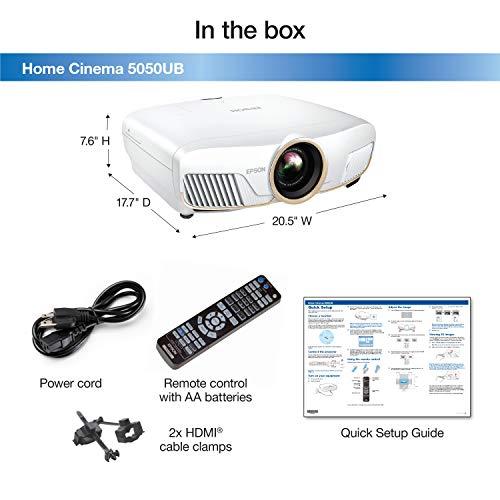
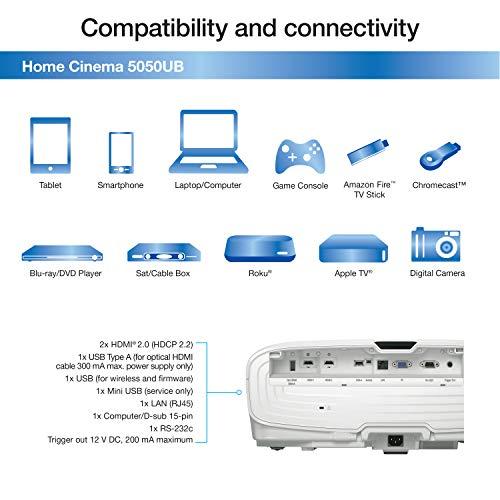
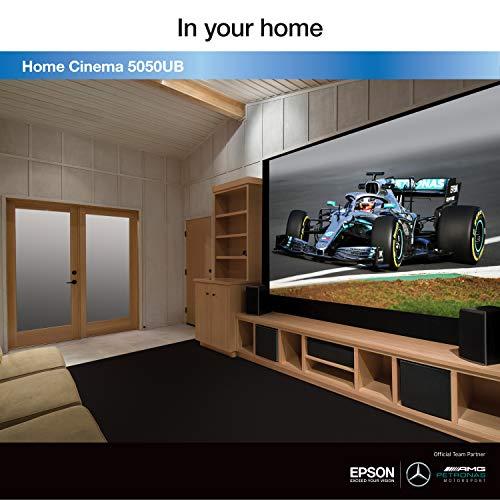
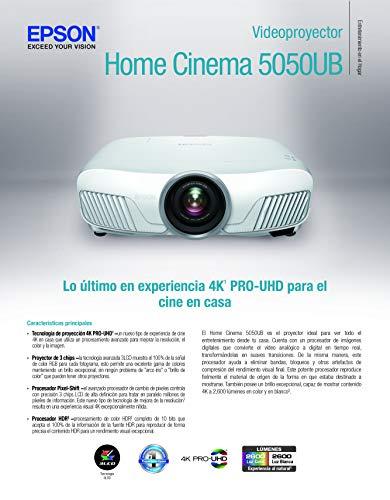
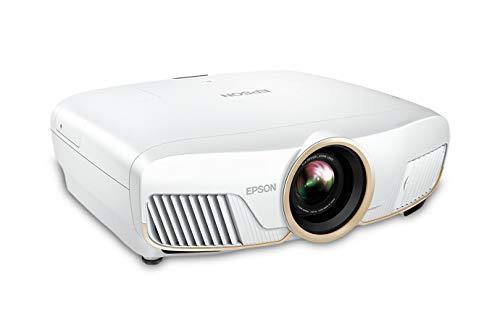
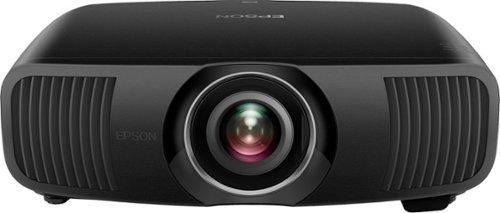
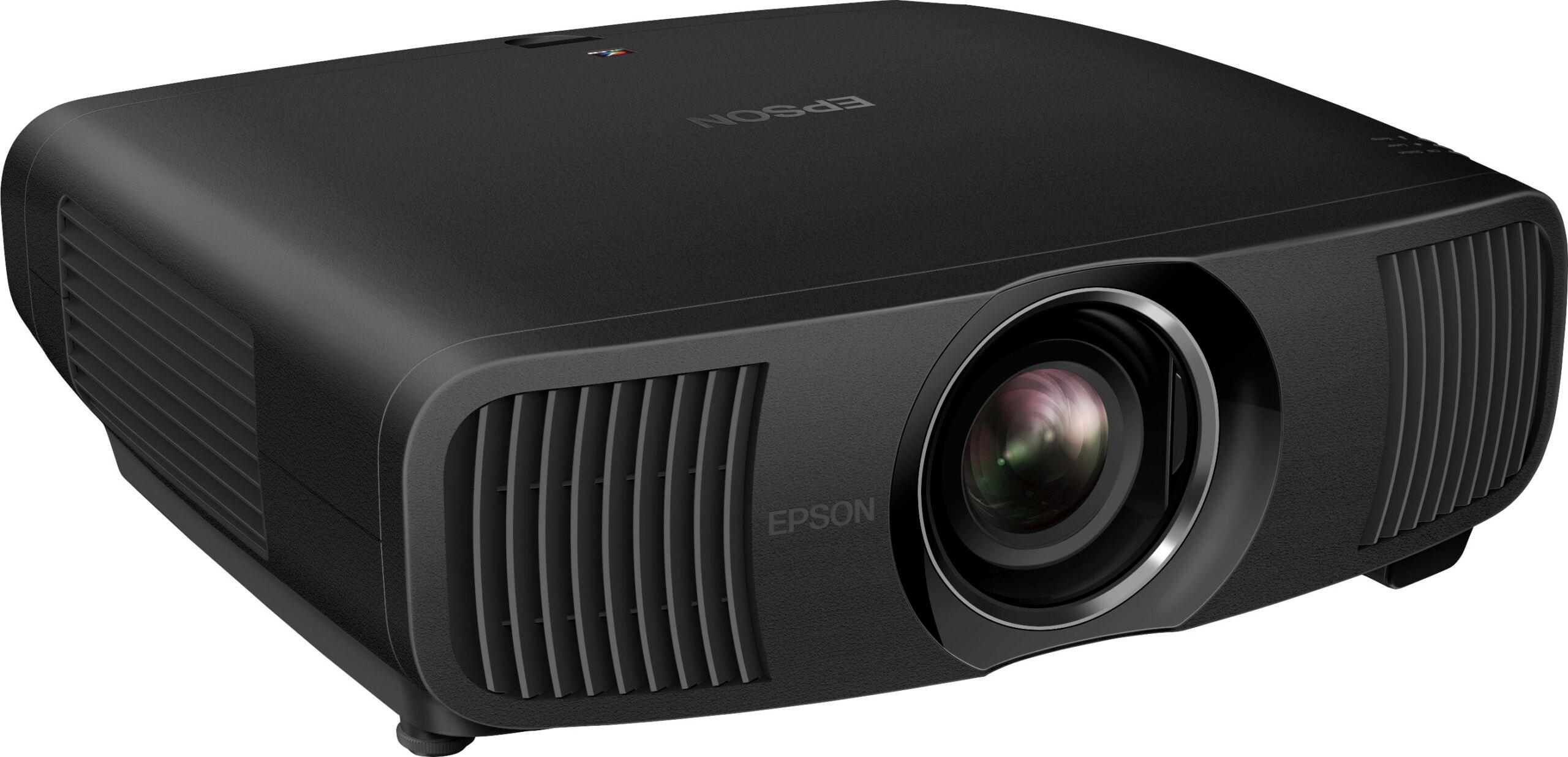
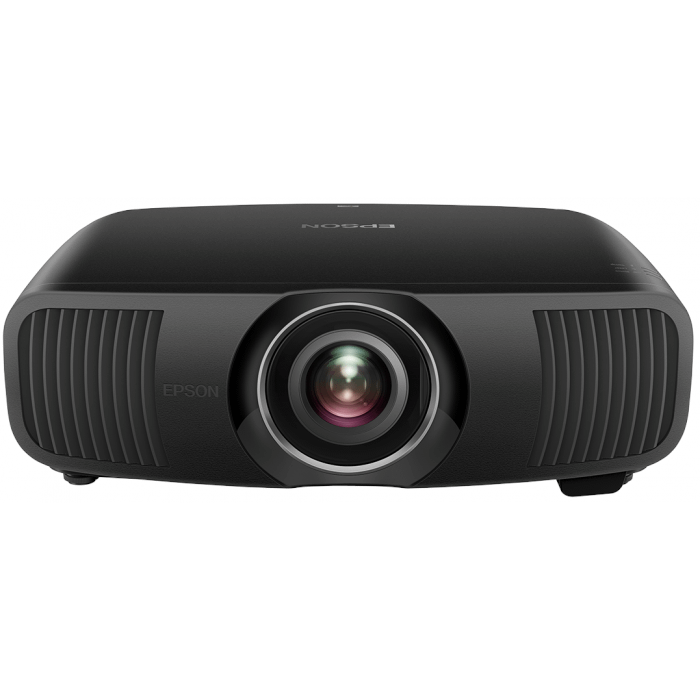
When you're ready to transform your living space into a proper home theater, few decisions carry as much weight as choosing the right projector. Today we're comparing two standout models from Epson that represent different philosophies in high-end projection: the Home Cinema 5050UB from 2019 and the newer Pro Cinema LS12000 that arrived in 2022.
These aren't just incremental updates—they represent fundamentally different approaches to creating stunning large-screen images. One relies on proven lamp technology pushed to its limits, while the other embraces the laser revolution that's reshaping the projector landscape.
Both the 5050UB and LS12000 sit in what enthusiasts call the "sweet spot" of home theater projection—expensive enough to deliver truly exceptional performance, but not so costly that they're reserved for millionaires with custom theaters. At the time of writing, you're looking at a significant price difference, with the LS12000 commanding a premium of roughly $1,200-$1,700 over the 5050UB.
The core technology difference comes down to light source. The 5050UB uses a traditional 250-watt UHE (Ultra High Efficiency) lamp—essentially a very bright, specialized bulb that creates light by heating mercury vapor. The LS12000 instead uses a solid-state laser array, which generates light through laser diodes without any bulbs to burn out.
Both projectors use what Epson calls "pixel-shifting" to create their 4K images. Since they start with 1080p LCD panels (the actual image-creating chips), they rapidly shift each pixel by tiny amounts to effectively quadruple the resolution you see on screen. Think of it like a high-speed magic trick—your eye sees four pixels where there's technically only one, creating what Epson calls "4K PRO-UHD."
Here's where the 5050UB throws its first punch. Epson equipped this projector with something called "UltraBlack" technology—a proprietary filter system that controls light polarization to prevent internal light leakage. The result? Some of the deepest, richest blacks you'll find in this price range, with a native contrast ratio around 8,000:1.
This matters enormously when you're watching movies with dark scenes. Think about those moody Batman films or space movies where stars should pop against inky blackness. The 5050UB excels here because it can make the dark parts truly dark while keeping bright elements vibrant.
The LS12000, while still delivering excellent contrast for a laser projector, can't quite match these black levels. Laser projectors typically struggle with contrast compared to high-end lamp models, and while Epson has done impressive work minimizing this limitation, physics still favors the lamp-based approach for pure contrast performance.
Brightness tells a different story entirely. The LS12000 pumps out 2,700 lumens versus 2,600 for the 5050UB—a marginal difference on paper, but the laser's consistency makes it more practical in real-world use.
Here's the crucial detail: the 5050UB can achieve an impressive 97% coverage of the DCI-P3 color space (that's the wide color standard used in digital cinemas), but only when you activate a color filter that cuts brightness in half. This creates a frustrating compromise—you can have wide colors or full brightness, but not both simultaneously.
The LS12000 covers about 93% of DCI-P3 while maintaining its full 2,700-lumen output. For HDR content that demands both bright highlights and rich colors, this balanced approach often produces better results than the 5050UB's either/or compromise.
HDR (High Dynamic Range) represents one area where the three-year gap between these projectors shows clearly. The LS12000 supports HDR10+, which includes dynamic metadata that adjusts the HDR mapping scene by scene. The 5050UB handles standard HDR10 well, but lacks this refinement.
Both projectors start with 1080p panels and use pixel-shifting to reach 4K, but the LS12000 implements what Epson calls "4-phase, dual-axis" shifting—a more sophisticated version that moves pixels both horizontally and vertically in four distinct positions. The 5050UB uses an earlier 4-way shifting system.
The practical result? The LS12000 delivers noticeably sharper fine details and better resolves the kind of test patterns that pixel-shift skeptics use to challenge these projectors. While neither matches a true native 4K projector for absolute sharpness, the LS12000 gets much closer.
Gaming has become increasingly important for home theater projectors as consoles like the PlayStation 5 and Xbox Series X push 4K gaming at higher frame rates. Input lag—the delay between when you press a button and when the action appears on screen—makes or breaks the gaming experience.
The 5050UB delivers respectable 22.5ms input lag, which works fine for casual gaming and single-player adventures. But the LS12000 drops this to under 20ms while supporting 120Hz refresh rates and 4K/120fps gaming that newer consoles can deliver.
If you're serious about gaming, especially competitive multiplayer, the LS12000 provides a clear advantage. The 5050UB remains perfectly usable for most gaming scenarios, but it's clearly from an era before 120fps gaming became mainstream.
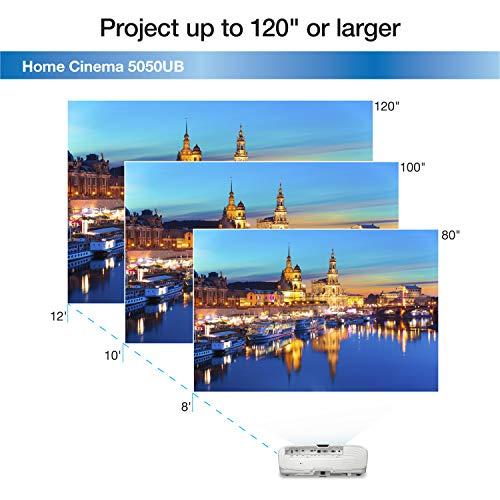
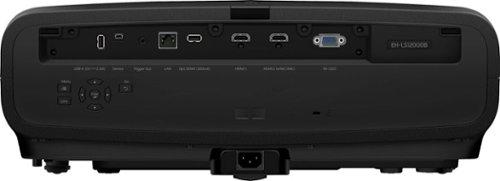
One area where both projectors shine equally is installation flexibility. Both offer motorized lens shift (±96% vertical, ±47% horizontal), motorized zoom and focus, and lens memory that remembers settings for different aspect ratios.
This flexibility matters enormously in real homes where you can't always place the projector in the perfect spot. Whether you're ceiling-mounting behind the seating area or shelf-mounting on the back wall, both projectors adapt to challenging installations without compromising image geometry.
The LS12000 does offer faster power-on times thanks to its laser source, while the 5050UB needs several minutes to warm up properly—a minor but daily convenience factor.
Here's one clear advantage for the 5050UB: it supports 3D content with active shutter glasses. The LS12000 dropped 3D support entirely, reflecting the format's declining popularity.
If you have a 3D movie collection you want to preserve, or you're one of the enthusiasts who still appreciates well-made 3D content, the 5050UB is your only choice between these two. For most buyers, this won't matter, but it's worth considering if you've invested in 3D media.
The most significant practical difference between these projectors emerges over years of ownership. The 5050UB's lamp gradually dims over 3,500-5,000 hours of use, requiring replacement bulbs that cost several hundred dollars each.
Calculate the math: if you watch three hours daily, you'll need a new bulb roughly every three to four years. Over a decade, you might spend $600-900 on replacement bulbs, potentially making the 5050UB more expensive than the pricier LS12000 over its lifetime.
The LS12000's laser is rated for 20,000 hours—potentially 15-20 years of typical use without any maintenance. It also maintains consistent brightness and color throughout its lifespan, while lamp projectors gradually dim until replacement.
Beyond cost, there's the convenience factor. Laser projectors power on instantly and maintain perfect performance year after year. Lamp projectors require warm-up time, gradual dimming means you need to occasionally boost brightness settings, and there's always the anxiety of "is my bulb about to die during this important movie night?"
Your viewing environment significantly influences which projector makes more sense. The 5050UB absolutely shines in dedicated theater rooms with complete light control. Its exceptional black levels and contrast create that premium cinema experience that makes you forget you're at home.
In family rooms or multipurpose spaces with some ambient light, the LS12000's extra brightness and better HDR handling often produce more satisfying results. Its laser source doesn't mind being turned on and off frequently, making it better suited to casual viewing patterns.
Consider your usage patterns too. If you're the type who watches movies occasionally on weekends, the 5050UB's lower upfront cost and excellent picture quality make perfect sense. If you use your projector daily—for movies, TV shows, gaming, and sports—the LS12000's convenience and consistency justify the premium.
The gap between 2019 and 2022 might seem small, but projector technology moved significantly during this period. The LS12000 represents Epson's first home theater projector to achieve what they claim is true 4K pixel-shifting performance, matching the sophistication of competing DLP models.
More importantly, the laser revolution gained serious momentum during these years. While laser projectors existed before 2022, they were either extremely expensive or compromised in performance. The LS12000 represents the generation where laser technology finally delivered on its promises at reasonable prices.
HDR10+ support also became more common during this period, and gaming at 120fps transitioned from enthusiast curiosity to mainstream expectation. The LS12000 arrived ready for these developments, while the 5050UB represents the peak of the previous generation.
After researching extensive user and professional reviews, clear patterns emerge about who should choose which projector.
Choose the Home Cinema 5050UB if you prioritize pure picture quality in a controlled environment. Its exceptional contrast and black levels create an undeniably cinematic experience that many users prefer over brighter but less contrasty alternatives. The lower upfront cost makes it attractive for budget-conscious buyers who don't mind eventual bulb replacement.
The 5050UB also makes sense if you have 3D content to preserve, if you use your projector moderately (under 3 hours daily), or if you're setting up a dedicated theater room where its strengths shine brightest.
Choose the Pro Cinema LS12000 if you want the latest technology with minimal long-term maintenance. Its superior gaming performance, HDR10+ support, and laser reliability make it the better choice for heavy users who treat their projector as a primary display device.
The LS12000 also works better in brighter rooms, handles modern gaming consoles properly, and represents a safer long-term investment as the industry moves away from lamp technology.
Both projectors deliver exceptional performance that justifies their premium positioning. The 5050UB offers the best pure picture quality and value for dedicated theater enthusiasts, while the LS12000 provides superior convenience, gaming performance, and future-proofing for users who want cutting-edge technology.
Your decision should ultimately come down to usage patterns and priorities. If you're building a serious home theater where picture quality trumps all other concerns, the 5050UB remains hard to beat. If you want a versatile, maintenance-free projector that handles everything modern content can throw at it, the LS12000 justifies its premium pricing.
Either choice will deliver years of exceptional large-screen entertainment—just make sure your choice aligns with how you'll actually use it.
| Epson Home Cinema 5050UB | Epson Pro Cinema LS12000 |
|---|---|
| Light Source Technology - Determines maintenance needs and long-term costs | |
| 250W UHE lamp (3,500-5,000 hour lifespan, requires replacement) | Solid-state laser array (20,000 hour lifespan, maintenance-free) |
| Brightness Output - Critical for HDR performance and room flexibility | |
| 2,600 lumens (reduces to 1,300 with color filter for wide gamut) | 2,700 lumens (maintains full brightness with wide color) |
| Contrast Performance - Most important for dark scene detail and cinematic feel | |
| 8,000:1 native contrast with UltraBlack technology (exceptional blacks) | 2,019:1 native contrast (good for laser, but can't match lamp-based blacks) |
| 4K Implementation - Affects fine detail reproduction and sharpness | |
| 4-way pixel shifting from 1080p panels (sharp but limited fine detail) | 4-phase dual-axis shifting (true 4K resolution matching, noticeably sharper) |
| Color Gamut Coverage - Determines color richness and HDR quality | |
| 97% DCI-P3 (widest coverage but requires brightness-reducing filter) | 93% DCI-P3 (narrower but maintains full brightness for better HDR) |
| Gaming Performance - Essential for modern console compatibility | |
| 22.5ms input lag, 60Hz maximum (adequate for casual gaming) | 19.5ms input lag, 120Hz support, 4K/120fps capable (excellent for competitive gaming) |
| HDR Support - Affects modern streaming and UHD disc quality | |
| HDR10 with 16-step manual adjustment (good but static) | HDR10+ with dynamic metadata plus HDR10 (superior scene-by-scene optimization) |
| 3D Capability - Important for existing 3D movie collections | |
| Full 3D support with active shutter glasses | No 3D support (dropped feature) |
| Installation Flexibility - Both models excel equally here | |
| Motorized lens shift (±96% V, ±47% H), 2.1x zoom, lens memory | Motorized lens shift (±96% V, ±47% H), 2.1x zoom, lens memory |
| Power Consumption and Noise - Daily usage comfort factors | |
| 373W power draw, 31dB fan noise (audible during quiet scenes) | 311W power draw, 22-30dB fan noise (quieter operation) |
| Long-term Value Proposition - Total cost over 10 years of ownership | |
| Lower upfront cost plus $600-900 in replacement bulbs | Higher upfront cost but no bulb replacements needed |
| Best Use Case - Which scenarios favor each projector vs projector | |
| Dedicated dark theaters prioritizing contrast and cinema experience | Multi-purpose rooms, heavy usage, modern gaming, convenience-focused users |
The Epson Home Cinema 5050UB excels in dedicated home theater rooms with controlled lighting due to its superior contrast ratio and deeper black levels from UltraBlack technology. However, the Epson Pro Cinema LS12000 works better in multi-purpose rooms with ambient light thanks to its brighter, more consistent laser output and better HDR performance.
The 5050UB uses a traditional lamp that lasts 3,500-5,000 hours and requires expensive replacements, while the LS12000 uses a maintenance-free laser rated for 20,000 hours. Laser projectors also power on instantly, maintain consistent brightness throughout their lifespan, and consume less power than lamp-based models.
Picture quality depends on your priorities. The Epson Home Cinema 5050UB delivers superior contrast and black levels for dark scenes, making it ideal for movie watching. The Epson Pro Cinema LS12000 offers sharper 4K detail reproduction and better HDR performance, especially for bright, colorful content.
Both work for gaming, but the LS12000 is significantly better for modern gaming with 19.5ms input lag, 120Hz support, and 4K/120fps capability for PlayStation 5 and Xbox Series X. The 5050UB has 22.5ms input lag and 60Hz maximum, which is adequate for casual gaming but not ideal for competitive play.
Yes, both the Epson Home Cinema 5050UB and Epson Pro Cinema LS12000 support 4K content through pixel-shifting technology. However, the LS12000 uses more advanced 4-phase shifting that delivers noticeably sharper detail and better resolves fine 4K content compared to the older shifting method in the 5050UB.
Only the Epson Home Cinema 5050UB supports 3D content with active shutter glasses. The Epson Pro Cinema LS12000 dropped 3D support entirely, so if you have a 3D movie collection, the 5050UB is your only choice between these models.
The Epson Pro Cinema LS12000 runs quieter at 22-30dB compared to the Epson Home Cinema 5050UB at 31dB. The laser projector also consumes less power (311W vs 373W) and doesn't require loud cooling fans during warm-up periods like lamp projectors do.
Both projectors offer excellent installation flexibility with motorized lens shift (±96% vertical, ±47% horizontal), motorized zoom and focus, and lens memory. The main difference is that the LS12000 powers on instantly while the 5050UB requires several minutes of warm-up time before reaching optimal performance.
Choose the Epson Home Cinema 5050UB if you have a dedicated dark theater room, watch movies primarily, use the projector moderately, or want the lowest upfront cost with exceptional contrast. Choose the Epson Pro Cinema LS12000 if you want maintenance-free operation, game frequently, watch lots of HDR content, or use your projector as a primary display device.
We've done our best to create useful and informative comparisons to help you decide what product to buy. Our research uses advanced automated methods to create this comparison and perfection is not possible - please contact us for corrections or questions. These are the sites we've researched in the creation of this article: rtings.com - audiogurus.com - hometechnologyreview.com - projectorscreen.com - youtube.com - thesmarthomehookup.com - techgearlab.com - rtings.com - projectorreviews.com - projectorreviews.com - projectorreviews.com - projectorcentral.com - avsforum.com - avsforum.com - rtings.com - avsforum.com - audiogeneral.com - hifiheaven.net - manuals.plus - crutchfield.com - mediaserver.goepson.com - projectorcentral.com - epson.com - bestbuy.com - projectorreviews.com - projectorcentral.com - techradar.com - projectorreviews.com - safeandsoundhq.com - news.epson.com - youtube.com - projectorcentral.com - bestbuy.com - projectorcentral.com - digitalhomecreations.com - new-age-electronics.com - flanners.com - paulsonsav.com

Privacy Policy
Terms and Conditions - Affiliate Policy
Home Security
© Copyright 2008-2026.
11816 Inwood Rd #1211, Dallas, TX 75244