

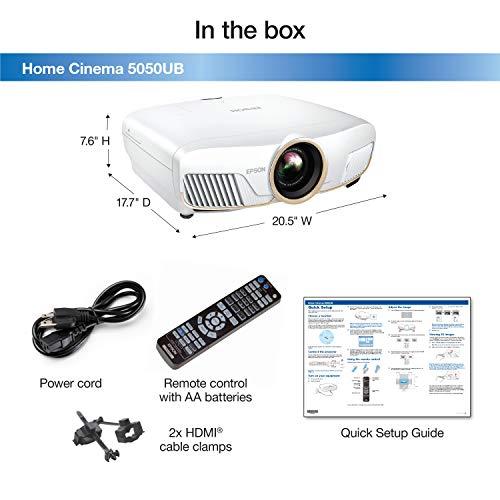
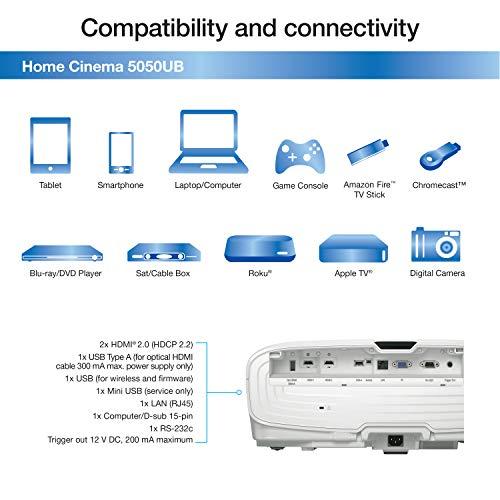
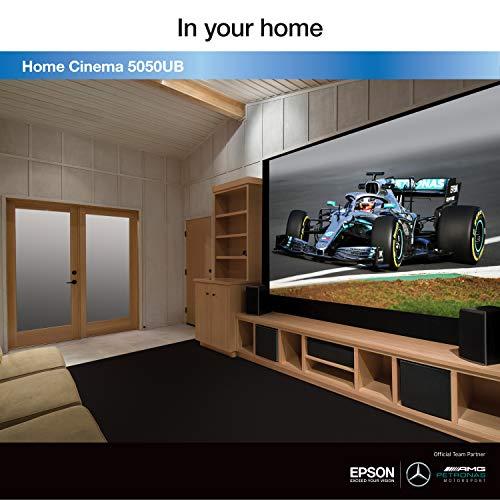
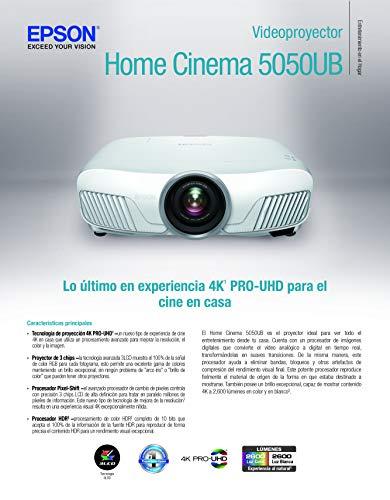
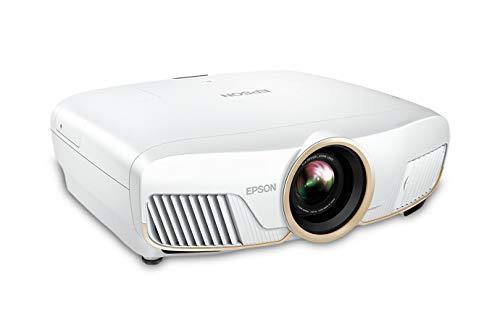
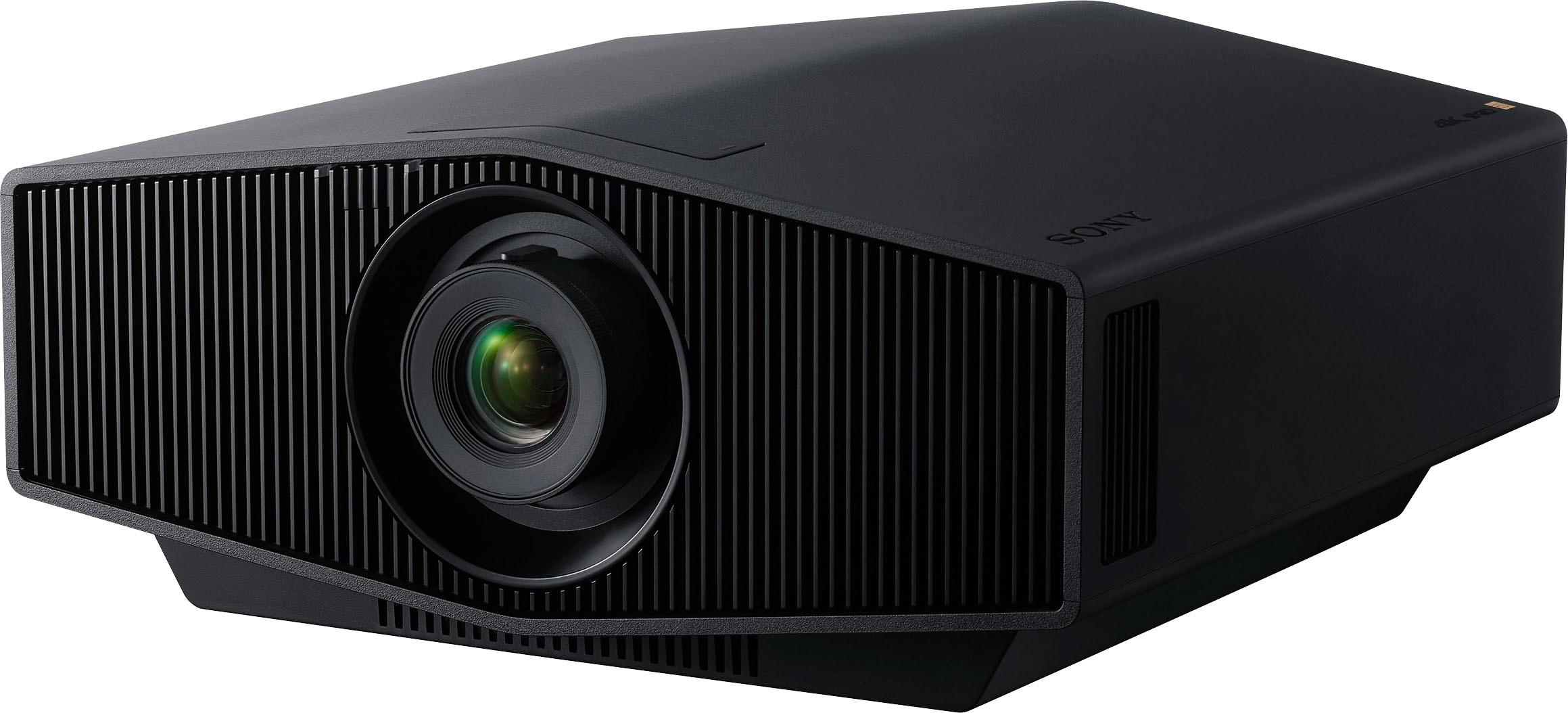
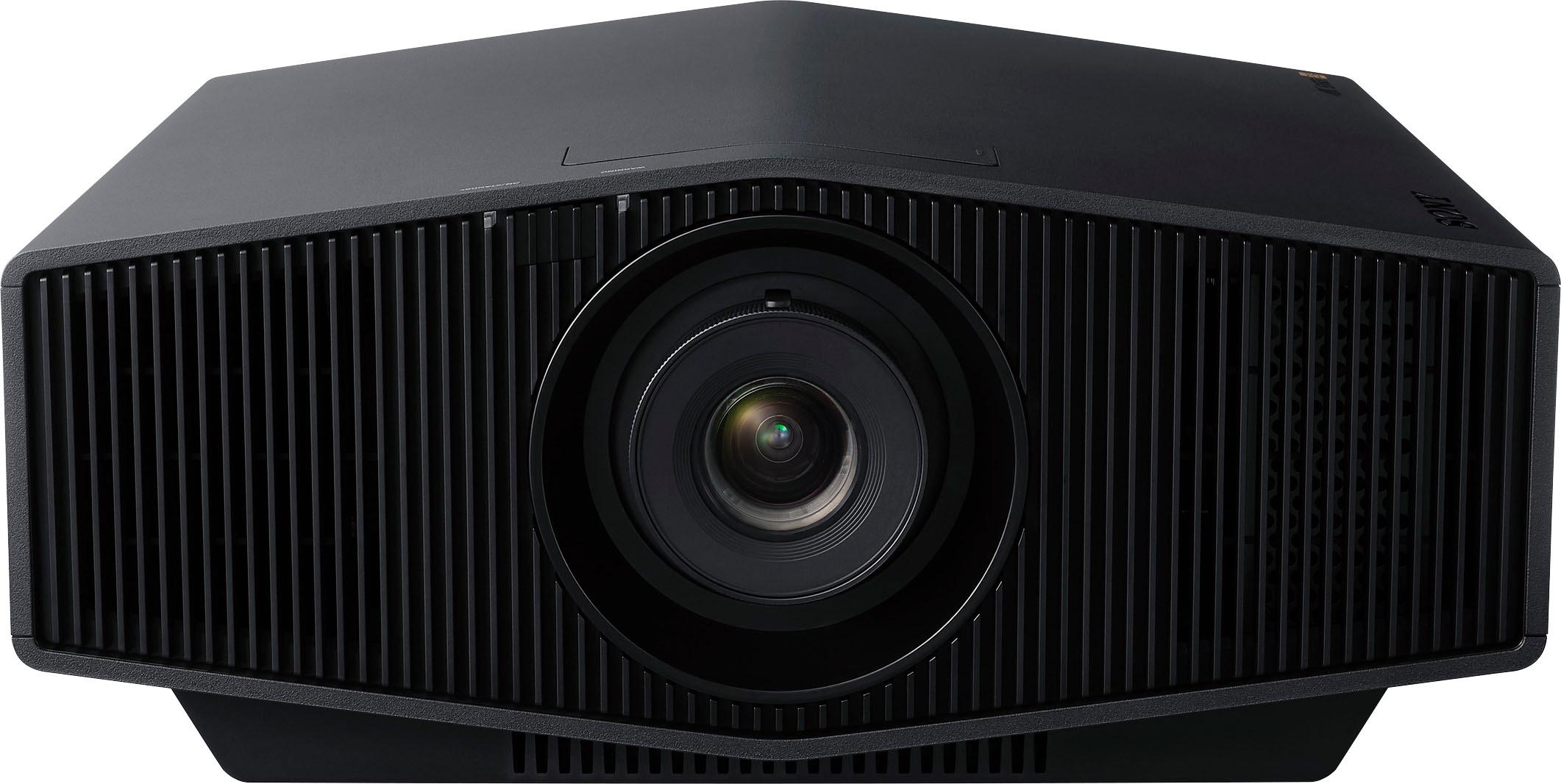
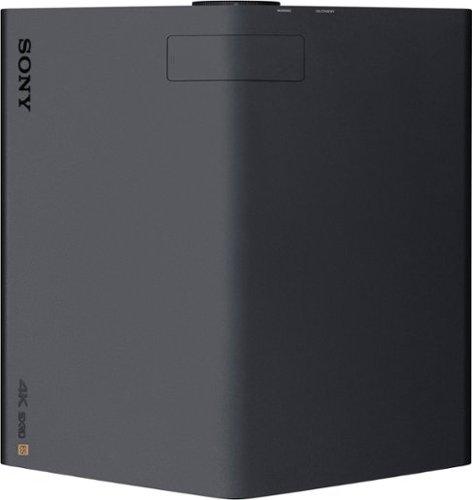
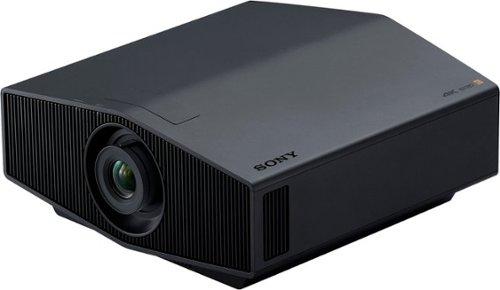
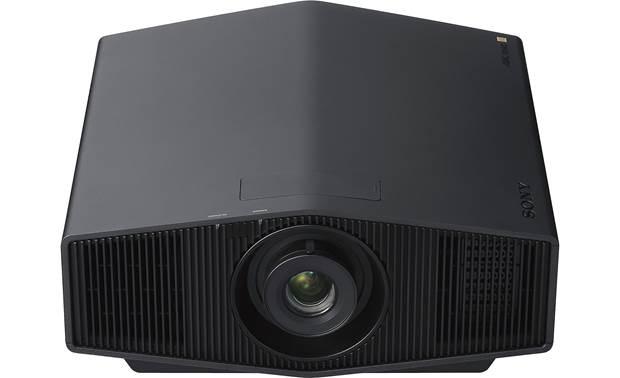
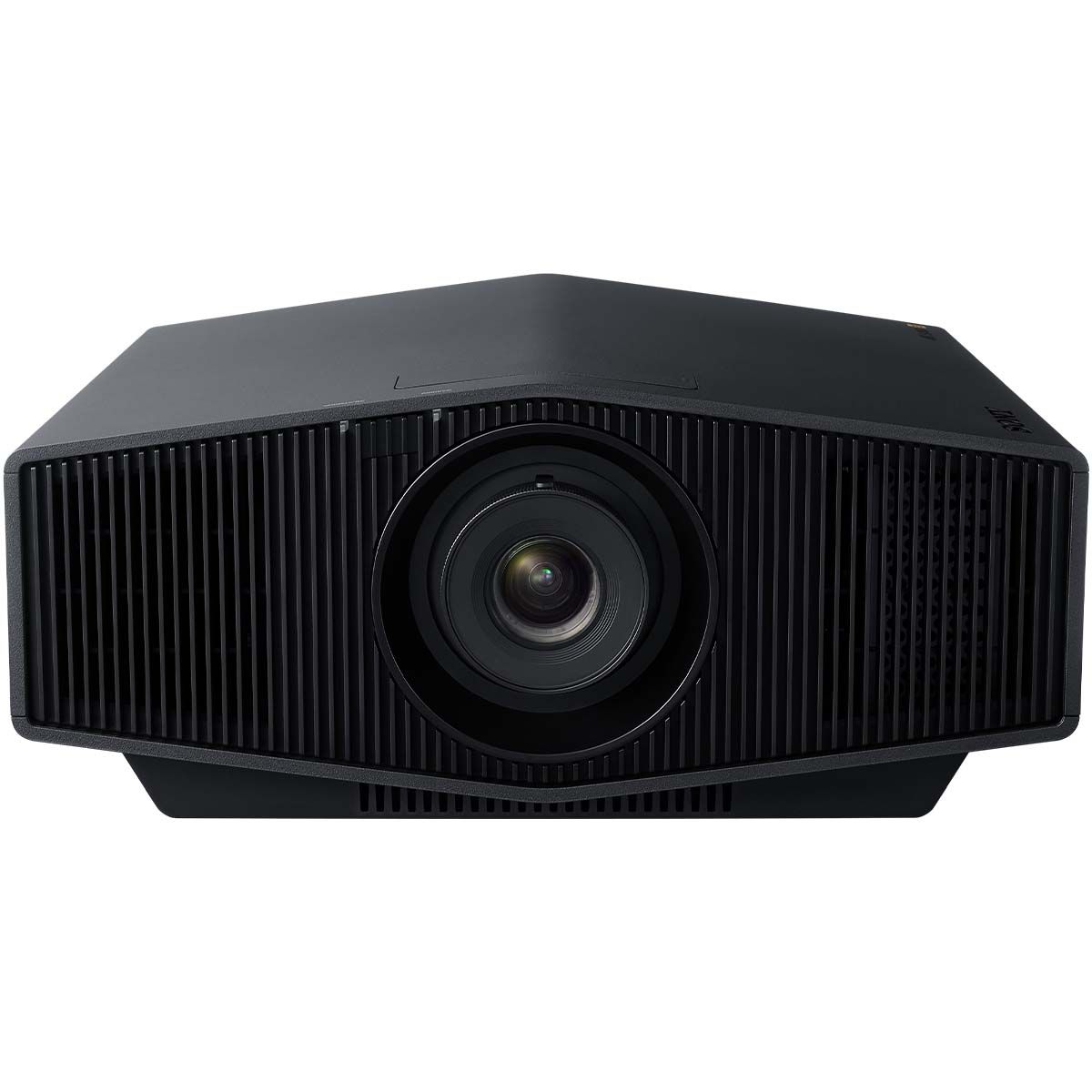
When you're ready to transform your living room or basement into a cinematic experience, choosing the right projector can feel overwhelming. Two standouts in the premium home theater market are the Epson Home Cinema 5050UB and the Sony VPL-XW5000ES. While both deliver impressive big-screen experiences, they take fundamentally different approaches to achieving 4K resolution and handling long-term ownership costs.
Before diving into specifics, let's establish what separates excellent projectors from mediocre ones. The most critical factors include resolution sharpness, brightness for different room conditions, color accuracy that brings movies to life, contrast that maintains detail in dark scenes, and the total cost of ownership over several years.
Resolution determines how sharp and detailed your image appears. Brightness, measured in lumens, affects whether you can watch with some lights on or need complete darkness. Color accuracy ensures skin tones look natural and vibrant scenes don't appear oversaturated. Contrast ratio describes how well a projector displays deep blacks alongside bright highlights – crucial for dramatic movie scenes.
The light source technology represents perhaps the biggest decision point. Traditional lamp-based projectors require periodic bulb replacements, while newer laser projectors eliminate this maintenance but cost significantly more upfront.
The fundamental difference between the Epson 5050UB and Sony XW5000ES lies in how they achieve 4K resolution. The Epson uses pixel-shifting technology, while Sony employs native 4K panels – and this distinction matters more than marketing materials might suggest.
The Epson 5050UB, released in 2019, uses what's called "4K PRO-UHD" technology. This system starts with native 1080p resolution panels but shifts each pixel diagonally by half a pixel multiple times per frame. By displaying the image in slightly different positions rapidly, it effectively doubles the perceived resolution. Think of it like taking four 1080p images and overlapping them with microscopic precision to create something that looks remarkably close to true 4K.
The Sony XW5000ES, launched in 2022, takes a different approach with native 4K SXRD (Silicon X-tal Reflective Display) panels. Each panel contains the full 8.3 million pixels needed for true 4K resolution without any processing tricks. SXRD technology uses liquid crystal on silicon, which provides excellent contrast and color accuracy compared to other panel types.
In practical terms, both approaches deliver sharp, detailed images that look impressive on large screens. The Sony's native 4K resolution provides a slight edge in fine detail reproduction – you'll notice this most clearly with text, architectural details, or high-resolution nature documentaries. However, the Epson's pixel-shifting implementation is so refined that most viewers won't spot the difference during typical movie watching from normal seating distances.
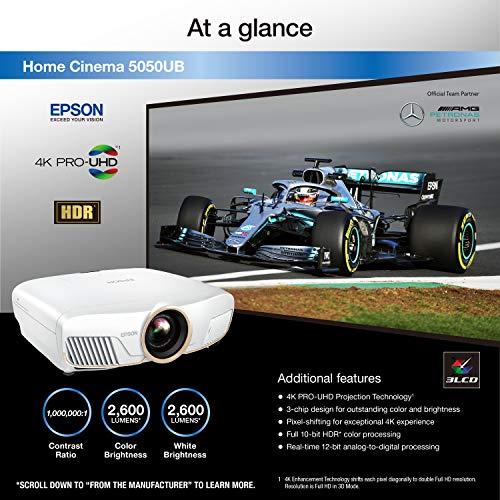
Brightness often determines whether a projector works in your specific room setup. The Epson 5050UB produces 2,600 lumens compared to the Sony XW5000ES's 2,000 lumens. This 600-lumen advantage translates to noticeably brighter images, especially important for larger screens or rooms where complete light control isn't possible.
A lumen measures light output – think of it as the projector equivalent of a lightbulb's wattage rating. For context, most budget projectors produce 1,000-1,500 lumens, which limits them to smaller screens in dark rooms. The Epson's higher output makes it more versatile for multi-purpose spaces where you might watch with some ambient lighting.
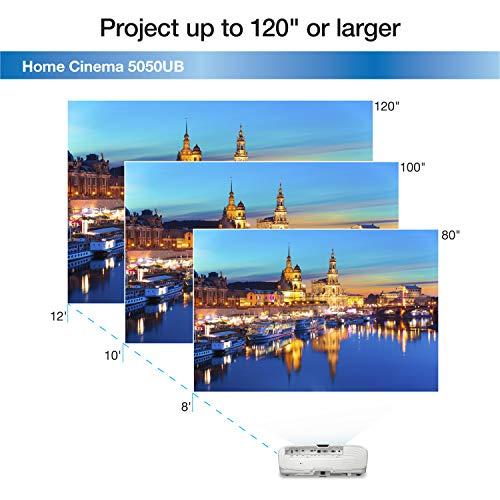
This brightness advantage becomes particularly valuable on screens larger than 120 inches. The Epson 5050UB maintains vibrant, punchy images even on massive 150-inch screens, while the Sony might appear slightly dimmer in the same setup. For dedicated theater rooms with complete light control, the Sony's 2,000 lumens proves perfectly adequate, but the Epson offers more flexibility.
The trade-off involves power consumption and heat generation. The Epson 5050UB draws 373 watts compared to the Sony's more efficient 295 watts. This difference won't significantly impact your electricity bill, but the Epson runs warmer and requires more ventilation clearance.
Color accuracy separates professional-grade projectors from consumer models, and this area showcases the Sony XW5000ES's premium positioning. Sony's TRILUMINOS PRO color engine covers 95% of the DCI-P3 color space – the same standard used in commercial movie theaters. DCI-P3 represents a wider range of colors than the standard Rec. 709 color space used for regular HD content.
The practical benefit means more lifelike skin tones, richer sunset scenes, and more vivid natural colors without the oversaturation that plagues some projectors. The Sony XW5000ES also includes Sony's X1 Ultimate processor, borrowed from their premium BRAVIA TVs. This processor analyzes each frame and optimizes colors, contrast, and sharpness in real-time – something most projectors in this price range don't offer.
The Epson 5050UB delivers excellent color performance but requires more calibration to achieve optimal accuracy. Out of the box, some users report a slight blue or green tint that needs adjustment. However, once properly calibrated, the Epson produces vibrant, engaging colors that satisfy most viewers. The Epson's strength lies in its full 10-bit color processing, supporting over one billion colors for smooth gradations in sunset skies or subtle skin tone variations.
Both projectors excel at contrast performance, though they achieve deep blacks through different methods. The Epson 5050UB uses UltraBlack technology – a proprietary filter that controls light polarization to reduce internal light leakage. Combined with its dynamic iris that adjusts opening size based on scene content, the Epson achieves impressive black levels while maintaining shadow detail.
The Sony XW5000ES leverages its advanced SXRD panels and sophisticated processing to deliver what Sony calls "infinite black contrast." The SXRD technology inherently produces excellent black levels due to how liquid crystal on silicon panels control light passage.
In dark movie scenes, both projectors maintain detail in shadows while delivering deep, convincing blacks. The Sony sometimes produces blacks so deep that subtle shadow details can disappear, while the Epson maintains slightly more shadow information at the expense of absolute black depth. Neither approach is definitively better – it depends whether you prefer maximum black depth or retaining every shadow detail.
High Dynamic Range (HDR) content contains more brightness and color information than standard video, allowing for more realistic images with brighter highlights and deeper shadows. Both projectors support HDR10 format, though they handle HDR processing differently.
The Sony XW5000ES includes sophisticated HDR processing through its X1 Ultimate processor. The Dynamic HDR Enhancer analyzes incoming HDR content scene by scene, adjusting brightness levels and laser output to optimize contrast automatically. Object-based HDR Remaster goes further, analyzing individual objects within each frame and applying different contrast curves to enhance depth and realism.
The Epson 5050UB takes a more manual approach with 16-step real-time HDR adjustment. This gives users precise control over HDR tone mapping – essentially how the projector translates the HDR information to fit its display capabilities. While requiring more user intervention, this approach allows fine-tuning HDR presentation for different content types or personal preferences.
For most users, Sony's automated approach proves more convenient and consistent. However, enthusiasts who enjoy tweaking settings might prefer Epson's granular control options.
Perhaps the most significant difference between these projectors involves their light source technology, which affects both ongoing costs and user experience.
The Epson 5050UB uses a traditional 250W UHE (Ultra High Efficiency) lamp with an estimated lifespan of 3,500 hours in normal mode or up to 5,000 hours in eco mode. When the lamp dims or fails, replacement costs typically range from $300-400, not including installation if you're uncomfortable handling the replacement yourself.
The Sony XW5000ES employs a laser phosphor light source rated for 20,000 hours of operation – potentially the projector's entire useful lifespan. Laser light sources offer several advantages: instant on/off operation, consistent brightness throughout their lifespan, no warm-up period, and zero maintenance requirements.
From a total cost perspective, the math becomes interesting over time. At the time of writing, the Epson 5050UB costs significantly less upfront but requires lamp replacements every few years. The Sony XW5000ES commands a premium price but eliminates ongoing lamp costs. Over a 10-year ownership period, the total costs often converge, making the Sony's laser technology essentially "free" in the long run while providing operational convenience.
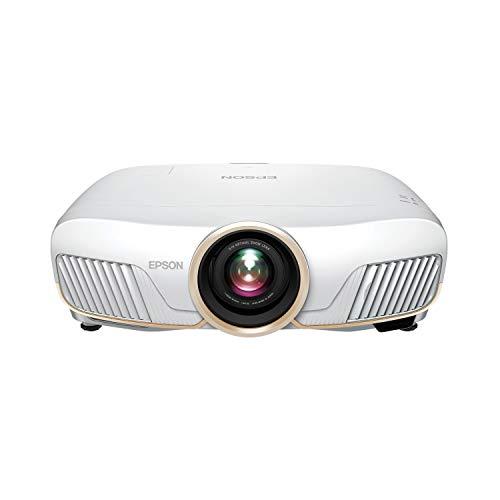
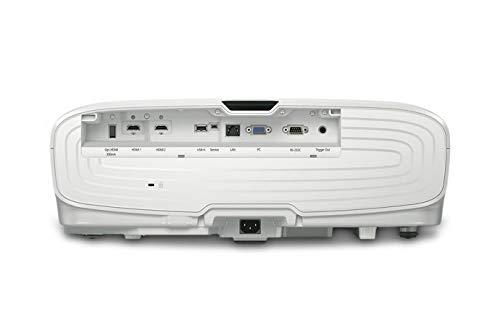
The Epson 5050UB provides superior installation flexibility through its fully motorized lens system. Motorized zoom, focus, and lens shift allow precise image positioning without physically adjusting the projector. The lens memory feature proves particularly valuable for enthusiasts with constant image ratio (CIR) screens who switch between 16:9 widescreen and 2.35:1 cinemascope content.
Lens shift describes how much you can move the projected image up, down, left, or right without introducing keystone distortion (where the image becomes trapezoidal rather than rectangular). The Epson offers extensive lens shift ranges, making installation possible even when the projector can't be positioned directly in front of the screen center.
The Sony XW5000ES includes manual lens controls, which feels like a step backward given its premium pricing. While the Sony still offers excellent lens shift ranges, making adjustments requires physically accessing the projector rather than using the remote control. This limitation becomes particularly apparent if the projector is ceiling-mounted in a difficult-to-reach location.
Both projectors provide respectable gaming performance for their category. The Sony XW5000ES delivers slightly lower input lag – the delay between controller input and on-screen response. At 21 milliseconds for 4K/60Hz content, the Sony provides responsive gaming that most players will find acceptable. The Epson 5050UB measures around 22.5 milliseconds, essentially equivalent in real-world use.
Neither projector includes modern gaming features like 4K/120Hz support or HDMI 2.1 connectivity, which have become important for PlayStation 5 and Xbox Series X gaming. Both are limited to 4K/60Hz maximum refresh rates, making them better suited for movie watching than competitive gaming.
The Epson 5050UB includes 3D support with active shutter glasses, while the Sony omits 3D capability entirely. Though 3D content popularity has waned, some enthusiasts still appreciate this feature for compatible movies and games.
Operating noise can make or break the home theater experience, especially in quiet dramatic scenes. The Epson 5050UB operates at 20 decibels in eco mode – virtually silent – and 31 decibels in normal mode. Most users report the Epson running whisper-quiet during typical viewing, especially when using eco mode with adequate screen brightness.
The Sony XW5000ES produces 30-35 decibels depending on operating mode. While not excessively loud, the laser cooling system creates more noticeable fan noise than the Epson in eco mode. The Sony's more compact design (about 30% smaller than comparable lamp projectors) partially compensates through easier installation and reduced visual impact.
Heat generation also differs between technologies. The Epson 5050UB requires more ventilation clearance due to its higher power consumption and lamp heat output. The laser-based Sony runs cooler and needs less ventilation space, making it more suitable for enclosed installations.
The Epson Home Cinema 5050UB makes the most sense for buyers who want exceptional performance without the premium price tag. Its combination of high brightness, excellent contrast, and motorized lens convenience delivers a remarkably complete package. Choose the Epson if you're setting up in a multi-purpose room with some ambient light, need maximum brightness for a large screen, or want the flexibility of motorized lens adjustments for different content formats.
The Sony VPL-XW5000ES appeals to enthusiasts who prioritize technical excellence and long-term convenience. Its native 4K resolution, sophisticated image processing, and maintenance-free laser operation justify the premium for buyers seeking the ultimate home theater experience. Choose the Sony if you're building a dedicated theater room with complete light control, want the best possible image quality, or prefer set-it-and-forget-it operation without lamp maintenance.
Based on extensive research and consensus expert opinions, both projectors deliver outstanding performance that will satisfy most home theater enthusiasts. The Epson 5050UB provides approximately 85% of the Sony XW5000ES's image quality at a significantly lower price point, making it exceptional value for most buyers.
The Sony's advantages – native 4K resolution, superior color accuracy, and laser convenience – represent genuine improvements that justify its premium positioning for enthusiasts willing to invest in the best possible experience. However, the Epson's combination of brightness, contrast performance, and installation flexibility makes it the more practical choice for most home theater setups.
If budget allows and you're committed to the absolute best image quality in a dedicated theater room, the Sony delivers technical superiority that becomes more apparent over time. For most buyers seeking outstanding big-screen entertainment without the premium price, the Epson provides better value while delivering a genuinely impressive viewing experience that rivals much more expensive alternatives.
The decision ultimately depends on your specific priorities: maximum value and flexibility with the Epson 5050UB, or technical excellence and long-term convenience with the Sony XW5000ES. Either choice will transform your viewing experience and provide years of cinematic enjoyment.
| Epson Home Cinema 5050UB | Sony VPL-XW5000ES |
|---|---|
| Resolution Technology - Determines image sharpness and detail quality | |
| 4K PRO-UHD pixel-shifting from 1080p base | Native 4K SXRD panels (8.3 million pixels) |
| Brightness Output - Critical for screen size and ambient light tolerance | |
| 2,600 lumens (better for large screens/ambient light) | 2,000 lumens (adequate for dedicated theaters) |
| Light Source Technology - Affects maintenance costs and longevity | |
| UHP lamp (3,500-5,000 hour lifespan, requires replacement) | Laser phosphor (20,000 hours, maintenance-free) |
| Color Accuracy - Important for natural skin tones and cinematic experience | |
| Excellent with calibration, 10-bit processing | 95% DCI-P3 cinema standard, superior out-of-box accuracy |
| Contrast Performance - Determines black levels and shadow detail | |
| 1,000,000:1 dynamic contrast with UltraBlack technology | Infinite black contrast with advanced SXRD panels |
| Lens Control System - Affects installation flexibility and user convenience | |
| Motorized zoom, focus, shift with lens memory | Manual zoom, focus, shift (less convenient) |
| HDR Processing - Enhances dynamic range in compatible content | |
| 16-step manual HDR adjustment for precise control | X1 Ultimate processor with automated scene optimization |
| Operating Noise - Important for quiet movie scenes | |
| 20-31 dB (whisper quiet in eco mode) | 30-35 dB (slightly more noticeable fan noise) |
| Gaming Performance - Matters for console gaming compatibility | |
| 22.5ms input lag, 3D support included | 21ms input lag, no 3D capability |
| Physical Design - Affects installation and room aesthetics | |
| Larger footprint, traditional projector design | 30% more compact, premium build quality |
| Power Consumption - Impacts operating costs and heat generation | |
| 373W (higher energy use, more heat) | 295W (more efficient, cooler operation) |
| Total Cost of Ownership - Important for long-term budget planning | |
| Lower upfront cost but ongoing lamp replacement expenses | Higher initial investment but eliminates lamp costs over time |
The Sony VPL-XW5000ES offers superior technical performance with native 4K resolution, better color accuracy, and maintenance-free laser operation. However, the Epson Home Cinema 5050UB provides exceptional value with brighter output, motorized lens controls, and significantly lower upfront cost. For dedicated home theaters with controlled lighting, choose Sony. For versatile setups or budget-conscious buyers, the Epson delivers outstanding performance.
The Epson Home Cinema 5050UB uses pixel-shifting technology that rapidly moves 1080p pixels to simulate 4K resolution, while the Sony VPL-XW5000ES features true native 4K panels with 8.3 million pixels. Native 4K provides slightly sharper detail in fine textures and text, but pixel-shifting delivers impressive 4K-like quality that most viewers find indistinguishable during normal movie watching.
The Epson Home Cinema 5050UB produces 2,600 lumens compared to the Sony VPL-XW5000ES's 2,000 lumens. This 600-lumen advantage makes the Epson better suited for screens larger than 120 inches or rooms with some ambient light. The Sony's brightness is perfectly adequate for dedicated theater rooms with complete light control.
The Epson Home Cinema 5050UB uses a traditional lamp lasting 3,500-5,000 hours that requires periodic replacement costing $300-400. The Sony VPL-XW5000ES features a maintenance-free laser light source rated for 20,000 hours - potentially the projector's entire lifespan. This eliminates ongoing maintenance costs but increases the initial purchase price.
The Sony VPL-XW5000ES delivers superior color accuracy with 95% DCI-P3 cinema-standard color coverage and excellent out-of-box calibration. The Epson Home Cinema 5050UB also produces excellent colors but may require calibration adjustments for optimal accuracy. Sony's TRILUMINOS PRO technology and X1 Ultimate processor provide more sophisticated color processing.
Both projectors offer decent gaming performance with the Sony VPL-XW5000ES providing 21ms input lag and the Epson Home Cinema 5050UB delivering 22.5ms. These response times work well for casual gaming but aren't ideal for competitive play. Neither supports modern gaming features like 4K/120Hz or HDMI 2.1, making them better suited for movies than serious gaming.
The Epson Home Cinema 5050UB operates more quietly at 20-31 dB, especially in eco mode where it's virtually silent. The Sony VPL-XW5000ES runs at 30-35 dB due to its laser cooling requirements. For quiet home theater environments, the Epson's whisper-quiet operation in eco mode provides a clear advantage during dialogue-heavy scenes.
Both projectors excel at contrast with the Epson Home Cinema 5050UB claiming 1,000,000:1 dynamic contrast using UltraBlack technology, while the Sony VPL-XW5000ES advertises "infinite black contrast" through advanced SXRD panels. In practice, both deliver impressive black levels and shadow detail, with slightly different approaches to contrast optimization.
The Epson Home Cinema 5050UB provides superior installation convenience with motorized zoom, focus, and lens shift controls plus lens memory for different aspect ratios. The Sony VPL-XW5000ES uses manual lens controls, requiring physical access for adjustments. The Epson's motorized system makes it much easier to fine-tune image positioning and switch between content formats.
Both projectors support HDR10 format but handle processing differently. The Sony VPL-XW5000ES includes sophisticated automated HDR processing through its X1 Ultimate processor with scene-by-scene optimization. The Epson Home Cinema 5050UB offers 16-step manual HDR adjustment for precise user control. Neither supports Dolby Vision or HDR10+ formats.
The Epson Home Cinema 5050UB costs significantly less upfront but requires lamp replacements every few years at $300-400 each. The Sony VPL-XW5000ES has a higher initial cost but eliminates lamp replacement expenses over its 20,000-hour laser lifespan. Over 8-10 years, the total ownership costs often converge, making the Sony's convenience essentially free long-term.
Choose the Epson Home Cinema 5050UB if you want excellent performance at great value, need maximum brightness for large screens or ambient light, or prefer motorized lens convenience. Select the Sony VPL-XW5000ES if you prioritize native 4K resolution, want maintenance-free operation, have a dedicated theater room with controlled lighting, or prefer premium image processing and color accuracy.
We've done our best to create useful and informative comparisons to help you decide what product to buy. Our research uses advanced automated methods to create this comparison and perfection is not possible - please contact us for corrections or questions. These are the sites we've researched in the creation of this article: rtings.com - audiogurus.com - hometechnologyreview.com - projectorscreen.com - youtube.com - thesmarthomehookup.com - techgearlab.com - rtings.com - projectorreviews.com - projectorreviews.com - projectorreviews.com - projectorcentral.com - avsforum.com - avsforum.com - rtings.com - avsforum.com - audiogeneral.com - hifiheaven.net - manuals.plus - crutchfield.com - mediaserver.goepson.com - projectorcentral.com - epson.com - bestbuy.com - projectorreviews.com - projectorcentral.com - whathifi.com - pro.sony - projectorscreen.com - bestbuy.com - bestbuy.com - bestbuy.com - bestbuy.com - pro.sony - abt.com - projectorreviews.com - merlinstv.com - hometheaterhifi.com

Privacy Policy
Terms and Conditions - Affiliate Policy
Home Security
© Copyright 2008-2026.
11816 Inwood Rd #1211, Dallas, TX 75244