


When you're ready to transform your living space into a cinematic experience, premium home theater projectors offer the perfect balance between professional-grade image quality and reasonable accessibility. At the time of writing, these projectors typically cost between $2,500 and $3,500, positioning them as serious investments that demand careful consideration.
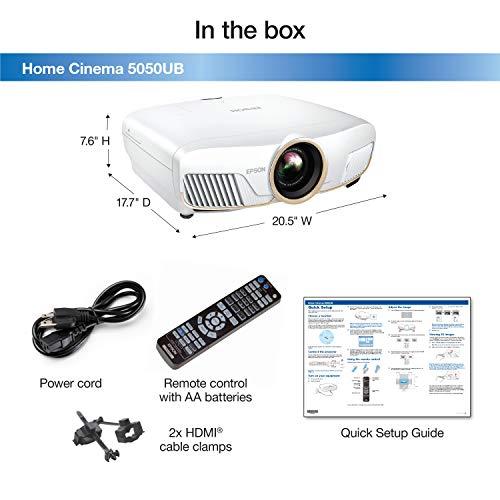
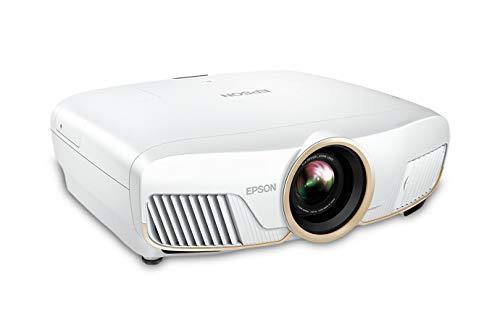
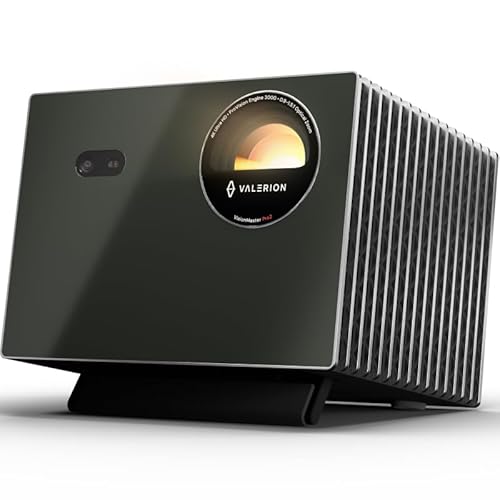
Today we're comparing two fundamentally different approaches to premium projection: the Epson Home Cinema 5050UB, a traditional powerhouse focused on pure image quality, and the Valerion VisionMaster Pro 2, a modern all-in-one solution packed with smart features. Both deliver impressive performance, but they cater to distinctly different priorities and use cases.
Premium home theater projectors occupy a sweet spot in the market where you get serious performance without the astronomical costs of reference-grade models. These projectors are designed for people who want cinema-quality images in dedicated home theaters or versatile performance in multi-purpose rooms.
The key considerations when evaluating these projectors include display technology (which affects color reproduction and contrast), resolution capabilities, light source type, smart features for modern connectivity, installation flexibility, and increasingly, gaming performance. Each of these factors significantly impacts your daily experience and long-term satisfaction with your purchase.
The most important difference between the Epson 5050UB and Valerion VisionMaster Pro 2 lies in their core imaging technologies, which were developed with entirely different philosophies in mind.
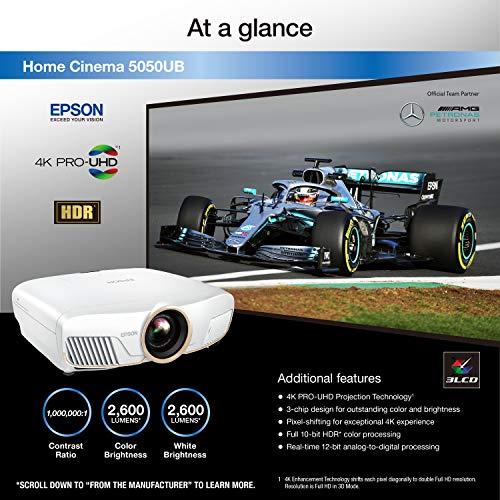
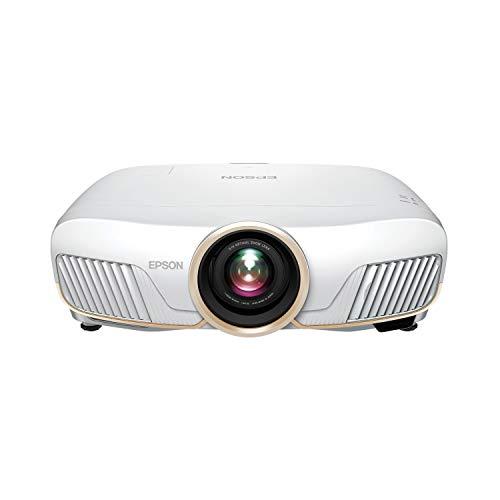
The Epson employs 3LCD technology, using three separate LCD panels that simultaneously process red, green, and blue light channels. Think of it like having three specialized artists working together to paint the same picture—each focusing on their color expertise to create a harmonious final image. This approach completely eliminates the "rainbow effect" (brief flashes of red, green, and blue that some people see with single-chip projectors) and typically delivers superior color accuracy right out of the box.
In contrast, the Valerion uses a 0.47-inch DLP (Digital Light Processing) chip with XPR pixel-shifting technology. This system rapidly moves pixels diagonally to create the impression of higher resolution—imagine taking a 1080p image and quickly shifting it four times to fill in the gaps, creating what appears to be true 4K resolution. It's powered by an RGB triple-laser system that produces incredibly vibrant colors and eliminates the need for lamp replacements.
The Epson was released around 2018 and represents mature 3LCD technology that has been refined over decades. Since its release, the projector market has seen a significant shift toward laser light sources and integrated smart features, making the Epson feel more traditional in 2024. The Valerion, released in late 2024, incorporates all the latest advances in laser projection, smart TV integration, and gaming optimization that have emerged in recent years.
Contrast ratio—the difference between the brightest whites and deepest blacks a projector can produce—fundamentally determines image quality, especially in darker viewing environments. This metric is crucial because our eyes are incredibly sensitive to contrast, and it's what makes images appear three-dimensional and lifelike.
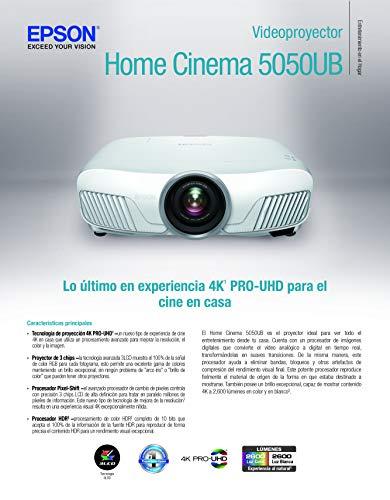
The Epson 5050UB absolutely excels here with its UltraBlack technology, achieving a dynamic contrast ratio of up to 1,000,000:1. More importantly, it maintains deep, consistent black levels regardless of scene brightness. When watching a movie with mixed bright and dark elements, the Epson keeps shadows truly dark while bright areas remain brilliant. This consistency is what separates premium projectors from budget models.
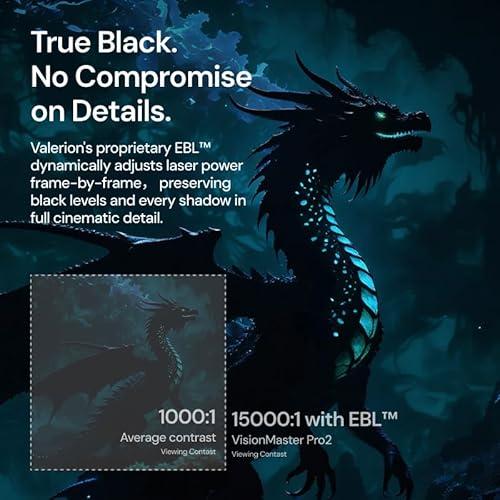
The Valerion offers respectable contrast with 4,000:1 native and up to 15,000:1 dynamic contrast. However, like most DLP projectors, it suffers from a common limitation: black levels rise noticeably during bright scenes. While dark scenes look excellent with deep blacks, the projector struggles to maintain that darkness when the overall image becomes brighter. This characteristic is particularly noticeable in content like horror movies or games with dramatic lighting changes.
For dedicated home theater use, especially in dark rooms, the Epson's superior contrast performance creates a more cinematic experience with better shadow detail and more convincing dark scenes.
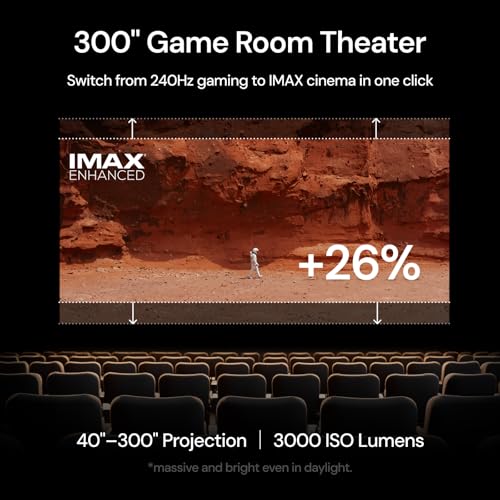
Brightness, measured in lumens, determines how well a projector performs in rooms with ambient light. The Valerion produces 3,000 ISO lumens compared to the Epson's 2,600 lumens—roughly 15% brighter. This difference becomes significant in multi-purpose rooms where you can't completely control lighting.
But brightness numbers only tell part of the story. Color reproduction reveals the projectors' different personalities. The Epson delivers exceptional out-of-the-box color accuracy, covering the full DCI-P3 color space that movie studios use. Its colors are natural and film-like, requiring minimal adjustment to achieve reference-quality reproduction.
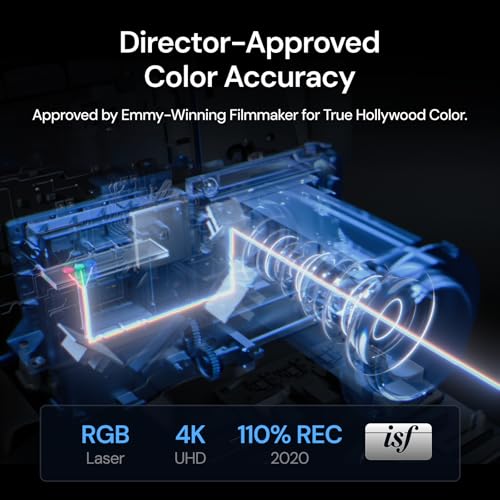
The Valerion takes a different approach, covering an impressive 110% of the Rec.2020 color space. This results in incredibly vibrant, saturated colors that make animated content, nature documentaries, and HDR material absolutely pop. However, these oversaturated colors require calibration to achieve accuracy for critical viewing.
Think of it this way: the Epson is like a master painter who creates realistic portraits, while the Valerion is like a talented artist who prefers bold, eye-catching works. Both are impressive, but they serve different aesthetic preferences.
High Dynamic Range (HDR) expands the range of colors and brightness levels that projectors can display, creating more realistic and impactful images. This is where the Valerion pulls significantly ahead.
The Epson 5050UB supports HDR10 and HLG formats with a useful 16-step precision HDR adjustment feature. While this covers basic HDR needs, it misses the advanced capabilities of modern HDR formats.
The Valerion supports Dolby Vision, HDR10+, HDR10, HLG, and IMAX Enhanced formats. Dolby Vision and HDR10+ use dynamic metadata—think of it as scene-by-scene instructions that optimize brightness and color for each moment of a movie. This results in more accurate and impactful HDR reproduction, especially noticeable in streaming content from Netflix, Disney+, and other services that provide these advanced HDR formats.
For anyone planning to watch modern streaming content regularly, the Valerion's comprehensive HDR support provides a significantly better experience.
Gaming performance has become increasingly important as projectors compete with large TVs for console and PC gaming. The differences here are dramatic.
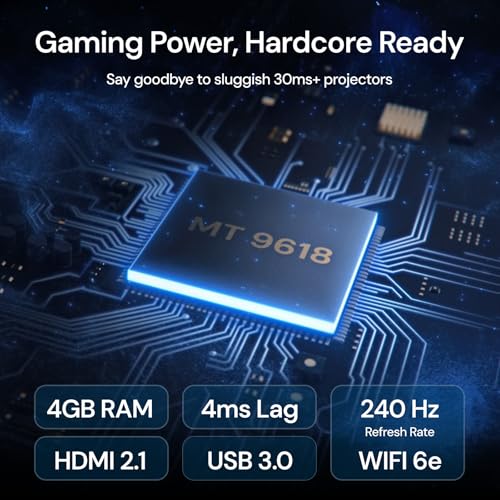
The Valerion VisionMaster Pro 2 was clearly designed with gamers in mind. Its 4ms input lag at 1080p/240Hz rivals dedicated gaming monitors, while still offering 15ms at 4K/60Hz—excellent for any gaming scenario. It supports refresh rates up to 240Hz, includes ALLM (Auto Low Latency Mode) that automatically switches to game mode when it detects a console, and even offers gaming-specific features like crosshair overlays and enhanced dark detail for competitive advantages.
The Epson 5050UB, released before gaming became a priority for projector manufacturers, offers roughly 22.5-30ms input lag with no gaming optimizations. While this is adequate for single-player games, it's not competitive for online gaming or fighting games where every millisecond matters.
If gaming is important to you, the Valerion delivers performance that can genuinely replace a gaming monitor for most applications.
This category represents perhaps the largest philosophical difference between these projectors.
The Epson 5050UB offers essentially no smart features. You'll need external devices like Apple TV, Roku, or gaming consoles for any streaming or modern connectivity. While this might seem limiting, it does mean the projector won't become obsolete as smart TV platforms change over time.
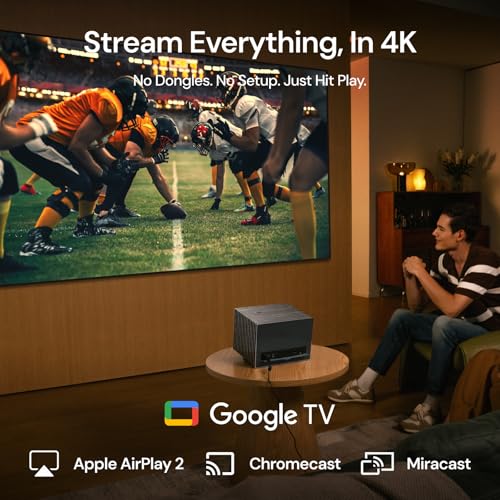
The Valerion VisionMaster Pro 2 is essentially a smart TV in projector form. It runs Google TV OS with pre-installed apps for Netflix, YouTube, Prime Video, Disney+, and other major streaming services. It supports wireless casting via AirPlay 2, Chromecast, and Miracast, integrates with Google Home, Apple HomeKit, and Alexa for voice control, and includes WiFi 6e and Bluetooth 5.2 for modern connectivity.
The convenience factor cannot be overstated. With the Valerion, you can set up the projector and immediately start streaming without any additional devices. The 4GB of RAM and 128GB of storage ensure smooth performance even when multitasking between apps.
However, smart features in projectors raise questions about long-term software support and updates. External streaming devices are easily replaceable when they become obsolete; integrated smart features are not.
Both projectors offer optical zoom capabilities, but their installation flexibility differs significantly.
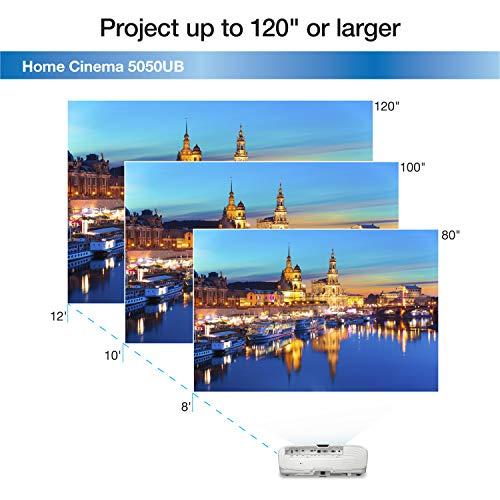
The Epson 5050UB provides comprehensive installation flexibility with motorized zoom (2.1x), focus, and crucially, lens shift. Lens shift allows you to move the image up, down, left, or right without physically repositioning the projector—up to 96% vertically and 47% horizontally. This feature is invaluable when ceiling mounting or dealing with room layout constraints. The projector also includes lens memory, allowing you to save different zoom and focus settings for various aspect ratios.
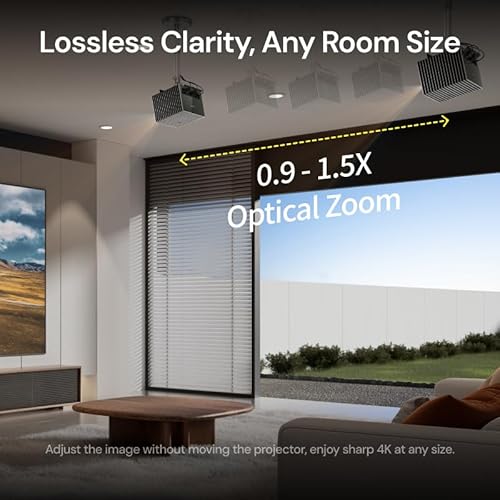
The Valerion offers motorized zoom (1.67x) and quick autofocus, plus helpful features like auto keystone correction, auto screen alignment, and auto obstacle avoidance. However, it lacks lens shift, requiring more precise initial placement. While the auto-correction features help compensate, they can't match the flexibility of true optical lens shift.
For custom installations or challenging room layouts, the Epson's superior optical system provides more solutions.
The Epson 5050UB uses a traditional 250W UHE (Ultra High Efficiency) lamp rated for 3,500-5,000 hours depending on usage mode. Lamp replacement costs typically range from $200-400 and require technical skill or professional service. However, the 3LCD technology is mature and reliable, with excellent build quality throughout.
The Valerion VisionMaster Pro 2 employs a triple-laser system rated for over 25,000 hours of use—potentially 15-20 years of typical viewing. This eliminates ongoing maintenance costs and ensures consistent brightness over the projector's lifetime. The build quality appears solid with a stylish metal chassis, though long-term reliability data isn't available given its recent release.
From a total cost of ownership perspective, the Valerion's laser system provides significant long-term value despite any initial price difference.
Our research into professional reviews and user experiences reveals clear patterns in how these projectors perform in actual use.
The Epson 5050UB consistently receives praise for its exceptional image quality, particularly contrast performance and color accuracy. Reviewers frequently note that it produces reference-quality images with minimal calibration, making it a favorite among videophiles and home theater enthusiasts. However, nearly every review mentions the need for external streaming devices as a limitation in 2024.
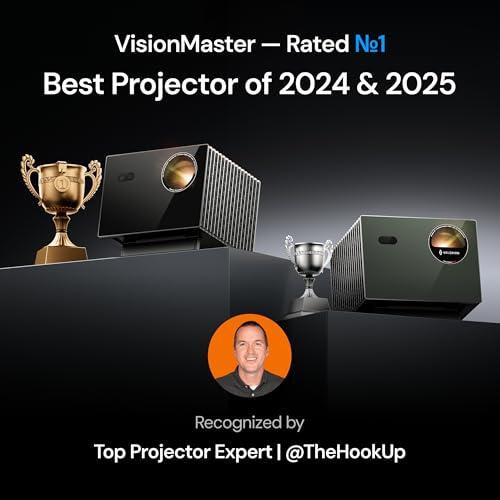
The Valerion VisionMaster Pro 2 impresses reviewers with its feature completeness and versatility. Professional reviews highlight its gaming performance, smart features, and vibrant color reproduction. However, some note that achieving reference-quality color accuracy requires calibration, and the typical DLP characteristics (potential for rainbow effects and laser speckle) may be noticeable to sensitive viewers.
User feedback suggests that the Epson appeals most to dedicated home theater enthusiasts who prioritize image quality above all else, while the Valerion attracts users wanting a versatile, all-in-one solution that handles multiple entertainment needs excellently.
These projectors represent two excellent but fundamentally different approaches to premium home theater projection. The Epson Home Cinema 5050UB embodies the traditional philosophy of maximizing image quality through proven technology, while the Valerion VisionMaster Pro 2 demonstrates the modern approach of combining excellent image quality with comprehensive smart features and versatility.
At the time of writing, the Valerion typically costs slightly less while offering significantly more features, making it exceptional value for most users. However, the Epson justifies its premium through superior contrast performance and installation flexibility that serious home theater enthusiasts will appreciate.
For most buyers seeking the best overall value and versatility, the Valerion VisionMaster Pro 2 offers a more complete package at a competitive price. Its laser light source, comprehensive smart features, and excellent gaming performance make it an outstanding choice for modern entertainment needs.
However, image quality purists and dedicated home theater enthusiasts will find the Epson 5050UB's superior contrast, color accuracy, and installation flexibility worth the premium. In a dark, dedicated theater room where image quality is paramount, the Epson delivers a more convincing cinematic experience.
The choice ultimately depends on your priorities: pure image quality and traditional reliability, or modern versatility and comprehensive features. Both projectors excel in their intended roles, ensuring that either choice will deliver years of impressive home theater performance.
| Epson Home Cinema 5050UB | Valerion VisionMaster Pro 2 |
|---|---|
| Display Technology - Determines color accuracy and contrast performance | |
| 3LCD (3-chip) with UltraBlack technology | 0.47" DLP with XPR pixel-shifting and triple laser |
| Native Resolution - Affects image sharpness and detail | |
| 1080p enhanced to 4K via pixel-shifting | 1080p enhanced to 4K via XPR technology |
| Brightness - Critical for rooms with ambient light | |
| 2,600 lumens (good for dark/dimmed rooms) | 3,000 ISO lumens (better for multi-purpose rooms) |
| Contrast Ratio - Most important for dark room viewing | |
| 1,000,000:1 dynamic (exceptional black levels) | 4,000:1 native, 15,000:1 dynamic (good but blacks rise in bright scenes) |
| HDR Format Support - Essential for modern streaming content | |
| HDR10, HLG only | Dolby Vision, HDR10+, HDR10, HLG, IMAX Enhanced |
| Light Source - Affects maintenance costs and longevity | |
| 250W UHE lamp (3,500-5,000 hours, requires replacement) | RGB triple laser (25,000+ hours, maintenance-free) |
| Gaming Performance - Important for console and PC gaming | |
| 22.5-30ms input lag, no gaming features | 4ms at 1080p/240Hz, 15ms at 4K/60Hz, gaming optimized |
| Smart Features - Eliminates need for external streaming devices | |
| None (requires external streaming devices) | Google TV OS with Netflix, YouTube, casting support |
| Lens System - Affects installation flexibility | |
| 2.1x motorized zoom, focus, lens shift (±96% vertical) | 1.67x motorized zoom, autofocus, no lens shift |
| Connectivity - Modern device compatibility | |
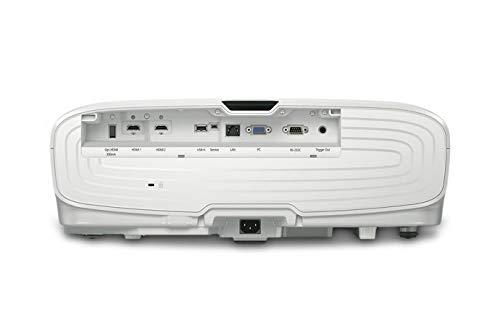
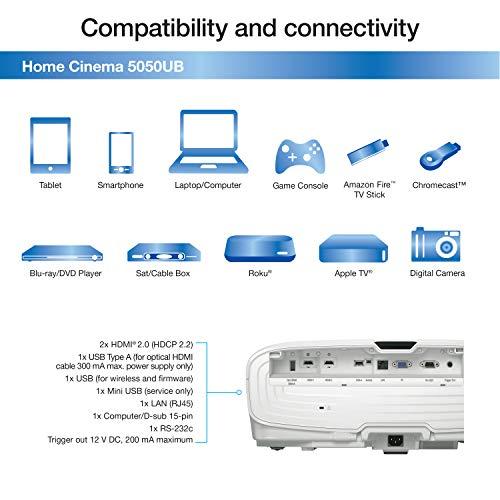
| 2x HDMI 2.0, basic connectivity | 2x HDMI 2.1, 1x HDMI 2.0 (eARC), WiFi 6e, Bluetooth 5.2 |
| Color Gamut - Affects color vibrancy and accuracy | |
| Full DCI-P3, excellent out-of-box accuracy | 110% Rec.2020, very vibrant but needs calibration |
| Build Quality - Long-term reliability and aesthetics | |
| Mature 3LCD technology, excellent build quality | Modern laser design, stylish metal chassis |
For dedicated dark room home theaters, the Epson Home Cinema 5050UB is superior due to its exceptional contrast ratio and deeper black levels. The Valerion VisionMaster Pro 2 works better for multi-purpose rooms with ambient light thanks to its higher brightness and smart features.
The Epson 5050UB uses traditional 3LCD technology focused on pure image quality, while the Valerion VisionMaster Pro 2 uses modern laser DLP technology with comprehensive smart features. The Epson prioritizes contrast and color accuracy, while the Valerion offers an all-in-one entertainment solution.
The Valerion VisionMaster Pro 2 significantly outperforms the Epson 5050UB for gaming with 4ms input lag at high refresh rates, support for up to 240Hz, and gaming-specific features. The Epson has 22-30ms input lag with no gaming optimizations.
The Epson Home Cinema 5050UB requires external streaming devices like Apple TV or Roku since it has no smart features. The Valerion VisionMaster Pro 2 includes Google TV OS with built-in Netflix, YouTube, and other streaming apps, eliminating the need for external devices.
The Valerion VisionMaster Pro 2 produces 3,000 ISO lumens compared to the Epson 5050UB's 2,600 lumens, making the Valerion about 15% brighter and better suited for rooms where you can't completely control lighting.
The Valerion VisionMaster Pro 2 supports advanced HDR formats including Dolby Vision and HDR10+, while the Epson 5050UB only supports basic HDR10 and HLG. For modern streaming content, the Valerion provides significantly better HDR performance.
The Epson Home Cinema 5050UB delivers superior contrast with its UltraBlack technology, maintaining deep blacks even during bright scenes. The Valerion VisionMaster Pro 2 has good contrast but suffers from typical DLP limitations where blacks become elevated during bright scenes.
The Epson 5050UB offers superior installation flexibility with motorized lens shift (±96% vertical), making placement easier in challenging rooms. The Valerion VisionMaster Pro 2 lacks lens shift but provides auto-correction features and requires more precise initial positioning.
The Epson Home Cinema 5050UB uses a replaceable lamp lasting 3,500-5,000 hours, requiring periodic replacement. The Valerion VisionMaster Pro 2 uses a laser light source rated for 25,000+ hours with no maintenance, offering better long-term value.
The Epson 5050UB provides exceptional out-of-the-box color accuracy covering the full DCI-P3 color space used by movies. The Valerion VisionMaster Pro 2 produces more vibrant colors covering 110% of Rec.2020 but requires calibration for accurate reproduction.
Both the Epson Home Cinema 5050UB and Valerion VisionMaster Pro 2 accept and display 4K content using pixel-shifting technology to enhance their native 1080p resolution. Neither is true native 4K, but both provide excellent 4K-enhanced image quality.
The Valerion VisionMaster Pro 2 typically offers better overall value with its lower maintenance costs, comprehensive smart features, gaming capabilities, and competitive image quality. The Epson 5050UB justifies its premium for users prioritizing absolute image quality and installation flexibility in dedicated home theaters.
We've done our best to create useful and informative comparisons to help you decide what product to buy. Our research uses advanced automated methods to create this comparison and perfection is not possible - please contact us for corrections or questions. These are the sites we've researched in the creation of this article: rtings.com - audiogurus.com - hometechnologyreview.com - projectorscreen.com - youtube.com - thesmarthomehookup.com - techgearlab.com - rtings.com - projectorreviews.com - projectorreviews.com - projectorreviews.com - projectorcentral.com - avsforum.com - avsforum.com - rtings.com - avsforum.com - audiogeneral.com - hifiheaven.net - manuals.plus - crutchfield.com - mediaserver.goepson.com - projectorcentral.com - epson.com - bestbuy.com - projectorreviews.com - projectorcentral.com - projectorreviews.com - valerion.com - projectorcentral.com - soundandvision.com - valerion.com - projektoren-datenbank.com - rtings.com - youtube.com - techradar.com - valueelectronics.com - projectorcentral.com - hometechnologyreview.com - youtube.com - loprototypetech.com - hometheatershack.com - hometechnologyreview.com - bestbuy.com - en.homecinesolutions.fr

Privacy Policy
Terms and Conditions - Affiliate Policy
Home Security
© Copyright 2008-2026.
11816 Inwood Rd #1211, Dallas, TX 75244