

When it comes to creating a big-screen experience at home, projectors offer something no TV can match: truly massive images that can transform your living space into a personal cinema. But the projector world has split into two very different camps, each with its own philosophy about how to deliver that cinematic magic.
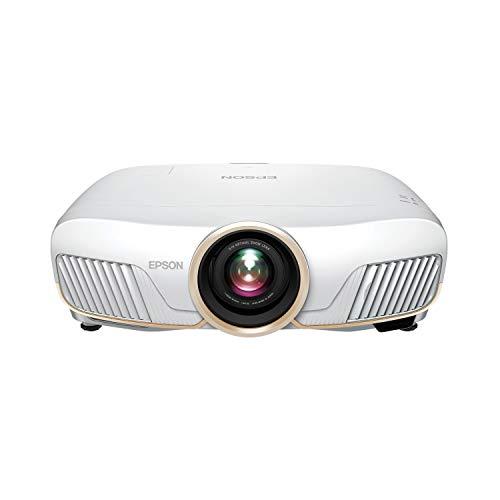
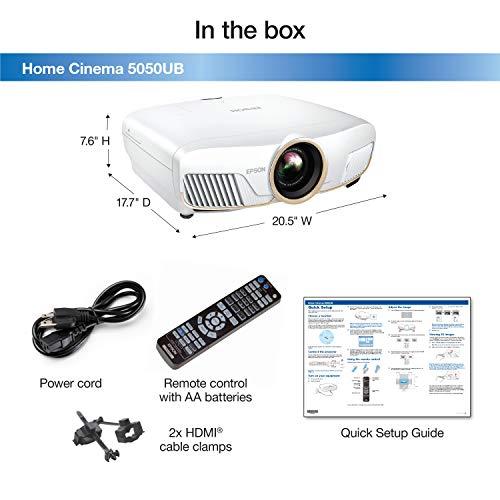
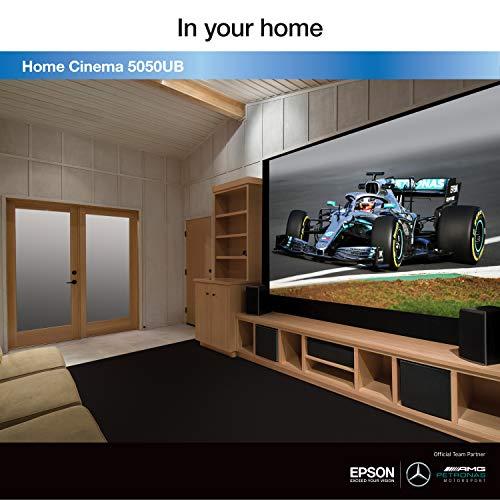
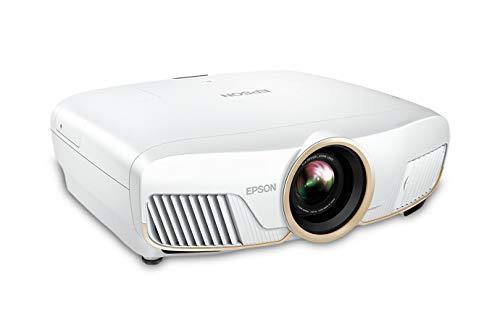
The traditional approach, exemplified by projectors like the Epson Home Cinema 5050UB, follows the classic cinema model: mount the projector on your ceiling or place it on a rear shelf, then beam the image forward to a screen. It's the same basic setup movie theaters have used for over a century, just scaled down for your home.
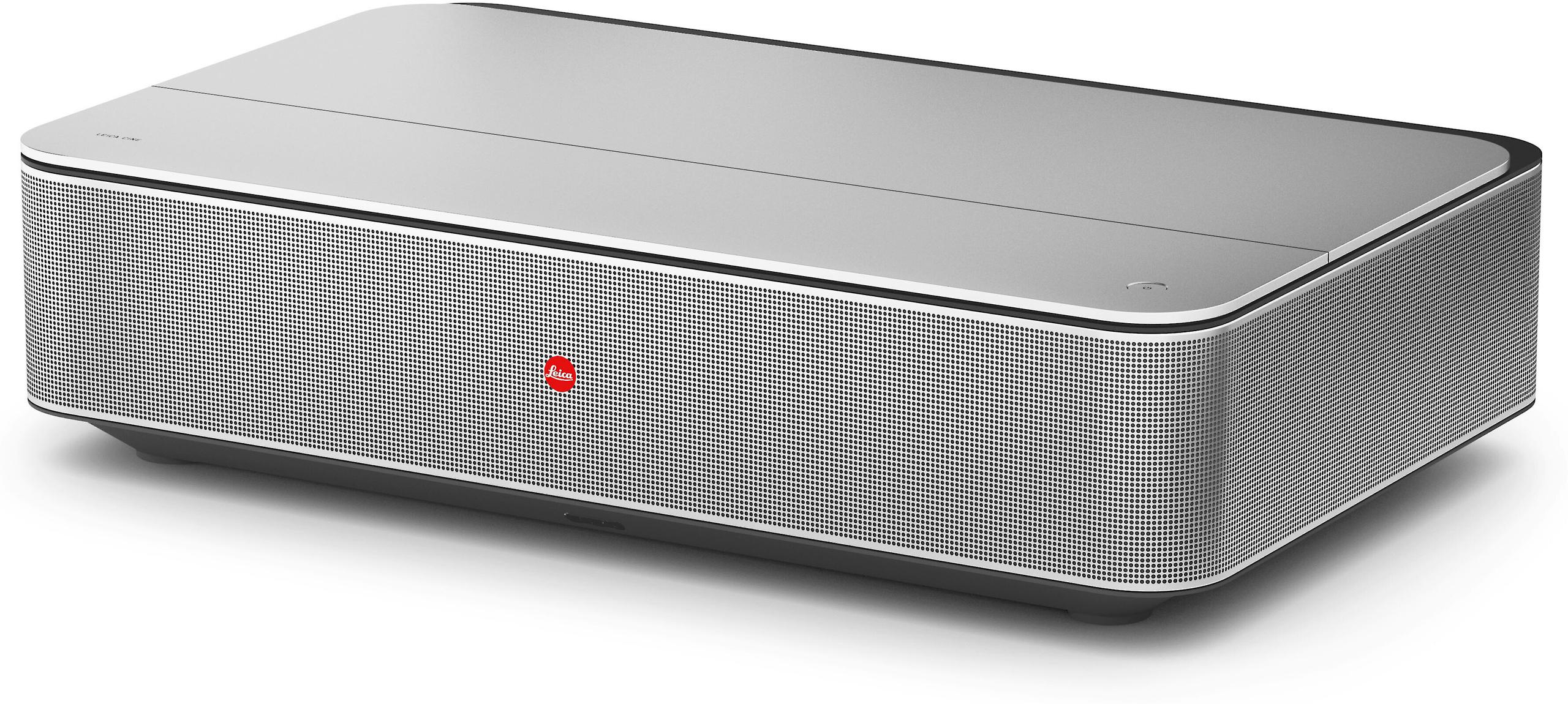
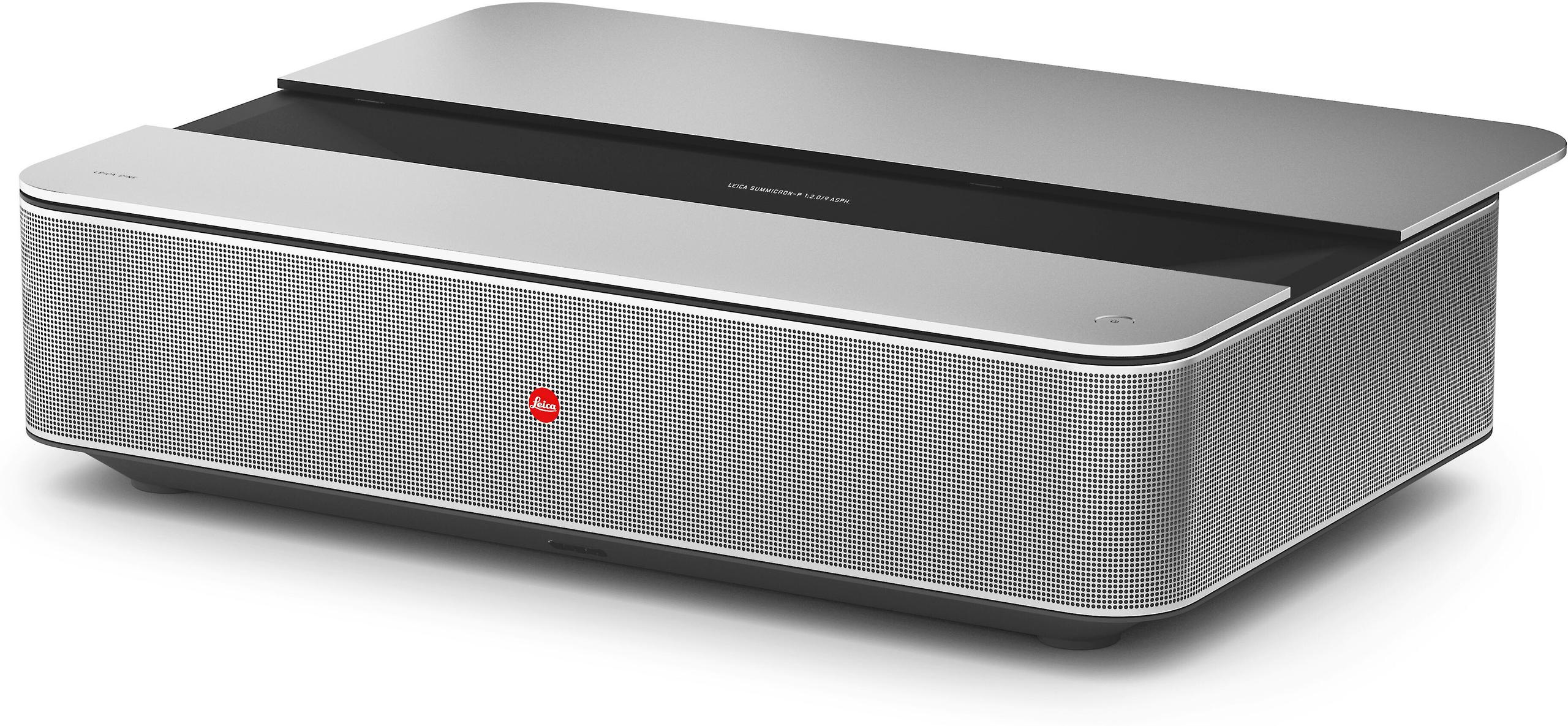
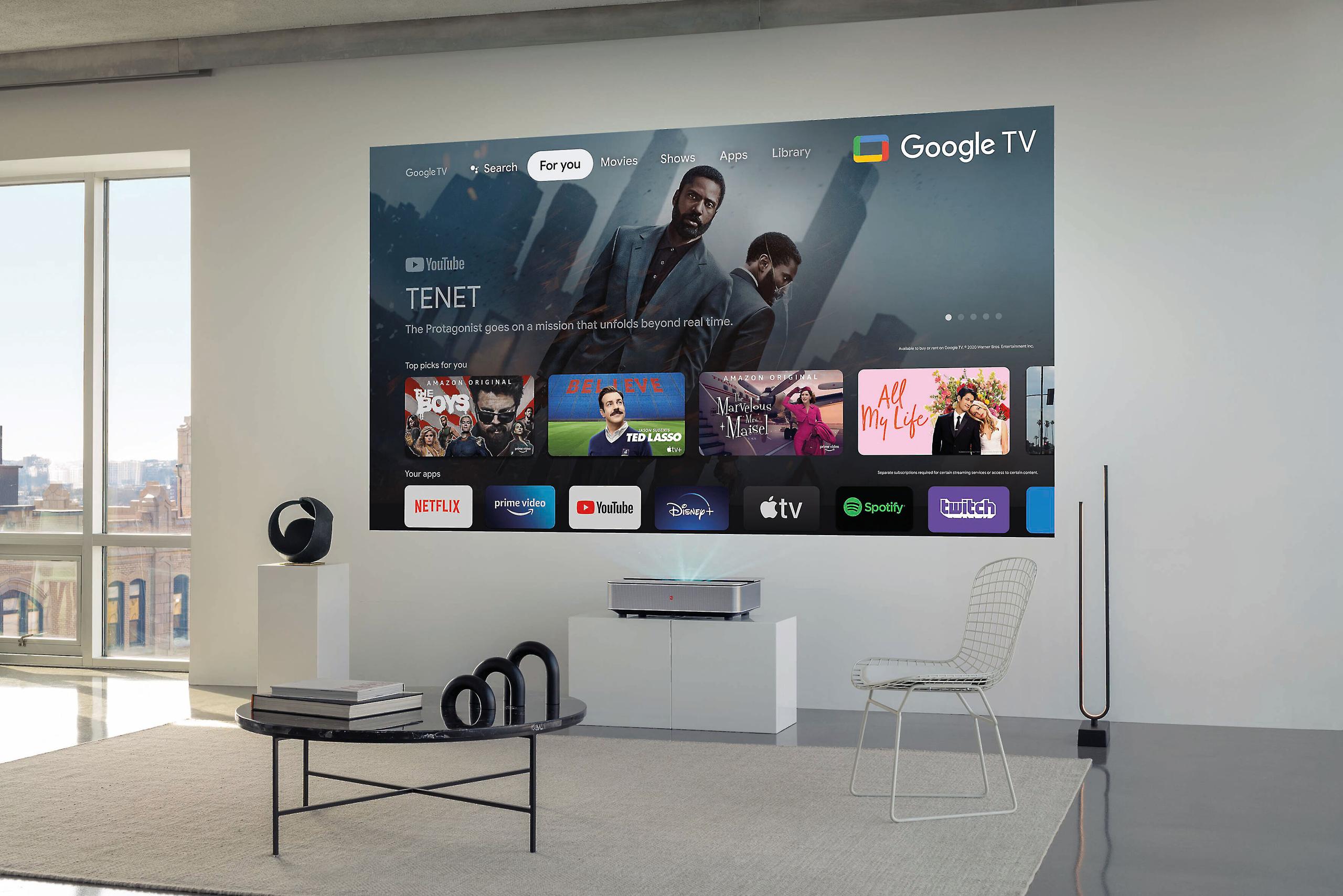
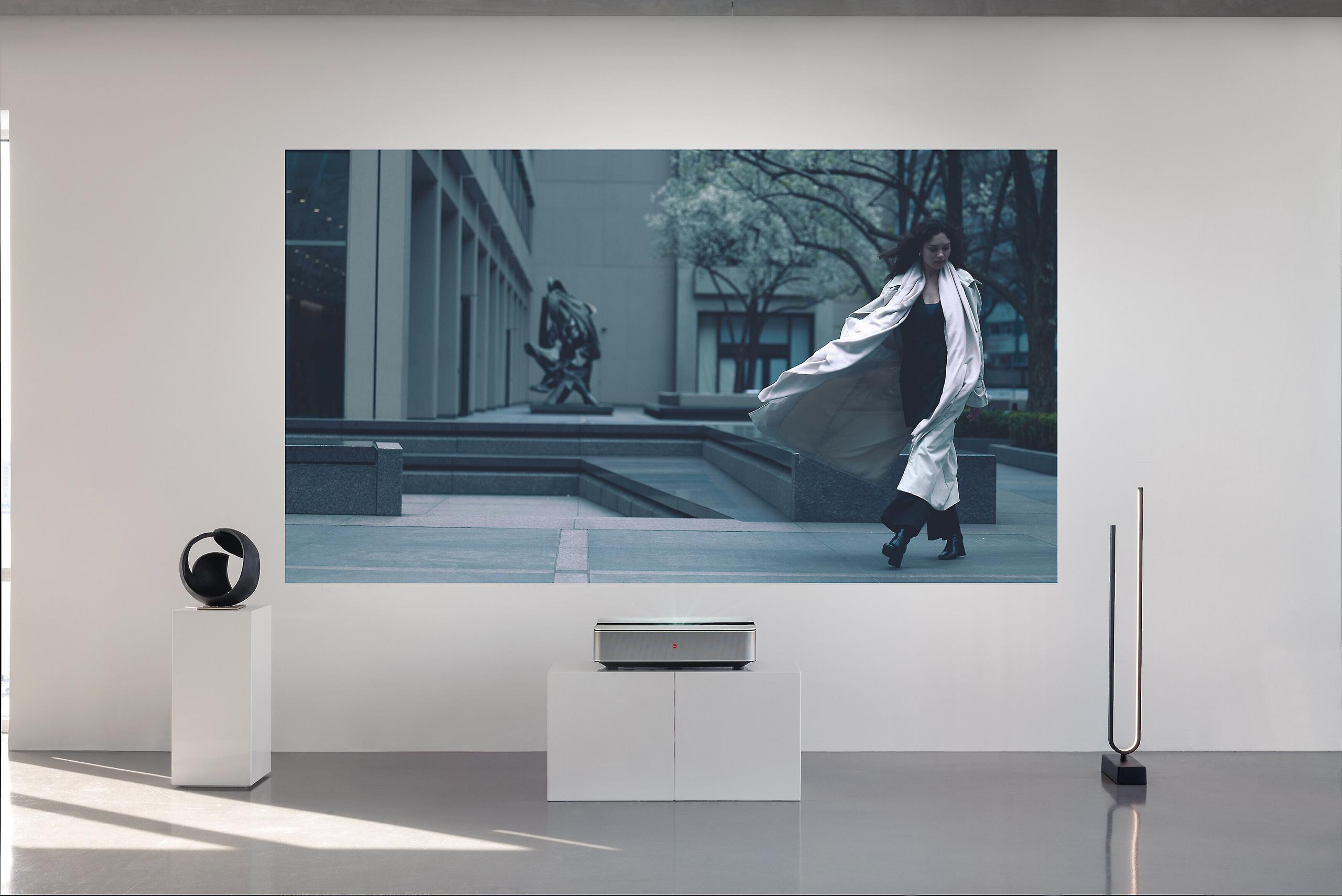
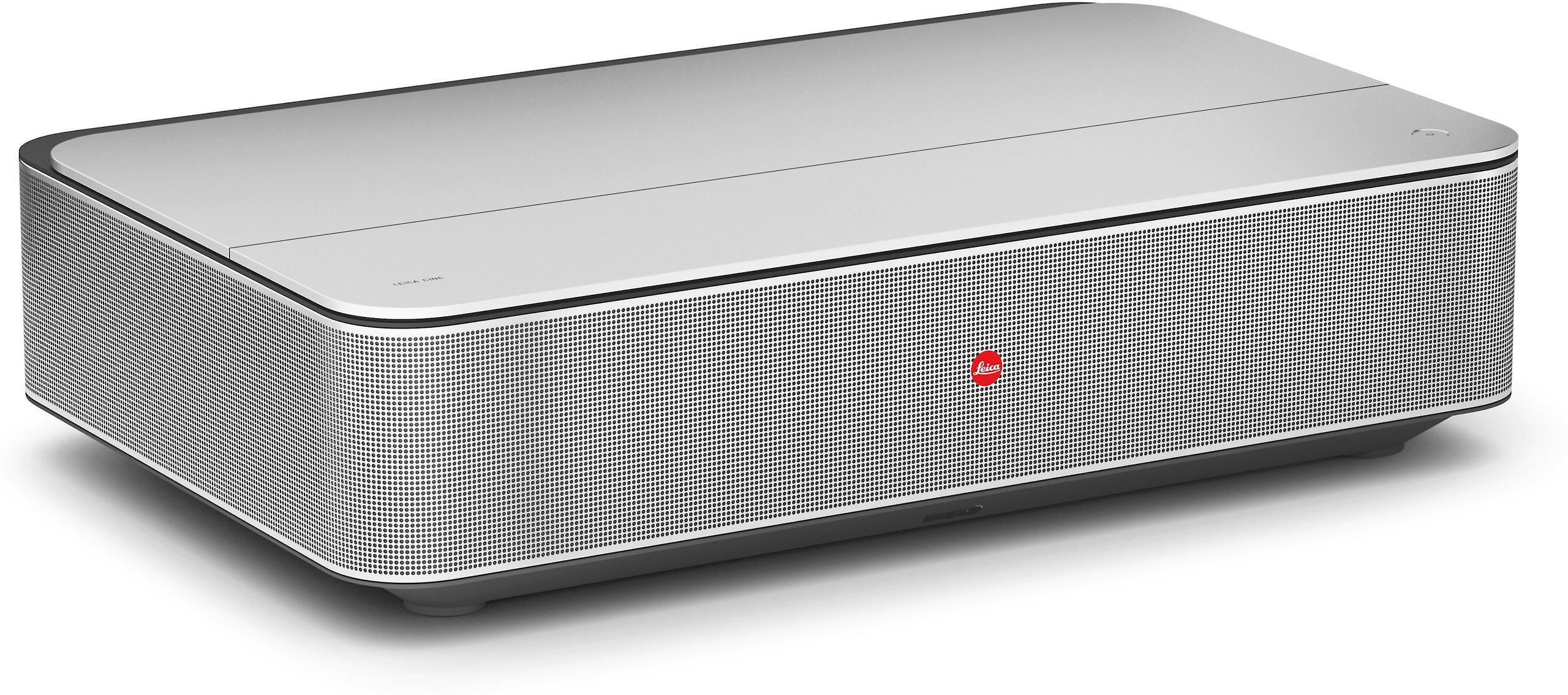
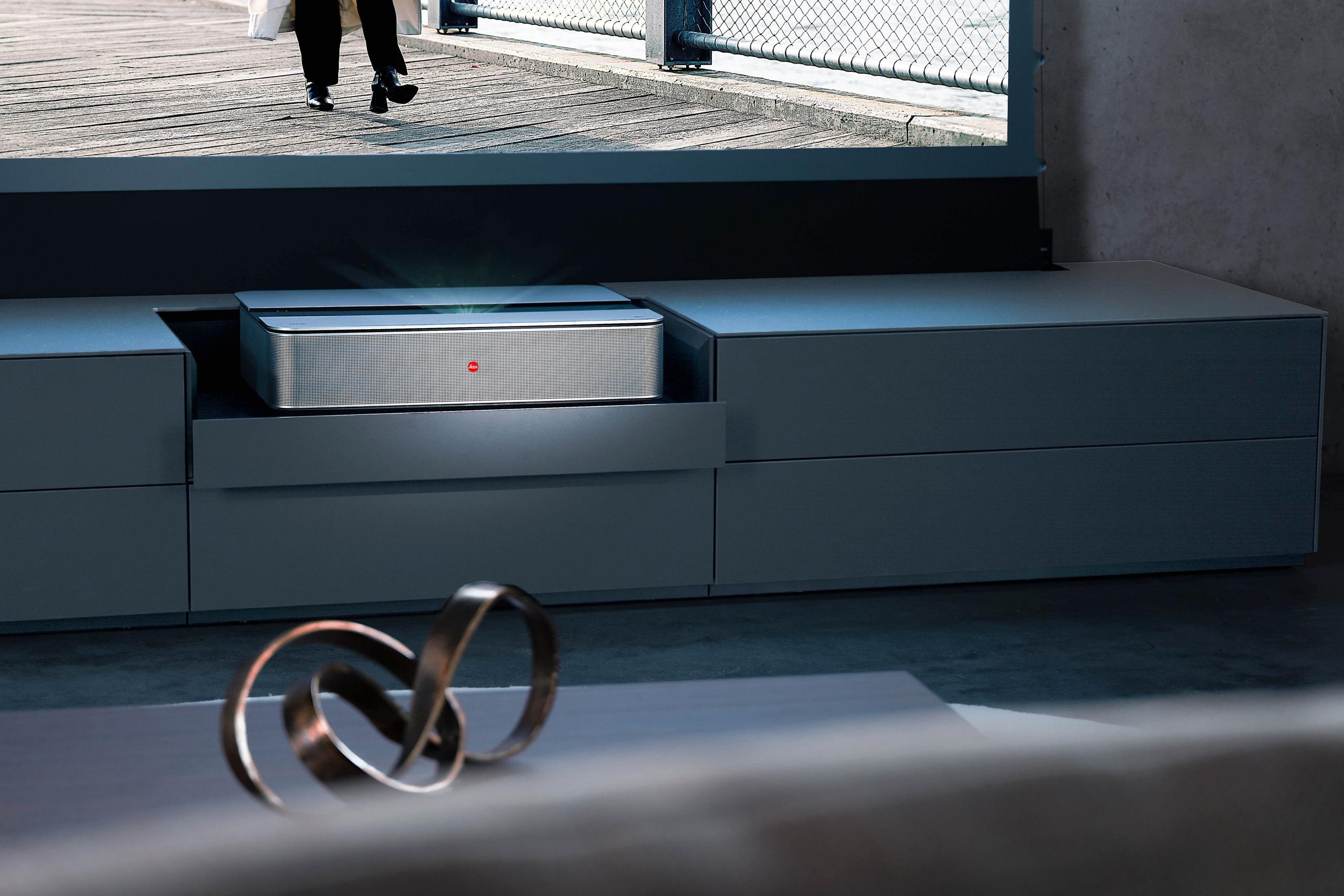
The newer ultra-short throw approach, represented by premium models like the Leica Cine 1, flips this concept entirely. These projectors sit directly below your screen like an oversized soundbar, using complex mirror systems to bounce light upward and create the image. Think of it as the projector equivalent of a modern flat-screen TV in terms of placement convenience.
Understanding which approach works best for your situation requires diving deep into the technical differences, performance trade-offs, and real-world implications of each design. At the time of writing, these two projectors represent excellent examples of their respective categories, with price points that reflect their different target audiences and technological approaches.
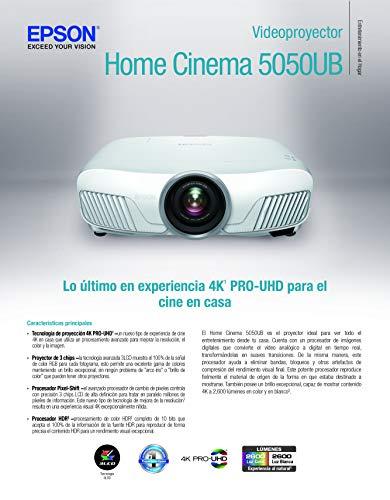
The Epson Home Cinema 5050UB, released in 2019, represents the culmination of decades of refinement in traditional projector design. Despite being several years old now, it remains remarkably competitive because Epson focused on perfecting the fundamentals rather than chasing every new trend.
What makes traditional throw projectors like the 5050UB so appealing is their incredible flexibility. The motorized lens system offers what's called "lens shift" – the ability to physically move the image up, down, left, or right without tilting the projector or distorting the picture. The 5050UB can shift its image up to 96% vertically and 47% horizontally, which means you can mount it almost anywhere in your room and still hit your screen perfectly.
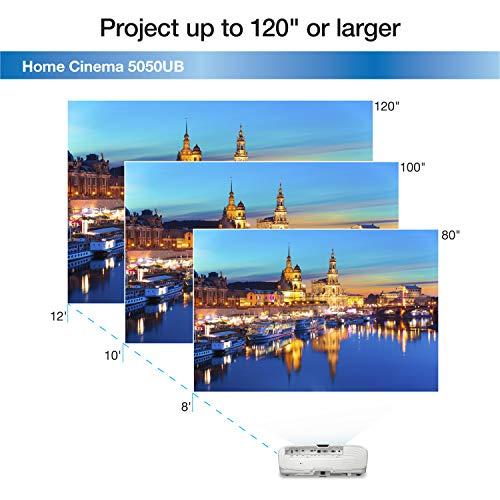
This flexibility extends to screen size as well. While the Leica Cine 1 maxes out at 120 inches, the Epson can project images from 50 inches all the way up to 300 inches diagonal. For perspective, a 300-inch screen is about 26 feet wide – larger than most people's entire living rooms. This scalability means you can start with a modest setup and upgrade to a massive screen later without changing projectors.
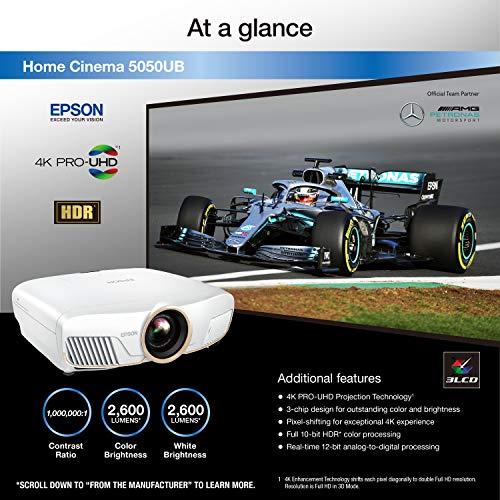
The image quality story is where the 5050UB really shines. Its "UltraBlack" technology uses a special compensation filter to control light polarization, which might sound like marketing jargon, but the results speak for themselves. This system achieves what Epson claims is a 1,000,000:1 dynamic contrast ratio, meaning the difference between the darkest blacks and brightest whites is enormous. In practical terms, this translates to shadow detail that rival projectors costing twice as much struggle to match.
The color performance is equally impressive. The 5050UB covers the full DCI-P3 color space, which is the same wide color gamut used in professional movie theaters. This color space is about 50% wider than the standard Rec. 709 that most home displays use, meaning you see colors that are more vivid and accurate to what filmmakers intended. The projector's 3LCD design also eliminates the "rainbow effect" – those brief flashes of red, green, and blue that some people see with single-chip DLP projectors.
However, traditional throw projectors come with trade-offs. The 5050UB uses a traditional lamp that typically lasts between 3,500 and 5,000 hours depending on brightness settings. For heavy users watching 4-5 hours daily, that means lamp replacement every 2-3 years at a cost of several hundred dollars. The projector also lacks smart features entirely – no built-in streaming, no Wi-Fi, no voice control. You'll need separate devices for all your content sources.
Ultra-short throw projectors like the Leica Cine 1 represent a fundamental rethinking of home projection. Instead of throwing light across the room, they use a complex series of mirrors and lenses to bounce light upward from just inches away from the screen. The engineering required to make this work while maintaining image quality is genuinely impressive.
The most obvious advantage is installation convenience. The Cine 1 sits about 14 inches from your wall or screen, eliminating the need for ceiling mounts, cable runs, or worrying about people walking through the light path. This makes it perfect for living rooms where ceiling mounting isn't practical or desirable.
But convenience isn't the only benefit. The Leica uses laser light sources instead of traditional lamps, and this difference is more significant than it might initially appear. Laser projectors maintain consistent brightness throughout their lifespan, typically rated at 20,000-25,000 hours. That's roughly 12-15 years of typical use without any maintenance. No lamp changes, no gradual dimming – just consistent performance year after year.
The Cine 1 also delivers higher peak brightness at 3,000 lumens compared to the Epson's 2,600 lumens. While 400 lumens might not sound like much, it's the difference between comfortable viewing in a room with some ambient light versus needing near-complete darkness. For living room installations where you can't control every light source, this extra brightness matters significantly.
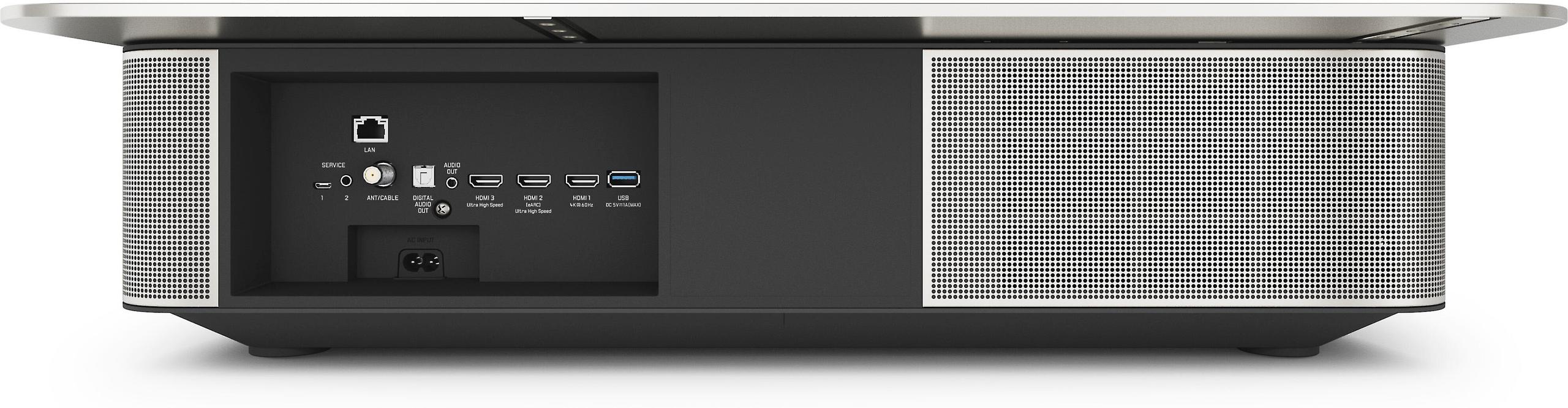
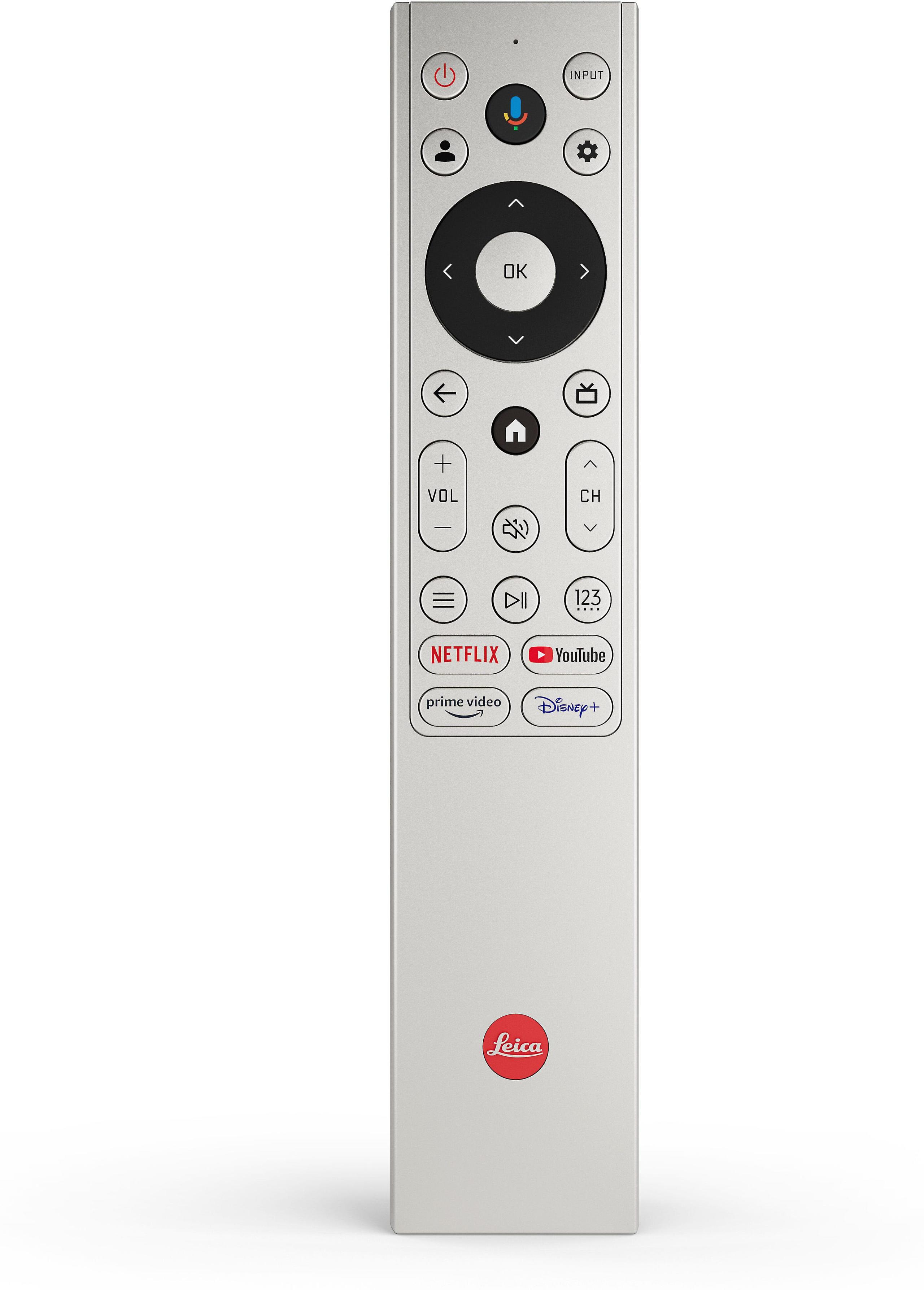
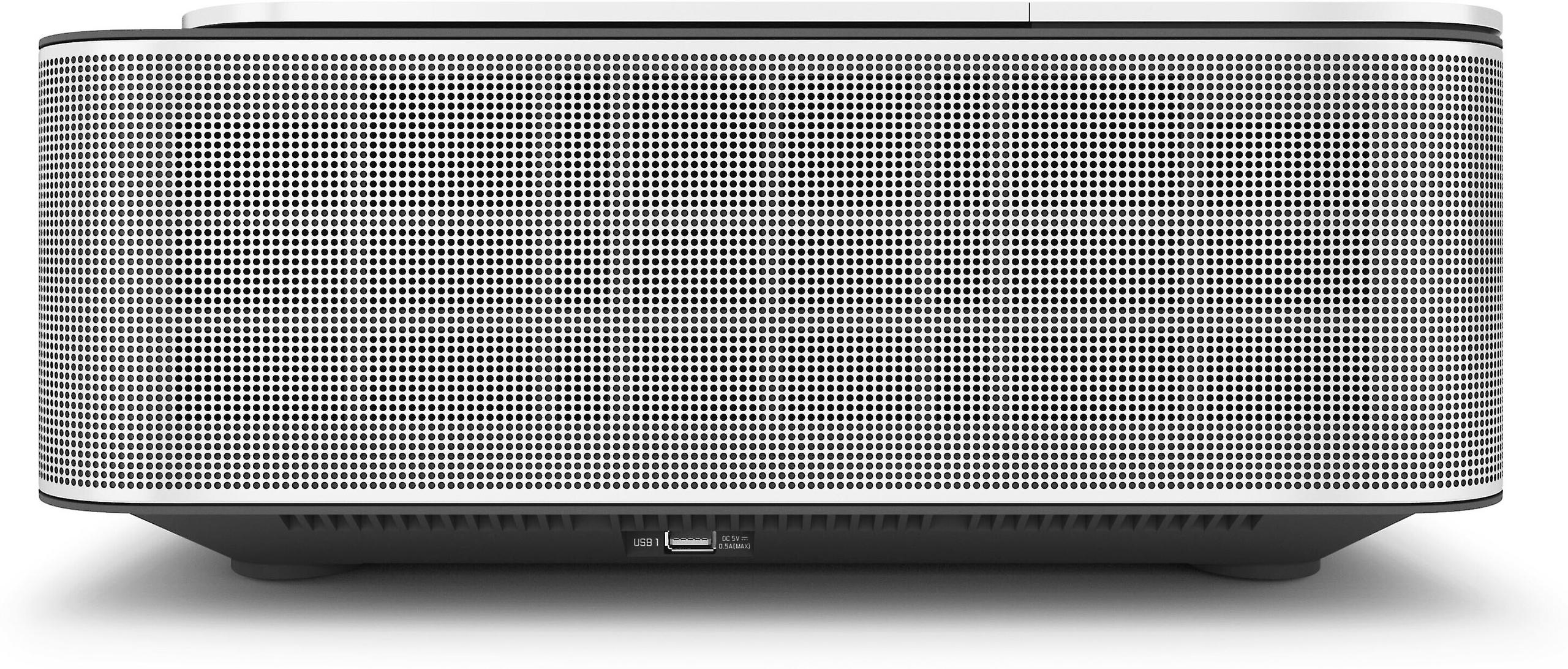
Modern connectivity is another area where the Leica excels. With three HDMI inputs (including HDMI 2.1), Wi-Fi 6, and a full smart TV platform, it's essentially a massive television that happens to use projection technology. The integrated Dolby Atmos sound system means you might not even need a separate sound bar for casual viewing.
The trade-offs center mainly on flexibility and maximum performance. That 120-inch size limit is real – there's no way to make the image larger without completely redesigning the optical system. The ultra-short throw design also means you're locked into one placement position with minimal adjustment options.
When evaluating projector performance, several metrics matter more than others. Brightness, contrast ratio, color accuracy, and input lag form the core of what makes a projector successful for home theater use.
Brightness and Ambient Light Performance
Both projectors deliver solid brightness numbers, but they handle ambient light differently. The Epson's 2,600 lumens work beautifully in controlled lighting, but the projector really comes alive in darker environments where its superior contrast ratio can shine. The Leica's 3,000 lumens provide more flexibility for rooms where complete light control isn't possible.
However, raw brightness numbers don't tell the whole story. The 5050UB's 3LCD technology maintains color brightness that matches white brightness – something called "color light output." Many projectors, particularly single-chip DLP models, can measure high white brightness while producing significantly dimmer colors. This means the Epson delivers vibrant, saturated colors even at high brightness levels.
Contrast and Black Level Performance
This is where the fundamental technology differences become most apparent. The Epson's UltraBlack technology and dynamic iris system create genuinely impressive black levels for its price class. In dark scenes, the projector can make areas of the screen appear almost as dark as the wall around it – a crucial capability for maintaining immersion during movies.
Ultra-short throw projectors face inherent challenges with contrast due to their optical design and the way ambient light reflects off screens. While the Leica Cine 1 likely delivers respectable contrast performance, it probably can't match the deep, inky blacks that make the 5050UB so compelling for dedicated home theater use.
Color Accuracy and HDR Performance
Both projectors support HDR (High Dynamic Range), but with different capabilities. The Epson handles HDR10 and HLG with its 16-step precision adjustment system, allowing fine-tuning of how HDR content appears. This level of control is unusual at this price point and reflects Epson's focus on enthusiast users who want to optimize their setup.
The Leica supports HDR10+ in addition to the standard formats, which provides scene-by-scene optimization for supported content. While this is technically superior, the practical difference depends heavily on your content sources and viewing preferences.
Gaming Considerations
Neither projector is primarily designed for gaming, but both can handle console gaming acceptably. The 5050UB achieves around 22-30ms of input lag, which is fine for single-player games and casual multiplayer but not ideal for competitive gaming. Both projectors max out at 60Hz refresh rates and lack modern gaming features like Variable Refresh Rate (VRR) or Auto Low Latency Mode.
If gaming is a priority, you might want to consider projectors specifically designed for that purpose, though you'll typically sacrifice some movie performance in the process.
The installation differences between these approaches become crucial when you move from theory to practice. The Epson 5050UB offers maximum flexibility, but that flexibility comes with complexity. You need to plan cable routes, ensure proper mounting, and possibly modify your room to optimize the setup.
For dedicated home theaters, this complexity is often worthwhile. The ability to precisely position the projector and achieve massive screen sizes creates an experience that truly rivals commercial cinemas. The motorized lens adjustments mean you can fine-tune everything perfectly, and features like lens memory allow you to switch between different aspect ratios for various content types.
The Leica Cine 1 prioritizes simplicity over ultimate performance. Setup involves placing it on a TV stand or wall-mounting it below your screen, connecting power and HDMI, and you're essentially done. This approach works particularly well in living rooms where the projector needs to coexist with normal daily activities.
However, ultra-short throw projectors like the Cine 1 work best with specialized screens designed to reject ambient light from above while enhancing the projected image from below. These ALR (Ambient Light Rejection) screens can cost as much as the projector itself, though they're not absolutely required for basic functionality.
At the time of writing, the price difference between these projectors reflects more than just brand positioning – it represents fundamentally different value propositions and ownership experiences.
The Epson 5050UB offers exceptional performance per dollar, delivering image quality that competes with projectors costing significantly more. However, the lamp-based design means ongoing maintenance costs. Assuming lamp replacement every 3,000-4,000 hours at several hundred dollars each, heavy users might spend 20-30% of the projector's original price on lamps over its lifetime.
The Leica Cine 1 commands a premium price that reflects both the Leica brand and the sophisticated laser technology. While the upfront cost is substantially higher, the lack of ongoing maintenance and the integration of smart features and audio systems can make the total ownership cost more reasonable than it initially appears.
For many users, the convenience factor alone justifies the premium. Not needing to plan mounting, run cables, or schedule lamp replacements has real value that's hard to quantify but easy to appreciate in daily use.
The decision between these approaches ultimately comes down to your priorities, room constraints, and how you plan to use your projector.
Choose the Epson Home Cinema 5050UB if you're building a dedicated home theater or have a room where you can control lighting and optimize the setup. Its combination of exceptional image quality, massive size capability, and relative affordability makes it nearly unbeatable for serious movie watching. The flexibility to grow your setup over time – starting with a modest screen and potentially upgrading to something truly enormous – adds to its appeal.
The 5050UB also makes sense if you enjoy the process of optimizing and fine-tuning your setup. The extensive adjustment options and professional-grade features reward users who want to dive deep into calibration and customization.
The Leica Cine 1 excels in living room environments where convenience and aesthetics matter as much as performance. If you want a large screen experience without the complexity of traditional projection, or if ceiling mounting simply isn't practical in your space, the ultra-short throw approach solves real problems.
The Cine 1 also appeals to users who value the latest connectivity and smart features. Having everything integrated – projection, streaming, audio – creates a cleaner, more appliance-like experience that many users prefer over managing multiple devices.
Looking ahead, both approaches continue evolving. Traditional projectors are gaining laser light sources and improved smart features, while ultra-short throw models are pushing brightness and contrast performance closer to traditional designs.
The 5050UB, despite being several years old, remains competitive because Epson focused on timeless fundamentals like contrast ratio and color accuracy. These characteristics don't become obsolete the way connectivity standards or smart platforms might.
The Leica Cine 1 represents the direction much of the industry is heading – toward more convenient, integrated solutions that prioritize user experience over ultimate technical performance.
Your choice between these philosophies will likely depend on whether you see your projector as an enthusiast tool for creating the ultimate viewing experience, or as a convenient appliance for upgrading your everyday entertainment. Both approaches have merit, and both can create genuinely impressive results when properly implemented.
The key is honestly assessing your room, your technical comfort level, and your priorities. A perfectly calibrated 5050UB in a dedicated theater will likely outperform the Cine 1 on pure image quality metrics. But the Leica might deliver more actual enjoyment if it fits your lifestyle better and gets used more frequently as a result.
In the end, the best projector is the one that matches your real-world needs and gets you excited about watching content at home. Both of these approaches can achieve that goal – they just take very different paths to get there.
| Epson Home Cinema 5050UB | Leica Cine 1 |
|---|---|
| Projection Type - Determines installation flexibility and screen size options | |
| Traditional throw (ceiling mount/rear shelf) | Ultra-short throw (sits below screen like soundbar) |
| Maximum Screen Size - Key factor for home theater impact | |
| Up to 300 inches (truly cinematic experience) | Limited to 120 inches (large TV replacement) |
| Installation Requirements - Critical for room compatibility | |
| Requires ceiling mount or rear placement with cable runs | Simple tabletop placement 14" from screen |
| Brightness Output - Affects ambient light performance | |
| 2,600 lumens (excellent for dark rooms) | 3,000 lumens (better for living rooms with ambient light) |
| Light Source Technology - Major factor in maintenance and longevity | |
| Traditional lamp (3,500-5,000 hours, requires replacement) | Laser light source (25,000 hours, maintenance-free) |
| Contrast Performance - Most important spec for image quality in dark scenes | |
| 1,000,000:1 dynamic contrast with UltraBlack technology | Not disclosed (likely lower due to UST design limitations) |
| Color Gamut Coverage - Determines color accuracy and vibrancy | |
| Full DCI-P3 cinema color space (professional-grade accuracy) | Wide color gamut with factory calibration |
| HDR Format Support - Future-proofing for premium content | |
| HDR10, HLG with 16-step precision adjustment | HDR10, HDR10+, HLG, Dolby Vision |
| Smart Features Integration - Convenience factor for daily use | |
| No built-in streaming (requires external devices) | Full Google TV platform with Wi-Fi 6 |
| Audio System - Impacts need for additional speakers | |
| No built-in speakers (external audio required) | Integrated Dolby Atmos speakers (50W total output) |
| Lens Flexibility - Critical for installation adaptability | |
| Motorized 2.1x zoom with extensive lens shift (±96% vertical) | Fixed ultra-short throw lens (no adjustment options) |
| Gaming Performance - Input lag matters for responsive gaming | |
| ~22-30ms input lag at 4K/60Hz | Input lag not disclosed (likely higher than traditional throw) |
| Connectivity Options - Affects device compatibility | |
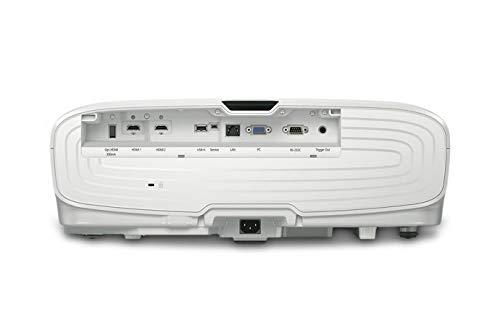
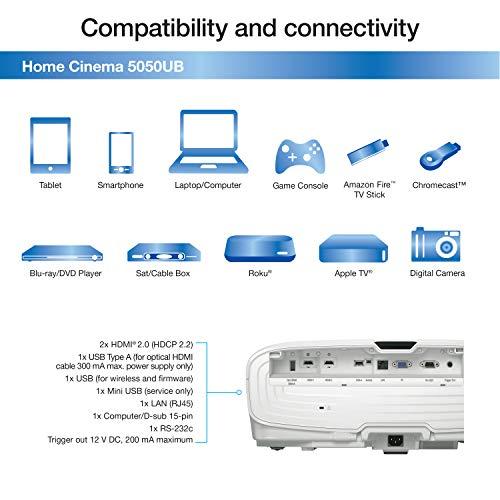
| 2 HDMI ports (one HDCP 2.2), no Wi-Fi | 3 HDMI ports including 2.1, Wi-Fi 6, USB |
| Power Consumption - Operating cost consideration | |
| 373W operation | 300W operation (19% more efficient) |
The biggest difference is installation approach. The Epson Home Cinema 5050UB is a traditional throw projector that mounts on your ceiling or sits on a rear shelf, while the Leica Cine 1 is an ultra-short throw projector that sits directly below your screen like a TV stand. This fundamental difference affects everything from screen size options to room compatibility.
The Epson Home Cinema 5050UB is generally better for dedicated home theaters. It offers superior contrast performance with deeper blacks, supports massive screen sizes up to 300 inches, and provides professional-grade color accuracy. The Epson excels in controlled lighting environments where you can optimize the viewing experience.
The Leica Cine 1 performs better in living rooms with ambient light. It produces 3,000 lumens compared to the Epson's 2,600 lumens, and its ultra-short throw design works well with ambient light rejection screens. The Leica also integrates seamlessly into living spaces without ceiling mounting requirements.
Yes, they work best with different screen types. The Epson Home Cinema 5050UB works with standard projection screens and can even project on white walls. The Leica Cine 1 performs best with specialized ambient light rejection (ALR) screens designed for ultra-short throw projectors, though it can work with regular screens too.
The Epson Home Cinema 5050UB wins decisively on screen size, supporting images from 50 to 300 inches diagonal. The Leica Cine 1 is limited to a maximum of 120 inches. If you want a truly massive cinematic experience, the Epson is your only choice between these two.
The Epson Home Cinema 5050UB uses a traditional lamp that needs replacement every 3,500-5,000 hours of use, typically every 2-3 years for heavy users. The Leica Cine 1 uses laser technology rated for 25,000 hours, essentially maintenance-free for 12-15 years of typical use.
The Leica Cine 1 has comprehensive smart features including Google TV, Wi-Fi 6, three HDMI ports, and integrated Dolby Atmos speakers. The Epson Home Cinema 5050UB has no smart features and requires external streaming devices, offering only basic HDMI connectivity.
Neither projector is optimized for gaming, but the Epson Home Cinema 5050UB has a slight edge with approximately 22-30ms input lag. Both are limited to 60Hz refresh rates and lack modern gaming features like Variable Refresh Rate. The Leica Cine 1 likely has higher input lag due to its processing requirements.
The Epson Home Cinema 5050UB typically delivers superior image quality for movies, especially in dark rooms. It features exceptional contrast performance, professional DCI-P3 color coverage, and UltraBlack technology for deep blacks. The Leica Cine 1 offers good image quality but can't match the Epson's contrast performance.
The Leica Cine 1 is much simpler to install, requiring only placement on a TV stand about 14 inches from your screen. The Epson Home Cinema 5050UB requires ceiling mounting or rear shelf placement, cable routing, and potentially room modifications, but offers much more flexibility in positioning.
The cost-effectiveness depends on your usage. The Epson Home Cinema 5050UB has a lower upfront cost but ongoing lamp replacement expenses. The Leica Cine 1 costs significantly more initially but has minimal maintenance costs over its lifespan. Heavy users may find the Leica more economical over 10+ years.
Not necessarily. The Epson Home Cinema 5050UB needs adequate throw distance and ceiling mounting capability, making it ideal for dedicated theaters or rooms with flexible layouts. The Leica Cine 1 works in spaces where ceiling mounting isn't practical but is limited to smaller screen sizes, making it better for living room installations.
We've done our best to create useful and informative comparisons to help you decide what product to buy. Our research uses advanced automated methods to create this comparison and perfection is not possible - please contact us for corrections or questions. These are the sites we've researched in the creation of this article: rtings.com - audiogurus.com - hometechnologyreview.com - projectorscreen.com - youtube.com - thesmarthomehookup.com - techgearlab.com - rtings.com - projectorreviews.com - projectorreviews.com - projectorreviews.com - projectorcentral.com - avsforum.com - avsforum.com - rtings.com - avsforum.com - audiogeneral.com - hifiheaven.net - manuals.plus - crutchfield.com - mediaserver.goepson.com - projectorcentral.com - epson.com - bestbuy.com - projectorreviews.com - projectorcentral.com - trustedreviews.com - leicacamerausa.com - hometechnologyreview.com - projectorreviews.com - richersounds.com - whathifi.com - crutchfield.com - projectorcentral.com - cdn11.bigcommerce.com - leicarumors.com - leica-camera.com

Privacy Policy
Terms and Conditions - Affiliate Policy
Home Security
© Copyright 2008-2026.
11816 Inwood Rd #1211, Dallas, TX 75244