

When you're ready to build a serious home theater, choosing the right projector becomes one of your most important decisions. Today's market offers two compelling approaches that represent different philosophies in projection technology: the traditional lamp-based systems and the newer laser-powered models.
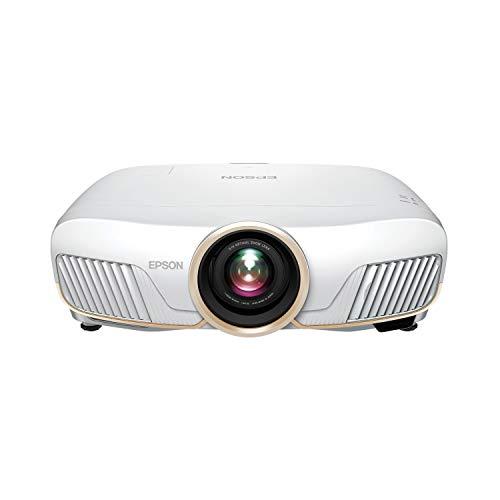
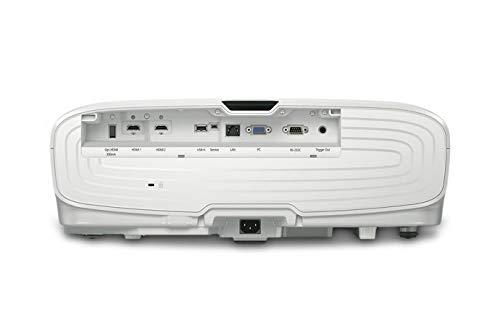
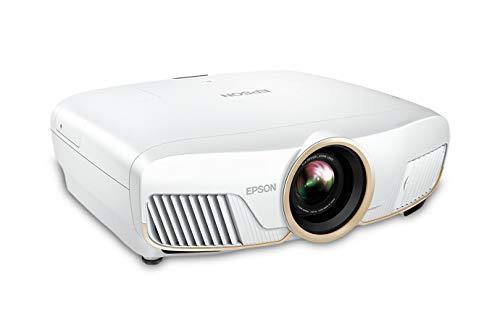
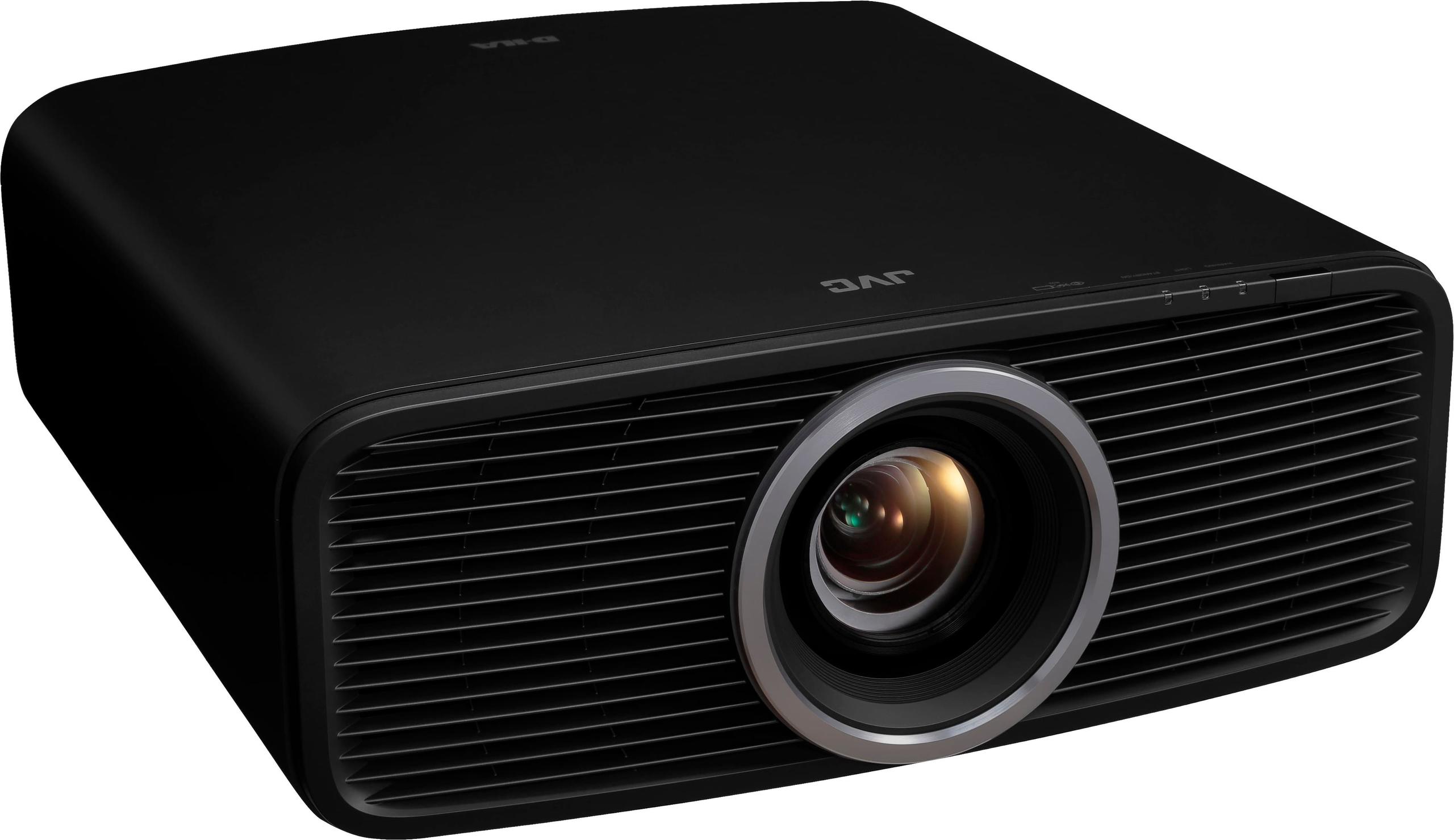
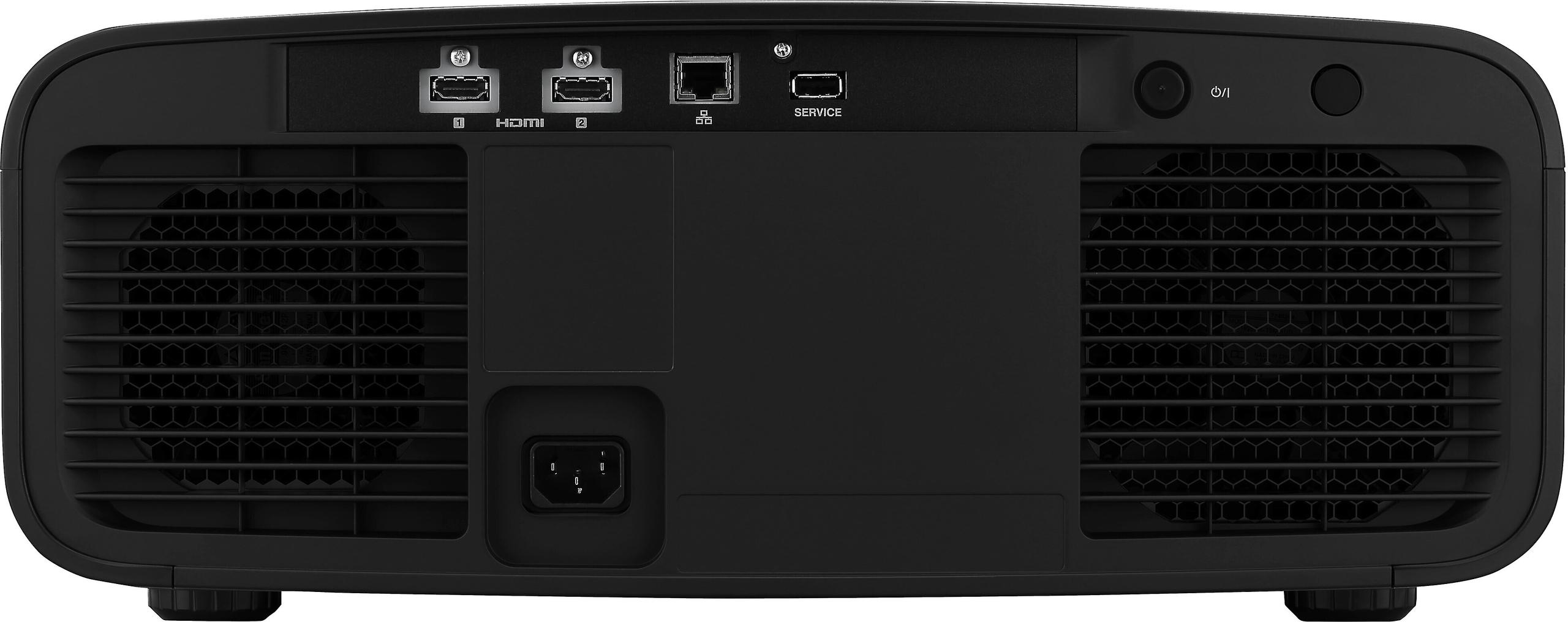
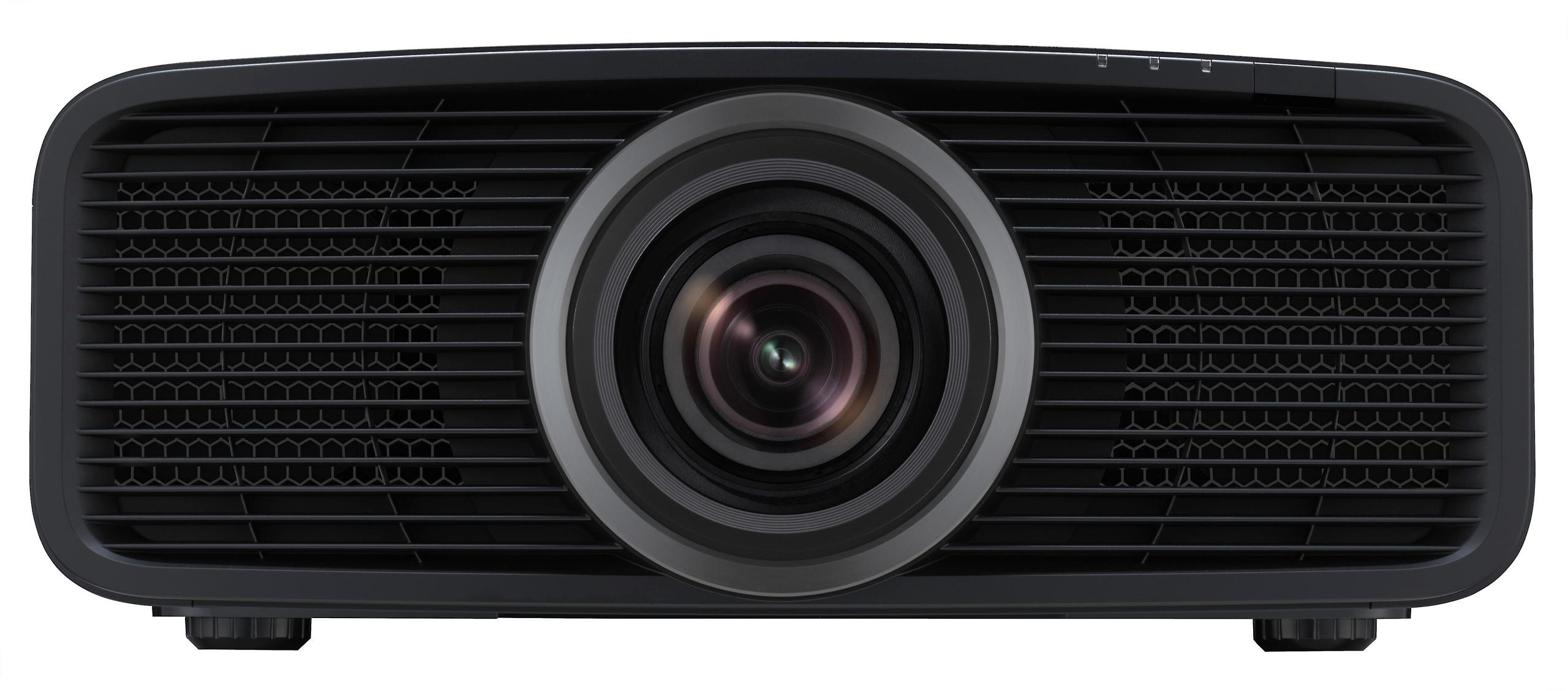
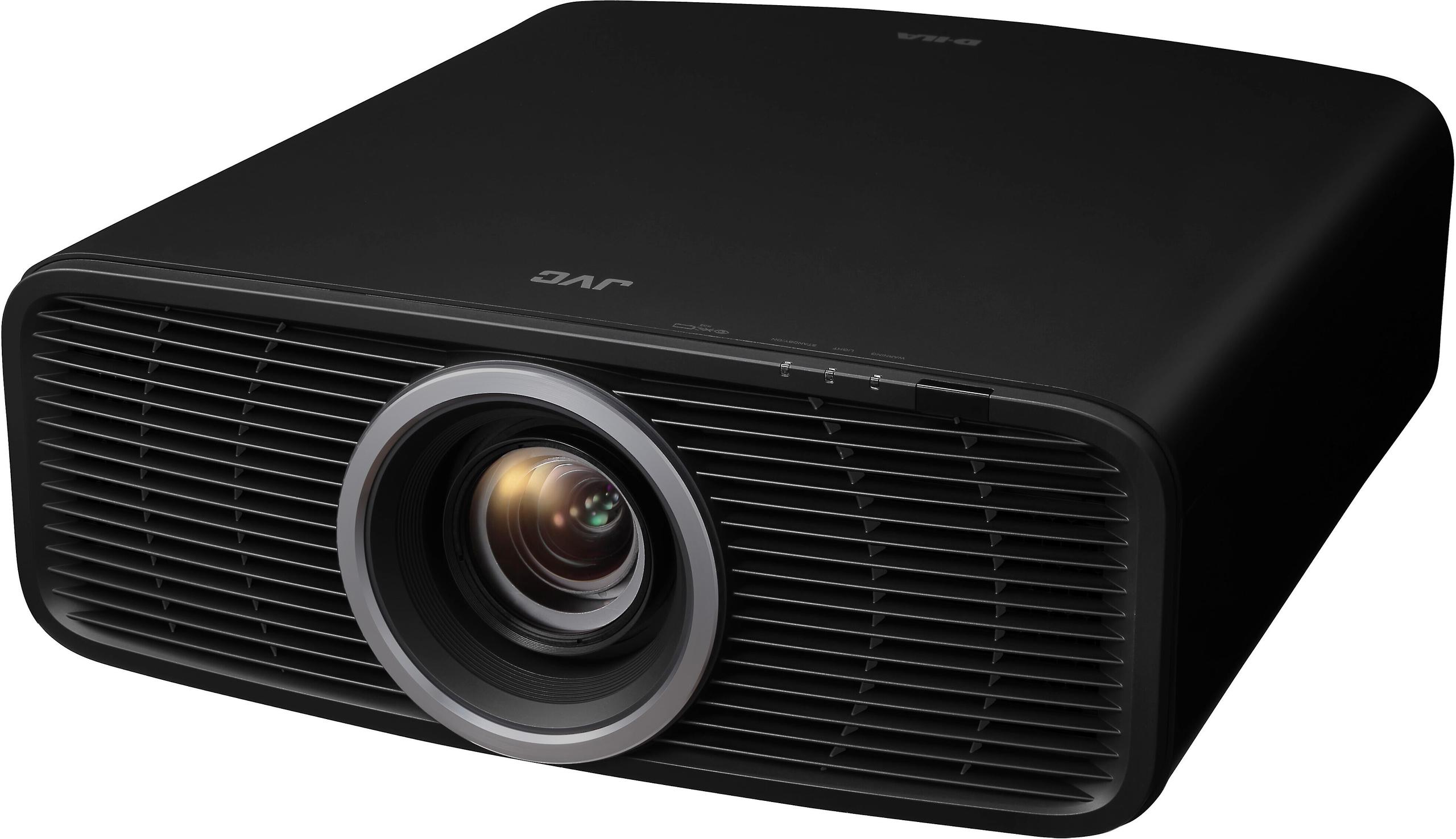
The Epson Home Cinema 5050UB and JVC DLA-NZ500 perfectly illustrate this divide. Released in 2019 and 2024 respectively, these projectors show how the industry has evolved while also highlighting why older technologies sometimes still make sense. At the time of writing, the Epson costs roughly half what the JVC commands, making this a classic value-versus-performance comparison.
Before diving into these specific models, let's talk about what actually matters when you're projecting a 100+ inch image on your wall. Unlike your TV, projectors need to work in varying light conditions, throw images across different distances, and maintain quality over thousands of hours of use.
The most critical performance factors are contrast ratio (how deep the blacks look compared to bright whites), color accuracy (whether skin tones and landscapes look natural), brightness (measured in lumens - essentially how much light the projector puts out), and resolution clarity. These elements work together to create that immersive cinema experience you're after.
Modern projectors also need to handle HDR content properly. HDR, or High Dynamic Range, contains much more information about bright and dark areas than standard video, but only if your projector can process and display it correctly. Think of it like the difference between a basic smartphone photo and a professional camera shot - there's just more detail in the highlights and shadows.
The fundamental difference between the Epson 5050UB and JVC NZ500 lies in how they generate and project light. The Epson uses a traditional approach: a high-pressure mercury lamp creates intense white light, which gets split into red, green, and blue components using LCD panels - one panel for each color. This 3LCD system then recombines these colors to form your image.
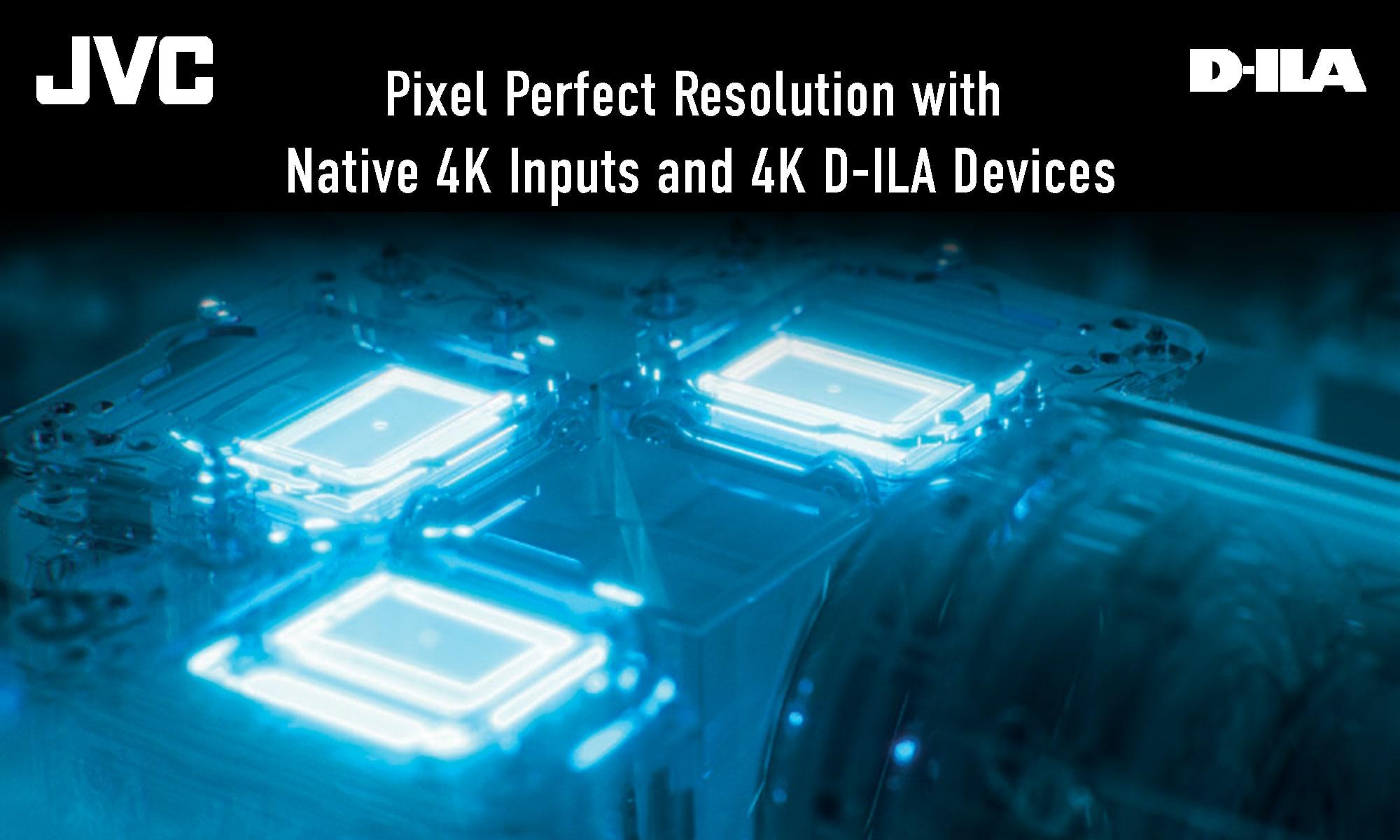
The JVC NZ500, however, uses D-ILA technology (Direct Drive Image Light Amplifier - basically JVC's version of what others call LCoS or Liquid Crystal on Silicon). Instead of transmitting light through LCD panels, D-ILA reflects light off silicon chips with liquid crystals on top. This reflective approach allows for much tighter pixel spacing and, theoretically, better contrast performance.
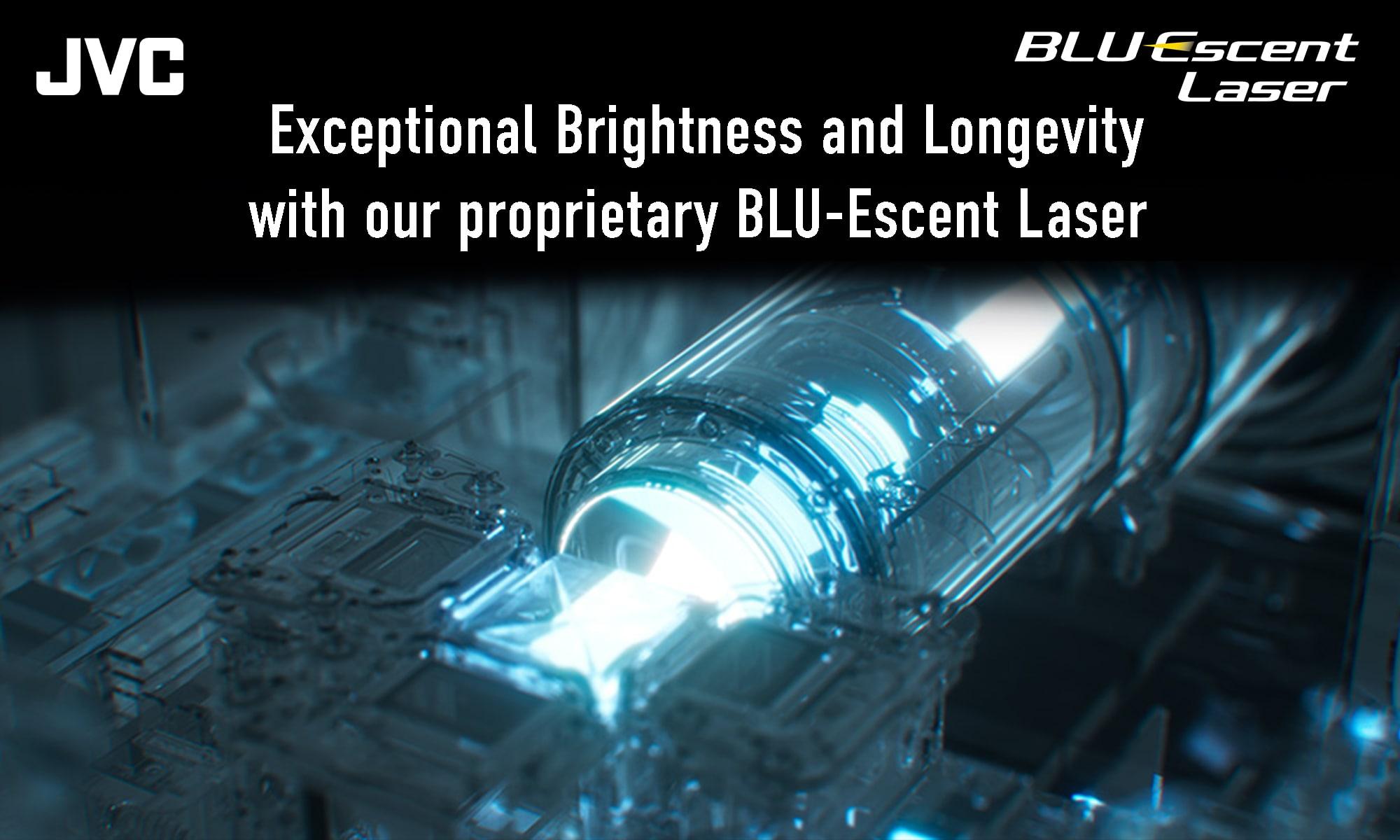
More importantly, the JVC powers this system with a blue laser diode rather than a traditional lamp. The laser light gets converted into white light through a phosphor wheel - similar to how LED lights work. This isn't just a different power source; it fundamentally changes how the projector behaves over time.
Here's where things get technically interesting and potentially controversial. The JVC DLA-NZ500 delivers true native 4K resolution - meaning it has actual 4K imaging chips with 4,096 x 2,160 individual pixels. When you feed it a 4K signal, each source pixel maps directly to a projector pixel.
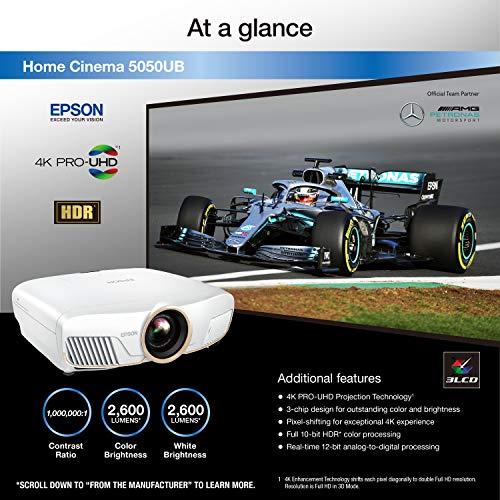
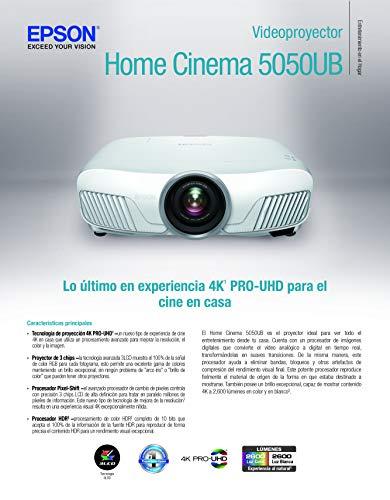
The Epson 5050UB takes a different approach that Epson calls "4K PRO-UHD." The actual LCD panels are 1080p (1920 x 1080), but the projector rapidly shifts each pixel diagonally by half a pixel width. This pixel-shifting happens so quickly that your eye perceives it as higher resolution. It's mathematically delivering 4K worth of information, but not in the same way as native 4K.
In practice, this difference matters most when you're sitting close to large screens or viewing content with fine details like computer text or architectural drawings. For typical movie watching at normal seating distances, both approaches deliver impressively sharp images. However, the JVC NZ500 does have an edge in pure detail resolution that becomes more noticeable as screen sizes exceed 120 inches.
The Epson 5050UB outputs 2,600 lumens compared to the JVC's 2,000 lumens. While this might seem like a modest difference, it significantly affects where and how you can use each projector.
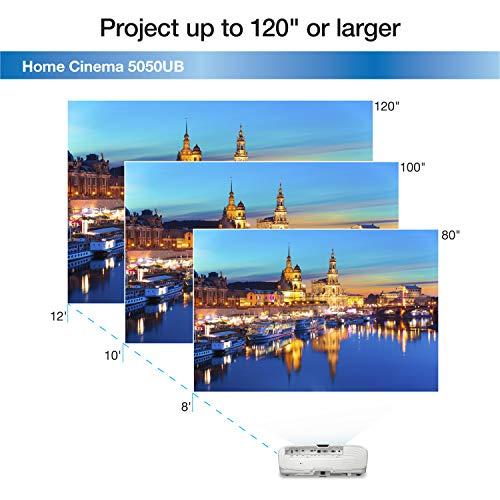
Lumens measure the total light output, but what matters more is how that light performs on your screen in your room. The Epson's extra brightness makes it much more versatile for family rooms where you might want to keep some lights on during sports games or casual viewing. It also drives larger screens more effectively - if you're planning a 150+ inch display, the Epson's extra lumens become crucial.
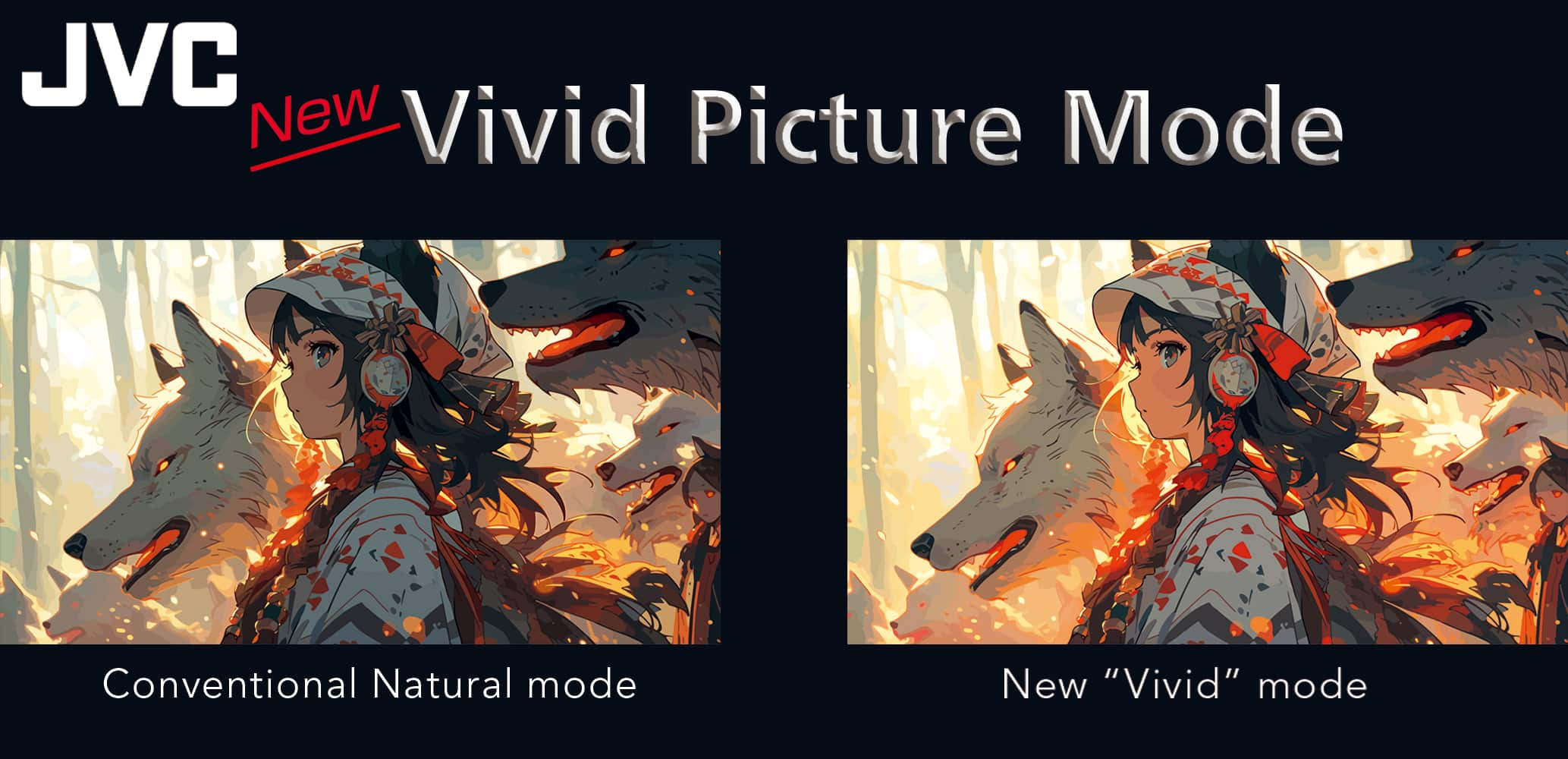
The JVC NZ500, while less bright, delivers what many consider more "usable" lumens. Laser light sources produce purer colors with less yellow/green tinting that's common in traditional lamps. This means the JVC's 2,000 lumens often look more vibrant and natural than you'd expect, especially in controlled lighting environments.
This is where the JVC DLA-NZ500 pulls significantly ahead. Contrast ratio measures the difference between the darkest blacks and brightest whites your projector can display simultaneously. The JVC achieves a native contrast ratio of 40,000:1, while the Epson 5050UB manages around 2,500:1 natively before any dynamic adjustments.
Both projectors use dynamic techniques to improve these numbers - the Epson employs an auto-iris that opens and closes based on scene content, while the JVC can dim its laser output. However, the JVC's superior starting point means it doesn't rely as heavily on these dynamic adjustments, which can sometimes create distracting brightness shifts in mixed lighting scenes.
In practical terms, this translates to deeper, more convincing blacks in dark movie scenes. The JVC NZ500 makes space scenes in sci-fi movies look truly black rather than dark gray, and shadow details in darker films remain visible without washing out the overall image. This is arguably the most significant performance advantage the JVC holds.
Both projectors handle color well, but with different strengths. The Epson 5050UB covers the full DCI-P3 color space that most premium content uses, and its 3LCD design eliminates color artifacts that single-chip projectors sometimes exhibit. The built-in Cinema Filter helps achieve accurate color reproduction without requiring extensive calibration.
The JVC NZ500 covers about 93% of the DCI-P3 color space but does so with exceptional accuracy. The laser light source provides more stable color performance over time compared to lamp-based systems, which can shift color temperature as the lamp ages. JVC's 6-axis color management system also allows for precise calibration adjustments.
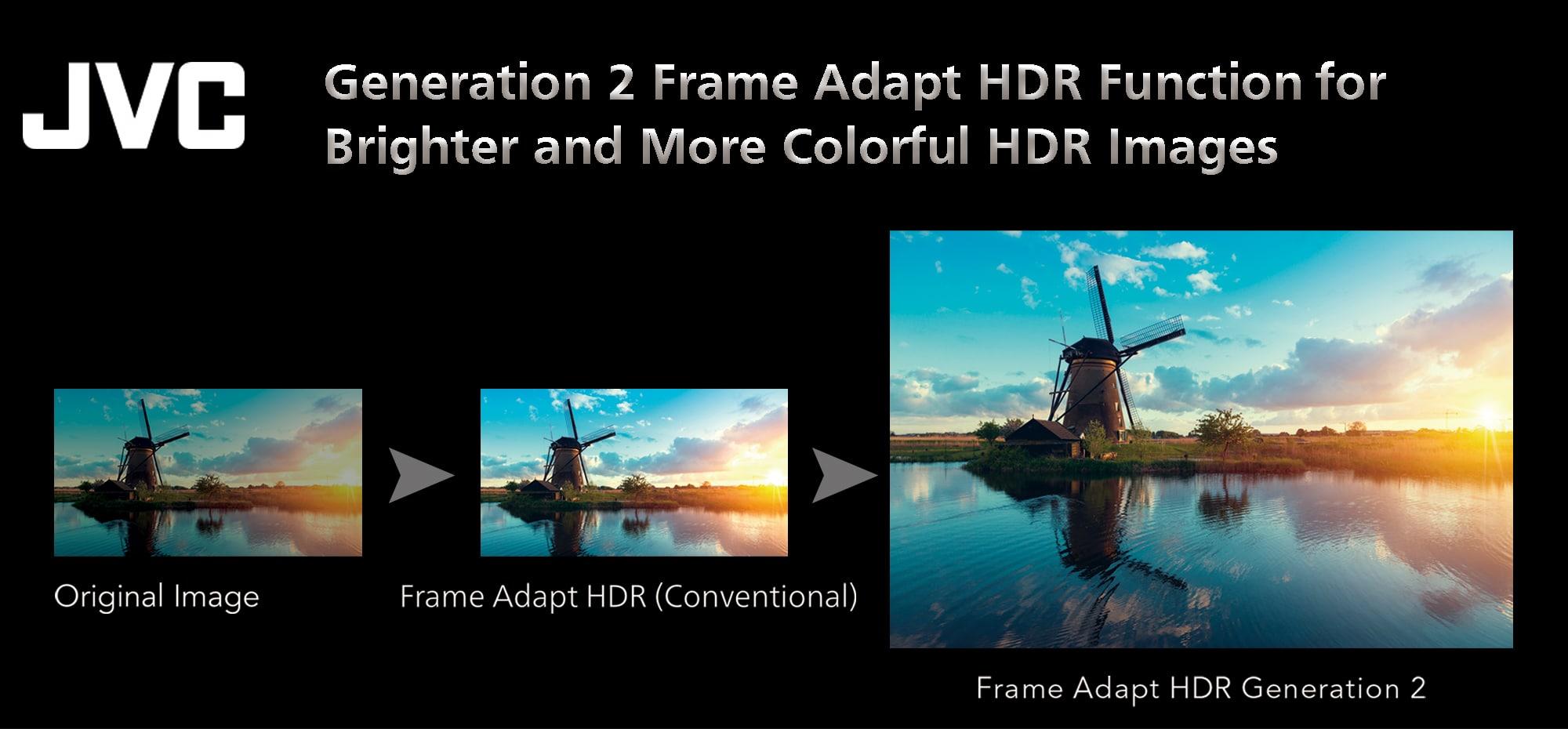
For HDR content, the JVC NZ500 supports HDR10, HDR10+, and HLG formats, while the Epson 5050UB handles HDR10 and HLG. More importantly, the JVC includes Frame Adapt HDR technology that analyzes HDR content frame-by-frame and adjusts the tone mapping accordingly. This prevents the common HDR problem where bright scenes look good but dark scenes become too dark to see detail.
Both projectors offer motorized lens controls, but with different trade-offs. The Epson 5050UB provides more lens shift capability - you can move the image up to 96% of the image height vertically and 47% horizontally without physically moving the projector. This makes installation much easier in challenging ceiling mount situations.
The JVC NZ500 offers less lens shift range but includes five lens position memories. This feature lets you save different zoom, focus, and shift settings for different content - useful if you switch between 16:9 movies and 2.35:1 ultra-widescreen content on the same screen.
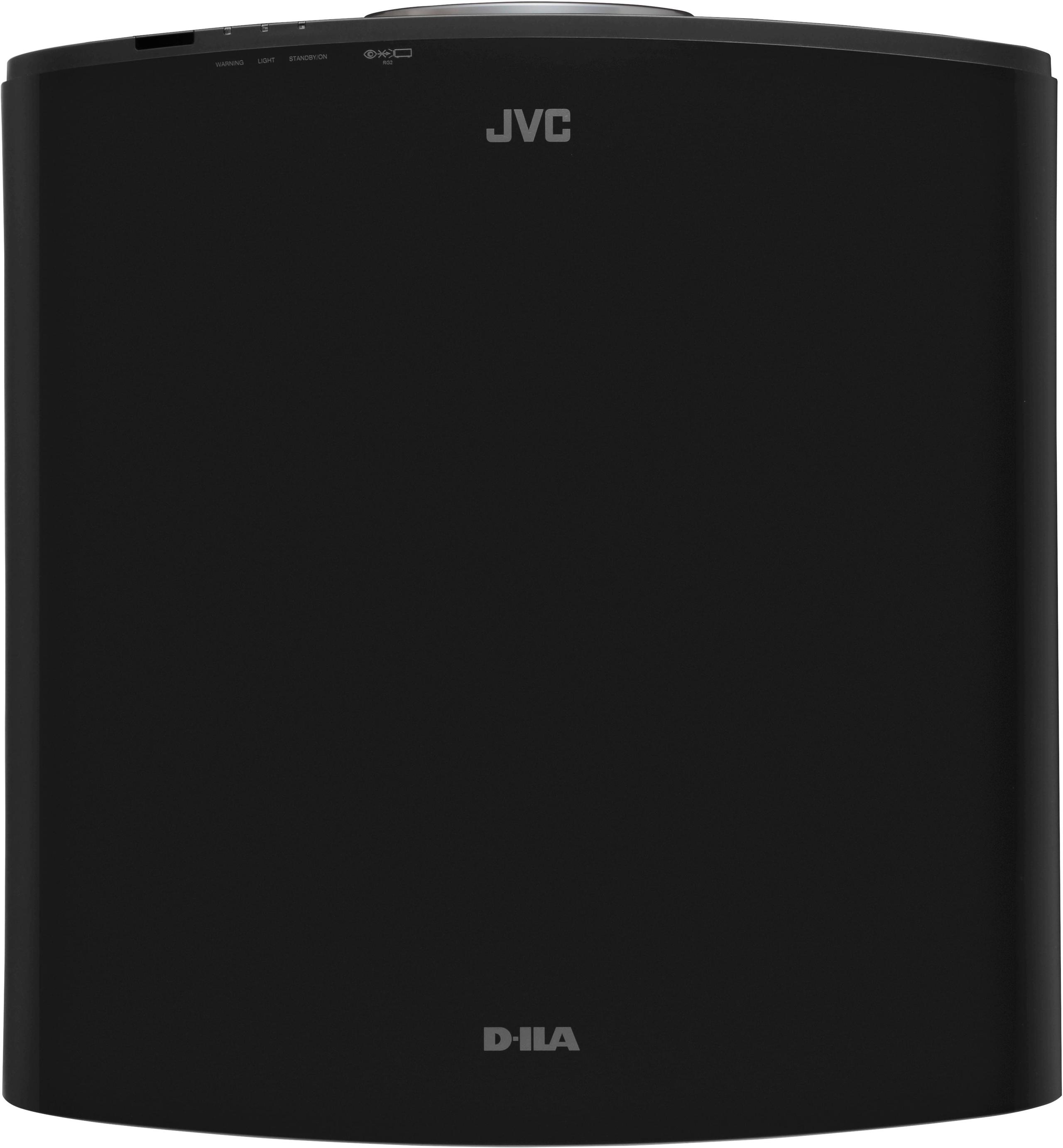
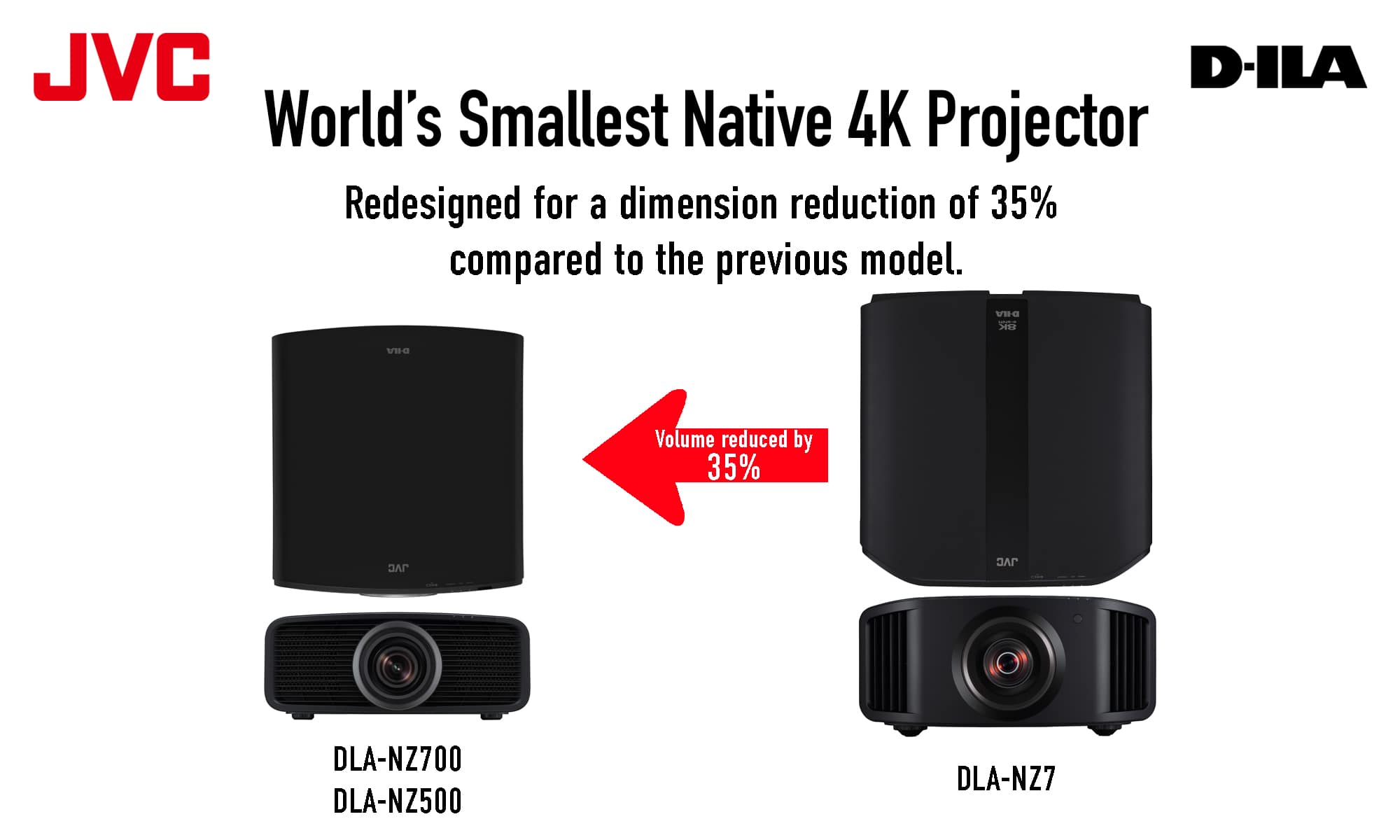
The JVC is also significantly smaller and lighter than previous JVC models, though still larger than the Epson. Both projectors run relatively quietly, with the JVC being slightly quieter thanks to its more efficient laser light source.
Here's where the math gets interesting. At the time of writing, the JVC DLA-NZ500 costs roughly double the Epson 5050UB. However, that Epson will need lamp replacements every 3,500-5,000 hours of use, with each replacement costing several hundred dollars.
The JVC's laser is rated for 20,000 hours with minimal degradation. Over a 10-year ownership period with moderate use, you might replace the Epson's lamp 3-4 times, adding significant cost to the total ownership equation. The JVC also maintains consistent performance throughout its life, while lamp-based projectors gradually dim and shift color temperature.
From a technology standpoint, the JVC NZ500 represents a more future-proof investment. Laser projection is where the industry is heading, and lamp-based projectors like the Epson 5050UB are becoming increasingly rare in new releases.
Neither projector excels at gaming compared to dedicated gaming projectors, but both handle casual gaming adequately. The Epson 5050UB offers around 22-30ms of input lag, while the JVC NZ500 includes a low-latency mode that reduces processing delay. However, both are limited to 60Hz refresh rates - you won't get 120Hz gaming capabilities that newer consoles support.
The JVC NZ500 notably lacks 3D support entirely, while the Epson 5050UB includes active 3D capability. Given that 3D content has largely disappeared from the consumer market, this isn't a significant limitation for most users.
The Epson 5050UB makes the most sense for users who need maximum flexibility and value. If you're setting up in a multi-purpose family room, plan to watch content with some ambient lighting, or need to drive a very large screen (150+ inches), the Epson's extra brightness becomes crucial. It's also the clear choice if you want excellent performance without the premium price tag.
The JVC DLA-NZ500 is ideal for dedicated home theater environments where you can control lighting. If you prioritize the best possible image quality, want maintenance-free operation, and can justify the higher initial investment for long-term value, the JVC delivers reference-quality performance that was previously available only in much more expensive projectors.
For most users building their first serious home theater, the Epson 5050UB offers the better balance of performance, versatility, and value. However, if you're upgrading from an entry-level projector and want to experience what high-end projection can deliver, the JVC NZ500 provides a significant step up in image quality that justifies its premium pricing.
The choice ultimately comes down to your room environment, viewing habits, and budget priorities. Both projectors excel in their intended roles, representing the best of their respective technologies at the time of writing.
| Epson Home Cinema 5050UB | JVC DLA-NZ500 |
|---|---|
| Display Resolution - Critical for image sharpness and detail | |
| 4K PRO-UHD via pixel-shifting (1080p panels enhanced to 4K-like resolution) | Native 4K D-ILA (true 4096 x 2160 pixels, no processing tricks needed) |
| Light Source Technology - Affects maintenance costs and longevity | |
| Traditional UHE lamp (3,500-5,000 hour life, requires replacements) | BLU-Escent laser diode (20,000 hour life, maintenance-free operation) |
| Brightness Output - Determines room lighting flexibility | |
| 2,600 lumens (excellent for larger screens and rooms with ambient light) | 2,000 lumens (ideal for dedicated dark theaters, purer color quality) |
| Contrast Ratio - Most important spec for deep blacks and image depth | |
| 1,000,000:1 dynamic contrast (relies on auto-iris adjustments) | 40,000:1 native contrast (superior black levels without dynamic tricks) |
| HDR Support - Essential for modern 4K content | |
| HDR10 and HLG (good processing with 16-step adjustment) | HDR10, HDR10+, and HLG (advanced Frame Adapt HDR with scene optimization) |
| Color Gamut Coverage - Affects color accuracy and vibrancy | |
| Full DCI-P3 color space with Cinema Filter technology | 93% DCI-P3 coverage with exceptional laser-source color purity |
| Lens System - Critical for installation flexibility | |
| Motorized 2.1x zoom with ±96% vertical, ±47% horizontal shift | Motorized 1.6x zoom with ±70% vertical, ±28% horizontal shift, 5 position memories |
| Maximum Screen Size - Important for large installations | |
| Up to 300 inches diagonal (better for very large screens) | Up to 200 inches diagonal (optimized for typical home theater sizes) |
| Gaming Performance - Relevant for console gaming | |
| 22-30ms input lag, 60Hz max (adequate for casual gaming) | Low latency mode available, 60Hz max (not optimized for competitive gaming) |
| 3D Support - Legacy feature for existing 3D content | |
| Active 3D with RF glasses support | No 3D support (reflects industry trend away from 3D) |
| Physical Size and Weight - Affects installation requirements | |
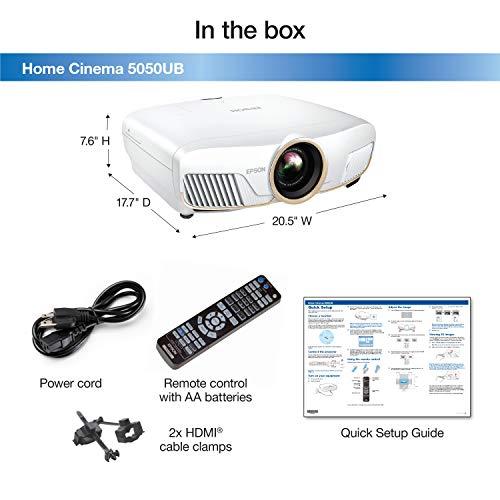
| 20.5" x 17.7" x 7.6", 24.7 lbs (larger footprint, easier to handle) | More compact design, 32.2 lbs (smaller but denser construction) |
| Operating Noise - Important for quiet viewing environments | |
| 20-31 dB depending on lamp mode (quieter in eco mode) | 23 dB typical (consistently quiet due to efficient laser cooling) |
| Total Cost of Ownership - Long-term financial consideration | |
| Lower upfront cost but ongoing lamp replacement expenses | Higher initial investment but virtually no maintenance costs over 20,000 hours |
The JVC DLA-NZ500 delivers superior picture quality for dedicated home theaters, featuring true native 4K resolution and exceptional 40,000:1 contrast ratio that produces deeper blacks and more detailed shadows. The Epson Home Cinema 5050UB offers excellent image quality with 4K enhancement technology and vibrant colors, making it ideal for versatile viewing environments where some ambient light is present.
The JVC DLA-NZ500 uses native 4K with actual 4096 x 2160 pixel chips, meaning each source pixel maps directly to a projector pixel. The Epson Home Cinema 5050UB uses 4K PRO-UHD technology that rapidly shifts 1080p pixels to create 4K-like resolution. While both produce sharp images, the JVC provides slightly better detail clarity, especially noticeable on screens larger than 120 inches.
The Epson Home Cinema 5050UB is significantly brighter at 2,600 lumens compared to the JVC DLA-NZ500's 2,000 lumens. This makes the Epson better suited for multi-purpose rooms, sports viewing with lights on, and driving larger screens over 150 inches. The JVC works best in dedicated dark theater environments.
The Epson Home Cinema 5050UB uses a traditional lamp that needs replacement every 3,500-5,000 hours of use. The JVC DLA-NZ500 features a laser light source rated for 20,000 hours with no lamp replacements needed. This makes the JVC maintenance-free over its entire lifespan, while the Epson requires ongoing lamp replacement costs.
The JVC DLA-NZ500 excels in contrast performance with 40,000:1 native contrast ratio, producing visibly deeper blacks and better shadow detail in dark scenes. The Epson Home Cinema 5050UB achieves good contrast through dynamic iris technology but cannot match the JVC's natural black level performance, especially important for movie viewing in dark rooms.
The JVC DLA-NZ500 supports HDR10, HDR10+, and HLG with advanced Frame Adapt HDR technology that optimizes each scene. The Epson Home Cinema 5050UB handles HDR10 and HLG formats with 16-step precision adjustment. Both deliver good HDR performance, but the JVC offers more advanced processing and format support.
Both projectors offer adequate gaming performance for casual use, with the Epson Home Cinema 5050UB providing 22-30ms input lag and the JVC DLA-NZ500 including a low latency mode. Neither supports 120Hz gaming or advanced gaming features, making them better suited for movie watching than competitive gaming. The Epson has a slight edge in gaming versatility.
The Epson Home Cinema 5050UB offers superior installation flexibility with ±96% vertical and ±47% horizontal lens shift, making ceiling mounting easier in challenging rooms. The JVC DLA-NZ500 provides ±70% vertical and ±28% horizontal shift but includes 5 lens position memories for different aspect ratios. Both feature motorized zoom and focus controls.
The JVC DLA-NZ500 provides better long-term value despite higher upfront costs, thanks to its maintenance-free laser that eliminates lamp replacement expenses over 20,000 hours. The Epson Home Cinema 5050UB has lower initial cost but requires multiple lamp replacements over its lifetime. The JVC also maintains consistent performance while lamp projectors gradually dim.
The Epson Home Cinema 5050UB includes active 3D support with RF glasses compatibility for existing 3D content. The JVC DLA-NZ500 does not support 3D at all, reflecting the industry's move away from 3D content. If you have 3D movies or plan to use 3D features, the Epson is your only option between these models.
The JVC DLA-NZ500 operates more quietly at around 23 dB thanks to its efficient laser cooling system. The Epson Home Cinema 5050UB ranges from 20-31 dB depending on lamp mode, being quieter in eco mode but louder at full brightness. For consistently quiet operation in a dedicated theater, the JVC has the advantage.
Choose the Epson Home Cinema 5050UB if you need maximum brightness for larger rooms, want lower upfront costs, or require installation flexibility in challenging spaces. Select the JVC DLA-NZ500 if you have a dedicated dark theater room, prioritize ultimate image quality with deep blacks, and want maintenance-free laser operation with long-term value despite higher initial investment.
We've done our best to create useful and informative comparisons to help you decide what product to buy. Our research uses advanced automated methods to create this comparison and perfection is not possible - please contact us for corrections or questions. These are the sites we've researched in the creation of this article: rtings.com - audiogurus.com - hometechnologyreview.com - projectorscreen.com - youtube.com - thesmarthomehookup.com - techgearlab.com - rtings.com - projectorreviews.com - projectorreviews.com - projectorreviews.com - projectorcentral.com - avsforum.com - avsforum.com - rtings.com - avsforum.com - audiogeneral.com - hifiheaven.net - manuals.plus - crutchfield.com - mediaserver.goepson.com - projectorcentral.com - epson.com - bestbuy.com - projectorreviews.com - projectorcentral.com - projectorscreen.com - valueelectronics.com - youtube.com - projectorcentral.com - avsforum.com - youtube.com - eu.jvc.com - jvc.com - crutchfield.com - projectorreviews.com - avsforum.com - audioadvice.com

Privacy Policy
Terms and Conditions - Affiliate Policy
Home Security
© Copyright 2008-2026.
11816 Inwood Rd #1211, Dallas, TX 75244