

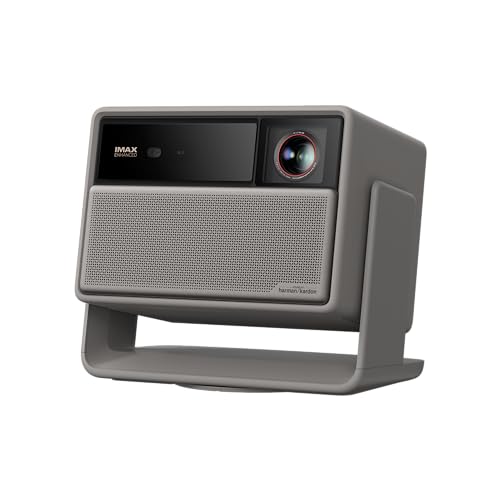

The world of premium home theater projectors has evolved dramatically over the past few years. Gone are the days when projectors required completely dark rooms and constant bulb replacements. Today's laser projectors offer incredible brightness, vivid colors, and maintenance-free operation that can transform any space into a cinema experience. Two standout models represent different philosophies in this premium space: the XGIMI Horizon 20 Max and the Epson QB1000.
Released in 2024, both projectors showcase cutting-edge laser technology but take vastly different approaches to home entertainment. The XGIMI Horizon 20 Max prioritizes convenience and versatility with smart features built right in, while the Epson QB1000 focuses on delivering reference-quality images for dedicated theater rooms. Understanding these differences is crucial for making the right choice for your specific setup and needs.
Before diving into the comparison, it's worth understanding what makes these projectors special. Both use laser light sources instead of traditional lamps, which means they'll run for roughly 20,000 hours (about 10-15 years of regular use) without needing replacement. This is a game-changer compared to older projectors that required expensive bulb changes every few thousand hours.
The term "4K" gets thrown around a lot, but these projectors achieve it through different methods. True native 4K means the projector has physical pixels arranged in a 3840×2160 grid—that's over 8 million individual pixels. However, many projectors use pixel-shifting technology, where a lower-resolution chip (usually 1080p) rapidly moves the image to create the appearance of higher resolution. Both approaches can look excellent, but they have different strengths.
HDR (High Dynamic Range) support is another crucial feature that expands the range between the darkest blacks and brightest whites, creating more lifelike images. Modern projectors support various HDR formats like HDR10, HDR10+, and Dolby Vision, each with slightly different approaches to optimizing brightness and color.
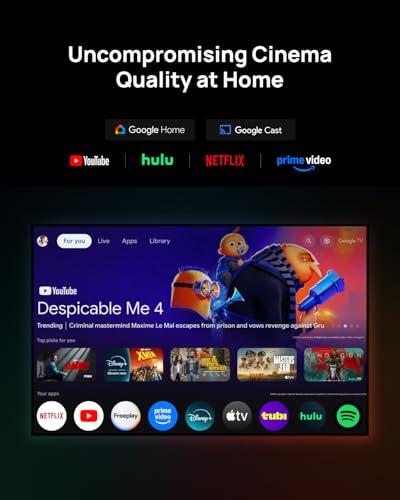
The XGIMI Horizon 20 Max represents the "smart projector" philosophy. Like a smart TV, it runs Android TV with Google integration, meaning you can access Netflix, Disney+, and other streaming services without any additional devices. The projector includes powerful built-in speakers and focuses heavily on automated setup features.
XGIMI's ISA 5.0 (Intelligent Screen Alignment) technology automatically handles focus, keystone correction (fixing image distortion when projecting at angles), and even obstacle avoidance. This means you can literally take it out of the box, plug it in, and have a perfectly aligned image within minutes—something that traditionally required manual adjustment and technical know-how.
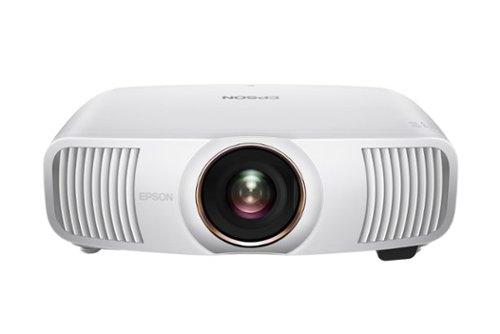
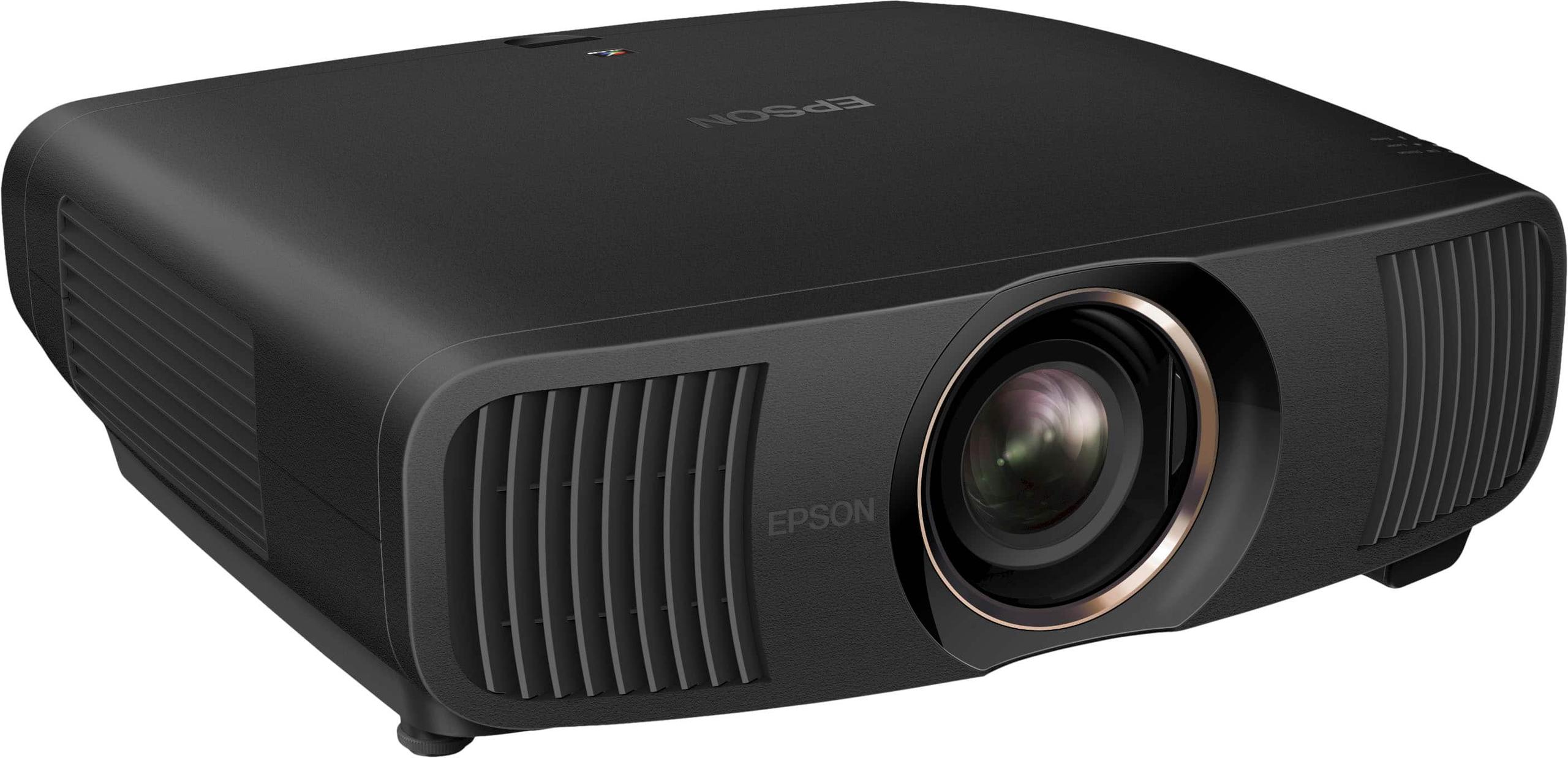
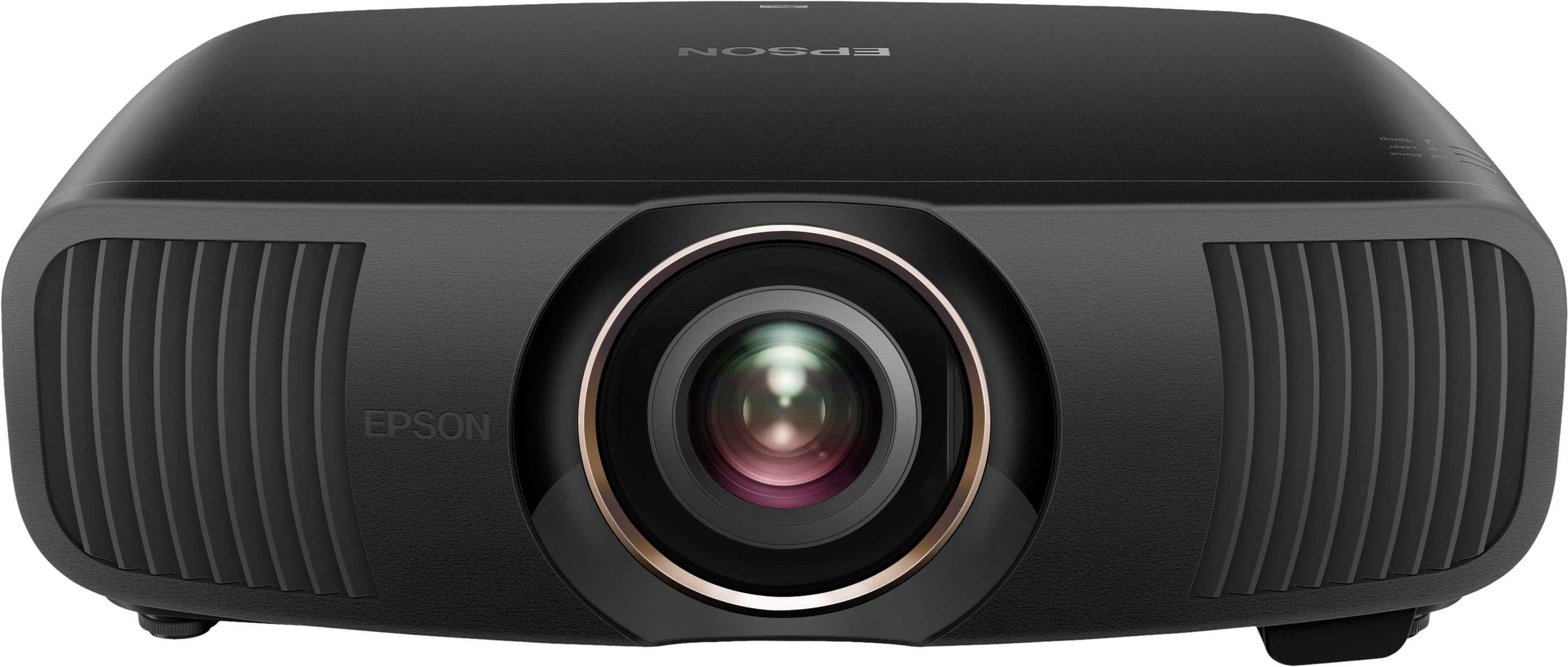
The Epson QB1000, on the other hand, follows the traditional premium projector model. It's designed to be the centerpiece of a dedicated home theater, offering professional-grade features like motorized lens shift, extensive calibration options, and ISF (Imaging Science Foundation) certification for color accuracy.
This projector assumes you'll pair it with a separate sound system and streaming device, focusing entirely on delivering the best possible image quality. The trade-off is complexity—getting the most from the Epson QB1000 typically requires professional installation or significant technical expertise.
Brightness measured in lumens determines how well a projector performs in different lighting conditions. This is perhaps the most dramatic difference between these models and fundamentally affects how you can use them.
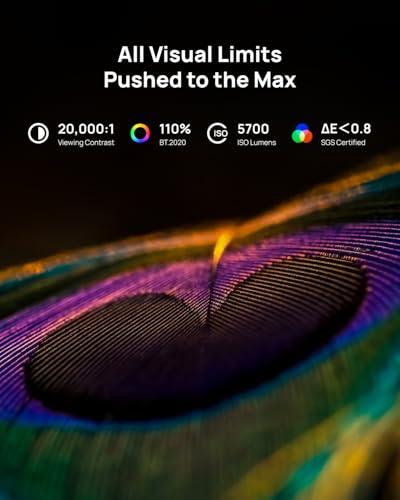
The XGIMI Horizon 20 Max delivers an impressive 5,700 ISO lumens, making it one of the brightest consumer projectors available. In practical terms, this means you can watch movies with some lights on, use it during the day with curtains closed, or even enjoy content in a moderately bright living room. Our research into professional reviews consistently shows measured brightness close to XGIMI's claims, which is refreshing in a market where inflated specifications are common.
The Epson QB1000 produces 3,300 lumens, which is still quite bright but represents a different design philosophy. Epson prioritized contrast ratio (the difference between bright and dark areas) over raw brightness. In a properly darkened room, 3,300 lumens is more than sufficient and actually preferable for many viewers, as excessive brightness can be fatiguing during long movie sessions.
The practical impact is significant. If you're planning to use your projector in a living room or family room with ambient light, the XGIMI Horizon 20 Max is the clear winner. For a dedicated basement theater or media room with complete light control, the Epson QB1000's approach makes more sense.
Both projectors deliver sharp 4K images, but through different technologies that affect image quality in subtle but meaningful ways.
The XGIMI Horizon 20 Max uses a single 0.47-inch DLP (Digital Light Processing) chip with XPR (eXpanded Pixel Resolution) technology. This means it has physical 1080p resolution but uses mirrors that rapidly shift the image to create the appearance of 4K. While this sounds like a compromise, modern XPR technology is remarkably effective. Reviews consistently note that the image appears noticeably sharper than traditional 1080p projectors, and most viewers can't detect the difference from native 4K at normal viewing distances.
The Epson QB1000 uses three separate 0.74-inch LCD chips (one each for red, green, and blue) with 4-way pixel-shifting technology. This creates what Epson calls "full 8.29 million pixels on-screen"—essentially true 4K resolution. The three-chip design also eliminates the "rainbow effect" (brief color flashes) that some sensitive viewers notice with single-chip DLP projectors.
In side-by-side comparisons, the Epson QB1000 typically shows slightly better fine detail and text clarity, particularly at larger screen sizes. However, the difference is often subtle enough that brightness and other factors may matter more for real-world viewing.
Contrast ratio—the difference between the brightest whites and darkest blacks—dramatically affects image depth and realism. This is where the fundamental design differences between these projectors become most apparent.
The XGIMI Horizon 20 Max achieves a 20,000:1 contrast ratio, which is respectable for a single-chip DLP projector prioritizing brightness. However, DLP technology inherently struggles with deep blacks because the mirrors can't completely block light.
The Epson QB1000 claims an impressive 5,000,000:1 dynamic contrast ratio through its UltraBlack technology and aggressive laser dimming. While dynamic contrast figures can be misleading (they represent best-case scenarios), professional reviews confirm that the Epson QB1000 delivers significantly better black levels and shadow detail in real-world content.
This difference is most noticeable in dark movie scenes. The Epson QB1000 can render subtle details in shadows that might be crushed to black on the XGIMI Horizon 20 Max. However, in brighter scenes or with ambient light present, this advantage becomes less relevant, and the XGIMI's superior brightness often provides a more impactful experience.
Both projectors deliver excellent color performance, but through different approaches that appeal to different priorities.
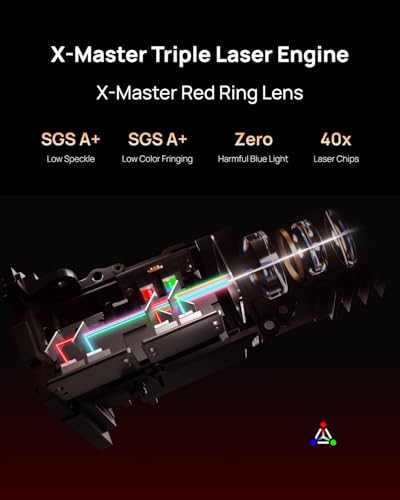
The XGIMI Horizon 20 Max achieves impressive color accuracy with a claimed ΔE (Delta E) value below 0.8 across major color standards. Delta E measures color accuracy—values below 1.0 are considered excellent, and below 3.0 are generally acceptable for home theater use. The projector's X-Master RGB triple laser engine covers 110% of the BT.2020 color space, delivering vibrant, saturated colors that pop off the screen.
The Epson QB1000 takes a more traditional approach with ISF certification and professional calibration capabilities. While it may require more setup to achieve optimal results, it can deliver reference-level color accuracy that matches film industry standards. The three-chip LCD design provides inherently better color separation and consistency than single-chip alternatives.
For most viewers, both projectors will deliver colors that look natural and engaging. The XGIMI Horizon 20 Max offers excellent performance out of the box, while the Epson QB1000 provides more potential for fine-tuning by enthusiasts or professionals.
Gaming has become a crucial consideration for modern projectors, especially with PlayStation 5 and Xbox Series X supporting 4K gaming at high frame rates.
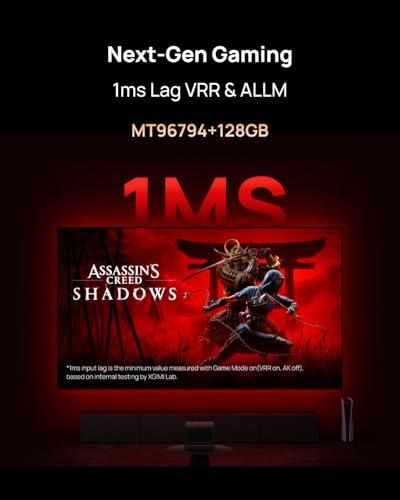
The XGIMI Horizon 20 Max excels in gaming scenarios with ultra-low input lag of just 1 millisecond at 1080p/240Hz and 3 milliseconds at 4K/60Hz. These figures rival dedicated gaming monitors and make competitive gaming genuinely viable on a massive screen. The projector also supports Variable Refresh Rate (VRR) to eliminate screen tearing and includes gaming-specific picture modes.
The Epson QB1000 offers native 4K/120Hz support, which is significant for owners of current-generation gaming consoles. While its input lag is higher at around 20 milliseconds, this is still excellent for projectors and acceptable for most gaming scenarios. The ability to display true 4K content at 120 frames per second provides incredibly smooth motion that the XGIMI Horizon 20 Max cannot match.
Your gaming priorities will determine which approach suits you better. Competitive multiplayer gamers will appreciate the XGIMI's lightning-fast response times, while single-player enthusiasts might prefer the Epson's higher resolution and frame rate capabilities.
Modern entertainment involves multiple devices and streaming services, making connectivity and smart features increasingly important.
The XGIMI Horizon 20 Max shines here with full Android TV integration. You can access major streaming services directly without any additional hardware, and the interface is familiar to anyone who's used an Android device. Wi-Fi 6 ensures fast, stable streaming, while Bluetooth connectivity allows for wireless audio devices.
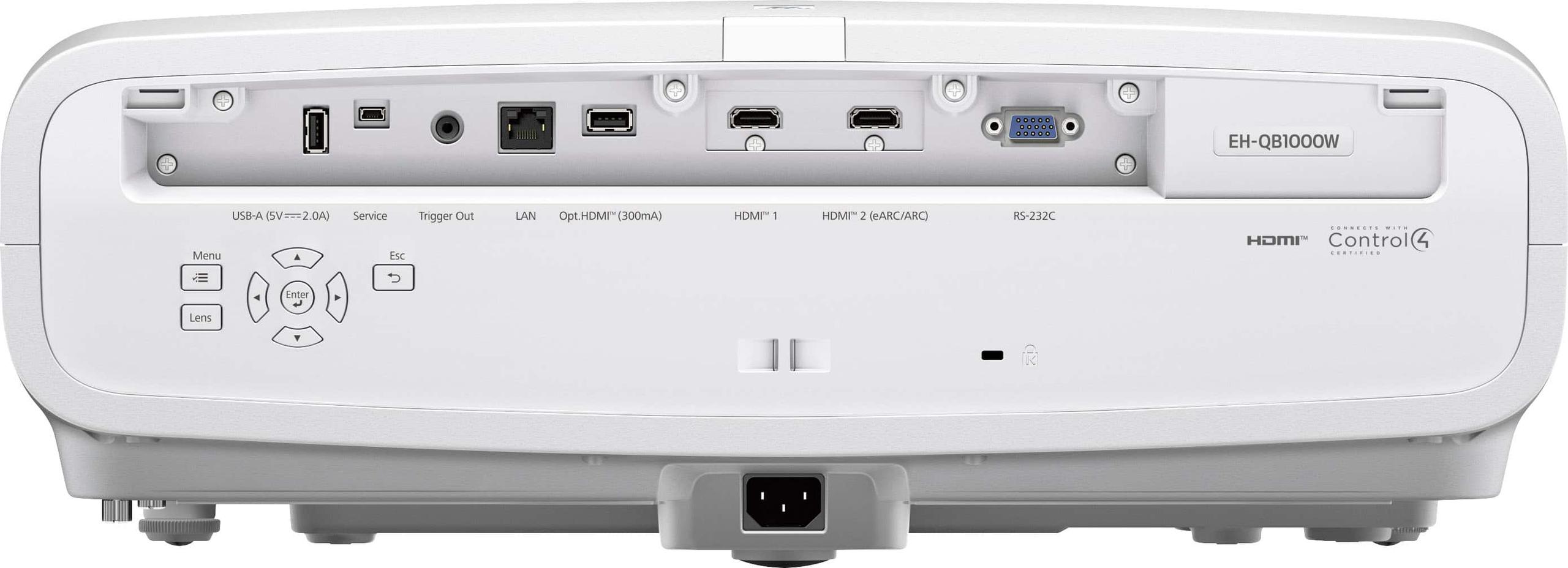
The Epson QB1000 takes a more traditional approach with no built-in smart platform. Instead, it offers dual HDMI 2.1 inputs with full 48Gbps bandwidth, ensuring compatibility with the latest gaming consoles and media players. This approach provides more flexibility for users who prefer dedicated streaming devices or frequently switch between sources.
The smart features difference significantly impacts total cost and complexity. The XGIMI Horizon 20 Max is truly plug-and-play, while the Epson QB1000 assumes you'll add a streaming device, sound system, and potentially professional installation.
Setting up a projector has traditionally been one of the most challenging aspects of home theater, but modern technology is changing this reality.
The XGIMI Horizon 20 Max revolutionizes setup with its ISA 5.0 system. Place it roughly where you want the image, and it automatically focuses, corrects keystone distortion, avoids obstacles, and even compensates for wall color. This technology works remarkably well according to user reviews, turning what used to be an hour-long calibration process into a five-minute setup.
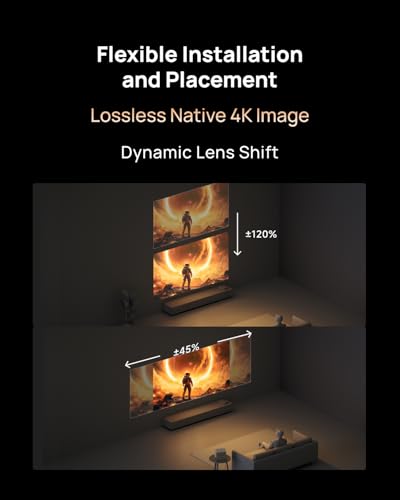
The Epson QB1000 requires more traditional installation but offers professional-grade flexibility in return. The motorized lens shift allows precise image positioning without degrading quality—you can move the image up to 96% horizontally and 47% vertically. Combined with motorized zoom and focus, this provides installation options that simply aren't possible with fixed-lens projectors.
The setup complexity difference affects who should consider each projector. The XGIMI Horizon 20 Max works well for anyone comfortable with basic electronics, while the Epson QB1000 often benefits from professional installation to realize its full potential.
At the time of writing, these projectors occupy different price tiers that reflect their design philosophies and target markets.
The XGIMI Horizon 20 Max typically costs significantly less than the Epson QB1000, making it an exceptional value for its brightness level and feature set. When you consider the built-in smart platform, speakers, and automated setup, the total cost of ownership becomes even more attractive. You're essentially getting a complete entertainment system rather than just a display device.
The Epson QB1000 commands a premium price that reflects its professional-grade optics, three-chip design, and extensive feature set. However, this price doesn't include the streaming device, sound system, and potential installation costs needed to create a complete theater experience. The value proposition depends heavily on how much you prioritize ultimate image quality and whether you have the budget for a comprehensive setup.
Understanding how these projectors perform in typical home environments helps clarify which might work better for your situation.
Living Room/Family Room Use: The XGIMI Horizon 20 Max dominates this scenario. Its extreme brightness handles ambient light well, the smart features eliminate device clutter, and the automated setup means it can be moved between rooms or adjusted without technical expertise. Many users report excellent daytime viewing experiences that simply aren't possible with traditional projectors.
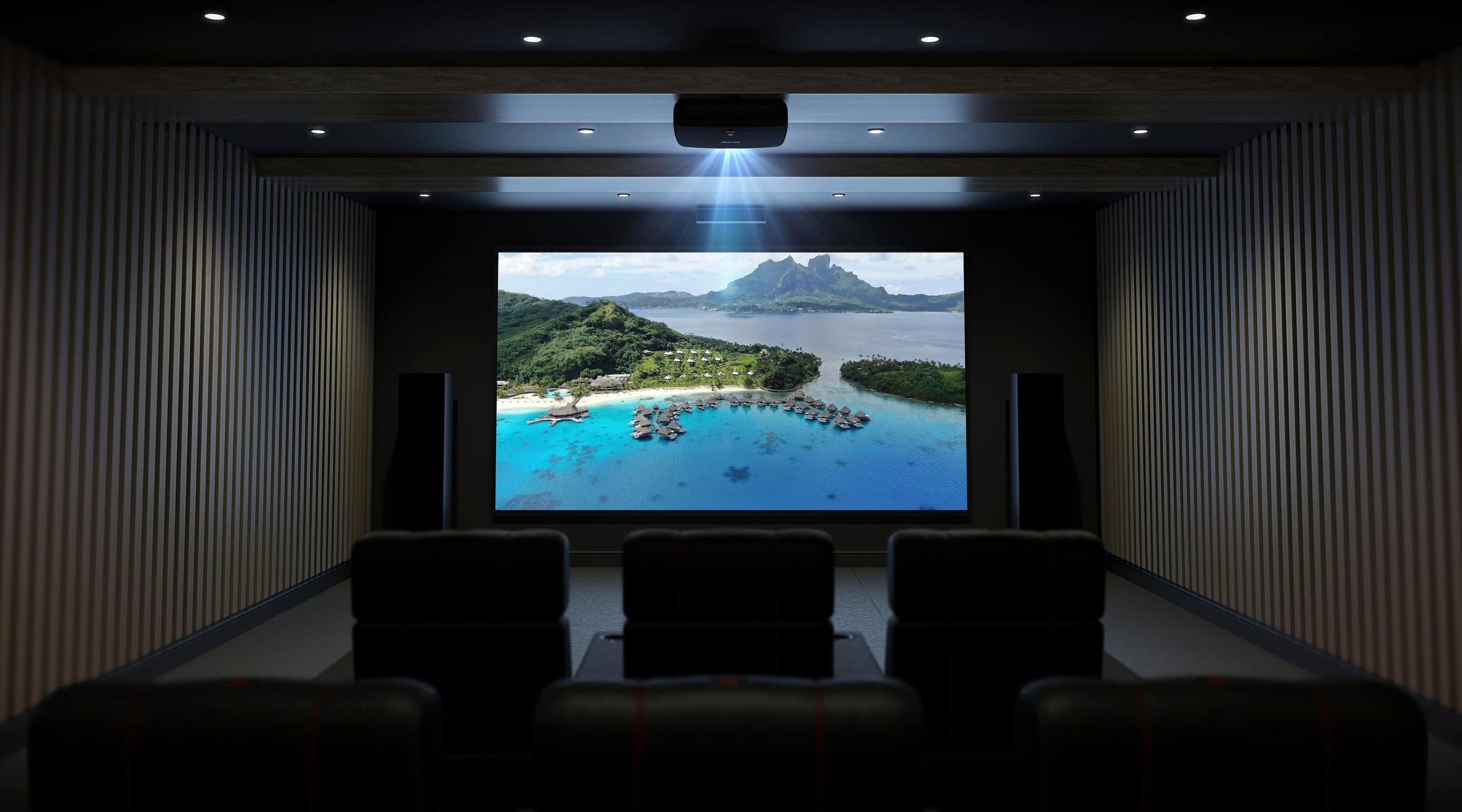
Dedicated Theater Room: The Epson QB1000 shines in controlled environments where its superior contrast and true 4K resolution can be fully appreciated. The professional installation options allow precise mounting and alignment, while the dual HDMI inputs support complex source switching. In a properly darkened room, the image quality can be genuinely cinematic.
Mixed-Use Spaces: This represents the toughest choice between the two projectors. If the room gets significant natural light or serves multiple purposes, the XGIMI Horizon 20 Max provides more versatility. If you can control lighting and prioritize critical viewing sessions, the Epson QB1000 offers better peak performance.
After extensive research into professional reviews and user feedback, clear patterns emerge about who should choose each projector.
Choose the XGIMI Horizon 20 Max if you want maximum convenience and versatility. It's ideal for users who value plug-and-play simplicity, plan to use the projector in various lighting conditions, or want an all-in-one entertainment solution. The extreme brightness makes it uniquely capable of handling challenging room conditions that would defeat most projectors.
Choose the Epson QB1000 if you're creating a dedicated home theater and prioritize ultimate image quality. It's best suited for enthusiasts willing to invest in proper installation, room treatment, and complementary equipment. The superior contrast and true 4K resolution provide reference-quality images that justify the higher cost and complexity.
Both projectors represent excellent value in their respective categories and showcase how far projector technology has advanced. The XGIMI Horizon 20 Max democratizes big-screen entertainment by making it accessible in almost any room, while the Epson QB1000 provides the image quality that serious cinephiles demand. Your choice ultimately depends on whether you prioritize convenience and versatility or are willing to invest in complexity for superior image quality.
The projector market continues evolving rapidly, with manufacturers pushing boundaries in brightness, resolution, and smart features. Both of these 2024 models represent current state-of-the-art technology, but they point toward different futures for home entertainment. Choose based on your specific needs, room conditions, and how you actually plan to use your projector—not just how you imagine you might use it.
| XGIMI Horizon 20 Max | Epson QB1000 |
|---|---|
| Brightness - Critical for room versatility and ambient light performance | |
| 5,700 ISO lumens (exceptional for bright rooms and daytime viewing) | 3,300 lumens (requires darker environments but sufficient for dedicated theaters) |
| Resolution Technology - Determines image sharpness and detail clarity | |
| Single-chip DLP with XPR pixel-shifting (very good 4K-like image) | Three-chip 3LCD with 4-way pixel-shifting (true native 4K with 8.29M pixels) |
| Contrast Ratio - Affects black levels and image depth | |
| 20,000:1 (good for bright room viewing) | 5,000,000:1 dynamic with UltraBlack technology (exceptional dark scene detail) |
| Gaming Performance - Input lag and refresh rate capabilities | |
| 1ms at 1080p/240Hz, 3ms at 4K/60Hz (ultra-responsive for competitive gaming) | Sub-20ms with native 4K/120Hz support (excellent for console gaming) |
| Smart Features - Built-in streaming and connectivity | |
| Android TV 11 with Google TV, Netflix/Disney+ built-in (complete entertainment system) | No smart platform (requires external streaming device) |
| Setup Complexity - Installation and calibration requirements | |
| ISA 5.0 auto-setup with keystone correction and obstacle avoidance (plug-and-play) | Motorized 3-axis lens shift with professional calibration options (requires expertise) |
| Color Accuracy - Out-of-box performance vs calibration potential | |
| ΔE < 0.8 with 110% BT.2020 coverage (excellent out-of-box) | ISF certified with professional calibration potential (reference quality when tuned) |
| HDR Support - Premium video format compatibility | |
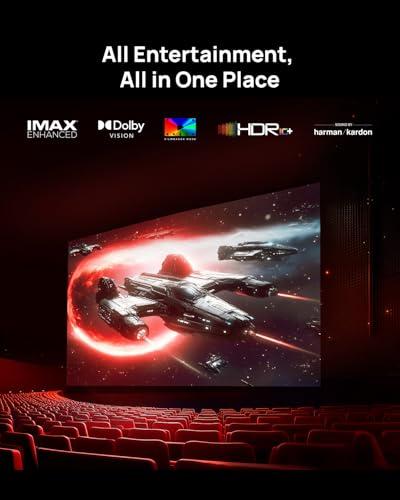
| Dolby Vision, HDR10+, HDR10, HLG, IMAX Enhanced | HDR10+, HDR10, HLG (missing Dolby Vision support) |
| Connectivity Options - Number and type of inputs | |
| HDMI 2.1 x1, HDMI x1, USB 3.0, Wi-Fi 6, Bluetooth 5.2 | Dual HDMI 2.1 with full 48Gbps bandwidth, USB 2.0 x2 |
| Audio Solution - Built-in sound quality | |
| Dual 24W Harman Kardon speakers (surprisingly capable for most content) | No built-in speakers (assumes external sound system) |
| Laser Lifespan - Maintenance-free operation period | |
| 20,000+ hours with RGB triple laser engine | 20,000+ hours with laser diode array |
| Target Use Case - Ideal room and user type | |
| Multi-purpose rooms, convenience-focused users, bright environments | Dedicated theaters, image quality enthusiasts, controlled lighting |
The XGIMI Horizon 20 Max is significantly brighter with 5,700 ISO lumens compared to the Epson QB1000's 3,300 lumens. This makes the XGIMI Horizon 20 Max much better for rooms with ambient light or daytime viewing, while the Epson QB1000 requires darker environments for optimal performance.
The Epson QB1000 delivers true native 4K with its three-chip design producing 8.29 million pixels on-screen. The XGIMI Horizon 20 Max uses single-chip XPR pixel-shifting technology that creates 4K-like image quality but isn't technically native 4K. Both look sharp, but the Epson QB1000 has a slight edge in fine detail.
For competitive gaming, the XGIMI Horizon 20 Max excels with ultra-low 1ms input lag at 1080p/240Hz. However, the Epson QB1000 supports native 4K gaming at 120Hz, making it better for console gaming with PlayStation 5 or Xbox Series X. Both offer excellent gaming performance for different priorities.
The XGIMI Horizon 20 Max includes Android TV with built-in Netflix, Disney+, and other streaming apps, so no external device is needed. The Epson QB1000 has no smart platform and requires a separate streaming device like Apple TV, Roku, or gaming console for content access.
The Epson QB1000 significantly outperforms with its 5,000,000:1 dynamic contrast ratio and UltraBlack technology, delivering much deeper blacks and better shadow detail. The XGIMI Horizon 20 Max's 20,000:1 contrast is respectable but can't match the Epson QB1000's performance in dark scenes.
The XGIMI Horizon 20 Max offers plug-and-play setup with ISA 5.0 technology that automatically handles focus, keystone correction, and screen alignment. The Epson QB1000 requires more complex installation with motorized lens adjustments and professional calibration for optimal results.
For dedicated home theaters with controlled lighting, the Epson QB1000 delivers superior image quality with better contrast and true 4K resolution. For multi-purpose rooms or family spaces, the XGIMI Horizon 20 Max offers more versatility with its extreme brightness and smart features.
Yes, both support HDR formats, but the XGIMI Horizon 20 Max has broader compatibility including Dolby Vision, HDR10+, HDR10, HLG, and IMAX Enhanced. The Epson QB1000 supports HDR10+, HDR10, and HLG but notably lacks Dolby Vision support.
The XGIMI Horizon 20 Max typically offers better value with its lower price point, built-in smart features, and speakers creating an all-in-one entertainment system. The Epson QB1000 costs more and requires additional components, but delivers superior image quality for those prioritizing performance over convenience.
Both the XGIMI Horizon 20 Max and Epson QB1000 feature laser light sources rated for approximately 20,000 hours of operation. This translates to roughly 10-15 years of typical home use without needing replacement, making both essentially maintenance-free during their operational lifetime.
The XGIMI Horizon 20 Max is specifically designed for bright room performance with its 5,700 lumens output. It can handle significant ambient light and even some daytime viewing with curtains closed. The Epson QB1000 struggles in bright environments and really needs a darkened room to perform at its best.
Yes, both projectors connect to gaming consoles through HDMI inputs. The XGIMI Horizon 20 Max offers HDMI 2.1 support with ultra-low input lag for responsive gaming. The Epson QB1000 provides dual HDMI 2.1 inputs with full bandwidth support and native 4K/120Hz capability for next-generation console gaming.
We've done our best to create useful and informative comparisons to help you decide what product to buy. Our research uses advanced automated methods to create this comparison and perfection is not possible - please contact us for corrections or questions. These are the sites we've researched in the creation of this article: dustinabbott.net - projectorcentral.com - youtube.com - us.xgimi.com - youtube.com - tweaktown.com - youtube.com - us.xgimi.com - youtube.com - youtube.com - thesmarthomehookup.com - youtube.com - us.xgimi.com - global.xgimi.com - projector-database.com - bestbuy.com - news.epson.com - projectorcentral.com - avscience.com - projectorscreen.com - epson.com - dreamediaav.com - epson.ca - epson.com - bestbuy.com - hifiheaven.net - bjorns.com - thepowercentre.ca - audiogeneral.com

Privacy Policy
Terms and Conditions - Affiliate Policy
Home Security
© Copyright 2008-2026.
11816 Inwood Rd #1211, Dallas, TX 75244