

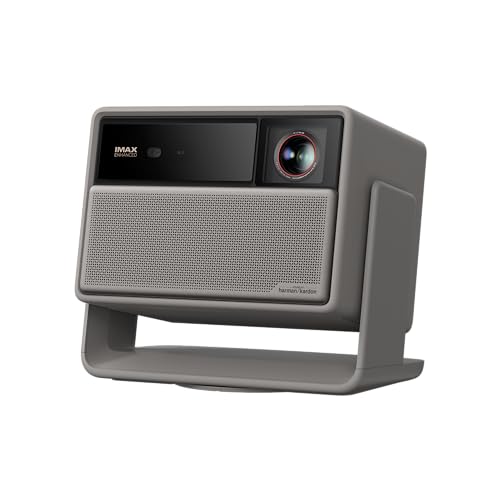

Shopping for a home theater projector can feel overwhelming, especially when you're comparing products from completely different price tiers. The XGIMI Horizon 20 Max and JVC DLA-NZ800 represent two fundamentally different approaches to home projection, each excelling in their respective domains.
Released in 2025, the XGIMI Horizon 20 Max embodies the latest trend toward bright, versatile projectors that work well in various lighting conditions. Meanwhile, the JVC DLA-NZ800, launched in 2024, continues JVC's tradition of creating reference-quality cinema projectors for dedicated home theaters. Understanding which approach suits your needs requires diving into what makes each projector tick.
The projector market has evolved into two distinct segments that rarely compete directly. Versatile home projectors prioritize brightness, convenience, and adaptability to different rooms and lighting conditions. These projectors use advanced laser technology and automated setup features to deliver impressive performance without requiring a dedicated theater room.
Dedicated cinema projectors, on the other hand, focus on achieving the absolute best image quality possible in controlled environments. They typically sacrifice some brightness to achieve deeper black levels and more accurate colors, much like how a high-end OLED TV performs best in a dark room.
The key factors that matter most when choosing between these approaches include your room's lighting conditions, how you plan to use the projector, your budget constraints, and whether you're willing to modify your space for optimal performance.
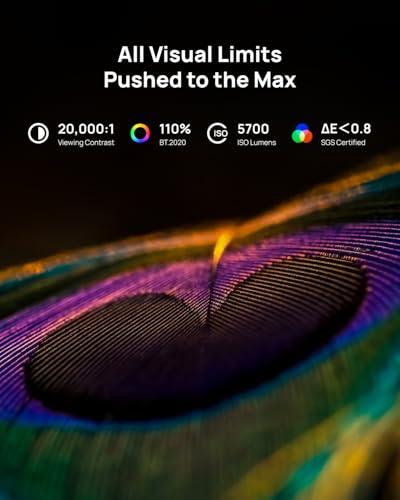
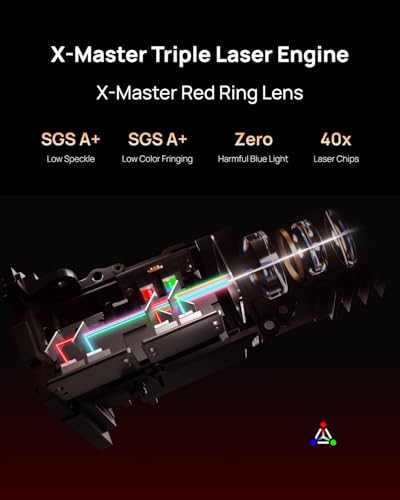
The XGIMI Horizon 20 Max represents what happens when engineers prioritize real-world usability over theoretical perfection. At its heart lies the X-Master RGB Triple Laser Engine, which combines red, green, and blue lasers to produce an impressive 5,700 ISO lumens of brightness. To put this in perspective, most home projectors struggle to deliver even half this brightness, making them unsuitable for rooms with any ambient light.
This laser system uses 40 individual laser chips working together, which not only provides exceptional brightness but also minimizes speckle—those tiny sparkles you sometimes see with cheaper laser projectors. The three-color laser approach also expands the color wavelength coverage, resulting in more accurate and vibrant colors than single-laser systems.
What makes the XGIMI Horizon 20 Max particularly interesting is its ISA 5.0 (Intelligent Screen Adaptation) system. This technology automatically handles focus, keystone correction (fixing the trapezoidal distortion when projecting at an angle), obstacle avoidance, and even wall color calibration. In practical terms, you can place this projector almost anywhere and it will automatically adjust to deliver the best possible image without manual tweaking.
The projector achieves its 4K resolution through pixel-shifting technology using a 0.47-inch DMD (Digital Micromirror Device) chip. While not "true" native 4K like more expensive projectors, this XPR (eXpanded Pixel Resolution) technology creates each 4K frame by rapidly shifting pixels to multiple positions, effectively doubling the apparent resolution. For most content, including streaming video and gaming, this approach delivers crisp, detailed images that satisfy even discerning viewers.
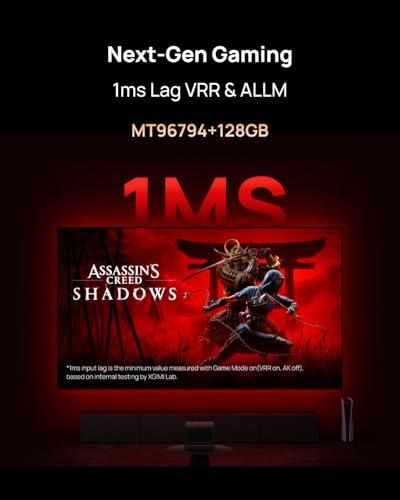
Gaming performance deserves special attention. The XGIMI Horizon 20 Max supports refresh rates up to 240Hz at 1080p resolution, with input lag as low as 1 millisecond—faster than many gaming monitors. This makes it exceptional for competitive gaming, where every millisecond of response time matters. The HDMI 2.1 connectivity ensures compatibility with the latest gaming consoles and their high-bandwidth video signals.
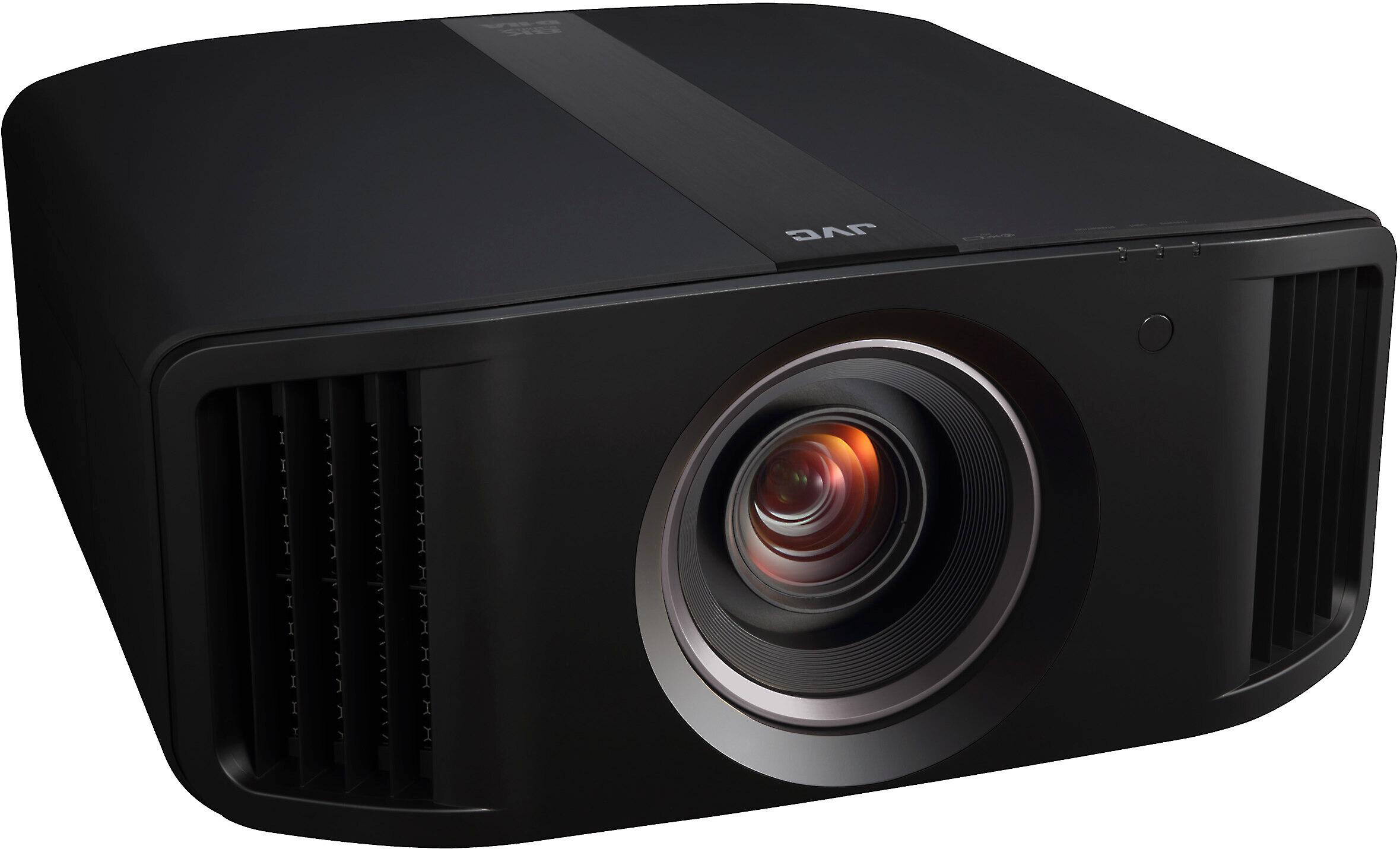
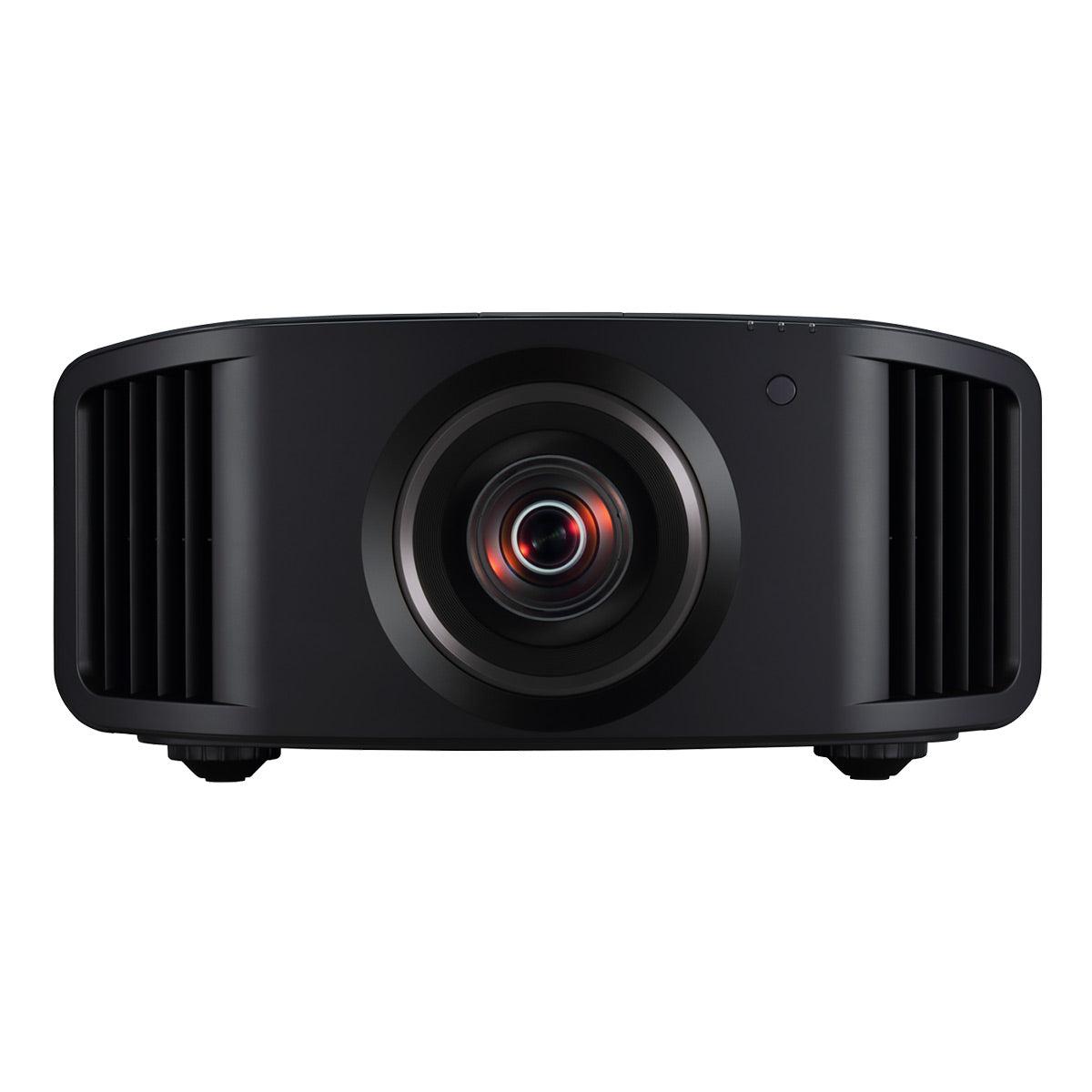
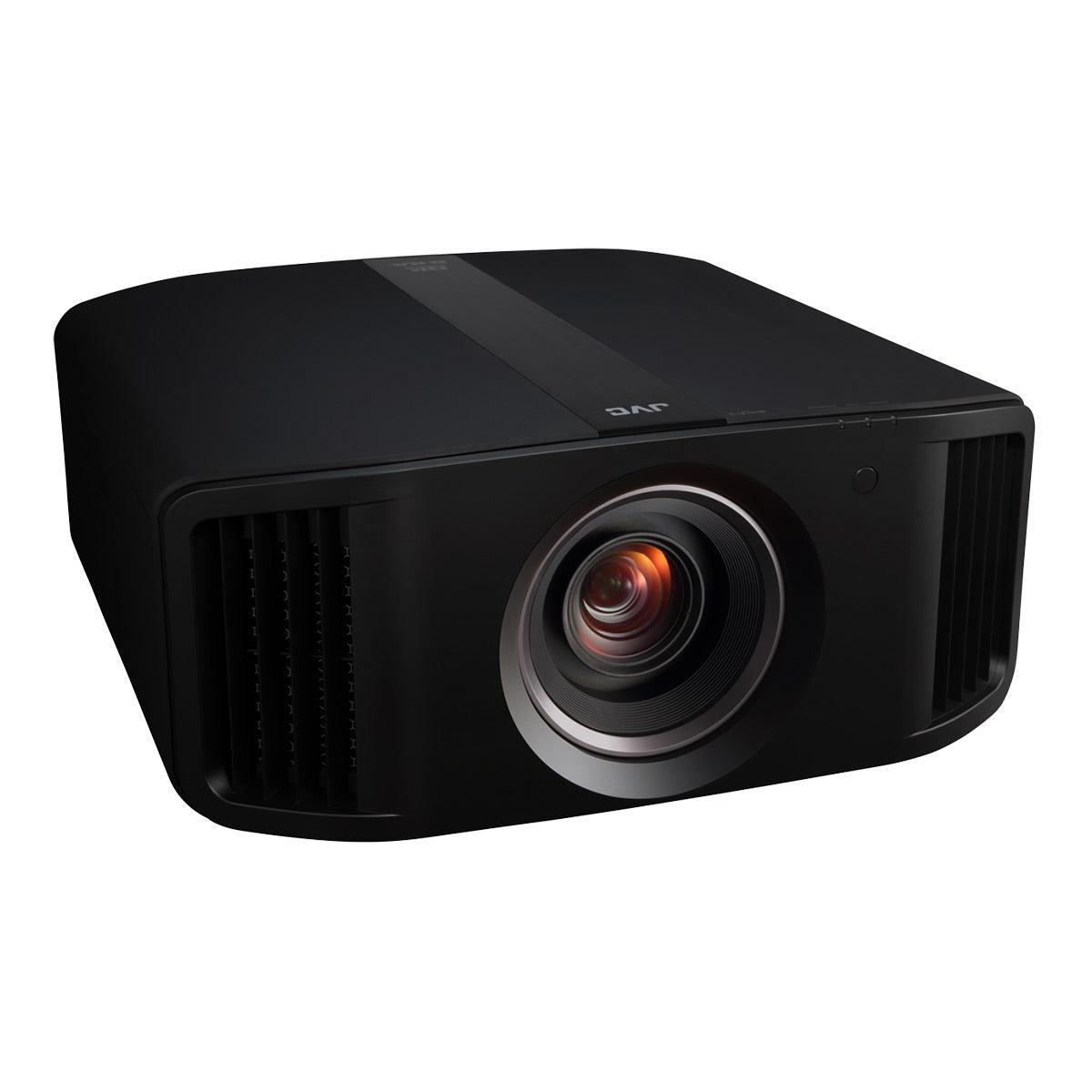
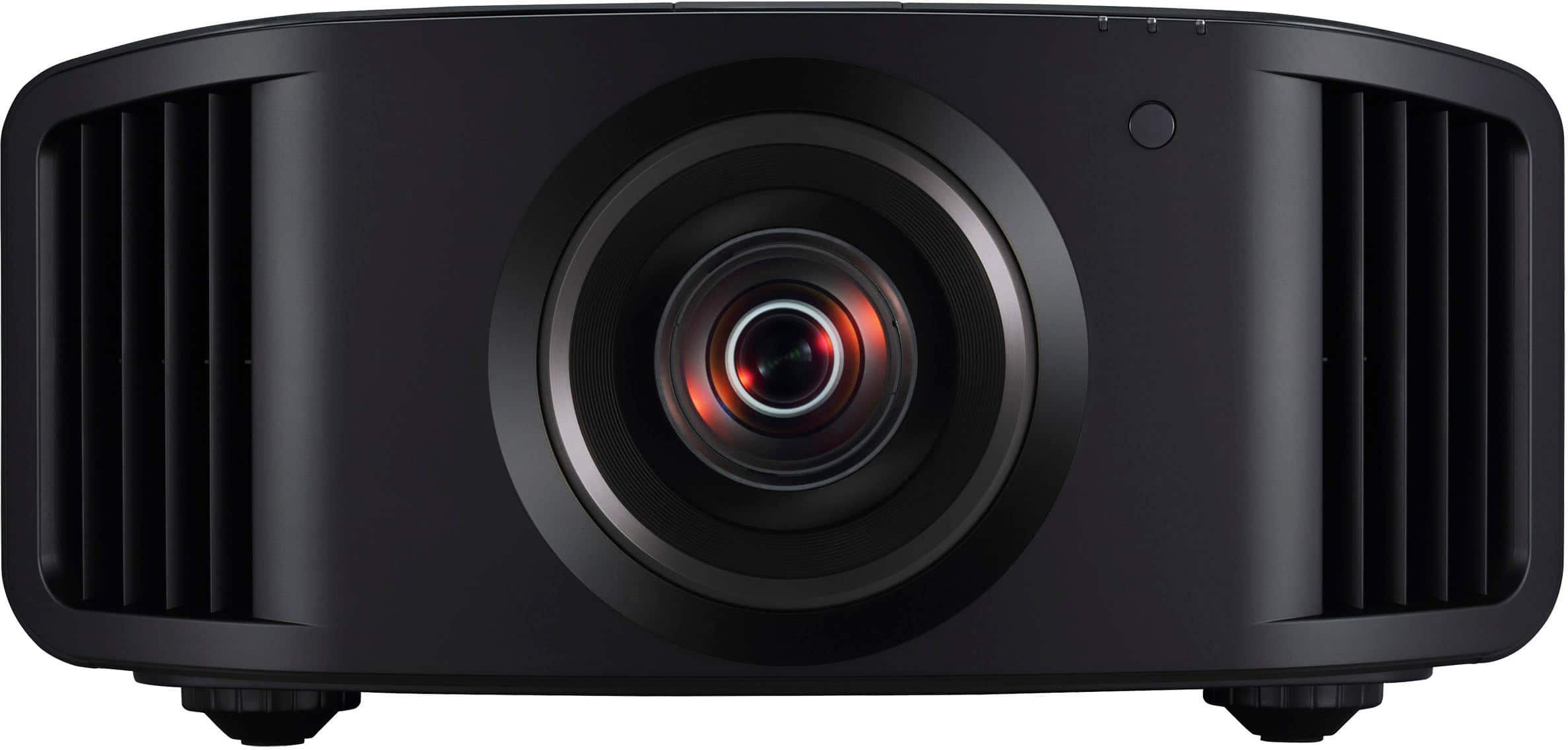
The JVC DLA-NZ800 takes a completely different philosophy, prioritizing image quality over convenience or brightness. At its core are three 0.69-inch D-ILA (Direct Drive Image Light Amplifier) panels—JVC's proprietary version of LCoS (Liquid Crystal on Silicon) technology. Unlike the single-chip approach of the XGIMI Horizon 20 Max, this three-panel system dedicates one panel each to red, green, and blue light, eliminating the color wheel timing issues common in single-chip projectors.
The standout feature is the native contrast ratio of 100,000:1—five times higher than the XGIMI Horizon 20 Max. This translates to incredibly deep black levels that make dark movie scenes look truly dark rather than grayish. The BLU-Escent laser light source contributes to this performance by providing precise control over light output, allowing the projector to display both bright highlights and deep shadows simultaneously.
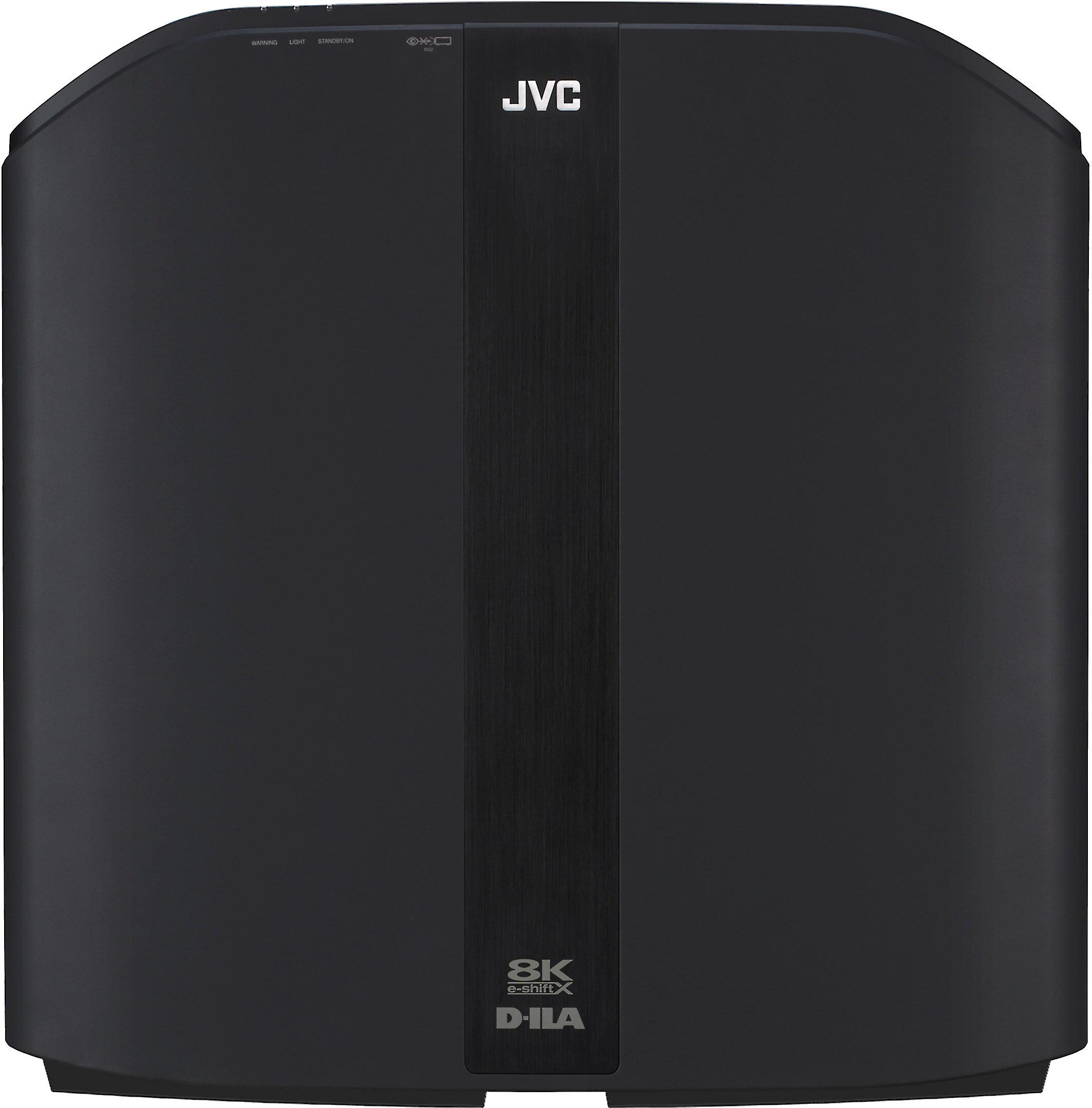
JVC's Gen2 8K/e-shiftX technology deserves explanation. While the projector has native 4K panels, it uses precise pixel shifting to create 8K resolution (8,192 x 4,320 pixels) by moving each pixel by exactly 0.5 pixels in four directions. This isn't marketing gimmickry—when fed 8K content or high-quality 4K material, the difference in detail is genuinely visible on large screens.
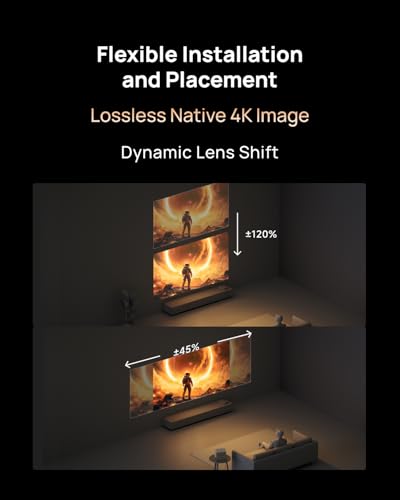
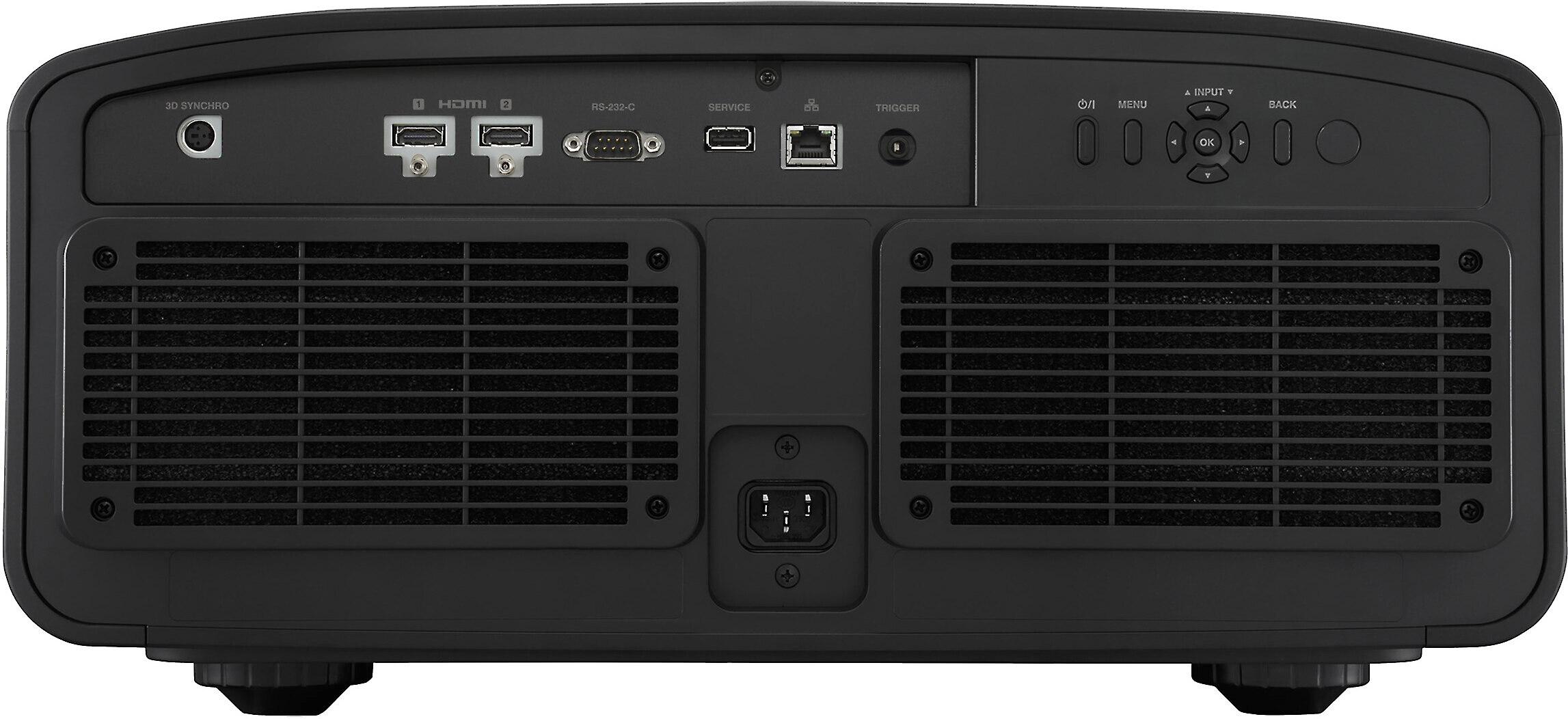
The JVC DLA-NZ800 includes a premium 65mm all-glass lens system with motorized zoom and focus. The lens shift capability (80% vertical, 34% horizontal) allows precise image positioning without digital correction, which can degrade image quality. This mechanical precision is what separates professional-grade projectors from consumer models.
Frame Adapt HDR represents JVC's approach to high dynamic range content. Rather than applying static tone mapping, this system analyzes each frame's brightness characteristics and adjusts the dynamic range in real-time. Combined with the Theater Optimizer function, which considers your room's specific characteristics, this delivers HDR performance that adapts to both the content and your viewing environment.
The brightness difference between these projectors fundamentally determines where each works best. The XGIMI Horizon 20 Max's 5,700 lumens enables comfortable viewing in rooms with windows, overhead lighting, or other ambient light sources. Based on our research of professional reviews, this projector maintains good image quality even with significant room lighting—something that would completely wash out the JVC DLA-NZ800.
The JVC DLA-NZ800's 2,700 lumens, while substantial, requires a controlled environment to shine. In a properly darkened room, this brightness level provides excellent performance without overwhelming the eye. However, even moderate ambient light significantly degrades the viewing experience by raising the black level and reducing apparent contrast.
This is where the JVC DLA-NZ800 demonstrates its premium positioning. The 100,000:1 native contrast ratio creates images with depth and dimensionality that simply aren't possible with lower contrast projectors. Dark movie scenes maintain shadow detail while preserving true blacks, creating an almost three-dimensional viewing experience.
The XGIMI Horizon 20 Max's 20,000:1 contrast ratio, while respectable for its category, can't match this performance. However, the exceptionally bright laser partially compensates by providing more dynamic range in bright scenes. For most content viewed in typical home environments, the contrast performance proves more than adequate.
Gaming reveals interesting differences between these approaches. The XGIMI Horizon 20 Max clearly targets gamers with support for 240Hz refresh rates at 1080p and minimal input lag across all supported resolutions. The Variable Refresh Rate (VRR) support eliminates screen tearing, while features like Black Equalizer enhance visibility in dark game areas.
The JVC DLA-NZ800 supports 4K gaming at 120Hz through its 48Gbps HDMI inputs—higher resolution than the XGIMI Horizon 20 Max but at lower refresh rates. For single-player, cinematic games, the superior contrast and color accuracy provide a more immersive experience. However, competitive gamers will prefer the XGIMI Horizon 20 Max's responsiveness and high refresh rate support.
Both projectors excel at color reproduction but through different approaches. The XGIMI Horizon 20 Max achieves exceptional color accuracy (ΔE
The JVC DLA-NZ800 focuses on reference accuracy, supporting DCI-P3 and Rec.709 color standards with professional calibration capabilities. The Frame Adapt HDR system provides more sophisticated tone mapping than most projectors, analyzing content frame-by-frame to optimize the dynamic range presentation.
The XGIMI Horizon 20 Max wins decisively for ease of setup. The ISA 5.0 system handles focus, keystone correction, and screen alignment automatically. You can literally place it on a coffee table, point it at a wall, and start watching within minutes. The built-in adjustable stand eliminates the need for ceiling mounting in many situations.
Professional installation becomes practically mandatory with the JVC DLA-NZ800. While the motorized lens controls provide precise adjustment capabilities, optimizing performance requires understanding throw distance calculations, proper mounting heights, and often room acoustic treatments. The investment in professional calibration typically adds significant cost beyond the projector's purchase price.
At the time of writing, these projectors occupy vastly different price segments, with the JVC DLA-NZ800 costing several times more than the XGIMI Horizon 20 Max. This price difference reflects their intended markets rather than simple quality differences.
The XGIMI Horizon 20 Max provides exceptional value for users wanting premium projection performance without dedicated theater room requirements. When you factor in the built-in smart features, automated setup, and impressive gaming capabilities, the value proposition becomes compelling for mainstream users.
The JVC DLA-NZ800 justifies its premium pricing through reference-quality performance and future-proofing features like 8K compatibility. However, this value only materializes in properly optimized viewing environments with high-quality source material.
Based on extensive research of professional reviews and user feedback, clear usage patterns emerge for each projector.
The XGIMI Horizon 20 Max excels for families, gamers, and anyone wanting flexible placement options. Its brightness enables comfortable viewing during evening hours with normal room lighting, making it ideal for living rooms and multi-purpose spaces. The automated setup features mean different family members can use it without technical expertise.
The JVC DLA-NZ800 serves serious home theater enthusiasts with dedicated viewing rooms. If you're building a home theater with controlled lighting, acoustic treatments, and a large screen (120+ inches), this projector's superior contrast and color accuracy justify the investment. Movie nights become genuinely cinematic experiences that rival commercial theaters.
For gaming specifically, the XGIMI Horizon 20 Max provides the better experience for most users. The high refresh rate support, low input lag, and ability to perform well in brighter rooms make it ideal for both competitive and casual gaming sessions.
Choose the XGIMI Horizon 20 Max if you want excellent image quality without the complexity and room requirements of a dedicated theater setup. Its brightness and automated features make it genuinely versatile, working well for everything from Netflix binge sessions to competitive gaming marathons.
Choose the JVC DLA-NZ800 if you're committed to creating the best possible home theater experience and have both the budget and room to support it properly. The superior contrast, native 4K resolution, and reference-quality calibration capabilities deliver images that represent the current state of the art in home projection.
Neither projector represents a compromise—they're both exceptional at what they're designed to do. The XGIMI Horizon 20 Max democratizes high-quality projection for everyday use, while the JVC DLA-NZ800 pushes the boundaries of what's possible in a dedicated home theater. Your choice should align with how and where you plan to use your projector, keeping in mind that both represent significant technological achievements in their respective categories.
| XGIMI Horizon 20 Max 4K Projector | JVC DLA-NZ800 8K Home Theater Projector |
|---|---|
| Brightness - Most critical spec for room versatility and daytime viewing | |
| 5,700 ISO lumens (exceptional for any lighting conditions) | 2,700 lumens (requires dark room for optimal performance) |
| Native Resolution - Determines baseline image sharpness and detail | |
| 4K via pixel-shifting (0.47" DMD with XPR technology) | True native 4K (three 0.69" D-ILA panels) |
| Maximum Resolution - Future-proofing and ultimate detail capability | |
| 4K@60Hz maximum | 8K scaling via Gen2 8K/e-shiftX technology |
| Contrast Ratio - Critical for black levels and image depth | |
| 20,000:1 native (good for bright projector category) | 100,000:1 native (industry-leading for deep blacks) |
| Gaming Performance - Input lag and refresh rate support | |
| 1ms at 1080p@240Hz, supports VRR and HDMI 2.1 | 4K@120Hz support, cinema-optimized (input lag not specified) |
| Light Source Technology - Affects color accuracy and longevity | |
| X-Master RGB Triple Laser Engine (40 laser chips) | BLU-Escent Laser with phosphor wheel |
| Lens System - Installation flexibility and image quality | |
| Digital correction with ISA 5.0 auto-setup | Premium 65mm all-glass with motorized zoom/shift |
| Smart Features - Built-in convenience and connectivity | |
| Android TV 11, Google Home, built-in Harman Kardon speakers | Cinema-focused (requires external streaming devices) |
| Setup Complexity - Time and expertise required for optimal performance | |
| Plug-and-play with automatic calibration | Professional installation and calibration recommended |
| Ideal Room Environment - Where each projector performs best | |
| Any room (living room, bedroom, multi-purpose spaces) | Dedicated dark home theater room required |
| Target User - Who gets the most value from each approach | |
| Gamers, families, casual viewers wanting flexibility | Serious cinephiles with unlimited budgets and dedicated spaces |
| Value Proposition - Cost-effectiveness for intended use case | |
| Exceptional brightness and features for mainstream pricing | Reference-quality performance justifies premium investment |
The XGIMI Horizon 20 Max is significantly brighter at 5,700 ISO lumens compared to the JVC DLA-NZ800 at 2,700 lumens. This makes the XGIMI Horizon 20 Max much better for rooms with ambient light or daytime viewing, while the JVC DLA-NZ800 requires a dark room for optimal performance.
The JVC DLA-NZ800 delivers superior image quality with true native 4K resolution, 100,000:1 contrast ratio, and exceptional black levels using D-ILA technology. The XGIMI Horizon 20 Max uses pixel-shifting for 4K and has a 20,000:1 contrast ratio, which is excellent for its category but can't match the cinema-quality performance of the JVC DLA-NZ800.
The XGIMI Horizon 20 Max is the clear winner for gaming with 1ms input lag at 1080p@240Hz, Variable Refresh Rate support, and gaming-specific features. The JVC DLA-NZ800 supports 4K@120Hz but is optimized for movies rather than competitive gaming.
Only the XGIMI Horizon 20 Max works well in bright rooms thanks to its exceptional 5,700-lumen brightness. The JVC DLA-NZ800 requires controlled lighting and a dark room to achieve its best performance, as ambient light will wash out the image.
The XGIMI Horizon 20 Max features automatic setup with ISA 5.0 technology that handles focus, keystone correction, and screen alignment automatically. The JVC DLA-NZ800 requires professional installation and calibration to achieve optimal performance, making the XGIMI Horizon 20 Max much more user-friendly.
The JVC DLA-NZ800 has a 100,000:1 native contrast ratio compared to the XGIMI Horizon 20 Max's 20,000:1 ratio. Higher contrast means deeper blacks and more detailed shadows, making the JVC DLA-NZ800 superior for movie viewing in dark rooms where contrast differences are most visible.
The JVC DLA-NZ800 supports 8K scaling through its Gen2 8K/e-shiftX technology and true native 4K resolution. The XGIMI Horizon 20 Max achieves 4K through pixel-shifting technology and maxes out at 4K@60Hz, making the JVC DLA-NZ800 more future-proof for high-resolution content.
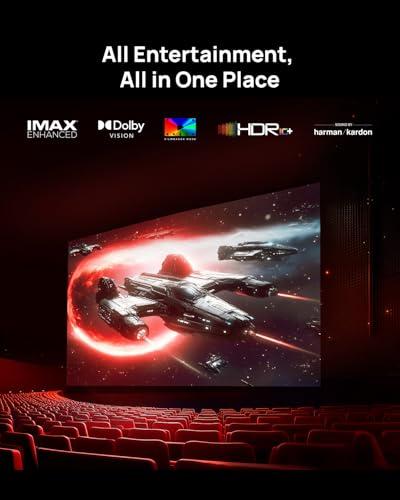
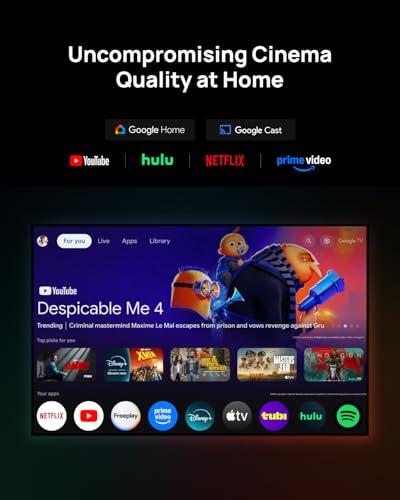
The XGIMI Horizon 20 Max includes Android TV 11, Google Home integration, and built-in Harman Kardon speakers for an all-in-one experience. The JVC DLA-NZ800 focuses purely on image quality and requires external streaming devices and audio systems.
For dedicated home theaters with dark rooms and large screens, the JVC DLA-NZ800 provides reference-quality performance with superior contrast and color accuracy. For multi-purpose rooms or casual home theater setups, the XGIMI Horizon 20 Max offers better versatility and easier setup.
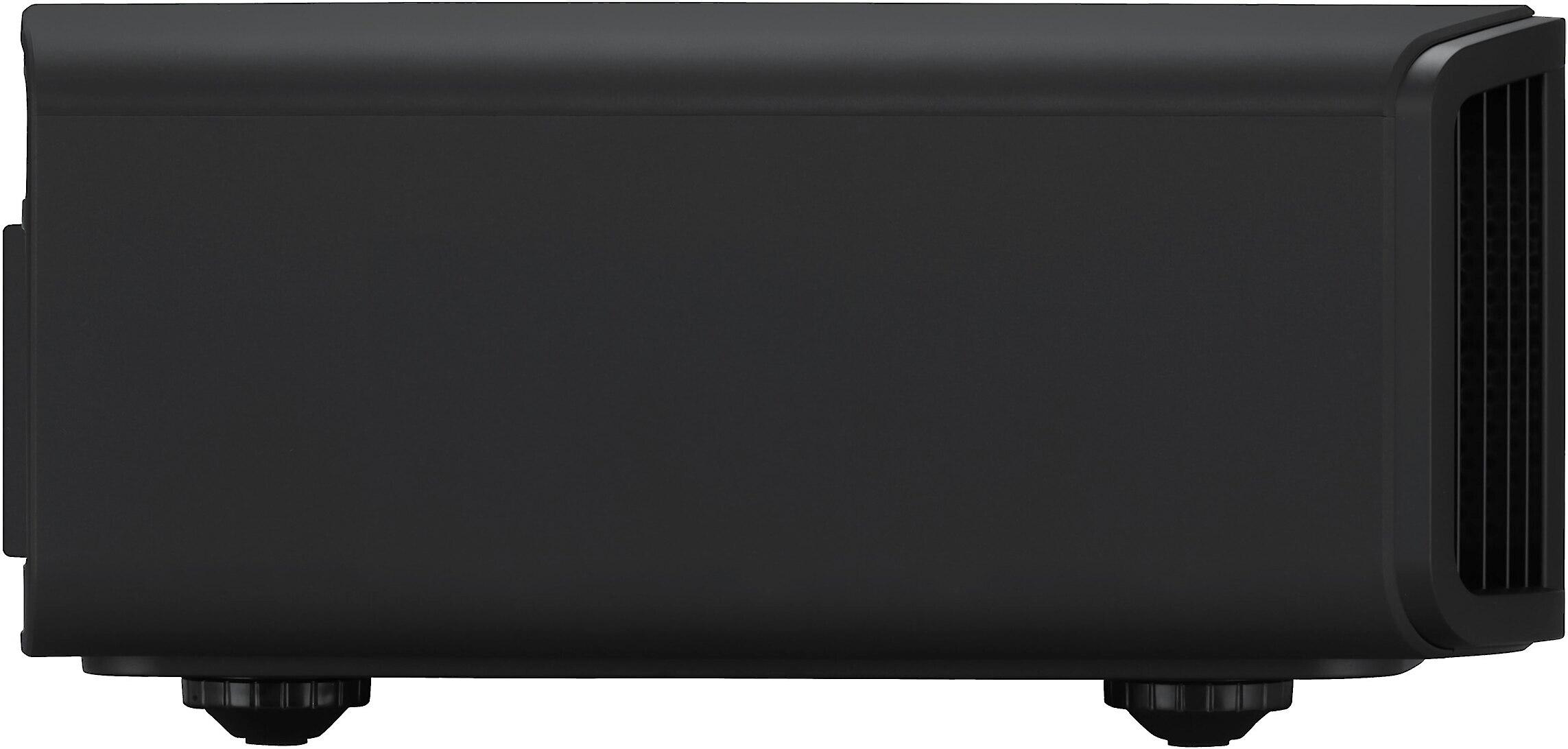
The XGIMI Horizon 20 Max is more compact and portable at approximately 11.9 pounds, designed for flexible placement. The JVC DLA-NZ800 is much larger and heavier at 50.9 pounds, requiring permanent installation and professional mounting.
The XGIMI Horizon 20 Max provides exceptional value with premium features, high brightness, and smart capabilities at a mainstream price point. The JVC DLA-NZ800 justifies its premium pricing only for serious home theater enthusiasts who prioritize ultimate image quality over cost considerations.
Both the XGIMI Horizon 20 Max and JVC DLA-NZ800 support 3D content playback. The JVC DLA-NZ800 offers Active Full HD 3D with professional-grade performance, while the XGIMI Horizon 20 Max provides good 3D capability with its bright laser making 3D glasses less of a concern for image brightness.
We've done our best to create useful and informative comparisons to help you decide what product to buy. Our research uses advanced automated methods to create this comparison and perfection is not possible - please contact us for corrections or questions. These are the sites we've researched in the creation of this article: dustinabbott.net - projectorcentral.com - youtube.com - us.xgimi.com - youtube.com - tweaktown.com - youtube.com - us.xgimi.com - youtube.com - youtube.com - thesmarthomehookup.com - youtube.com - us.xgimi.com - global.xgimi.com - projector-database.com - techradar.com - valueelectronics.com - stereonet.com - youtube.com - sound-advice.online - eu.jvc.com - shop.avispl.com - audioadvice.com - paulsonsav.com - nfm.com

Privacy Policy
Terms and Conditions - Affiliate Policy
Home Security
© Copyright 2008-2026.
11816 Inwood Rd #1211, Dallas, TX 75244