


Premium 4K projectors have completely transformed how we think about home entertainment. Gone are the days when you needed a dedicated theater room and professional installation to get cinema-quality images. Today's flagship projectors deliver movie theater experiences in living rooms, basements, and even outdoor spaces—but choosing between top models requires understanding some complex technology.
The premium projector category sits between $2,000-$4,000 and represents the sweet spot for serious home theater enthusiasts. These aren't your basic portable projectors or ultra-expensive professional cinema equipment. Instead, they're sophisticated machines that balance cutting-edge performance with user-friendly features, targeting people who want the absolute best image quality without hiring an installer.
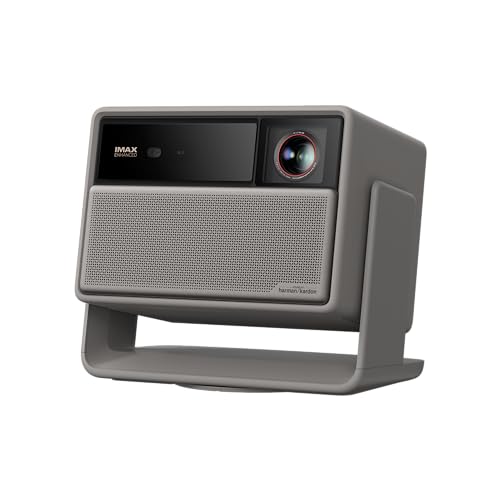
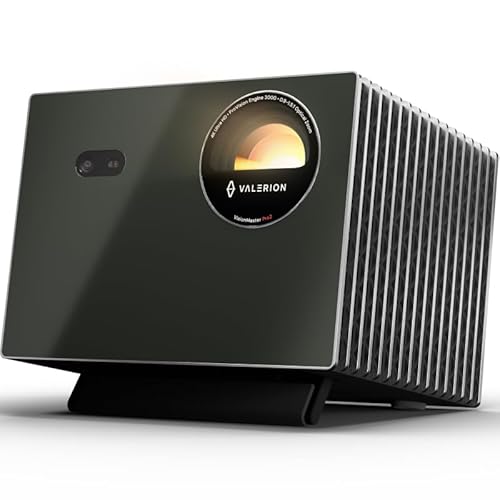
Two projectors currently dominate this space: the XGIMI Horizon 20 Max and the Valerion VisionMaster Pro 2. Both launched in recent years as flagship models from their respective manufacturers, but they take notably different approaches to achieving premium performance. Understanding these differences is crucial for making the right choice for your specific needs and space.
Both the XGIMI Horizon 20 Max and Valerion VisionMaster Pro 2 use sophisticated laser light sources instead of traditional lamps. This matters because laser projectors deliver consistent brightness over their entire lifespan (typically 20,000+ hours), produce better colors, and never need expensive bulb replacements. However, the way each projector implements laser technology reveals their different philosophies.
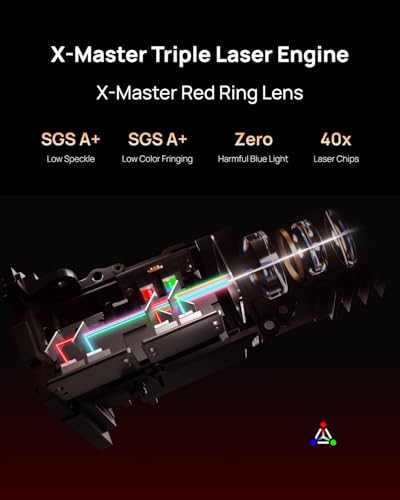
The XGIMI Horizon 20 Max uses what the company calls an "X-Master RGB Triple Laser Engine." This system employs 40 individual laser chips working together to produce exceptionally bright, vibrant images. RGB means it uses separate red, green, and blue lasers—the fundamental colors that combine to create every other color you see on screen. This approach typically produces more accurate colors than single-laser systems that rely on color wheels.
The Valerion VisionMaster Pro 2 also uses triple-laser technology but implements it differently, focusing more on color precision and calibration flexibility. Both projectors achieve 4K resolution through pixel-shifting technology, where a special chip moves each pixel slightly to create the impression of higher resolution than the underlying display technology natively supports.
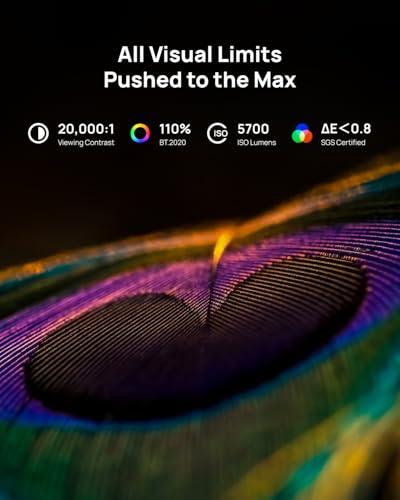
Here's where these projectors diverge dramatically. The XGIMI Horizon 20 Max produces an extraordinary 5,700 ISO lumens, while the Valerion VisionMaster Pro 2 outputs 3,000 ISO lumens. To understand why this matters, you need to know that ISO lumens represent the international standard for measuring projector brightness—it's more accurate than cheaper measurement methods some manufacturers use.
This brightness difference isn't just numbers on a spec sheet. It fundamentally changes how and where you can use your projector. The XGIMI's massive light output means you can watch movies during the day with curtains open, something impossible with most projectors. Standard projectors become nearly unwatchable with any ambient light, relegating them to dark basement theaters or nighttime-only viewing.
From our research into user experiences and professional reviews, the brightness advantage of the XGIMI Horizon 20 Max consistently emerges as its most praised feature. Users report being able to enjoy Netflix during afternoon family time, watch sports with the lights on, and use their projector as their primary TV replacement rather than a special-occasion device.
The Valerion VisionMaster Pro 2, while still bright enough for most home theater applications, requires more careful lighting control. Its 3,000 lumens work beautifully in properly darkened rooms but struggle against significant ambient light. This limitation doesn't make it inferior—it just serves a different use case focused on traditional home theater environments.
Both projectors target gaming enthusiasts, but their performance characteristics reveal important differences. Input lag—the delay between when you press a button and see the action on screen—is crucial for competitive gaming. Even small differences can mean the gap between landing that perfect headshot or missing entirely.
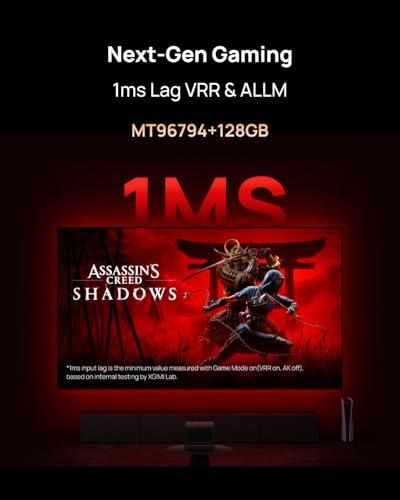
The XGIMI Horizon 20 Max delivers exceptionally low input lag: just 1 millisecond at 1080p resolution running at 240Hz refresh rate, 2.2ms at 1080p/120Hz, and 3ms at 4K/60Hz. These numbers put it among the fastest projectors ever made, approaching the performance of dedicated gaming monitors. The projector also supports Variable Refresh Rate (VRR) and Auto Low Latency Mode (ALLM)—technologies that eliminate screen tearing and automatically switch to gaming mode when you fire up your PlayStation or Xbox.
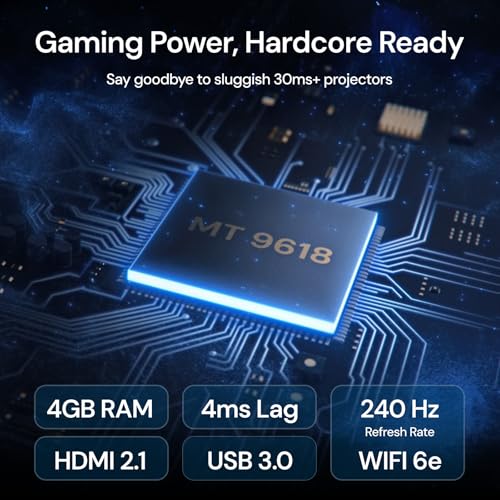
The Valerion VisionMaster Pro 2 offers respectable gaming performance with 4ms lag at 1080p/240Hz and 15ms at 4K/60Hz. While still good enough for most gaming scenarios, the difference is noticeable for competitive players. Fighting game enthusiasts, first-person shooter players, and anyone who games at a high level will prefer the XGIMI's razor-sharp responsiveness.
Both projectors include gaming-specific features like crosshair overlays for shooters and modes that enhance dark details to spot hiding enemies. However, the XGIMI Horizon 20 Max goes further with its "Black Equalizer" technology that brightens dark areas without washing out bright ones—a feature borrowed from high-end gaming monitors.
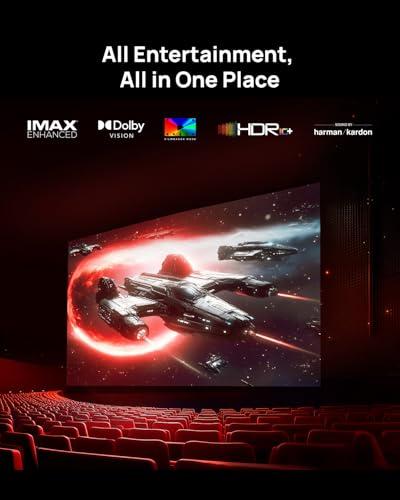
Color reproduction separates good projectors from great ones. Both models support modern HDR (High Dynamic Range) formats including HDR10, HDR10+, and Dolby Vision—technologies that deliver brighter highlights, deeper shadows, and more vibrant colors than standard video.
The XGIMI Horizon 20 Max achieves remarkable color accuracy with a Delta E measurement below 0.8. Delta E represents the difference between displayed colors and perfect reference colors—lower numbers mean more accurate reproduction. A Delta E under 1.0 is considered professional-grade accuracy, making the XGIMI suitable for content creators who need precise colors.
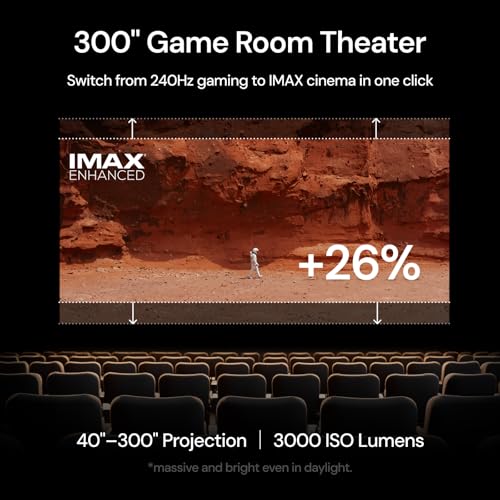
The projector also supports IMAX Enhanced certification, which displays up to 26% more image area for specially formatted content, plus Filmmaker Mode that automatically adjusts settings to match directors' original intentions. These features matter for cinephiles who want to experience movies exactly as filmmakers intended.
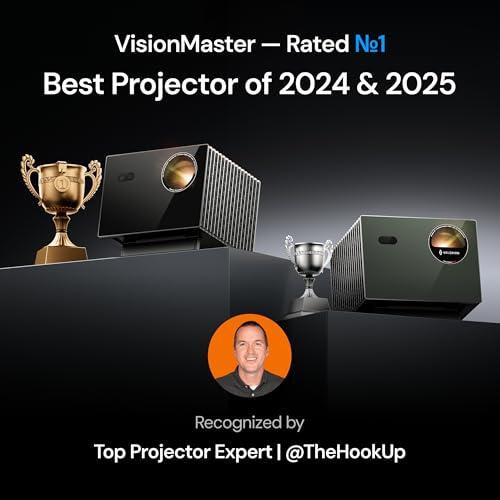
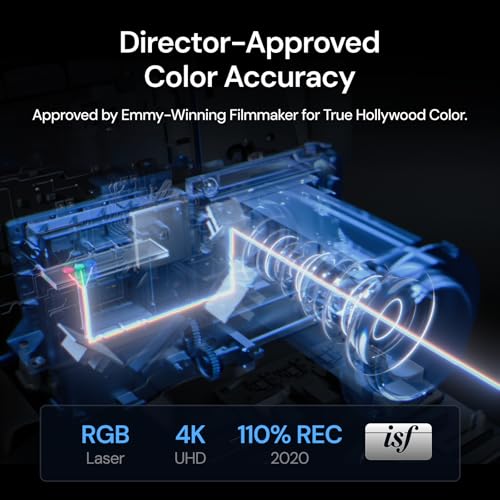
The Valerion VisionMaster Pro 2 covers 107-110% of the Rec.2020 color space and carries ISF (Imaging Science Foundation) certification for professional calibration. However, user reviews consistently mention that it requires calibration to achieve its best color performance, whereas the XGIMI delivers excellent colors straight from the box.
Setting up a projector can be frustrating without the right features. Both models offer automated setup capabilities, but with different strengths.
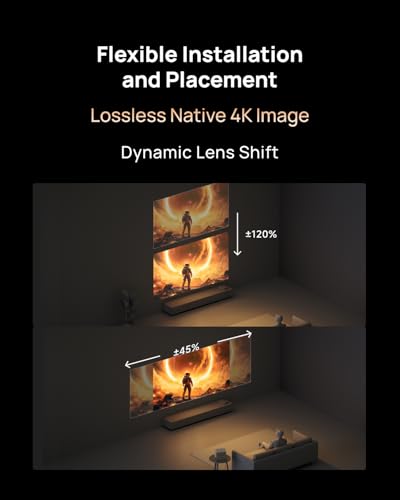
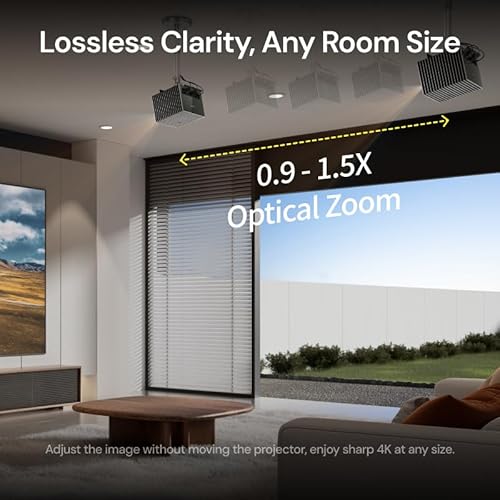
The XGIMI Horizon 20 Max includes its ISA 5.0 (Intelligent Screen Alignment) system that automatically handles focus, keystone correction (fixing image distortion when projecting at angles), and obstacle avoidance. More importantly, it features both horizontal and vertical lens shift—the ability to move the image position without physically moving the projector or introducing distortion.
Lens shift is a premium feature usually found only on expensive professional projectors. It means you can mount the XGIMI off-center or at different heights and still get a perfectly rectangular image. This flexibility is invaluable in real-world rooms where ideal placement isn't always possible.
The Valerion VisionMaster Pro 2 offers a different advantage: a shorter minimum throw ratio of 0.9:1 compared to the XGIMI's 1.2:1. Throw ratio determines how far back you need to place the projector for a given screen size. The Valerion's shorter throw means it can create large images in smaller spaces—useful for apartment dwellers or rooms with limited depth.
However, the Valerion lacks lens shift, requiring precise placement and relying on keystone correction for positioning flexibility. Keystone correction works by digitally manipulating the image, which can reduce sharpness and create slight artifacts.
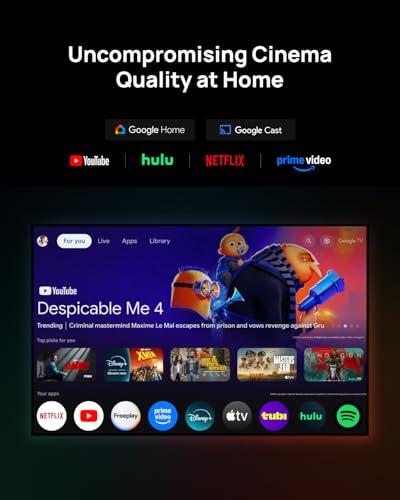
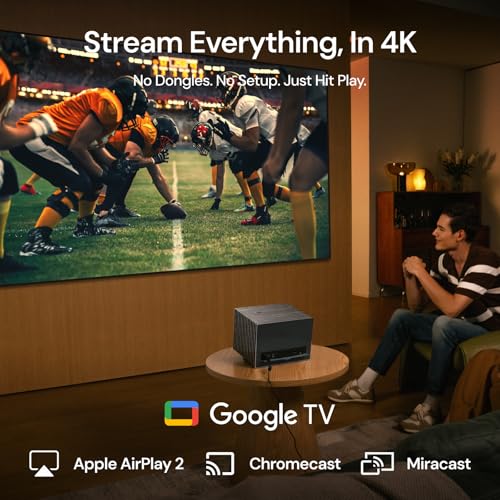
Both projectors run Google TV, providing access to Netflix, YouTube, Disney+, and other streaming services without needing external devices. They include 4GB of RAM and 128GB of storage—generous amounts that ensure smooth app performance and plenty of space for downloaded content.
Connectivity is comprehensive on both models, with multiple HDMI ports including HDMI 2.1 support for the latest gaming consoles, plus Wi-Fi 6 and Bluetooth for wireless connections. The XGIMI Horizon 20 Max includes eARC support for sending high-quality audio back to soundbars or receivers.
The main difference lies in processing power and user interface responsiveness. The XGIMI uses a newer MT9679 processor that delivers noticeably snappier performance when navigating menus or switching between apps. This might seem minor, but daily use makes processing speed important for user satisfaction.
Both projectors include built-in speakers, which is convenient for casual viewing but rarely sufficient for serious home theater use. The XGIMI Horizon 20 Max features dual 12-watt Harman Kardon-tuned speakers that produce surprisingly robust sound for their size. The Valerion VisionMaster Pro 2 offers similar power output with DTS:X and Dolby Audio support.
However, our research suggests that most users eventually upgrade to external audio solutions. The physics of projector design limits speaker size and placement, making it difficult to achieve truly immersive audio. Both projectors offer optical audio outputs and eARC support for connecting to proper sound systems.
At the time of writing, pricing reveals an important consideration in this comparison. The XGIMI Horizon 20 Max typically retails for several hundred dollars less than the Valerion VisionMaster Pro 2, despite offering superior performance in most measurable categories.
This pricing dynamic makes the XGIMI an exceptional value proposition. You're getting significantly higher brightness, better gaming performance, superior color accuracy out of the box, and more installation flexibility for less money. The only scenarios where the Valerion makes sense are specific use cases where its shorter throw ratio solves space constraints that lens shift cannot address.
From our analysis of professional reviews and user feedback, the consensus strongly favors the XGIMI Horizon 20 Max for most buyers. Its combination of flagship performance and competitive pricing represents the kind of value that defines product categories.
The XGIMI Horizon 20 Max suits the vast majority of premium projector buyers. Choose it if you want maximum versatility for different lighting conditions, plan to do any serious gaming, prefer hassle-free setup with lens shift capability, or simply want the best performance per dollar. Its 5,700-lumen brightness opens up usage scenarios impossible with dimmer projectors, effectively making it a true TV replacement rather than just a special-occasion device.
The Valerion VisionMaster Pro 2 serves a narrower audience with specific needs. Consider it if you have severe space constraints requiring very short throw distances, prioritize whisper-quiet operation above all else, or enjoy the calibration process to achieve perfect colors. It's also worth considering if you have a dedicated, light-controlled theater room where maximum brightness isn't necessary.
After extensively researching both projectors through professional reviews, user experiences, and technical analysis, the XGIMI Horizon 20 Max emerges as the clear winner for most buyers. Its brightness advantage alone transforms the projector experience, while superior gaming performance, better value, and more flexible installation capabilities create a compelling overall package.
The Valerion VisionMaster Pro 2 isn't a bad projector—it's simply positioned awkwardly against a stronger competitor. Unless you have specific spatial constraints that only its short-throw capability can solve, the XGIMI provides a more complete and satisfying premium projector experience.
For anyone considering the jump to premium projection, either of these models will deliver a dramatic upgrade over budget projectors or traditional televisions. However, the XGIMI Horizon 20 Max does so while providing better long-term value and broader usage flexibility. In a rapidly evolving category, buying the projector with the highest performance ceiling ensures your investment remains relevant as content and gaming standards continue advancing.
| XGIMI Horizon 20 Max 4K Projector | Valerion VisionMaster Pro 2 Projector |
|---|---|
| Brightness - The most critical factor for daytime viewing and bright rooms | |
| 5,700 ISO lumens (exceptional for any lighting condition) | 3,000 ISO lumens (good for controlled lighting only) |
| Gaming Input Lag - Essential for competitive gaming and console performance | |
| 1ms at 1080p/240Hz, 3ms at 4K/60Hz (best-in-class) | 4ms at 1080p/240Hz, 15ms at 4K/60Hz (good but slower) |
| Color Accuracy - Determines how realistic and vibrant images appear | |
| ΔE<0.8 with 110% BT.2020 coverage (professional-grade out of box) | 107-110% Rec.2020, ISF certified (requires calibration) |
| Contrast Ratio - Creates depth and detail in dark and bright scenes | |
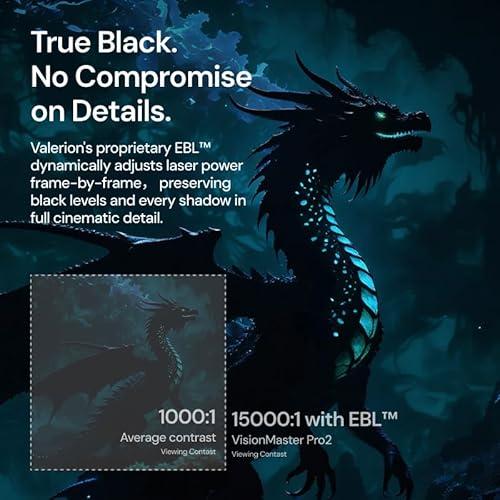
| 20,000:1 native, 1,000,000:1 dynamic | 4,000:1 native, 15,000:1 dynamic |
| Installation Flexibility - How easy it is to position and set up properly | |
| Lens shift (horizontal ±45%, vertical up to 120%), 1.2-1.5:1 throw | No lens shift, 0.9-1.5:1 throw ratio (better for tight spaces) |
| Smart Setup Features - Automated calibration saves time and improves results | |
| ISA 5.0 with autofocus, auto-keystone, obstacle avoidance | Autofocus, auto-keystone, geometric correction |
| HDR Format Support - Modern video standards for premium streaming content | |
| Dolby Vision, HDR10+, IMAX Enhanced, Filmmaker Mode | Dolby Vision, HDR10+, HDR10, HLG |
| Audio System - Built-in sound quality affects whether you need external speakers | |
| Dual 12W Harman Kardon speakers (24W total) | Dual 12W speakers with DTS:X (24W total) |
| Processing Power - Affects smart TV performance and app responsiveness | |
| MT9679 SoC, 4GB RAM, 128GB storage | AI-SoC MT9618, 4GB RAM, 128GB storage |
| Gaming Features - Specialized modes and enhancements for different game types | |
| VRR, ALLM, Black Equalizer, virtual crosshairs, genre modes | ALLM, crosshair assist, dark detail enhancement |
| Maximum Screen Size - How large an image you can project | |
| 40-300 inches | 40-300 inches |
| Warranty Coverage - Protection for your investment | |
| 2 years | 1 year |
The XGIMI Horizon 20 Max is significantly brighter with 5,700 ISO lumens compared to the Valerion VisionMaster Pro 2 at 3,000 ISO lumens. This makes the XGIMI much better for rooms with ambient light or daytime viewing, while the Valerion requires darker, more controlled lighting conditions.
The XGIMI Horizon 20 Max offers superior gaming performance with just 1ms input lag at 1080p/240Hz and 3ms at 4K/60Hz, compared to the Valerion VisionMaster Pro 2 which has 4ms and 15ms respectively. The XGIMI also includes more gaming features like Black Equalizer and virtual crosshairs.
Both projectors offer excellent color reproduction, but the XGIMI Horizon 20 Max delivers professional-grade color accuracy (ΔE<0.8) right out of the box. The Valerion VisionMaster Pro 2 is ISF certified and can achieve similar accuracy, but typically requires calibration to reach its full potential.
The XGIMI Horizon 20 Max is easier to install thanks to its lens shift capability, allowing you to adjust the image position without moving the projector. The Valerion VisionMaster Pro 2 lacks lens shift but offers a shorter throw ratio (0.9:1) which can be better for very tight spaces.
Both projectors excel in home theater setups, but serve different needs. The XGIMI Horizon 20 Max works in both dedicated dark theaters and multipurpose living rooms due to its extreme brightness. The Valerion VisionMaster Pro 2 is better suited for dedicated, light-controlled home theater rooms.
The XGIMI Horizon 20 Max offers superior contrast with a 20,000:1 native ratio compared to the Valerion VisionMaster Pro 2 at 4,000:1. This means the XGIMI produces deeper blacks and better detail in dark scenes, which is especially important for movie viewing.
Both the XGIMI Horizon 20 Max and Valerion VisionMaster Pro 2 run Google TV with access to Netflix, YouTube, and other streaming apps. They both include 4GB RAM and 128GB storage, though the XGIMI uses a newer processor for slightly faster performance.
The XGIMI Horizon 20 Max typically offers better value, providing superior brightness, gaming performance, and contrast at a competitive price point. The Valerion VisionMaster Pro 2 costs more while delivering lower performance in most key areas.
Both projectors feature dual 12W speakers for 24W total output. The XGIMI Horizon 20 Max uses Harman Kardon tuning, while the Valerion VisionMaster Pro 2 supports DTS:X and Dolby Audio. Both are adequate for casual viewing but most users will want external speakers for serious home theater use.
The XGIMI Horizon 20 Max supports more premium HDR formats including Dolby Vision, HDR10+, and IMAX Enhanced certification. The Valerion VisionMaster Pro 2 supports Dolby Vision and HDR10+ but lacks IMAX Enhanced, which can display up to 26% more image area for compatible content.
Both the XGIMI Horizon 20 Max and Valerion VisionMaster Pro 2 can project images up to 300 inches diagonally. However, the XGIMI maintains better image quality at larger sizes due to its superior brightness and contrast performance.
Choose the XGIMI Horizon 20 Max if you want maximum versatility, gaming performance, and brightness for any room. Pick the Valerion VisionMaster Pro 2 only if you have severe space constraints requiring very short throw distances, or if you prioritize extremely quiet operation and don't mind the calibration process for optimal colors.
We've done our best to create useful and informative comparisons to help you decide what product to buy. Our research uses advanced automated methods to create this comparison and perfection is not possible - please contact us for corrections or questions. These are the sites we've researched in the creation of this article: dustinabbott.net - projectorcentral.com - youtube.com - us.xgimi.com - youtube.com - tweaktown.com - youtube.com - us.xgimi.com - youtube.com - youtube.com - thesmarthomehookup.com - youtube.com - us.xgimi.com - global.xgimi.com - projector-database.com - projectorreviews.com - valerion.com - projectorcentral.com - soundandvision.com - valerion.com - projektoren-datenbank.com - rtings.com - youtube.com - techradar.com - valueelectronics.com - projectorcentral.com - hometechnologyreview.com - youtube.com - loprototypetech.com - hometheatershack.com - hometechnologyreview.com - bestbuy.com - en.homecinesolutions.fr

Privacy Policy
Terms and Conditions - Affiliate Policy
Home Security
© Copyright 2008-2026.
11816 Inwood Rd #1211, Dallas, TX 75244