

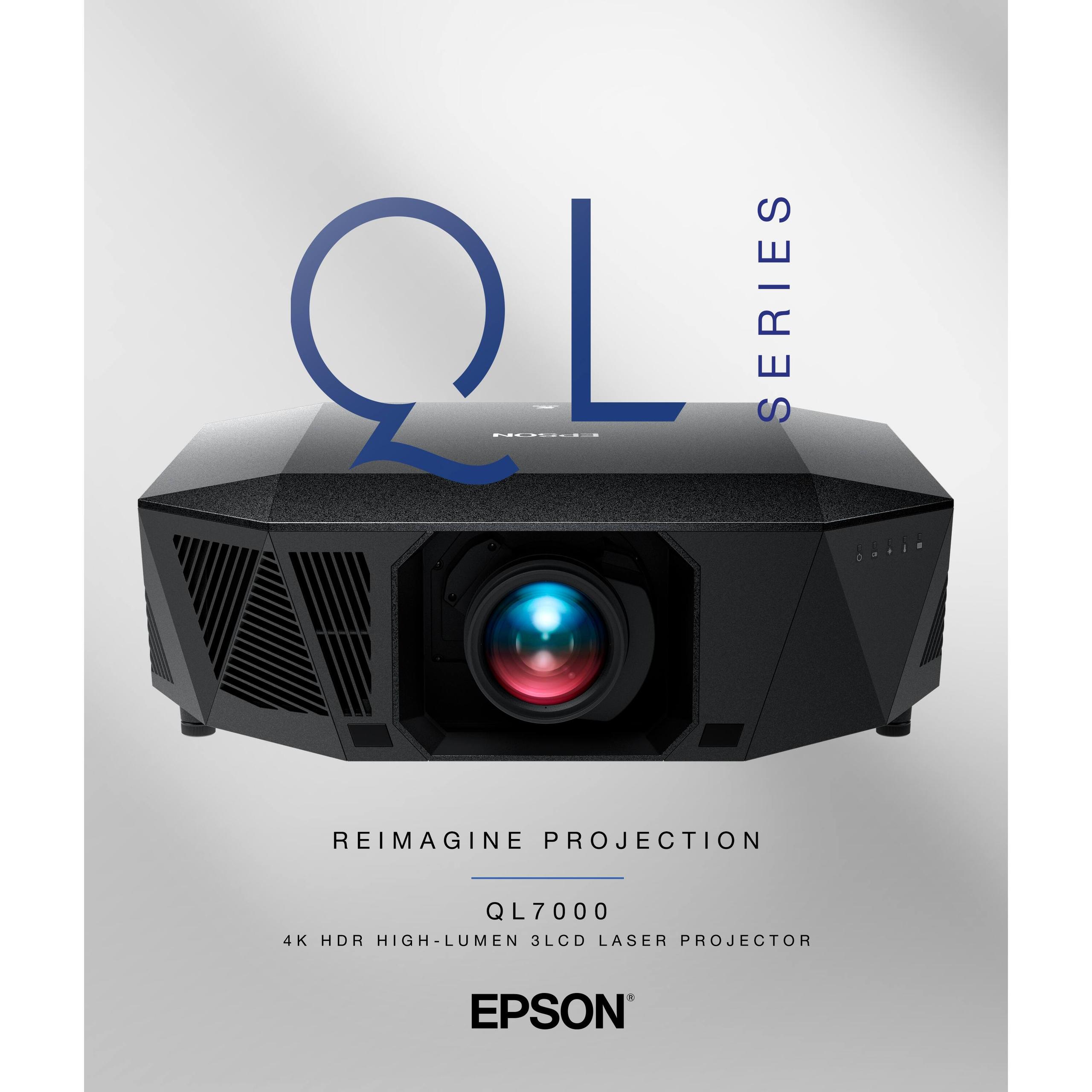
The world of premium 4K projectors splits into two very different camps, and choosing between them can feel overwhelming. On one side, you have consumer-focused projectors like the XGIMI Horizon 20 Max that prioritize ease of use and all-in-one functionality. On the other, professional installation projectors like the Epson QL7000 focus on maximum performance and flexibility, regardless of complexity.
Understanding these different approaches is crucial because they represent fundamentally different philosophies about what a projector should be. The XGIMI Horizon 20 Max, released in 2024, embodies the latest trend toward smart, automated home theater solutions. Meanwhile, the Epson QL7000, also from 2024, continues the tradition of professional-grade projection equipment designed for demanding commercial and high-end residential installations.
Today's premium projector market has evolved significantly from just a few years ago. Laser light sources have largely replaced traditional lamps, offering better color reproduction, longer lifespans, and instant on/off capabilities. HDR (High Dynamic Range) support has become standard, though the specific formats supported vary dramatically between models. Gaming performance has also become increasingly important as projectors compete with large TVs for living room dominance.
When evaluating any 4K projector, several key factors determine whether it's right for your needs. Brightness measured in lumens dictates how well the projector performs in various lighting conditions. Resolution quality affects image sharpness, though "4K" can mean different things depending on the technology used. Color accuracy and HDR support influence how realistic and vibrant your content looks. Setup complexity determines whether you'll need professional installation or can handle it yourself.
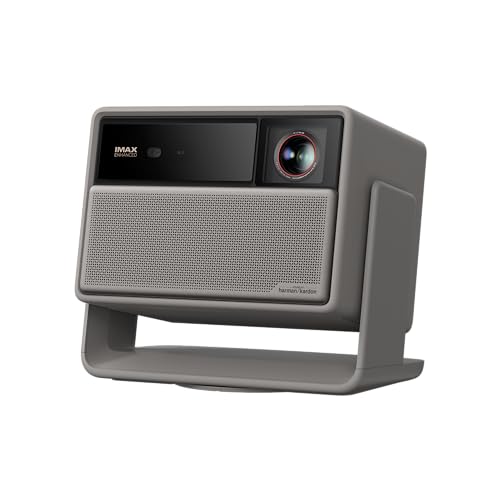
The XGIMI Horizon 20 Max represents what happens when a company designs a projector specifically for modern home users. Released in 2024, it includes everything you'd expect from a premium streaming device: built-in Android TV, integrated Harman Kardon speakers, and automatic setup features that eliminate the guesswork from installation.
This all-in-one approach means you can literally take the XGIMI Horizon 20 Max out of the box, plug it in, and start watching Netflix within minutes. The ISA 5.0 (Intelligent Screen Adaptation) system automatically focuses the image, corrects keystone distortion (that trapezoid effect when projecting at an angle), and even adjusts colors based on your wall color. It's projector technology designed for people who want great results without becoming projection experts.
At the time of writing, the XGIMI Horizon 20 Max falls into the premium consumer category price-wise, positioning it as a high-end alternative to large TVs rather than competing with commercial projection equipment.
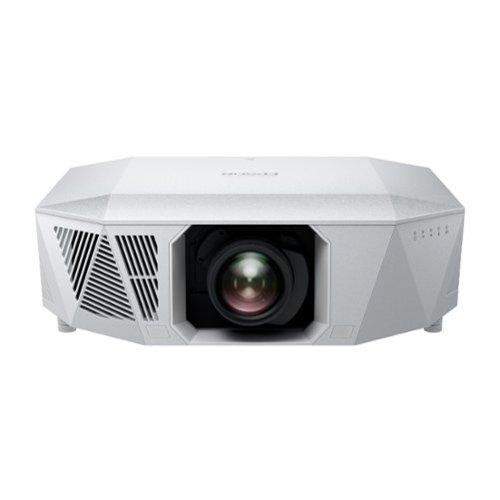
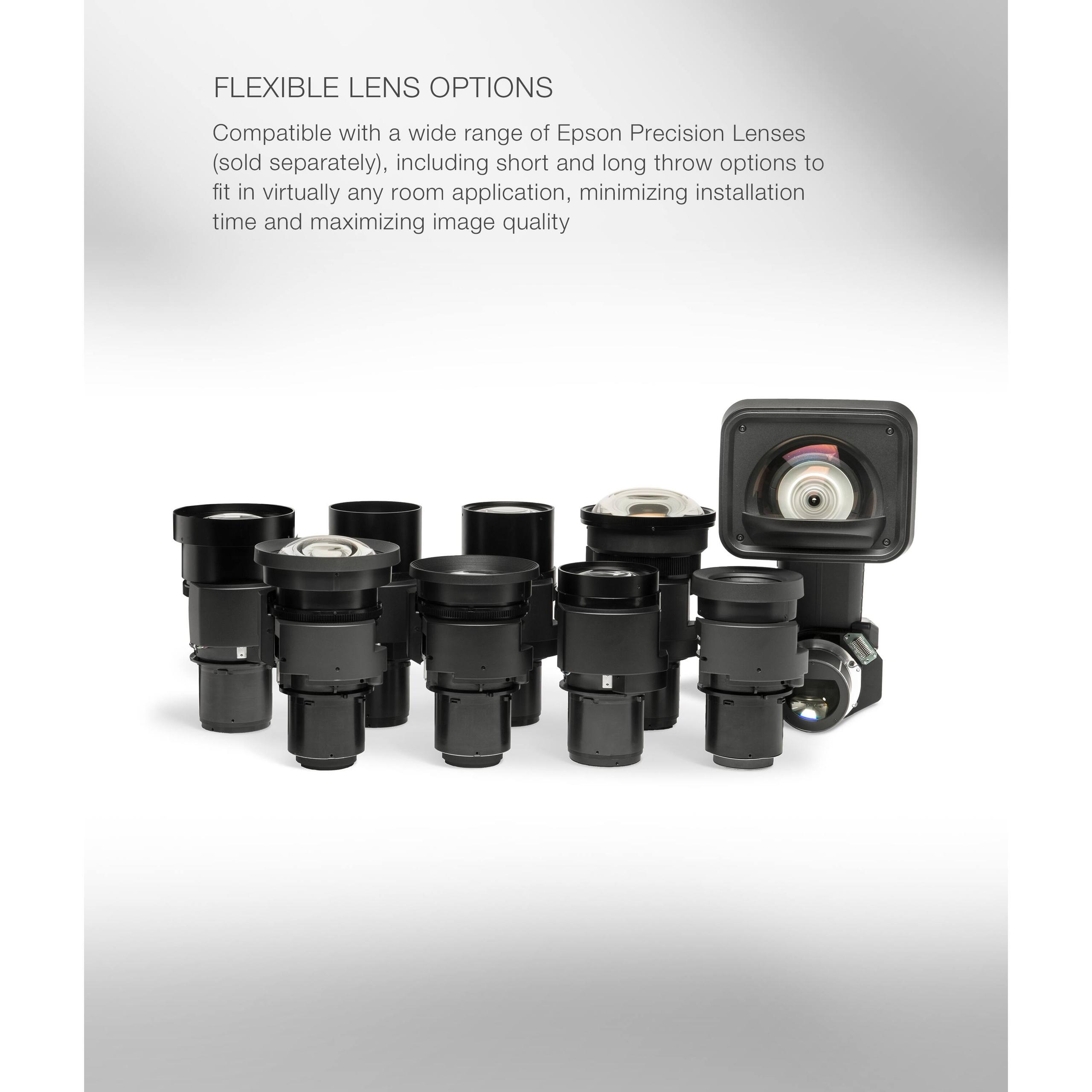
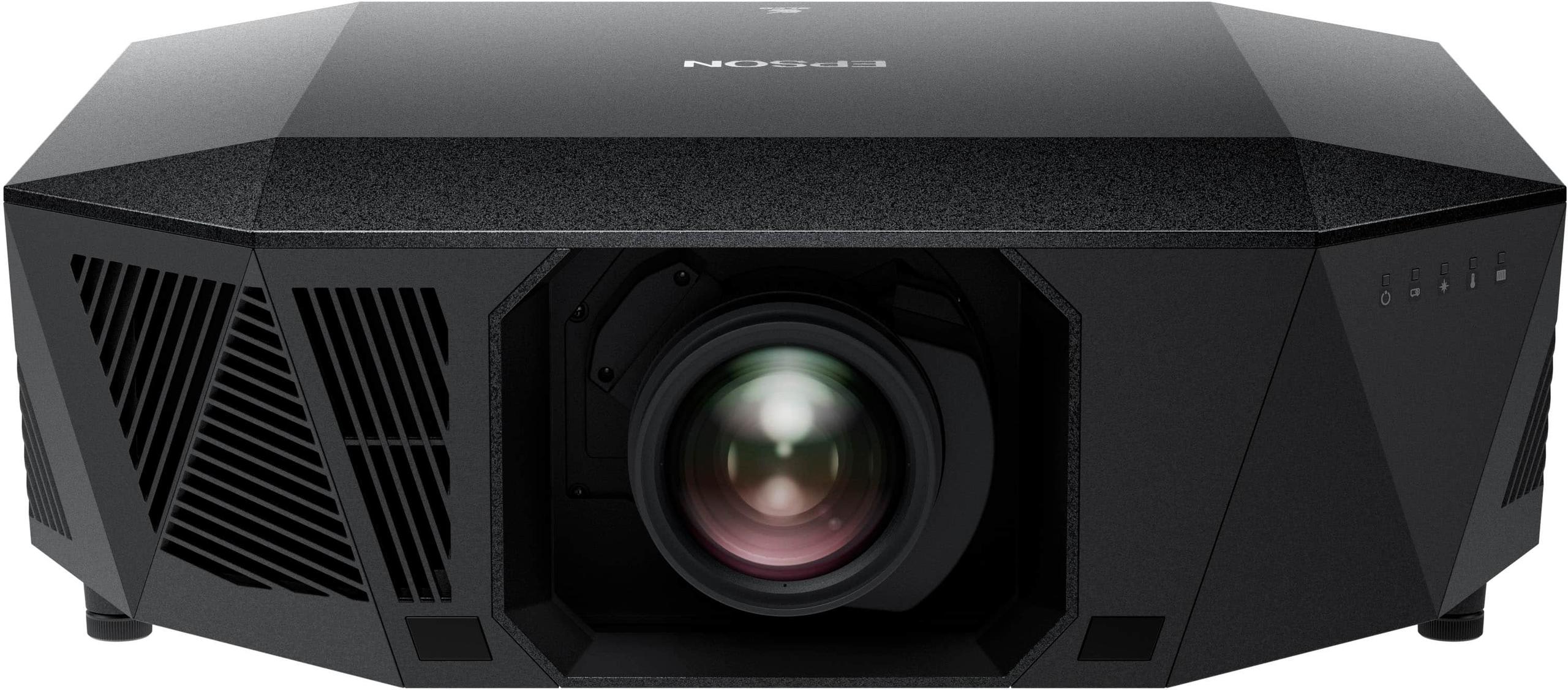
The Epson QL7000, also released in 2024, takes the opposite approach. It's sold as a "body only" unit, meaning you must separately purchase the lens that determines throw distance and image size. This modular design offers incredible flexibility – you can configure it for ultra-short throw installations just inches from the wall or long-throw setups that fill massive auditorium screens.
This professional focus means the Epson QL7000 integrates with commercial control systems like Control4 and Crestron, supports extensive remote monitoring capabilities, and prioritizes raw performance over convenience features. It doesn't include built-in streaming capabilities or speakers because professional installations typically use dedicated audio systems and external video sources.
At the time of writing, the Epson QL7000 commands a significantly higher price point that places it firmly in professional equipment territory, often costing more than ten times the price of premium consumer projectors when factoring in lens selection and professional installation.
Brightness might be the most misunderstood specification in projectors, yet it's arguably the most important for real-world performance. Measured in lumens, brightness determines how large a screen you can illuminate and how much ambient light your projector can overcome.
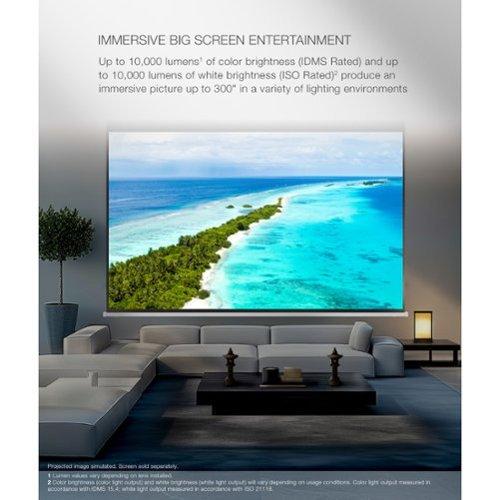
The Epson QL7000 produces an impressive 10,000 lumens, making it one of the brightest consumer-accessible projectors available. This enormous light output means it can create stunning images on screens up to 300 inches diagonally, even in rooms with significant ambient light. For context, most movie theaters use projectors in the 10,000-20,000 lumen range for their massive screens.
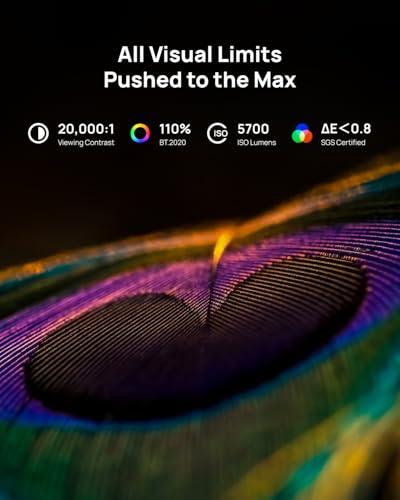
The XGIMI Horizon 20 Max outputs 5,700 lumens, which might sound modest in comparison but represents exceptional brightness for a consumer projector. This output level easily handles 100-150 inch screens in typical home theater environments with controlled lighting. Based on our research into user experiences, the XGIMI Horizon 20 Max performs admirably even in living rooms with some ambient light, something that would have been impossible with projectors from just a few years ago.
The practical difference is significant. The Epson QL7000 can create a cinema-quality experience in a bright conference room at noon, while the XGIMI Horizon 20 Max excels in evening home viewing with typical lamp lighting. Neither approach is inherently better – they're optimized for different environments and use cases.
The term "4K" gets thrown around liberally in projector marketing, but the underlying technology varies significantly between these models. Understanding these differences helps explain why two "4K" projectors can produce noticeably different image quality.
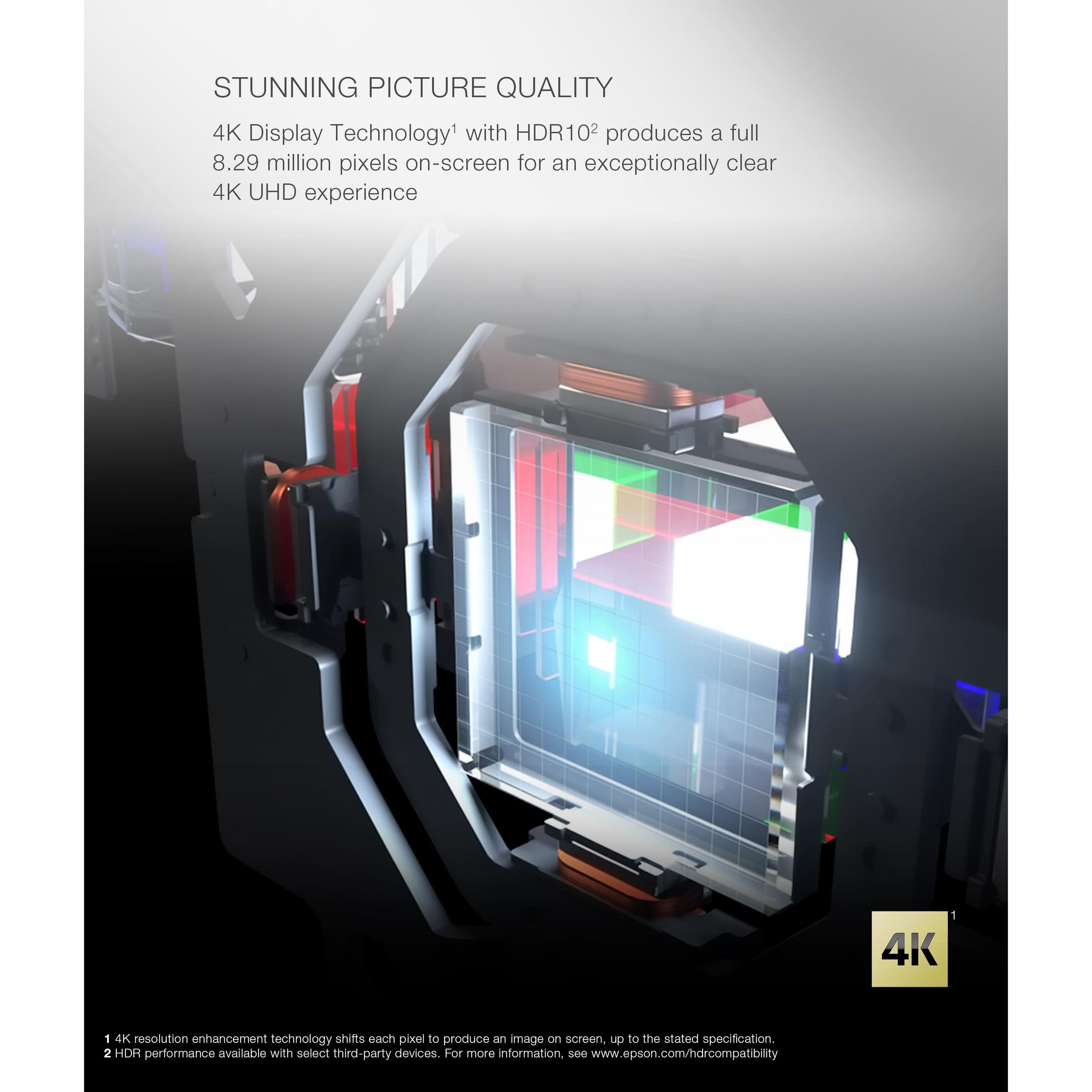
The Epson QL7000 uses true native 4K resolution through its 3LCD technology. This means it has physical pixels that correspond directly to a 4K signal's 3840 x 2160 resolution. Each of the 8.29 million pixels is individually controlled, resulting in exceptionally sharp text and fine details. This native approach typically produces the cleanest, most precise images, particularly important for presentation content and detailed scenes.
The XGIMI Horizon 20 Max employs 4K XPR (eXpanded Pixel Resolution) technology, which uses pixel-shifting with a lower-resolution chip to create 4K-equivalent detail. This DMD (Digital Micromirror Device) chip rapidly shifts pixels to multiple positions, effectively quadrupling the perceived resolution. While not technically native 4K, modern XPR implementations produce remarkably sharp images that most viewers would struggle to distinguish from native 4K at typical viewing distances.
Based on expert consensus and user feedback we've evaluated, both approaches deliver excellent 4K performance, though the Epson QL7000 has a slight edge in fine detail reproduction, while the XGIMI Horizon 20 Max offers superior contrast and black levels thanks to its single-chip design.
High Dynamic Range support represents one of the most significant technological advances in recent projector development, and it's an area where these projectors diverge dramatically.
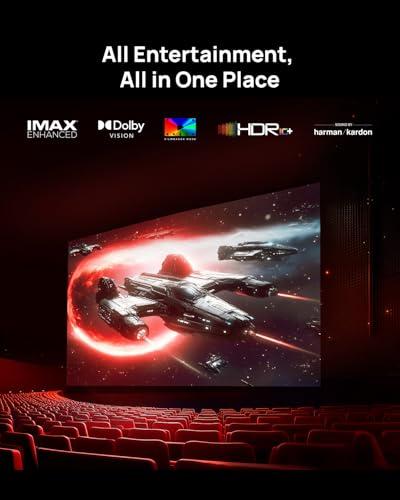
The XGIMI Horizon 20 Max offers comprehensive HDR support, including Dolby Vision, HDR10+, HDR10, HLG, and even IMAX Enhanced. Dolby Vision, in particular, provides scene-by-scene optimization that can dramatically improve the viewing experience with compatible content from Netflix, Disney+, and other premium streaming services. The projector's color coverage reaches 110% of the BT.2020 color space, enabling it to reproduce the wide color gamuts that make HDR content so visually striking.
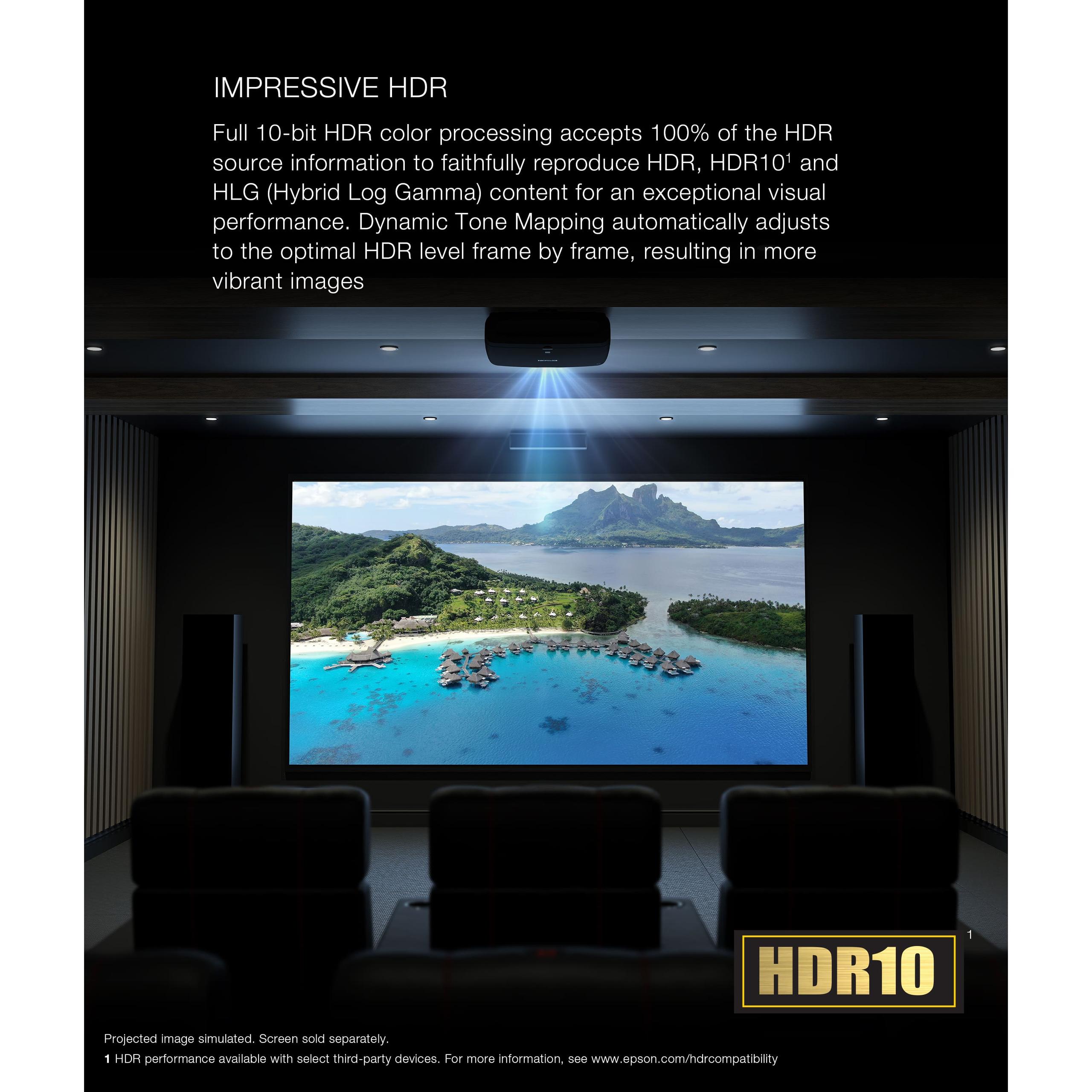
The Epson QL7000 supports only HDR10 and HLG, notably omitting Dolby Vision and HDR10+ support. While this might seem like a significant limitation, it reflects the projector's professional focus – commercial installations often prioritize brightness and reliability over cutting-edge consumer HDR formats. The 32-bit QZX processor does provide sophisticated tone mapping to optimize HDR content within these constraints.
For home theater use, the XGIMI Horizon 20 Max's broader HDR support provides a clear advantage when watching premium streaming content. The difference is particularly noticeable with Dolby Vision titles, which can look significantly more vibrant and realistic compared to standard HDR10 presentation.
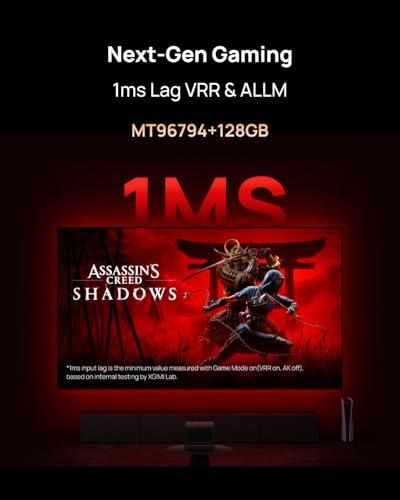
Gaming on projectors has transformed dramatically in recent years, and the XGIMI Horizon 20 Max represents the current state of the art for gaming-focused projection. Its input lag measurements are genuinely impressive: 1ms at 1080p@240Hz, 2.2ms at 1080p@120Hz, and 3ms at 4K@60Hz. These numbers rival the best gaming TVs and represent a massive improvement over projectors from even two years ago.
The projector supports up to 240Hz refresh rates at 1080p, making it compatible with high-refresh gaming on PC and the latest consoles in performance modes. Variable Refresh Rate (VRR) and Auto Low Latency Mode (ALLM) ensure smooth, responsive gameplay without the screen tearing and stuttering that plagued earlier projector gaming attempts.
The Epson QL7000 supports gaming up to 120Hz with Auto Low Latency Mode, which is respectable but not exceptional by current standards. Its input lag, while not precisely specified, typically falls in the 15-20ms range based on similar Epson models – acceptable for casual gaming but noticeable for competitive play.
For serious gaming, especially with modern consoles or high-end PCs, the XGIMI Horizon 20 Max provides a significantly superior experience. The combination of low latency, high refresh rates, and HDR gaming modes makes it a legitimate alternative to large gaming TVs.
Contrast ratio – the difference between the brightest whites and darkest blacks – significantly impacts perceived image quality, often more than resolution or even brightness. This is where laser technology and different projection methods create notable performance differences.
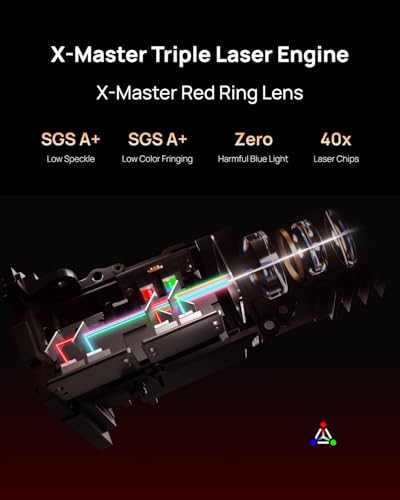
The XGIMI Horizon 20 Max achieves a 20,000:1 contrast ratio through its RGB triple laser engine. This laser-based approach produces genuinely dark blacks, something that was historically challenging for projectors. The result is images with dramatic depth and realism, particularly noticeable in dark scenes where you can distinguish subtle shadow details while maintaining bright highlight information.
The Epson QL7000 uses 3LCD technology, which traditionally produces lower native contrast ratios compared to single-chip designs. However, Epson's implementation includes dynamic contrast features that can reach impressive ratios under optimal conditions. The 3LCD approach excels in color brightness and typically produces more natural-looking skin tones and color gradations.
For home theater viewing, particularly with cinematic content, the XGIMI Horizon 20 Max's superior contrast provides a more immersive experience. Dark movie scenes retain detail without looking washed out, while bright scenes maintain their impact.
Setup complexity represents perhaps the largest philosophical difference between these projectors. The XGIMI Horizon 20 Max prioritizes automated simplicity through its ISA 5.0 system. This technology automatically handles focus adjustment, keystone correction, obstacle avoidance, and even wall color compensation. The projector can detect and work around objects in its projection path, adjusting the image accordingly.
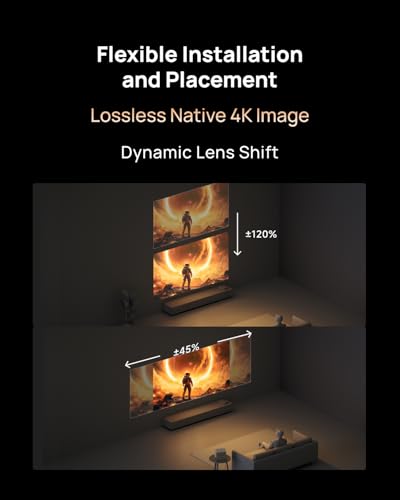
The motorized lens shift allows for significant placement flexibility without image distortion – you can position the projector up to 120% above or below the screen center and 45% to either side while maintaining perfect geometry. The 1.2-1.5:1 throw ratio works well for most living rooms, allowing a 100-inch image from about 8-10 feet away.
The Epson QL7000 offers maximum installation flexibility through its interchangeable lens system. Different lenses provide throw ratios from ultra-short (less than 1:1) to long throw (up to 8:1), enabling installation in virtually any space configuration. Professional-grade lens shift and zoom capabilities allow precise image positioning without digital correction that could degrade image quality.
However, this flexibility comes with complexity. Selecting the appropriate lens requires careful calculation of throw distances, screen sizes, and mounting positions. Professional installation is typically recommended, adding significant cost and planning time.
For most home users, the XGIMI Horizon 20 Max's automated approach provides better value and convenience. The Epson QL7000's flexibility becomes valuable primarily in challenging installation environments or when specific performance requirements demand a customized lens solution.
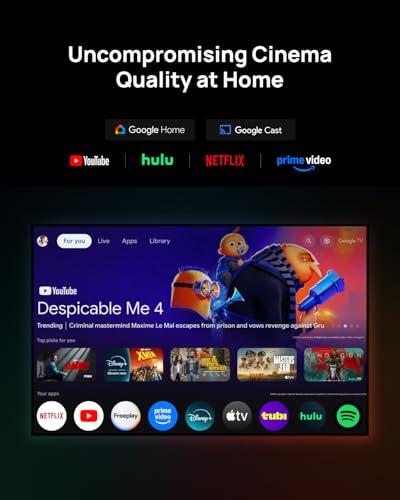
Modern projectors increasingly compete with smart TVs, making built-in connectivity and streaming capabilities important considerations. The XGIMI Horizon 20 Max includes full Android TV functionality with access to Netflix, Disney+, Amazon Prime Video, and other major streaming services. Google Assistant integration provides voice control, while casting capabilities allow easy content sharing from mobile devices.
The integrated 24W Harman Kardon speaker system provides surprisingly robust audio quality, eliminating the immediate need for external speakers in smaller rooms. Wi-Fi 6 and Bluetooth 5.2 ensure reliable wireless connectivity with modern devices.
The Epson QL7000 focuses on professional integration rather than consumer streaming features. Its web-based control interface enables remote management and monitoring, essential for commercial installations. Integration with Control4, Crestron, and other professional automation systems allows sophisticated control scenarios, but requires external devices for streaming content.
For home theater use, the XGIMI Horizon 20 Max's integrated smart features provide significant convenience and value. You can access all major streaming services without additional hardware, though serious enthusiasts might still prefer dedicated streaming devices for optimal performance.
Comparing value between these projectors requires understanding their complete ecosystems. At the time of writing, the XGIMI Horizon 20 Max represents exceptional value for a complete home theater solution. The projector includes everything needed for immediate use: smart platform, speakers, automated setup, and all necessary connectivity.
The Epson QL7000 requires significant additional investment beyond the projector itself. Lens selection alone can add thousands to the total cost, depending on your installation requirements. Professional installation, external audio systems, and streaming devices further increase the investment. When fully configured, total system costs often exceed ten times the XGIMI Horizon 20 Max's price.
However, this cost difference reflects fundamentally different value propositions. The Epson QL7000 provides capabilities that the XGIMI Horizon 20 Max simply cannot match – massive screen sizes in bright environments, professional-grade reliability, and installation flexibility for challenging spaces.
The XGIMI Horizon 20 Max excels for dedicated home theater enthusiasts who want premium performance without professional complexity. It's ideal if you're replacing a large TV, prioritize gaming performance, prefer integrated smart features, or want exceptional image quality in controlled lighting environments. The automated setup makes it perfect for users who want great results without becoming projection experts.
The Epson QL7000 justifies its premium for specific demanding applications. Choose it for commercial installations, conference rooms, large multipurpose spaces with significant ambient light, or custom home theaters requiring massive screen sizes. It's the right choice when you need maximum brightness, professional integration capabilities, or installation flexibility that consumer projectors cannot provide.
Start by honestly assessing your space and requirements. If you're creating a dedicated home theater in a typical room size (100-150 inch screen) with reasonable light control, the XGIMI Horizon 20 Max provides exceptional performance and value. Its combination of brightness, contrast, gaming capabilities, and smart features creates a compelling alternative to premium large-screen TVs.
If you need to fill massive screens, overcome significant ambient light, or integrate with professional control systems, the Epson QL7000 delivers capabilities that justify its premium cost. However, factor in the total system cost including lenses, installation, and supporting equipment when making your decision.
Both projectors represent the current state of the art in their respective categories. The XGIMI Horizon 20 Max makes premium projection accessible to home theater enthusiasts, while the Epson QL7000 provides professional-grade capabilities for demanding applications. Your choice ultimately depends on matching the projector's capabilities to your specific needs and budget reality.
| XGIMI Horizon 20 Max | Epson QL7000 |
|---|---|
| Brightness - Determines screen size and room lighting tolerance | |
| 5,700 lumens (excellent for 100-150" screens in controlled lighting) | 10,000 lumens (handles 200-300" screens in bright environments) |
| 4K Technology - Affects image sharpness and detail | |
| 4K XPR pixel-shifting (very sharp, excellent contrast) | True native 4K with 8.29 million pixels (ultimate detail precision) |
| HDR Support - Critical for streaming content quality | |
| Dolby Vision, HDR10+, HDR10, HLG, IMAX Enhanced (comprehensive) | HDR10 and HLG only (limited premium format support) |
| Gaming Performance - Essential for console and PC gaming | |
| 1ms input lag, up to 240Hz refresh rate, VRR support (gaming-optimized) | ~15ms input lag, 120Hz max, ALLM (adequate for casual gaming) |
| Contrast Ratio - Determines black levels and image depth | |
| 20,000:1 with RGB triple laser (exceptional dark scenes) | Lower native contrast typical of 3LCD technology |
| Smart Features - Affects ease of use and content access | |
| Android TV, Netflix/Disney+ built-in, Google Assistant (complete system) | No built-in streaming, requires external devices (professional focus) |
| Audio System - Important for smaller rooms | |
| Dual 12W Harman Kardon speakers included (24W total) | No speakers included, requires external audio system |
| Installation Complexity - Affects setup time and costs | |
| ISA 5.0 auto-setup, plug-and-play ready (consumer-friendly) | Interchangeable lenses, professional installation recommended |
| Lens Flexibility - Determines placement options | |
| Fixed lens with motorized shift, 1.2-1.5:1 throw ratio (good flexibility) | Multiple lens options from ultra-short to long throw (maximum flexibility) |
| Target Market - Who each projector serves best | |
| Home theater enthusiasts wanting premium all-in-one solution | Commercial venues and custom installations requiring maximum performance |
| Total System Cost - Including all necessary components | |
| Complete ready-to-use system (exceptional value) | Requires lens, installation, audio system (premium investment) |
The Epson QL7000 is significantly brighter at 10,000 lumens compared to the XGIMI Horizon 20 Max at 5,700 lumens. This makes the Epson QL7000 better for bright rooms and large screens, while the XGIMI Horizon 20 Max works excellently in controlled lighting conditions typical of home theaters.
The Epson QL7000 uses true native 4K with 8.29 million physical pixels for maximum sharpness and detail. The XGIMI Horizon 20 Max uses 4K XPR pixel-shifting technology that creates 4K-equivalent detail through rapid pixel movement. Both produce excellent 4K images, though the Epson QL7000 has a slight edge in fine detail reproduction.
The XGIMI Horizon 20 Max is significantly better for gaming with 1ms input lag, 240Hz refresh rate support, and VRR capabilities. The Epson QL7000 offers basic gaming support with 120Hz maximum and higher input lag around 15ms, making the XGIMI Horizon 20 Max the clear choice for serious gamers.
The XGIMI Horizon 20 Max includes built-in Android TV with Netflix, Disney+, and other streaming apps, plus integrated speakers. The Epson QL7000 requires external streaming devices and audio systems, as it's designed for professional installations rather than direct consumer use.
The XGIMI Horizon 20 Max offers plug-and-play setup with ISA 5.0 automatic focus, keystone correction, and obstacle avoidance. The Epson QL7000 requires lens selection, professional installation, and extensive configuration, making the XGIMI Horizon 20 Max much more user-friendly for home users.
The XGIMI Horizon 20 Max works best with 100-150 inch screens in typical home theater setups. The Epson QL7000 can handle massive screens up to 300 inches and is designed for large venues, conference rooms, and commercial installations requiring maximum screen coverage.
The XGIMI Horizon 20 Max offers comprehensive HDR support including Dolby Vision, HDR10+, HDR10, HLG, and IMAX Enhanced. The Epson QL7000 only supports HDR10 and HLG, making the XGIMI Horizon 20 Max better for premium streaming content with advanced HDR formats.
The XGIMI Horizon 20 Max is a complete ready-to-use system with everything included. The Epson QL7000 requires additional purchases including lenses, professional installation, external audio systems, and streaming devices, making the total system cost significantly higher than the XGIMI Horizon 20 Max.
The XGIMI Horizon 20 Max delivers superior contrast with its 20,000:1 ratio and RGB triple laser technology, producing deeper blacks and more dramatic image depth. The Epson QL7000 uses 3LCD technology that typically has lower native contrast but excels in color brightness and natural color reproduction.
The Epson QL7000 excels in bright environments with its 10,000-lumen output, making it suitable for conference rooms and well-lit spaces. The XGIMI Horizon 20 Max works well in rooms with some ambient light but performs best in controlled lighting conditions for optimal image quality.
The Epson QL7000 provides maximum flexibility with interchangeable lenses ranging from ultra-short throw to long throw configurations. The XGIMI Horizon 20 Max has good flexibility with motorized lens shift and a 1.2-1.5:1 throw ratio, but the Epson QL7000 offers more placement options for challenging installations.
Choose the XGIMI Horizon 20 Max if you want a premium home theater experience with gaming capabilities, integrated smart features, and easy setup. Choose the Epson QL7000 if you need maximum brightness for large commercial spaces, professional installations, or massive home theater screens exceeding 200 inches.
We've done our best to create useful and informative comparisons to help you decide what product to buy. Our research uses advanced automated methods to create this comparison and perfection is not possible - please contact us for corrections or questions. These are the sites we've researched in the creation of this article: dustinabbott.net - projectorcentral.com - youtube.com - us.xgimi.com - youtube.com - tweaktown.com - youtube.com - us.xgimi.com - youtube.com - youtube.com - thesmarthomehookup.com - youtube.com - us.xgimi.com - global.xgimi.com - projector-database.com - youtube.com - epson.com - projectorscreen.com - projectorscreen.com - theaudiosolutions.com - fmaudiovideo.com - thesoundcounsel.com - worldwidestereo.com - hifiheaven.net - thepowercentre.ca

Privacy Policy
Terms and Conditions - Affiliate Policy
Home Security
© Copyright 2008-2026.
11816 Inwood Rd #1211, Dallas, TX 75244