

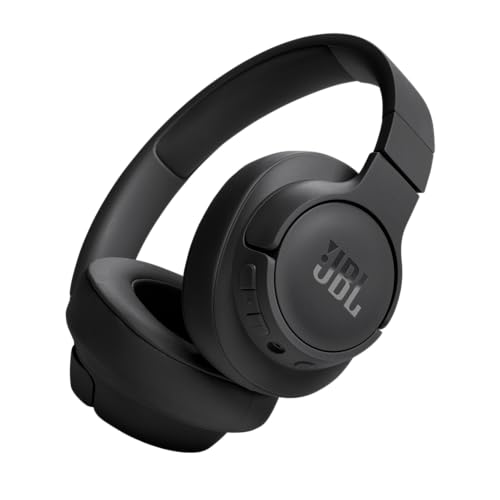

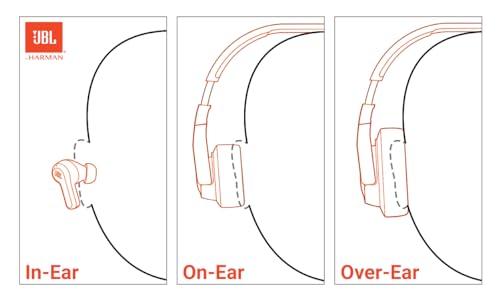

Choosing the right pair of wireless headphones can feel overwhelming, especially when you're trying to balance features with budget. Today we're diving deep into two popular options that take very different approaches to delivering great sound without breaking the bank: the JBL Tune 720BT and the OneOdio A10.
Both headphones were released around 2022-2023, during a time when manufacturers started packing premium features into budget-friendly models. This was partly driven by competition and advances in Bluetooth technology, but also because people were spending more time with headphones during remote work and online learning. The result? We now have options like these that would have cost significantly more just a few years ago.
Before we compare these specific models, let's talk about what actually matters when you're shopping for wireless over-ear headphones in this price range. At the time of writing, both models fall into what I'd call the "sweet spot" category—affordable enough for students and casual listeners, but feature-rich enough to satisfy most daily needs.
Sound quality is obviously crucial, but it's not just about "good" or "bad." Different headphones emphasize different parts of the sound spectrum. Some boost the bass (low frequencies) for a more exciting sound, while others keep things balanced for accuracy. The frequency response—basically how well headphones reproduce sounds from deep bass (around 20Hz) to bright treble (up to 20,000Hz)—tells us a lot about what music will sound like.
Battery life has become increasingly important as we use headphones throughout our workday, commutes, and leisure time. Quick charging features can be a lifesaver when you forget to plug them in overnight.
Comfort might seem obvious, but it's often overlooked until you're three hours into a study session with aching ears. The padding materials, weight distribution, and clamping force (how tightly the headphones grip your head) all play crucial roles.
Active Noise Cancellation (ANC) is a technology that uses microphones to detect external sounds and generates opposite sound waves to cancel them out. It's particularly effective against constant, low-frequency noises like airplane engines or air conditioning, though less effective against sudden sounds like someone talking.
The JBL Tune 720BT represents what I'd call the "perfected basics" approach. JBL, a company that's been making speakers since 1946 and powers sound systems in major venues worldwide, focused on delivering their signature sound with outstanding battery life and rock-solid reliability.
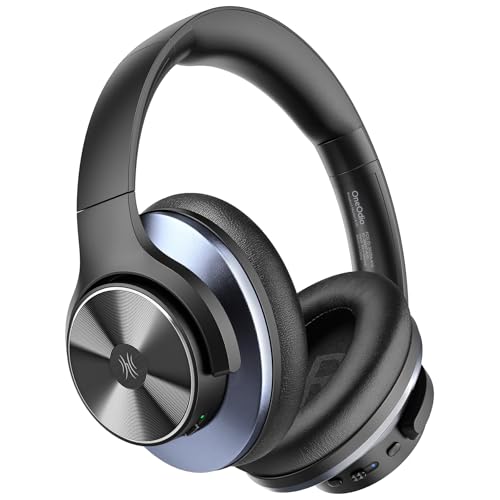
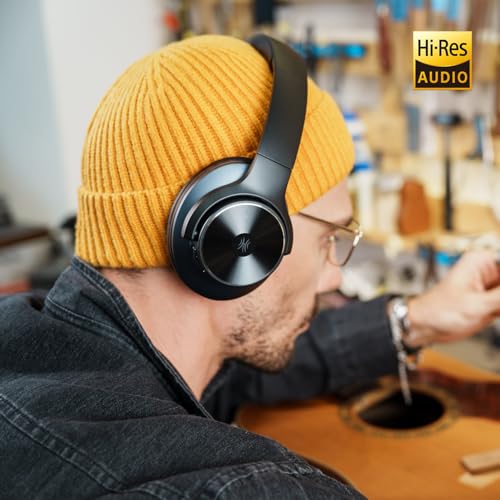
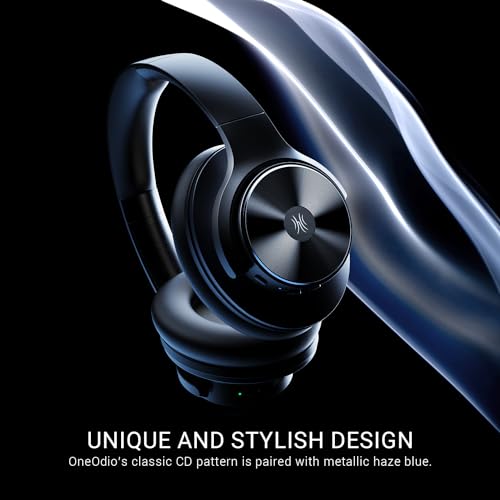
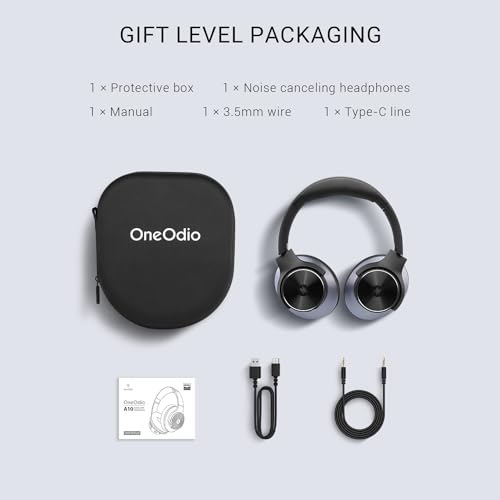
The OneOdio A10, on the other hand, takes the "feature maximization" route. This relative newcomer brand packed in active noise cancellation, Hi-Res Audio certification (which means it can reproduce audio detail beyond CD quality), and premium comfort materials, all while keeping the price competitive.
Both approaches have merit, but they serve different types of users.
Let's start with what might be the most important aspect: how these headphones actually sound.
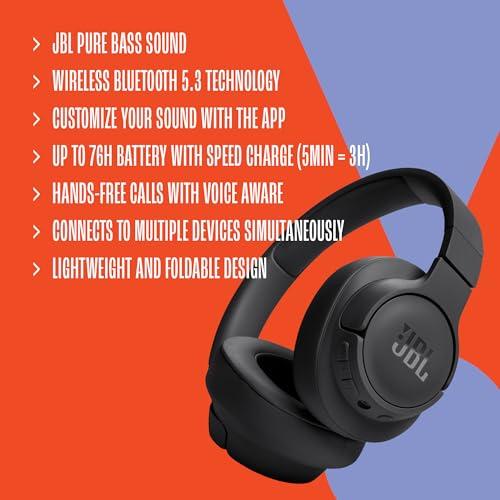
The JBL Tune 720BT delivers what JBL calls "Pure Bass Sound"—the same audio tuning philosophy used in concert venues and recording studios. In practice, this means you get deep, punchy bass that doesn't overwhelm the other frequencies. The mids (where most vocals and instruments live) come through warm and clear, while the highs are crisp without being harsh or sibilant (that annoying "s" sound that can hurt your ears).
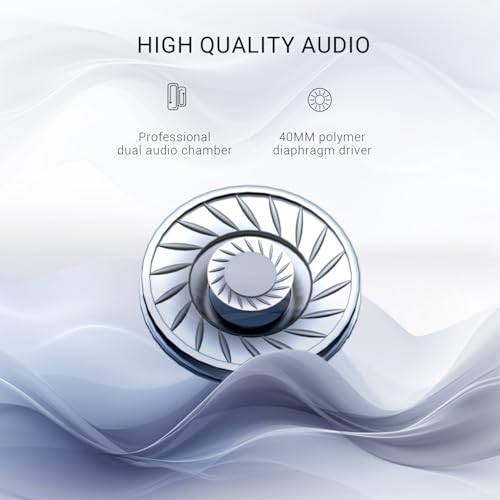
What I particularly appreciate about the JBL Tune 720BT is its soundstage—the sense of space and separation between instruments. For a budget model, it creates a surprisingly immersive listening experience where you can pick out individual instruments in a busy mix. The 40mm drivers (the part of the headphone that actually creates sound) are tuned conservatively, which means they won't wow you immediately but won't fatigue your ears during long listening sessions either.
The OneOdio A10, equipped with the same 40mm driver size, takes a more dramatic approach with what's called a "V-shaped" sound signature. This means the bass and treble are boosted while the midrange is somewhat recessed. The result is an initially exciting sound that makes electronic music and hip-hop feel powerful and energetic.
However, this tuning choice comes with trade-offs. The boosted bass can sometimes mask details in vocals and acoustic instruments. If you're listening to podcasts or acoustic music, you might notice that voices don't sound as natural or present as they do on the JBL Tune 720BT.
The OneOdio A10 does have Hi-Res Audio certification, but there's an important caveat: this only applies when using the wired connection. Hi-Res Audio refers to digital audio that captures more detail than standard CD quality, but your source material needs to be recorded and stored at these higher quality levels to benefit. Most streaming services like Spotify use compressed audio that won't take advantage of this feature.
For home theater use, both headphones can connect to TVs or receivers that have Bluetooth capability, but the JBL Tune 720BT has a slight edge due to its more balanced sound signature. Movie soundtracks benefit from accurate midrange reproduction for dialogue clarity, something the V-shaped tuning of the OneOdio A10 doesn't emphasize as much.
This is where things get really interesting, and frankly, where the JBL Tune 720BT pulls ahead dramatically.
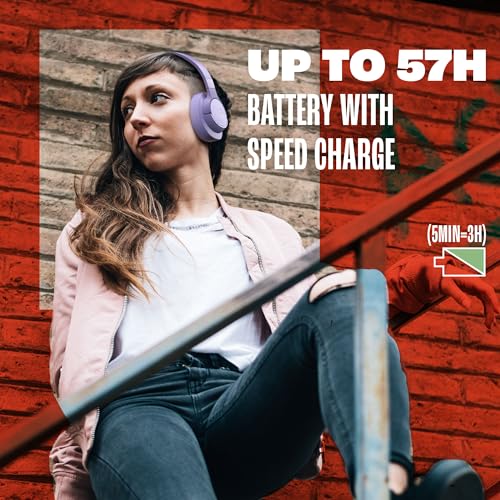
JBL claims up to 76 hours of wireless playback on a single charge, which sounds almost too good to be true. In real-world testing, even if you only get 80% of that claimed battery life, you're looking at over 60 hours of listening time. That's literally weeks of typical daily use before needing to charge.
The technology behind this impressive longevity is Bluetooth 5.3, which is more power-efficient than older Bluetooth versions. Bluetooth 5.3 also provides better connection stability and range, meaning fewer dropouts when your phone is in your bag or pocket.
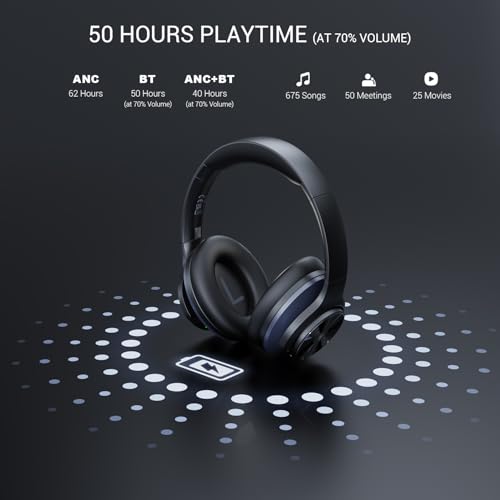
The OneOdio A10 takes a different approach with its larger 800mAh battery (compared to the JBL's 500mAh). Here's where it gets complex: the OneOdio offers different battery life depending on which features you're using. With just Bluetooth active, you get around 50 hours. Using only the active noise cancellation (without Bluetooth), you can get up to 62 hours. But when using both ANC and Bluetooth together—the most common real-world scenario—you're looking at 40-45 hours.
Both headphones support quick charging, but with different results. The JBL Tune 720BT gives you 3 hours of playback from just 5 minutes of charging, while the OneOdio A10 provides 2 hours from the same 5-minute charge.
For most people, even the OneOdio's 40-hour combined battery life is more than sufficient. But if you're someone who travels frequently, works long shifts, or simply forgets to charge devices regularly, the JBL's nearly double battery life could be a game-changer.
This is where we see the biggest philosophical difference between these headphones.
The JBL Tune 720BT doesn't have active noise cancellation at all. Instead, it relies on passive isolation—the physical barrier created by the over-ear design and ear cup seal. This approach keeps costs down, reduces battery drain, and avoids the potential sound quality compromises that budget ANC implementations sometimes introduce.
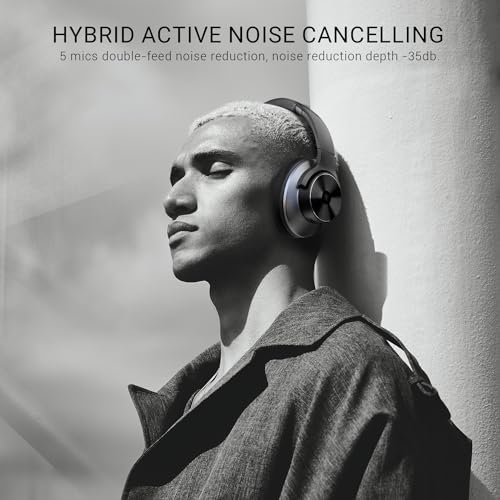
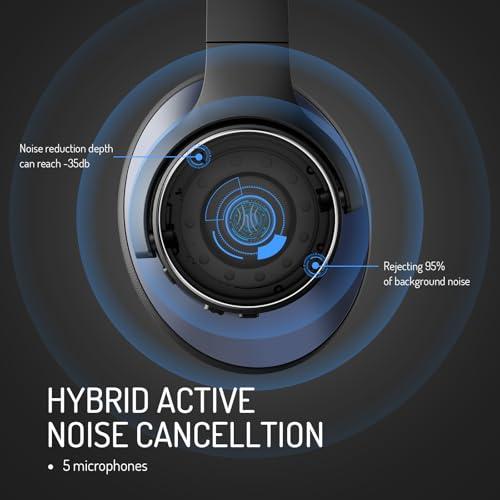
The OneOdio A10 features what's called "Hybrid ANC," which uses multiple microphones—some facing outward to detect environmental noise, others facing inward to monitor what's getting through. The system can theoretically reduce ambient noise by up to 35 decibels, which is significant but not quite at the level of premium ANC headphones from Sony or Bose.
In practice, the OneOdio's ANC works best against consistent, low-frequency sounds like air conditioning, airplane engines, or train rumble. It's less effective against sudden noises, conversations, or high-pitched sounds. The transparency mode is a nice touch—it uses the same microphones to amplify external sounds when you need to hear announcements or have a conversation without removing the headphones.
However, budget ANC systems often introduce their own artifacts. Some users report a slight "pressure" feeling when ANC is active, and there can be a subtle impact on sound quality. The OneOdio A10 handles this reasonably well for its price point, but it's not as refined as higher-end implementations.
For home theater use, ANC can actually be counterproductive since you want to hear the full dynamic range of movie soundtracks. In this scenario, the JBL Tune 720BT's approach of relying on good passive isolation makes more sense.
Comfort becomes crucial during extended listening sessions, and this is where the OneOdio A10 really shines.
The OneOdio uses what they call "ultra-soft protein memory foam" ear pads. While the marketing language sounds fancy, the practical result is genuinely impressive comfort. The ear pads are noticeably plusher and more conforming than what you typically find in this price range. The headband padding is also substantial, and the overall weight distribution feels well-engineered despite the heavier overall weight of around 295 grams.
The JBL Tune 720BT, at 220 grams, is lighter on paper, but the comfort story is more mixed. The leatherette ear pads are adequate but can become warm and slightly sticky during long listening sessions, especially in warmer environments. Some users with larger heads or ears report that the ear cups feel cramped, and the clamping force can cause pressure points over time.
For someone planning to wear headphones for several hours at a time—whether for work, study, or entertainment—the comfort difference between these models becomes significant. The OneOdio A10 feels more like a premium product in this regard.
Both headphones support multi-point connectivity, which means they can connect to two devices simultaneously. This is incredibly useful if you want to stay connected to both your laptop for work and your phone for calls, switching seamlessly between them without manual reconnection.
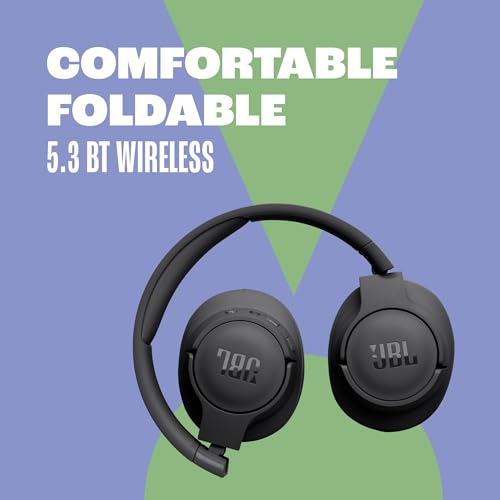
The JBL Tune 720BT uses Bluetooth 5.3, which offers several advantages over the OneOdio's Bluetooth 5.0. The newer standard provides better power efficiency (contributing to that amazing battery life), improved connection stability, and lower latency. Lower latency means less delay between video and audio when watching movies or videos.
JBL also provides a companion app (JBL Headphones App) that allows you to customize the sound through EQ presets or create your own custom sound profile. This addresses one potential weakness of the JBL's more conservative default tuning—if you want more bass or brighter highs, you can adjust them to taste.
The OneOdio A10 lacks a companion app, which means you're stuck with the manufacturer's tuning choices. For a headphone with such a distinctive V-shaped sound signature, this can be limiting if that tuning doesn't match your preferences.
Both headphones include wired connectivity through 3.5mm cables, which is useful for connecting to devices without Bluetooth (like many airplane entertainment systems) or when the battery runs out. However, there's an important difference: the JBL works in wired mode even when completely powered off, while the OneOdio's ANC features require the headphones to be powered on.
The JBL Tune 720BT uses lightweight plastic construction that, while functional, feels somewhat budget-oriented. The foldable design is convenient for travel, but the hinges and adjustment mechanisms don't inspire confidence for heavy daily use over several years.
The OneOdio A10 has reportedly improved its build quality in recent versions, incorporating more metal components, particularly in the ear cup construction. The overall feel is more substantial, though this does contribute to the higher weight.
For typical daily use, both should hold up reasonably well, but neither feels like it would survive being tossed around in a backpack daily for years. They're solidly built for their price range, but you'll want to treat them with reasonable care.
After spending time with both headphones, some clear use cases emerge.
The JBL Tune 720BT excels as an all-day companion. The battery life means you can literally forget about charging for weeks with typical use. The balanced sound signature doesn't cause fatigue during long listening sessions, making it ideal for work-from-home scenarios, studying, or extended travel.
I particularly appreciate the JBL Tune 720BT for mixed content consumption—switching between music, podcasts, video calls, and movies throughout the day. The sound signature handles all these content types well, and the app-based EQ means you can fine-tune the sound for your preferences.
The OneOdio A10 is better suited for specific use cases where its features shine. Commuting on public transportation, working in noisy environments, or any situation where you need to block out consistent background noise. The superior comfort also makes it excellent for gaming sessions or binge-watching series.
For home theater use, both can work well, but with different strengths. The JBL Tune 720BT provides more accurate dialogue reproduction and better overall balance for movie soundtracks. The OneOdio A10 might make action movies feel more exciting with its enhanced bass response, but you might miss some dialogue nuances.
At the time of writing, both headphones offer excellent value in their respective approaches, but they serve different priorities.
Choose the JBL Tune 720BT if you want a reliable, long-lasting daily driver that handles everything well. The exceptional battery life, balanced sound, and app support make it ideal for users who want a "set it and forget it" experience. It's particularly suited for people who use headphones throughout the day for various activities and prefer not to think about charging regularly.
The OneOdio A10 makes sense if specific features matter more to you than overall balance. If you commute in noisy environments and need ANC, if comfort is your top priority, or if you prefer an exciting, bass-heavy sound signature, it delivers these features at a remarkably low price point.
Both headphones represent the impressive evolution of budget wireless audio. Just a few years ago, getting this level of performance and features would have cost significantly more. Whether you choose the JBL Tune 720BT's marathon battery life and balanced performance or the OneOdio A10's premium features and comfort, you're getting genuine value that would have been impossible at these price points not too long ago.
The key is understanding which approach better matches your specific needs and priorities. Both will serve you well—they just do it in distinctly different ways.
| JBL Tune 720BT | OneOdio A10 |
|---|---|
| Battery Life - Critical for daily use and travel | |
| Up to 76 hours wireless playback (industry-leading) | 40-45 hours with ANC + Bluetooth (still excellent) |
| Active Noise Cancellation - Essential for noisy environments | |
| None (passive isolation only) | Hybrid ANC up to 35dB reduction (good for commuting) |
| Sound Signature - Affects music enjoyment and fatigue | |
| Balanced JBL Pure Bass (works well for all content) | V-shaped with boosted bass/treble (exciting but fatiguing) |
| Comfort - Matters for extended listening sessions | |
| Adequate leatherette pads, 220g weight | Premium protein memory foam, ~295g but well-distributed |
| Bluetooth Version - Impacts connection stability and battery efficiency | |
| 5.3 (latest standard, better stability/efficiency) | 5.0 (reliable but older technology) |
| App Support - Allows sound customization | |
| JBL Headphones App with full EQ control | No companion app (stuck with default tuning) |
| Quick Charging - Useful when battery runs low | |
| 5 minutes = 3 hours playback | 5 minutes = 2 hours playback |
| Multi-Device Connection - Convenience for work/personal switching | |
| Yes, seamless device switching | Yes, connects to two devices simultaneously |
| Hi-Res Audio Certification - Better detail for high-quality sources | |
| Standard audio quality (sufficient for most users) | Hi-Res certified in wired mode only |
| Transparency Mode - Hear surroundings without removing headphones | |
| Not available | Yes, amplifies external sounds especially voices |
| Driver Size - Affects potential sound quality | |
| 40mm dynamic drivers | 40mm dynamic drivers |
| Wired Backup - Works when battery dies | |
| 3.5mm cable included, works when powered off | 3.5mm input, ANC requires power |
The JBL Tune 720BT has significantly better battery life with up to 76 hours of wireless playback, compared to the OneOdio A10 which offers 40-45 hours with both ANC and Bluetooth active. If you frequently forget to charge your devices or travel often, the JBL Tune 720BT is the clear winner for marathon listening sessions.
No, only the OneOdio A10 features hybrid active noise cancellation that can reduce ambient noise by up to 35dB. The JBL Tune 720BT relies solely on passive noise isolation from its over-ear design. If you need ANC for commuting or noisy environments, the OneOdio A10 is your only option between these two.
The OneOdio A10 is generally more comfortable thanks to its ultra-soft protein memory foam ear pads and better weight distribution. While the JBL Tune 720BT is lighter at 220g, its leatherette pads can become warm and the fit may feel cramped for larger heads. For extended wear, the OneOdio A10 has the advantage.
The JBL Tune 720BT offers more balanced sound that works well across all music genres, with clear mids and controlled bass. The OneOdio A10 has a V-shaped sound signature with boosted bass and treble that can be exciting for electronic music but may fatigue your ears over time. The JBL Tune 720BT is better for diverse listening.
Yes, but only the JBL Tune 720BT offers full customization through the JBL Headphones App, including EQ presets and custom sound profiles. The OneOdio A10 has no companion app, so you're limited to the manufacturer's default tuning. If sound customization matters to you, choose the JBL Tune 720BT.
The JBL Tune 720BT generally provides better call quality with its single optimized microphone and Voice Aware technology that lets you hear your own voice during calls. The OneOdio A10 has multiple microphones primarily designed for ANC, which can sometimes introduce call quality issues. For frequent calls, the JBL Tune 720BT is more reliable.
Yes, both the JBL Tune 720BT and OneOdio A10 support multi-point connectivity, allowing you to connect to two devices simultaneously. However, the JBL Tune 720BT uses newer Bluetooth 5.3 technology for more stable connections and better device switching compared to the OneOdio's Bluetooth 5.0.
The JBL Tune 720BT is better suited for work-from-home scenarios due to its exceptional 76-hour battery life, balanced sound for various content types, and reliable call quality. While the OneOdio A10 offers ANC which can help block distractions, the JBL Tune 720BT's overall versatility makes it more practical for all-day work use.
Both headphones include 3.5mm wired connections, but with different capabilities. The JBL Tune 720BT works fully in wired mode even when powered off, while the OneOdio A10 requires power to use its ANC features. For backup wired connectivity, the JBL Tune 720BT is more versatile.
The JBL Tune 720BT has superior quick charging with 5 minutes providing 3 hours of playback, compared to the OneOdio A10 which gives 2 hours from a 5-minute charge. Both take about 2 hours for a full charge, but the JBL Tune 720BT's quick charge feature is more generous when you're in a hurry.
For gaming and movies, the JBL Tune 720BT is generally better due to its balanced sound signature that provides clear dialogue and accurate sound positioning. The OneOdio A10's V-shaped tuning might make action scenes more exciting but can muddy dialogue. The JBL Tune 720BT also has lower latency thanks to Bluetooth 5.3.
Both offer excellent value but for different priorities. The JBL Tune 720BT provides better overall value with its industry-leading battery life, balanced sound, and app support. The OneOdio A10 offers great value if you specifically need ANC and premium comfort features. Choose the JBL Tune 720BT for general use, or the OneOdio A10 if ANC is essential.
We've done our best to create useful and informative comparisons to help you decide what product to buy. Our research uses advanced automated methods to create this comparison and perfection is not possible - please contact us for corrections or questions. These are the sites we've researched in the creation of this article: audio46.com - e-catalog.com - headphonedungeon.com - e-catalog.com - recordingnow.com - versus.com - youtube.com - versus.com - consumerreports.org - youtube.com - ca.jbl.com - jblstore.co.id - jbl.com.tw - th.jbl.com - jblonlinestore.com - onward.ph - youtube.com - jbl.com - ro.harmanaudio.com - device.report - en.jblthailand.com - techbuzzireland.com - creativebloq.com - head-fi.org - homestudiobasics.com - versus.com - androidguys.com - thegadgetflow.com - oneodio.com - mbreviews.com - the-gadgeteer.com - newegg.com - howtogeek.com - youtube.com - newegg.com - manuals.plus - majorhifi.com - soundphilereview.com - youtube.com - howtogeek.com - oneodio.com - youtube.com - youtube.com - youtube.com - walmart.com

Privacy Policy
Terms and Conditions - Affiliate Policy
Home Security
© Copyright 2008-2026.
11816 Inwood Rd #1211, Dallas, TX 75244