

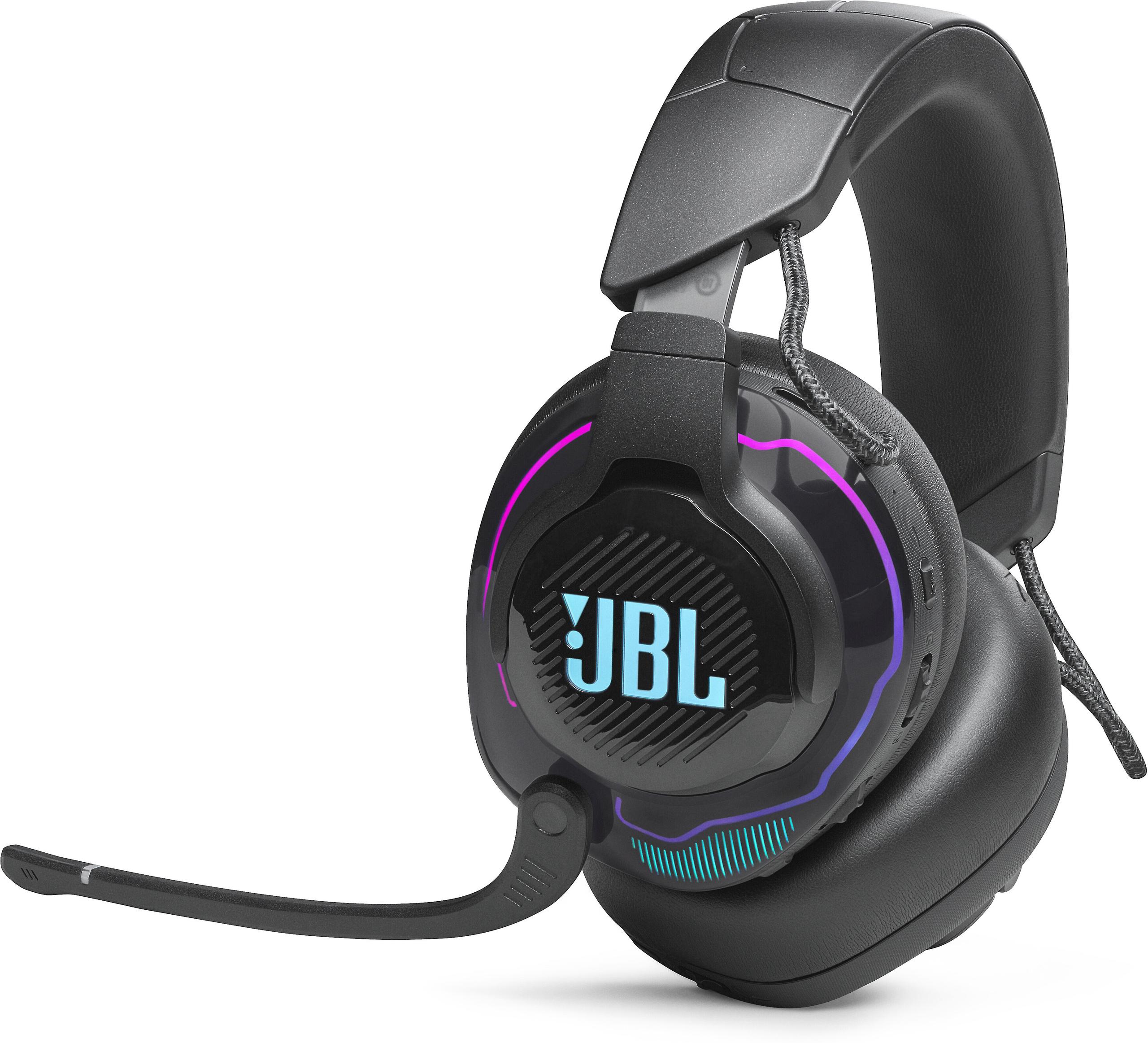
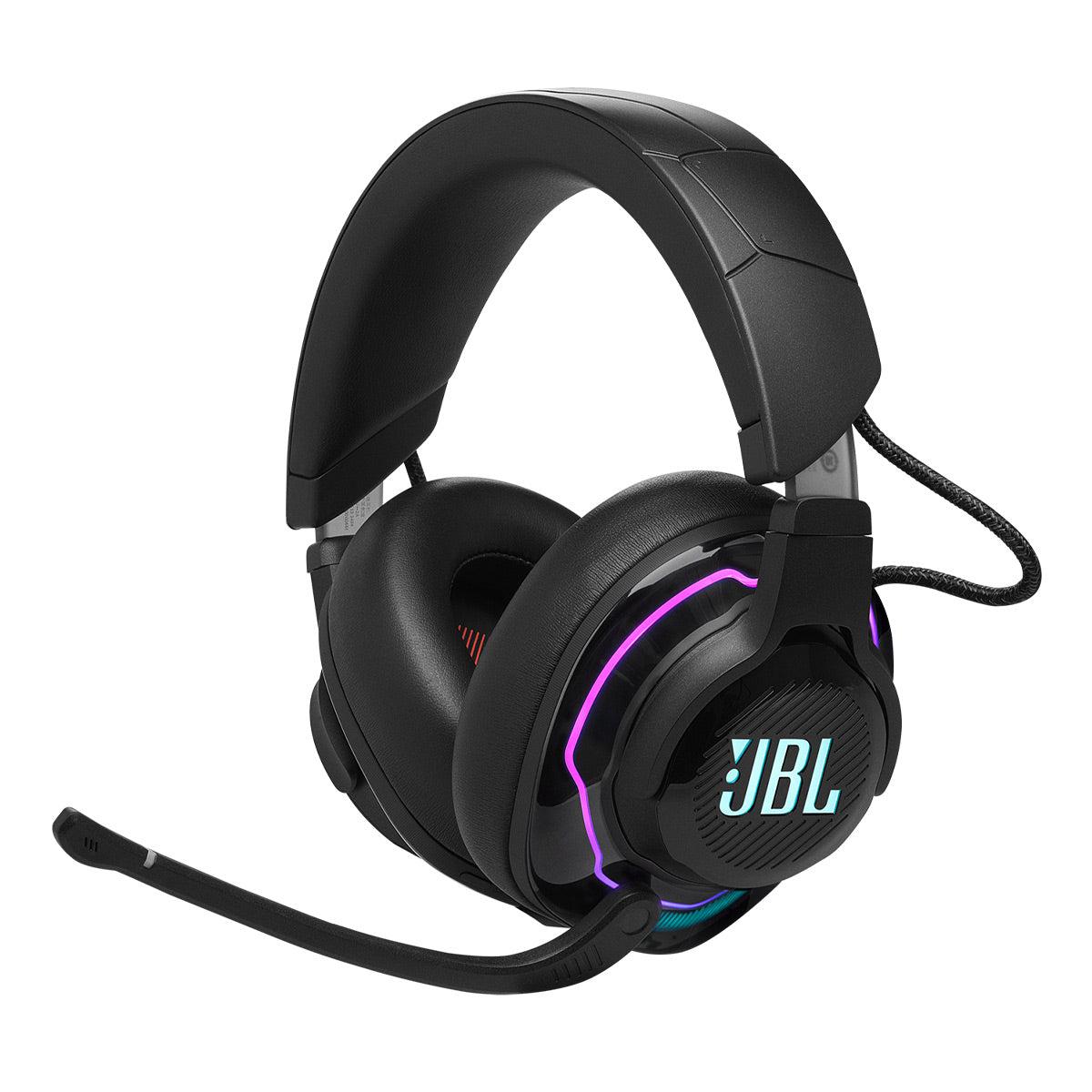


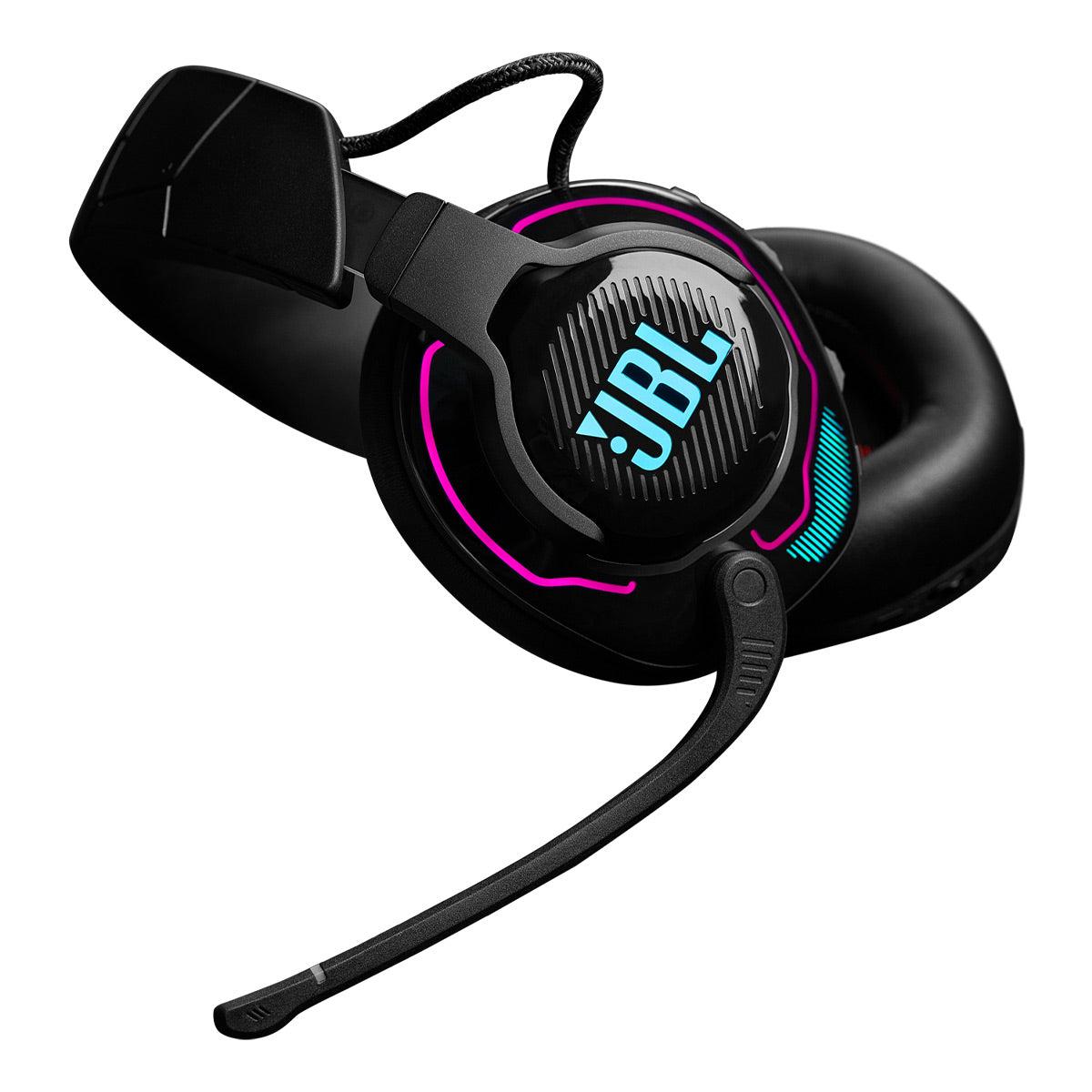
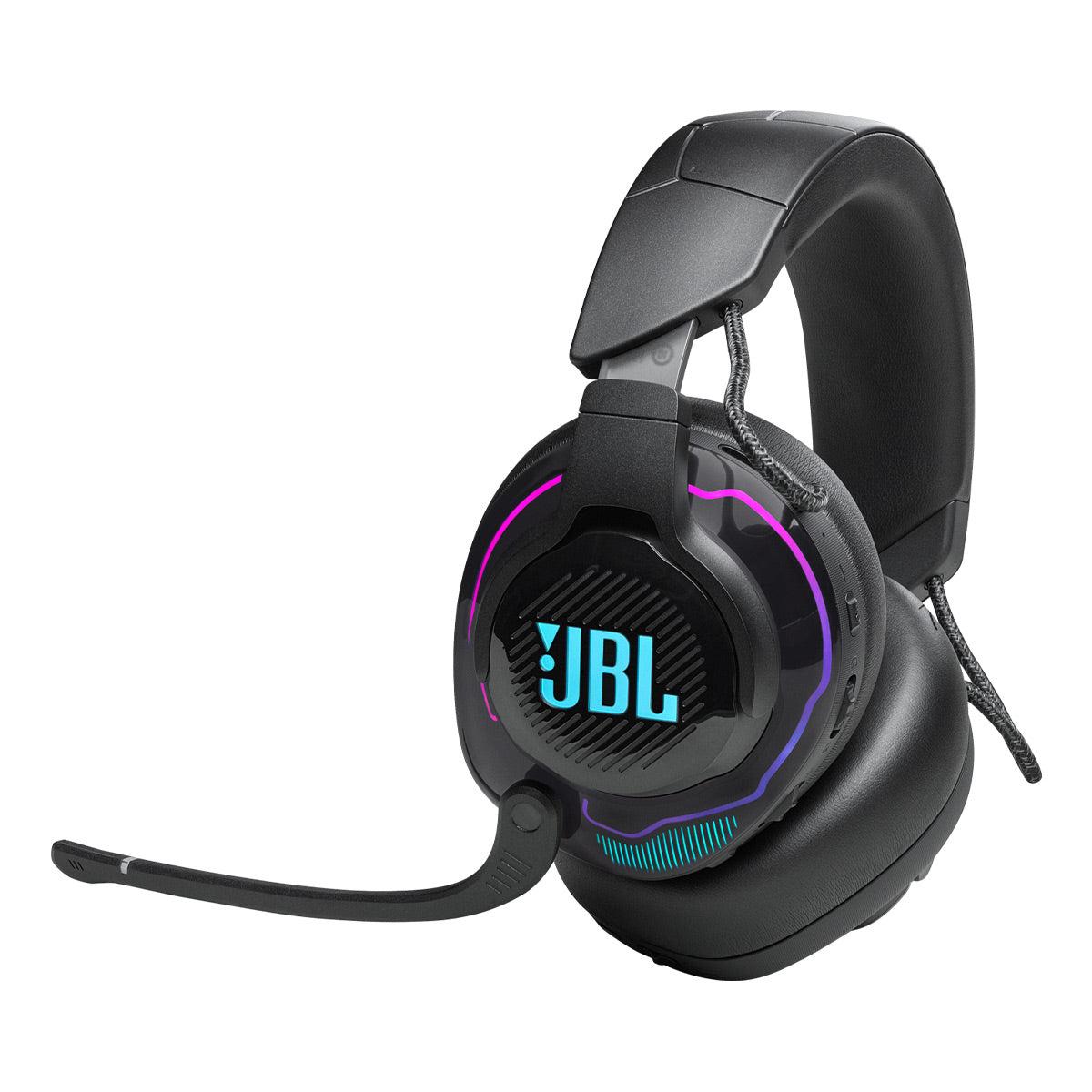
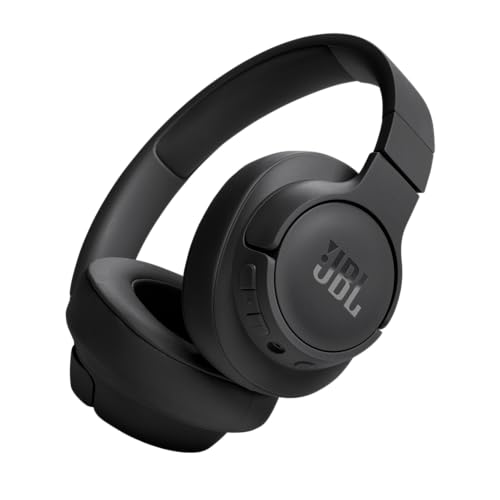

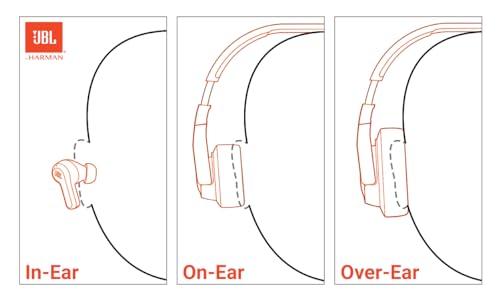

When JBL released both the Quantum 910 Wireless Gaming Headset and Tune 720BT Wireless Over-Ear Headphones in recent years, they demonstrated something important about the modern audio market: one size definitely doesn't fit all. While both products put sound over your ears wirelessly, they represent completely different philosophies about what makes headphones worthwhile.
At the time of writing, these products sit at opposite ends of JBL's pricing spectrum, with the Quantum 910 commanding premium pricing while the Tune 720BT delivers exceptional value in the budget-friendly category. This price gap of several hundred dollars isn't arbitrary—it reflects genuinely different approaches to solving audio problems.
The wireless over-ear headphone market has evolved dramatically since companies started taking gaming seriously around 2018-2019. Before that, most "gaming headphones" were just regular headphones with a microphone stuck on. Now we have purpose-built gaming headsets like the Quantum 910 that incorporate technologies you'd find in professional audio studios.
Music-focused headphones like the Tune 720BT have evolved too, but in different directions. Instead of adding complex spatial processing, they've focused on battery life, device compatibility, and delivering good sound without breaking the bank. Both approaches make sense—they're just solving different problems.
The key consideration is understanding what you actually need. Gaming headsets excel when you're sitting at a desk, focusing intensely on competitive games where hearing footsteps behind you might mean the difference between winning and losing. Music headphones shine when you're commuting, working, or just want to enjoy your favorite albums without thinking about complex setup procedures.
Here's where things get interesting from a technical standpoint. The Quantum 910 uses larger 50mm neodymium drivers compared to the Tune 720BT's 40mm dynamic drivers. Driver size isn't everything, but those extra 10 millimeters allow the gaming headset to push more air and create stronger bass response when needed.
More importantly, the Quantum 910 supports Hi-Res Audio certification, meaning it can reproduce frequencies up to 40kHz when used with a wired connection. Most music doesn't contain information above 20kHz (the upper limit of human hearing), but some modern recordings and game audio do include these ultra-high frequencies. The Tune 720BT sticks to the standard 20Hz-20kHz range, which covers everything most people will ever hear.
The real difference lies in how these headphones process sound. The Quantum 910 includes JBL's QuantumSOUND Signature, which is specifically tuned by audio engineers who understand gaming. This means certain frequency ranges are emphasized to make footsteps, reloading sounds, and directional audio cues more prominent. It's not necessarily "better" sound—it's purposefully colored sound designed to give you advantages in games.
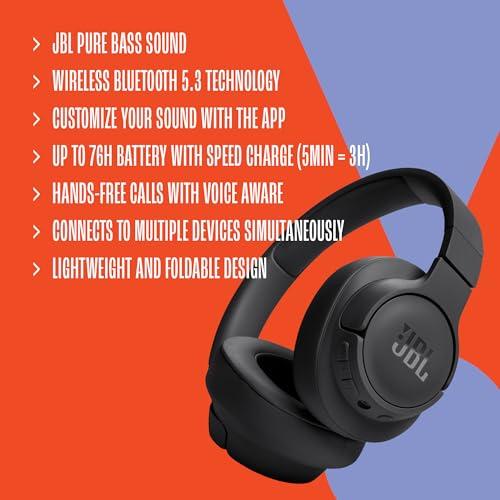
The Tune 720BT takes the opposite approach with JBL's Pure Bass Sound tuning. This signature aims for musical enjoyment rather than competitive advantage. Based on our research into user feedback, the bass is punchy but not overwhelming, mids are warm and present, and highs are clear without being harsh. For listening to music, podcasts, or movies, this creates a more natural and enjoyable experience.
This is where the Quantum 910 really shows its gaming DNA. The headset includes an actual head-tracking sensor—a tiny accelerometer and gyroscope that detects when you move your head. Combined with JBL's QuantumSPHERE 360 technology on PC, this creates something remarkable: sound that stays positioned in virtual space even as you turn your head.
Think of it this way: in real life, if someone is speaking to your left and you turn your head right, their voice moves to be more behind you. Most headphones can't replicate this because they're strapped to your head—the sound moves with you. The Quantum 910's head tracking solves this problem by continuously adjusting the audio positioning based on your head movement.
This technology requires serious processing power, which is why it only works fully on PC with JBL's QuantumENGINE software installed. Console users get a simplified version called QuantumSPATIAL 360, which provides spatial positioning without the head tracking. It's still impressive, but not quite as immersive.
The Tune 720BT doesn't include any spatial audio processing. Sound comes from left and right drivers in traditional stereo, which is perfectly fine for music but can't provide the positional advantages that competitive gamers crave.
From our evaluation of expert reviews, the spatial audio on the Quantum 910 genuinely works as advertised, though some reviewers noted it can make music sound artificial. This reinforces that these headphones are built for gaming first, with music as a secondary consideration.
Both headphones are wireless, but they accomplish this in fundamentally different ways. The Quantum 910 uses dual wireless technology—it can simultaneously connect via 2.4GHz wireless (for ultra-low latency gaming) and Bluetooth 5.2 (for phone calls or music from your device). This dual-connection system is genuinely useful: you can be in a game voice chat on your PC while taking a call on your phone without switching anything manually.
The 2.4GHz connection is crucial for competitive gaming because it virtually eliminates audio delay. Bluetooth, even the latest versions, introduces 40-150 milliseconds of latency depending on the codec used. In fast-paced games, this delay between seeing an action and hearing it can be noticeable and frustrating. The Quantum 910's dedicated gaming connection reduces this to imperceptible levels.
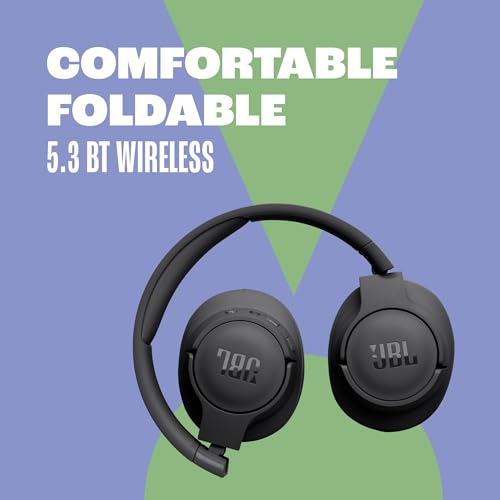
The Tune 720BT relies solely on Bluetooth 5.3, the latest version of the standard. While this doesn't match the ultra-low latency of dedicated gaming wireless, Bluetooth 5.3 offers better power efficiency and more stable connections than previous versions. For music listening, the slight latency doesn't matter since you're not reacting to audio cues in real-time.
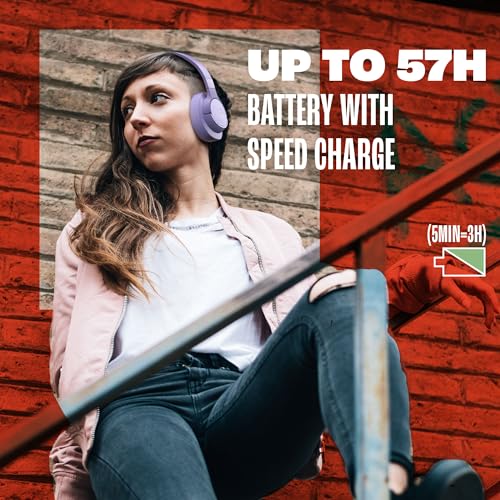
Where the Tune 720BT absolutely dominates is battery life. These headphones deliver up to 76 hours of continuous playback—more than three full days of non-stop music. The Quantum 910 manages about 39 hours, which is still excellent but roughly half the endurance.
Both support fast charging, but the Tune 720BT wins here too with its speed charge feature: five minutes of charging provides three hours of listening time. This is invaluable when you're rushing out the door and realize your headphones are dead.
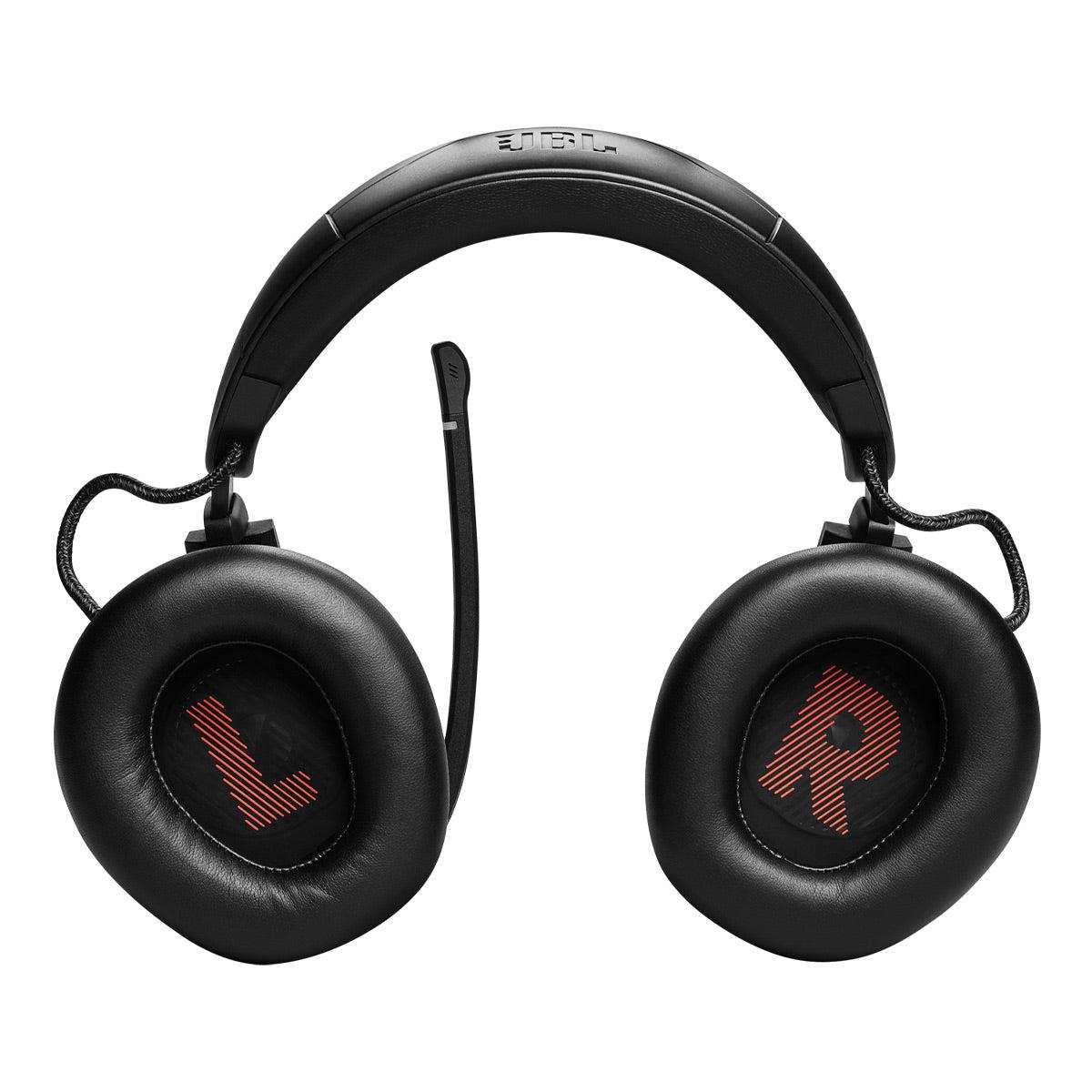
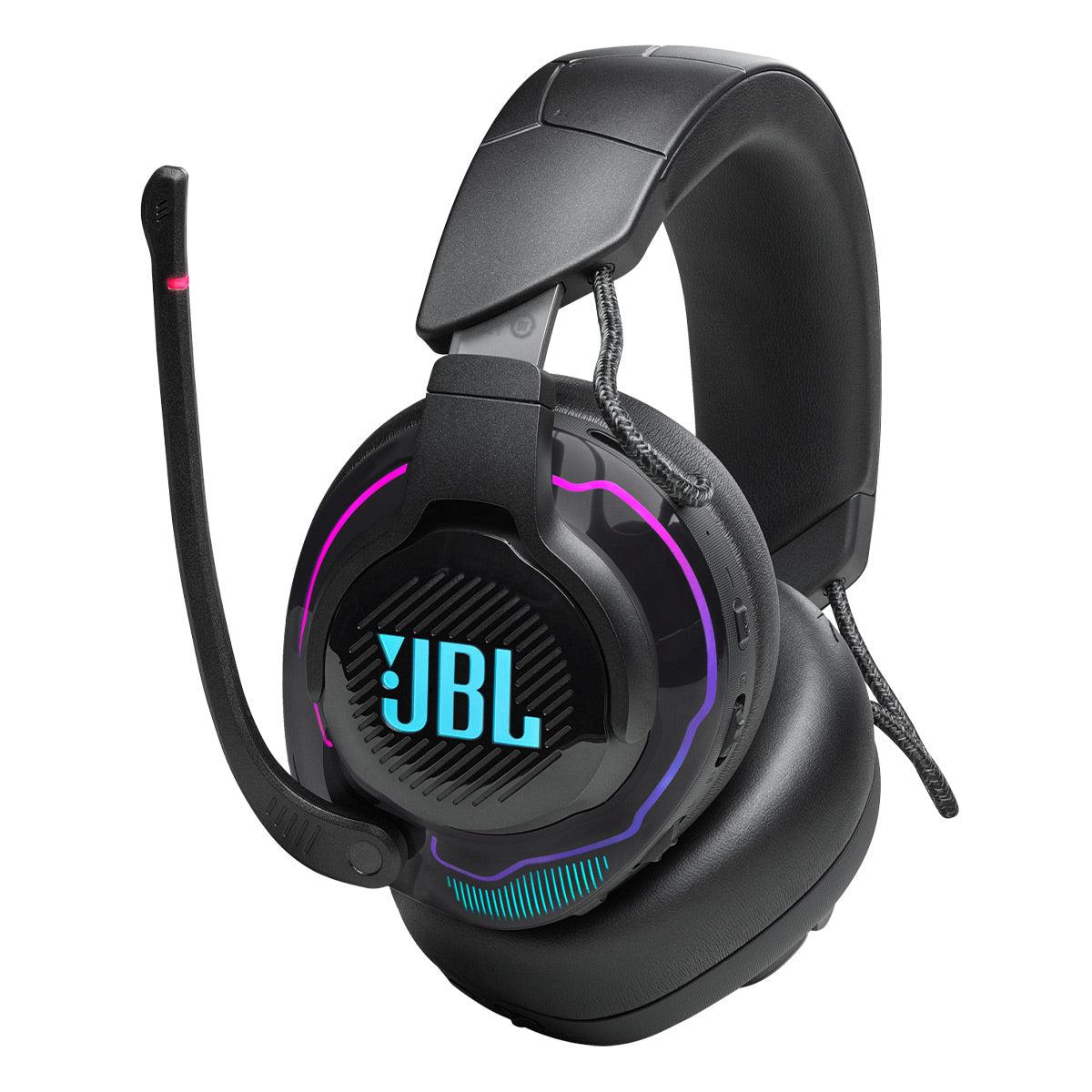
The difference in microphone quality between these products is substantial. The Quantum 910 includes a detachable boom microphone that you can position precisely near your mouth. This microphone includes advanced noise suppression and echo cancellation technology, making your voice sound clear even in noisy environments.
Based on our research, the boom microphone performs well for gaming communication and streaming, though some reviewers noted it doesn't quite match the quality of dedicated streaming microphones that cost hundreds of dollars on their own. Still, for integrated headset communication, it's solid.
The microphone also features flip-to-mute functionality—lift it up and you're instantly muted, lower it down to talk again. This sounds simple, but it's incredibly useful during gaming when you need to mute quickly without fumbling for buttons.
The Tune 720BT uses a built-in microphone that's perfectly adequate for phone calls and video meetings but won't impress anyone with its quality. It includes JBL's Voice Aware technology, which lets you hear your own voice during calls so conversations feel more natural. For casual communication, it gets the job done without fanfare.
Here's a significant capability gap: the Quantum 910 includes Active Noise Cancellation (ANC), while the Tune 720BT doesn't offer any noise cancellation at all.
The Quantum 910's ANC is specifically tuned for gaming environments rather than travel or commuting. It's designed to eliminate distracting household sounds—air conditioning, traffic outside, family conversations—that can interfere with competitive gaming. From expert reviews, the noise cancellation is effective but not industry-leading compared to headphones that focus primarily on ANC performance.
The lack of ANC on the Tune 720BT is a notable omission at any price point, though it helps explain how JBL achieved such impressive battery life and kept costs low. If noise cancellation is important for your use case, this could be a dealbreaker.
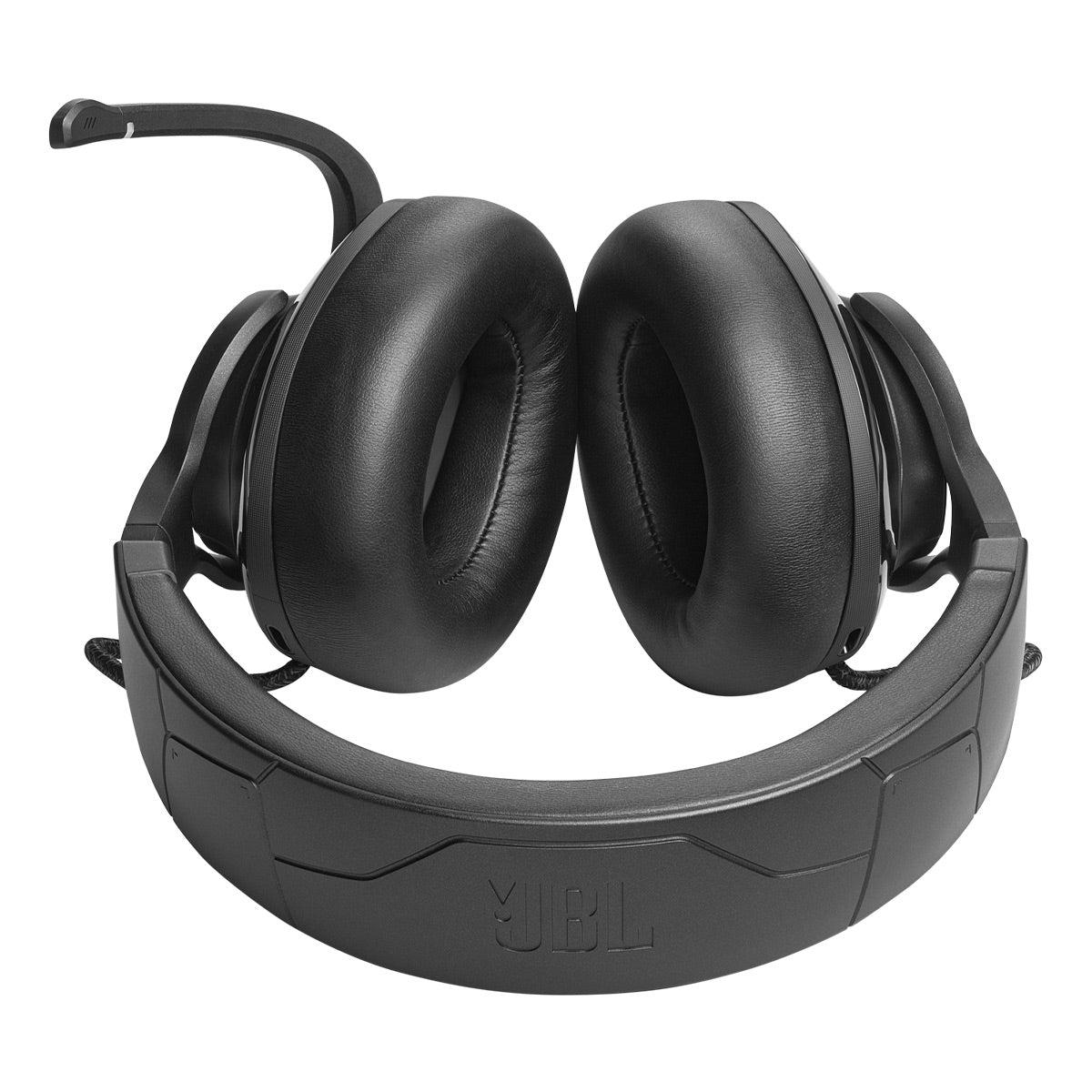
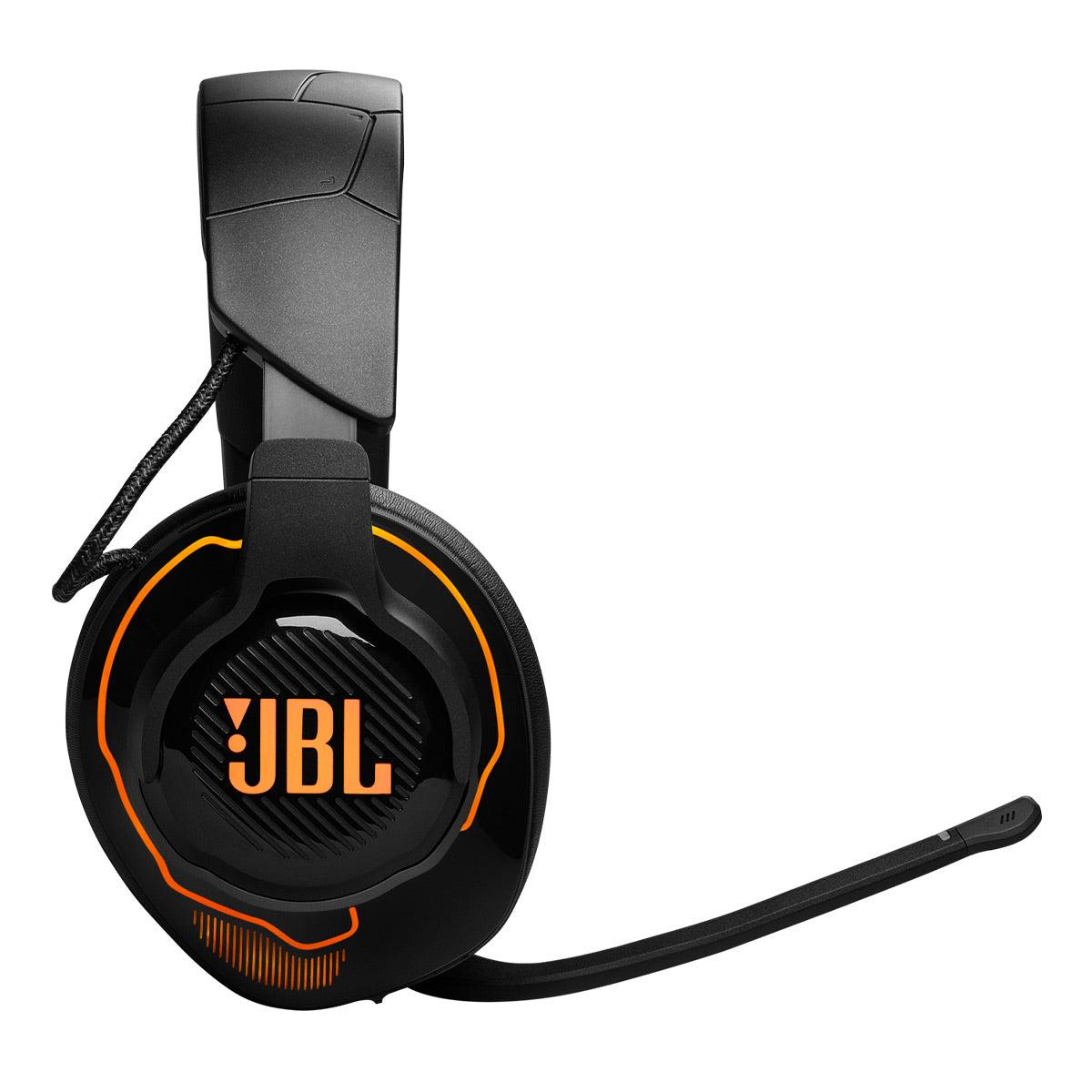
The Quantum 910 weighs 420 grams and feels substantial in your hands. The extra weight comes from all the internal technology—head tracking sensors, dual wireless systems, noise cancellation electronics, and larger drivers. JBL uses premium materials including leather-wrapped memory foam cushions and a durable headband designed for extended gaming sessions.
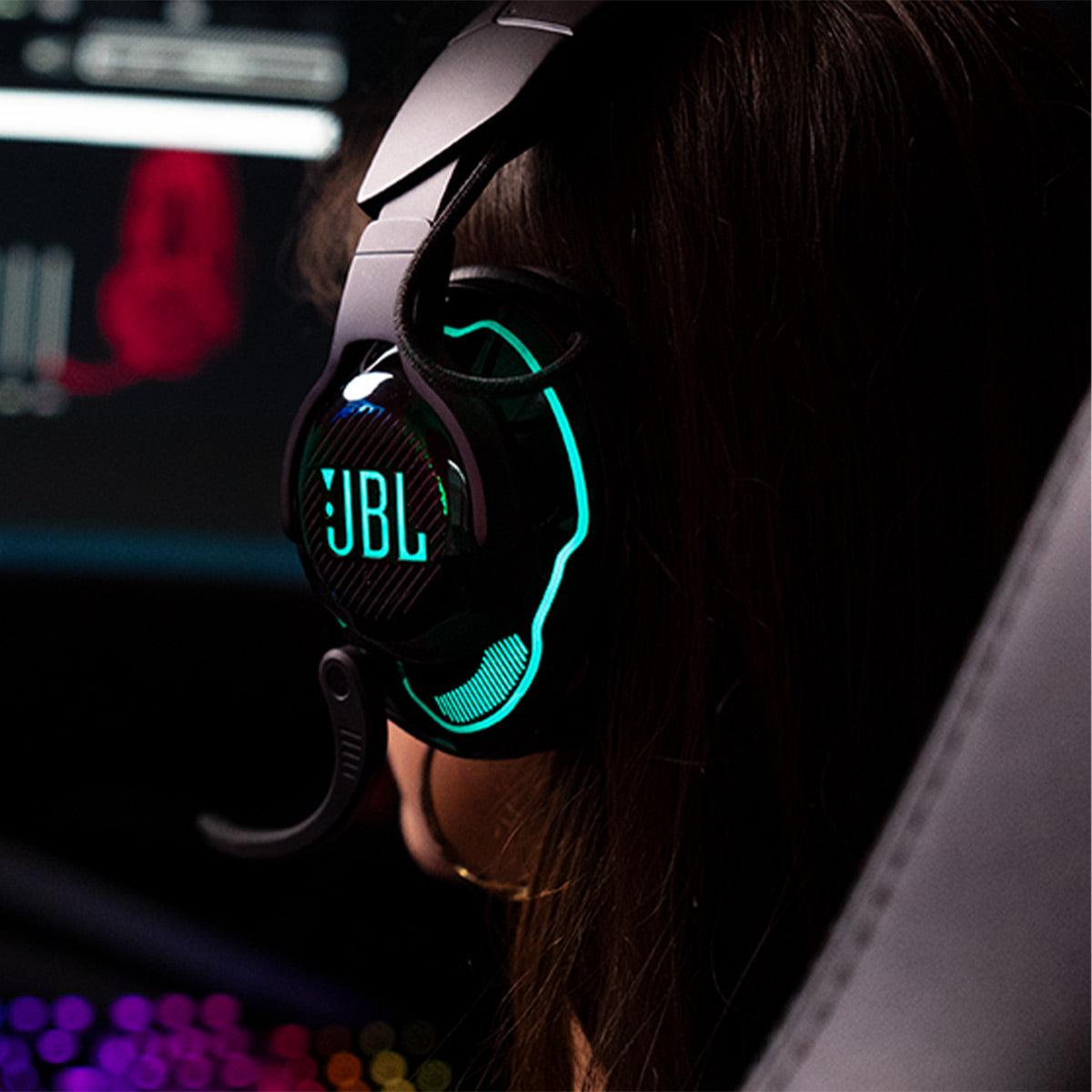
The headset doesn't fold, which makes it less portable but potentially more durable. RGB lighting adds gaming flair, and the overall aesthetic clearly signals "serious gaming headset."
The Tune 720BT takes a completely different approach at 220 grams—exactly half the weight of the gaming headset. They fold flat for travel, use lighter materials, and prioritize portability over premium feel. The build quality is appropriate for the price point but doesn't feel as robust as the gaming-focused option.
Comfort depends heavily on your intended use. For gaming sessions at a desk, the Quantum 910's extra padding and support make sense even if they add weight. For commuting or casual listening, the Tune 720BT's lighter design and portability become more important than premium materials.
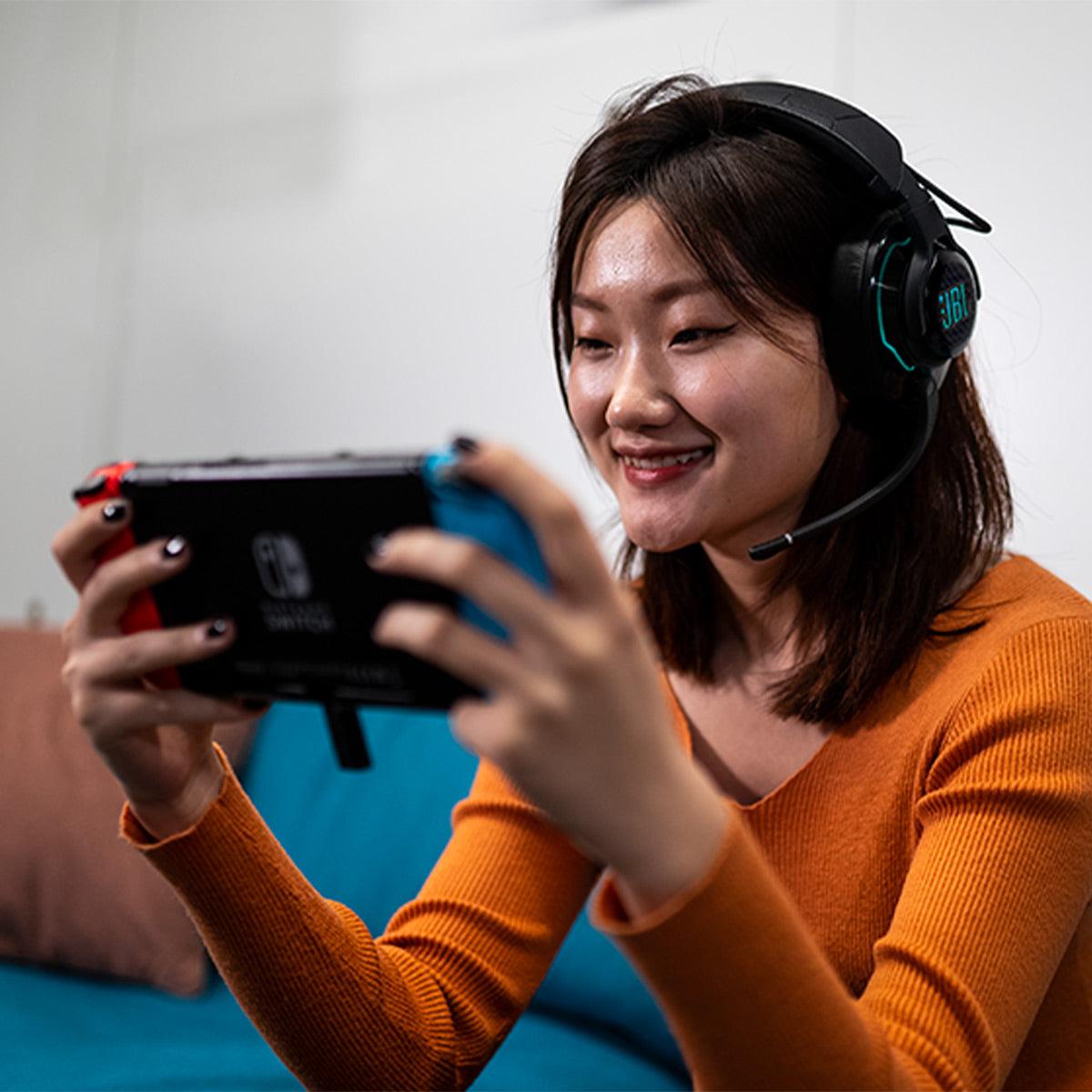
The Quantum 910 works across multiple platforms but with varying feature sets. On PC, you get the full experience including head tracking, RGB customization, and detailed audio tuning through JBL's QuantumENGINE software. PlayStation and Nintendo Switch users get wireless connectivity and spatial audio but lose some advanced features. Xbox users must use a wired connection since Xbox doesn't support third-party wireless dongles.
This platform variability is both a strength and weakness. If you primarily game on PC, you get tremendous value from all the advanced features. If you're an Xbox gamer, you're paying for wireless technology you can't use.
The Tune 720BT offers universal compatibility that's refreshingly simple. They work identically with any device that supports Bluetooth—phones, tablets, computers, smart TVs, even some modern game consoles. The included 3.5mm cable provides backup connectivity for any device with a headphone jack.
For home theater use, both products have interesting applications. The Quantum 910 can provide immersive spatial audio for movies and TV shows, especially when connected to a PC running media player software that supports advanced audio processing. The head tracking technology creates a genuine surround sound experience that follows your movement.
However, the gaming-tuned audio signature might make movies sound unnatural compared to headphones designed specifically for film audio. The Tune 720BT offers more neutral sound that typically translates better to movie soundtracks and dialogue.
Battery life becomes crucial for binge-watching sessions, where the Tune 720BT's 76-hour endurance shines. You could watch entire TV series without needing to charge.
Neither product offers the ultimate home theater experience compared to dedicated home theater headphones, but both serve as solid wireless options for late-night viewing without disturbing others.
The Quantum 910 relies heavily on JBL's QuantumENGINE software for PC users. This application provides extensive customization options including EQ adjustment, RGB lighting control, spatial audio calibration, and microphone settings. The software is generally well-regarded but adds complexity that some users find overwhelming.
The Tune 720BT uses JBL's simpler Headphones app, which offers basic EQ customization and firmware updates. The reduced feature set means less complexity but also fewer options for fine-tuning your experience.
The Quantum 910 makes sense for dedicated gamers who will actually use its advanced features. If you're into competitive multiplayer games where audio positioning matters, stream on platforms like Twitch, or participate in organized esports, the specialized features justify the premium price. PC gamers get the most value since they access all features.
The Tune 720BT serves almost everyone else better. If you primarily listen to music, take video calls for work, watch movies, or want headphones that work seamlessly across all your devices, this is the smarter choice. The exceptional battery life alone makes them ideal for travelers, commuters, or anyone who forgets to charge their devices regularly.
These products represent mature approaches to wireless audio that have evolved significantly since their respective launches. The Quantum 910 incorporates gaming technologies that didn't exist in consumer headphones five years ago, while the Tune 720BT achieves battery life that was unthinkable in earlier wireless designs.
Your decision should align with your primary use case. If gaming is your passion and you have the budget for specialized tools, the Quantum 910 offers genuine advantages that can improve your gaming experience. For most other scenarios, the Tune 720BT delivers better value by focusing on the fundamentals: good sound, long battery life, and broad compatibility.
Both products succeed at their intended purposes, which is more than can be said for many "jack of all trades" headphones that try to be everything to everyone. Sometimes the best approach is choosing the tool designed specifically for your needs rather than compromising on a product that tries to do everything adequately instead of doing one thing exceptionally well.
| JBL Quantum 910 Wireless Gaming Headset | JBL Tune 720BT Wireless Over-Ear Headphones |
|---|---|
| Driver Size - Larger drivers typically produce fuller sound and stronger bass | |
| 50mm neodymium drivers | 40mm dynamic drivers |
| Frequency Response - Higher range captures more audio detail, especially important for Hi-Res audio | |
| 20Hz-40kHz (wired), 20Hz-20kHz (wireless) | 20Hz-20kHz |
| Weight - Heavier headphones may cause fatigue during extended use | |
| 420g (14.8 oz) - substantial due to gaming features | 220g (7.8 oz) - lightweight for portability |
| Battery Life - Longer battery means less frequent charging interruptions | |
| 39 hours (excellent for gaming sessions) | 76 hours (exceptional for travel and daily use) |
| Wireless Technology - Different approaches optimize for gaming vs general use | |
| Dual: 2.4GHz low-latency + Bluetooth 5.2 | Bluetooth 5.3 with multi-point connection |
| Spatial Audio - 3D positioning gives competitive gaming advantages but isn't needed for music | |
| QuantumSPHERE 360™ with head tracking (PC), QuantumSPATIAL 360™ (console) | None - standard stereo sound |
| Active Noise Cancellation - Blocks distracting sounds during focused activities | |
| Yes, gaming-tuned ANC | No ANC capability |
| Microphone Quality - Critical for gaming communication and professional calls | |
| Detachable boom mic with noise suppression and flip-to-mute | Basic built-in mic for casual calls |
| Platform Compatibility - Determines which devices can access full features | |
| PC (full features), PlayStation/Nintendo Switch (wireless), Xbox (wired only) | Universal Bluetooth compatibility with all devices |
| Build Design - Affects portability and storage options | |
| Non-foldable gaming design with RGB lighting | Foldable for travel with minimalist design |
| Software Support - Advanced customization vs simplicity | |
| JBL QuantumENGINE with extensive gaming features and EQ | JBL Headphones App with basic EQ and settings |
| Charging Speed - How quickly you can get back to using them | |
| 3.5 hours full charge, play-and-charge support | 2 hours full charge, 5min = 3 hours speed charge |
| Audio Tuning Philosophy - Different sound signatures serve different purposes | |
| QuantumSOUND Signature optimized for competitive gaming | Pure Bass Sound tuned for musical enjoyment |
The JBL Quantum 910 Wireless Gaming Headset is significantly better for gaming. It features specialized gaming technologies like spatial audio with head tracking, ultra-low latency 2.4GHz wireless, and a professional boom microphone. The JBL Tune 720BT lacks these gaming-specific features and is designed primarily for music listening.
The core difference is their intended purpose: the JBL Quantum 910 is a premium gaming headset with advanced features like spatial audio and professional communication tools, while the JBL Tune 720BT is a general-purpose music headphone focused on exceptional battery life and universal compatibility.
The JBL Tune 720BT has significantly better battery life with up to 76 hours of playback compared to the JBL Quantum 910's 39 hours. The Tune 720BT also offers faster charging with 5 minutes providing 3 hours of listening time.
No, they have different wireless capabilities. The JBL Tune 720BT works universally with any Bluetooth device. The JBL Quantum 910 uses specialized 2.4GHz wireless for gaming platforms like PC and PlayStation, plus Bluetooth, but Xbox users must use a wired connection.
Comfort depends on your use case. The JBL Quantum 910 has premium leather-wrapped memory foam cushions ideal for gaming sessions but weighs twice as much (420g vs 220g). The lighter JBL Tune 720BT is more comfortable for daily wear and travel due to its foldable, portable design.
The JBL Quantum 910 is much better for professional communication with its detachable boom microphone, noise suppression, and flip-to-mute functionality. The JBL Tune 720BT has a basic built-in microphone suitable for casual calls but not professional use.
For pure music enjoyment, the JBL Tune 720BT is better with its Pure Bass Sound tuning designed for musical listening. The JBL Quantum 910 has gaming-optimized sound that emphasizes directional audio cues over natural music reproduction, though it offers Hi-Res Audio certification.
Only the JBL Quantum 910 has Active Noise Cancellation, specifically tuned for gaming environments to eliminate distracting sounds. The JBL Tune 720BT does not include any noise cancellation technology.
The JBL Tune 720BT offers exceptional value for general users with 76-hour battery life, universal compatibility, and solid sound quality. The JBL Quantum 910 justifies its premium price for serious gamers who will use its specialized features like spatial audio and professional microphone.
Both work for home theater, but serve different needs. The JBL Quantum 910 provides immersive spatial audio that can enhance movie soundtracks, especially on PC. The JBL Tune 720BT offers more natural sound for films and the 76-hour battery life is perfect for binge-watching sessions.
The JBL Tune 720BT is much more travel-friendly - it's half the weight (220g vs 420g), folds flat for packing, and has exceptional 76-hour battery life. The JBL Quantum 910 doesn't fold and is designed for stationary gaming use rather than portability.
Choose the JBL Quantum 910 if you're a serious gamer who values competitive advantages, spatial audio, and professional communication features. Choose the JBL Tune 720BT if you primarily listen to music, need long battery life, want universal device compatibility, or prefer exceptional value over specialized gaming features.
We've done our best to create useful and informative comparisons to help you decide what product to buy. Our research uses advanced automated methods to create this comparison and perfection is not possible - please contact us for corrections or questions. These are the sites we've researched in the creation of this article: techradar.com - stereoguide.com - ausdroid.net - majorhifi.com - ign.com - youtube.com - soundguys.com - versus.com - impulsegamer.com - versus.com - jbl.com - jbl.com.tw - crutchfield.com - th.jbl.com - harmanaudio.com - jbl.com - jbl.com - youtube.com - bestbuy.com - harmanaudio.com - jbl.com - th.jbl.com - bhphotovideo.com - audio46.com - e-catalog.com - headphonedungeon.com - e-catalog.com - recordingnow.com - versus.com - youtube.com - versus.com - consumerreports.org - youtube.com - ca.jbl.com - jblstore.co.id - jbl.com.tw - th.jbl.com - jblonlinestore.com - onward.ph - youtube.com - jbl.com - ro.harmanaudio.com - device.report - en.jblthailand.com

Privacy Policy
Terms and Conditions - Affiliate Policy
Home Security
© Copyright 2008-2026.
11816 Inwood Rd #1211, Dallas, TX 75244