



The world of home theater projectors split into two distinct camps around 2018: traditional throw projectors that mount on your ceiling like they always have, and ultra-short throw (UST) projectors that sit right underneath your screen like a fancy coffee table. Both approaches deliver massive 100+ inch images, but they solve completely different problems in your living space.
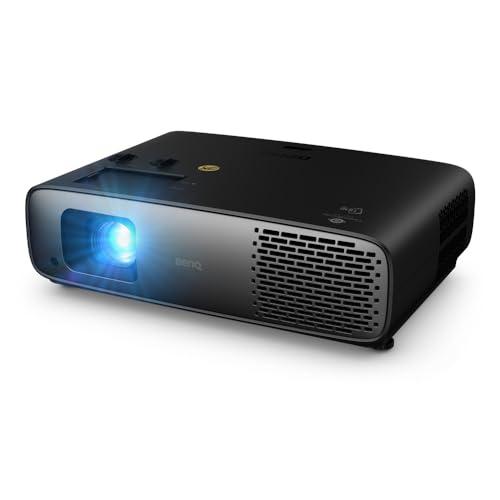
Understanding this fundamental difference is crucial because it affects everything from your room layout to your total budget. The BenQ W4100i, released in 2025 as an evolution of BenQ's popular W4000i series, represents the traditional approach refined with modern 4K technology and gaming features. The Leica Cine 1, launched around the same time, takes the ultra-short throw route with premium German optics and a price tag that reflects it.
At the time of writing, these projectors sit at opposite ends of the value spectrum. The BenQ W4100i positions itself as a high-performance option that won't break the bank, while the Leica Cine 1 costs roughly three times more and targets the luxury market. But price alone doesn't tell the whole story – each approach has distinct advantages depending on your room and preferences.
The most important decision you'll make isn't about brightness or color accuracy – it's about where the projector actually goes in your room.
The BenQ W4100i follows the traditional projector playbook, mounting 8-20 feet away from your screen. This might sound old-fashioned, but there's a reason this approach dominated for decades: it works incredibly well when you can make it work.
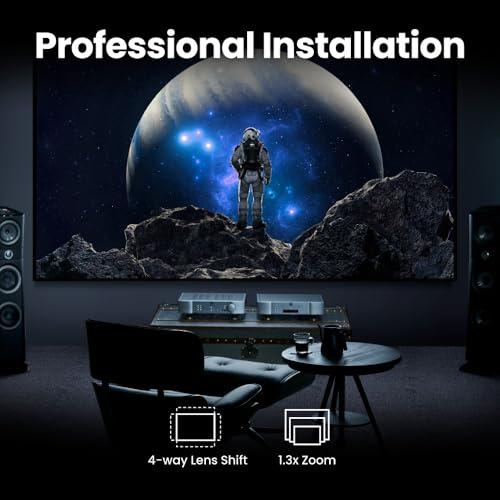
The magic lies in the flexibility. With a 1.3x optical zoom and impressive lens shift capabilities (60% vertical, 15% horizontal), the BenQ W4100i adapts to almost any room configuration. Lens shift is like having a magic adjustment dial – instead of physically moving the entire projector to center your image, you turn a dial and the lens elements move internally to position the picture perfectly. This means you can mount the projector slightly off-center or at different heights without creating a crooked image.
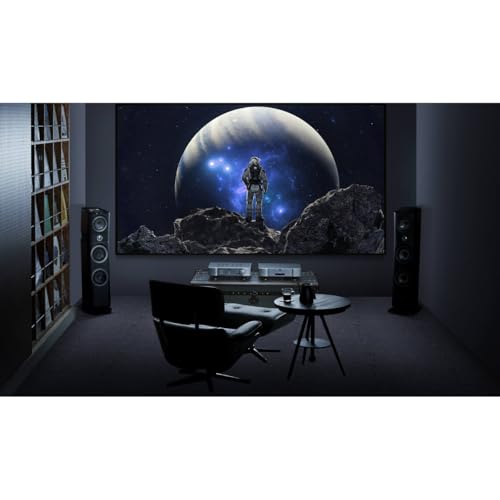
I've seen rooms where traditional projectors shine: dedicated home theaters, bonus rooms, or even living rooms where running cables through walls isn't a dealbreaker. The ceiling-mounted approach keeps the projector out of sight and out of mind, creating that authentic cinema experience where the technology disappears.
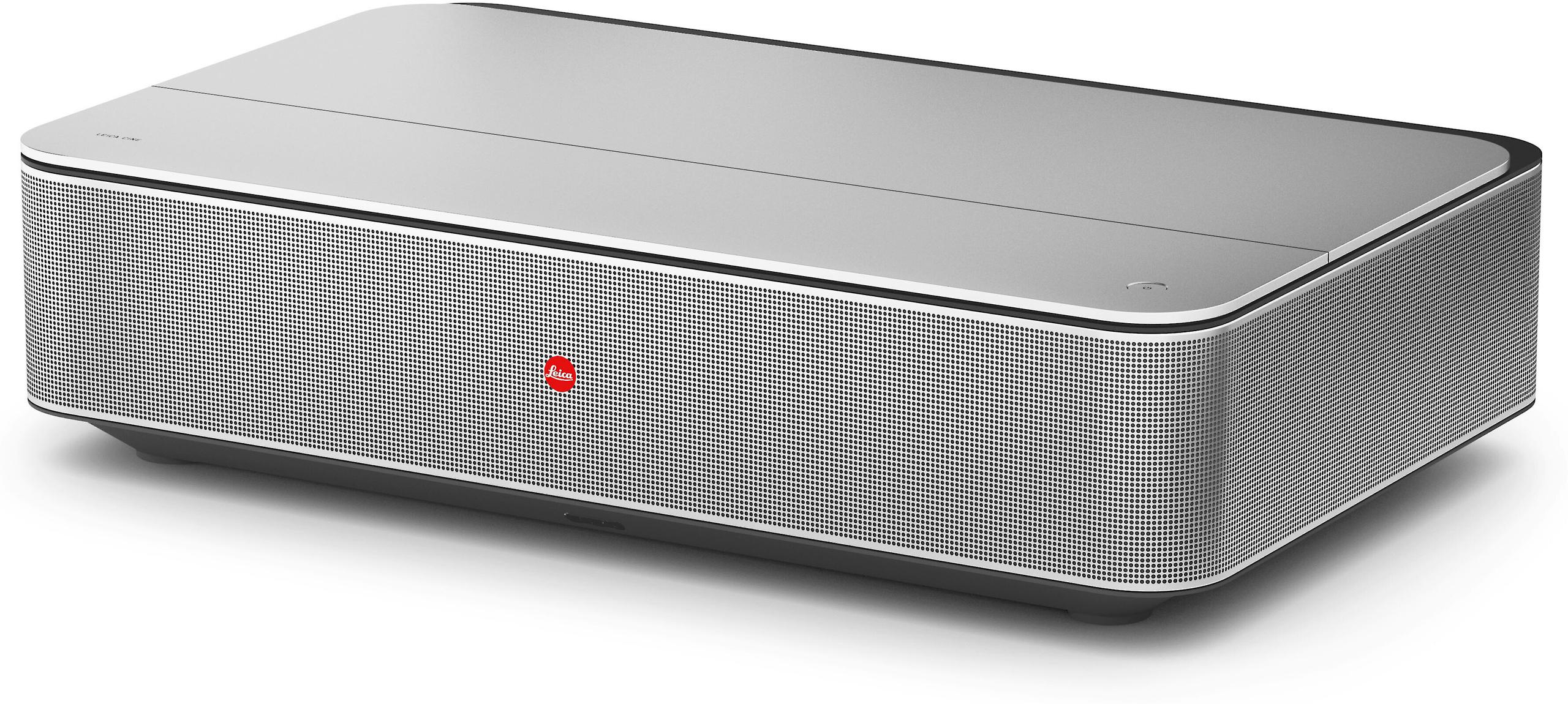
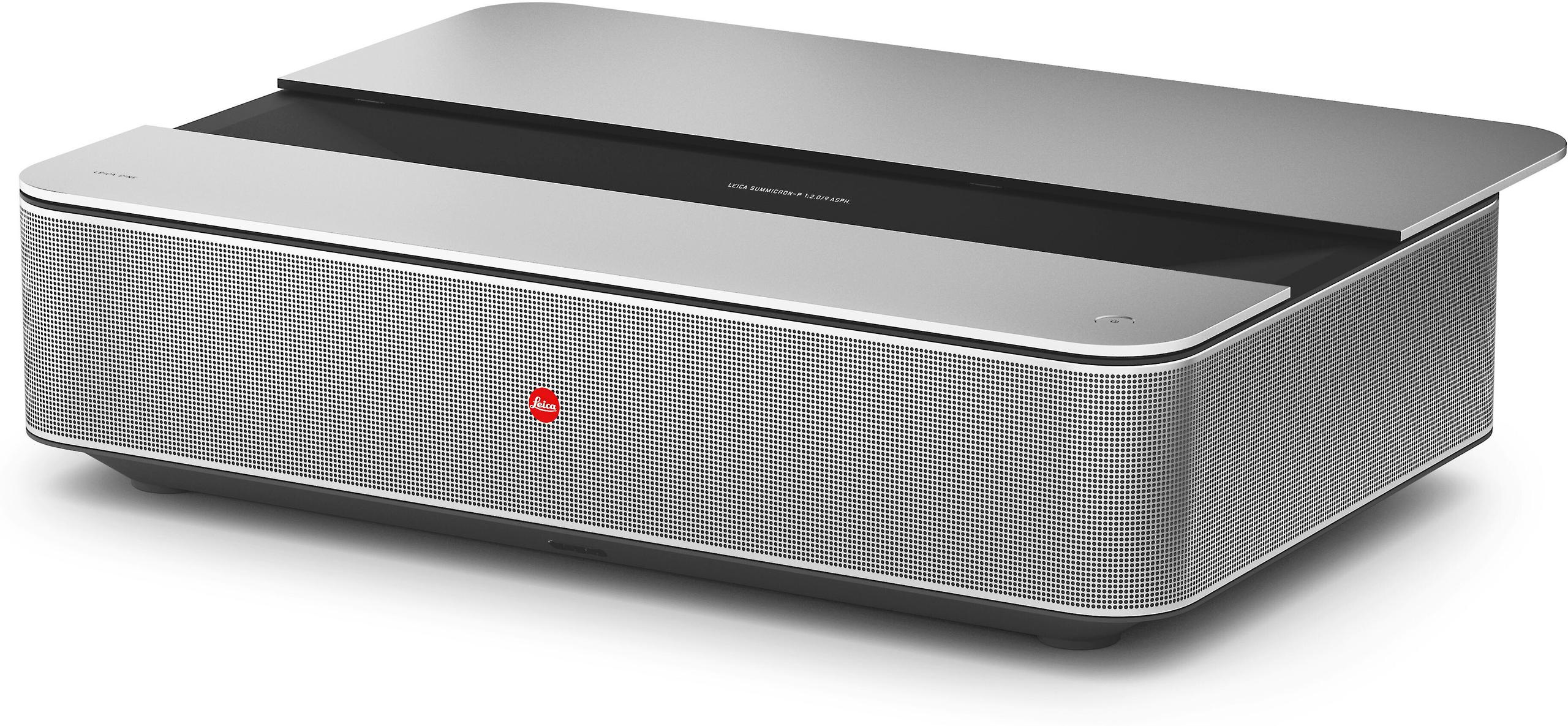
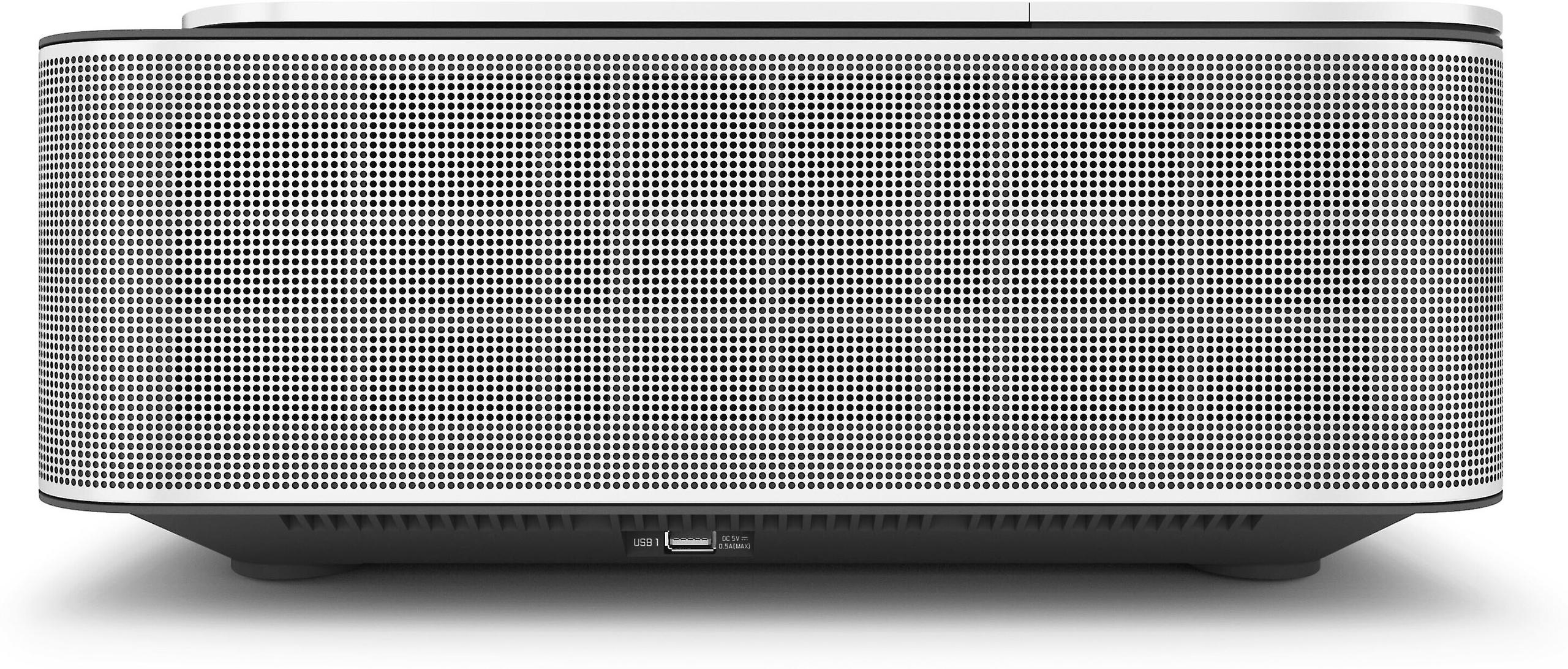
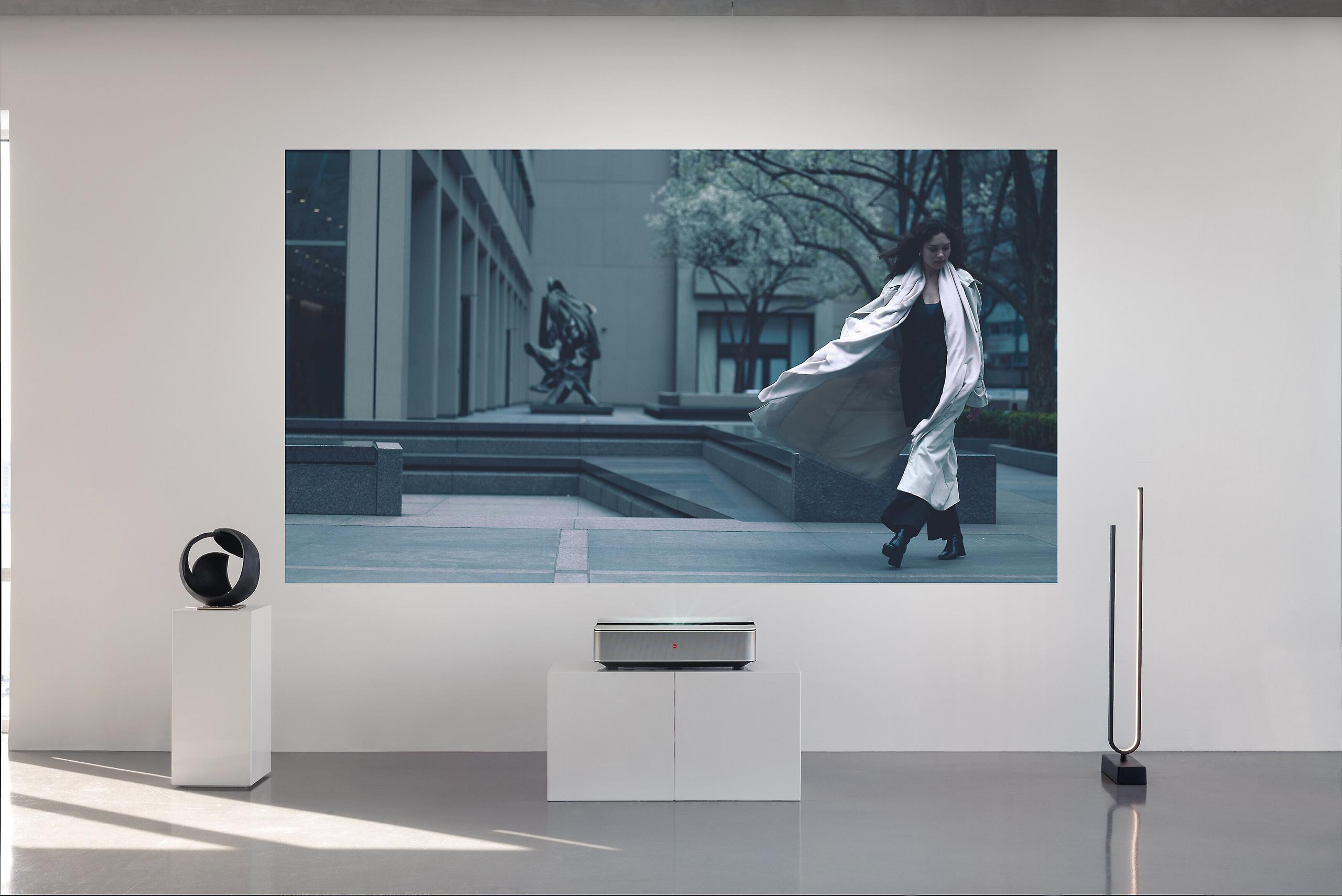
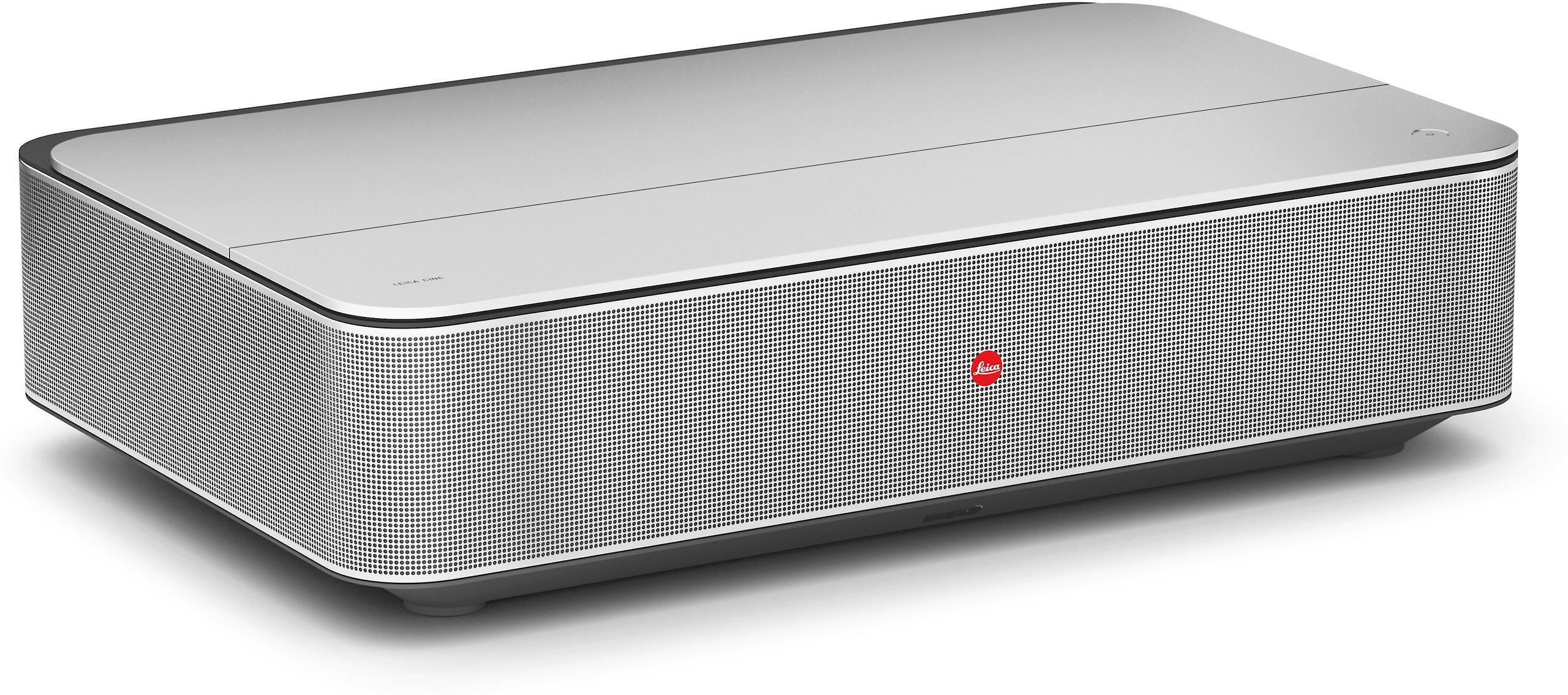
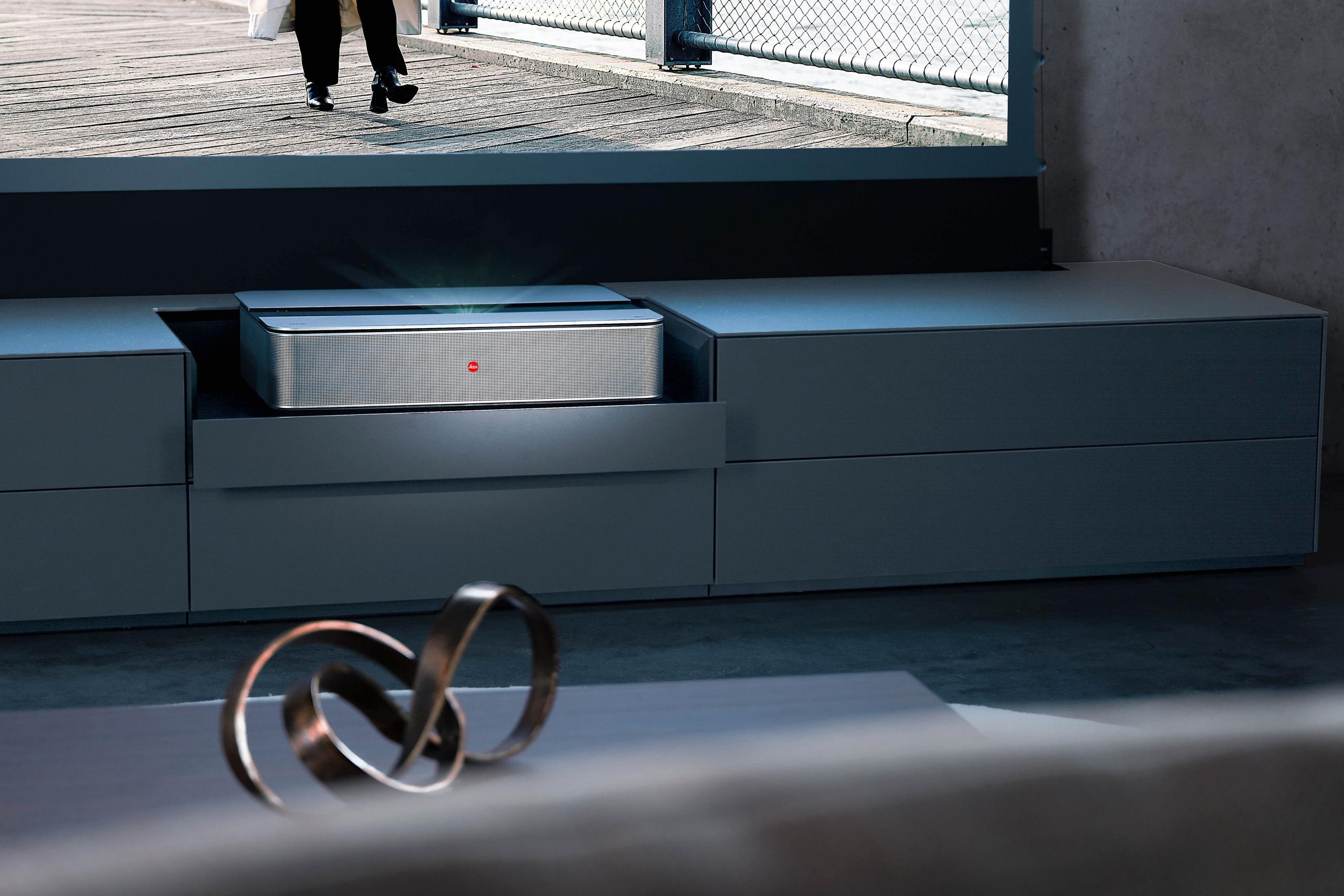
The Leica Cine 1 takes a radically different approach, projecting a 120-inch image from just 14.3 inches away. This isn't magic – it's complex optics involving multiple mirrors and precisely engineered lens elements that spread the light across a much wider angle than traditional projectors.
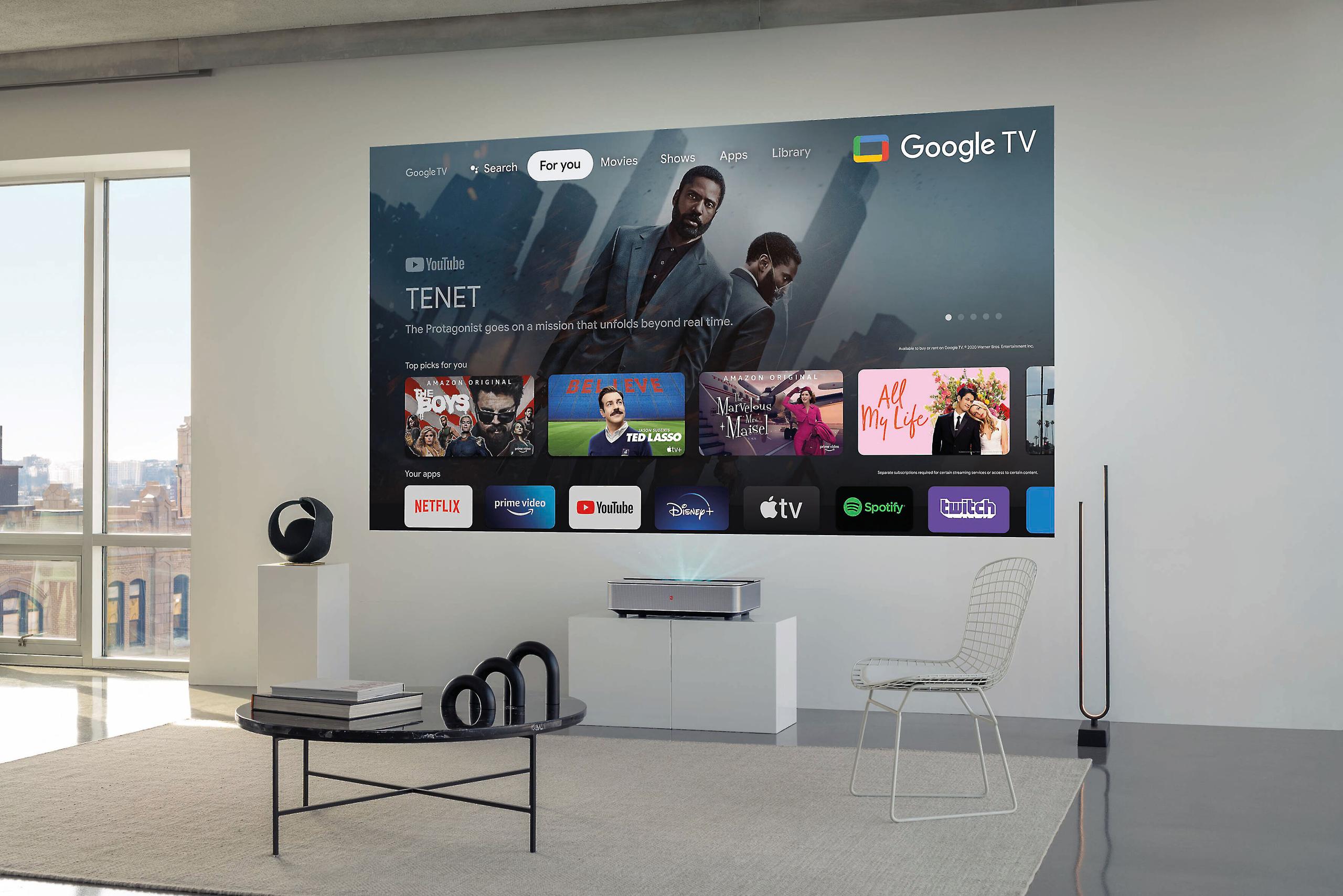
Ultra-short throw technology emerged as projector manufacturers realized that most people don't have dedicated theater rooms. Instead of asking you to rearrange your entire living space around the projector, UST models like the Leica Cine 1 adapt to your existing furniture layout. No ceiling mounting, no cable runs through walls, no drilling – just place it on your TV console and you're basically done.
The trade-off comes in screen requirements. While the BenQ W4100i works perfectly well with a basic white wall or simple projection screen, the Leica Cine 1 really needs a specialized ALR (Ambient Light Rejection) screen to perform at its best. These screens use micro-structures to reject light coming from above (like ceiling lights) while reflecting the projector's light directly back to your eyes. It's clever engineering, but it adds to the total system cost.
When evaluating projectors, four metrics matter most: brightness, contrast, color accuracy, and motion handling. Everything else is secondary to getting these fundamentals right.
Both projectors claim similar brightness levels – around 3,000-3,200 ANSI lumens – but they achieve this through completely different light sources. The BenQ W4100i uses a 4LED RGBB system, which sounds complicated but basically means it has four separate LED arrays: red, green, blue, and an additional blue LED for extra brightness and color volume.
This 4LED approach offers several advantages over older lamp-based projectors. The light source lasts 30,000 hours (compare that to 2,000-4,000 hours for traditional lamps), produces more consistent color over time, and generates less heat. The extra blue LED isn't just about brightness – it expands the color gamut, allowing the projector to display more vivid blues and cyans that older projectors simply couldn't reproduce.
The Leica Cine 1 uses a triple RGB laser system with a 25,000-hour lifespan. Laser projectors often produce more saturated colors than LED systems, and they typically maintain their brightness better over time. However, some users are sensitive to laser speckle – a subtle grain pattern that can appear in solid colors, particularly blues and grays. This varies from person to person; some notice it immediately, others never see it at all.
In practical terms, both projectors provide enough brightness for moderate ambient light, but the Leica Cine 1 paired with an ALR screen handles brighter rooms better. The BenQ W4100i really shows its best performance in darker environments where its superior contrast ratio can shine.
Contrast ratio – the difference between the deepest blacks and brightest whites – arguably matters more than raw brightness for perceived image quality. The BenQ W4100i claims a 3,000,000:1 dynamic contrast ratio, while the Leica Cine 1 manages 2,000,000:1.
These astronomical numbers come from dynamic contrast systems that adjust the light output in real-time based on scene content. When you're watching a dark movie scene, the projector dims its overall output to make blacks appear deeper. When a bright scene appears, it cranks up the brightness. This creates more dramatic differences between light and dark areas than the projector's native contrast ratio could achieve alone.
The BenQ W4100i uses a larger 0.65-inch DLP chip compared to the Leica Cine 1's 0.47-inch chip. Larger DLP chips generally produce better black levels because they require less pixel shifting to create 4K resolution. Pixel shifting is a technique where the chip rapidly moves pixels to create more resolution than it physically has – think of it as controlled vibration that fills in the gaps between pixels. Smaller chips need more aggressive pixel shifting, which can sometimes create artifacts or reduce contrast performance.
Both projectors excel at color reproduction, but they take different approaches to accuracy. The BenQ W4100i comes factory calibrated to achieve Delta E values under 2, which is professional-grade accuracy. Delta E measures how far off a displayed color is from the correct color – values under 2 are essentially invisible to the human eye.
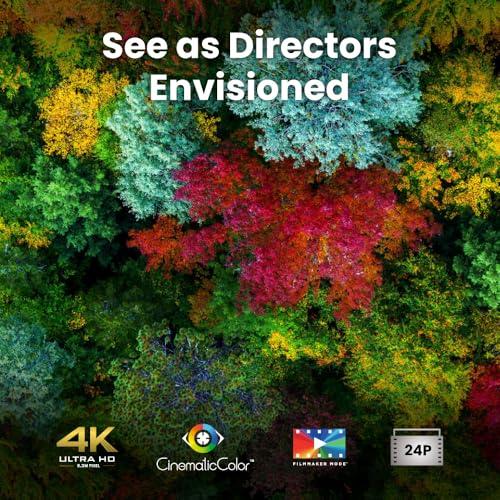
BenQ's CinematicColor technology covers 100% of both DCI-P3 (the color space used by most modern movies) and Rec.709 (the standard for HD content). The projector includes a physical cinema filter that can be engaged or disengaged, allowing you to choose between wider color gamuts for modern content or more conservative color reproduction for older films.
The Leica Cine 1 leverages Leica's legendary optical expertise with their Image Optimization (LIO) technology. This system uses custom algorithms to enhance color gradations and maintain natural-looking skin tones. While specific Delta E measurements aren't widely published, user reports suggest excellent out-of-box accuracy that rivals professionally calibrated projectors.
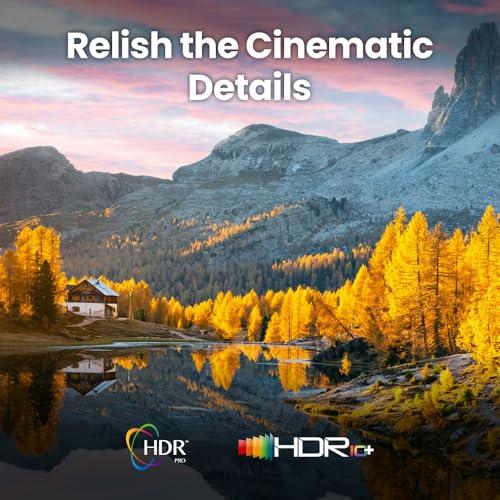
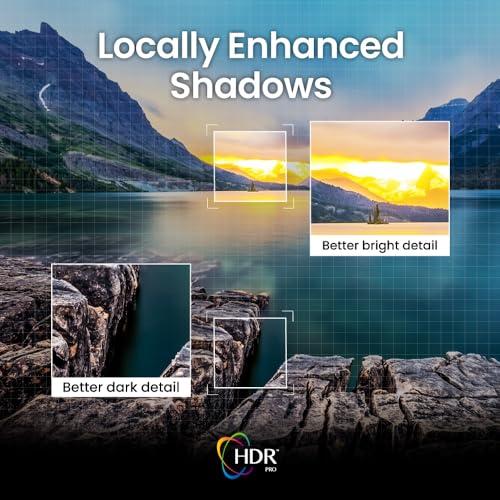
One area where the BenQ W4100i pulls ahead is HDR processing. Its HDR-PRO technology performs dynamic tone mapping – analyzing each frame of HDR content and adjusting brightness and contrast in real-time to preserve both bright highlights and shadow details. This frame-by-frame analysis prevents the blown-out highlights or crushed shadows that plague cheaper projectors.
If gaming matters to you, this comparison becomes much simpler. The BenQ W4100i delivers input lag as low as 6.5 milliseconds at 1080p/240Hz and 17.9ms at 4K/60Hz. Input lag is the delay between when you press a button and when the action appears on screen – anything under 20ms feels responsive, while anything over 40ms starts to feel sluggish.
The Leica Cine 1 manages 35.3ms at 60Hz and 60ms at 4K, which puts it firmly in the "acceptable for casual gaming but not competitive" category. This isn't necessarily a criticism – many home theater projectors prioritize image processing over low latency – but it clearly identifies the BenQ W4100i as the gaming-focused option.
The BenQ W4100i also includes three HDMI 2.1 ports that support 4K@120Hz for next-generation gaming consoles. ALLM (Auto Low Latency Mode) automatically switches the projector to its fastest processing mode when it detects a gaming source, ensuring optimal responsiveness without manual menu navigation.
Modern projectors need to handle streaming content as well as they handle Blu-ray discs, and both models approach this differently.
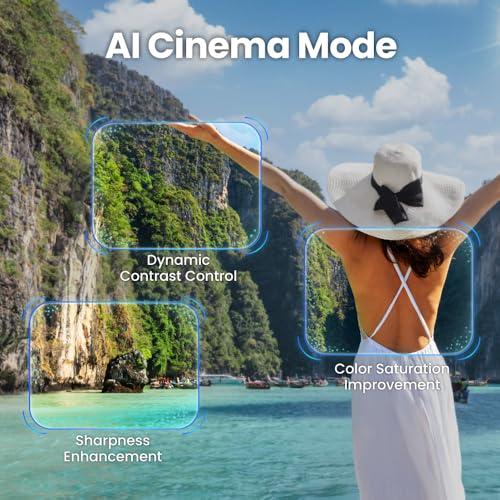
The BenQ W4100i includes an Android TV dongle that provides access to major streaming platforms including Netflix, Prime Video, Disney+, and YouTube. The AI Cinema Mode analyzes streaming content in real-time, attempting to restore detail and color depth that compression artifacts may have removed. This matters more than you might think – streaming video is heavily compressed compared to physical media, and this processing can make Netflix movies look noticeably better.
The Leica Cine 1 integrates Google TV directly into the projector, eliminating the need for external dongles. It supports Apple AirPlay 2 and includes a TV tuner for over-the-air broadcasts. The built-in Dolby Atmos sound system (2x25 watts) provides surprisingly good audio quality for a projector, though serious home theater enthusiasts will still want a dedicated sound system.
Installation costs and complexity often get overlooked when comparing projectors, but they significantly impact your total investment and ongoing satisfaction.
Installing the BenQ W4100i typically requires ceiling mounting, cable management, and potentially professional assistance. Budget an additional $300-800 for mounting hardware, cables, and installation if you're not comfortable with DIY projects. However, once properly installed, traditional throw projectors tend to stay perfectly aligned and require minimal adjustment.
The Leica Cine 1 eliminates most installation complexity – it sits on furniture like any other device. However, you'll need a high-quality ALR screen to realize its full potential, and these screens cost significantly more than traditional projection screens. Factor this into your budget planning, as the screen can represent 15-40% of your total system cost.
At the time of writing, these projectors serve fundamentally different market segments despite some overlapping capabilities.
The BenQ W4100i offers exceptional performance per dollar, particularly for users who prioritize image quality and gaming performance. It's the projector I'd recommend for dedicated home theater spaces, bonus rooms, or anywhere you can control ambient lighting effectively. The combination of high brightness, excellent contrast, and professional-grade color accuracy makes it competitive with projectors costing significantly more.
The Leica Cine 1 targets users who value convenience and design aesthetics over absolute performance metrics. It's not that it performs poorly – professional reviews consistently praise its image quality – but you're paying a substantial premium for the Leica brand, German engineering, and installation simplicity.
Choose the BenQ W4100i if you want maximum image quality and gaming performance for your investment. It's particularly compelling for dedicated theater rooms, basements, or spaces where you can mount the projector properly and control lighting. The superior contrast ratio, gaming features, and comprehensive smart features make it an excellent all-around choice.
The Leica Cine 1 makes sense for living room installations where convenience trumps absolute performance, or for users who specifically value the premium build quality and brand prestige. It's the projector for someone who wants large-screen entertainment without reorganizing their entire living space around the technology.
Both projectors deliver impressive image quality, but they optimize for different priorities. The BenQ W4100i maximizes performance per dollar and offers more versatility, while the Leica Cine 1 maximizes convenience and premium positioning. Your room layout, budget, and priorities should guide this decision more than brand preferences or feature lists.
The projector market has evolved dramatically since 2018, with both traditional and UST approaches becoming more refined and capable. Either choice will deliver a dramatically better large-screen experience than what was available just a few years ago – the key is matching the projector's strengths to your specific needs and room constraints.
| BenQ W4100i 4K Home Theater Projector | Leica Cine 1 120" UST Projector |
|---|---|
| Installation Type - Determines room compatibility and setup complexity | |
| Traditional throw (8-20 feet from screen, ceiling/shelf mount) | Ultra-short throw (14.3 inches from screen, tabletop placement) |
| Brightness - Critical for ambient light performance | |
| 3,200 ANSI lumens (excellent for controlled lighting) | 3,000 ANSI lumens (optimized for ALR screens in bright rooms) |
| Light Source Technology - Affects lifespan and color performance | |
| 4LED RGBB system (30,000 hour lifespan, no speckle) | Triple RGB laser (25,000 hour lifespan, more saturated colors) |
| DLP Chip Size - Impacts image quality and pixel shifting artifacts | |
| 0.65" DLP chip (larger = better contrast, less artifacts) | 0.47" DLP chip (smaller = more pixel shifting required) |
| Contrast Ratio - Essential for deep blacks and image depth | |
| 3,000,000:1 dynamic (superior black levels) | 2,000,000:1 dynamic (good but not class-leading) |
| Gaming Performance - Input lag determines competitive gaming viability | |
| 6.5ms at 1080p/240Hz, 17.9ms at 4K/60Hz (excellent) | 35.3ms at 60Hz, 60ms at 4K (casual gaming only) |
| Color Coverage - Determines color accuracy and vibrancy | |
| 100% DCI-P3, 100% Rec.709, Delta E<2 factory calibrated | 100% BT.2020, Leica Image Optimization processing |
| HDR Support - Modern content compatibility | |
| HDR10, HDR10+, HLG with dynamic tone mapping | HDR10, HDR10+, Dolby Vision, HLG support |
| Lens Flexibility - Installation positioning options | |
| 1.3x zoom, 60% vertical shift, ±15% horizontal shift | Fixed lens (no zoom or shift adjustments) |
| Screen Requirements - Total system cost consideration | |
| Any projection screen or white wall ($200-800) | Requires ALR screen for best performance ($1,500-4,000) |
| Smart Features - Built-in streaming capabilities | |
| Android TV dongle, AI Cinema Mode, Google Assistant | Google TV integrated, Apple AirPlay 2, TV tuner |
| Audio System - Built-in sound quality | |
| 5W mono speaker (external sound recommended) | Integrated Dolby Atmos system (2x25W, surprisingly good) |
| 3D Support - Rare feature in modern projectors | |
| Yes (DLP Link 3D glasses required) | No 3D support |
| HDMI Connectivity - Modern device compatibility | |
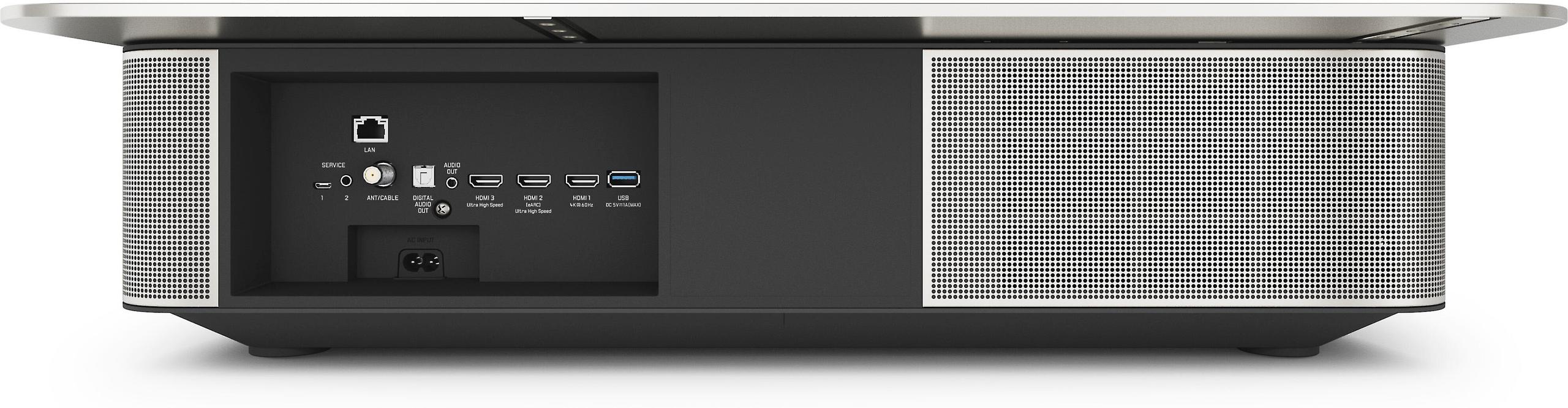
| 3 × HDMI 2.1 ports, eARC support, 4K@120Hz capable | HDMI 2.1 available, specific port count varies |
| Value Proposition - Performance per dollar assessment | |
| Exceptional image quality and features for the price point | Premium convenience and build quality at luxury pricing |
The BenQ W4100i is significantly better for gaming with input lag as low as 6.5ms at 1080p/240Hz and 17.9ms at 4K/60Hz. It also features three HDMI 2.1 ports supporting 4K@120Hz and Auto Low Latency Mode. The Leica Cine 1 has much higher input lag at 35.3ms-60ms, making it suitable only for casual gaming.
Yes, they use completely different installation approaches. The BenQ W4100i is a traditional throw projector that mounts on your ceiling or rear shelf 8-20 feet from the screen. The Leica Cine 1 is an ultra-short throw projector that sits directly underneath the screen, just 14.3 inches away from the wall.
The Leica Cine 1 performs better in bright rooms when paired with an ALR (Ambient Light Rejection) screen, which is specifically designed to reject overhead lighting. The BenQ W4100i delivers best results in darker, controlled lighting environments despite having slightly higher brightness at 3,200 lumens.
The BenQ W4100i works with any standard projection screen or even a white wall. The Leica Cine 1 requires a specialized ALR screen for optimal performance, which significantly increases the total system cost but provides better ambient light rejection.
Both deliver excellent 4K picture quality, but the BenQ W4100i has technical advantages including a larger 0.65" DLP chip, higher 3,000,000:1 contrast ratio, and factory calibration to Delta E<2 standards. The Leica Cine 1 offers premium Leica optics and color processing but uses a smaller DLP chip.
Yes, both support streaming. The BenQ W4100i includes an Android TV dongle with access to Netflix, Prime Video, Disney+, and YouTube, plus AI Cinema Mode for enhanced streaming quality. The Leica Cine 1 has Google TV built-in with Apple AirPlay 2 support and includes a TV tuner.
The Leica Cine 1 is much easier to install - it simply sits on furniture like a TV console with minimal setup required. The BenQ W4100i typically requires ceiling mounting, cable runs, and potentially professional installation, but offers more placement flexibility once installed.
Both support HDR formats, but with different capabilities. The BenQ W4100i supports HDR10, HDR10+, and HLG with advanced dynamic tone mapping that adjusts each frame in real-time. The Leica Cine 1 supports HDR10, HDR10+, Dolby Vision, and HLG formats.
The BenQ W4100i has a longer-lasting 4LED light source rated for 30,000 hours compared to the Leica Cine 1's triple laser system rated for 25,000 hours. Both eliminate the need for expensive lamp replacements that older projectors required every 2,000-4,000 hours.
Only the BenQ W4100i supports 3D playback using DLP Link 3D glasses, which is becoming a rare feature in modern projectors. The Leica Cine 1 does not support 3D content playback.
The BenQ W4100i offers exceptional performance and features for its price point, making it an outstanding value for home theater enthusiasts and gamers. The Leica Cine 1 costs significantly more but provides premium build quality, convenience, and the prestige of Leica optics for luxury-focused buyers.
The Leica Cine 1 has a superior built-in audio system with integrated Dolby Atmos speakers (2x25W) that provide surprisingly good sound quality. The BenQ W4100i has a basic 5W mono speaker, so most users will want to connect external audio equipment for the best home theater experience.
We've done our best to create useful and informative comparisons to help you decide what product to buy. Our research uses advanced automated methods to create this comparison and perfection is not possible - please contact us for corrections or questions. These are the sites we've researched in the creation of this article: blog.son-video.com - notebookcheck.net - whathifi.com - newatlas.com - hometheaterhifi.com - benq.com - youtube.com - shop.avispl.com - projectorcentral.com - benq.com - youtube.com - projectorcentral.com - benq.com - device.report - pssav.com - newegg.com - trustedreviews.com - leicacamerausa.com - hometechnologyreview.com - projectorreviews.com - richersounds.com - whathifi.com - crutchfield.com - projectorcentral.com - cdn11.bigcommerce.com - leicarumors.com - leica-camera.com

Privacy Policy
Terms and Conditions - Affiliate Policy
Home Security
© Copyright 2008-2026.
11816 Inwood Rd #1211, Dallas, TX 75244