

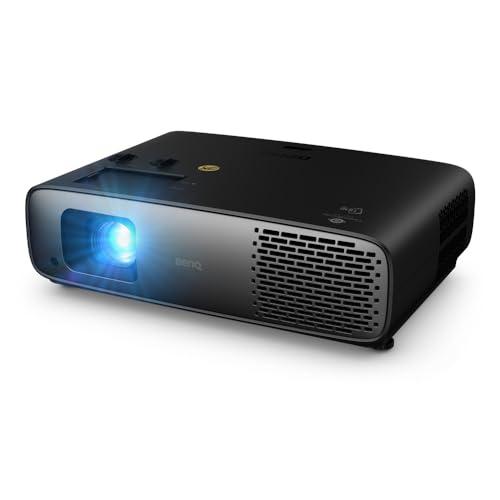
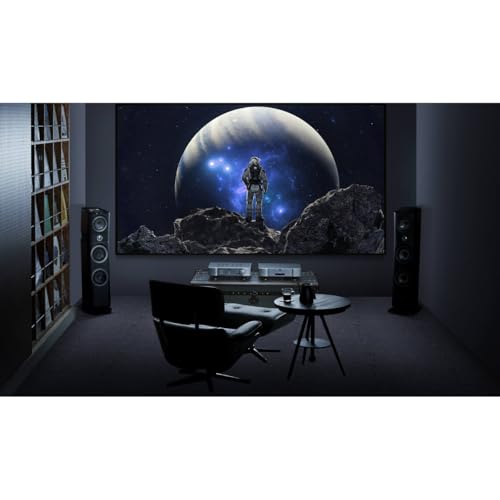

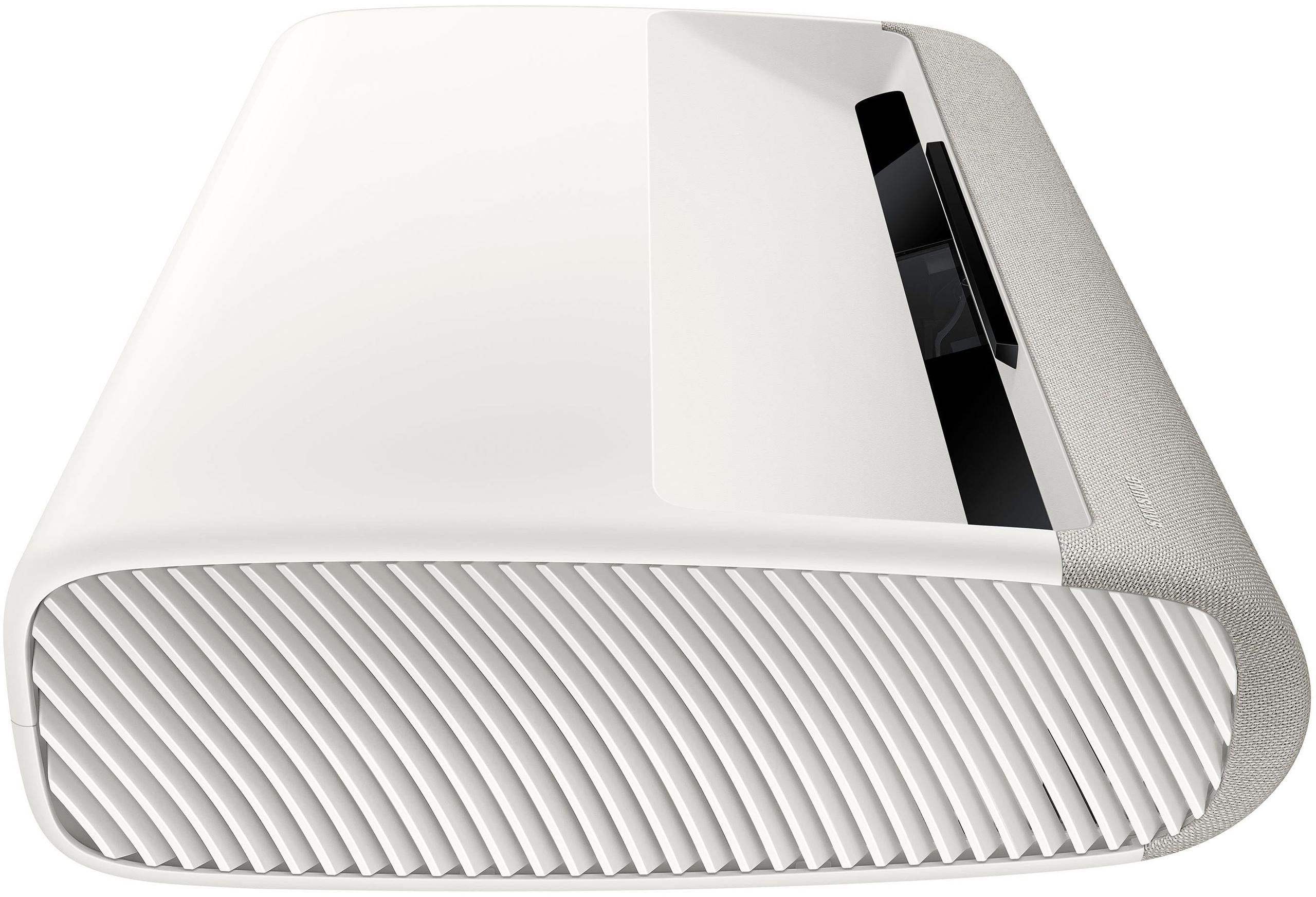
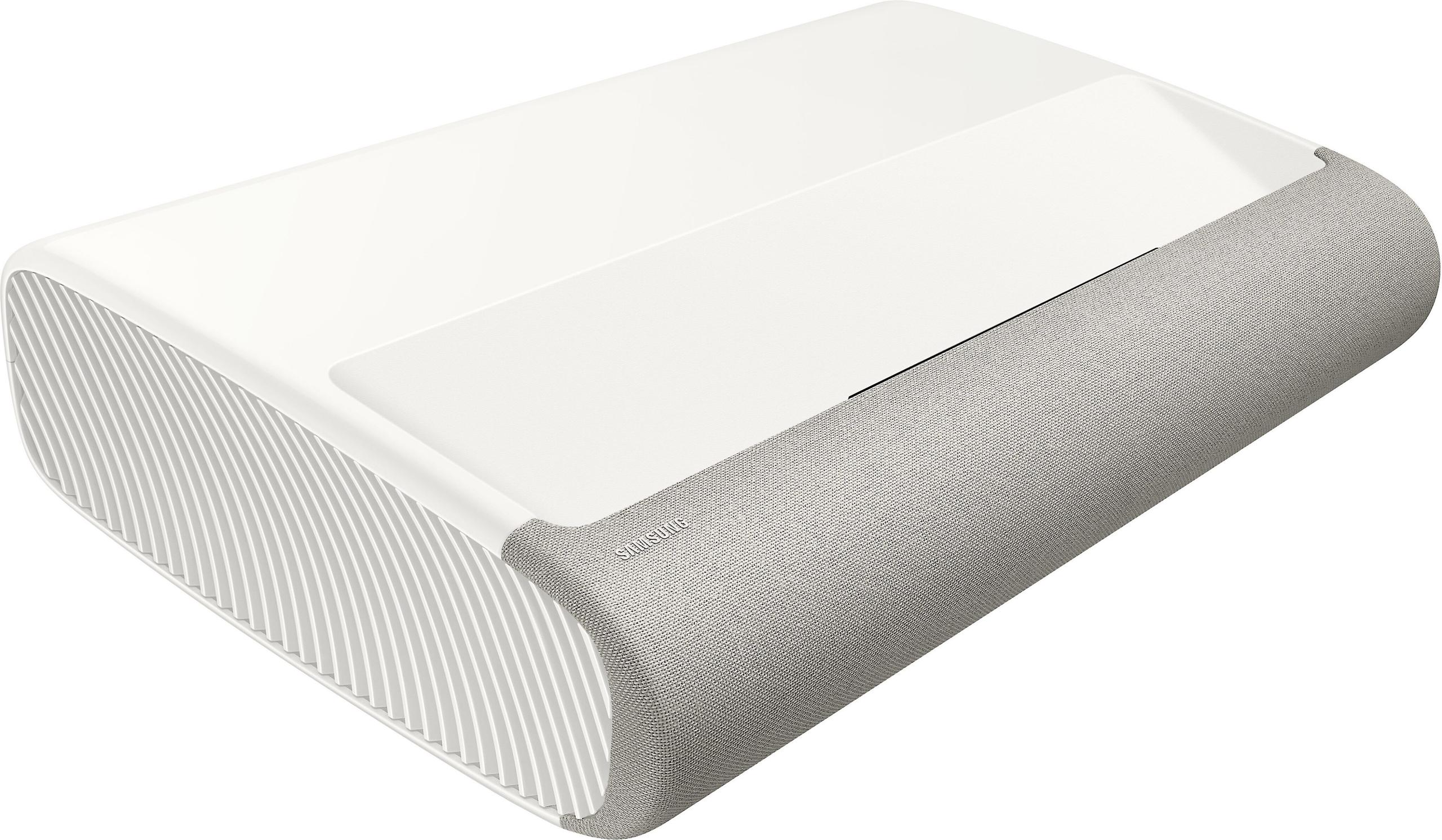
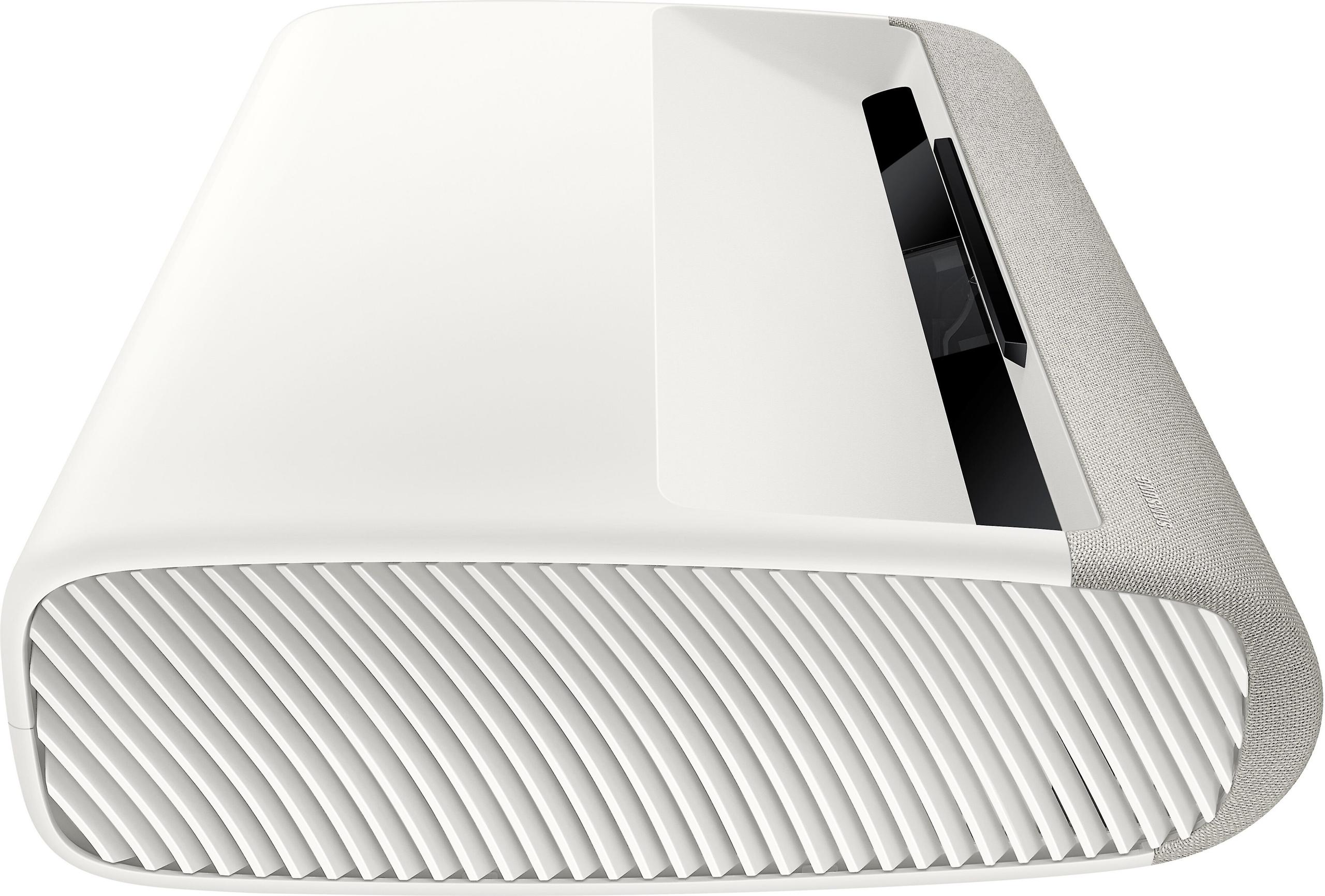
Home theater projectors have evolved dramatically in recent years, offering cinema-quality experiences that were once exclusive to commercial theaters. But choosing between different projector philosophies can be confusing. The BenQ W4100i and Samsung Premiere 9 represent two fundamentally different approaches to 4K projection, each solving distinct problems for home entertainment enthusiasts.
Released in 2024 and 2025 respectively, these projectors showcase how the industry has matured. The BenQ W4100i follows the traditional home theater playbook with significant refinements, while the Samsung Premiere 9 embraces ultra-short throw technology to eliminate installation barriers. At the time of writing, the BenQ sits in the premium mid-range category, while Samsung positions their model as a premium lifestyle product with corresponding pricing.
Understanding which approach suits your situation requires examining how these technologies work and what trade-offs each design philosophy makes.
The projector market has split into two distinct camps. Traditional throw projectors like the BenQ W4100i need substantial distance from your wall—typically 8-15 feet for a 100-inch screen. This requires ceiling mounting or a rear shelf, making installation more complex but enabling superior optical performance.
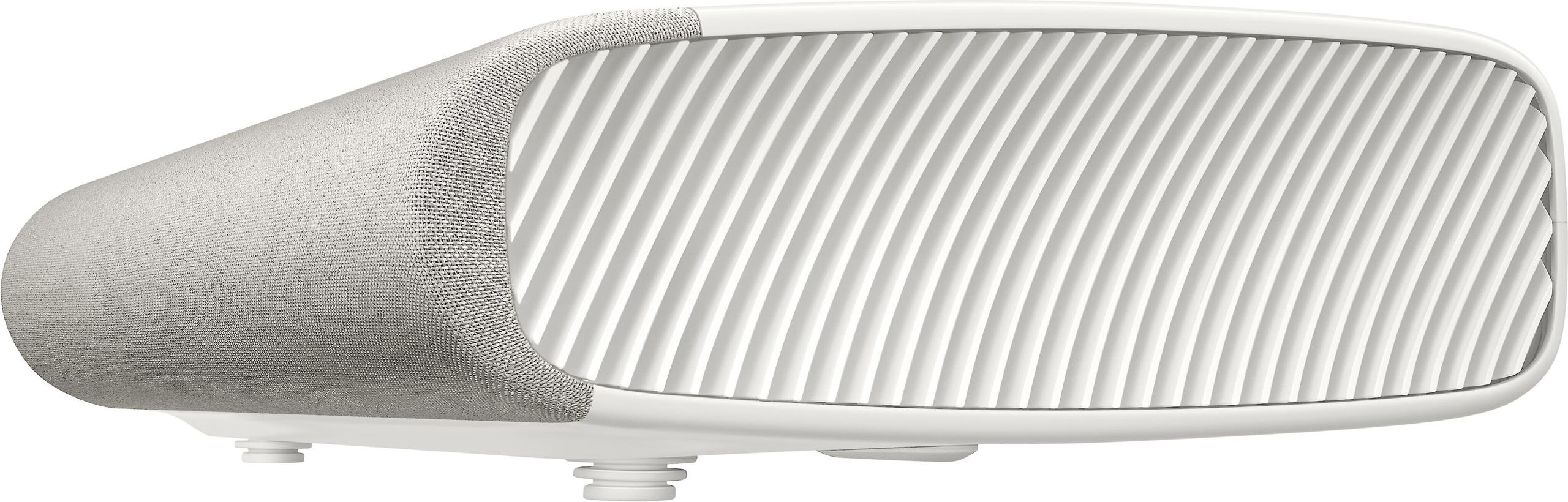
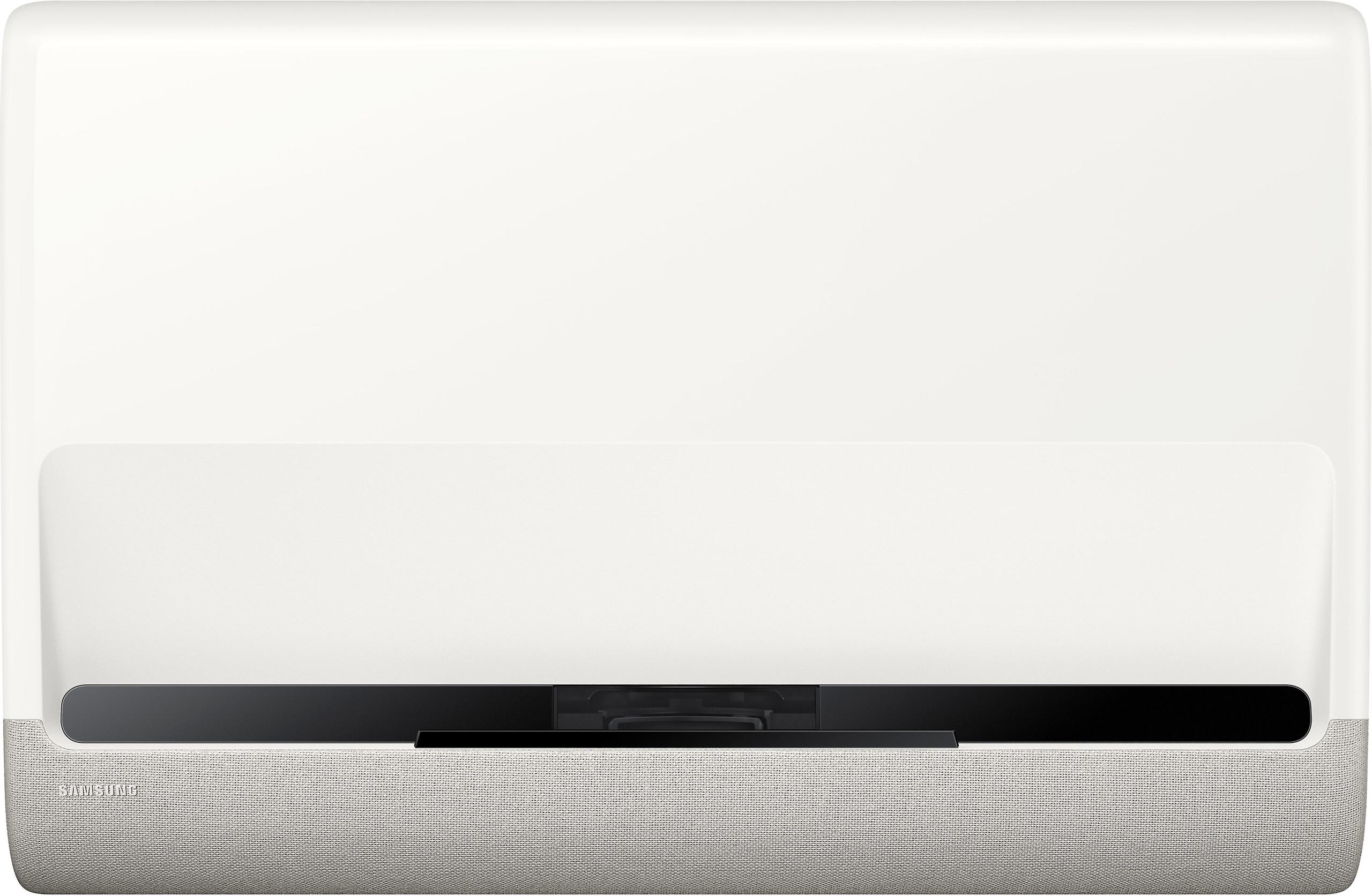
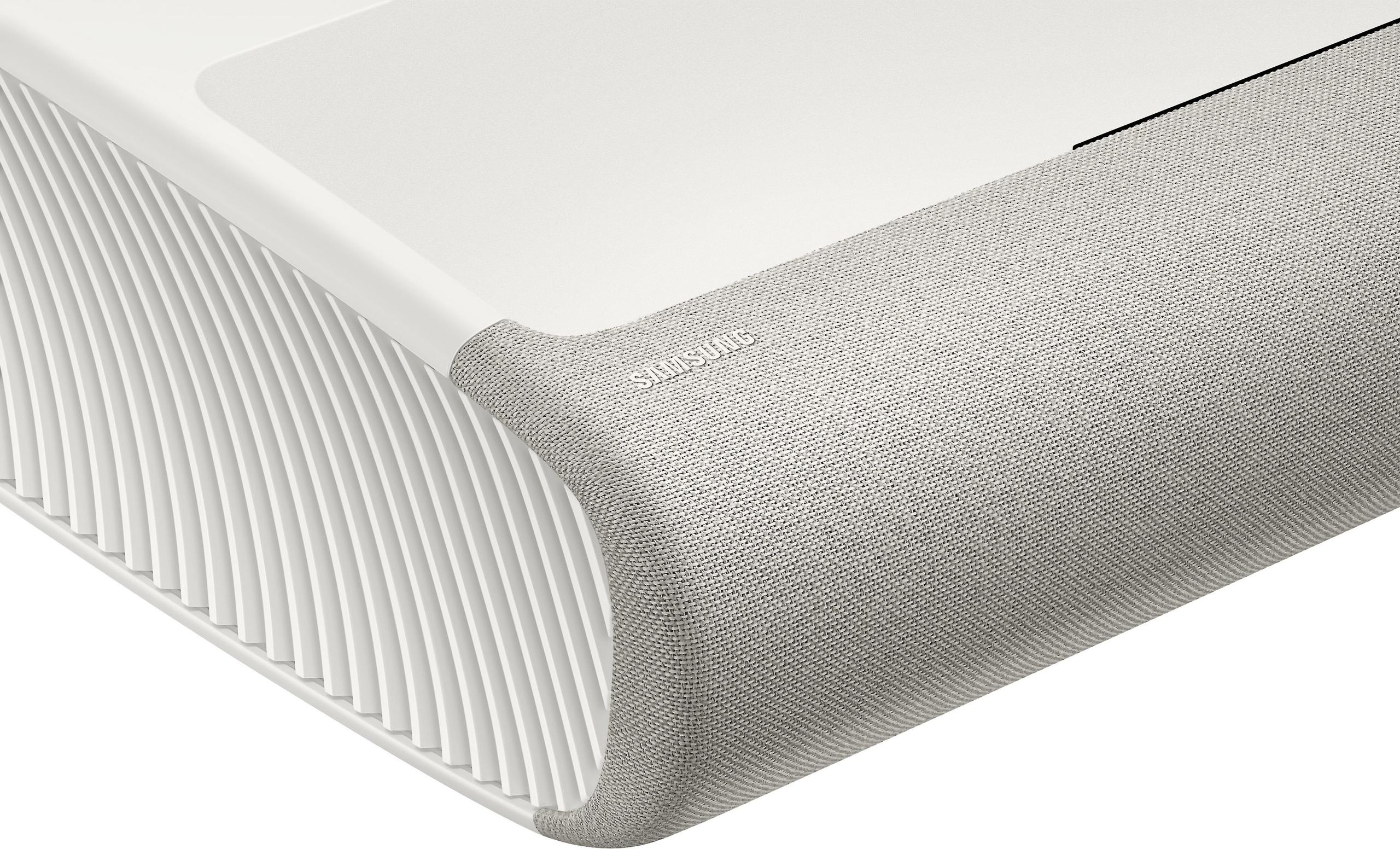
Ultra-short throw projectors like the Samsung Premiere 9 flip this equation entirely. They sit just inches from your wall, functioning more like a high-tech soundbar than a traditional projector. This solves the installation problem but introduces different optical challenges.
Both approaches use DLP (Digital Light Processing) technology with pixel-shifting to achieve 4K resolution. Pixel-shifting takes a lower-resolution chip and rapidly moves the image slightly to display all 4K pixels over time. When done well, it's virtually indistinguishable from native 4K projection.
The most critical factors for any 4K projector are brightness (measured in lumens), color accuracy, contrast ratio (the difference between darkest and brightest areas), input lag for gaming, and installation flexibility. Audio integration has become increasingly important as projectors compete with large TVs for living room placement.
The BenQ W4100i uses a 4-LED light source—an evolution beyond traditional lamp-based projectors. This RGBB system combines red, green, blue, and an additional blue LED to achieve 3,200 ANSI lumens while maintaining accurate colors. The advantage over older lamp projectors is immediate: no warm-up time, 30,000-hour lifespan in eco mode, and consistent brightness over time. LED systems also eliminate the rainbow effect that some viewers see with single-chip DLP projectors.
The Samsung Premiere 9 takes a different approach with RGB triple laser technology. Each primary color gets its own dedicated laser, producing 3,450 ISO lumens of brightness. Laser systems excel at color purity and eliminate rainbow artifacts entirely, but they're typically more expensive to implement. Samsung's choice reflects their premium positioning and focus on bright-room performance.
Both projectors achieve 4K resolution through XPR (eXpanded Pixel Resolution) technology from Texas Instruments. This pixel-shifting approach has matured significantly—current implementations are sharp enough that most viewers can't distinguish them from true native 4K projectors, especially at typical viewing distances.
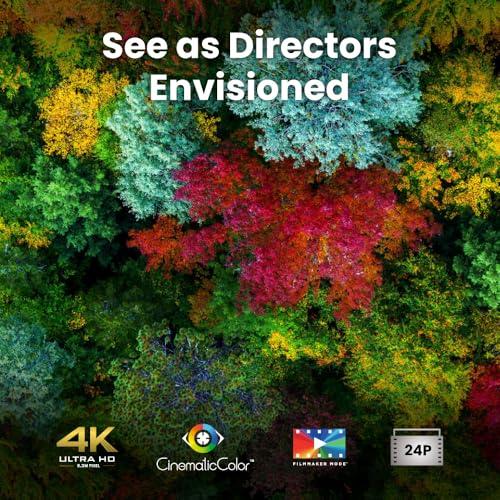
Here's where these projectors reveal their different philosophies most clearly. The BenQ W4100i prioritizes cinematic accuracy with factory calibration achieving Delta E values below 2—meaning colors are virtually indistinguishable from reference standards. This matters because it reproduces movies exactly as directors intended, without artificial enhancement.
BenQ's approach covers 100% of both DCI-P3 (digital cinema) and Rec.709 (HDTV) color spaces. The projector includes Filmmaker Mode, which preserves 24 frames-per-second playbook without judder and maintains original color timing. For movie enthusiasts, this accuracy is crucial—you're seeing films as they were meant to be seen.
The Samsung Premiere 9 deliberately chooses vibrancy over accuracy, covering 154% of the DCI-P3 color space. This means colors appear more saturated and punchy than cinematically accurate—similar to how many TVs enhance colors for showroom appeal. Samsung's Vision Booster technology automatically adjusts this based on ambient lighting, brightening and enhancing colors in lit rooms while toning them down in darkness.
Which approach is better depends entirely on your priorities. The BenQ excels for dedicated home theaters where accuracy matters. The Samsung works better for casual viewing in living rooms where enhanced colors help combat ambient light.
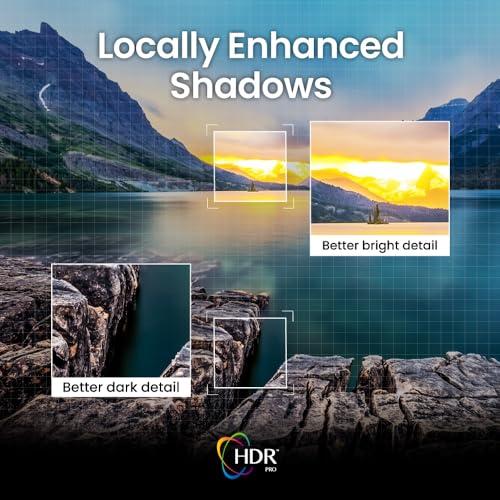
Contrast performance heavily favors the BenQ W4100i with its rated 3,000,000:1 dynamic contrast ratio. Traditional throw optics simply handle black levels better than ultra-short throw designs. In practice, this means deeper blacks and more natural shadow detail in dark scenes. The Samsung's ultra-short throw design inherently compromises black level performance—physics makes it difficult to achieve deep blacks when projecting at extreme angles.
Gaming performance represents the starkest difference between these projectors. The BenQ W4100i delivers genuinely impressive gaming specs with input lag measuring just 6.5ms at 1080p/240Hz and 17.9ms at 4K/60Hz. These numbers rival dedicated gaming monitors, making competitive gaming genuinely viable on a massive screen.
The projector includes three HDMI 2.1 inputs supporting up to 1080p at 240Hz refresh rates, plus Auto Low Latency Mode (ALLM) that automatically switches to game mode when it detects console signals. For gaming enthusiasts, this opens up possibilities that weren't realistic with older projector technology.
The Samsung Premiere 9 takes a different gaming approach entirely. While it supports ALLM, input lag remains around 53ms even in game mode—acceptable for casual gaming but problematic for competitive play. Samsung focuses instead on cloud gaming services like Xbox Game Pass and Amazon Luna, where local input lag matters less since network latency dominates anyway.
If gaming is important to you, the BenQ wins decisively. If you primarily use cloud gaming services or play turn-based games, Samsung's approach might suffice.
Audio represents the Samsung Premiere 9's strongest advantage. The integrated 40W Dolby Atmos system includes 2.2.2 channels with up-firing speakers that bounce sound off your ceiling to create height effects. This eliminates the need for separate audio equipment—a significant cost and complexity reduction.
The system includes Object Tracking Sound (OTS), which moves audio effects across the soundstage to match on-screen action. While not matching dedicated home theater systems, it's surprisingly effective for casual viewing and eliminates the barrier of purchasing separate speakers.
The BenQ W4100i includes only a basic 5W mono speaker—essentially unusable for serious viewing. You'll need external audio, whether a soundbar, receiver, or dedicated speakers. The projector does include HDMI eARC and S/PDIF outputs for connecting to audio systems, but this adds cost and complexity.
For buyers prioritizing simplicity, Samsung's integrated audio is genuinely compelling. For home theater enthusiasts who already own or plan to purchase dedicated audio equipment, BenQ's approach allows more flexibility in audio choices.
Installation differences between these projectors are dramatic. The BenQ W4100i requires traditional projector installation—typically ceiling mounting 10-15 feet from your screen. While this enables superior optical performance, it demands either permanent installation or a rear shelf setup that may block walkways.
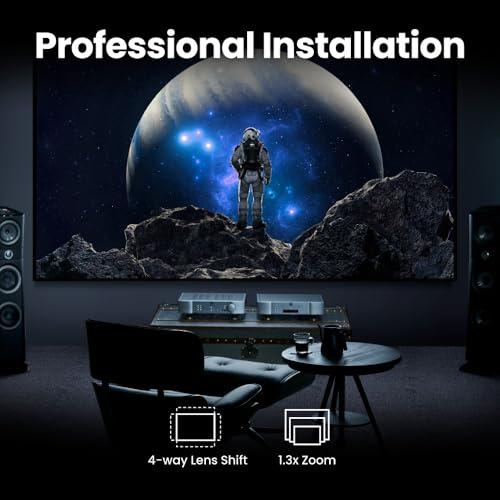
The projector does offer excellent flexibility once installed. Four-way lens shift allows ±15% horizontal and up to 60% vertical adjustment, meaning you can align the image precisely without moving the projector. Combined with 1.3x optical zoom and keystone correction, setup flexibility is excellent for a traditional throw projector.
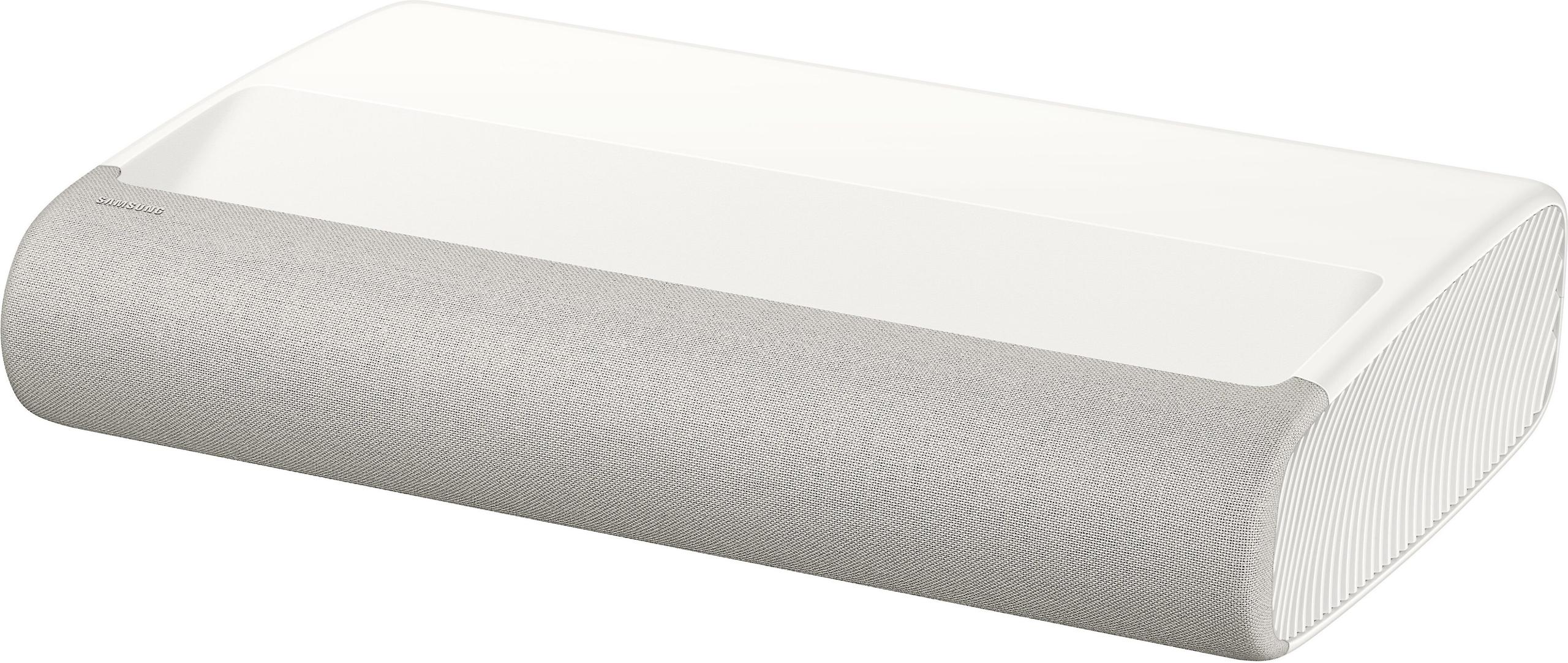
The Samsung Premiere 9 eliminates installation complexity entirely. Place it on a TV stand 4.5 inches from your wall, plug it in, and you're watching a 100-inch screen immediately. This convenience cannot be overstated—it makes projector ownership accessible to renters, apartment dwellers, and anyone who finds traditional installation intimidating.
However, this convenience comes with significant limitations. The Samsung offers no lens shift capability, meaning it must be positioned directly centered with your screen. If your furniture doesn't align perfectly, you're stuck with keystone correction, which degrades image quality by digitally reshaping the picture.
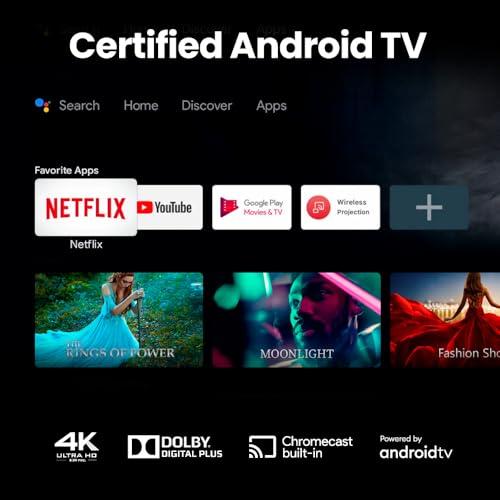
Both projectors include comprehensive smart platforms, but with different strengths. The BenQ W4100i includes an Android TV dongle providing access to Netflix, Prime Video, Disney+, and YouTube with 4K HDR support. Google Assistant integration enables voice control, and Chromecast allows easy content casting from phones and tablets.
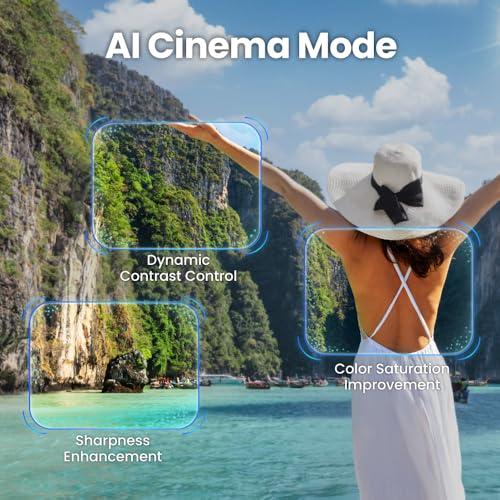
BenQ's AI Cinema Mode analyzes streaming content in real-time, optimizing HDR tone mapping, color saturation, and sharpness specifically for compressed streaming sources. This addresses a real problem—streaming services compress content significantly compared to Blu-ray, and AI processing can genuinely improve the viewing experience.
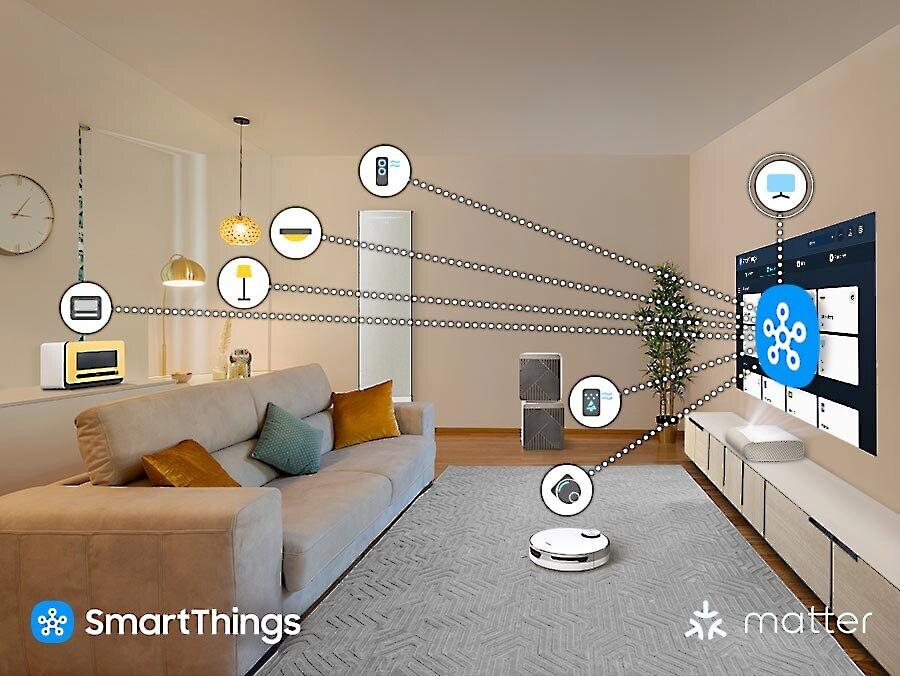
The Samsung Premiere 9 runs Tizen OS with broader smart home integration. Beyond standard streaming apps, it includes Alexa, Google Assistant, and Samsung's Bixby voice assistants. SmartThings Hub functionality lets you control smart home devices directly from the projector interface.
Samsung also includes gaming-focused features like Xbox Game Pass and Amazon Luna integration, plus support for Apple AirPlay and Google Cast. The solar-powered remote is a nice touch, charging from room lighting to eliminate battery replacements.
At the time of writing, the BenQ W4100i offers significantly better value for pure performance. You're getting cinema-grade picture quality, excellent gaming performance, and 3D support (increasingly rare in modern projectors) at a lower price point. The 3-year warranty provides additional peace of mind.
However, value calculations change when considering total system cost. The BenQ requires external audio equipment, potentially adding hundreds to thousands of dollars depending on your audio ambitions. Installation costs for ceiling mounting can also add up if you hire professionals.
The Samsung Premiere 9 commands premium pricing but includes everything needed for immediate use. The integrated Dolby Atmos system, while not matching dedicated audio equipment, eliminates additional purchases for many users. No installation costs further improve the total cost equation.
Both projectors use long-lasting light sources—30,000 hours for BenQ's LEDs, 20,000+ for Samsung's lasers. At typical usage patterns (3-4 hours daily), either should last 15-20 years before requiring service, making operating costs minimal compared to traditional lamp projectors.
The BenQ W4100i includes 3D support with DLP Link glasses compatibility—something increasingly rare in modern projectors. If you have 3D Blu-ray collections or enjoy 3D gaming, this capability alone might justify the choice. The implementation is solid, with minimal crosstalk and good brightness retention.
The Samsung Premiere 9 omits 3D support entirely, reflecting market trends away from the format. For most users, this won't matter, but 3D enthusiasts should note this limitation.
Your viewing environment heavily influences which projector makes sense. The BenQ W4100i performs best in controlled lighting conditions where its superior contrast and color accuracy shine. While it handles moderate ambient light reasonably well at 3,200 lumens, peak performance requires darkening your room.
The Samsung Premiere 9 excels in brighter environments. The higher 3,450-lumen output combined with Vision Booster's automatic adjustment makes it genuinely usable with moderate room lighting. This suits living room installation where complete light control isn't always practical.
Screen considerations differ significantly. The BenQ works with any projection screen or plain white wall, with screen sizes from 60-150 inches depending on installation distance. The Samsung benefits from specialized ultra-short throw screens that reject ambient light and enhance contrast, though these add cost.
These projectors solve fundamentally different problems, making the choice highly situation-dependent.
Choose the BenQ W4100i if you're building a dedicated home theater where picture quality is paramount. Its cinema-accurate colors, excellent gaming performance, 3D support, and superior value make it ideal for enthusiasts willing to handle traditional installation. The longer warranty and lower price point strengthen its appeal for performance-focused buyers.
Choose the Samsung Premiere 9 if installation convenience and living room integration matter more than ultimate performance. Its plug-and-play setup, integrated Dolby Atmos audio, and bright-room performance make projector ownership accessible without traditional barriers. Despite higher pricing, the total system cost may be competitive when factoring in included audio and installation simplicity.
Both projectors represent mature, well-executed approaches to their respective design philosophies. Neither is objectively superior—they're optimized for different users and environments. The BenQ W4100i maximizes performance for dedicated installations, while the Samsung Premiere 9 maximizes accessibility for casual integration.
Your choice ultimately depends on whether you can accommodate traditional installation and prioritize peak performance, or whether convenience and bright-room usability matter more. Either projector will deliver a substantially more immersive experience than conventional TV viewing, just through different approaches to achieving that goal.
| BenQ W4100i 4K Home Theater Projector | Samsung Premiere 9 LPU9D 130" 4K UHD Triple Laser Projector |
|---|---|
| Brightness - Critical for ambient light performance | |
| 3,200 ANSI lumens (good for moderate lighting) | 3,450 ISO lumens (better for bright rooms) |
| Installation Type - Determines room compatibility | |
| Traditional throw (6-15 feet distance, ceiling mount needed) | Ultra-short throw (4.5 inches from wall, sits on TV stand) |
| Gaming Input Lag - Essential for responsive gaming | |
| 6.5ms at 1080p/240Hz, 17.9ms at 4K/60Hz (excellent) | ~53ms even in game mode (casual gaming only) |
| Color Accuracy - Important for cinematic viewing | |
| 100% DCI-P3, Delta E <2 (cinema-accurate, factory calibrated) | 154% DCI-P3 (vibrant but oversaturated colors) |
| Audio System - Affects total system cost | |
| 5W mono speaker (requires external audio) | 40W Dolby Atmos 2.2.2 with up-firing speakers (integrated) |
| Lens Flexibility - Impacts installation ease | |
| 4-way lens shift, 1.3x optical zoom (precise alignment) | No lens shift, power zoom only (limited positioning) |
| Light Source Technology - Affects longevity and maintenance | |
| 4-LED RGBB (30,000 hour lifespan) | RGB Triple Laser (20,000+ hour lifespan) |
| Maximum Screen Size - Room size compatibility | |
| Up to 150 inches (100-120 inches recommended) | 100-130 inches maximum |
| 3D Support - For specialty content | |
| Yes, DLP Link glasses compatible | No 3D support |
| HDMI Connectivity - Future-proofing for gaming | |
| 3x HDMI 2.1 (supports 1080p/240Hz) | HDMI 2.0 only (4K/60Hz maximum) |
| Contrast Performance - Image depth in dark scenes | |
| 3,000,000:1 dynamic contrast (superior black levels) | Not specified (limited by ultra-short throw optics) |
| Smart Platform - Streaming and voice control | |
| Android TV dongle with Google Assistant | Tizen OS with Alexa, Google Assistant, Bixby |
| Warranty Coverage - Long-term protection | |
| 3-year limited warranty | 1-year warranty |
The BenQ W4100i is significantly better for gaming with ultra-low input lag of just 6.5ms at 1080p/240Hz and 17.9ms at 4K/60Hz. It includes three HDMI 2.1 ports and Auto Low Latency Mode for competitive gaming. The Samsung Premiere 9 has higher input lag around 53ms and focuses more on casual cloud gaming rather than performance.
The Samsung Premiere 9 performs better in bright rooms with 3,450 lumens and Vision Booster technology that automatically adjusts the image based on ambient lighting. The BenQ W4100i delivers 3,200 lumens and handles moderate ambient light well, but performs best in darker, controlled environments for optimal picture quality.
The Samsung Premiere 9 is much easier to install - it sits just 4.5 inches from your wall like a soundbar, requiring no mounting or complex setup. The BenQ W4100i requires traditional installation with ceiling mounting or rear shelf placement at 6-15 feet from the screen, making it more complex but offering better optical performance.
The BenQ W4100i offers cinema-accurate colors with factory calibration to Delta E <2 and superior contrast ratio for deeper blacks. The Samsung Premiere 9 produces more vibrant, saturated colors at 154% DCI-P3 coverage but sacrifices accuracy for visual impact. The BenQ is better for movie enthusiasts while Samsung suits casual viewing.
The Samsung Premiere 9 includes a comprehensive 40W Dolby Atmos 2.2.2 audio system that eliminates the need for separate speakers. The BenQ W4100i has only a basic 5W mono speaker and requires external audio equipment for proper sound quality, though it offers more flexibility in audio choices.
The BenQ W4100i offers better performance-per-dollar with superior gaming capabilities, color accuracy, and 3D support at a lower price point. However, the Samsung Premiere 9 includes integrated Dolby Atmos audio and eliminates installation costs, which can make the total system cost competitive depending on your needs.
Only the BenQ W4100i supports 3D playback with DLP Link glasses compatibility, making it suitable for 3D Blu-ray movies and gaming. The Samsung Premiere 9 does not support 3D content at all, reflecting the general market trend away from 3D formats.
Both projectors use long-lasting light sources - the BenQ W4100i features 4-LED technology rated for 30,000 hours in eco mode, while the Samsung Premiere 9 uses triple laser technology lasting 20,000+ hours. At typical usage, either should provide 15-20 years of reliable operation without lamp replacements.
Both handle streaming well, but differently. The BenQ W4100i includes AI Cinema Mode that optimizes compressed streaming content in real-time for better picture quality. The Samsung Premiere 9 offers comprehensive smart features through Tizen OS and automatically adjusts brightness for different viewing conditions, making it more convenient for casual streaming.
The BenQ W4100i supports larger screens from 60-150 inches depending on installation distance, with 100-120 inches being optimal. The Samsung Premiere 9 is limited to 100-130 inch screens due to its ultra-short throw design, but works well with specialized ALR (ambient light rejecting) screens.
Both projectors operate relatively quietly, but the Samsung Premiere 9 tends to be quieter due to its laser light source requiring less cooling. The BenQ W4100i has efficient LED cooling but may produce slightly more fan noise during bright scenes, though both are suitable for quiet home theater environments.
The BenQ W4100i includes a superior 3-year limited warranty providing better long-term protection for your investment. The Samsung Premiere 9 comes with a standard 1-year warranty, which is shorter but typical for premium consumer electronics in this category.
We've done our best to create useful and informative comparisons to help you decide what product to buy. Our research uses advanced automated methods to create this comparison and perfection is not possible - please contact us for corrections or questions. These are the sites we've researched in the creation of this article: blog.son-video.com - notebookcheck.net - whathifi.com - newatlas.com - hometheaterhifi.com - benq.com - youtube.com - shop.avispl.com - projectorcentral.com - benq.com - youtube.com - projectorcentral.com - benq.com - device.report - pssav.com - newegg.com - sound-advice.online - valueelectronics.com - bhphotovideo.com - instylehifi.com.au - trustedreviews.com - target.com - pcrichard.com - projectorscreen.com - videoandaudiocenter.com - target.com - avsforum.com - projectorscreen.com

Privacy Policy
Terms and Conditions - Affiliate Policy
Home Security
© Copyright 2008-2026.
11816 Inwood Rd #1211, Dallas, TX 75244