

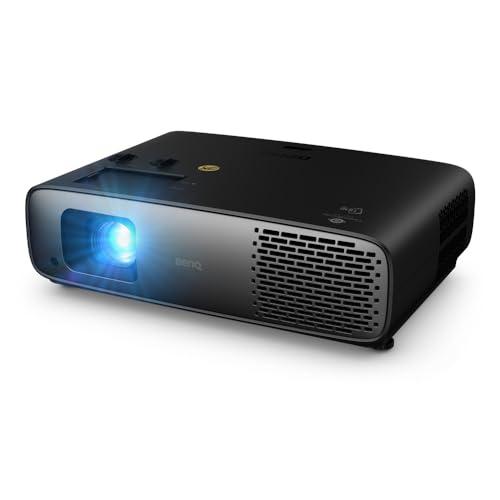


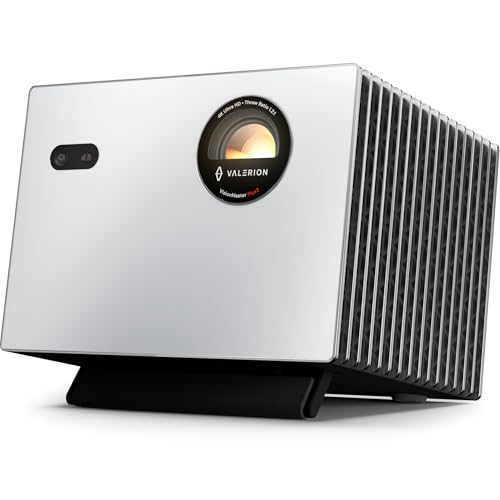



The home theater projector market has undergone a remarkable transformation in recent years. What once required a dedicated media room with professional installation can now deliver cinema-quality entertainment in almost any living space. The BenQ W4100i and Valerion StreamMaster Plus 2 represent two compelling approaches to 4K home projection, each targeting different priorities and budgets in this evolving landscape.
Released in 2025 and 2024 respectively, both projectors incorporate the latest advances in light source technology, HDR processing, and smart connectivity. However, they take distinctly different paths to achieve 4K performance, making the choice between them more nuanced than simple specification comparisons might suggest.
Before diving into specifics, it's worth understanding what separates today's 4K projectors from earlier generations. The most significant advancement lies in light source technology—the component that generates the image you see on screen. Traditional projectors used replaceable bulbs that dimmed over time and required frequent, expensive replacements. Modern projectors like the BenQ W4100i and Valerion StreamMaster Plus 2 use solid-state light sources (LEDs and lasers) that last 20,000-30,000 hours without replacement—essentially the lifetime of the projector.
Color gamut coverage, which refers to the range of colors a projector can display, has also expanded dramatically. Where older projectors might cover 70-80% of the Rec.709 color standard used for HDTV, these newer models exceed 100% coverage and extend into wider color spaces like DCI-P3 (used in movie theaters) and even Rec.2020 (future-proofing for next-generation content).
The fundamental difference between these projectors starts with how they create light. The BenQ W4100i uses a 4-LED system—red, green, blue, and an additional blue LED (RGBB configuration). This approach provides precise color control and eliminates laser speckle, a grainy artifact that can appear with laser-based systems. LED technology also offers exceptional color accuracy, which explains why BenQ can achieve factory calibration with Delta E values below 2 (a measurement where lower numbers indicate more accurate colors).
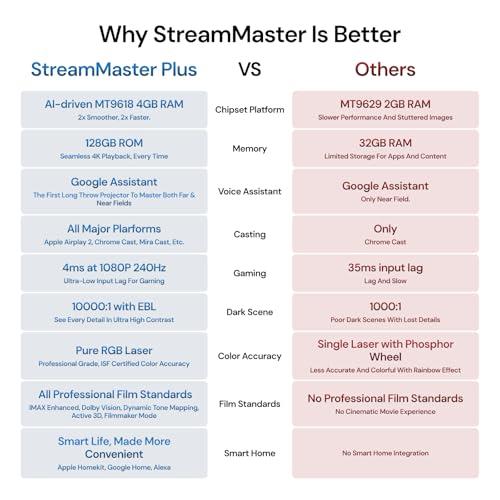
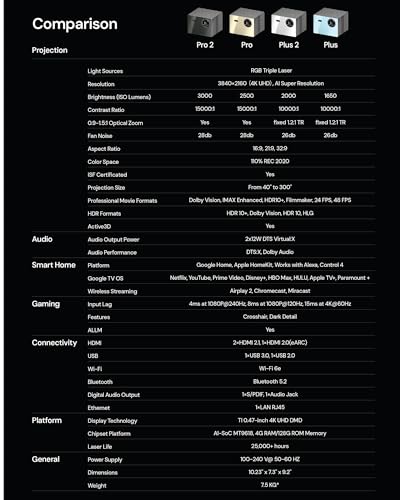
The Valerion StreamMaster Plus 2 takes the laser route with an RGB triple laser system. This means separate red, green, and blue lasers work independently to create the color spectrum. The primary advantage here is color saturation—laser light sources can produce incredibly vivid colors that extend well beyond what LEDs can achieve. The Valerion covers 110% of the Rec.2020 color space, compared to the BenQ's 100% DCI-P3 coverage.
From our research into user experiences, the practical difference is noticeable but depends on your preferences. The BenQ W4100i produces more natural, film-accurate colors that match what directors intended. The Valerion StreamMaster Plus 2 delivers more eye-catching, saturated imagery that many users prefer for everyday viewing, especially with animated content and nature documentaries.
Brightness measurement in projectors can be confusing because manufacturers use different standards. The BenQ W4100i claims 3,200 ANSI lumens, while the Valerion StreamMaster Plus 2 rates at 2,000 ISO lumens. These are different measurement methods, but the practical outcome is clear: the BenQ is significantly brighter.
This brightness advantage translates directly to real-world usability. Based on expert reviews and user feedback, the BenQ W4100i maintains excellent image quality in rooms with some ambient light—think family rooms with windows or moderate overhead lighting. The Valerion StreamMaster Plus 2 performs best in darkened environments, though it's not as restrictive as some reviewers initially expected. Users report satisfactory performance in moderately lit rooms, but optimal results require dimmed lighting.
For screen size considerations, brightness becomes even more critical. Larger screens spread the same light over more area, effectively reducing brightness per square inch. The BenQ W4100i can drive screens up to 120-150 inches effectively, while the Valerion StreamMaster Plus 2 is better suited to 80-120 inch screens for optimal brightness levels.
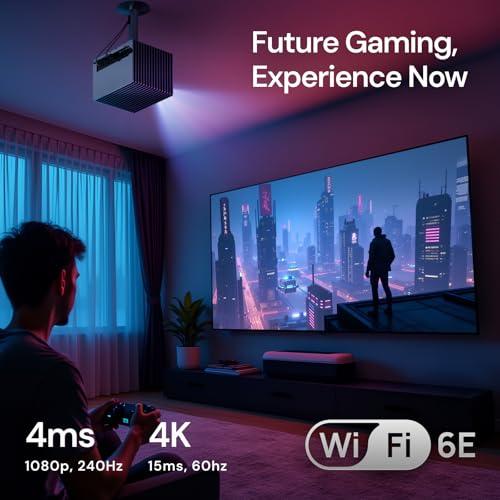
Gaming performance has become a crucial differentiator in modern projectors, and this is where the Valerion StreamMaster Plus 2 shows its specialized focus. Input lag—the delay between when you press a button and when the action appears on screen—is critical for competitive gaming. The Valerion achieves an impressive 4ms input lag at 1080p/240Hz, compared to the BenQ's 6.5ms at the same resolution.
While 2.5ms might seem negligible, it's significant for competitive gaming scenarios. More importantly, the Valerion StreamMaster Plus 2 includes dedicated gaming modes tailored for different genres: RPG (role-playing games), FPS (first-person shooters), and RCG (racing games). These modes adjust color temperature, contrast, and sharpness to enhance visibility and reduce eye strain during extended gaming sessions.
The BenQ W4100i offers respectable gaming performance with ALLM (Auto Low Latency Mode) support, which automatically switches to game mode when it detects a gaming console. However, its focus remains primarily on movie and TV content optimization rather than gaming specialization.
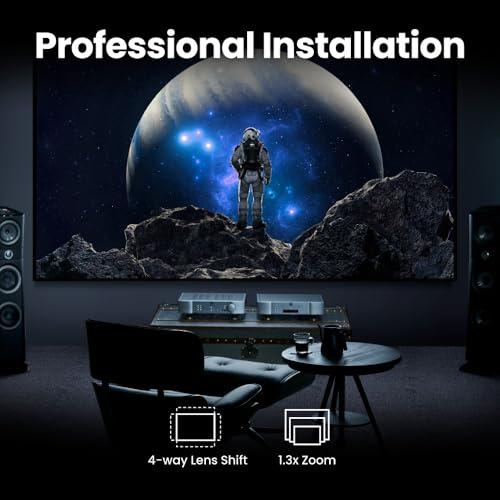
Room layout often dictates projector choice, and this is where the BenQ W4100i demonstrates clear superiority. Its motorized lens system provides 1.3x optical zoom and lens shift capabilities—vertical adjustment of ±60% and horizontal of ±15%. This means you can place the projector off-center or at different distances from the screen without image distortion.
Lens shift is particularly valuable in real-world installations. Instead of mounting the projector perfectly centered with the screen (often impractical in living rooms), you can position it to the side or above/below the screen centerline and use lens shift to align the image perfectly. The optical zoom allows fine-tuning of image size without moving the projector.
The Valerion StreamMaster Plus 2 uses a fixed 1.2:1 throw ratio, meaning it must be positioned at a specific distance from the screen for optimal focus. While it includes digital zoom and keystone correction, these features can reduce image quality slightly. However, the projector does offer auto-focus functionality, which simplifies initial setup and can compensate for minor positioning adjustments.
Based on installation experiences documented in reviews, the BenQ W4100i works better in challenging room layouts, while the Valerion StreamMaster Plus 2 suits dedicated theater rooms where optimal positioning is achievable.
The smart platform implementation differs significantly between these projectors. The BenQ W4100i includes an Android TV dongle that plugs into one of its HDMI ports. While functional, this approach can feel less integrated than built-in smart systems, and the dongle requires a separate USB connection for power.
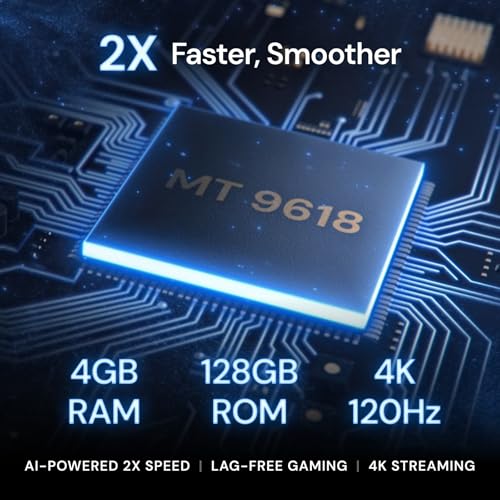
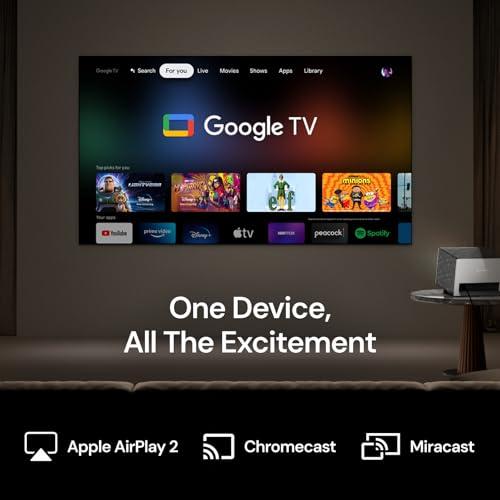
The Valerion StreamMaster Plus 2 runs Google TV OS natively with 4GB RAM and 128GB storage. This internal implementation provides smoother performance and better multitasking capabilities. Users report fewer app crashes and faster navigation compared to external dongle solutions.
Both projectors support modern connectivity standards including HDMI 2.1 for high-resolution gaming and eARC (enhanced Audio Return Channel) for sending high-quality audio to sound systems. The BenQ W4100i provides three HDMI inputs versus the Valerion's two, which could matter if you connect multiple sources directly.
High Dynamic Range (HDR) support has become essential for modern projectors, and both models handle HDR10, HDR10+, and dynamic tone mapping. However, their processing approaches differ meaningfully.
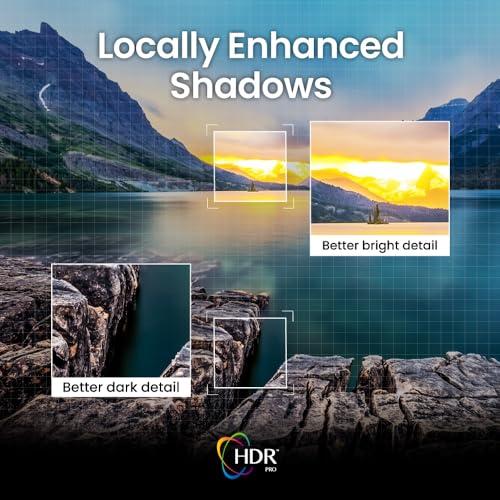
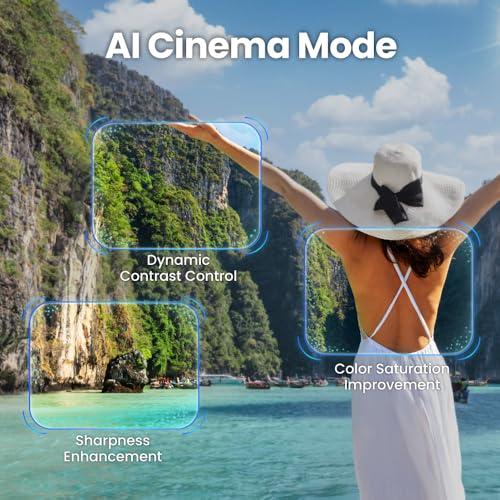
The BenQ W4100i emphasizes cinema accuracy with its HDR-PRO technology, which applies frame-by-frame analysis to optimize brightness and contrast while maintaining the director's intended look. Its AI Cinema Mode specifically targets streaming content, compensating for compression artifacts and enhancing detail in services like Netflix and Disney+.
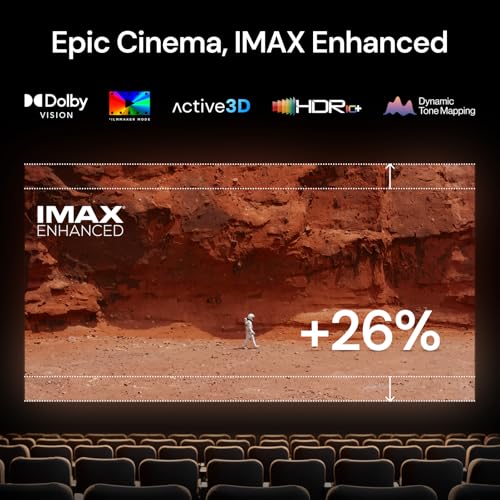
The Valerion StreamMaster Plus 2 includes IMAX Enhanced support, which preserves the expanded aspect ratio of IMAX content and applies specific color and contrast profiles. Its Enhanced Black Level (EBL) mode dynamically adjusts laser output to deepen black levels, creating more dramatic contrast ratios.
From user feedback, the BenQ W4100i produces more consistent, film-like HDR presentation, while the Valerion StreamMaster Plus 2 delivers more dramatic, high-impact imagery that some users prefer for entertainment viewing.
Neither projector will replace a dedicated sound system, but their built-in audio capabilities differ significantly. The BenQ W4100i includes a modest 5W speaker primarily intended for setup and casual use. The Valerion StreamMaster Plus 2 provides dual 12W speakers that users report as surprisingly capable for general viewing, though still inadequate for cinematic experiences.
Both projectors support audio passthrough to external systems via HDMI eARC and optical connections, ensuring compatibility with soundbars and home theater receivers.
At the time of writing, these projectors occupy different price tiers with approximately $1,000 separating them. The BenQ W4100i commands premium pricing that reflects its higher brightness output, installation flexibility, and cinema-focused calibration. The Valerion StreamMaster Plus 2 offers remarkable value by incorporating laser technology, comprehensive smart features, and gaming optimization at a more accessible price point.
The value proposition depends heavily on your specific needs. If room lighting flexibility and precise placement options are priorities, the BenQ W4100i justifies its premium positioning. For dedicated home theaters with controlled lighting, the Valerion StreamMaster Plus 2 delivers comparable performance at significant savings.
The BenQ W4100i suits users who prioritize flexibility and cinema accuracy. It's ideal for family rooms, living spaces with windows, and installations where projector placement is challenging. Movie enthusiasts who want director-intended color reproduction will appreciate its factory calibration and Filmmaker Mode. The higher brightness also makes it suitable for larger screens in less-than-optimal lighting conditions.
The Valerion StreamMaster Plus 2 targets gaming enthusiasts and value-conscious buyers who can accommodate its placement requirements. Its laser technology, vibrant colors, and low input lag make it excellent for modern gaming, while the comprehensive smart platform eliminates the need for external streaming devices. It's particularly well-suited to dedicated home theaters where optimal viewing conditions can be maintained.
Both projectors represent excellent examples of modern 4K projection technology, but they serve different priorities. The BenQ W4100i offers premium performance with room lighting flexibility and precise installation options. The Valerion StreamMaster Plus 2 delivers cutting-edge laser technology and gaming-focused features at exceptional value.
Your choice should align with your room conditions, primary use cases, and budget flexibility. Neither projector will disappoint within their intended applications, but understanding these fundamental differences ensures you'll select the one that best matches your specific home theater vision.
| BenQ W4100i 4K Home Theater Projector | Valerion StreamMaster Plus 2 4K Projector |
|---|---|
| Light Source Technology - Determines longevity, color accuracy, and maintenance requirements | |
| 4-LED RGBB system, 30,000 hour lifespan (eliminates laser speckle, precise color control) | RGB Triple Laser, 25,000 hour lifespan (superior color saturation, instant on/off) |
| Brightness Output - Critical for room lighting flexibility and screen size capability | |
| 3,200 ANSI lumens (excellent for rooms with ambient light, supports 120-150" screens) | 2,000 ISO lumens (requires darker rooms, optimal for 80-120" screens) |
| Color Gamut Coverage - Affects color vibrancy and accuracy | |
| 100% DCI-P3, 100% Rec.709 (cinema-accurate, factory calibrated to Delta E<2) | 110% Rec.2020 (wider color range, more vibrant and saturated imagery) |
| Gaming Input Lag - Essential for competitive gaming performance | |
| 6.5ms at 1080p/240Hz, 17.9ms at 4K/60Hz (good for casual gaming) | 4ms at 1080p/240Hz, 15ms at 4K/60Hz (excellent for competitive gaming) |
| Installation Flexibility - Determines placement options in your room | |
| 1.3x optical zoom, motorized lens shift (±60% vertical, ±15% horizontal) | Fixed 1.2:1 throw ratio with digital zoom and keystone correction |
| HDR Format Support - Important for modern streaming and 4K content | |
| HDR10, HDR10+, HLG with HDR-PRO dynamic tone mapping and AI Cinema Mode | HDR10, HDR10+, Dolby Vision, IMAX Enhanced with Enhanced Black Level mode |
| Smart Platform - Affects streaming experience and app performance | |
| Android TV via external dongle (functional but less integrated) | Native Google TV OS with 4GB RAM/128GB storage (smoother performance) |
| Contrast Ratio - Determines black level depth and image pop | |
| 3,000,000:1 dynamic (excellent black levels with LED precision) | 10,000:1 dynamic with EBL mode (good blacks enhanced by laser control) |
| Screen Size Range - Maximum usable projection size | |
| 40-150 inches (variable throw distance due to zoom capability) | 40-300 inches (fixed positioning requirements but larger maximum size) |
| Audio System - Built-in speaker capability | |
| 5W mono speaker (basic sound, external audio recommended) | Dual 12W speakers (surprisingly capable for casual viewing) |
| Connectivity Options - Important for multiple source devices | |
| 3× HDMI 2.1 ports with eARC, USB, wireless via dongle | 2× HDMI (2.0 + 2.1) with eARC, USB, Ethernet, built-in wireless |
| Gaming Features - Specialized gaming enhancements | |
| ALLM support, basic game mode optimization | Dedicated gaming modes (RPG, FPS, RCG), FPS Crosshair, Night Vision |
| Warranty Coverage - Protection for your investment | |
| 3-year limited warranty (premium support coverage) | Standard manufacturer warranty (varies by region) |
The BenQ W4100i delivers 3,200 ANSI lumens compared to the Valerion StreamMaster Plus 2's 2,000 ISO lumens, making the BenQ significantly brighter. This extra brightness means the BenQ W4100i can handle rooms with more ambient light and larger screen sizes, while the Valerion StreamMaster Plus 2 performs best in darker, controlled lighting environments.
The BenQ W4100i uses a 4-LED system that provides precise color control and eliminates laser speckle, lasting 30,000 hours. The Valerion StreamMaster Plus 2 employs RGB triple laser technology that produces more vibrant, saturated colors with a 25,000-hour lifespan. Both are maintenance-free, but the BenQ W4100i offers more natural colors while the Valerion StreamMaster Plus 2 delivers more eye-catching imagery.
The Valerion StreamMaster Plus 2 excels for gaming with 4ms input lag at 1080p/240Hz and dedicated gaming modes for different genres (FPS, RPG, racing). The BenQ W4100i offers respectable 6.5ms input lag but focuses more on movie content. For competitive gaming, the Valerion StreamMaster Plus 2 is the clear winner.
The BenQ W4100i offers superior installation flexibility with 1.3x optical zoom and motorized lens shift (±60% vertical, ±15% horizontal), allowing off-center placement without image distortion. The Valerion StreamMaster Plus 2 uses a fixed throw ratio requiring more precise positioning, though it includes auto-focus for simplified setup. For challenging room layouts, the BenQ W4100i is more adaptable.
The BenQ W4100i is factory-calibrated to Delta E<2 for cinema-accurate colors matching director's intent, covering 100% DCI-P3. The Valerion StreamMaster Plus 2 covers 110% Rec.2020 for wider, more vibrant colors. Choose the BenQ W4100i for film accuracy or the Valerion StreamMaster Plus 2 for more saturated, eye-catching imagery.
The BenQ W4100i uses an Android TV dongle for streaming apps, while the Valerion StreamMaster Plus 2 has built-in Google TV OS with 4GB RAM and 128GB storage. The Valerion StreamMaster Plus 2 provides smoother smart functionality and better multitasking, making it superior for streaming-focused users.
Both support HDR10 and HDR10+, but the BenQ W4100i focuses on cinema accuracy with HDR-PRO dynamic tone mapping and AI Cinema Mode for streaming content. The Valerion StreamMaster Plus 2 adds Dolby Vision and IMAX Enhanced support with Enhanced Black Level mode. The Valerion StreamMaster Plus 2 offers broader HDR format support.
The BenQ W4100i handles 120-150 inch screens effectively due to higher brightness, with variable positioning thanks to optical zoom. The Valerion StreamMaster Plus 2 works well with 80-120 inch screens in dark rooms but can project up to 300 inches maximum. For larger screens in brighter rooms, choose the BenQ W4100i.
The Valerion StreamMaster Plus 2 provides exceptional value with laser technology, comprehensive smart features, and gaming optimization at a lower price point. The BenQ W4100i justifies its premium with higher brightness and installation flexibility. Value depends on whether you prioritize cutting-edge features (Valerion StreamMaster Plus 2) or room adaptability (BenQ W4100i).
The BenQ W4100i achieves 3,000,000:1 dynamic contrast with precise LED control for excellent black levels. The Valerion StreamMaster Plus 2 offers 10,000:1 dynamic contrast enhanced by its EBL mode. Both deliver good contrast, but the BenQ W4100i provides more consistent performance across different content types.
The BenQ W4100i provides three HDMI 2.1 ports with eARC support, making it better for multiple source devices. The Valerion StreamMaster Plus 2 offers two HDMI ports (one 2.1, one 2.0) plus Ethernet and built-in wireless. For users with many connected devices, the BenQ W4100i offers more flexibility.
For dedicated dark home theaters, the Valerion StreamMaster Plus 2 excels with its laser technology, vibrant colors, comprehensive smart platform, and gaming capabilities at better value. The BenQ W4100i suits multipurpose rooms with ambient light and challenging placement requirements. In optimal viewing conditions, both projectors deliver excellent performance, but the Valerion StreamMaster Plus 2 offers more features for the investment.
We've done our best to create useful and informative comparisons to help you decide what product to buy. Our research uses advanced automated methods to create this comparison and perfection is not possible - please contact us for corrections or questions. These are the sites we've researched in the creation of this article: blog.son-video.com - notebookcheck.net - whathifi.com - newatlas.com - hometheaterhifi.com - benq.com - youtube.com - shop.avispl.com - projectorcentral.com - benq.com - youtube.com - projectorcentral.com - benq.com - device.report - pssav.com - newegg.com - bestbuy.com - valerion.com - youtube.com - valerion.com - youtube.com - projectorcentral.com - youtube.com - valerion.com - avsforum.com - neowin.net - hometheatershack.com - avsforum.com - bestbuy.com - projector-database.com

Privacy Policy
Terms and Conditions - Affiliate Policy
Home Security
© Copyright 2008-2026.
11816 Inwood Rd #1211, Dallas, TX 75244