

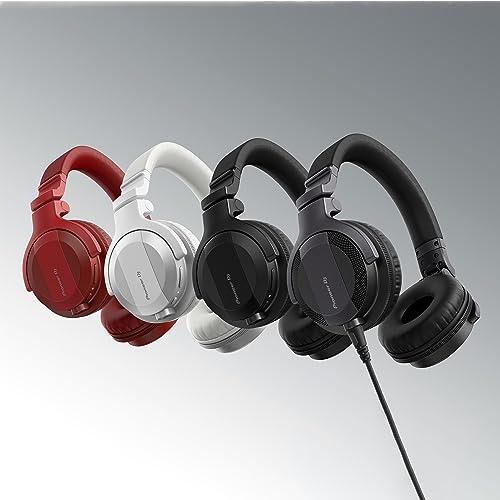









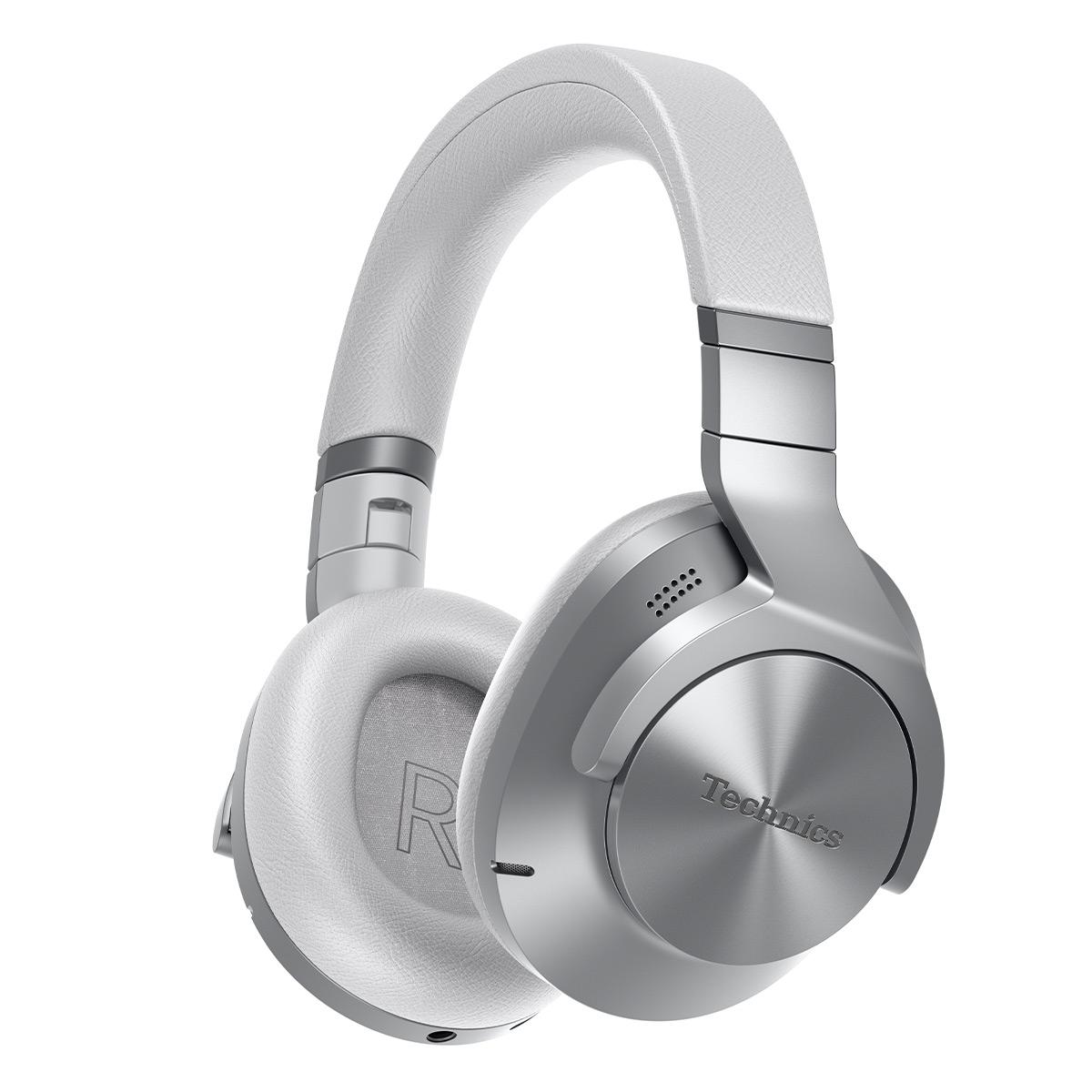
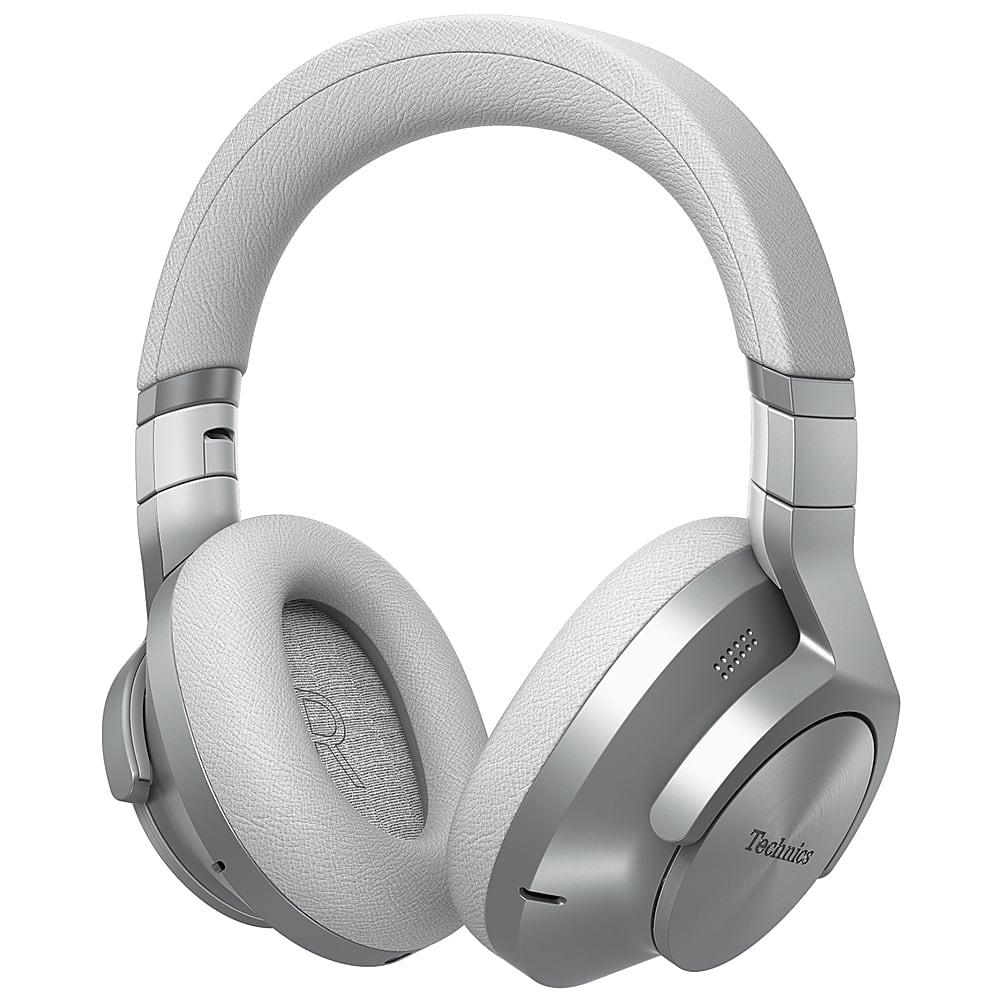
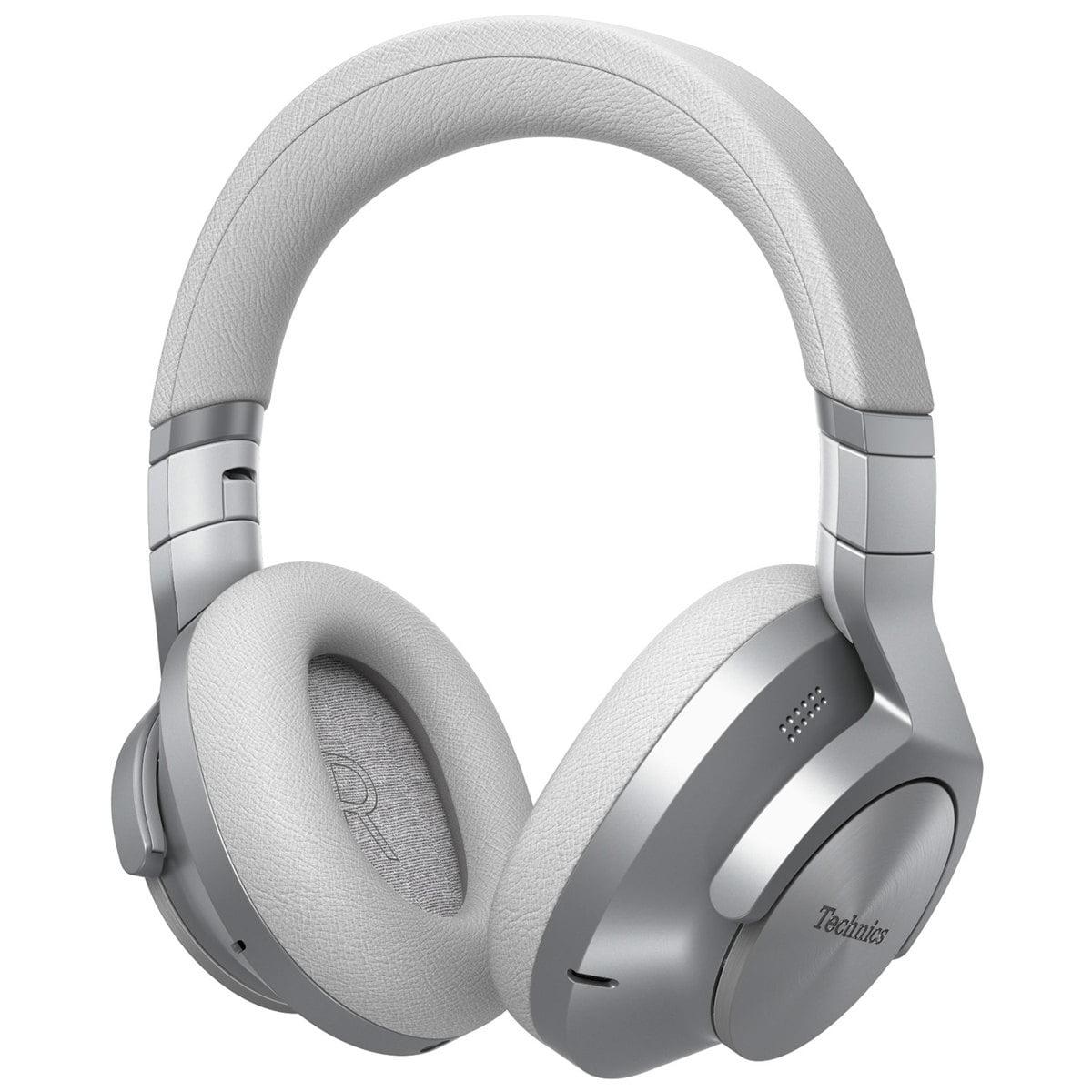
When you're shopping for headphones, the sheer number of options can feel overwhelming. Today, we're looking at two headphones that couldn't be more different in their approach: the specialized Pioneer DJ HDJ-CUE1 and the premium Technics EAH-A800. While both sit on your head and play music, they're designed for completely different worlds – and understanding these differences will help you make the right choice.
The Pioneer DJ HDJ-CUE1, released in 2020, represents what's called a "DJ monitor" headphone. Think of it as a specialized tool, like a chef's knife – it does one thing extremely well. The Technics EAH-A800, launched in 2023, is more like a Swiss Army knife for your ears, packed with features for everyday listening, travel, and work calls.
DJ headphones prioritize bass response (the low-frequency sounds like kick drums), durability for constant handling, and the ability to monitor with one ear while the other cup sits on your shoulder. Consumer headphones focus on balanced sound across all frequencies, wireless convenience, and features like active noise cancellation (ANC) – technology that uses microphones and processing to cancel out background noise.
Since 2020, we've seen significant improvements in wireless audio quality, battery life, and noise cancellation technology. The Technics EAH-A800 benefits from these advances, while the Pioneer HDJ-CUE1 represents a more traditional, wired approach that hasn't changed dramatically but doesn't need to for its intended purpose.
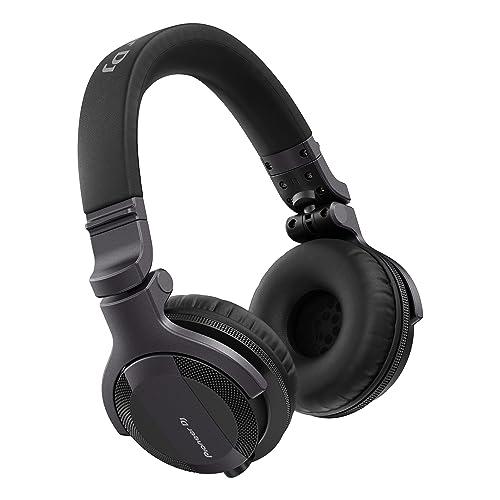
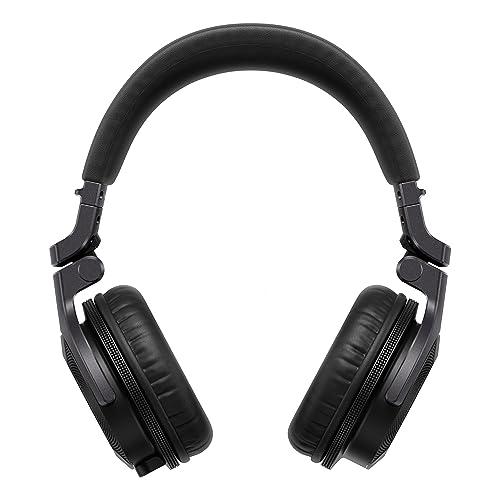
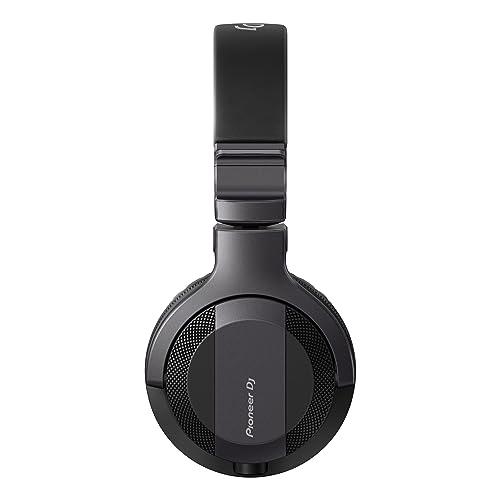
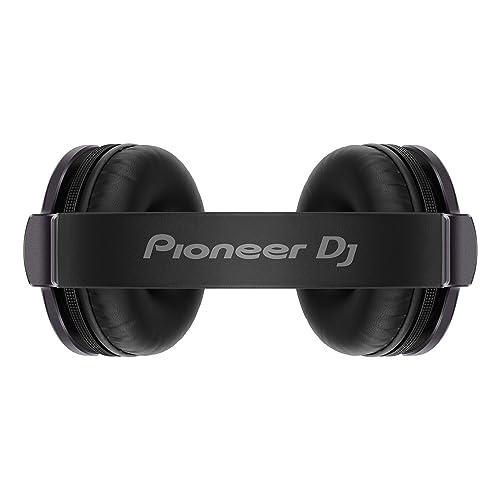
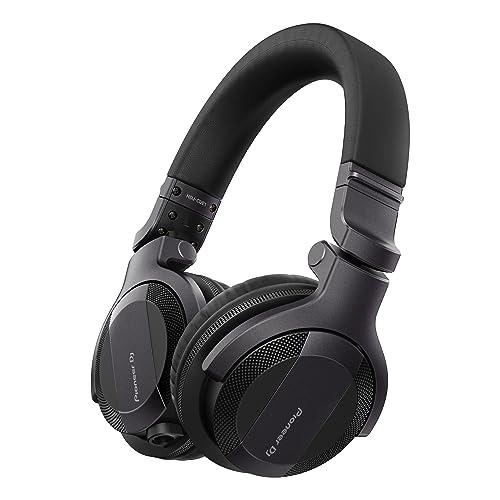
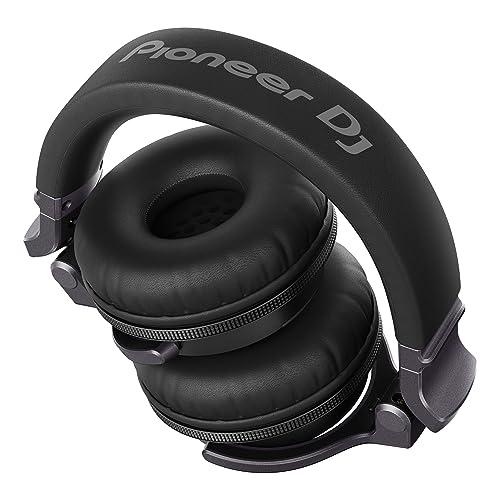
The physical design of these headphones tells the story of their intended use. The Pioneer HDJ-CUE1 uses an on-ear (supra-aural) design, meaning the ear cups sit on your ears rather than around them. At 215 grams, they're lightweight and built for movement. The ear cups swivel a full 90 degrees – a crucial feature that lets DJs monitor the next track in one ear while keeping the other cup away from their ear to hear the crowd or current track playing through speakers.
This swiveling mechanism might seem like a small detail, but it's fundamental to how DJs work. When you're mixing tracks at a club or party, you need to preview the next song while still hearing what's currently playing. The Pioneer HDJ-CUE1 makes this technique comfortable and natural.
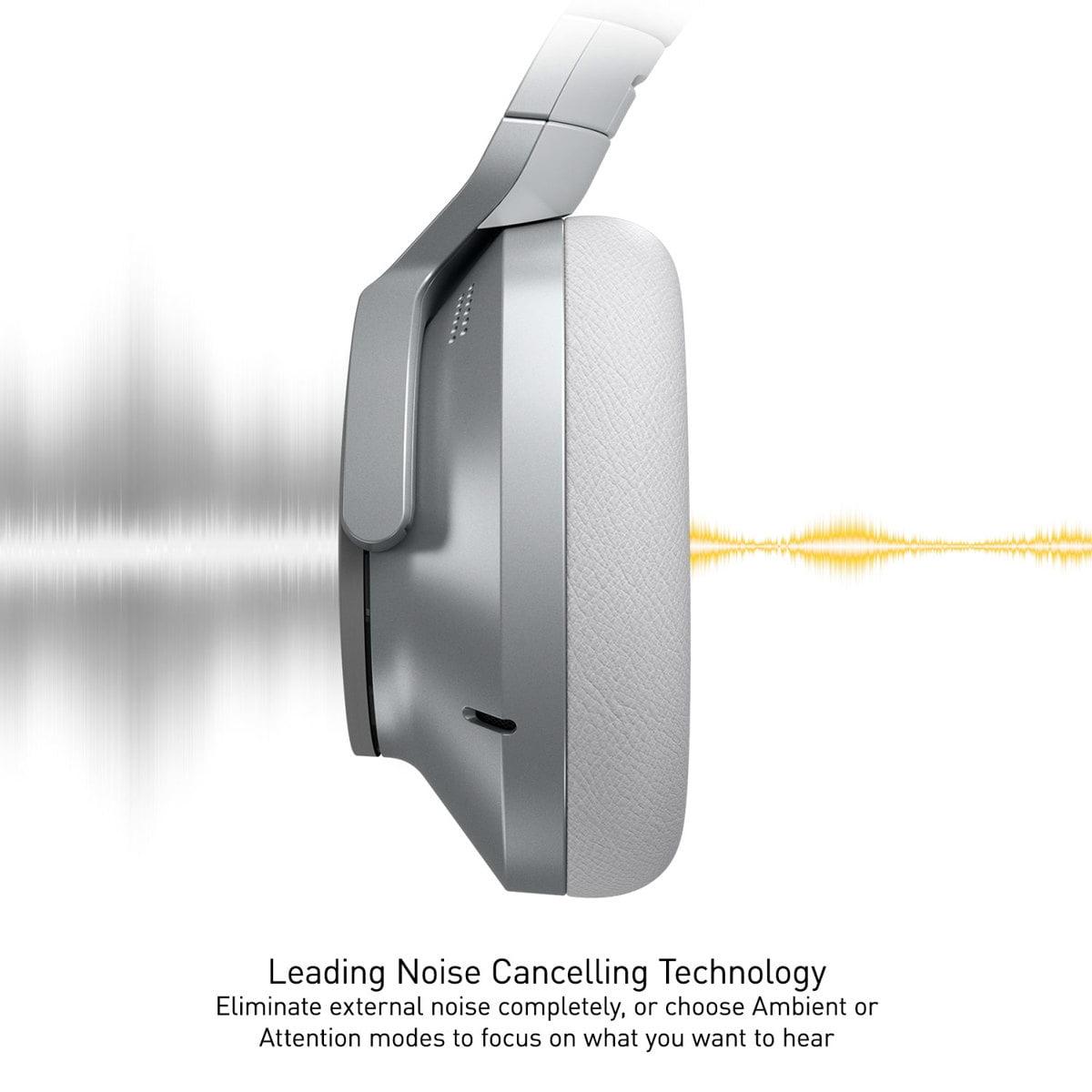
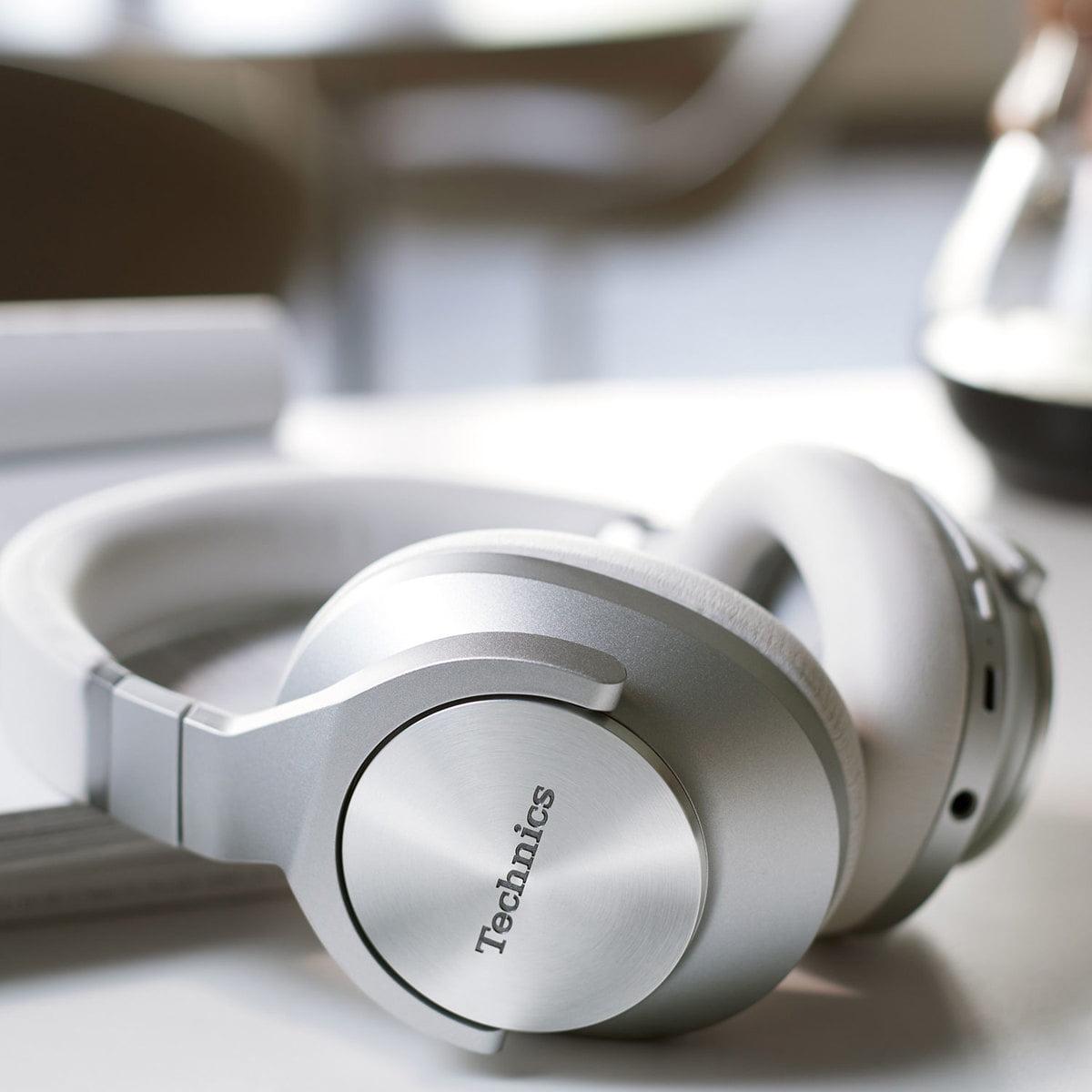
In contrast, the Technics EAH-A800 uses an over-ear (circumaural) design that completely surrounds your ears. At 298 grams, they're heavier but distribute weight evenly across your head. This design creates better passive isolation – the physical blocking of outside noise – which works together with the active noise cancellation to create a quieter listening environment.
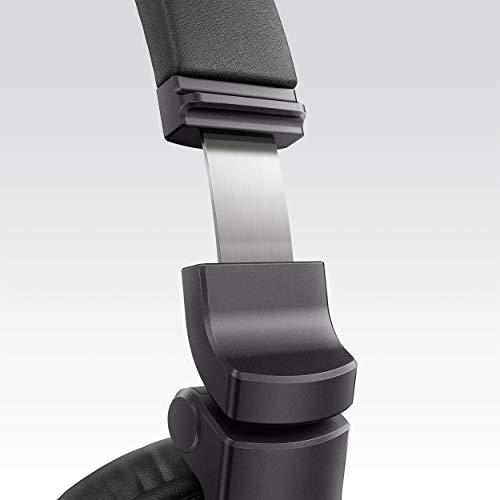
The build quality approaches differ significantly. The Pioneer HDJ-CUE1 uses reinforced plastic construction with metal sliders in the headband, designed to survive the rough treatment of DJ life – being folded, stuffed in bags, and handled constantly during performances. The Technics EAH-A800 focuses on premium materials and finish quality, with plush ear pads and a sophisticated appearance that matches its price point.
Here's where these headphones really diverge. The Pioneer DJ HDJ-CUE1 features what audio engineers call a "bass-forward" or "V-shaped" frequency response. This means it emphasizes low frequencies (bass) and high frequencies (treble) while slightly de-emphasizing midrange frequencies where vocals typically sit.
Why would anyone want unbalanced sound? For DJs, this tuning is actually perfect. When you're beatmatching – the process of syncing the tempo of two tracks – you need to clearly hear the kick drum and bassline of both songs. The Pioneer HDJ-CUE1 inherits its tuning from Pioneer's professional HDJ-X5 model, which costs significantly more, making these specialized characteristics available at an entry-level price point.
The frequency response of 5Hz to 30,000Hz covers the full range of human hearing and beyond. The impedance of 32 ohms means they're easy to drive from phones, tablets, or DJ mixers without requiring additional amplification. The sensitivity of 104dB means they can get very loud with minimal power input.
The Technics EAH-A800 takes the opposite approach with balanced, neutral tuning aimed at accurate reproduction across all frequencies. Its wider frequency response of 4Hz to 40,000Hz and the use of PEEK/Polyurethane 3-layer diaphragm drivers suggest more refined sound reproduction. PEEK (polyetheretherketone) is a high-performance polymer that provides excellent stiffness and damping properties, reducing unwanted resonances that can color the sound.
The Technics EAH-A800 also supports LDAC, Sony's high-resolution audio codec that can transmit up to three times more data than standard Bluetooth audio. This means when paired with compatible devices, you can enjoy near-CD quality sound wirelessly – a significant improvement over basic Bluetooth audio quality.
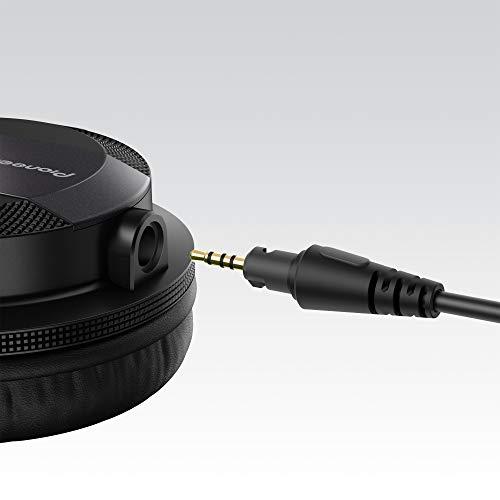
The Pioneer DJ HDJ-CUE1 keeps things straightforward with a detachable 1.2-meter coiled cable that extends to 1.8 meters when stretched. The coiled design is practical for DJs because it retracts automatically, preventing cable tangles during performances. The bayonet connector system ensures the cable won't accidentally disconnect during use – a disaster scenario when you're performing live.
This wired-only approach eliminates any possibility of audio latency (delay), which is crucial for DJ applications. Even the best wireless headphones introduce some delay between the audio signal and what you hear, making precise beatmatching difficult or impossible.
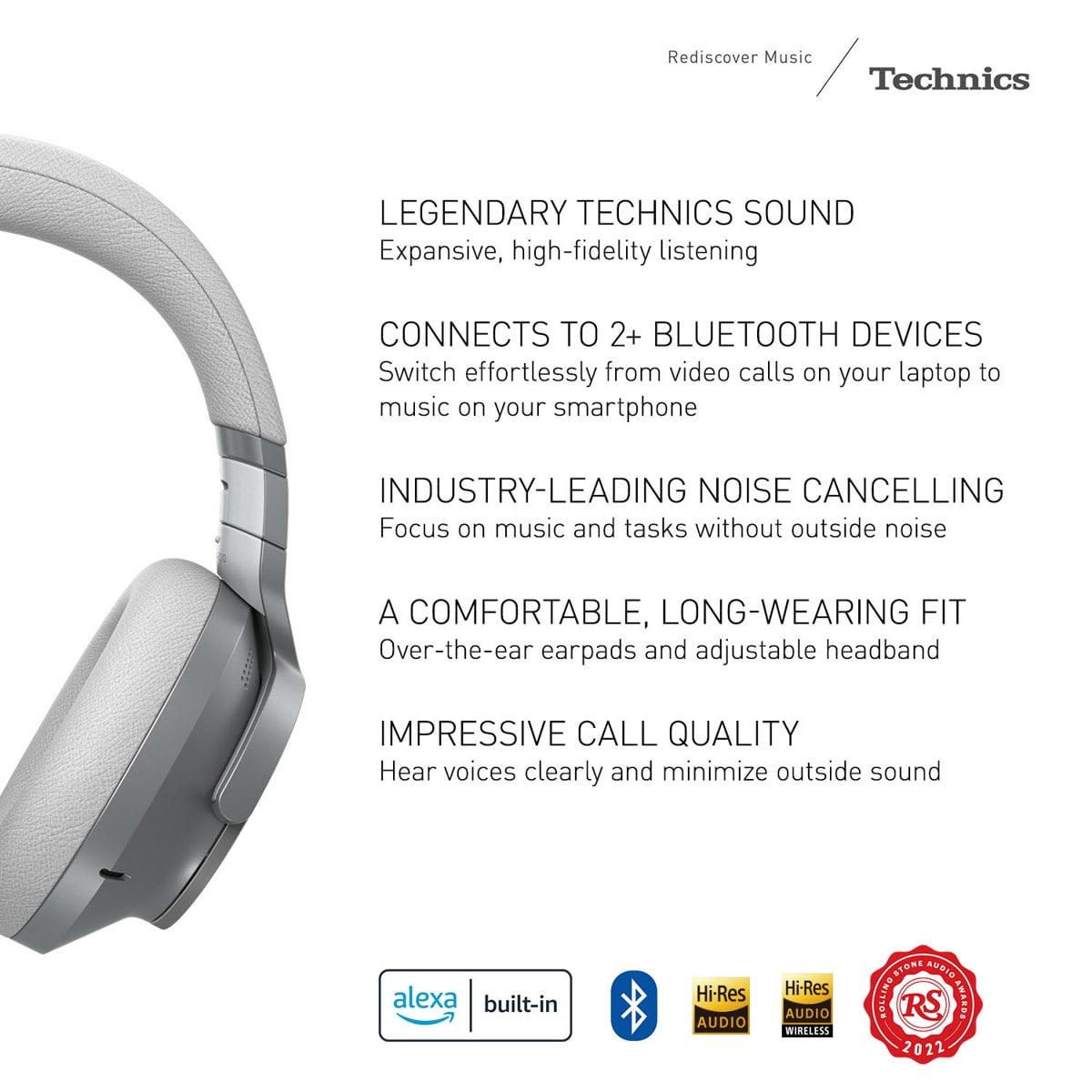
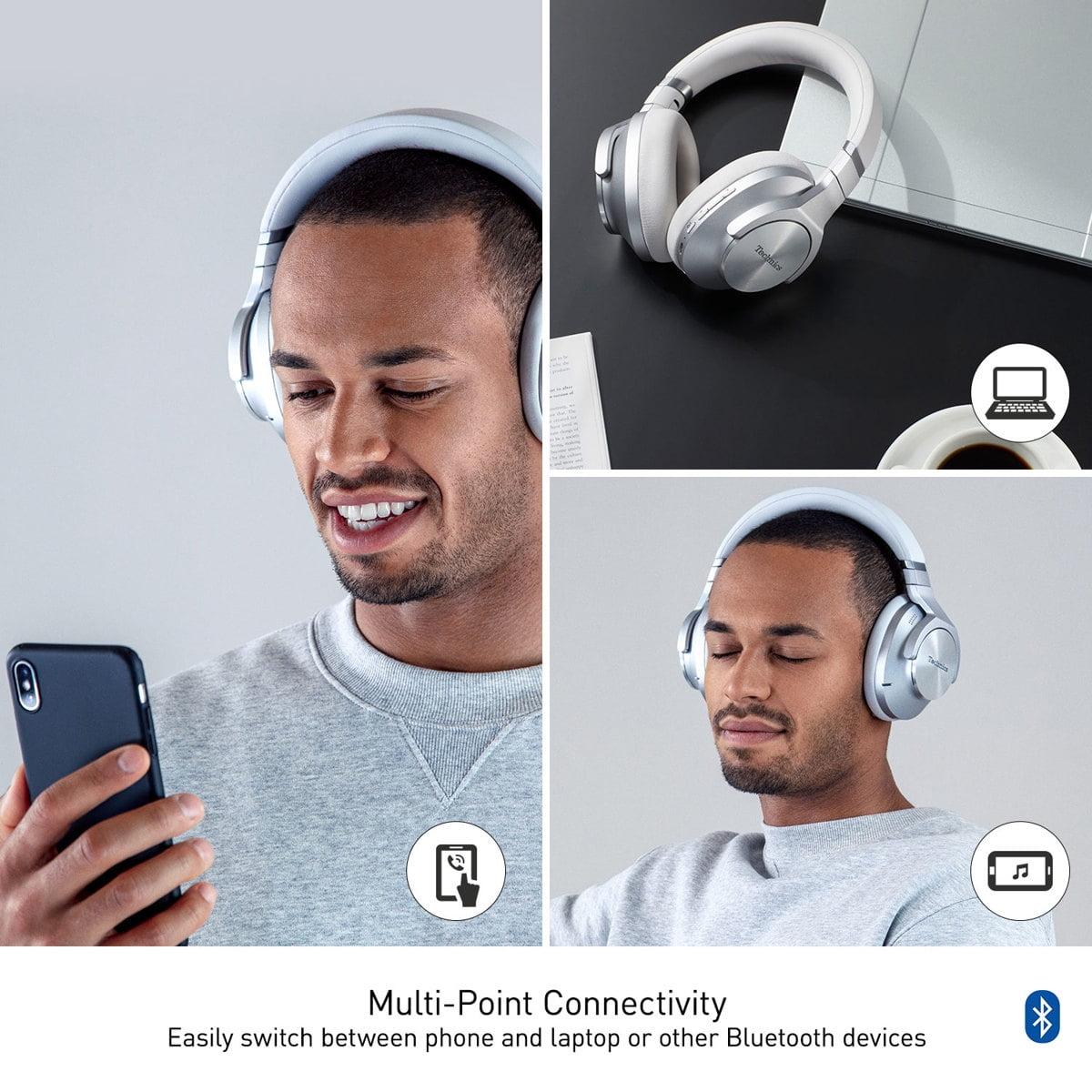
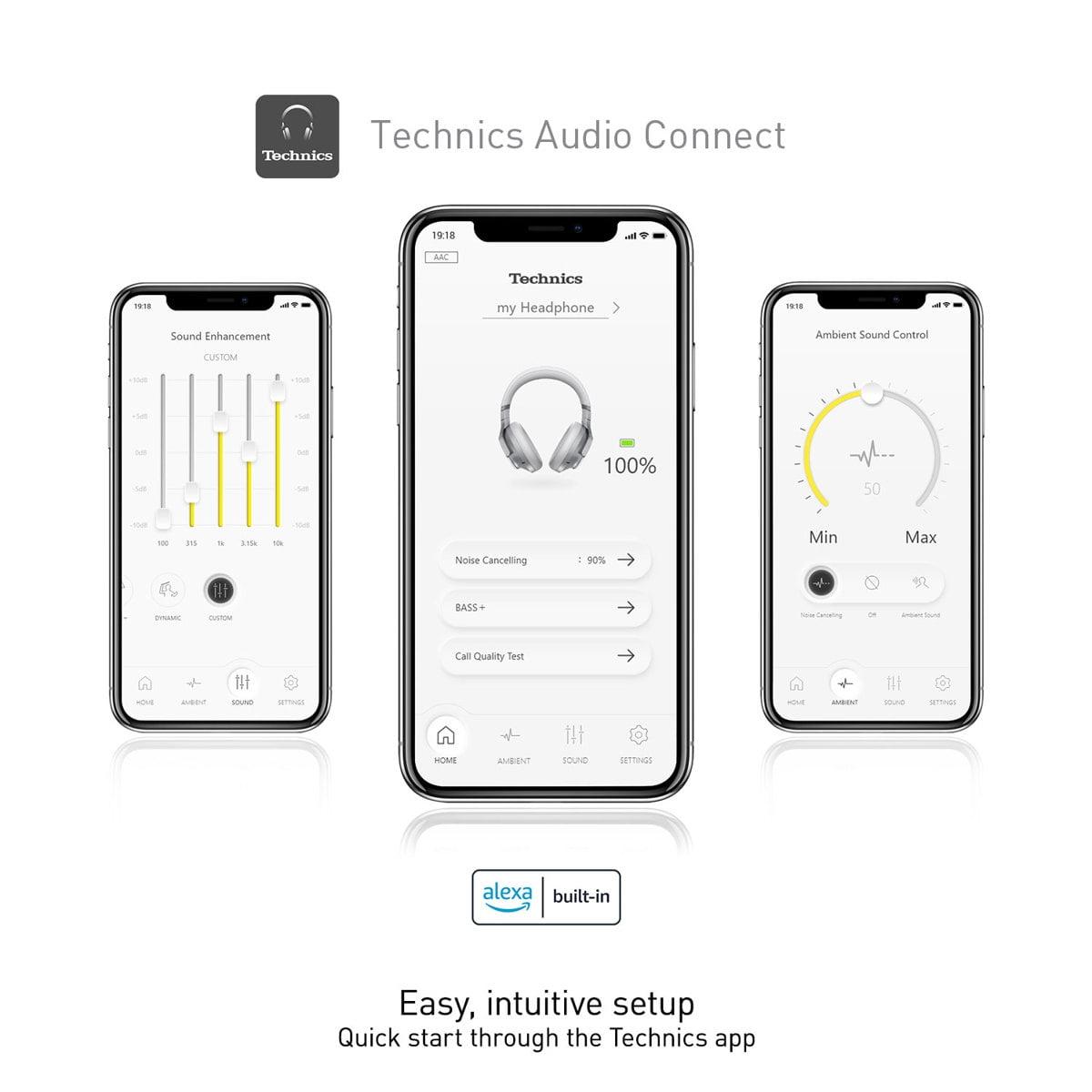
The Technics EAH-A800 embraces wireless connectivity with Bluetooth 5.2 and multipoint pairing – the ability to connect to two devices simultaneously. This means you can be connected to your phone for calls and your laptop for music, switching seamlessly between them. The headphones support multiple audio codecs: SBC (the basic Bluetooth standard), AAC (used by Apple devices and some Android phones), and LDAC for high-quality audio.
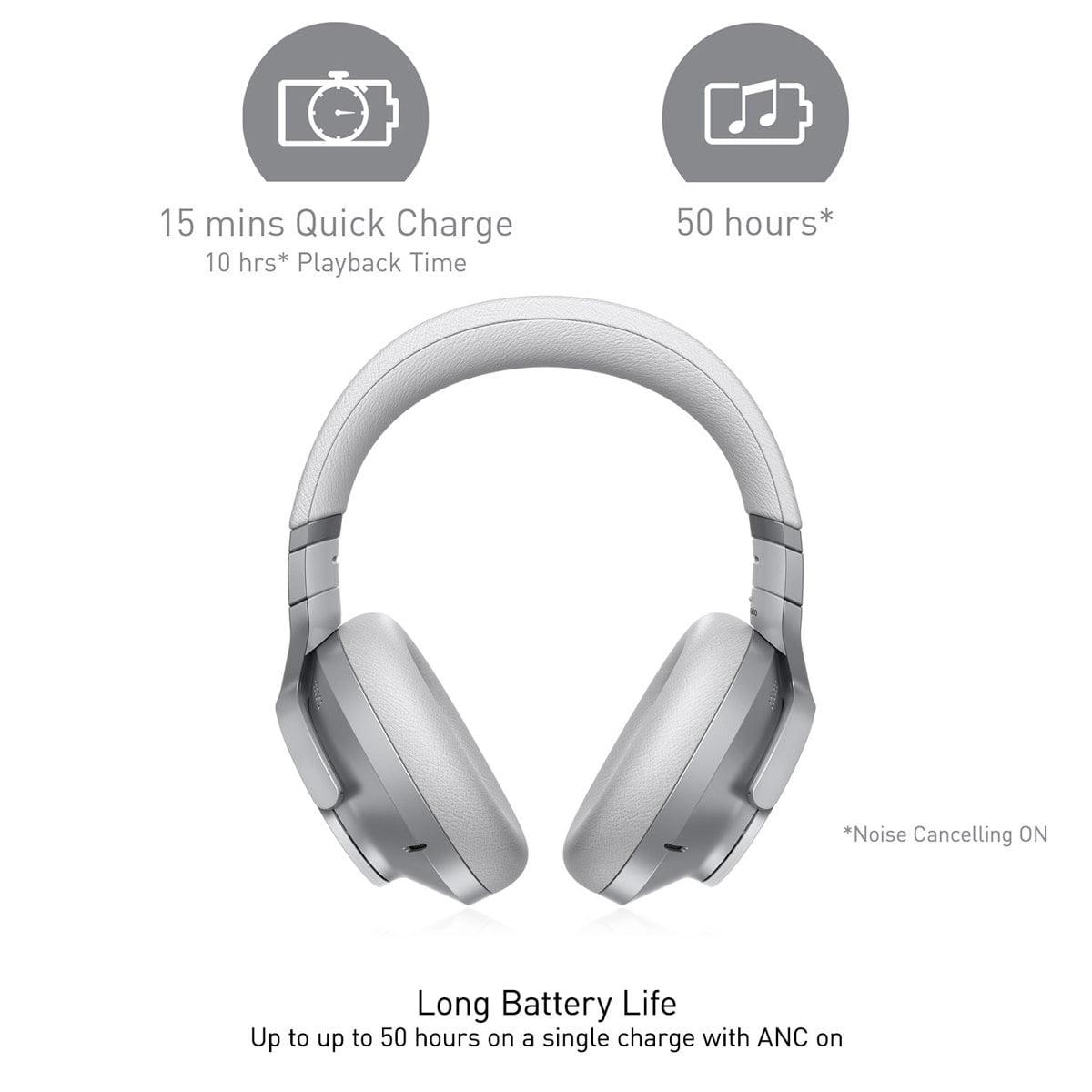
Battery life is exceptional at up to 50 hours with noise cancellation enabled using the AAC codec, or 60 hours with ANC disabled. When using the higher-quality LDAC codec, battery life drops to about 40 hours with ANC on. A 15-minute quick charge provides 10 hours of playback, making these practical for long trips or extended listening sessions.
The Pioneer DJ HDJ-CUE1 focuses on essential DJ features rather than bells and whistles. The key advanced feature is customization – you can purchase separate colored earpads and cables to personalize the appearance, which is popular among DJs who want their equipment to match their style or brand.
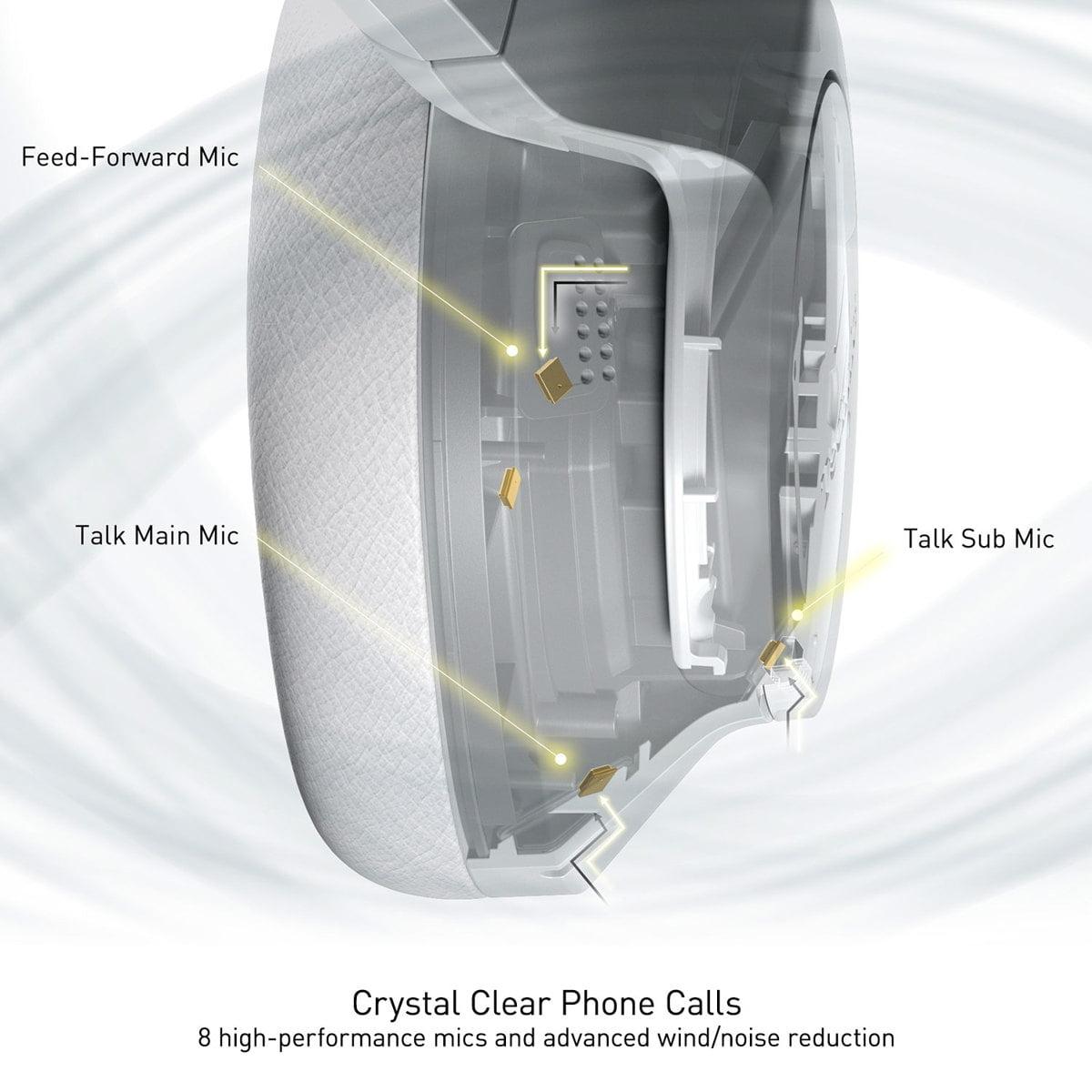
The Technics EAH-A800 packs in sophisticated technology. The dual hybrid noise cancellation system uses both feedforward and feedback microphones along with analog and digital processing to achieve effective noise reduction across a wide frequency range. Feedforward mics detect external noise before it reaches your ear, while feedback mics monitor what's actually getting through to make real-time adjustments.
For calls and voice commands, eight microphones work together using beamforming technology – focusing on your voice while suppressing background noise. This makes the Technics EAH-A800 excellent for work calls, video conferences, or voice assistant use.
Touch controls on the right ear cup handle playbook, volume, and ANC toggling, while physical buttons handle power and pairing. This hybrid approach gives you tactile feedback for essential functions while offering the convenience of touch gestures for common actions.
The Pioneer DJ HDJ-CUE1 excels in its intended environment. The bass emphasis helps DJs identify and match kick patterns between tracks, while the single-ear monitoring capability is essential for beatmatching. The wired connection ensures zero latency, and the robust construction handles the physical demands of DJ use.
However, this specialization comes with limitations. The bass-forward tuning makes them less suitable for mixing music for release, where you need accurate frequency balance to make EQ decisions. They're better for performance and practice than critical listening or studio work.
The Technics EAH-A800 isn't designed for DJ use – the wireless connection introduces latency that makes beatmatching difficult, and the over-ear design doesn't accommodate single-ear monitoring. However, they're excellent for detailed listening, audio editing, or any application where you need accurate sound reproduction.
This is where the philosophical differences become most apparent. The Pioneer DJ HDJ-CUE1 makes electronic music, hip-hop, and bass-heavy genres sound exciting and energetic. The emphasized low end adds impact to kick drums and basslines that many listeners find engaging.
However, acoustic music, vocals, and genres that rely on midrange clarity may sound somewhat recessed or less detailed. It's like listening to music through a lens that highlights certain aspects while softening others.
The Technics EAH-A800 aims for transparency – reproducing music as the artist and engineers intended. This balanced approach works well with all genres, from classical to metal to jazz. The wider soundstage (the perceived space and positioning of instruments) creates a more immersive listening experience.
The Technics EAH-A800 clearly dominates this category. The active noise cancellation effectively reduces airplane engine noise, train rumble, and general urban cacophony. The wireless design eliminates cable snags, and the impressive battery life means you won't run out of power during long trips.
The over-ear design provides better passive isolation than the on-ear Pioneer DJ HDJ-CUE1, which allows more ambient noise to leak in. For travel, the wired connection becomes a limitation rather than an advantage.
Neither headphone is specifically designed for home theater use, but they can both serve this purpose with different strengths. The Pioneer DJ HDJ-CUE1's bass emphasis can make action movies more exciting, with explosions and effects having extra impact. However, the wired connection limits your movement around the room.
The Technics EAH-A800 offers more versatility for home theater use. The wireless connection lets you move freely, and the balanced sound reproduction ensures dialogue clarity while still providing good bass response for effects. The longer battery life means you can watch multiple movies without worrying about charging.
For late-night viewing when you need to keep noise down, the superior passive and active isolation of the Technics EAH-A800 allows you to enjoy full dynamic range without disturbing others.
At the time of writing, the Pioneer DJ HDJ-CUE1 represents exceptional value in the DJ headphone market. It inherits technology and tuning from much more expensive professional models while maintaining an accessible price point. For aspiring DJs or electronic music enthusiasts, the specialized tuning and build quality offer professional-grade performance without the premium price tag.
The Technics EAH-A800 competes in the premium wireless headphone segment alongside models from Sony, Bose, and other established brands. While more expensive, the feature set, build quality, and performance justify the investment for users who want flagship-level capabilities. The exceptional battery life and effective noise cancellation make it competitive with or superior to more expensive alternatives in key areas.
Choose the Pioneer DJ HDJ-CUE1 if you're learning DJ techniques, primarily listen to electronic music, prefer simple reliability over advanced features, or need specialized monitoring capabilities. The bass-forward tuning that might sound unbalanced for general listening becomes a strength when you're mixing tracks or enjoying dance music.
The Technics EAH-A800 makes sense if you want versatile headphones for various music genres, value wireless convenience and noise cancellation, frequently travel, or need excellent call quality for work. The higher price reflects genuinely useful features rather than just premium positioning.
Consider your primary use case rather than trying to find one headphone that does everything well. The Pioneer DJ HDJ-CUE1 excels in its specialized role, while the Technics EAH-A800 offers broad capabilities for general use. Both represent good value in their respective categories, but they're solving different problems for different users.
The technology gap between wired and wireless audio continues to narrow, but for DJ applications where zero latency is crucial, wired connections remain necessary. For general listening, the convenience and features of modern wireless headphones like the Technics EAH-A800 often outweigh the theoretical advantages of wired audio.
Understanding what you actually need versus what sounds impressive on paper will lead you to the right choice between these two very different but equally valid approaches to headphone design.
| Pioneer DJ HDJ-CUE1 | Technics EAH-A800 |
|---|---|
| Design Type - Determines comfort and isolation | |
| On-ear (supra-aural), lightweight at 215g | Over-ear (circumaural), heavier at 298g but more comfortable |
| Sound Signature - Critical for matching your music preferences | |
| Bass-forward tuning optimized for electronic music and DJ mixing | Balanced, audiophile tuning suitable for all genres |
| Connectivity - Affects convenience vs performance | |
| Wired only with detachable coiled cable (zero latency) | Bluetooth 5.2 + wired backup (wireless convenience but slight latency) |
| Frequency Response - Shows audio range capabilities | |
| 5Hz - 30,000Hz (standard range with bass emphasis) | 4Hz - 40,000Hz (wider range for Hi-Res audio) |
| Battery Life - Only relevant for wireless models | |
| N/A (wired connection, no charging needed) | 50+ hours (exceptional endurance for wireless) |
| Noise Cancellation - Important for noisy environments | |
| Passive isolation only (decent for on-ear design) | Dual hybrid active noise cancellation (excellent isolation) |
| Special Features - Unique capabilities that justify the price | |
| 90-degree swiveling cups for DJ monitoring, customizable colors | Multipoint pairing, LDAC Hi-Res audio, 8-mic call system |
| Target Use Case - Who each product serves best | |
| Entry-level DJs, electronic music fans, budget-conscious buyers | Premium wireless users, frequent travelers, audiophiles |
| Durability Focus - Build quality approach | |
| Reinforced for DJ use with metal headband sliders | Premium materials focused on comfort and aesthetics |
| Audio Codecs - Wireless quality options | |
| N/A (analog wired connection) | SBC, AAC, LDAC (highest quality Bluetooth audio) |
| Value Proposition - What you get for your money | |
| Professional DJ tuning at entry-level price | Premium features competitive with flagship models |
The Technics EAH-A800 are significantly better for everyday music listening due to their balanced, audiophile-tuned sound signature that works well with all genres. The Pioneer DJ HDJ-CUE1 have a bass-heavy tuning specifically designed for electronic music and DJ mixing, which can make vocals and midrange instruments sound recessed in many songs.
It depends on your priorities. The Technics EAH-A800 offer wireless convenience with 50+ hour battery life and Bluetooth multipoint pairing, making them ideal for commuting, travel, and general use. The Pioneer DJ HDJ-CUE1 use a wired connection that provides zero audio latency and never needs charging, which is essential for DJ mixing but less convenient for casual listening.
The Technics EAH-A800 have superior noise isolation with dual hybrid active noise cancellation that effectively blocks airplane engines, traffic, and office noise. The Pioneer DJ HDJ-CUE1 only offer passive noise isolation through their physical design, which is adequate for DJ environments but not ideal for noisy commutes or travel.
The Technics EAH-A800 are more comfortable for extended wear due to their over-ear design with plush ear pads that distribute pressure evenly around your ears. The Pioneer DJ HDJ-CUE1 sit on your ears rather than around them, which can cause fatigue during very long sessions, though they're lightweight and designed for active DJ use.
The Pioneer DJ HDJ-CUE1 excel with bass-heavy genres due to their specialized tuning that emphasizes kick drums and low frequencies - this is intentional for DJ mixing applications. While the Technics EAH-A800 can handle bass well, their balanced tuning won't give bass the same prominent emphasis that electronic music fans might prefer.
The Technics EAH-A800 are excellent for calls with an advanced 8-microphone system that uses beamforming to focus on your voice while suppressing background noise. The Pioneer DJ HDJ-CUE1 don't have a built-in microphone and are designed purely for audio monitoring, not communication.
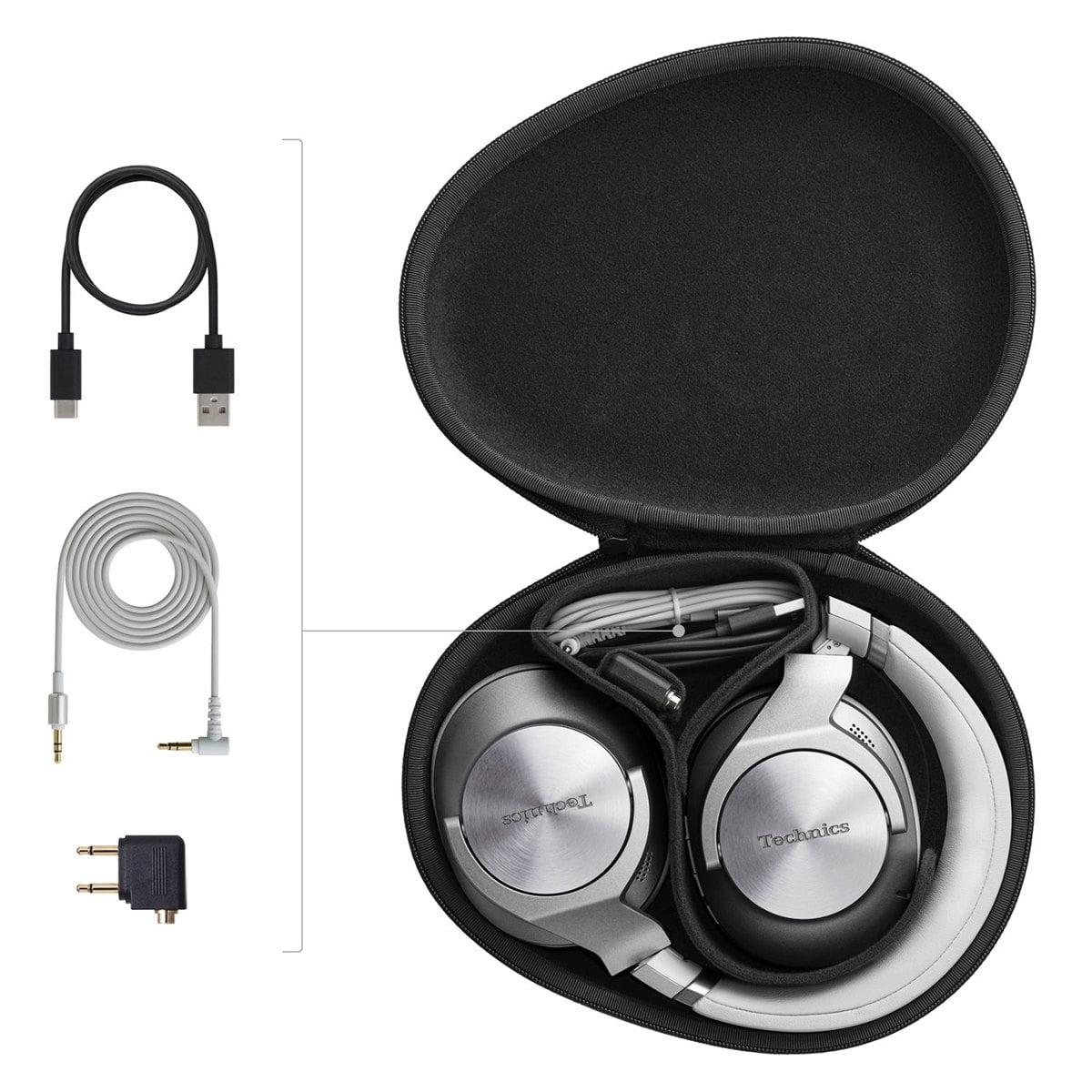
Both are durable but in different ways. The Pioneer DJ HDJ-CUE1 are built to withstand the physical demands of DJ use with reinforced construction and metal headband sliders. The Technics EAH-A800 are better for travel with their wireless design, included carrying case, and no cables to snag or break, plus their over-ear design provides better isolation on planes and trains.
The Technics EAH-A800 are better for home theater use due to their balanced sound that ensures clear dialogue, wireless freedom to move around, and active noise cancellation for late-night viewing without disturbing others. The Pioneer DJ HDJ-CUE1 can work for movies but their bass emphasis might make dialogue less clear, and the wired connection limits mobility.
Both offer excellent value in their respective categories. The Pioneer DJ HDJ-CUE1 provide exceptional value for DJs and electronic music fans, offering professional-grade tuning at an entry-level price. The Technics EAH-A800 justify their higher cost with premium features like active noise cancellation, exceptional battery life, and Hi-Res audio support that compete with more expensive flagship models.
Neither is ideal for professional music production. The Pioneer DJ HDJ-CUE1 are designed for DJ monitoring and performance rather than critical mixing decisions due to their bass-forward tuning. The Technics EAH-A800 are better for detailed listening and audio work due to their balanced frequency response, but studio monitors or professional headphones would be more appropriate for serious production work.
The Technics EAH-A800 are better for gaming due to their balanced sound that helps with positional audio cues, wireless convenience, and built-in microphone for voice chat. However, the wireless connection introduces some audio latency that competitive gamers might notice. The Pioneer DJ HDJ-CUE1 have zero latency but lack a microphone and their bass-heavy tuning might mask important audio details in games.
Choose the wired Pioneer DJ HDJ-CUE1 if you're learning DJ techniques, primarily listen to electronic music, want zero audio latency, or prefer simple reliability without battery concerns. Choose the wireless Technics EAH-A800 if you want versatile headphones for multiple uses, value convenience and portability, frequently travel, or need features like noise cancellation and hands-free calling.
We've done our best to create useful and informative comparisons to help you decide what product to buy. Our research uses advanced automated methods to create this comparison and perfection is not possible - please contact us for corrections or questions. These are the sites we've researched in the creation of this article: bestbuy.com - pioneerdjstore.com - rtings.com - idjnow.com - youtube.com - pioneerdj.com - soundguys.com - pioneerdj.com - digitaldjtips.com - pioneerdj.com - guitarcenter.com - empirepro.com - idjnow.com - emiaudio.com - pioneerdj.com - sfm.ca - sweetwater.com - pioneerdj.com - pioneerdj.com - pioneerdj.com - blog.son-video.com - expertreviews.co.uk - youtube.com - whathifi.com - youtube.com - bhphotovideo.com - futureaudiophile.com - versus.com - versus.com - soundphilereview.com - help.na.panasonic.com - technics.com - retailspecs.com - headphonecheck.com - us.technics.com - help.na.panasonic.com - bhphotovideo.com - technics.com - technics.com - valueelectronics.com - us.technics.com - us.technics.com - youtube.com - hometheaterhifi.com

Privacy Policy
Terms and Conditions - Affiliate Policy
Home Security
© Copyright 2008-2026.
11816 Inwood Rd #1211, Dallas, TX 75244