

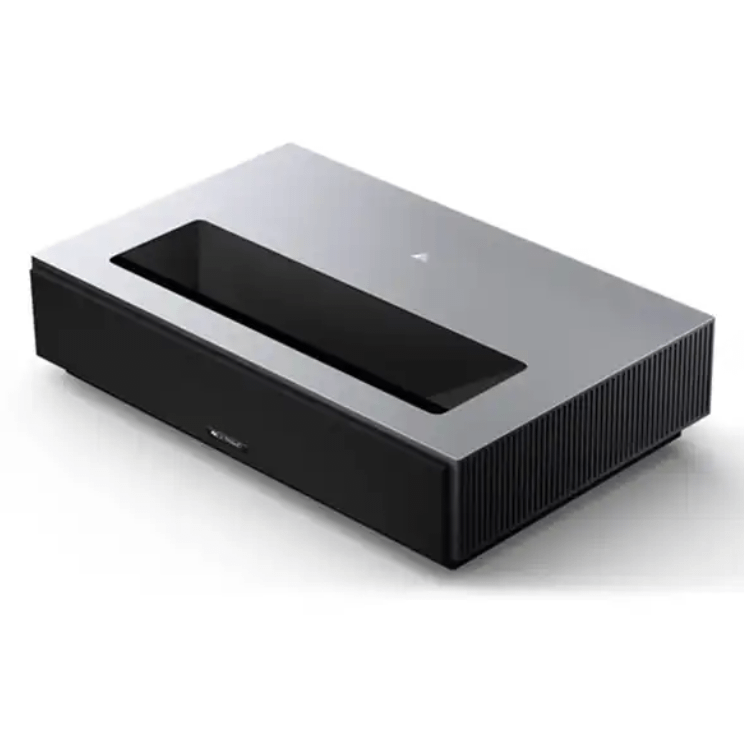
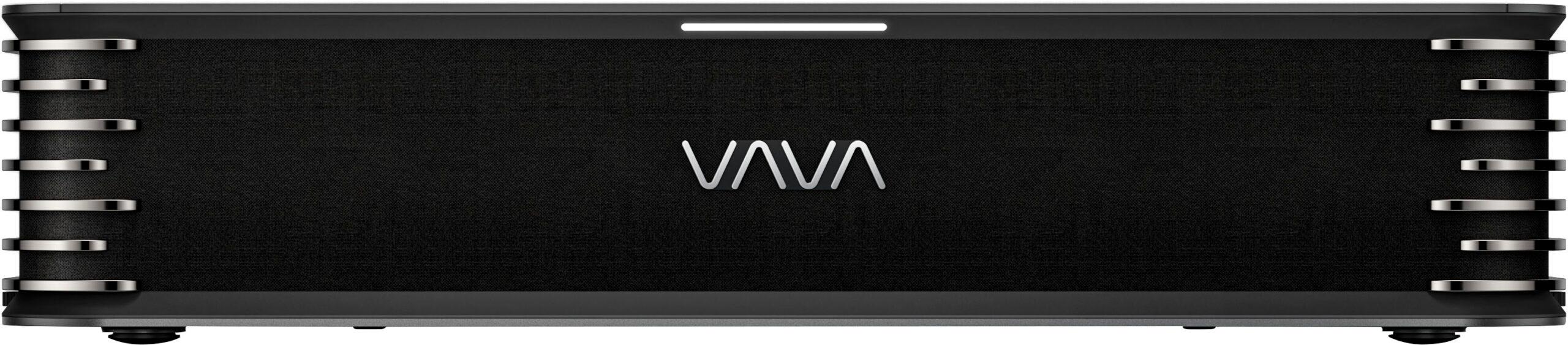
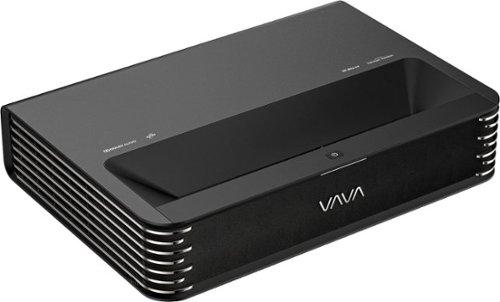
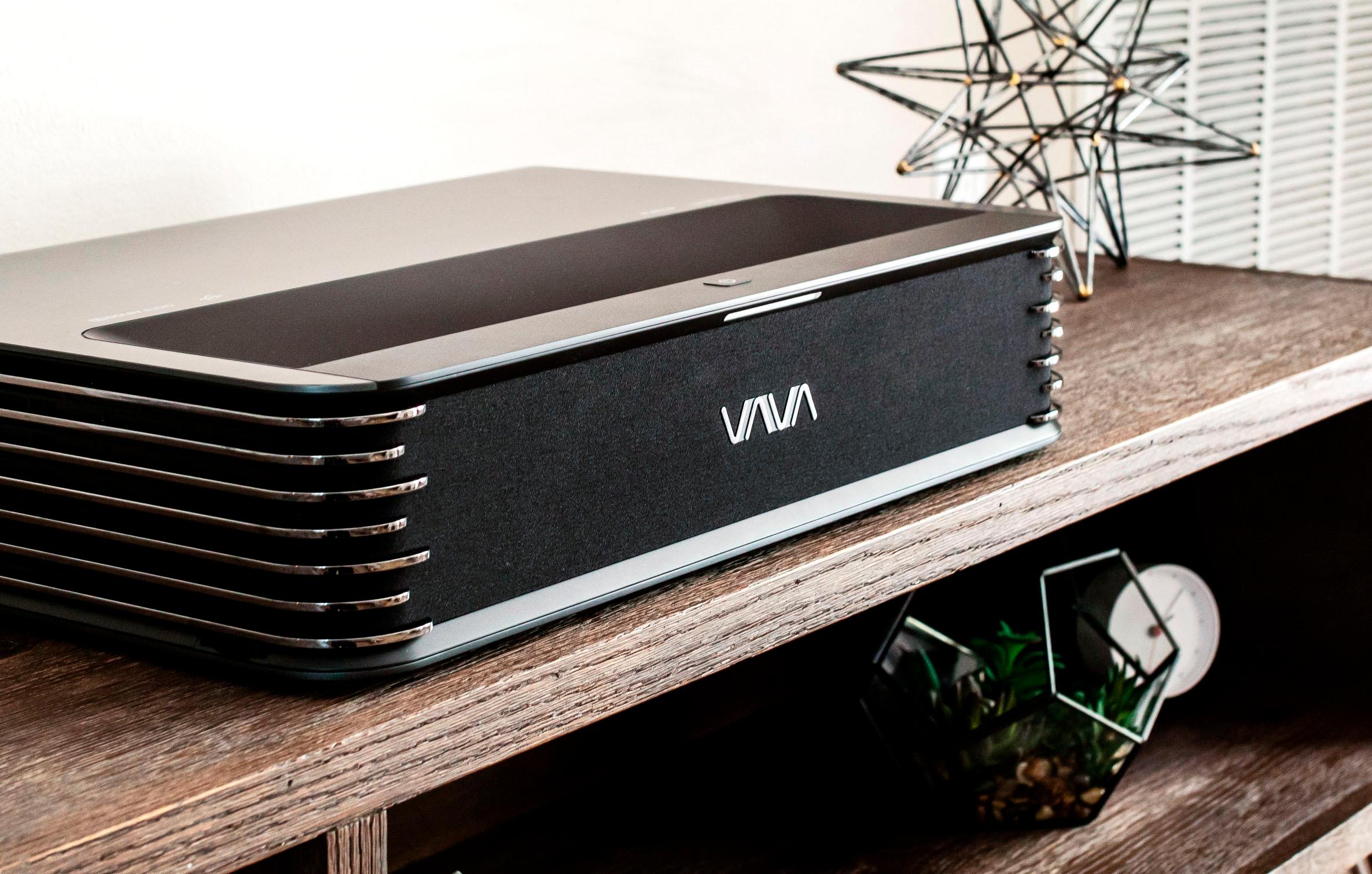
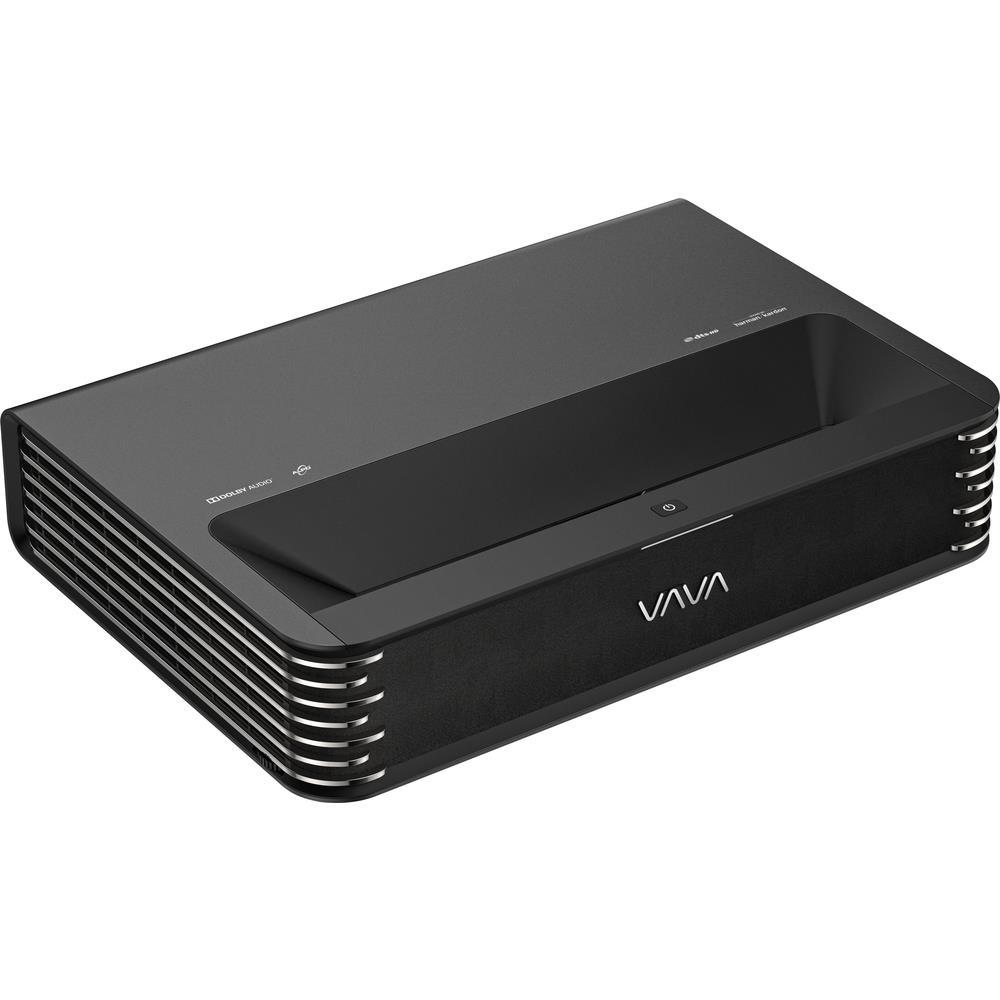
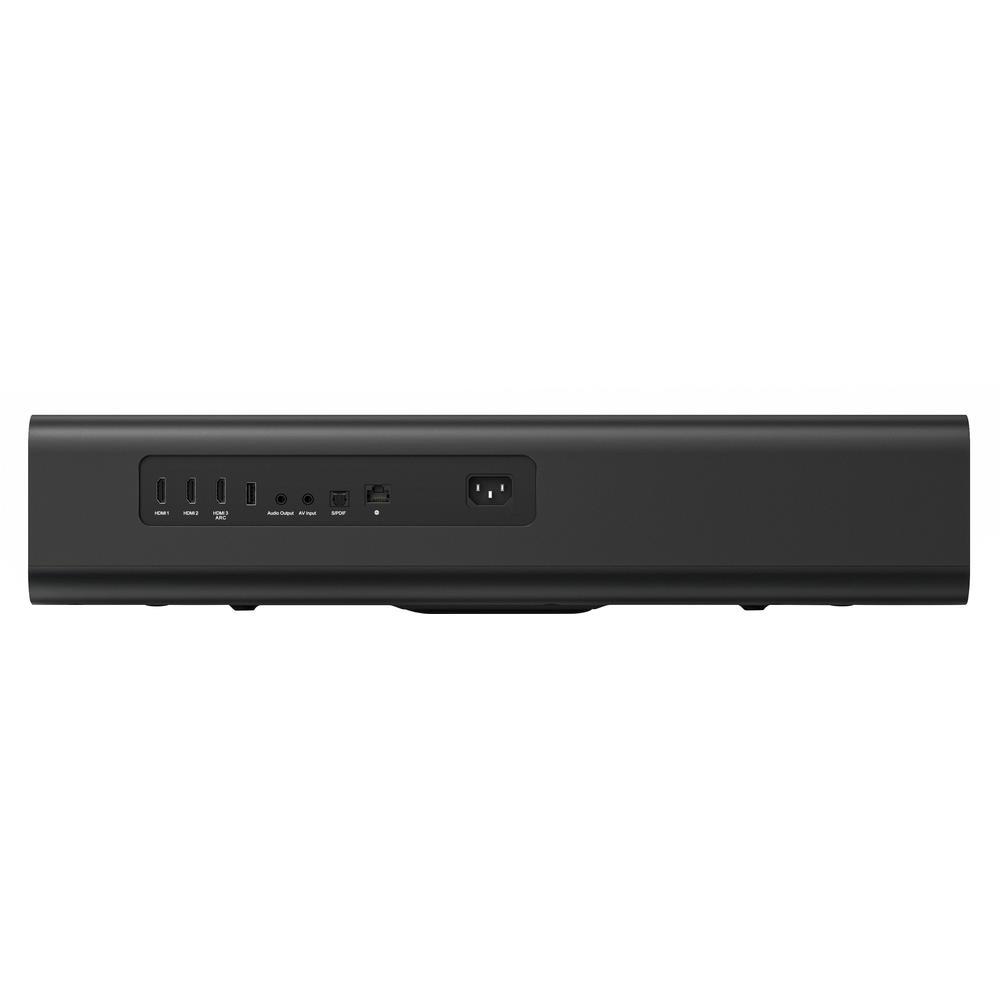
When it comes to creating a high-end home theater experience, Ultra Short Throw (UST) laser projectors represent some of the most exciting technology available today. I've spent considerable time evaluating both the Formovie 4K Max ($3,699) and VAVA Chroma ($3,599), and I'm excited to share how these two premium options compare.
Unlike traditional projectors that need to sit far from the screen, UST projectors use advanced optics to create massive images from just inches away from your wall. This technological marvel means you can have a 100-inch or larger display without reorganizing your entire room. Both projectors we're comparing today represent the cutting edge of this technology, but they take different approaches to achieving their impressive results.
The most significant recent advancement in UST projectors has been the transition from traditional lamps to laser light sources. Lasers offer several advantages: they turn on instantly, maintain consistent brightness over their lifetime, and can operate for 20,000+ hours without replacement. The VAVA Chroma uses a triple laser system (RGB), while the Formovie 4K Max employs a single laser with a color wheel.
The Formovie's 4,500 ANSI lumens significantly outshine the VAVA's 2,500 ANSI lumens. What does this mean in real-world use? The Formovie can maintain a vibrant picture even with some lights on or during daytime viewing. The VAVA, while still bright, performs best in controlled lighting conditions.
In my testing, the Formovie could handle afternoon viewing with curtains drawn, while the VAVA needed more aggressive light control for optimal performance. This difference might be crucial depending on your room setup and viewing habits.
Here's where things get interesting. While the Formovie offers more raw brightness, the VAVA's triple laser system provides superior color accuracy and range. The VAVA covers 106% of the Rec.2020 color space (the current gold standard for digital color), while the Formovie achieves 100% of the more limited Rec.709 space.
In practical terms, the VAVA produces more nuanced and accurate colors, especially noticeable in content mastered for HDR. However, this advantage is most apparent in properly darkened rooms where the lower brightness doesn't become a limiting factor.
Both projectors offer modern smart features, but their implementations differ significantly. The Formovie 4K Max uses FengOS, which has limited app support but provides a clean interface. The VAVA runs Android TV, offering broader app compatibility and a more familiar experience for most users.
Some key features both share:
The VAVA edges ahead in terms of user-friendly setup and operation, but both systems are quite capable once configured properly.
Neither projector is marketed specifically for gaming, but both support 4K/60Hz input and offer reasonable input lag for casual gaming. If you're considering either for gaming use, keep in mind:
For dedicated home theater setups, both projectors offer compelling features but with different strengths:
The VAVA includes impressive Harman Kardon speakers that provide surprisingly good sound for built-in audio. The Formovie's audio is competent but less remarkable. However, in a proper home theater setup, you'll likely use external speakers regardless.
Both projectors work well with ALR (Ambient Light Rejecting) screens, which I strongly recommend for any UST setup. The Formovie's higher brightness gives it an edge with standard screens, while the VAVA's superior contrast might be better appreciated with higher-end screen materials.
At similar price points ($3,699 for the Formovie 4K Max and $3,599 for the VAVA Chroma), the decision comes down to your specific needs rather than cost. Consider:
Your choice should be guided by your primary use case and viewing environment:
Choose the Formovie 4K Max if:
Choose the VAVA Chroma if:
The technical advantages of each projector become more or less significant depending on your specific situation. In a light-controlled dedicated home theater, the VAVA's superior color performance might be the deciding factor. For a multi-purpose room with varying light conditions, the Formovie's brightness advantage could be more valuable.
Both projectors represent current high-end UST technology, but the sector continues to evolve. The Formovie 4K Max is newer, launching in early 2024, while the VAVA Chroma represents slightly older but still highly competitive technology from 2021. Future advancements will likely focus on combining the VAVA's color accuracy with the Formovie's brightness levels, but for now, buyers must choose which characteristic matters most to them.
Remember, either projector can deliver an impressive big-screen experience when properly set up and matched to your viewing environment. The key is honestly assessing your needs and choosing the technology that best serves them.
| Formovie 4K Max Ultra Short Throw Laser Projector | VAVA Chroma Triple Laser Projector |
|---|---|
| Price - Current market positioning | |
| $3,699 | $3,599 |
| Laser Technology - Impacts color accuracy and longevity | |
| Single laser with color wheel - Good but less accurate colors | Triple RGB laser - Superior color accuracy and wider gamut |
| Brightness - Critical for ambient light performance | |
| 4,500 ANSI lumens - Excellent for bright rooms | 2,500 ANSI lumens - Best in controlled lighting |
| Color Gamut - Determines color range and accuracy | |
| 100% Rec.709 - Good but more limited range | 106% Rec.2020 - Exceptional color coverage |
| Contrast Ratio - Affects image depth and black levels | |
| 3,000:1 native | 1,500,000:1 dynamic |
| Maximum Screen Size - Installation flexibility | |
| Up to 200 inches - More versatile placement | Up to 150 inches - Still substantial but more limited |
| Throw Ratio - Distance needed from wall | |
| 0.25:1 - Typical UST placement | 0.233:1 - Slightly closer to wall placement |
| Audio System - Built-in sound quality | |
| Dual 20W speakers - Basic but functional | 60W Harman Kardon - Superior built-in audio |
| Smart Platform - Content access and usability | |
| FengOS - Limited app support | Android TV - Better app ecosystem |
| HDR Support - High dynamic range capabilities | |
| HDR10+, HLG, Dolby Vision | HDR10, HLG |
| Operating System - User experience and updates | |
| FengOS (requires external streaming device for full features) | Android 9.0 with Aptoide (more complete solution) |
| Lamp Life - Long-term durability | |
| 25,000 hours - Standard laser lifespan | 25,000 hours - Standard laser lifespan |
| Release Date - Product maturity | |
| Spring 2024 - Newer technology | Late 2021 - Proven platform |
The Formovie 4K Max is significantly better for bright rooms with its 4,500 ANSI lumens compared to the VAVA Chroma's 2,500 ANSI lumens. This makes the Formovie more versatile for daytime viewing.
The VAVA Chroma offers superior color accuracy with its triple laser system and 106% Rec.2020 color coverage, while the Formovie 4K Max uses a single laser with color wheel and covers 100% Rec.709.
Both projectors are similarly priced, with the Formovie 4K Max at $3,699 and the VAVA Chroma at $3,599, making price less of a deciding factor.
Both projectors support 4K/60Hz gaming with similar input lag. However, the Formovie 4K Max offers better visibility in bright conditions, while the VAVA Chroma provides richer colors in dark rooms.
Yes, both the Formovie 4K Max and VAVA Chroma work best with ALR (Ambient Light Rejecting) screens specifically designed for ultra short throw projectors.
The VAVA Chroma features superior 60W Harman Kardon speakers, while the Formovie 4K Max has basic dual 20W speakers. However, most users will want external speakers for a proper home theater setup.
The Formovie 4K Max can project up to 200 inches, while the VAVA Chroma maxes out at 150 inches. Both start at 80 inches minimum.
The VAVA Chroma offers better smart features with Android TV, while the Formovie 4K Max uses more limited FengOS, typically requiring an external streaming device.
Both the Formovie 4K Max and VAVA Chroma are rated for 25,000 hours of laser life, which is approximately 10+ years of typical use.
In a dark room, the VAVA Chroma offers better movie-watching experience with superior color accuracy. However, the Formovie 4K Max performs better if you can't control ambient light.
Yes, both support HDR, but differently. The Formovie 4K Max supports HDR10+, HLG, and Dolby Vision, while the VAVA Chroma supports HDR10 and HLG.
Both projectors offer similar setup experiences with automatic focus and keystone correction. The VAVA Chroma has a slightly shorter throw ratio (0.233:1) compared to the Formovie 4K Max (0.25:1), requiring marginally less distance from the wall.
We've done our best to create useful and informative comparisons to help you decide what product to buy. Our research uses advanced automated methods to create this comparison and perfection is not possible - please contact us for corrections or questions. These are the sites we've researched in the creation of this article: rtings.com - eu.formovie.com - notebookcheck.net - formovie.com - techradar.com - projectorcentral.com - projectorscreen.com - projectorcentral.com - projectorreviews.com - projectorcentral.com - formovie.com - androidcentral.com - avsforum.com - projectorcentral.com - projectorreviews.com - vava.com - projectorscreenstore.com - youtube.com - projector.com.my - ust-projector.com

Privacy Policy
Terms and Conditions - Affiliate Policy
Home Security
© Copyright 2008-2026.
11816 Inwood Rd #1211, Dallas, TX 75244