

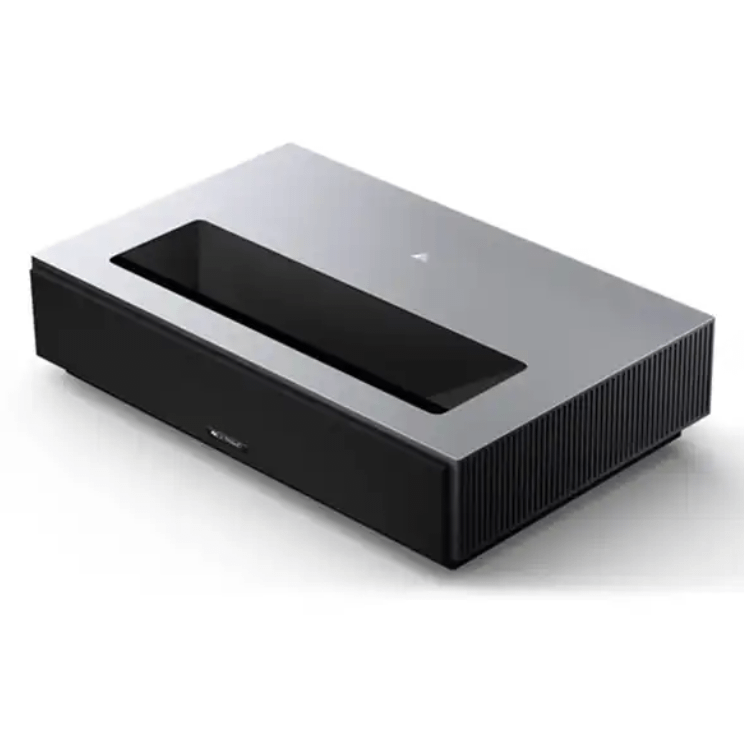
If you've ever dreamed of having a massive 100+ inch display without drilling holes in your ceiling or rearranging your entire living room, ultra short throw (UST) laser projectors might be the answer. These impressive devices can create cinema-sized images while sitting just inches from your wall, much like a sleek piece of furniture on your entertainment center.
Today's comparison between the AWOL Vision LTV-3000 Pro and the Formovie 4K Max showcases two distinct philosophies in this rapidly evolving category. One prioritizes cinematic accuracy and features, while the other emphasizes raw brightness performance and premium audio integration.
Ultra short throw projectors represent a significant leap from traditional projection technology. Where conventional projectors require 8-12 feet of throw distance and ceiling mounting, UST projectors achieve the same screen sizes from just 6-12 inches away from the wall. This is possible thanks to specialized optics and mirrors that redirect the light at extreme angles—think of it as projection origami.
The "laser" aspect refers to the light source. Instead of traditional bulbs that dim over time and need replacement every few thousand hours, laser light engines provide consistent brightness for 20,000+ hours while generating more accurate colors. It's like comparing LED light bulbs to old incandescent ones—the technology is simply more efficient and longer-lasting.
When evaluating these projectors, the critical factors include brightness (measured in lumens), color accuracy, contrast ratios, input lag for gaming, and how well they handle ambient light. Since these projectors often compete directly with large TVs, audio quality and smart features become equally important considerations.
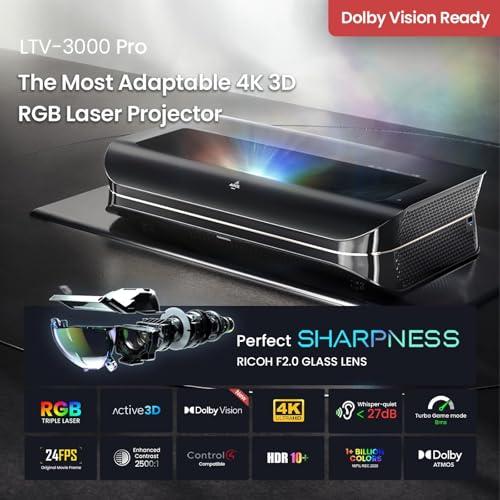
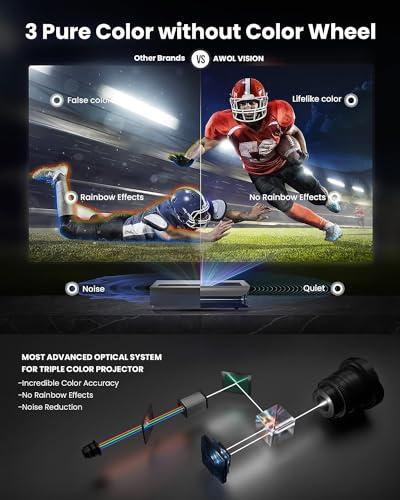
The AWOL Vision LTV-3000 Pro, released in 2023, represents what we'd call the "enthusiast's choice." It uses RGB triple laser technology—essentially three separate lasers for red, green, and blue light—which eliminates the color wheel found in many DLP projectors. This results in more accurate colors and eliminates the "rainbow effect" that some viewers notice with traditional DLP systems.
The Formovie 4K Max takes a different approach, prioritizing maximum brightness through its ALPD 4.0 technology. ALPD (Advanced Laser Phosphor Display) uses blue lasers with phosphor wheels to create other colors, similar to how some LED lights work. While this may sound less sophisticated than the AWOL's RGB approach, it allows for significantly higher brightness levels.
At the time of writing, both projectors fall into the premium UST category, with the AWOL Vision LTV-3000 Pro positioned as a mid-to-high-end option while the Formovie 4K Max targets the performance-first segment where maximum brightness justifies premium pricing.
Brightness might be the most crucial specification for any projector, but it's especially critical for UST models since they're designed for living rooms rather than dedicated dark theaters. The difference between these two projectors is substantial: the Formovie 4K Max delivers 4,500 ANSI lumens compared to the AWOL Vision LTV-3000 Pro's 2,000 ISO lumens (with 3,000 peak lumens).
To put this in perspective, most budget projectors struggle with 1,000-2,000 lumens, making even the AWOL quite bright by historical standards. However, the Formovie operates in premium TV territory, where daytime viewing becomes genuinely enjoyable rather than just tolerable.
This brightness advantage translates directly to real-world performance. With the Formovie 4K Max, you can watch HDR movies during the day with curtains open and still see impressive contrast and color pop. The AWOL Vision LTV-3000 Pro performs excellently in evening conditions or rooms with controlled lighting, but bright ambient light will wash out darker scenes and reduce HDR impact.
Our research indicates that brightness becomes the limiting factor for most UST projector buyers. While 2,000 lumens sounds impressive on paper, living rooms with large windows or bright overhead lighting quickly reveal the limitations. The Formovie's extra brightness provides crucial headroom for versatile viewing conditions.
Here's where the technical approaches create interesting trade-offs. The AWOL Vision LTV-3000 Pro uses RGB triple laser technology, which means dedicated red, green, and blue lasers create colors directly without any color wheels or phosphor conversion. This results in exceptional color purity and eliminates rainbow artifacts—those brief color flashes some people see with single-chip DLP projectors.
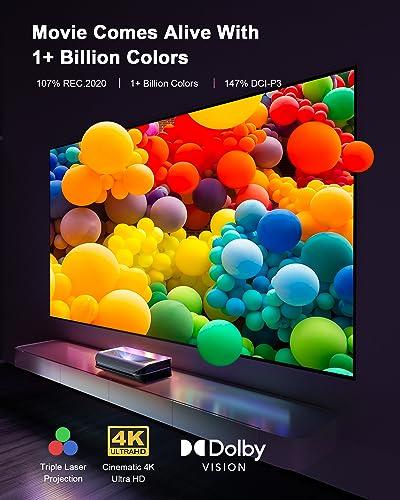
The AWOL covers 107% of the Rec.2020 color space, which is the ultra-wide color standard for 4K HDR content. More importantly, it supports Dolby Vision, the premium HDR format that provides scene-by-scene optimization for the best possible contrast and color accuracy. This makes it one of the few UST projectors with full Dolby Vision support, a significant advantage for streaming content from Netflix, Disney+, and other premium services.
The Formovie 4K Max achieves similar color gamut coverage (107% Rec.2020) through its ALPD 4.0 system, but the technical approach differs. ALPD uses blue laser light that hits phosphor materials to generate red and green colors, similar to how white LED lights work. While this can achieve excellent color reproduction, it may not match the absolute purity of RGB lasers.
However, the Formovie's significantly higher brightness means colors appear more vivid and saturated in real-world conditions. A perfectly accurate color that appears washed out in bright lighting conditions is less useful than a slightly less pure color that maintains visual impact.
Both projectors support HDR10 and HDR10+, but the AWOL's Dolby Vision capability gives it an edge for premium content. Dolby Vision's dynamic metadata allows content creators to optimize every scene individually, rather than applying static settings for entire movies.
Gaming performance has become increasingly important as these projectors compete with large TVs for living room dominance. Input lag—the delay between pressing a controller button and seeing the response on screen—can make or break the gaming experience.
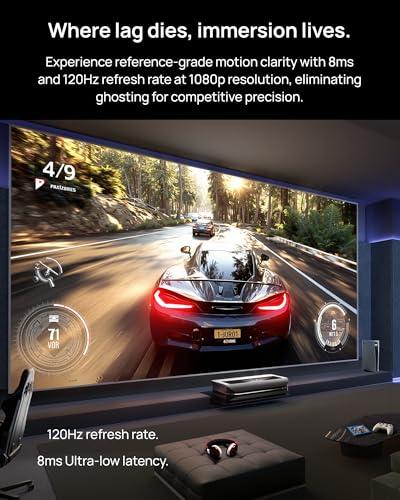
The AWOL Vision LTV-3000 Pro provides verified specifications: 15ms input lag at 4K/60Hz and an impressive 8ms at 1080p/120Hz. These numbers put it firmly in gaming-suitable territory, comparable to many gaming TVs. The sub-10ms performance at 1080p makes it viable even for competitive gaming scenarios.
The Formovie 4K Max supports ALLM (Auto Low Latency Mode), which automatically switches to reduced-lag modes when it detects gaming devices. However, specific input lag measurements weren't available in our research, making it harder to assess its gaming suitability. ALLM support suggests the manufacturers considered gaming use cases, but without concrete numbers, competitive gamers might prefer the AWOL's verified performance.
Both projectors include MEMC (Motion Estimation, Motion Compensation) technology, which interpolates frames to smooth out motion in sports and action content. While this can improve the viewing experience for movies and TV, it typically adds input lag and should be disabled for gaming.
UST projectors occupy an interesting space in home audio because they're designed to replace TV setups where decent built-in speakers are expected. Both projectors take this seriously, but with different approaches.
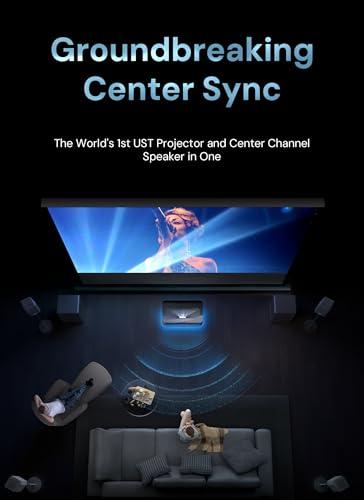
The AWOL Vision LTV-3000 Pro includes a 36W stereo system (18W per channel) with Dolby Atmos processing. User feedback consistently praises these speakers as surprisingly capable, with some owners reporting they don't need external audio systems for casual viewing. The sound quality reportedly matches or exceeds many soundbars in the same price range.
The Formovie 4K Max partners with Bowers & Wilkins, a premium British audio company known for high-end speakers and headphones. This collaboration results in custom-tuned speakers with dedicated tweeters for high-frequency detail. While the total wattage (40W) is similar to the AWOL, the Bowers & Wilkins engineering suggests superior acoustic design and component quality.
For dedicated home theater enthusiasts, both projectors include optical audio outputs for connecting external sound systems. However, the quality of built-in audio becomes crucial for apartments, mixed-use living rooms, or situations where external speakers aren't practical.
Modern UST projectors must function as complete entertainment hubs, not just display devices. Both projectors handle this through Android-based platforms with included streaming dongles, but the implementation varies.
The AWOL Vision LTV-3000 Pro runs Android TV 9 and includes an Amazon Fire TV Stick 4K Max in a hidden compartment. This dual-system approach provides flexibility but requires navigating between two interfaces—the projector's settings menu and the Fire TV interface for streaming content.
The Formovie 4K Max uses FengOS with Fire TV Stick integration for US markets. The specific implementation details are less clear from available information, but the principle remains similar: Android-based functionality with Amazon's streaming platform for content access.
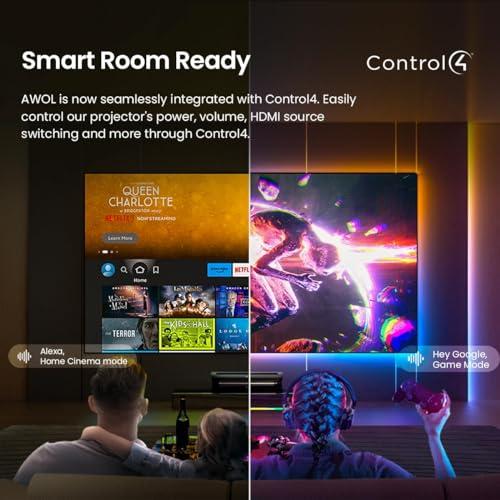
Both projectors offer identical physical connectivity: three HDMI ports (including one with eARC for advanced audio), USB ports, Ethernet, and wireless capabilities. The AWOL specifically mentions integration with Control4, Crestron, and other home automation systems, making it more suitable for custom installation scenarios.
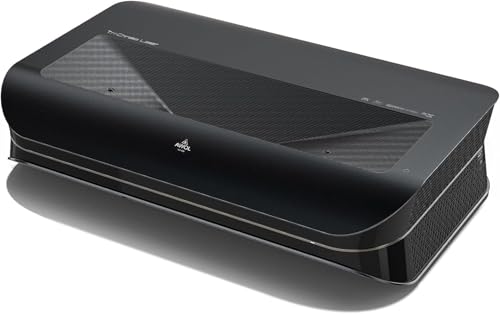
The physical differences between these projectors matter more than you might expect. The AWOL Vision LTV-3000 Pro measures 23.6" × 13.9" × 5.7" and weighs 21 pounds, making it one of the bulkier UST projectors available. User feedback frequently mentions the size as a challenge—it requires a sturdy entertainment center and careful positioning for optimal image alignment.
The Formovie 4K Max offers a more compact profile at 21.7" × 13.7" × 4.2", with the height reduction being particularly significant. This 1.5-inch difference might determine whether the projector fits under wall-mounted TVs or in existing entertainment centers.
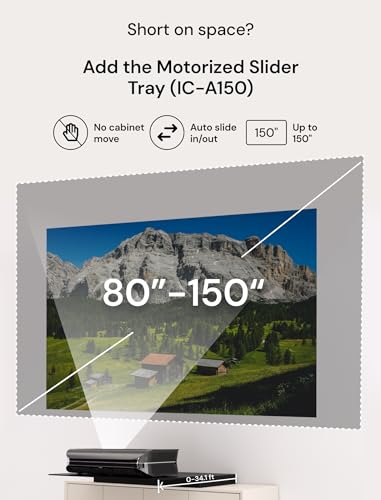
Both projectors support similar screen sizes, but the Formovie extends to 200-inch diagonals compared to the AWOL's 150-inch maximum. For most living rooms, this difference is academic, but home theater enthusiasts with large spaces will appreciate the extra flexibility.
Installation involves careful positioning—UST projectors require precise placement for optimal image geometry. Both include keystone correction and focus adjustments, but the AWOL's powered focus system provides more convenient fine-tuning compared to manual adjustments.
The AWOL Vision LTV-3000 Pro includes full 3D support with DLP-Link compatibility, appealing to enthusiasts who still enjoy 3D movie collections. This feature has largely disappeared from modern displays, making the AWOL one of the few ways to experience large-screen 3D content at home.
Both projectors include laser safety features that detect when someone approaches the lens and automatically shut down projection—particularly important in households with children or pets.
The AWOL also includes a 24fps cinema mode for film purists who want to experience movies at their original frame rates without motion interpolation.
Your room conditions and viewing priorities should drive this decision. The Formovie 4K Max excels in bright, multi-purpose living spaces where daytime viewing is common. Its exceptional brightness maintains HDR impact even with significant ambient light, while the Bowers & Wilkins audio provides premium sound quality that matches the visual performance.
Choose the Formovie if you have large windows, prefer daytime viewing, want screens larger than 150 inches, or value premium audio engineering. Its compact design also makes it easier to integrate into existing furniture arrangements.
The AWOL Vision LTV-3000 Pro better serves dedicated home theater environments or rooms with controllable lighting. Its RGB laser technology provides superior color accuracy, while Dolby Vision support ensures optimal HDR performance for compatible content. The 3D capability and verified gaming performance add versatility for specific use cases.
Choose the AWOL if you prioritize color accuracy, have a dedicated viewing room, enjoy 3D content, need verified low gaming latency, or prefer the established track record of a well-reviewed product.
At the time of writing, both projectors represent significant investments that compete directly with premium large-screen TVs. The AWOL Vision LTV-3000 Pro offers better value for home theater purists, while the Formovie 4K Max justifies premium pricing through exceptional brightness and audio quality.
The UST projector category continues evolving rapidly, with 2023-2024 bringing significant improvements in brightness, color accuracy, and smart features. Both projectors represent the current state-of-the-art, but your specific room conditions and viewing habits should determine which approach better serves your needs.
| AWOL Vision LTV-3000 Pro | Formovie 4K Max |
|---|---|
| Brightness - Most critical spec for daytime viewing and HDR impact | |
| 2,000 ISO lumens (requires controlled lighting for best HDR) | 4,500 ANSI lumens (excellent for bright rooms and daytime viewing) |
| Light Source Technology - Affects color accuracy and longevity | |
| RGB Triple Laser (no color wheel, eliminates rainbow artifacts) | ALPD 4.0 RGB+ (phosphor-based, optimized for maximum brightness) |
| HDR Support - Premium content compatibility | |
| Dolby Vision, HDR10+, HDR10, HLG (rare Dolby Vision support) | HDR10+, HDR10, HLG (Dolby Vision unconfirmed) |
| Color Gamut - Determines color vibrancy and accuracy | |
| 107% Rec.2020 coverage with RGB laser purity | 107% Rec.2020 coverage via ALPD technology |
| Contrast Ratio - Affects black levels and image depth | |
| 2,500:1 (good blacks for the category) | 3,000:1 (superior black levels and contrast) |
| Gaming Performance - Input lag for responsive gaming | |
| 15ms (4K/60Hz), 8ms (1080p/120Hz) - verified gaming specs | ALLM support (specific lag times unconfirmed) |
| Screen Size Range - Maximum image size capability | |
| 80"-150" diagonal | 80"-200" diagonal (25% larger maximum size) |
| Physical Dimensions - Impact on entertainment center fit | |
| 23.6" × 13.9" × 5.7", 21 lbs (bulkier, requires sturdy stand) | 21.7" × 13.7" × 4.2", 21.6 lbs (more compact profile) |
| Audio System - Built-in sound quality | |
| 36W stereo with Dolby Atmos (surprisingly capable) | Bowers & Wilkins 2×20W + tweeters (premium audio brand) |
| 3D Support - Large screen 3D movie experience | |
| Full 3D support with DLP-Link compatibility | 3D support unconfirmed |
| Smart Features - Streaming and connectivity | |
| Android TV 9 + Fire TV Stick 4K Max included | FengOS + Fire TV Stick (US version) |
| Target Use Case - Best suited for | |
| Dedicated home theaters, 3D enthusiasts, color purists | Bright living rooms, daytime viewing, premium audio fans |
The Formovie 4K Max is significantly brighter at 4,500 ANSI lumens compared to the AWOL Vision LTV-3000 Pro's 2,000 ISO lumens. This means the Formovie 4K Max performs much better in bright rooms and for daytime viewing, while the AWOL Vision LTV-3000 Pro requires more controlled lighting conditions for optimal picture quality.
Both projectors deliver 4K resolution, but they use different technologies. The AWOL Vision LTV-3000 Pro uses RGB triple laser technology for more accurate colors and eliminates rainbow artifacts, plus it supports Dolby Vision HDR. The Formovie 4K Max uses ALPD 4.0 technology with higher brightness and better contrast (3,000:1 vs 2,500:1), making images pop more in bright conditions.
The AWOL Vision LTV-3000 Pro has verified gaming specifications with 15ms input lag at 4K/60Hz and 8ms at 1080p/120Hz, making it excellent for gaming. The Formovie 4K Max supports ALLM (Auto Low Latency Mode) but doesn't specify exact input lag times, making the AWOL Vision LTV-3000 Pro the safer choice for serious gamers.
The AWOL Vision LTV-3000 Pro features 36W stereo speakers with Dolby Atmos support that users consistently praise as surprisingly good. The Formovie 4K Max uses Bowers & Wilkins-engineered speakers with dedicated tweeters, offering premium audio quality from a respected audio brand. Both eliminate the need for external speakers in many setups.
The Formovie 4K Max is more compact at 21.7" × 13.7" × 4.2", especially in height, making it easier to fit under wall-mounted TVs or in entertainment centers. The AWOL Vision LTV-3000 Pro is bulkier at 23.6" × 13.9" × 5.7" and requires a more robust stand, though both weigh about 21 pounds.
The Formovie 4K Max excels in bright living rooms thanks to its 4,500 ANSI lumens, maintaining good contrast and color even with windows open during the day. The AWOL Vision LTV-3000 Pro can work in moderately lit rooms but performs best with controlled lighting, especially for HDR content.
Yes, but with different capabilities. The AWOL Vision LTV-3000 Pro supports Dolby Vision, HDR10+, HDR10, and HLG, making it one of the few UST projectors with full Dolby Vision support. The Formovie 4K Max supports HDR10+ and HLG, but Dolby Vision support is unconfirmed.
The AWOL Vision LTV-3000 Pro supports screen sizes from 80" to 150" diagonal, while the Formovie 4K Max can project from 80" to 200" diagonal. For most home theaters, both ranges are more than adequate, but the Formovie 4K Max offers more flexibility for very large installations.
For dedicated home theaters with controlled lighting, the AWOL Vision LTV-3000 Pro excels with its RGB laser technology, Dolby Vision support, and 3D capability. For multi-purpose living rooms that double as home theaters, the Formovie 4K Max is better due to its superior brightness and premium audio system.
The AWOL Vision LTV-3000 Pro fully supports 3D playback with DLP-Link compatibility, making it ideal for 3D movie collections. 3D support for the Formovie 4K Max is unconfirmed in available specifications, making the AWOL Vision LTV-3000 Pro the clear choice for 3D enthusiasts.
Both the AWOL Vision LTV-3000 Pro and Formovie 4K Max use identical 0.25:1 throw ratios, meaning they can create a 100" image from approximately 10-12 inches away from the wall. This ultra-short throw capability is what makes both projectors ideal for living room setups without ceiling mounting.
The AWOL Vision LTV-3000 Pro typically offers better value for home theater enthusiasts who prioritize color accuracy, Dolby Vision support, and 3D capability in controlled lighting environments. The Formovie 4K Max provides better value for users who need maximum brightness for bright rooms, larger screen sizes, and premium audio quality, despite typically commanding a higher price.
We've done our best to create useful and informative comparisons to help you decide what product to buy. Our research uses advanced automated methods to create this comparison and perfection is not possible - please contact us for corrections or questions. These are the sites we've researched in the creation of this article: bestbuy.com - projectorcentral.com - rtings.com - techaeris.com - hometechnologyreview.com - awolvision.de - androidcentral.com - awolvision.com - projectorreviews.com - dreamediaav.com - bestbuy.com - youtube.com - youtube.com - awolvisionpro.com - awolvision.com - awolvision.com - rtings.com - eu.formovie.com - notebookcheck.net - formovie.com - techradar.com - projectorcentral.com - projectorscreen.com - projectorcentral.com - projectorreviews.com - projectorcentral.com - formovie.com

Privacy Policy
Terms and Conditions - Affiliate Policy
Home Security
© Copyright 2008-2026.
11816 Inwood Rd #1211, Dallas, TX 75244