

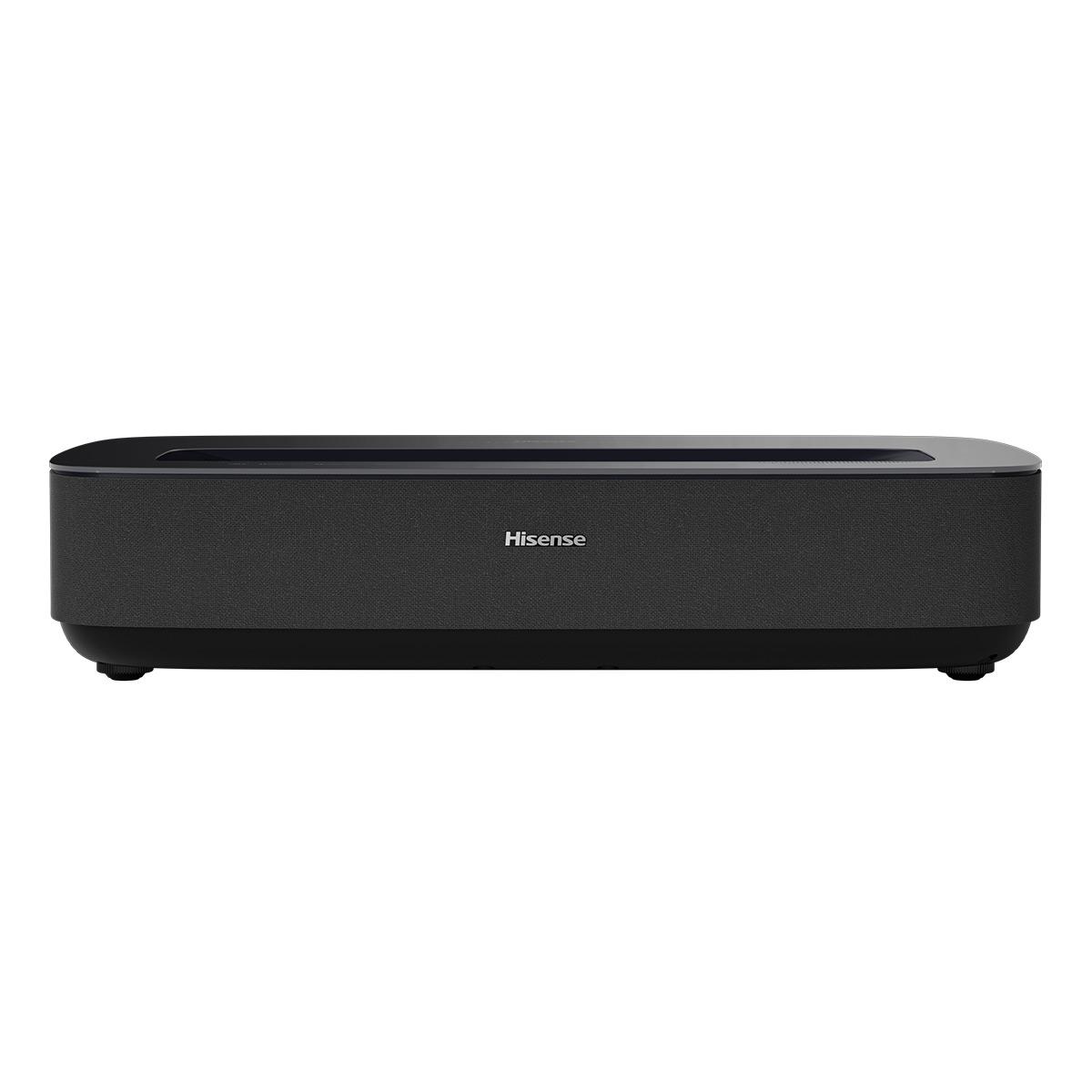
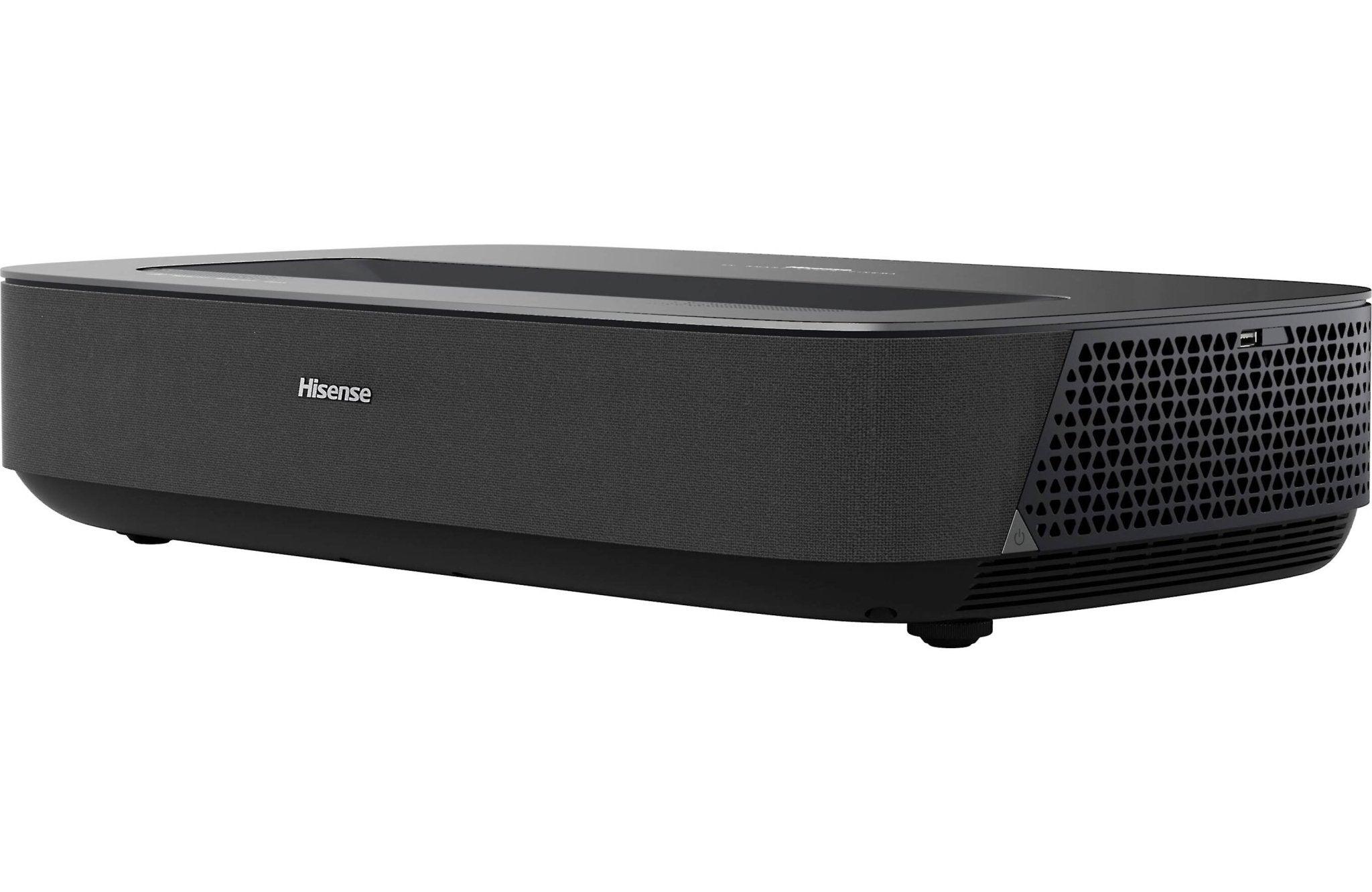
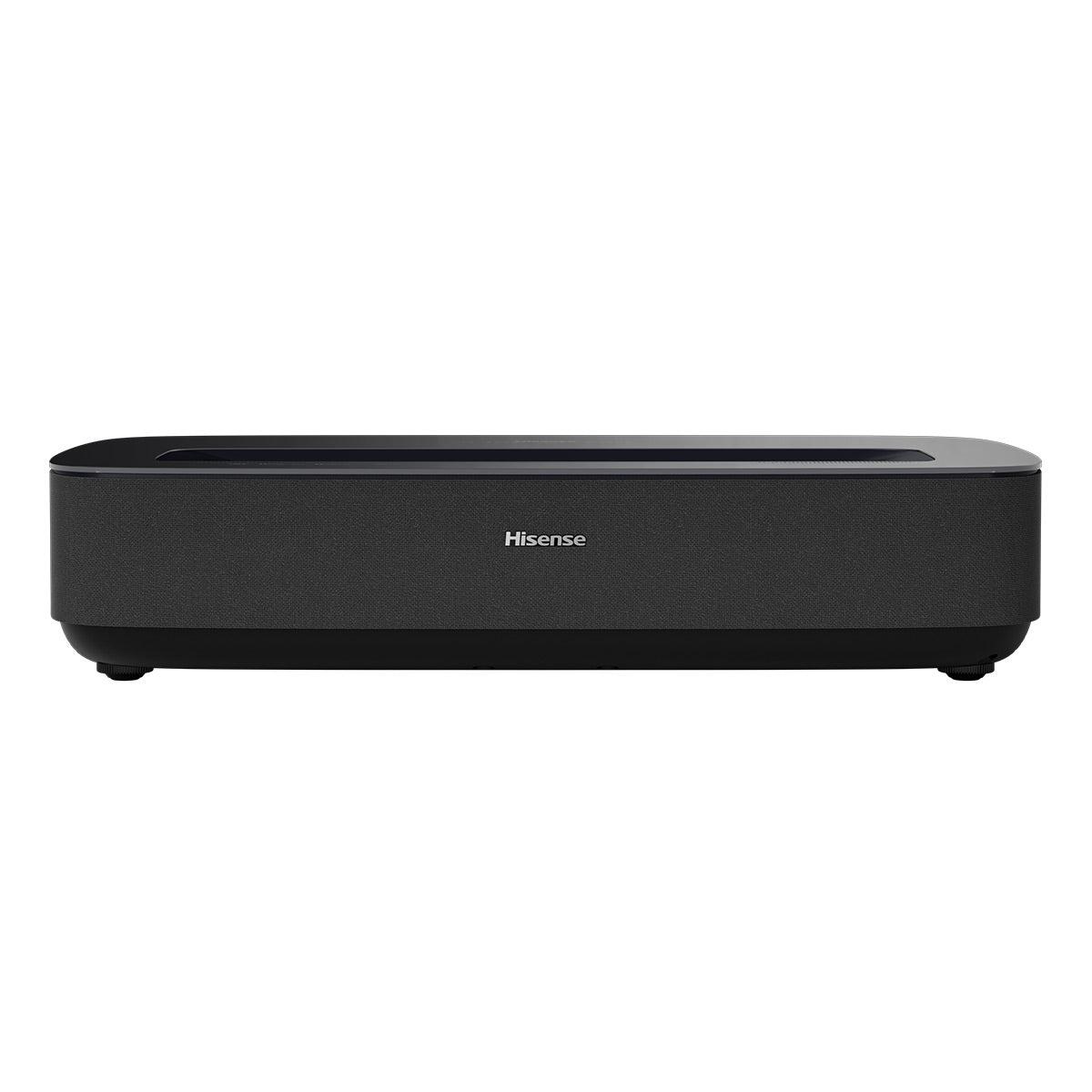
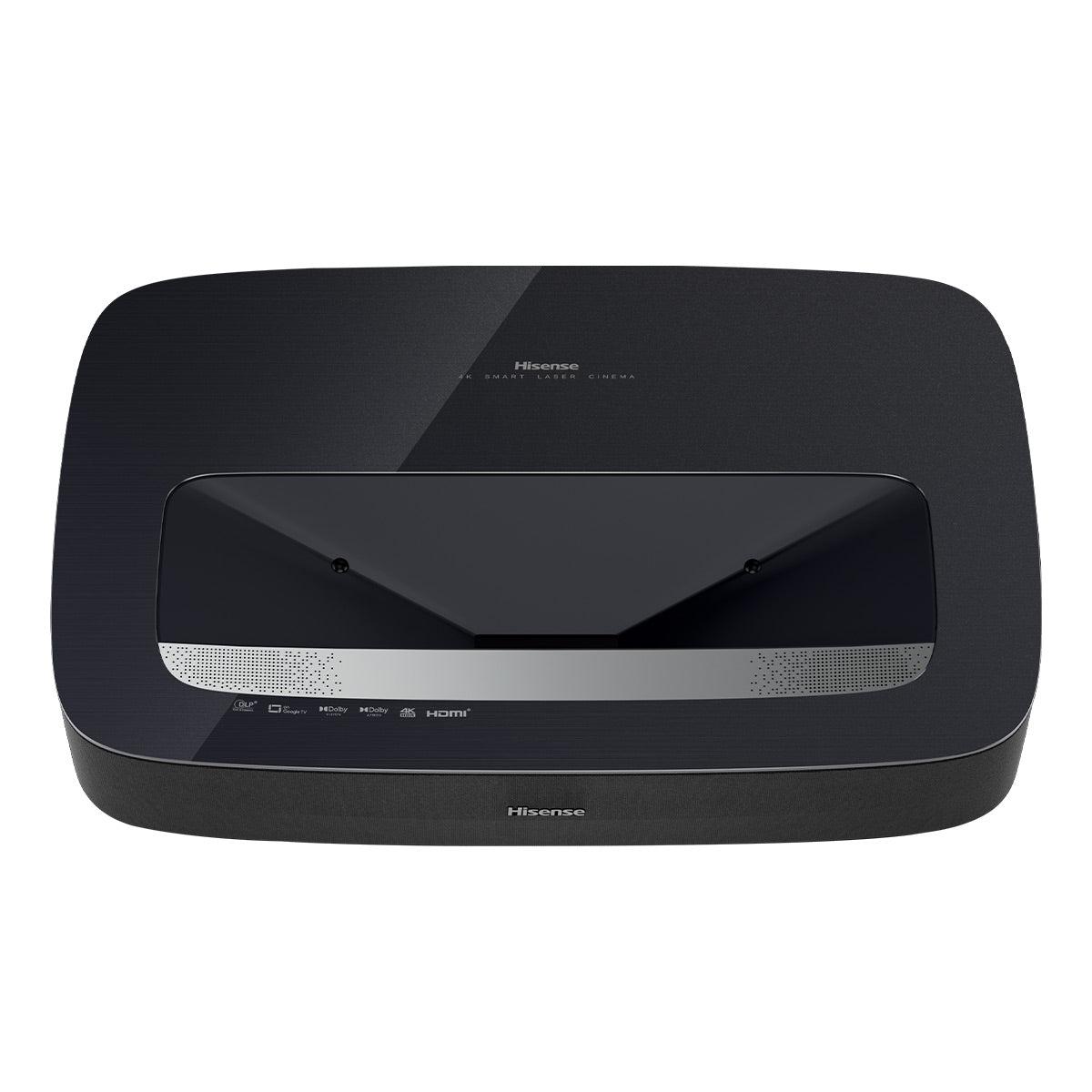
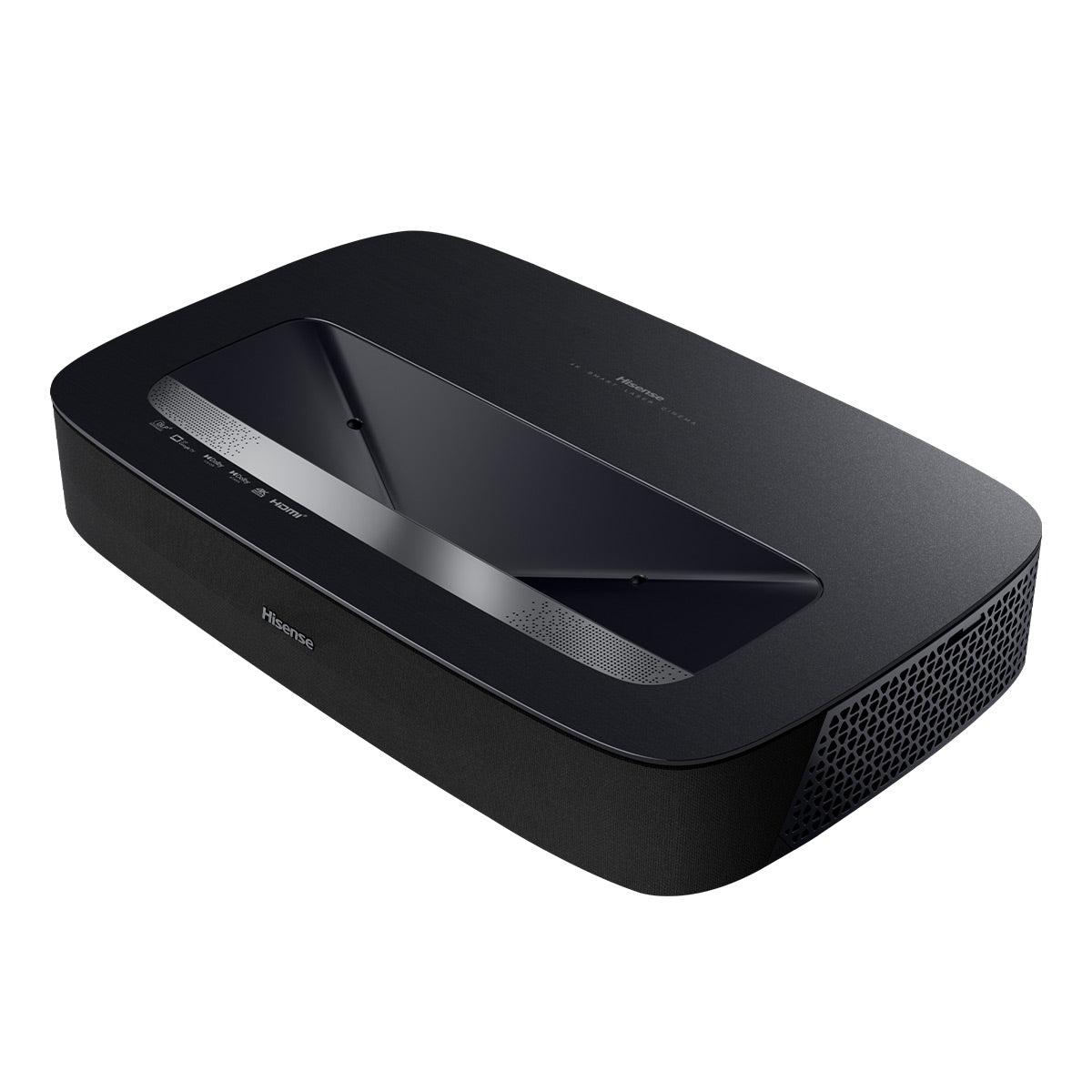
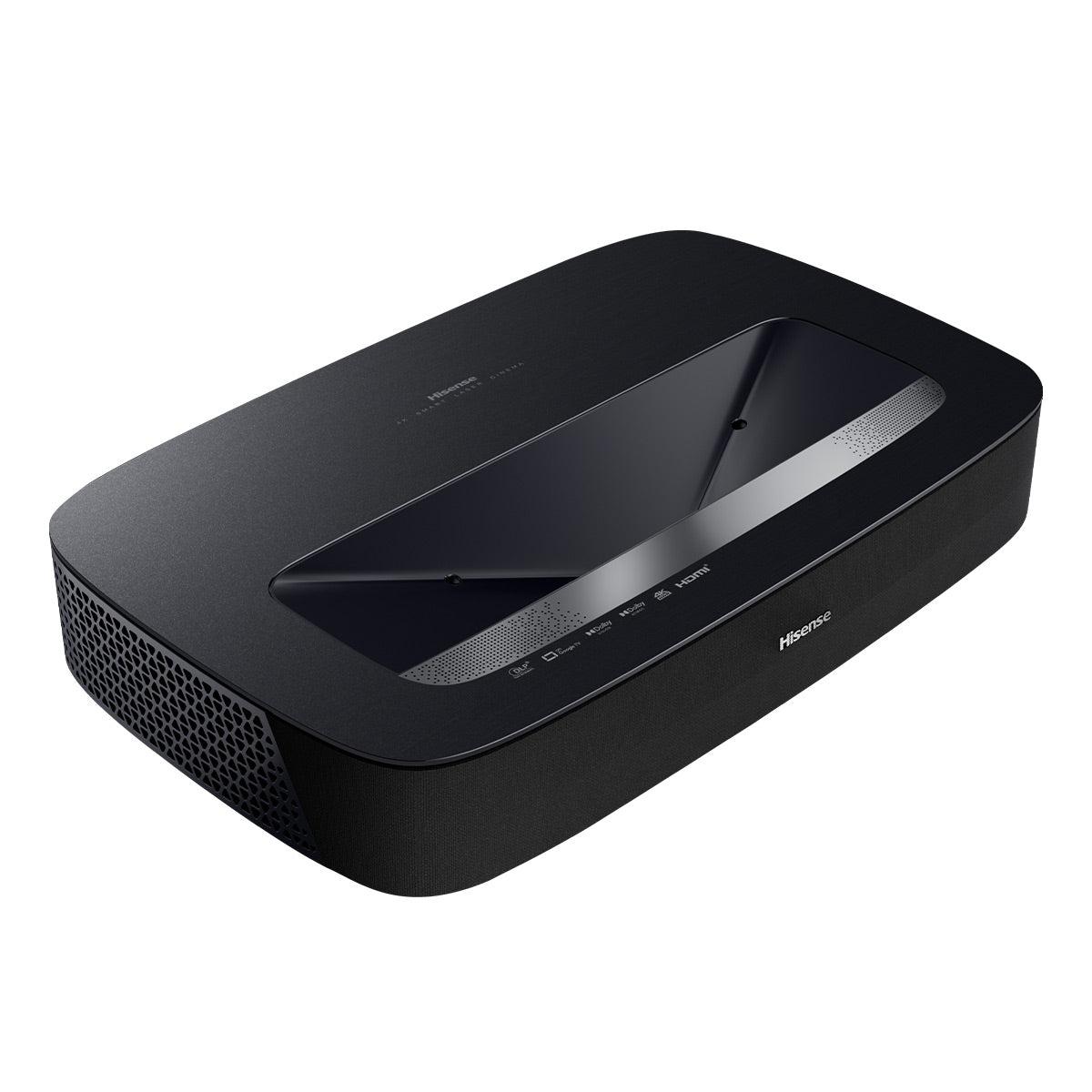
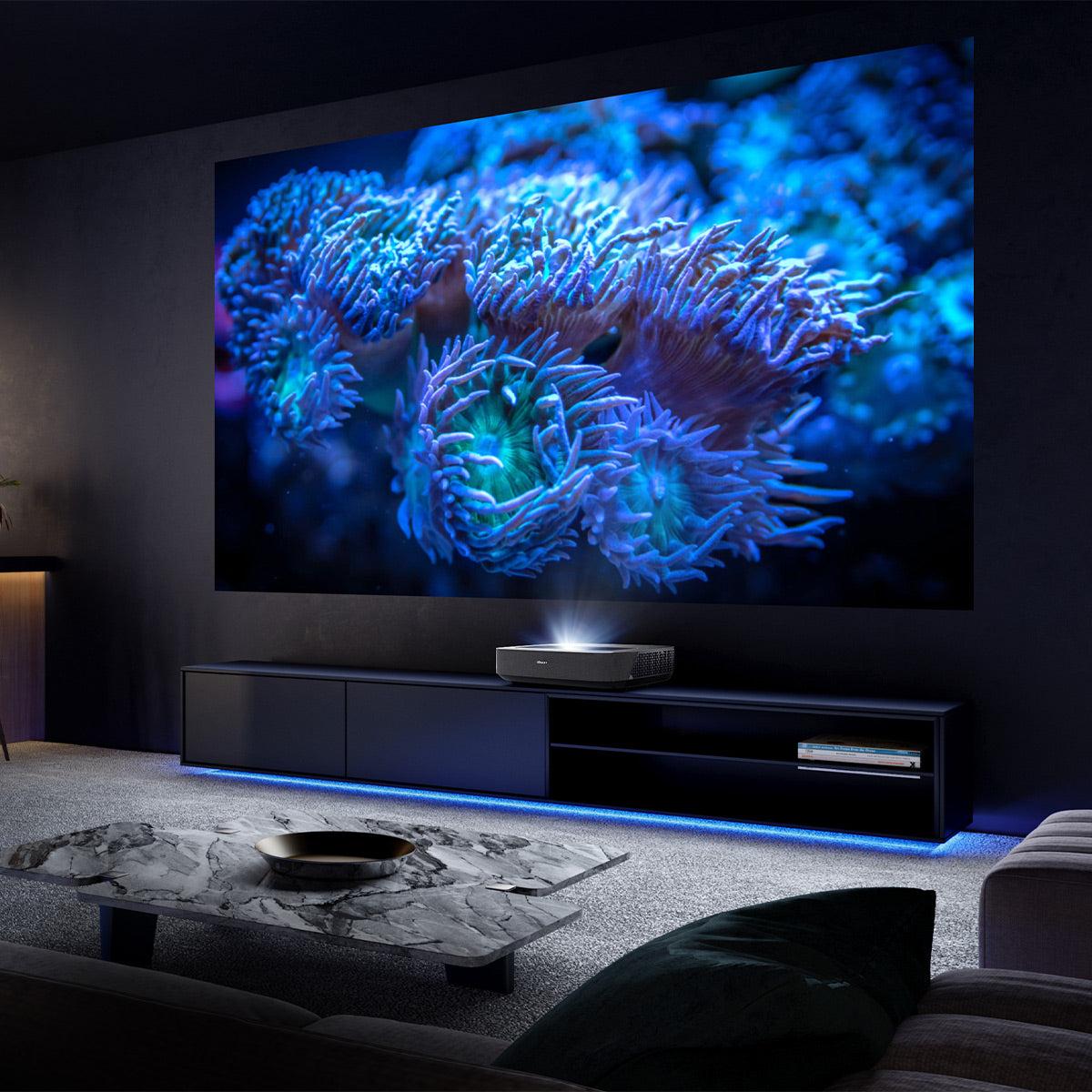
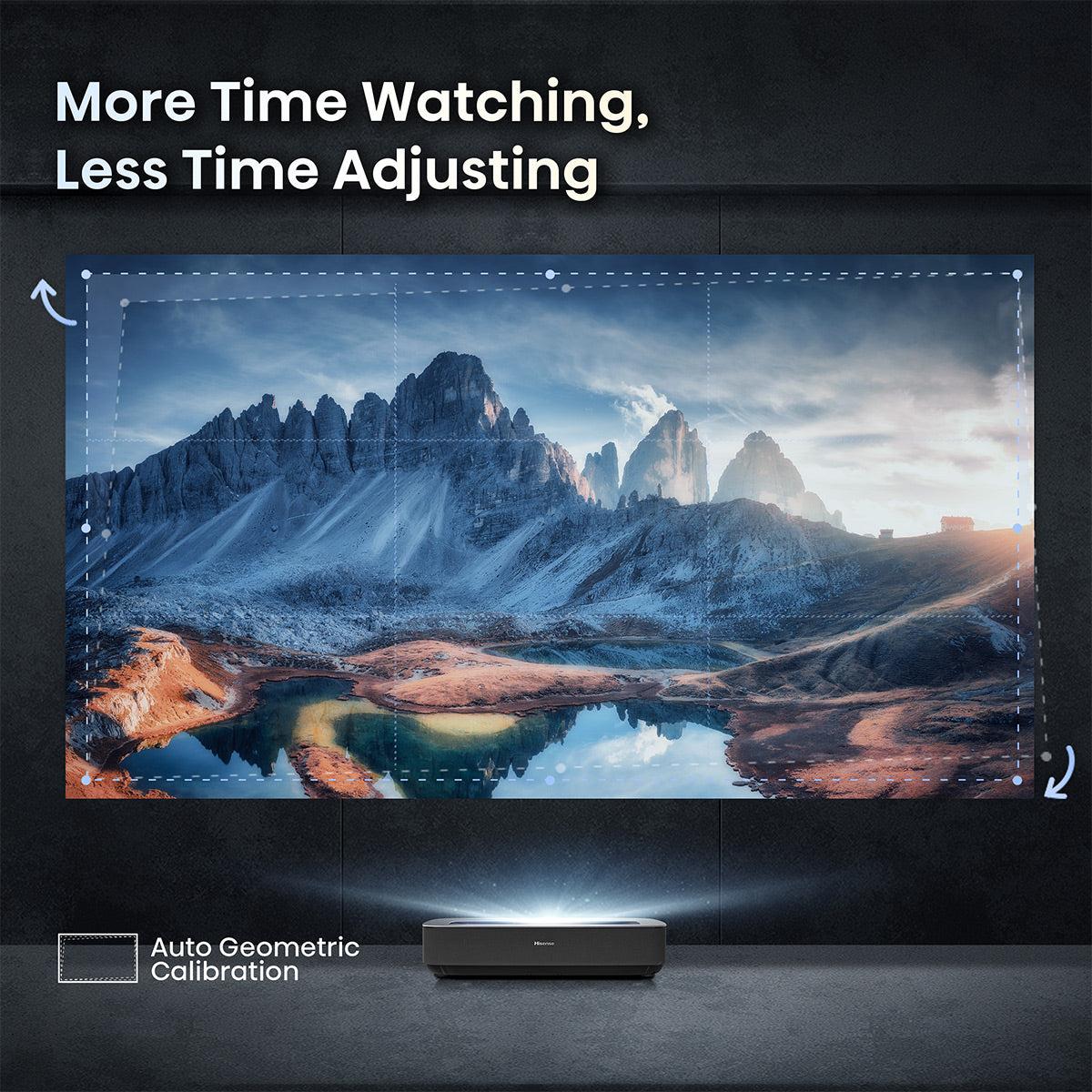
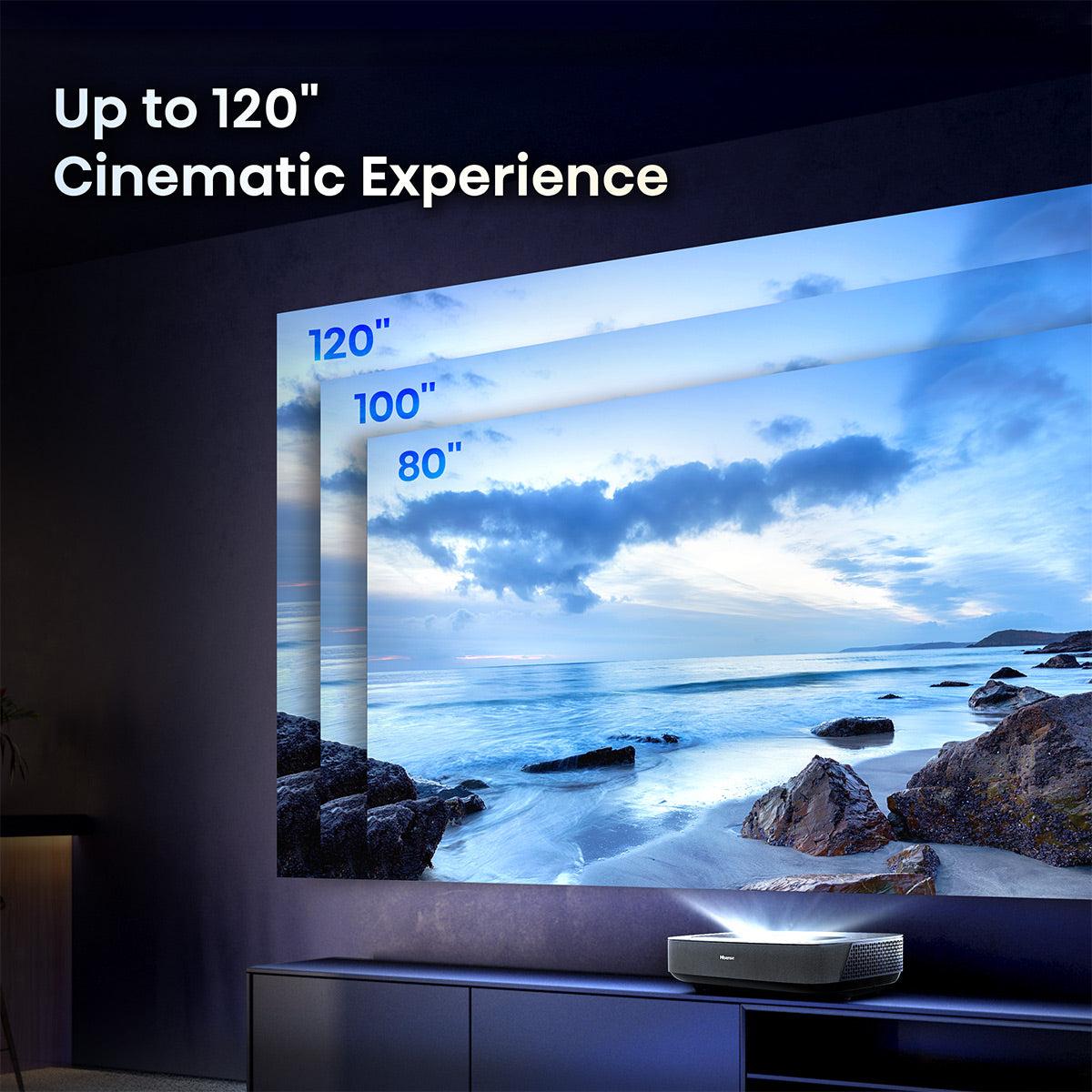
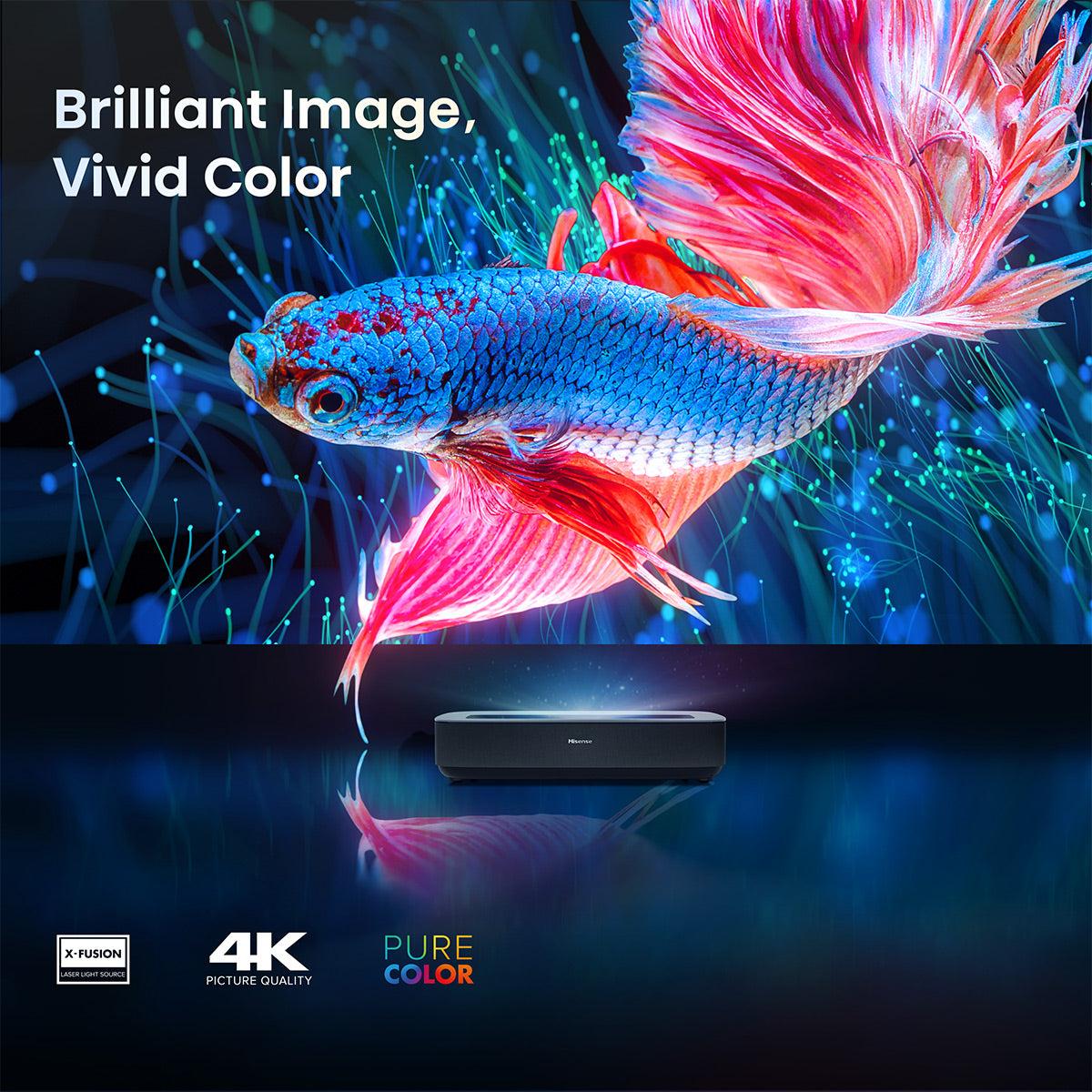
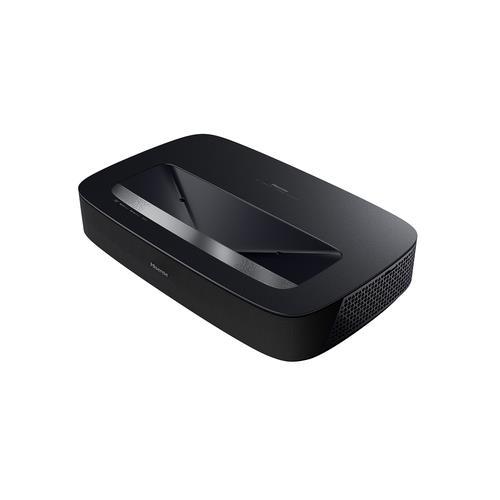
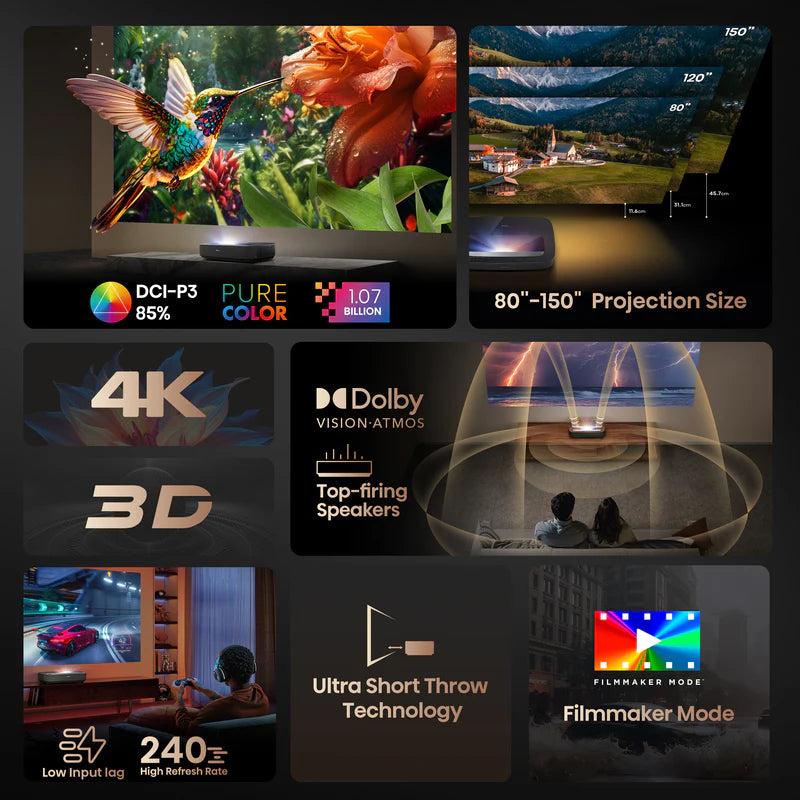
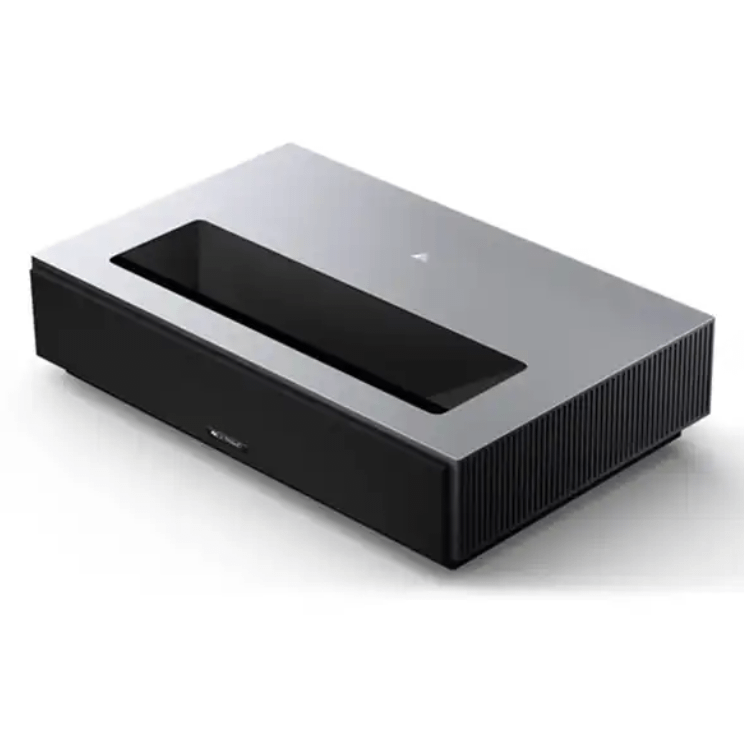
When it comes to creating a theater-like experience at home, Hisense PL1 ($2,497) and Formovie 4K Max ($3,699) represent two compelling but different approaches to ultra short throw (UST) laser projection. These projectors can turn any wall into a massive screen while sitting just inches away - a dramatic improvement over traditional projectors that need significant room depth.
UST projectors use advanced optics and laser light sources to create large images from very close distances. Unlike traditional projectors that beam straight ahead, UST models project at an extreme upward angle, typically creating a 100-inch image from just 7-8 inches from the wall. This technology has revolutionized home theater by eliminating the need for ceiling mounts or long throw distances.
The laser light sources in these projectors offer several advantages over traditional lamp-based systems:
The Formovie 4K Max stands out with its impressive 4,500 ANSI lumens brightness rating - more than double the Hisense PL1's 2,200 lumens. This difference matters significantly in rooms with ambient light or during daytime viewing. The Formovie can maintain vibrant images even with some lights on, while the Hisense performs best in controlled lighting.
However, brightness isn't everything. The Hisense PL1's superior contrast ratio (2,000,000:1 vs 3,000:1) means it can produce deeper blacks and more nuanced dark scenes when viewing in optimal conditions. This makes it particularly strong for movie viewing in dedicated home theater spaces.
Both projectors handle color differently:
The Hisense's Dolby Vision support is particularly noteworthy, as it enables dynamic HDR adjustment scene-by-scene, resulting in more accurate and impactful HDR performance. While the Formovie's broader Rec.709 coverage is impressive, the Hisense's DCI-P3 coverage is generally more beneficial for modern movie content.
Both projectors offer gaming-focused features, but implement them differently:
Hisense PL1:
Formovie 4K Max:
The Hisense PL1's integration of Google TV provides a significant advantage in user experience. You get:
The Formovie 4K Max's limited smart features mean you'll likely need to add a streaming device, adding to the total cost and complexity.
Screen size flexibility varies significantly:
The Formovie's broader range makes it more versatile for different spaces, while the Hisense's more limited range might actually help ensure optimal performance within its designed parameters.
Released in 2023, the Hisense PL1 represents excellent value at $2,497, especially considering its Dolby Vision support and integrated smart features. The newer Formovie 4K Max, released in 2024, commands a premium price at $3,699 but justifies it with class-leading brightness and larger screen size capability.
Both projectors showcase different technical priorities:
Hisense PL1:
Formovie 4K Max:
Choose the Hisense PL1 if:
Choose the Formovie 4K Max if:
Both projectors excel in their intended use cases. The Hisense PL1 offers superior value and better dark-room performance, making it ideal for dedicated home theater spaces. The Formovie 4K Max's higher brightness and larger size capability make it better suited for multipurpose rooms or situations where ambient light control isn't possible.
Your choice should ultimately depend on your viewing environment, budget, and primary use case. Consider your room's lighting conditions, desired screen size, and whether you'll primarily watch movies, sports, or play games when making your decision.
| Hisense PL1 ($2,497) | Formovie 4K Max ($3,699) |
|---|---|
| Brightness - Critical for ambient light handling and image punch | |
| 2,200 ANSI lumens (best for controlled lighting) | 4,500 ANSI lumens (excellent for bright rooms) |
| Contrast Ratio - Determines black level depth and HDR impact | |
| 2,000,000:1 dynamic (superior dark room performance) | 3,000:1 native (good but not class-leading) |
| Screen Size Range - Affects installation flexibility | |
| 80-120 inches (limited but optimal range) | 80-200 inches (more versatile) |
| Color Gamut - Determines color accuracy and vibrancy | |
| 85% DCI-P3 (better for movies) | 100% Rec.709 (solid for general content) |
| HDR Support - Impacts dynamic range and color accuracy | |
| HDR10, Dolby Vision, HLG (comprehensive) | HDR10+, HLG (good but no Dolby Vision) |
| Smart Features - Affects need for external devices | |
| Full Google TV OS (excellent built-in streaming) | Limited FengOS (requires streaming device) |
| Audio System - Important for all-in-one solution | |
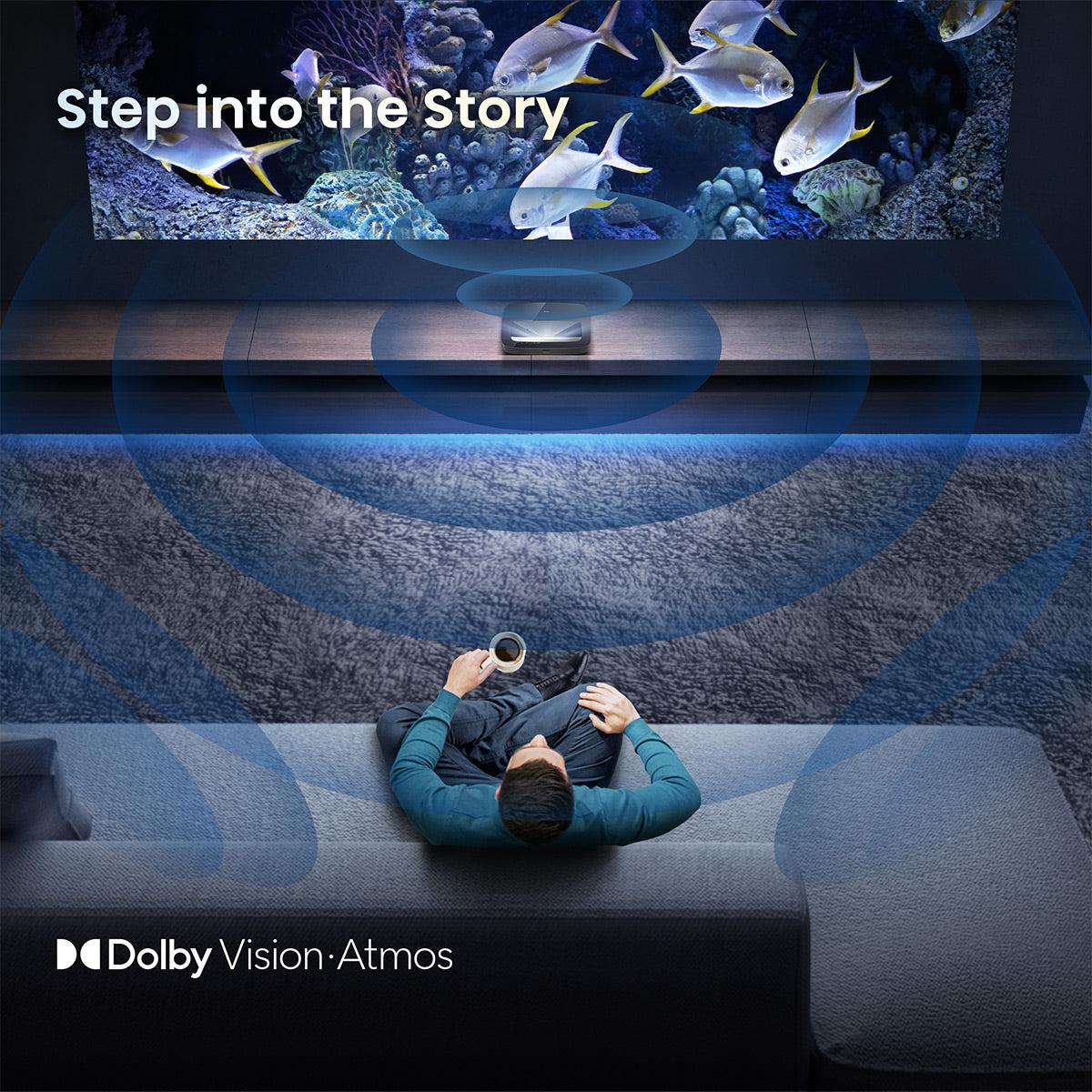
| 30W Dolby Atmos (good for casual viewing) | Dual 20W B&W speakers (higher quality sound) |
| Gaming Features - Critical for gaming performance | |
| ALLM, low input lag (solid gaming support) | MEMC, basic low latency (adequate) |
| Light Source Life - Long-term value consideration | |
| 25,000+ hours (excellent longevity) | 20,000+ hours (very good) |
| Technology - Core projection system | |
| X-Fusion Laser with DLP (proven technology) | ALPD 3.0 with DLP (newer generation) |
The Formovie 4K Max ($3,699) is significantly better for bright rooms with its 4,500 ANSI lumens compared to the Hisense PL1's ($2,497) 2,200 ANSI lumens. This makes the Formovie a better choice for rooms with ambient light or daytime viewing.
The Hisense PL1 offers better value at $2,497, including built-in streaming and Dolby Vision support. The Formovie 4K Max costs $1,200 more but provides higher brightness and larger screen capabilities.
The Formovie 4K Max can project up to 200 inches, while the Hisense PL1 maxes out at 120 inches. This makes the Formovie more versatile for larger spaces.
The Hisense PL1 is better for movies due to its superior contrast ratio (2,000,000:1), Dolby Vision support, and better color accuracy with 85% DCI-P3 coverage. However, this assumes a controlled lighting environment.
The Hisense PL1 features full Google TV integration with built-in streaming apps. The Formovie 4K Max has limited smart features and typically requires an external streaming device.
Both projectors support gaming features, but the Hisense PL1 has better implementation of Auto Low Latency Mode (ALLM) and lower input lag. The Formovie 4K Max offers higher brightness for gaming in lit rooms.
Both projectors offer excellent longevity - the Hisense PL1 claims 25,000+ hours, while the Formovie 4K Max offers 20,000+ hours. Both will last many years under normal use.
Both projectors work best with ALR (Ambient Light Rejecting) screens designed for UST projectors, though the Formovie 4K Max can handle more ambient light with standard screens due to its higher brightness.
The Formovie 4K Max features premium Bowers & Wilkins speakers, while the Hisense PL1 offers Dolby Atmos support. Both provide good sound, but external speakers would improve the experience.
No, neither the Hisense PL1 nor Formovie 4K Max are designed for ceiling mounting. They're specifically engineered for table placement near a wall.
The Hisense PL1 offers easier setup with its more limited but optimized screen size range and built-in streaming. The Formovie 4K Max offers more placement flexibility but might require more adjustment.
Yes, both the Hisense PL1 and Formovie 4K Max support true 4K resolution (3840x2160), using DLP technology to deliver sharp, detailed images.
We've done our best to create useful and informative comparisons to help you decide what product to buy. Our research uses advanced automated methods to create this comparison and perfection is not possible - please contact us for corrections or questions. These are the sites we've researched in the creation of this article: projectorscreen.com - dreamediaav.com - projectorcentral.com - trustedreviews.com - crutchfield.com - hometheaterhifi.com - projectorcentral.com - projectorreviews.com - vividstormscreen.com - bhphotovideo.com - shi.com - crutchfield.com - rtings.com - eu.formovie.com - notebookcheck.net - formovie.com - techradar.com - projectorcentral.com - projectorscreen.com - projectorcentral.com - projectorreviews.com - projectorcentral.com - formovie.com

Privacy Policy
Terms and Conditions - Affiliate Policy
Home Security
© Copyright 2008-2026.
11816 Inwood Rd #1211, Dallas, TX 75244