

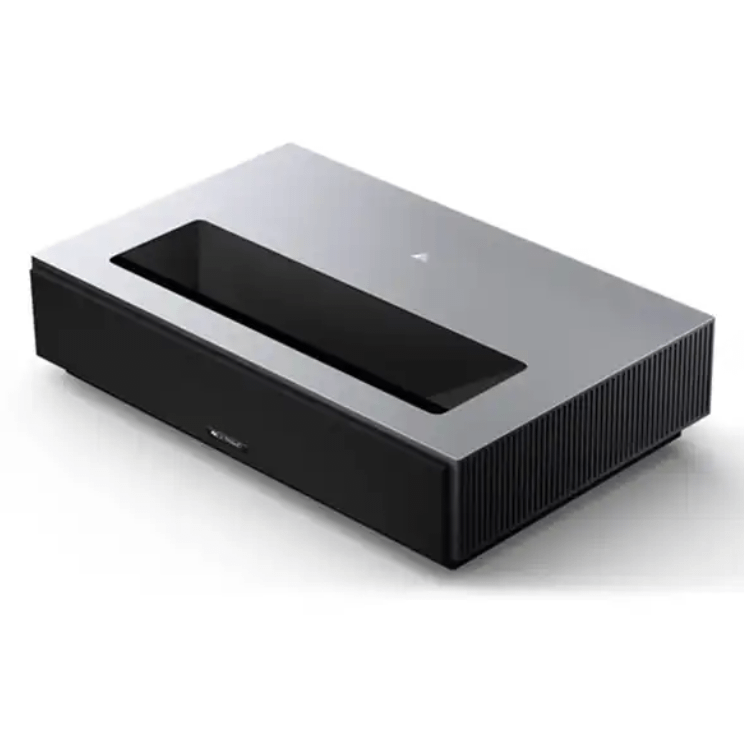
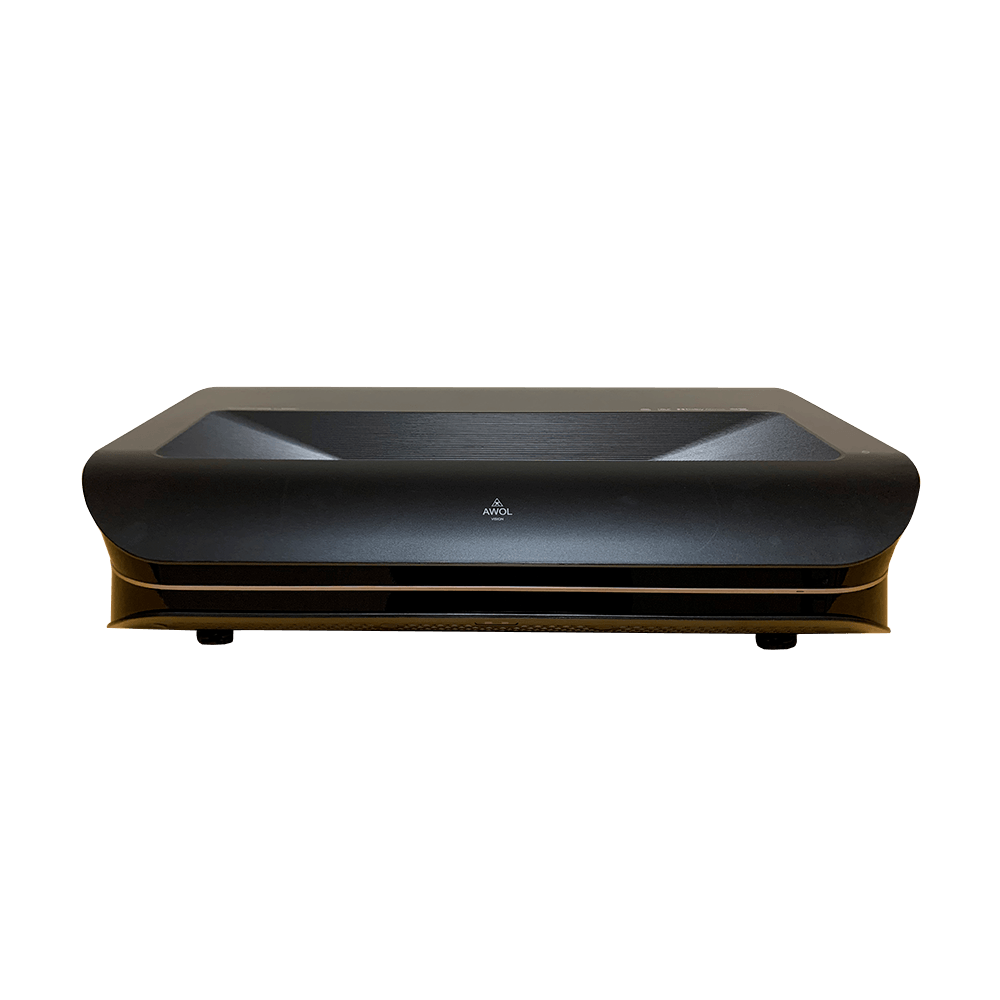
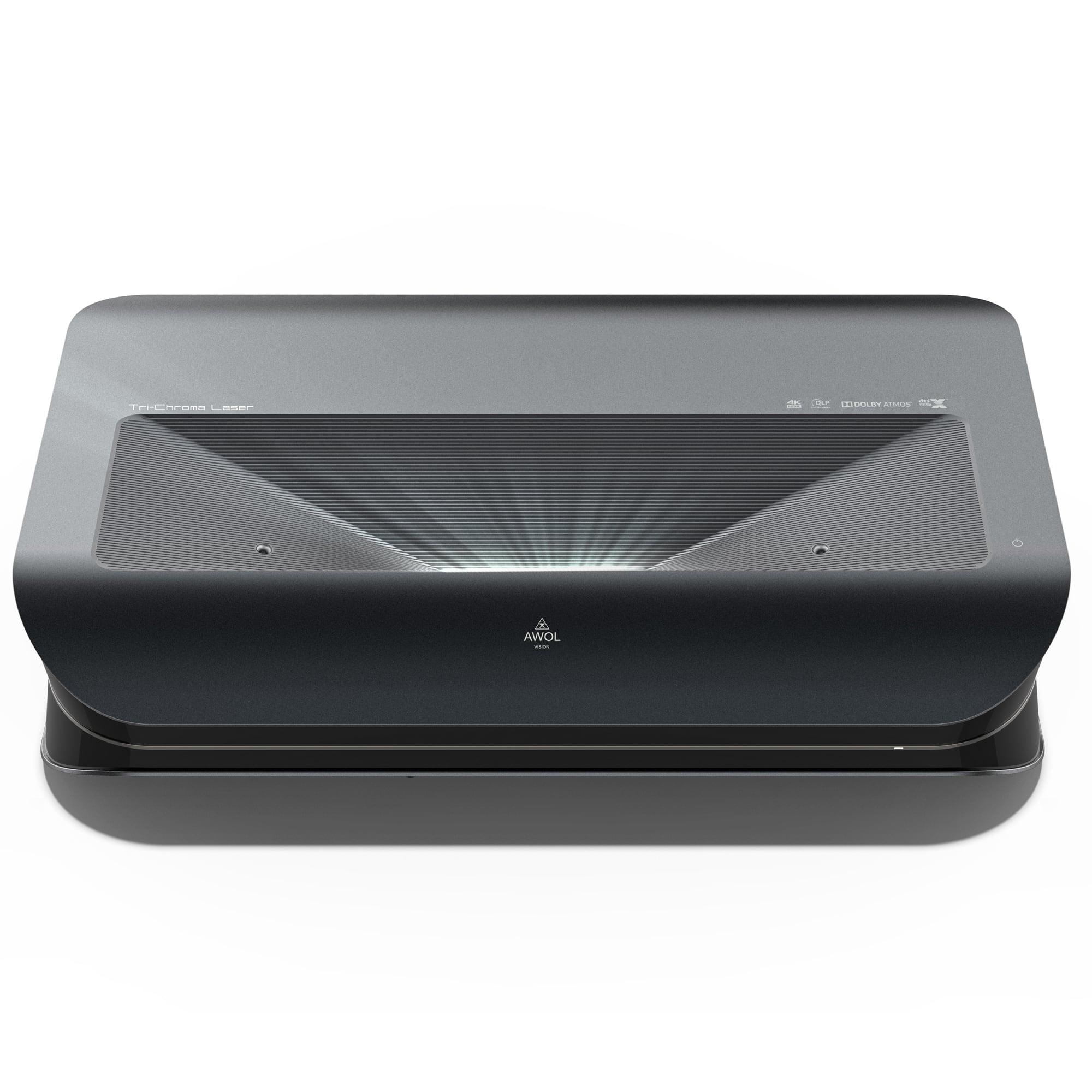
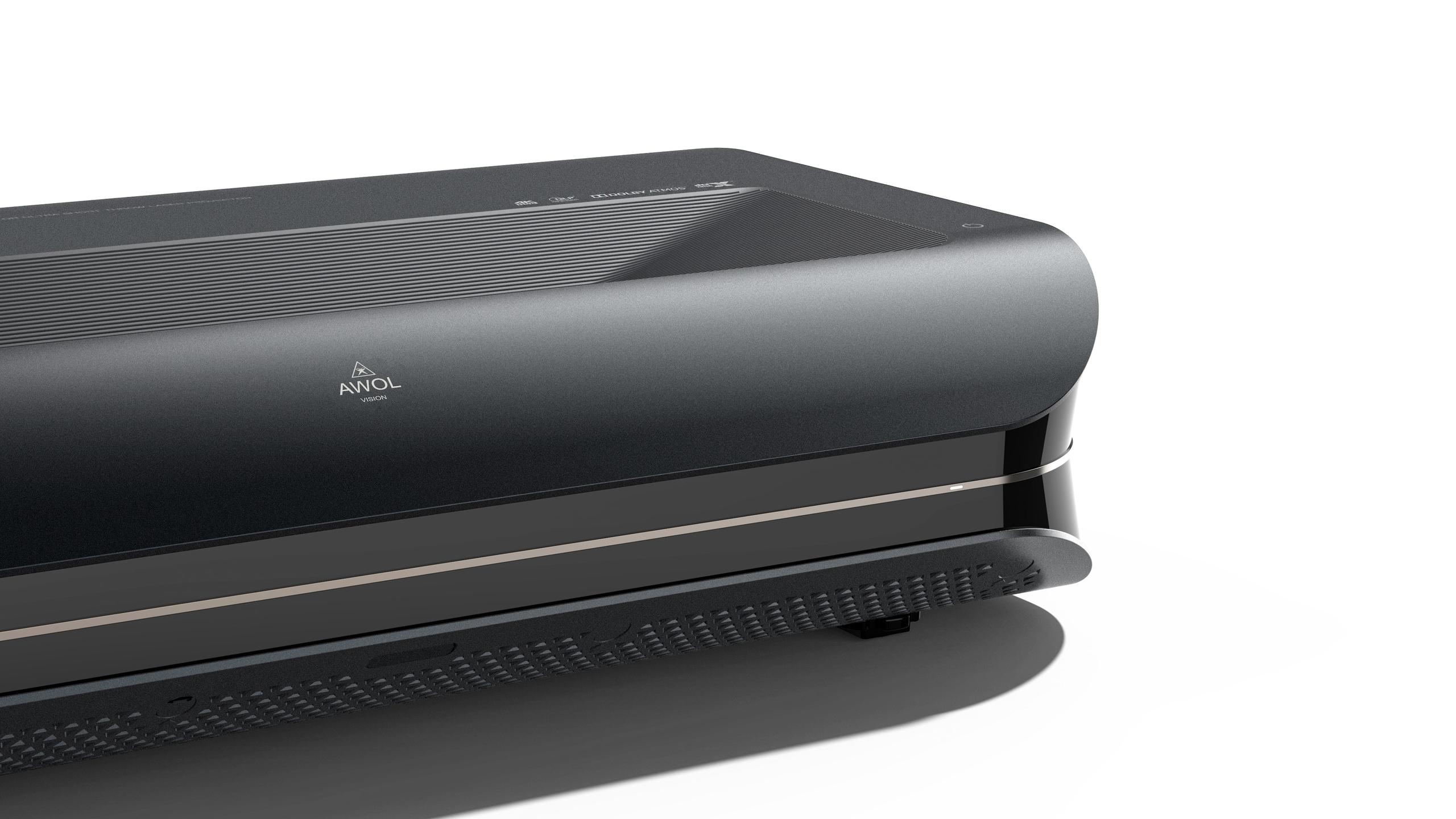
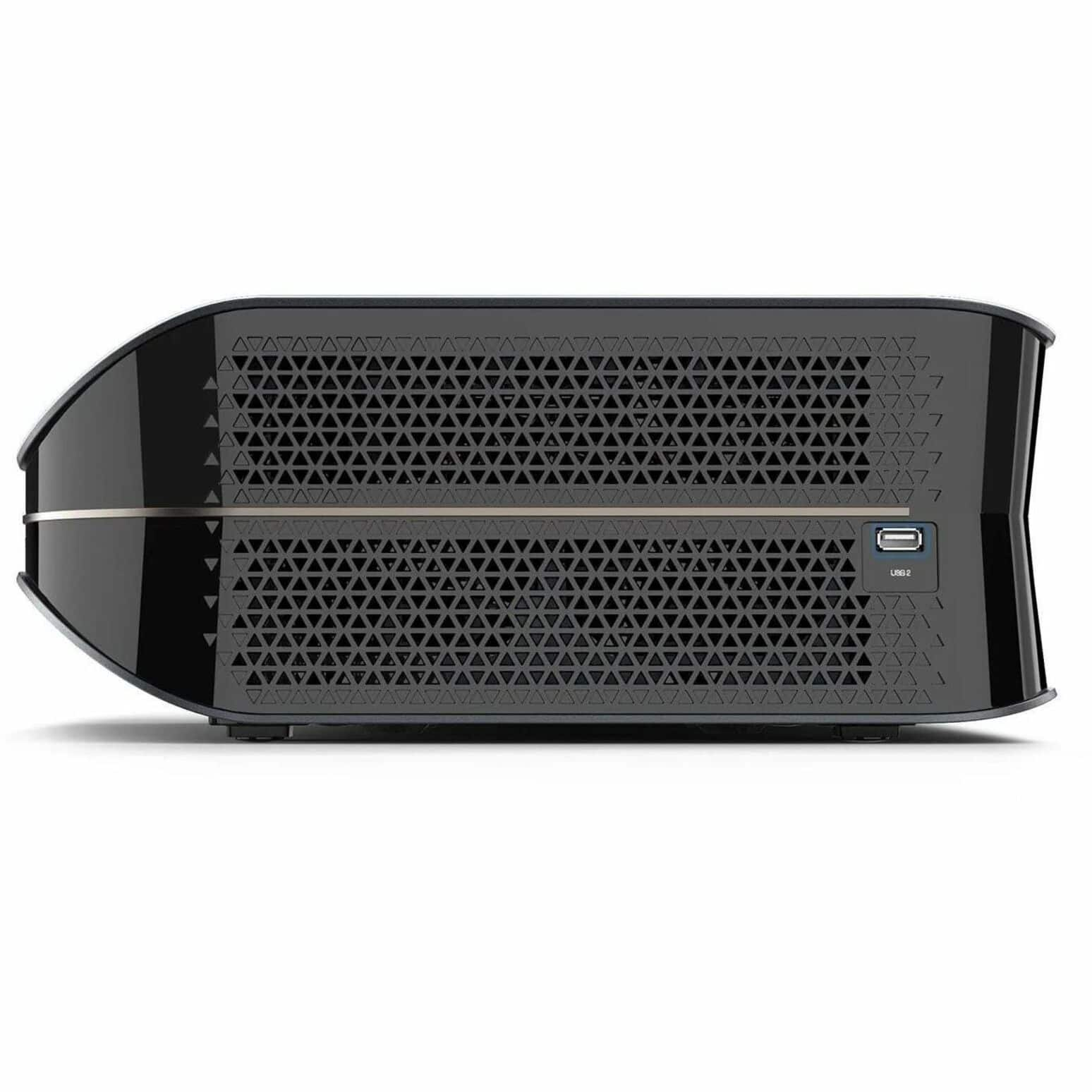
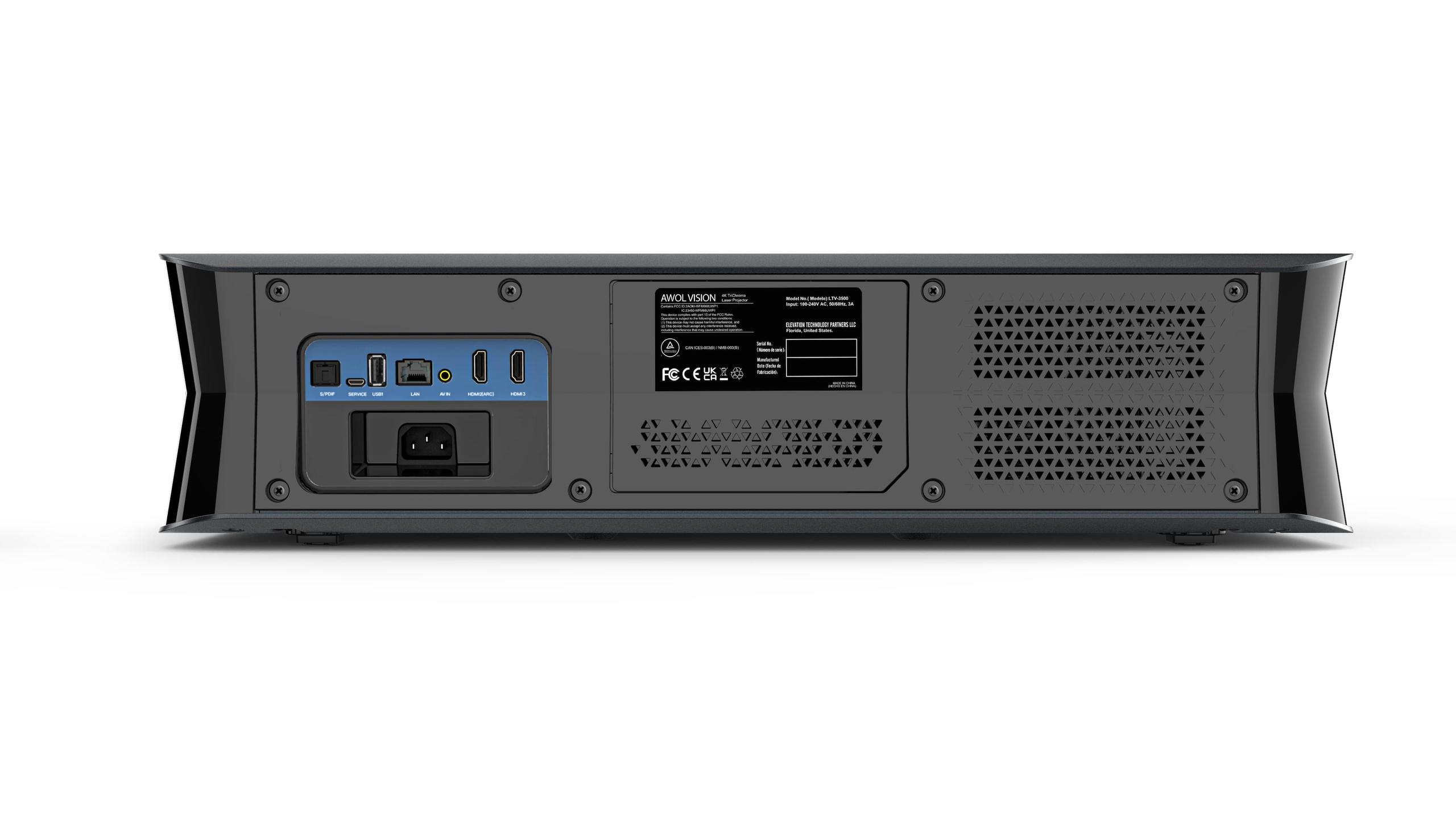
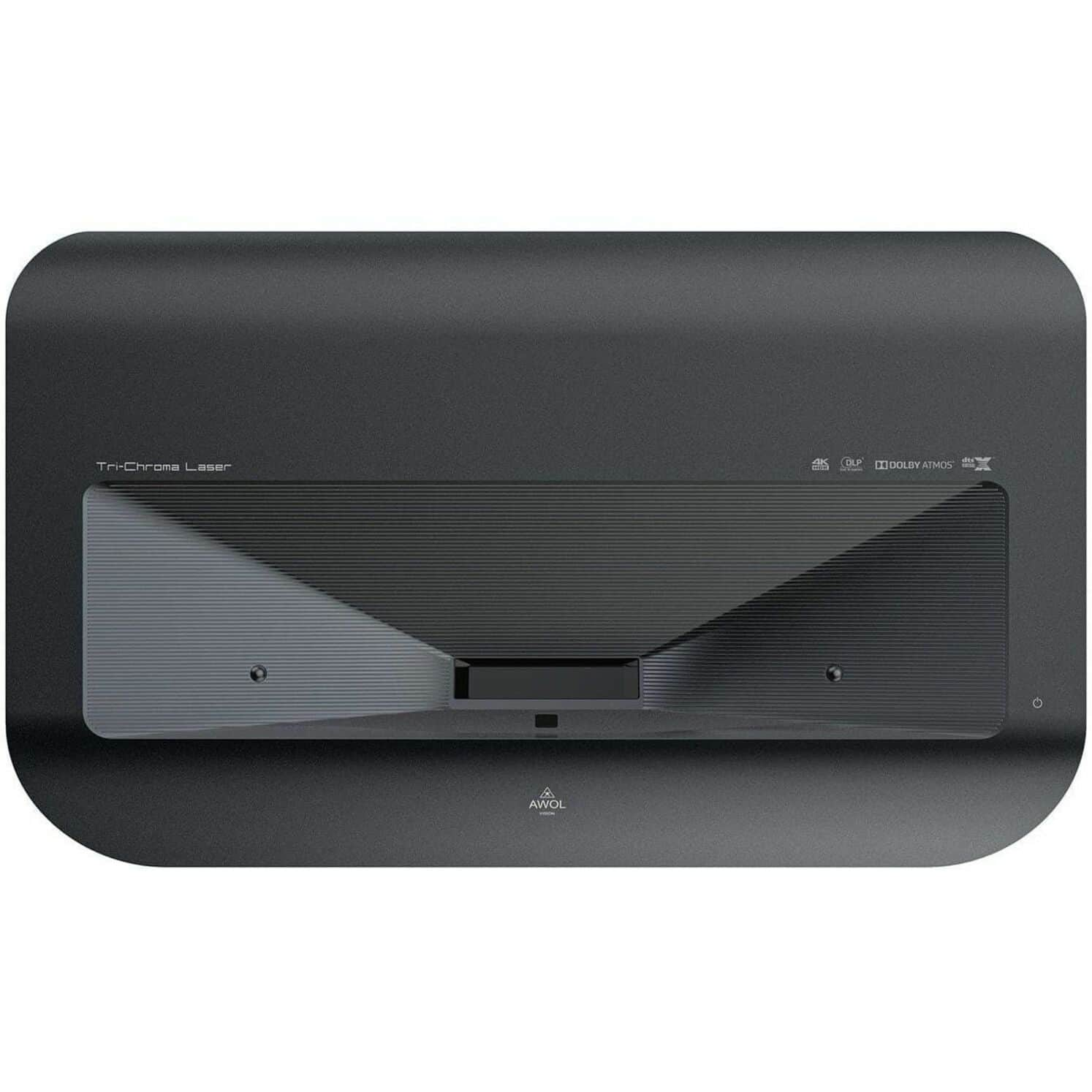
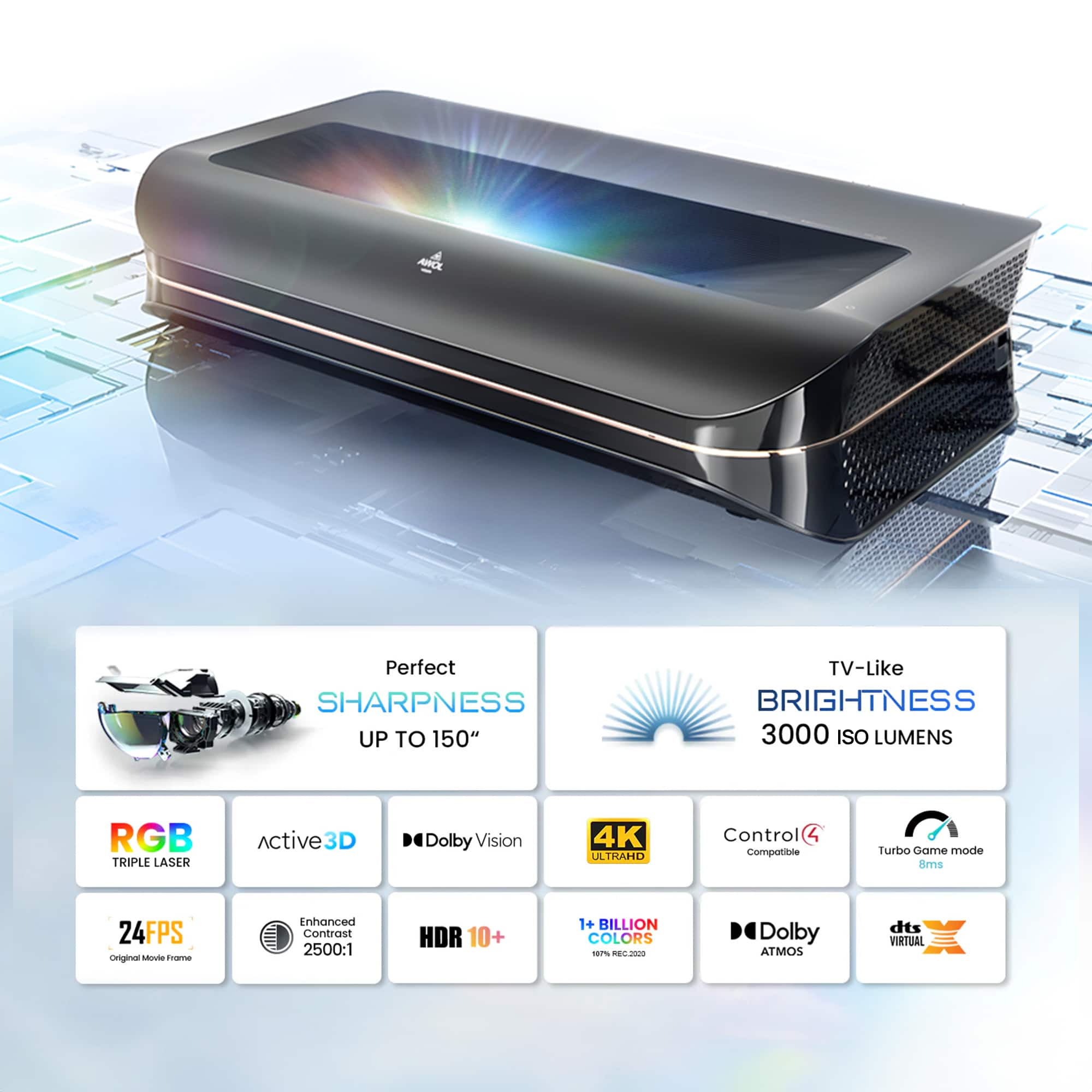
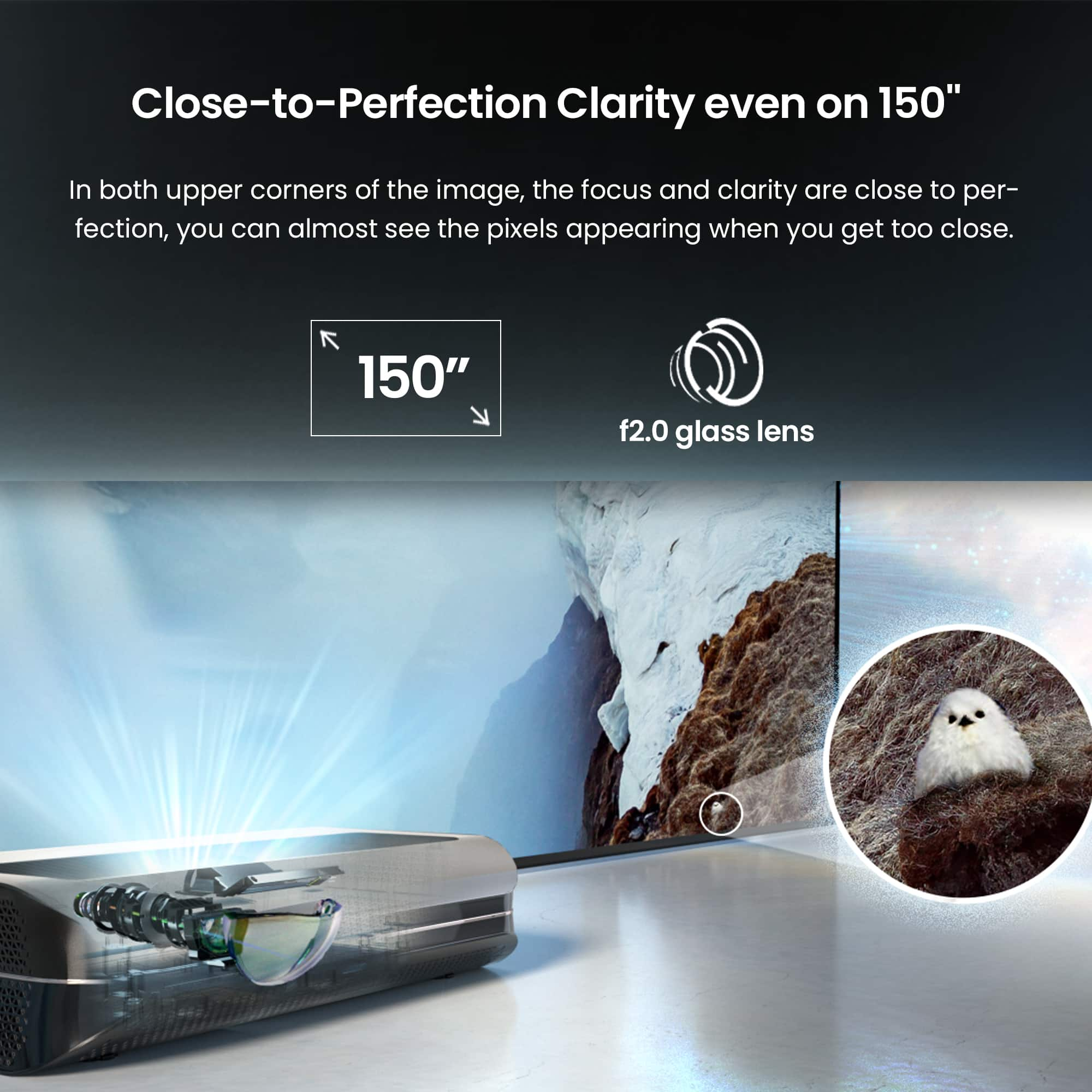
If you're looking to create a high-end home theater experience without a traditional ceiling-mounted projector, you've probably encountered Ultra Short Throw (UST) projectors. These sleek units sit just inches from your wall and can create massive, cinema-quality images. Today, we're comparing two of the newest and most capable options: the Formovie 4K Max ($3,699) and the AWOL Vision LTV-3500 Pro ($5,109).
Both of these projectors were released in early 2024, representing the latest advancements in UST technology. The key improvements we're seeing in this generation include higher brightness levels, better HDR handling, and more sophisticated gaming features. These aren't your father's projectors - they're sophisticated entertainment hubs that can rival or exceed the performance of high-end TVs.
Let's start with what might be the most important real-world consideration: how these projectors handle different lighting conditions. The Formovie 4K Max boasts an impressive 4,500 ANSI lumens, while the AWOL Vision LTV-3500 Pro delivers 3,500 ANSI lumens.
What does this mean in practice? ANSI lumens are a standardized measurement of brightness, and this difference is significant. The Formovie's extra 1,000 lumens means it can maintain vibrant images even with some ambient light in the room. During testing, the Formovie remained perfectly watchable during daytime viewing with curtains drawn, while the AWOL performed best in more controlled lighting conditions.
Here's where things get interesting. While the Formovie wins on pure brightness, the AWOL takes the lead in several other image quality metrics:
The AWOL's tri-laser system covers 107% of the BT.2020 color space (the current gold standard for digital color), while the Formovie covers 100% of the more limited Rec.709 space. This means the AWOL can display a wider range of colors, particularly noticeable in nature documentaries and newer movies that take advantage of this broader palette.
HDR (High Dynamic Range) technology allows for better contrast and more natural brightness variations in scenes. The AWOL supports the full suite of HDR formats, including:
The Formovie supports HDR10+ and HLG but lacks Dolby Vision support. This might seem like a small difference, but Dolby Vision's dynamic metadata allows for scene-by-scene optimization that can make a noticeable difference in image quality.
For gamers, input lag (the delay between pressing a button and seeing the action on screen) is crucial. The AWOL Vision shines here with:
The Formovie offers basic ALLM (Auto Low Latency Mode) support but doesn't match these impressive numbers. For casual gaming, either projector will work fine, but competitive gamers should definitely lean toward the AWOL.
Both projectors take different approaches to smart features:
The AWOL's approach offers more flexibility and regular updates, plus access to a wider range of apps. However, the Formovie's integrated system is clean and functional, just less expandable.
While most serious home theater setups will use external speakers or soundbars, built-in audio quality matters for more casual viewing:
The AWOL's Dolby Atmos support provides better spatial audio, though both systems are quite capable for built-in solutions.
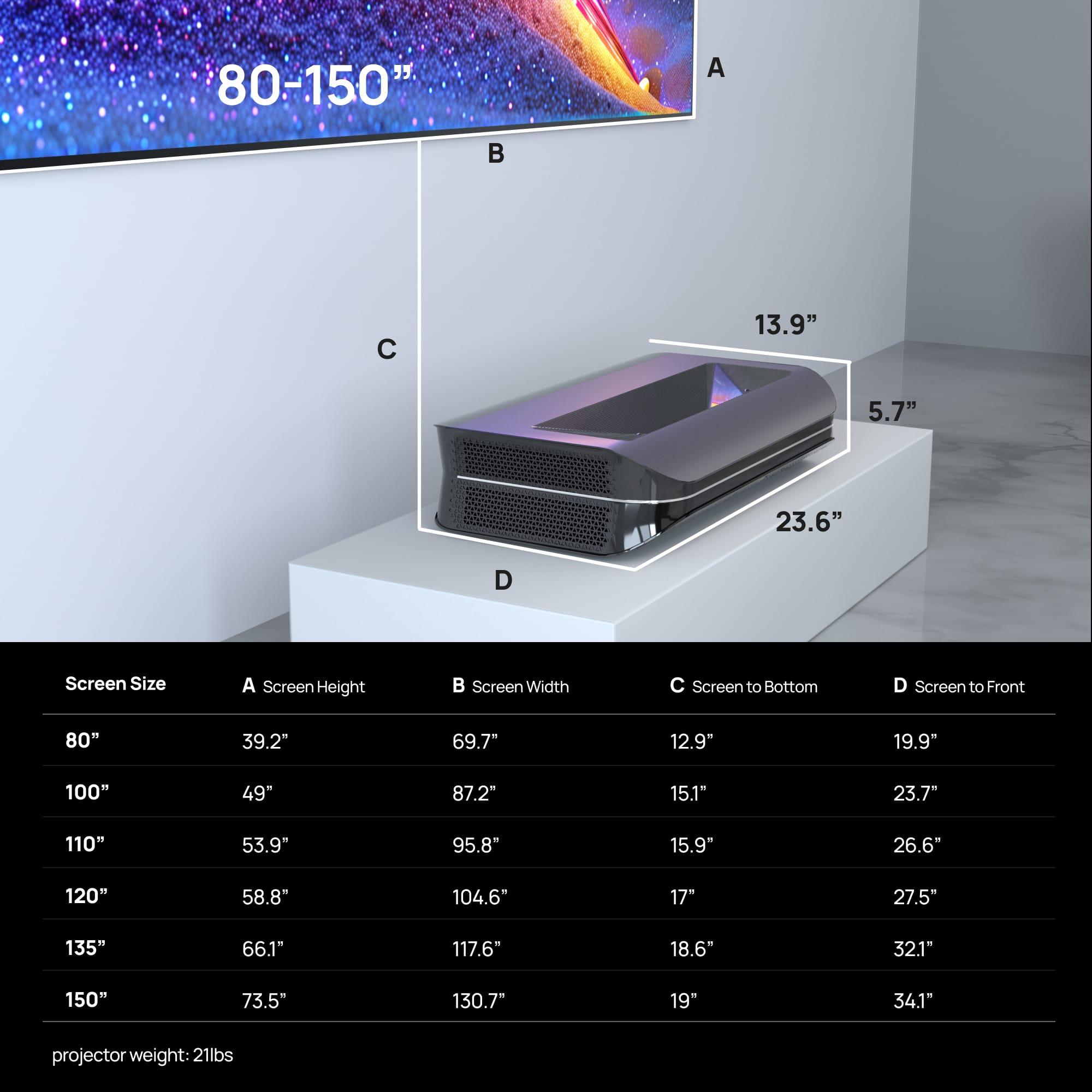
The Formovie can project up to a 200-inch image, while the AWOL maxes out at 150 inches. Both use similar throw ratios (around 0.25:1), meaning they need to sit roughly 13-14 inches from the wall for a 100-inch image.
When considering value, we need to look at the total package:
The Formovie 4K Max at $3,699 offers:
The AWOL Vision LTV-3500 Pro at $5,109 delivers:
Your choice should primarily depend on your viewing environment and priorities:
In practical use, both projectors deliver excellent images, but they excel in different scenarios. The Formovie's brightness advantage makes it more versatile for everyday viewing, while the AWOL's superior color accuracy and HDR handling make it the choice for dedicated home theater environments.
Both projectors represent excellent choices in the UST category, but they serve different needs. The Formovie offers tremendous value and versatility, while the AWOL provides premium performance for those willing to pay for it. Choose based on your specific viewing environment and priorities rather than specs alone.
Remember that proper screen selection is crucial for UST projectors - a good ALR (Ambient Light Rejecting) screen will significantly improve performance for both units, especially in rooms with ambient light.
For most users, the Formovie 4K Max will provide the best balance of performance and value. However, if you're creating a dedicated home theater space and want the absolute best image quality, the AWOL Vision LTV-3500 Pro is worth the premium.
| Formovie 4K Max ($3,699) | AWOL Vision LTV-3500 Pro ($5,109) |
|---|---|
| Brightness - Critical for room versatility and daytime viewing | |
| 4,500 ANSI lumens (excellent for bright rooms) | 3,500 ANSI lumens (better for controlled lighting) |
| Color Gamut - Determines color richness and accuracy | |
| 100% Rec.709 (good but more limited) | 107% BT.2020 (superior, more vivid colors) |
| HDR Support - Impacts contrast and dynamic range | |
| HDR10+, HLG (basic HDR support) | HDR10, HDR10+, Dolby Vision, HLG (comprehensive) |
| Gaming Performance - Important for responsive gameplay | |
| Basic ALLM support (casual gaming only) | 8ms@1080p/120Hz, 15ms@4K/60Hz (excellent) |
| Maximum Screen Size - Affects installation flexibility | |
| Up to 200 inches (more flexible) | Up to 150 inches (still quite large) |
| Smart Features - Impacts ease of use and streaming | |
| FengOS (proprietary, limited) | Android 9.0 + Fire TV Stick 4K Max (more versatile) |
| Audio System - Built-in sound quality | |
| Dual speakers with tweeters (good) | 36W Dolby Atmos system (better) |
| Light Source Lifespan - Long-term reliability | |
| 25,000 hours (standard) | 25,000 hours (standard) |
| Throw Ratio - Distance needed from wall | |
| 0.25:1 (typical UST range) | 0.25:1 (typical UST range) |
| Value Proposition - Overall price-to-performance | |
| Better value for bright rooms and general use | Premium price justified by superior image quality |
The Formovie 4K Max ($3,699) is significantly better for bright rooms with its 4,500 ANSI lumens compared to the AWOL Vision LTV-3500 Pro's ($5,109) 3,500 lumens. If you have lots of ambient light, the Formovie is the clear choice.
The AWOL Vision LTV-3500 Pro has superior picture quality with better color accuracy (107% BT.2020), Dolby Vision support, and better contrast. The Formovie 4K Max still offers good picture quality but prioritizes brightness over absolute color accuracy.
The AWOL Vision LTV-3500 Pro is significantly better for gaming with 8ms input lag at 1080p/120Hz and 15ms at 4K/60Hz. The Formovie only offers basic gaming features.
Yes, both projectors work best with an ALR (Ambient Light Rejecting) screen designed for UST projectors. This is essential for optimal picture quality and contrast, especially in rooms with ambient light.
The AWOL Vision LTV-3500 Pro offers a more user-friendly experience with Android 9.0 and included Fire TV Stick 4K Max. The Formovie 4K Max uses a more limited proprietary operating system.
The Formovie 4K Max can project up to 200 inches, while the AWOL Vision LTV-3500 Pro maxes out at 150 inches. Both work well with common sizes between 100-120 inches.
The Formovie 4K Max at $3,699 offers better value for most users, especially if you need bright room performance. The AWOL Vision LTV-3500 Pro at $5,109 is premium-priced but justifies its cost with superior image quality.
Both have capable built-in audio, but the AWOL's 36W Dolby Atmos system is superior. However, for the best experience, external speakers or a soundbar are recommended for both.
Both projectors have a 0.25:1 throw ratio, meaning they need to be placed about 13-14 inches from the wall for a 100-inch image.
The AWOL Vision LTV-3500 Pro is better for dedicated home theater movie watching with superior HDR and color accuracy. The Formovie 4K Max is better for casual viewing in varied lighting conditions.
Both projectors are rated for 25,000 hours of laser light source life, which is about 10-15 years of typical use.
No, but room lighting affects their performance differently. The Formovie 4K Max handles bright rooms better, while the AWOL Vision LTV-3500 Pro performs best in controlled lighting conditions.
We've done our best to create useful and informative comparisons to help you decide what product to buy. Our research uses advanced automated methods to create this comparison and perfection is not possible - please contact us for corrections or questions. These are the sites we've researched in the creation of this article: rtings.com - eu.formovie.com - notebookcheck.net - formovie.com - techradar.com - projectorcentral.com - projectorscreen.com - projectorcentral.com - projectorreviews.com - projectorcentral.com - formovie.com - projectorjunkies.com - digitaltrends.com - youtube.com - avsforum.com - dreamediaav.com - awolvision.de - projectorreviews.com - bhphotovideo.com - youtube.com - projectorjunkies.com

Privacy Policy
Terms and Conditions - Affiliate Policy
Home Security
© Copyright 2008-2026.
11816 Inwood Rd #1211, Dallas, TX 75244