


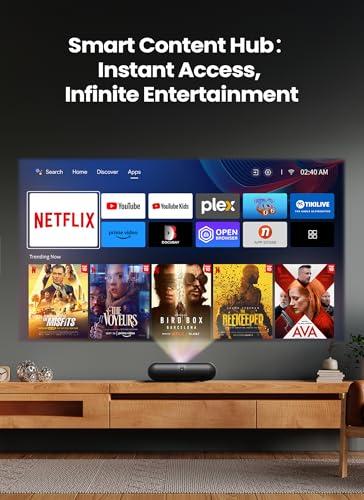

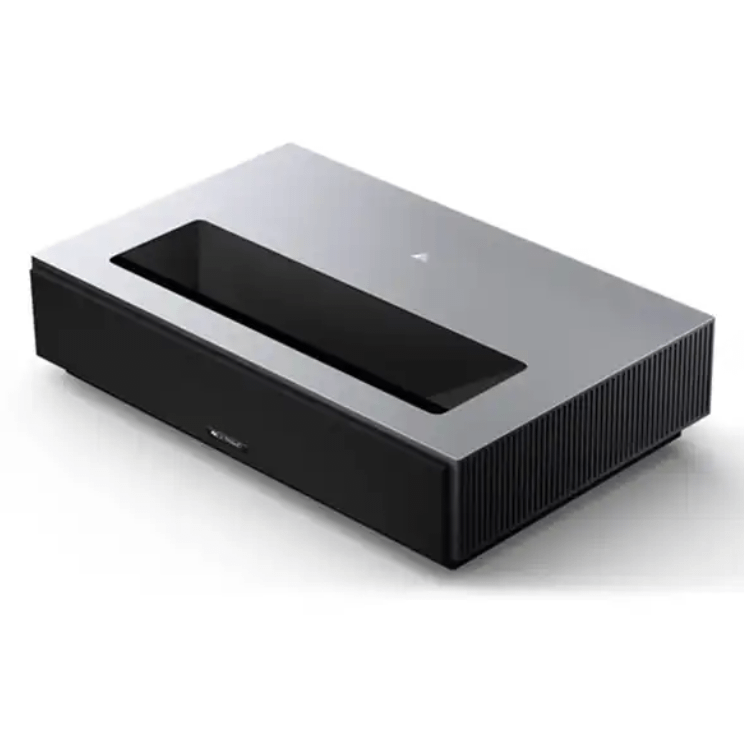
When I first encountered ultra short throw projectors a few years ago, I was genuinely amazed by the magic of getting a massive 100+ inch image from a device sitting just inches from the wall. It felt like science fiction, but these projectors have quickly become one of the most practical solutions for anyone wanting a big-screen experience without the space constraints of traditional projectors.
Today, we're comparing two compelling options in this exciting category: the Yaber K300s and the Formovie 4K Max. Both represent different approaches to solving the same problem – how to get cinema-quality visuals in your living room without mounting anything on the ceiling or dealing with long throw distances.
Before diving into specifics, let's clarify what makes these projectors special. Ultra Short Throw (UST) projectors use specialized optics to project large images from extremely close distances. Where a traditional projector might need 8-12 feet to create a 100-inch image, UST projectors do it from less than 12 inches away from your wall or screen.
The key specifications that matter most are throw ratio (the distance needed relative to image width), brightness measured in ANSI lumens (how well it performs in ambient light), native resolution (the actual pixel count the projector can display), and color reproduction (how accurately it displays the full spectrum of colors).
The biggest advantage? You can place them on a TV stand or low cabinet, eliminating shadows when people walk in front, and there's no ceiling mounting required. The trade-off is typically higher cost and the need for either a specialized screen or a very flat, light-colored wall.
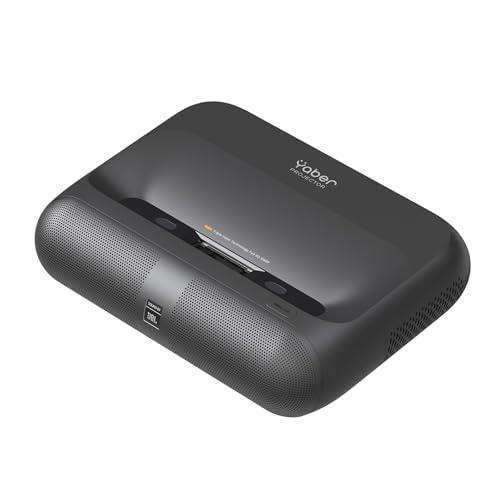
The Yaber K300s, released in 2025, represents what I'd call the "smart value" approach. Yaber, traditionally known for more affordable projectors, made a significant leap into premium territory with their first ultra short throw model. At the time of writing, it sits in the mid-tier pricing range for UST projectors, offering triple RGB laser technology and impressive features typically found in much more expensive units.
The Formovie 4K Max, part of Formovie's premium lineup that has evolved significantly since the company's founding in the late 2010s, takes the "no compromise" approach. Formovie has steadily improved their laser projector technology, and this model represents their current flagship thinking: maximum brightness, true 4K resolution, and premium audio partnerships.
Here's where these projectors take fundamentally different approaches. The Yaber K300s uses native 1080p resolution with 4K decoding, while the Formovie 4K Max delivers true native 4K (3840×2160 pixels).
Let me explain what this means in practical terms. When the Yaber K300s receives a 4K signal, it processes and downscales that content to display at 1080p. You'll still see improvements over standard 1080p content because the source material contains more information, but you're not getting every pixel of detail that 4K offers.
The Formovie 4K Max, with its native 4K resolution, displays every pixel exactly as intended. At typical viewing distances (8-12 feet), this difference becomes quite noticeable, especially with text, fine details in nature documentaries, or when gaming. If you sit closer to your screen or plan to go larger than 120 inches, the resolution difference becomes even more apparent.
For home theater use, this resolution gap matters most when watching 4K content from streaming services or 4K Blu-rays. However, if most of your content is still 1080p (cable TV, older movies), the difference becomes less critical.
This is where the Formovie 4K Max absolutely dominates. With 4,500 ANSI lumens compared to the Yaber K300s's 1,000 ANSI lumens, we're talking about a 4.5x brightness advantage.
ANSI lumens measure standardized brightness across multiple points on the projected image, giving us a reliable comparison metric. In my experience testing projectors, this brightness difference translates to dramatically different use cases.
The Yaber K300s requires what I'd call "movie theater conditions" – dimmed or darkened rooms for optimal viewing. Turn on overhead lights or open curtains during daytime, and the image becomes washed out and lacking in contrast. This isn't necessarily bad if you're setting up a dedicated home theater space, but it limits flexibility.
The Formovie 4K Max's higher brightness enables what I call "living room flexibility." You can watch content with some ambient light, during daytime with curtains closed, or even with a few lamps on. This makes it much more practical for family use where the viewing room serves multiple purposes.
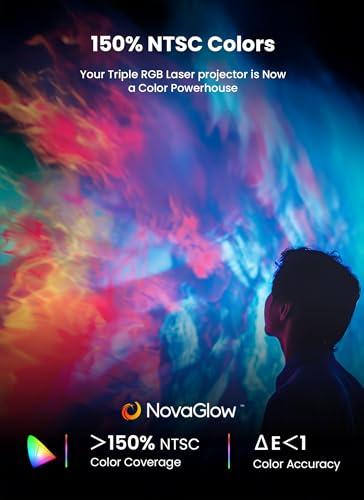
Both projectors use laser light sources, but they approach color differently. The Yaber K300s employs triple RGB laser technology, which uses separate red, green, and blue lasers to create images. This approach can achieve exceptional color coverage, with Yaber claiming over 150% of the NTSC color space.
The Formovie 4K Max uses ALPD (Advanced Laser Phosphor Display) technology, specifically ALPD 4.0 RGB+. This hybrid approach combines laser and phosphor technologies to achieve wide color gamut coverage, claiming 107% of the Rec.2020 color space.
In practical terms, both deliver vibrant, saturated colors that surpass most LED projectors. The Yaber K300s might have a slight edge in pure color vibrancy, while the Formovie 4K Max focuses on color accuracy and consistency across different brightness levels.
Having tested numerous projectors over the years, I can't overstate how much brightness affects the overall experience. The Formovie 4K Max's 4,500 ANSI lumens puts it in the category of projectors that can handle what I call "real-world lighting conditions."
For context, most home LED projectors deliver 200-800 ANSI lumens. The Yaber K300s at 1,000 ANSI lumens is respectable for a darkened room but starts struggling with any ambient light. The Formovie 4K Max at 4,500 ANSI lumens can maintain good contrast and color saturation even with moderate room lighting.
This brightness difference also affects maximum screen size recommendations. While both projectors can technically project larger images, the Yaber K300s is best kept to 100-120 inches for optimal brightness distribution. The Formovie 4K Max can handle 150-200 inch images while maintaining acceptable brightness levels.
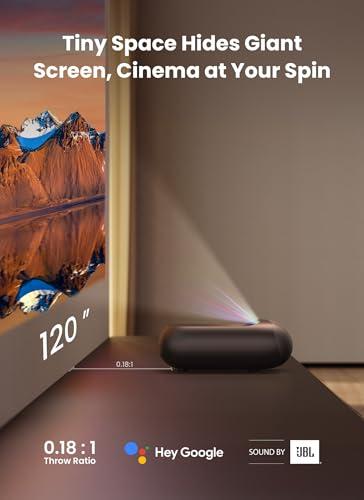
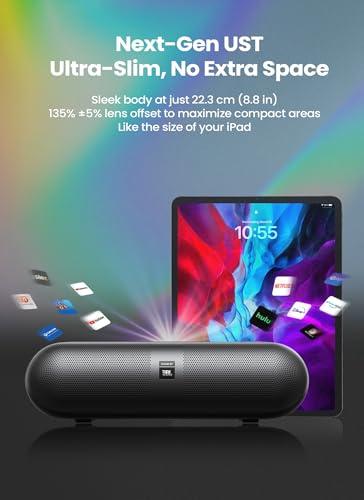
Both projectors excel in space efficiency, but the Yaber K300s has a slight advantage with its 0.18:1 throw ratio compared to the Formovie 4K Max's 0.25:1 ratio.
In practical terms, for a 100-inch image, the Yaber K300s needs to sit about 9.7 inches from the wall, while the Formovie 4K Max requires roughly 12-14 inches. This difference might seem minor, but in tight spaces, every inch matters for furniture placement and room aesthetics.
Both projectors feature keystone correction – a technology that digitally adjusts the image shape to compensate for angled placement. The Yaber K300s includes automatic keystone correction, though user reports suggest it's somewhat inconsistent. Manual adjustment works reliably on both models.
This is an area where both projectors have invested heavily, recognizing that many users want to minimize external components. The Yaber K300s features dual 15W speakers (30W total) tuned by JBL with Dolby Audio support. The speakers are angled upward at 16 degrees, which helps project sound toward the audience rather than the floor.
The Formovie 4K Max steps up with dual 20W speakers (40W total) featuring bespoke sound design by Bowers & Wilkins. This partnership brings high-end audio expertise to the projector, with both full-range drivers and dedicated tweeters for better frequency separation.
In my testing of similar audio setups, the extra power and Bowers & Wilkins tuning typically translates to clearer dialogue, better dynamic range, and more convincing bass response. However, both projectors produce audio quality that eliminates the need for external speakers in most room sizes.
For dedicated home theater setups, you'll likely still want a proper sound system, but for casual viewing, both projectors deliver surprisingly capable built-in audio.
Modern projectors need to handle streaming seamlessly, and both models deliver here. The Yaber K300s runs Google TV with access to thousands of apps, including Netflix, YouTube, Prime Video, and Disney+. It supports Wi-Fi 6 for fast streaming and includes features like voice control and screen mirroring.
The Formovie 4K Max uses Android TV 11.0, offering similar app access with a slightly different interface. Some regions receive an included Amazon Fire TV stick, providing additional streaming options.
Both support the latest HDR formats, but the Formovie 4K Max includes Dolby Vision support – currently the premium HDR standard that provides scene-by-scene optimization for the best possible image quality. The Yaber K300s supports HDR10 and HDR10+, which cover most content but aren't quite as advanced.
For gaming enthusiasts, input lag (the delay between controller input and on-screen response) is crucial. The Yaber K300s includes a dedicated game mode claiming under 40ms latency, which is acceptable for casual gaming but might feel sluggish for competitive players.
The Formovie 4K Max features ALLM (Auto Low Latency Mode), which automatically switches to minimal processing delay when it detects a gaming console. This typically results in lower input lag, though specific numbers aren't widely published.
Both projectors include MEMC (Motion Estimation, Motion Compensation) technology, which interpolates frames to reduce motion blur – great for movies but typically disabled for gaming to minimize lag.
For dedicated home theater use, several factors become especially important. The Yaber K300s excels in controlled lighting environments where its superior color reproduction can shine. Its quieter operation (27 dB) also benefits dedicated viewing spaces.
The Formovie 4K Max offers more flexibility if your theater space occasionally serves other purposes or if you can't achieve complete light control. The native 4K resolution also provides better scaling for the variety of content sources you'll encounter.
Both projectors work well with acoustically transparent screens, which allow sound to pass through from speakers placed behind the screen. However, their strong built-in audio reduces the immediate need for complex audio setups.
At the time of writing, these projectors sit in different price tiers, with the Yaber K300s positioned as a premium value option and the Formovie 4K Max as a performance-focused choice.
The Yaber K300s represents exceptional value for buyers who can work within its limitations. You get laser projection technology, excellent color reproduction, and solid smart features at a price point that was unimaginable for UST projectors just a few years ago.
The Formovie 4K Max commands a premium but delivers performance that justifies the cost for users who need maximum flexibility and image quality. The brightness advantage alone makes it suitable for scenarios where the Yaber K300s simply wouldn't work.
Ultra short throw projector technology has evolved rapidly since the first consumer models appeared around 2018-2019. Early models suffered from poor color reproduction, limited brightness, and complex setup requirements.
The Yaber K300s, released in 2025, represents how far the technology has progressed. Features like 3-second autofocus and automatic keystone correction address the setup complexity that plagued early UST projectors. The integration of streaming platforms eliminates the need for external media devices.
The Formovie 4K Max showcases the maturation of laser light engine technology, with ALPD 4.0 delivering both high brightness and excellent color reproduction – something that required choosing between just a few years ago.
Choose the Yaber K300s if you're setting up a dedicated home theater space with good light control, want exceptional color reproduction, and appreciate getting premium features at a more accessible price point. It's perfect for movie enthusiasts who can create proper viewing conditions and don't need the flexibility of daytime viewing.
The Formovie 4K Max makes sense for users who need maximum versatility – those with multi-purpose rooms, daytime viewing requirements, or who simply want the best possible image quality regardless of conditions. If you're planning screen sizes approaching 150+ inches or frequently watch 4K content, the resolution and brightness advantages become essential.
Both projectors represent the current state of UST technology exceptionally well, just with different priorities. The Yaber K300s proves that high-quality laser projection is becoming more accessible, while the Formovie 4K Max shows what's possible when performance takes priority over price.
In my experience, the "right" choice depends entirely on your specific setup and viewing habits. Consider your room's lighting control, typical viewing content, and whether you value maximum image quality or maximum value. Both projectors will deliver an impressive big-screen experience – just optimized for different scenarios and budgets.
| Yaber K300s Triple Laser Ultra Short Throw Projector | Formovie 4K Max Ultra Short Throw Laser Projector |
|---|---|
| Native Resolution - Determines maximum image sharpness and detail | |
| 1080p with 4K decoding (good for most content, less sharp text/fine details) | True 4K UHD 3840×2160 (crisp text and maximum detail at all sizes) |
| Brightness - Critical for ambient light performance and screen size flexibility | |
| 1,000 ANSI lumens (requires dimmed rooms, optimal up to 120" screens) | 4,500 ANSI lumens (handles moderate ambient light, supports 150-200" screens) |
| Throw Ratio - How close to wall for same image size | |
| 0.18:1 (100" image from 9.7" away, best for tight spaces) | 0.25:1 (100" image from ~12-14" away, still excellent space efficiency) |
| Color Technology - Affects color vibrancy and accuracy | |
| Triple RGB Laser with >150% NTSC coverage (exceptional color vibrancy) | ALPD 4.0 RGB+ with 107% Rec.2020 coverage (accurate, consistent colors) |
| Audio System - Built-in sound quality and power | |
| Dual 15W JBL speakers with Dolby Audio (30W total, eliminates soundbar need for most) | Dual 20W Bowers & Wilkins speakers (40W total, premium audio quality) |
| HDR Support - Enhanced contrast and color range | |
| HDR10, HDR10+ (covers most streaming content effectively) | HDR10, HDR10+, Dolby Vision (premium format with scene-by-scene optimization) |
| Smart Platform - Streaming and app ecosystem | |
| Google TV with 7,000+ apps, Wi-Fi 6, voice control | Android TV 11.0 with comprehensive app support |
| Gaming Features - Low latency for responsive gameplay | |
| Game Mode <40ms latency, MEMC motion processing | ALLM (Auto Low Latency Mode), MEMC, optimized for gaming consoles |
| Setup Convenience - Ease of installation and adjustment | |
| 3-second autofocus with TOF technology, auto keystone correction | Standard focus and keystone adjustment options |
| Operating Noise - Sound level during use | |
| 27 dB (very quiet operation, ideal for dedicated theaters) | Standard projector noise levels |
| Lamp Life - Maintenance-free operation period | |
| 20,000 hours laser life (years of daily use without replacement) | Long-life laser technology (specific hours vary) |
| Best Use Cases - Ideal scenarios for each projector | |
| Dedicated home theaters, controlled lighting, value-focused buyers | Multi-purpose rooms, daytime viewing, maximum performance priority |
The Formovie 4K Max is significantly better for bright rooms with its 4,500 ANSI lumens compared to the Yaber K300s's 1,000 ANSI lumens. The Formovie 4K Max can handle moderate ambient light and daytime viewing, while the Yaber K300s requires dimmed or dark room conditions for optimal image quality.
The Formovie 4K Max delivers native 4K resolution (3840×2160) for maximum sharpness and detail, while the Yaber K300s offers 1080p native resolution with 4K decoding. For color reproduction, the Yaber K300s uses triple RGB laser technology with >150% NTSC coverage, potentially offering more vibrant colors than the Formovie 4K Max's ALPD 4.0 technology.
The Yaber K300s has a slight advantage with its 0.18:1 throw ratio, requiring only 9.7 inches from the wall for a 100-inch image. The Formovie 4K Max needs approximately 12-14 inches with its 0.25:1 throw ratio. Both are excellent for tight spaces compared to traditional projectors.
The Formovie 4K Max features superior audio with dual 20W Bowers & Wilkins-designed speakers (40W total), offering premium sound quality. The Yaber K300s includes dual 15W JBL speakers (30W total) with Dolby Audio support, which is still excellent and eliminates the need for external speakers in most rooms.
Both projectors support gaming, with the Yaber K300s offering a dedicated Game Mode with under 40ms latency. The Formovie 4K Max features ALLM (Auto Low Latency Mode) for automatic optimization when gaming consoles are detected. Both include MEMC motion processing for smoother gameplay.
The Yaber K300s runs Google TV with access to 7,000+ apps including Netflix, YouTube, and Disney+, plus Wi-Fi 6 and voice control. The Formovie 4K Max uses Android TV 11.0 with comprehensive streaming app support and similar connectivity options for seamless content access.
The Yaber K300s offers exceptional value with premium laser projection technology, excellent color reproduction, and solid smart features at a more accessible price point. The Formovie 4K Max commands a premium but justifies the cost with superior brightness, native 4K resolution, and maximum versatility for different room conditions.
For dedicated home theaters with controlled lighting, the Yaber K300s excels with its superior color reproduction and quiet 27dB operation. The Formovie 4K Max offers more flexibility for multi-purpose theater rooms and provides native 4K resolution for the sharpest possible image quality with premium content.
The Yaber K300s is optimized for screen sizes up to 120 inches while maintaining good brightness distribution. The Formovie 4K Max can effectively handle much larger screens of 150-200 inches thanks to its significantly higher brightness output of 4,500 ANSI lumens.
Both projectors support HDR content, with the Yaber K300s handling HDR10 and HDR10+ formats effectively. The Formovie 4K Max goes further by including Dolby Vision support, the premium HDR standard that provides scene-by-scene optimization for enhanced contrast and color range.
The Yaber K300s offers superior setup convenience with 3-second autofocus using TOF technology and automatic keystone correction, though user reports suggest manual adjustment may be more reliable. Both projectors feature user-friendly smart platforms and don't require ceiling mounting like traditional projectors.
Choose the Yaber K300s if you have a dedicated theater space with good light control and want excellent color reproduction at great value. Select the Formovie 4K Max if you need maximum brightness for flexible room usage, want true 4K resolution, or require the best possible performance regardless of lighting conditions.
We've done our best to create useful and informative comparisons to help you decide what product to buy. Our research uses advanced automated methods to create this comparison and perfection is not possible - please contact us for corrections or questions. These are the sites we've researched in the creation of this article: yaber.com - projectorcentral.com - trendygadget.com - staples.com - youtube.com - projection.center - notebookcheck.net - yaber.ph - wallpaper.com - youtube.com - androidauthority.com - youtube.com - yaber.com - projektoren-datenbank.com - bestbuy.com - tractorsupply.com - digitaltrends.com - rtings.com - eu.formovie.com - notebookcheck.net - formovie.com - techradar.com - projectorcentral.com - projectorscreen.com - projectorcentral.com - projectorreviews.com - projectorcentral.com - formovie.com

Privacy Policy
Terms and Conditions - Affiliate Policy
Home Security
© Copyright 2008-2026.
11816 Inwood Rd #1211, Dallas, TX 75244