

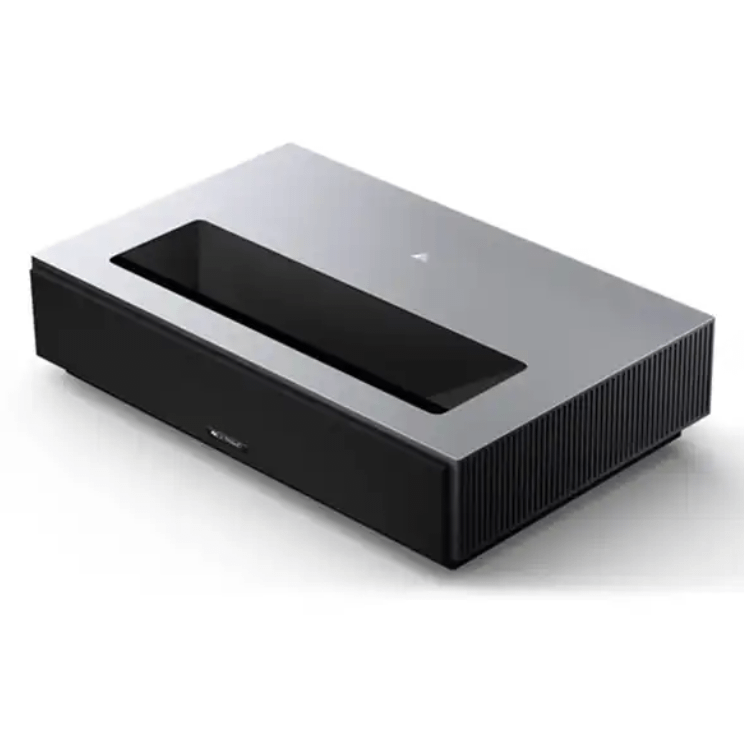
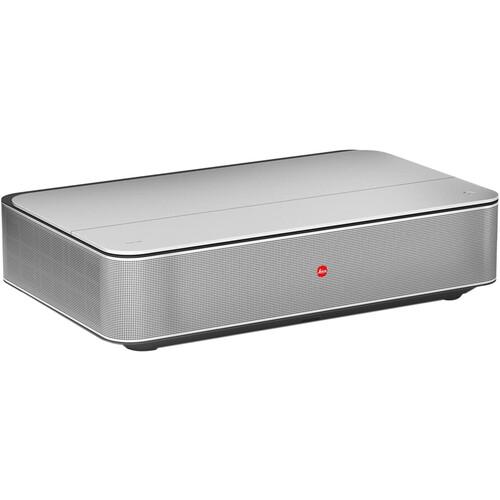
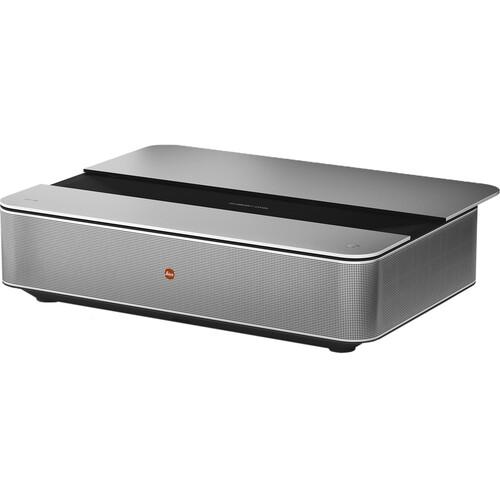
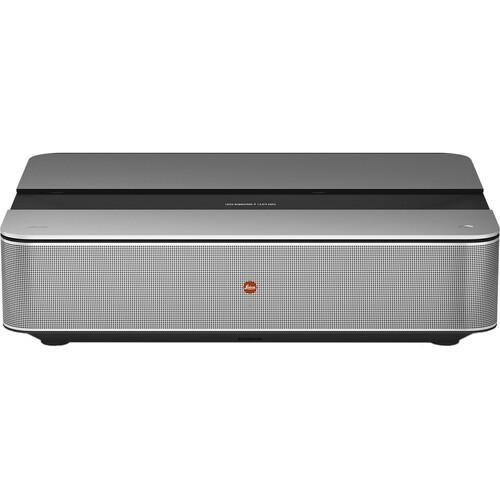
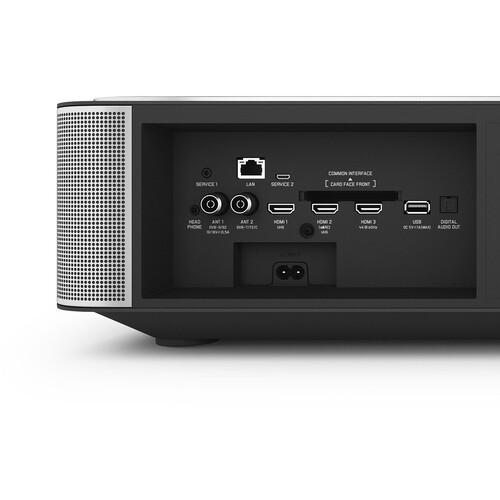
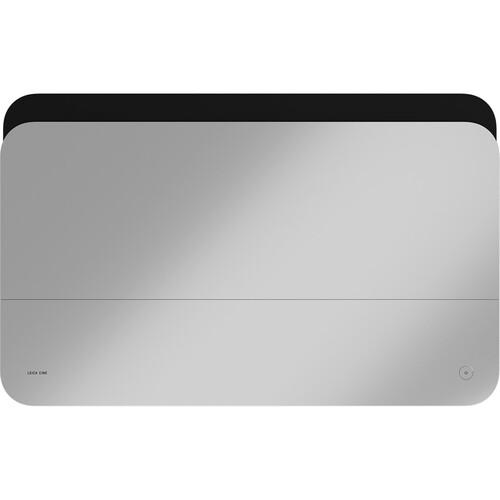
Ultra short throw (UST) projectors have revolutionized home theater setups by allowing massive screen sizes from just inches away from your wall. Unlike traditional projectors that need significant room depth, these advanced units use specialized optics to create large images from very close distances. The technology has matured significantly in recent years, with 2024's offerings showing impressive improvements in brightness, color accuracy, and smart features.
Today we're examining two high-end options: the $3,699 Formovie 4K Max and the $10,460 Leica Cine 1. Both released in early 2024, these projectors represent different approaches to premium home theater, with some fascinating technical differences that impact real-world performance.
The Formovie 4K Max boasts an impressive 4,500 ANSI lumens, while the Leica Cine 1 offers 3,000 ANSI lumens. This difference is significant - ANSI lumens are a standardized measurement of light output, and higher numbers mean better visibility in rooms with ambient light. The Formovie's extra brightness makes it more versatile for everyday viewing, while the Leica performs best in controlled lighting conditions.
To put this in perspective: The Formovie can maintain vibrant images even with some lights on or during daytime viewing. The Leica, while still bright, really shines (pun intended) in dedicated theater environments where you can control the lighting.
Here's where things get interesting. The Leica Cine 1 uses a sophisticated triple RGB laser system that covers 100% of the BT.2020 color space - the gold standard for digital video. The Summicron lens system, featuring four aspherical elements, delivers exceptional clarity and reduced color fringing. This is particularly noticeable in high-contrast scenes where colors need to remain accurate even in very bright or dark areas.
The Formovie 4K Max uses ALPD 3.0 technology with a single laser system, covering the smaller Rec.709 color space. While still impressive, it can't quite match the Leica's color accuracy. However, for most content (which is mastered in Rec.709 anyway), the difference may not be as noticeable as the price gap suggests.
Contrast ratio tells us the difference between the brightest whites and darkest blacks a projector can produce. The Leica's 2,000,000:1 dynamic contrast ratio (achieved through sophisticated image processing) provides deeper blacks and better shadow detail than the Formovie's 3,000:1 native contrast. This difference is most noticeable when watching darker scenes in a properly darkened room.
The Formovie's ability to project images from 80" to 200" makes it incredibly versatile. Whether you're setting up in a modest living room or a dedicated theater space, you have options. The Leica, optimized specifically for 120", offers less flexibility but potentially better performance at its intended size.
Both projectors require careful placement, but the Leica's premium optics demand more precise positioning to achieve optimal performance. The Formovie is more forgiving in this regard, making it easier to achieve good results in various settings.
Both projectors offer modern connectivity options, but their approaches differ significantly. The Leica integrates Google TV, providing a familiar and robust smart platform with extensive app support. The Formovie uses FengOS, which works well but offers a more basic experience. Both support HDR10+ and Dolby Vision, ensuring compatibility with the latest HDR content.
The Leica includes a premium Dolby Atmos-capable audio system that outperforms typical built-in projector speakers. The Formovie's audio is serviceable but not remarkable. However, for a proper home theater setup, you'll likely want external speakers regardless of which projector you choose.
The Formovie 4K Max at $3,699 represents strong value in the premium UST market. It delivers excellent brightness, good color accuracy, and versatile screen size options. For most users, it provides 90% of the Leica's performance at roughly one-third the price.
The Leica Cine 1 at $10,460 is clearly positioned as a luxury option. Its superior color accuracy, excellent contrast, and premium build quality justify the price for enthusiasts who demand the absolute best image quality and are willing to pay for it.
Both projectors represent impressive achievements in UST technology, but they serve different needs. The Formovie 4K Max offers exceptional value and versatility, making it the more practical choice for most users. The Leica Cine 1 sets a new standard for image quality in the category, but at a price that positions it firmly in the luxury market.
For most home theater enthusiasts, the Formovie's combination of performance and value makes it the smarter choice. However, if you're building a no-compromise theater room and have the budget, the Leica's superior image quality might be worth the premium.
| Formovie 4K Max | Leica Cine 1 |
|---|---|
| Price - Key consideration for value assessment | |
| $3,699 | $10,460 |
| Brightness - Critical for ambient light performance | |
| 4,500 ANSI lumens (excellent for bright rooms) | 3,000 ANSI lumens (best in controlled lighting) |
| Color Space - Impacts color accuracy and vibrancy | |
| 100%+ Rec.709 (good for standard content) | 100% BT.2020 (superior for HDR content) |
| Contrast Ratio - Affects black levels and image depth | |
| 3,000:1 native (good for casual viewing) | 2,000,000:1 dynamic (excellent for theater rooms) |
| Screen Size Range - Installation flexibility | |
| 80" to 200" (highly versatile) | Fixed 120" optimization (limited but optimal) |
| Light Source - Affects longevity and color stability | |
| Single laser with ALPD 3.0 | Triple RGB laser system (better color accuracy) |
| Smart Platform - Streaming and interface experience | |
| Basic FengOS (limited app selection) | Google TV (comprehensive app ecosystem) |
| Audio System - Built-in sound capabilities | |
| Basic stereo speakers (external audio recommended) | Integrated Dolby Atmos (premium sound) |
| Lens System - Image clarity and uniformity | |
| Standard UST lens | Leica Summicron lens (superior edge clarity) |
| HDR Support - Enhanced dynamic range capability | |
| HDR10+, Dolby Vision, HLG | HDR10+, Dolby Vision, HLG (better processing) |
| Power Consumption - Operating costs | |
| Not specified | 300W maximum (efficient for class) |
| Weight - Installation considerations | |
| 21.6 lbs | 33.3 lbs (more robust build) |
The Formovie 4K Max is significantly brighter at 4,500 ANSI lumens compared to the Leica Cine 1's 3,000 ANSI lumens, making it better suited for rooms with ambient light.
The Formovie 4K Max costs $3,699, while the Leica Cine 1 is priced at $10,460 - a difference of $6,761.
The Leica Cine 1 offers superior color accuracy with its triple RGB laser system and 100% BT.2020 color space coverage, compared to the Formovie 4K Max's more basic Rec.709 coverage.
The Formovie 4K Max can project from 80" to 200", while the Leica Cine 1 is optimized specifically for 120" screens.
Yes, both the Formovie 4K Max and Leica Cine 1 support true 4K resolution (3840 x 2160).
The Leica Cine 1 is better suited for dedicated home theaters due to its superior contrast ratio and color accuracy, though the Formovie 4K Max still performs well at a lower price point.
Yes, the Leica Cine 1 features Google TV integration, while the Formovie 4K Max uses FengOS with more limited app selection.
Both projectors are ultra-short throw and need similar wall clearance, typically around 14-15 inches for a 120" image.
The Leica Cine 1 features a superior Dolby Atmos-capable sound system, while the Formovie 4K Max has basic stereo speakers.
Yes, both projectors support HDR10+, Dolby Vision, and HLG formats, though the Leica Cine 1 offers better HDR processing.
The Formovie 4K Max is generally more forgiving in setup, while the Leica Cine 1 requires more precise positioning for optimal performance.
The Formovie 4K Max offers better value for most users, delivering excellent performance at one-third the price of the Leica Cine 1, though the Leica provides superior image quality for those willing to pay the premium.
We've done our best to create useful and informative comparisons to help you decide what product to buy. Our research uses advanced automated methods to create this comparison and perfection is not possible - please contact us for corrections or questions. These are the sites we've researched in the creation of this article: rtings.com - eu.formovie.com - notebookcheck.net - formovie.com - techradar.com - projectorcentral.com - projectorscreen.com - projectorcentral.com - projectorreviews.com - projectorcentral.com - formovie.com - projectorcentral.com - projectorreviews.com - leicacamerausa.com - projectorreviews.com - whathifi.com - leicacamerausa.com - bhphotovideo.com - projectorcentral.com - projectorscreen.com - crutchfield.com - leicarumors.com - projectorscreen.com

Privacy Policy
Terms and Conditions - Affiliate Policy
Home Security
© Copyright 2008-2026.
11816 Inwood Rd #1211, Dallas, TX 75244