

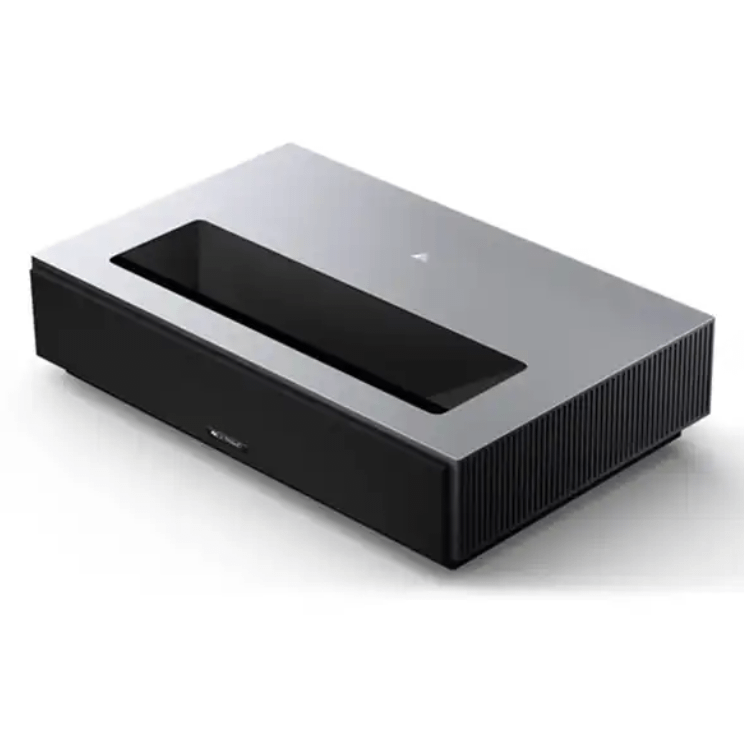
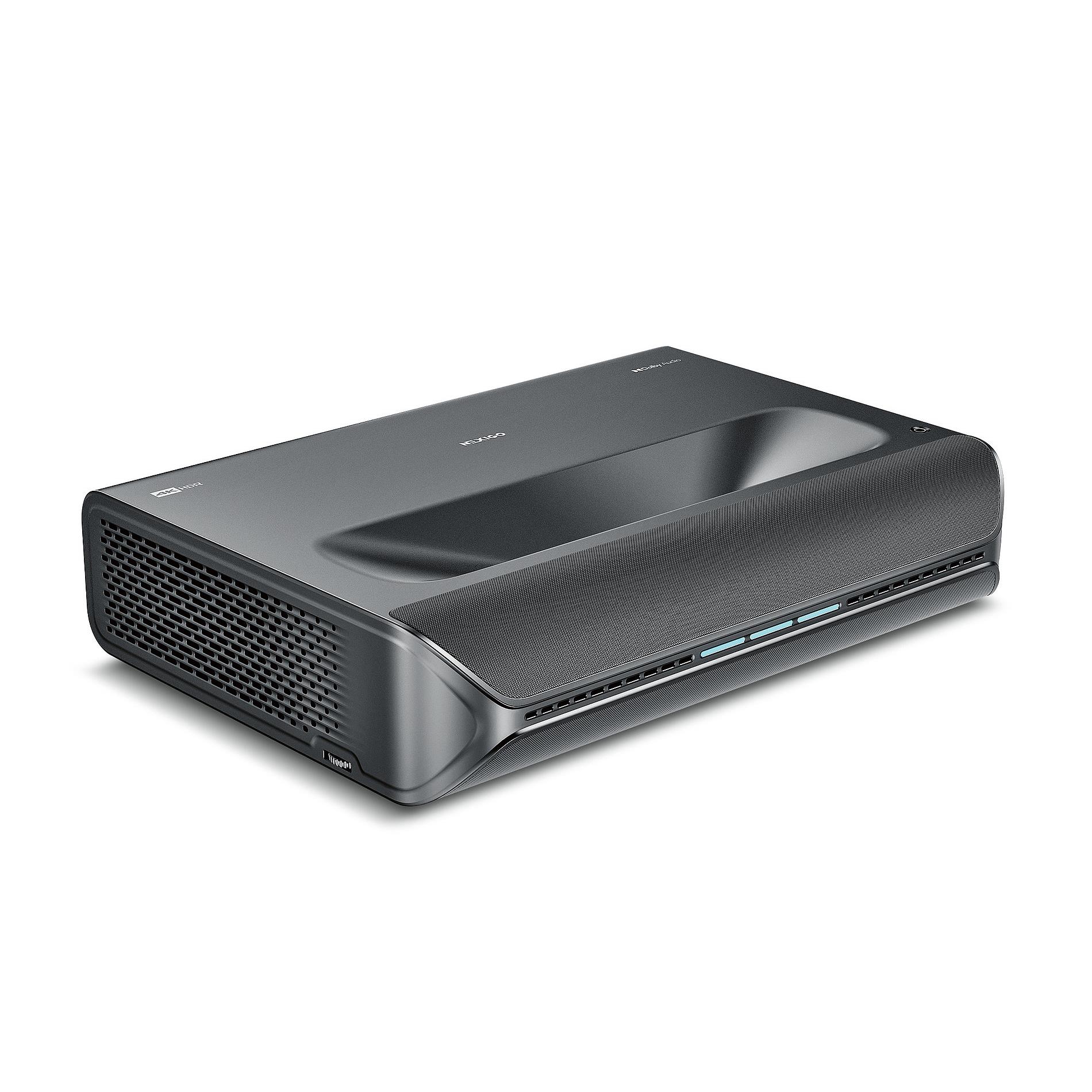
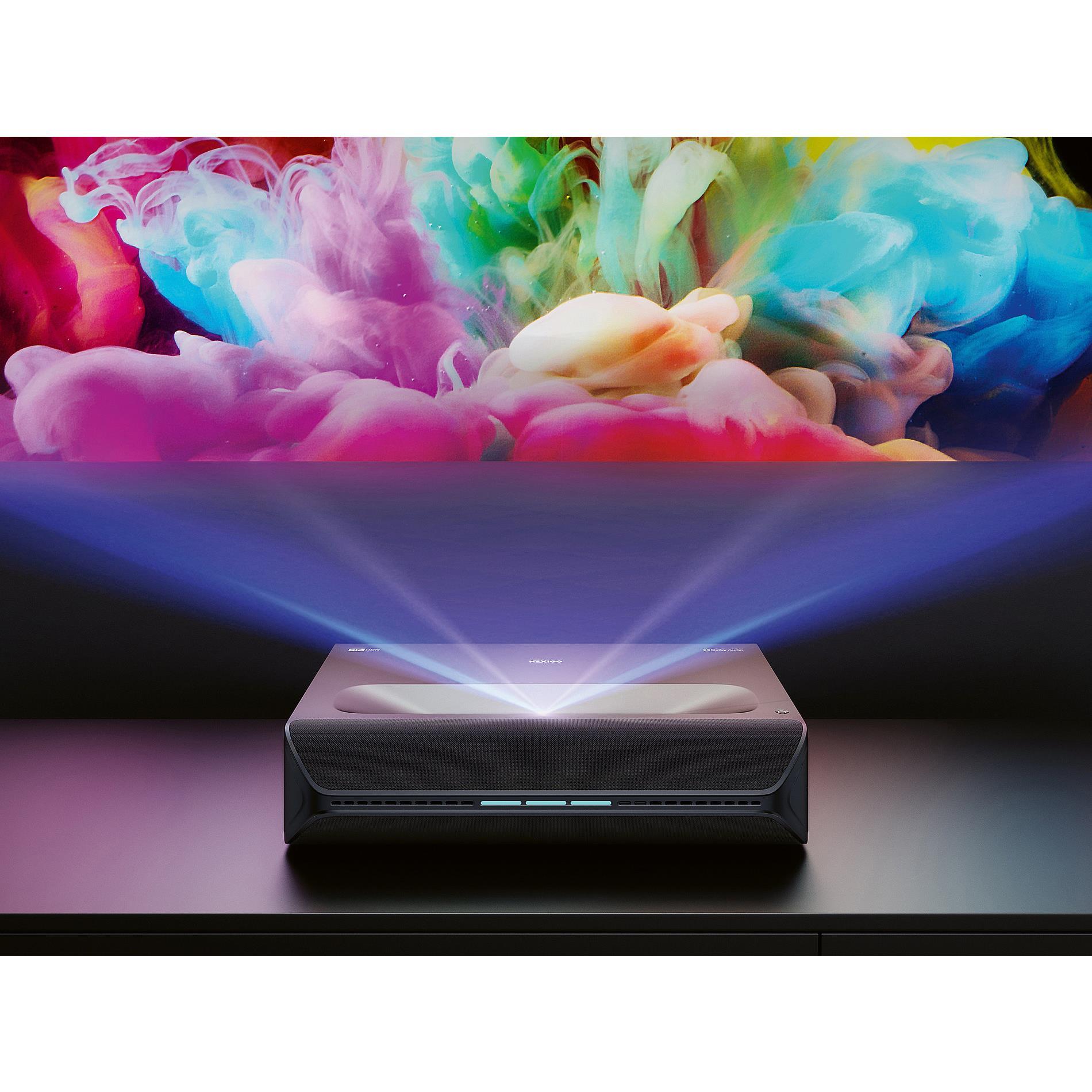
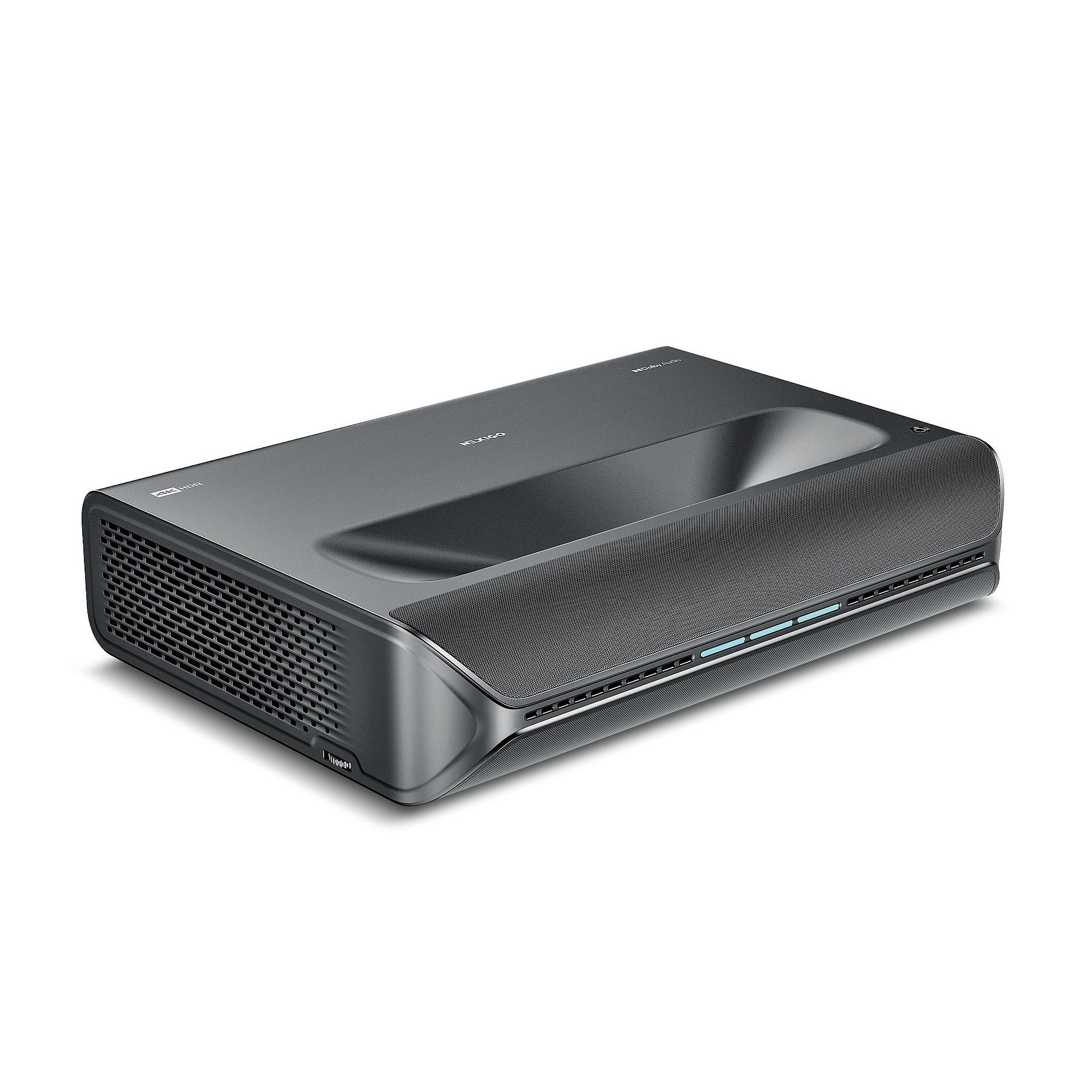
The home theater landscape has dramatically shifted in recent years, with Ultra Short Throw (UST) projectors emerging as compelling alternatives to massive TVs. These projectors sit just inches from your wall, creating massive screens without the traditional projector setup hassles. Today we're comparing two leading options: the Formovie 4K Max ($3,699) and the NexiGo Aurora Pro ($2,999).
Both projectors use advanced laser technology, but their approaches differ significantly. The NexiGo Aurora Pro employs a triple RGB laser system, which creates colors directly rather than filtering white light. This results in purer colors and potentially better efficiency. The Formovie 4K Max uses ALPD 3.0 technology with a single laser, which while slightly older, delivers exceptional brightness at 4,500 ANSI lumens.
The Formovie's 4,500 ANSI lumens versus NexiGo's 2,400 ANSI lumens is a significant difference. In practical terms, this means the Formovie can better maintain image quality with some lights on or during daytime viewing. The NexiGo, while still bright, performs best in controlled lighting.
The NexiGo's triple laser system covers 107% of the BT.2020 color space - an impressive technical achievement that means it can display more colors than most content even contains. The Formovie covers 100% of Rec.709, which is good but not as expansive. In real-world viewing, this translates to the NexiGo potentially showing more subtle color variations, especially in HDR content.
Both projectors handle HDR content, but there's a clear winner here. The NexiGo supports HDR10, HDR10+, Dolby Vision, and HLG - essentially every major HDR format. The Formovie supports HDR10+ and HLG but misses Dolby Vision, which is considered the premium HDR format.
For gamers, input lag (the delay between pressing a button and seeing the action) is crucial. The NexiGo Aurora Pro shines here with just 9ms lag at 1080p/240Hz and 17.8ms at 4K/60Hz - numbers that rival gaming monitors. The Formovie hasn't published detailed gaming specs, suggesting it's not optimized for this use case.
Built-in audio has become increasingly important for UST projectors, as many users want to avoid additional speaker systems. The NexiGo implements a sophisticated 60W system with dedicated woofers and tweeters, while the Formovie offers a more basic 40W stereo setup. In practice, the NexiGo's audio is more robust and detailed, though serious home theater enthusiasts will still want external speakers.
Both projectors offer modern smart features, but implement them differently:
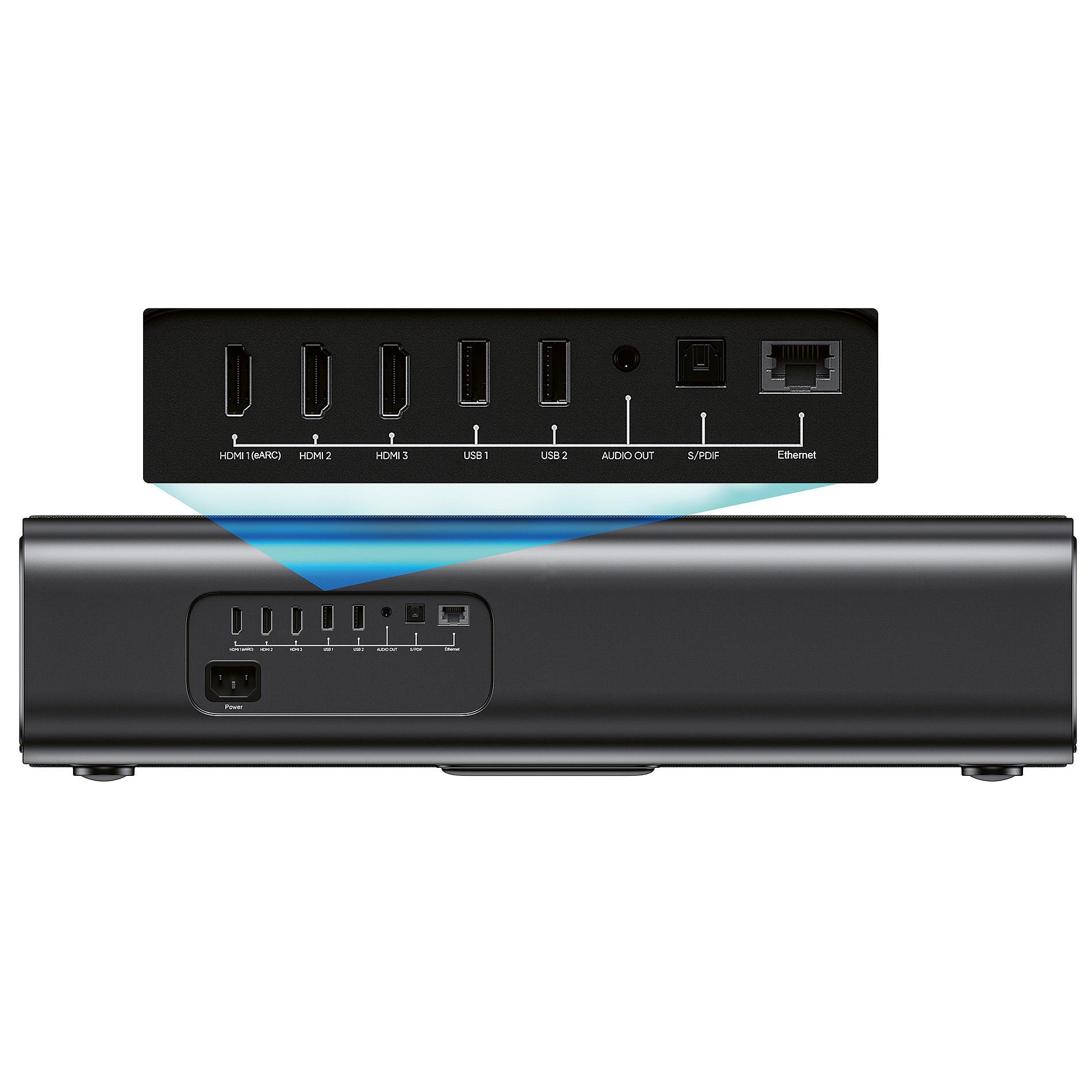
Both provide multiple HDMI 2.1 ports, but the NexiGo's eARC support gives it an edge for advanced audio setups.
For pure movie watching in a controlled environment, both projectors perform admirably. The Formovie's higher brightness makes it more versatile across lighting conditions, while the NexiGo's superior color accuracy and HDR support provide a more precise image in ideal conditions.
The NexiGo clearly leads for gaming applications. Its low input lag and support for high refresh rates make it suitable for competitive gaming, while the Formovie is better suited for casual gaming sessions.
At $700 less, the NexiGo Aurora Pro offers better color technology, gaming features, and audio. However, the Formovie 4K Max's superior brightness and larger maximum screen size (200" vs 150") might justify its higher price for specific use cases.
Both projectors require careful placement for optimal image alignment. The Formovie's larger maximum screen size means you'll need slightly more wall space, but both are relatively straightforward to set up compared to traditional projectors.
The NexiGo's more comprehensive HDR support and gaming features make it more future-proof for most users. However, the Formovie's higher brightness might be more valuable as screen sizes continue to grow.
Both projectors excel in their respective strengths. The NexiGo Aurora Pro offers better overall value with superior gaming performance, color accuracy, and audio, making it the better choice for most users. However, the Formovie 4K Max's class-leading brightness and larger maximum screen size make it the better choice for bright rooms or users wanting the largest possible image.
The decision ultimately comes down to your specific needs: if you prioritize gaming and color accuracy in a controlled environment, choose the NexiGo. If maximum brightness and screen size are your primary concerns, go with the Formovie.
| Formovie 4K Max | NexiGo Aurora Pro |
|---|---|
| Price - Base Cost Comparison | |
| $3,699 | $2,999 |
| Brightness - Critical for ambient light performance | |
| 4,500 ANSI lumens (excellent for bright rooms) | 2,400 ANSI lumens (best in controlled lighting) |
| Laser Technology - Impacts color accuracy and longevity | |
| Single laser with ALPD 3.0 | RGB triple laser with ALPD 4.0 (superior color) |
| Color Gamut - Determines color range and accuracy | |
| 100% Rec.709 (good for SDR content) | 107% BT.2020 (exceptional for HDR) |
| HDR Support - Affects dynamic range and color depth | |
| HDR10+ and HLG | HDR10, HDR10+, Dolby Vision, and HLG (more comprehensive) |
| Gaming Performance - Critical for interactive content | |
| Unspecified input lag | 9ms@1080p/240Hz, 17.8ms@4K/60Hz (excellent) |
| Maximum Screen Size - Installation flexibility | |
| Up to 200 inches | Up to 150 inches |
| Built-in Audio - Important for all-in-one setup | |
| 2x 20W speakers (basic) | 60W system: 2x 15W woofers + 2x 15W tweeters (fuller sound) |
| Contrast Ratio - Important for image depth | |
| 3,000:1 native | 3,000:1 native, 6,000:1 dynamic |
| Smart Features - Streaming capability | |
| FengOS with external Firestick (US) | Android TV with Miracast/AirPlay |
| Connectivity - Device compatibility | |
| 3x HDMI 2.0 | 3x HDMI 2.1 with eARC (more future-proof) |
The Formovie 4K Max is significantly better for bright rooms with 4,500 ANSI lumens compared to the NexiGo Aurora Pro's 2,400 ANSI lumens. This makes the Formovie a better choice for rooms with windows or ambient lighting.
The NexiGo Aurora Pro at $2,999 offers better value with superior gaming features, better color accuracy, and more comprehensive HDR support compared to the Formovie 4K Max at $3,699.
The NexiGo Aurora Pro is significantly better for gaming with 9ms input lag at 1080p/240Hz and support for HDMI 2.1. The Formovie 4K Max doesn't specify gaming performance metrics.
The Formovie 4K Max can project up to 200 inches, while the NexiGo Aurora Pro maxes out at 150 inches. This makes the Formovie better for very large home theater setups.
The NexiGo Aurora Pro offers more comprehensive HDR support with HDR10, HDR10+, Dolby Vision, and HLG, while the Formovie 4K Max only supports HDR10+ and HLG.
The NexiGo Aurora Pro has superior audio with a 60W system (dual woofers and tweeters), compared to the Formovie 4K Max's basic 40W stereo setup.
Yes, but they differ. The NexiGo Aurora Pro has integrated Android TV with Miracast/AirPlay, while the Formovie 4K Max uses FengOS with an included external Firestick in the US.
The NexiGo Aurora Pro offers better color accuracy with its RGB triple laser system and 107% BT.2020 coverage, compared to the Formovie 4K Max's single laser system with 100% Rec.709 coverage.
Both projectors are ultra-short throw and need to be placed approximately 4-15 inches from the wall, depending on desired screen size. The exact distance requirements are similar for both models.
Both excel at movie watching, but the Formovie 4K Max is better in brighter conditions, while the NexiGo Aurora Pro offers superior color accuracy and HDR support in controlled lighting.
Both projectors work best with ALR (Ambient Light Rejecting) screens designed for ultra-short throw projectors, but the Formovie 4K Max is more forgiving with standard screens due to its higher brightness.
The NexiGo Aurora Pro is more future-proof with HDMI 2.1 ports, superior gaming features, and more comprehensive HDR support compared to the Formovie 4K Max.
We've done our best to create useful and informative comparisons to help you decide what product to buy. Our research uses advanced automated methods to create this comparison and perfection is not possible - please contact us for corrections or questions. These are the sites we've researched in the creation of this article: rtings.com - eu.formovie.com - notebookcheck.net - formovie.com - techradar.com - projectorcentral.com - projectorscreen.com - projectorcentral.com - projectorreviews.com - projectorcentral.com - formovie.com - projectorreviews.com - thesmarthomehookup.com - nexigo.com - projectorscreen.com - avsforum.com - rtings.com - projectorcentral.com - youtube.com - rtings.com - avsforum.com - avsforum.com

Privacy Policy
Terms and Conditions - Affiliate Policy
Home Security
© Copyright 2008-2026.
11816 Inwood Rd #1211, Dallas, TX 75244