

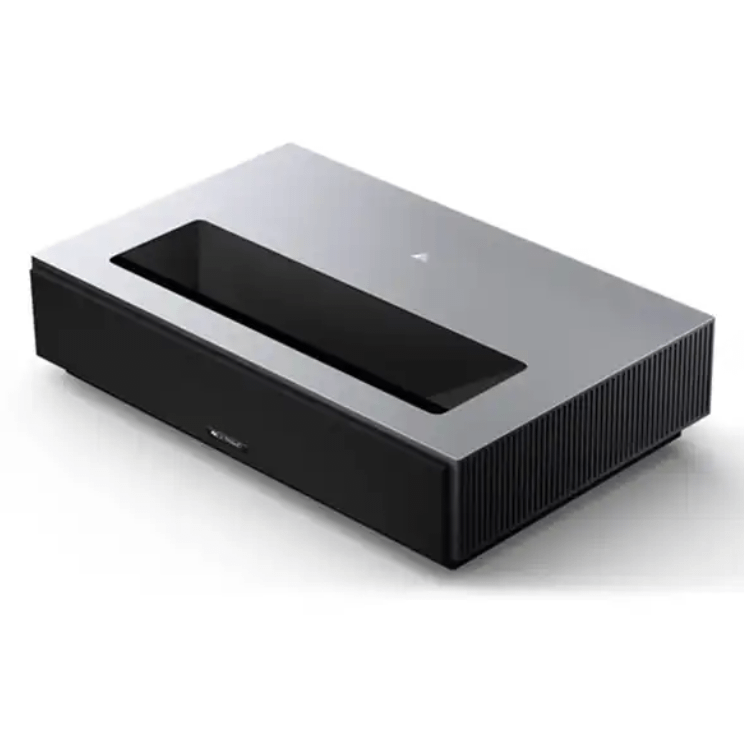
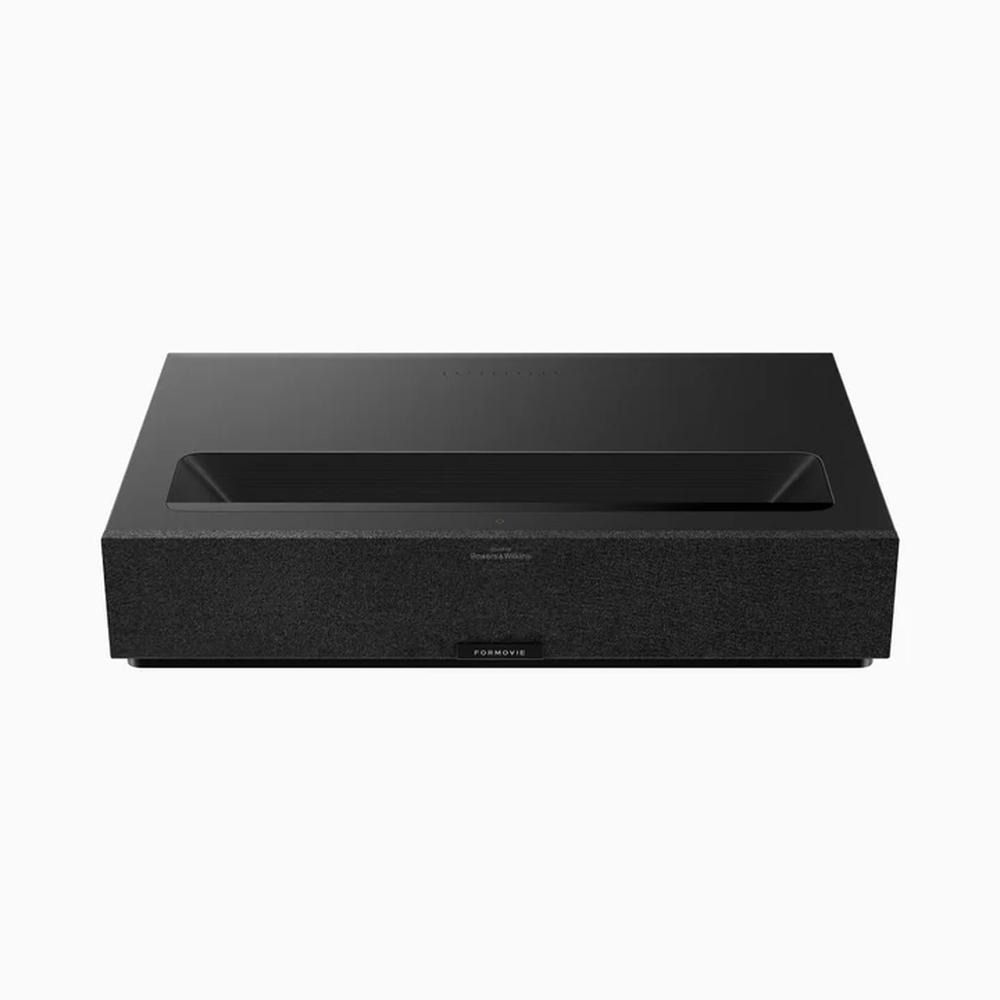

When it comes to creating a high-end home theater experience, Ultra Short Throw (UST) laser projectors have revolutionized what's possible. These advanced projectors sit just inches from your wall, creating massive screens without the traditional ceiling-mount setup. Today, we're comparing two of Formovie's latest offerings: the 4K Max ($3,699) and the Theater Premium ($2,799).
UST technology has come a long way in recent years. The Theater Premium, released in late 2023, brought triple laser technology to a more accessible price point. The newer 4K Max, announced for Spring 2024, takes a different approach by maximizing brightness with a single, more powerful laser system.
The 4K Max boasts an impressive 4500 ANSI lumens - that's nearly twice the brightness of the Theater Premium's 2200 ISO lumens. But what does this mean in real-world use?
Think of lumens like the horsepower of your projector's light output. The 4K Max's higher brightness means it can better overcome ambient room light, making it ideal for living rooms or spaces where you can't control all the light. You'll still get a vivid picture even with some sunlight or room lights on.
The Theater Premium, while not as bright, focuses on image quality in more controlled environments. Its triple laser system actually provides better color accuracy and contrast, making it the superior choice for dedicated home theater spaces where you can control the lighting.
Here's where things get interesting. The Theater Premium uses ALPD 4.0 RGB+ technology with three separate lasers (red, green, and blue) to create colors. This results in an impressive 107% coverage of the BT.2020 color space - essentially meaning it can display more colors more accurately than most TVs.
The 4K Max uses a single laser with ALPD 3.0 technology, covering about 80-85% of the NTSC color space. While still good, it's not quite as comprehensive as its sibling.
For HDR content (think Netflix's high-quality 4K shows), the Theater Premium has a clear advantage with support for:
The 4K Max supports HDR10+ but lacks Dolby Vision support, which might matter if you're a serious movie buff.
Modern gaming demands quick response times, and here the Theater Premium shines with:
The 4K Max doesn't specify its gaming features, which usually indicates standard rather than gaming-optimized performance.
The user interface can make or break your daily experience with these projectors. The Theater Premium uses Google TV, which means:
The 4K Max uses Fengmi OS, which is more limited in app support and might require an external streaming device like a Fire TV Stick for the best experience.
Both projectors offer built-in sound systems, but there's a clear winner:
While both can connect to external sound systems, the Theater Premium's audio is notably superior for standalone use.
At $900 less, the Theater Premium offers more features than the 4K Max:
The 4K Max's main advantage is its brightness, which might justify the higher price if you need a projector for a bright room.
Both projectors are similar in size and installation requirements:
In practical use, the choice often comes down to your viewing environment:
The 4K Max excels here, maintaining vibrant images even with ambient light. Perfect for:
The Theater Premium is the better choice, offering:
The Theater Premium represents the better value for most users, offering superior color accuracy, better gaming features, and a more user-friendly experience at a lower price point. However, the 4K Max fills an important niche for those needing maximum brightness in challenging lighting conditions.
For a dedicated home theater setup, the Theater Premium is the clear winner. Its superior color accuracy, better HDR support, and gaming features make it the more future-proof choice. The 4K Max, while more expensive, serves best in bright living rooms where its extra luminance can overcome ambient light.
Choose based on your primary viewing environment and usage patterns rather than specs alone. Either way, you'll be getting a cutting-edge UST projector capable of creating an impressive big-screen experience.
| Formovie 4K Max | Formovie Theater Premium |
|---|---|
| Price - Base MSRP | |
| $3,699 | $2,799 |
| Brightness - Critical for ambient light performance | |
| 4,500 ANSI lumens (excellent for bright rooms) | 2,200 ISO lumens (best in controlled lighting) |
| Laser Technology - Impacts color accuracy and longevity | |
| Single laser ALPD 3.0 | Triple laser ALPD 4.0 RGB+ |
| Color Gamut - Determines range of displayable colors | |
| 80-85% NTSC coverage (good) | 107% BT.2020 coverage (excellent) |
| HDR Support - Affects contrast and color in HDR content | |
| HDR10+ only | Dolby Vision, HDR10, HDR10+ |
| Gaming Features - Important for responsiveness | |
| Standard input lag (unspecified) | 18ms input lag with ALLM support |
| Smart Platform - Affects ease of use and app access | |
| Fengmi OS (limited app support) | Google TV with Netflix certification |
| Audio System - Built-in sound quality | |
| Basic dual 20W speakers | Bowers & Wilkins sound system with Dolby Atmos |
| Throw Ratio - Determines installation distance | |
| 0.25:1 | 0.21:1 |
| Maximum Screen Size - Impacts viewing options | |
| Up to 200 inches | Up to 150 inches |
| Release Date - Indicates technology generation | |
| Spring 2024 | Late 2023 |
| Primary Use Case - Best application | |
| Bright rooms, daytime viewing | Dedicated home theaters, gaming |
| Value Proposition - Price to performance ratio | |
| Higher price for brightness advantage | Better overall value with more features |
The Formovie 4K Max is better for bright rooms with its 4,500 ANSI lumens compared to the Theater Premium's 2,200 ISO lumens. If you can't control ambient light, the 4K Max is worth the extra cost.
The Theater Premium offers superior picture quality with its triple laser system and 107% BT.2020 color coverage, compared to the 4K Max's single laser system. It also includes Dolby Vision support for better HDR performance.
The Theater Premium is the better gaming choice with its 18ms input lag and ALLM support. The 4K Max doesn't specify gaming features, suggesting standard performance.
The Theater Premium includes Google TV with Netflix certification, while the 4K Max uses Fengmi OS which may require an external streaming device for best results.
The Theater Premium features superior Bowers & Wilkins speakers with Dolby Atmos support, while the 4K Max has basic dual 20W speakers.
The 4K Max costs $3,699, while the Theater Premium is $2,799 - a $900 difference.
The Theater Premium is better for dedicated theaters with its superior color accuracy and HDR support, while the 4K Max is better suited for multipurpose rooms.
Both projectors have similar ultra-short throw ratios (0.21:1 for Theater Premium, 0.25:1 for 4K Max) and need about 12-15 inches from the wall.
The Theater Premium offers a better smart experience with Google TV, while the 4K Max has more limited Fengmi OS.
The 4K Max can project up to 200 inches, while the Theater Premium maxes out at 150 inches.
The Theater Premium offers better overall value at $2,799 with more features, unless you specifically need the 4K Max's higher brightness.
Both the Theater Premium and 4K Max require similar setup - just a stable surface and proper distance from the wall. Both include keystone correction for image adjustment.
We've done our best to create useful and informative comparisons to help you decide what product to buy. Our research uses advanced automated methods to create this comparison and perfection is not possible - please contact us for corrections or questions. These are the sites we've researched in the creation of this article: rtings.com - eu.formovie.com - notebookcheck.net - formovie.com - techradar.com - projectorcentral.com - projectorscreen.com - projectorcentral.com - projectorreviews.com - projectorcentral.com - formovie.com - projectorscreen.com - avsforum.com - nothingprojector.com - bmcav.com.au - projectorcentral.com - digitalcinema.com.au - projectorreviews.com - techpowerup.com - nothingprojector.com

Privacy Policy
Terms and Conditions - Affiliate Policy
Home Security
© Copyright 2008-2026.
11816 Inwood Rd #1211, Dallas, TX 75244