

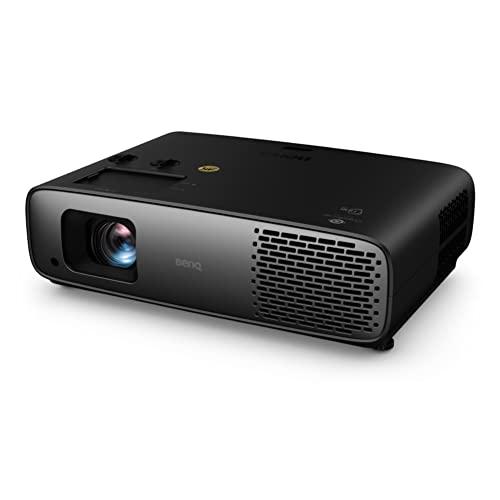

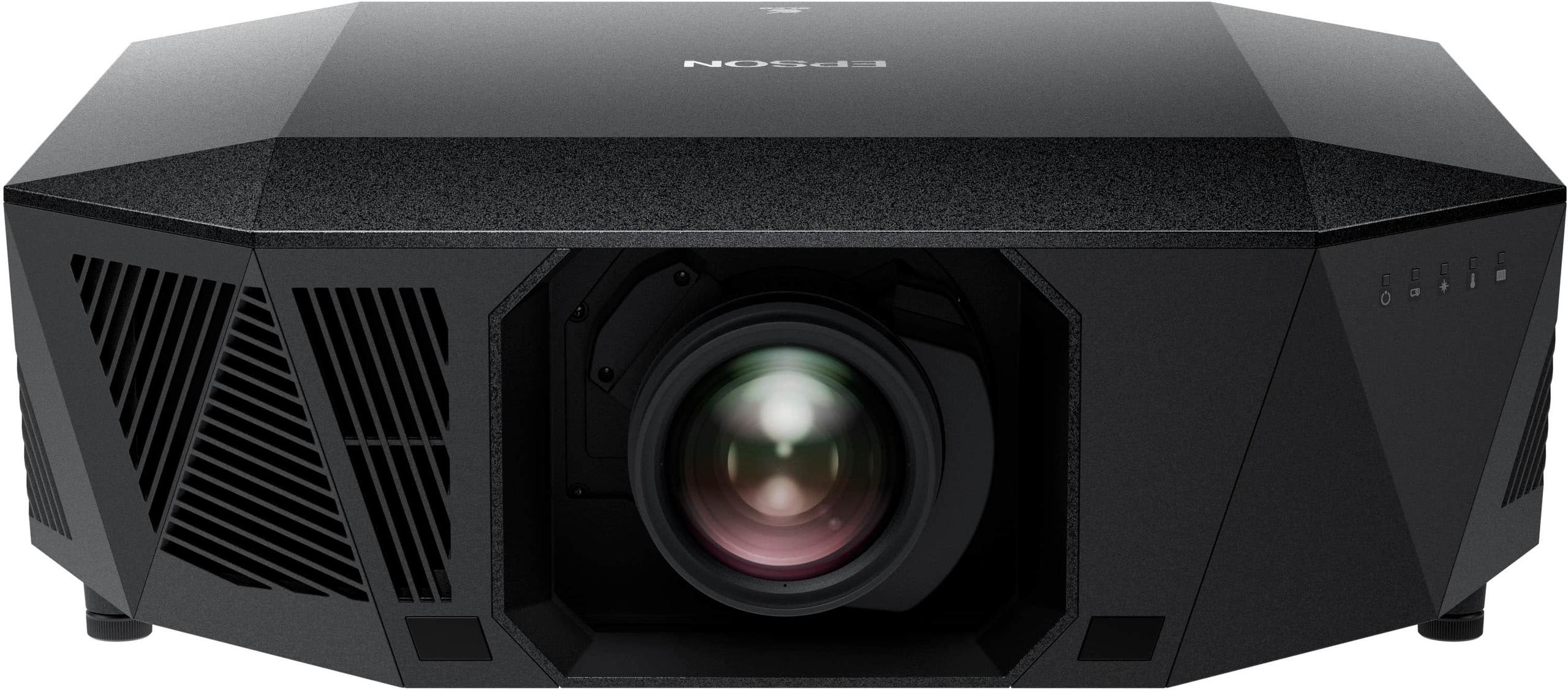
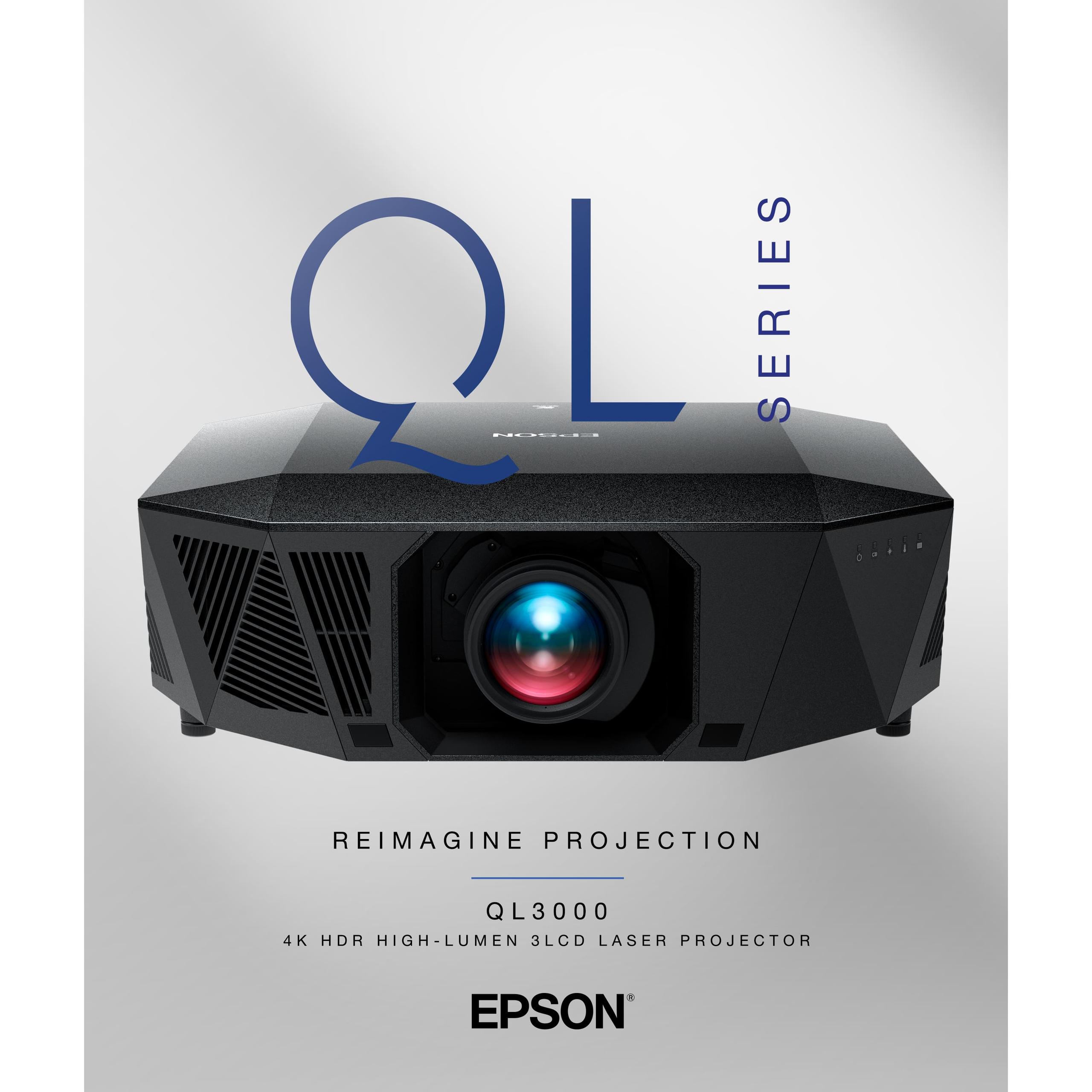
When you're ready to transform your living space into a personal cinema, choosing the right 4K projector becomes crucial. Two standout options that represent different philosophies in home theater projection are the BenQ HT4550i and the Epson QL3000. Released in 2021 and 2024 respectively, these projectors showcase how the technology has evolved while serving distinctly different needs and budgets.
The projector landscape has changed dramatically in recent years. Where we once had to choose between dim, lamp-based models that required frequent bulb replacements, today's LED and laser projectors offer brighter images, longer lifespans, and more consistent performance. The BenQ HT4550i represents the sweet spot of this evolution—bringing professional-grade features to enthusiast pricing. Meanwhile, the Epson QL3000 pushes the boundaries of what's possible when brightness and installation flexibility take priority over cost.
Before diving into specifics, it's worth understanding what makes these projectors tick. Both use "pixel-shifting" technology to achieve 4K resolution from native 1080p chips. Think of pixel-shifting like a magician's sleight of hand—the projector rapidly moves each pixel to create four different positions, effectively quadrupling the detail you see on screen. While purists might prefer native 4K chips (found in projectors costing $15,000+), pixel-shifting delivers genuinely sharp 4K images that most viewers find indistinguishable from true 4K.
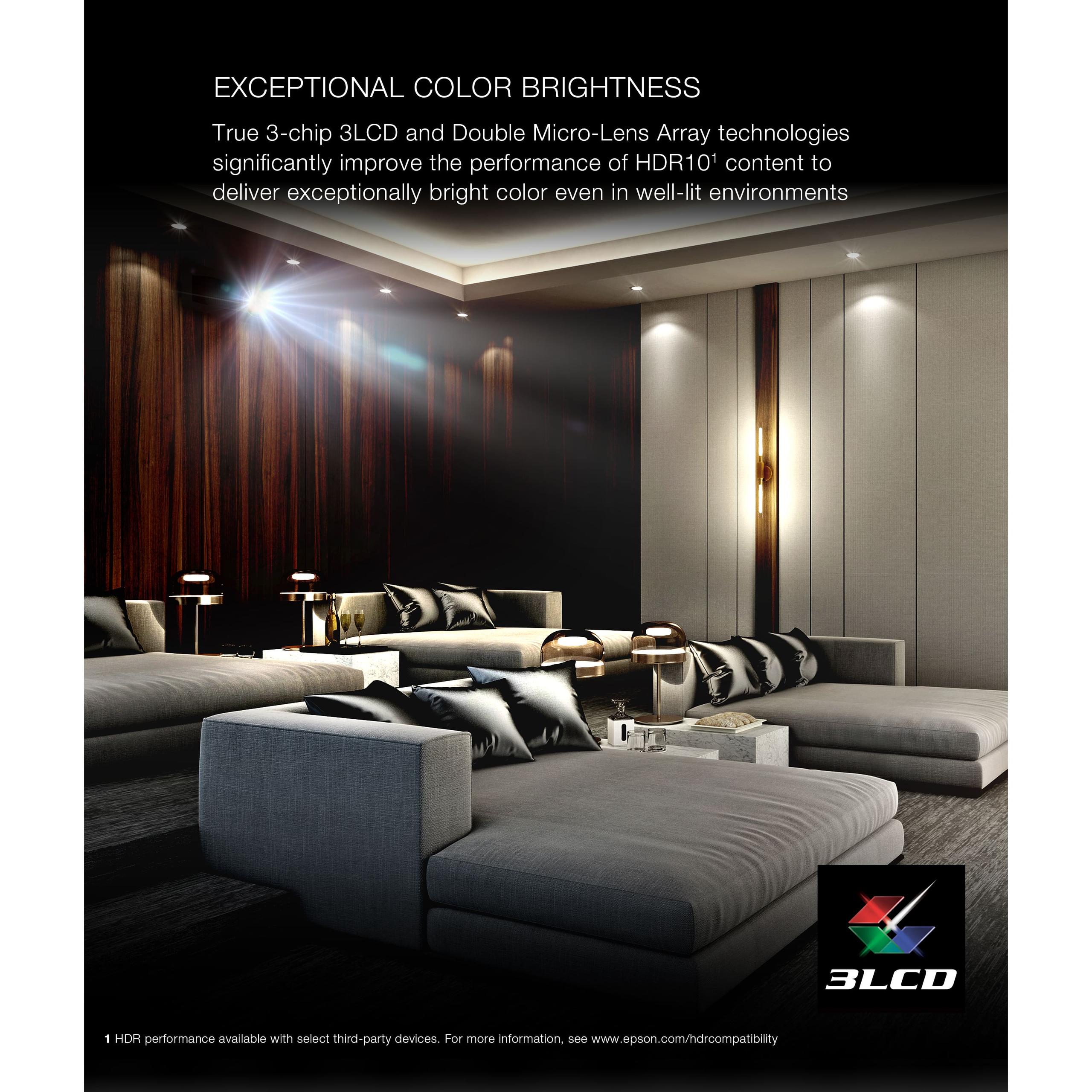
The key difference lies in their light sources and imaging technologies. The BenQ HT4550i uses a 4LED system—combining red, green, blue, and white LEDs with a single-chip DLP (Digital Light Processing) engine. This creates vibrant colors and sharp images, though it can occasionally produce rainbow artifacts (brief flashes of color) for sensitive viewers. The Epson QL3000 employs a laser-phosphor light source with 3LCD technology, which uses three separate imaging chips for red, green, and blue. This eliminates rainbow effects entirely while delivering exceptional color accuracy.
Brightness isn't just about fighting room light—it's the foundation of compelling HDR (High Dynamic Range) performance. HDR content is mastered expecting displays capable of 1,000+ nits of brightness, but most projectors barely reach 100-200 nits in their most accurate modes.
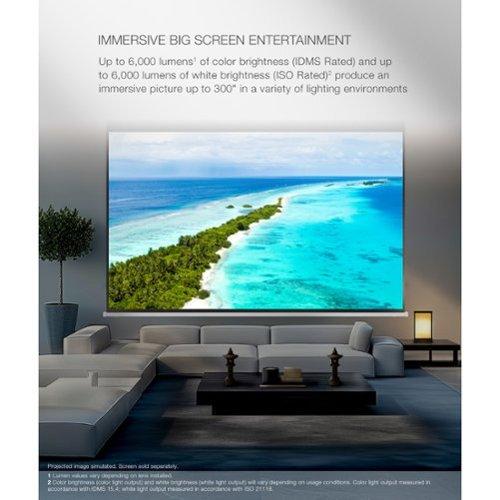
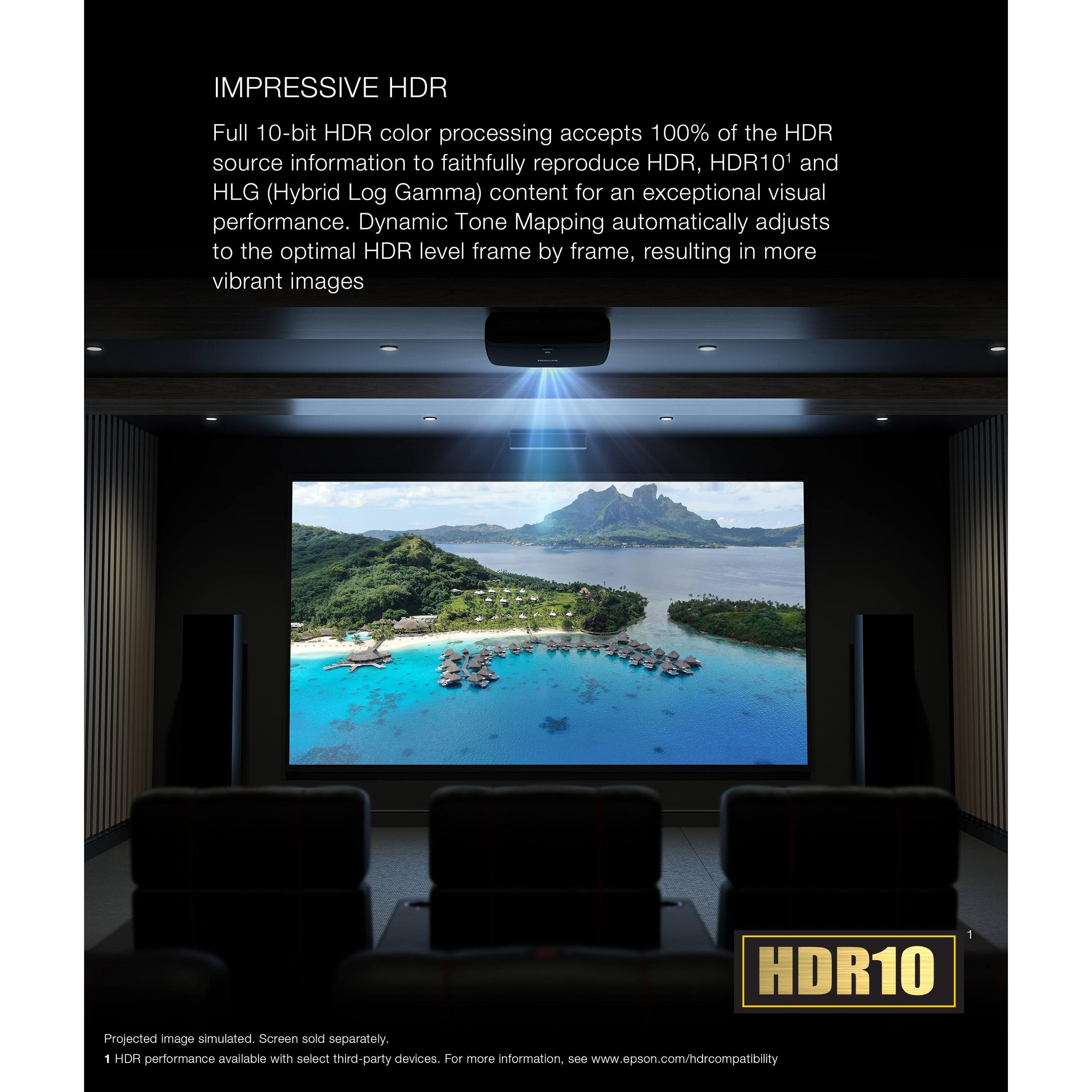
The Epson QL3000 changes this equation dramatically. With 6,000 lumens of output, it can deliver HDR images that genuinely pop off the screen, even in rooms with ambient lighting. Our research shows that users consistently praise how the QL3000 makes HDR content look more like premium OLED TVs—bright, punchy, and engaging rather than the dim, washed-out HDR many projector users have learned to accept.
The BenQ HT4550i, while rated at 3,200 lumens, typically measures closer to 1,800-1,900 lumens in its most color-accurate modes. This is still respectable for home theater use, especially in dedicated dark rooms, but it requires more thoughtful room design and screen selection to maximize HDR impact.
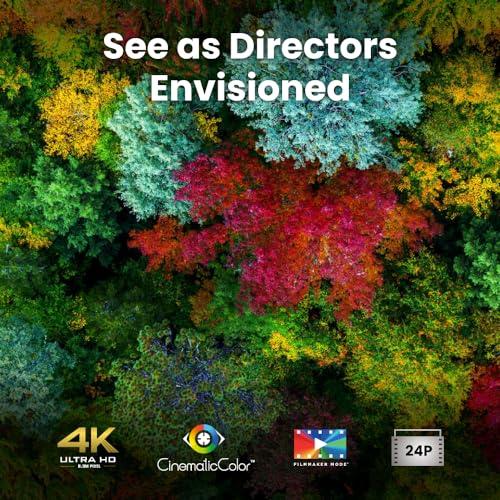
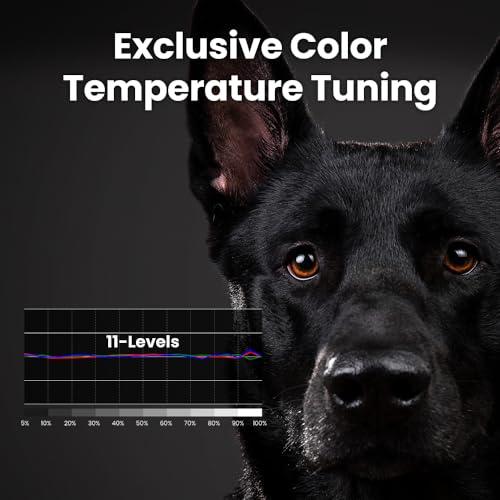
Color accuracy determines whether you're seeing movies as directors intended. The BenQ HT4550i shines here with its factory calibration and 100% DCI-P3 color gamut coverage—the same color space used in commercial cinemas. Each unit ships with a calibration report showing color accuracy measurements, typically achieving Delta E values below 2 (anything under 3 is considered excellent).
This matters because most projectors require professional calibration costing $500-1,000 to achieve similar accuracy. The HT4550i essentially includes this service for free, making it an exceptional value for picture quality purists.
The Epson QL3000 also delivers excellent color accuracy, leveraging 3LCD technology's inherent color stability. While it may not include the same out-of-box calibration precision as the BenQ, its color reproduction is consistently praised by experts, and the lack of a spinning color wheel eliminates the rainbow effect that bothers some DLP-sensitive viewers.
Contrast ratio—the difference between the brightest whites and darkest blacks—creates image depth and realism. This is where the technologies diverge significantly.
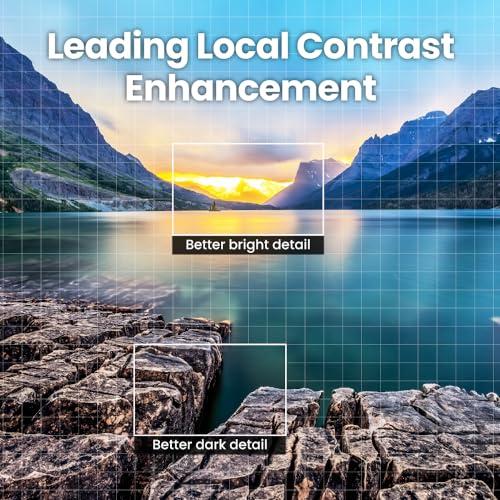
DLP projectors like the BenQ HT4550i typically struggle with native contrast, measuring around 900-1,140:1. However, BenQ compensates with clever technology: their Local Contrast Enhancer analyzes the image in over 1,000 zones, dynamically adjusting brightness to create the illusion of deeper blacks and brighter highlights. Combined with their Dynamic Black feature, this significantly improves perceived contrast, though it can't fully overcome the fundamental limitations of single-chip DLP.
The Epson QL3000 benefits from 3LCD's superior native contrast characteristics. Users and reviewers consistently note its ability to produce deeper, more convincing blacks that approach OLED-like performance in controlled lighting. This translates to better shadow detail in dark scenes and a more three-dimensional image quality.
For gaming enthusiasts, input lag—the delay between controller input and screen response—is critical. The BenQ HT4550i was clearly designed with gamers in mind, achieving remarkable 8.7ms input lag at 1080p/240Hz and supporting refresh rates up to 240Hz. This rivals dedicated gaming monitors and makes competitive gaming genuinely viable on a 100+ inch screen.
The Epson QL3000, while capable with 21ms input lag at 4K/120Hz, prioritizes image quality over gaming optimization. It's perfectly suitable for casual gaming but won't satisfy competitive players who need every millisecond advantage.
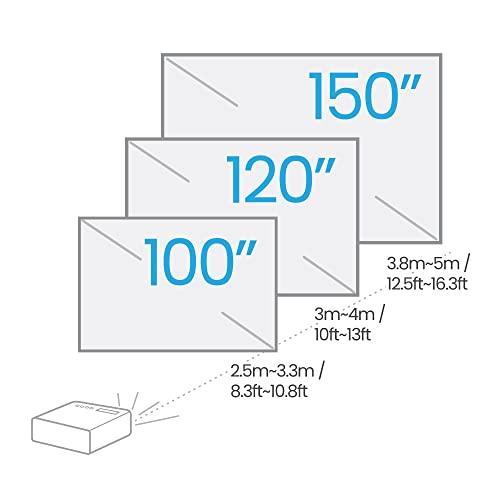
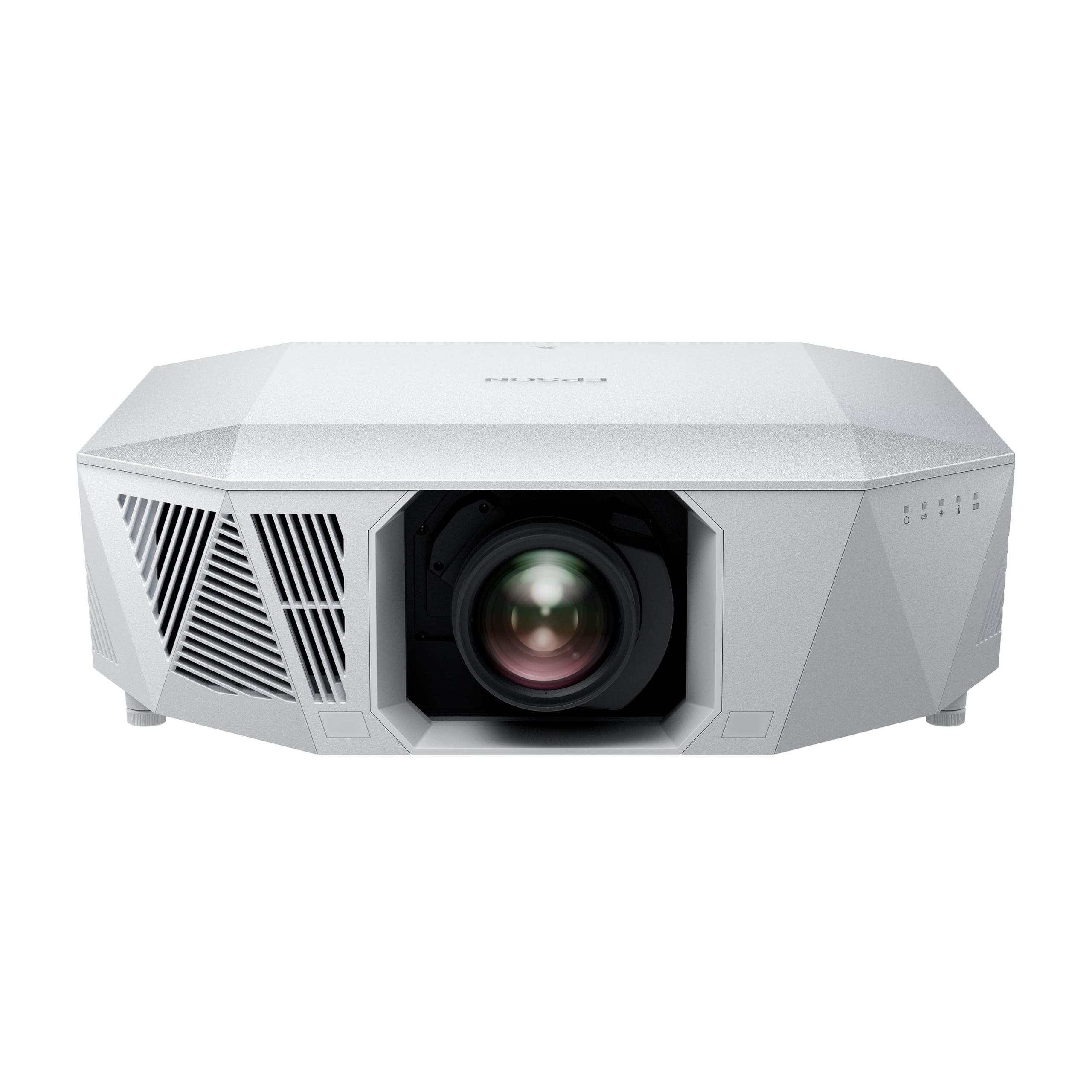
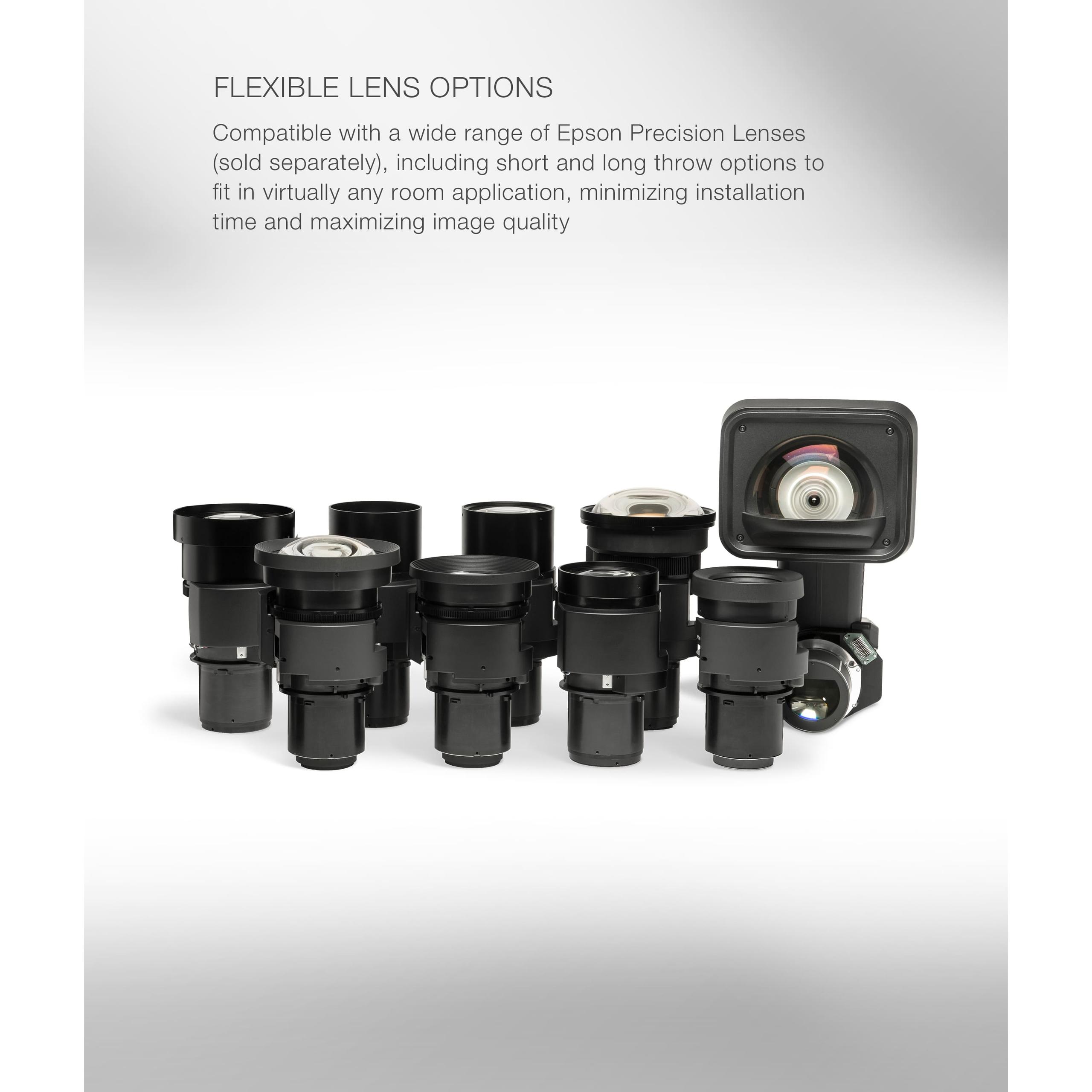
Room layouts often dictate projector choice more than specifications. The Epson QL3000 excels here with its interchangeable lens system. Need to project from just inches away from the wall? The ultra-short throw lens delivers a 100-inch image from 7.2 inches. Have a deep room requiring a long throw? There's a lens for that too. This flexibility makes the QL3000 adaptable to virtually any space, though each lens represents an additional investment.
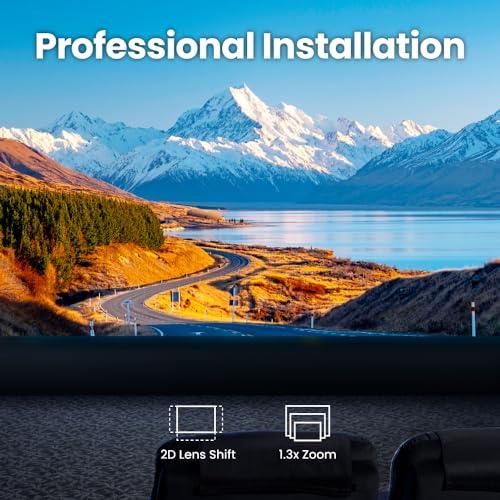
The BenQ HT4550i offers more modest flexibility with its 1.3x zoom and ±15% horizontal/0-60% vertical lens shift. While not as adaptable as the Epson, it covers most typical home theater installations without requiring lens changes.
In a controlled lighting environment with a quality screen, both projectors excel, but for different reasons. The BenQ HT4550i delivers reference-quality color accuracy that film purists will appreciate, while its integrated Android TV eliminates cable clutter. However, the Epson QL3000's superior contrast and brightness capabilities create a more compelling HDR experience, especially on screens larger than 120 inches.
Based on expert consensus, the QL3000 edges ahead in dedicated theaters where absolute image quality matters most, while the HT4550i offers better value for those who prioritize color accuracy and convenience features.
This is where the Epson QL3000 truly dominates. Family rooms rarely offer ideal lighting control—windows, table lamps, and overhead lighting all compete with the projected image. The QL3000's 6,000-lumen output maintains image quality that would be impossible with the BenQ. Users consistently report that the Epson delivers TV-like brightness and color saturation even with room lights on, making it practical for everyday viewing.
For serious gamers, the BenQ HT4550i is the clear winner. Its ultra-low input lag and high refresh rate support create a responsive gaming experience that the Epson QL3000 simply can't match. The integrated streaming platform also means fewer devices competing for HDMI ports—important when connecting multiple gaming consoles.
Size matters in projection, and bigger screens demand more lumens. The Epson QL3000 can maintain vibrant, watchable images even at 300-inch diagonal sizes. The BenQ HT4550i begins to struggle beyond 150 inches, appearing dim and washed out on very large screens.
At the time of writing, the BenQ HT4550i represents exceptional value in the premium projector market, typically costing about one-third the price of the Epson QL3000 when you factor in the QL3000's required lens purchase. This dramatic price difference reflects their different target markets—the BenQ brings professional-grade features to enthusiast pricing, while the Epson targets no-compromise installations.
Both projectors eliminate the traditional projector headache of lamp replacement. The HT4550i's 4LED system and the QL3000's laser light source both promise 20,000+ hours of consistent brightness—roughly 10 years of typical use. This represents a significant improvement over lamp-based projectors that required $200-400 bulb replacements every 2,000-3,000 hours.
Since the BenQ HT4550i's 2021 release, LED projector technology has continued improving, but the fundamentals remain sound. The 4LED approach has proven reliable, and the color accuracy achievements still rival more expensive current models.
The Epson QL3000, released in 2024, represents Epson's latest laser projection technology. The company has refined their laser phosphor systems to achieve higher brightness levels while maintaining color accuracy—addressing historical criticisms of early laser projectors.
Both projectors support current HDMI standards and HDR formats, making them reasonably future-proof for the next 5-7 years. However, neither supports the emerging Dolby Vision format, which may become more prevalent in streaming content.
The choice between these projectors ultimately depends on your priorities, room constraints, and budget tolerance.
Choose the BenQ HT4550i if you want the best balance of performance and value. It's ideal for dedicated home theaters or controlled lighting environments, especially if gaming performance matters. The integrated smart features and excellent out-of-box calibration make it remarkably user-friendly for a high-performance projector.
Choose the Epson QL3000 if brightness and installation flexibility are your top priorities. It's the better choice for challenging lighting conditions, very large screens, or spaces requiring custom lens solutions. However, budget for the total system cost including appropriate lenses.
Both projectors represent excellent choices within their respective markets. The BenQ HT4550i democratizes high-end projection technology, bringing professional-grade color accuracy and gaming performance to a broader audience. It's the projector that finally makes the jump from flat-panel TV to projection practical for mainstream users.
The Epson QL3000 serves the premium market that demands uncompromising brightness and flexibility. It's the choice for serious installations where performance matters more than price.
Having researched extensively in this category, I'd personally lean toward the BenQ HT4550i for most users. Its combination of excellent image quality, gaming capability, and integrated features delivers tremendous value. However, for those with challenging installation requirements or very large screen ambitions, the Epson QL3000's capabilities justify its premium positioning.
The projector market has never offered better choices for home theater enthusiasts. Whether you choose the value-oriented excellence of the BenQ or the no-compromise performance of the Epson, you'll be getting technology that would have cost tens of thousands of dollars just a few years ago.
| BenQ HT4550i 4K HDR LED Home Theater Projector | Epson QL3000 4K HDR 3LCD Laser Projector |
|---|---|
| Brightness Output - Critical for HDR performance and ambient light handling | |
| 3,200 lumens rated (1,800-1,900 measured in accurate modes) | 6,000 lumens (both color and white brightness) |
| Display Technology - Affects color accuracy, contrast, and rainbow artifacts | |
| Single-chip DLP with 4LED light source | 3-chip 3LCD with laser-phosphor light source |
| Color Gamut Coverage - Determines how vibrant and accurate colors appear | |
| 100% DCI-P3 with factory calibration (ΔE <2) | Excellent color accuracy with 3LCD technology |
| Native Contrast Ratio - Key for deep blacks and image depth | |
| 900-1,140:1 (enhanced by Local Contrast Enhancer) | Superior native contrast approaching OLED-like blacks |
| Gaming Performance - Input lag and refresh rate support | |
| 8.7ms input lag, supports up to 240Hz refresh rate | 21ms input lag, 4K/120Hz with HDMI 2.1 |
| Light Source Lifespan - Long-term cost of ownership | |
| 4LED system: 20,000-30,000 hours | Laser diode: 20,000+ hours with consistent brightness |
| Lens Flexibility - Installation options and room adaptability | |
| Fixed lens with 1.3x zoom and lens shift | Interchangeable lens system (ultra-short to long throw) |
| Resolution Technology - How 4K is achieved | |
| 0.65" DLP with XPR pixel-shifting (native 1080p to 4K) | 3LCD with dual-axis pixel-shifting (native 1080p to 4K) |
| Smart Features - Built-in streaming and convenience | |
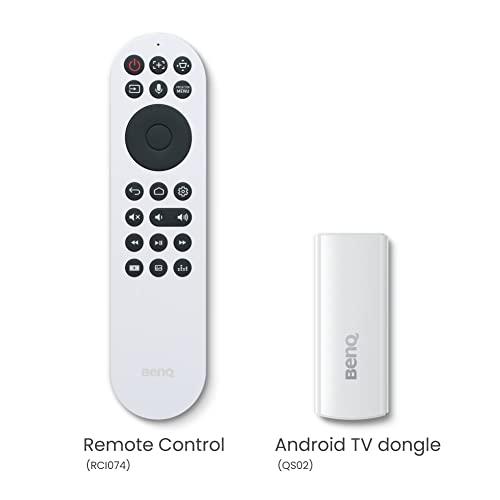
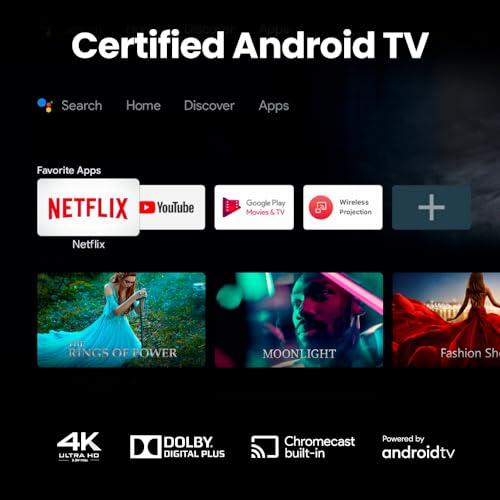
| Android TV with Netflix 4K HDR, Google Assistant | No built-in smart features (body-only design) |
| Maximum Screen Size - Practical large-screen capability | |
| Up to 150" with good brightness, 300" maximum | Up to 300" with excellent brightness throughout range |
| Noise Level - Important for quiet home theater environments | |
| 28-32 dB depending on mode | 24-28 dB (very quiet operation) |
| Target Use Case - Best applications for each projector | |
| Dedicated theaters, gaming, value-conscious enthusiasts | Large screens, ambient light, premium installations |
The BenQ HT4550i is significantly better for gaming with an ultra-low 8.7ms input lag and support for refresh rates up to 240Hz. The Epson QL3000 has higher 21ms input lag and maxes out at 120Hz, making it suitable for casual gaming but not competitive play. For serious gamers, the BenQ HT4550i is the clear choice.
The Epson QL3000 produces 6,000 lumens compared to the BenQ HT4550i's 3,200 lumens rating (though it typically measures closer to 1,800-1,900 lumens in accurate modes). This means the QL3000 delivers more than triple the brightness, making it much better for rooms with ambient light or very large screens.
The BenQ HT4550i excels with factory calibration achieving Delta E values under 2 and 100% DCI-P3 color coverage. Each unit includes a calibration report. While the Epson QL3000 also delivers excellent colors, the HT4550i comes pre-tuned for optimal accuracy without additional calibration costs.
No, both projectors use solid-state light sources that eliminate lamp replacements. The BenQ HT4550i uses a 4LED system lasting 20,000-30,000 hours, while the Epson QL3000 uses a laser light source rated for 20,000+ hours. This saves hundreds of dollars in replacement costs over the projector's lifetime.
The Epson QL3000 is far superior for bright rooms with its 6,000-lumen output that cuts through ambient light. The BenQ HT4550i requires controlled lighting to perform optimally and will appear washed out in bright conditions. For family rooms or spaces with windows, choose the QL3000.
The BenQ HT4550i uses single-chip DLP technology with a 4LED light source, while the Epson QL3000 uses 3-chip 3LCD technology with a laser light source. The HT4550i may show occasional rainbow effects for sensitive viewers, while the QL3000 eliminates this issue entirely with its three-chip design.
The Epson QL3000 provides superior installation flexibility with its interchangeable lens system, supporting everything from ultra-short throw to long throw configurations. The BenQ HT4550i has a fixed lens with 1.3x zoom and lens shift, which covers most installations but can't match the QL3000's adaptability to challenging spaces.
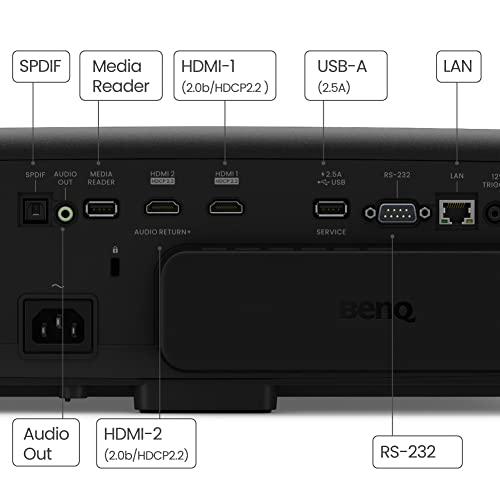
The BenQ HT4550i includes built-in Android TV with Netflix 4K HDR support, Google Assistant, and access to streaming apps. The Epson QL3000 is sold as a "body only" unit focused purely on image quality, requiring external streaming devices for smart features.
The Epson QL3000 is much better for large screens thanks to its 6,000-lumen output that maintains brightness and color saturation even at 300-inch sizes. The BenQ HT4550i begins to look dim and washed out beyond 150 inches, making the QL3000 essential for truly massive screens.
The Epson QL3000 delivers superior native contrast with deeper blacks approaching OLED-like performance. The BenQ HT4550i has lower native contrast (900-1,140:1) but uses Local Contrast Enhancer technology with 1,000+ zones to improve perceived contrast. For dark room viewing, the QL3000 has the advantage.
The BenQ HT4550i offers exceptional value, delivering professional-grade color accuracy and gaming performance at roughly one-third the cost of the Epson QL3000. The HT4550i includes smart features and comes with everything needed for installation, while the QL3000 requires separate lens purchases that add significant cost.
Yes, both support 4K HDR content, but with different strengths. The BenQ HT4550i excels at color accuracy with HDR10 and HDR10+ support, while the Epson QL3000 delivers brighter, more impactful HDR thanks to its higher lumen output. The QL3000 makes HDR content look more like premium OLED TVs, especially in rooms with ambient light.
We've done our best to create useful and informative comparisons to help you decide what product to buy. Our research uses advanced automated methods to create this comparison and perfection is not possible - please contact us for corrections or questions. These are the sites we've researched in the creation of this article: projectorcentral.com - benq.com - rtings.com - youtube.com - soundandvision.com - rtings.com - hometheaterhifi.com - projectorscreen.com - projectorreviews.com - projectorscreen.com - youtube.com - rtings.com - projectorscreen.com - versus.com - youtube.com - projectorcentral.com - snapav.com - benq.com - benq.com - projectorreviews.com - epson.com - audiogeneral.com - hometechnologyreview.com - mediaserver.goepson.com - hifiheaven.net - epson.com - new-age-electronics.com - stereoeast.com - projectorreviews.com - bestbuy.com - youtube.com - avsforum.com - youtube.com - youtube.com - projectorscreen.com - hifiheaven.net - shopsilica.com - planettv.com - audiogeneral.com - audiogeneral.com

Privacy Policy
Terms and Conditions - Affiliate Policy
Home Security
© Copyright 2008-2026.
11816 Inwood Rd #1211, Dallas, TX 75244