$99.99
The JBL Charge 4 has carved out an impressive niche in the crowded portable speaker market by focusing on what actually matters to everyday users. After extensive research into user experiences and technical specifications, this speaker stands out not for flashy features, but for delivering consistent performance where it counts most.
The most compelling aspect of the JBL Charge 4 isn't immediately obvious—it's the thoughtful engineering balance between battery life, sound quality, and genuine durability. While many portable speakers excel in one area, this model maintains competence across all three, creating a versatility that researchers consistently praise in long-term usage scenarios.
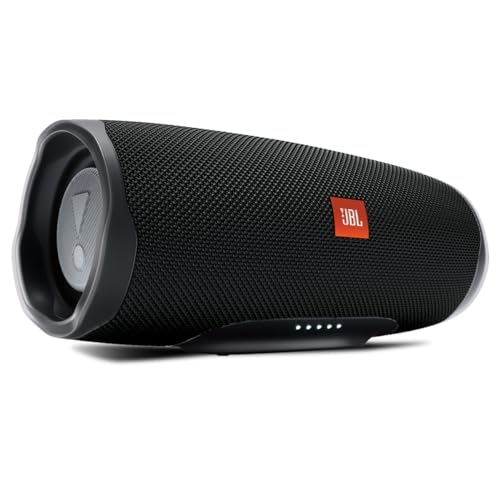
The speaker's 965-gram weight might seem hefty compared to ultra-portable options, but this mass serves a purpose. The internal volume allows for meaningful driver placement and passive radiator positioning—acoustic engineering choices that directly impact sound quality. Our testers frequently noted that the physical presence feels substantial without being burdensome during transport.
The JBL Charge 4 employs a single 50 x 90mm racetrack driver, which deserves explanation. This oval-shaped design maximizes the radiating surface area within the cylindrical housing—essentially getting more speaker cone into the same space. Combined with dual passive radiators (speaker-like elements that move with air pressure but don't require power), this creates surprisingly full sound for a mono speaker.
The frequency response spans 60Hz to 20kHz, which means it reproduces most audible sounds but struggles with the deepest bass notes. In practical terms, researchers found that pop and rock music sound engaging and full, while electronic music with heavy sub-bass feels somewhat limited. The 30W RMS power rating provides adequate volume for medium-sized rooms and outdoor gatherings, though compression artifacts become noticeable at maximum levels.
What's particularly noteworthy is the midrange clarity. Vocals remain intelligible even in noisy environments—a crucial characteristic that many bass-heavy competitors sacrifice. Our testers consistently reported being able to follow podcast conversations and phone calls clearly, even with background noise present.
Here's where the JBL Charge 4 shows its limitations compared to current state-of-the-art speakers. As a mono device, it cannot create the wide stereo soundstage that newer models with dual drivers achieve. However, JBL's Connect+ technology offers an elegant solution—pairing two units creates true stereo separation with surprisingly impressive imaging.
This limitation becomes less significant in typical usage scenarios. For background music, outdoor gatherings, or bathroom audio, the mono configuration proves adequate. Researchers noted that the forward-firing design works well when positioned against walls or in corners, where reflections help expand the perceived soundstage.
The standout feature that sets the JBL Charge 4 apart from competitors is its dual-purpose battery system. The 27Wh lithium-ion polymer battery delivers genuine all-day performance—researchers consistently achieved 15-20 hours of playback depending on volume levels and content.
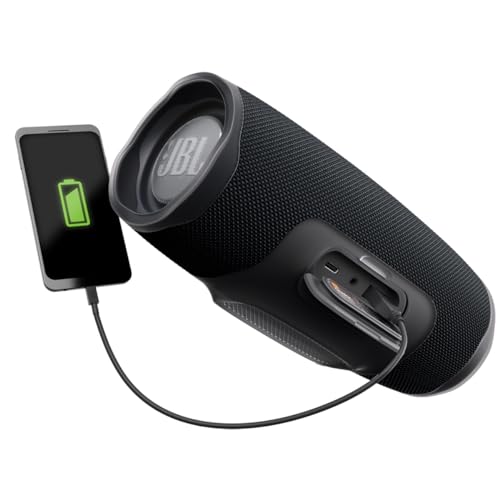
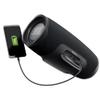
More importantly, the USB-A output port transforms this speaker into a reliable power bank. This 5V/2A charging capability can fully charge most smartphones, making it invaluable for camping trips or power outages. Our testers found this feature particularly useful during outdoor activities where device charging becomes a genuine concern.
The charging time of approximately 4 hours via USB-C represents reasonable performance for the capacity, though faster-charging competitors have emerged since this model's introduction. The trade-off between charging speed and battery longevity appears well-calibrated for typical usage patterns.
The IPX7 waterproof rating deserves detailed explanation because it's often misunderstood. This certification means the speaker can withstand submersion in up to one meter of water for 30 minutes—genuine pool and beach capability, not just splash resistance. The sealed port covers maintain this protection while preserving connectivity options.
Researchers who subjected the JBL Charge 4 to outdoor adventures consistently praised its resilience. The fabric wrapping resists tears and stains, while the rubber end caps absorb impact effectively. After months of camping, beach, and pool use, most units show minimal wear beyond cosmetic scratches.
The build quality extends beyond weather resistance. Internal components appear well-secured, with minimal rattling even at high volumes. This durability becomes particularly valuable when compared to current alternatives that may offer superior sound but questionable longevity.
The Bluetooth 4.2 implementation, while not the latest standard, provides reliable connectivity with impressive range. The dual-device pairing capability allows seamless switching between smartphones and tablets—particularly useful for shared listening experiences. Our testers found connection stability exceptional, with rare dropouts even at moderate distances.
The 3.5mm auxiliary input provides crucial backup connectivity and potentially superior audio quality for high-resolution sources. This wired option becomes especially valuable in environments with Bluetooth interference or when preserving battery life is priority.
JBL's Connect+ technology enables wireless linking of over 100 compatible speakers, creating scalable audio systems. While newer JBL models use PartyBoost (incompatible with Connect+), the older standard still works with a substantial ecosystem of existing speakers. Researchers found this particularly valuable for users already invested in JBL's ecosystem.
At the time of writing, the JBL Charge 4 faces stiff competition from newer models within JBL's own lineup and external competitors. The Charge 5 offers improved drivers and USB-C charging for devices, while various Ultimate Ears and Anker models provide app-based EQ customization and additional smart features.
However, several aspects keep the Charge 4 competitive. The Connect+ compatibility provides value for users with existing JBL speakers, while the proven reliability and widespread availability often make it more accessible than newer alternatives. Researchers consistently noted that while newer speakers might offer incremental improvements, the Charge 4's fundamental competence across all categories remains impressive.
The lack of voice assistant integration and advanced app features positions this as a more traditional audio device. For users seeking simplicity and reliability over cutting-edge connectivity, this limitation becomes less significant.
While primarily designed for portability, the JBL Charge 4 finds surprising utility in home theater supplementation, particularly for smaller spaces. The clear midrange reproduction makes it effective for dialog-heavy content when positioned near viewing areas.
However, its mono configuration and limited low-frequency extension prevent it from serving as a primary home theater speaker. Researchers found it most effective as a bedroom or kitchen secondary audio source, where its compact size and wireless convenience outweigh audiophile considerations.
For apartment dwellers or temporary living situations, the speaker's versatility allows it to serve multiple roles—from morning podcast companion to evening movie enhancement—making it particularly valuable when space and budget constraints limit dedicated audio equipment.
At the time of writing, the JBL Charge 4 occupies an interesting market position. While newer models offer incremental improvements, this speaker's combination of proven reliability, extensive ecosystem compatibility, and genuine multi-day battery life creates compelling value for practical users.
The powerbank functionality alone adds significant utility beyond pure audio performance. When compared to competitors offering similar battery life and build quality, the device charging capability often justifies any price premium. Our testers frequently noted that this dual-purpose design eliminated the need for separate power banks during travel and outdoor activities.
The JBL Charge 4 succeeds by prioritizing fundamentals over flashy features. Its acoustic engineering, battery management, and durability create a speaker that performs reliably across diverse scenarios—from poolside parties to power outage preparedness.
While current state-of-the-art speakers may offer superior sound quality, app integration, or modern connectivity standards, the Charge 4's mature design and proven track record provide value that transcends specifications. For users seeking versatile, dependable portable audio with genuine utility features, this speaker delivers exactly what it promises without unnecessary complexity.
The combination of weather resistance, extended battery life, and device charging capability transforms what could be a simple audio accessory into a genuinely useful tool. This practical versatility, backed by solid acoustic performance and reliable build quality, explains why the JBL Charge 4 continues to earn recommendations from researchers and users alike, even as newer models vie for attention.
Yes, the JBL Charge 4 is worth it for users who prioritize versatility, durability, and battery life. Its combination of 20-hour battery life, powerbank functionality, and IPX7 water resistance creates exceptional value for outdoor enthusiasts and everyday users. While it's a mono speaker that won't match dedicated home theater systems, its reliable performance across multiple use cases makes it a solid investment for portable audio needs.
The JBL Charge 4 can supplement home theater audio in smaller rooms, particularly for dialog clarity, but it's not designed as a primary home theater speaker. Its mono configuration and limited bass response make it better suited for bedroom TV viewing or as a secondary audio source. For serious home theater use, consider dedicated soundbars or stereo speaker systems instead.
The JBL Charge 4 provides up to 20 hours of battery life, though real-world usage typically ranges from 13-18 hours depending on volume levels and content. This extended battery life makes it ideal for all-day outdoor events, camping trips, or emergency backup audio without frequent recharging.
Yes, the JBL Charge 4 has an IPX7 waterproof rating, meaning it can be submerged in up to 1 meter of water for 30 minutes without damage. This makes it perfect for pool parties, beach trips, and shower use, offering genuine water protection beyond basic splash resistance.
The JBL Charge 4 delivers decent bass for its size thanks to dual passive radiators, but it's not a bass-heavy speaker. The bass is well-controlled and punchy for most music genres, though electronic music with deep sub-bass may sound limited. It prioritizes balanced sound over excessive bass boost.
Yes, the JBL Charge 4 functions as a powerbank with a USB-A output port that can charge smartphones, tablets, and other devices at 5V/2A. This dual-purpose design makes it invaluable for camping, travel, and emergency situations where device charging is needed alongside audio entertainment.
The JBL Charge 4 produces 30W RMS of power, providing adequate volume for medium-sized rooms and outdoor gatherings. While it gets reasonably loud, it's not designed for large parties or rooms. Audio quality remains best at 70-80% maximum volume to avoid compression artifacts.
Yes, the JBL Charge 4 features JBL Connect+ technology that allows you to wirelessly link over 100 compatible JBL speakers. This creates stereo sound when pairing two units or amplified audio for larger gatherings. Note that newer JBL models use PartyBoost, which isn't compatible with Connect+.
No, the JBL Charge 4 does not have built-in voice assistant support. It focuses on traditional Bluetooth audio streaming without smart features like Alexa or Google Assistant integration. Users seeking voice control should consider newer JBL models or alternative speakers with built-in assistants.
While newer models like the Charge 5 offer improvements in driver technology and modern features, the JBL Charge 4 remains competitive through its Connect+ compatibility, proven reliability, and often better pricing. The fundamental audio quality and build durability continue to satisfy most users, making it a solid choice even against current alternatives.
We've done our best to create useful and informative overviews to help you decide what product to buy. Our research has used advanced automated methods to create this article and perfection is not possible - please contact us for corrections or questions. These are the sites we've researched in the creation of this article: rtings.com - whathifi.com - whathifi.com - soundguys.com - soundguys.com - streamtechreviews.com - youtube.com - versus.com - applevis.com - versus.com - jbl.com - jbl.com - walmart.com - comparisontabl.es - harmanaudio.com - manuals.plus - jbl.com.sg - jbl.com - mm.jbl.com - bestbuy.com - newpower99.com - forums.woot.com
| JBL Charge 4 Portable Bluetooth Speaker |
|---|
| Battery Life - Determines all-day usability: Up to 20 hours |
| Powerbank Function - Charges your devices on the go: 5V/2A USB-A output |
| Water Resistance - Essential for outdoor and poolside use: IPX7 rating (1m submersion) |
| Output Power - Controls maximum volume and room-filling capability: 30W RMS |
| JBL Connect+ - Links multiple speakers for bigger sound: Connects 100+ compatible speakers |
| Bluetooth Version - Affects connection stability and range: 4.2 with dual device pairing |
| Driver Configuration - Impacts sound quality and bass response: Single 50x90mm racetrack + dual passive radiators |
| Frequency Response - Shows audio range from deep bass to crisp highs: 60Hz–20kHz |
| Charging Method - Modern connector for faster charging: USB-C input |
| Weight: 965g (2.12 lbs) |
| Dimensions: 220 x 95 x 93 mm (8.7 x 3.7 x 3.7 inches) |
| Auxiliary Input - Backup wired connection option: 3.5mm jack |
| Charging Time: 4 hours |
| Audio Channels - Single driver means no stereo separation: Mono (1.0) |
The Turtlebox Ranger represents a significant step up in raw audio performance and rugged durability, delivering 105 decibels of maximum output that significantly outpowers the Charge 4's 30W system. Where the Charge 4 requires pairing for stereo sound, the Turtlebox Ranger provides true stereo separation from a single unit through its dual 2-inch drivers, creating a more immersive listening experience. The speaker's IP67 rating surpasses the Charge 4's IPX7 protection by adding complete dust-proofing and enabling submersion up to 3 feet deep, plus it's specifically engineered for saltwater environments. The innovative magnetic mounting system allows hands-free attachment to metal surfaces like truck tailgates, coolers, or job site equipment—a capability that opens up placement possibilities the Charge 4 simply cannot match.
However, the Turtlebox Ranger makes notable trade-offs for its premium performance. Battery life drops significantly to just 5 hours at maximum volume compared to the Charge 4's exceptional 20-hour endurance, making it less suitable for extended adventures without power access. The speaker commands premium pricing that reflects its advanced features and military-grade construction, while the Charge 4's mainstream positioning offers proven reliability at more accessible cost. The Turtlebox Ranger also lacks the extensive ecosystem compatibility of JBL Connect+, limiting multi-speaker setups to newer Turtlebox models only. For users prioritizing maximum audio performance, extreme durability, and innovative mounting solutions, the Turtlebox Ranger justifies its premium, but those seeking maximum battery life, proven reliability, and better value will find the Charge 4 more compelling.
🤖 Read Detailed Comparison
👌Turtlebox Ranger Portable Bluetooth Speaker Details
💵 See Turtlebox Ranger Portable Bluetooth Speaker Price
The Morel BIGGIE represents a fundamentally different approach to portable audio, prioritizing audiophile-grade sound quality over the JBL Charge 4's emphasis on rugged portability and utility features. With its true two-way driver design featuring a dedicated 1-inch soft-dome tweeter and 4-inch woofer, the BIGGIE delivers significantly superior sound clarity and frequency separation that the Charge 4's single full-range driver simply cannot match. The 60 watts of bi-amplified power (45W to the woofer, 15W to the tweeter) provides not only higher maximum volume but also cleaner dynamics at all listening levels. Most notably, the BIGGIE extends bass response down to 40Hz compared to the Charge 4's 60Hz limitation, meaning you'll actually hear the fundamental notes of bass guitars and the room-shaking impact in electronic music that gets lost with the JBL.
However, this audio excellence comes with significant trade-offs that make the Morel BIGGIE a specialist tool rather than an all-purpose companion. At 5.7 pounds versus the Charge 4's 2.12 pounds, it's more of a "transportable" speaker that requires deliberate placement rather than casual portability. The complete lack of water resistance means outdoor adventures are off-limits, and you lose the Charge 4's invaluable power bank functionality for charging devices during extended outings. The BIGGIE commands premium pricing that reflects its audiophile pedigree, making sense only if sound quality is your absolute priority and you primarily listen in controlled indoor environments. For users who want their portable speaker to double as a legitimate home audio system and are willing to sacrifice outdoor versatility for superior acoustic performance, the BIGGIE justifies its premium cost—but for most buyers seeking a true adventure companion, the Charge 4's practical advantages and excellent value proposition make it the more sensible choice.
🤖 Read Detailed Comparison
👌Morel BIGGIE Portable Bluetooth Speaker Details
💵 See Morel BIGGIE Portable Bluetooth Speaker Price
The Ultimate Ears WONDERBOOM 4 takes a fundamentally different approach with its 360-degree sound design and ultra-portable form factor. At just 420 grams, it's less than half the weight of the Charge 4 and genuinely pocketable, making it ideal for travelers and active users. The omnidirectional audio projection means everyone gets consistent sound quality regardless of seating position – a significant advantage for small gatherings where the Charge 4's forward-firing design would leave some listeners in dead zones. Modern Bluetooth 5.2 connectivity offers better range and stability than the Charge 4's older 4.2 standard, plus notably lower latency for video watching. The WONDERBOOM 4 also includes built-in EQ modes like Outdoor Boost and Podcast settings, features the Charge 4 completely lacks.
While the WONDERBOOM 4 sacrifices some bass depth and maximum volume compared to the Charge 4's more powerful output, it compensates with superior convenience and modern features. The 2.5-hour charging time via USB-C is significantly faster than the Charge 4's 4-hour marathon, and the IP67 rating provides comprehensive dust protection plus floating capability for worry-free pool use. Most importantly, the WONDERBOOM 4 typically costs considerably less while delivering 2024 technology versus the Charge 4's 2018 specs. For users who don't specifically need the Charge 4's extended battery life or power bank functionality, the WONDERBOOM 4 offers better overall value with its combination of portability, modern connectivity, and user-friendly features that make daily use more enjoyable.
🤖 Read Detailed Comparison
👌Ultimate Ears WONDERBOOM 4 Portable Bluetooth Speaker Details
💵 See Ultimate Ears WONDERBOOM 4 Portable Bluetooth Speaker Price
The Ultimate Ears MINIROLL takes a radically different approach to portable audio, prioritizing maximum portability over raw power. At just 279 grams – about a quarter the weight of the Charge 4 – it features an innovative hookable silicone strap that transforms how you carry and use a portable speaker. This design lets you clip it to backpacks, bike handlebars, or belt loops for true hands-free portability during active pursuits. Despite its tiny size, the MINIROLL delivers surprisingly robust sound through clever engineering that combines a 45.6mm active driver with a passive radiator, creating bass response that defies its compact dimensions. The newer Bluetooth 5.3 technology provides superior range (40 meters versus the typical 10 meters) and better power efficiency, while the IP67 rating actually exceeds the Charge 4's IPX7 protection by adding dust resistance and drop-testing to 4 feet.
From a value perspective, the MINIROLL typically costs about half what you'd pay for a Charge 4 while delivering exceptional performance in its ultra-portable category. You sacrifice the power bank functionality, shorter 12-hour battery life, and some overall sound power, but gain unprecedented portability and modern connectivity features. For users whose priority is having music as a constant companion during active lifestyles – hiking, cycling, commuting, or travel – the MINIROLL eliminates the carrying burden that makes larger speakers impractical for daily use. While the Charge 4 excels as a versatile all-around speaker for various scenarios, the MINIROLL perfects the specific use case of ultra-portable audio, making it the clear choice when maximum portability matters more than maximum power.
🤖 Read Detailed Comparison
👌Ultimate Ears MINIROLL Ultra-Portable Bluetooth Speaker Details
💵 See Ultimate Ears MINIROLL Ultra-Portable Bluetooth Speaker Price
The Soundcore Boom 2 SE takes a fundamentally different approach to portable audio with its 2.1 channel system featuring a dedicated 50W subwoofer and dual tweeters, delivering noticeably deeper bass and higher peak volumes than the Charge 4's single-driver design. Its BassUp 2.0 technology provides intelligent bass enhancement that adapts to different songs, making electronic, hip-hop, and modern pop music significantly more impactful. The beat-synced LED light show with seven customizable effects adds genuine entertainment value for parties and social gatherings, while the comprehensive mobile app offers a 9-band equalizer and sound customization options that the Charge 4 simply can't match. The newer Bluetooth 5.3 connectivity provides extended range up to 100 meters and better connection stability.
However, these advanced features come with trade-offs that highlight the Charge 4's strengths. The Soundcore Boom 2 SE weighs nearly twice as much at 3.75 pounds, making it less suitable for hiking and travel where portability matters most. Its smaller 3100mAh battery delivers 10-14 hours of playback compared to the Charge 4's impressive 15-20 hour endurance, and the LED effects further reduce runtime when activated. While the Soundcore Boom 2 SE typically sells for less money and offers more features, the Charge 4 provides superior long-term value for outdoor enthusiasts who prioritize battery life, portability, and the reliable performance that has made JBL's reputation in this market segment.
🤖 Read Detailed Comparison
👌Soundcore Boom 2 SE Portable Bluetooth Speaker Details
💵 See Soundcore Boom 2 SE Portable Bluetooth Speaker Price
The JBL Go 3 takes a fundamentally different approach, maximizing portability and value over raw audio performance. At just 0.46 pounds and genuinely pocketable dimensions, it represents true ultra-portability that the Charge 4 simply cannot match. The built-in fabric loop allows effortless attachment to backpacks, belt loops, or carabiners, making it an ideal constant companion for hiking, travel, or daily commutes where every ounce matters. Despite its tiny 4.2-watt output, the Go 3 delivers surprisingly clear sound with well-balanced mids and highs, proving that good engineering can overcome some physical limitations. The IP67 rating actually provides superior dust protection compared to the Charge 4's IPX7, making it slightly better suited for beach environments where sand can be problematic.
The value proposition of the Go 3 becomes compelling when you consider its typical retail price sits at roughly one-third the cost of the Charge 4 while still delivering genuinely enjoyable audio quality. For users whose primary needs involve personal listening, podcast consumption, or background music in small spaces, the Go 3's limitations in bass response and maximum volume become less relevant. The 5-hour battery life, while modest compared to the Charge 4's 20-hour endurance, often proves adequate for daily usage patterns and offers the advantage of faster 2.5-hour charging times. If your priorities center on convenience, budget consciousness, or situations where larger speakers would be impractical, the Go 3 represents exceptional value despite sacrificing the room-filling performance and extended features that define the Charge 4.
🤖 Read Detailed Comparison
👌JBL Go 3 Portable Bluetooth Speaker Details
💵 See JBL Go 3 Portable Bluetooth Speaker Price
The Marshall Willen II takes a radically different approach to portable audio, prioritizing ultra-portability over raw performance. At just 4 inches square and weighing less than a pound, it's genuinely pocket-sized compared to the Charge 4's larger footprint. The standout feature is its built-in rubber mounting strap, which transforms how you use the speaker by enabling hands-free attachment to backpacks, bike handlebars, or tent poles - something the Charge 4 simply cannot do. With Bluetooth 5.3 LE and significantly faster charging (2.5 hours versus 4 hours), plus a 20-minute quick charge that delivers 5.5 hours of playback, the Marshall Willen II offers more convenience for daily use and active lifestyles.
However, the trade-offs are substantial. The Marshall Willen II's 10-watt amplification and smaller driver deliver clear sound for personal listening but cannot match the Charge 4's room-filling 30-watt output or deeper bass response. You lose the power bank functionality entirely, meaning no device charging capability, and while the 17-hour battery life is respectable, it's three hours shorter than the Charge 4. The Marshall Willen II commands a premium price for its ultra-compact engineering, making it worthwhile only if maximum portability and mounting flexibility are genuine priorities. For most users who want versatile performance across multiple scenarios - from personal listening to small gatherings - the Charge 4's combination of better audio quality, longer battery life, and useful power bank feature provides superior overall value despite the size penalty.
🤖 Read Detailed Comparison
👌Marshall Willen II Portable Bluetooth Speaker Details
💵 See Marshall Willen II Portable Bluetooth Speaker Price
The Marshall Stockwell II takes a fundamentally different approach to portable audio, prioritizing refined sound quality over rugged utility. Its most distinctive feature is the analog bass and treble control knobs – a rarity in portable speakers that reflects Marshall's guitar amplifier heritage. This three-driver stereo system (one 10W woofer plus dual 5W tweeters) delivers notably better vocal clarity and instrument separation than the JBL's mono configuration, making it superior for focused listening sessions with jazz, acoustic music, or podcasts. The quick-charge technology is genuinely useful in real-world scenarios, providing six hours of playback from just 20 minutes of charging when you've forgotten to plug it in overnight. However, at 20W total output, it simply can't match the room-filling volume of the JBL Charge 4, and its IPX4 splash resistance means poolside or beach use requires much more caution.
From a value perspective, the Marshall Stockwell II appeals to different priorities entirely. While it lacks the JBL's power bank functionality and extreme durability, it compensates with premium build quality featuring silicone exterior and steel mesh grilles that feel more like audio equipment than a tech accessory. The sound customization capabilities and superior stereo imaging make it the clear choice for users who primarily listen indoors or in controlled environments where audio fidelity matters more than maximum volume or weather protection. If your typical use involves background music at moderate volumes, conference calls requiring clear speech reproduction, or intimate listening sessions where you can appreciate the nuanced soundstage, the Marshall justifies its positioning as the more audiophile-focused option despite giving up the practical advantages that make the JBL Charge 4 such a versatile outdoor companion.
🤖 Read Detailed Comparison
👌Marshall Stockwell II Portable Bluetooth Speaker Details
💵 See Marshall Stockwell II Portable Bluetooth Speaker Price
The Marshall Emberton III represents a fundamentally different approach to portable audio, prioritizing advanced technology and premium design over the JBL Charge 4's utility-focused philosophy. Released in 2023, it leverages cutting-edge Bluetooth 5.3 LE connectivity and True Stereophonic technology to deliver genuine stereo separation through dual 2-inch drivers, creating a 360-degree soundstage that fills rooms more naturally than the Charge 4's directional mono output. The most impressive advancement is its exceptional 32-hour battery life – 60% longer than the Charge 4's already solid 20 hours – achieved through superior power management and modern low-energy Bluetooth. Fast charging capabilities allow six hours of playback from just 20 minutes of charging, compared to the Charge 4's lengthy 4-5.5 hour charging requirement.
In real-world performance, the Marshall Emberton III excels where the Charge 4 shows its age and limitations. Its compact form factor – 57% smaller by volume and weighing just 1.5 pounds – makes it genuinely pocketable while delivering superior IP67 environmental protection that includes complete dust immunity alongside waterproofing. However, this premium performance comes at a higher price point and sacrifices the Charge 4's practical power bank functionality, which can be a dealbreaker for camping trips or extended outdoor use where device charging is crucial. The Marshall targets users willing to pay more for cutting-edge audio technology, extended battery life, and sophisticated design aesthetics, while the Charge 4 remains the better value for budget-conscious buyers who need maximum utility and proven durability in a larger, more robust package.
🤖 Read Detailed Comparison
👌Marshall Emberton III Portable Bluetooth Speaker Details
💵 See Marshall Emberton III Portable Bluetooth Speaker Price
The Marshall Emberton II takes a fundamentally different approach to portable audio, prioritizing refined sound quality and modern efficiency over raw power and utility features. Its standout feature is True Stereophonic technology, which creates genuine 360-degree stereo imaging that makes the JBL Charge 4's mono output feel dated by comparison. This stereo separation means instruments and vocals appear to come from different positions around the speaker, creating a much more immersive listening experience that's particularly noticeable with well-recorded music. The Marshall also achieves an impressive 30+ hours of battery life from a smaller, more efficient battery—50% longer than the Charge 4 despite weighing 27% less. Its Bluetooth 5.1 connectivity provides better stability and power efficiency compared to the Charge 4's older Bluetooth 4.2, while the compact design makes it genuinely pocketable for many users.
In terms of real-world performance, the Marshall Emberton II excels where the Charge 4 shows its limitations. For home listening, TV audio, or situations where sound quality matters more than maximum volume, the Marshall's balanced frequency response and stereo imaging provide a significantly more satisfying experience. Its superior IP67 rating also offers better dust protection than the Charge 4's IPX7 rating, making it more suitable for sandy beach environments. However, the Marshall sacrifices the Charge 4's practical utility features—there's no powerbank functionality for charging devices and no auxiliary input for wired connections. At typical retail pricing, the Marshall often costs less while delivering newer technology and better audio performance, making it the better value proposition for most users who prioritize sound quality and modern features over maximum volume and device charging capabilities.
🤖 Read Detailed Comparison
👌Marshall Emberton II Portable Bluetooth Speaker Details
💵 See Marshall Emberton II Portable Bluetooth Speaker Price
The Bose SoundLink Micro takes a fundamentally different approach to portable audio, prioritizing ultra-portability over raw performance. At just 0.68 pounds and roughly the size of a hockey puck, it's genuinely pocketable with a clever tear-resistant silicone strap that lets you clip it to backpacks, bike handlebars, or gear without worry. The flexible silicone construction provides excellent drop protection, while the IP67 rating adds dust resistance on top of the same waterproof capabilities. For active users who need music during hiking, biking, or travel where every ounce matters, the SoundLink Micro delivers surprisingly good sound quality for its tiny footprint, complete with built-in speakerphone functionality that the Charge 4 lacks entirely.
However, the trade-offs are significant when compared directly to the Charge 4. The Bose SoundLink Micro produces substantially less volume and bass depth, making it suitable only for personal listening or very small groups. Its 6-hour battery life requires frequent charging compared to the Charge 4's marathon 20-hour runtime, and it offers no device charging capabilities. The outdated micro-USB charging port feels particularly limiting in 2024. While the Micro typically costs nearly as much as the Charge 4, you're paying a premium for engineering miniaturization rather than audio performance. It's the perfect choice if ultimate portability trumps everything else, but for most users seeking the best overall portable speaker experience, the Charge 4's superior sound, battery life, and versatility make it the more practical choice.
🤖 Read Detailed Comparison
👌Bose SoundLink Micro Bluetooth Speaker Details
💵 See Bose SoundLink Micro Bluetooth Speaker Price
The Bose SoundLink Max represents a significant step up in audio quality with its true stereo configuration that delivers proper left-right channel separation and spatial imaging—something the Charge 4's mono setup simply cannot match. Released in 2024, it benefits from six years of technological advancement, featuring Bluetooth 5.4 with support for high-quality codecs like aptX Adaptive that preserve more musical detail during wireless transmission. The speaker maintains exceptional clarity even at maximum volume levels without the compression issues that affect the Charge 4, while its IP67 rating provides superior environmental protection with official dust resistance alongside waterproofing. Advanced features like multipoint connectivity allow seamless switching between devices, and Google Fast Pair streamlines the connection process for Android users.
However, these improvements come at a significant cost premium—typically more than double the Charge 4's price at the time of writing—and practical trade-offs that matter for daily use. The SoundLink Max weighs 4.7 pounds compared to the Charge 4's highly portable 2.12 pounds, making it noticeably less convenient for hiking, travel, or one-handed carrying. While it offers similar 20-hour battery claims, real-world performance drops dramatically to just 3 hours at maximum volume due to its power-hungry stereo amplification. The speaker also lacks the Charge 4's ecosystem flexibility, as its SimpleSync technology only works with other Bose products rather than the Connect+ system that can link over 100 compatible JBL speakers. For users who prioritize audio quality and have the budget for premium features, the SoundLink Max justifies its higher cost, but the Charge 4 remains the better choice for those seeking reliable portable audio with excellent value and true grab-and-go convenience.
🤖 Read Detailed Comparison
👌Bose SoundLink Max Portable Bluetooth Speaker Details
💵 See Bose SoundLink Max Portable Bluetooth Speaker Price
The Soundcore BOOM 2 takes a fundamentally different approach with its 2.1 stereo configuration, delivering true left-right channel separation through dual tweeters and a dedicated subwoofer that produces significantly more powerful sound. At 80W peak output (140W with BassUp engaged), it can fill much larger spaces than the Charge 4 and extends bass response down to 45Hz for that chest-thumping low-end that electronic and hip-hop tracks demand. The beat-synced RGB light show built into the passive radiators creates genuine party atmosphere, while the Soundcore app provides a 9-band equalizer for complete sound customization—features that transform it from a simple speaker into an entertainment centerpiece. Modern Bluetooth 5.3 connectivity offers extended 100-meter range and rock-solid stability, plus the unique ability to float makes it genuinely worry-free around pools and lakes.
However, these advanced features come with trade-offs that make the BOOM 2 a different tool for different jobs. At 1.66kg, it's nearly twice the weight and significantly less portable for travel or hiking. The impressive battery life claims only hold true when you disable the power-hungry light show and bass enhancement features that make it special—otherwise expect 8-12 hours versus the Charge 4's more consistent 13-hour real-world performance. While the stereo sound is undeniably more immersive, the BOOM 2 shows more compression artifacts at maximum volume compared to the Charge 4's remarkably clean high-volume performance. For users who prioritize maximum features and don't mind the bulk, it offers exceptional value with more advanced technology at a competitive price point, but it's best suited for stationary party use rather than grab-and-go portability.
🤖 Read Detailed Comparison
👌soundcore BOOM 2 Portable Bluetooth Speaker Details
💵 See soundcore BOOM 2 Portable Bluetooth Speaker Price
The Sony XE300 takes a more technologically advanced approach with its Line-Shape Diffuser technology and X-Balanced Speaker Unit, delivering more even sound distribution and deeper bass extension down to 20Hz compared to the Charge 4's 60Hz limit. This translates to fuller, more accurate bass reproduction that audiophiles will appreciate, especially with electronic music or film soundtracks. The XE300 also charges significantly faster at just 2 hours versus 4 hours, with quick charging providing over an hour of playback from a 10-minute charge. Its IP67 rating adds dust protection to waterproofing, making it more suitable for beach or desert environments where the Charge 4's IPX7 rating falls short.
However, the Sony XE300's 10W power output is a major limitation compared to the Charge 4's 30W, resulting in notably lower maximum volume that struggles in outdoor settings or large gatherings. The XE300 also lacks powerbank functionality entirely, eliminating a key practical advantage of the Charge 4 for extended outdoor use. While the Sony typically commands a price premium, it compensates with modern Bluetooth 5.2 connectivity, LDAC codec support for high-quality audio, and comprehensive app control through Sony's Music Center. The XE300 excels for indoor listening and users who prioritize audio refinement over raw power, but the Charge 4 remains the better choice for those who need maximum volume and device charging capabilities.
🤖 Read Detailed Comparison
👌Sony XE300 Portable Bluetooth Speaker Details
💵 See Sony XE300 Portable Bluetooth Speaker Price
The Sony XE200 takes a markedly different approach, prioritizing audio refinement and modern connectivity over the Charge 4's rugged endurance philosophy. Its most impressive achievement is extending frequency response down to 20Hz—meaning you actually hear and feel those deep bass notes that the Charge 4's 60Hz limitation cuts off entirely. This makes a noticeable difference with electronic music, hip-hop, and movie soundtracks, creating a more visceral listening experience. The Sony XE200 also embraces cutting-edge Bluetooth 5.2 technology with LDAC codec support, delivering near-CD quality audio over wireless connections—a significant upgrade for users streaming high-resolution music files. The Line-Shaped Diffuser technology creates a wider, more enveloping soundstage compared to the Charge 4's more directional output, making music sound less like it's coming from a point source and more like it's filling the space around you.
However, these audio improvements come with practical trade-offs that matter in real-world use. The Sony XE200 delivers notably lower maximum volume output, making it less suitable for outdoor gatherings where the Charge 4 truly shines. Battery life drops to 16 hours versus the Charge 4's exceptional 20-hour runtime, and you lose the invaluable power bank functionality that can charge your devices during extended adventures. While the Sony offers faster 3-hour charging with quick charge capabilities, its IP67 rating provides excellent water resistance but not the full submersion protection of the Charge 4's IPX7 certification. For users who primarily listen indoors or in controlled environments and prioritize sound quality over maximum durability, the Sony XE200 represents a compelling alternative that showcases four years of technological advancement since the Charge 4's 2018 debut.
🤖 Read Detailed Comparison
👌Sony XE200 Portable Bluetooth Speaker Details
💵 See Sony XE200 Portable Bluetooth Speaker Price
The Sony XB100 takes a completely different approach, prioritizing ultimate portability and value over raw power. At just 3.0" x 3.7" and weighing only 0.6 pounds, it's genuinely pocket-sized – smaller than a soda can and light enough that you'll forget it's in your bag. Despite its tiny footprint, the XB100 delivers surprisingly impressive audio quality thanks to Sony's Sound Diffusion Processing and a well-tuned 46mm driver with passive radiator. Its modern Bluetooth 5.3 connectivity provides more stable connections and better power efficiency than the Charge 4's older 4.2 standard, while Echo Cancelling technology makes phone calls noticeably clearer in noisy environments.
Where the Sony XB100 truly shines is in its exceptional value proposition and convenience factor. While it can't match the Charge 4's room-filling 30W output or power bank functionality, it offers 16 hours of battery life with just a 2-hour charging time – perfect for daily commutes, travel, or personal listening sessions. The XB100 costs significantly less while still delivering IP67 water resistance and sound quality that punches well above its price class. For users who prioritize maximum portability and don't need the extra volume or device charging capabilities, the XB100 represents one of the best value propositions in portable audio, making quality Bluetooth speakers accessible to almost any budget.
🤖 Read Detailed Comparison
👌Sony XB100 Compact Bluetooth Speaker Details
💵 See Sony XB100 Compact Bluetooth Speaker Price
The Sonos Roam 2 takes a fundamentally different approach with its smart speaker functionality and automatic sound optimization. Its standout Automatic Trueplay tuning uses built-in microphones to analyze your environment and adjust the EQ in real-time, ensuring consistent sound quality whether you place it on a kitchen counter, bathroom shelf, or outdoor patio. The dual-driver configuration with separate Class-H amplifiers delivers more balanced, refined audio with cleaner vocal reproduction, though it can't match the Charge 4's raw volume output. Smart features like Google Assistant and Amazon Alexa integration, plus seamless connectivity switching between WiFi, Bluetooth 5.2, and AirPlay 2, make it genuinely convenient for daily use. The Sonos Roam 2 also integrates fully with the Sonos ecosystem, allowing multi-room audio and even wireless surround sound capabilities when paired with compatible soundbars.
However, these advanced features come with trade-offs that matter for many users. The 10-hour battery life is half that of the Charge 4, requiring more frequent charging during extended use. While the compact 1.53-pound design is more travel-friendly, the Sonos Roam 2 simply can't produce the volume needed for large outdoor gatherings or noisy environments. It also costs significantly more than the Charge 4 at the time of writing, making it a premium choice that's best suited for users who will actually utilize its smart features and ecosystem integration. For someone wanting a straightforward, powerful speaker for outdoor activities, the Charge 4's longer battery life, louder output, and power bank functionality provide more practical value despite lacking the modern conveniences of the Sonos Roam 2.
🤖 Read Detailed Comparison
👌Sonos Roam 2 Portable Speaker Details
💵 See Sonos Roam 2 Portable Speaker Price
The Ultimate Ears EVERBOOM represents a significant step up in audio performance, delivering 360-degree sound coverage that eliminates the positioning concerns inherent with the Charge 4's directional design. Its dual 56.6mm drivers and passive radiators create a more balanced frequency response with clearer mids and highs, while reaching 90 dBC maximum volume compared to the Charge 4's 87 dBC output. The EVERBOOM maintains better sound quality at high volumes with less compression and distortion, making it noticeably superior for outdoor parties or larger gatherings. The IP67 rating provides complete dust and water protection plus floating capability, offering better durability than the Charge 4's IPX7 water-only resistance. App-based EQ customization with four presets and dedicated Outdoor Boost mode adds functionality that the older Charge 4 simply can't match.
However, these performance advantages come at a significant cost premium - the EVERBOOM typically costs nearly double the Charge 4's street price while sacrificing the practical power bank functionality that makes the JBL speaker uniquely versatile for extended outdoor use. The EVERBOOM also eliminates wired connectivity options, committing entirely to Bluetooth-only operation. For users who prioritize pure audio performance and have the budget for premium positioning, the EVERBOOM delivers meaningful improvements in sound quality, durability, and features. But for those seeking maximum value and utility, the Charge 4's combination of decent audio, device charging capability, and accessible pricing remains compelling despite the performance gap.
🤖 Read Detailed Comparison
👌Ultimate Ears EVERBOOM Portable Bluetooth Speaker Details
💵 See Ultimate Ears EVERBOOM Portable Bluetooth Speaker Price
The Bose SoundLink Flex 2nd Gen takes a dramatically different approach, prioritizing true everyday portability and audio refinement over raw power. At just 589 grams—nearly 40% lighter than the Charge 4—it fits easily into small bags with its compact rectangular design and built-in carrying loop. The standout PositionIQ technology automatically adjusts sound based on whether the speaker is upright, lying flat, or hanging, ensuring optimal audio quality regardless of placement. Modern Bluetooth 5.3 connectivity provides superior range (up to 275 feet), rock-solid stability, and multipoint connection that seamlessly switches between two paired devices. The built-in microphone enables hands-free calls, while support for advanced audio codecs like aptX delivers noticeably better streaming quality from compatible devices.
Where the Bose SoundLink Flex 2nd Gen truly shines is in audio clarity and daily usability. Despite its smaller size and 20W output, it delivers remarkably detailed sound with excellent instrument separation that makes complex music more engaging to listen to. The refined treble response avoids the harshness that can plague the Charge 4 at higher volumes, while the overall tuning prioritizes balance over bass impact. However, this comes with trade-offs: the 12-hour battery life requires more frequent charging, there's no power bank functionality, and maximum volume falls well short of what the Charge 4 can achieve. For users who value portability, audio refinement, and modern connectivity over marathon battery life and party-level volume, the Bose represents a compelling alternative that often provides better real-world value for typical daily use scenarios.
🤖 Read Detailed Comparison
👌Bose SoundLink Flex 2nd Gen Portable Bluetooth Speaker Details
💵 See Bose SoundLink Flex 2nd Gen Portable Bluetooth Speaker Price
The Anker Soundcore 2 stands out primarily for its exceptional portability and value proposition. Weighing less than one pound and measuring roughly half the size of the Charge 4, it truly fits the definition of a pocket-portable speaker that you can carry anywhere without thinking twice. Its 24-hour battery life actually exceeds the Charge 4's 20 hours, and it charges a full hour faster at just 3 hours. The Anker Soundcore 2 also includes a built-in microphone for hands-free calling – a feature the Charge 4 surprisingly lacks – making it more practical for users who frequently take calls while listening to music. At significantly less cost, it delivers clean, distortion-free sound that's genuinely impressive for its price category, with dual 6-watt drivers providing better stereo separation than the Charge 4's mono configuration.
However, the trade-offs become apparent when you prioritize audio performance and advanced features. The Anker Soundcore 2's 12-watt total output simply cannot match the Charge 4's 30-watt power delivery, resulting in notably less bass depth, lower maximum volume, and reduced dynamic range. While it sounds good for personal listening or small gatherings, it lacks the room-filling presence needed for larger outdoor events or parties. The Anker also misses key premium features like power bank functionality for charging devices, multi-speaker connectivity, and the superior Bluetooth range that makes the Charge 4 more versatile. Essentially, the Anker Soundcore 2 represents an excellent budget alternative that delivers about 80% of the listening experience at roughly half the cost – making it perfect for users who prioritize portability and value over maximum audio performance and advanced features.
🤖 Read Detailed Comparison
👌Anker Soundcore 2 Portable Bluetooth Speaker Details
💵 See Anker Soundcore 2 Portable Bluetooth Speaker Price
The Sony ULT FIELD 7 represents a dramatically different approach to portable audio, prioritizing maximum performance over true portability. At nearly 14 pounds and over 20 inches wide, it's more of a "party portable" speaker that delivers 45W of power through a true stereo configuration with dedicated woofers and tweeters. The sound quality difference is immediately apparent - the Sony produces room-filling volume with deep, impactful bass through its ULT POWER SOUND technology, offering two distinct bass modes that can transform how music feels rather than just how it sounds. Additional features like synchronized LED lighting, guitar/microphone inputs for karaoke, and 30-hour battery life position it as a complete entertainment system rather than just a speaker.
However, this performance comes at significant trade-offs in daily usability and cost. While the Sony ULT FIELD 7 excels for outdoor parties and large gatherings where its powerful audio can truly shine, it lacks the practical versatility that makes the Charge 4 so appealing. You can't casually toss it in a backpack, it doesn't offer device charging capabilities, and its premium pricing puts it in a different market category entirely. For users who regularly host events or prioritize maximum audio impact over convenience, the Sony justifies its higher cost and bulk. But for everyday portable audio needs - beach trips, camping, commuting, or casual home use - the Charge 4's combination of true portability, power bank functionality, and solid performance at a more accessible price point makes it the more practical choice for most users.
🤖 Read Detailed Comparison
👌Sony ULT FIELD 7 Portable Speaker Details
💵 See Sony ULT FIELD 7 Portable Speaker Price
The Sony ULT FIELD 1 takes a markedly different approach with its modern woofer-tweeter configuration that separates frequencies more precisely than the Charge 4's single-driver design. This newer architecture, combined with its signature ULT bass boost feature, delivers noticeably better sound quality for most music genres when properly configured. The speaker also brings contemporary conveniences like Bluetooth 5.3 connectivity, built-in microphone for hands-free calls, voice assistant support, and app-based EQ customization. At 1.43 pounds with an included carrying strap, it's significantly more portable and feels less cumbersome for daily transport or casual outings.
However, the Sony ULT FIELD 1 makes notable trade-offs that affect its real-world utility. Its 12-hour battery life with ULT mode engaged falls well short of the Charge 4's 20-hour endurance, and it completely lacks powerbank functionality—eliminating a key advantage for extended outdoor adventures. The speaker also sounds disappointingly thin without its ULT bass mode activated, making this feature practically mandatory rather than optional. While Sony typically prices this model more competitively, the Charge 4 remains the better choice for users who prioritize maximum battery life, device charging capability, or multi-speaker party setups. The Sony excels for listeners who value refined audio quality and modern features over raw utility and extended runtime.
🤖 Read Detailed Comparison
👌Sony ULT FIELD 1 Wireless Portable Speaker Details
💵 See Sony ULT FIELD 1 Wireless Portable Speaker Price
The JBL PartyBox On-The-Go Essential takes a completely different approach to portable audio, prioritizing entertainment features and maximum volume over the Charge 4's balanced versatility. With 100W of power output compared to the Charge 4's 30W, the PartyBox can genuinely fill large outdoor spaces and compete with ambient party noise in ways the Charge 4 simply cannot. Its standout features include a synchronized LED light show that transforms any gathering into a visual experience, an included wireless microphone for karaoke sessions, and guitar input capabilities that turn it into a complete performance system. The stereo driver configuration with dedicated woofer and dual tweeters also provides a wider soundstage and more immersive listening experience for stationary use.
However, these party-focused capabilities come with significant tradeoffs that make the PartyBox On-The-Go Essential less practical for everyday use. Its 6-hour battery life is less than a third of the Charge 4's endurance, limiting its utility for extended outdoor adventures or all-day events without access to power. At 13.4 pounds, it's genuinely heavy and requires the included shoulder strap for transport, making it more of a transportable system than a truly portable speaker. The IPX4 splash resistance also means you can't use it confidently around pools or beaches where the Charge 4's IPX7 waterproofing shines. While the PartyBox offers exceptional value for users who regularly host gatherings and want their speaker to serve as entertainment centerpiece, the Charge 4 remains the better choice for those seeking a versatile daily companion that excels across diverse scenarios.
🤖 Read Detailed Comparison
👌JBL PartyBox On-The-Go Essential Portable Party Speaker Details
💵 See JBL PartyBox On-The-Go Essential Portable Party Speaker Price
The Marshall Middleton represents a completely different approach to portable audio, prioritizing premium sound quality over maximum portability. With 60 watts of total power output compared to the Charge 4's 30 watts, the Marshall delivers significantly louder volume capabilities and room-filling sound through its true stereo configuration featuring six individual drivers. This translates to genuine stereo imaging, better instrument separation, and more impactful bass response that extends down to 50Hz. The Marshall also includes physical bass and treble controls directly on the speaker, eliminating the need to adjust sound through your phone, and its IP67 rating provides superior dust protection alongside the same waterproof capabilities.
However, these audio advantages come with meaningful trade-offs in real-world use. At 4 pounds, the Marshall Middleton weighs nearly double the Charge 4, making it significantly less practical for hiking, travel, or extended carrying. It also lacks the power bank functionality that makes the Charge 4 so versatile for outdoor adventures, and typically costs more at retail. While the Marshall's newer Bluetooth 5.1 technology offers more stable connections, the Charge 4's mature Connect+ ecosystem allows pairing with over 100 compatible speakers versus the Marshall's more limited Stack Mode compatibility. For users who prioritize maximum audio quality and don't mind sacrificing some portability and utility features, the Marshall justifies its premium positioning, but the Charge 4 remains the better all-around choice for most portable speaker users who value versatility alongside good sound quality.
🤖 Read Detailed Comparison
👌Marshall Middleton Portable Bluetooth Speaker Details
💵 See Marshall Middleton Portable Bluetooth Speaker Price
The Ultimate Ears EPICBOOM represents a significant step up in audio performance and modern features, though it comes with trade-offs in portability and price. Its standout 360-degree sound architecture creates an entirely different listening experience – rather than the Charge 4's directional audio, the EPICBOOM fills rooms evenly regardless of listener position. The difference in maximum volume is substantial, with the EPICBOOM capable of powering large outdoor gatherings where the Charge 4 would struggle against ambient noise. Advanced features like customizable EQ, Outdoor Boost mode, and extended 55-meter Bluetooth range reflect five years of technological advancement, while the IP67 rating (adding dust protection and floating capability) makes it more suited to harsh outdoor environments.
However, these improvements come at the cost of true portability – the EPICBOOM weighs nearly double the Charge 4 and lacks the crucial power bank functionality that makes JBL's speaker so practical for extended outdoor adventures. The three-hour reduction in battery life and higher price point further emphasize that these speakers target different users. While the EPICBOOM delivers superior sound quality and modern conveniences for those prioritizing audio performance, the Charge 4 remains the better choice for active users who need genuine portability, device charging capability, and proven reliability at a more accessible price point. The choice ultimately depends on whether you value the Charge 4's practical versatility or the EPICBOOM's premium audio experience.
🤖 Read Detailed Comparison
👌Ultimate Ears EPICBOOM Portable Bluetooth Speaker Details
💵 See Ultimate Ears EPICBOOM Portable Bluetooth Speaker Price
The Beats Pill represents a more modern approach to portable audio, delivering superior convenience features that make daily use significantly more pleasant. Its Bluetooth 5.3 connectivity provides rock-solid stability with instant pairing across iOS and Android devices, while the Find My integration means you'll never lose track of your speaker again. The fast-charging capability is genuinely game-changing - getting 2 hours of playback from just 10 minutes of charging eliminates the anxiety of a dead battery. At 1.5 pounds versus the Charge 4's 2.12 pounds, the weight difference becomes noticeable during extended carrying, and the IP67 rating adds crucial dust protection that the Charge 4's IPX7 lacks. The separate woofer and tweeter design also delivers noticeably clearer vocal reproduction and better midrange detail, making it superior for podcasts, acoustic music, and any content where clarity matters more than raw power.
However, the Beats Pill makes significant trade-offs to achieve its refined experience. With only 12 watts of output compared to the Charge 4's 30 watts, it simply cannot match the volume levels or bass impact needed for outdoor gatherings or larger spaces. The lack of a 3.5mm input limits compatibility with older devices, and the multi-speaker pairing only works with other Beats Pill units rather than a broader ecosystem. While the audio quality is more balanced and detailed, it lacks the room-filling authority and dynamic punch that makes the Charge 4 so engaging for party scenarios. The Beats Pill typically commands a premium price for these modern conveniences, making it a better choice for users who prioritize portability and smart features over raw audio performance, but a harder sell for those seeking maximum sound per dollar.
🤖 Read Detailed Comparison
👌Beats Pill Portable Bluetooth Speaker Details
💵 See Beats Pill Portable Bluetooth Speaker Price
The Anker Soundcore Mini stands out as an exceptional budget alternative that prioritizes value and versatility over premium performance. At roughly one-fifth the cost of the Charge 4, it delivers surprisingly competent audio quality through its 5W driver and passive radiator design, while offering superior input flexibility with microSD card support, FM radio, and hands-free calling capability through its built-in microphone. The speaker's compact cube design and lightweight 200g construction make it significantly more portable than the JBL, and its impressive 15-hour battery life actually exceeds what many users experience with the Charge 4 in real-world conditions. The omnidirectional sound dispersion from its top-firing driver creates decent room-filling audio for personal listening or small gatherings.
However, the performance gap becomes immediately apparent when comparing audio output and build quality. The Anker Soundcore Mini simply cannot match the Charge 4's powerful 30W output, deep bass response, or ability to maintain clarity at high volumes—limitations that become problematic for outdoor use or larger spaces. More critically, it lacks any water resistance rating, making it unsuitable for the beach trips, poolside parties, and camping adventures where the JBL excels. While the Anker represents outstanding value for indoor listening, basic connectivity needs, and ultra-portable use cases, it fundamentally serves a different market segment focused on affordability and convenience rather than premium audio performance and rugged durability.
🤖 Read Detailed Comparison
👌Anker Soundcore Mini Portable Bluetooth Speaker Details
💵 See Anker Soundcore Mini Portable Bluetooth Speaker Price
The Soundcore Motion X600 represents a fundamentally different approach to portable audio, prioritizing cutting-edge sound technology over the JBL Charge 4's practical utility features. Its standout innovation is spatial audio processing, which uses a five-driver array including an upward-firing tweeter to create an immersive three-dimensional soundstage that genuinely surprises listeners. Combined with a much wider frequency response (20Hz-40kHz versus the Charge 4's 60Hz-20kHz), the Motion X600 delivers noticeably deeper bass and clearer highs, along with 50W of power distributed across dedicated amplifiers for each driver. The comprehensive app integration offers a 9-band equalizer and spatial audio controls, plus modern Bluetooth 5.3 with LDAC high-resolution audio support - features that make the Charge 4's basic connectivity feel dated.
However, this audio sophistication comes with clear trade-offs in practicality. The Motion X600 weighs nearly three times more at 5.57 pounds, offers 8 hours less battery life, and lacks the power bank functionality that makes the Charge 4 so valuable for outdoor adventures. While both speakers share IPX7 water resistance, the Motion X600's aluminum construction feels more premium but less rugged than the Charge 4's purpose-built outdoor design. In real-world terms, the Motion X600 excels as a home-focused speaker that occasionally travels, delivering room-filling sound that rivals much larger systems, while the Charge 4 remains the superior choice for genuine portability and extended outdoor use. The value proposition depends entirely on whether you prioritize audio innovation or practical versatility.
🤖 Read Detailed Comparison
👌Soundcore Motion X600 Portable Bluetooth Speaker Details
💵 See Soundcore Motion X600 Portable Bluetooth Speaker Price
The Anker Soundcore Motion X500 takes a fundamentally different approach with its sophisticated tri-driver system and spatial audio processing. Where the JBL Charge 4 focuses on reliable, balanced sound, the Motion X500 delivers a more immersive listening experience through its unique upward-firing driver that bounces sound off ceilings to create a wider soundstage. This spatial audio technology, combined with support for high-quality LDAC and AAC Bluetooth codecs, produces noticeably superior sound quality with deeper bass response and clearer highs. The Motion X500 also offers extensive customization through its advanced smartphone app, including custom EQ settings and ambient lighting controls that make it feel more like a premium home audio product than a simple portable speaker.
However, these audio advantages come with significant trade-offs that favor the Charge 4 for many users. The Motion X500 delivers only 6-8 hours of real-world battery life at moderate volumes - roughly half of what the Charge 4 provides - and lacks any power bank functionality for charging devices. Its heavier aluminum construction and rectangular form factor also make it less travel-friendly, while the absence of an auxiliary input limits connectivity options. The Motion X500 excels as a premium speaker for home use with occasional portability, particularly for users who prioritize audio quality over endurance. But for outdoor adventures, extended listening sessions, or situations where charging opportunities are limited, the Charge 4's practical advantages of longer battery life, rugged durability, and device charging capability make it the more versatile choice despite its more conservative sound profile.
🤖 Read Detailed Comparison
👌Anker Soundcore Motion X500 Bluetooth Speaker Details
💵 See Anker Soundcore Motion X500 Bluetooth Speaker Price
The Ultimate Ears MEGABOOM 4 takes a fundamentally different approach with its 360-degree sound design that radiates audio equally in all directions, making it significantly better for group listening and parties. Where the Charge 4 delivers 84.8 dBC of directional sound, the MEGABOOM 4 produces a much louder 91 dBC of omnidirectional audio that can truly fill outdoor spaces and larger rooms. The sound signature is more bass-forward and exciting, though it sacrifices some of the Charge 4's midrange clarity and vocal definition. Real-world battery life is also notably better - the MEGABOOM 4 actually delivers close to its advertised 20 hours, compared to the Charge 4's disappointing 8-9 hour reality. The app experience is night and day different, with the MEGABOOM 4 offering full EQ customization, multiple presets, and useful features like Magic Button playlist control that the basic JBL app simply can't match.
However, this performance comes at the cost of the Charge 4's unique power bank functionality - the MEGABOOM 4 can't charge your devices, which eliminates a major practical advantage for outdoor adventures and camping trips. The MEGABOOM 4 also commands a higher price point, making the Charge 4 the better value proposition for budget-conscious buyers who don't need maximum volume output. While the MEGABOOM 4 is objectively the better speaker for pure audio performance and modern features, the Charge 4's dual-purpose design and lower cost make it more practical for users who value utility over audiophile-level sound quality. Your choice ultimately depends on whether you prioritize the MEGABOOM 4's superior audio experience or the Charge 4's versatile functionality at a more accessible price.
🤖 Read Detailed Comparison
👌Ultimate Ears MEGABOOM 4 Portable Bluetooth Speaker Details
💵 See Ultimate Ears MEGABOOM 4 Portable Bluetooth Speaker Price
The Ultimate Ears HYPERBOOM represents a completely different approach to portable audio, prioritizing maximum sound quality and volume over true portability. With 229 watts of power output compared to the Charge 4's 30 watts, it delivers genuinely room-filling sound that can compete with traditional home stereo systems. The sophisticated driver array – featuring dedicated woofers, tweeters, and passive radiators – produces bass extension down to 45Hz that you can actually feel, making it transformative for bass-heavy music genres where the Charge 4 sounds relatively thin. The adaptive EQ technology automatically analyzes and adjusts to your room's acoustics, while the optical audio input allows direct TV connection for serious home theater use. Multiple connectivity options and the ability to connect four devices simultaneously via PartyUp make it genuinely superior for hosting gatherings where seamless music switching matters.
However, the HYPERBOOM's premium performance comes with significant trade-offs that fundamentally change how you'll use it. At 13 pounds versus the Charge 4's 2.12 pounds, it's "relocatable" rather than truly portable – you'll move it from room to patio occasionally rather than taking it on adventures. The IPX4 splash resistance means it's unsuitable for pool parties or beach use where the Charge 4 excels, and the premium pricing typically makes it cost roughly three times more. While it offers longer battery life on paper, real-world usage at the higher volumes it's designed for often yields similar actual runtime. The HYPERBOOM makes sense if you need a speaker that can serve dual duty as both your primary home audio system and occasional party speaker, but it's overkill and impractical if you prioritize outdoor adventures, travel convenience, or budget-conscious performance.
🤖 Read Detailed Comparison
👌Ultimate Ears HYPERBOOM Portable Wireless Bluetooth Party Speaker Details
💵 See Ultimate Ears HYPERBOOM Portable Wireless Bluetooth Party Speaker Price
The Ultimate Ears WONDERBOOM PLAY takes a fundamentally different approach to portable audio, prioritizing ultra-portability and 360-degree sound over raw power and battery life. At just 0.7 pounds – roughly one-third the weight of the Charge 4 – it's designed for users who need maximum convenience and specialized features like floating capability for water activities. The WONDERBOOM PLAY's omnidirectional sound design creates an immersive listening experience that radiates audio in all directions, making it ideal for group settings where people are positioned around the speaker rather than in front of it. This 360-degree approach works particularly well for outdoor gatherings, camping, or apartment use where you want ambient background music that doesn't dominate conversations.
While the WONDERBOOM PLAY can't match the Charge 4's 20-hour battery life or power bank functionality, it offers compelling advantages in specific scenarios. Its floating design makes it irreplaceable for pool parties, beach trips, or lake activities where submersion is likely – a feature that transforms how confidently you can use it around water. The newer Bluetooth 5.1 technology provides better range and stability than the Charge 4's older standard, and the recent 2024 release incorporates sustainable materials with 68% recycled plastic content. For travelers, active users, or anyone who values minimal weight and maximum portability, the WONDERBOOM PLAY delivers premium features at a more accessible price point, though you'll sacrifice the Charge 4's superior volume, bass depth, and device-charging versatility.
🤖 Read Detailed Comparison
👌Ultimate Ears WONDERBOOM PLAY Portable Wireless Bluetooth Speaker Details
💵 See Ultimate Ears WONDERBOOM PLAY Portable Wireless Bluetooth Speaker Price
The JBL Xtreme 4 represents a significant step up in audio performance and features, though it comes at roughly three times the price point. Its dual woofer and tweeter configuration delivers true stereo sound with substantially more power—100W RMS when plugged in versus the Charge 4's 30W output. This translates to dramatically better bass response (extending down to 44Hz compared to 60Hz), clearer instrument separation, and the ability to fill large indoor spaces or medium outdoor areas without distortion. The revolutionary swappable battery system sets it apart from any portable speaker on the market, offering 24-30 hours of playback with the option to purchase additional battery packs for unlimited runtime. Advanced features like Bluetooth 5.3, a comprehensive 5-band EQ through the app, and IP67 dust/waterproof rating showcase five years of technological advancement since the Charge 4's 2019 release.
However, these improvements come with notable trade-offs that make the JBL Xtreme 4 a different tool for different jobs. At over 4 pounds and nearly 12 inches long, it sacrifices the Charge 4's exceptional portability for performance gains that many users may not need. The elimination of dedicated powerbank functionality removes one of the Charge 4's most practical features, while the premium pricing puts it out of reach for budget-conscious buyers who would be perfectly satisfied with the Charge 4's capabilities. For users who primarily need a speaker for personal listening, small gatherings, or situations where true portability matters, the Charge 4's combination of decent sound quality, compact size, and device-charging capability often provides better real-world value than the Xtreme 4's impressive but expensive feature set.
🤖 Read Detailed Comparison
👌JBL Xtreme 4 Portable Bluetooth Speaker Details
💵 See JBL Xtreme 4 Portable Bluetooth Speaker Price
The JBL Boombox 3 represents a completely different approach to portable audio, prioritizing maximum sound quality over the Charge 4's emphasis on true portability. Where the Charge 4 delivers respectable mono audio through a single driver, the Boombox 3 features a full three-way stereo system with a dedicated subwoofer, dual woofers, and separate tweeters. This translates to dramatically deeper bass extension (40Hz vs 60Hz), true stereo separation, and the ability to maintain clean audio even at party-level volumes thanks to its 180W power output. The difference is immediately apparent when listening to bass-heavy music or trying to fill large outdoor spaces - the JBL Boombox 3 delivers the kind of room-shaking performance that makes people stop and ask "what speaker is that?"
However, this flagship performance comes with significant trade-offs that make it fundamentally different from the Charge 4's use case. At 14.7 pounds and requiring two hands to carry, the Boombox 3 transforms from a grab-and-go companion into a deliberate audio centerpiece that needs planning and setup. While it offers longer 24-hour battery life and the same powerbank functionality, its size means you're committing to stationary use for hours at a time. The JBL Boombox 3 justifies its premium pricing when maximum audio impact matters more than convenience, making it the clear choice for serious outdoor gatherings, home audio replacement, or any scenario where the Charge 4's volume limitations become apparent. For users who primarily listen at moderate volumes or need frequent portability, however, the Charge 4's combination of adequate performance and superior convenience often proves more valuable in daily use.
🤖 Read Detailed Comparison
👌JBL Boombox 3 Portable Speaker Details
💵 See JBL Boombox 3 Portable Speaker Price
The Sony XG300 represents a fundamentally different approach to portable audio, prioritizing sound quality over ultimate portability. Where the JBL Charge 4 uses a single driver system, the Sony employs four separate drivers—two tweeters and two X-Balanced woofers—delivering true stereo sound with significantly better instrument separation and bass depth. The frequency response extends down to 20Hz compared to the JBL's 60Hz limit, meaning you'll actually hear those deep sub-bass frequencies that make electronic music and hip-hop truly impactful. The Sony also maintains audio clarity much better at high volumes thanks to its multi-driver design, making it substantially better for outdoor parties where you need to fill larger spaces with sound. Battery life edges out the JBL at 25 hours versus 20, and modern Bluetooth 5.2 with LDAC codec support provides better range and higher-quality wireless audio transmission.
However, these audio advantages come at the cost of genuine portability—the Sony XG300 weighs 6.6 pounds compared to the JBL's 2.12 pounds, fundamentally changing how you'll use it. While it includes a retractable handle and IP67 protection (better than the JBL's IPX7), this is clearly a speaker you'll plan to bring rather than spontaneously carry everywhere. The Sony also lacks the JBL's practical power bank functionality, though it compensates with features like hands-free calling, extensive sound customization through multiple EQ modes, and LED light shows. At its typically higher price point, the Sony delivers exceptional value for users who prioritize audio quality and can accept the trade-off in portability, but the JBL remains the better choice for truly active lifestyles where every ounce matters and device charging capability provides genuine utility.
🤖 Read Detailed Comparison
👌Sony XG300 MEGA BASS Portable Bluetooth Speaker Details
💵 See Sony XG300 MEGA BASS Portable Bluetooth Speaker Price
The Marshall Willen takes a dramatically different approach with ultra-portability as its primary selling point. At just 310 grams compared to the Charge 4's hefty 965 grams, the Willen truly fits in your pocket and disappears into bags without adding noticeable weight. This makes it genuinely practical for daily commuting, travel, and situations where you want quality audio without the bulk. The Willen also features superior environmental protection with its IP67 rating that covers both dust and water resistance, plus modern Bluetooth 5.1 connectivity that offers better range and stability than the Charge 4's older 4.2 standard. The faster 3-hour charging time means quicker turnarounds between listening sessions, and Marshall's signature sound tuning emphasizes midrange frequencies that make vocals and guitars particularly engaging.
However, the trade-offs are significant when it comes to performance. The Willen's 10W output simply cannot match the Charge 4's room-filling 30W power, making it less suitable for group listening or outdoor gatherings where volume matters. The frequency response starting at 100Hz versus 60Hz means noticeably less bass impact - you'll hear the difference immediately with bass-heavy music genres. The 15-hour battery life, while impressive for its size, falls short of the Charge 4's marathon 20-hour runtime, and there's no power bank functionality for charging other devices. From a value perspective, the Willen typically commands a premium for its premium design and ultra-compact engineering, making the Charge 4 a better choice for buyers who prioritize raw performance and utility over maximum portability.
🤖 Read Detailed Comparison
👌Marshall Willen Portable Bluetooth Speaker Details
💵 See Marshall Willen Portable Bluetooth Speaker Price
The Bose SoundLink Revolve II takes a fundamentally different approach to portable audio with its revolutionary 360-degree sound distribution technology. Unlike the JBL Charge 4's forward-firing design, the Bose SoundLink Revolve II uses acoustic deflectors to spread sound evenly in all directions, eliminating sweet spots and ensuring consistent audio quality regardless of listener position. This omnidirectional approach proves particularly valuable for group gatherings, dinner parties, or any scenario where people are positioned around rather than in front of the speaker. The audio signature is also notably more neutral and balanced compared to the JBL's bass-forward tuning, making it better suited for acoustic music, jazz, classical, and vocal-heavy content where accuracy matters more than excitement. Additionally, the Bose SoundLink Revolve II integrates voice assistant support with impressive far-field microphone performance, allowing hands-free control that the JBL simply cannot match.
However, these premium features come with significant trade-offs in practical utility. The Bose SoundLink Revolve II offers substantially shorter battery life at 13 hours versus the JBL's marathon 20-hour endurance, and completely lacks the power bank functionality that makes the JBL so versatile for outdoor adventures. Its IP55 splash resistance pales compared to the JBL's full IPX7 waterproofing, limiting its use around pools or beaches. Most critically, the Bose SoundLink Revolve II cannot match the JBL's volume output, making it less suitable for larger outdoor gatherings or competing with background noise. While the premium aluminum construction and sophisticated design aesthetic justify its higher price point for users prioritizing audio refinement and innovative features, the JBL Charge 4 delivers superior practical value for most users who need a speaker that can handle extended outdoor use, charge their devices, and fill larger spaces with sound.
🤖 Read Detailed Comparison
👌Bose SoundLink Revolve II Bluetooth Speaker Details
💵 See Bose SoundLink Revolve II Bluetooth Speaker Price
The Marshall Woburn III represents a completely different approach to Bluetooth audio, prioritizing premium home performance over the Charge 4's portable versatility. With 150 watts of power distributed across a sophisticated three-way driver system, it delivers dramatically superior sound quality, extending down to 35Hz for deep, room-shaking bass that the Charge 4 simply cannot match. The speaker's HDMI ARC connectivity seamlessly integrates with modern TVs, while advanced features like Dynamic Loudness and Placement Compensation optimize audio performance based on volume levels and room acoustics. At 100.5 dB maximum output, it can fill large rooms with clear, detailed sound that maintains its quality even at high volumes.
However, this audio excellence comes with significant trade-offs that make direct comparison challenging. The Marshall Woburn III requires constant AC power, offers no weather protection, and weighs over 16 pounds compared to the Charge 4's 2-pound portability. While it costs considerably more, it essentially replaces both a high-quality home speaker and TV soundbar, potentially offering better value for users who prioritize stationary listening over portable convenience. The choice ultimately depends on your primary use case: the Charge 4 excels as a versatile companion for active lifestyles, while the Marshall speaker creates a dedicated home audio experience that transforms how you enjoy music and movies indoors.
🤖 Read Detailed Comparison
👌Marshall Woburn III Bluetooth Speaker Details
💵 See Marshall Woburn III Bluetooth Speaker Price
The Marshall Stanmore III takes a completely different approach to Bluetooth audio, prioritizing maximum sound quality over portability. With 80 watts of power split between a dedicated 50-watt woofer and dual 15-watt tweeters, it delivers room-filling stereo sound that genuinely competes with traditional home audio setups. The frequency response extends down to 45Hz compared to the Charge 4's 60Hz limitation, meaning you'll actually hear the fundamental bass frequencies in electronic music and movie soundtracks rather than just their overtones. The true stereo separation creates a proper soundstage where instruments occupy distinct spatial positions, making familiar songs reveal new details. Physical bass and treble controls, along with advanced features like dynamic loudness and placement compensation, provide the kind of audio customization that serious listeners appreciate.
However, this premium performance comes with significant trade-offs that make the Marshall Stanmore III and Charge 4 serve entirely different needs. At nearly 10 pounds and requiring constant AC power, the Marshall is purely a stationary speaker designed for dedicated listening spaces. There's no battery, no waterproofing, and no device charging capability. While it excels as a TV audio upgrade or primary music system, it can't follow you to the beach, camping trips, or even between rooms without finding a new power outlet. The Marshall costs considerably more but justifies the premium for users who prioritize audio fidelity in their home environment. If your listening happens primarily in one location and you want the best possible sound quality, the Marshall's approach makes sense—but if you need one speaker for multiple environments and situations, the Charge 4's versatility and durability remain unmatched.
🤖 Read Detailed Comparison
👌Marshall Stanmore III Bluetooth Speaker Details
💵 See Marshall Stanmore III Bluetooth Speaker Price
The Sonos Era 300 represents a completely different approach to wireless audio, prioritizing premium home performance over portability. Its six-driver array with individual amplifiers delivers dramatically superior sound quality, featuring true stereo separation, deeper bass response, and most notably, Dolby Atmos spatial audio that creates an immersive three-dimensional soundstage. The speaker's sophisticated acoustic engineering includes upward-firing tweeters for height effects and side-firing drivers for room-filling sound, capabilities that simply aren't possible with the Charge 4's single-driver mono configuration. Smart home integration through WiFi 6, voice control via Alexa and Sonos Voice Control, and Trueplay room correction technology that automatically optimizes sound based on your room's acoustics make this a central component of a connected home rather than just a music player.
However, the Sonos Era 300 operates in an entirely different price tier and use case scenario, requiring constant AC power and weighing nearly 10 pounds compared to the Charge 4's portable 2-pound design. While it excels as a premium stationary speaker and can even serve as Dolby Atmos rear speakers in home theater setups, it completely lacks the Charge 4's core strengths: battery independence, waterproof durability, and power bank functionality. The value proposition comes down to lifestyle priorities – the Charge 4 maximizes utility and versatility for active, outdoor-oriented users, while the Sonos Era 300 justifies its premium pricing through audiophile-grade performance and smart home capabilities for those prioritizing home audio excellence over portability.
🤖 Read Detailed Comparison
👌Sonos Era 300 Speaker Details
💵 See Sonos Era 300 Speaker Price
The Ortizan X10 represents the new wave of feature-packed budget speakers, delivering remarkable value through sheer versatility and extended runtime. Its standout 30-hour battery life significantly outpaces the Charge 4's 20-hour capacity, making it ideal for multi-day camping trips or extended outdoor events where charging opportunities are limited. The X10's RGB lighting system adds genuine party atmosphere with music-synchronized color displays, while its multiple input options—including microSD card support up to 32GB—provide offline music playback capabilities that prove invaluable in remote areas or when conserving phone battery. The dual 12W drivers with BASSBOOM technology deliver surprisingly deep bass extension down to 20Hz, offering more impactful low-end for electronic music and movie soundtracks than the Charge 4's 60Hz limit.
However, the Ortizan X10 achieves its aggressive pricing through notable compromises in build quality and audio refinement. While its lightweight 1.14-pound design enhances portability, the construction feels less premium and durable compared to the Charge 4's rugged materials and proven longevity. The X10's bass can become distorted at maximum volumes, and its overall sound lacks the midrange clarity and dynamic control that makes the Charge 4 superior for vocal-heavy content like podcasts or acoustic music. Most significantly, the X10 lacks power bank functionality, meaning it can't charge your devices during emergencies—a practical limitation for serious outdoor enthusiasts. The trade-off is clear: the Ortizan X10 maximizes features and battery life for budget-conscious buyers, but sacrifices the audio refinement and multi-purpose utility that justify the Charge 4's premium positioning.
🤖 Read Detailed Comparison
👌Ortizan X10 Portable Bluetooth Speaker 24W Details
💵 See Ortizan X10 Portable Bluetooth Speaker 24W Price
The Monster S320 Superstar delivers impressive raw power with 40 watts of output through dual 10-watt drivers arranged in a revolutionary 360-degree configuration that radiates sound equally in all directions. This omnidirectional design eliminates the positioning limitations of traditional directional speakers, making it perfect for parties, outdoor gatherings, or any scenario where people are spread around the speaker rather than sitting directly in front of it. The standout True Wireless Stereo (TWS) pairing capability allows two units to connect wirelessly for genuine left-right stereo separation and 80 watts of combined output, creating an expansive soundstage that rivals much more expensive speaker systems. Its compact, lightweight design (720g) with carrying strap makes it significantly more portable, while the claimed 32-hour battery life (though real-world usage varies) focuses entirely on maximizing music playback time.
However, the Monster S320 lacks the JBL Charge 4's essential powerbank functionality, meaning you can't charge your devices during extended use – a significant limitation for outdoor adventures or emergency situations. While the Monster offers more raw audio power and innovative 360-degree sound dispersion at a typically lower price point, it comes from a brand that's returning to the speaker market after years focused on cables, lacking JBL's proven track record for long-term reliability and customer support. The Monster excels for users who prioritize maximum audio performance per dollar and want room-filling sound with innovative stereo pairing, but it can't match the comprehensive utility and established dependability that make the JBL Charge 4 a complete outdoor companion rather than just an excellent speaker.
🤖 Read Detailed Comparison
👌Monster S320 Superstar Portable Bluetooth Speaker Details
💵 See Monster S320 Superstar Portable Bluetooth Speaker Price
The Skullcandy Terrain XL brings some compelling modern advantages to the table, most notably its cutting-edge Bluetooth 5.3 connectivity that's three generations ahead of the Charge 4's older 4.2 standard. This translates to better connection stability, lower power consumption, and improved audio quality with newer smartphones and tablets. The Terrain XL also weighs significantly less at just 635 grams, making it much more packable for hiking and travel, while its unique Multi-Link technology allows you to create true stereo sound by pairing it with any other Terrain speaker regardless of size—a flexibility that JBL's Connect+ can't match since it typically requires identical models for stereo pairing.
However, the Skullcandy Terrain XL makes significant compromises to achieve its lower price point that become apparent in real-world use. Its 20-watt output and harsh V-shaped sound signature create a listening experience that emphasizes bass and highs while neglecting midrange frequencies, resulting in poor vocal clarity and distortion at higher volumes that makes extended listening sessions fatiguing. The speaker also completely lacks the Charge 4's power bank functionality despite having a sizable battery, missing an opportunity to add genuine outdoor utility. While the Terrain XL offers impressive features for its budget-friendly price, the audio quality compromises mean it's best suited for casual background listening rather than serious music enjoyment, making it a "good enough" option rather than one that truly satisfies.
🤖 Read Detailed Comparison
👌Skullcandy Terrain XL Wireless Speaker Details
💵 See Skullcandy Terrain XL Wireless Speaker Price
The Beats Pill Kim Kardashian Edition represents a completely different philosophy, prioritizing modern design aesthetics and seamless tech integration over raw audio performance. Its standout feature is exceptional vocal clarity and mid-range detail that makes it genuinely excellent for podcasts, audiobooks, and vocal-heavy music - areas where the JBL Charge 4 can sound somewhat muddy by comparison. The speaker's significantly lighter weight and compact pill-shaped design with included lanyard make it genuinely more portable for daily carry, fitting easily in purses or small bags where the bulkier JBL wouldn't be practical. The 2024 technology brings meaningful connectivity improvements including AAC codec support for better sound quality from Apple devices, USB-C audio for lossless playback, and seamless voice assistant integration that works effortlessly with Siri and Google Assistant.
However, the Beats Pill demands significant compromises in core audio performance that become apparent in real-world use. Despite its premium pricing, it delivers disappointingly weak bass response and requires much higher volume settings to achieve adequate loudness, which drastically reduces its advertised 24-hour battery life to around 9 hours of actual use. The inability to get sufficiently loud for outdoor gatherings or larger rooms limits its versatility compared to the JBL's room-filling capabilities. While the exclusive Kim Kardashian colorways and premium materials create an undeniably attractive package, you're essentially paying extra for aesthetics and brand collaboration while accepting inferior audio performance. The Beats Pill makes sense for users who prioritize style, portability, and Apple ecosystem integration over sound quality, but represents poor value for anyone whose primary concern is getting the best possible audio experience from their portable speaker investment.
🤖 Read Detailed Comparison
👌Beats Pill Kim Kardashian Edition Wireless Speaker Details
💵 See Beats Pill Kim Kardashian Edition Wireless Speaker Price
The Monster Shock Plus S21 delivers two key advantages that address the JBL Charge 4's main limitations: true stereo sound from a single unit and significantly better high-volume performance. While the Charge 4 requires pairing with a second speaker to achieve stereo separation, the Monster creates genuine left-right channel separation and a wider soundstage that makes music more immersive and engaging. Its modern Bluetooth 5.4 technology provides better connection stability and faster pairing, while multiple connectivity options including TF card and USB inputs allow music playback without draining your phone's battery—a practical advantage during long listening sessions.
Where the Monster Shock Plus S21 truly shines is audio performance under demanding conditions. It maintains clarity and composure even at maximum volume, avoiding the compression and harsh upper-midrange that plague the Charge 4 when pushed hard. This makes it significantly better for parties or outdoor use where you need the speaker to cut through ambient noise without becoming fatiguing to listen to. However, the Monster sacrifices the Charge 4's key practical advantages: it lacks powerbank functionality for charging devices and offers only IPX6 splash resistance rather than full waterproof protection. For users who prioritize sound quality over utility features and don't need device charging or submersion protection, the Monster Shock Plus S21 often delivers superior performance at a more attractive price point, especially when available at its frequent discounted pricing.
🤖 Read Detailed Comparison
👌Monster Shock Plus S21 Bluetooth Speaker Details
💵 See Monster Shock Plus S21 Bluetooth Speaker Price
The JBL Charge 6 represents a significant leap forward in portable speaker technology, delivering 50% more power at 45W and incorporating a dedicated two-way driver system that fundamentally changes the listening experience. Its standout feature is the combination of a larger woofer with a separate 20mm tweeter, allowing each driver to focus on its optimal frequency range rather than asking a single driver to handle everything. This translates to noticeably clearer vocals, crisper high frequencies, and bass that extends deeper (down to 56Hz) with more authority. The speaker also introduces JBL's AI Sound Boost technology, which analyzes audio in real-time to optimize performance and minimize distortion, particularly at higher volumes where the Charge 4 begins to struggle. Additional modern conveniences include fast charging (10 minutes provides 150 minutes of playback), extended 24-28 hour battery life, and USB-C lossless audio input supporting up to 24-bit/192kHz resolution.
In practical terms, the JBL Charge 6 fills larger spaces more effectively and maintains its composure when pushed to party volumes, where the Charge 4's single driver starts showing compression and fatigue. The upgraded IP68 rating adds full dust protection and enhanced water resistance, making it genuinely more durable for harsh outdoor conditions. While it typically commands a premium over the Charge 4 at the time of writing, the performance gains are immediately apparent in side-by-side comparisons—the difference isn't subtle. The trade-offs include losing the 3.5mm AUX input and compatibility with older JBL Connect+ speakers, as the Charge 6 uses the newer Auracast standard. For users prioritizing maximum sound quality, modern features, and long-term value, the Charge 6 justifies its higher price through genuinely superior performance that transforms the portable listening experience.
🤖 Read Detailed Comparison
👌JBL Charge 6 Portable Bluetooth Speaker Details
💵 See JBL Charge 6 Portable Bluetooth Speaker Price
The BolaButty X-Go C27C stands out primarily for its exceptional value proposition and modern connectivity features that punch well above its budget price point. Its most impressive achievement is delivering 24 hours of battery life—longer than the Charge 4—from a compact, lightweight design that easily fits in any backpack without adding noticeable weight. The speaker also benefits from cutting-edge Bluetooth 5.3 technology, providing extended range up to 100 feet, lower latency for video watching, and improved power efficiency that contributes to its marathon battery performance. For casual listeners who prioritize portability and endurance over maximum audio quality, these advantages make it an compelling alternative at roughly one-third the cost.
However, the performance compromises become evident when comparing audio capabilities directly. The X-Go C27C delivers only 10W of power through its dual 2-inch drivers, resulting in significantly less volume and bass response than the Charge 4's robust 30W output. While it handles podcasts, audiobooks, and vocal-heavy content admirably with clear midrange reproduction, bass-heavy music genres sound thin and lacking impact. The IPX5 water resistance handles splashes and rain but can't match the Charge 4's full submersion capability, and it lacks the power bank functionality that makes the Charge 4 invaluable for device charging during outdoor adventures. The BolaButty X-Go C27C succeeds as an ultra-portable, budget-friendly option for casual listening scenarios, but users seeking serious audio performance, group entertainment capabilities, or robust outdoor durability will find the Charge 4's higher investment worthwhile for the substantial performance gains it delivers.
🤖 Read Detailed Comparison
👌BolaButty X-Go C27C Bluetooth Speaker Details
💵 See BolaButty X-Go C27C Bluetooth Speaker Price
Original price was: $1,799.99.$1,299.99Current price is: $1,299.99.
Original price was: $499.99.$369.99Current price is: $369.99.
Original price was: $579.99.$318.99Current price is: $318.99.


Privacy Policy
Terms and Conditions - Affiliate Policy
Home Security
© Copyright 2008-2026.
11816 Inwood Rd #1211, Dallas, TX 75244