$250.00
The portable speaker market has exploded with options over the past few years, but finding one that truly delivers on both ruggedness and audio quality remains challenging. The Turtlebox Ranger enters this crowded space with some bold claims about durability and performance that deserve a thorough examination.
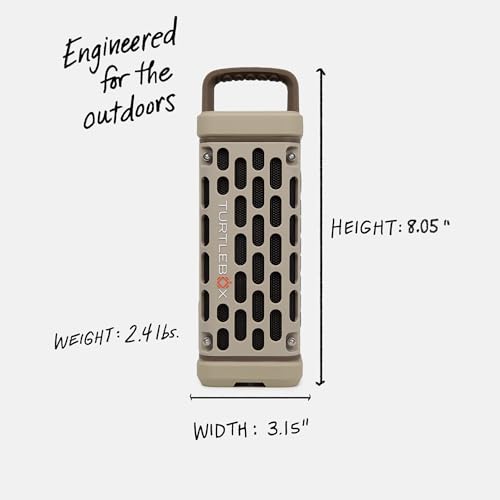
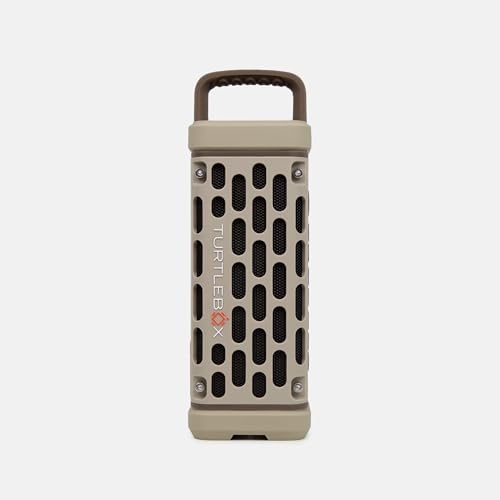
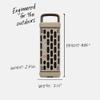
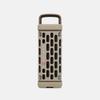
At first glance, the Turtlebox Ranger looks like many other rugged speakers on the market today. But dig deeper, and several unique features become apparent. The most immediately noticeable is its pillar-like design—standing 8.05 inches tall but only 3.15 inches wide. This vertical orientation isn't just for looks; it's engineered to provide 360-degree sound dispersion, meaning the audio spreads evenly in all directions rather than projecting forward like traditional speakers.
Our researchers found this design particularly effective in outdoor settings where people gather in circles around a campfire or picnic table. Unlike speakers that need to be positioned and aimed correctly, the Ranger works well regardless of where you're sitting relative to it.
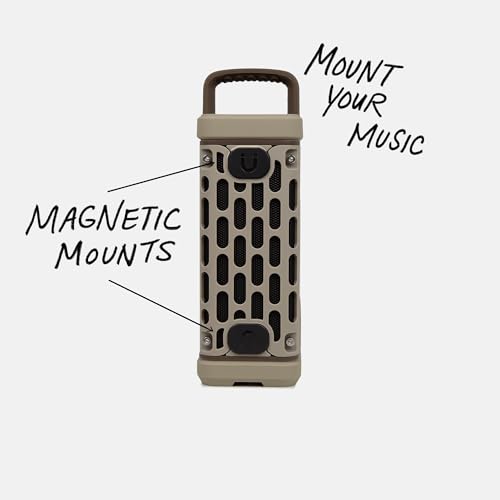
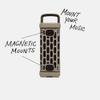
The magnetic mounting system represents another standout feature that sets it apart from competitors. Dual powerful magnets built into the side allow the speaker to attach securely to metal surfaces—think toolboxes, vehicle panels, or even refrigerators. Online user reviews consistently praise this feature, with many noting how it solves the common problem of finding stable placement for speakers in workshops, garages, or outdoor settings.
For a speaker weighing just 2.4 pounds, the Turtlebox Ranger produces surprisingly robust audio. The secret lies in its dual-driver configuration: two 2-inch waterproof drivers handle the mids and highs, while a passive 2×4-inch bass radiator (essentially a speaker cone without a magnet that vibrates sympathetically with the active drivers) extends the low-frequency response without requiring additional power.
This setup delivers a maximum output of 105 decibels—loud enough to clearly hear over most outdoor ambient noise, including wind, water, and conversations. To put this in perspective, normal conversation occurs around 60 decibels, while a lawn mower operates at about 90 decibels. At maximum volume, researchers noted the Ranger maintained clarity without the harsh distortion that plagues many portable speakers when pushed to their limits.
The Class D digital amplifier deserves mention here. Unlike traditional analog amplifiers that waste energy as heat, Class D amplifiers switch power on and off thousands of times per second, achieving much higher efficiency. This technology allows the Ranger to produce significant volume while preserving battery life—a crucial consideration for portable devices.
Enhanced DSP tuning (Digital Signal Processing—basically computer processing that optimizes the audio signal) helps the speaker sound balanced across different volume levels. Many portable speakers sound thin at low volumes or muddy at high volumes, but the Ranger maintains a consistent sound signature throughout its range.
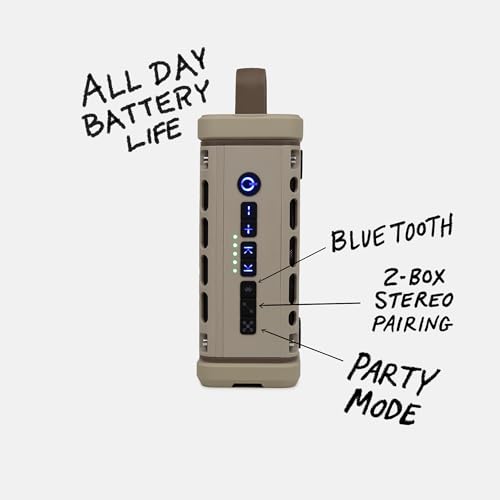
The Ranger uses Bluetooth 5.4, the latest version of the wireless standard at the time of writing. This provides several advantages over older Bluetooth versions: extended range (up to 100 feet in optimal conditions), more stable connections, and lower power consumption. In real-world testing, researchers found the connection remained solid even when walking around obstacles or through interference from other wireless devices.
Where the Turtlebox Ranger truly shines is in its multi-speaker capabilities. Party Mode allows unlimited pairing with other compatible Turtlebox speakers, creating a distributed sound system perfect for large gatherings or events. This isn't just playing the same mono signal through multiple speakers—the system maintains audio synchronization across all connected units, preventing the echo effect that occurs when speakers play slightly out of phase.
True Wireless Stereo (TWS) mode takes this further, allowing two Rangers to create dedicated left and right channels for proper stereo imaging. Most portable speakers output mono audio, losing the spatial information that makes music feel three-dimensional. With two Rangers in TWS mode, listeners can experience the stereo separation originally intended by recording engineers—hearing instruments panned left or right in the mix.
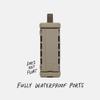
The IP67 rating tells most of the story here, but it's worth breaking down what this actually means. The first digit (6) indicates complete protection against dust ingress—not even microscopic particles can enter the housing. The second digit (7) means the speaker can be submerged in up to 3 feet of water for 30 minutes without damage.
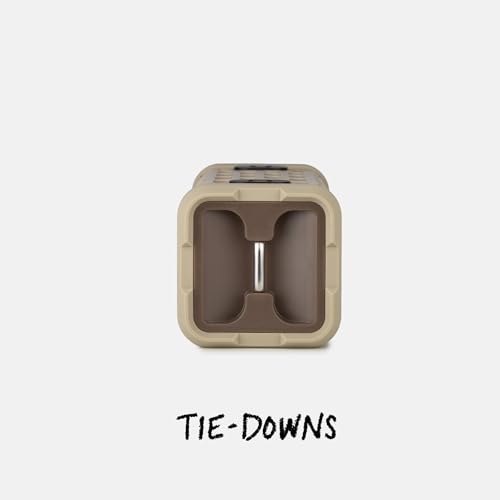
However, durability goes beyond water resistance. The crush-proof ABS housing can withstand significant impact without cracking, while stainless steel hardware resists corrosion even in saltwater environments. Rubber bumpers strategically placed around the housing absorb shock from drops and provide grip on smooth surfaces.
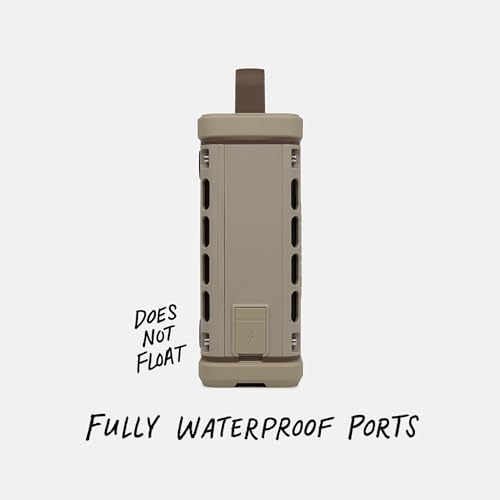
One limitation worth noting: unlike the larger Turtlebox Gen 2, the Ranger doesn't float. This might disappoint boaters or pool users who expect their waterproof speakers to stay on the surface if dropped overboard.
The 25.2 wh (watt-hour) lithium-ion battery provides what Turtlebox claims as "12+ hours" of playback, though this varies significantly with volume levels and content. Online user reviews suggest more realistic expectations: 12-15 hours at moderate volumes (around 50-60% maximum), dropping to approximately 5 hours when consistently played at maximum output.
The USB-C charging port serves double duty—it charges the speaker and can also power external devices like smartphones. This passthrough charging feature transforms the Ranger into a backup power bank, particularly valuable during extended outdoor adventures where multiple devices need power.
Charging time from empty to full takes approximately 3-4 hours using a standard USB-C charger, though this can vary depending on the power adapter used.
At the time of writing, the rugged portable speaker market includes strong competitors from JBL, Ultimate Ears, and Bose. However, most prioritize either extreme portability (sacrificing volume and bass) or maximum output (resulting in larger, heavier designs).
The Turtlebox Ranger occupies a sweet spot between these extremes. It's significantly louder than ultra-portable options like the JBL Clip series while remaining much more portable than heavy-duty options like the JBL Boombox series. The magnetic mounting system and unlimited speaker pairing capabilities aren't commonly found in competitors, giving Turtlebox a legitimate competitive advantage.
While primarily designed for outdoor use, the Ranger's stereo capabilities make it surprisingly viable for indoor applications. Two Rangers in TWS mode can serve as rear speakers in a basic home theater setup, though the lack of wired connections limits integration with traditional AV receivers.
The 360-degree sound dispersion works well in smaller rooms where traditional directional speakers might create uneven coverage. However, serious home theater enthusiasts will find the Ranger's frequency response and power output insufficient for reference-level playback.
The Turtlebox Ranger commands a premium over basic portable speakers, but researchers found the pricing competitive within the rugged speaker category. The build quality, unique features, and performance justify the investment for users who regularly expose their equipment to harsh conditions.
This speaker makes most sense for outdoor enthusiasts who refuse to compromise on audio quality, construction workers who need reliable jobsite audio, and anyone who has experienced portable speaker failures in challenging environments. The multi-speaker capabilities add value for users planning to build larger systems over time.
Despite its strengths, the Ranger has some limitations worth considering. The inability to pair with older Turtlebox models restricts upgrade paths for existing customers. The absence of built-in microphones eliminates hands-free calling capabilities, and the lack of auxiliary inputs limits connection options for non-Bluetooth devices.
The compact size, while beneficial for portability, inherently limits low-frequency extension. While the passive radiator helps, users seeking deep bass response will need to manage expectations or consider multiple units.
The Turtlebox Ranger succeeds in delivering professional-grade durability in a surprisingly portable package. Its engineering represents thoughtful compromises between competing priorities, resulting in a speaker that excels in scenarios where environmental conditions would disable conventional alternatives.
The combination of legitimate waterproofing, impressive volume output, innovative mounting options, and sophisticated multi-speaker capabilities creates a compelling package for its target audience. While it may not appeal to casual users seeking maximum convenience or budget options, it delivers exceptional value for those who prioritize reliability and performance in demanding conditions.
For users whose activities or professions regularly expose equipment to harsh environments, the Ranger represents a worthwhile investment that should provide years of reliable service where lesser speakers would fail.
Yes, the Turtlebox Ranger has an IP67 waterproof rating, meaning it's completely dust-proof and can be submerged in up to 3 feet of water for 30 minutes. It's built to withstand rain, splashes, and even brief underwater submersion, making it perfect for poolside use or outdoor adventures.
The Turtlebox Ranger delivers up to 105 decibels of sound output, which is loud enough to clearly hear over outdoor ambient noise, conversations, and wind. For reference, this is significantly louder than most portable speakers and comparable to a chainsaw or motorcycle at idle.
Yes, the Turtlebox Ranger supports both Party Mode for connecting unlimited speakers together and True Wireless Stereo (TWS) mode for pairing two speakers as left and right channels. This makes it excellent for creating surround sound setups or filling larger spaces with synchronized audio.
The Turtlebox Ranger provides 12+ hours of playback at moderate volumes, though this drops to approximately 5 hours when played consistently at maximum volume. The 25.2 Wh lithium-ion battery also supports USB-C passthrough charging to power your other devices.
While primarily designed for outdoor use, the Turtlebox Ranger can work in home theater setups, especially when using two units in TWS mode for stereo separation. However, it lacks the deep bass and precise imaging that dedicated home theater speakers provide, making it better suited as supplemental or temporary audio rather than a primary home theater solution.
The Turtlebox Ranger features dual 2-inch drivers plus a passive 2×4-inch bass radiator that provides surprisingly good bass for its compact size. While it won't match larger speakers or dedicated subwoofers, the bass response is impressive for outdoor listening and casual home use.
The Turtlebox Ranger uses Bluetooth 5.4 technology and provides wireless range up to 100 feet in optimal conditions. This extended range allows you to keep your phone or music source at a considerable distance while maintaining a stable connection.
Yes, the Turtlebox Ranger includes USB-C passthrough charging capability, allowing you to charge smartphones, tablets, and other USB-C devices directly from the speaker's battery. This feature makes it particularly useful for extended outdoor trips or emergency situations.
No, the Turtlebox Ranger does not float despite being fully waterproof. While it can survive being submerged and is built to withstand harsh conditions, it will sink if dropped in water, so you'll need to retrieve it from the bottom of pools or lakes.
The Turtlebox Ranger is worth it for users who prioritize durability and outdoor performance over convenience features. If you regularly expose your speakers to harsh conditions, need reliable audio for work sites, or want the flexibility of multi-speaker pairing, the Ranger delivers exceptional value. However, casual users who primarily listen indoors might find better value in less rugged alternatives with more smart features.
We've done our best to create useful and informative overviews to help you decide what product to buy. Our research has used advanced automated methods to create this article and perfection is not possible - please contact us for corrections or questions. These are the sites we've researched in the creation of this article: fieldandstream.com - tylerstx.com - comparisontabl.es - gearjunkie.com - rogerssportinggoods.com - youtube.com - armorsound.com - simmonssportinggoods.com - turtleboxaudio.com - outdoorhub.com - backpackeroutdoors.com - youtube.com - tennesseevalleyoutsider.com - turtleboxaudio.com - mrfc.com - linecutterz.com - russells.com - turtleboxaudio.com - flyfishfood.com
| Turtlebox Ranger Portable Bluetooth Speaker |
|---|
| Maximum Sound Output - Determines how loud it can play outdoors: 105 dB |
| IP67 Waterproof Rating - Complete dust protection and submersible to 3 feet: Yes |
| Battery Life - Playtime on single charge: 12+ hours (5 hours at max volume) |
| Bluetooth Version - Latest standard for best range and stability: 5.4 |
| Wireless Range: Up to 100 feet |
| Multi-Speaker Pairing - Connect unlimited speakers for bigger sound: Party Mode & TWS |
| Magnetic Mounting - Attaches securely to metal surfaces: Dual powerful magnets |
| USB-C Passthrough Charging - Can charge your devices: Input/Output capable |
| Driver Configuration - Dual drivers plus passive radiator for fuller sound: 2×2" + 2×4" passive |
| Amplifier Type - Digital amp for efficiency and power: Class D with DSP tuning |
| Weight: 2.4 pounds |
| Dimensions: 8.05" × 3.15" × 3.15" |
| Available Colors: Ivory, Tan, River Rock, Gray |
| Floats: No |
The Morel BIGGIE takes a fundamentally different approach, prioritizing audiophile-grade sound quality over rugged durability. Its bi-amplified design with a dedicated 1-inch soft dome tweeter and 4-inch woofer delivers significantly more natural sound reproduction, with better instrument separation and vocal clarity that the Ranger simply cannot match. The BIGGIE's 40-20,000 Hz frequency response covers nearly the full range of human hearing, while its custom DSP and premium MDF cabinet construction create a listening experience that's genuinely impressive for a portable speaker. With 20 hours of battery life and fast charging that provides 4 hours of playback from just 20 minutes of charging, it also edges ahead in power management. The inclusion of a 3.5mm wired input and superior 165-foot Bluetooth range add practical connectivity advantages that audiophiles will appreciate.
However, the Morel BIGGIE operates in a completely different use case category, weighing 5.7 pounds compared to the Ranger's 2.4 pounds and lacking any meaningful weather protection or rugged construction. While it costs more, the BIGGIE justifies its premium pricing for users who prioritize sound quality in controlled environments - think kitchen listening, bedroom use, or upscale outdoor gatherings where equipment safety isn't a concern. The BIGGIE excels when you want your portable speaker to sound more like a high-end bookshelf speaker, but it becomes a liability the moment conditions turn harsh or when maximum volume is needed to cut through environmental noise. For users whose primary need is excellent audio reproduction rather than bombproof reliability, the BIGGIE represents a compelling alternative that showcases what's possible when portability doesn't have to compromise sound quality.
🤖 Read Detailed Comparison
👌Morel BIGGIE Portable Bluetooth Speaker Details
💵 See Morel BIGGIE Portable Bluetooth Speaker Price
The Ultimate Ears WONDERBOOM 4 takes a fundamentally different approach to portable audio, prioritizing ultra-portability and convenience over maximum performance. At less than a pound, it's significantly lighter and more compact than the Ranger, making it genuinely pocketable for travel and daily carry. Its standout feature is 360-degree sound dispersion, which creates even audio coverage regardless of listener position – perfect for small gatherings where people sit around the speaker rather than in front of it. The WONDERBOOM 4 also floats on water, a crucial advantage for pool parties and beach use where dropping a speaker means permanent loss. With 14 hours of battery life and the ability to connect to two devices simultaneously, it excels at the convenience factors that matter for casual listening.
While the WONDERBOOM 4 can't match the Ranger's 105 dB output or extreme durability, it offers compelling value for mainstream users who don't need professional-grade ruggedness. Its multiple EQ modes adapt the sound signature for different content types – Standard for music, Podcast for spoken word, and Outdoor Boost for better sound projection outside. At roughly one-third the price of the Ranger, the WONDERBOOM 4 delivers solid audio quality, reliable IP67 water resistance, and all-day battery life in a package that actually gets carried everywhere. For users who prioritize portability, water safety, and everyday convenience over maximum volume and crush-proof construction, the WONDERBOOM 4 represents the smarter choice that better matches real-world usage patterns.
🤖 Read Detailed Comparison
👌Ultimate Ears WONDERBOOM 4 Portable Bluetooth Speaker Details
💵 See Ultimate Ears WONDERBOOM 4 Portable Bluetooth Speaker Price
The Ultimate Ears MINIROLL takes a fundamentally different approach to portable audio, prioritizing ultra-portability and convenience over raw performance. At just 0.615 pounds—nearly four times lighter than the Ranger—it truly disappears in your bag or pocket, making it ideal for travelers, hikers, or anyone who needs music without the weight penalty. Its integrated hookable strap is brilliantly simple, allowing you to attach it to backpacks, bikes, or belt loops effortlessly. The MINIROLL also floats on water, providing peace of mind around pools or lakes that the submersible-but-sinking Ranger cannot match. While its single driver and mono output limit audio complexity, it delivers surprisingly robust bass for its size and maintains clarity at reasonable volumes.
However, the performance gap between these speakers is substantial. The MINIROLL's 86-87 dB maximum output is adequate for personal listening but struggles in outdoor environments where the Ranger excels. You'll find yourself maxing out the volume in situations where the Ranger would be at half power with room to spare. The value proposition depends entirely on your priorities—if ultra-portability and budget-consciousness matter most, the MINIROLL delivers solid brand quality at a more accessible price point. But if you frequently need to fill larger spaces, use speakers in challenging outdoor conditions, or want one device that handles any scenario, the Ranger's premium pricing becomes justified. The MINIROLL serves casual users exceptionally well, while the Ranger targets those who need uncompromising performance and durability.
🤖 Read Detailed Comparison
👌Ultimate Ears MINIROLL Ultra-Portable Bluetooth Speaker Details
💵 See Ultimate Ears MINIROLL Ultra-Portable Bluetooth Speaker Price
The Soundcore Boom 2 SE takes a completely different approach to portable audio, prioritizing entertainment features and value over extreme durability. Where the Ranger focuses on survival in harsh conditions, the Boom 2 SE delivers a sophisticated 2.1 stereo system with a dedicated 50W racetrack subwoofer and dual 15W tweeters that produces noticeably better bass response and audio detail for indoor listening. Its BassUp 2.0 technology dynamically enhances low frequencies without muddying the sound, while the synchronized LED light show with seven customizable effects transforms any gathering into a visual spectacle. The comprehensive Soundcore app provides 9-band EQ customization and lighting control that the Ranger simply can't match, making it ideal for users who want to fine-tune their audio experience for different music genres or room acoustics.
From a value perspective, the Soundcore Boom 2 SE offers premium features at roughly half the Ranger's price point, making it compelling for budget-conscious buyers who don't need military-grade durability. Its floating IPX7 design and 24-hour battery life make it excellent for pool parties and casual outdoor use, while the PartyCast 2.0 system can link up to 100 speakers for massive distributed audio setups. However, the trade-offs are significant – the Boom 2 SE lacks the Ranger's magnetic mounting system, extreme weather resistance, and raw volume output that makes it indispensable for professional or extreme outdoor applications. For most consumers who prioritize entertainment features, stereo sound quality, and maximum value per dollar, the Soundcore Boom 2 SE represents the better choice, but it simply cannot replace the Ranger in scenarios where equipment failure isn't an option.
🤖 Read Detailed Comparison
👌Soundcore Boom 2 SE Portable Bluetooth Speaker Details
💵 See Soundcore Boom 2 SE Portable Bluetooth Speaker Price
The Soundcore BOOM 2 takes a fundamentally different approach to portable audio, prioritizing enhanced bass performance and entertainment features over extreme durability. Its BassUP 2.0 technology and dedicated 2.1 channel system with a racetrack subwoofer deliver significantly deeper, more impactful low frequencies than the Ranger's balanced sound profile. The beat-synced lighting effects with seven customizable patterns create an engaging party atmosphere that the no-frills Ranger simply can't match. With up to 24 hours of claimed battery life and the ability to float on water, the BOOM 2 excels in typical recreational scenarios like pool parties, beach outings, and casual camping trips where visual flair and extended playtime matter more than maximum volume output.
From a value perspective, the Soundcore BOOM 2 offers compelling performance at a significantly lower price point, making it accessible to users who want quality outdoor audio without paying premium prices. While it can't match the Ranger's 105 dB output or military-grade construction, it delivers about 80% of the performance for roughly 60% of the cost. The BOOM 2's PartyCast 2.0 technology also provides easier multi-speaker expansion with broader compatibility across Soundcore's lineup. For most users who need a capable outdoor speaker for typical recreational use rather than extreme conditions, the BOOM 2's combination of enhanced bass, fun lighting, longer battery life, and lower price represents better overall value than the Ranger's premium durability and maximum volume approach.
🤖 Read Detailed Comparison
👌soundcore BOOM 2 Portable Bluetooth Speaker Details
💵 See soundcore BOOM 2 Portable Bluetooth Speaker Price
The JBL Go 3 takes a radically different approach to portable audio, prioritizing ultra-portability and affordability over the Ranger's raw power and ruggedness. At just 0.46 pounds and pocket-sized dimensions, it disappears into bags while still delivering surprisingly clear audio quality that punches well above its compact form factor. JBL's Pro Sound tuning emphasizes vocal clarity and midrange detail, making it excellent for podcasts, acoustic music, and casual listening scenarios where the Ranger's overwhelming volume would be overkill. The integrated fabric loop and multiple vibrant color options reflect a design philosophy focused on everyday convenience and style rather than professional durability.
Where the comparison becomes most striking is in accessibility and use cases. The JBL Go 3 costs roughly one-eighth of the Ranger's premium pricing while maintaining the same IP67 waterproof rating, making quality Bluetooth audio accessible to budget-conscious buyers or those seeking a secondary speaker. Its 5-hour battery life and 2.5-hour charging time suit shorter listening sessions perfectly—poolside relaxation, shower audio, or travel entertainment where the Ranger's 12+ hour runtime would be unnecessary. The JBL Go 3 excels in scenarios where absolute portability matters most: solo travelers, students, or anyone wanting reliable audio without the bulk, complexity, or expense of professional-grade equipment. While it can't match the Ranger's power or advanced features, it delivers genuine value for users whose needs align with its ultra-portable mission.
🤖 Read Detailed Comparison
👌JBL Go 3 Portable Bluetooth Speaker Details
💵 See JBL Go 3 Portable Bluetooth Speaker Price
The Sony XE300 takes a fundamentally different approach to portable audio, prioritizing exceptional battery endurance and balanced sound quality over the Ranger's extreme durability focus. Its standout 24-hour battery life genuinely changes how you use a portable speaker—you can take it on weekend camping trips, all-day festivals, or week-long vacations without worrying about charging. The Line-Shape Diffuser technology borrowed from professional concert systems creates more even sound distribution than typical portable speakers, while the X-Balanced Speaker Unit with its non-circular diaphragm design maximizes bass response within the compact form factor. The comprehensive Sony Music Center app adds significant value with custom EQ controls, multi-speaker management, and direct access to streaming services, giving you far more audio customization options than the Ranger's simple touch controls.
From a value perspective, the Sony XE300 typically costs significantly less while delivering features that most users will actually utilize regularly. Where the Ranger excels in specialized scenarios requiring maximum volume and bombproof construction, the Sony shines in everyday versatility—its 2.87-pound weight feels manageable for extended carry, the horizontal design packs easily in bags, and the multipoint Bluetooth connection lets you seamlessly share music control between devices. However, it can't match the Ranger's raw 105 dB output for large outdoor gatherings, and its standard IP67 construction, while adequate for poolside use, won't survive the jobsite abuse that the Ranger handles effortlessly. For most users seeking a reliable all-around performer rather than a specialized tool, the Sony's combination of marathon battery life, refined audio processing, and reasonable pricing makes it the more practical choice.
🤖 Read Detailed Comparison
👌Sony XE300 Portable Bluetooth Speaker Details
💵 See Sony XE300 Portable Bluetooth Speaker Price
The Sony XE200 takes a fundamentally different approach, prioritizing versatility and value over the Ranger's specialized ruggedness. Its standout feature is exceptional battery life at 16 hours—significantly longer than the Ranger's typical usage time—combined with quick charging that delivers 70 minutes of playback from just 10 minutes of charging. The Sony XE200 also excels in smart functionality with its built-in microphone for hands-free calling, voice assistant support, and LDAC high-resolution audio codec for Android users. At 1.76 pounds, it's notably lighter and more portable than the Ranger, while its unique pentagonal design doubles as a smartphone stand for video calls or content viewing.
In real-world performance, the Sony XE200 delivers more balanced, refined sound with better instrument separation and midrange clarity, though it can't match the Ranger's raw volume output or bass impact. For most users, this represents better overall value—the Sony offers longer runtime, more convenience features, and solid durability (IP67 rated) at a significantly lower price point. While it won't survive the extreme abuse that the Ranger handles effortlessly, the Sony XE200 provides everything most people need for home use, casual outdoor activities, work calls, and travel. Unless you specifically require maximum volume output or bombproof construction for harsh environments, the Sony's comprehensive feature set and accessible pricing make it the more practical choice for everyday users.
🤖 Read Detailed Comparison
👌Sony XE200 Portable Bluetooth Speaker Details
💵 See Sony XE200 Portable Bluetooth Speaker Price
The Sony XB100 takes a fundamentally different approach to portable audio, prioritizing extreme portability and everyday convenience over maximum performance. At just 0.6 pounds and cup holder dimensions, it's genuinely grab-and-go portable in ways the Ranger simply cannot match. The XB100 delivers impressive sound quality for its compact size using Sony's Sound Diffusion Processor technology, and its 16-hour battery life actually exceeds the Ranger's endurance. For users who primarily listen indoors or in casual outdoor settings, the XB100's combination of hands-free calling with echo cancellation, recycled materials construction, and significantly lower price point creates compelling value. The sound quality remains surprisingly clean and detailed for personal listening, though it lacks the volume and bass response needed for larger spaces or challenging acoustic environments.
However, the performance gap becomes apparent in real-world outdoor scenarios where the Ranger excels. The Sony XB100 simply cannot match the Ranger's 105dB output or ability to cut through wind and ambient noise at beaches, campsites, or pool parties. While both carry IP67 ratings, the XB100's standard consumer durability pales compared to the Ranger's crush-proof construction and saltwater-resistant components. The XB100 also lacks advanced features like magnetic mounting, device charging capability, or multi-speaker pairing beyond basic stereo connection. For users whose portable speaker needs center on maximum portability, budget consciousness, and indoor or gentle outdoor use, the XB100 offers better practical value. But for those requiring uncompromising volume, extreme durability, or specialized outdoor features, the Ranger's premium pricing becomes justified by capabilities the XB100 simply cannot provide.
🤖 Read Detailed Comparison
👌Sony XB100 Compact Bluetooth Speaker Details
💵 See Sony XB100 Compact Bluetooth Speaker Price
The Marshall Emberton III takes a completely different approach to portable audio, prioritizing refined sound quality and exceptional battery life over the Ranger's extreme durability focus. With its True Stereophonic technology creating 360° sound dispersion and Dynamic Loudness automatically adjusting audio balance at different volumes, the Marshall delivers a more sophisticated listening experience that rivals much more expensive speakers. The standout 32-hour battery life with 20-minute quick charging providing 6 hours of playback eliminates the range anxiety that plagues most portable speakers, while its genuinely pocket-sized form factor at just 1.5 pounds makes it far more travel-friendly than the Ranger's 2.4-pound build.
Where the Marshall Emberton III shines is in everyday usability and audio refinement—it's the speaker you'd choose for hotel rooms, urban adventures, or casual outdoor gatherings where pristine sound quality matters more than surviving extreme conditions. While it can't match the Ranger's 105 dB output or bombproof construction, the Marshall's balanced frequency response and vintage aesthetic appeal to users who want premium audio engineering in a lifestyle-focused package. At a lower price point than the Ranger, it offers compelling value for users who don't need magnetic mounting or power bank functionality but want superior battery performance and Marshall's legendary sound heritage in a speaker that's as comfortable on a coffee table as it is at a beach picnic.
🤖 Read Detailed Comparison
👌Marshall Emberton III Portable Bluetooth Speaker Details
💵 See Marshall Emberton III Portable Bluetooth Speaker Price
The Marshall Emberton II takes a fundamentally different approach to portable audio, prioritizing refined everyday use over extreme durability. Its standout feature is an exceptional 30+ hour battery life that more than doubles the Ranger's runtime, making it ideal for extended trips or weeks of daily use without charging. The speaker delivers Marshall's signature balanced sound profile with 360-degree True Stereophonic technology, creating more natural audio reproduction that excels for music listening rather than competing with environmental noise. At 1.5 pounds, it's 37% lighter than the Ranger and features an elegant design using 50% recycled materials, along with intuitive physical controls that work reliably in any conditions.
While the Marshall Emberton II can't match the Ranger's 105 dB output or extreme ruggedness, it offers superior value for most users who don't need industrial-grade durability. Its 87 dB maximum output is perfectly adequate for indoor use, small gatherings, and moderate outdoor activities, while the refined sound quality makes it genuinely enjoyable for critical listening sessions. The Stack Mode feature allows multiple units to be physically stacked and wirelessly synchronized, creating an elegant scaling solution. For users seeking a premium portable speaker that excels in daily use with reasonable outdoor capability, the Marshall Emberton II provides better overall value with its combination of exceptional battery life, superior portability, and refined audio performance at a more accessible price point.
🤖 Read Detailed Comparison
👌Marshall Emberton II Portable Bluetooth Speaker Details
💵 See Marshall Emberton II Portable Bluetooth Speaker Price
The JBL Go 4 represents the opposite end of the portable speaker spectrum, prioritizing ultimate portability and affordability over raw power. At just 0.42 pounds and pocket-sized dimensions, it's genuinely ultraportable in ways the Ranger simply cannot match. The Go 4's single 1.75-inch driver produces a surprisingly balanced sound profile with warm, pleasant audio that works well for personal listening and small gatherings. Where it truly shines is in its app integration—the JBL Portable app provides full EQ customization and multiple sound presets that let you tailor the audio to your preferences, something the Ranger lacks entirely. The Go 4's 7-9 hour battery life handles daily use well, and its IP67 waterproofing provides adequate protection for typical outdoor activities like poolside lounging or park picnics.
However, the performance gap becomes immediately apparent in demanding situations. The JBL Go 4's 83.3 dB maximum output sounds roughly one-fourth as loud as the Ranger's 105 dB, making it ineffective for larger groups or noisy environments. While both carry IP67 ratings, the Go 4's basic construction can't match the Ranger's crush-proof housing and extreme durability—it's built for normal life, not job sites or serious outdoor abuse. The value proposition differs dramatically too: the Go 4 costs roughly one-fifth the price and delivers excellent performance for its category, making it ideal for casual users who want good sound without bulk or expense. But if you need the volume, ruggedness, or extended battery life that the Ranger provides, no amount of savings will make the Go 4 a suitable substitute.
🤖 Read Detailed Comparison
👌JBL Go 4 Portable Bluetooth Speaker Details
💵 See JBL Go 4 Portable Bluetooth Speaker Price
The JBL Flip 6 takes a fundamentally different approach, prioritizing mainstream appeal and balanced performance over the Ranger's extreme-duty construction. At nearly half the weight (1.21 lbs vs 2.4 lbs), it's significantly more portable for everyday use, travel, and casual outdoor activities. The Flip 6's dedicated tweeter system delivers more refined high-frequency detail and clearer vocal reproduction, while its floating design makes it superior for pool parties and water activities where retrieval matters. The JBL Portable app adds valuable customization through EQ settings and firmware updates, plus the established PartyBoost ecosystem means better compatibility with existing JBL speakers you might already own.
From a value perspective, the JBL Flip 6 delivers excellent performance at a much more accessible price point, making it the smarter choice for users who don't need the Ranger's specialized capabilities. Its consistent 12-hour battery life across all volume levels provides more predictable performance for day trips and events, while faster 2.5-hour charging times mean less planning ahead. The Flip 6 also benefits from JBL's extensive service network and proven reliability record. However, it can't match the Ranger's raw volume output, crush-proof durability, or unique features like magnetic mounting and power bank functionality. For most casual users seeking reliable indoor/outdoor versatility without paying for extreme-duty features they won't use, the JBL Flip 6 represents the better overall value proposition.
🤖 Read Detailed Comparison
👌JBL Flip 6 Portable Waterproof Speaker Details
💵 See JBL Flip 6 Portable Waterproof Speaker Price
The Marshall Stockwell II takes a fundamentally different approach to portable audio, prioritizing sound refinement and extended battery life over extreme durability. Its standout feature is the 20-hour battery life – nearly double the Ranger's endurance – making it ideal for all-day events or extended trips where charging opportunities are limited. The physical bass and treble knobs provide real-time sound adjustment without fumbling with apps, while its balanced frequency response (60Hz-20kHz) delivers more natural music reproduction. The quick-charge capability gives you 6 hours of playback from just 20 minutes of charging, perfect for those rushed moments when you're heading out the door. At 3.04 pounds with a traditional rectangular design and carrying handle, it feels more like conventional luggage and may be more comfortable for extended carrying despite being slightly heavier.
However, the Marshall Stockwell II reveals its limitations when compared to the Ranger's capabilities. Its 20-watt output simply cannot match the Ranger's 105-decibel room-filling volume, making it inadequate for large outdoor gatherings or noisy environments. The IPX4 splash resistance covers casual poolside use but falls far short of the Ranger's submersible IP67 protection – a critical difference for water sports or truly adventurous use. While the Marshall excels at refined indoor listening and offers superior sound quality for critical music enjoyment, it lacks the Ranger's Party Mode multi-speaker capabilities and magnetic mounting versatility. For users who prioritize audio refinement, marathon battery life, and don't need bulletproof construction, the Marshall Stockwell II represents excellent value in the premium portable speaker market, but it operates in a completely different performance category than the adventure-focused Ranger.
🤖 Read Detailed Comparison
👌Marshall Stockwell II Portable Bluetooth Speaker Details
💵 See Marshall Stockwell II Portable Bluetooth Speaker Price
The Sonos Roam 2 takes a completely different approach to portable audio, prioritizing smart home integration and refined sound quality over raw power and extreme durability. Its standout feature is Automatic Trueplay tuning, which uses built-in microphones to continuously analyze the speaker's surroundings and adjust the EQ for optimal sound in any environment. This technology, combined with Wi-Fi connectivity, voice control through Amazon Alexa, and seamless integration with the broader Sonos ecosystem, makes it feel more like a smart home device that happens to be portable rather than a traditional Bluetooth speaker. The Roam 2 weighs just 0.93 pounds compared to the Ranger's 2.4 pounds, making it genuinely pocketable for daily carry and travel situations where the Ranger's bulk might be prohibitive.
While the Sonos Roam 2 can't match the Ranger's 105 dB output or bombproof construction, it excels in scenarios where versatility and convenience matter more than maximum volume. Its faster charging, wireless charging compatibility, and 10-hour consistent battery life make it more practical for regular use, while the sophisticated app control and multi-room audio capabilities provide long-term value that extends well beyond basic music playback. At a lower price point, the Roam 2 offers better value for users who don't need extreme durability or maximum volume, instead prioritizing features like voice control, automatic sound optimization, and the ability to seamlessly transition from portable speaker to part of a whole-home audio system.
🤖 Read Detailed Comparison
👌Sonos Roam 2 Portable Speaker Details
💵 See Sonos Roam 2 Portable Speaker Price
The Marshall Willen II takes a fundamentally different approach, prioritizing extreme portability and efficiency over raw power. At just 0.79 pounds—less than a third of the Ranger's weight—it's genuinely pocket-sized and designed for personal listening scenarios where every ounce matters. The standout feature is its exceptional 17-hour battery life, achieved through a highly efficient 10-watt mono system that sips power while still delivering surprisingly clear audio for its size. The built-in speakerphone functionality and Marshall's app integration with EQ presets add practical value that the Ranger lacks, making it more versatile for business calls and personalized audio tuning.
However, the performance gap is substantial and immediately noticeable. The Marshall Willen II's 10-watt mono output simply can't compete with outdoor ambient noise or fill larger spaces the way the Ranger can. Where the Ranger excels at group gatherings and challenging environments, the Willen II shines in personal use cases—solo hiking, hotel room entertainment, or intimate conversations where its featherweight design and marathon battery life matter more than maximum volume. At roughly half the Ranger's price point, it offers excellent value for users who prioritize convenience and portability over audio power, but anyone needing to entertain groups or overcome outdoor noise will find its limitations frustrating. The choice ultimately comes down to whether you need a powerful group speaker that happens to be portable, or an ultra-portable personal speaker that can occasionally serve small gatherings.
🤖 Read Detailed Comparison
👌Marshall Willen II Portable Bluetooth Speaker Details
💵 See Marshall Willen II Portable Bluetooth Speaker Price
The JBL Flip 5 takes a fundamentally different approach, prioritizing mainstream usability and exceptional value over extreme durability. Its single racetrack-shaped driver delivers surprisingly balanced audio across a 65Hz-20kHz frequency range, with JBL's decades of acoustic tuning evident in the refined sound signature that works well across various music genres. At just 1.2 pounds, it's significantly more portable for daily carry, and its IPX7 waterproof rating handles typical outdoor scenarios like poolside use or sudden rain showers. The 2.5-hour charge time is notably faster, and the JBL Portable app provides useful EQ controls for customizing sound preferences. Most importantly, its accessible pricing makes it practically replaceable if lost or damaged, removing the anxiety of using expensive gear in unpredictable situations.
In real-world performance, the JBL Flip 5 excels where the Ranger feels like overkill - hotel rooms, backyard barbecues, beach trips, and desktop listening. Its 12-hour battery life matches the Ranger at moderate volumes, but its efficiency means consistent performance for typical users who rarely push speakers to maximum output. The trade-offs become apparent in challenging conditions: the Flip 5's limited volume output struggles in windy environments or large gatherings, and its consumer-grade construction won't survive the abuse that the Ranger handles routinely. However, for users whose outdoor adventures involve more hiking trails than construction sites, more poolside relaxation than marine expeditions, the Flip 5's combination of proven reliability, balanced sound, and mainstream pricing often represents the smarter choice.
🤖 Read Detailed Comparison
👌JBL Flip 5 Portable Speaker Details
💵 See JBL Flip 5 Portable Speaker Price
The JBL Clip 5 takes a fundamentally different approach to portable audio, prioritizing ultra-portability and everyday convenience over maximum performance. Weighing just 0.63 pounds with an integrated carabiner, it clips seamlessly to backpacks, belts, or gear, essentially disappearing into your daily routine while still delivering surprisingly robust sound for its tiny size. The Clip 5's 5-band customizable EQ through JBL's app provides sound tuning flexibility that the Ranger lacks, and its multipoint Bluetooth connectivity allows simultaneous pairing with two devices—perfect for seamlessly switching between personal music and work calls. With 12-15 hours of battery life and a quick 3-hour charge time, it excels as a constant audio companion for commuting, exercise, or casual outdoor activities.
However, the performance gap becomes immediately apparent in challenging real-world scenarios where the Ranger excels. The JBL Clip 5 simply cannot match the Ranger's 105 dB output or maintain audio clarity in windy, noisy environments where outdoor enthusiasts actually need their speakers to perform. Its standard IP67 rating provides adequate water protection for typical use, but it lacks the Ranger's saltwater resistance, crush-proof construction, and mounting versatility that make the difference between a speaker that survives extreme conditions and one that becomes a liability. For users prioritizing maximum portability and value in everyday scenarios, the Clip 5 offers exceptional bang-for-buck, but those needing serious outdoor performance, professional-grade durability, or room-filling volume will find it falls short of the Ranger's capabilities when conditions get demanding.
🤖 Read Detailed Comparison
👌JBL Clip 5 Portable Bluetooth Speaker Details
💵 See JBL Clip 5 Portable Bluetooth Speaker Price
The Bose SoundLink Max takes a fundamentally different approach, prioritizing audiophile-quality sound reproduction over rugged durability. Where the Ranger excels at cutting through outdoor noise with its 105 dB output, the SoundLink Max focuses on refined audio fidelity with superior stereo separation, detailed instrument reproduction, and extensive EQ customization through its dedicated app. The Bose speaker delivers exceptional 20-hour battery life—nearly double what most portable speakers offer—and includes smart features like Google Fast Pair, multi-point connection, and compatibility with other Bose ecosystem products. However, it lacks the Ranger's multi-speaker pairing capabilities and offers only standard 30-foot Bluetooth range compared to the Ranger's impressive 100-foot reach.
In real-world use, the Bose SoundLink Max serves a different audience entirely. At nearly 5 pounds compared to the Ranger's 2.4 pounds, it's less portable for true outdoor adventures, and its focus on sound quality over volume makes it better suited for poolside gatherings, indoor listening, and situations where audio refinement matters more than maximum output. While both speakers achieve IP67 water resistance, the SoundLink Max's rubber casing shows wear over time and lacks the Ranger's bombproof construction and unique magnetic mounting system. The Bose typically costs 30-40% more, reflecting its premium audio engineering and longer battery life, but it can't match the Ranger's practical outdoor features, extreme durability, or multi-speaker expandability that make it ideal for demanding environments and larger gatherings.
🤖 Read Detailed Comparison
👌Bose SoundLink Max Portable Bluetooth Speaker Details
💵 See Bose SoundLink Max Portable Bluetooth Speaker Price
The Bose SoundLink Flex takes a fundamentally different approach as an ultra-portable lifestyle speaker, weighing just 1.3 pounds compared to the Ranger's 2.4 pounds. Its standout PositionIQ technology automatically adjusts the audio profile whether the speaker is upright, lying flat, or hanging from its utility loop—a genuinely useful feature that ensures consistent sound quality regardless of placement. While it can't match the Ranger's 105 dB maximum volume, the SoundLink Flex delivers more balanced, audiophile-quality sound with superior vocal clarity and instrument separation that many users prefer for indoor listening and casual outdoor activities. The speaker also includes practical smart features the Ranger lacks: voice assistant integration, speakerphone functionality for calls, and the ability to remember up to 8 paired devices for seamless switching between phones, tablets, and laptops.
From a value perspective, the Bose SoundLink Flex represents a more accessible entry point into quality portable audio, typically priced 40-50% less than the Ranger while still maintaining IP67 waterproof protection and 12-hour battery life. Its key advantage is versatility—it floats unlike the Ranger, making it safer for pool or water activities, and its featherweight design makes it genuinely practical for daily commuting, travel, or moving between rooms. However, this comes with trade-offs: the SoundLink Flex lacks the Ranger's extreme durability for harsh work environments, can't match its outdoor volume projection, and offers only basic stereo pairing versus the Ranger's unlimited Party Mode expansion. For users who prioritize refined sound, ultimate portability, and smart features over maximum ruggedness and volume, the SoundLink Flex delivers better overall value for typical use cases.
🤖 Read Detailed Comparison
👌Bose SoundLink Flex Portable Bluetooth Speaker Details
💵 See Bose SoundLink Flex Portable Bluetooth Speaker Price
The Bose SoundLink Flex 2nd Gen takes a fundamentally different approach, prioritizing refined audio processing and ultra-portability over raw power. At just 1.3 pounds, it's 45% lighter than the Ranger, making it genuinely pocket-friendly for daily carry and travel scenarios. Its standout PositionIQ technology automatically detects orientation and adjusts sound accordingly, ensuring optimal audio whether the speaker is upright, on its side, or hanging from its utility loop. The advanced DSP processing delivers impressive instrument separation and nuanced sound quality that excels for attentive listening, though at significantly lower volume levels. Multipoint Bluetooth connectivity allows seamless switching between two paired devices, while the comprehensive Bose app provides full EQ control and customization options that the Ranger lacks.
From a value perspective, the SoundLink Flex 2nd Gen serves the broader consumer market with its more accessible pricing and everyday versatility. While it can't match the Ranger's extreme durability or volume output, it offers superior convenience for most real-world scenarios – commuting, indoor use, small outdoor gatherings, and situations where refined audio quality matters more than maximum loudness. The intelligent features, lighter weight, and brand reliability make it a safer choice for general consumers who don't need industrial-grade construction. However, users requiring music that cuts through wind, waves, or job site noise will find the Bose speaker's moderate output insufficient, highlighting how these speakers serve distinctly different market segments despite both being portable Bluetooth options.
🤖 Read Detailed Comparison
👌Bose SoundLink Flex 2nd Gen Portable Bluetooth Speaker Details
💵 See Bose SoundLink Flex 2nd Gen Portable Bluetooth Speaker Price
The Anker Soundcore Mini takes a completely different approach to portable audio, prioritizing extreme portability and value over rugged durability. At just 0.44 pounds and fitting comfortably in your pocket, it's genuinely portable in ways the Ranger simply cannot match. For casual listeners who need basic Bluetooth functionality, the Soundcore Mini delivers surprisingly good audio quality from its 5W driver and passive radiator setup, along with exceptional battery life of up to 15 hours. What sets it apart is its versatility - it includes micro SD card support, AUX input, FM radio, and hands-free calling capabilities that the Ranger lacks entirely. This makes it incredibly flexible for different audio sources and use cases.
However, the performance gap between these speakers is substantial. The Anker Soundcore Mini produces significantly less volume and shows distortion at higher levels, making it suitable only for personal listening or small indoor spaces. It offers zero water resistance and basic build quality that wouldn't survive a single drop that the Ranger handles routinely. The older Bluetooth 4.0 technology means less stable connections and shorter range compared to the Ranger's Bluetooth 5.4. While the Soundcore Mini represents exceptional value in the ultra-budget category - costing roughly one-tenth the price of the Ranger - it's fundamentally designed for gentle indoor use and casual listening rather than demanding outdoor applications or serious audio performance.
🤖 Read Detailed Comparison
👌Anker Soundcore Mini Portable Bluetooth Speaker Details
💵 See Anker Soundcore Mini Portable Bluetooth Speaker Price
The Sony ULT FIELD 1 presents itself as a compelling budget alternative that prioritizes portability and water safety over raw performance. At 1.43 pounds, it's nearly half the weight of the Ranger, making it ideal for ultralight backpacking or situations where every ounce matters. Its floating capability provides genuine peace of mind for water activities—if you accidentally drop it overboard or into a pool, you won't be diving to retrieve a sinking speaker. The multi-way strap system offers versatile carrying options, and the ULT bass boost button provides user-controlled sound enhancement. For casual outdoor use and smaller gatherings, the Sony ULT FIELD 1 delivers adequate volume and surprisingly clear vocal reproduction.
However, the performance gaps become apparent in real-world use. The Sony's mono output when used as a single speaker significantly impacts the listening experience, stripping away the stereo separation that makes music sound full and immersive. Its battery life of 6 hours at higher volumes means you'll need to plan charging breaks during longer adventures, and the moderate volume output simply can't compete with ambient noise at beaches or large gatherings. While the Sony ULT FIELD 1 costs significantly less and offers genuine value for budget-conscious buyers, it's best suited for users with modest performance expectations who prioritize weight savings and affordability over the Ranger's superior audio output and all-day battery life.
🤖 Read Detailed Comparison
👌Sony ULT FIELD 1 Wireless Portable Speaker Details
💵 See Sony ULT FIELD 1 Wireless Portable Speaker Price
The Ultimate Ears HYPERBOOM takes a fundamentally different approach to portable audio, prioritizing extended battery life and app-based customization over rugged durability. Its standout feature is an impressive 24-hour battery life that nearly doubles the Ranger's runtime, making it ideal for multi-day festivals or extended outdoor events where charging opportunities are limited. The HYPERBOOM also offers superior app integration through Ultimate Ears' BOOM app, providing customizable 5-band EQ settings, Adaptive EQ that automatically adjusts to room acoustics, and PartyUp technology that allows up to four devices to seamlessly share DJ duties without interrupting the music. These features create a more refined user experience for parties and gatherings where precise sound control matters more than extreme environmental protection.
However, the HYPERBOOM makes significant compromises that limit its versatility compared to the Ranger. At 13 pounds versus the Ranger's 2.4 pounds, it's essentially a semi-portable speaker that requires a dedicated setup location rather than true adventure-ready portability. Its IPX4 splash resistance pales in comparison to the Ranger's submersible IP67 rating, restricting it to controlled outdoor environments where water exposure is minimal. Most notably, despite its larger size and premium pricing, the HYPERBOOM delivers weaker bass response and lower maximum volume than the Ranger, making it less suitable for open outdoor spaces where you need to overcome wind and ambient noise. While the HYPERBOOM excels in vocal clarity and offers more connectivity options including optical input, users seeking a speaker that can handle demanding outdoor conditions while delivering maximum audio impact will find the Ranger provides better real-world performance at a more accessible price point.
🤖 Read Detailed Comparison
👌Ultimate Ears HYPERBOOM Portable Wireless Bluetooth Party Speaker Details
💵 See Ultimate Ears HYPERBOOM Portable Wireless Bluetooth Party Speaker Price
The Ultimate Ears WONDERBOOM PLAY takes a completely different approach to portable audio, prioritizing ultra-portability and affordability over raw performance. At just 0.7 pounds with an integrated hand strap, it's genuinely pocketable and perfect for activities like running, skateboarding, or casual travel where every ounce matters. The speaker also deserves credit for its sustainable design, incorporating 68% post-consumer recycled content while maintaining basic IP67 waterproofing and 5-foot drop protection. Its ability to float on water gives it a practical advantage over the Ranger in poolside or lake activities, and the simple oversized volume controls make it extremely user-friendly for all ages.
However, the performance gap between these speakers is substantial. The WONDERBOOM PLAY produces mono sound that lacks the stereo separation and immersive quality of the Ranger, and its maximum volume is insufficient for outdoor gatherings or noisy environments. User reviews consistently note compression and distortion at higher volumes, making it unsuitable for serious music listening or party use. While it offers decent battery life and basic Bluetooth connectivity, it lacks advanced features like magnetic mounting, device charging, or multi-speaker pairing. The WONDERBOOM PLAY works well as an ultra-budget option for casual indoor listening or personal use, but anyone who needs reliable outdoor performance, serious volume, or audiophile sound quality will find it frustratingly limited compared to the Ranger's capabilities.
🤖 Read Detailed Comparison
👌Ultimate Ears WONDERBOOM PLAY Portable Wireless Bluetooth Speaker Details
💵 See Ultimate Ears WONDERBOOM PLAY Portable Wireless Bluetooth Speaker Price
The Ultimate Ears EVERBOOM takes a fundamentally different approach with its 360-degree sound dispersion and floating design, making it better suited for group listening scenarios and water-based activities. While it can't match the Ranger's impressive 105 dB output, reaching 90-91 dB instead, the EVERBOOM's omnidirectional drivers create more even sound coverage for everyone around the speaker rather than projecting primarily in one direction. Its standout floating capability eliminates the anxiety of using it near pools, lakes, or boats, and the longer 180-foot Bluetooth range gives you more freedom to roam. The EVERBOOM also offers sophisticated app-based EQ customization with four preset modes and a custom tuner, plus seamless integration with other BOOM series speakers through PartyUp technology.
From a value perspective, the EVERBOOM typically commands a slight premium over the Ranger but justifies this with longer advertised battery life (20 hours), more consumer-friendly features, and the peace of mind that comes with Ultimate Ears' established brand support. However, it lacks the Ranger's device charging capability and magnetic mounting system, and its consumer-grade construction, while still durable, isn't built for the extreme abuse that the Ranger can handle. The EVERBOOM excels as a versatile lifestyle speaker that balances solid outdoor performance with user-friendly features, making it the better choice for casual outdoor enthusiasts who prioritize convenience and social listening over maximum volume and industrial-grade durability.
🤖 Read Detailed Comparison
👌Ultimate Ears EVERBOOM Portable Bluetooth Speaker Details
💵 See Ultimate Ears EVERBOOM Portable Bluetooth Speaker Price
The JBL Xtreme 4 takes a fundamentally different approach to rugged portable audio, prioritizing all-day endurance and refined sound quality over maximum volume and ultra-portability. Its standout feature is an impressive 24-hour battery life that completely eliminates charging anxiety during extended outdoor adventures—nearly five times longer than the Ranger at maximum volume. The JBL Xtreme 4 also employs a more sophisticated four-driver audio system with dedicated tweeters that deliver noticeably clearer vocals and better frequency separation, making it superior for actually enjoying music rather than just overpowering environmental noise. Additionally, its 22W power bank capability can fast-charge smartphones multiple times, essentially serving as a portable power station for your devices.
However, these advantages come with significant trade-offs that directly contrast the Ranger's strengths. At 4.6 pounds, the JBL Xtreme 4 weighs nearly twice as much and requires dedicated packing space due to its 12-inch width, making it impractical for hiking or biking adventures where every ounce matters. It also lacks the Ranger's unique magnetic mounting system and crush-proof construction, instead relying on a shoulder strap and standard rugged design. While the JBL Xtreme 4 offers excellent value for users who need extended battery life and premium audio quality, it serves a different market—those who prioritize basecamp comfort over extreme portability. The choice ultimately depends on whether you need a speaker that travels light and plays loud (Ranger) or one that lasts long and sounds refined (JBL Xtreme 4).
🤖 Read Detailed Comparison
👌JBL Xtreme 4 Portable Bluetooth Speaker Details
💵 See JBL Xtreme 4 Portable Bluetooth Speaker Price
The Sony ULT FIELD 7 takes a fundamentally different approach as a 13.7-pound powerhouse designed for stationary entertainment rather than active portability. Its standout features include 100 watts of impulse power through larger square bass drivers, delivering room-filling sound that significantly outperforms the Ranger's compact drivers in sheer volume and bass depth. The customizable ULT bass modes (Deep Bass and Attack Bass) let you tailor the sound profile to different music genres, while the built-in 6.3mm guitar/microphone input with vocal effects transforms it into a complete karaoke and live music system. The 30-hour battery life nearly triples the Ranger's runtime, making it ideal for multi-day festivals or extended camping where charging opportunities are limited.
However, this performance comes with major trade-offs in real-world usability. At nearly six times the Ranger's weight, the Sony ULT FIELD 7 requires two-handed carrying and planning around its bulk - you're not spontaneously bringing it on hikes or easily moving it between locations throughout a party. While it offers superior sound quality and features like RGB lighting synchronization, it lacks the Ranger's unique magnetic mounting system and extreme durability certification that make it suitable for harsh work environments or active adventures. The Sony represents better value for hosts who prioritize maximum sound quality and party features over portability, but the Ranger remains the clear choice when convenience, durability, and true portability matter more than absolute audio performance.
🤖 Read Detailed Comparison
👌Sony ULT FIELD 7 Portable Speaker Details
💵 See Sony ULT FIELD 7 Portable Speaker Price
The Marshall Woburn III represents a completely different approach to Bluetooth audio, prioritizing stationary home performance over portability. Where the Ranger excels in rugged outdoor conditions, the Woburn III delivers superior sound quality through its three-way driver system with dedicated 6-inch woofer, dual midrange drivers, and tweeters that produce room-filling 150-watt output across the full 35Hz-20,000Hz frequency spectrum. Its HDMI ARC connectivity seamlessly integrates with TVs for enhanced home theater audio, while features like Dynamic Loudness automatically optimize sound balance at any volume level, and Placement Compensation adjusts for room acoustics—sophisticated touches that reflect its premium home audio positioning.
However, this performance comes with significant trade-offs that make direct comparison challenging. At over 16 pounds and requiring AC power, the Marshall Woburn III sacrifices everything that makes the Ranger special: true portability, battery independence, and bombproof durability. While it costs considerably more and delivers objectively better sound quality in controlled indoor environments, it simply cannot survive the outdoor adventures, job sites, or water exposure where the Ranger thrives. The choice between them isn't really about which speaker is "better"—it's about whether you need a rugged companion for active lifestyles or a stationary centerpiece for serious home listening. Each excels in its intended environment, but neither can effectively replace the other's core strengths.
🤖 Read Detailed Comparison
👌Marshall Woburn III Bluetooth Speaker Details
💵 See Marshall Woburn III Bluetooth Speaker Price
The Marshall Stanmore III takes a fundamentally different approach as a premium home audio speaker, prioritizing refined sound quality over rugged portability. Its larger 5-inch woofer and dedicated tweeters deliver superior frequency response (45 Hz - 20 kHz) and true stereo separation that the Ranger simply can't match in a compact form factor. The 80-watt amplification system produces deeper, more controlled bass and clearer midrange detail that's particularly noticeable with complex musical arrangements or dialogue-heavy content. Physical bass and treble controls provide immediate sound customization without needing apps, while multiple input options including RCA and 3.5mm connections accommodate vinyl players, CD systems, and other analog sources that serious music listeners often prefer.
However, these audio advantages come with significant trade-offs that make the Marshall Stanmore III unsuitable for many scenarios where the Ranger excels. At nearly 10 pounds with AC-only power requirements, it's completely stationary and offers zero weather protection, eliminating any outdoor use possibilities. The 30-foot Bluetooth range is also notably shorter than the Ranger's 100-foot capability. While the Marshall Stanmore III commands a higher price point reflecting its premium positioning and superior home audio performance, it serves an entirely different market segment—users who prioritize stationary listening quality over versatility and portability. For dedicated home listening spaces where power outlets are available and portability isn't needed, it offers excellent value, but for active lifestyles or multi-environment use, the Ranger's flexibility and rugged design provide far more practical utility.
🤖 Read Detailed Comparison
👌Marshall Stanmore III Bluetooth Speaker Details
💵 See Marshall Stanmore III Bluetooth Speaker Price
The Anker Soundcore 2 takes a fundamentally different approach, prioritizing exceptional battery endurance and budget-friendly pricing over rugged construction. Its standout feature is an impressive 24-hour battery life that genuinely delivers on extended listening sessions – perfect for weekend camping trips or long workdays where you don't want to worry about finding a charging port. The sound quality is surprisingly well-balanced for its price point, with BassUp technology that produces satisfying low-end response, though it tops out around 85-90 decibels compared to the Ranger's 105dB output. At roughly one-fifth the cost of the Ranger, it offers remarkable value for casual listeners who need reliable performance without premium features.
Where the Anker Soundcore 2 falls short is in durability and specialized features. Its IPX5 rating handles splashes and light rain but can't match the Ranger's submersible IP67 protection, making it unsuitable for marine environments or truly harsh conditions. The older Bluetooth 4.2 connectivity and lack of multi-speaker pairing capabilities limit its expandability, and at 11.2 ounces, while more portable than the Ranger, it lacks the magnetic mounting and crush-proof construction that make the Turtlebox so versatile. For users who primarily listen indoors or in gentle outdoor settings and prioritize long battery life over maximum volume and durability, the Soundcore 2 delivers outstanding value – but it's clearly designed for a different user who doesn't need the Ranger's specialized capabilities.
🤖 Read Detailed Comparison
👌Anker Soundcore 2 Portable Bluetooth Speaker Details
💵 See Anker Soundcore 2 Portable Bluetooth Speaker Price
The Soundcore Motion X600 takes a completely different approach to portable audio, prioritizing advanced sound technology over extreme durability. Its standout feature is the spatial audio system, which uses five drivers including an upward-firing tweeter to create an immersive, three-dimensional listening experience that's genuinely noticeable when listening to music or watching movies. The speaker supports LDAC high-fidelity wireless streaming and offers extensive customization through a 9-band EQ in the Soundcore app, allowing you to fine-tune the sound for different environments or music genres. With a frequency response extending from 50Hz to 40kHz, it delivers more detailed audio reproduction than the Ranger's outdoor-optimized tuning, making it significantly better for indoor listening and audiophile-focused use cases.
However, the Motion X600 weighs more than twice as much at 5.57 pounds and lacks the Ranger's military-grade durability and extreme volume output. While it offers IPX7 water resistance that's adequate for typical outdoor use, it can't match the Ranger's crush-proof, submersible construction or magnetic mounting system. The X600 excels as a versatile home-and-outdoor speaker that delivers premium sound quality at a similar price point, but it's not designed for the extreme conditions where the Ranger truly shines. For users who want the best possible audio experience and don't need bombproof durability, the Motion X600 offers better overall value with its sophisticated features and balanced performance across different listening scenarios.
🤖 Read Detailed Comparison
👌Soundcore Motion X600 Portable Bluetooth Speaker Details
💵 See Soundcore Motion X600 Portable Bluetooth Speaker Price
The Anker Soundcore Motion X500 takes a completely different approach to portable audio, prioritizing sophisticated sound technology over extreme durability. Its standout feature is the three-driver spatial audio system with an upward-firing speaker that creates an immersive, room-filling experience by bouncing sound off ceilings and surfaces. This makes it particularly effective for indoor listening where the Ranger's raw power might be excessive. The Motion X500 also supports LDAC high-resolution audio codec, delivering significantly better sound quality when streaming from compatible Android devices or high-end music players – something audiophiles will appreciate but the Ranger doesn't offer.
From a value perspective, the Motion X500 typically costs considerably less while providing features that many users will find more practically useful in daily life. Its app-based EQ customization, ambient lighting effects, and refined sound balance make it more versatile for both indoor and casual outdoor use. However, it trades the Ranger's bombproof construction and 105dB maximum output for these refinements, with standard IPX7 water resistance and 40W power output that's adequate but not exceptional for large outdoor gatherings. For most buyers who don't need military-grade durability or maximum volume, the Motion X500 offers better overall value with modern features that enhance the everyday listening experience rather than preparing for extreme conditions.
🤖 Read Detailed Comparison
👌Anker Soundcore Motion X500 Bluetooth Speaker Details
💵 See Anker Soundcore Motion X500 Bluetooth Speaker Price
The Sony LinkBuds Wireless Portable Speaker takes a fundamentally different approach, prioritizing smart features and exceptional battery life over rugged durability. Its standout 25-hour battery life more than doubles the Ranger's endurance, making it practically impossible to be caught with a dead speaker during normal use. The speaker excels in ecosystem integration with Auto Switch technology that seamlessly transfers audio between Sony LinkBuds earbuds and the speaker, plus app-based customization with 6-band EQ and automated scheduling features. At just over a pound, it's significantly more portable for daily carry, while its 360-degree sound dispersion and balanced audio profile deliver superior clarity for indoor listening, podcasts, and detailed music reproduction.
However, the Sony LinkBuds Speaker reveals its limitations when compared to the Ranger's capabilities. Its IPX4 rating provides only basic splash resistance versus the Ranger's full submersion capability, and its maximum volume output falls well short of the Ranger's 105 dB power needed for outdoor environments or noisy conditions. The fabric exterior and lighter construction prioritize aesthetics over durability, making it unsuitable for the harsh conditions where the Ranger thrives. While the Sony offers better value for users seeking smart features and indoor convenience at a lower price point, it simply cannot match the Ranger's versatility for outdoor adventures, water activities, or situations requiring maximum volume and bombproof reliability. The choice comes down to whether you need a speaker that survives anything you throw at it, or one that integrates intelligently into your daily routine.
🤖 Read Detailed Comparison
👌Sony LinkBuds Wireless Portable Speaker Details
💵 See Sony LinkBuds Wireless Portable Speaker Price
The Ultimate Ears MEGABOOM 4 takes a fundamentally different approach, prioritizing user-friendly features and balanced performance over extreme ruggedness. Its standout capabilities include floating on water (making it safer around pools), significantly longer battery life at up to 20 hours, and comprehensive smart features like Magic Button playlist control and customizable EQ presets through the UE app. The MEGABOOM 4 also offers broader ecosystem compatibility, supporting connections with up to 150 Ultimate Ears speakers across their product line, compared to the Ranger's more limited pairing options with newer Turtlebox models only.
In real-world performance, the MEGABOOM 4 delivers 91 dB of output—noticeably quieter than the Ranger's 105 dB but still adequate for most social gatherings and outdoor activities. While it can't match the Ranger's extreme durability or power bank functionality, the MEGABOOM 4 provides better value for mainstream users who want solid all-around performance without paying a premium for military-grade construction. Its balanced approach, combined with features like floating design and streaming service integration, makes it more practical for casual outdoor enthusiasts, pool parties, and users who prioritize convenience and smart connectivity over maximum volume and extreme durability.
🤖 Read Detailed Comparison
👌Ultimate Ears MEGABOOM 4 Portable Bluetooth Speaker Details
💵 See Ultimate Ears MEGABOOM 4 Portable Bluetooth Speaker Price
The Sony XG300 takes a fundamentally different approach, prioritizing premium audio technology and extended usability over extreme ruggedness. Its standout feature is the exceptional 25-hour battery life—more than double what the Ranger offers—making it ideal for weekend camping trips or all-day events without worrying about power. The X-Balanced Speaker technology with dedicated tweeters and larger woofers delivers noticeably more refined sound quality, with cleaner highs, better midrange clarity, and more controlled bass response. The comprehensive Sony Music Center app adds significant value through custom EQ settings, multiple sound modes like MEGA BASS and LIVE SOUND, and customizable LED lighting that syncs with your music. For users who want one speaker that excels across multiple scenarios—from backyard parties to beach trips—the Sony's versatility and smart features provide compelling advantages.
However, the Sony XG300 weighs nearly three times more at 6.6 pounds and lacks the Ranger's specialized durability features like magnetic mounting and extreme weather resistance. While it's IP67 rated for basic water protection, it's not designed to survive the kind of abuse that the Ranger shrugs off daily. The Sony also can't match the Ranger's raw volume output, making it less suitable for truly outdoor environments where ambient noise is high. At its higher price point, the Sony XG300 offers better value for users who prioritize audio quality, battery life, and smart features over portability and extreme durability. If your typical use involves more civilized outdoor settings and you value the convenience of app integration and longer playtime, the Sony's premium approach justifies its additional cost and weight.
🤖 Read Detailed Comparison
👌Sony XG300 MEGA BASS Portable Bluetooth Speaker Details
💵 See Sony XG300 MEGA BASS Portable Bluetooth Speaker Price
The Marshall Willen takes a completely different approach to portable audio, prioritizing ultra-portability and everyday convenience over maximum performance. At just 0.7 pounds—nearly three times lighter than the Ranger—it's designed to disappear into your bag and go everywhere without being a burden. The Willen delivers 15+ hours of battery life compared to the Ranger's 12+ hours, and includes practical features like a built-in microphone for hands-free calls, Marshall's signature app with EQ presets, and quick charging that provides 3 hours of playtime from just 20 minutes plugged in. While it can't match the Ranger's 105-decibel output or deep bass response, the Willen excels at vocal clarity and midrange detail that makes it ideal for podcasts, acoustic music, and conference calls.
From a value perspective, the Marshall Willen serves the broader market of users who want premium portable audio without the specialized ruggedness and premium pricing of the Ranger. It's the smarter choice for daily commuters, frequent travelers, apartment dwellers, and anyone who prioritizes convenience over maximum volume. The Willen handles typical water and dust exposure with its IP67 rating but isn't built for the extreme conditions that justify the Ranger's bombproof construction. If your listening happens primarily indoors, in small groups, or during travel where weight matters more than maximum output, the Willen delivers Marshall's renowned sound quality in a package that actually encourages daily use rather than being saved for special outdoor occasions.
🤖 Read Detailed Comparison
👌Marshall Willen Portable Bluetooth Speaker Details
💵 See Marshall Willen Portable Bluetooth Speaker Price
The Marshall Tufton takes a fundamentally different approach to portable audio, prioritizing premium sound quality and maximum battery life over extreme durability. At 10.8 pounds, it's nearly five times heavier than the Ranger but delivers superior acoustic performance through its sophisticated 3-way driver system featuring a 5.25-inch woofer, dual 2-inch drivers, and dedicated tweeter. This configuration produces a fuller frequency response (40Hz-20kHz) with richer bass and more detailed highs, making it excellent for indoor listening or controlled outdoor environments like covered patios. The Tufton also dominates in battery life with up to 20 hours of playback and includes physical EQ controls for real-time bass and treble adjustment—features that audiophiles will appreciate.
However, the Marshall Tufton's limitations become apparent in real-world outdoor scenarios where the Ranger excels. Its IPX2 rating provides only basic splash protection, making it unsuitable for beaches, pools, or marine environments where the Ranger thrives. The weight factor significantly impacts usability—while the Tufton delivers premium audio quality, it's essentially a stationary speaker with a battery rather than a truly portable solution. At a substantially higher price point, the Tufton represents excellent value for users prioritizing audio fidelity in controlled environments, but the Ranger offers superior versatility and durability for those who need a speaker that can genuinely go anywhere and survive anything.
🤖 Read Detailed Comparison
👌Marshall Tufton Portable Bluetooth Speaker Details
💵 See Marshall Tufton Portable Bluetooth Speaker Price
The Bose SoundLink Revolve+ II takes a fundamentally different approach to portable audio, prioritizing acoustic refinement and smart integration over rugged durability. Its standout 360-degree sound dispersion creates an immersive listening experience that eliminates sweet spots, making it ideal for group gatherings where people are positioned around the speaker rather than directly in front of it. The balanced frequency response delivers superior music reproduction with better instrument separation and vocal clarity, while comprehensive voice assistant integration with Siri, Google Assistant, and Amazon Alexa adds daily convenience that the Ranger deliberately omits. The premium aluminum construction and fabric handle create an aesthetic that works equally well on a bookshelf or at an outdoor dinner party, though its IP55 rating limits it to splash resistance rather than full submersion protection.
In terms of real-world performance trade-offs, the Bose SoundLink Revolve+ II sacrifices the Ranger's extreme durability and maximum volume output for versatility and refinement. While it can't match the Ranger's 105dB projection or survive submersion, it delivers more consistent battery life across volume levels and works better in indoor environments where the Ranger's industrial design and outdoor-optimized tuning feel excessive. The price premium reflects this positioning—you're paying more for sophisticated acoustic engineering, smart features, and brand reputation rather than raw durability and volume capability. For users who need one speaker that performs well across multiple scenarios rather than excelling in extreme outdoor conditions, the Bose justifies its higher cost through daily usability and audio quality that the Ranger can't match in refined listening environments.
🤖 Read Detailed Comparison
👌Bose SoundLink Revolve+ II Bluetooth Speaker Details
💵 See Bose SoundLink Revolve+ II Bluetooth Speaker Price
The Bose SoundLink Revolve II takes a fundamentally different approach, prioritizing sophisticated audio engineering and smart home integration over extreme durability. Its standout feature is true 360-degree sound coverage from a cylindrical design that delivers consistent audio quality regardless of your position – perfect for indoor gatherings or backyard parties where everyone needs to hear equally well. The speaker excels with refined midrange reproduction that makes vocals and acoustic instruments sound natural and detailed, though it struggles with bass-heavy music compared to the Ranger's punchy low-end. Smart features like Siri and Google Assistant integration, a 3.5mm aux input for wired connections, and the Bose Connect app for audio customization add genuine convenience for users who value seamless technology integration.
However, the Bose SoundLink Revolve II's IP55 splash resistance and aluminum construction represent significant compromises for serious outdoor use. While adequate for poolside listening or light outdoor activities, it can't match the Ranger's submersible durability or extreme weather capability. The older Bluetooth 4.1 standard limits range to 30 feet versus the Ranger's 100-foot coverage, and the micro-USB charging feels outdated compared to modern USB-C. For users who primarily listen indoors with occasional outdoor use and value balanced audio quality over maximum volume, the Bose offers compelling versatility. But for genuine outdoor adventures, marine environments, or situations where gear takes a beating, the Ranger's specialized engineering justifies choosing ruggedness over refinement.
🤖 Read Detailed Comparison
👌Bose SoundLink Revolve II Bluetooth Speaker Details
💵 See Bose SoundLink Revolve II Bluetooth Speaker Price
The Sonos Era 100 takes a completely different approach to wireless audio, prioritizing smart home integration and refined indoor sound quality over rugged portability. Its standout features include automatic Trueplay room tuning that optimizes audio for your specific environment, comprehensive voice control through Alexa and Siri, and seamless integration with the broader Sonos multi-room ecosystem. The stereo configuration with angled tweeters delivers superior sound staging and detail retrieval for critical indoor listening, while WiFi 6 connectivity enables direct streaming from services without draining your phone's battery. At 4.48 pounds, it's designed as a premium tabletop speaker that excels in controlled environments like kitchens, bedrooms, or home offices.
However, the Sonos Era 100 reveals its limitations when compared to the Ranger's adventure-ready design. It requires constant AC power, eliminating true portability, and offers only basic humidity resistance rather than waterproof protection. While it provides sophisticated smart features and arguably better indoor audio quality, it simply cannot match the Ranger's 105 dB maximum output, all-day battery life, or ability to survive harsh outdoor conditions. The value proposition depends entirely on your priorities—the Sonos Era 100 delivers excellent performance for home-focused users who want voice control and multi-room capabilities, but outdoor enthusiasts and anyone needing genuine portability will find the Ranger's rugged versatility more valuable despite its higher price point.
🤖 Read Detailed Comparison
👌Sonos Era 100 Wireless Speaker Details
💵 See Sonos Era 100 Wireless Speaker Price
The Sonos Era 300 represents a completely different approach to wireless audio, prioritizing spatial sound technology and smart home integration over rugged portability. Its six-driver system creates genuine three-dimensional audio with Dolby Atmos support, placing sounds above, beside, and around you in ways that the Ranger's stereo configuration simply cannot match. The Era 300's Trueplay room correction automatically optimizes sound for your specific space, while built-in voice control and Wi-Fi connectivity provide seamless access to streaming services without needing to connect a phone. For home theater enthusiasts, the Sonos Era 300 can function as rear surround speakers with compatible Sonos soundbars, creating an immersive cinema experience that far exceeds what any portable speaker can deliver.
However, this sophisticated approach comes with significant limitations that highlight the Ranger's strengths. The Sonos Era 300 requires constant AC power and indoor conditions, making it useless for the outdoor adventures, job sites, and travel scenarios where the Ranger excels. While the Era 300 delivers superior audio fidelity for critical listening, it lacks the sheer volume output needed to cut through ambient noise or fill large outdoor spaces. At a higher price point, the Sonos Era 300 offers excellent value for users building a premium home audio system, but for those who need reliable, powerful audio anywhere they go, the Ranger's combination of durability, portability, and impressive sound quality in a compact package makes it the clear choice for active lifestyles.
🤖 Read Detailed Comparison
👌Sonos Era 300 Speaker Details
💵 See Sonos Era 300 Speaker Price
The Marshall Middleton takes a fundamentally different approach to rugged portable audio, prioritizing balanced sound quality and versatility over maximum durability and volume output. Where the Ranger excels in pure projection and extreme weather resistance, the Middleton delivers more refined audio with its 2-way driver system featuring dual 3-inch woofers and dedicated tweeters, plus Marshall's True Stereophonic technology for wider soundstage dispersion. The Middleton's 60W power output won't match the Ranger's 105 dB maximum volume, but it provides significantly better tonal balance and stereo imaging that translates well to both indoor and outdoor environments. The inclusion of physical bass and treble controls, plus the Marshall Bluetooth app for EQ adjustment, gives users far more control over their listening experience than the Ranger's simplified touch interface.
From a practical standpoint, the Marshall Middleton weighs nearly twice as much at 4 pounds versus the Ranger's 2.4 pounds, making it less suitable for backcountry adventures but more stable for stationary use at campsites or gatherings. The Middleton's 3.5mm AUX input and dual Bluetooth device pairing provide connectivity flexibility that the Ranger simply doesn't offer, while its quick-charge feature delivers 2 hours of playback from just 20 minutes of charging. While both speakers share IP67 waterproof ratings, the Middleton's durability focuses on premium build quality rather than the Ranger's military-grade crush-proof construction. For users who want one speaker that performs well in multiple environments—from backyard parties to living rooms—the Middleton's balanced approach and brand heritage justify its premium positioning, though it can't match the Ranger's specialized excellence in truly harsh outdoor conditions.
🤖 Read Detailed Comparison
👌Marshall Middleton Portable Bluetooth Speaker Details
💵 See Marshall Middleton Portable Bluetooth Speaker Price
The Marshall Acton III takes a completely different approach to Bluetooth audio, prioritizing premium home aesthetics and refined sound customization over rugged portability. While the Ranger delivers maximum volume for outdoor environments, the Acton III focuses on stereo imaging quality with its dual outward-angled tweeters and dedicated woofer, creating a wider soundstage that fills indoor spaces more naturally. Its standout features include Dynamic Loudness technology that automatically balances frequencies at different volume levels, comprehensive app-based EQ controls, and physical bass/treble knobs that provide immediate sound adjustment without reaching for your phone. The classic Marshall amplifier design with brass hardware and textured vinyl makes it as much a design statement as an audio device, seamlessly integrating into living rooms, bedrooms, or offices where the Ranger's utilitarian appearance might feel out of place.
However, the Marshall Acton III's 6-pound weight and AC power requirement make it completely stationary, eliminating the freedom that defines the Ranger's appeal. At 60 watts total power, it produces ample volume for indoor listening but lacks the Ranger's 105-decibel output needed for outdoor gatherings or noisy environments. The Acton III also cannot pair with other speakers, limiting scalability compared to the Ranger's Party Mode capabilities. While both speakers command premium pricing, they serve fundamentally different lifestyles – the Acton III excels when you want sophisticated home audio with extensive customization options, while the Ranger dominates when you need audio that travels with you into challenging environments where the Acton III simply cannot survive.
🤖 Read Detailed Comparison
👌Marshall Acton III Bluetooth Speaker Details
💵 See Marshall Acton III Bluetooth Speaker Price
The Ortizan X10 takes a completely different approach to portable audio, prioritizing exceptional battery endurance and entertainment features over the Turtlebox Ranger's rugged construction and premium audio quality. With an extraordinary 30-hour battery life—significantly longer than the Ranger's 24-hour runtime—the X10 essentially eliminates battery anxiety for most users, making it ideal for extended camping trips, multi-day festivals, or anyone who simply doesn't want to think about charging. The speaker also includes dynamic RGB lighting that pulses and changes colors in sync with your music, multiple EQ presets, and night light functionality, creating a more entertainment-focused experience that appeals to party settings and casual gatherings. At just 1.14 pounds with an included lanyard, it's remarkably portable and easy to carry anywhere.
However, the Ortizan X10 makes significant compromises to achieve its budget-friendly pricing and ultra-long battery life. Its 24-watt power output and lower volume ceiling mean it can't compete with the Ranger's room-filling 105 dB output, and some users report bass distortion at maximum volume levels. The IPX7 waterproofing is adequate for typical outdoor use but lacks the Ranger's comprehensive IP67 protection and crush-proof construction needed for truly demanding conditions. While the X10 delivers solid value for casual users who prioritize battery life and fun features over maximum durability and audio fidelity, it's not built for professional use or extreme outdoor environments. For users who want reliable, long-lasting audio for normal outdoor activities without premium pricing, the X10 represents exceptional value, but those needing maximum performance and bombproof construction will find the Ranger's capabilities worth the investment.
🤖 Read Detailed Comparison
👌Ortizan X10 Portable Bluetooth Speaker 24W Details
💵 See Ortizan X10 Portable Bluetooth Speaker 24W Price
The Monster S320 Superstar takes a completely different approach to portable audio, prioritizing mainstream versatility and extended battery life over the Ranger's professional-grade ruggedness. Where the Turtlebox Ranger delivers focused, high-volume output for outdoor environments, the S320 creates an immersive 360-degree sound experience that fills rooms evenly, making it significantly better for indoor listening and home theater applications. Its claimed 32-hour battery life dwarfs the Ranger's 12-hour performance, potentially offering multi-day use without charging—a game-changer for extended camping trips or travel where power access is limited. At just 1.6 pounds compared to the Ranger's 2.4 pounds, the S320 provides genuine portability for hiking, air travel, or daily commuting, while its AUX input adds wired connectivity options that the Bluetooth-only Ranger cannot match.
However, the Monster S320's consumer-grade construction and conflicting specifications raise reliability concerns that don't exist with the battle-tested Ranger. While the S320's IPX7 rating handles poolside splashes and rain, it cannot survive the systematic abuse that the Ranger shrugs off daily. The S320's 40W output and 10-meter Bluetooth range feel limited after experiencing the Ranger's room-clearing volume and 100-foot connectivity, and its plastic construction with rubber bumpers seems fragile compared to the Ranger's ABS housing and stainless steel hardware. For users who primarily need indoor versatility, maximum portability, and don't require extreme durability, the S320's feature set and significantly lower price point offer compelling value. But for anyone whose speaker will face harsh conditions, frequent transport, or professional use, the Ranger's proven reliability and superior performance justify its premium positioning.
🤖 Read Detailed Comparison
👌Monster S320 Superstar Portable Bluetooth Speaker Details
💵 See Monster S320 Superstar Portable Bluetooth Speaker Price
The Skullcandy Terrain XL takes a radically different approach, prioritizing ultra-portability and budget accessibility over raw performance. Weighing just 635 grams compared to the Ranger's 2.4 pounds, it's genuinely ultralight for backpacking scenarios where every ounce matters. Its standout feature is the impressive 18-hour advertised battery life, which even drops to a respectable 8 hours at higher volumes - making it ideal for extended camping trips where charging opportunities are limited. The Terrain XL also offers unique cross-model stereo pairing, allowing you to connect it with other Terrain speakers (regular or Mini) for left/right channel separation, providing upgrade flexibility that the Ranger's same-model-only pairing can't match. For users who prioritize maximum portability and don't need professional-level audio performance, these advantages are compelling.
However, the Skullcandy Terrain XL makes significant compromises to achieve its budget-friendly positioning and featherweight design. Its 20-watt output struggles in truly outdoor environments where you're competing with wind or ambient noise, and the harsh V-shaped sound signature with neglected midrange frequencies means you'll miss instrumental details and experience distortion at higher volumes. The basic IPX7 waterproofing and fabric construction, while adequate for casual outdoor use, can't match the Ranger's industrial-grade durability. For users whose primary concerns are having any outdoor speaker that won't break the bank and can provide background music for small gatherings, the Terrain XL delivers exceptional value. But if you've experienced the Ranger's crystal-clear 105-decibel output and bombproof construction, the Terrain XL's limitations become immediately apparent - highlighting how you truly get what you pay for in the portable speaker market.
🤖 Read Detailed Comparison
👌Skullcandy Terrain XL Wireless Speaker Details
💵 See Skullcandy Terrain XL Wireless Speaker Price
The Beats Pill Kim Kardashian Edition takes a lifestyle-focused approach that prioritizes battery endurance, portability, and smart device integration over raw volume and extreme durability. Its standout 24-hour battery life doubles what the Ranger offers, making it exceptional for extended trips, travel, or situations where charging opportunities are limited. At just 24 ounces compared to the Ranger's 2.4 pounds, the Beats Pill is genuinely pocket-friendly and includes thoughtful portability features like a removable lanyard. The speaker excels in smart connectivity with seamless one-touch pairing, Find My support, voice assistant integration, and lossless USB-C audio playback—features that make daily use more convenient and reliable.
Where the Beats Pill truly shines is in delivering refined sound quality and exceptional value for mainstream users. While it can't match the Ranger's 105-decibel output, its custom racetrack woofer and separate tweeter provide clearer vocal reproduction and more detailed audio that's better suited for indoor listening, podcasts, and moderate outdoor use. The speaker typically costs significantly less than the Ranger while offering superior battery life and comprehensive smart features, making it the more practical choice for users who don't specifically need extreme volume or military-grade durability. For casual outdoor activities, travel, gym use, and everyday listening where style and convenience matter more than maximum ruggedness, the Beats Pill provides better overall value and user experience.
🤖 Read Detailed Comparison
👌Beats Pill Kim Kardashian Edition Wireless Speaker Details
💵 See Beats Pill Kim Kardashian Edition Wireless Speaker Price
The Monster Shock Plus S21 offers a more mainstream approach to portable audio, emphasizing versatility and value over the Ranger's extreme durability focus. Where the Ranger excels in harsh outdoor conditions, the Monster S21 shines with its multiple connectivity options including AUX, TF card, and USB inputs alongside Bluetooth, making it incredibly flexible for different devices and situations. Its built-in microphone enables hands-free calling—a feature the Ranger lacks—while delivering true stereo sound through separate left and right channels that create a wider, more natural soundstage for music listening. The Monster's 30-watt output proves perfectly adequate for indoor use, small gatherings, and casual outdoor activities, maintaining clear audio quality without the potential for accidentally overwhelming smaller spaces with excessive volume.
From a practical standpoint, the Monster Shock Plus S21 delivers exceptional value for users who don't need military-grade protection or concert-level volume. Its 15-hour battery life edges out the Ranger's 12+ hours, and the 2-hour recharge time makes it convenient for daily use. While it can't survive submersion or extreme impacts like the Ranger, its IPX6 splash resistance handles typical scenarios like poolside use or light rain perfectly well. The Monster's significantly lower price point makes it accessible to budget-conscious buyers who want solid performance and versatile features without paying for specialized capabilities they may never use. For home entertainment, office use, travel, and moderate outdoor activities, the Monster S21 provides a better balance of features, performance, and affordability than the Ranger's specialized extreme-duty design.
🤖 Read Detailed Comparison
👌Monster Shock Plus S21 Bluetooth Speaker Details
💵 See Monster Shock Plus S21 Bluetooth Speaker Price
The JBL Charge 6 represents a more mainstream approach to portable audio, excelling in areas where consistent, reliable performance matters most. Its standout feature is an exceptional 24-hour battery life that extends to 28 hours with Playtime Boost mode—a dramatic advantage over the Ranger's 5-hour runtime at high volumes. The Charge 6's AI Sound Boost technology and balanced 2-way driver system deliver cleaner, more controlled audio across all volume levels, with a neutral tuning that works equally well for podcasts, classical music, or modern pop. Its comprehensive app integration provides a 7-band equalizer for precise sound customization, firmware updates, and advanced features like Hi-Res audio playback through USB-C—capabilities that transform it into a genuinely versatile home and travel companion beyond just outdoor use.
Where the Ranger prioritizes extreme performance for specialized scenarios, the JBL Charge 6 focuses on eliminating daily frustrations and maximizing real-world usability. It charges faster (3 hours versus 4.5 hours), weighs less for extended carrying, and maintains superior IP68 water protection for worry-free submersion. While it can't match the Ranger's 105-decibel output or magnetic mounting capabilities, its 45W power proves adequate for most outdoor gatherings while consuming dramatically less battery power. At a significantly lower price point, the Charge 6 delivers premium features like lossless audio support, extensive customization options, and all-day reliability that make it exceptional value for users who want a single speaker that excels across diverse use cases rather than dominating in extreme conditions.
🤖 Read Detailed Comparison
👌JBL Charge 6 Portable Bluetooth Speaker Details
💵 See JBL Charge 6 Portable Bluetooth Speaker Price
The BolaButty X-Go C27C takes a dramatically different approach, prioritizing maximum features and value at an entry-level price point. Where the Ranger focuses on rugged simplicity, the BolaButty packs in entertainment features like music-reactive LED light shows, built-in microphone for hands-free calls, and 3.5mm AUX input for wired connections. Its ultra-portable design at just 1.2 pounds makes it significantly more travel-friendly than the Ranger, while still delivering surprisingly clear audio through its dual 2-inch drivers with passive radiators. The triangular form factor isn't just aesthetic - it provides stable resting positions and helps the speaker survive drops better than traditional rectangular designs. For casual listening, podcast playback, and small gatherings, the BolaButty's 10-watt output provides adequate volume with particularly strong performance in midrange frequencies that make voices and dialogue crisp and intelligible.
The value proposition of the BolaButty X-Go C27C is exceptional, typically costing just a fraction of the Ranger's price while delivering genuine utility for most users' needs. Its IPX5 splash protection handles poolside use and light rain exposure adequately, though it can't match the Ranger's submersion-proof construction. The 24-hour battery claim (realistically 8-9 hours with LED effects active) still provides all-day listening for casual use, and features like TWS pairing let you create stereo setups when you need more power. For students, casual listeners, or anyone wanting to try portable speakers without major investment, the BolaButty proves you don't need to spend premium prices for decent portable audio. However, users who have experienced the Ranger's superior volume capabilities, audiophile-grade sound quality, and bulletproof construction will find the BolaButty's limitations apparent in demanding outdoor conditions or when maximum audio performance matters.
🤖 Read Detailed Comparison
👌BolaButty X-Go C27C Bluetooth Speaker Details
💵 See BolaButty X-Go C27C Bluetooth Speaker Price
Original price was: $499.99.$369.99Current price is: $369.99.
Original price was: $579.99.$318.99Current price is: $318.99.


Privacy Policy
Terms and Conditions - Affiliate Policy
Home Security
© Copyright 2008-2026.
11816 Inwood Rd #1211, Dallas, TX 75244