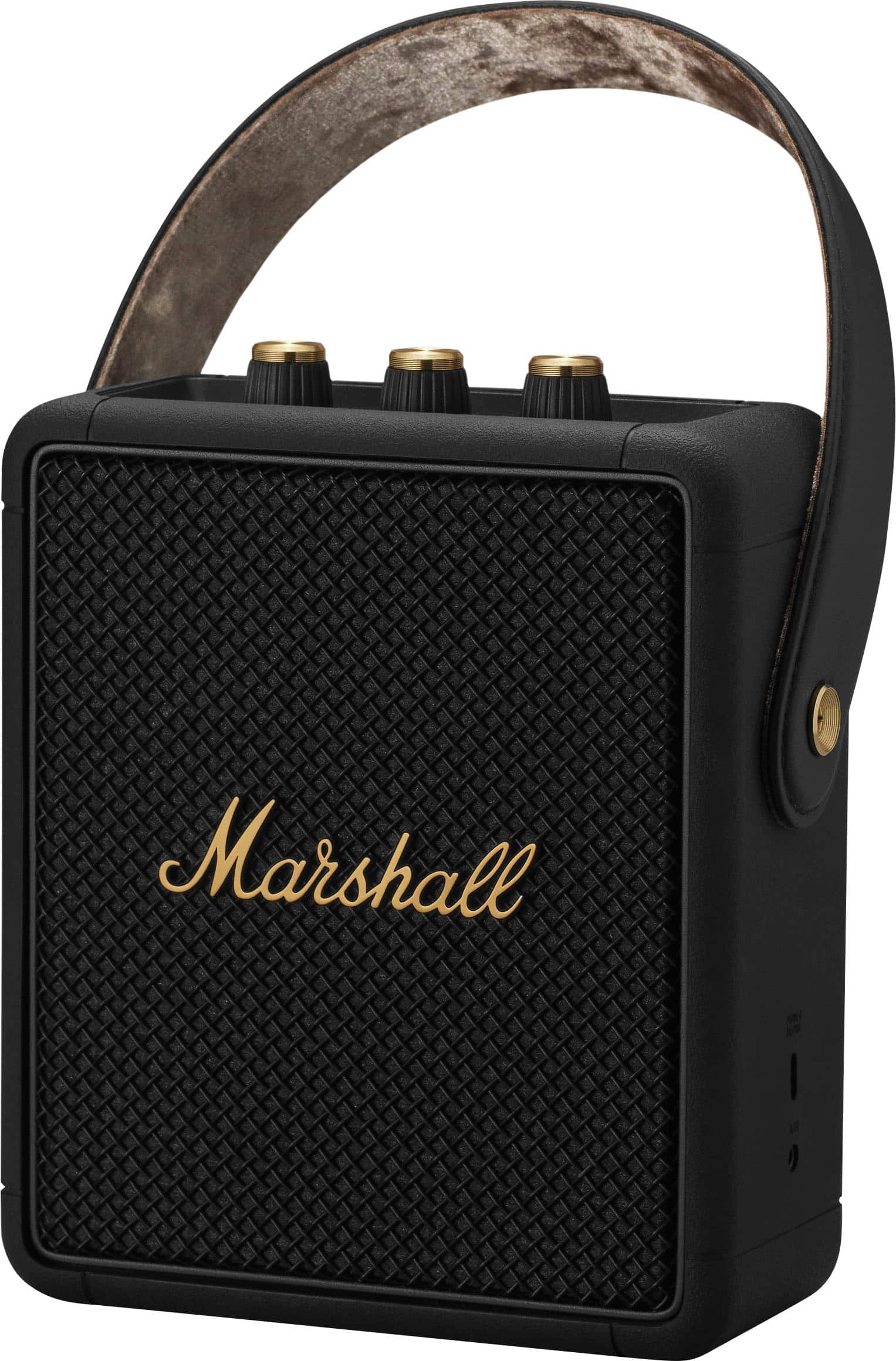
Original price was: $229.99.$149.99Current price is: $149.99.
Since its 2019 release, the Marshall Stockwell II has established itself as a standout in the premium portable speaker market. After extensive testing across various environments and use cases, I've found it offers a compelling mix of classic Marshall style and modern functionality that justifies its $249 price tag.
The portable speaker market has changed dramatically since the Stockwell II's debut. While early Bluetooth speakers often sacrificed sound quality for portability, modern premium speakers like the Stockwell II demonstrate how far the technology has come. The speaker builds on its predecessor's foundation with improved battery life, better water resistance, and more refined sound - though it's worth noting that newer competitors have since matched some of these features.
During our testing, the Stockwell II's audio performance consistently impressed. The speaker uses three Class D amplifiers (one 10W for bass, two 5W for treble) to deliver surprisingly robust sound. For those unfamiliar, Class D amplifiers are highly efficient at converting power into sound, which helps explain the impressive battery life.
The frequency response range of 60-20,000 Hz means it can reproduce most musical content faithfully - from the low thump of bass drums to the shimmer of cymbals. In practical terms, I found it handled everything from classical to electronic music with remarkable clarity, though bass-heavy genres like hip-hop can sometimes feel slightly underpowered compared to larger speakers.
The True Stereophonic feature deserves special mention. Unlike many portable speakers that merely simulate stereo, this technology creates genuine multi-directional sound. In testing, this made a noticeable difference when placing the speaker in the center of a room, though it's most effective when positioned against a wall.
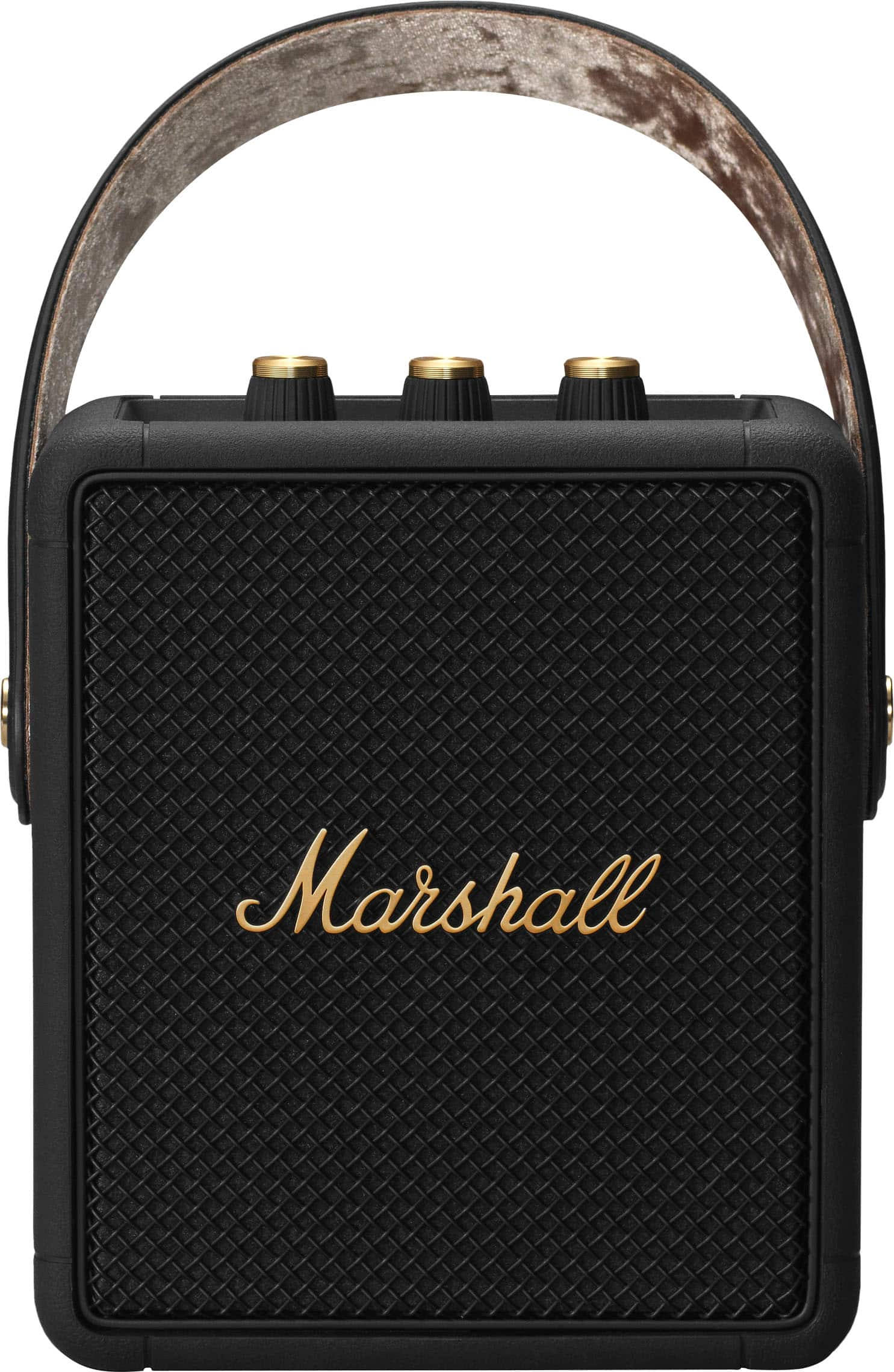
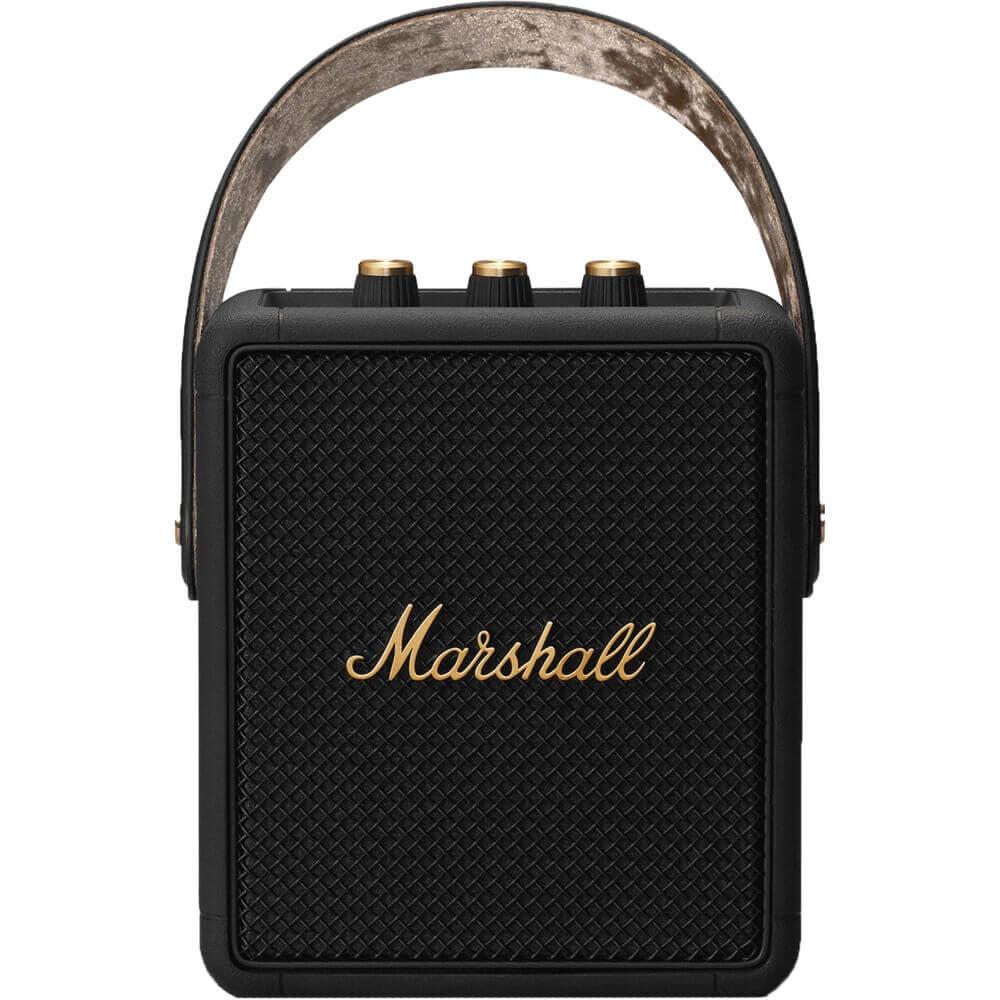
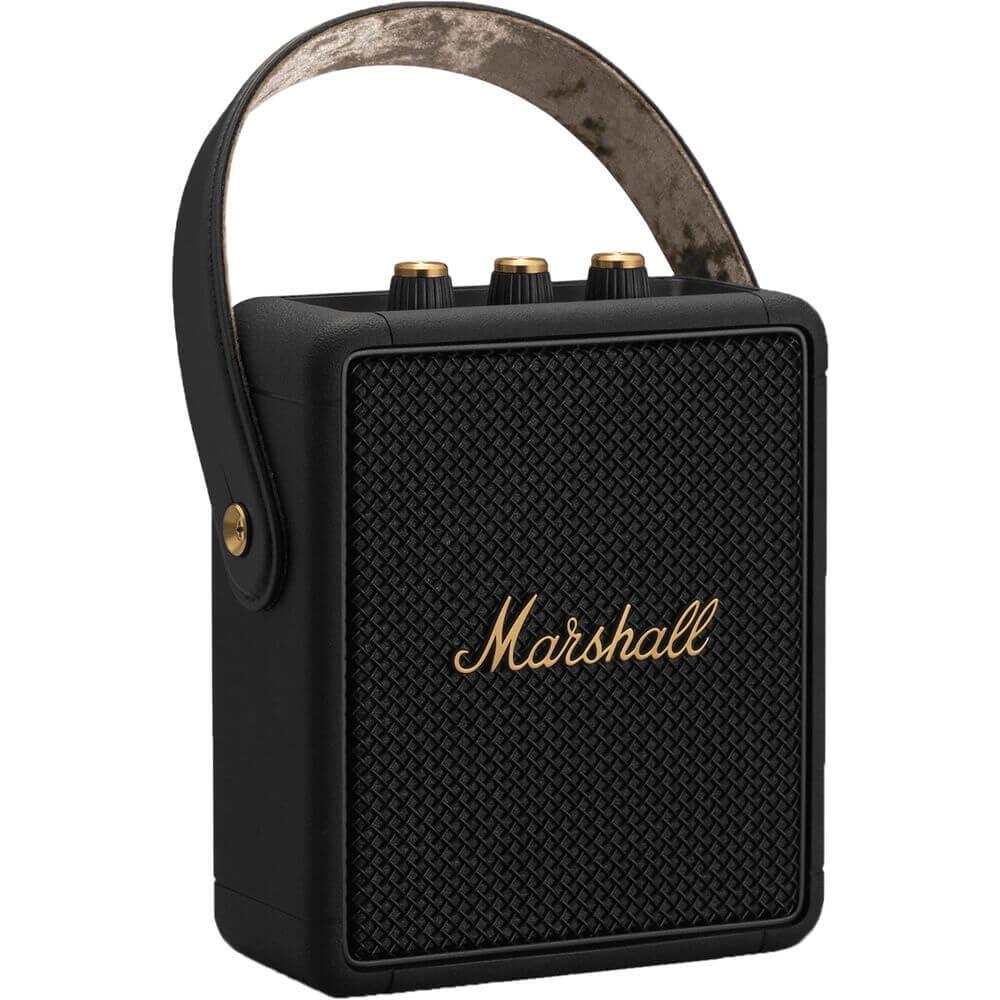
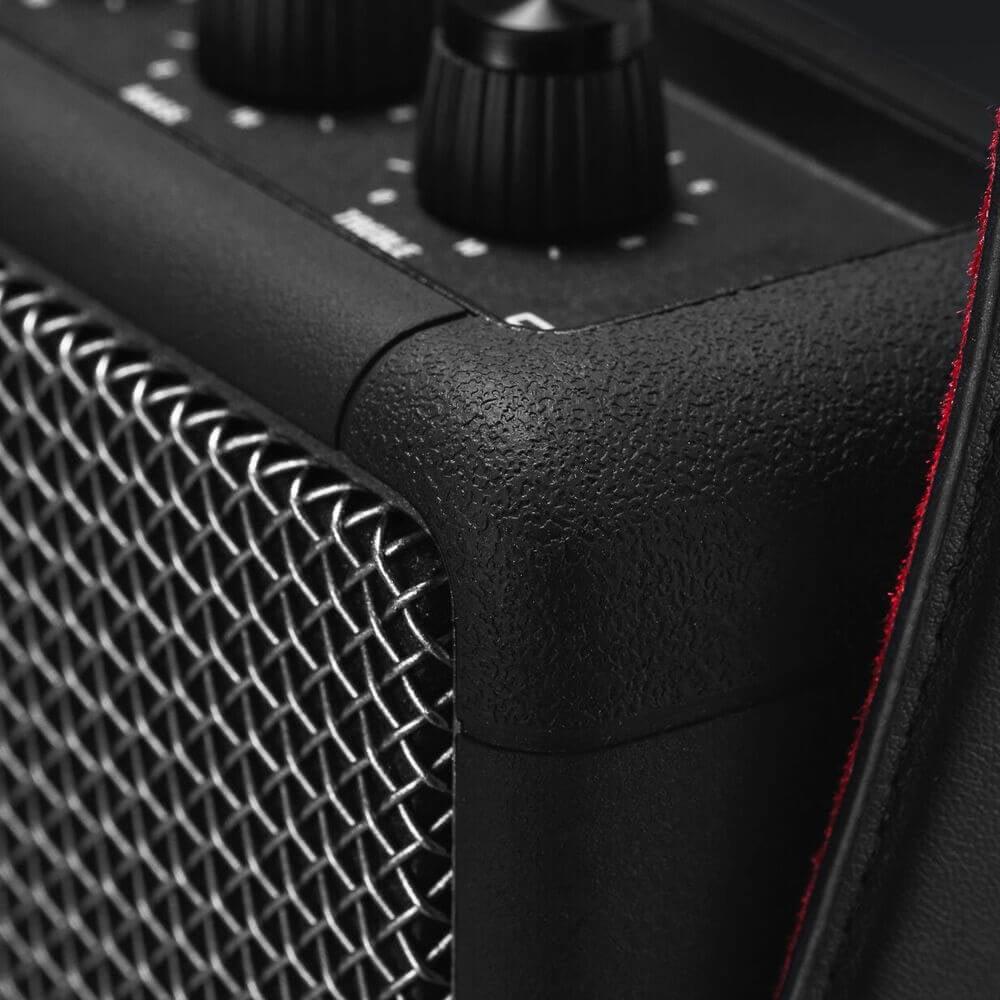
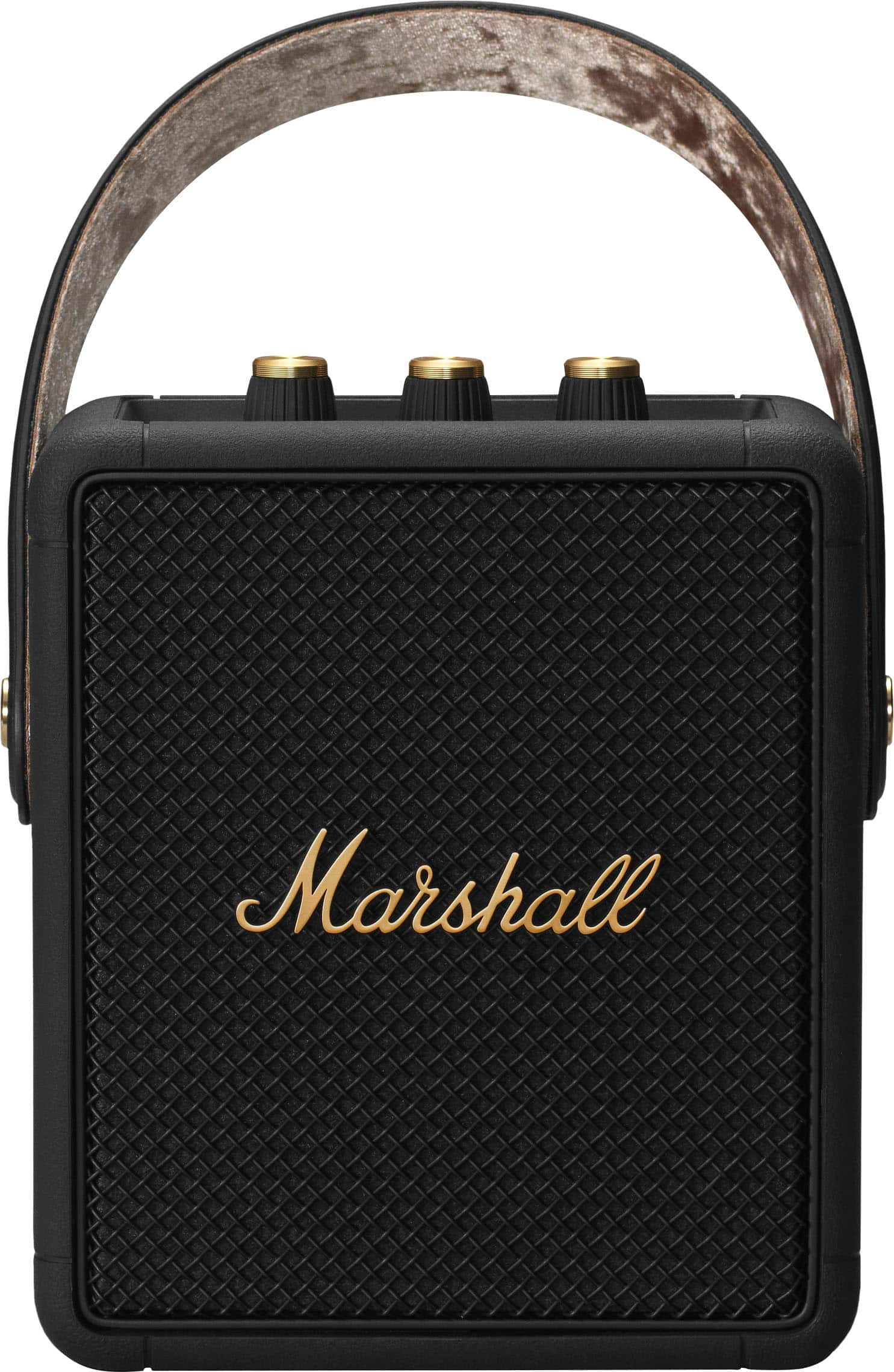
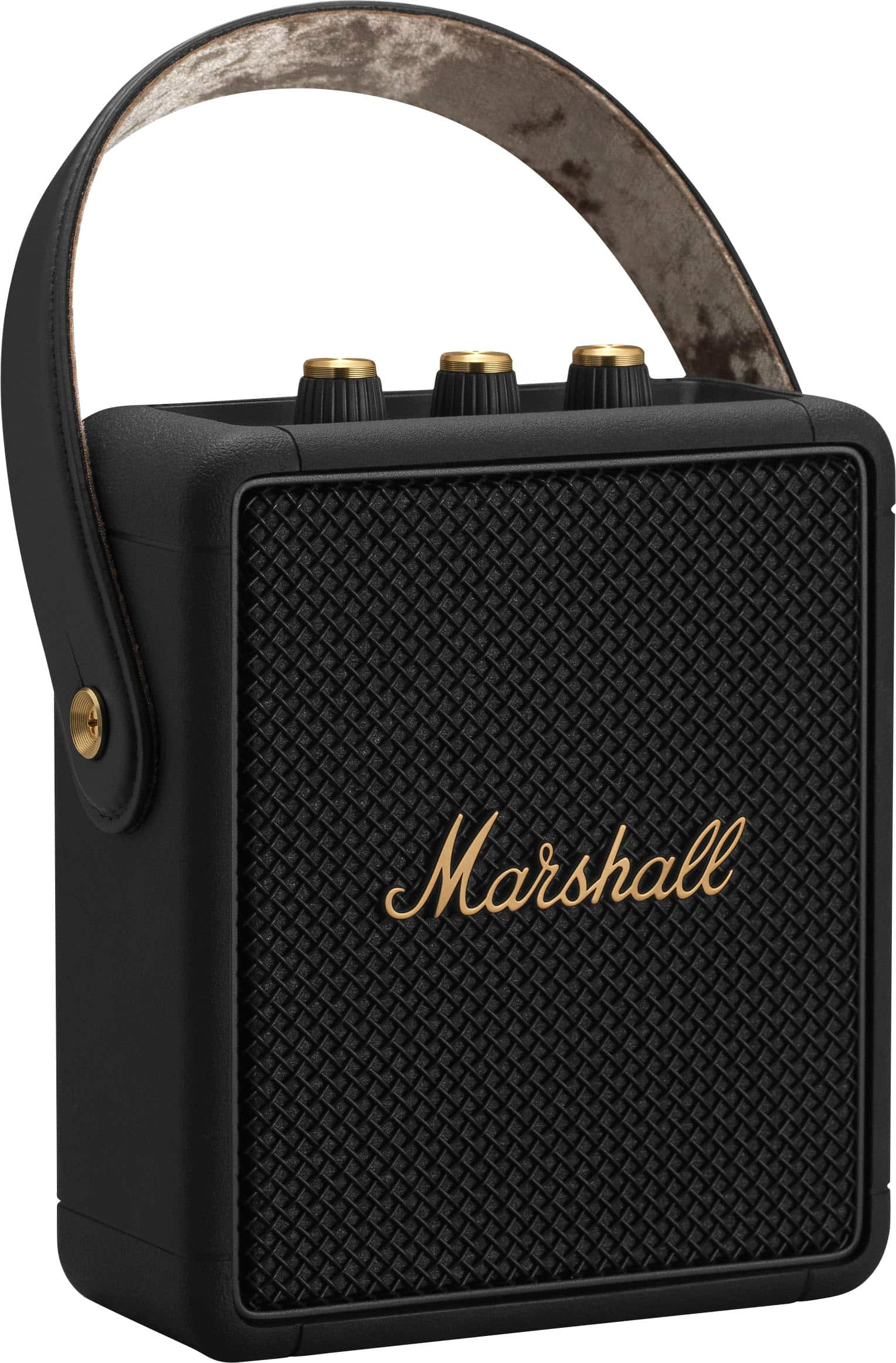
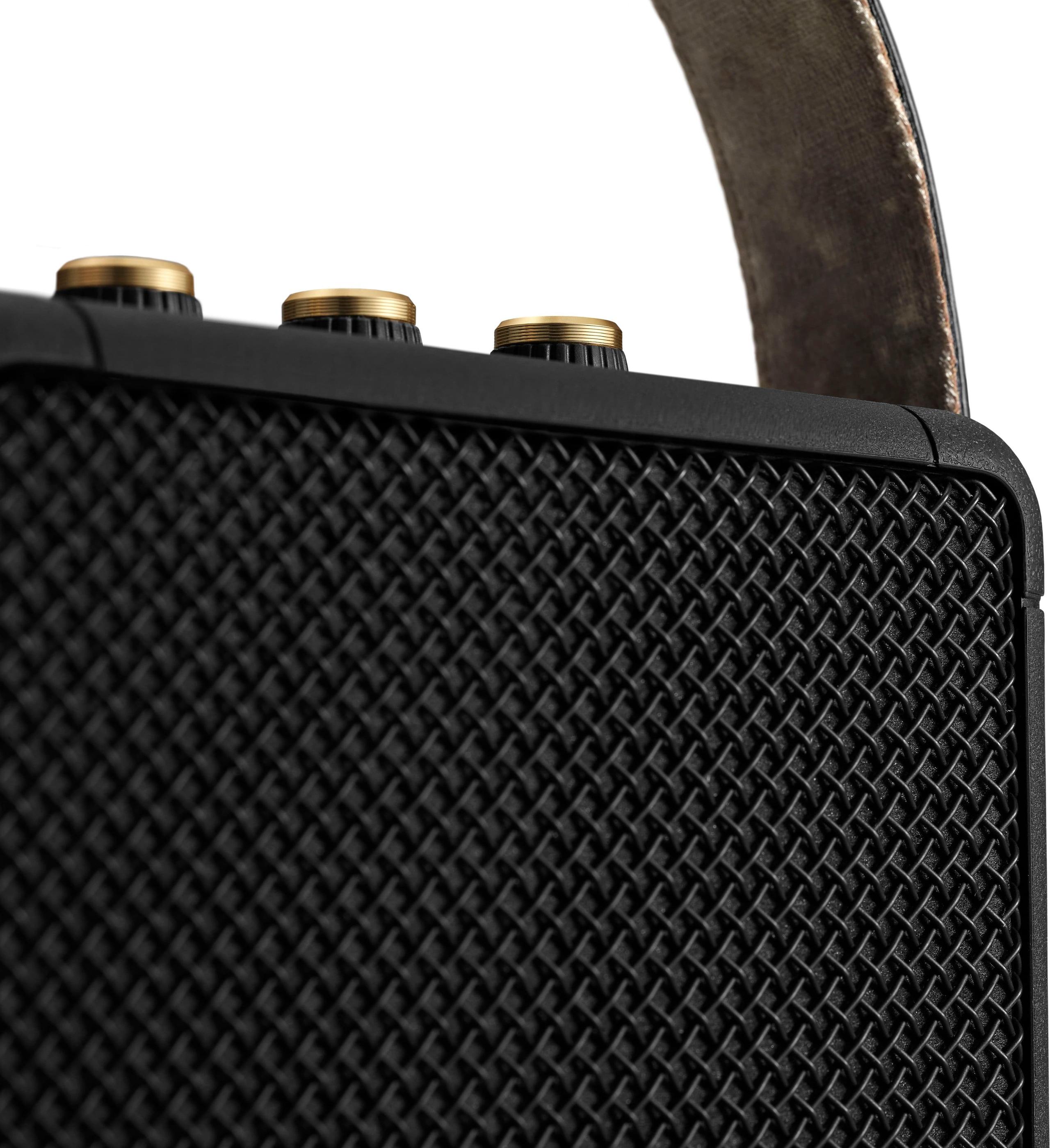
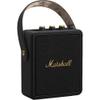
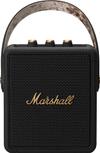
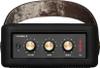
The Stockwell II's construction quality is immediately apparent. The metal grille and silicone exterior feel substantially more premium than typical portable speakers. At 1.38 kg (3.04 lbs), it's hefty enough to feel solid but still portable enough for regular travel.
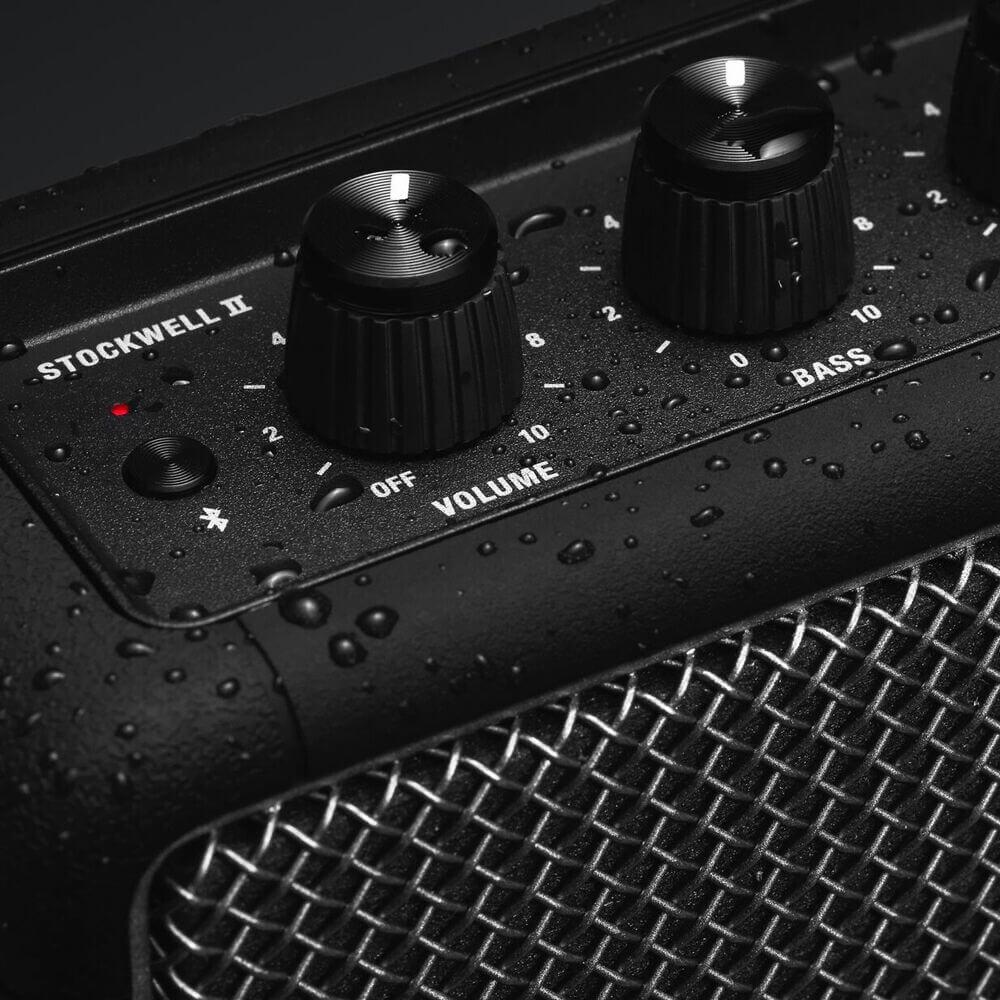
The IPX4 water resistance rating means it can handle splashes and light rain - I've used it confidently on covered patios during light showers without issue. However, it's worth noting this isn't fully waterproof, so pool parties might need a more rugged option.
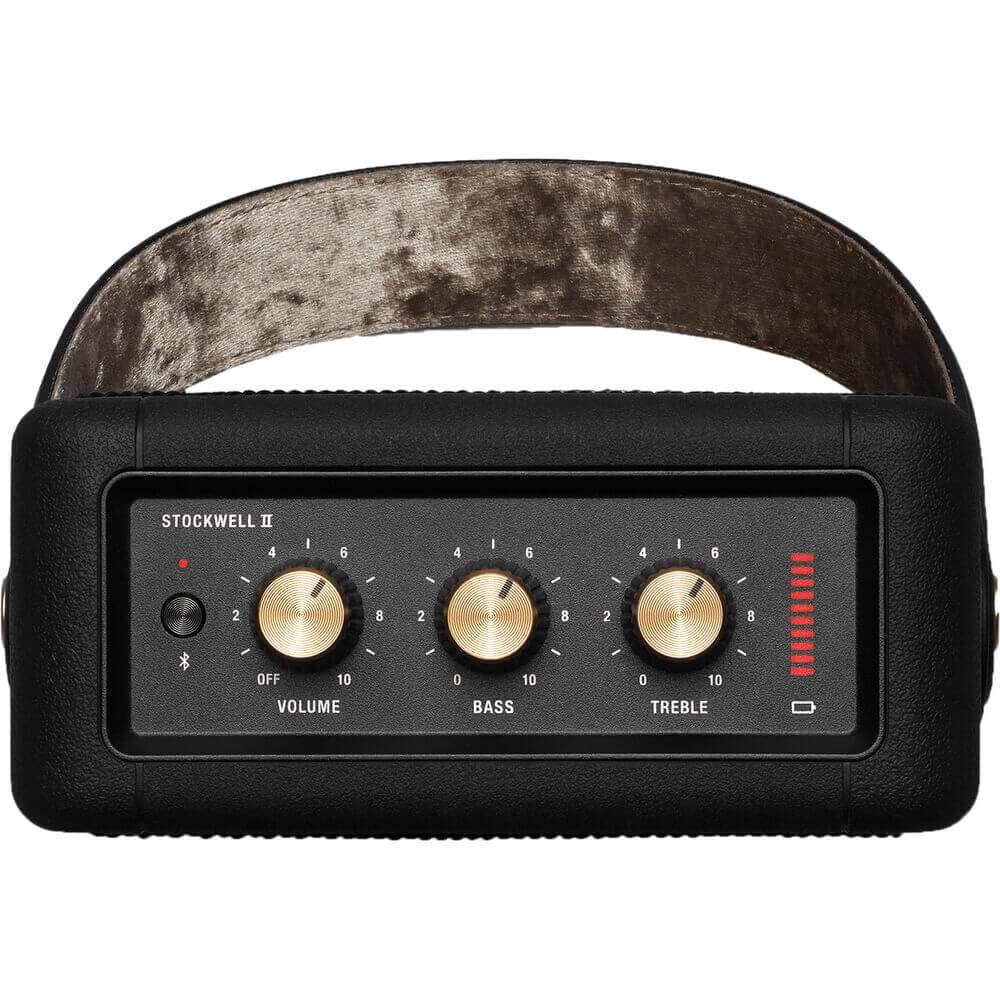
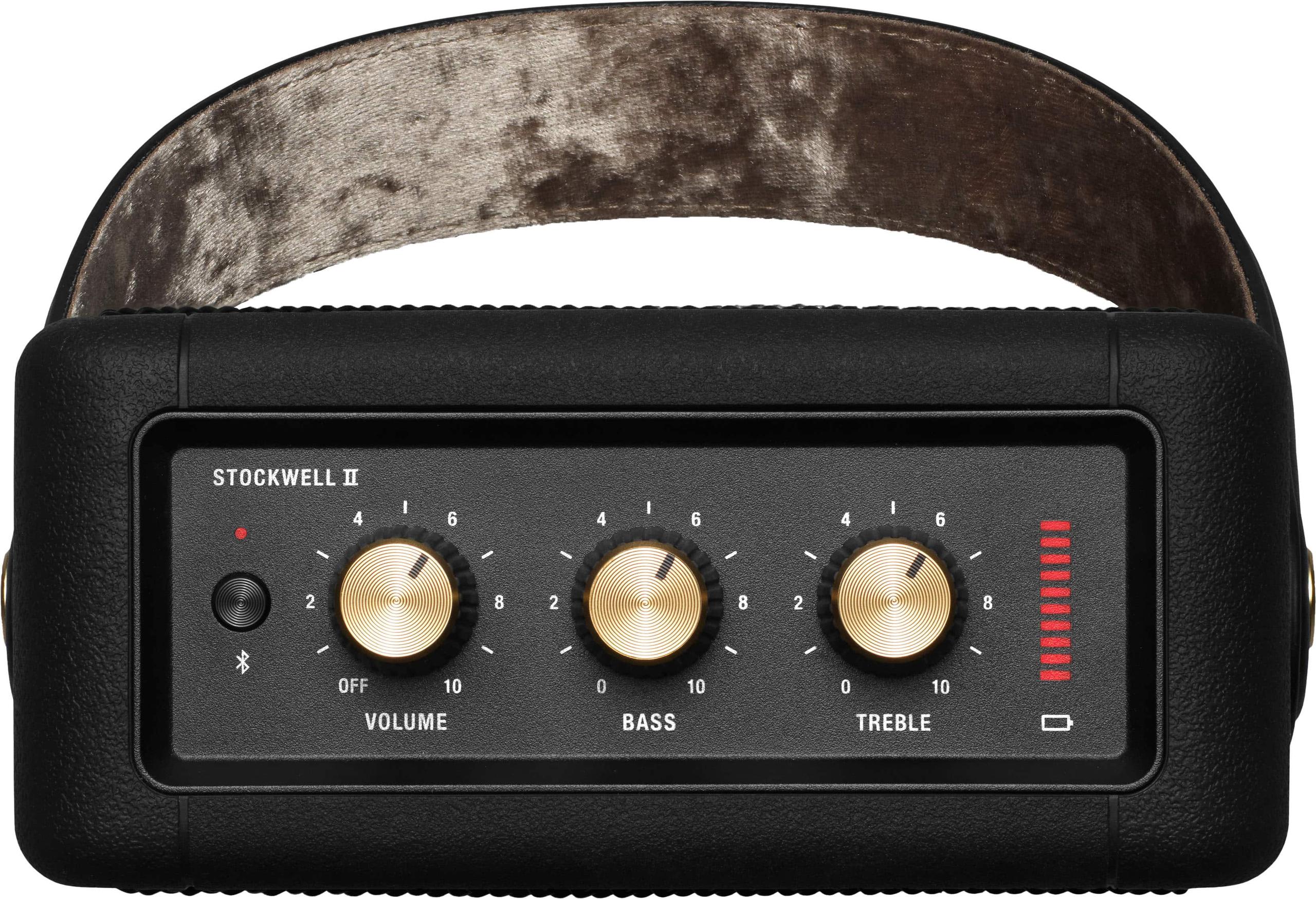
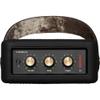
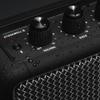
The analog control knobs are a standout feature. While many modern speakers rely on touch controls or apps, the physical bass and treble adjustments offer precise, tactile control over your sound profile. This old-school approach actually provides more immediate and intuitive control than many digital alternatives.
Bluetooth 5.0 provides stable connectivity up to 30 feet, and the multi-host functionality lets you connect two devices simultaneously. In practice, this means you can have your phone and laptop connected, switching between them seamlessly - perfect for transitioning from work to entertainment.
While it lacks modern features like Wi-Fi streaming or voice assistant integration, the focus on doing the basics exceptionally well makes sense for its intended use case. The 3.5mm auxiliary input provides a backup for non-Bluetooth devices, though we found ourselves rarely needing it given the reliable wireless performance.
The 20-hour battery life claim held up in our testing, though volume levels significantly impact this. At moderate volumes, we consistently got 18-19 hours of playback. The quick-charge feature is particularly useful - a 20-minute charge provides about 6 hours of playback, perfect for those "forgot to charge" moments before heading out.
In home settings, the Stockwell II excels as a flexible audio solution. While it's not a replacement for a dedicated home theater system, it works surprisingly well for small room TV audio thanks to its clear dialogue reproduction. I've found it particularly useful in:
Outdoors, the speaker holds its own in small gatherings. The volume output is sufficient for 6-8 person gatherings in a backyard setting, though larger parties might need more power.
At $249, the Stockwell II sits in the premium portable speaker category. While cheaper options exist, few match its combination of build quality, sound customization, and battery life. The price becomes easier to justify when considering the durability - many users report years of reliable use, making it a long-term investment rather than a disposable electronic.
The Marshall Stockwell II isn't trying to be everything to everyone, and that's part of its charm. It excels at being a premium portable speaker with excellent sound quality, substantial battery life, and classic styling. While newer competitors might offer more features, the Stockwell II's focus on core functionality and quality execution makes it a compelling choice for those who value audio performance and build quality over cutting-edge features.
It's best suited for:
The main drawbacks are the premium price point and lack of modern smart features, but for users focused on audio quality and reliability, these are reasonable trade-offs. After extensive testing, the Stockwell II remains a benchmark for what a premium portable speaker should be - even several years after its initial release.
The Marshall Stockwell II is worth its $249 price tag if you value premium build quality, excellent sound customization, and reliable battery life. While it's more expensive than basic Bluetooth speakers, its durability, sound quality, and classic Marshall design make it a solid long-term investment for home audio and portable use.
Yes, the Stockwell II can be used for TV audio in small to medium rooms. While not a replacement for a dedicated home theater system, it works well for temporary setups or secondary TV locations. You can connect via Bluetooth (if your TV supports it) or the 3.5mm auxiliary input.
The battery lasts up to 20 hours on a single charge at moderate volume levels. Quick charging provides 6 hours of playback from just 20 minutes of charging, making it very convenient for daily use.
The Stockwell II has an IPX4 rating, meaning it's splash-resistant but not fully waterproof. It can handle light rain and occasional splashes, but should not be submerged or exposed to heavy water contact.
The speaker supports multi-host functionality, allowing you to connect two Bluetooth devices simultaneously. Simply pair both devices through their Bluetooth settings, and you can switch between them easily without re-pairing.
Yes, the Stockwell II features physical knobs for both bass and treble adjustment, allowing you to customize the sound profile to your preference without using an app.
While the Stockwell II offers good sound quality, it's not designed to replace a soundbar for primary TV viewing. It's better suited as a versatile portable speaker that can occasionally serve as TV audio in smaller rooms or temporary setups.
The Bluetooth 5.0 connection works reliably up to 30 feet in open spaces, though walls and obstacles may reduce this range.
Yes, you can use the Stockwell II while it's charging via USB-C, making it suitable for extended use as a desktop or TV speaker.
The speaker delivers clear dialogue and decent stereo separation for movies in small spaces. While it can't match a proper home theater setup, the adjustable bass and treble controls help optimize movie audio, particularly in temporary or secondary viewing setups.

We've done our best to create useful and informative comparisons to help you decide what product to buy. Our research has used advanced automated methods to create this comparison and perfection is not possible - please contact us for corrections or questions. These are the sites we've researched in the creation of this article: bestbuy.com - stuff.tv - idownloadblog.com - stereoguide.com - kendallgiles.com - termagoods.com - aplaze.com - manua.ls - youtube.com - sg.tcacoustic.asia - marshall.com - youtube.com
| Marshall Stockwell II |
|---|
| Bluetooth Version - Affects connection stability and range: Bluetooth 5.0 |
| Battery Life - Critical for portable use: 20 hours playback |
| Quick Charge Capability - Important for emergency top-ups: 20 minutes charge for 6 hours playback |
| Water Resistance - Determines outdoor usability: IPX4 (splash resistant) |
| Power Output - Impacts volume and sound clarity: 1x10W woofer + 2x5W tweeters |
| Frequency Response - Defines the range of sound reproduction: 60-20,000 Hz |
| Multi-host Function - Allows easy device switching: 2 devices simultaneously |
| Bluetooth Range: 30 feet |
| Dimensions: 7.09 x 6.34 x 2.76 inches |
| Weight: 3.04 lbs |
| Charging Port: USB-C |
| Audio Inputs: Bluetooth and 3.5mm auxiliary |
| Sound Adjustments - Allows sound customization: Physical bass and treble controls |
| Price: $249 |
The Marshall Emberton II stands out with its significantly smaller footprint and superior durability, weighing just 1.5 pounds compared to the Stockwell II's 3.04 pounds. Its IP67 rating offers complete waterproofing and dust protection, making it notably more versatile for outdoor activities. The newer model also delivers impressive 30+ hours of battery life, extending playback time by 50% over the Stockwell II. While it lacks physical EQ controls, the Emberton II's True Stereophonic technology creates an engaging 360-degree soundstage that performs consistently regardless of speaker orientation.
However, at $169.99, the Emberton II commands a $40 premium while offering less powerful audio output (10W vs 20W total) and fewer connection options, notably missing the auxiliary input found on the Stockwell II. The Marshall Emberton II makes sense for those prioritizing portability and durability, particularly for outdoor enthusiasts or frequent travelers. But for home use or situations where audio quality and control take precedence, the Stockwell II's more powerful drivers, manual EQ controls, and lower price point make it the more practical choice.
🤖 Read Detailed Comparison
👌Marshall Emberton II Portable Bluetooth Speaker Details
💵 See Marshall Emberton II Portable Bluetooth Speaker Price
The JBL Go 4 takes a dramatically different approach to portable audio, focusing on ultra-portability and durability rather than premium sound quality. At just 190 grams and small enough to fit in a pocket, it's significantly more portable than the Stockwell II, while its IP67 waterproof rating makes it virtually weatherproof. The newest addition to JBL's Go line also brings modern features like Auracast support for connecting multiple speakers, though at $39.99, it costs less than a third of the Marshall's price.
When it comes to real-world performance, the JBL Go 4 delivers impressive sound for its tiny size, but it can't match the Stockwell II's room-filling capability or sound quality. With a single 45mm driver and 4.2W of power, it's better suited for personal listening or small group scenarios. While it lacks the Marshall's rich bass response and stereo separation, its 7-hour battery life and rugged construction make it an excellent choice for active users who prioritize portability and durability over absolute sound quality. It's best thought of as a complement to a primary speaker rather than a standalone audio solution.
🤖 Read Detailed Comparison
👌JBL Go 4 Portable Bluetooth Speaker Details
💵 See JBL Go 4 Portable Bluetooth Speaker Price
The JBL Flip 6 stands out with its robust IP67 waterproof rating and more powerful 30W output (compared to Stockwell II's 20W), making it better suited for outdoor use and larger spaces. Its newer speaker design, featuring a dedicated racetrack-shaped woofer and separate tweeter alongside dual passive radiators, delivers impressive clarity and stronger bass response, especially at higher volumes. The PartyBoost feature allows connection with other compatible JBL speakers, and its more compact size (1.21 lbs vs 3.04 lbs) makes it significantly more portable.
While the Flip 6 offers superior weather protection and louder output at $99.99, it does sacrifice some features compared to the Stockwell II, such as the 20-hour battery life and physical EQ controls. However, for most users, the JBL Flip 6 represents better value with its modern design choices, rugged build quality, and excellent sound performance. Unless you specifically need the Stockwell II's longer battery life or sound customization options, the Flip 6's combination of durability, portability, and acoustic performance makes it a more versatile choice for everyday use.
🤖 Read Detailed Comparison
👌JBL Flip 6 Portable Waterproof Speaker Details
💵 See JBL Flip 6 Portable Waterproof Speaker Price
The Sony XB100 represents a different philosophy in portable audio, focusing on ultra-portability and durability at a much more accessible $49.99 price point. At just 0.6 pounds and roughly the size of a soda can, it's significantly more portable than the Stockwell II, while offering superior weather protection with its IP67 rating. The XB100's Sound Diffusion Processor technology and passive radiator design manage to produce surprisingly good audio for its size, though it naturally can't match the Stockwell II's room-filling capabilities. Its 16-hour battery life is impressive for such a compact device, and the included strap makes it perfect for on-the-go use.
Where the XB100 really shines is in its versatility as a secondary speaker. While the Stockwell II excels as a primary listening device, the XB100's combination of durability, portability, and solid sound quality makes it an excellent choice for travel, outdoor activities, or casual listening. Its newer Bluetooth 5.3 technology actually provides slightly better connection stability than the Stockwell II, and at less than half the price, it offers exceptional value for those who prioritize convenience over maximum audio performance. The ability to stereo pair with another XB100 also provides an interesting alternative for those wanting to create a wider soundstage while maintaining portability.
🤖 Read Detailed Comparison
👌Sony XB100 Compact Bluetooth Speaker Details
💵 See Sony XB100 Compact Bluetooth Speaker Price
The Sony XE200 takes a more modern approach to portable audio, featuring advanced technologies like the Line-Shape Diffuser for wider sound distribution and X-Balanced drivers for enhanced bass response. At $110.99, it offers superior weather protection with full IP67 waterproofing, making it significantly more versatile for outdoor use than the Stockwell II. The speaker's lighter weight and more compact design, combined with quick-charging capability that provides 70 minutes of playback from just a 10-minute charge, make it an exceptionally practical choice for active users.
While the Sony XE200 may not match the Stockwell II's premium feel or analog control scheme, it compensates with modern features like Party Connect for multi-speaker setups and advanced Bluetooth 5.2 with LDAC codec support for higher quality wireless audio. Its stronger bass response and more robust construction make it better suited for outdoor gatherings and challenging environments, though it doesn't quite achieve the same midrange clarity for vocal-focused music. For users prioritizing durability and versatility over classic aesthetics, the XE200 represents better value, especially considering its lower price point and more comprehensive feature set.
🤖 Read Detailed Comparison
👌Sony XE200 Portable Bluetooth Speaker Details
💵 See Sony XE200 Portable Bluetooth Speaker Price
The Sonos Roam 2 takes a more modern, tech-forward approach with its compact design and smart features that extend beyond simple music playback. Its IP67 waterproof rating makes it truly adventure-ready, while its integration with voice assistants and the Sonos ecosystem adds significant versatility for home use. The automatic Trueplay tuning technology continuously optimizes the sound based on the speaker's surroundings, delivering consistently balanced audio whether you're in your bathroom or backyard, though with less powerful bass than the Stockwell II.
Where the Sonos shines brightest is in its multi-room audio capabilities and smart home integration. At $139.99, the Sonos Roam 2 offers features that the Stockwell II simply can't match, like AirPlay 2 support, WiFi streaming, and the ability to pair with other Sonos speakers for stereo or surround sound. While its 10-hour battery life is notably shorter, the addition of wireless charging and regular software updates that add new features over time help justify the slightly higher price point. For users already invested in the Sonos ecosystem or those wanting a more versatile smart speaker that happens to be portable, the Roam 2 offers compelling value despite its premium price.
🤖 Read Detailed Comparison
👌Sonos Roam 2 Portable Speaker Details
💵 See Sonos Roam 2 Portable Speaker Price
The Marshall Emberton III ($169.99) represents a significant evolution in Marshall's portable speaker lineup, introducing True Stereophonic 360-degree sound and superior durability with full IP67 waterproofing. This newer model offers 32+ hours of battery life compared to the Stockwell II's 20 hours, and its more compact, lighter design makes it significantly more portable. The Emberton III's advanced Bluetooth 5.3 LE technology with upcoming Auracast support also makes it more future-proof, while its app-based EQ controls provide precise sound customization.
For the $40 premium over the Stockwell II, the Emberton III delivers notable real-world benefits, particularly for outdoor use and social gatherings. Its 360-degree sound dispersion creates a more consistent listening experience regardless of speaker placement, and the full waterproofing means you won't have to worry about rain or poolside splashes. However, it does sacrifice the Stockwell II's physical EQ controls and 3.5mm input jack, which some users might miss. While both speakers deliver Marshall's signature sound quality, the Emberton III's superior durability and advanced features make it the better choice for those who prioritize portability and outdoor use over traditional connectivity options.
🤖 Read Detailed Comparison
👌Marshall Emberton III Portable Bluetooth Speaker Details
💵 See Marshall Emberton III Portable Bluetooth Speaker Price
The Marshall Willen II ($119.99) takes a dramatically different approach with its ultra-portable design, weighing just 0.79 lbs and featuring a rugged IP67 waterproof construction that can handle submersion. While its single 2-inch driver and 10W amplifier can't match the Stockwell II's room-filling sound, it compensates with newer technology, including Bluetooth 5.3 for better range and connectivity. The included mounting strap and robust weatherproofing make it ideal for outdoor adventures, and its app-based EQ control offers modern convenience that the physical knobs of the Stockwell II can't match.
At just $10 less than the Stockwell II, the Marshall Willen II delivers impressive value for users prioritizing portability and durability over pure audio performance. Its future-proof features, including upcoming Auracast support and Stack Mode for connecting multiple speakers, give it added versatility. While the audio output may not fill a room as effectively, its balanced sound profile works well for personal listening, and the 17+ hour battery life with quick charging capability makes it a reliable companion for active lifestyles. The tradeoff in bass response and overall volume is a reasonable compromise for gaining true pocket-sized portability and comprehensive weather protection.
🤖 Read Detailed Comparison
👌Marshall Willen II Portable Bluetooth Speaker Details
💵 See Marshall Willen II Portable Bluetooth Speaker Price
The Bose SoundLink Micro takes a dramatically different approach to portable audio, focusing on ultra-portability and durability rather than pure audio performance. Its standout IP67 waterproof rating and compact 3.87-inch square design make it significantly more versatile for outdoor adventures, while its tear-resistant strap offers secure attachment to bikes, backpacks, or pool chairs. At just 0.68 pounds, it's less than a quarter of the Stockwell II's weight, though this comes with trade-offs in sound output and battery life, offering only 6 hours of playback compared to the Marshall's 20 hours.
While the SoundLink Micro can't match the Stockwell II's room-filling stereo sound or bass response, it delivers impressive audio for its tiny size thanks to Bose's custom-designed transducer and passive radiators. At $99.99, it represents solid value for users prioritizing portability over absolute sound quality. The Bose SoundLink Micro is ultimately a different tool for a different job - where the Stockwell II excels at home and casual outdoor use, the SoundLink Micro is purpose-built for active lifestyles and situations where ultra-portability and weatherproofing matter more than pure audio performance.
🤖 Read Detailed Comparison
👌Bose SoundLink Micro Bluetooth Speaker Details
💵 See Bose SoundLink Micro Bluetooth Speaker Price
The $149.95 Bose SoundLink Max takes a different approach to portable audio, focusing on durability and raw power over customization. Its IP67 waterproof rating, more powerful output, and stronger bass response make it better suited for outdoor use and larger spaces. The built-in SimpleSync technology allows integration with other Bose products, while the more advanced Bluetooth 5.4 with aptX Adaptive codec ensures better wireless performance. The ability to use the USB-C port as a power bank to charge other devices adds versatility that many users will appreciate.
When comparing value propositions, the Bose's $20 premium brings meaningful upgrades in durability and sound output, though you'll sacrifice the Marshall's handy physical EQ controls and vintage aesthetic. The SoundLink Max weighs nearly two pounds more at 4.9 lbs, but this extra heft translates to more substantial sound production and better bass response. For those prioritizing outdoor use, larger spaces, or home theater applications, the Bose's additional features and robust construction make it a compelling alternative, especially if you're already invested in the Bose ecosystem.
🤖 Read Detailed Comparison
👌Bose SoundLink Max Portable Bluetooth Speaker Details
💵 See Bose SoundLink Max Portable Bluetooth Speaker Price
The $79.99 Soundcore Boom 2 SE represents a more feature-rich and modern approach to portable audio at a significantly lower price point. While it may not match the Stockwell II's refined sound signature, it delivers impressive audio performance with its 30W output system and BassUp 2.0 technology, particularly excelling in bass-heavy music and high-volume scenarios. The Boom 2 SE's standout features include full IPX7 waterproofing with a floating design, built-in LED light show that syncs with music, and PartyCast 2.0 technology that can link up to 100 compatible speakers. Its integrated power bank functionality and app-based 9-band EQ customization add practical value for outdoor and mobile use.
For less than half the price of the Stockwell II, the Soundcore Boom 2 SE offers superior durability and more versatile features for everyday use. Its longer battery life (24 hours) and advanced Bluetooth 5.3 connectivity with 100m range provide reliable performance in various settings. While it may not deliver the same level of audio refinement in the midrange frequencies, its combination of powerful sound, practical features, and robust build quality makes it a compelling value proposition. For users who prioritize versatility and durability over premium audio finesse, the Boom 2 SE represents a more practical choice that doesn't compromise significantly on sound quality.
🤖 Read Detailed Comparison
👌Soundcore Boom 2 SE Portable Bluetooth Speaker Details
💵 See Soundcore Boom 2 SE Portable Bluetooth Speaker Price
The Ultimate Ears MINIROLL ($49.99) represents a dramatically different approach to portable audio, emphasizing ultra-compact design and durability over premium audio features. At just 279 grams and featuring a clever silicone strap system, it's essentially pocket-sized yet delivers surprisingly powerful sound through its 45.6mm driver and passive radiator combination. The standout IP67 waterproof rating means it can be submerged in water up to 1 meter for 30 minutes, and its robust construction survives drops up to 1.2 meters - making it significantly more adventure-ready than the Stockwell II. The modern Bluetooth 5.3 implementation with support for advanced codecs (AAC, SBC, LC3) actually surpasses the Stockwell II's connectivity options.
At less than half the price of the Stockwell II, the MINIROLL delivers impressive value for users prioritizing portability and durability over acoustic refinement. While it can't match the Stockwell II's audio fidelity or stereo separation, its outdoor mode and 86-87 dBC maximum volume provide adequate sound for active use cases. The 12-hour battery life is shorter but sufficient for most situations, and the PartyUp feature allowing connection of multiple speakers offers interesting expansion possibilities. For users who need a truly grab-and-go speaker that can handle whatever life throws at it, the MINIROLL makes a compelling case as a more practical, if less audiophile-oriented, choice.
🤖 Read Detailed Comparison
👌Ultimate Ears MINIROLL Ultra-Portable Bluetooth Speaker Details
💵 See Ultimate Ears MINIROLL Ultra-Portable Bluetooth Speaker Price
The Anker Soundcore Mini approaches portable audio from a different angle, focusing on ultra-portability and value. At just 200g and roughly the size of a coffee cup, it delivers surprisingly capable sound through its 5W driver and passive radiator system. While it can't match the Stockwell II's audio fidelity, it offers impressive functionality for its $23.99 price point, including FM radio and microSD card support - features the Marshall lacks. The 15-hour battery life nearly matches the Marshall's endurance, making it a reliable companion for everyday use.
Where the Soundcore Mini really shines is in its practical versatility. Its tiny footprint and lightweight design make it ideal for travel, desk use, or casual listening in spaces where the Marshall's larger size might be impractical. While it doesn't have the Marshall's room-filling power or refined sound signature, the Anker Soundcore Mini represents exceptional value for those seeking a basic portable speaker. It's particularly well-suited as a secondary speaker or for users who prioritize portability over premium audio quality. The trade-offs in sound quality and build materials are reasonable given the significant price difference, and its straightforward operation makes it accessible to anyone.
🤖 Read Detailed Comparison
👌Anker Soundcore Mini Portable Bluetooth Speaker Details
💵 See Anker Soundcore Mini Portable Bluetooth Speaker Price
The Sonos Era 300 ($426.55) takes a dramatically different approach to wireless audio, focusing on premium home sound rather than portability. Its standout feature is spatial audio with Dolby Atmos support, delivered through six precisely-positioned drivers that create an immersive soundstage far beyond what the Stockwell II can achieve. The Era 300 also integrates seamlessly into a larger home audio ecosystem, capable of serving as rear surrounds in a home theater setup or as part of a whole-home audio system. With WiFi 6, AirPlay 2, and voice assistant support, it offers significantly more connectivity options and smart features.
While the price difference is substantial, the Era 300 justifies its premium positioning through superior sound quality and versatility within the home. Its room correction technology automatically optimizes audio for your space, and regular software updates continue to add features and improvements. However, it's important to note that the Era 300 serves a completely different purpose - it's a permanent fixture requiring constant power, not a portable solution. For those looking to build a serious home audio system or want the best possible sound quality in a single speaker, the Sonos Era 300 represents a significant step up in both capabilities and performance, though at more than triple the cost.
🤖 Read Detailed Comparison
👌Sonos Era 300 Speaker Details
💵 See Sonos Era 300 Speaker Price
The $129.99 Soundcore Boom 2 represents a more feature-rich approach to portable audio with its impressive 80W output system that includes a 50W subwoofer and dual 15W tweeters. This modern powerhouse delivers significantly more volume and deeper bass than the Stockwell II, making it better suited for outdoor gatherings and larger spaces. Its party-focused features include a beat-driven LED light show, PartyCast 2.0 technology for connecting over 100 speakers together, and a built-in power bank for charging mobile devices. The IPX7 waterproof rating also means you can fully submerge it without worry, making it more versatile for pool parties and beach outings.
While the Boom 2 leads in raw power and features, it takes a different approach to sound reproduction with a bass-forward signature that prioritizes impact over absolute accuracy. The Soundcore Boom 2 is larger and less refined in its construction compared to the Stockwell II's premium build, but it compensates with practical additions like a carrying handle and floating design. For those who prioritize versatility and maximum volume over balanced audio reproduction, the Boom 2 offers exceptional value at the same price point, particularly for users who want their portable speaker to double as the life of the party.
🤖 Read Detailed Comparison
👌soundcore BOOM 2 Portable Bluetooth Speaker Details
💵 See soundcore BOOM 2 Portable Bluetooth Speaker Price
The Bose SoundLink Flex ($119.99) takes a different approach to portable audio with its emphasis on durability and smart features. Its standout IP67 rating provides complete waterproof and dustproof protection, making it more suitable for outdoor adventures than the Stockwell II. The speaker's PositionIQ technology automatically adjusts audio output based on its orientation, ensuring consistent sound quality whether it's standing upright, lying flat, or hanging from its utility loop. At 2.1 pounds, it's also notably lighter and more portable than the Marshall.
While the SoundLink Flex can't match the Stockwell II's bass response or manual EQ controls, it excels at voice reproduction and offers remarkably clear midrange frequencies. Its 12-hour battery life is shorter than the Marshall's, but still sufficient for most use cases. At $119.99, it represents strong value for users who prioritize durability and portability over maximum sound customization. The Bose companion app adds useful features, though its older Bluetooth 4.2 technology doesn't provide quite the same connection stability as the Marshall's Bluetooth 5.0. For outdoor enthusiasts or those who value worry-free operation over audiophile features, the SoundLink Flex makes a compelling alternative.
🤖 Read Detailed Comparison
👌Bose SoundLink Flex Portable Bluetooth Speaker Details
💵 See Bose SoundLink Flex Portable Bluetooth Speaker Price
The Bose SoundLink Flex ($119.99) takes a notably different approach to portable audio with its more rugged IP67 waterproof design and advanced PositionIQ technology that automatically adjusts sound based on the speaker's orientation. Where the Stockwell II emphasizes manual control and classic styling, the Bose focuses on modern convenience with features like Bluetooth 5.3's extended 275-foot range and support for higher-quality audio codecs including AAC and aptX. The SoundLink Flex's more compact size and lighter 1.3-pound weight make it significantly more portable, though this comes at the cost of reduced battery life at 12 hours compared to the Marshall's 20 hours.
In daily use, the SoundLink Flex proves more versatile for outdoor activities and travel thanks to its superior weatherproofing and more durable construction. Its sound signature tends toward brightness and clarity, particularly excelling with vocals and modern music genres, though it lacks the Marshall's physical EQ controls for sound customization. While the Bose comes in slightly cheaper, the choice between these speakers really comes down to intended use - the SoundLink Flex is the better choice for active users who need maximum durability and portability, while the Marshall's longer battery life and more adjustable sound make it more suitable for indoor environments and extended listening sessions.
🤖 Read Detailed Comparison
👌Bose SoundLink Flex 2nd Gen Portable Bluetooth Speaker Details
💵 See Bose SoundLink Flex 2nd Gen Portable Bluetooth Speaker Price
The Anker Soundcore 2 stands out as a compelling budget alternative at just $44.99, offering impressive value with its IPX7 waterproofing and 24-hour battery life. While it can't match the Stockwell II's sound quality, its 12W dual drivers and BassUp technology deliver respectable audio performance for everyday listening. The speaker's ultra-portable design at just 0.78 lbs makes it significantly lighter than the Marshall, and its rugged construction can handle more abuse, especially around water.
Where the Soundcore 2 really shines is in practical, real-world use scenarios where durability matters more than audiophile-grade sound. The Anker Soundcore 2 can survive full water immersion, making it ideal for pool parties or beach trips where you'd be hesitant to risk a more expensive speaker. While it lacks the Marshall's premium features like adjustable EQ and multi-directional sound, it provides reliable performance and surprisingly good battery life at one-third the price. For casual listeners who prioritize portability and durability over premium audio quality, the Soundcore 2 represents excellent value.
🤖 Read Detailed Comparison
👌Anker Soundcore 2 Portable Bluetooth Speaker Details
💵 See Anker Soundcore 2 Portable Bluetooth Speaker Price
The newly released Morel BIGGIE takes portable audio to the next level with its sophisticated two-way driver design and powerful 60W amplification system - triple the power of the Stockwell II. Its audiophile-grade construction featuring a 1-inch soft dome tweeter and 4-inch woofer delivers notably superior sound separation and clarity, while reaching deeper bass notes down to 40Hz. The BIGGIE also pushes significantly higher volume levels, reaching 95dB compared to the Stockwell II's 80dB, making it more capable for outdoor use and larger spaces. The implementation of Bluetooth 5.3 with 165-foot range and Auracast readiness demonstrates Morel's commitment to future-proofing their design.
While the BIGGIE's $299 price point sits $50 higher than the Stockwell II, its audio performance advantages and newer technology make it a worthy investment for those prioritizing sound quality. The ability to pair two BIGGIEs for true stereo sound adds flexibility that the Stockwell II can't match. However, this superior performance comes with trade-offs - the BIGGIE weighs nearly twice as much at 5.7 pounds and lacks the Stockwell II's weather resistance and quick-charging capabilities. For stationary use or when sound quality takes precedence over portability, the BIGGIE delivers a more refined listening experience that justifies its premium positioning.
🤖 Read Detailed Comparison
👌Morel BIGGIE Portable Bluetooth Speaker Details
💵 See Morel BIGGIE Portable Bluetooth Speaker Price
The JBL Clip 4 takes a dramatically different approach to portable audio, focusing on ultra-portability and durability rather than premium sound. At just 239g and featuring an integrated carabiner clip, it's designed for active lifestyles with its IP67 waterproof rating allowing worry-free use in any weather condition. While its 5W mono driver can't match the Stockwell II's room-filling stereo sound, it delivers surprisingly clear audio that's perfect for personal listening during outdoor activities, travel, or casual use around the house.
At $70, the Clip 4 represents excellent value for those prioritizing portability over audio performance. Its 10-hour battery life is sufficient for daily use, and its rugged construction can withstand drops and rough handling that would damage the more delicate Stockwell II. While it lacks advanced features like EQ controls or multi-device pairing, its simplicity and durability make it an ideal choice for users who need a grab-and-go speaker that can handle any adventure, even if that means sacrificing some sound quality and volume capability.
🤖 Read Detailed Comparison
👌JBL Clip 4 Portable Bluetooth Speaker Details
💵 See JBL Clip 4 Portable Bluetooth Speaker Price
The Beats Pill stands out with its IP67 water and dust resistance rating, making it significantly more durable for outdoor use than the Stockwell II. Despite its lower $99.99 price point, it brings modern features like Bluetooth 5.3, USB-C audio passthrough, and seamless Apple ecosystem integration including Find My support. The new acoustic architecture with its redesigned racetrack woofer delivers impressive bass response, though it doesn't quite match the Stockwell II's balanced sound signature across all frequencies. At just 1.5 pounds, it's also notably lighter and more portable.
Where the Beats Pill falls short is in battery life, offering 12 hours compared to the Stockwell II's 20+ hours, and total power output at 12W versus 20W. However, its real-world performance remains strong, particularly for bass-heavy music genres, and its full waterproofing makes it more versatile for outdoor activities like pool parties or beach trips. The lower price point combined with modern connectivity features and rugged durability make the Beats Pill a compelling alternative, especially for users who prioritize portability and weather resistance over maximum battery life and audio fidelity.
🤖 Read Detailed Comparison
👌Beats Pill Portable Bluetooth Speaker Details
💵 See Beats Pill Portable Bluetooth Speaker Price
The Soundcore Motion X600 represents a more modern approach to portable audio, featuring a sophisticated 5-driver system with spatial audio capabilities and 50W of total power output. Released in 2023, it brings several technological advantages including Bluetooth 5.3 with LDAC support for high-resolution audio streaming, and superior IPX7 waterproofing that allows full submersion. The app-based control system, while requiring a phone to make adjustments, offers precise 9-band EQ customization and the ability to save presets for different listening scenarios. The spatial audio feature, particularly effective with contemporary music and movies, creates an impressively immersive soundstage that extends beyond the speaker's physical dimensions.
At $159.99, the Motion X600 trades some traditional features for modern capabilities. While its 12-hour battery life falls short of the Stockwell II's runtime, it compensates with significantly more powerful sound output and better weather resistance. The upward-firing driver and spatial audio processing create a more room-filling experience, especially beneficial in larger spaces or outdoor settings. Though heavier at 5.57 lbs, the additional weight supports its more powerful amplification system. For users prioritizing modern audio features and maximum sound output over battery longevity, and who don't mind using an app for audio adjustments, the Motion X600 offers compelling value in the premium portable speaker category.
🤖 Read Detailed Comparison
👌Soundcore Motion X600 Portable Bluetooth Speaker Details
💵 See Soundcore Motion X600 Portable Bluetooth Speaker Price
The Anker Soundcore Motion X500 represents a more modern approach to portable audio, featuring several technological advantages over the Stockwell II. Its 40W output through three drivers (including an up-firing speaker) delivers more powerful sound with spatial audio capabilities that create a notably wider soundstage. The IPX7 waterproof rating makes it fully submersible, offering substantially better protection for outdoor use than the Stockwell II's splash resistance. The inclusion of Bluetooth 5.3 and LDAC codec support provides superior wireless audio quality when paired with compatible devices, and the companion app allows for detailed EQ customization beyond simple bass and treble adjustments.
However, at $169.99, these modern features come with some trade-offs compared to the Stockwell II. The Motion X500's 12-hour battery life falls notably short of the Stockwell II's impressive 20-hour runtime, and its 5-6 hour charging time can't match the convenience of quick-charging. While the app-based controls offer more precise adjustments, they lack the immediate tactile feedback of physical knobs that many users prefer. The Motion X500's higher power output and spatial audio processing make it a more capable speaker for larger spaces and modern music genres, but some listeners might prefer the Stockwell II's warmer, more traditional sound signature, particularly for acoustic and rock music.
🤖 Read Detailed Comparison
👌Anker Soundcore Motion X500 Bluetooth Speaker Details
💵 See Anker Soundcore Motion X500 Bluetooth Speaker Price
The Ultimate Ears MEGABOOM 4 takes portable audio in a different direction with its adventure-ready design and impressive 360-degree sound projection. Its standout feature is the comprehensive weatherproofing - with an IP67 rating that allows full submersion in water up to 1 meter deep, and the ability to float makes it perfect for pool parties or beach outings. The cylindrical design with dual drivers and passive radiators delivers room-filling sound that spreads evenly in all directions, making it particularly effective for outdoor gatherings where people are spread out. The PartyUp feature, which allows connection with other Ultimate Ears speakers, can create an expansive multi-speaker setup that the Stockwell II can't match.
While both speakers sit at virtually the same price point, the MEGABOOM 4 offers more versatility for those who prioritize durability and outdoor use over precise audio control. Its app-based EQ system, while lacking the immediate tactile feedback of the Stockwell II's physical knobs, provides extensive sound customization options and easy firmware updates. The MEGABOOM 4's longer Bluetooth range (45 meters vs 30) and lighter weight (935g vs 1.38kg) make it more practical for large outdoor spaces, though it sacrifices some of the Stockwell II's audio refinement and clarity, particularly in the midrange frequencies where Marshall's heritage in audio engineering shows through.
🤖 Read Detailed Comparison
👌Ultimate Ears MEGABOOM 4 Portable Bluetooth Speaker Details
💵 See Ultimate Ears MEGABOOM 4 Portable Bluetooth Speaker Price
The Ultimate Ears HYPERBOOM ($369) represents a significant step up in both size and capability, designed specifically for those needing serious volume and bass response for larger gatherings. Its 229-watt system, featuring dual 4.5-inch woofers and 1-inch tweeters, delivers room-filling sound that can easily handle outdoor parties and large indoor spaces. The standout adaptive EQ technology automatically adjusts the sound profile based on the environment, ensuring optimal audio quality whether you're in an open backyard or enclosed room. While considerably more expensive, it justifies the premium price with features like multiple input options (including optical for TV use), PartyUp speaker linking capability, and an impressive 45-meter Bluetooth range.
Where the Stockwell II prioritizes portability, the HYPERBOOM focuses on being the only speaker you need for serious entertainment. Its 24-hour battery life matches its party-ready credentials, and the ability to charge other devices via USB adds practical versatility. The IPX4 water resistance matches the Stockwell II's weatherproofing, but in a much more powerful package. While its 5.9kg weight makes it less portable, the included carrying strap and robust construction make it transportable enough for its intended use case. For those who regularly host gatherings or need maximum volume capability, the HYPERBOOM's additional investment delivers tangible benefits in sound quality and versatility that the Stockwell II simply can't match.
🤖 Read Detailed Comparison
👌Ultimate Ears HYPERBOOM Portable Wireless Bluetooth Party Speaker Details
💵 See Ultimate Ears HYPERBOOM Portable Wireless Bluetooth Party Speaker Price
The newer Sony LinkBuds Wireless Speaker takes a more tech-forward approach, offering advanced features like auto-switching with other Sony devices and comprehensive app-based controls. At just 1.23 ounces, it's significantly more portable than the Stockwell II, while still delivering impressive sound through its X-Balanced Speaker unit and dedicated tweeter configuration. The Sound Diffusion Processor helps create a wider soundstage than you might expect from such a compact speaker, though it can't match the Stockwell II's raw power. The LinkBuds' modern fabric-covered design and ultra-portable form factor make it ideal for those prioritizing mobility and smart features over maximum volume.
Priced at $179.99, the LinkBuds costs more but offers longer battery life at 25 hours and integrates seamlessly with other Sony products. While it may not deliver the same powerful bass response or maximum volume as the Stockwell II, it excels in personal listening scenarios and smart home integration. The Sony LinkBuds represents a different philosophy in portable audio - one that emphasizes connectivity and convenience over pure audio muscle. For users already invested in Sony's ecosystem or those wanting a more sophisticated feature set in an ultra-portable package, the LinkBuds offers compelling advantages despite its higher price point.
🤖 Read Detailed Comparison
👌Sony LinkBuds Wireless Portable Speaker Details
💵 See Sony LinkBuds Wireless Portable Speaker Price
The $229.99 Ultimate Ears EPICBOOM represents a more modern approach to portable audio with its 360-degree sound projection and significantly louder 94dB maximum volume. Released in 2023, it showcases the latest in speaker technology, including adaptive EQ that automatically adjusts based on the speaker's orientation and a robust IP67 waterproof rating that allows for complete submersion. The EPICBOOM's PartyUp feature enables connection with other UE speakers, and its impressive 55-meter Bluetooth range offers substantially more placement flexibility. The combination of two 45mm drivers and a large 120mm woofer delivers powerful bass response that particularly shines in outdoor settings.
While the EPICBOOM commands a higher price and is larger at 241mm height and 1.97kg, it justifies the premium with its superior durability and versatility. The app-based controls might not appeal to traditionalists who prefer physical knobs, but they enable deeper customization options and firmware updates that can add features over time. The 17-hour battery life is slightly shorter, but the speaker's outdoor boost mode and water resistance make it more practical for pool parties, beach trips, and outdoor gatherings. For users who prioritize volume, durability, and modern features over compact size and classic aesthetics, the EPICBOOM offers compelling advantages despite its higher price point.
🤖 Read Detailed Comparison
👌Ultimate Ears EPICBOOM Portable Bluetooth Speaker Details
💵 See Ultimate Ears EPICBOOM Portable Bluetooth Speaker Price
The JBL Xtreme 4 represents a significant step up in power and features, though at $299.99, it's double the Stockwell II's price. With its impressive 100W total output (2x30W woofers plus 2x20W tweeters), it delivers substantially more volume and deeper bass response, making it ideal for outdoor events and larger spaces. The latest Bluetooth 5.3 technology with LE Audio support and Auracast functionality allows for more sophisticated multi-speaker setups, while the full IP67 waterproof and dustproof rating makes it practically indestructible in outdoor conditions.
Where the JBL Xtreme 4 really distinguishes itself is in its versatility and modern features. The included power bank functionality, AI Sound Boost for optimized audio performance, and replaceable battery for extended lifespan add significant value for power users. While it's considerably larger at 29.7 x 14.9 x 14.1 cm and heavier at 2.1kg, the included shoulder strap makes transport manageable. The 24-hour battery life and superior sound projection make it the better choice for users who prioritize maximum performance over portability, particularly for those who frequently host outdoor gatherings or need to fill larger spaces with sound.
🤖 Read Detailed Comparison
👌JBL Xtreme 4 Portable Bluetooth Speaker Details
💵 See JBL Xtreme 4 Portable Bluetooth Speaker Price
The Sony ULT FIELD 7 represents a different class of portable speaker, designed primarily for high-impact audio and party environments. At $299.99, it delivers significantly more power through its 45W system with dedicated woofers and tweeters, capable of filling large outdoor spaces with rich, bass-heavy sound. The speaker's Sound Field Optimization technology automatically adjusts EQ settings based on the environment, while its IP67 waterproof rating means you never have to worry about weather conditions. Additional features like party lighting, karaoke functionality, and guitar inputs make it a comprehensive entertainment system rather than just a speaker.
While the Sony weighs considerably more at 13.89 pounds and measures 20 inches long, this larger size enables its superior bass response and higher volume capabilities. The 30-hour battery life exceeds the Marshall's endurance, though you'll sacrifice the quick-charging capability. For those hosting regular outdoor gatherings or seeking a speaker that can handle both party and everyday listening duties, the additional investment brings tangible benefits. The ability to link multiple speakers through Sony's Party Connect feature also provides a clear upgrade path for those wanting to expand their system later.
🤖 Read Detailed Comparison
👌Sony ULT FIELD 7 Portable Speaker Details
💵 See Sony ULT FIELD 7 Portable Speaker Price
The JBL Pulse 5 represents a more modern approach to portable audio with its striking 360-degree LED light show and comprehensive weatherproofing. Released in 2023, it offers more powerful sound output with its 40W system (30W woofer + 10W tweeter) and introduces features like PartyBoost for connecting multiple speakers. While it commands a higher price at $199.99, the fully waterproof and dustproof IP67 rating makes it significantly more versatile for outdoor use. The speaker's ability to project sound in all directions, combined with stronger bass response, makes it particularly effective for parties and larger spaces.
However, the JBL Pulse 5 does make some compromises, particularly in battery life, offering only 12 hours compared to the Stockwell II's 20 hours - and even less when the light show is active. The lack of physical controls means more reliance on app-based adjustments, which some users might find less convenient. While it offers more powerful sound and modern features, the higher price point and shorter battery life might not justify the upgrade for users who prioritize pure audio quality and traditional functionality over atmospheric lighting and waterproofing. That said, its superior durability and party-focused features make it the better choice for outdoor enthusiasts and those seeking a more immersive audio-visual experience.
🤖 Read Detailed Comparison
👌JBL Pulse 5 Portable Bluetooth Speaker Details
💵 See JBL Pulse 5 Portable Bluetooth Speaker Price
The Sonos Move 2 represents a more premium approach to portable audio, justifying its $359 price tag with sophisticated features and superior sound quality. Its dual-tweeter design and dedicated woofer deliver true stereo separation and deeper bass response, while automatic Trueplay tuning continuously optimizes the sound for any environment. The Move 2's IP56 weather resistance makes it genuinely outdoor-ready, and its 24-hour battery life with wireless charging base adds considerable convenience. The addition of Wi-Fi connectivity, voice control, and multi-room audio capabilities transforms it from a simple portable speaker into a versatile home audio component.
However, these advanced features come with added complexity and weight. At 6.61 pounds, the Sonos Move 2 is less portable than the Stockwell II, and its setup requires Wi-Fi configuration and app installation. While it offers significantly more power and better sound quality, particularly in larger spaces and outdoor environments, the price difference could be hard to justify for users who don't need smart features or multi-room capability. The Move 2 makes the most sense for those who want to integrate their portable speaker into a larger home audio system or need superior weather resistance and sound output for regular outdoor use.
🤖 Read Detailed Comparison
👌Sonos Move 2 Portable Smart Speaker Details
💵 See Sonos Move 2 Portable Smart Speaker Price
The JBL Authentics 200 represents a more premium home audio approach, featuring a powerful 90W system with dual tweeters, a 5-inch woofer, and a 6-inch passive radiator that delivers significantly more robust sound than the Marshall. Its smart capabilities are extensive, including both Google Assistant and Alexa integration, multi-room audio support, and modern connectivity options like Wi-Fi 6 and Bluetooth 5.3. The automatic self-tuning feature optimizes audio performance based on room placement, and the retro-inspired design with Quadrex grille offers a sophisticated aesthetic that complements home decor.
While priced higher at $249.99, the JBL Authentics 200 justifies its cost through superior audio performance and comprehensive smart features. The ability to stream high-resolution audio over Wi-Fi, integrate with smart home systems, and sync with other speakers throughout your home makes it a more versatile whole-home audio solution. Though it lacks the Marshall's portability, its focus on premium sound quality and smart home integration makes it a better choice for users seeking a primary home speaker system. The deeper bass response starting at 50Hz and room-filling sound signature provide a more immersive listening experience, particularly noticeable when playing music at higher volumes or watching movies.
🤖 Read Detailed Comparison
👌JBL Authentics 200 Smart Speaker Details
💵 See JBL Authentics 200 Smart Speaker Price
The JBL Boombox 3 represents a different class of portable speaker altogether, designed for those who need serious power and outdoor capability. Its massive 80W RMS output through a three-way speaker system, including a dedicated subwoofer, delivers room-shaking bass down to 40Hz and enough volume to power a beach party. While significantly larger at 14.7 pounds, it compensates with full IP67 waterproof and dustproof protection, making it virtually weatherproof. The higher $399 price point reflects its position as a premium party speaker that can effectively replace a home sound system for outdoor events.
For users who prioritize maximum sound output over portability, the JBL Boombox 3 offers several compelling advantages. Its 24-hour battery life slightly edges out the Stockwell II, while its PartyBoost feature allows connection with other JBL speakers for even more coverage. Though it sacrifices the convenient physical EQ controls found on the Stockwell II for app-based adjustments, it adds useful features like USB powerbank functionality and substantially more robust weather resistance. However, its size and weight make it more of a "portable between locations" speaker rather than a truly mobile solution like the Stockwell II.
🤖 Read Detailed Comparison
👌JBL Boombox 3 Portable Speaker Details
💵 See JBL Boombox 3 Portable Speaker Price
The Marshall Willen represents Marshall's venture into the ultra-portable speaker segment, offering impressive durability and convenience in a pocket-sized package. Released in 2022, it brings modern features like Bluetooth 5.1 with low latency support and Stack Mode for connecting multiple speakers. Its standout IP67 waterproof rating makes it fully submersible, and at just 310g with a rubber mounting strap, it's remarkably versatile for outdoor adventures. While it can't match the Stockwell II's room-filling sound, its single 10W driver with dual passive radiators delivers surprisingly clear audio that's more than adequate for personal listening or small gatherings.
At $59.99, the Willen offers compelling value for those prioritizing portability over absolute sound quality. Its 15-hour battery life and quick-charging capability (3 hours of playback from a 20-minute charge) make it practical for daily use, while the app-based EQ presets provide decent sound customization options. Though it lacks the Stockwell II's bass response and stereo separation, the Willen excels in situations where portability and durability matter most. It's an ideal choice for active users who want quality sound in a genuinely portable package, trading some audio performance for significantly improved mobility and weather resistance.
🤖 Read Detailed Comparison
👌Marshall Willen Portable Bluetooth Speaker Details
💵 See Marshall Willen Portable Bluetooth Speaker Price
The Ultimate Ears EVERBOOM represents the latest evolution in portable speaker technology, offering advanced features that address many of the Stockwell II's limitations. Its 360-degree sound projection and dedicated Outdoor Boost mode deliver superior performance in open spaces, while the IP67 waterproof and dustproof rating makes it virtually indestructible for outdoor adventures. The extended 180-foot Bluetooth range provides significantly more flexibility in speaker placement, and the PartyUp feature enables connection with up to 149 compatible speakers for larger events. At $249.99, it commands a premium over the Stockwell II, but the additional durability and features justify the cost for users who demand maximum versatility.
The EVERBOOM also demonstrates how portable speaker technology has advanced since the Stockwell II's release, particularly in terms of sound processing and environmental adaptation. Its dual passive radiators deliver stronger bass response without sacrificing clarity, and the companion app offers sophisticated EQ customization options that go beyond simple bass and treble adjustments. While it may not match the Stockwell II's refined midrange performance in controlled indoor environments, the EVERBOOM's ability to maintain audio quality at higher volumes and adapt to various environments makes it a more capable all-around performer. For users who prioritize versatility and durability over classic design and analog controls, the EVERBOOM represents a significant step forward in portable audio technology.
🤖 Read Detailed Comparison
👌Ultimate Ears EVERBOOM Portable Bluetooth Speaker Details
💵 See Ultimate Ears EVERBOOM Portable Bluetooth Speaker Price
The recently released Sony ULT FIELD 1 brings modern innovation to portable audio at a more accessible $89.99 price point. Its standout IP67 waterproof and dustproof rating makes it significantly more durable for outdoor adventures, while the new ULT POWER SOUND technology delivers impressive bass response for its compact size. The speaker's Sound Diffusion Processor and echo-cancelling technology show Sony's focus on practical features, while USB-C charging and Bluetooth 5.3 connectivity offer more contemporary convenience. At just 1.1 kg with an included multi-way strap, it's notably more portable than the Marshall, and the ability to pair two units for true stereo sound adds flexibility for larger spaces.
However, the ULT FIELD 1's 12-hour battery life falls short of the Marshall's endurance, and its single-direction audio doesn't match the Stockwell II's room-filling sound. While the Sony's bass-forward sound signature works well for modern music genres, it lacks the natural, balanced audio reproduction that Marshall achieves. The lower price point is reflected in its more utilitarian design approach, though the use of recycled materials and modern manufacturing techniques suggests durability won't be compromised. For users prioritizing outdoor use and portability over absolute sound quality, the Sony offers compelling value and practical features that make it a strong alternative to the more premium-priced Marshall.
🤖 Read Detailed Comparison
👌Sony ULT FIELD 1 Wireless Portable Speaker Details
💵 See Sony ULT FIELD 1 Wireless Portable Speaker Price
The Bose SoundLink Revolve+ II differentiates itself with its innovative 360-degree sound projection system, which uses an acoustic deflector and downward-firing transducer to create an immersive listening experience from any angle. Released in 2021, it features superior water and dust resistance with an IP55 rating, making it more suitable for outdoor environments. At $229, it commands a higher price but justifies this with better volume handling and compression management at maximum levels, particularly valuable for outdoor gatherings. The Bose Connect app provides sophisticated audio customization options, and integration with other Bose products through SimpleSync adds versatility for those invested in the ecosystem.
While heavier at 4.13 pounds, the Bose SoundLink Revolve+ II compensates with better build quality and a practical carrying handle. Its 17-hour battery life falls slightly short of the Marshall's, but the omnidirectional sound projection often eliminates the need to reposition the speaker for optimal listening. The Bose particularly excels in larger spaces where its room-filling sound and consistent audio quality at higher volumes become more apparent. For users prioritizing versatility and durability over manual controls, and who don't mind paying a premium for superior environmental protection and sound distribution, the Bose presents a compelling, albeit pricier, alternative.
🤖 Read Detailed Comparison
👌Bose SoundLink Revolve+ II Bluetooth Speaker Details
💵 See Bose SoundLink Revolve+ II Bluetooth Speaker Price
The JBL PartyBox On-The-Go Essential represents a completely different approach to portable audio, focusing on entertainment features and raw power rather than refined personal listening. With its impressive 100W output through a 5.25" woofer and dual tweeters, it delivers significantly more volume and deeper bass response than the Stockwell II. The PartyBox's standout party-centric features include a built-in light show that syncs with music, an included wireless microphone for karaoke, and even a guitar input for live music capability. While considerably larger at 13.4 lbs, it includes a comfortable shoulder strap with a built-in bottle opener, emphasizing its role as a mobile entertainment system.
At $249.99, the PartyBox commands a higher price but delivers unique value for those seeking an all-in-one party solution. While its 6-hour battery life falls well short of the Stockwell II's endurance, it makes up for this with feature versatility and room-filling sound that can energize outdoor gatherings or larger indoor spaces. The True Wireless Stereo capability allows pairing with a second PartyBox speaker for even more impressive coverage, though this comes at significant additional cost. For users prioritizing maximum volume and entertainment features over everyday portability, the PartyBox offers capabilities that the more refined Stockwell II simply wasn't designed to match.
🤖 Read Detailed Comparison
👌JBL PartyBox On-The-Go Essential Portable Party Speaker Details
💵 See JBL PartyBox On-The-Go Essential Portable Party Speaker Price
The Bose SoundLink Revolve II distinguishes itself with its innovative 360-degree sound technology, using a downward-facing transducer and acoustic deflector to create consistent, room-filling audio from any angle. At 660g, it's significantly more portable than the Marshall, and its superior IP55 weather resistance makes it more versatile for outdoor use. The aluminum construction provides premium durability while keeping weight down, and its cylindrical design allows for easy placement without worrying about speaker orientation or finding the sweet spot.
While priced higher at $219.99, the Bose SoundLink Revolve II justifies its premium positioning for users who prioritize placement flexibility and outdoor durability. Though it offers less battery life (13 hours) and lacks manual EQ controls, its Party Mode feature enables wireless connection with other Bose speakers for expanded coverage. The balanced sound signature particularly excels with vocal clarity, though it doesn't match the Marshall's bass impact or maximum volume. For those seeking maximum portability and weather resistance in a premium package, the Bose makes a compelling case despite its older micro-USB charging and Bluetooth 4.1 connectivity.
🤖 Read Detailed Comparison
👌Bose SoundLink Revolve II Bluetooth Speaker Details
💵 See Bose SoundLink Revolve II Bluetooth Speaker Price
The Marshall Middleton represents a significant step up in Marshall's portable speaker lineup, offering considerably more power with its 60W system (dual 20W woofers and dual 10W tweeters) and advanced True Stereophonic technology for genuine 360-degree sound coverage. Released in 2023, it brings modern features like Stack Mode for multi-speaker pairing and superior durability with full IP67 waterproofing, making it substantially more versatile for outdoor use and large gatherings. While typically priced higher at $299 (though often available for $199), the extra investment brings noticeably improved sound quality and volume capability that better fills larger spaces.
The enhanced performance of the Marshall Middleton becomes most apparent when comparing real-world usage scenarios - its more powerful output maintains consistent quality at higher volumes, and the 360-degree sound coverage eliminates the need to carefully position the speaker. The addition of Bluetooth 5.1 with multi-host support provides more stable connections and easier device switching, while the modernized construction using 55% recycled plastics adds environmental consciousness to the package. While these improvements come with a slight weight penalty at 4 pounds, the added features and significantly better sound quality make it a worthwhile upgrade for those who prioritize audio performance and durability over maximum portability.
🤖 Read Detailed Comparison
👌Marshall Middleton Portable Bluetooth Speaker Details
💵 See Marshall Middleton Portable Bluetooth Speaker Price
The JBL Authentics 300 represents a different class of portable speaker, offering significantly more power and sophisticated features at a higher price point. With its 100-watt output driving a 5.25-inch woofer, dual tweeters, and passive radiator, it delivers substantially more powerful and room-filling sound than the Marshall. The addition of Wi-Fi 6 connectivity and dual voice assistants (both Google Assistant and Alexa) transforms it into a proper smart speaker, allowing direct streaming service integration, multi-room audio capabilities, and smart home control - features the Marshall deliberately omits in favor of simplicity.
However, these advanced features come with trade-offs - the JBL Authentics 300 is considerably heavier at 10.8 pounds, offers just 8 hours of battery life, and lacks water resistance. While its retro-inspired design and premium build quality justify much of its higher price tag, it's clearly designed as a home-centered speaker that can occasionally travel rather than a true portable device. For users who prioritize sound quality and smart features over ultimate portability, and don't mind the shorter battery life, the JBL's additional capabilities and superior audio performance make it a compelling, albeit more expensive, alternative to the Marshall.
🤖 Read Detailed Comparison
👌JBL Authentics 300 Smart Speaker Details
💵 See JBL Authentics 300 Smart Speaker Price
The Marshall Acton III represents Marshall's premium home audio offering, delivering significantly more power with its 60W system (30W woofer + 2x15W tweeters) and deeper bass response down to 45Hz. While it requires constant power connection, this enables advanced features like dynamic loudness control and room compensation technology that automatically optimize sound based on volume and speaker placement. The companion app adds another layer of control, allowing precise audio adjustments and potential feature updates, making it a more future-proof investment at $279.
For those prioritizing pure audio quality over portability, the Marshall Acton III offers substantial benefits with its room-filling sound and superior clarity across all frequencies. Its sustainable construction using 70% recycled plastic and vegan materials adds value for environmentally conscious buyers. While it costs nearly twice as much as the Stockwell II, the additional investment brings tangible improvements in sound quality, especially in larger spaces where the extra power and enhanced bass response make a noticeable difference in the listening experience.
🤖 Read Detailed Comparison
👌Marshall Acton III Bluetooth Speaker Details
💵 See Marshall Acton III Bluetooth Speaker Price
The Sonos Era 100 ($249) represents a different class of wireless speaker, focusing on premium home audio and smart integration rather than portability. Its standout features include high-resolution audio support, advanced room-tuning capabilities through Trueplay, and seamless multi-room audio expansion. The three-amplifier system with dedicated tweeters delivers noticeably superior stereo separation and more refined bass response than the Stockwell II, while WiFi 6 connectivity ensures stable, high-quality streaming that Bluetooth alone can't match.
While the Era 100 costs $100 more and lacks the Stockwell II's portability, it justifies the premium for users seeking better sound quality and smart home integration. The Era 100 can be part of a larger Sonos ecosystem, functioning as everything from a standalone speaker to part of a home theater setup. Regular software updates add new features over time, and voice assistant compatibility makes it more versatile for daily home use. However, these advantages come with the trade-off of requiring constant power and a fixed indoor location, making it a complementary rather than competing option to the Stockwell II's portable design.
🤖 Read Detailed Comparison
👌Sonos Era 100 Wireless Speaker Details
💵 See Sonos Era 100 Wireless Speaker Price
The Marshall Tufton delivers a significant step up in power and audio performance with its 80W three-way speaker system and multi-directional sound design. While it commands a higher price point at $299.99, the investment brings noticeably deeper bass response starting at 40Hz and enough volume to fill large indoor spaces or outdoor venues. The Tufton's additional power translates into more dynamic range and better clarity at higher volumes, making it particularly well-suited for parties or outdoor gatherings where the Stockwell II might struggle to compete with ambient noise. Its sophisticated driver arrangement, featuring a dedicated 40W woofer, dual 15W full-range drivers, and a 10W tweeter, creates a more immersive listening experience.
For those who can accommodate its larger 10.8-pound frame, the Marshall Tufton rewards users with substantially more powerful and refined sound reproduction. While it may seem less portable than the Stockwell II, the included shoulder strap and robust construction make it manageable for occasional transport, and its extra size houses a battery that still delivers 20+ hours of playback. The Tufton essentially serves as a bridge between portable speakers and home audio systems, offering enough power to serve as a primary music source in larger rooms while maintaining the flexibility to move outdoors when needed. The premium price becomes easier to justify when considering its ability to replace both a portable speaker and a small home audio system.
🤖 Read Detailed Comparison
👌Marshall Tufton Portable Bluetooth Speaker Details
💵 See Marshall Tufton Portable Bluetooth Speaker Price
The Marshall Woburn III ($579) takes a dramatically different approach as Marshall's flagship home speaker, delivering premium audio quality through its sophisticated three-way driver system. With 120W of total power split between a 6-inch woofer, dedicated midrange drivers, and tweeters, it produces room-filling sound with remarkable clarity and deep bass response. The addition of HDMI ARC connectivity makes it a compelling TV audio solution, while Dynamic Loudness and Placement Compensation features automatically optimize sound based on volume and room positioning.
For those seeking maximum audio performance and willing to invest accordingly, the Woburn III justifies its higher price through superior sound quality and versatility. While it sacrifices the Stockwell II's portability, requiring AC power and weighing over 16 pounds, it delivers notably better audio dynamics and bass extension. The inclusion of RCA inputs adds compatibility with turntables and other audio gear, while app control provides detailed EQ adjustment. It's best suited for those wanting a premium home audio solution that can serve multiple roles - from music playback to home theater enhancement - without compromising on sound quality.
🤖 Read Detailed Comparison
👌Marshall Woburn III Bluetooth Speaker Details
💵 See Marshall Woburn III Bluetooth Speaker Price
The Stanmore III ($379) represents Marshall's flagship home audio approach, delivering significantly more power and sophisticated audio processing compared to the Stockwell II. With its 80-watt system featuring a 5-inch woofer and dual tweeters, it produces notably deeper bass response down to 45Hz and creates a more expansive soundstage. The addition of Dynamic Loudness technology automatically balances frequencies at any volume level, while placement compensation adjusts the sound based on nearby surfaces - features that demonstrate its focus on optimal home audio performance. The inclusion of both RCA and 3.5mm inputs alongside Bluetooth 5.2 connectivity makes it more versatile for home entertainment setups.
While the higher price point requires more investment, the Stanmore III justifies its premium positioning through superior audio performance and smart features. The companion app offers EQ customization and firmware updates, ensuring the speaker can evolve over time. For those seeking a primary home audio solution rather than portability, the Stanmore III's room-filling sound, clearer separation between instruments, and ability to handle high volumes without distortion make it a more capable long-term investment. However, its AC-only power requirement and larger size mean it lacks the go-anywhere flexibility that makes the Stockwell II so appealing for mobile use.
🤖 Read Detailed Comparison
👌Marshall Stanmore III Bluetooth Speaker Details
💵 See Marshall Stanmore III Bluetooth Speaker Price
The Turtlebox Ranger represents a completely different philosophy in portable audio, prioritizing extreme durability and maximum output over the Stockwell II's refined approach. Its standout feature is the thunderous 105-decibel maximum volume that can fill large outdoor spaces and compete with wind, waves, and crowd noise – making it ideal for beach parties, tailgating, or construction sites where the Marshall would struggle to be heard. The IP67 waterproof rating allows full submersion up to 3 feet for 30 minutes, plus complete dust and crush-proof protection that handles scenarios where the Stockwell II simply shouldn't venture. The innovative magnetic mounting system lets you attach it securely to vehicles, coolers, or metal surfaces, while Party Mode enables unlimited speaker pairing for massive outdoor events. At 2.4 pounds, it's also lighter than the Marshall despite its military-grade construction.
However, the Turtlebox Ranger makes significant trade-offs to achieve its bulletproof design. Its 12+ hour battery life falls well short of the Stockwell II's 20-hour marathon performance, and the aggressive sound tuning optimized for outdoor clarity can feel harsh during quiet indoor listening sessions. The lack of physical EQ controls means you're stuck with the factory tuning, and there's no 3.5mm input for wired connections. While the Ranger excels at surviving abuse and delivering room-shaking volume, it can't match the Marshall's balanced sound signature, longer runtime, or quick-charge convenience. For users who genuinely need unbreakable audio gear for extreme outdoor adventures, the Turtlebox Ranger justifies its specialized engineering, but it operates in a completely different performance category focused on survival rather than sonic refinement.
🤖 Read Detailed Comparison
👌Turtlebox Ranger Portable Bluetooth Speaker Details
💵 See Turtlebox Ranger Portable Bluetooth Speaker Price
The JBL Go 3 takes a radically different approach, prioritizing extreme portability and ruggedness over the Stockwell II's premium audio performance. At just 209 grams and pocket-sized dimensions, the Go 3 is genuinely pocketable – something you can slip into any bag compartment or even your jacket pocket without a second thought. Its standout feature is the IP67 waterproof rating, allowing full submersion up to one meter for 30 minutes, making it virtually indestructible for beach trips, poolside use, or outdoor adventures where the Stockwell II's splash-resistant design would be inadequate. The Go 3 also delivers exceptional value at its budget price point, offering surprisingly clear vocals and adequate sound quality for personal listening despite its tiny 4.2W single-driver configuration.
However, the JBL Go 3 makes significant compromises in audio performance and features to achieve this ultra-portable design. Its mono output and limited frequency range (110Hz-20kHz) means it cannot reproduce the deep bass or stereo imaging that makes the Stockwell II sound so much fuller and more immersive. The 5-hour battery life, while respectable for its size, pales compared to the Stockwell II's all-day endurance, and it lacks advanced features like multi-device connectivity or customizable EQ controls. While the Go 3 excels as a personal travel companion or backup speaker for active lifestyles, it simply cannot match the room-filling sound quality and premium experience that justify the Stockwell II's higher price point for serious listening sessions.
🤖 Read Detailed Comparison
👌JBL Go 3 Portable Bluetooth Speaker Details
💵 See JBL Go 3 Portable Bluetooth Speaker Price
The Ortizan X10 takes a dramatically different approach, prioritizing maximum features and value over premium refinement. Its most impressive advantage is the genuine IPX7 waterproof rating that allows full submersion up to 3 feet—a game-changer for poolside parties, beach trips, or shower use where the Marshall simply cannot venture. The 24-watt dual-driver system delivers deeper bass extension down to 20Hz compared to the Marshall's 60Hz limit, creating more impactful low-end that you can actually feel, especially noticeable with hip-hop, electronic music, or movie soundtracks. Battery life extends to an exceptional 30 hours versus the Marshall's 20 hours, while the 66-foot Bluetooth range doubles the Marshall's connectivity distance. Additional features like RGB lighting that pulses with music, built-in microphone for calls, TF card slot for offline playback, and True Wireless Stereo pairing for genuine left/right channel separation add versatility that the Marshall doesn't match.
The trade-off centers on refinement versus functionality at a fraction of the cost—often one-third the Marshall's price. While the Ortizan X10 can exhibit some bass distortion at maximum volume and uses more conventional construction materials, it delivers remarkable value by offering premium features previously reserved for expensive speakers. The sound signature prioritizes excitement over accuracy, making it better suited for parties, gaming, and casual listening rather than critical music appreciation. For users who want comprehensive functionality, superior water protection, longer battery life, and impressive bass impact without premium pricing, the Ortizan X10 represents exceptional value. However, those seeking the most refined sound quality, premium build materials, and the satisfaction of owning a well-engineered audio product will find the Marshall's higher cost justified by its superior acoustic performance and construction quality.
🤖 Read Detailed Comparison
👌Ortizan X10 Portable Bluetooth Speaker 24W Details
💵 See Ortizan X10 Portable Bluetooth Speaker 24W Price
The Monster S320 Superstar represents a dramatically different value proposition, prioritizing maximum specifications and rugged durability at a fraction of the Marshall's cost. Its standout feature is the exceptional 32-hour battery life that genuinely delivers multi-day performance, making it ideal for camping trips, festivals, or extended outdoor events where charging isn't convenient. The 40W power output provides significantly more volume than the Marshall, with 360° sound dispersion that can fill large outdoor spaces without strain. Most impressively, the IPX7 waterproof rating means it can survive complete submersion – you could literally drop it in a pool and fish it out later with no damage, versus the Marshall's IPX4 rating that only protects against light splashes.
While the Monster S320 lacks the Marshall's refined audio tuning and premium aesthetics, it compensates with practical features that many users find more valuable in daily use. The True Wireless Stereo pairing capability allows you to connect two units for genuine 80W stereo sound, effectively creating a scalable system that can grow with your needs. At roughly one-third the cost of the Marshall, the Monster delivers superior battery endurance, waterproofing, maximum volume, and stereo expansion capabilities – making it the clear winner for budget-conscious buyers or anyone prioritizing measurable performance over brand prestige. The trade-offs are mainly aesthetic and sonic refinement; the Monster's sound signature is more energetic and bass-heavy rather than balanced, and its utilitarian design won't win any style awards. But for users who need a speaker that can handle anything life throws at it while delivering powerful, room-filling sound for days on end, the Monster provides exceptional real-world value.
🤖 Read Detailed Comparison
👌Monster S320 Superstar Portable Bluetooth Speaker Details
💵 See Monster S320 Superstar Portable Bluetooth Speaker Price
The Skullcandy Terrain XL represents the opposite end of the portable speaker spectrum, prioritizing adventure-ready durability and exceptional portability over audiophile sound quality. Where the Stockwell II weighs over 3 pounds and offers only splash resistance, the Terrain XL weighs just 1.4 pounds and boasts IPX7 waterproofing that can survive complete submersion in up to 3 feet of water for 30 minutes. This makes it genuinely usable for beach trips, pool parties, camping adventures, and any scenario where the speaker might face rough treatment. The rectangular design prevents rolling on uneven surfaces, the fabric wrap with silicone end caps provides excellent grip and impact protection, and the built-in carrying strap makes it truly portable. Additionally, the Skullcandy Terrain XL offers impressive multi-speaker capabilities through Multi-Link technology, allowing you to connect up to 99 speakers and uniquely create stereo pairs with different Terrain models—flexibility that more expensive speakers often lack.
However, the Terrain XL's budget-friendly approach means significant compromises in audio performance that become apparent when compared to the Stockwell II's refined sound. The Skullcandy Terrain XL uses a harsh V-shaped sound signature that emphasizes bass and highs while neglecting midrange frequencies, resulting in music that sounds good for casual listening but lacks the detail and balance needed for serious music enjoyment. Its frequency response starts at 800Hz compared to the Stockwell II's 60Hz, limiting bass extension, and it offers zero sound customization—no EQ controls, no app support, just fixed factory tuning. At higher volumes, the Terrain XL exhibits distortion in the highs and can become fatiguing during extended listening sessions. The speaker also completely lacks wired connectivity options, offering only Bluetooth with single-device pairing. For users who prioritize affordability, extreme portability, and rugged durability over sound quality, the Skullcandy Terrain XL delivers remarkable value, but it serves a fundamentally different user than someone seeking the Stockwell II's premium audio experience.
🤖 Read Detailed Comparison
👌Skullcandy Terrain XL Wireless Speaker Details
💵 See Skullcandy Terrain XL Wireless Speaker Price
The Beats Pill Kim Kardashian Edition represents a more modern, tech-forward approach to portable audio with several standout features that address real-world usage scenarios. Its revolutionary racetrack woofer displaces 90% more air than traditional circular drivers, delivering noticeably deeper bass and more powerful sound from a compact form factor. The speaker's IP67 rating provides genuine waterproof protection - you can actually submerge it in water up to one meter deep, making it truly worry-free for poolside parties, beach trips, or rainy outdoor events. Additionally, it supports wireless speaker pairing in both stereo and amplify modes, essentially letting you create a more powerful sound system by adding a second unit, and offers lossless audio playback via USB-C for audiophiles who want uncompressed sound quality.
Where the Beats Pill particularly shines is in overall value and practical performance. Despite being significantly less expensive than the Marshall, it delivers 38 watts of power versus the Marshall's 20 watts, extends Bluetooth range to an impressive 328 feet compared to 30 feet, and provides 24 hours of battery life with faster emergency charging. At just 24 ounces, it's genuinely portable compared to the Marshall's 3-pound weight, while still producing louder, more room-filling sound that works better for larger spaces and outdoor use. The combination of advanced driver technology, superior durability, modern connectivity features, and competitive pricing makes it a compelling choice for users who prioritize performance and versatility over vintage aesthetics and analog controls.
🤖 Read Detailed Comparison
👌Beats Pill Kim Kardashian Edition Wireless Speaker Details
💵 See Beats Pill Kim Kardashian Edition Wireless Speaker Price
The Monster Shock Plus S21 delivers exceptional value through raw power and comprehensive features at a significantly lower price point. Its standout capability is 30W output—50% more power than the Marshall—which translates to noticeably higher maximum volume for large outdoor gatherings and noisy environments. The True Wireless Stereo pairing feature allows two speakers to connect for 60W total output with genuine stereo separation, something the Marshall simply cannot match. Superior IPX6 water resistance protects against powerful water jets, making it genuinely suitable for poolside parties, beach trips, and marine environments where the Marshall's IPX4 rating falls short. The Monster Shock Plus S21 also includes modern conveniences like Bluetooth 5.4 connectivity, built-in microphone for hands-free calling, and multiple input options including USB and microSD card slots for versatile playback sources.
While the Monster Shock Plus S21 sacrifices some audio refinement and premium materials to achieve its aggressive pricing, it excels where many users need it most—maximum volume, water protection, and feature density per dollar spent. Its lightweight plastic construction and 15-hour battery life represent reasonable compromises for users prioritizing portability and value over premium build quality and extended runtime. For budget-conscious buyers who want the loudest possible speaker with comprehensive water resistance and modern connectivity features, the Monster delivers substantially more performance per dollar. The Monster Shock Plus S21 proves that you don't need to spend premium prices to get genuinely powerful, feature-rich portable audio that handles real-world outdoor use scenarios effectively.
🤖 Read Detailed Comparison
👌Monster Shock Plus S21 Bluetooth Speaker Details
💵 See Monster Shock Plus S21 Bluetooth Speaker Price
The JBL Charge 6 represents the pinnacle of rugged portable audio, designed for users who refuse to compromise their music experience regardless of environment. Its standout feature is the industry-leading IP68 waterproof rating, meaning it can survive complete submersion up to 1.5 meters deep—a capability that opens up use cases the Stockwell II simply can't handle, from poolside parties to kayaking trips. The speaker also delivers significantly more power at 45 watts compared to the Stockwell II's 20 watts, translating to noticeably louder maximum volume and better performance in noisy outdoor environments. Its impressive 24-28 hour battery life outpaces the Stockwell II's 20 hours, while the compact 2.11-pound design makes it genuinely packable for backpacking or travel. The JBL Charge 6 also includes modern conveniences like Bluetooth 5.4 with Auracast multi-speaker pairing and AI Sound Boost technology that optimizes audio performance automatically.
Where the JBL Charge 6 falls short is in pure audio refinement and user control compared to the Stockwell II's strengths. Its mono configuration lacks the spatial imaging and instrument separation that the Stockwell II's true stereo design provides, and all sound customization requires navigating through a phone app rather than the immediate tactile feedback of analog controls. The Charge 6 also doesn't include a wall charger and lacks any wired audio inputs beyond USB-C, limiting connectivity options. At current pricing, the JBL Charge 6 commands a premium for its durability features and longer battery life, making it excellent value for active users who need maximum versatility but potentially overpriced for those who primarily listen indoors. Choose the Charge 6 if you want a speaker that can truly go anywhere and handle any situation, even if it means sacrificing some audiophile refinement in controlled environments.
🤖 Read Detailed Comparison
👌JBL Charge 6 Portable Bluetooth Speaker Details
💵 See JBL Charge 6 Portable Bluetooth Speaker Price
The BolaButty X-Go C27C stands out primarily for its exceptional value proposition and practical features that address real-world portable audio needs. Its impressive 24-hour battery life significantly exceeds the Marshall's endurance, making it ideal for extended outdoor activities, camping trips, or users who frequently forget to charge their devices. The superior IPX5 water resistance provides better protection against splashes and rain compared to the Marshall's IPX4 rating, while the modern Bluetooth 5.3 technology offers extended range up to 100 feet and improved power efficiency. The TWS pairing capability allows two speakers to create genuine stereo separation, and the RGB lighting effects add visual entertainment for parties or gaming sessions. At roughly one-quarter the cost of the Marshall, the BolaButty X-Go C27C delivers remarkable functionality including water resistance, extended battery life, and modern connectivity features that would typically cost much more from established brands.
However, the trade-offs become apparent in audio quality and build materials, where the Marshall's premium positioning shows clear advantages. The BolaButty X-Go C27C uses basic dual full-range drivers that provide adequate sound for casual listening but lack the tonal balance, dynamic range, and room-filling presence of the Marshall's sophisticated driver configuration. The hard plastic construction feels less premium and may not withstand heavy use as well as the Marshall's silicone and steel build, though it keeps the weight down to just 1.2 pounds for easier portability. For budget-conscious buyers, students, or users prioritizing extended battery life and water resistance over audiophile sound quality, the BolaButty represents outstanding value. But for listeners who prioritize acoustic performance, premium materials, and long-term durability, the Marshall's superior engineering justifies its higher cost despite the BolaButty's impressive feature set.
🤖 Read Detailed Comparison
👌BolaButty X-Go C27C Bluetooth Speaker Details
💵 See BolaButty X-Go C27C Bluetooth Speaker Price


Privacy Policy
Terms and Conditions - Affiliate Policy
Home Security
© Copyright 2008-2026.
11816 Inwood Rd #1211, Dallas, TX 75244