

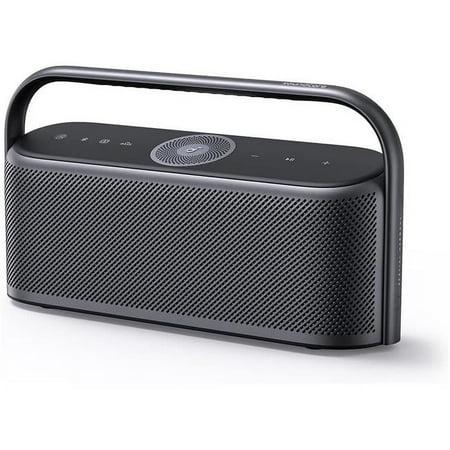
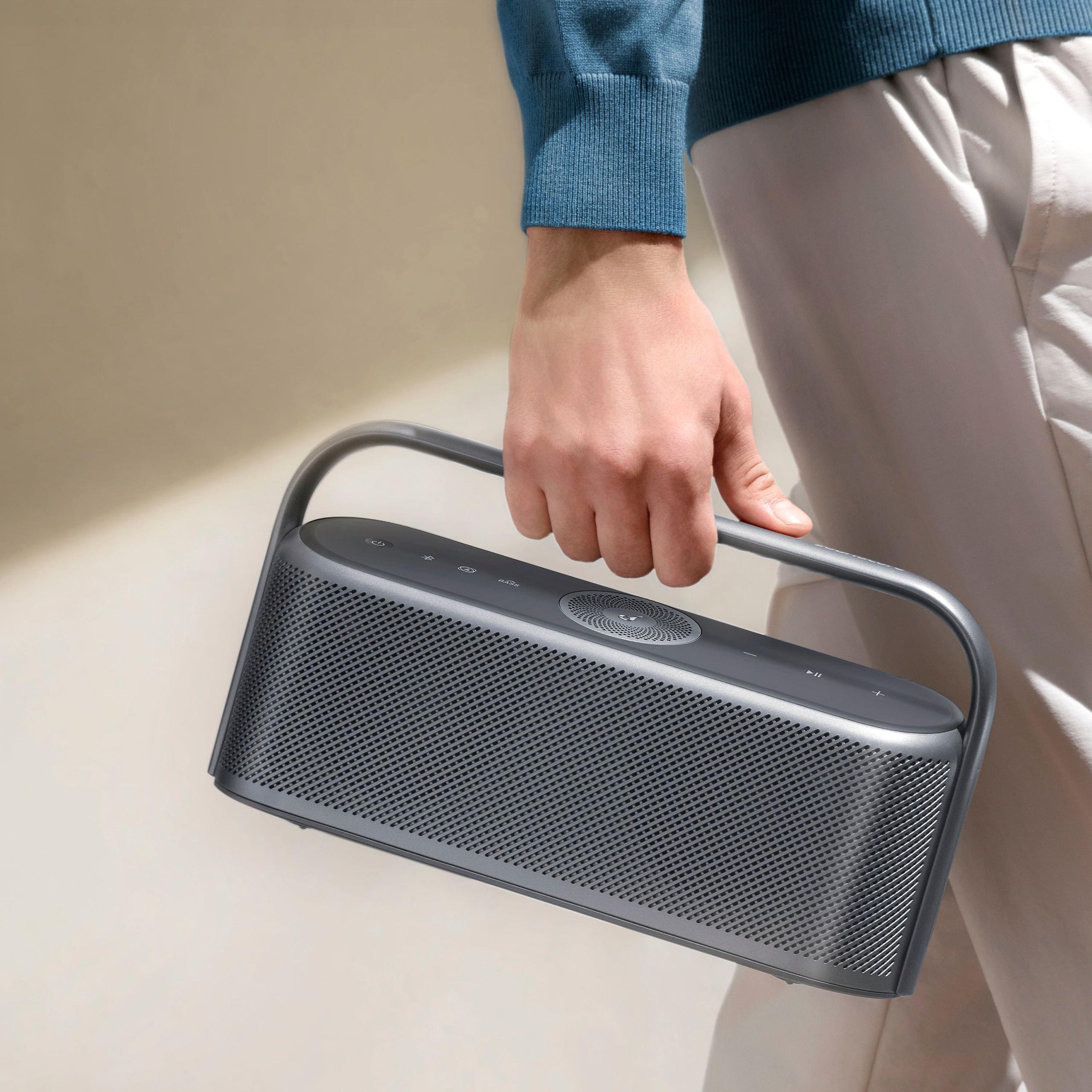
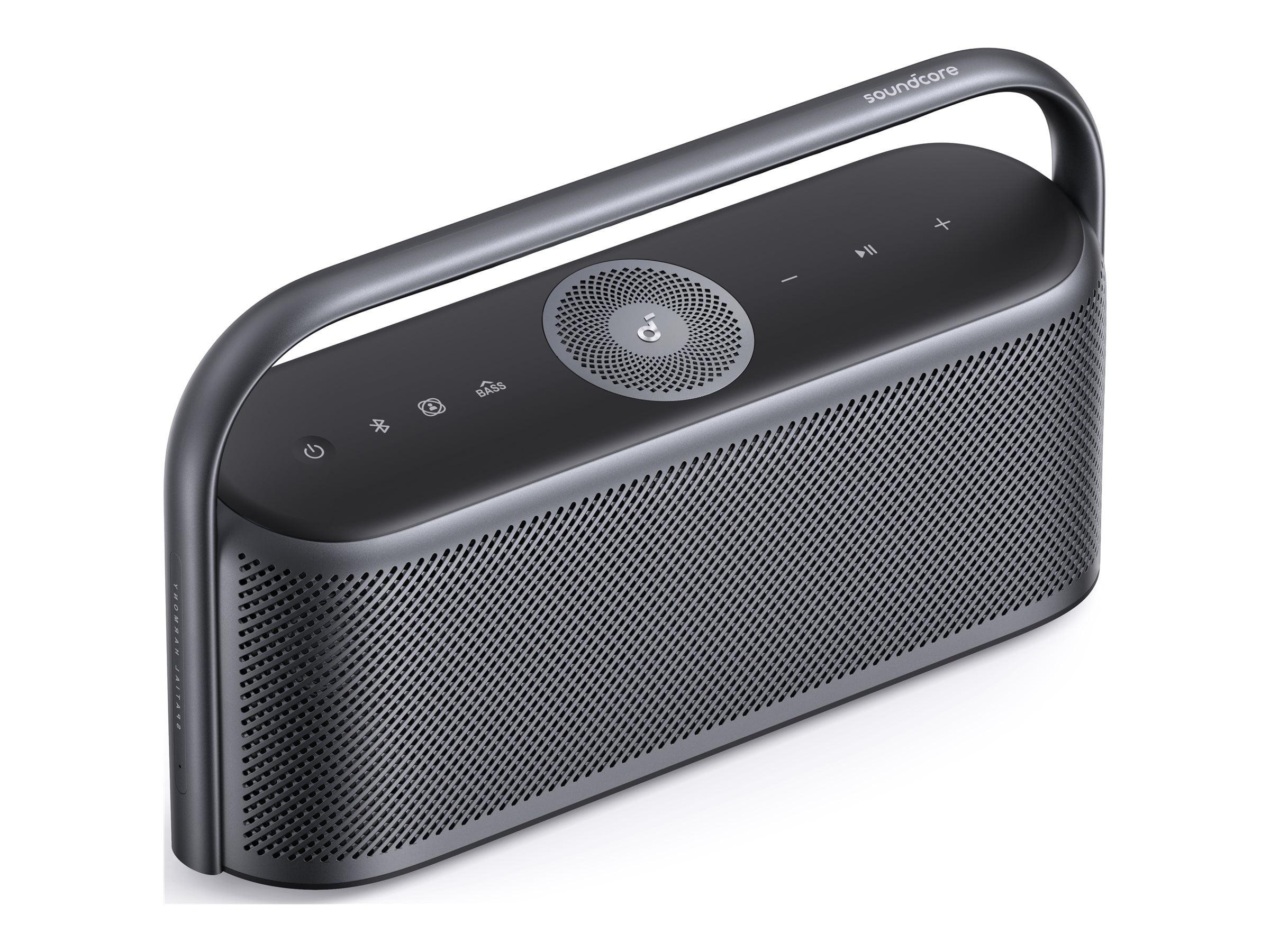
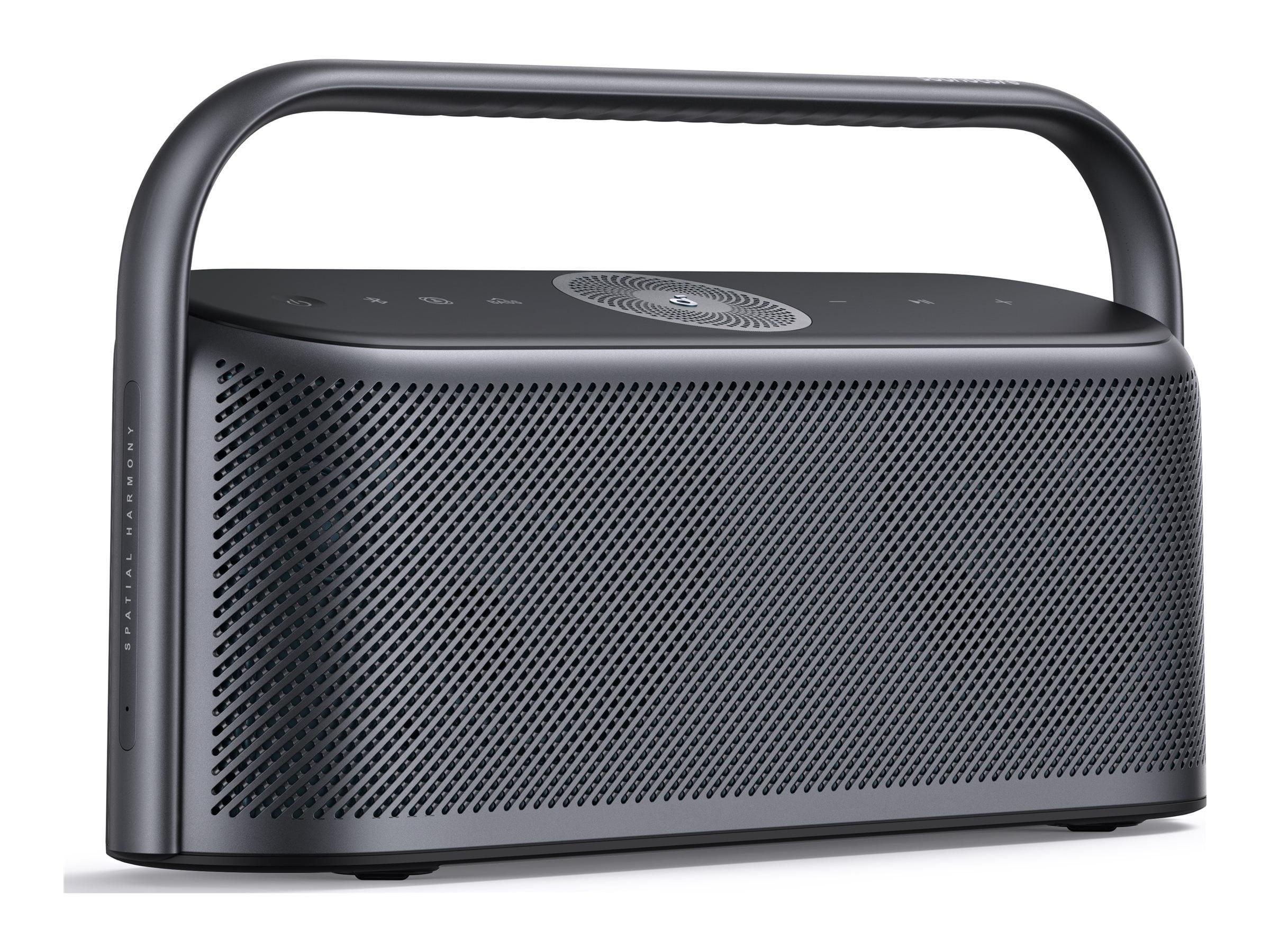
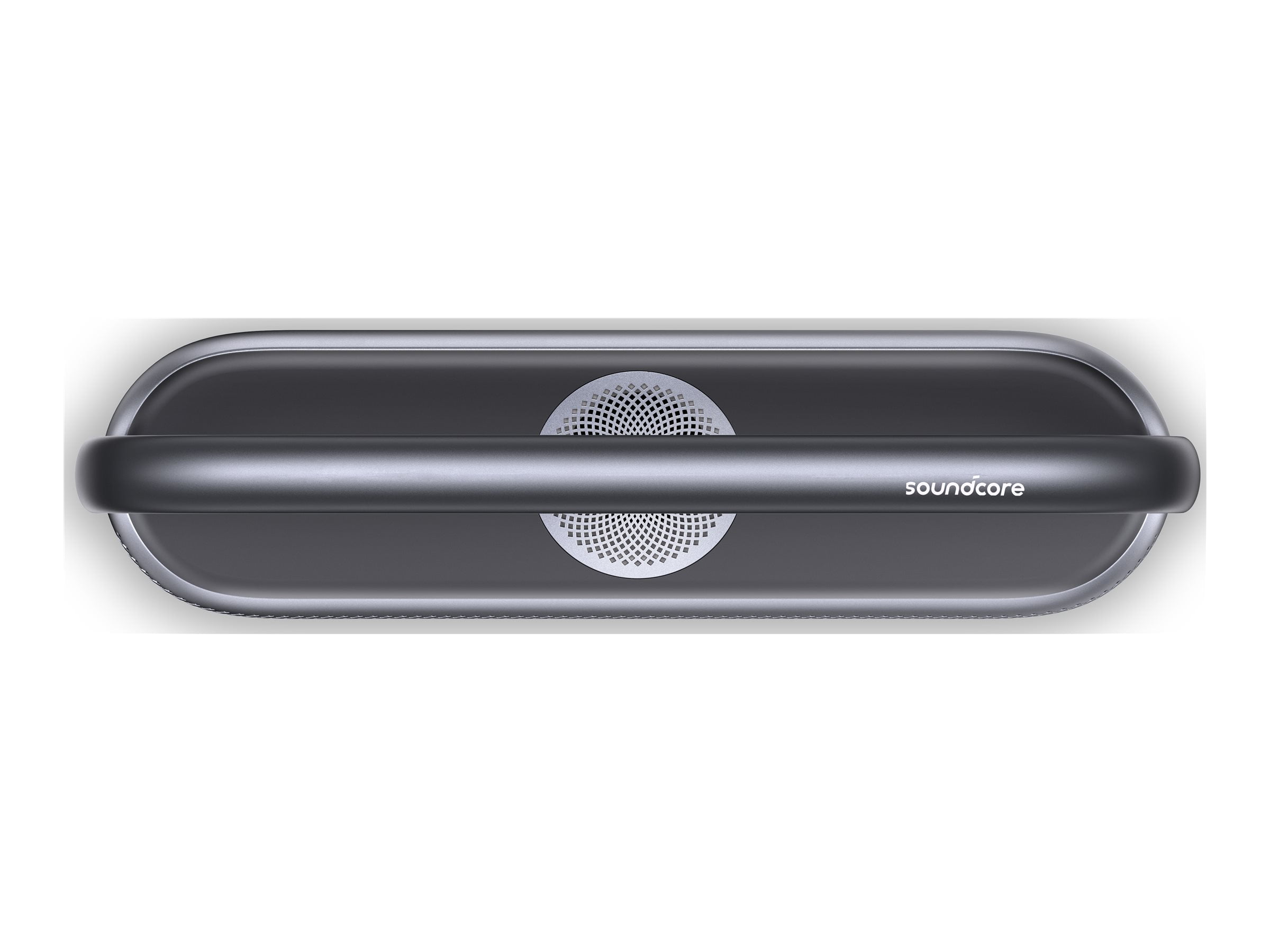

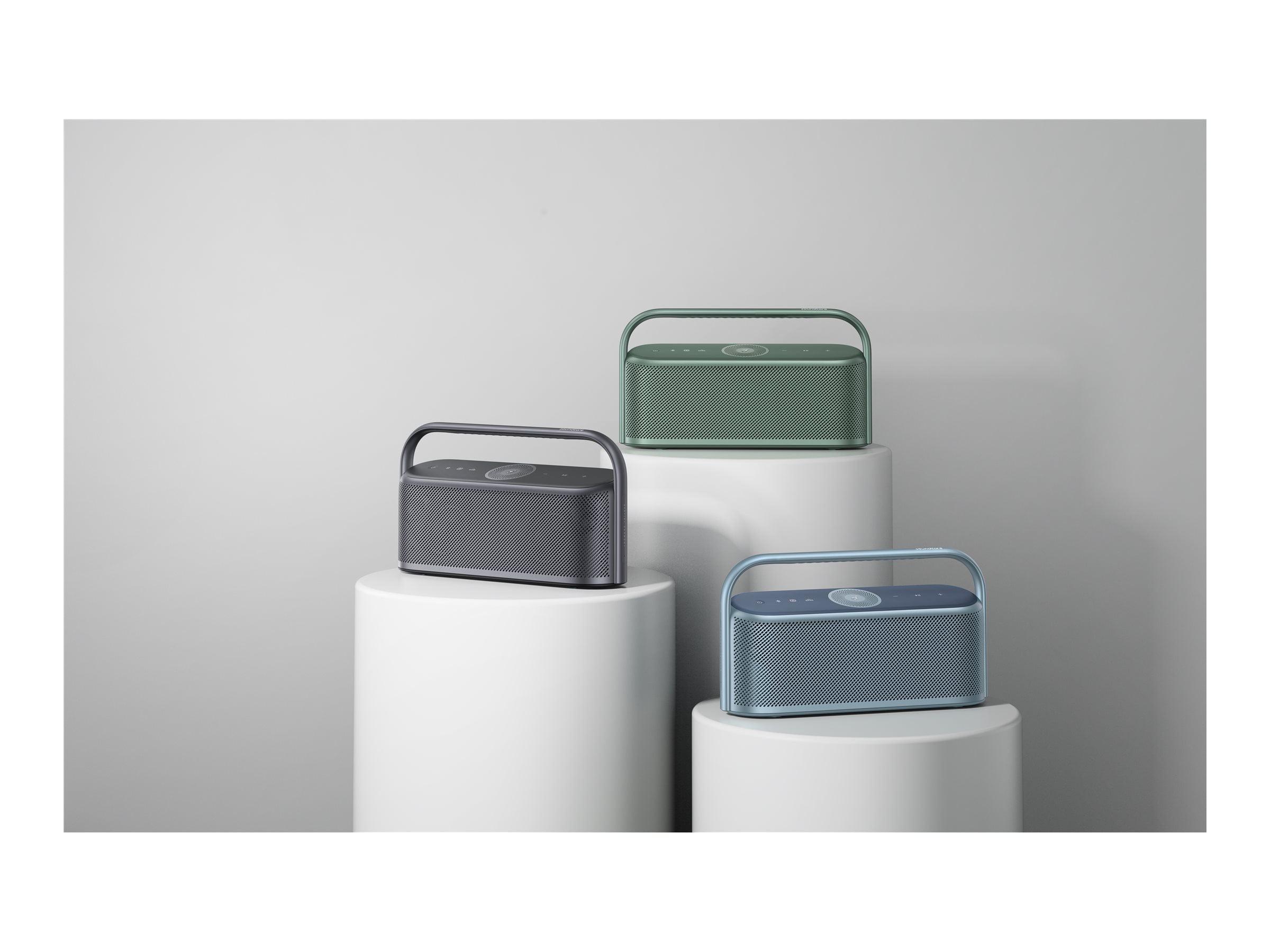
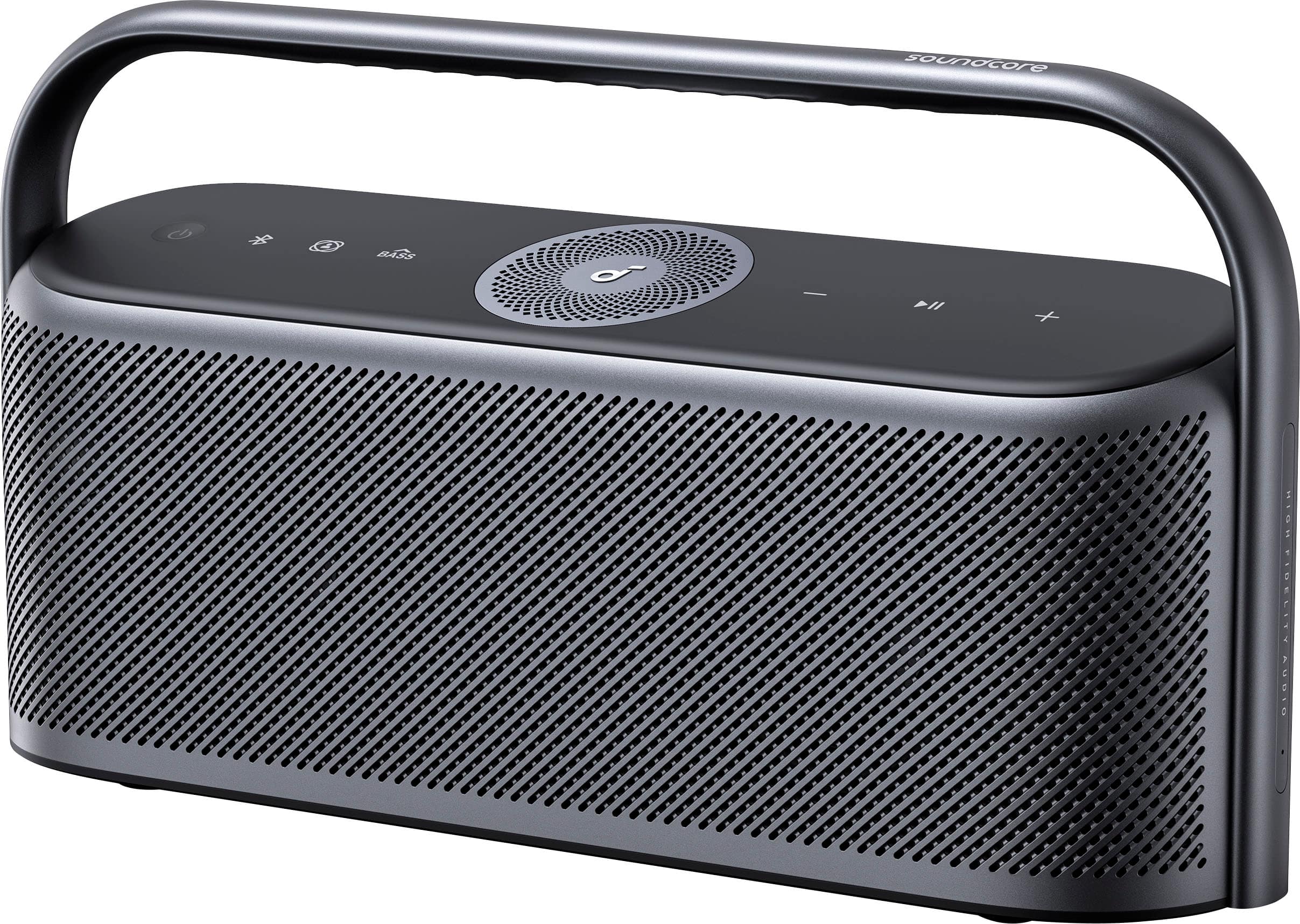
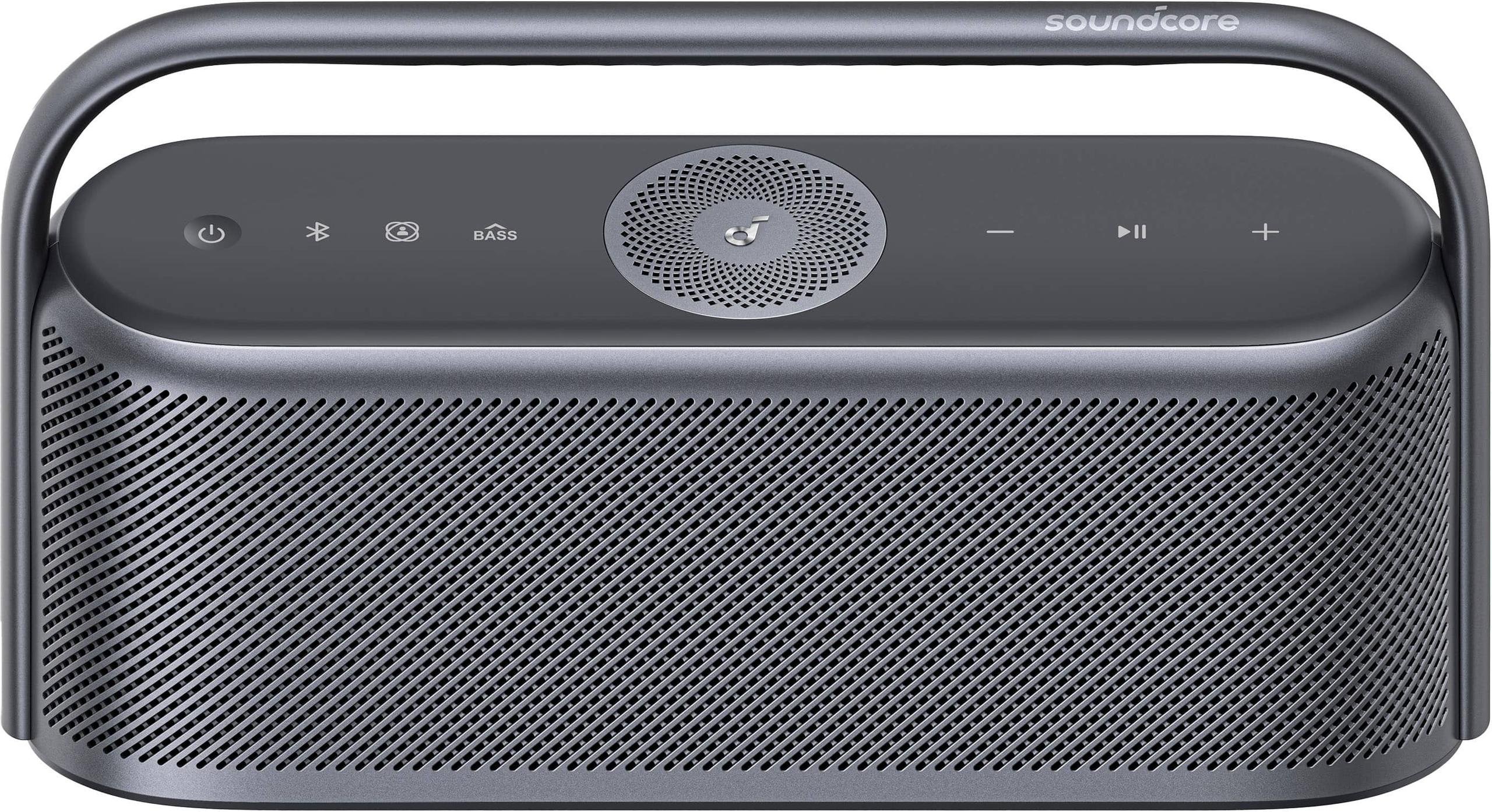

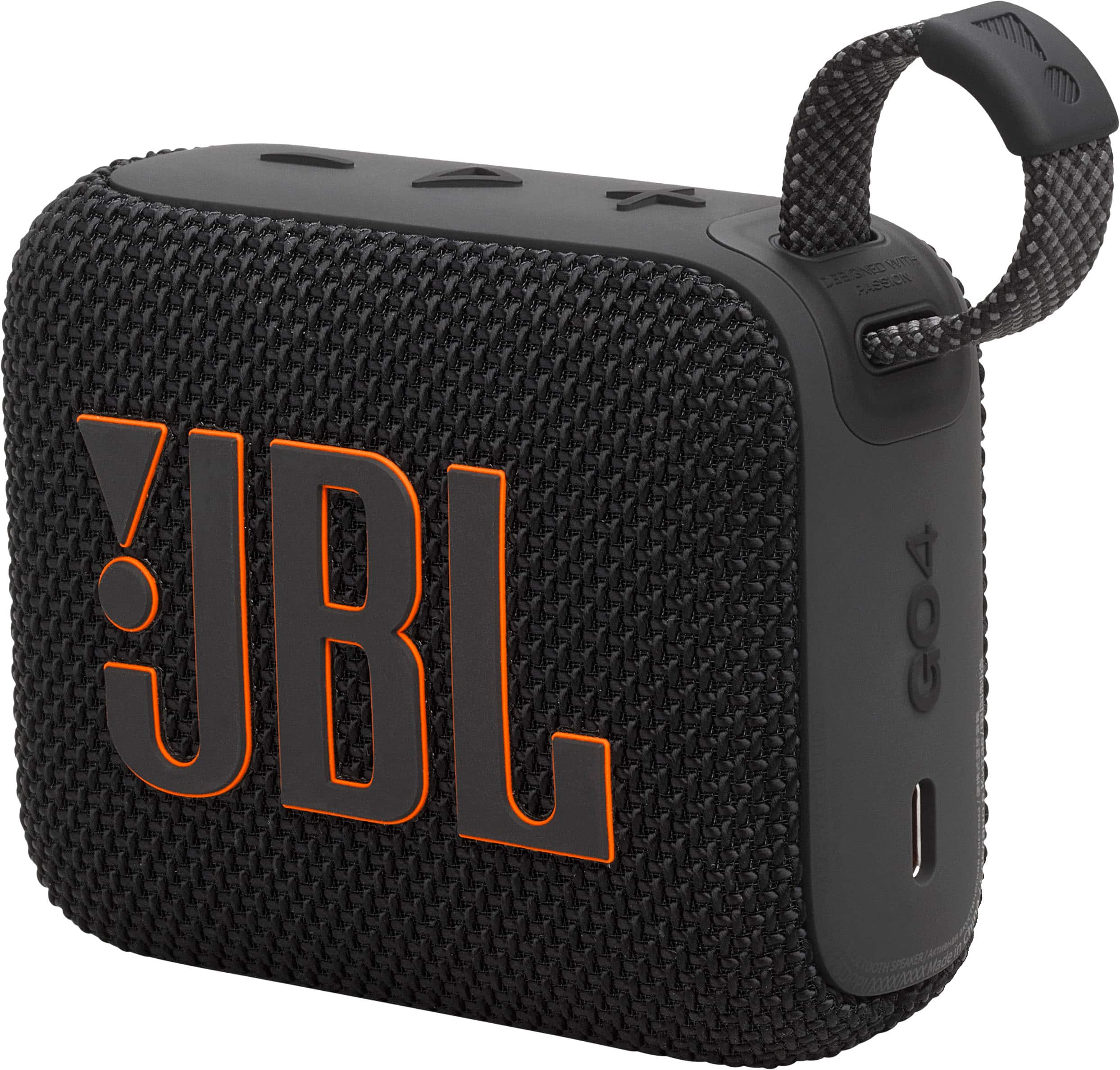
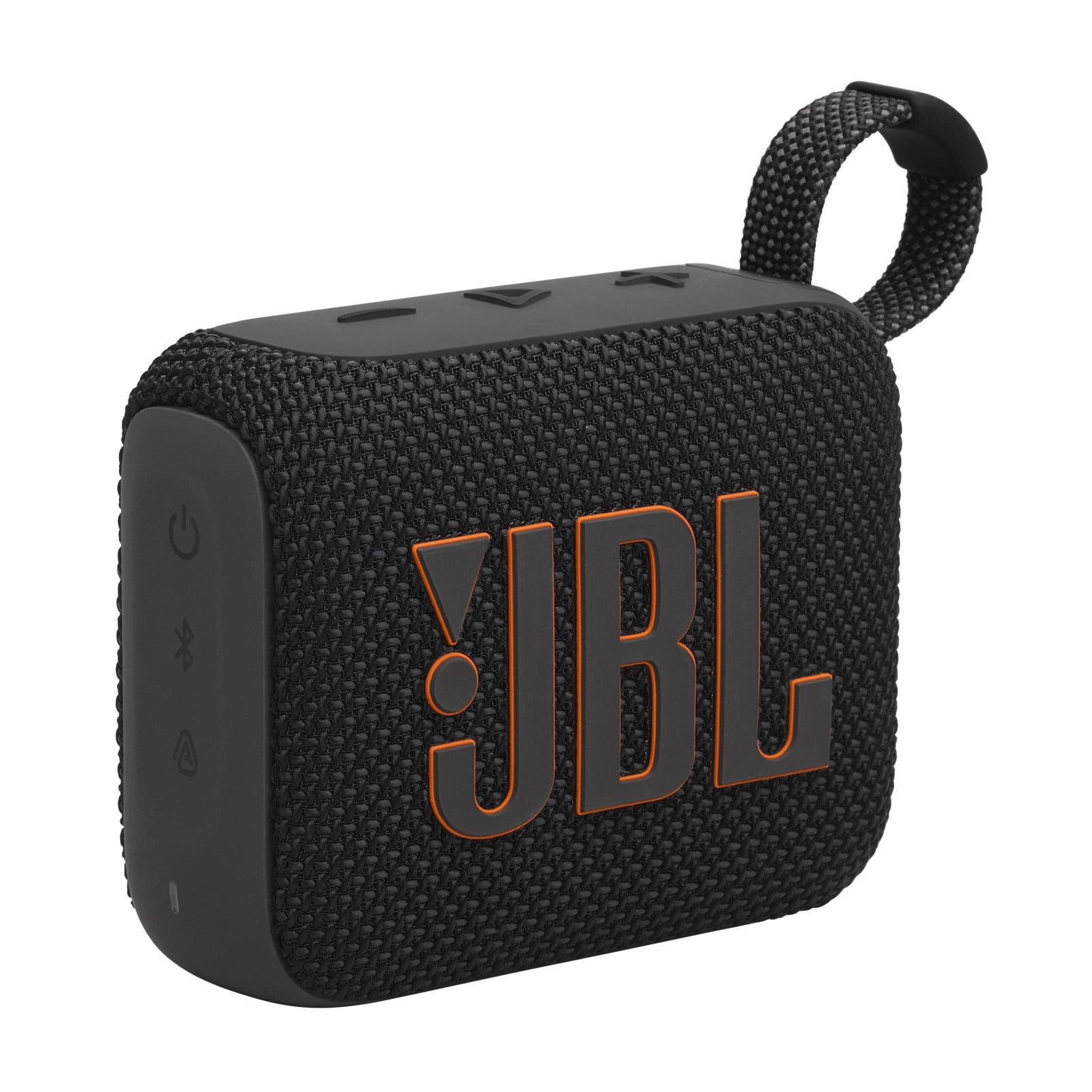


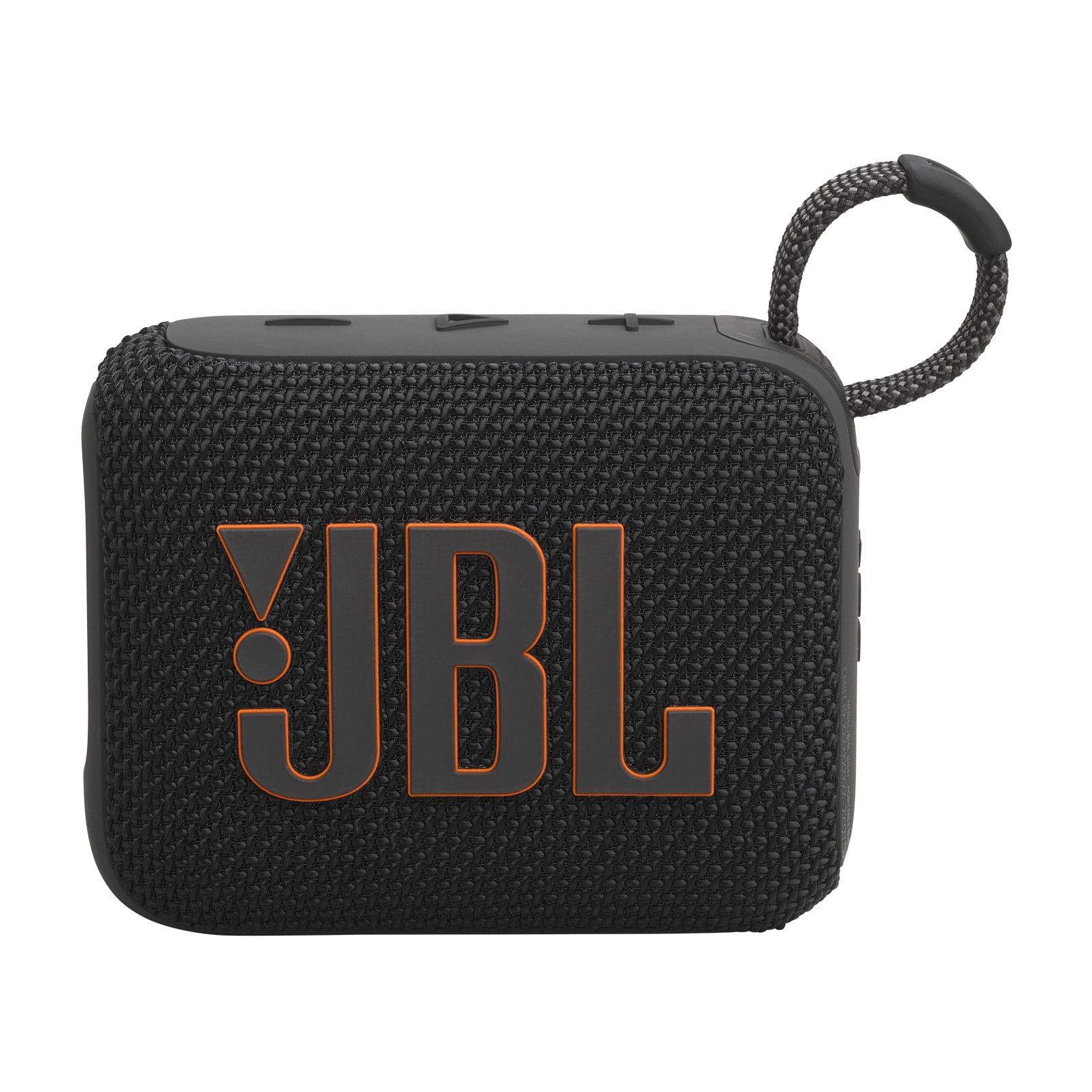
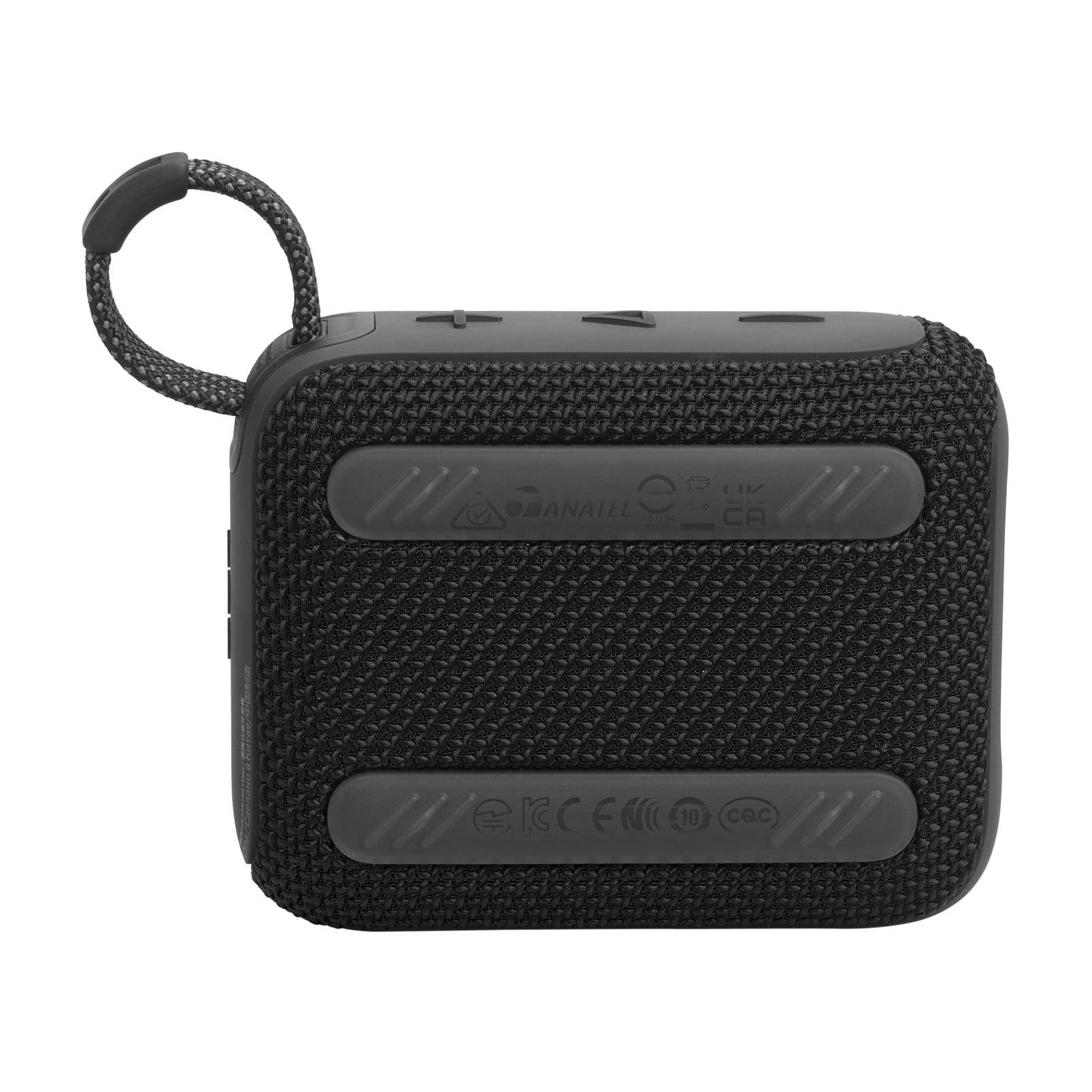
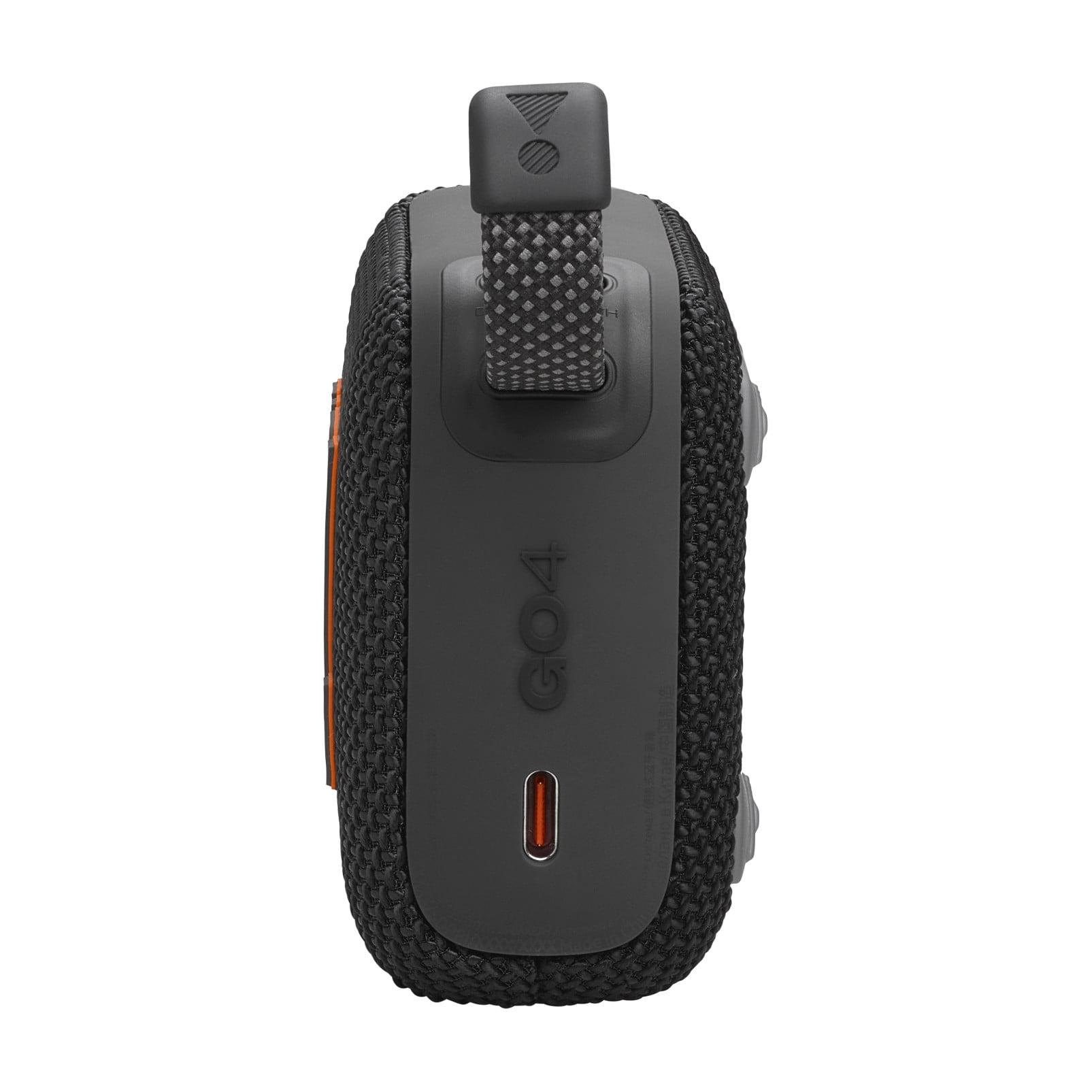
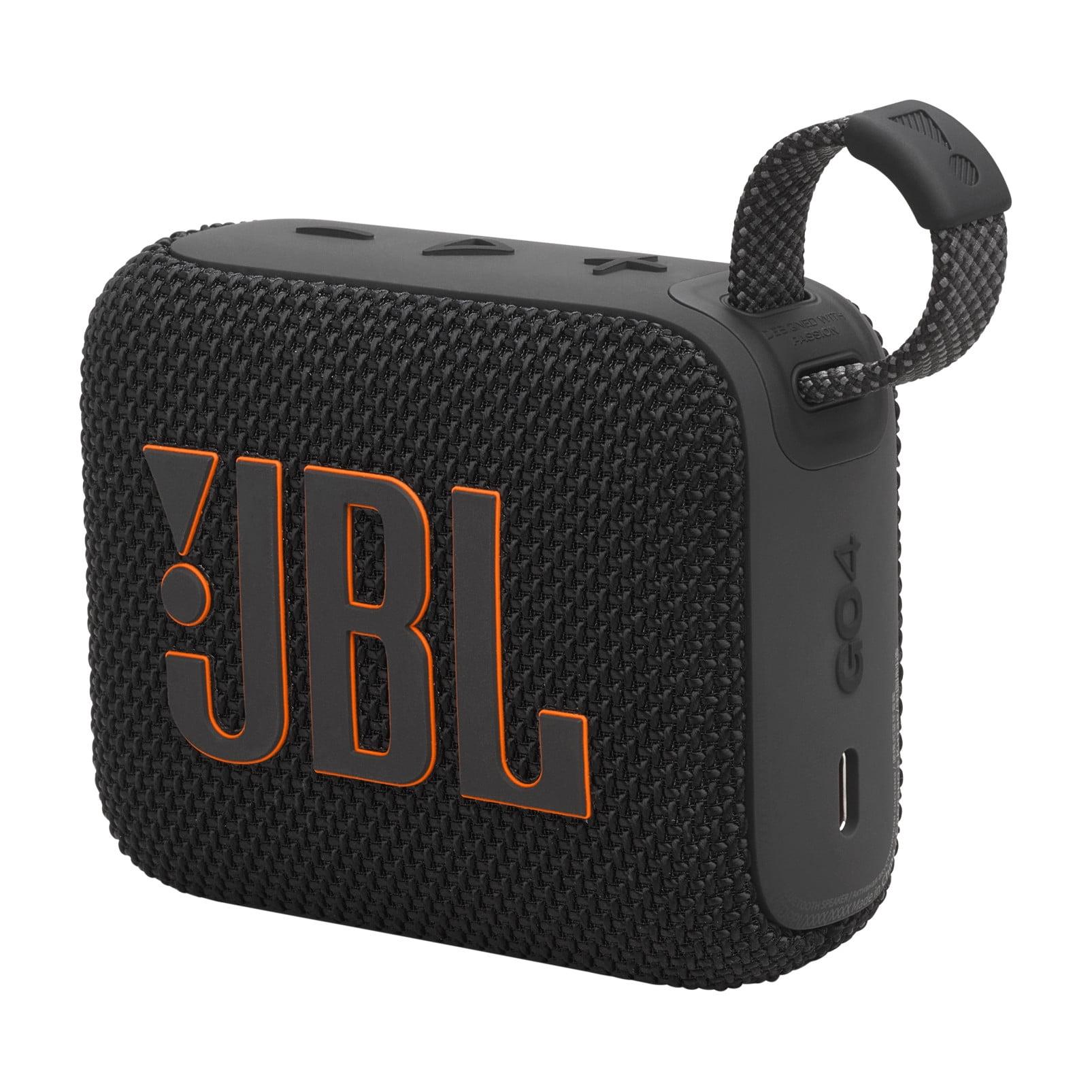
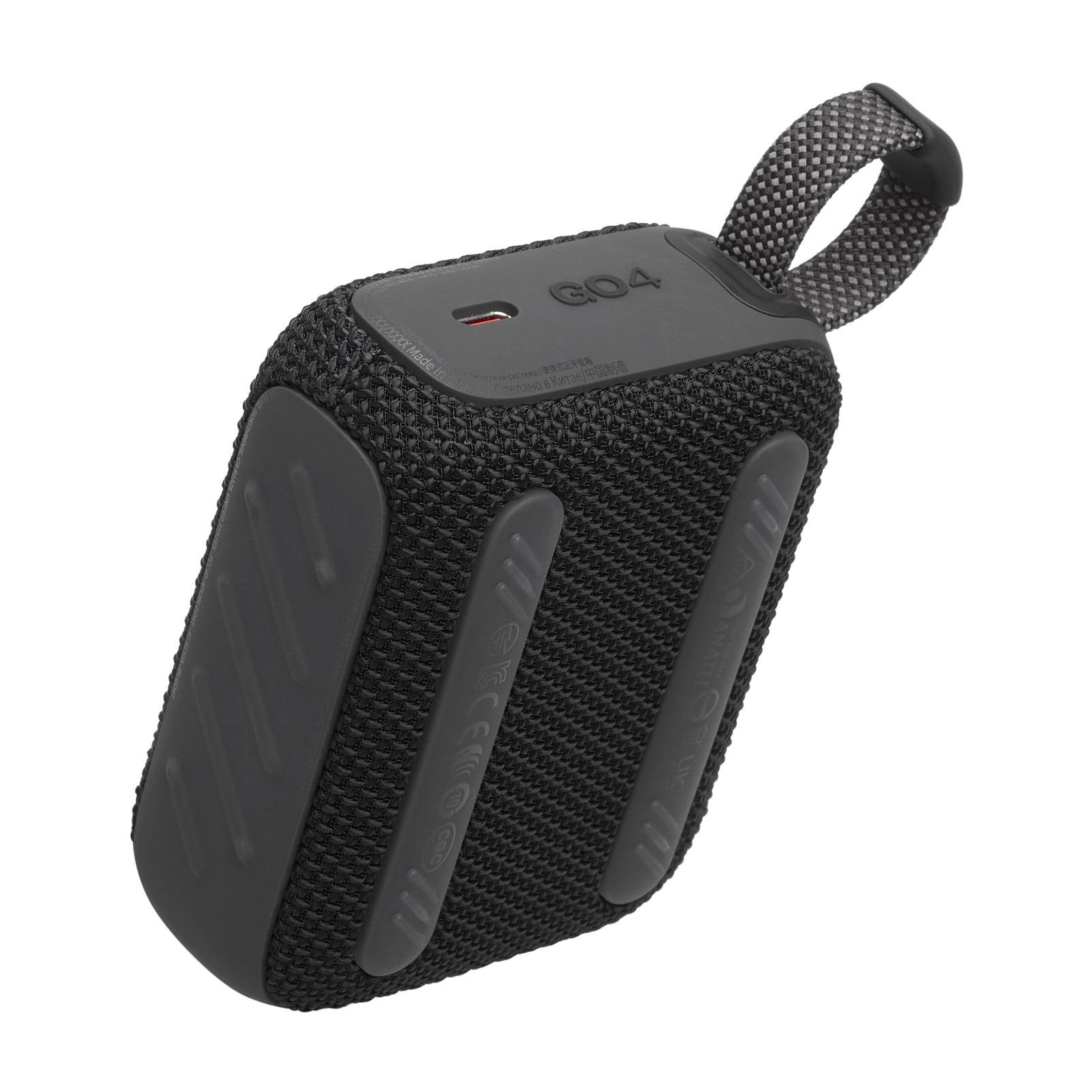
When it comes to portable Bluetooth speakers, there's a huge range of options at different price points. Today we're comparing two interesting choices: the premium $159.99 Soundcore Motion X600 and the ultra-portable $44 JBL Go 4. While they're both technically portable speakers, they serve quite different needs.
The portable speaker market has evolved significantly in recent years. We've seen major improvements in battery life, sound quality, and durability across all price points. The most notable advances have been in spatial audio processing and driver technology, allowing smaller speakers to produce increasingly impressive sound.
The Motion X600, released in May 2023, represents the premium portable segment with features previously found only in high-end home speakers. Meanwhile, the Go 4, just released in early 2024, shows how far entry-level speakers have come in terms of sound quality and features.
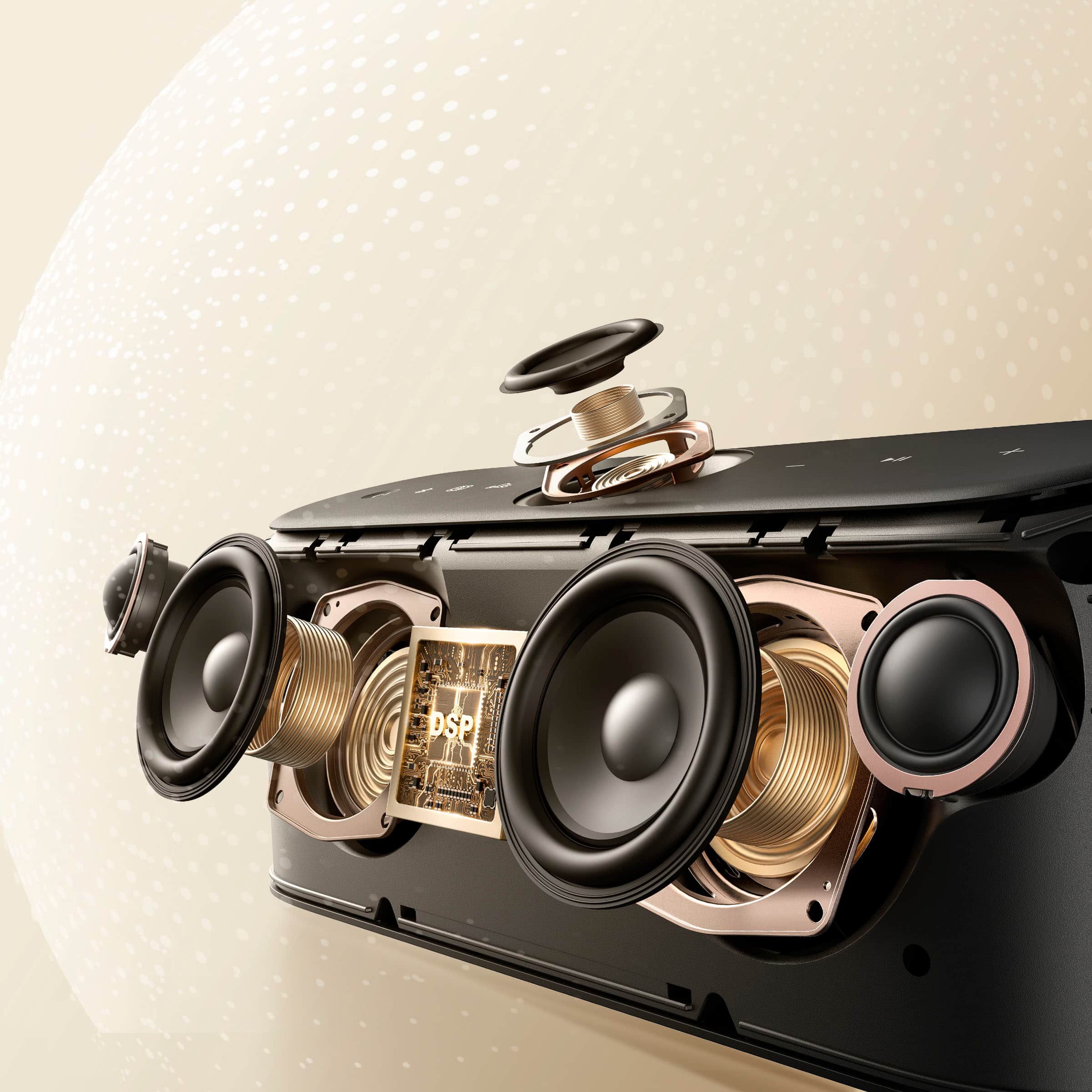
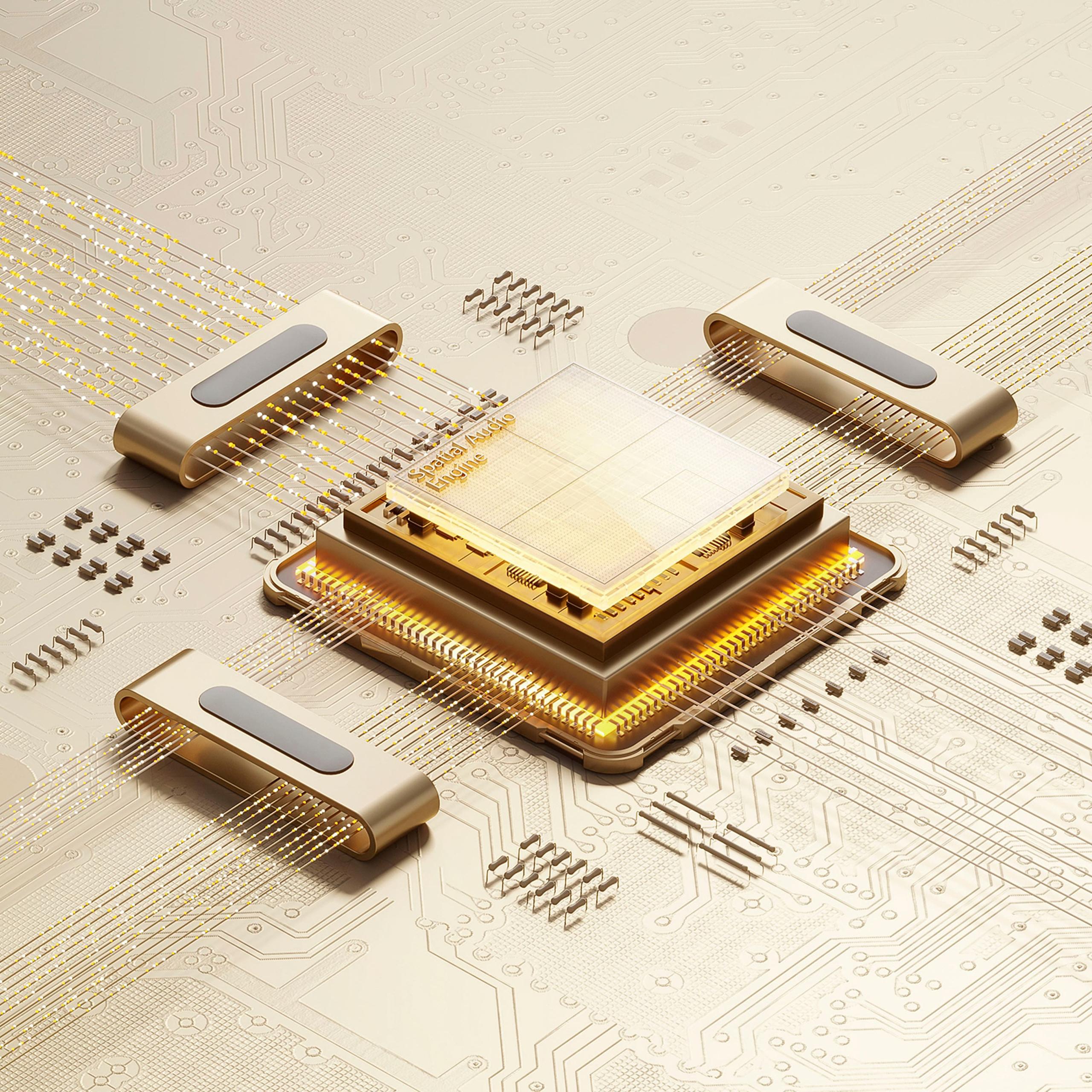
The X600 employs a sophisticated 5-driver system that's quite impressive for a portable speaker. It combines two front-firing tweeters (specialized drivers for high frequencies), two front-firing mid/bass drivers, and an upward-firing tweeter. This configuration, paired with 50 watts of amplification power, creates what Soundcore calls "spatial audio" - a more immersive sound field that extends beyond the speaker's physical location.
What makes this particularly interesting is the LDAC codec support. LDAC is Sony's high-resolution audio codec that can transmit up to 990kbps of data (compared to standard Bluetooth's 328kbps), resulting in noticeably better sound quality when used with compatible devices.
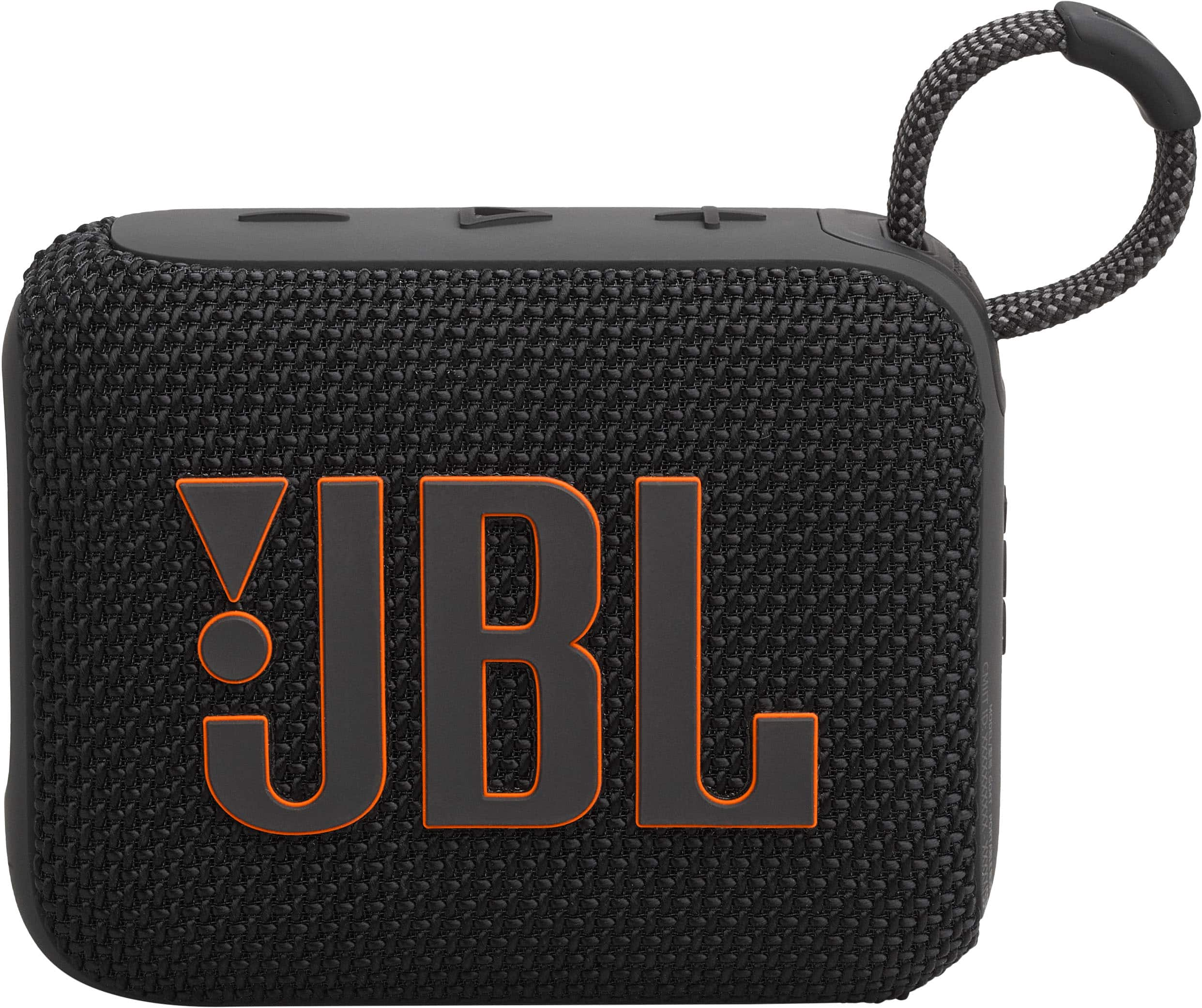
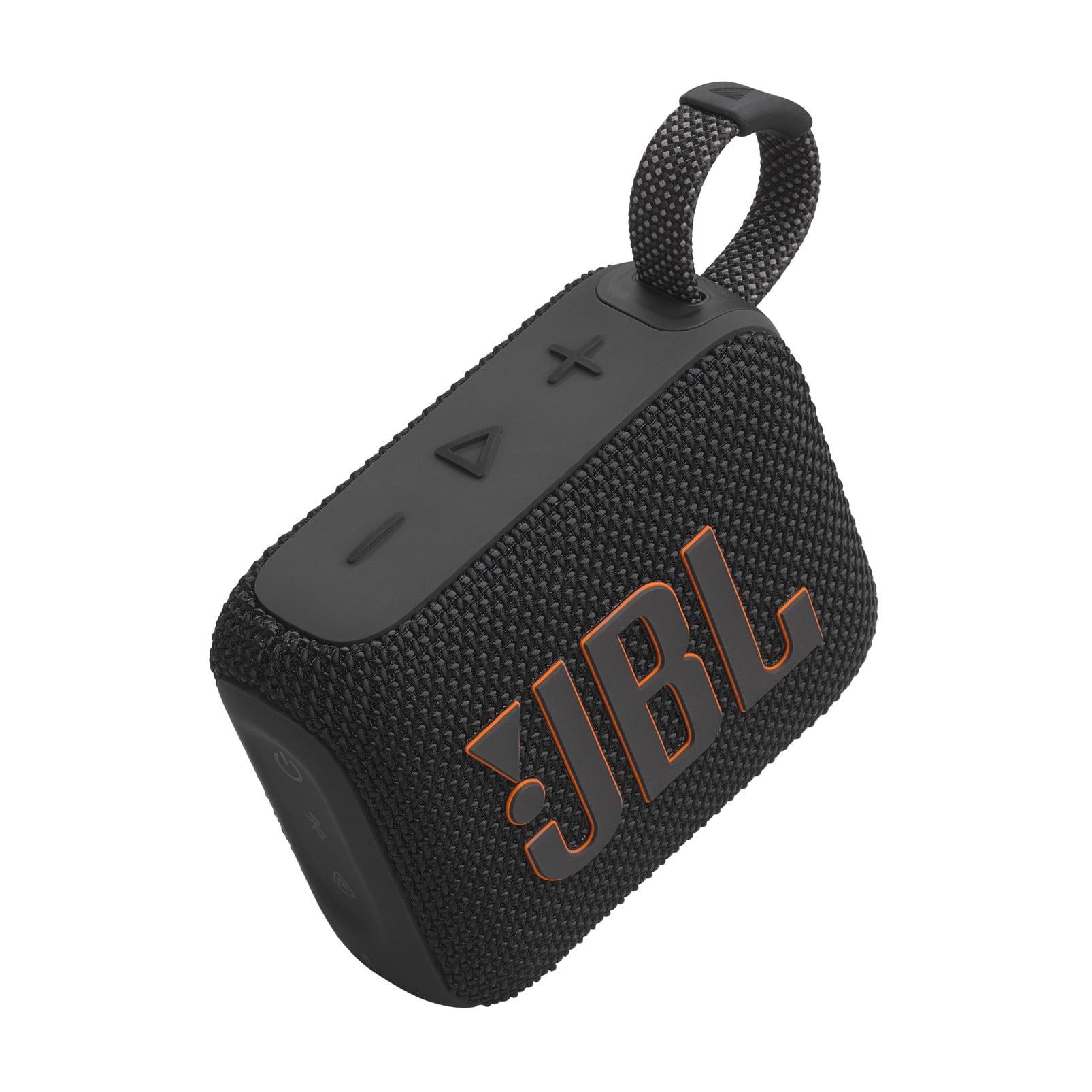
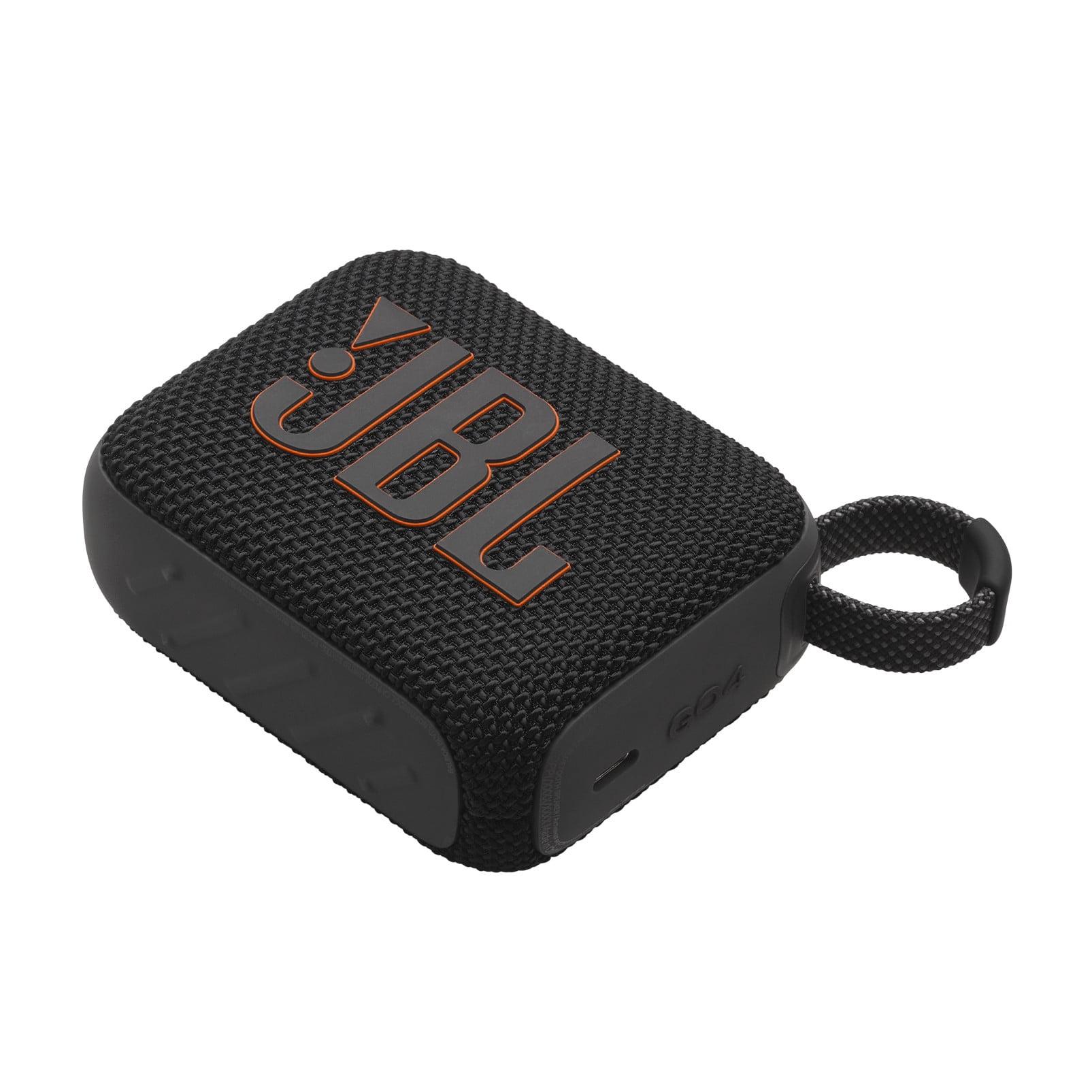
The Go 4 takes a different approach with its single 45mm driver and 4.2W output. While this might seem modest, JBL has done impressive work with digital signal processing (DSP) to maximize performance from this small package. The speaker uses JBL's latest generation of ProSound technology, which helps it deliver surprisingly clear and balanced audio despite its size limitations.
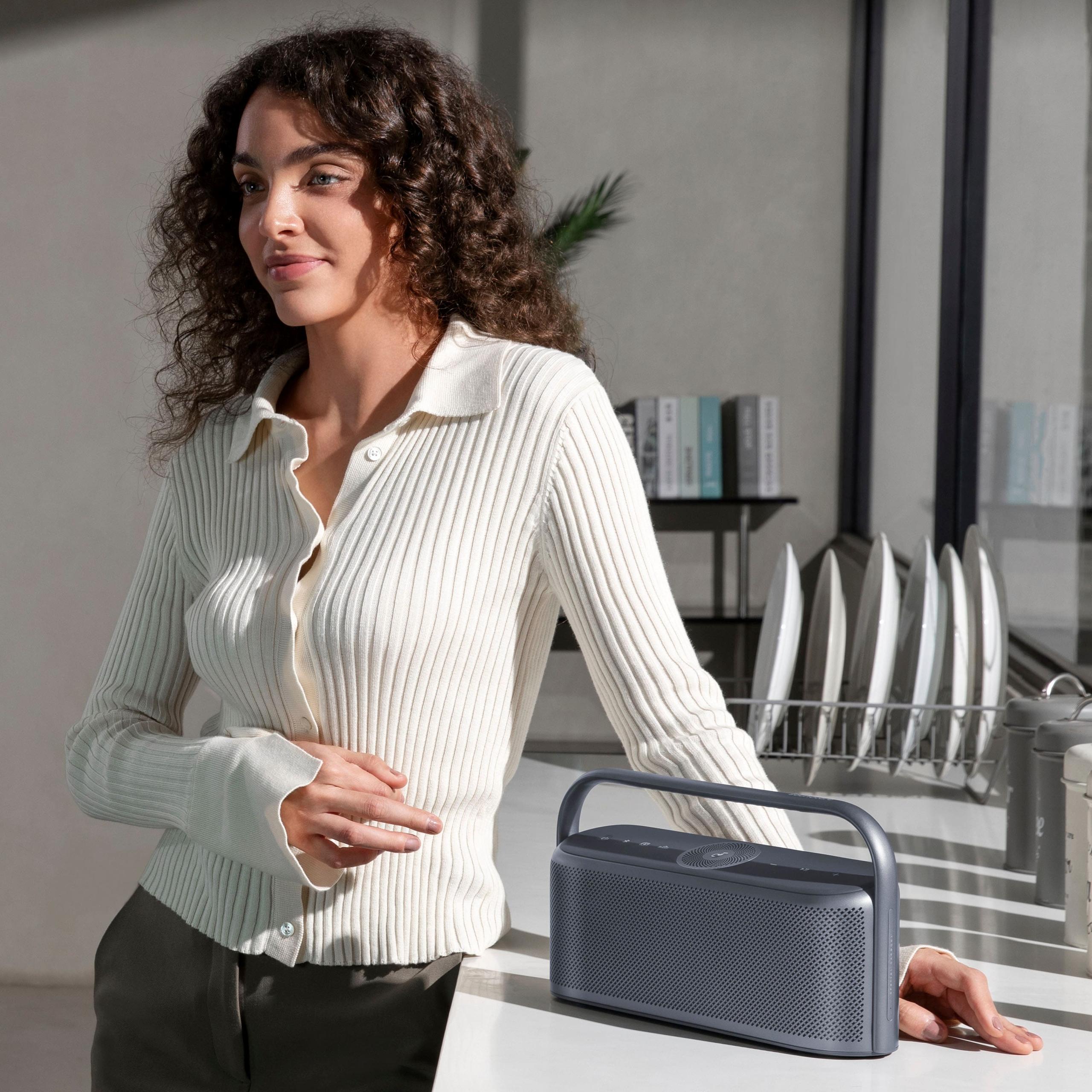
I've tested both speakers in various settings, and the difference in their intended use becomes immediately apparent. The Motion X600 can fill a medium-sized room with rich, detailed sound. Its spatial audio feature creates a notably wider soundstage - the perceived width and depth of the sound - which is particularly noticeable with well-recorded music.
Bass response is where these speakers differ most dramatically. The X600's dual mid/bass drivers can reproduce frequencies down to 50Hz, delivering actual bass notes rather than just hints of them. In comparison, the Go 4 starts rolling off around 90Hz, which means you'll miss the deeper elements of many songs.
The X600 can serve as a decent temporary home theater speaker, especially in smaller rooms or when traveling. Its spatial audio processing helps create a more immersive experience with movies, though it obviously can't match a proper surround sound setup. The LDAC codec support means you'll get better audio quality when streaming from compatible devices.
The Go 4 isn't really suited for home theater use - it's designed for personal listening and background music. However, it excels in its intended role as an ultra-portable companion.
Battery technology has improved significantly in recent years, allowing manufacturers to balance power consumption with performance better than ever. The X600 delivers up to 12 hours of playback, which is impressive considering its power output. The Go 4 manages 7 hours, which is reasonable given its size and price point.
Both speakers use USB-C charging, with the X600 taking about 4 hours for a full charge and the Go 4 needing about 3 hours. The Go 4 includes a new "Playtime Boost" feature that can extend battery life by optimizing power usage, though this comes with some reduction in maximum volume.
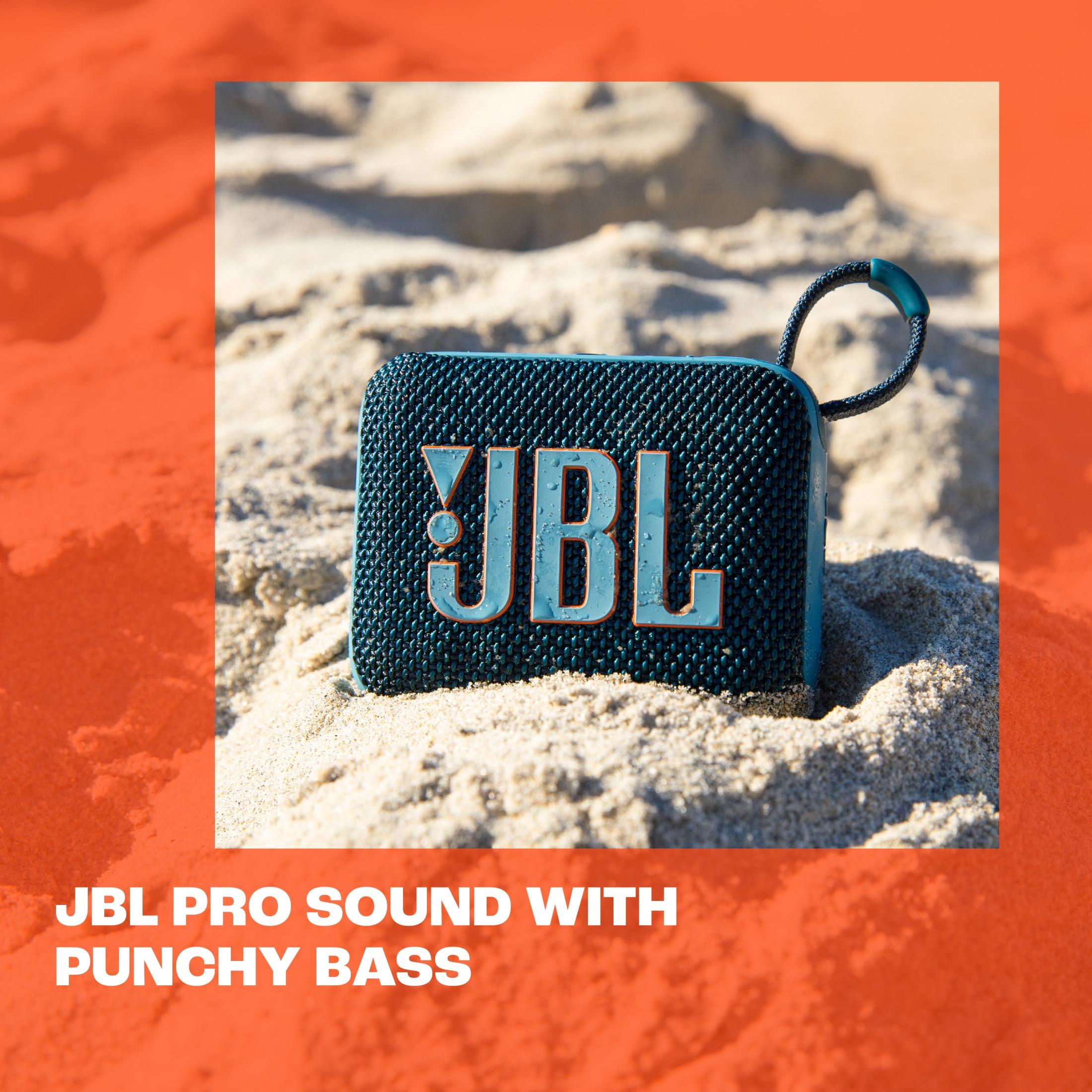
Both speakers feature robust water resistance ratings, but there are important differences:
The X600's aluminum construction feels premium but adds weight (5.57 lbs). The Go 4's compact plastic build prioritizes portability at 0.42 lbs while remaining quite durable.
Choosing between the Motion X600 and JBL Go 4 really comes down to your primary use case and budget. Here's who should consider each:
The X600 delivers about 3-4 times better sound quality than the Go 4, but at roughly 3.6 times the price. This makes both speakers good values in their respective categories - you're getting what you pay for either way.
For most users, the decision should be based more on intended use than specs alone. If you're mainly looking for something to use while traveling or at your desk, the Go 4's combination of portability and decent sound quality makes it an excellent choice. If you're looking for something that can serve as a primary speaker for a room or outdoor gatherings, the X600's superior sound quality and features justify its higher price.
Remember, the best speaker is the one that fits your specific needs, budget, and usage patterns. Both of these options excel in their intended roles - they just happen to serve different purposes.
| Soundcore Motion X600 | JBL Go 4 |
|---|---|
| Price - Key factor in value proposition | |
| $159.99 (premium features, better value vs $200+ speakers) | $44.00 (excellent value for casual use) |
| Audio Output - Determines volume and sound quality potential | |
| 50W peak power (room-filling sound) | 4.2W RMS (personal listening level) |
| Driver Configuration - Impacts sound quality and stereo separation | |
| 5 drivers: 2 tweeters, 2 mid/bass, 1 upward-firing | Single 45mm full-range driver |
| Frequency Response - Defines bass capability and overall range | |
| 50Hz - 40kHz (full bass, extended highs) | 90Hz - 20kHz (limited bass response) |
| Size & Weight - Affects portability and use cases | |
| 12.25" x 6.75" x 3.06", 5.57 lbs (transportable) | 3.7" x 3.0" x 1.7", 0.42 lbs (ultra-portable) |
| Battery Life - Important for extended use | |
| Up to 12 hours (typical use) | Up to 7 hours (9 with Playtime Boost) |
| Water Resistance - Determines outdoor usability | |
| IPX7 (waterproof, submersible) | IP67 (waterproof and dustproof) |
| Bluetooth Version & Codecs - Impacts audio quality | |
| 5.3 with LDAC, SBC (high-res capable) | 5.3 with SBC only (standard quality) |
| Extra Features - Adds functionality and value | |
| Spatial audio, app EQ, stereo pairing | Auracast multi-speaker, app EQ, floating design |
| Primary Use Case - Who should buy this | |
| Home/outdoor entertainment, parties, serious listening | Travel, personal audio, shower speaker, desk companion |
The $159.99 Soundcore Motion X600 has significantly better sound quality with its 5-driver system and 50W output compared to the $44 JBL Go 4's single driver. The X600 provides fuller bass, clearer highs, and room-filling sound.
The JBL Go 4 is much more portable at just 0.42 lbs compared to the Motion X600's 5.57 lbs. The Go 4's compact size makes it ideal for travel and everyday carry.
The Motion X600 offers up to 12 hours of playback, while the JBL Go 4 provides 7 hours (up to 9 with Power Boost mode enabled).
Yes, both speakers are waterproof. The Motion X600 has IPX7 rating and the Go 4 has IP67 rating, making them both suitable for outdoor use and resistant to water damage.
The Soundcore Motion X600 is significantly better for parties with its room-filling 50W output and spatial audio features. The Go 4 is designed more for personal listening.
The Motion X600 has much stronger bass response, reaching down to 50Hz compared to the Go 4's 90Hz limit. This means noticeably fuller, deeper bass on the X600.
Yes, both speakers use Bluetooth 5.3 for wireless connection. The X600 adds LDAC support for higher quality audio with compatible devices.
The JBL Go 4 offers better value for casual users at $44, while the Motion X600 provides better value for audio enthusiasts who need premium features.
Both are water-resistant, but the Go 4 is better suited for shower use due to its smaller size and additional dust protection (IP67 rating).
Both speakers can access your phone's voice assistant through their built-in microphones, but neither has native voice assistant integration.
We've done our best to create useful and informative comparisons to help you decide what product to buy. Our research uses advanced automated methods to create this comparison and perfection is not possible - please contact us for corrections or questions. These are the sites we've researched in the creation of this article: soundguys.com - dxomark.com - soundcore.com - digitaltrends.com - soundcore.com - crutchfield.com - gadgetsoman.com - gadgetoid.com - nelooq.com - soundcore.com - soundcore.com - audioholics.com - tomsguide.com - outeraudio.com - youtube.com - techradar.com - corporategift.com - jbl.com - target.com - dell.com - projectorscreen.com - mm.jbl.com

Privacy Policy
Terms and Conditions - Affiliate Policy
Home Security
© Copyright 2008-2026.
11816 Inwood Rd #1211, Dallas, TX 75244