

When you're planning a backyard party, beach gathering, or outdoor celebration, regular Bluetooth speakers just don't cut it. You need something that can fill a large space with powerful, clear sound while running on battery power for hours. That's where portable party speakers come in—these are the audio workhorses designed to get crowds moving and keep the energy high.
The portable party speaker category sits in a sweet spot between standard Bluetooth speakers and professional PA systems. They're built to deliver maximum volume and bass while remaining portable enough to move around. Think of them as the difference between a car stereo and a home stereo—they serve different purposes and excel in different environments.
Before diving into our two contenders, it's worth understanding what separates great party speakers from mediocre ones. The most important factor is volume output without distortion. When you're competing with crowd noise, laughter, and outdoor acoustics, you need clean, powerful sound that doesn't break up when pushed hard.
Bass response is equally crucial since low-frequency sound gets people moving and creates the physical impact that makes music feel exciting. However, not all bass is created equal—punchy, controlled bass sounds better than boomy, muddy bass that overwhelms vocals and instruments.
Battery life becomes critical when you're away from power outlets. Nothing kills a party faster than dead speakers, so extended runtime matters more than minor differences in sound quality. Finally, durability and portability determine whether your speaker can handle real-world party scenarios—spilled drinks, rough handling, and outdoor conditions.
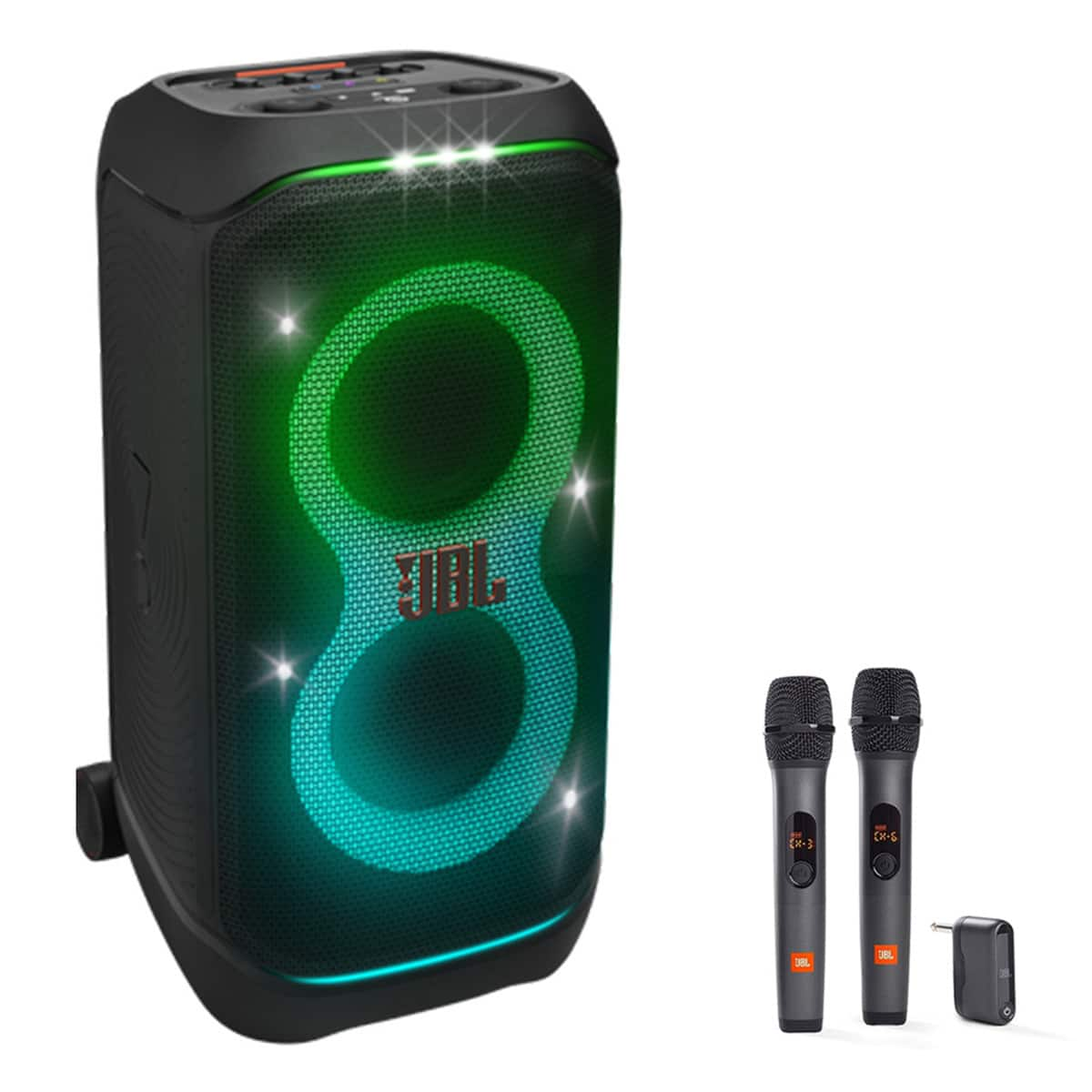
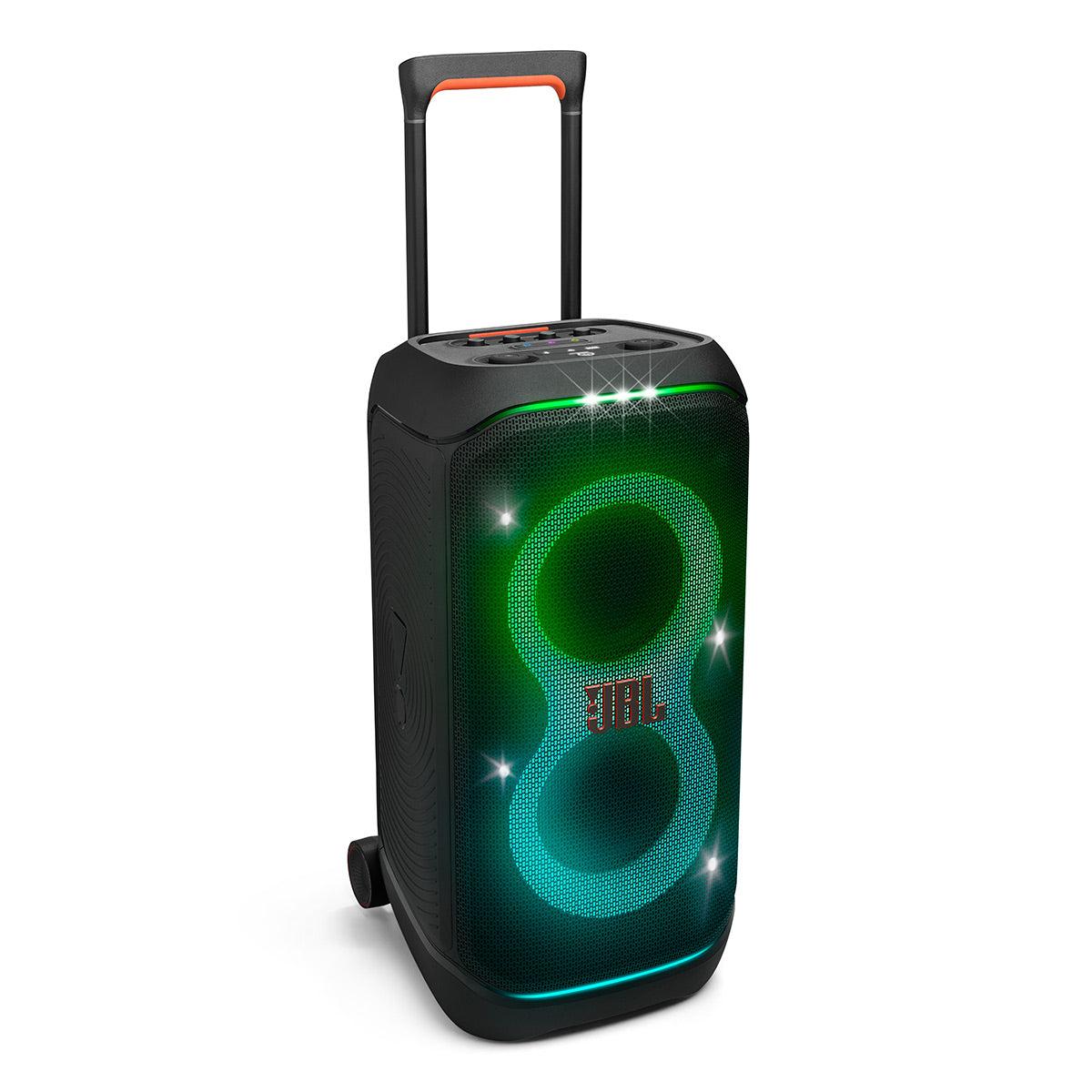
The JBL PartyBox Stage 320 arrived in 2024 as JBL's latest evolution of their popular PartyBox line. It represents several years of refinement in portable party speaker design, incorporating lessons learned from previous models while adding new features like swappable batteries and improved connectivity.
The Sony SRS-XV800 launched in 2023 as part of Sony's X-Series lineup, marking the company's serious entry into the competitive party speaker market. Sony brought their decades of audio engineering expertise to create something that balances party functionality with their reputation for sound quality.
Both speakers target the same audience but take notably different approaches to achieving their goals. At the time of writing, they're priced competitively in the premium portable speaker category, with the JBL typically running slightly less expensive than the Sony, though both frequently go on sale.
When it comes to raw audio output, the JBL PartyBox Stage 320 takes a clear lead with 240 watts RMS of power. RMS stands for "root mean square"—essentially, it's the continuous power output the speaker can sustain without damage, which gives you a realistic idea of its loudness capability.
The Sony SRS-XV800 produces 70 watts RMS, which seems dramatically lower on paper. However, wattage alone doesn't tell the complete story. Sony's approach focuses on efficiency and driver design rather than brute force.
The JBL uses dual 6.5-inch woofers (the large drivers that produce bass and midrange frequencies) paired with two 1-inch dome tweeters (the small drivers handling high frequencies like cymbals and vocal details). Its 4-ohm impedance—a measure of electrical resistance—allows it to draw more current from its amplifier, typically resulting in louder output and better performance at high volumes.
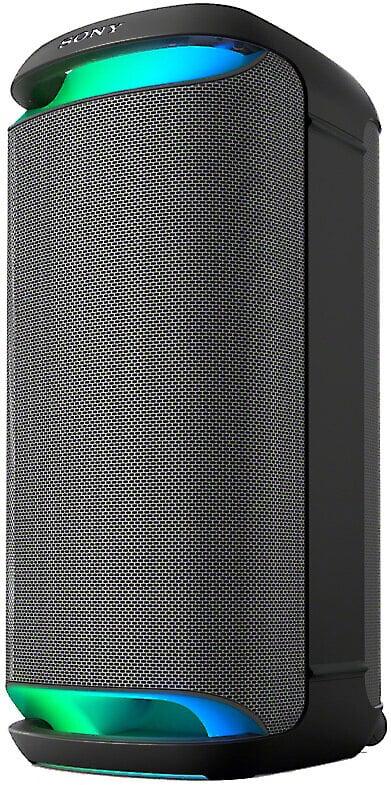
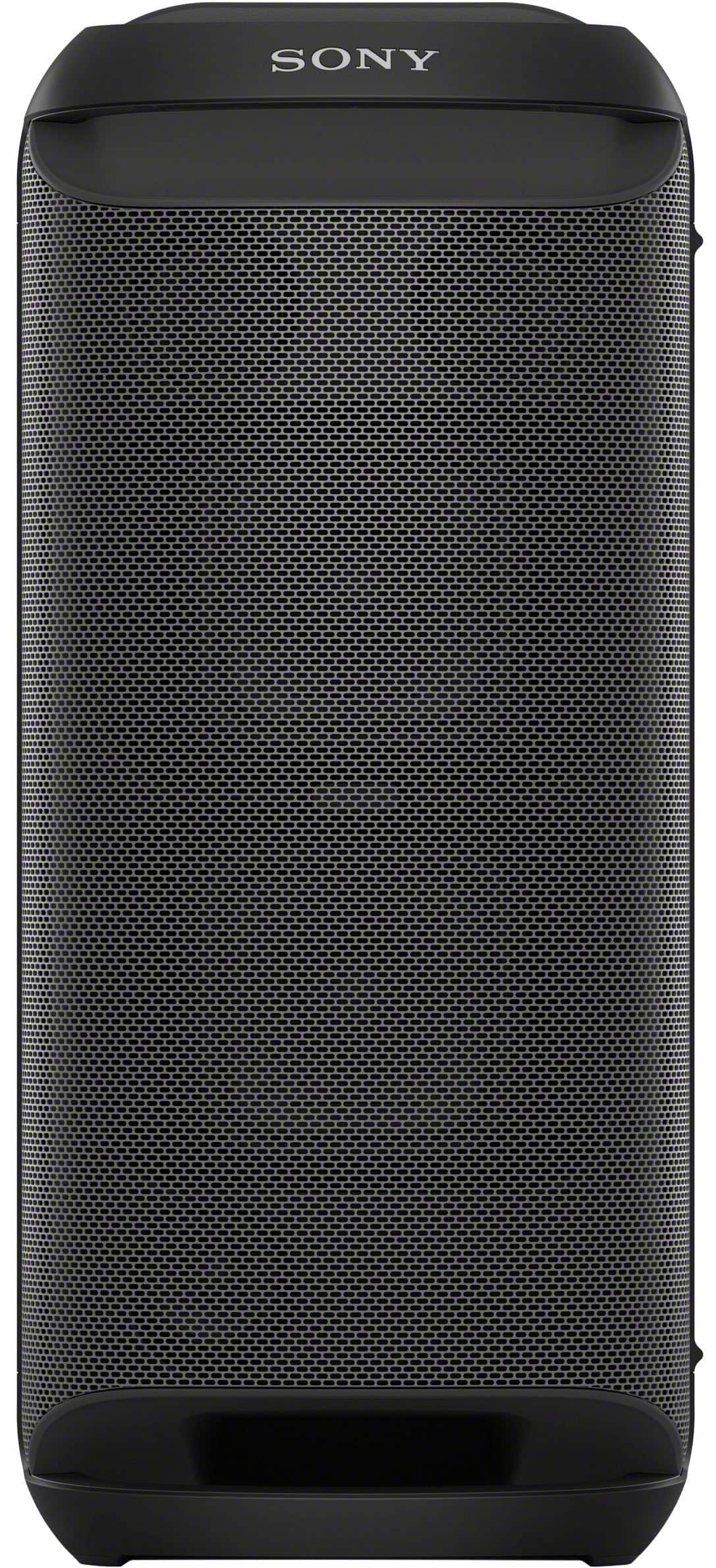
The Sony employs a more sophisticated driver array with dual 6.69-inch X-Balanced woofers and five dome tweeters total. The X-Balanced design uses rectangular speaker cones instead of traditional circular ones, maximizing the surface area within the same cabinet space. This larger diaphragm area can move more air with less distortion, potentially delivering cleaner bass and midrange despite lower wattage.
In real-world testing by audio reviewers and user reports, the JBL consistently achieves higher maximum volumes and delivers more physically impactful bass. It's the speaker you choose when you absolutely need to fill a large outdoor space or compete with significant background noise. Users report it can effectively cover areas the size of tennis courts, making it ideal for big gatherings.
The Sony produces impressive volume for its power rating but focuses more on clarity and balance across all frequencies. Its five-tweeter omnidirectional design creates 360-degree sound dispersion, meaning people standing at different angles around the speaker hear more consistent audio quality.
Here's where these speakers reveal their distinct personalities. The JBL PartyBox Stage 320 delivers what audio enthusiasts call a "V-shaped" sound signature—boosted bass and treble with slightly recessed midrange frequencies. This creates an exciting, energetic presentation that immediately grabs attention and gets people moving.
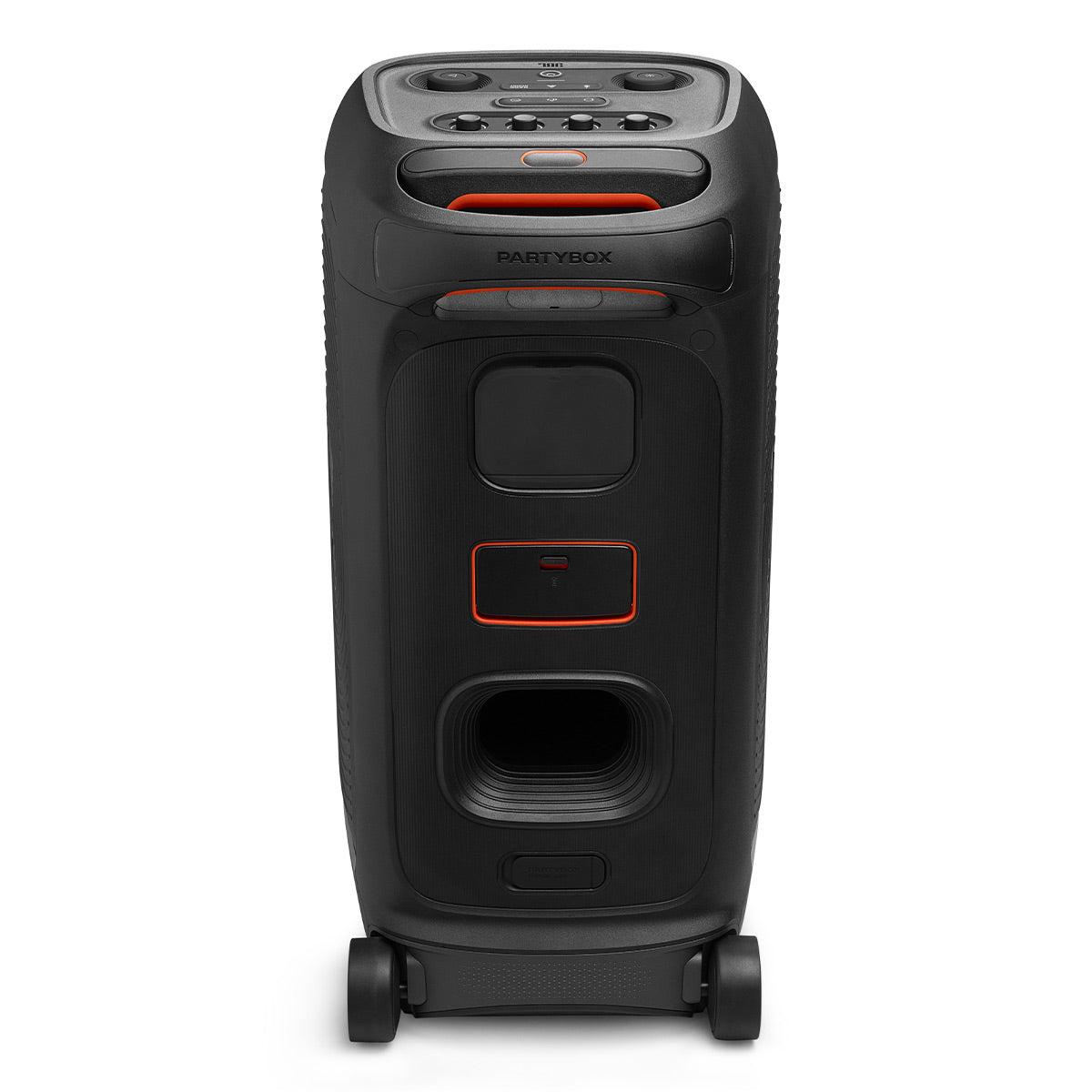
The speaker's rear-firing bass port (an opening that helps extend low-frequency response) works particularly well when placed against walls, amplifying bass output through acoustic coupling. This design choice shows JBL's understanding of real-world party environments where speakers often end up positioned near walls or in corners.
The Sony SRS-XV800 takes a more balanced approach, delivering what's closer to a neutral sound signature. Its midrange reproduction—the frequency range containing most vocal content and many instruments—receives more emphasis, resulting in clearer dialogue, better vocal intelligibility, and more natural instrument reproduction.
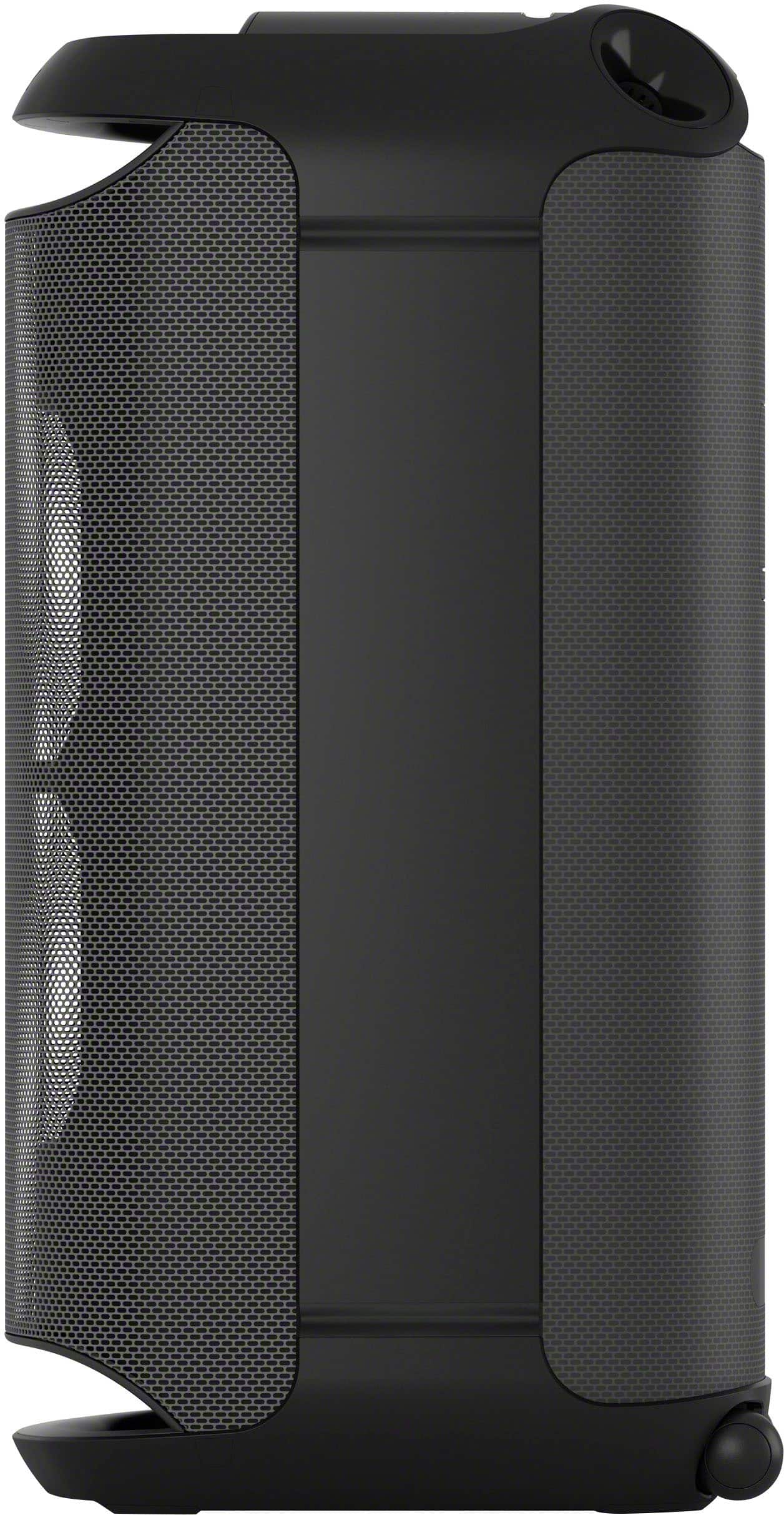
Sony's five-tweeter array deserves special mention. Three tweeters fire forward while two fire backward, creating an immersive soundstage that fills rooms more evenly than traditional forward-firing designs. This omnidirectional approach means people standing beside or behind the speaker still experience good audio quality, not just those directly in front.
However, this balanced approach comes with trade-offs. User reviews consistently note that while the Sony sounds more "audiophile-friendly," its bass feels softer and less physically impactful than the JBL. For dance music, hip-hop, and electronic genres where bass drive matters most, the Sony may feel restrained.
The JBL excels with high-energy music genres but can sound harsh or fatiguing during extended listening sessions, especially at high volumes. Its brighter treble emphasis makes it cut through ambient noise effectively but may overwhelm more delicate musical content.
Battery performance represents one of the biggest differentiators between these speakers. The Sony SRS-XV800 advertises an impressive 25 hours of playback time, which testing generally confirms under moderate volume conditions with lighting effects disabled.
This extended runtime makes the Sony ideal for camping trips, beach days, or any scenario where you'll be away from power for extended periods. Twenty-five hours means you can literally play music continuously for more than a full day, making it perfect for weekend festivals or outdoor events.
The JBL PartyBox Stage 320 claims 18 hours of battery life, but real-world performance varies significantly based on usage patterns. With the speaker's impressive lighting system active and bass boost engaged—the way most people actually use party speakers—battery life drops to approximately 7-10 hours under typical party conditions.
However, the JBL includes a game-changing feature: swappable batteries. The battery pack can be removed and replaced with a fresh one, allowing for unlimited playback time if you purchase additional battery packs. More importantly, when the battery eventually degrades after years of use—as all lithium-ion batteries do—you can replace just the battery rather than the entire speaker.
This swappable design addresses a major weakness in the portable speaker category. Most premium speakers become expensive paperweights once their built-in batteries fail, typically after 3-5 years. The JBL treats the battery as a consumable component, extending the speaker's useful lifespan significantly.
Both speakers support quick charging, providing several hours of playback from short charging sessions. The JBL offers 2 hours of playback from a 10-minute charge, while the Sony provides 3 hours from the same charging time.
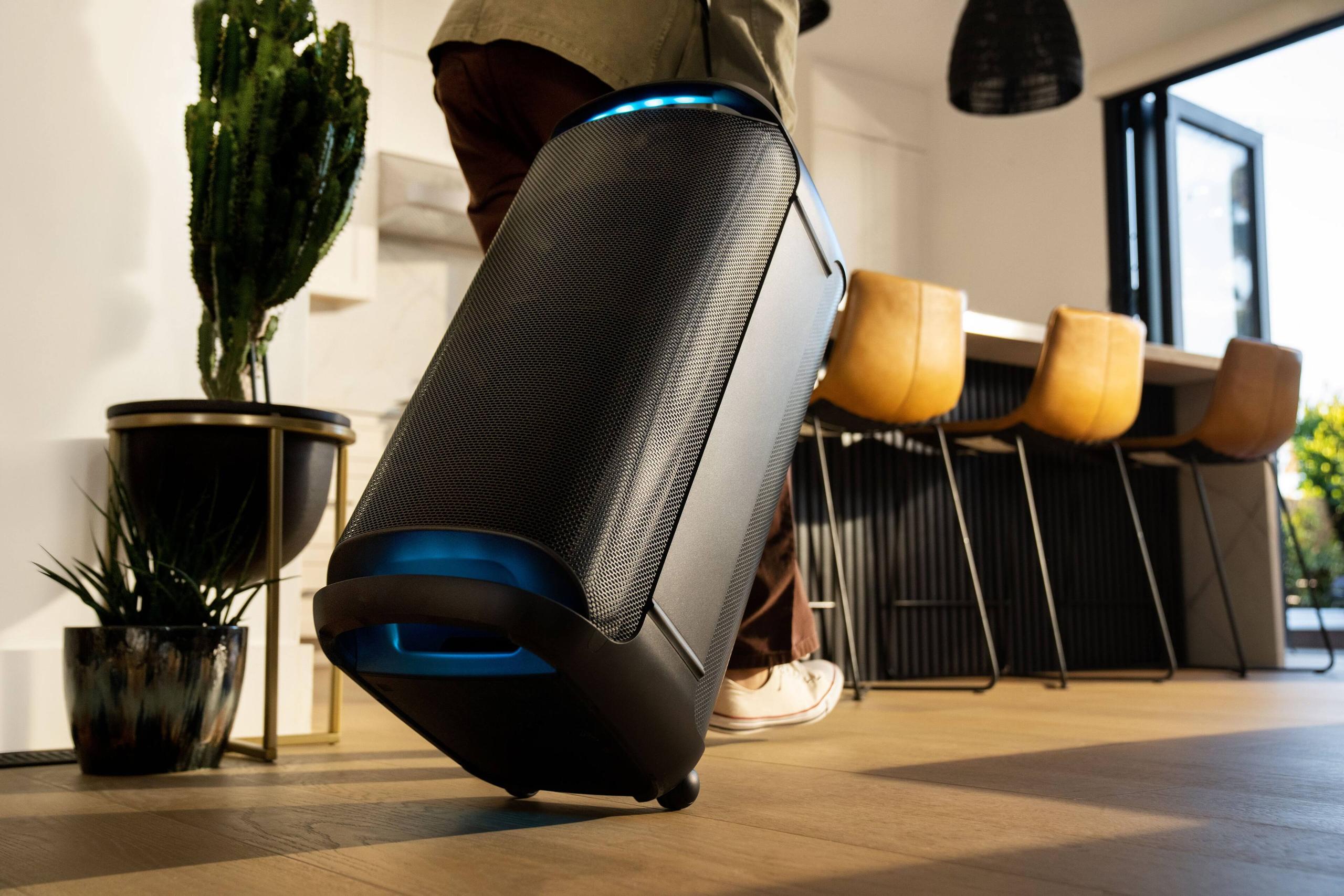
Despite their "portable" classification, both speakers are substantial devices. The JBL PartyBox Stage 320 weighs 36.4 pounds while the Sony SRS-XV800 tips the scales at 40.8 pounds. These aren't speakers you'll casually carry around like regular Bluetooth speakers—they're designed for setup-and-stay scenarios.
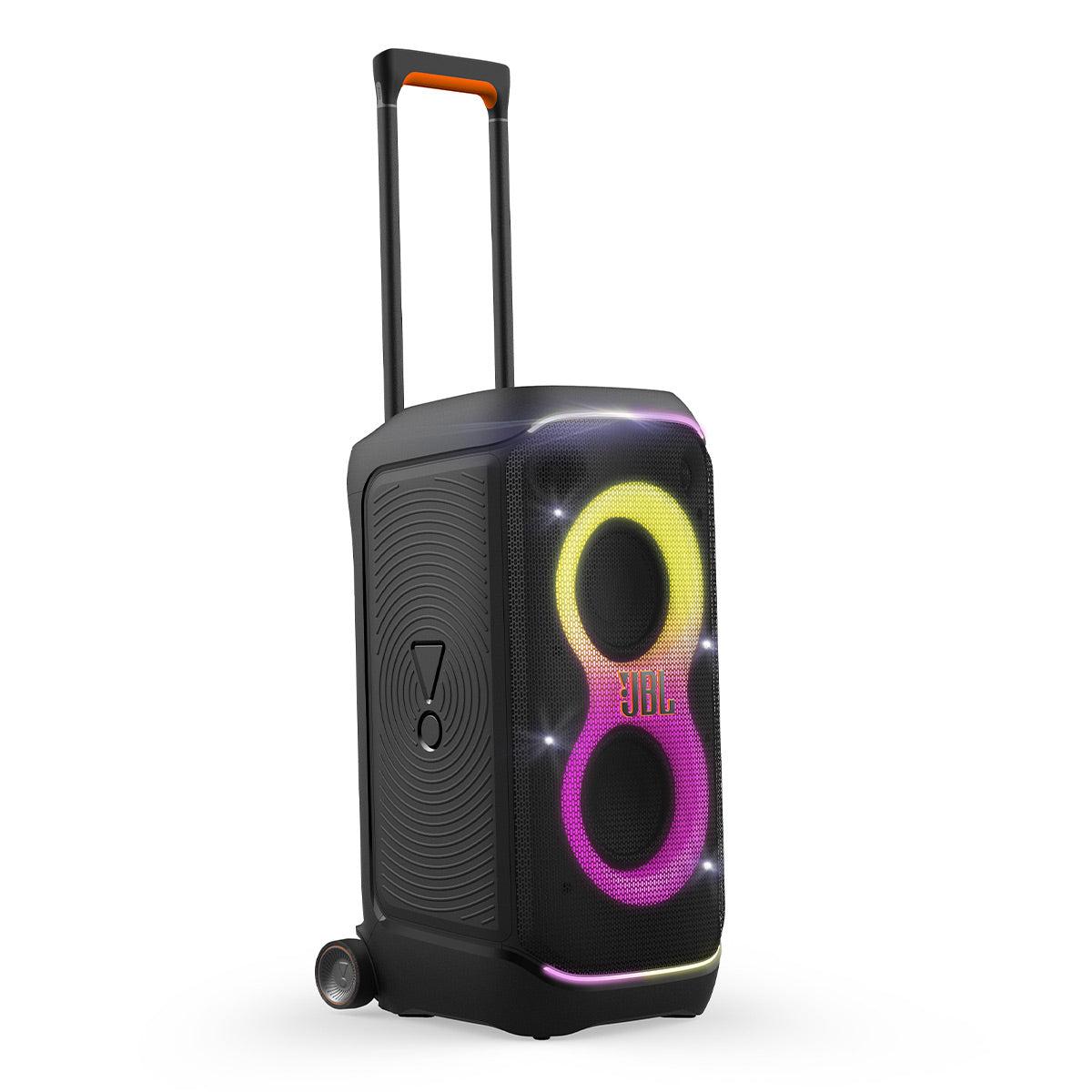
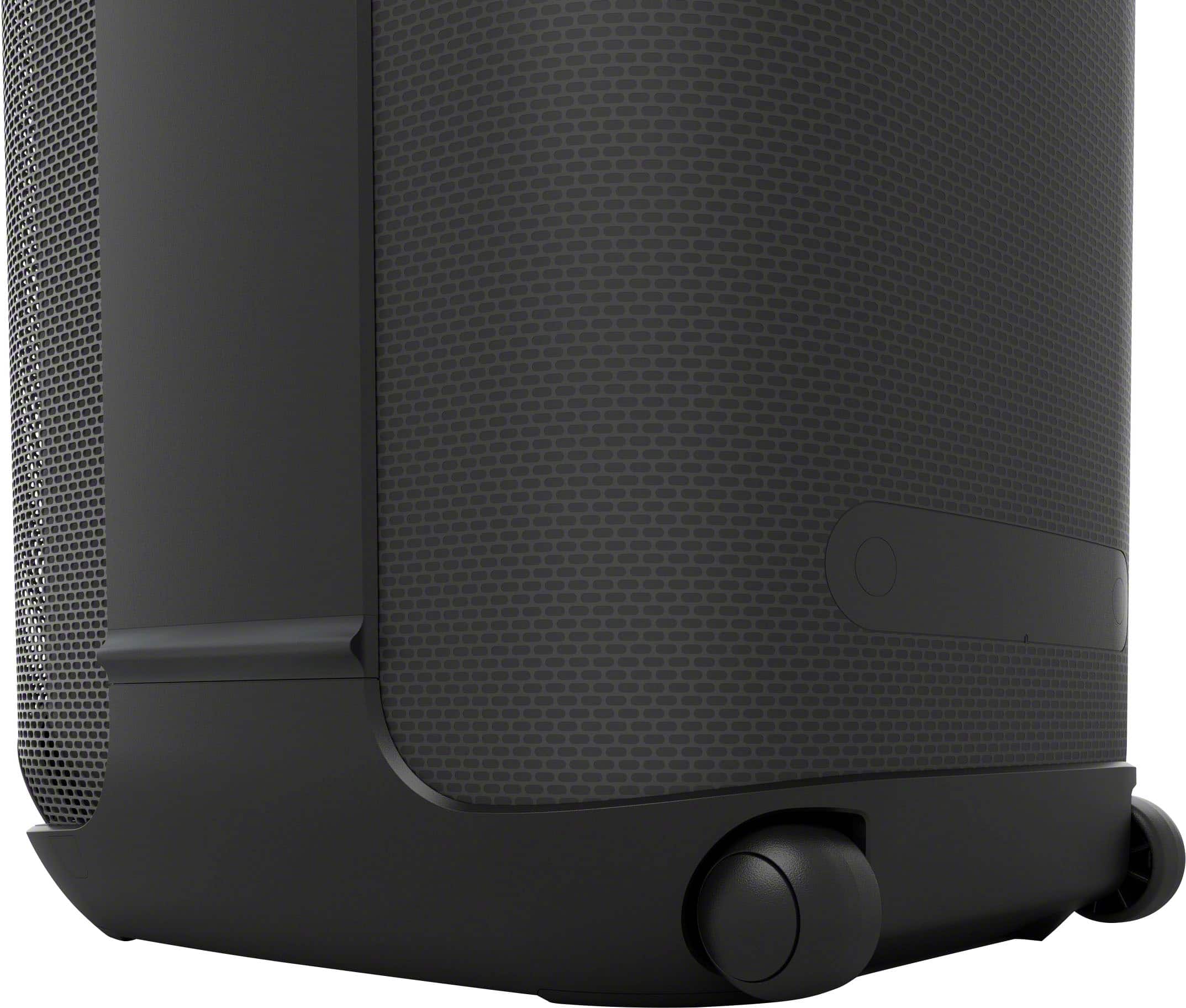
The JBL shows superior portability engineering with its telescopic handle and wide, sturdy wheels. The handle extends to a comfortable height for rolling the speaker like luggage, while the wheels are sized appropriately for outdoor terrain. Additionally, it includes a standard tripod mount, allowing installation on speaker stands for better sound dispersion and crowd visibility.
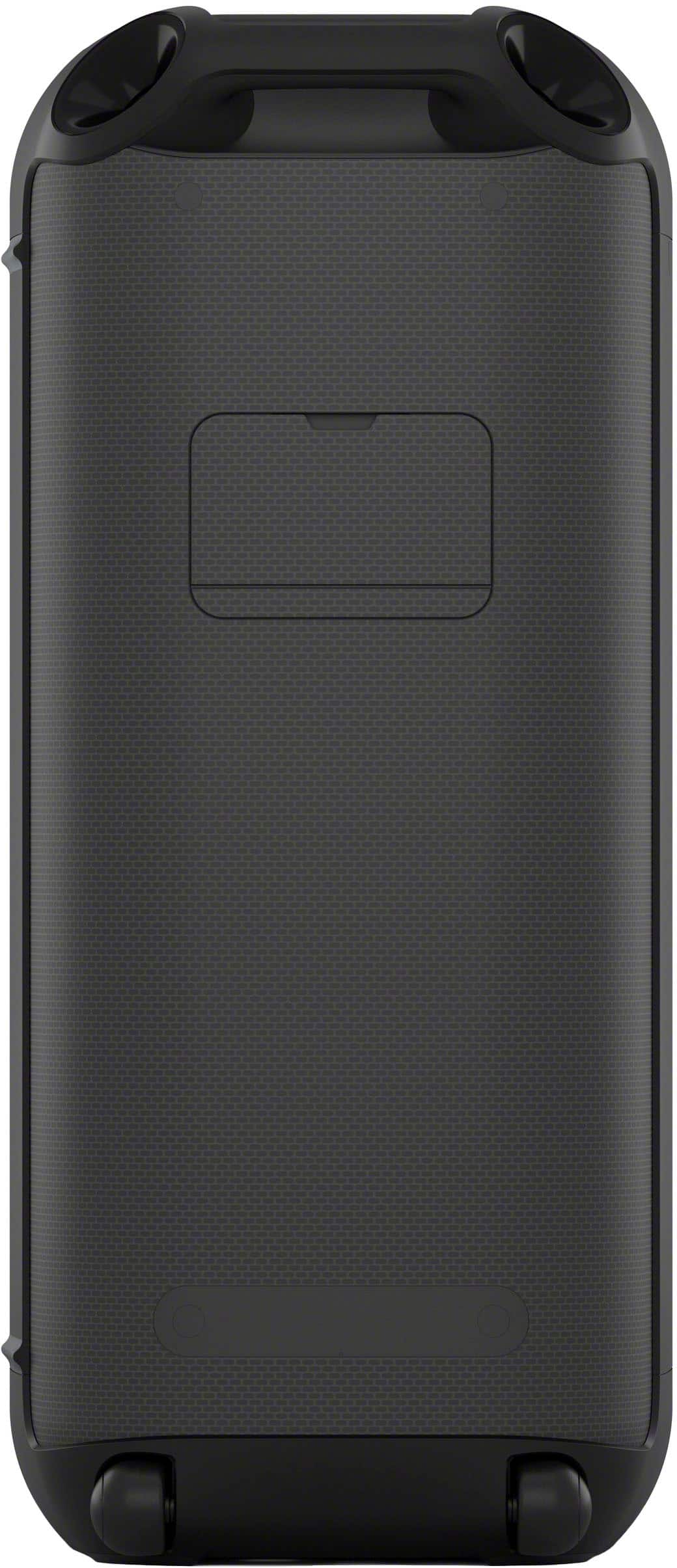
The Sony includes wheels and handles but lacks the telescopic handle feature. Its taller, narrower profile can make it feel less stable during transport, though it's still manageable for most users. The speaker includes an interesting feature where internal sensors detect whether it's positioned vertically or horizontally and automatically optimizes the sound accordingly.
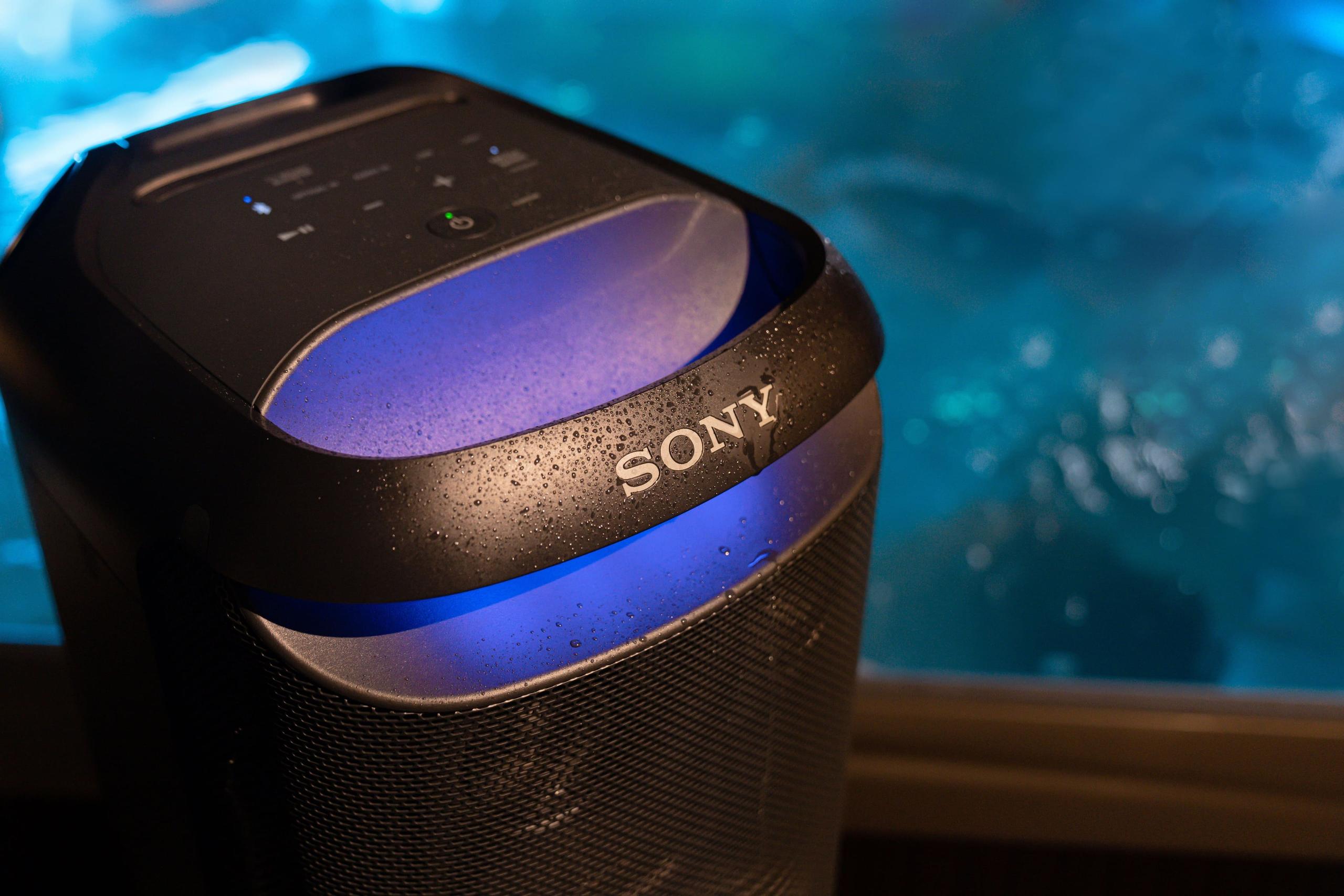
Both speakers carry IPX4 water resistance ratings, meaning they can handle splashed drinks and light rain but shouldn't be submerged or exposed to heavy weather. This rating provides reasonable protection for typical outdoor party scenarios but won't save the speaker from serious water exposure.
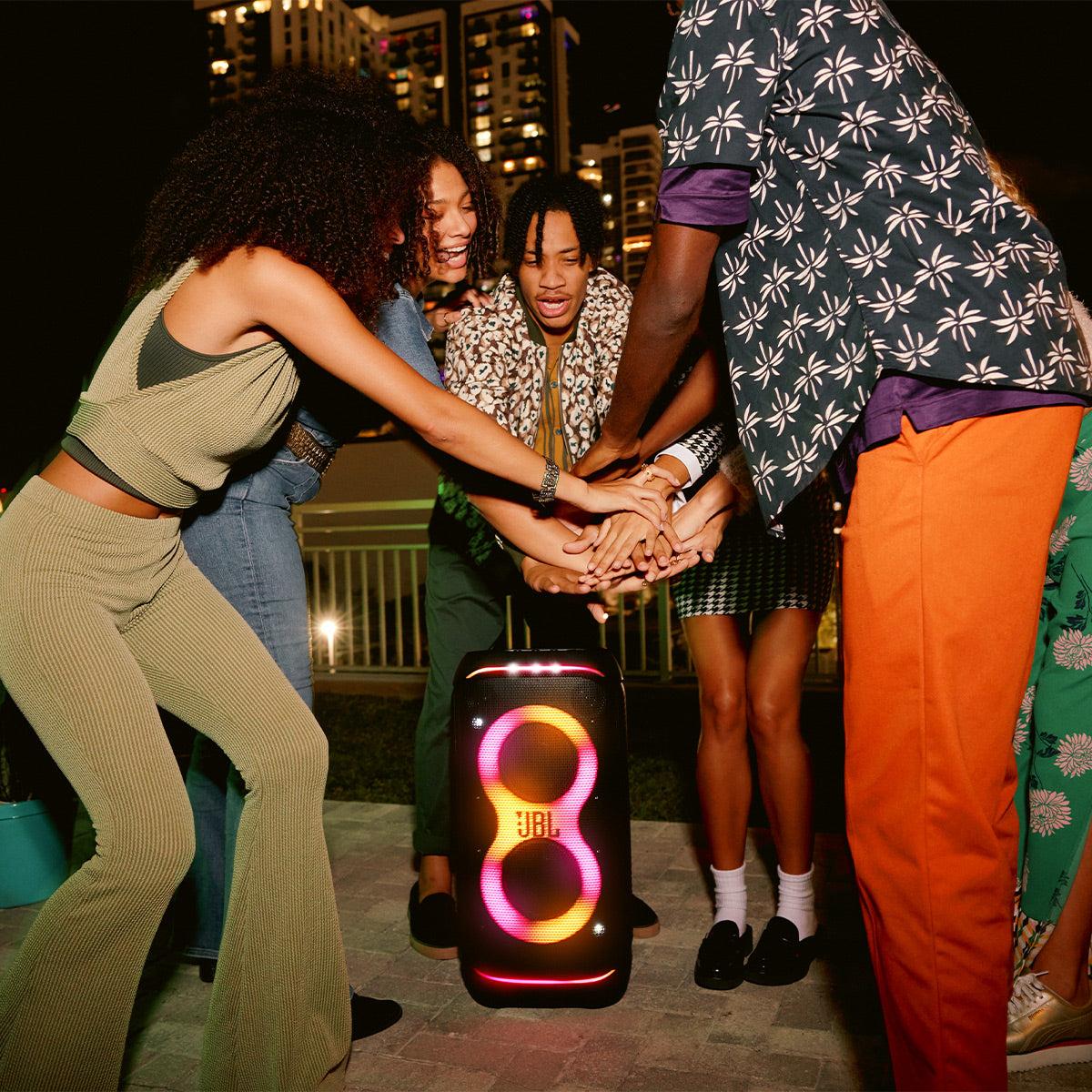
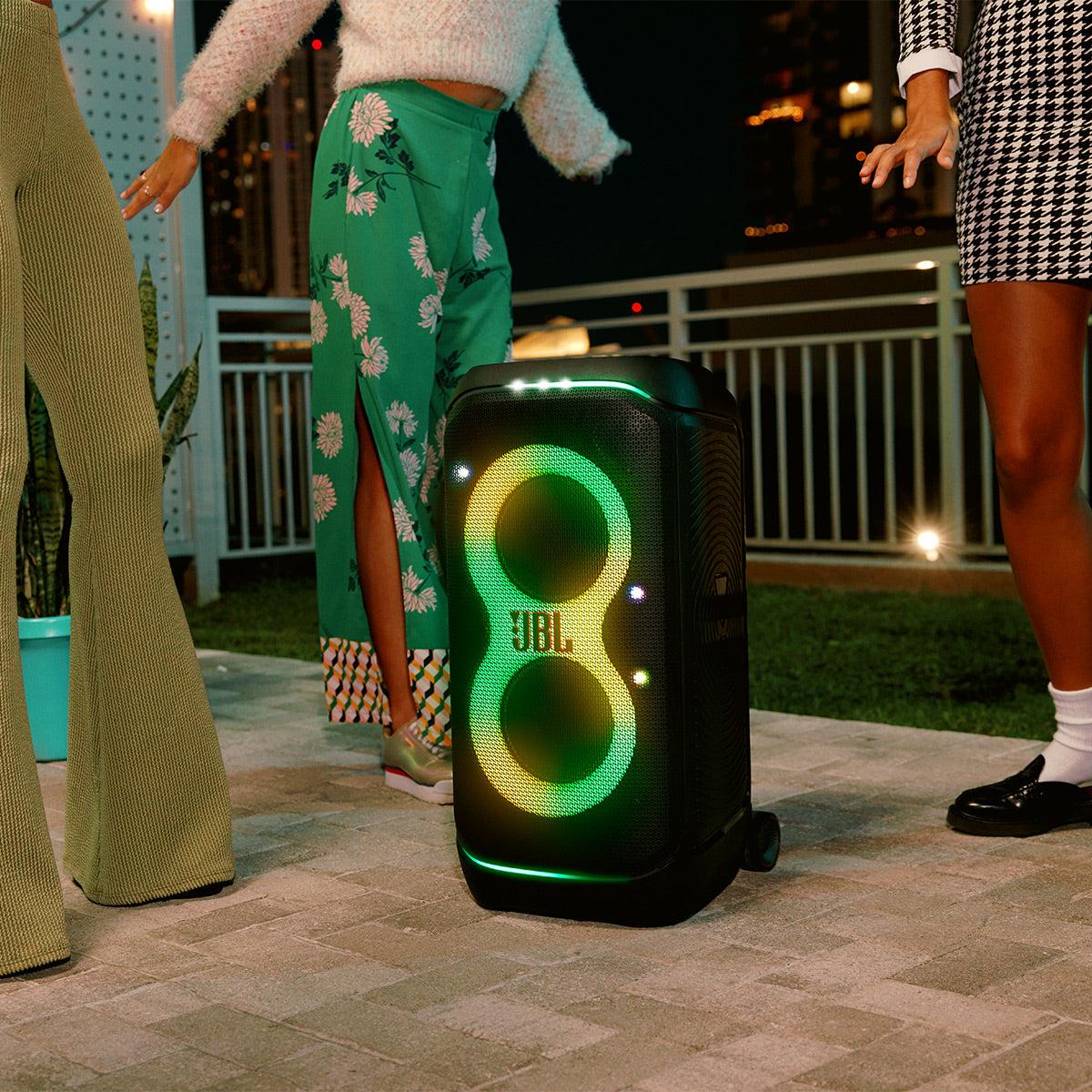
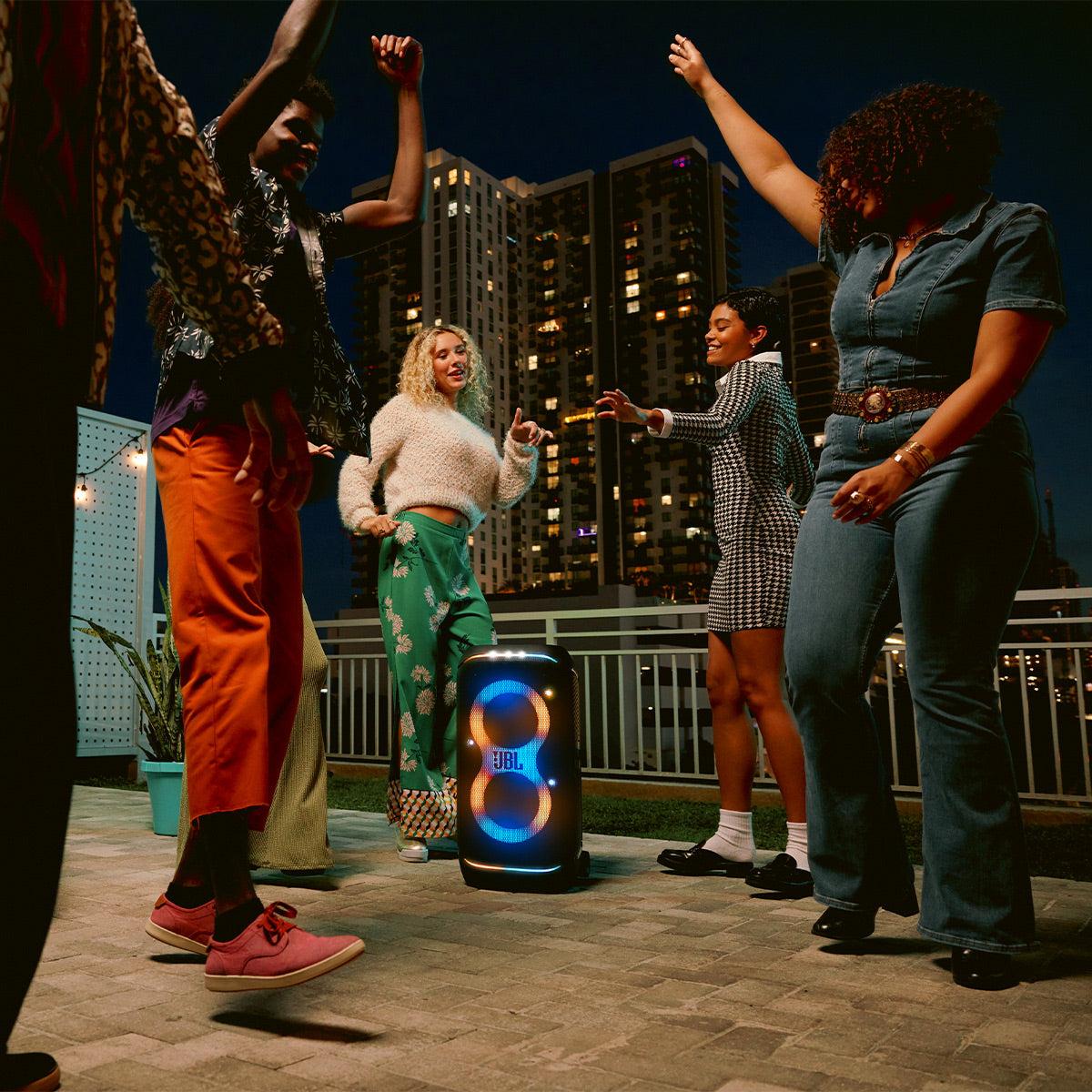
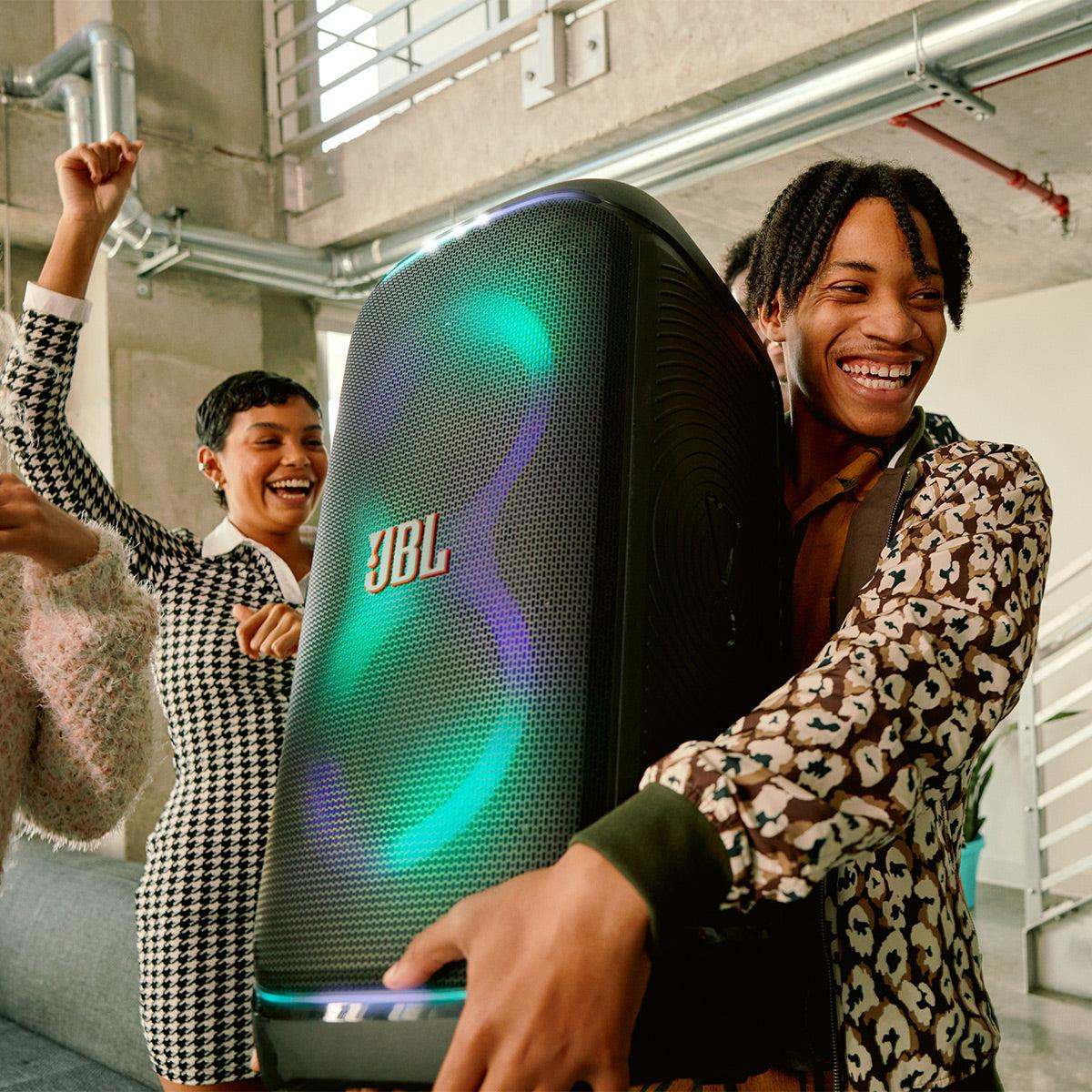
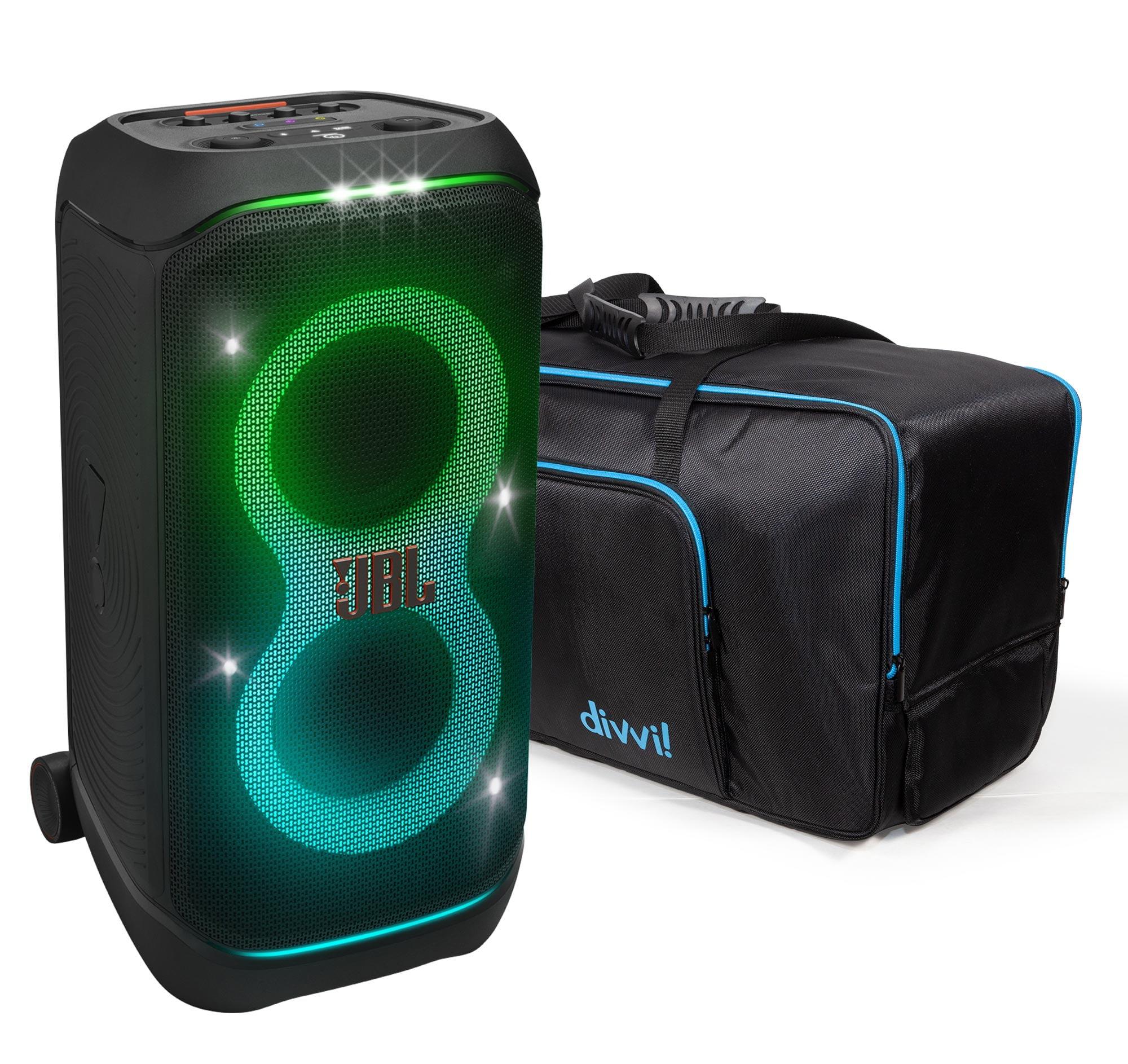
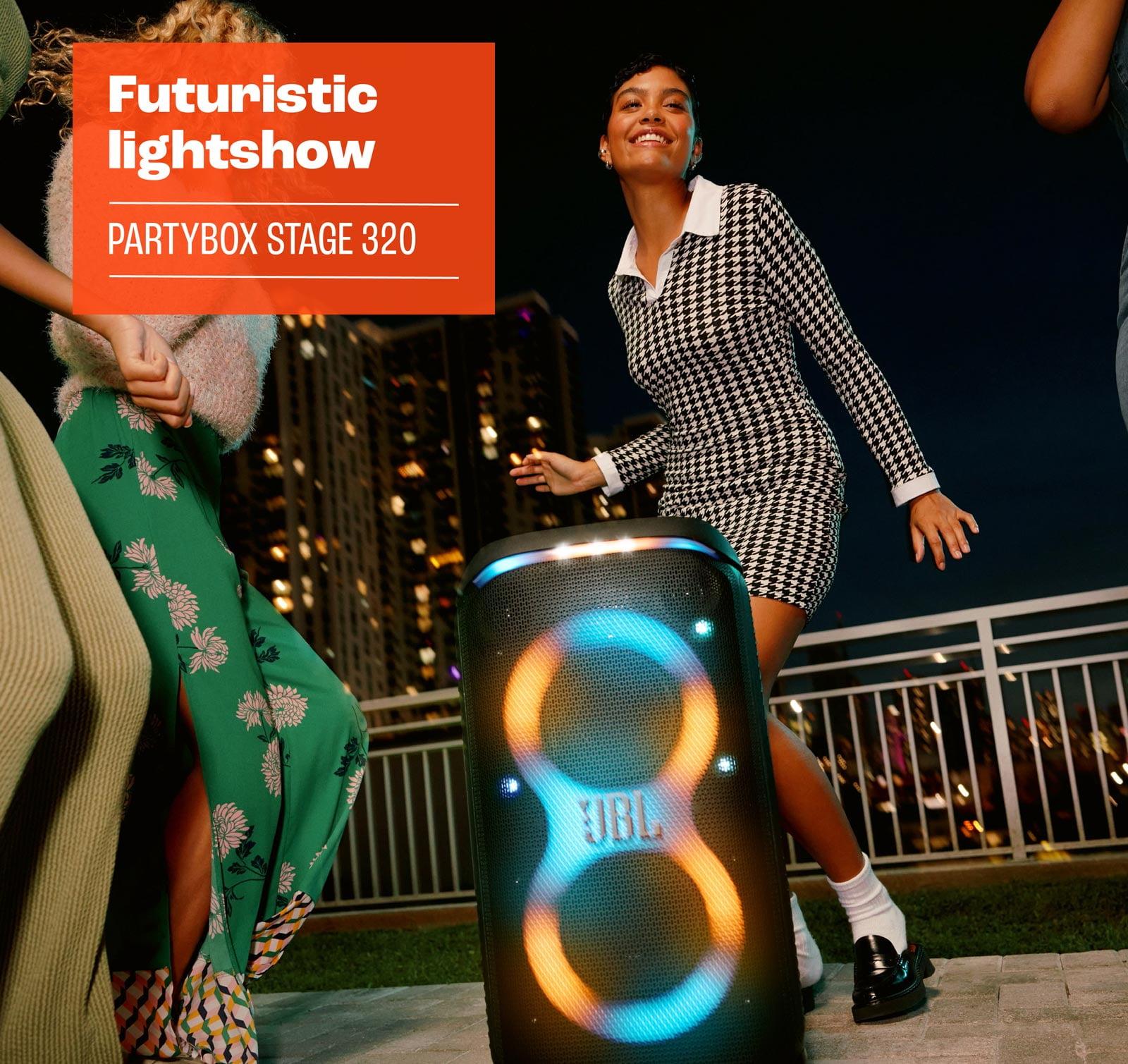
Modern party speakers aren't just about audio—they're entertainment systems that engage multiple senses. The JBL PartyBox Stage 320 absolutely dominates in visual impact with its comprehensive lighting system featuring dual ring LEDs, strip LEDs, and eleven white strobe LEDs.
The lighting effects synchronize with music beats and can be customized through JBL's PartyBox app. The strobe effects, in particular, create genuine club-like ambiance that immediately transforms any gathering into a more energetic environment. Users consistently mention the lighting as a standout feature that generates immediate "wow factor" reactions.
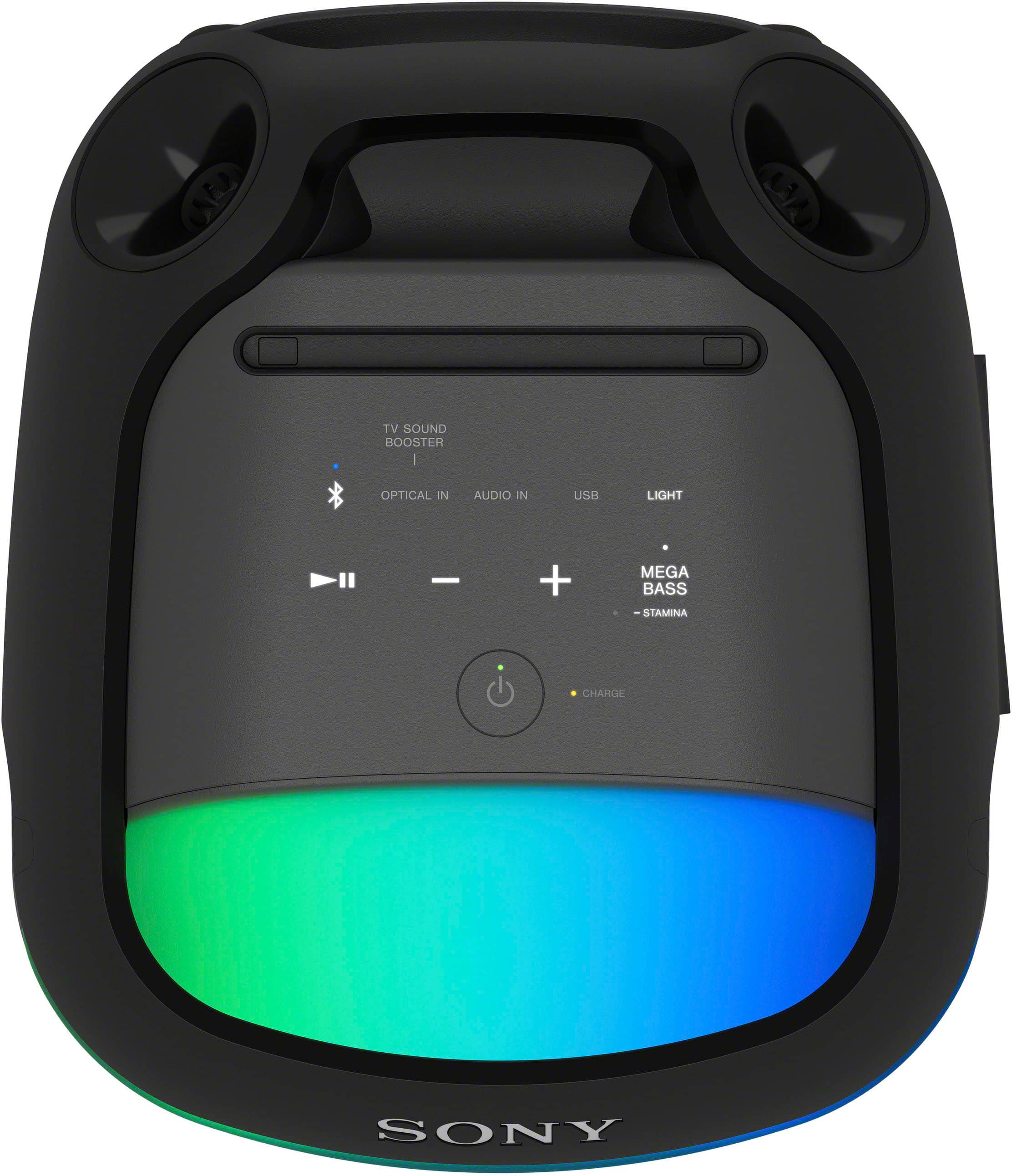
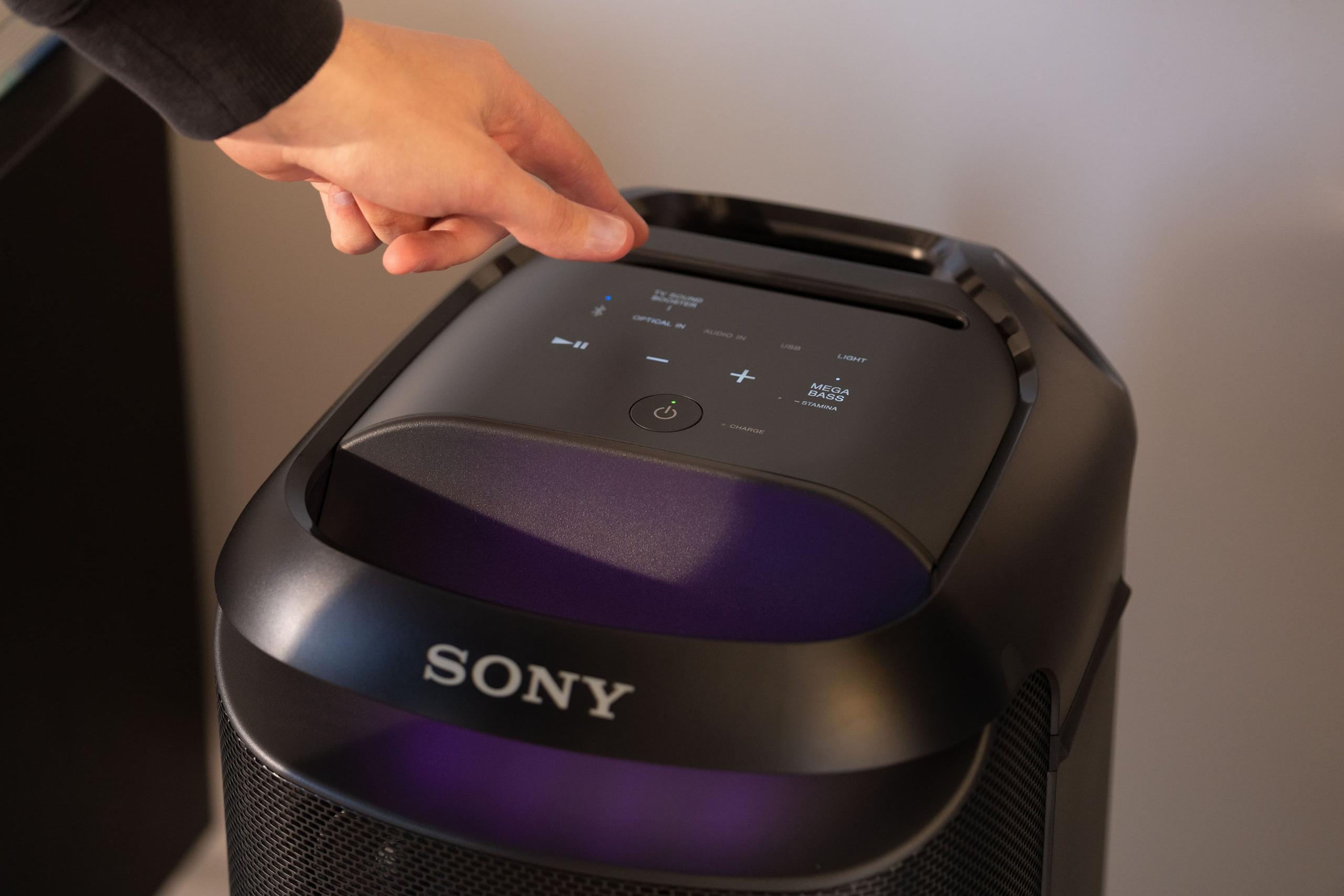
The Sony SRS-XV800 includes basic top and bottom area LEDs but lacks strobe effects or complex lighting patterns. While functional and attractive, the lighting feels more like accent lighting than a party feature. Sony clearly prioritized audio quality and battery life over visual spectacle.
For users who care about creating party atmosphere, the JBL delivers significantly more visual impact. However, the lighting system does consume additional battery power, contributing to reduced runtime compared to the Sony.
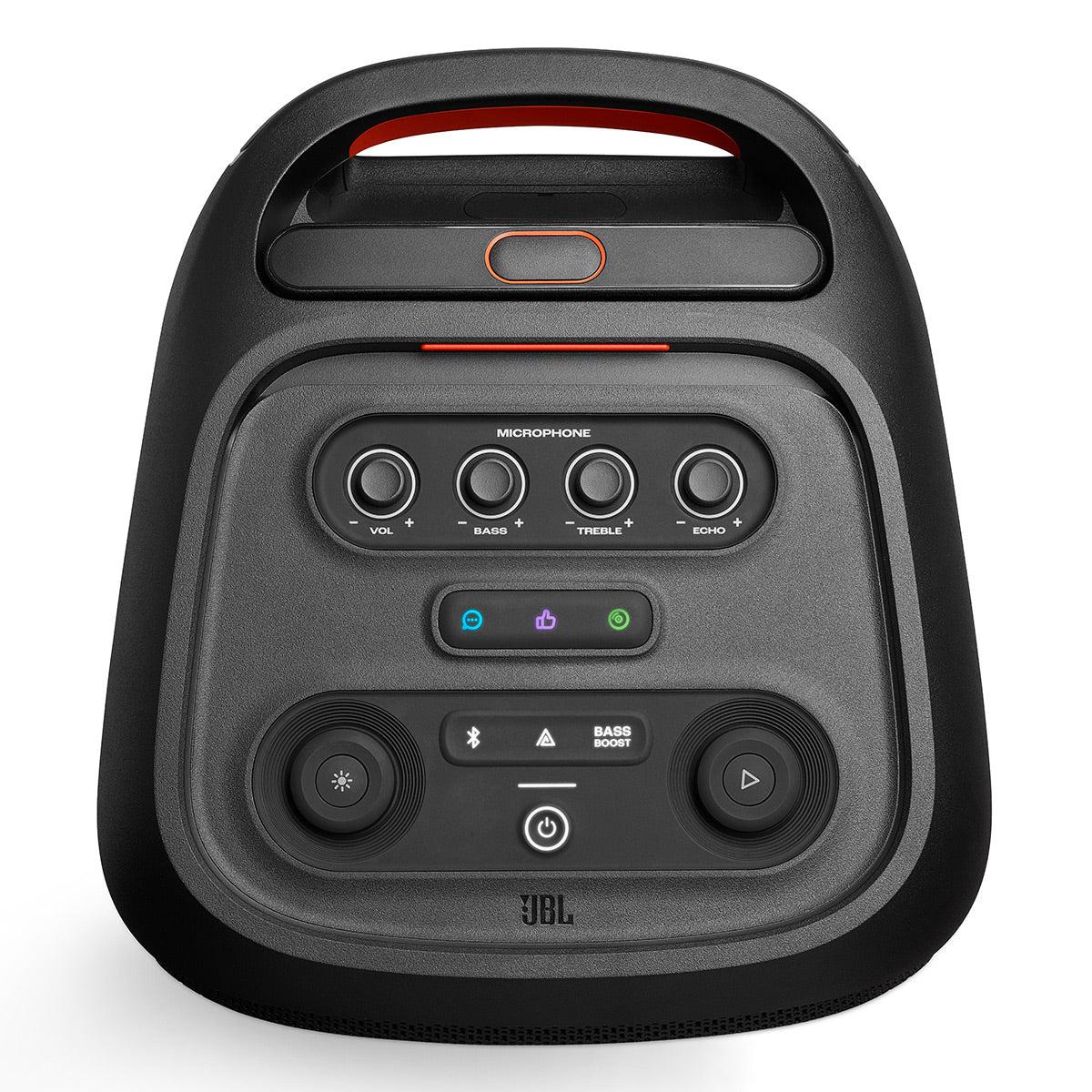
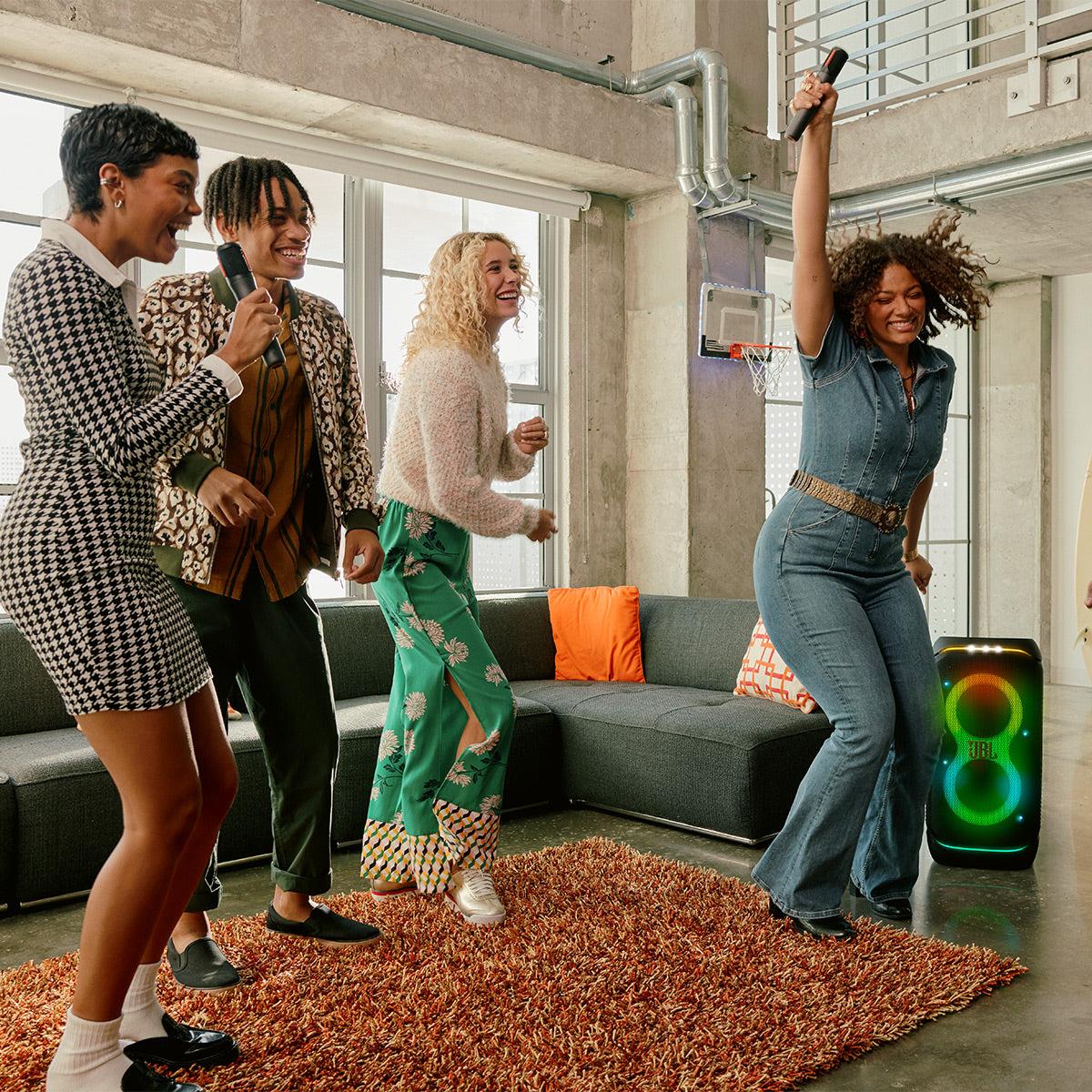
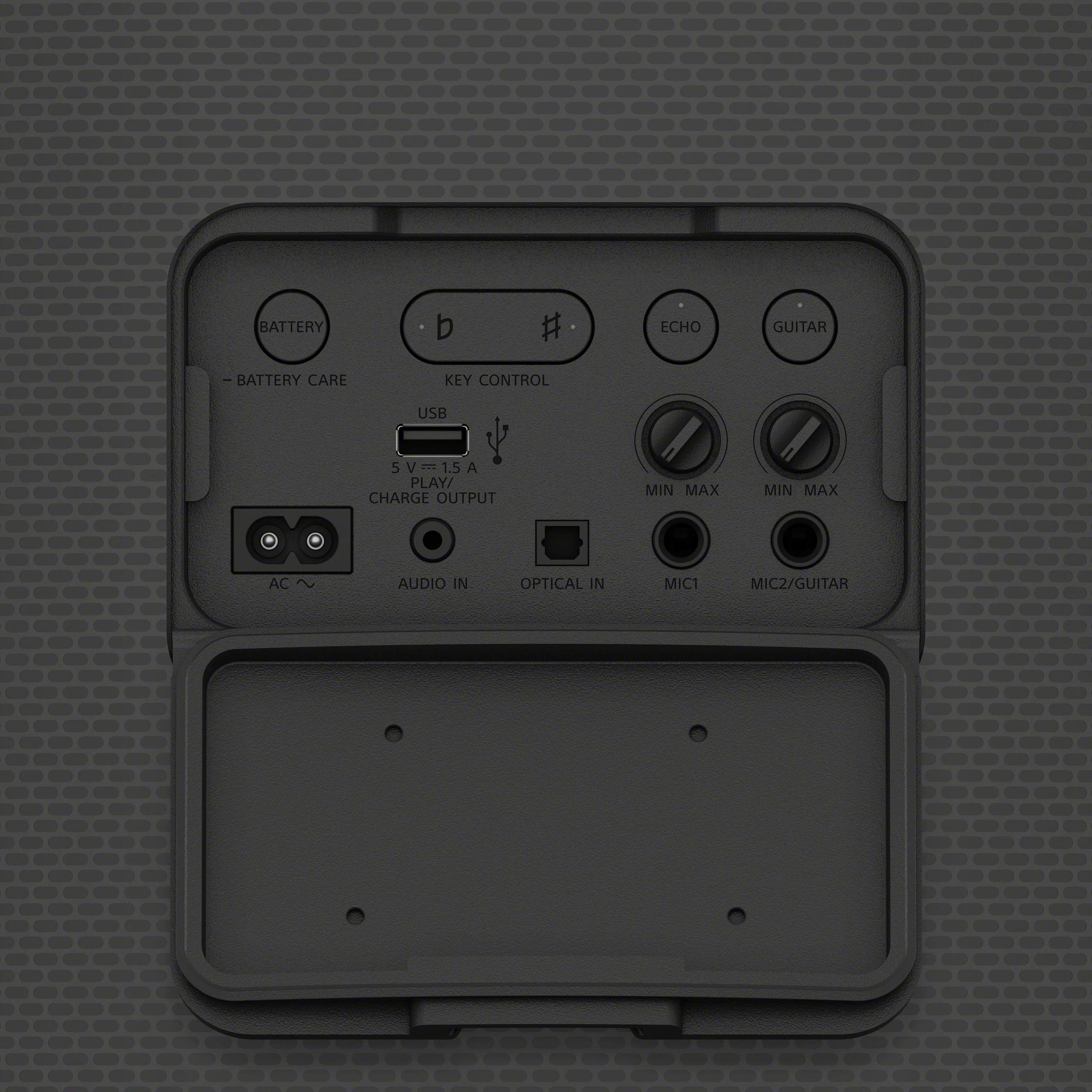
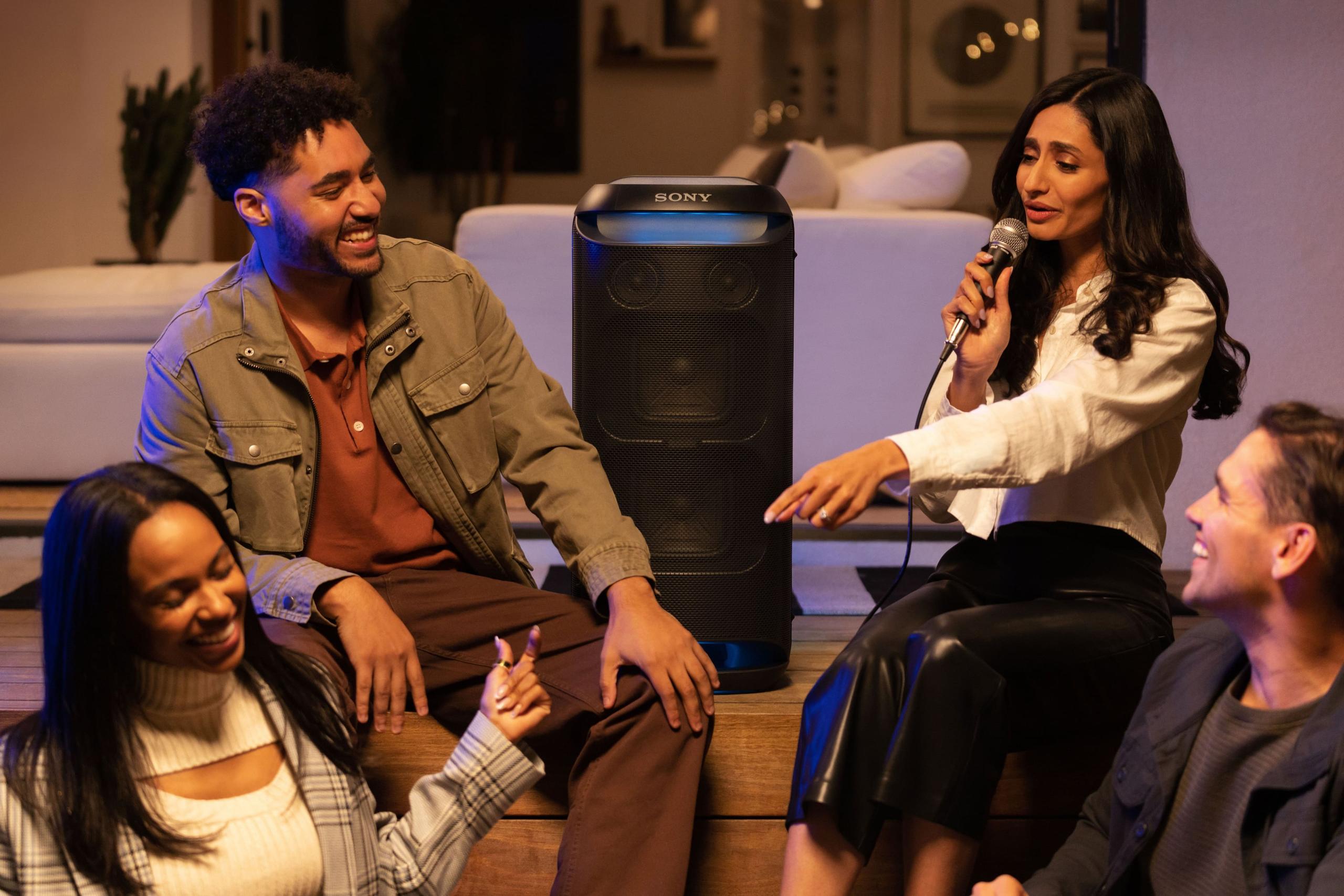
Both speakers offer comprehensive connectivity options that extend their utility beyond simple music playback. Each includes dual microphone/guitar inputs with independent volume controls, enabling karaoke sessions, live acoustic performances, or even small venue PA applications.
The JBL PartyBox Stage 320 supports Bluetooth 5.4 with Auracast capability, allowing multiple compatible JBL speakers to connect wirelessly for larger installations. Its AI Sound Boost technology analyzes incoming audio signals in real-time, automatically adjusting bass and dynamics to reduce distortion and maximize clarity.
The Sony SRS-XV800 includes a unique optical digital input alongside standard connectivity options. This optical input enables direct connection to TVs, gaming consoles, and other digital audio sources, expanding the speaker's utility into home theater applications. The TV Sound Booster feature specifically enhances dialogue and adds bass to television audio.
Sony's approach reveals their broader audio ecosystem thinking. While the Sony works excellently as a party speaker, it also functions as a high-end soundbar alternative or home audio system when not being used for parties.
Both speakers include companion smartphone apps for control and customization, though they take different approaches. JBL's app focuses on party features like DJ effects, sound presets, and lighting control. Sony's app provides more audiophile-oriented features like detailed EQ controls and sound modes optimized for different content types.
The Sony SRS-XV800 deserves special recognition for its home entertainment capabilities. The optical input allows direct connection to TVs and streaming devices, while the TV Sound Booster mode specifically enhances dialogue clarity and adds bass impact to movies and shows.
For many users, this dual functionality represents exceptional value. Instead of purchasing separate party speakers and soundbar systems, the Sony handles both roles effectively. Its balanced sound signature works particularly well for movie dialogue and complex soundtracks.
The JBL PartyBox Stage 320 can connect to TVs via Bluetooth or auxiliary input, but it lacks the dedicated TV optimization features. Its more aggressive sound signature may actually work against clear dialogue reproduction, making it less suitable for regular home theater use.
After evaluating extensive user feedback, professional reviews, and technical specifications, both speakers excel in their intended roles but serve different priorities.
Choose the JBL PartyBox Stage 320 if you prioritize maximum party impact. It's louder, punchier, more portable, and delivers superior visual effects. The swappable battery system provides long-term value that shouldn't be overlooked. This is the speaker for hosts who want to guarantee their gatherings have energy and excitement.
The JBL works best for: outdoor parties, dance music, high-energy gatherings, users who move their speakers frequently, and anyone who values long-term serviceability. If you're the type of person who throws big barbecues, beach parties, or wants to be the house with the best sound system, this is your speaker.
Choose the Sony SRS-XV800 if you value versatility and endurance over raw party energy. Its exceptional battery life makes it irreplaceable for extended outdoor events, while its balanced sound works well across all music genres. The TV integration adds functionality that justifies its premium price for many users.
The Sony works best for: camping and extended outdoor events, users who prefer balanced sound, home theater integration, all-day events where power isn't available, and listeners who enjoy diverse music genres. If you're someone who spends weekends at the lake, goes on camping trips, or wants one speaker that handles both parties and home entertainment, this speaker offers unmatched versatility.
Both speakers deliver excellent value in their respective categories. At the time of writing, the JBL typically costs less while delivering more traditional party speaker benefits. The Sony commands a premium but justifies it through superior battery life and broader functionality.
Your decision ultimately depends on whether you prioritize immediate party impact and portability (JBL) or extended runtime and versatile functionality (Sony). Either choice will significantly upgrade your entertainment capabilities—you just need to decide which strengths matter most for your specific needs.
| JBL PartyBox Stage 320 | Sony SRS-XV800 |
|---|---|
| Power Output - Raw volume capability for large spaces | |
| 240W RMS (significantly louder, better for big outdoor gatherings) | 70W RMS (still plenty loud, focuses on efficiency and clarity) |
| Weight - Portability for moving between locations | |
| 36.4 lbs with telescopic handle and wheels (easier to transport) | 40.8 lbs with handles and wheels (heavier but still manageable) |
| Battery Life - Runtime for extended events | |
| 18 hours advertised, 7-10 hours real-world with features enabled | 25 hours advertised and confirmed in testing (exceptional endurance) |
| Battery Design - Long-term ownership considerations | |
| Swappable battery (replaceable when degraded, unlimited runtime with spare) | Built-in battery (requires service/replacement when fails after 3-5 years) |
| Sound Signature - Musical presentation and party energy | |
| Bright, bass-heavy, energetic (optimized for dance music and high energy) | Balanced, neutral, warmer (better for diverse genres and extended listening) |
| Driver Configuration - Sound dispersion and clarity | |
| 2x 6.5" woofers, 2x 1" tweeters (forward-firing, punchy bass) | 2x 6.69" X-Balanced woofers, 5 dome tweeters (360° omnidirectional sound) |
| Lighting Effects - Visual party atmosphere | |
| Extensive: ring LEDs, strips, 11 strobe lights (true party spectacle) | Basic: top/bottom area LEDs only (subtle ambient lighting) |
| Connectivity Options - Versatility beyond parties | |
| Bluetooth 5.4, Auracast, USB, AUX, dual mic/guitar inputs | Bluetooth 5.2, USB, AUX, optical input, dual mic/guitar inputs |
| Home Theater Use - TV and movie enhancement | |
| Basic TV connection via Bluetooth/AUX (not optimized for dialogue) | Optical input with TV Sound Booster mode (excellent soundbar alternative) |
| Water Resistance - Outdoor durability | |
| IPX4 splash-resistant (handles spills and light rain) | IPX4 splash-resistant (handles spills and light rain) |
| Multi-Speaker Support - Expandability for larger events | |
| Auracast wireless linking with compatible JBL speakers | Party Connect with up to 100 compatible Sony speakers |
| Quick Charge Capability - Emergency power recovery | |
| 10 minutes = 2 hours playback (decent emergency charging) | 10 minutes = 3 hours playback (superior quick charge performance) |
The JBL PartyBox Stage 320 is significantly louder with 240W RMS of power output compared to the Sony SRS-XV800 at 70W RMS. For large outdoor gatherings, backyard parties, or events where you need to compete with ambient noise, the JBL delivers more volume and bass impact that can fill tennis court-sized areas.
The Sony SRS-XV800 offers superior battery life with up to 25 hours of playback compared to the JBL PartyBox Stage 320 at 18 hours advertised. However, the JBL features a unique swappable battery system, allowing you to replace batteries for unlimited runtime or swap out degraded batteries after years of use.
The JBL PartyBox Stage 320 delivers a bright, bass-heavy sound signature optimized for dance music and high-energy parties. The Sony SRS-XV800 provides a more balanced, neutral sound with clearer midrange and better vocal reproduction. The Sony uses five tweeters for 360-degree sound dispersion, while the JBL focuses on forward-firing punch and impact.
The JBL PartyBox Stage 320 is more portable at 36.4 pounds with a telescopic handle and sturdy wheels designed for easy rolling. The Sony SRS-XV800 weighs 40.8 pounds with basic handles and wheels but lacks the telescopic handle feature. Both include wheels, but the JBL is engineered better for frequent transport.
The Sony SRS-XV800 excels as a TV soundbar alternative with its optical digital input and TV Sound Booster mode that enhances dialogue and adds bass to movies. The JBL PartyBox Stage 320 can connect to TVs via Bluetooth or AUX but lacks dedicated TV optimization features and may be too bass-heavy for clear dialogue reproduction.
The JBL PartyBox Stage 320 dominates with extensive lighting including ring LEDs, strip LEDs, and 11 white strobe lights that create genuine club-like atmosphere. The Sony SRS-XV800 only includes basic top and bottom area LEDs without strobe effects. For visual party impact, the JBL delivers significantly more spectacle.
Both the JBL PartyBox Stage 320 and Sony SRS-XV800 offer comprehensive smartphone apps. The JBL PartyBox app focuses on party features like DJ effects, lighting control, and sound presets. Sony's Music Center app provides more audiophile controls including detailed EQ settings and sound modes for different content types.
The Sony SRS-XV800 is ideal for camping with its exceptional 25-hour battery life, allowing multi-day use without recharging. The JBL PartyBox Stage 320 offers shorter battery life but the swappable battery system means you can bring spare batteries for unlimited runtime. Both are IPX4 water-resistant for outdoor use.
Both speakers include Bluetooth, USB playback, AUX input, and dual microphone/guitar inputs for karaoke. The Sony SRS-XV800 adds an optical input for direct TV connection, while the JBL PartyBox Stage 320 features Auracast technology for wireless multi-speaker linking and AI Sound Boost for real-time audio optimization.
The JBL PartyBox Stage 320 typically costs less while delivering louder output, better portability, superior lighting effects, and the unique swappable battery system for long-term value. The Sony SRS-XV800 commands a premium but justifies it with exceptional battery life, balanced sound quality, and home theater integration capabilities.
The JBL PartyBox Stage 320 excels with electronic, hip-hop, pop, and dance music thanks to its energetic, bass-forward sound signature. The Sony SRS-XV800 handles all genres more naturally with its balanced frequency response, making it better for jazz, classical, rock, and vocal-heavy music where midrange clarity matters most.
Both the JBL PartyBox Stage 320 and Sony SRS-XV800 offer dual microphone inputs with independent volume controls. The JBL provides more energetic backing music with its punchy sound, while the Sony offers clearer vocal reproduction through its balanced midrange. Both include echo effects and guitar inputs for live acoustic performances.
We've done our best to create useful and informative comparisons to help you decide what product to buy. Our research uses advanced automated methods to create this comparison and perfection is not possible - please contact us for corrections or questions. These are the sites we've researched in the creation of this article: stereoguide.com - soundguys.com - rtings.com - soundguys.com - soundguys.com - rtings.com - jbl.com - youtube.com - youtube.com - youtube.com - youtube.com - rtings.com - 9to5toys.com - versus.com - cdw.com - jbl.com - projectorscreenstore.com - projectorscreen.com - ro.harmanaudio.com - jbl.co.nz - bestbuy.com - youtube.com - soundandvision.com - crutchfield.com - sciencefocus.com - sony.com - bestbuy.com - bestbuy.com - stereoguide.com - sony-mea.com - soundguys.com - electronics.sony.com - youtube.com - sony.com - youtube.com - device.report - youtube.com - youtube.com - adorama.com - sonylatvija.com - sony.com

Privacy Policy
Terms and Conditions - Affiliate Policy
Home Security
© Copyright 2008-2026.
11816 Inwood Rd #1211, Dallas, TX 75244